Former cryptocurrency kingpin Sam Bankman-Fried has been found guilty of fraud. A New York jury delivered the verdict on November 2nd, concluding a trial that has seen Bankman-Fried defend himself against claims that he criminally mismanaged his crypto exchange FTX and trading firm Alameda Research.
After more than a month in trial, the jury took four and a half hours to decide Bankman-Fried’s fate, declaring him guilty on all seven charges, including wire fraud, conspiracy to commit wire fraud, and conspiracy to commit money laundering. He is set to be sentenced by Judge Lewis Kaplan on March 28th of next year and faces decades in prison.
Bankman-Fried started FTX in 2019, and its valuation rose stratospherically during a post-pandemic...
In absolutely every instance telecoms like AT&T and Comcast claimed these efforts would boost broadband deployment and create untold thousands of jobs.
I’m sure you’ll be shocked to learn that none of that ever happened.
“Stankey and Vestberg have been such depressing mediocrities in the management job, as reflected in the dwindling share prices of their firms. AT&T’s has dropped from $22.34 when Stankey became CEO in July 2020 to $14.32 today. Verizon’s is down from $57.09 in August 2018, the date of Vestberg’s elevation, to $33.44.”
As it currently stands, Stankey’s $22.9 million in 2022 compensation is 219 times more than the median AT&T employee salary. That’s despite the fact that Stankey oversaw the company’s disastrous attempt to pivot to becoming a streaming video giant via a series of doomed mergers that set giant piles of money on fire.
Vestberg’s $19.8 million in 2022 compensation was 130 times more than the average employee. That’s despite the fact that Verizon’s 5G hype wound up being absolute gibberish, and the company has continued to bleed wireless and TV subscribers as it loses its network performance edge.
These failures occurred even while the government mindlessly coddled both companies to a near-historic degree. As noted recently, thanks to the Trump era and the industry smear campaign against the Gigi Sohn nomination, U.S. telecom giants enjoyed seven straight years where U.S. regulatory oversight at the FCC was the government policy equivalent of a damp fart.
Executives and some shareholders made out like bandits, employees and consumers got higher prices, worse product, layoffs, and chaos. And in policy circles, there’s zero indication anyone learned anything from the experience or has any real interest in pushing for notable reform. In small part because telecom policy–despite the importance of affordable access–is considered passé in the era of “big tech,” but also because there’s simply zero financial, market, or regulatory incentive for anyone in the chain of dysfunction to ever change.
In addition to a new iMac, Apple announced new M3-powered versions of the 14- and 16-inch MacBook Pro during its “Scary Fast” event on Monday. The new laptops can be configured with either the M3, M3 Pro, or M3 Max chip, all of which should offer larger performance gains than the last-gen M2 chip. Each MacBook Pro is currently available to preorder online ahead of its release date in November, with the M3 and M3 Pro models due to arrive on November 7th, while the M3 Max will ship later.
If you’re wondering how the new laptops compare with the M2 models on paper, we’ve rounded up everything we know so far based on specs and statements from Apple. Stay tuned as well for our full reviews, in which we’ll let you know how well the laptops...
President Joe Biden signed an executive order providing rules around generative AI, ahead of any legislation coming from lawmakers.
The order has eight goals: to create new standards for AI safety and security, protect privacy, advance equity and civil rights, stand up for consumers, patients, and students, support workers, promote innovation and competition, advance US leadership in AI technologies, and ensure the responsible and effective government use of the technology.
Several government agencies are tasked with creating standards to protect against the use of AI to engineer biological materials, establish best practices around content authentication, and build advanced cybersecurity programs.
Estimates in September revealed that at least $35 million in crypto has been stolen from victims of the LastPass breach since 2022, with the latest hack adding ...
Meta is going to let you make polls and insert GIFs right from the Threads post composer, the company announced on Thursday. Later in the day, Instagram head Adam Mosseri revealed that the company is testing view counts on Threads posts and pinned posts on profiles and in your replies.
Zuckerberg’s poll has three options (you can include up to four) and a timer that counts down how long users have to vote in the poll in real time, which is a nice touch. To be able to see the results...
Microsoft Teams Rooms is designed to deliver the most inclusive and collaborative hybrid meeting experience across shared spaces of all sizes. Some organizations opt for a less formal set-up, offering “Bring Your Own Device” (BYOD) spaces, where employees bring their laptops into a room to connect to a display or projector, and, in some cases, a speakerphone and camera. When using these BYOD rooms to attend meetings, users often find themselves wanting a better meeting experience. Customers tell us that they haven’t upgraded these rooms to a full Teams Rooms experience due to prohibitive installation costs and limited budget for new investments. We now have a solution for those customers.
We are thrilled to introduce competitively priced Teams Rooms offerings for under $1,000 USD to upgrade those BYOD spaces. These entry-level Teams Rooms solutions help organizations easily extend the Teams Rooms experience to more shared work and meeting spaces so users can enjoy richer audio and video and take advantage of Teams Rooms features such as One-touch Join and Front Row.
Our device partners now deliver exciting Certified for Microsoft Teams solutions based on the 12th generation Intel® Core™ i3 processors. We expect customers will love these new options, as they are easy and affordable to deploy, and can help users be their most productive. This new category of competitively priced solutions can be an important part of an organization’s shared space planning, delivering a great Microsoft Teams Rooms experience that enables a single front-of-room display.
MAXHUB, a partner announced in July, is the first to offer a solution for small, shared spaces with the MAXHUB XCore Kit, Certified for Microsoft Teams, starting at $799 USD. This entry-level Microsoft Teams Rooms on Windows kit is based on a 12th Gen Intel® Core™ i3 processor compute and features a 10.1-inch console. It’s designed to easily upgrade your BYOD room with existing audio and video already installed in the room. MAXHUB also offers a solution that includes video and audio peripherals starting at $1299 USD. Installation is simplified with the tabletop console using a single USB cable to connect to the compute device, display, and camera/speakerphone.
The MAXHUB XCore Kit
For Microsoft Teams Rooms on Android, Yealink now offers their Android-based, integrated, easy-to-install Yealink MeetingBar A10 that includes a camera, a microphone, speakers and a compute, including the CPT18 tabletop touch console, for just $999 USD. In locales where available,¹ IT admins can purchase the device directly from the Teams Devices Store inside the Teams admin center.
Yealink MeetingBar A10 with the CPT18 Touch Console
We also expect other OEMs to offer great solutions in this sub $1,000 price band for smaller, single display spaces in the future. And of course, IT admins can proactively monitor and manage all these devices with Microsoft Teams Rooms Pro Management.²
With the availability of entry-level Teams Rooms at these competitive prices, we expect that our device partners can comprehensively address the needs of our customers, ensuring exceptional meetings with a full Microsoft Teams Rooms experience in any type of space.
¹ Currently available in the US, Canada, the UK, and Germany. Soon to be available in Italy, Ireland, France, Portugal, Austria, Spain, Greece, Belgium, and the Netherlands. ² Microsoft Teams Rooms Pro Management is available for Teams Rooms Pro licensed customers.
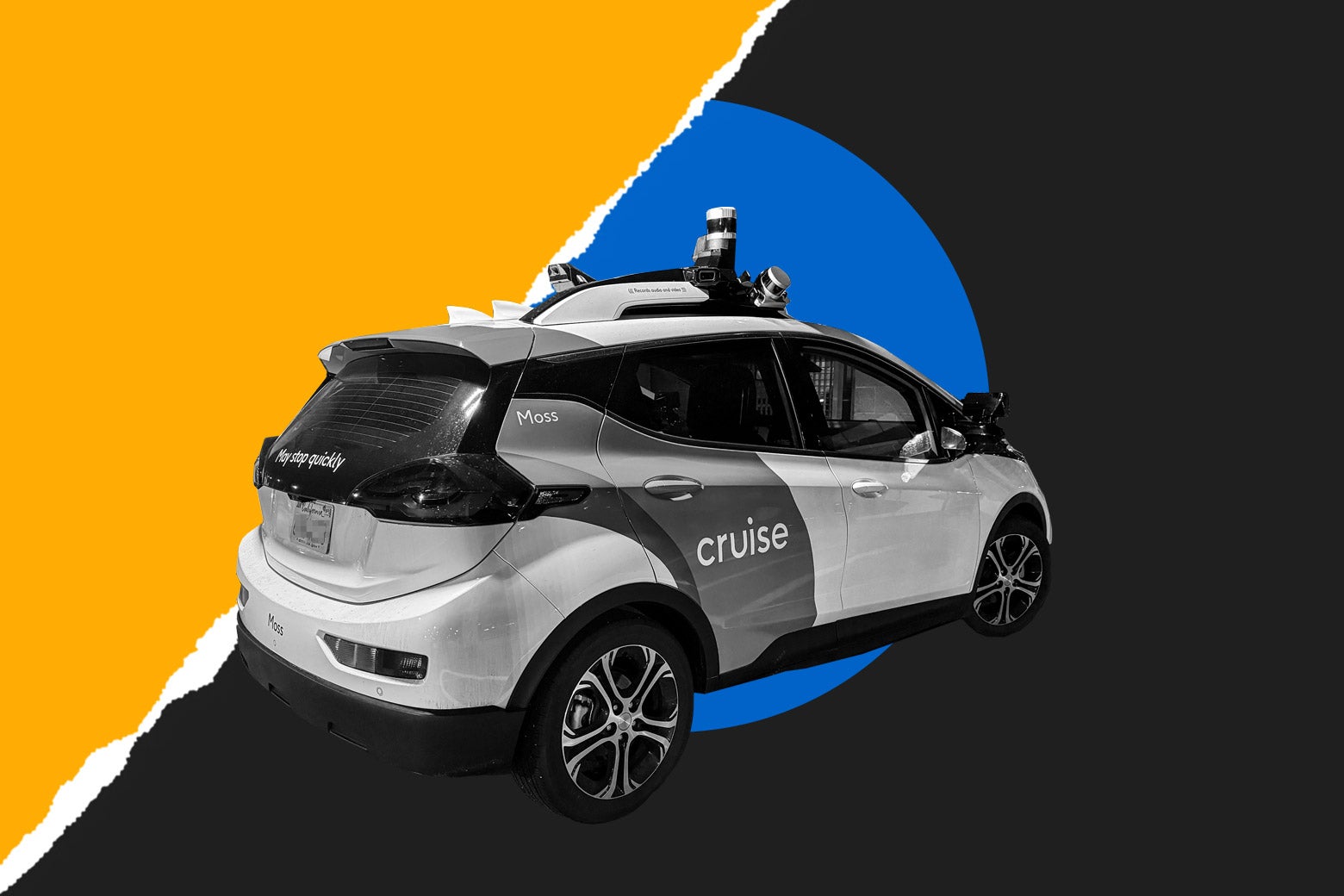
Only supervised operations will go ahead while Cruise halts it’s autonomous robotaxi services across the US. | Image: Cruise
Cruise, the autonomous vehicle operator backed by General Motors, says it decided to “proactively pause” its fleet of driverless cars across the United States. The operations halt comes just two days after Californian regulators suspended Cruise’s robotaxi permit in the state, claiming that its vehicles “are not safe for public operation.”
Earlier this month, the National Highway Traffic Safety Administration announced that it was investigating Cruise after receiving reports of pedestrian injuries involving the company’s driverless vehicles. One notable incident that occurred on October 2nd in San Francisco resulted in a woman becoming pinned under a Cruise robotaxi after being struck by another driver and thrown into the path of the...
Rental car company Hertz once envisioned itself as the ultimate EV broker, doling out battery-powered vehicles to business travelers, ridehail drivers, and tech newbies in an ambitious plan to grease the wheels for the EV revolution. The company inked agreements with Tesla and Polestar to buy nearly 200,000 EVs. Tesla’s valuation topped $1 trillion on the news.
But like many other aspects of the EV switch, that plan is running into some headwinds. This week, Hertz said it was tapping the brakes on its EV rollout, citing the plummeting resale value of its EVs and the high cost of repair.
Tesla has been slashing prices to spark sales as it finds itself wrestling with softening demand and more competition. And repair costs are about double...
Spooky season is in full swing, and retailers are already gearing up for the most wonderful time of year. This holiday season, the stakes are higher than ever for businesses to connect with their customers effectively and stand out in the crowd and retailers should be prepared for shoppers to start looking for deals earlier. With hundreds of billions of messages going through its platform each year, reaching more than 70% of the mobile phones across the globe, Infobip, a global cloud communications platform, has uncovered the key to success by reaching consumers in the palm of their hands. Infobip is the world’s most connected customer cloud communications platform – scaling customer communications over SMS, Email, Voice, WhatsApp.
“If you don’t know us, you probably have done business with us, says Ivan Ostojic, Chief Business Officer of Infobip. In this podcast, Ivan offers exclusive insights based on the analysis of over 6 billion interactions that occurred during peak shopping events like Black Friday, Cyber Monday, Diwali, Singles’ Day, and Prime Day. We also learn how Infobip’s role in making billions of transactions happen, translates into fresh opportunities for partners and a refreshed approach to thinking about the larger picture of markets and commerce. Infobip opens the door for partners to make wins on the fastest growing platforms for everything from information to purchases. “Infobip is the pace to be,” says Ivan.
We regret to inform you that Elon Musk, billionaire owner of a troubled website, has once again posted. On Sunday morning, Musk posted a picture of Wikipedia asking for a donation below a snoozing emoji. “Have you ever wondered why the Wikimedia Foundation wants so much money?” Musk asked in the next tweet. “It certainly isn’t needed to operate Wikipedia. You can literally fit a copy of the entire text on your phone! So, what’s the money for? Inquiring minds want to know…”
These are, of course, questions that it’s remarkably easy to answer that betray an incomprehensible ignorance of the Wikimedia Foundation or the idea of operating a service as a public good rather than a for-profit institution. But harping on Wikipedia is a hobby horse that Musk keeps returning to, putting the widely-used resource on blast and fomenting conspiracy theories about it to his audience of millions.
Wikipedia is one of the last good places on the internet. It’s a vast treasure trove of knowledge, copyright-free images, and important discussions. People across the planet can get a quick survey understanding of almost any topic in an instant in multiple languages. That this is still done in 2023 without dozens of ads littering the screen is nothing short of a miracle. A miracle made possible, in part, by donations from users.
And those users aren’t just readers. Wikipedia is far more than its public-facing website. Every day, millions of people gather on Wikipedia to fight over the facts displayed. Wikipedia doesn’t just preserve the some 22.14 GB worth of text displayed on its pages, it’s also preserving years of edits and arguments about how those words were written. Every page on the site is argued over, fussed about, and tweaked constantly. All those discussions are here, and can be pored over.
Running an ad-free website where millions of people gather every day to discuss facts and update scores of pages is a monumental task. It’s incredible that Wikipedia doesn’t often go down and has few technical problems. Most of the time, Wikipedia works without issue. The same is not true for X, formerly Twitter.
And where does the money go? The Wikimedia Foundation is a 501(c)(3) nonprofit organization that publishes its financial records that are routinely audited by third parties. Every year, it publishes portions of this financial audit for the public. According to its 2022 report, it received about $160 million in donations. It spent $88 million of this on salaries and wages for its employees, $2.7 million on internet hosting, and about $1.2 million on travel. It’s very easy to see these reports with a cursory search. A community note on Musk’s own post says as much.
How to fund Wikipedia has been a source of debate among its editors for almost the entirety of its run. There’s even a Wiki page that lays out the history of the debate, complete with a history of all the edits made to the page over the past two decades.
Wikipedia has issues, like any other website. But it’s obviously spending money on servers to keep things stable. And, unlike X under Musk, it’s not charging users $8 a month for the privilege of algorithmic placement, and $1 for basic functions, on top of running ads.
Crexendo’s NetSapiens Platform Winning Share, Growing Fast, in the Service Provider Market, Podcast: Crexendo Partner Growth Outpaces Industry Growth
Crexendo’s President, and COO, Doug Gaylor, says that Crexendo now serve over 220 licensees and has been adding at a pace of 18 new logos, in 2022 and again in 2023. That’s made Crexendo’s NetSapiens platform the third largest and the fasted growing in the massive US domestic market. In this podcast, recorded at the Crexendo #UGM23, Doug is joined by Jon Brinton, Crexendo’s CRO. We learn that as Cisco and Microsoft raised prices, Crexendo gained share, partners and enterprise customers over the course of the years since Crexendo and NetSapiens came together. “As they ignore their customer base, we’ve been getting knocks on the door,” says Doug. The growth has been documented by independent third-party analysts and was visible in the event held this past week in Scottsdale.
Branding: Crexendo Partner Growth Outpaces Industry Growth
Other available platforms seem to have been moving away from enabling partners to brand their services. Doug discusses what he describes as, “a more overt move to WebEx and WebEx calling, with the Cisco brand on it. With our solution its 100% brandable to the customer.” Doug notes that Crexendo serves 3.5 million users around the world all the while enabling their partners to own their customer relationships, develop their own brands and with API 2.0, be able to customize experiences and services to customer needs. Jon notes that most Crexendo licensees are growing faster than the industry is growing. Doug notes that Crexendo is now gaining ground in the international market. Crexendo’s typical licensee is a company that has migrated from a different platform, attracted by the per-use model, and the brand development opportunities.
UCaaS, CCaaS, CPaaS, CX and ease of application
Jon updates us on Crexendo’s commitment to develop new CCaaS and CX experiences and options and we learn how Crexendo is committed to making CPaaS an engine for further partner growth. Crexendo is also taking the approach of creating a large community of ecosystem solution partners who can give licensees a large portfolio of connected technologies to sell.
Microsoft CEO Satya Nadella with a Windows Phone. | Image: Getty
Microsoft CEO Satya Nadella is the third chief executive of the software giant to admit the company has made some serious mobile mistakes. Satya Nadella took over from former CEO Steve Ballmer in 2014 and, just over a year later, wrote off $7.6 billion related to Microsoft’s acquisition of the Nokia phone business.
In an interview with Business Insider, Nadella admitted that Microsoft’s “exit” from the mobile phone business could have been handled better. Asked about a strategic mistake or wrong decision that he might regret, Nadella responds:
The decision I think a lot of people talk about – and one of the most difficult decisions I made when I became CEO — was our exit of what I’ll call the mobile phone as defined then. In retrospect,...
In 2020, scientists decided just to rework the alphanumeric symbols they used to represent genes rather than try to deal with an Excel feature that was interpreting their names as dates and (un)helpfully reformatting them automatically. Yesterday, a member of the Excel team posted that the company is rolling out an update on Windows and macOS to fix that.
Excel’s automatic conversions are intended to make it easier and faster to input certain types of commonly entered data — numbers and dates, for instance. But for scientists using quick shorthand to make things legible, it could ruin published, peer-reviewed data, as a 2016 study found.
Through his time at the helm, Masarek says the company has taken on thousands of new customers, as well as achieving excellent results in terms of its financial and business restructuring.
Masarek also revealed it has made new senior hires and plans to release “greater and greater” functionality as part of its investment strategy.
Alan Masarek, Avaya’s Chief Executive Officer, reflected on the progress Avaya has made despite the financial challenges it has faced:
I announced recently that over the course of this very noisy year… we still added thousands of net new customers, over a thousand a quarter generally.
“It is a really good story in terms of how quickly we’ve been able to demonstrate that we’re the vendor to take care of the base and also add net new [customers] along the way.”
Avaya’s 14 months of “extraordinary progress”, which have resulted in a wave of new customers, stem from a fresh approach to business and finances that has been made possible with its clean financial slate.
Masarek explained that its finances were being used to invest in products, talent, engineering, and its customers.
From a product perspective, it is already “the best in the world” when it comes to voice, Masarek asserts. On top of that, it is now adding chat, social and digital channels, and various AI utilities.
Enterprise customers will be able to move to voice without changing their proprietary call flows, moving it as a dedicated instance in the public cloud instead.
This capability embodies Avaya’s “innovation with disruption” ambition, innovating on top via the cloud without disrupting the innovation beneath. This approach is particularly beneficial for large, complex, sensitive, or highly regulated organisations, Masarak says.
Customers may also be drawn to Avaya’s product offering because they are able to acquire a comprehensive solution and AI experience platform with proprietary hardware and service, plus support frameworks. Contact centre and unified communications can be brought together, resulting in a full customer and employee solution.
Avaya has also made additional hires who will be publicly announced within the next two months, according to Masarek.
The new hires will follow the recent additions of a chief financial officer, chief product officer, and chief marketing officer to its C-Suite in June this year.
Masarek offered his perspective on the future of Avaya: “It gives me a great sense of confidence that customers are responding to (Avaya’s transformation and) partners are responding to it.
“I think you’re going to see very quickly Avaya restore to a net grower while delivering good financial results on the bottom line.
Masarek continued:
“The financial disruption that we had before obviously created a great deal of noise but that is well behind us now… our best days are absolutely in front of us.”
You can watch the full interview with Alan Masarek, which took place at Gitex Global. This year, Gitex Global is being held between 16 – 20 October, “bringing together the world’s most innovative enterprises”, with more than 5,000 exhibitors from over 170 countries.
Alliance Enables Snom Distributors to Ship Zoom Phone “Ring Ready” Devices Across The Americas
TIGARD, OR – October 18, 2023 – Snom Americas, a leading provider of professional and enterprise VoIP phones, has announced a strategic alliance with Phonism, the world’s leading solution to deploy, manage, secure, and migrate devices at scale. The Snom-Phonism collaboration empowers distributors of Zoom Video Communications, Inc. (NASDAQ: ZM) globally offered Zoom Phone to have a seamless zero-touch deployment and installation experience for the Snom M500 DECT phone system and other Snom-certified SIP devices.
The Snom-Phonism alliance means resellers and end-users will enjoy a hassle-free experience when the Zoom-certified Snom telephones arrive. By integrating Phonism’s robust platform, Snom devices are automatically pre-configured by distributors and already working with Zoom Phone. This ensures the Zoom-certified Snom phones are delivered “Ring Ready,” eliminating customer configuration errors often impacting other SIP phone manufacturers and endpoints.
“Snom Americas is always looking for ways to enhance the user experience. By collaborating with Phonism on ‘Ring Ready’ deployments, we ensure that our Zoom-certified devices, especially the popular Snom M500 DECT phone system, are fully operational with Zoom Phone,” said Marc Magliano, Snom Americas’ Vice President-Channel Business-The Americas. “This alliance is a testament to our commitment to simplicity and efficiency.”
As remote work and digital communication continue to rise, the demand for reliable and easy-to-use cloud telephony solutions is more critical than ever. This alliance between Snom Americas and Phonism ensures that businesses using Zoom Phone can effortlessly integrate Snom’s DECT and certified devices, enhancing their communication capabilities without the technical hurdles.
“Our mission at Phonism has always been to simplify VoIP device management. Aligning with Snom Americas allows us to further this mission, making it easier than ever for Snom distributors and Zoom Phone resellers to provide their customers with a seamless experience,” said Phonism CEO Steve Lazaridis.
Phonism’s integration with Zoom Phone allows businesses to deploy, manage, secure, and migrate devices to Zoom Phone effortlessly. Connecting these platforms provides an automatic hierarchy sync and imports devices into a feature-rich admin and user experience. Phonism offers a compliance lock for supported devices on Zoom Phone, further preventing the tampering or misconfiguration of settings and firmware. Technician onsite visits and truck rolls have become a thing of the past, and 95% of device support tickets are eliminated.
Key benefits of Phonism’s integration with Zoom Phone include:
Zero-Touch Provisioning of Zoom Phone-certified Snom devices
Accelerated Migrations to Zoom Phone
Enhanced security, performance, and experience with Compliance Lock
Visual Button Management
Remote Command + Control
Bulk Moves, Adds, Changes, Deletes
Network + SIP Management Tools
For more information about this alliance or to explore the range of Snom devices optimized for Zoom Phone, please visit Snomamericas.com.
About Phonism
Phonism is the world’s leading solution to deploy, manage, secure, and migrate devices at scale. With a focus on centralizing and simplifying, Phonism enables businesses to use previously unsupported devices on the platform of their choice.
Once a year like clockwork, the telecom industry trade association releases a study claiming that if you squint just right–broadband prices have dropped year after year. It’s their annual attempt to pretend (and to help the politicians that coddle them pretend) that the U.S. broadband market isn’t heavily monopolized and woefully uncompetitive.
Last week, AT&T-backed telecom trade org US Telecom released a new study once again claiming that the U.S. broadband market is secretly super competitive and that consumers have seen amazing price reductions over the last decade in the cost of broadband service. So amazing, that the report claims that the most popular tiers of service saw an 18 percent reduction in cost.
But as telecom sector consultants like Doug Dawson note, to achieve this illusion the report is highly selective with its comparisons. For example it fixates heavily on how the cost over time to buy a megabit of speed has dropped thanks to better networks or faster speeds. But it avoids discussing how, given the way these companies package products and upsell you, prices on the tiers people actually use continue to rise significantly.
For one thing, the report has fun comparing the cost of premium tiers from years’ past to the non-premium products of today:
“Again, with Comcast, the basic 16/2 Mbps broadband in 2009 cost $52.95 and also required a $10 modem. Today, the basic price for 300 Mbps broadband is $93 with a $15 modem. That’s an increase since 2009 of $45, a 72% increase. The authors of the report would have instead pointed to the 50/10 Mbps product as the most comparable product – but in 2009, that was a premium product priced at $149.95 plus a $10 modem. The report would say that the price of broadband has dropped.”
Another key problem with most of these studies: a lot of the high costs of service are tacked on to your advertised rate after you subscribe. For example these studies don’t include numerous bullshit fees (see: the “Internet Cost Recovery Surcharge“), or arbitrary and unnecessary usage caps and overage fees. The reports also don’t discuss the pricing tricks ISPs play with bundling, where the price of broadband is often significantly more expensive if you refuse to bundle TV or phone service or sign long-term contracts.
These kinds of reports are effectively disinformation, peddled to captured regulators and lawmakers so that they can help industry pretend that decades of coddling regional mono/duopolies doesn’t cause market harm. It’s the same reason the telecom industry has historically fought against better broadband maps, given more accurate data would illustrate the painful lack of competition in most U.S. markets.
It’s worth noting that not only does the U.S. FCC never tackle (or even address) monopoly (or duopoly) power. But it also refuses to collect and share local pricing data, given that would only act to illustrate market failure. A very broken and unpopular industry lies and pretends everything’s fine, and regulators, with the occasional, fleeting exception, are generally happy to help sell the illusion.
By Dave Michels By not adopting RCS, the Cupertino company is holding back the convenience and security of anyone who uses messaging anywhere in the world.
Elon Musk’s X, formerly Twitter, is the first company to face an EU investigation under a new law designed to hold online platforms more accountable for harmful content. | Chesnot/Getty Images
Europe’s probe into harmful content on X about the Israel-Hamas war tests a new law that could reshape the internet.
It’s no mystery that after buying Twitter, now known as X, Elon Musk has taken steps to weaken the platform’s defenses against unchecked amplification of misinformation. In early October, the Israel-Hamas war became the first real test for how X now handles major breaking news events. By many accounts, it’s not going well.
It’s clearer than ever that X has changed more than just its name. Misinformation has circulated freely on X in the minutes, hours, and days following Hamas’s attack on Israel. Musk even used his own X account to direct users seeking news on the war to two verified accounts that have a clear history of sharing false information.
Regulators in Europe, however, are trying to check the power of big tech companies by testing a new law that seeks to make social media companies more accountable and transparent. The European Unionis investigating X’s handling of hate speech and misinformation related to the Israel-Hamas war, the first of its kind under the new Digital Services Act (DSA) which went into effect in late August.
This test of the DSA’s reach could have real consequences for social media companies, and the outcome could change the experience of being online well beyond Europe. While some tech companies have rolled out new transparency features for European users that are unavailable elsewhere, it’s likely going to be difficult for tech companies with a global reach to maintain two versions of their products — one DSA compliant, and one not — indefinitely.
In the US, Section 230 shields tech companies from liability for the content their users post. The DSA replaces the EU’s e-Commerce Directive, which was enacted in 2000 and contained similar liability shields for Big Tech companies operating in Europe. While the DSA doesn’t remove these shields, it does define the responsibilities an online service operating in Europe has to its users. The law also requires companies to be more transparent about their moderation and content curation, and limits the scope of targeted advertising. (Meanwhile, the US Supreme Courtdeclined to define the limits of Section 230 protections in a pair of decisions issued last May,leaving the future of free speech online in question.)
Digital rights groups in the US have monitored the DSA’s adoption, along with how Silicon Valley companies respond to it. While there are still a lot of variables for this largely untested set of regulations, the DSA has the potential to influence policy reform globally and could change how these platforms operate beyond Europe.
To catch you up, here’s a guide to the DSA, its investigation into X, and what might come next.
Has misinformation on X really been that bad?
In the hours after the Hamas attack on Israel began, users subscribed to X Premium — whose accounts show a verified check mark and get boosted engagement in exchange for a monthly fee — spread a number of particularly egregious pieces of misinformation. According to a running tracker by Media Matters, these accounts amplified a fake White House memo claiming the US government was about to send $8 billion in aid to Israel; circulated videos from other conflicts (and in some cases, footage from a video game) while claiming they showed the latest out of Israel and Gaza; falsely claimed that a church in Gaza had been bombed; and impersonated a news outlet. These posts were shared by X users with huge followings and viewed tens of millions of times. The Tech Transparency Project said on Thursday that it had identified X Premium accounts promoting Hamas propaganda videos, which were viewed hundreds of thousands of times.
Why does it matter if there’s a bunch of misinformation on X?
The impact of paid X accounts posting terrorist propaganda videos is probably self-evident, but the reasons to care about the spread of misinformation go beyond enabling literal war propaganda. Scammers and grifters are using war footage to gain social media followers. Misinformation, when viewed widely enough, can shape policies and beliefs that impact real people’s lives. It can incite violence against people or groups by triggering anger and outrage in its quest to get views. There are real harms here to real people.
While X has never been exactly great at surfacing only accurate information during a major breaking news event, its chronological timeline and brevity made it a useful and important tool for accessing a sea of information from a variety of sources during rapidly changing moments in history. This was especially true in the early- to mid-2010s, and the platform remained more useful than not, some would argue, until late October 2022, when Elon Musk completed his purchase of Twitter. The billionaire quickly moved to prioritize the content of paying users in everyone’s feeds.
In the year since taking over Twitter and turning it into X, Musk has overseen a reduction in the platform’s capacity to moderate hate speech and misinformation, dissolved the site’s Trust and Safety Council, and ended its identity verification system for influential accounts. Instead, the platform now rewards blue check mark badges that are identical to the old verified check marks exclusively to X’s paying subscribers, who do not undergo a verification process. In late September, X also removed a feature allowing users to report content containing misleading information.
Another reason why you should care about misinformation is simply X’s power users. Despite Musk’s best efforts, a ton of journalists, experts, politicians, and influential people still use X as an information source. None of the platforms that emerged as possible Twitter replacements over the past year have captured the access to attention and power that characterized the site’s usefulness. So, X remains an efficient tool for reaching a lot of people who have large audiences of their own, which means that when falsehoods catch on there, they spread.
What exactly is this new law the EU is enforcing?
The Digital Services Act (DSA) governs some pretty important aspects of how Big Tech companies moderate content in Europe. Passed in 2022, the DSA went into effect just months ago, and it requires certain sites designated as “very large online platforms” to abide by the EU’s rules in order to operate in Europe. Those 19 platforms includeAmazon, Apple’s App Store, Facebook, several Google services, Instagram, TikTok, and, of course, X.
The rules are designed to make platforms more responsible for the content they host and recommend, and more transparent about how their algorithms work. The DSA outlines moderation, reporting, and transparency standards, bans targeted advertising based on race, religion, gender identity, and other sensitive categories, as well as targeted advertising to children. The rules also require platforms to take actions to assess the risks of and slow the spread of disinformation, illegal content, violence, election integrity, and human rights.
The new law is enforced by the EU’s Commission, which also wrote the law, along with the European Centre for Algorithmic Transparency, which was created by the EU and employs scientists and other researchers with relevant expertise.
Companies that don’t comply with the DSA’s rules will face penalties, including fines of up to 6 percent of their annual revenue (X had an annual revenue of $5.08 billion in 2021, the last full year that the company released financial results before going private under Musk. Using that number, X could face fines of up to $300 million. Musk has said he expects X to make around $3 billion in 2023). While many of the requirements have to do with transparency and reporting, the DSA has already changed how some of these platforms operate in the region. For instance, TikTok and Meta have allowed European users the option of turning off personalized feeds.
What prompted the EU to go after X? How did X respond?
EU commissioner Thierry Breton posted an open letter on X on October 10 in which he warned Musk that the EU had “indications” that X was being used “to disseminate illegal content and disinformation in the EU,” and reminded Musk of the DSA’s “very precise obligations regarding content moderation.”
In the letter, Breton names a couple of specifics. First, he writes that recent policy changes have introduced uncertainties around how X enforces its rules and what content is even permitted in the first place. Second, Breton says they have reports from “qualified sources” of illegal content continuing to circulate on X after being flagged by authorities. He also told Musk that X was required to have “proportionate and effective mitigation measures” for disinformation.
In a post on X, Musk replied to Breton’s letter, writing that X’s policy was to keep everything “open source and transparent,” and asked Breton to “list the violations you allude to on X, so that that [sic] the public can see them.” Breton then replied that Musk should be “well aware” of the content reported to X by users and authorities, to which Musk insisted he’d only address them if posted publicly.
X CEO Linda Yaccarino released an open letter the following day defending X’s response to disinformation and illegal content on the platform, arguing that X is “committed to serving the public conversation, especially in critical moments like this ... there is no place on X for terrorist organizations or violent extremist groups and we continue to remove such accounts in real time, including proactive efforts.” According to Yaccarino’s letter, X has removed “tens of thousands” of pieces of content since the Hamas attack.
The European Commission sent a formal request for information to X on October 12, seeking material pertinent to “its policies and actions regarding notices on illegal content, complaint handling, risk assessment and measures to mitigate the risks identified.” X is required to respond to the request by October 18 or it could face fines.
What about the other big platforms, like Facebook and TikTok?
Breton also wrote letters to the chief executives of Meta, TikTok, and YouTube.
The EU commissioner asked Meta CEO Mark Zuckerberg to “ensure that your systems are effective” for responding to illegal content on Facebook and Instagram related to the Israel-Hamas war. The letter, published on October 11, also asks Zuckerberg to respond to a request for information on Meta’s measures to mitigate deepfakes and disinformation targeting election integrity.
The letter to YouTube CEO Neal Mohan reminded the platform of its obligation under DSA to prevent children and teenagers from viewing violent content, including hostage videos and war propaganda.
Breton also referenced a young user base in his letter to TikTok CEO Shou Zi Chew, arguing that TikTok’s rising popularity as a news source underlines the need to make sure “reliable sources” are “adequately differentiated from terrorist propaganda.” Breton asked TikTok to “step up” its enforcement efforts, report back, and “respond promptly” to requests from European law enforcement agencies.
But as of now, X is the only platform that the EU has sent a formal request for information.
What happens next?
The EU’s investigation into X is the first public case targeting a large tech company under the DSA since it went into effect a couple months ago. So, there are a lot of things we just don’t know about how this will play out. Remember, the DSA authorizes the EU to issue penalties for violating the DSA’s regulations, and also for failing to comply with the investigation’s procedures.
Some experts have raised concerns about Breton’s initial communications with X and questioned whether the letter’s warnings would turn out to be enforceable. The Center for Democracy and Technology’s Asha Allen referred to the letter to Musk as a “misstep,” one that could end up infusing uncertainty into the DSA’s provisions and weaken the impact of its enforcement attempts.
Breton told Politico his agency would “thoroughly enforce” the DSA. If nothing else, the investigations into X indicate that they are following through on that promise.
Still, the DSA’s regulations are complicated to enforce and require expertise on the inner workings of algorithmic design and moderation practices. Those barriers prompted the EU’s creation of an entire research agency staffed with experts in order to identify hard evidence of DSA rule violations. As the New York Times reported in September, any enforcement is likely to get tied up in court once the EU does penalize a big tech company for violating the law.
If the DSA’s provisions withstand these tests, Big Tech companies will need to adopt their platforms for a new era of tech regulation that more directly addresses the variety of online harms in the current era of the internet. But the EU’s policy reforms aren’t the only source of pressure here: Legislators in the US have for years been pushing to pass Section 230 reform, even if the law’s most vocal critics don’t exactly have the same priorities in mind.
Smart thermostat manufacturer Ecobee’s newest product is a video doorbell that streams to its thermostat. | Image: Ecobee
Ecobee’s newest video doorbell can show a live view of your front porch on your thermostat. But that’s not the only clever synergy the smart home company has up its sleeve.
Compromised Skype accounts are allegedly being hacked to spread the DarkGate malware, while Microsoft Teams has also been targeted.
As reported by Trend Micro, multiple Skype business accounts had been compromised and then used as an environment to distribute a VBA loader script attachment. It is unconfirmed how the Skype accounts became compromised, but Trend Micro suggested that it was “either through leaked credentials available through underground forums or the previous compromise of the parent organisation”.
Access to the victim’s Skype account meant the hacker could hijack an existing messaging thread and develop the naming convention of the files to relate to the chat history’s context.
Trend Micro’s report wrote:
In the main case discussed, the Skype application was legitimately used to communicate with third-party suppliers, making it easier to penetrate and/or lure the users in accessing the malicious file. The recipient was just the initial target to gain a foothold in the environment. The goal is still to penetrate the whole environment, and depending on the threat group that bought or leased the DarkGate variant used, the threats can vary from ransomware to crypto mining.”
The hackers changed the script file’s name so victims would recognise it as a PDF rather than a VBS. If a victim were to download and run the script, they would download a second-stage AutoIT payload. This included the malicious DarkGate malware code.
Skype wasn’t the only Microsoft UC and collaboration platform targeted, with Teams also reportedly addressed by the hackers.
The actors attempted to compromise the Teams accounts of organisations whose Teams configurations enabled messages arriving from external users.
What is DarkGate?
DarkGate is a malware-as-a-service (MaaS) or commodity loader first identified in late 2017. Versions of DarkGate have been advertised on the Russian language dark web forum eCrime since May 2023. DarkGate leverages a Windows-specific automation and scripting tool called AutoIt to deliver and execute its functionality.
DarkGate includes a holistic range of features, including the ability to execute discovery commands (such as directory traversal), to introduce remote access software (including remote desktop protocol or RDP and hidden virtual network computing or hVNC), to allow cryptocurrency mining functionality, perform keylogging, steal data from browsers, privilege escalation, and the ability to self-update and self-manage.
Trend Micro also reported that since law enforcement agencies tackled Quakbot this summer, there has been a resurgence in the use of DarkGate.
It now has complete feature parity for nearly all features, such as call queues, PSTN calling, and contextual search in chats and channels. General availability also adds new features and enhancements, including seamless cross-tenant communication and collaboration across multiple tenants and accounts.
In March, Microsoft launched the new Teams app in public preview, and it attracted attention for being twice as fast, with 50 percent less memory usage on Windows than the Teams classic client.
This product bolsters AMC’s comprehensive portfolio of pre-built applications and is designed to smoothly integrate and personalize experiences for agents and customers. DaVinci for Teams integrates CRM interactions from CCaaS, telephony systems, and internal comms through the Teams platform.
DaVinci for Teams also extends critical customer data access to several business units, such as marketing, finance, customer experience, and overall organizational decision-making.
This week, Crestron’s multi-camera switching offering, Automate VX, received a “first-of-its-kind” certification as a Microsoft Teams Room Device for large and extra-large rooms.
Automate VX provides excellent meeting experiences with production-style cuts that Crestron described as “unparalleled” in the market, elevating Teams meetings to the next level. The announcement illustrated the latest collaboration in Crestron and Microsoft’s 15-year partnership, with both businesses working together to produce optimal meeting experiences.
Meta will now let you block Instagram from collecting your data across the apps and websites you visit. The company says that it’s expanding the ability to disable this kind of tracking to Instagram, allowing you to review which businesses are sharing information with Meta, disconnect specific activity, or clear the collected information.
You can now find this feature, called Activity Off-Meta Technologies, within the platform’s Accounts Center. It was previously only available for Facebook. Meta receives information from third-party websites that use its business tools, such as the Meta Pixel, which tracks users on the web and allows Meta to serve personalized ads on its platforms.
It’s happening: people are once again walking into public places wearing a video-recording face computer on their heads. Only this time, the faceputer is sold by Meta, not Google.
Over the weekend, as buyers got their first uninterrupted stretches of time with the new Meta Quest 3 headset, some started posting videos of themselves interacting with the real world instead of playing games.
Sure, it’s cool to blast low-poly baddies breaking through your walls, but isn’t it more technically impressive that Meta’s new headset lets you cook a meal or sweep your floors or...


 The MAXHUB XCore Kit
 Yealink MeetingBar A10 with the CPT18 Touch Console