Vincent.rech
Shared posts
Companies showcasing more SiC semiconductors and auto innovations at Autotronics Taipei 2023, says DIGITIMES Research

Kuo: iPhone 11 Pro and iPhone 11 Pro Max Have Accounted for Combined 55% of Pre-Orders
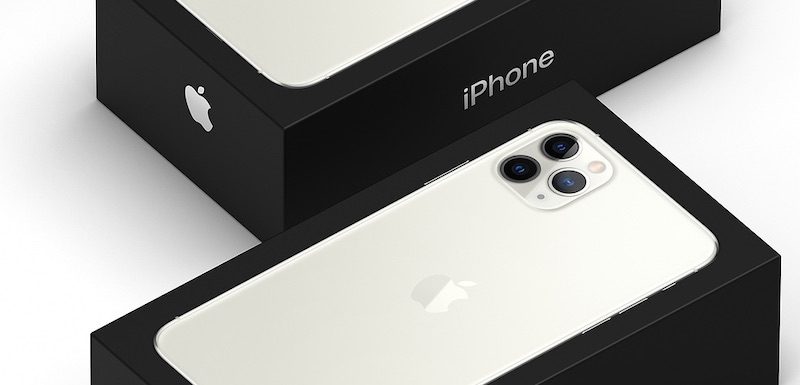
In a follow-up research note with TF International Securities today, seen by MacRumors, Kuo now specifies that the iPhone 11 Pro and iPhone 11 Pro Max models have accounted for 55 percent of pre-orders to date. By extension, that would mean the lower-priced iPhone 11 has comprised 45 percent of pre-orders.
Kuo notes that shipment volumes of the higher-end OLED display models are "better than last year." A year ago, he estimated the iPhone XS and iPhone XS Max would account for a combined 40-45 percent of 2018 iPhone lineup shipments.
While the iPhone 11 should be the best-selling iPhone of the 2019 lineup, Apple's push towards monthly installments like the iPhone Upgrade Program may be convincing more customers to opt for the higher-priced models, as the $999-plus price tags are less steep when they are spread out over two years.
Apple no longer shares iPhone pre-order figures, nor has it ever disclosed iPhone sales on a model-by-model basis, so it is unclear how Kuo's "survey" results are determined, but Apple's online shipping estimates are one factor.
In today's note, Kuo also reiterated that 2020 iPhones will feature 3D sensing time-of-flight rear cameras with 7P lenses.
This article, "Kuo: iPhone 11 Pro and iPhone 11 Pro Max Have Accounted for Combined 55% of Pre-Orders" first appeared on MacRumors.com
Discuss this article in our forums
Huawei slashes short-term IC orders for TWS devices
HiSilicon continues ramping up 7nm chip orders placed with TSMC
NAND down we goooo: Flash supplier revenues plunged in first quarter
Oversupply blues set to continue into the second too
Oversupply is a pain in the collective rear for flash suppliers – a price crash caused market revenues to slump by almost a fifth to $10.792bn in calendar Q1 compared to the prior quarter.…
What Phone Tethering is, And How to Use It

You might have heard of the term “phone tethering” before. In case you didn’t know what it meant, David Nield put together a guide explaining the term and how to use it.
We’re going to focus largely on wifi tethering here—creating a wifi hotspot from your phone or tablet—but you do have other options. If you’ve got a spare USB cable you can create a more stable connection between laptop and mobile device, or you can tether via Bluetooth, which is significantly slower but less taxing on battery life.
I’ll put an addendum here. Tethering depends on your carrier, and some carriers don’t allow it, like prepaid carriers. I used to use Net10 and I couldn’t use create a Wi-Fi hotspot.


A Sneak Peek at our Core i9-9900K Sample

Before I had even landed back home from Intel's 9th Gen announcement event in New York, the Core i9-9900K sample from Intel had arrived. We still have some time before we can publish our results, but we can still take a look at how Intel packaged it up for us. A fair warning: we didn't get the flashy d12 case shown on stage.
This One Doesn't Roll
Shown on stage at Intel's event was a brand new flashy box design in the form of a dodecahedron. It looks exactly like a 12-sided die, similar to those used in dice-based games such as D&D. Its full size isn't much more than the size of one's hand.
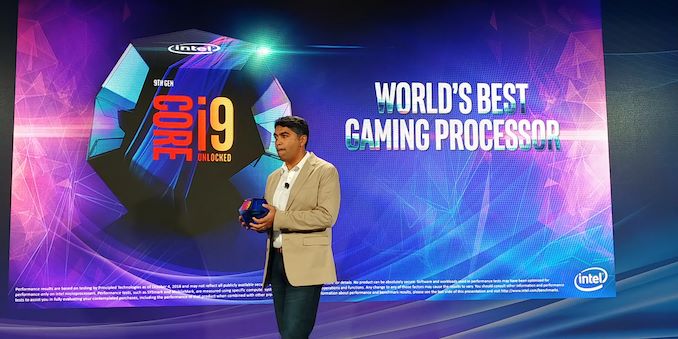
Here is Intel's Anand Srivatsa holding the flashy design on stage. Roll for initiative, I guess?
| Intel 9th Gen Core | |||||||||
| AnandTech | Cores | TDP | Freq | L3 | L3 Per Core |
DRAM DDR4 |
iGPU | iGPU Turbo |
|
| Core i9-9900K | $488 | 8 / 16 | 95 W | 3.6 / 5.0 | 16 MB | 2.0 MB | 2666 | GT2 | 1200 |
| Core i7-9700K | $374 | 8 / 8 | 95 W | 3.6 / 4.9 | 12 MB | 1.5 MB | 2666 | GT2 | 1200 |
| Core i5-9600K | $262 | 6 / 6 | 95 W | 3.7 / 4.6 | 9 MB | 1.5 MB | 2666 | GT2 | 1150 |

Intel is releasing three processors next week, although Intel is only sampling the Core i9-9900K.
The Press Kit
Instead of the dodecahedron, Intel plumped for a customized box. Inside, we were greated with our name.
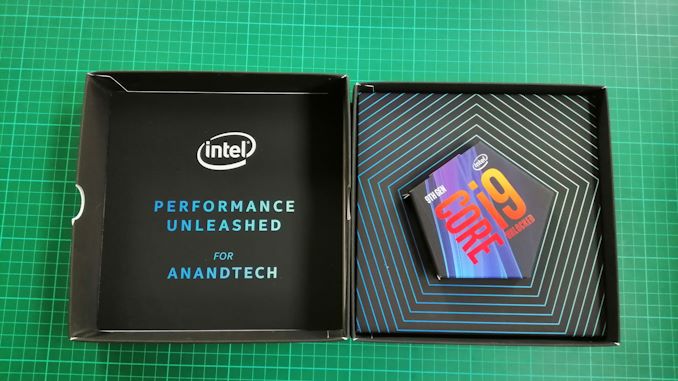
Intel's big thing for the Core i9 and the 9th generation parts is the motto 'performance unleashed', by moving up to eight cores on the Core i9 series. All of this inside is cardboard, with the processor underneath.
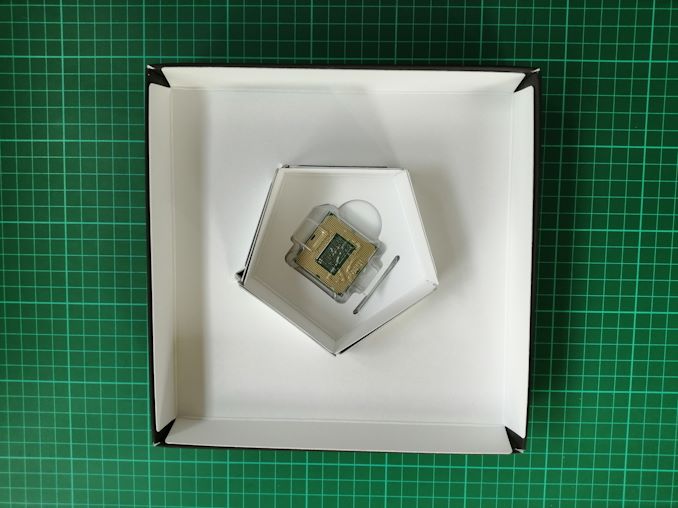
Intel has supplied the press with engineering samples, that show off the S-Spec name of QQPP, and the base frequency of 3.60 GHz.
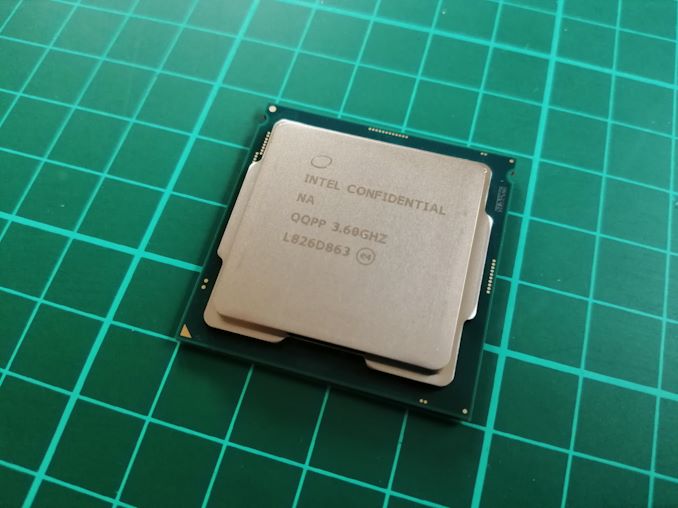
There's not much else to say. Intel is sampling the Core i9-9900K only, and motherboard vendors have started shipping out samples. We have reviews of the motherboards soon, and our 9th gen review will be going live on the embargo day, October 19th.
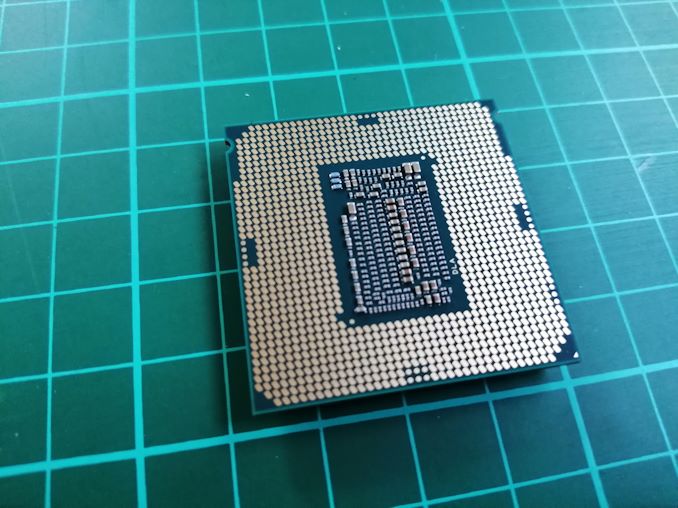
Edit: Peek for Peak in title. Too many peeks.
Discover Cashback Debit Cards Now Work With Apple Pay
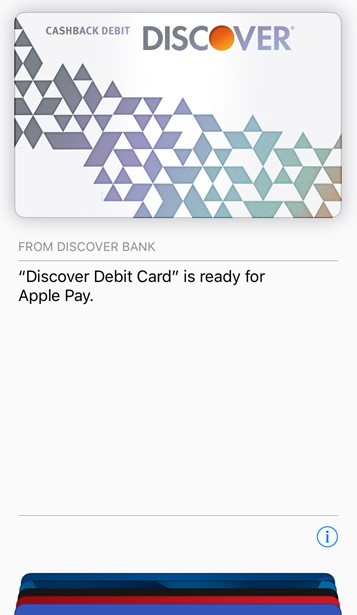
Discover Cashback Debit cards are issued to customers with a Discover online checking account. Cardholders will continue to receive 1% cashback on up to $3,000 in qualifying debit card purchases each month when paying with Apple Pay.
To use the card with Apple Pay, simply open the Wallet app on a compatible iPhone and tap on the plus symbol in the top-right corner. Then, position the card within the camera viewfinder, or tap on Enter Card Details Manually.
Discover credit cards have worked with Apple Pay since September 2015, with support for redeeming cashback bonuses added last year.
In related news, pharmacy chain CVS has completed its rollout of Apple Pay in the United States. Wholesale retailer Costco and convenience store chain 7-Eleven also recently began accepting Apple Pay in the United States.
Discuss this article in our forums
Security Researcher Discovers Snippet of CSS Code That Forces iOS to Reboot, Apple Investigating
 A new iOS vulnerability was discovered by a security researcher over the weekend, causing affected iPhones and iPads to crash and restart when following a link to an HTML page hosting specially crafted CSS code.
The vulnerability hits the WebKit rendering engine used in Safari by applying a CSS effect -- "backdrop-filter" -- that requires enough heavy graphics processing to cause iOS to crash completely.
Software engineer and security researcher Sabri Haddouche, who works for encrypted messaging app Wire, discovered the vulnerability and shared videos of its effects on Twitter. Haddouche also discussed his findings with ZDNet:
"The attack uses a weakness in the -webkit-backdrop-filter CSS property, which uses 3D acceleration to process elements behind them," Haddouche told ZDNet in an interview.Apple has been notified of the vulnerability, and Haddouche confirmed that the company is actively investigating the issue. The researcher also notes that the CSS code in its current form will freeze Safari on macOS "for a minute," and then slow it down, but the Mac won't crash. However, a modified version with Javascript could end with the same outcome as the iOS version, crashing the Mac computer that it's on.
"By using nested divs with that property, we can quickly consume all graphic resources and freeze or kernel panic the OS."
Haddouche didn't publish the modified macOS vulnerability because once the computer reboots, Safari persists and the browser is automatically launched again with the same result, resulting in a cycle of reboots. The researcher says that he discovered the vulnerabilities during research for denial of service bugs on different web browsers.
Discuss this article in our forums
How to See Which Apple Products Have Extended Repair or Recall Status
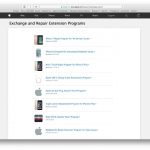
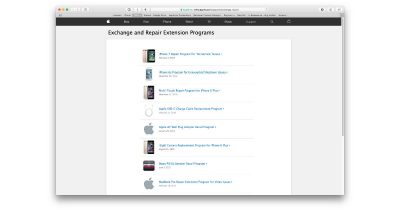
Sometimes Apple extends device warranty coverage for specific issues, and keeps a list online so it’s easy to know if you have something that’s potentially due for repair or replacement.

Stealthy Start-Up L2 Drive
Apple Interested in Developing ARM-Based Mac Processors and iPhone Modems in House
Apple has reportedly "invested in research and development" for baseband modem chips -- currently sourced from Intel and Qualcomm -- which are required for cellular communication features on Apple's mobile devices. Analysts pointed towards Apple's legal fight with Qualcomm, and its poaching of Qualcomm modem chip engineer Esin Terzioglu, as examples to bolster the theory that the Cupertino company is ready to build its own modem chips.
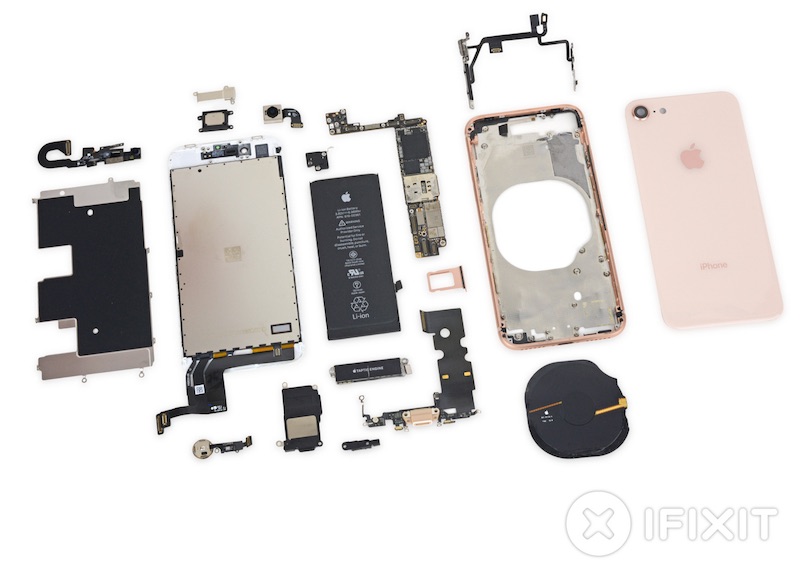 iPhone 8 teardown by iFixit
Building its own core processor chips for MacBooks would reduce Apple's dependence on Intel, with two industry sources stating that Apple would instead build its notebook chips using ARM Holding's technology, a British company that designs ARM architecture and licenses it out to other companies. Apple's interest in designing chips that integrate touch, fingerprint and display driver functions is said to be because the company "wants to control next-generation display technology and some related key components."
Multiple analysts provided theories behind Apple's move to design more of its own chips for its products, which included staying on the forefront of artificial intelligence, lowering production costs, better protecting proprietary technology, and more.
"By designing its own chips, Apple can better differentiate itself from others. Further, depending too much on other chip suppliers in the age of artificial intelligence will deter its development," said Mark Li, a Hong Kong-based analyst with Sanford C. Bernstein.Apple has long designed and built the core processing chips found in iPhones and iPads, but this year reports began to emerge of the company's hope to expand the amount of internal iOS device components that it creates on its own. In April, Apple informed Imagination Technology that it would stop using its graphics technology over the next two years, aiming to make its own graphics processing chips and lessen its reliance on the supplier. Less official was a prediction by analyst Karsten Iltgen that Apple would drop Dialog Semiconductor from its supply chain and move to its own in-house power management chips for iPhones by 2019.
"We believe that more system houses will design their own chips. The purposes are to develop and protect their proprietary technology information, to make more efficient chips for their unique need, to lower [costs] and to do inventory control better and keep all logistic operation confidentially," Samuel Wang, a U.S.-based analyst at research company Gartner, said..
This week, Apple was part of a consortium that purchased Toshiba's much-sought-after NAND memory chip unit for $17.7 billion, another move that will eventually allow Apple to be less reliant on other suppliers for device components. Still, many of Apple's in-house chip production lines are many years off, with analyst Mark Li stating that it's "unlikely" Apple will be able to debut its own components -- specifically referring to the modem chips -- within the next two years.
Discuss this article in our forums
Apple Reportedly Working With Chinese Manufacturer of Electric Vehicle Batteries
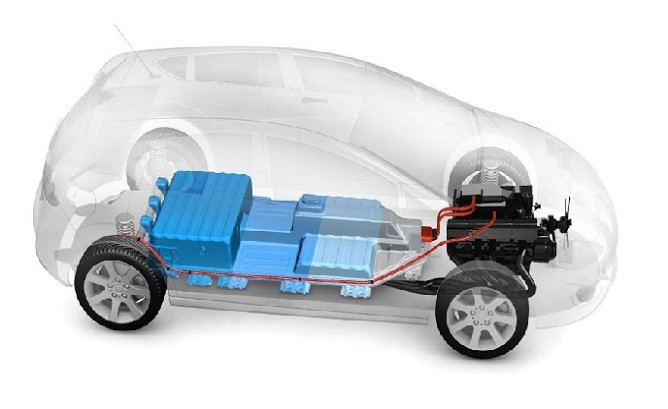
The report, citing unnamed sources, claims the two companies have signed a confidentiality agreement to work together on a "scheme" related to the field of batteries, but no specific details were provided.
CATL was founded in 2011 as a spinoff of Amperex Technology Limited, a large supplier of batteries for iPhones and other Apple products.
The company, based in Ningde, China, describes itself as a leader in lithium-ion battery research and development, including battery cells, materials, and recycling. CATL says it currently has more than 3,700 full-time R&D personnel from a number of well-known universities and laboratories around the world.
CATL claims it has been the world's third largest manufacturer of hybrid and electric vehicle batteries for the past two consecutive years, behind Chinese rival BYD and Panasonic, which supplies Tesla with batteries. The company's lithium-ion batteries are used in both passenger vehicles and buses.
The purpose of Apple's involvement with CATL remains unknown, as the iPhone maker reportedly abandoned plans for its own electric vehicle, at least temporarily, last year. Apple has instead emphasized its interest in autonomous technologies.
"We're focusing on autonomous systems," said Tim Cook, Apple CEO, in an interview with Bloomberg Television's Emily Chang last month. "It's a core technology that we view as very important."
In recent months, Apple has pivoted to an autonomous driving software platform being developed under the leadership of Bob Mansfield. Apple has been testing its self-driving software using a fleet of Lexus SUVs, which have been spotted on streets in California after Apple received a permit from the DMV.
CATL plans to increase its battery output to 50 gigawatt hours by 2020, which could make it one of the industry's two largest manufacturers. The other, Tesla, expects total output from its Gigafactory in Nevada to reach at least 35 gigawatt hours, with the potential for up to 150 gigawatt hours, by 2020.
The company's other goals by 2020 include significantly reducing battery costs, improving energy density, and increasing the speed of charging. Last year, it demonstrated a 4C fast-charging solution that takes only 15 minutes to charge a lithium-ion electric vehicle battery to the 90 percent level.
Discuss this article in our forums
Microsoft: Can't wait for ARM to power MOST of our cloud data centers! Take that, Intel! Ha! Ha!
Redmond fires bullet into WinTel beast's belly
Pic Microsoft today signaled more than half of its cloud data center capacity is set to be powered by 64-bit ARM servers.…
Apple’s Single Sign-on Adds ABC, Disney Support

Apple TV’s single sign-on feature went public yesterday with several channels on board, and today Watch Disney and Watch ABC are joining the list. Single sign-on lets users enter their cable and satellite credentials once instead of individually for each channel.

NAND Supply Tightness Continues (still)
TRENDFOCUS just recently concluded another trip through the U.S. and Asia. Once thing is for certain – NAND tightness continues…. And will continue through most of 2017. From a pricing perspective, this means continued higher prices for SSDs in the market.
With all major NAND vendors continuing to focus on trying to ramp 3D NAND (most of them on their first generation) challenges persist. Even as this new NAND technology ramps, getting this NAND qualified with new controllers and new SSD platforms will take some time. So the narrative remains the same – there is only so much planar NAND to go around, and 3D NAND is a 2017 product, at best.
SSD prices have increased in the last couple quarters – anywhere between 3%-15%, and it appears that there will be only little relief during the first half of 2017, with flat pricing being the best outcome. Even with these pricing challenges, SSD attach rates for notebook PC are still tracking to approximately TRENDFOCUS’ original forecast of approximately 32%-34%. Even with a declining percentage of NAND going to applications such as thumb drives, raw NAND spot market sales, lower end eMMC solutions, etc., a measurable portion (~20%) is still consumed each quarter. This downward trend will most likely continue in the upcoming quarters in an effort to allocate as much NAND as possible for other businesses, which are more lucrative such as enterprise SSDs for system OEMs, client SSDS for notebook PC OEMs, and enterprise SSDs for datacenter or hyperscale customers.
In summary – it is good news for NAND and SSD suppliers due to continued healthier pricing, but bad news for customers having to absorb higher prices.
The post NAND Supply Tightness Continues (still) appeared first on TRENDFOCUS.
Prices of 12-inch blank wafers to rise 10-20% in 1Q17
Ten Year Anniversary of Core 2 Duo and Conroe: Moore’s Law is Dead, Long Live Moore’s Law
Today marks a full 10 years since the first Core 2 processors, and hence Intel’s 64-bit Core microarchitecture, were made officially available. These included a number of popular dual-core processor parts, including the seemingly ubiquitous E6400 and the Core 2 Extreme X6800. These were built on Intel’s 65nm process, and marked a turning point in the desktop processor ecosystem. To quote Anand in our launch review: ‘you’re looking at the most impressive piece of silicon the world has ever seen’. Today’s anniversary is somewhat bittersweet, as this week saw the official launch of the ‘final’ biannual International Technology Roadmap for Semiconductors report which predicts the stalling of smaller silicon manufacturing nodes and the progression of new design paradigms to tackle the next 10-15 years of semiconductor innovation.
Seagate to dismount and fsck its ClusterStor?
'We're unable to provide any other information at this time'
Amid the looming closure of its Havant facility in the UK, Seagate has nothing to say about the future of ClusterStor, its HPC disk array product line that was engineered there.…
Short lead-time orders set to buoy UMC 3Q16 revenues
Apple SIM Now Available in 140+ Countries in Partnership With GigSky
The new additions, among others, include Afghanistan, Anguilla, Antigua and Barbuda, Armenia, Argentina, Cayman Islands, Colombia, Dominica, Ecuador, Honduras, Isle of Man, Jamaica, Pakistan, Peru, St. Vincent and the Grenadines, Tajikistan, Turks and Caicos, Uganda, Uruguay, Venezuela, Zambia, and the U.S. and British Virgin Islands. Apple has a full list of countries on its website.
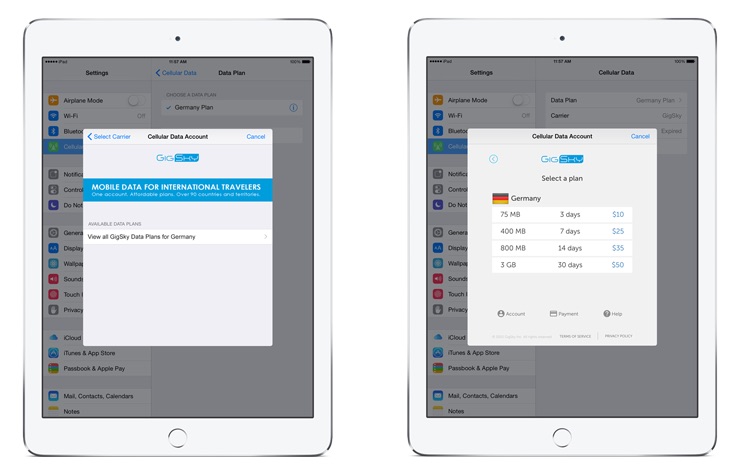
Apple SIM is embedded in the latest cellular iPads and enables users to easily switch between different short-term data plans from select carrier partners without needing multiple SIM cards. It is particularly useful for traveling abroad, especially now that coverage reaches more than 140 countries and territories through GigSky.
Other Apple SIM partners include AT&T, Sprint, and T-Mobile in the United States, EE in the United Kingdom, Deutsche Telekom in Germany, Three in Hong Kong, and au by KDDI in Japan. AlwaysOnline Wireless also offers pay-as-you-go LTE data plans in at least 45 countries, with the option to pay by hour, day, or megabyte.
Discuss this article in our forums
SanDisk's 256GB Flash Storage is Possible Option for iPhone 7 Plus
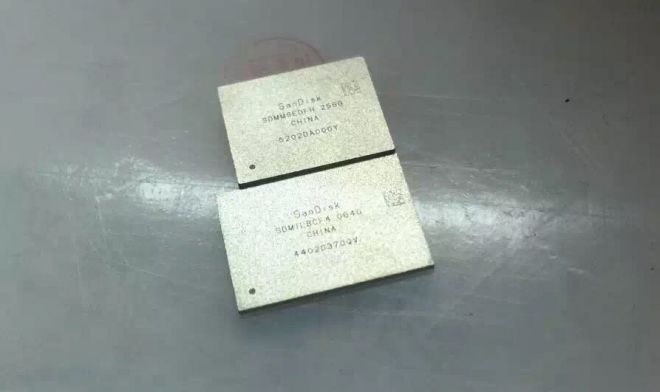 SanDisk's 256GB NAND flash chip (top) and older 64GB chip (bottom)
Apple has used SanDisk flash memory chips in a number of previous iPhone models, including the iPhone 5, iPhone 6, and iPhone 6 Plus, while other models have used NAND flash chips from Samsung, SK Hynix, and Toshiba.
SanDisk has managed to reduce the size of its 256GB flash memory chip to be smaller than its 64GB counterpart, which makes it a viable option given rumors that the iPhone 7 lineup could be up to 1mm thinner with a larger 3,100 mAh battery.
It remains unclear if the iPhone 7 Plus will still have 16GB base storage, which has been a highly contested option in recent years, or if Apple will opt for larger storage sizes such as 32GB, 128GB, and 256GB at existing price points.
Other rumored iPhone 7 series changes include a faster TSMC-built A10 chip, Smart Connector, dual-lens camera, stereo speakers, Intel 7360 LTE modem, no 3.5mm headphone jack, waterproofing, wireless charging, relocated antenna bands, and more. iPhone 7 Plus models could have 3GB of RAM.
Discuss this article in our forums
Western Digital: Fiscal 1Q16 Financial Results
iPhone 6s Launch in U.S. and Canada Begins as Apple Stores Open
Apple Stores will now begin fulfilling in-store reservations for the new iPhones and accepting walk-in purchases from the long queues that have formed at some locations. UPS and FedEx will also be making pre-order deliveries generally between the hours of 9:00 am and 8:00 pm to residential addresses.
Guess where I'm at?! #AppleStore #JaxNYC #iPhone6S #iwaiting http://t.co/hngl6YPM49 pic.twitter.com/WwVOzedNGm
— Jacqui (@Jacquies) September 25, 2015
Hmph. Must be something going on today. #applestore #torontoeatoncentre pic.twitter.com/1aA9TyCnVm
— Eustace James (@mr_e_james) September 25, 2015
iPhone 6s and iPhone 6s Plus first arrived in New Zealand last night, and the new devices were quickly subjected to an early unboxing, drop test, teardown, bend test and camera comparison. The devices have now launched in all first wave countries, including the U.S., Australia, Canada, China, France, Germany, Hong Kong, Japan, New Zealand, Puerto Rico, Singapore and the U.K.
Recent Mac and iOS Blog Stories
• Netflix for iOS Updated With Support for In-App Subscriptions
• Verizon Announces Yearly Upgrade Program for iPhone Users
• Apple Store App for iOS Gains Support for iPhone 6s, iOS 9
• Schlage Sense HomeKit-Enabled Smart Deadbolt Now Available for Pre-Order
• Review: Schuttenworks' Ripple is the Perfect Apple Watch Dock for Nightstand Mode
• Zane Lowe Announces Launch of New Beats 1 Shows from Haim, Major Lazer & Eric Prydz
• Sprint Undercuts T-Mobile With $1/Month iPhone 6s Lease on iPhone 6 Trade-In
• Apple Debuts Beats 'Active Collection' Headphones With New Colors for Solo2, Tour2, and Powerbeats2

OAXIS Launches InkCase i6, E-Ink Case for iPhone 6/6s
11 MILLION VW cars used Dieselgate cheatware – what the clutch, Volkswagen?
Sets aside over US$7bn for fines and mass recalls
Volkswagen is getting hammered on world stock exchanges after it was revealed the number of VW cars using software to cheat on pollution tests is far greater than first thought.…
Twitter seeks new CEO, and more users, as Costolo exits

Apple Retail Employees Alleged to be Treated as 'Criminals' in Bag Check Lawsuit

One of the workers in the lawsuit sent an email to Cook back in 2012, claiming that Apple retail store managers "are required to treat 'valued' employees as criminals." In the filing it was said that Cook then forwarded the complaint to both top retail and human resources executives asking, "Is this true?" No responses to Cook's inquiry were documented within the filing made public this week.
In the original lawsuit, which is seeking class action status after being dismissed last year, Amanda Friekin and Dean Pelle claimed that these bag checks were mandatory every time a sales rep left the store and were meant to discourage theft. In one of the original emails sent to Cook in 2012, the employee simply claims Apple's strict policy breeds an environment of distrust amongst its otherwise loyal workers.
In the 2012 email to Cook, with a subject line "Fearless Feedback from Apple Retail Specialist," the employee said Apple's policy implies the company does not trust its workers.As Reuters points out, in a Supreme Court ruling last December, Amazon won out over a group of its employees who sued the company for monetary compensation in the time they spent going through security checks at the end of their shifts. The Supreme Court's ruling erred on Amazon's side because it found these security checks were not a "principal activity" of the employees' job description.
"These procedures are often performed in front of gawking customers," the employee wrote, adding that workers deserve to be treated with the same respect that Apple shows customers.
A hearing in the lawsuit is set for a July 2 date in court.
Google Improving Chrome for OS X Performance to Better Rival Safari
 Google senior software engineer Peter Kasting this week announced that his team has been working to address Chrome for OS X battery hog complaints by improving the performance of the browser on Mac, especially in areas where Safari appears to do better (via iPhoneHacks).
Chrome for OS X has received multiple under the hood improvements that should result in faster performance and longer battery life while browsing. The browser, for example, now requires significantly less CPU usage when loading the Google search results page and various other websites.
The other technical changes to Chrome for OS X are outlined as follows:
"The team has been working on addressing this; here are some cases that have recently been improved on trunk:Many of the changes will first appear in Chromium before going live on Chrome for OS X.
http://crbug.com/460102
Before: Renderers for background tabs had the same priority as for foreground tabs.
Now: Renderers for background tabs get a lower priority, reducing idle wakeups on various perf test, in some cases by significant amounts (e.g. 50% on one test).
http://crbug.com/485371
Before: On a Google search results page, using Safari's user agent to get the same content that Safari would, Chrome incurs ~390 wakes over 30s and 0.3% CPU usage vs. Safari’s 120 wakes over 30s and 0.1% CPU usage.
Now: 66% reduction in both timer firings and CPU use. Chrome is now incurring ~120 wakes over 30s and 0.1% CPU use, on par with Safari.
http://crbug.com/489936
Before: On capitalone.com, Chromium incurs ~1010 wakeups over 30s vs. Safari's ~490 wakes.
Now: ~30% reduction in timer firings. Chrome is now incurring ~721 wakeups over 30s.
http://crbug.com/493350
Before: On amazon.com, Chromium incurs 768 wakups over 30s and consumes ~0.7% CPU vs. Safari's 312 wakes over 30s and ~0.1% CPU.
Now: ~59% reduction in timer firings and ~70% reduction in CPU use. Chrome is now incurring ~316 wakeups over 30s, and 0.2% CPU use, on par with Safari at 312 wakes, and 0.1% CPU use."
Eddy Cue and Jimmy Iovine Talk Apple Music in Series of Interviews
According to Cue, the $9.99 individual price point for Apple Music wasn't a sticking point for the company as some earlier reports suggested, but the company was invested in negotiating a reasonable family subscription price. Apple Music lets up to 6 family members share an account for $14.99, a price point that Cue says will get entire families on board with the service.
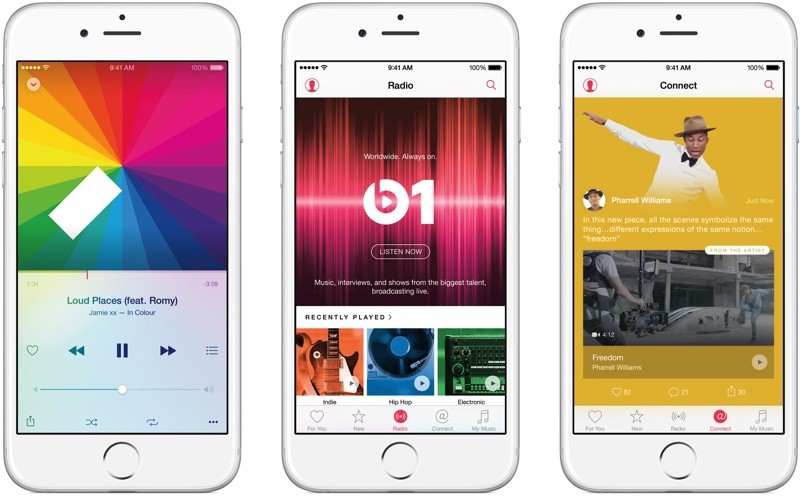
I think the cost of an album for a month of subscription is fair. Could you argue, $7.99 or $8.99? Who cares. I think where subscription is missing the boat is on the family -- you have a spouse, boyfriend, girlfriend kids ... the concept of signing up for these individual subscription plans multiple times is just not going to happen so we spent a lot of time with the labels to convince them that the real opportunity here is to get the whole family. With that, all boats rise.On the subject of streaming music cannibalizing iTunes downloads, Cue says he expects some of the customer base to subscribe instead of buying music, but he believes downloads will "go on for a long, long time." "There are lots of people who are very happy downloading," he said. "And I think they'll continue to."
Explaining the reasoning behind a 24-hour human-curated radio station, Iovine explained that over the past 15 years, radio's become manufactured, something he'd like to change. "It's either genre-based or beat-driven or research-driven," he said. "So I said, let's build something that's got none of that that just plays music because it's great."
Cue and Iovine also did interviews with The Wall Street Journal and The Guardian, sharing much of the same information, but in the latter interview, the duo also spoke on Apple Connect, the social networking component of Apple Music. The point of Apple Connect and Apple Music in general, said Cue, was to give artists and labels control over content sharing.
"Our viewpoint was very simple: let the artist and label control it. They can put it up on Connect for free if they want to, or they can put it up behind the [subscription] paywall, or they can make it available on the iTunes Store for sale. They're in control of their music and how they want to distribute it," says Cue.Iovine added commentary suggesting a music service needs to be "a win for everybody." "We wanted to give artists a place where there's a rhyme and a reason," he said. "Where there's a payoff! And not just a financial payoff, but an emotional payoff. A creative payoff."
Apple Music, with its on-demand streaming service, Beats 1 radio station, and Apple Connect platform, will officially launch on June 30, as part of the iOS 8.4 update. As previously mentioned, it will be priced at $9.99 for individuals and $14.99 for families. Existing Beats subscribers will be able to transition their subscriptions to Apple Music.
Recent Mac and iOS Blog Stories
• eBay for Apple Watch Launches Today on App Store
• Apple Bumps Developer Test Device Limits to 100 Per Device Type, Including Apple TV
• OS X 10.11 El Capitan Runs on All Macs Capable of Running Yosemite
• Apple Music to Support Saving Playlists and Songs for Offline Listening
• Apple Confirms Activation Lock Safety Feature for watchOS 2
• Dedicated iCloud Drive App Included Within Settings of iOS 9
• 'Move to iOS' App Allows for No Hassle Android-to-iOS Data Transfer
• Apple Merges iOS, WatchOS and Mac Developer Programs
