Electronic properties of triangular and hexagonal nano-scale quantum dots (QDs) of Silicene and bilayer graphene are studied. It is shown that the low-energy edge-localized electronic states, existing within the size-quantized gap are easily tunable by electric field. The appearance and field evolution of the electronic gap in these zero energy states (ZES) is shown to be very sensitive to QD geometry that permits to design the field-effect scalable QD devices with electronic properties on-demand.
Dr.jens.brede
Shared posts
22 May 08:40
Tuning of Zero Energy States in Quantum Dots of Silicene and Bilayer Graphene by Electric Field. (arXiv:1505.05693v2 [cond-mat.mes-hall] UPDATED)
by Hazem Abdelsalama, T. Espinosa-Ortega, Igor Lukyanchuka
21 May 18:50


Characterization of a Hexagonal Phosphorus Adlayer on Platinum (111)
by Olli Heikkinen, Hugo Pinto, Godhuli Sinha, Sampsa K. Hämäläinen, Jani Sainio, Sven Öberg, Patrick R. Briddon, Adam S. Foster and Jouko Lahtinen

The Journal of Physical Chemistry C
DOI: 10.1021/jp5126816
21 May 18:42

Opening of triangular hole in triangular-shaped chemical vapor deposited hexagonal boron nitride crystal
by Subash Sharma
In-plane heterostructure of monolayer hexagonal boron nitride (h-BN) and graphene is of great interest for its tunable bandgap and other unique properties. Here, we reveal a H2-induced etching process to introduce triangular hole in triangular-shaped chemical vapor deposited individual h-BN crystal. In this study, we synthesized regular triangular-shaped h-BN crystals with the sizes around 2-10 μm on Cu foil by chemical vapor deposition (CVD). The etching behavior of individual h-BN crystal was investigated by annealing at different temperature in an H2:Ar atmosphere. Annealing at 900 °C, etching of h-BN was observed from crystal edges with no visible etching at the center of individual crystals. While, annealing at a temperature ≥950 °C, highly anisotropic etching was observed, where the etched areas were equilateral triangle-shaped with same orientation as that of original h-BN crystal. The etching process and well-defined triangular hole formation can be significant platform to fabricate planar heterostructure with graphene or other two-dimensional (2D) materials.
Scientific Reports 5 doi: 10.1038/srep10426
rongmingcong likes this
20 May 07:32
Specular Interband Andreev Reflections in Graphene. (arXiv:1505.04812v1 [cond-mat.mes-hall])
by D. K. Efetov, L. Wang, C. Handschin, K. B. Efetov, J. Shuang, R. Cava, T. Taniguchi, K. Watanabe, J. Hone, C. R. Dean, P. Kim
Electrons incident from a normal metal onto a superconductor are reflected back as holes - a process called Andreev reflection. In a normal metal where the Fermi energy is much larger than a typical superconducting gap, the reflected hole retraces the path taken by the incident electron. In graphene with ultra low disorder, however, the Fermi energy can be tuned to be smaller than the superconducting gap. In this unusual limit, the holes are expected to be reflected specularly at the superconductor-graphene interface due to the onset of interband Andreev processes, where the effective mass of the reflected holes change sign. Here we present measurements of gate modulated Andreev reflections across the low disorder van der Waals interface formed between graphene and the superconducting NbSe2. We find that the conductance across the graphene-superconductor interface exhibits a characteristic suppression when the Fermi energy is tuned to values smaller than the superconducting gap, a hallmark for the transition between intraband retro- and interband specular- Andreev reflections.
19 May 06:57
Spin Excitations and Correlations in Scanning Tunneling Spectroscopy. (arXiv:1505.04430v1 [cond-mat.mes-hall])
by Markus Ternes
In recent years inelastic spin-flip spectroscopy using a lowtemperature scanning tunneling microscope has been a very successful tool for studying not only individual spins but also complex coupled systems. When these systems interact with the electrons of the supporting substrate correlated manyparticle states can emerge, making them ideal prototypical quantum systems. The spin systems, which can be constructed by arranging individual atoms on appropriate surfaces or embedded in synthesized molecular structures, can reveal very rich spectral features. Up to now the spectral complexity has only been partly described. This manuscript shows that perturbation theory enables one to describe the tunneling transport, reproducing the differential conductance with surprisingly high accuracy. Well established scattering models, which include Kondo-like spin-spin and potential interactions, are expanded to enable calculation of arbitrary complex spin systems in reasonable time scale and the extraction of important physical properties. The emergence of correlations between spins and, in particular, between the localized spins and the supporting bath electrons are discussed and related to experimentally tunable parameters. These results might stimulate new experiments by providing experimentalists with an easily applicable modeling tool.
18 May 21:27
Kondo effect in binuclear metal-organic complexes with weakly interacting spins
by L. Zhang, A. Bagrets, D. Xenioti, R. Korytár, M. Schackert, T. Miyamachi, F. Schramm, O. Fuhr, R. Chandrasekar, M. Alouani, M. Ruben, W. Wulfhekel, and F. Evers
Author(s): L. Zhang, A. Bagrets, D. Xenioti, R. Korytár, M. Schackert, T. Miyamachi, F. Schramm, O. Fuhr, R. Chandrasekar, M. Alouani, M. Ruben, W. Wulfhekel, and F. Evers
We report a combined experimental and theoretical study of the Kondo effect in a series of binuclear metal-organic complexes of the form [(Me(hfacac)2)2(bpym)]0, with Me = nickel (II), manganese (II), zinc (II); hfacac = hexafluoroacetylacetonate, and bpym = bipyrimidine, adsorbed on Cu(100) surface...
[Phys. Rev. B 91, 195424] Published Mon May 18, 2015
18 May 20:29


Role of Cooperative Interactions in the Intercalation of Heteroatoms between Graphene and a Metal Substrate
by Geng Li, Haitao Zhou, Lida Pan, Yi Zhang, Li Huang, Wenyan Xu, Shixuan Du, Min Ouyang, Andrea C. Ferrari and Hong-Jun Gao

Journal of the American Chemical Society
DOI: 10.1021/ja5113657
18 May 20:27

Electric Property Variations in Nanosized Hexagonal Boron Nitride/Graphene Hybrids
by Panaghiotis Karamanis, Nicolás Otero and Claude Pouchan

The Journal of Physical Chemistry C
DOI: 10.1021/acs.jpcc.5b02793
rongmingcong likes this
18 May 20:21
Coupling of Chiralities in Spin and Physical Spaces: The Möbius Ring as a Case Study
by Oleksandr V. Pylypovskyi, Volodymyr P. Kravchuk, Denis D. Sheka, Denys Makarov, Oliver G. Schmidt, and Yuri Gaididei
Author(s): Oleksandr V. Pylypovskyi, Volodymyr P. Kravchuk, Denis D. Sheka, Denys Makarov, Oliver G. Schmidt, and Yuri Gaididei
We show that the interaction of the magnetic subsystem of a curved magnet with the magnet curvature results in the coupling of a topologically nontrivial magnetization pattern and topology of the object. The mechanism of this coupling is explored and illustrated by an example of a ferromagnetic Möbi…
[Phys. Rev. Lett. 114, 197204] Published Fri May 15, 2015
18 May 06:07
Electronic and magnetic influences of a stacking fault in cobalt nanoscale islands on the Ag(111) surface. (arXiv:1505.03948v1 [cond-mat.mes-hall])
by Keiji Doi, Emi Minamitani, Shunji Yamamoto, Ryuichi Arafune, Yasuo Yoshida, Satoshi Watanabe, Yukio Hasegawa
Utilizing spin-polarized scanning tunneling microscopy and spectroscopy, we found coexistence of perpendicularly and in-plane magnetized cobalt nanoscale islands on the Ag(111) surface, and the relationship between the moire corrugation amplitude and the magnetization direction of the islands; the islands with the stronger moire corrugation show the perpendicular magnetization, and the ones with the weaker moire corrugation do the in-plane. Density functional theory calculations reproduce the relationship and explain the differences between the two types of the islands with an fcc stacking fault in the intrinsic hcp stacking of cobalt.
17 May 10:34

Magnetic Transition to Antiferromagnetic Phase in Gadolinium Substituted Topological Insulator Bi2Te3
by Jinsu Kim
There are many interests to achieve long-range magnetic order in topological insulators of Bi2Se3 or Bi2Te3 by doping magnetic transition metals such as Fe and Mn. The transition metals act as not only magnetic dopants but also electric dopants because they are usually divalent. However, if the doping elements are rare-earth metals such as Gd, which are trivalent, only magnetic moments can be introduced. We fabricated single crystals of Bi2-xGdxTe3 (0 ≤ × ≤ 0.2), in which we observed magnetic phase change from paramagnetic (PM) to antiferromagnetic (AFM) phase by increasing x. This PM-to-AFM phase transition agrees with the density functional theory calculations showing a weak and short-ranged Gd-Gd AFM coupling via the intervening Te ions. The critical point corresponding to the magnetic phase transition is x = 0.09, where large linear magnetoresistance and highly anisotropic Shubnikov-de Haas oscillations are observed. These results are discussed with two-dimensional properties of topological surface state electrons.
Scientific Reports 5 doi: 10.1038/srep10309
15 May 06:07
Quality Atomic Resolution Scanning Tunneling Microscope Imaging up to 27 T in Water-cooled Magnet. (arXiv:1505.03637v1 [cond-mat.mes-hall])
by Wenjie Meng, Ying Guo, Yubin Hou, Qingyou Lu
We report the achievement of the first atomically resolved scanning tunneling microscope (STM) imaging in a water-cooled magnet (WM), where the extremely harsh vibrations and noises have been the major challenge. This homebuilt WM-STM features an ultra-rigid and compact scan head in which the coarse approach is driven by our new design of the TunaDrive piezoelectric motor. A three-level spring hanging system is exploited for vibration isolation. Room-temperature raw-data images of graphite with quality atomic resolution were obtained in very high magnetic fields up to 27 T in a 32 mm bore WM whose absolute maximum field is 27.5 T at the power rating of 10 MW. This record of 27 T has exceeded the maximum field strength of the conventional superconducting magnets. Besides, our WM-STM has also paved the way to the STM imaging in the 45 T, 32 mm bore hybrid magnet, which is the world's flagship magnet and can produces the highest steady magnetic field at present.
14 May 12:33
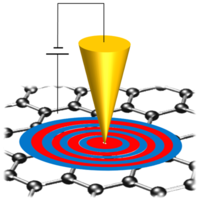
Highly Efficient Midinfrared On-Chip Electrical Generation of Graphene Plasmons by Inelastic Electron Tunneling Excitation
by Kelvin J. A. Ooi, H. S. Chu, C. Y. Hsieh, Dawn T. H. Tan, and L. K. Ang
Author(s): Kelvin J. A. Ooi, H. S. Chu, C. Y. Hsieh, Dawn T. H. Tan, and L. K. Ang
The discovery of light emission from metal-insulator-metal tunnel junctions in the 1970s suggested a low-energy, broadband source of visible light. Presently this technology is also of interest for generating subwavelength surface plasmons electrically. The authors show that inelastic electron tunneling excitation is potentially 105 times as efficient for producing mid-infrared plasmons in graphene than in metal, offering great promise for on-chip integrated nanophotonics.
[Phys. Rev. Applied 3, 054001] Published Fri May 08, 2015
14 May 08:29
Spin-vibronics in interacting nonmagnetic molecular nanojunctions. (arXiv:1505.03361v2 [cond-mat.mes-hall] UPDATED)
by S. Weiss, J. Brüggemann, M. Thorwart
We show that in the presence of ferromagnetic electronic reservoirs and spin-dependent tunnel couplings, molecular vibrations in nonmagnetic single molecular transistors induce an effective intramolecular exchange magnetic field. It generates a finite spin-accumulation and -precession for the electrons confined on the molecular bridge and occurs under (non)equilibrium conditions. The effective exchange magnetic field is calculated here to lowest order in the tunnel coupling for a nonequilibrium transport setup. Coulomb interaction between electrons is taken into account as well as a finite electron-phonon coupling. We show that for realistic physical parameters, an effective spin-phonon coupling emerges. It is induced by quantum many-body interactions, which are either electron-phonon or Coulomb-like. We investigate the precession and accumulation of the confined spins as function of bias- and gate-voltages as well as their dependence on the angle enclosed by the magnetizations between the left and right reservoir.
12 May 19:11


Magnetic Nano-skyrmion Lattice Observed in a Si-Wafer-Based Multilayer System
by Anika Schlenhoff, Philipp Lindner, Johannes Friedlein, Stefan Krause, Roland Wiesendanger, Michael Weinl, Matthias Schreck and Manfred Albrecht

ACS Nano
DOI: 10.1021/acsnano.5b01146
12 May 06:02
Quantum Engineering of Spin and Anisotropy in Magnetic Molecular Junctions. (arXiv:1505.02277v1 [cond-mat.mes-hall])
by Peter Jacobson, Tobias Herden, Matthias Muenks, Gennadii Laskin, Oleg Brovko, Valeri Stepanyuk, Markus Ternes, Klaus Kern
Single molecule magnets and single spin centers can be individually addressed when coupled to contacts forming an electrical junction. In order to control and engineer the magnetism of quantum devices, it is necessary to quantify how the structural and chemical environment of the junction affects the spin center. Metrics such as coordination number or symmetry provide a simple method to quantify the local environment, but neglect the many-body interactions of an impurity spin when coupled to contacts. Here, we utilize a highly corrugated hexagonal boron nitride (h-BN) monolayer to mediate the coupling between a cobalt spin in CoHx (x=1,2) complexes and the metal contact. While the hydrogen atoms control the total effective spin, the corrugation is found to smoothly tune the Kondo exchange interaction between the spin and the underlying metal. Using scanning tunneling microscopy and spectroscopy together with numerical simulations, we quantitatively demonstrate how the Kondo exchange interaction mimics chemical tailoring and changes the magnetic anisotropy.
12 May 05:58
Superconducting and charge-density-wave orders in the spin-fermion model: A comparative analysis
by Yuxuan Wang and Andrey Chubukov
Author(s): Yuxuan Wang and Andrey Chubukov
We present a comparative analysis of superconducting and charge-density-wave orders in the spin-fluctuation scenario for the cuprates. That spin-fluctuation exchange gives rise to d-wave superconductivity is well known. Several groups recently argued that the same spin-mediated interaction may also ...
[Phys. Rev. B 91, 195113] Published Mon May 11, 2015
12 May 05:53

Optical Origin of Subnanometer Resolution in Tip-Enhanced Raman Mapping
by Chao Zhang, Bao-Qin Chen and Zhi-Yuan Li

The Journal of Physical Chemistry C
DOI: 10.1021/acs.jpcc.5b02653
11 May 22:51


Molecular-Resolution Interrogation of a Porphyrin Monolayer by Ultrahigh Vacuum Tip-Enhanced Raman and Fluorescence Spectroscopy
by Naihao Chiang, Nan Jiang, Dhabih V. Chulhai, Eric A. Pozzi, Mark C. Hersam, Lasse Jensen, Tamar Seideman and Richard P. Van Duyne

Nano Letters
DOI: 10.1021/acs.nanolett.5b01225
11 May 07:06
Zero-field dissipationless chiral edge transport and the nature of dissipation in the quantum anomalous Hall state. (arXiv:1505.01896v2 [cond-mat.mes-hall] UPDATED)
by Cui-Zu Chang, Weiwei Zhao, Duk Y. Kim, Peng Wei, J. K. Jain, Chaoxing Liu, Moses H. W. Chan, Jagadeesh S. Moodera
The quantum anomalous Hall (QAH) effect is predicted to possess, at zero magnetic field, chiral edge channels that conduct spin polarized current without dissipation. While edge channels have been observed in previous experimental studies of the QAH effect, their dissipationless nature at a zero magnetic field has not been convincingly demonstrated. By a comprehensive experimental study of the gate and temperature dependences of local and nonlocal magnetoresistance, we unambiguously establish the dissipationless edge transport. By studying the onset of dissipation, we also identify the origin of dissipative channels and clarify the surprising observation that the critical temperature of the QAH effect is two orders of magnitude smaller than the Curie temperature of ferromagnetism.
09 May 09:37

Direct observation of finite size effects in chains of antiferromagnetically coupled spins
by T. Guidi
Article
Molecular magnets are among the smallest structures that may be exploited for quantum information processing. Here, Guidi et al . use polarized neutron scattering to observe finite size effects and a noncollinear spin arrangement in a Cr 8 Cd ring molecule, an even-numbered open antiferromagnetic spin-3/2 chain.
Nature Communications doi: 10.1038/ncomms8061
Authors: T. Guidi, B. Gillon, S. A. Mason, E. Garlatti, S. Carretta, P. Santini, A. Stunault, R. Caciuffo, J. van Slageren, B. Klemke, A. Cousson, G. A. Timco, R. E. P. Winpenny
08 May 21:53

Spin-Dependent Conductance in Co/C60/Co/Ni Single-Molecule Junctions in the Contact Regime
by Xiangmin Fei, Guangfen Wu, Vanessa Lopez, Gang Lu, Hong-Jun Gao and Li Gao

The Journal of Physical Chemistry C
DOI: 10.1021/acs.jpcc.5b01763
08 May 07:05

Tuning the Magnetic Anisotropy of Single Molecules
by Benjamin W. Heinrich, Lukas Braun, Jose I. Pascual and Katharina J. Franke

Nano Letters
DOI: 10.1021/acs.nanolett.5b00987
原子修补匠 and -1 others like this
07 May 19:47
[Report] Creating and probing electron whispering-gallery modes in graphene
by Yue Zhao
The design of high-finesse resonant cavities for electronic waves faces challenges due to short electron coherence lengths in solids. Complementing previous approaches to confine electronic waves by carefully positioned adatoms at clean metallic surfaces, we demonstrate an approach inspired by the peculiar acoustic phenomena in whispering galleries. Taking advantage of graphene’s gate-tunable light-like carriers, we create whispering-gallery mode (WGM) resonators defined by circular pn junctions, induced by a scanning tunneling probe. We can tune the resonator size and the carrier concentration under the probe in a back-gated graphene device over a wide range. The WGM-type confinement and associated resonances are a new addition to the quantum electron-optics toolbox, paving the way to develop electronic lenses and resonators.
Authors: Yue Zhao, Jonathan Wyrick, Fabian D. Natterer, Joaquin F. Rodriguez-Nieva, Cyprian Lewandowski, Kenji Watanabe, Takashi Taniguchi, Leonid S. Levitov, Nikolai B. Zhitenev, Joseph A. Stroscio
周颖 likes this
07 May 19:40
Ultrafast multiphoton pump-probe photoemission excitation pathways in rutile TiO_{2}(110)
by Adam Argondizzo, Xuefeng Cui, Cong Wang, Huijuan Sun, Honghui Shang, Jin Zhao, and Hrvoje Petek
Author(s): Adam Argondizzo, Xuefeng Cui, Cong Wang, Huijuan Sun, Honghui Shang, Jin Zhao, and Hrvoje Petek
We investigate the spectroscopy and photoinduced electron dynamics within the conduction band of reduced rutile TiO2(110) surface by multiphoton photoemission (mPP) spectroscopy with wavelength tunable ultrafast (∼20fs) laser pulse excitation. Tuning the mPP photon excitation energy between 2.9 and ...
[Phys. Rev. B 91, 155429] Published Mon Apr 27, 2015
06 May 21:35
Probing Dirac Fermion Dynamics in Topological Insulator Bi_{2}Se_{3} Films with a Scanning Tunneling Microscope
by Can-Li Song, Lili Wang, Ke He, Shuai-Hua Ji, Xi Chen, Xu-Cun Ma, and Qi-Kun Xue
Author(s): Can-Li Song, Lili Wang, Ke He, Shuai-Hua Ji, Xi Chen, Xu-Cun Ma, and Qi-Kun Xue
Scanning tunneling microscopy and spectroscopy have been used to investigate the femtosecond dynamics of Dirac fermions in the topological insulator Bi2Se3 ultrathin films. At the two-dimensional limit, bulk electrons become quantized and the quantization can be controlled by the film thickness at a...
[Phys. Rev. Lett. 114, 176602] Published Tue Apr 28, 2015
06 May 21:32
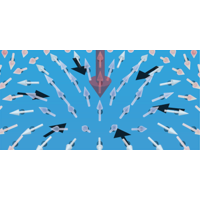
Field-Dependent Size and Shape of Single Magnetic Skyrmions
by Niklas Romming, André Kubetzka, Christian Hanneken, Kirsten von Bergmann, and Roland Wiesendanger
Author(s): Niklas Romming, André Kubetzka, Christian Hanneken, Kirsten von Bergmann, and Roland Wiesendanger
Atomic-scale imaging reveals the shape and size of a technologically interesting magnetic quasiparticle.
[Phys. Rev. Lett. 114, 177203] Published Fri May 01, 2015
05 May 07:29

Atomistic Near-Field Nanoplasmonics: Reaching Atomic-Scale Resolution in Nanooptics
by M. Barbry, P. Koval, F. Marchesin, R. Esteban, A. G. Borisov, J. Aizpurua and D. Sánchez-Portal

Nano Letters
DOI: 10.1021/acs.nanolett.5b00759
05 May 07:25
Quantum Anomalous Hall effect in graphene coupled to skyrmions. (arXiv:1505.00732v3 [cond-mat.mes-hall] UPDATED)
by J. L. Lado, J. Fernandez-Rossier
Skyrmions are topologically protected spin textures, characterized by a topological winding number N , that occur spontaneously in some magnetic materials. Recent experiments have demonstrated the capability to grow graphene on top Fe/Ir, a system that exhibits a two dimensional Skyrmion lattice. Here we show that a weak exchange coupling between the Dirac electrons in graphene and a two dimensional Skyrmion lattice with $N = \pm 1$ drives graphene into a quantum anomalous Hall phase, with a band-gap in bulk, a Chern number ${\cal C}=2N$ and chiral edge states with perfect quantization of conductance $G = 2N\frac{e^2}{h}$ . Our findings imply that the topological properties of the Skyrmion lattice can be imprinted in the Dirac electrons of graphene.
04 May 17:40

Toward Cove-Edged Low Band Gap Graphene Nanoribbons
by Junzhi Liu, Bo-Wei Li, Yuan-Zhi Tan, Angelos Giannakopoulos, Carlos Sanchez-Sanchez, David Beljonne, Pascal Ruffieux, Roman Fasel, Xinliang Feng and Klaus Müllen

Journal of the American Chemical Society
DOI: 10.1021/jacs.5b03017