02 Dec 20:57
by S. Ito, B. Feng, M. Arita, A. Takayama, R.-Y. Liu, T. Someya, W.-C. Chen, T. Iimori, H. Namatame, M. Taniguchi, C.-M. Cheng, S.-J. Tang, F. Komori, K. Kobayashi, T.-C. Chiang, and I. Matsuda
Author(s): S. Ito, B. Feng, M. Arita, A. Takayama, R.-Y. Liu, T. Someya, W.-C. Chen, T. Iimori, H. Namatame, M. Taniguchi, C.-M. Cheng, S.-J. Tang, F. Komori, K. Kobayashi, T.-C. Chiang, and I. Matsuda
Characterization of the nontrivial topology in bismuth through high-resolution ARPES measurements is aided by a new quantum well geometry.

[Phys. Rev. Lett. 117, 236402] Published Fri Dec 02, 2016
02 Dec 09:22
by Shuang Jia, Su-Yang Xu, M. Zahid Hasan
Physicists have discovered a novel topological semimetal, the Weyl semimetal,
whose surface features a non-closed Fermi surface while the low energy
quasiparticles in the bulk emerge as Weyl fermions. Here they share a brief
review of the development and present perspectives on the next step forward.
01 Dec 13:58
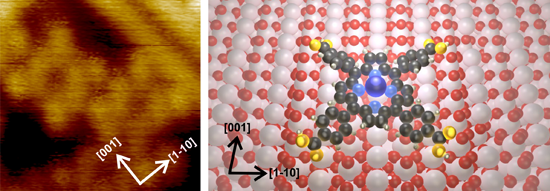
by Paul Stoll, Matthias Bernien, Daniela Rolf, Fabian Nickel, Qingyu Xu, Claudia Hartmann, Tobias R. Umbach, Jens Kopprasch, Janina N. Ladenthin, Enrico Schierle, Eugen Weschke, Constantin Czekelius, Wolfgang Kuch, Katharina J. Franke
Single-ion lanthanide-organic complexes can provide stable magnetic moments
with well-defined orientation for spintronic applications on the atomic level.
Here, we show by a combined experimental approach of scanning tunneling
microscopy and X-ray absorption spectroscopy that
dysprosium-tris(1,1,1-trifluoro-4-(2-thienyl)-2,4butanedionate) (Dy(tta)$_3$)
complexes deposited on a Au(111) surface undergo a molecular distortion,
resulting in distinct crystal field symmetry imposed on the Dy ion. This leads
to an easy-axis magnetization direction in the ligand plane. Furthermore, we
show that tunneling electrons hardly couple to the spin excitations, which we
ascribe to the shielded nature of the $4f$ electrons.
29 Nov 19:16
by Johannes Gall, Peter Zeppenfeld, Lidong Sun, Li Zhang, Yang Luo, Zhenchao Dong, Chunguang Hu, and Peter Puschnig
Author(s): Johannes Gall, Peter Zeppenfeld, Lidong Sun, Li Zhang, Yang Luo, Zhenchao Dong, Chunguang Hu, and Peter Puschnig
Pentacene adsorbed on the Cu(110)−c(6×2)O surface has been investigated using scanning tunneling microscopy and spectroscopy and density functional theory calculations. The molecules lie almost flat on the surface and are anchored via the end carbon ring to a Cu atom of the topmost surface layer, le…
[Phys. Rev. B 94, 195441] Published Tue Nov 29, 2016
29 Nov 15:14
by William Paul
Nature Physics.
doi:10.1038/nphys3965
Authors: William Paul, Kai Yang, Susanne Baumann, Niklas Romming, Taeyoung Choi, Christopher P. Lutz & Andreas J. Heinrich

28 Nov 15:07
by I. Avigo, S. Thirupathaiah, E. D. L. Rienks, L. Rettig, A. Charnukha, M. Ligges, R. Cortes, J. Nayak, H. S. Jeevan, T. Wolf, Y. Huang, S. Wurmehl, M. I. Sturza, P. Gegenwart, M. S. Golden, L. X. Yang, K. Rossnagel, M. Bauer, B. Büchner, M. Vojta, M. Wolf, C. Felser, J. Fink, U. Bovensiepen
Abstract
In this article, we review our angle- and time-resolved photoemission studies (ARPES and trARPES) on various ferropnictides. In the ARPES studies, we focus first on the band structure as a function of control parameters. We find near optimally “doped” compounds a Lifshitz transition of hole/electron pocket vanishing type. Second, we investigated the inelastic scattering rates as a function of the control parameter. In contrast to the heavily discussed quantum critical scenario, we find no enhancement of the scattering rate near optimally “doping.” Correlation effects which show up by the non-Fermi-liquid behavior of the scattering rates, together with the Lifshitz transition offer a new explanation for the strange normal state properties and suggests an interpolating superconducting state between BCS and BE condensation. Adding femtosecond time resolution to ARPES provides complementary information on electron and lattice dynamics. We report on the response of the chemical potential by a collective periodic variation coupled to coherent optical phonons in combination with incoherent electron and phonon dynamics described by a three temperature heat bath model. We quantify electron phonon coupling in terms of  and show that the analysis of the electron excess energy relaxation is a robust approach. The spin density wave ordering leads to a pronounced momentum dependent relaxation dynamics. In the vicinity of
  , hot electrons dissipate their energy by electron–phonon coupling with a characteristic time constant of 200 fs. Electrons at the center of the hole pocket exhibit a four time slower relaxation which is explained by spin-dependent dynamics with its smaller relaxation phase space. This finding has implications beyond the material class of Fe-pnictides because it establishes experimental access to spin-dependent dynamics in materials with spin density waves.
26 Nov 09:40
by H. Saadaoui, X. Luo, Z. Salman, X. Y. Cui, N. N. Bao, P. Bao, R. K. Zheng, L. T. Tseng, Y. H. Du, T. Prokscha, A. Suter, T. Liu, Y. R. Wang, S. Li, J. Ding, S. P. Ringer, E. Morenzoni, and J. B. Yi
Author(s): H. Saadaoui, X. Luo, Z. Salman, X. Y. Cui, N. N. Bao, P. Bao, R. K. Zheng, L. T. Tseng, Y. H. Du, T. Prokscha, A. Suter, T. Liu, Y. R. Wang, S. Li, J. Ding, S. P. Ringer, E. Morenzoni, and J. B. Yi
Here we present a study of magnetism in Co0.05Ti0.95O2−δ anatase films grown by pulsed laser deposition under a variety of oxygen partial pressures and deposition rates. Energy-dispersive spectrometry and transmission electron microscopy analyses indicate that a high deposition rate leads to a homog…
[Phys. Rev. Lett. 117, 227202] Published Wed Nov 23, 2016
25 Nov 17:23
by Sebastian Wickenburg
Tuning charge and correlation effects for a single molecule on a graphene device
Nature Communications, Published online: 25 November 2016; doi:10.1038/ncomms13553
The development of single-molecule electronics calls for precise tuning of the electronic properties of individual molecules that go beyond two-terminal control. Here, Wickenburg et al. show gate-tunable switch of charge states of an isolated molecule using a graphene-based field-effect transistor.

24 Nov 08:33
by Jiyong Fu, Poliana H. Penteado, Marco O. Hachiya, Daniel Loss, J. Carlos Egues
A persistent spin helix (PSH) is a robust helical spin-density pattern
arising in disordered 2D electron gases with Rashba $\alpha$ and Dresselhaus
$\beta$ spin-orbit (SO) tuned couplings, i.e., $\alpha=\pm\beta$. Here we
investigate the emergence of a Persistent Skyrmion Lattice (PSL) resulting from
the coherent superposition of PSHs along orthogonal directions -- crossed PSHs
-- in wells with two occupied subbands $\nu=1,2$. For realistic GaAs wells we
show that the Rashba $\alpha_\nu$ and Dresselhaus $\beta_\nu$ couplings can be
simultaneously tuned to equal strengths but opposite signs, e.g., $\alpha_1=
\beta_1$ and $\alpha_2=-\beta_2$. In this regime and away from band
anticrossings, our {\it non-interacting} electron gas sustains a topologically
non-trivial skyrmion-lattice spin-density excitation, which inherits the
robustness against spin-independent disorder and interactions from its
underlying crossed PSHs. We find that the spin relaxation rate due to the
interband SO coupling is comparable to that of the cubic Dresselhaus term as a
mechanism of the PSL decay. Near anticrossings, the interband-induced spin
mixing leads to unusual spin textures along the energy contours beyond those of
the Rahsba-Dresselhaus bands. Our PSL opens up the unique possibility of
observing topological phenomena, e.g., topological and skyrmion Hall effects,
in ordinary GaAs wells with non-interacting electrons.
24 Nov 00:43
by Se Kwon Kim, Héctor Ochoa, Ricardo Zarzuela, and Yaroslav Tserkovnyak
Author(s): Se Kwon Kim, Héctor Ochoa, Ricardo Zarzuela, and Yaroslav Tserkovnyak
We study a spin Hamiltonian for spin-orbit-coupled ferromagnets on the honeycomb lattice. At sufficiently low temperatures supporting the ordered phase, the effective Hamiltonian for magnons, the quanta of spin-wave excitations, is shown to be equivalent to the Haldane model for electrons, which ind…
[Phys. Rev. Lett. 117, 227201] Published Wed Nov 23, 2016
23 Nov 14:55
by Jens Kügel, Aimee Sixta, Markus Böhme, Andreas Krönlein and Matthias Bode

ACS Nano
DOI: 10.1021/acsnano.6b05924

23 Nov 14:55
by Ferdinand H. Farwick zum Hagen, Domenik M. Zimmermann, Caio C. Silva, Christoph Schlueter, Nicolae Atodiresei, Wouter Jolie, Antonio J. Martínez-Galera, Daniela Dombrowski, Ulrike A. Schröder, Moritz Will, Predrag Lazić, Vasile Caciuc, Stefan Blügel, Tien-Lin Lee, Thomas Michely and Carsten Busse

ACS Nano
DOI: 10.1021/acsnano.6b05819

23 Nov 14:55
by Lea Bogner, Zechao Yang, Sebastian Baum, Martina Corso, Roland Fitzner, Peter Bäuerle, Katharina J. Franke, José Ignacio Pascual and Petra Tegeder

The Journal of Physical Chemistry C
DOI: 10.1021/acs.jpcc.6b07325

23 Nov 10:19
by Erika Nakajo, Tomohide Masuda and Satoshi Yabushita

The Journal of Physical Chemistry A
DOI: 10.1021/acs.jpca.6b10930

23 Nov 10:13
by Sergey Borisenko, Daniil Evtushinsky, Zhonghao Liu, Igor Morozov, Rhea Kappenberger, Sabine Wurmehl, Bernd Büchner, Alexander Yaresko, Timur Kim, Moritz Hoesch, Thomas Wolf, Nikolai Zhigadlo
Spin–orbit coupling (SOC) is a fundamental interaction in solids that can induce a broad spectrum of unusual physical properties from topologically non-trivial insulating states to unconventional pairing in superconductors. In iron-based superconductors (IBS) its role has so far been considered insignificant with the models based on spin- or orbital fluctuations pairing being the most advanced in the field. In this review we discuss the recent direct observation of SOC by angle-resolved photoemission spectroscopy (ARPES).
Electron-like Fermi surface of LiFeAs split by SOC.

Spin-orbit coupling is a fundamental interaction in solids that can induce a broad spectrum of unusual physical properties from topologically non-trivial insulating states to unconventional pairing in superconductors. In iron-based superconductors, its role has so far been considered insignificant. In this review Borisenko et al. discuss the recent direct observation of spin-orbit coupling by angle-resolved photoemission spectroscopy.
23 Nov 10:08
by M.V. Klymenko, S. Rogge, F. Remacle
Using the effective mass theory and the multi-valley envelope function
representation, we have developed a theoretical framework for computing the
single-electron electronic structure of several phosphorus donors interacting
in an arbitrary geometrical configuration in silicon taking into account the
valley-orbit coupling. The methodology is applied to three coupled phosphorus
donors, arranged in a linear chain and in a triangle, and to six donors
arranged in a regular hexagon. The results of the simulations evidence that the
valley composition of the single-electron states strongly depends on the
geometry of the dopant molecule and its orientation relative to the
crystallographic axes of silicon. The electron binding energy of the triatomic
linear molecules is larger than that of the diatomic molecule oriented along
the same crystallographic axis, but the energy gap between the ground state and
the first excited state is not significantly different for internuclear
distances from 1.5 to 6.6 nm. Three donor atoms arranged in a triangle geometry
have larger binding energies than a triatomic linear chain of dopants with the
same internuclear distances. The planar donor molecules are characterized by a
strong polarization in favor of the valleys oriented perpendicular to the plane
of the molecule. The polarization increases with number of atoms forming the
planar molecule.
17 Nov 21:07
by Jakob Holm Jørgensen, Antonija Grubišić Čabo, Richard Balog, Line Kyhl, Michael N. Groves, Andrew Martin Cassidy, Albert Bruix, Marco Bianchi, Maciej Dendzik, Mohammad Alif Arman, Lutz Lammich, José Ignacio Pascual, Jan Knudsen, Bjørk Hammer, Philip Hofmann and Liv Hornekaer

ACS Nano
DOI: 10.1021/acsnano.6b04671

17 Nov 21:04
by Zongping Chen, Wen Zhang, Carlos-Andres Palma, Alberto Lodi Rizzini, Bilu Liu, Ahmad Abbas, Nils Richter, Leonardo Martini, Xiao-Ye Wang, Nicola Cavani, Hao Lu, Neeraj Mishra, Camilla Coletti, Reinhard Berger, Florian Klappenberger, Mathias Kläui, Andrea Candini, Marco Affronte, Chongwu Zhou, Valentina De Renzi, Umberto del Pennino, Johannes V. Barth, Hans Joachim Räder, Akimitsu Narita, Xinliang Feng and Klaus Müllen

Journal of the American Chemical Society
DOI: 10.1021/jacs.6b10374

16 Nov 09:12
by Marlou R. Slot, Thomas S. Gardenier, Peter H. Jacobse, Guido C.P. van Miert, Sander N. Kempkes, Stephan J.M. Zevenhuizen, Cristiane Morais Smith, Daniel Vanmaekelbergh, Ingmar Swart
Geometry, whether on the atomic or nanoscale, is a key factor for the
electronic band structure of materials. Some specific geometries give rise to
novel and potentially useful electronic bands. For example, a honeycomb lattice
leads to Dirac-type bands where the charge carriers behave as massless
particles. Theoretical predictions are triggering the exploration of novel 2D
geometries, such as graphynes, Kagom\'{e} and the Lieb lattice. The latter is
the 2D analogue of the 3D lattice exhibited by perovskites; it is a
square-depleted lattice, which is characterised by a band structure featuring
Dirac cones intersected by a topological flat band. Whereas photonic and
cold-atom Lieb lattices have been demonstrated, an electronic equivalent in 2D
is difficult to realize in an existing material. Here, we report an electronic
Lieb lattice formed by the surface state electrons of Cu(111) confined by an
array of CO molecules positioned with a scanning tunneling microscope (STM).
Using scanning tunneling microscopy, spectroscopy and wave-function mapping, we
confirm the predicted characteristic electronic structure of the Lieb lattice.
The experimental findings are corroborated by muffin-tin and tight-binding
calculations. At higher energy, second-order electronic patterns are observed,
which are equivalent to a super-Lieb lattice.
16 Nov 08:41
by Avijit Kumar, Kaustuv Banerjee, Peter Liljeroth
Molecular self-assembly is a well-known technique to create highly functional
nanostructures on surfaces. Self-assembly on two-dimensional materials is a
developing field and has already resulted in the discovery of several rich and
interesting phenomena. Here, we review this progress with an emphasis on the
electronic properties of the adsorbates and the substrate in well-defined
systems, as unveiled by scanning tunneling microscopy (STM). We cover three
aspects of the self-assembly. The first one focuses on non-covalent
self-assembly dealing with site-selectivity due to inherent moire pattern
present on 2D materials deposited on substrates. Modification of intermolecular
interactions and molecule-substrate interactions influences the assembly
drastically and 2D materials can also be used as a platform to carry out
covalent and metal-coordinated assembly. The second part deals with the
electronic properties of molecules adsorbed on 2D materials. By virtue of being
inert and possessing low density of states near the Fermi level, 2D materials
decouple molecules electronically from the underlying metal substrate and allow
high-resolution spectroscopy and imaging of molecular orbitals. The moire
pattern on the 2D materials causes site-selective gating and charging of
molecules in some cases. The last section covers the effects of self-assembled
organic molecules on the electronic properties of graphene as revealed by
spectroscopy and electrical transport measurements. Non-covalent
functionalization of 2D materials has already been applied for their
application as catalysts and sensors. With the current surge of activity on
building van der Waals heterostructures from 2D materials, molecular
self-assembly has the potential to add an extra level of flexibility and
functionality for applications ranging from flexible electronics and OLEDs to
novel electronic devices and spintronics.
14 Nov 20:15
by H. Hussain
Nature Materials.
doi:10.1038/nmat4793
Authors: H. Hussain, G. Tocci, T. Woolcot, X. Torrelles, C. L. Pang, D. S. Humphrey, C. M. Yim, D. C. Grinter, G. Cabailh, O. Bikondoa, R. Lindsay, J. Zegenhagen, A. Michaelides & G. Thornton

11 Nov 17:46
by Benjamin E. Feldman
Nature Physics.
doi:10.1038/nphys3947
Authors: Benjamin E. Feldman, Mallika T. Randeria, Jian Li, Sangjun Jeon, Yonglong Xie, Zhijun Wang, Ilya K. Drozdov, B. Andrei Bernevig & Ali Yazdani

10 Nov 08:12
by Benjamin E. Feldman, Mallika T. Randeria, Jian Li, Sangjun Jeon, Yonglong Xie, Zhijun Wang, Ilya K. Drozdov, B. Andrei Bernevig, Ali Yazdani
Ordered assemblies of magnetic atoms on the surface of conventional
superconductors can be used to engineer topological superconducting phases and
realize Majorana fermion quasiparticles (MQPs) in a condensed matter setting.
Recent experiments have shown that chains of Fe atoms on Pb generically have
the required electronic characteristics to form a 1D topological superconductor
and have revealed spatially resolved signatures of localized MQPs at the ends
of such chains. Here we report higher resolution measurements of the same
atomic chain system performed using a dilution refrigerator scanning tunneling
microscope (STM). With significantly better energy resolution than previous
studies, we show that the zero bias peak (ZBP) in Fe chains has no detectable
splitting from hybridization with other states. The measurements also reveal
that the ZBP exhibits a distinctive 'double eye' spatial pattern on nanometer
length scales. Theoretically we show that this is a general consequence of STM
measurements of MQPs with substantial spectral weight in the superconducting
substrate, a conclusion further supported by measurements of Pb overlayers
deposited on top of the Fe chains. Finally, we report experiments performed
with superconducting tips in search of the particle-hole symmetric MQP
signature expected in such measurements.
10 Nov 08:09
by Jakub S. Prauzner-Bechcicki, Lukasz Zajac, Piotr Olszowski, Res Jöhr, Antoine Hinaut, Thilo Glatzel, Bartosz Such, Ernst Meyer and Marek Szymonski
Abstract
Titanium dioxide, or titania, sensitized with organic dyes is a very attractive platform for photovoltaic applications. In this context, the knowledge of properties of the titania–sensitizer junction is essential for designing efficient devices. Consequently, studies on the adsorption of organic dyes on titania surfaces and on the influence of the adsorption geometry on the energy level alignment between the substrate and an organic adsorbate are necessary. The method of choice for investigating the local environment of a single dye molecule is high-resolution scanning probe microscopy. Microscopic results combined with the outcome of common spectroscopic methods provide a better understanding of the mechanism taking place at the titania–sensitizer interface. In the following paper, we review the recent scanning probe microscopic research of a certain group of molecular assemblies on rutile titania surfaces as it pertains to dye-sensitized solar cell applications. We focus on experiments on adsorption of three types of prototypical dye molecules, i.e., perylene-3,4,9,10-tetracarboxylic dianhydride (PTCDA), phtalocyanines and porphyrins. Two interesting heteromolecular systems comprising molecules that are aligned with the given review are discussed as well.
Beilstein J. Nanotechnol. 2016, 7, 1642–1653. doi:10.3762/bjnano.7.156
08 Nov 19:55
by F. E. Kalff
Nature Nanotechnology 11, 926 (2016).
doi:10.1038/nnano.2016.131
Authors: F. E. Kalff, M. P. Rebergen, E. Fahrenfort, J. Girovsky, R. Toskovic, J. L. Lado, J. Fernández-Rossier & A. F. Otte
The advent of devices based on single dopants, such as the single-atom transistor, the single-spin magnetometer and the single-atom memory, has motivated the quest for strategies that permit the control of matter with atomic precision. Manipulation of individual atoms by low-temperature scanning tunnelling microscopy provides ways to store data in atoms, encoded either into their charge state, magnetization state or lattice position. A clear challenge now is the controlled integration of these individual functional atoms into extended, scalable atomic circuits. Here, we present a robust digital atomic-scale memory of up to 1 kilobyte (8,000 bits) using an array of individual surface vacancies in a chlorine-terminated Cu(100) surface. The memory can be read and rewritten automatically by means of atomic-scale markers and offers an areal density of 502 terabits per square inch, outperforming state-of-the-art hard disk drives by three orders of magnitude. Furthermore, the chlorine vacancies are found to be stable at temperatures up to 77 K, offering the potential for expanding large-scale atomic assembly towards ambient conditions.

07 Nov 20:43
by Thomas Ules, Daniel Lüftner, Eva Maria Reinisch, Georg Koller, Peter Puschnig, and Michael G. Ramsey
Author(s): Thomas Ules, Daniel Lüftner, Eva Maria Reinisch, Georg Koller, Peter Puschnig, and Michael G. Ramsey
This paper investigates the effects of cesium (Cs) deposited on pentacene (5A) and sexiphenyl (6P) monolayers on the Ag(110) substrate. The process of doping and the energy level alignment are studied quantitatively and contrasted. While ultimately for both molecules lowest unoccupied molecular orbi…
[Phys. Rev. B 94, 205405] Published Mon Nov 07, 2016
04 Nov 01:09
by J. L. Lado, A. Ferron, J. Fernandez-Rossier
We propose a new universal mechanism that makes it possible to drive an
individual atomic spin using a spin polarized scanning tunnel microscope (STM)
with an oscillating electric signal. We show that the combination of the
distance dependent exchange with the magnetic tip and the electrically driven
mechanical oscillation of the surface spins permits to control their quantum
state. Based on a combination of density functional theory and multiplet
calculations, we show that the proposed mechanism is essential to account for
the recently observed electrically driven paramagnetic spin resonance (ESR) of
an individual Fe atom on a MgO/Ag(100) surface. Our findings set the foundation
to deploy the ESR-STM quantum sensing technique to a much broader class of
systems.
04 Nov 01:07
by Robert Drost, Teemu Ojanen, Ari Harju, Peter Liljeroth
Topological materials exhibit protected edge modes that have been proposed
for applications in for example spintronics and quantum computation. While a
number of such systems exist, it would be desirable to be able to test
theoretical proposals in an artificial system that allows precise control over
the key parameters of the model. The essential physics of several topological
systems can be captured by tight-binding models, which can also be implemented
in artificial lattices. Here, we show that this method can be realized in a
vacancy lattice in a chlorine monolayer on a Cu(100) surface. We use
low-temperature scanning tunneling microscopy (STM) to fabricate such lattices
with atomic precision and probe the resulting local density of states (LDOS)
with scanning tunneling spectroscopy (STS). We create analogues of two
tight-binding models of fundamental importance: The polyacetylene (dimer) chain
with topological domain wall states, and the Lieb lattice, featuring a lattice
pseudospin 1 system with a flat electron band. These results provide the first
steps in realizing designer quantum materials with tailored properties.
03 Nov 21:56
by M. Ormaza, N. Bachellier, M.N. Faraggi, B. Verlhac, P. Abufager, P. Ohresser, L. Joly, M. Romeo, F. Scheurer, M.-L. Bocquet, N. Lorente, L. Limot
We studied the spin-flip excitations of a double-decker nickelocene molecule
(Nc) adsorbed on Cu(100) by means of inelastic tunneling spectroscopy (IETS),
X-ray magnetic circular dichroism (XMCD) and density functional theory
calculations (DFT). The results show that the molecule preserves its magnetic
moment and magnetic anisotropy not only on Cu(100), but also in different
metallic environments including the tip apex. Taking advantage of the efficient
spin-flip excitation of this molecule, we show how such a molecular
functionalized tip boosts the inelastic signal of a surface supported Nc by
almost one order of magnitude thanks to a double spin-excitation process.
03 Nov 21:52
by Maciej Dendzik, Marco Bianchi, Matteo Michiardi, Charlotte E. Sanders, and Philip Hofmann
Author(s): Maciej Dendzik, Marco Bianchi, Matteo Michiardi, Charlotte E. Sanders, and Philip Hofmann
Using angle-resolved photoemission spectroscopy (ARPES), we study the effect of the so-called herringbone reconstruction of Au(111) on the dispersion of the free-electron-like surface state. While earlier ARPES investigations have only reported a minor interplay of the surface state dispersion and t…
[Phys. Rev. B 94, 201401(R)] Published Thu Nov 03, 2016
