Shared posts

09 Jul 12:47

Senators To Obama: Hey You Can End Bulk Phone Data Collection Today; Obama: Ha, Ha, Ha, Nope!

by Mike Masnick
This morning, a group of Senators, Mark Udall, Ron Wyden and Martin Heinrich, sent President Obama a letter reminding him that he can live up to his promise to end bulk phone record collection today by simply having the DOJ not seek to renew the court order from the FISA Court getting the phone operators to hand over that data.
We welcome your proposal, announced on March 27, 2014, to end the bulk collection of Americans' phone records under Section 215 of the USA PATRIOT Act. We believe as you do that the government can protect national security by collecting the phone records of individuals connected to terrorism, instead of collecting the records of millions of law-abiding Americans. We also believe that you have the authority to implement your proposal now, rather than continuing to reauthorize the existing bulk collection program in 90-day increments.
And, of course, just hours later, James Clapper responded, not to the letter, but in a Tumblr post, which again mentions how President Obama promised to end such bulk collection, but then saying that the administration is still seeking the next 90 day extension to keep collecting those phone records. The post even calls out the passage of the totally watered-down USA Freedom Act in the House as "prohibiting" such bulk collection (even though it doesn't really do that, since it allows broad selectors that give the NSA effectively the same power). However...
Given that legislation has not yet been enacted, and given the importance of maintaining the capabilities of the Section 215 telephony metadata program, the government has sought a 90-day reauthorization of the existing program, as modified by the changes the President announced earlier this year.

Consistent with prior declassification decisions, in light of the significant and continuing public interest in the telephony metadata collection program, the Director of National Intelligence, James Clapper, has declassified the fact that the government’s application to renew the program was approved yesterday by the FISC. The order issued yesterday expires on September 12, 2014.
Wait. Given what importance of maintaining the capabilities? So far, every analysis of the program has shown that it wasn't important at all. How could anyone in the administration still claim with a straight face that the Section 215 bulk phone records collection is "important" when everyone who's seen the evidence agrees that the program has been next to useless in stopping terrorism.

Either way, even though President Obama has already said that he wants the program ended, and he could do so, he's still keeping it going.

Permalink | Comments | Email This Story


07 Jul 16:46

Auto Sperm-Collecting Robot For Hospitals/Sperm Banks

doing-it-wrong.jpg Wrong: that's exactly how you're doing it. Note: This article was originally published in April 2011, but the machine is going around the internet again so I moved the post TO THE PRESENT. This is a video of a guy at some trade-show jamming his finger in some machine before finding out what it actually is. Which -- SPOILER: is an automatic masturbation/sperm-collection machine for use by hospitals and sperm-banks. I assume right about now that guy is praying the machine was just a floor model and not a return. Hit the jump for a short video of the 'should've wrapped it up' in action. Youtube via Come Again? of the Day [thedailywh.at] Thanks to Nick, B-Low and anderson, who all know better than to go around sticking their fingers in things. Damn, I learned the hard way (glory hole). And thanks to everybody who sent this tip in 2014 also.
02 Jul 22:53

VCs Pour Money Into Security Software Startups as Huge Hacks Pile Up

by Michael Salvador
Last year was the worst ever for data breaches, so it’s little surprise that VCs poured $829 million into security software. Here are three big winners.
02 Jul 22:53

Snarky Lawmaker Reminds Former NSA Chief That Selling State Secrets Is Illegal

by Kim Zetter
Cybersecurity firms and snake-oil salesmen promising protection from online threats are ubiquitous these days, and it’s hard to stand out in such a crowded field—unless you’re the former leader of the world’s best hacking outfit. In that case, the promises you sell carry more weight—and a higher price tag. Which may well explain why Gen. […]


01 Jul 16:13

Of Course Tesla Wasn't Just Being Altruistic In Opening Up Its Patents: That's The Whole Point!

by Mike Masnick
We, like many in the media, already wrote up the story about Elon Musk's announcement that Tesla was opening up all of Tesla's patents, promising not to bring any lawsuits against anyone who uses them in good faith. The "good faith" caveat has resulted in some head scratching and reasonable questions -- and we hope that Musk clarifies this position with a clearer explanation. Some have pointed out that with such vague language, it may really be more of an invitation to negotiate a licensing deal, rather than truly opening up the patents (though, I'd imagine anyone looking to challenge that has lawyers boning up on promissory estoppel). However, I wanted to address one of the "criticisms" that seemed to come out repeatedly about this move: that it wasn't a big deal because it's "not altruistic." That line was used over and over and over again in the press, almost always suggesting that people shouldn't be celebrating this move.
  • LA Times: "Even if other competitors copy Tesla’s design, Tesla still gets to sell them batteries, and that’s pretty awesome. Tesla’s decision isn’t entirely altruistic."
  • Seeking Alpha: "The general thinking is that somehow this move is altruistic for the benefit of the EV industry or that this has something to do with parallels like Mac OS X, Wikipedia, and crowdfunding. We disagree. This is simply a strategic move to rapidly expand and monetize the EV market. This move is hard-core strategy and really has nothing to do with altruism."
  • NASDAQ: Elon Musk and Tesla: Altruistic or Ulterior Motive?
  • Forbes: "Of course, Musk may have an ulterior motive in addition to his altruistic one."
  • South China Morning Post: "Tesla’s apparent altruism with its patents is just smart business"
  • ValueWalk: "Tesla Motors Inc's open source approach is far from altruistic."
  • Harvard Business Review: "In sum, Elon Musk’s opening up of Tesla’s patent portfolio might be motivated as much by strategic necessity rather than by altruism."
  • Market News Call: "Musk may not be successful running two industrial firms like online social media or cloud-focused firms, but he’s also not making decisions entirely out of altruism; he’s just using a non-traditional approach to creating value for his shareholders."
  • Engineering.com: "I think he [Nikola Tesla] would approve of Tesla Motors’ decision to open its technology to the world, even if the motivation was more business than altruism."
I recognize why everyone feels the need to do this -- especially those sites that claim to be focused on "investors," but it's also somewhat frustrating. Perhaps it's just because we've been writing about this issue for well over a decade, but of course this move is being done because it's good for business: but that's the point. We've become so stupidly brainwashed into believing that locking up and protecting everything is good for business that people seem positively shocked when a company does something that shows that's simply not true. Everyone feels the need to explain what a "crazy" idea it is that not hoarding information to yourself might actually be good for business.

And the worst may be in that first link up there, in which analyst giant Gartner completely destroys what little credibility it may have had when one of its analysts, Thilo Koslowski, pans the decision: "If you open up all your books to everyone, it means you all are fighting a war with the same weapons." Talk about someone admitting their own ignorance of how business and innovation actually works. Opening up your patents hardly means fighting a war with all the same weapons. Everyone still gets to innovate, and many of those innovations are not in the patents themselves.

A further Musk quote in a Business Week piece further outlines what's happening here:
"You want to be innovating so fast that you invalidate your prior patents, in terms of what really matters. It’s the velocity of innovation that matters."
This is a point that we've been trying to make for years: innovation is an ongoing process, and what matters most is not the single burst of inspiration, but the pace of that process -- which Musk more eloquently calls "the velocity of innovation." Patents on pieces of that ongoing process act as friction or toll booths in that process, slowing it down. Truly innovative companies know that they're going to keep innovating, and others copying what they're doing is the least of their worries.

Of course this move is about innovation and business and will be good for Tesla. But it's depressing that so many people automatically think that needs to be explained. We live in a dangerous world for innovation when a concept as simple as this seems so foreign to so many people. Even the fact that the idea that "doing good" and "building a good business" seem to be contradictory terms is troubling. Whether or not Musk is personally "altruistic" is beyond the point. Increasing the velocity of innovation for electric vehicles can be both good for Tesla and for the world, and that shouldn't be such a crazy idea.

Oh, and in case you haven't seen it yet, go check out what Tesla did to the wall where they used to hang their patents: Because, perhaps even worse than everyone trying to explain why this isn't "altruistic" are all the people still confused about Musk's All Our Patents Are Belong To You language...

Permalink | Comments | Email This Story


01 Jul 12:47

Delaware Attorney General Throws Subpoeana At Reddit Over Comment On Photo Of Two People Having Sex Behind A Dumpster

by Tim Cushing

Not necessarily a sign of widespread social media surveillance, but you still have to wonder how the state of Delaware's Attorney General's office managed to come across a comment referring to some St. Patrick's Day-related NSFWing, much less pursue one unlucky commenter who made a joke about one of the participants being his "sister."

Here's a link to the photo which kicked off the unlikely chain of events. It depicts two green-clad people, presumably of consenting age, expressing their love in a physical manner. Needless to say, probably, very definitely NSFW.

Redditor un1cornbl00d received notice from Reddit that the Delaware DOJ had served a subpoena demanding the platform turn over his personal information, along with "all posts, responses and their content" related to the original submission. (Found here, with comments now deleted).


The good news is that Reddit's privacy policy (which states that it will inform users that their information has been requested unless prohibited by a court order) trumps the ridiculous phrase the state DOJ deploys in all caps mid-subpoena.
*DO NOT NOTIFY CUSTOMER*

PLEASE DO NOT DISCLOSE OR NOTIFY THE USER OF THE ISSUANCE OF THIS SUBPOENA.
DISCLOSURE TO THE USER COULD IMPEDE AN INVESTIGATION OR OBSTRUCT JUSTICE.
Well, if you seriously believe an investigation might be "impeded" or "obstructed," you might want to put with more legal weight than a caps lock key behind it. Most court orders don't say "please," and most court orders point out the legal reasons for the demand. This subpoena tries to demand compliance with shouty typing.

Apparently, this is the way things are done at Joe Biden Jr.'s office. Another subpoena sent late last year demanding that Facebook turn over information on the "owner" of a small (~300 likes at the time subpoena was issued) page with an anti-government slant contained similar all-caps demands for keeping everything a secret… which was also ignored.
*SUBSCRIBER IS NOT TO BE NOTIFIED OR MADE AWARE OF THIS INVESTIGATION*
Seeing as the subpoena was posted by the page being investigated, Facebook also has little respect for slightly larger letters with no legal weight behind them.

So, why would a "special investigator" at the state DA's office be interested in a tossed-off comment on a photo of two people having sex out in the open? Well, as far as anyone can theorize, whoever's monitoring social media for the Delaware DOJ (or the entities that feed into it) must have thought unic0rnbl00d was the rarest of creatures on the internet: someone who only tells the truth, and if so, was hoping to bust his "sister" (and possibly Joe Random Stranger as well). Quotes from police "investigating" the sex that two (probably inebriated) people momentarily enjoyed confirm that the force was indeed looking to slap these two with some sort of charge. (Link contains photo -- NSFW)
[T]he police are investigating the pair on suspicion of lewd conduct. A Newark Police spokesman said the couple was "engaging in sexual intercourse in public in plain view of numerous passersby."
Why the hell the state is so interested in punishing people for consensual acts performed in the past is beyond me, other than that pervasive belief that the word "justice" means no one getting away with anything ever. I would think whatever nearly-nonexistent tarnishing of state pride would pale in comparison to the state now being viewed as overreaching busybodies after sending subpoenas to track down an internet commenter and targeting people engaged in First Amendment activities. The latter subpoena is vastly more concerning, as it shows the state attempting to sniff out people with anti-government sentiments. Sure, the page may contain the word "riot," but the full title of the group is "Peaceful Rioters For Wilmington, Delaware."

Again, these may not be signs of active social media monitoring, but this sort of behavior certainly doesn't reflect well on those in the Delaware law enforcement community. I can only assume the state has run out of real crime or other pressing issues and is now just creating busywork for its special investigators.

Permalink | Comments | Email This Story


26 Jun 01:11

Cops Can’t Search Cell Phones Without a Warrant, Supreme Court Rules

by Andy Greenberg
The court released a landmark decision Wednesday morning in the case of Riley vs. California, forbidding warrantless police searches of the contents of arrestees' cell phones.


25 Jun 16:19

Watch a Texas lawman's pathetic scramble for a reason not to record him

by Cory Doctorow

In this video, shot in April by "Ex-Cop Law Student," Gray County Sheriff's Deputy Stokes tries every conceivable tactic to illegally intimidate a citizen who is peacefully recording him without interfering. Deputy Stokes invents imaginary laws, tries repeatedly to seize the camera, illegally orders the citizen to stop recording, demands identity papers without justification. When all else fairs, the Deputy declares that if the citizen journalist doesn't comply, that he can just "make stuff up" to make him stop. Read the rest

25 Jun 16:16

Alabama chief justice says First Amendment is only for Christians

by Cory Doctorow

The video of Alabama Chief Justice Roy Moore's address to the Pastors-for-Life in Mississippi conference last January has gained recent notoriety, thanks to the judge's amazing assertion that only Christianity is entitled to First Amendment protection under US law. The top jurist bases his assertion on some rather dubious history and theology, which Kyle Whitmore carefully debunks. But it seems unlikely that a Chief Justice wouldn't know about this stuff. A fairer assumption is that he simply chooses not to notice it. Read the rest

25 Jun 03:21

The Transportation Department wants to regulate navigation apps like Google Maps, auto industry agrees

by Chris Chavez

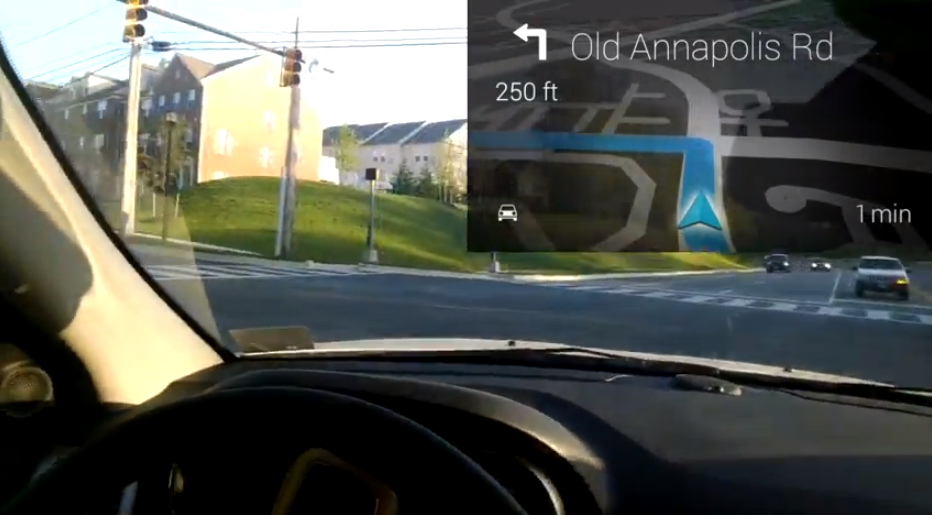
Google Glass Navigation

In what is supposedly a battle to help curb distracted driving, the Transportation Department is now asking Congress for help in regulating any and all navigation aids, including the ones found on your smartphone. The proposed transportation bill would give — in writing –  the National Highway Traffic Safety Administration full authority to regulate apps like Google Maps or Waze, setting restrictions and ordering changes to features they feel are too dangerous to drivers.

In a surprise to no one, that automakers are supporting the bill, but not because this might finally put their costly navigation service plans on an even playing field with free apps like Google Maps or Waze — they’re just looking out for everyone’s well being. A spokesperson for the Alliance of Automobile Manufacturers said in a statement:

“If you put restrictions on the built-in systems designed to be used while driving, it’s going to encourage people to use hand-held devices that are not optimal for use by a driver. We believe that if you’re looking at a smaller screen, that’s less effective than looking at a larger screen on the dashboard.”

Aside from the manpower or budget needed to oversee all the many navigation aids offered by the auto industry and company’s like Google, the measure faces other problems. Two years ago a man fought — and won — a ticket he received after a police officer ticketed the man for using a navigation app while driving. The matter reached an appeals court who later reversed the conviction. With the ever changing technological landscape, it’s clear our laws have some further catching up to do.

The highway agency says that once passed, changes to smartphone apps wouldn’t occur anytime soon. Their central focus would, at least for time being, remain on in-dash automotive software. And while it’s unclear exactly what changes, if any, would hit apps like Google Maps, apps like Waze which feature much more user interaction could see many of their social features — like police sighting reports — stripped away (or disabled while driving). With updates to these apps requiring approval from the transportation department, well, it’s easy to imagine these becoming much less frequent.

[NYT]

24 Jun 00:43

DOJ Drone Memo: AUMF Trumps All And Rights Are Subject To Arbitrary Revocation In Times Of 'War'

by Tim Cushing

The long-awaited "drone memo" has now been released, and it details the DOJ's justifications for the extra-judicial killing of American citizens. While the government runs through various permutations of its arguments for "justified" killings, the short version can be boiled down to four letters: AUMF.

The Authorization for Use of Military Force Against Terrorists was passed three days after the 9/11 attacks and is every bit the sort of kneejerk legislation every lawmaker should approach warily, but seldom do. This kicked off America's "War on Terror," a slippery slope "battlefield" that has been used to justify everything from domestic surveillance by the NSA to the purchase of cell phone tower spoofers and discarded military vehicles by local police departments.

The memo (which starts at page 67 of the embedded document below -- the legal decision ordering the release is above it) starts out with the DOJ doing Congress' thinking for it. This part discusses the "authority" behind the killings, aligning it roughly with the deadly use of force by law enforcement, something that makes certain killings lawful under certain circumstances.

The justifications listed below constantly cite 18 USC 1119(b), a law that simply states that it's illegal for a US citizen to kill another US citizen residing outside US borders, making them subject to the United States' laws on murder and manslaughter. But what looks simple and solid on the law books is apparently filled with loopholes and things Congress meant to make clear but apparently didn't.

But the recognition that a federal criminal statute may incorporate the public authority justification reflects the fact that it would not make sense to attribute to Congress the intent with respect to each of its criminal statutes to prohibit all covered activities undertaken by public officials in the legitimate exercise of their otherwise lawful authorities, even if Congress has clearly intended to make those same actions a crime when committed by persons who are not acting pursuant to such public authority. In some instances, therefore, the better view of a criminal prohibition may well be that Congress meant to distinguish those persons who are acting pursuant to public authority, at least in some circumstances, from those who are not, even if the statute by terms does not make that distinction express.
What the DOJ basically argues here is that it would be perfectly fine for an NYPD officer to use justified, deadly force to shoot another American overseas. This would seem to be an unlikely event, but the NYPD has sent its officers all over the world in recent years, much to the dismay and irritation of local law enforcement and security agencies.

The DOJ further presses its point by comparing extrajudicial killings to speeding tickets (from the same paragraph as above).
Cf. Nardone v. United States, 302 U.S. 379, 384 (1937) (federal criminal statutes should be construed to exclude authorized conduct of public officers where such a reading "would work obvious absurdity as, for example, the application of a speed law to a policeman pursuing a criminal or the driver of a fire engine responding to an alarm")
On page 73, the DOJ notes that there's actually no federal statute that grants the government the same "rights" (in terms of justified use of deadly force) local law enforcement agencies enjoy, but that doesn't slow down the rationalizing. The DOJ looks back through legislative to find something that might apply to its drone attacks. But what it quotes here has nothing to do with executions.
To close the "loophole under Federal Law which permits persons who murder Americans in certain foreign countries to go punished [sic]," id, the Thurmond bill would have added a new section to title 18 providing that "[w]hoever kills or attempts to kill a national of the United States while such national is outside the United States but within the jurisdiction of another country shall be punished as provided under sections 1111, 1112, and 1113 of this title." S. 861, 102d Con g. (1991) (incorporated in S. I 241, 102d Con g. §§ 3201 -03 (1991 )). The proposal also contained a separate provision amending the procedures for extradition "to provide the executive branch with the necessary authority, in the absence of an extradition treaty, to surrender to foreign governments those who conunit violent crimes against U.S. nationals."
It should be noted that none of the punishments listed are "death sentence without due process." At best, the government is allowed to remand the US citizen to local law enforcement, should there be no extradition treaty in place. Thurmond's bill does not say killings are justified if extradition isn't practical.

It goes from there to twisting words around until its convinced they read differently than they actually read. The following argument can best be summed up as: "the killing is justified because the killing is justified." Because we say its lawful, it must be lawful. (Hence the intense leaning on the AUMF later.)
It is true that here the target of the contemplated operations would be a U.S. citizen. But we do not believe al-Aulaqi 's citizenship provides a basis for concluding that section 1119 would fail to incorporate the established public authority justification for a killing in this case. As we have explained, section 119 incorporates the federal murder and manslaughter statutes, and thus its prohibition extends only to "unlawful" killings, 18 U.S.C. §§ 1111, 1112, a category that was intended to include, from all of the evidence of legislative intent we can find, only those killings that may not be permissible in light of traditional justifications for such action. At the time the predecessor versions of sections 1111 and 1112 were enacted, it was understood that killings undertaken in accord with the public authority justification were not "unlawful" because they were justified. There is no indication that, because section 1119(b) proscribes the unlawful killing abroad of U.S. nationals by U.S. nationals, it silently incorporated all justifications for killings except that public authority justification.
Now that the DOJ has established a "right" to conduct extrajudicial killings based mainly on public authority justifications granted to law enforcement, it then discussed whether this can be stretched to cover DoD and CIA operations. Here's where the DOJ begins wading into the "War on Terror" justifications.
In light of the combination of circumstances that we understand would be present, and which we describe below, we conclude that the justification would be available because the operation would constitute the "lawful conduct of war"-a well-established variant of the public authority justification.
Technically, we're not "at war" anywhere in the world. There's no declared war, other than the one on terrorism, which the DOJ terms (using the AUMF wording) a "non-international armed conflict." If this is the justification, terming anything a "war on…" would justify extrajudicial killing, because no one expects murder charges to be brought against them during normal acts of war (i.e., combatants killing other combatants).

Because the AUMF says we can detain a US citizen who is assisting our enemies, it also means we can kill a US citizen who does the same.
And thus, just as the AUMF authorizes the military detention of a U.S. citizen captured abroad who is part of an armed force within the scope of the AUMF, it also authorizes the use of "necessary and appropriate" lethal force against a U.S. citizen who has joined such an armed force.
The DOJ also discusses the justifications for the CIA's involvement, but much of that will still remain a mystery. Large portions of this have been redacted, but the discussion does start out with this unintentionally hilarious assertion.
[redacted] -- the CIA -- [redacted] would conduct the operation in a manner that accords with the rules of international humanitarian law governing this armed conflict...
Maybe in light of its still-unreleased "Torture Report," the DOJ might want to retract that statement. But the CIA's justifications apparently aren't that far off from the DoD's, and they include the same willingness to put words in Congress' mouth.
Thus, we conclude that just as Congress did not intend section 1119 to bar the particular attack that DoD contemplates, neither did it intend to prohibit a virtually identical attack on the same target, in the same authorized conflict and in similar compliance with the laws of war, that the CIA would carry out in accord with [redacted].
Finally, the DOJ discusses the rights completely ignored by extrajudicial killing. First, the Fifth Amendment is dismissed because the AUMF trumps all.
In Hamdi, a plurality of the Supreme Court used the Mathews v. Eldridge balancing test to analyze the Fifth Amendment due process rights of a U.S. citizen captured on the battlefield in Afghanistan and detained in the United States who wished to challenge the government's assertion that he was a part of enemy forces, explaining that "the process due in any given instance is determined by weighing 'the private interest that will be affected by the official action' against the Government's asserted interest, 'including the function involved' and the burdens the Government would face in providing greater process."
"Constitutionality," in the DOJ's hands, is mostly about what rights people don't have.
We believe similar reasoning supports the constitutionality of the contemplated operations here. As explained above, on the facts represented to us, a decision-maker could reasonably decide that the threat posed by al-Aulaqi's activities to United States persons is "continued" and "imminent..."
The explanation "above" is, of course, redacted.

The DOJ continues on to wave away the Fourth, again using the AUMF as justification.
The Fourth Amendment "reasonableness" test is situation-dependent. Cf Scott, 550 U.S. at 382 (Garner "did not establish a magical on/off switch that triggers rigid preconditions whenever an officer's actions constitute 'deadly force'"). What would constitute a reasonable use of lethal force for purposes of domestic law enforcement operations will be very different from what would be reasonable in a situation like such as that at issue here. In the present circumstances, as we understand the facts, the U.S. citizen in question has gone overseas and become part of the forces of an enemy with which the United States is engaged in an armed conflict; that person is engaged in continual planning and direction of attacks upon U.S. persons from one of the enemy's overseas bases of operations; the U.S. government does not know precisely when such attacks will occur; and a capture operation would be infeasible.

[redacted] at least where high-level government officials have determined that a capture operation overseas is infeasible and that the targeted person is part of a dangerous enemy force and is engaged in activities that pose a continued and imminent threat to U.S. persons or interests the use of lethal force would not violate the Fourth Amendment. [redacted ] and thus that the intrusion on any Fourth Amendment interests would be outweighed by "the importance of the governmental interests [that] justify the intrusion..."
If it's difficult, don't try. At least that much agrees with law enforcement rationale. Why get a warrant when exigent circumstances can be abused? Why respect rights when you can claim there's a "continued" and/or "imminent threat?"

Permalink | Comments | Email This Story


21 Jun 03:40

This Tool Boosts Your Privacy by Opening Your Wi-Fi to Strangers

by Andy Greenberg
In an age of surveillance anxiety, the notion of leaving your Wi-Fi network open and unprotected seems dangerously naive. But one group of activists says it can help you open up your wireless internet and not only maintain your privacy, but actually increase it in the process. At the Hackers on Planet Earth conference next […]


21 Jun 03:37

House Votes To Cut Key Pursestrings For NSA Surveillance

by Andy Greenberg
The House of Representatives may have only passed a puny attempt to reform the NSA’s surveillance activities last month. But on Thursday evening it swung back with a surprising attack on a key element of the agency’s spying programs: their funding. In a late night session, the House of Representatives voted 293 to 123 to […]


20 Jun 03:40

Feds Asked Cops to Deceive Courts About Use of Spy Tool, Emails Show

by Kim Zetter
Police in Florida have been deliberately deceiving judges and defendants about their use of a controversial surveillance tool known as a stingray at the request of the U.S. Marshal's Service, according to newly obtained emails.


19 Jun 18:32

Supreme Court Rejects Software Patents On Performing Generic Functions; Pretends That Lots Of Other Software Must Be Patentable

by Mike Masnick
For a few years now we've been covering a key software patent case, Alice v. CLS Bank, which was another chance to show that pure software patents shouldn't be granted. As you may recall, four years ago, the Supreme Court got to tackle the question of software patents in the Bilski case, but chose to punt instead, rejecting that particular patent, and arguing that the specific test that everyone relied on shouldn't be the only test -- but otherwise leaving a lot of confusion in its wake. It did help dump a few software patents, but left the wider question pretty open.

We had hoped that when the Supreme Court agreed to hear the Alice case it wouldn't miss another chance to actually add some clarity to what is and what is not patentable. It seemed like the perfect opportunity. As you may recall, the original appeals court (CAFC) ruling was a complete disaster, with 135 pages of different opinions -- with only one single paragraph having a majority view, rejecting the specific patent. But no one could agree on why or the larger questions.

It was as if CAFC were practically begging the Supreme Court to provide clarity and guidance.

Unfortunately, the Supreme Court didn't really do that. It technically "upheld" the CAFC ruling (that one paragraph) rejecting the patent (which basically covered a computerized escrow service) as unpatentable subject matter. It further makes clear that merely taking an abstract idea and doing it "on a computer" doesn't make it patentable. That's all good... But, while three Justices (Sotomayor, Ginsburg and Breyer) hoped the court would go further and basically say that business methods weren't patentable at all, the rest simply wouldn't go along with that, saying that "many computer-implemented claims are formally addressed to patent-eligible subject matter," but never giving any examples.

Instead, it notes that you can't get a patent if each step claimed in the patent "does no more than require a generic computer to perform generic computer functions." Except, uh, many people will point out that's all that software does. That's basically how software works, but the Justices don't seem to recognize that. So, it's a bit of a conundrum. The court says many software patents are perfectly good because they apply to patent-eligible subject matter, but that if the claims do no more than require a generic computer to perform generic computer functions, it's not patentable. You could read that to mean that basically most software patents are no longer allowed, but... that's going to involve an awful lot of wasted litigation to teach a bunch of courts, including the Supreme Court, that basically all software involves generic computer functions.

Part of the problem is that, like many non-technical people, many of the Justice seems to think that software is a lot more than it really is. They seem to think that there's some magic in software that goes beyond just a bunch of instructions for a computer to follow. So, now they're saying that just taking some ideas and telling a computer to follow instructions to implement that idea is not patentable... but they still argue that there's plenty of software that is patentable. So it's... still really punting on the issue, in part because the Justices don't seem to understand software.

The court relies a lot on two other big recent rulings which we've covered -- the Mayo ruling that rejected medical diagnostic patents and the Myriad Genetics ruling that struck down gene patents, but doesn't quite go as far with software and business method patents. Instead, it sorta half rejects software patents, kinda, without going as far as it needs to go. As some folks are pointing out, the language used in the ruling is "going to tie folks in knots" as they try to figure out what it means.

In the long run, this may be a very important ruling. It's easy to read this ruling to basically reject a very large number of software patents. But, because of the unfortunately all-too-common nature of the Supreme Court semi-punting on clear decisions on this particular issue, it's not entirely clear where this ends up, meaning that there's going to be a lot of patent litigation citing this ruling, with both sides seeking to tap dance around the language choices. And that just means a few years down the road, it's quite likely that we'll be back here again, with the Supreme Court asked to decide, once again, whether or not software and business methods are really patentable.

Permalink | Comments | Email This Story


18 Jun 18:44

New Ruling Shows the NSA Can’t Legally Justify Its Phone Spying Anymore

by Wired Opinion
The Eleventh Circuit Court of Appeals just said no to warrantlessly tracking your movements using data from your cell phone in United States v. Davis, revealing that the U.S. government’s other law enforcement and national security “metadata” collection programs are also unconstitutional.


18 Jun 18:12

Symbian once held ransom for millions of euros, and Nokia paid

Brindle

whoa... wonder if they are still using the compromised keys...

Nokia paid millions of euros to a blackmailer to protect an encryption key of the Symbian phones. The extortion took place around the end of the year 2007. The National Bureau of Investigation confirms that the case is still unsolved. This is very interesting. Aside from the obvious illegal nature of it all, it's quite a clever crime, and the perpetrators were never caught. This makes me wonder if something similar could happen to the mobile operating systems of today.
17 Jun 17:01

Mike Rogers Says Google Is Unpatriotic For Not Wanting NSA To Spy On Its Users

by Mike Masnick
This past Wednesday, the CIA held its first ever Conference on National Security at Georgetown University. It included plenty of the usual talking heads spouting nonsense, but I wanted to focus in on one particular talking head spouting particularly ridiculous nonsense. It's our old friend, Rep. Mike Rogers, who is retiring from Congress to try to become an even bigger blowhard on talk radio (as if that's possible). Apparently, Rogers is using this conference to practice the classical blowhard strategy of making a variety of absolutely ridiculous claims that directly contradict each other.

So, for example, he kicked it off by attacking Silicon Valley tech companies for fighting back against NSA surveillance, and for arguing (accurately) that the NSA's efforts have created a major business problem for them around the globe, as people outside the US no longer trust them. In Rogers' mind, that means these companies are putting "European profits above national security." This isn't even close to true, but that's what Rogers is claiming (at about 2 hours 10 minutes into the video, which is also embedded below):
While I'm on my soapbox, we should be really mad at Google and Facebook and Microsoft, because they're doing a very interesting, and I think, very dangerous thing. They've decided to come out and say "we oppose this new FISA bill, because it doesn't go far enough." And when you peel that onion back a bit and say "Why are you doing this? This is a good bill, it's safe, it's bi-partisan, it's rational. It meets all the requirements for 4th Amendment protections and privacy protection and allowing the system to work."

And they say, "Well, we have to do this because we're trying to make sure we don't lose our European business." I don't know about the rest of you but that offends me from the words "European business." Think about what they're doing. They're willing to, in their mind, justify the importance of their next quarter's earnings in Europe versus the national security of the United States. Everybody on those boards should be embarrassed and their CEOs should be embarrassed and their stockholders should be embarrassed. That one quarter cannot be worth the national security of the United States for the next ten generations."
This is wrong and ridiculous on so many levels, but let's just jump to the biggest one and then circle back later to the rest. Less than 15 minutes later (at about 2 hours 25 minutes into the video), Rogers was arguing how important the internet is to our economy, and how a cyberattack might destroy it. He's basically discussing his beloved CISPA and its "information sharing" components, which is really a backdoor way to "legalize" companies handing over all their data to the NSA without warrants.
One sixth of our economy now, is through the internet! One sixth! So this notion that we're all going to say "well the government should do nothing and just completely keep away" -- and I'm not for regulation, by the way, that's not what I mean, but I mean in some way to... to help defend these private networks or allow them to defend themselves -- if we don't get it right, one-sixth of our economy is going to go away. Like that (*snaps*). If every time you turn it on, you lose money, how many times are you going to turn it on and use the internet for commerce? You're not!
Right. Did you get that? If the NSA is violating all of your privacy, no big deal, and people will continue to use the internet and contributing to the economy -- and if it hurts the economy, well that's just the price we pay for national security. But, if those evil foreign governments violate your privacy, well, then all of you will stop using the internet and it will destroy our economy.

In short: if NSA hacking into Europeans eats into US companies' profits: that's patriotism. But if Europeans hack into US companies, then everyone will stop using the internet and it will destroy us all.

And then he goes even further:
If one financial institution -- we have one particular financial institution that clears somewhere about $7 trillion in global financial transactions every single day. Imagine if tomorrow that place gets in there, and through an attack of which we know does exist -- the potential does exist -- where the information is destroyed and manipulated. Now you don't know who owes what money. Some of that, they have lost transactions completely, forever. Imagine what that does to the economy? $7 trillion. Gone. Right? Gone! It's that serious!
So, profits of Wall Street banks are patriotic. But profits of Silicon Valley companies... well, they can be sacrificed for national security.

Except, of course, the underlying assumption in all of this -- which has been proven time and time again to be false, is that these efforts actually help with national security. Mike Rogers was one of the leading FUDspreaders, concerning the claim that the section 215 bulk phone records collection helped national security. Except that's been proven to be false time and time again. Both judges and the President's own task force have marvelled at the total lack of evidence that the bulk records provision was necessary.

The complaints from various tech companies (who Rogers himself admits makes up a huge part of our economy) is not about their "next quarter" of European profits, but about the very idea that he and his friends have more or less convinced the rest of the world that American internet companies are not trustworthy. That's not about next quarter's profits, it's about violating the privacy of everyone around the globe -- for no actual benefit.

So, in the end, we see what hypocritical views Rogers has. It's shameful and unpatriotic for Silicon Valley to be concerned about the privacy rights of their users, because that might lead to an attack on national security, and that attack on national security might harm the profits of Silicon Valley and (more importantly) Wall Street, and any attack on profits is unpatriotic (except, apparently, the profits he wanted them to give up first). Confused? Don't be. What Rogers is really saying is he doesn't give a shit, so long as the NSA gets to violate everyone's privacy, and he'll make any ridiculous argument to keep that happening. And, of course, to keep it secret, because if you don't know about it, he still thinks your privacy hasn't been violated.

Permalink | Comments | Email This Story


17 Jun 16:55

Administration Helping Bury Documents Related To Local Law Enforcement Use Of Cell Tower Spoofers

by Tim Cushing
The recent story about the US Marshals Service stepping in to prevent the ACLU from obtaining documents related to the Sarasota (FL) Police Department's ownership and use of cell tower spoofers is apparently not an isolated instance. According to an AP report, the US government is actively inserting itself into the "discussion" by ensuring no one gets to talk about the controversial devices.
The Obama administration has been quietly advising local police not to disclose details about surveillance technology they are using to sweep up basic cellphone data from entire neighborhoods, The Associated Press has learned.

Citing security reasons, the U.S. has intervened in routine state public records cases and criminal trials regarding use of the technology. This has resulted in police departments withholding materials or heavily censoring documents in rare instances when they disclose any about the purchase and use of such powerful surveillance equipment.
Beyond the obvious negative impact on the much-vaunted "transparency" this administration claims to personify, there's also the new disturbing level of overreach -- the US government actively interfering with state-level Freedom of Information requests. In addition to the restrictive non-disclosure agreements that law enforcement agencies must sign when purchasing Stingray devices (and these agencies' general reluctance to share surveillance equipment info with the public), the government itself is taking an active role in erecting a wall between the public and its public servants.
Interviews, court records and public-records requests show the Obama administration is asking agencies to withhold common information about the equipment, such as how the technology is used and how to turn it on. That pushback has come in the form of FBI affidavits and consultation in local criminal cases.
Harris, the largest manufacturer of cell tower spoofers, specifically directs law enforcement to consult with the FBI during the purchase process, as well as before deploying the devices. The company claims this is all above board because it's "regulated" by its status as a government contractor. That might mean something if it wasn't so closely aligned with these government agencies' desire to keep the technology secret.

And, of course, the government has used its go-to defenses to justify its secrecy efforts. Above, it mentioned "security." A supporting affadavit filed by an FBI agent in a Freedom of Information lawsuit adds another:
A court case challenging the public release of information from the Tucson Police Department includes an affidavit from an FBI special agent, Bradley Morrison, who said the disclosure would "result in the FBI’s inability to protect the public from terrorism and other criminal activity because through public disclosures, this technology has been rendered essentially useless for future investigations."

Morrison said revealing any information about the technology would violate a federal homeland security law about information-sharing and arms-control laws…
Once you strip out all the panicky trappings, the FBI is basically asserting that it, and the law enforcement agencies it's speaking in support of, should be allowed to do what they like with zero accountability. These agencies want to have the ability to collect massive amounts of data without being slowed by warrant requests or minimization processes.

These exposure fears are unfounded, and those using them to justify withholding information know this. This secrecy has been used to seal returned warrants and court orders on closed investigations, giving lie to the claim that these agencies are concerned about damaging current and future investigatons. And, realistically, the only way terrorists or criminals are going to be able to completely avoid Stingray surveillance is to not use or carry cell phones, something that seems highly unlikely. For this to be any use to them, they would have to know in advance where it's being deployed and when.

The real reason behind the collaborative burial of information is the agencies' desire to do what they want without limitations or paper trails. This sort of behavior should be an indicator of a law enforcement agency that's gone rogue, rather than an all-too-common collaborative effort between local and national government agencies.

Permalink | Comments | Email This Story


17 Jun 16:55

FCC Begins Investigating Comcast And Verizon Making Netflix Pay To Avoid Congestion

by Mike Masnick
Throughout the most recent version of the net neutrality fight, Tom Wheeler and the FCC has worked hard to keep interconnection issues a separate debate, even though interconnection is likely where the real fight has moved. In short, if you haven't been following this closely, net neutrality has historically been about discrimination on the last mile -- from your broadband access provider to your home -- but over the past couple of years, the big broadband companies (mainly Comcast) have realized they can get the same basic result (getting big internet companies like Netflix to double pay for your bandwidth) by clogging up the transit, and getting Netflix to pay up to interconnect directly. However, in the minds of most people, it's the same thing. Even while the congestion is happening on the network, the end result for everyone is effectively the same: Netflix has to pay to get a quality stream to you, your connection sucks if they don't pay, and Comcast collects all the money. So, when John Oliver did his piece on net neutrality, he actually illustrated it with the interconnection battle. And that's because it's really the same thing.

Well, it's really the same thing to just about everyone... except the FCC. The FCC's request for comments explicitly tries to avoid delving into the interconnection fights, but thanks to things like John Oliver's coverage, many of the comments the FCC has been receiving have been about those issues anyway. Apparently realizing that he can't avoid the issue, FCC boss Tom Wheeler has announced that he's now "gathering information" on these interconnection fights and has specifically asked Comcast, Verizon and Netflix to hand over the details of their arrangement. Wheeler even quotes one of the comments that the FCC has received during the NPRM comments that talks about the interconnection battle, and notes that there are many more like that.
In reading the emails I receive, I thought this one from George pretty well sums up public concern:
Netflix versus Verizon: Is Verizon abusing Net Neutrality and causing Netflix picture quality to be degraded by “throttling” transmission speeds? Who is at fault here? The consumer is the one suffering! What can you do?
We don’t know the answers and we are not suggesting that any company is at fault. But George has gone to the heart of the matter: what is going on and what can the FCC do on behalf of consumers? Consumers pay their ISP and they pay content providers like Hulu, Netflix or Amazon. Then when they don’t get good service they wonder what is going on. I have experienced these problems myself and know how exasperating it can be.

Consumers must get what they pay for. As the consumer’s representative we need to know what is going on. I have therefore directed the Commission staff to obtain the information we need to understand precisely what is happening in order to understand whether consumers are being harmed. Recently, at my direction, Commission staff has begun requesting information from ISPs and content providers. We have received the agreements between Comcast and Netflix and Verizon and Netflix. We are currently in the process of asking for others.

To be clear, what we are doing right now is collecting information, not regulating. We are looking under the hood. Consumers want transparency. They want answers. And so do I.
That sounds good, but we'll see what actually comes of it. The fact that Wheeler has tried hard to separate interconnection from net neutrality hasn't been particularly encouraging. The personable "I've experienced these problems myself" is nice, but it means little if the FCC doesn't actually realize what's going on here. Also, the quote at the end about transparency also sounds good, but we'll have to see if the FCC actually lives up to it and shares the details or keeps the whole process secret.

Permalink | Comments | Email This Story


16 Jun 16:37

Oops: Xbox Advertisement Results In Aaron Paul Turning On Your Console

by Timothy Geigner
We talk a lot about what advertisements in our age are supposed to be and do, as well as what they aren't supposed to be or do. Ads should be content, fun and engaging content wherever possible. The less annoying an advertisement can be, the better, and attempts to pretend advertising isn't advertising should cease immediately. And, perhaps most importantly, a good advertisment connects with its audience. Or, perhaps I should say kinects with its audience. Check out this Xbox One ad, starring Aaron Paul from The Need For A Paycheck Speed.


Sort of your everyday, run of the mill console ad, right? Well, there's a problem that apparently whoever made this ad didn't forsee. Remember at the beginning of the ad, when Aaron Paul says, "Xbox on!" to turn on his console with the voice activated commands? Yeah, you already know where this is going...

Recently, a thread popped up on popular game forum NeoGAF with member MrPressStart saying, "What the fuck.... Sitting here watching tv and the xbox commercial starring Aaron Paul came on. Next thing I know I am reaching for the controller to turn it off."
Yeah, see, when we want ads to engage the viewer, we didn't mean to suggest that the ad should have an impact on their electricity bills. To be honest, most folks aren't super upset about this. In fact, many people out there find this every bit as hysterical as I do.
Over on Reddit (via BBC), numerous Redditors apparently experienced the same thing. "Haha, this just turned my Xbone on," wrote larae_is_bored. "Awesome!" Redditor brownbear1992, "Aaron Paul just started my xbox. Guess I better play it now it's on." Another Reddit user, The_Iceman2288, added, "Him saying 'Xbox on' turned on my Xbox. Dammit Jesse!"
The general amusement or apathy over this aside, this does indicate how both device-makers and advertisers are going to have to account for voice activated everything moving forward. An Xbox flipping on while you're sitting in front of the TV is one thing, but the whole voice activated thing is only going to expand, and voice activation may become something which must be accounted for in the future. Advertisers may have to worry about what they're going to turn on and product-makers had damned well better be looking into how to protect voice-activated devices from this kind of inadvertent activation. But for now, just enjoy the thought of Jesse Pinkman turning on people's Xbox Ones.

Permalink | Comments | Email This Story


11 Jun 03:46

German Court Rules Ex-Lovers Must Disappear Consensual Previously Taken Nude Pictures Of The Other

by Timothy Geigner
Brindle

lol.

The aspect of the whole "right to be forgotten" business that's been occurring in Europe that most interests me isn't the legal wranglings or the plethora of unforeseen consequences that will inevitably rear its ugly head. Rather, I'm chiefly interested in the mentality that wanting such legislation suggests. That mentality appears to essentially amount to a request that chosen-actions that might end up being embarrassing should be subject to the whims of he or she that might be embarrassed. While this strikes me as immensely silly, it's not difficult to understand that the unprecedentedly long memory of the internet, as well as its inherent function as an easily-searched index, has made the consequences for embarrassing actions occur on a longer timeline than ever before. Pushing back against that change in the action-response scenario was probably inevitable, even if it's still wrong.

But it isn't just the internet that creates these kinds of scenarios. Digital photography presents a similar problem, with embarrassing images easily stored in perpetuity on hard drives and free from the wear and tear that old developed photos had to endure. And that's how we end up with a German court ruling that ex-lovers who had consented to being photographed nude and/or engaged in sexual activity must be deleted once the relationship ends.

The man, an unnamed photographer, had taken explicit photographs of his partner and made erotic videos with her throughout their relationship. The court heard the woman had consented to all of the material being taken and, in some cases, had taken the photographs herself. When their relationship ended, the woman insisted that all of the images and videos she appeared in be deleted.

The court agreed that any privately recorded nude pictures and footage which she appeared in should be deleted or withdrawn on the grounds of personal rights, which are considered higher than the ownership rights of the photographer, the Local has reported.
Let's wade around the legal weeds of German rights for a moment and break this down in laymen's terms. The court has ruled that actions previously agreed to are subject to the wants of that actor once a romantic relationship ends simply because they might embarrass said actor. One might have sympathy with the woman in this specific case, who didn't want her ex-lover to retain nude photos or videos of her in suggestive situations with him. But negating the responsibility for decisions made is going to open up a whole can of worms the court has no business involving itself in. In this case, they ruled that photos of the woman fully-clothed weren't subject to deletion, because they wouldn't "compromise" her. Great, except now define "fully-clothed", explain why the woman's feelings that her in a low-cut t-shirt isn't fully clothed, what ability the court has demonstrated to be a good arbiter of other people's feelings of being compromised, etc.

The point is that when the courts get involved in attempting to protect people from their own feelings, it's going to go wrong. Each and every time. Because the court shouldn't be in this kind of subjective debate. On top of that, alleviating citizens from the consequences of actions they consented to isn't the court's business either. Yes, it's possible that the man may use the photos in questionable ways, but let the court deal with those offenses rather than the vague possibility of an offense. This court instead said the ex had to delete the photos that are his to possess, simply because. Have fun with the resulting caseload, Germany.

Permalink | Comments | Email This Story


11 Jun 03:01

General Keith Alexander Is An Opportunistic Coward

by Timothy Geigner

In all that we've written about General Keith Alexander, former chief guy at the NSA who has overseen the most egregious overreach in domestic spying American history, we've learned a great deal about him. For instance, we know logic eludes him, after he insisted that we need more spying because current spying is encouraging terrorism. We also know he doesn't give a damn about the whole freedom of the press thing, what with his support for press gag orders. And we know he's a man of limited imagination, having told Congress he just can't think of any other way to keep you and I safe without the NSA's massive surveillance programs.

You know what else Keith Alexander is? A coward. I say that absolutely knowing that I'll probably get killed in the comments for suggesting a man who signed up to serve the public, serve in the military, and serve in intelligence is a coward. Well to hell with anyone who suggests you can't call a man who serves a coward. Where were all of you when Edward Snowden was getting lambasted in the exact same way? Still, accusing a man like Alexander of cowardice requires an explanation. Get yourself started by watching this clip of his appearance on CNN.

"It's going to get more dangerous. I would rather be sitting here in the hot seat defending what we're doing than sitting here in the hot seat after a terrorist attack and you asking me 'how did we fail the country?' It's a bad place out there. They're trying to kill us. These are some of the tools. If you take away some of the tools, it is my assessment after forty years in the business, and today is my fortieth anniversary in joining the army, it is my assessment that it is going to get tougher. And these leaks have hurt us. They will get tougher."
Okay, let's get the obvious out of the way. All this harm that has supposedly been done by Snowden's leaks turns out to be smoke and mirrors, as far as what the government is willing to prove is concerned. Now that that's out of the way, perhaps unlike some of my colleagues here, I too believe there is a very real danger from international terrorism. That said, a blanket statement about how bad things are and how "they" are trying to kill us is about as useful as a rectum on a houseplant. Nobody is arguing that there isn't at least some degree of danger, the argument is over how far we're willing to let our government go to protect the liberty at which they're chipping away, nevermind the way we comport ourselves as a member of the international community.

But it's the first part of that statement that really pisses me off and it's that same part that reveals the cowardice inside Alexander. This constant hint-dropping of how much more difficult it is to prevent the next domestic terrorist attack now that the public is aware of the massive surveillance program is a pretty clear attempt at innoculation of responsibility. It's as if these spy chiefs looked at the damning of public officials that occurred after 9/11 (far too little of it, in my opinion) and decided to shield themselves from possible future criticism by proactively blaming Snowden's leaks for forthcoming attacks. Read another way, his hot seat comment reads to say: if sometime in the future, thousands of Americans end up dead in an attack, don't come blame us, you took our tools away from us.

For me, it's hard to imagine a more cowardly statement. Is Alexander so afraid to face potential failure that he would scapegoat someone who, at the very least, thought he was doing his patriotic duty? Would he have the intelligence community sidestep their responsibility simply because the public now recognizes the NSA's overreach? Would he cast off his duty simply because sunlight has finally marked his underground lair?

That kind of chess-piece positioning isn't the act of a patriot. It isn't the act of a hero. It's the act of a coward, which is exactly what General Keith Alexander is, and I'm happy to treat him like one. After all, the brave thing to do is to understand that freedom comes with danger and to bear that danger gratefully and willingly.


Permalink | Comments | Email This Story


11 Jun 02:45

Michigan State Politicians Looking Into Sheriff Department's Use Of A Cell Tower Spoofer

by Tim Cushing
Brindle

looks like we now have a paramilitary, gg

More news has surfaced of cell tower spoofers being deployed without the public's knowledge. This time it's the Oakland County (Michigan) Sheriff's Department rolling out an upgraded Stingray device from Harris Manufacturing, known as "Hailstorm." The sad thing here is that the opportunity for public input presented itself pre-rollout but local politicians slept on the issue.

Oakland County commissioners asked no questions last March before unanimously approving a cellphone tracking device so powerful it was used by the military to fight terrorists.

Now, though, some privacy advocates question why one of the safest counties in Michigan needs the super-secretive Hailstorm device that is believed to be able to collect large amounts of cellphone data, including the locations of users, by masquerading as a cell tower.

“I don’t like not knowing what it’s capable of,” said county Commissioner Jim Runestad, R-White Lake Township, who has met in recent weeks with sheriff’s officials about his concerns.
Harris, as it has been noted, heads off criticism and the impertinent questions of the public by tying up law enforcement officials with restrictive non-disclosure agreements. These NDAs have proven handy for some LEOs -- particularly in Florida where officials made the case that the restrictions of the contract prevented them from seeking warrants before using the cell tower spoofer.

State politicians are now attempting to have a belated discussion of the technology's privacy implications, thanks in part to prompting by local journalists. The Michigan House Oversight Committee brought in Christopher Soghoian, policy analyst from the ACLU and former magistrate judge Brian Owsley. (Recording embedded below.)

Soghoian's concerns aren't simply about the privacy implications or the secrecy Harris has shrouded its technology in, but also the fact that there's no way to track misuse of the equipment.
What’s particularly worrisome is there is no telltale sign they’ve been used, Soghoian said: “It doesn’t leave a trace. No one would ever catch you.” That means no one would know if police misused the device or activated it without a warrant, Soghoian said.
Owsley, in his statement to the committee, noted that the first time discussion of this technology occurred in his courtroom, it was presented by law enforcement as something along the lines of a pen register. As Owsley points, all it takes in most cases to get a pen register granted is a pulse. As long as both the magistrate judge and the law enforcement official are technically alive, the pen register will be signed off on.

That law enforcement portrayed cell tower spoofing in this fashion is no surprise, since it gives them the greatest chance of securing permission to deploy it. (The NSA/FBI did the same thing in order to push through its bulk phone metadata program.) Unlike regular pen registers, however, Stingrays/Hailstorms are deployed in cases where law enforcement may not even have a known phone number. Instead, they may be working off a list of numbers potentially tied to the subject of their investigation, or are just waiting for communications to originate from a certain location.

Now that the technology is finally being questioned, representatives of the Oakland County Sheriff's Department are stepping up to defend their acquisition.
Undersheriff Michael McCabe said, “Hailstorm helps us capture fugitives from the law, people wanted for murder and rape” and can be used only with a search warrant. He said the federal Homeland Security Act bars him from discussing Hailstorm, but he elaborated at length about what it doesn’t do.
Interestingly, McCabe cites the Homeland Security Act as prohibiting discussion, rather than the manufacturer's restrictive NDA. The county also cited "homeland security" terminology in its refusal to release requested documents about the Hailstorm device.
The county denied The News’ Freedom of Information Act request, saying the information is protected by anti-terror laws and includes “investigating records compiled for law enforcement purposes that would disclose law enforcement investigative techniques or procedures.”
Law enforcement officials in one of the safest counties in Michigan are conjuring up terrorism as an excuse for deploying a questionable device, as well as to avoid having to answer any tough questions about its capabilities or usage.

Undersheriff McCabe claims the device is used to go after "people wanted for murder and rape," while simultaneously claiming the DHS won't allow the department to talk about its non-terrorist-related use. He also claims it's not used without a warrant, a statement the county itself isn't allowing anyone to verify. (Among the documents requested were returned warrants on closed cases.) The Sheriff's Department refuses to discuss the technology (other than to highlight how great it is at catching bad guys) or back up its statements with documentation and somehow expects the public to be just fine with all of this. With state politicians now looking into its Hailstorm usage, the normal combination of obfuscation and bluster likely won't keep these details secret for much longer.

Permalink | Comments | Email This Story


11 Jun 02:26

Chicago Cops Being Sued After Being Caught On Tape Physically And Verbally Abusing A Massage Parlor Employee

by Tim Cushing

A Chicago woman is suing the city, along with ten police officers, for the abuse she was subjected to during a raid of the massage parlor she worked at. The entire interaction (which lasted more than 40 minutes) was caught on tape by the business' camera system.

Here's the beginning of the raid, which shows Chicago's finest interacting with Jianqing Klyzek using a combination of physical force and verbal abuse.


Here's the charming stuff Officer Di Pasquale had to say to Klyzek during their brief conversation.
Defendant DI PASQUALE: You're not fucking American! I'll put you in a UPS box and send you back to wherever the fuck you came from!

Plaintiff: I'm a citizen, OK?

Defendant DI PASQUALE: No you're not! No, you're not a citizen! No, you're not! No, you're not! You're here on our borrowed time. So mind your fucking business before I shut this whole fucking place down. And I'll take this place and then whoever owns it will fucking kill you because they don't care about you, OK? I'll take this building. You'll be dead and your family will be dead.
Note that this follows Officer Messina asking for permission to tase the 5'2" Klyzek "ten fucking times."

Also note -- especially those of you who claim bad cops are anomalies and not representative of the entire force -- that not a single officer (the plain-clothed men lined up against the counter impassively watching a small Asian woman being berated and manhandled by two "uniformed" cops) tried to dial back the aggression or suggested that some of things being said weren't appropriate or helpful. If anyone wants to know why there are so many bad cops, this is part of the problem -- the tacit approval offered by better cops who let this sort of thing happen without intervening.

Not only did these cops not try to defuse a situation that had gotten ridiculously out of hand, but they also assisted Di Pasquale and Messina in their search for the recording device in order to remove the evidence of their misconduct. Unfortunately for them, the device stored recordings off site. (Apparently, this fruitless search made up a large part of the 40-minute "raid.")

Since the officers couldn't find any evidence of prostitution (or human-sized shipping boxes), they fell back on weak claims that Klyzek assaulted an officer by "biting and scratching" as they attempted to restrain her. That failed as well when the judge threw the case out at a preliminary hearing.

But these officers weren't done failing. From the lawsuit:
On information and belief, sometime after the preliminary hearing, one or more of Defendant OFFICERS, contacted an Assistant State's Attorney in order to pursue a Grand Jury indictment for the offense of Aggravated Battery of a Police Officer against Plaintiff.
Based on Officer Sako's (allegedly) false testimony, the grand jury indicted Klyzek for aggravated battery. This was swiftly reversed when her lawyer brought some actual evidence to the grand jury.
On January 13, 2014, after viewing the video recording of Plaintiff's arrest, the State's Attorney's Office dismissed the aggravated battery of a police officer charges against Plaintiff.
Months later, the Chicago PD has yet to arrive at the same conclusion, despite being in possession of the same recorded evidence.
Police spokesman Adam Collins released a statement saying the matter is being investigated by the Independent Police Review Authority and that "the alleged comments, if true, are reprehensible and completely intolerable in our police department."
"If true." So, an officer's word is good enough to secure a grand jury indictment, but a recording -- containing both audio and video -- clearly depicting the chain of events detailed in the lawsuit -- is still up for discussion. If the IPRA ever gets around to using its eyes and ears, maybe it will finally be able to unload Officers Messina and Di Pasquale, something it should have done a half-decade ago.
A separate federal lawsuit alleged that DiPasquale and Messina were among a group of vice squad officers accused of abusing an immigrant during a 2008 prostitution sting. In the 2009 suit, DiPasquale was accused of sticking a gun in one man's face and slamming him into the dashboard of his car, breaking his nose.

The man's attorney, Richard Dvorak, said Monday that the case was settled out of court for less than $100,000.
There's the other reason bad cops are prevalent. The legal system pays victims minimal amounts using taxpayers' money. And those costing the city money simply man a desk or get a few weeks off from work before being given back their badges, guns and, most importantly, power.


Permalink | Comments | Email This Story


09 Jun 17:47

James Clapper Admits What Everyone's Been Saying For Months: Snowden Didn't Take 1.7 Million Documents

by Mike Masnick
You know, you'd think that the "intelligence community" would be a bit more intelligent. As we've discussed many, many times, nearly all of the estimates of "harm" concerning Ed Snowden's actions were based on the faulty assumption that he "took" (and revealed) every document he ever "touched" while at NSA -- somewhere around 1.7 million (sometimes referred to as 1.5 million, but then upped to 1.7 million). Except that two of the reporters who got the documents, Glenn Greenwald and Ewan MacAskill, have both said from the very beginning that it was about 60,000.

And yet, NSA defenders keep insisting that he's caused all of this harm because of what was in the 1.7 million documents... nearly all of which he did not take. Indeed, the much-hyped (by NSA defenders) Pentagon report on the "staggering harm" that Snowden has created doesn't actually say that. It says it's "staggering" how many documents he had access to, not that he took. Because the NSA, one year after the first Snowden revelation still has no idea how much he actually took (which certainly raises questions about their vaunted "auditing" of everything done at the agency).

In fact, James Clapper is now admitting that maybe Snowden didn't take so much, and maybe the "harm" wasn't as bad as he, himself, has been arguing:
Director of National Intelligence James Clapper says it appears the impact may be less than once feared because "it doesn't look like he [Snowden] took as much" as first thought.

"We're still investigating, but we think that a lot of what he looked at, he couldn't pull down," Clapper said in a rare interview at his headquarters Tuesday. "Some things we thought he got, he apparently didn't." Although somewhat less than expected, the damage is still "profound," he said.
In other words, exactly as pretty much all of us have been saying -- all of the frantic FUD-filled estimates of "harm" were actually massively over-hyped based on faulty assumptions. And yet that never stopped Clapper, Mike Rogers, Keith Alexander, Dianne Feinstein and others from continuing to trot out those bogus numbers, even though tons of people had debunked them. And now that Clapper is finally admitting that he himself over-hyped the supposed "harm" and the documents that Snowden took, he acts as if he's revealing some big news.

Amusingly, the report also claims that the DOD is also lowering its estimate of how much Snowden "touched" from 1.77 million (up from the 1.7 million they had been saying, actually) down to the 1.5 million which was the number they had been using back at the beginning of December anyway. It's almost as if they actually have no idea and are just pulling numbers out of thin air.

Permalink | Comments | Email This Story


06 Jun 13:00

District Court Judge Orders Last-Minute Sealing Of Documents Related To Stingray Devices And Cell Tower Data Dumps

by Tim Cushing

The government clearly does not want to talk about its surveillance tools: stingray devices, cell phone tower data dumps, pen/trap registers. This opacity begins at the bottom, with law enforcement agencies conveniently quoting manufacturer non-disclosure agreements as a way to deny records requests or route around obtaining warrants.

When it appears records detailing use of these methods may make their way into the public domain, the DOJ itself steps in (via its US Marshals Service) and seizes the documents. Anything the government has as its disposal is used in order to keep these records out of the public eye.

Cyrus Farivar at Ars Technica brings news that the US government is again inserting itself between public records and the public.

Serving as an outgoing United States magistrate judge, Brian Owsley had decided that one of his final judicial acts would be to unseal more than 100 of his own judicial orders involving digital surveillance that he himself had sealed at the government’s request.

But not long after Owsley's move last year, a US district judge vacated Owsley’s order and resealed them all. That order itself was then sealed.
Brian Owsley notes that this behavior is "not normal."
"I sent in various ways to the government, a number of applications and I said I'm going to unseal these unless you tell me why I shouldn't. These were done in waves. The first wave were completed five years previous, past the statute of limitations, and quite likely no longer really significant. That was the first wave. The government did not oppose unsealing of any of them. So I spoke to the court's office and said to upload them to make them available online, and as they were doing that, somehow this district judge found out about it an interjected himself into the process. If the government has said: 'We don't think these things should be unsealed,' that's one thing. But just out of the blue the district judge interjecting himself, that's a little unusual."
This unusual move prompted another. Dow Jones, the owner of the Wall Street Journal, has filed a motion asking the district court to unseal the documents. The applications the government buried at the last minute include all of those items listed above: stingray devices, cell phone tower dumps and pen register requests.

The thing is that none of these documents should still be sealed. As Owsley states, everything affected deals with closed investigations. There's nothing ongoing and anything the government feels might compromise future investigations should be redacted -- which then can at least be challenged in court, if need be.

The filing notes that the burial of Owsley's orders isn't an outlier.
Magistrate Judge Stephen Smith estimates that tens of thousands of sealed electronic surveillance orders issued by federal district courts remain inaccessible to the public and the press—even long after the investigations underlying those orders have terminated.
The government's antipathy towards FOIA requests continues. And it highlights the incredible hypocrisy of its rationale and actions. According to every law enforcement and investigative agency in the US, Smith vs. Maryland grants no expectation of privacy to information handed over to third parties.

No one in the data collection business wants to be held accountable for abuse or forced to operate responsibly in the future. When the simple invocation of "terror," "drugs" or other criminal activity fails to drive off those seeking documents, the government resorts to other means to keep its actions out of the public eye, whether its extensive, unnecessary retractions or more extreme measures, like refusing to unseal documents.

To these entities, our lives are an open book. But if citizens want to take a look at what the government is doing with this information, or how it obtains it, these entities do all they can to ensure the flow of data remains strictly one way.


Permalink | Comments | Email This Story


06 Jun 12:54

Big Tech Calls On Senate To Stop NSA's Bulk Surveillance Program

by Mike Masnick
In honor of the Reset the Net campaign, and the one-year anniversary of the first Ed Snowden revelation, a bunch of big tech companies, including Google, Facebook, Microsoft, Twitter, Apple, DropBox, LinkedIn, Yahoo and AOL, have published an open letter to the Senate asking it to pass real surveillance reform, rather than the weak sauce that the House passed in its massively watered-down USA Freedom Act. At the same time, a lobbyist representing a group of big tech companies specifically warned the Senate that the House version was too weak and needed to be much stronger. This is a good first step, but we need to see the pressure on the Senate ramp up even more.

Permalink | Comments | Email This Story


06 Jun 12:41

Secret Trials: UK Holds A Secret Terror Trial, As US Appeals Court Holds Secret Hearing In Terror Case

by Mike Masnick
To have a functioning judiciary in an open democracy, part of the point is to make sure that court proceedings are open to the public. Yes, there may be certain instances where certain aspects must be kept secret, but the default should be open and public. Unfortunately, in both the US and UK this week, it appears that when it comes to the bogeyman word "terrorism," courts are willing to go dark. The more serious situation is over in the UK, where it has just come out that a secret terrorism trial is being held -- the first one in centuries. Even the names of the two defendants are not known (they're listed as merely AB and CD). Journalists had even been barred from mentioning the existence of the trial, until a gag order was just overturned. Note that the Guardian's page linked above had to turn off comments for legal reasons. Journalist Tim Cook has also spoken out eloquently about why this cannot stand.

I cannot say how broken-hearted I am about the prospect of a major criminal trial involving two men charged with serious terrorism offences being held entirely in secret for the first time in modern British legal history. I have spent my entire journalistic life campaigning against courtroom secrecy and this represents a nadir and indication of abject failure.

But the proposal is being contested by the process of law; albeit very limited and garrotted by the lack of a constitutional paradigm for freedom of the media and expression. We have been paying the price for not having a First Amendment for many years. Now we are entering the endgame of something beyond the dissolution of open justice.

Meanwhile, back here in the good, old United States, where we do have a First Amendment, at least we know that Adel Daoud is on trial. But the 7th Circuit Court of appeals kicked everyone out of the courtroom to hold a "secret hearing" with just the DOJ. As we wrote a few months ago, Daoud's lawyers are asking to actually see the FISA court orders that were used to gather evidence against their client -- and the DOJ is flipping out about that. While some of the hearings were held openly, at one point, Judge Richard Posner abruptly kicked everyone but the DOJ out, including Daoud's lawyers.
As the arguments concluded, Judge Richard Posner announced the public portion of the proceedings had concluded and ordered the stately courtroom cleared so the three-judge panel could hold a “secret hearing.” Daoud’s attorney, Thomas Anthony Durkin, rose to object, but Posner did not acknowledge him. Deputy U.S. marshals then ordered everyone out – including Durkin, his co-counsel and reporters.

Only those with the proper security clearance -- including U.S. Attorney Zachary Fardon, his first assistant, Gary Shapiro, and about a dozen FBI and U.S. Department of Justice officials – were allowed back in the courtroom before it was locked for the secret session.
Some reporters tried to ask what was going on, but Posner simply told them "No!" and kicked them out. Daoud's lawyer was similarly perplexed:
“Not only do I not get to be there, but I didn’t even get to object,” Durkin said. “I had to object over the fact that I couldn’t even make an objection.”
As the article notes, this is highly unusual. While in national security cases, certain information may be filed under seal, or certain portions may be held "in camera" without reporters or the public, it's not at all common to have just one side present. And while you may say that it makes sense in this case, where the three judge panel has to determine whether or not it's appropriate to share the FISC orders with Daoud's lawyers, it's still somewhat troubling to see the ease with which secret court proceedings may occur.

Permalink | Comments | Email This Story


04 Jun 00:44

U.S. Marshals Seize Cops’ Spying Records to Keep Them From the ACLU

by Kim Zetter
Brindle

WTF?

A routine request in Florida for records detailing the use of a surveillance tool known as stingray turned extraordinary Tuesday when the U.S. Marshals Service seized the documents before local police could release them.