Shared posts

30 Aug 14:09

When it comes to banking, can we have too much of a good thing?

by Tim Harford
Undercover Economist

In 1980, the econometrician David Hendry (now Sir David) investigated a key economic question: what causes inflation? Hendry looked to the data for insight. He speculated that a particular variable, X, was largely responsible. He assembled data on variable X, performed a few deft mathematical tweaks and compared his transformed X with the path of consumer prices in the UK. Graphing the result showed an astonishingly close fit.
The only snag: X was cumulative rainfall. Since consumer prices and cumulative rainfall both rise over time, Hendry had an excellent platform for finding his spurious correlation. Statistical sleight of hand did the rest.
Hendry wanted to demonstrate just how easy it was to produce plausible nonsense by misusing the tools of statistics. “It is meaningless to talk about ‘confirming’ theories when spurious results are so easily obtained,” he wrote.
All this is by way of preamble, because a hot topic in economics at the moment is the role of finance in the health of the economy. For many years, economists have tended to believe that a larger financial sector tends to be good news for economic growth, with statistical evidence to back this up.
It won’t surprise anyone to hear that this belief is now viewed with some scepticism, and the statistical studies now back up the scepticism too. Several recent research papers have found that finance can be bad for economic growth.
Given this statistical volte-face, Hendry’s conjuring trick comes to mind. Are our statistical studies simply serving as decoration for our existing prejudices?
A recent note by William Cline of the Peterson Institute for International Economics worries that new anti-finance research rests on a statistical illusion. Rich countries tend to grow more slowly than poorer ones. But rich countries also have larger banking sectors. A naive analysis, then, would show that large banking sectors are correlated with slower growth. But, points out Cline, the same statistical methods show that doctors are bad for growth and that telephones are bad for growth and even that research and development technicians are bad for growth. In reality, all that is being shown is that being rich already is bad for further growth.
Cline makes a good point but a narrow one. It’s not particularly helpful to analyse banking like salt in cooking or water on your vegetable patch, and conclude that “some is good, too much is bad”. Unlike salt and water, banking services are complex and diverse. There’s a difference between a mortgage, a payday loan, life insurance, a credit derivative, a venture capital investment and an equity tracker fund. They’re all financial services, though.
More persuasive analyses of the relationship between finance and growth are asking not just whether finance can grow too big to be helpful but what kind of finance, and why.
In two working papers for DNB, the Dutch central bank, Christiane Kneer explores the idea that the trouble with banking is that it sucks talent away from the rest of the economy. Kneer looked at the process of banking deregulation state by state in the US and found that banks hired skilled individuals away from manufacturing, where labour productivity fell. If Kneer is right, too much finance is bad for growth because the banks are gobbling up too many of the smartest workers.
Another possibility, explored by economists Stephen Cecchetti and Enisse Kharroubi, is that large banking sectors aren’t doing their classic textbook job of funding the most productive investments. Instead, they like to lend money to organisations that already have collateral. Mortgages make attractive loans for this reason. Loans to a business that already owns an office block or an oil refinery are also tempting. But lending to a business with more intangible assets, such as an R&D department or a set of strong consumer relationships, is less attractive. Perhaps it is no surprise when Cecchetti and Kharroubi find that larger banking sectors are correlated with slower growth in R&D-intensive parts of the economy. But it is not encouraging.
. . .
Such research reminds us that we shouldn’t simply bash “banking” or “finance” in some generic way, blaming the banks for anything from the weather to the struggles of bees. We need to look at the details of what the financial services industry is doing, and whether financial regulations are protecting society or making things worse.
The truth is that we desperately need a strong banking sector. This entire research literature on finance and growth was originally kicked off by development economists who had observed that poor countries struggled to develop if they didn’t have decent banks. Thorsten Beck, an economist at Cass Business School, first started studying the effects of finance when he worked at the World Bank. “I didn’t care about the UK or the Netherlands. I cared about Kenya, Chile and Brazil.”
Without a strong and sizeable banking sector to lend money to businesses, it is very hard for a poor country to grow. It may well be that we have more finance sloshing around the economy than we can use. That is a big problem — but it is also a first-world problem.

27 Aug 19:10

Microscopic zoom-in on a bacterium on a diatom on an amphipod

by Mark Frauenfelder

zoomgerm

From the entrancing Micro Universe Tumblr: a bacterium on a diatom on an amphipod.

27 Aug 19:08

Tumblr

by walkman
27 Aug 19:06

Entendedor Anônimo # 26

27 Aug 19:05

Saturday Morning Breakfast Cereal - Astronomy

by admin@smbc-comics.com
27 Aug 11:37

Comic for August 27, 2015

by Scott Adams
Nano Robots Are The New Health Plan - Dilbert by Scott Adams

This entry passed through the Full-Text RSS service - if this is your content and you're reading it on someone else's site, please read the FAQ at fivefilters.org/content-only/faq.php#publishers.

27 Aug 11:37

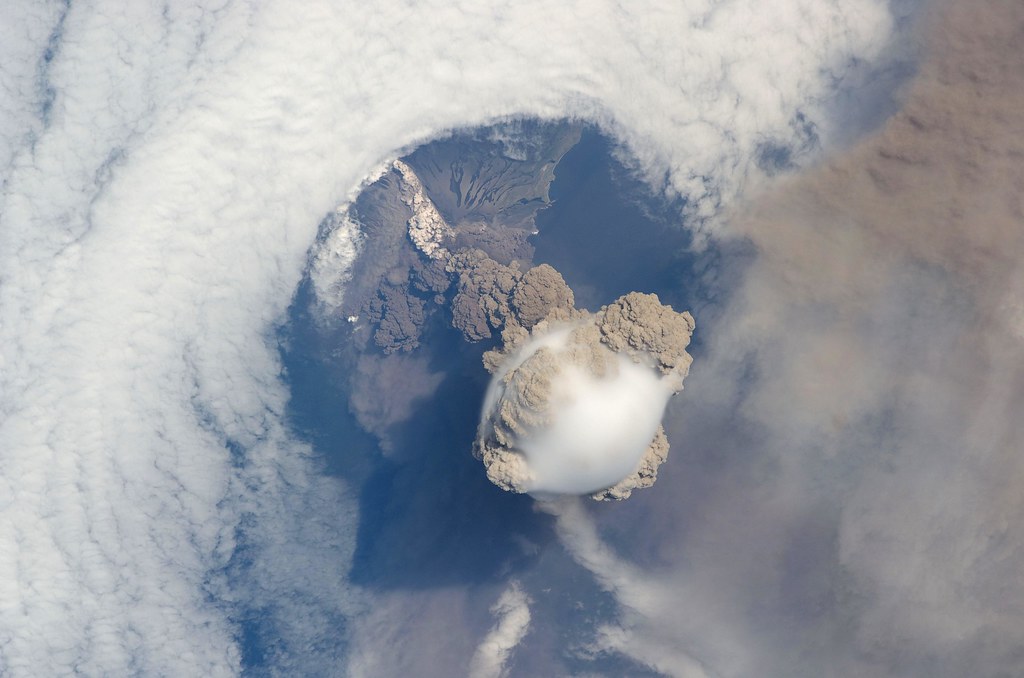
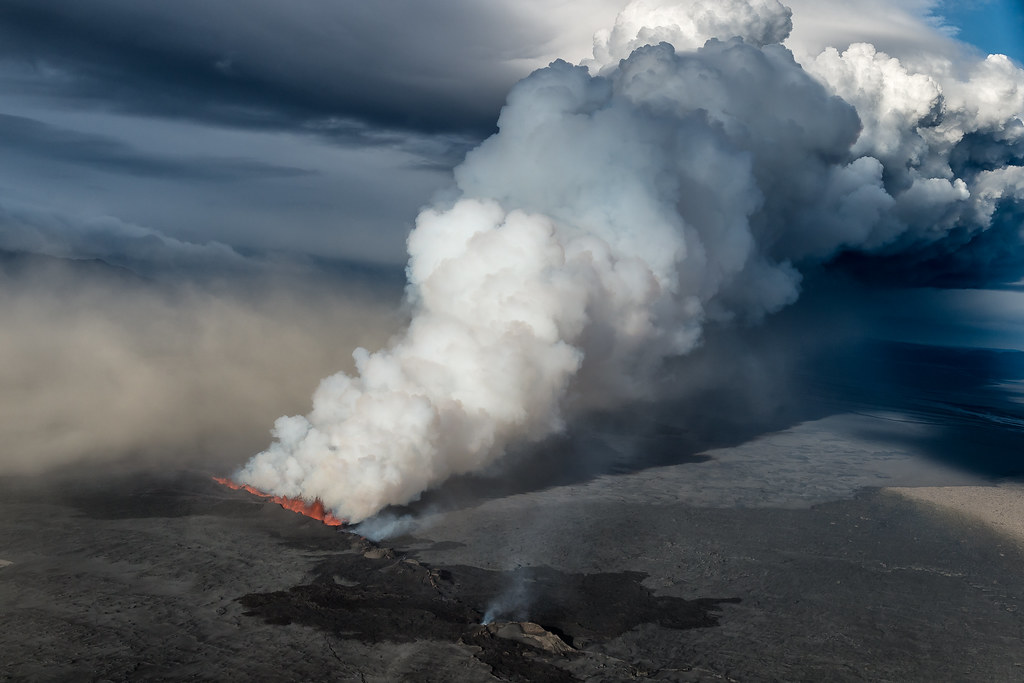
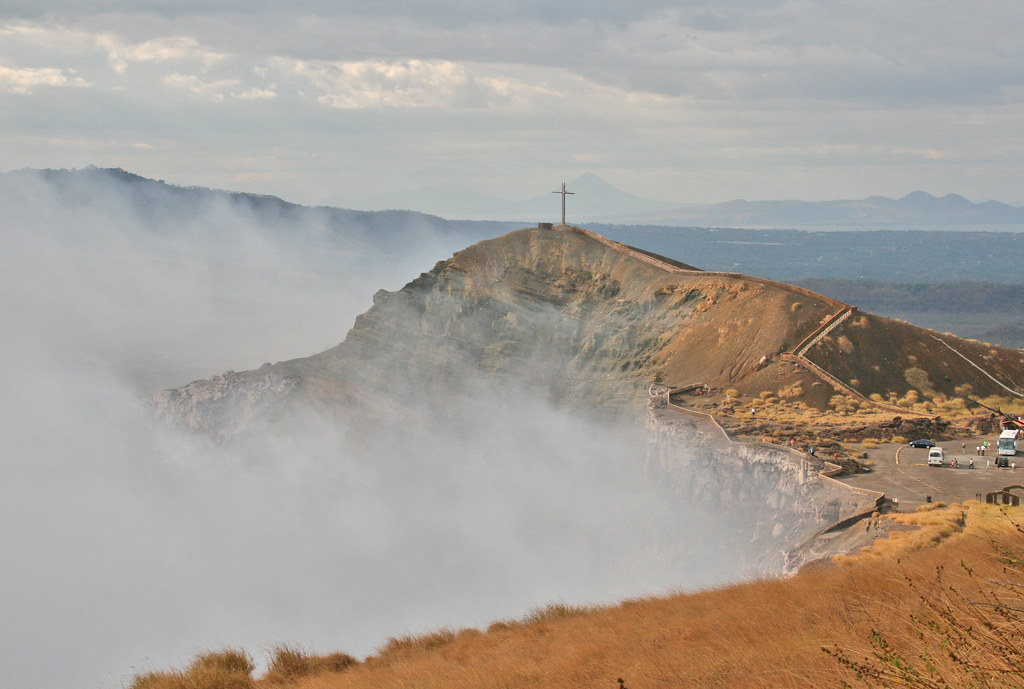
Volcano

by Leticia Roncero
27 Aug 11:35

Cat Lesson #2

by Doug

Cat Lesson #2

Dedicated to Kristina T. – happy birthday to you!!

And here’s another valuable cat lesson.

26 Aug 19:37

How to Avenge Your Brother's Murder

by Scott Meyer

This is the first Basic Instructions, or at least the first one that was completed.

I got the idea for Basic Instructions at a Burger King. I was refilling my drink, looking at the sign that said “No Refills.”

I thought, Of course I’m going to refill my drink. The refill is how Burger King repays me for doing what’s essentially their job. Without the free refill, I’m paying them a buck to hand me a paper cup.

I was a standup comic at the time, but I couldn’t think of a way to make that idea work as stage material. When I got home, I started writing the first Basic Instructions, “How to Refill Your Drink.” After a couple of hours, I realized that I couldn’t make that idea work as material for a comic strip either, but the idea of a web comic couched as instructions stuck with me.

A week or two later, I produced this, and put it up on LiveJournal. That’s how this all got started.

You’ll notice that the final panel of this comic is the source of the comic’s logo. You’ll also notice that in the first panel, I look like Nosferatu.

You can comment on this comic on Facebook.

As always, thanks for using my Amazon Affiliate links (USUKCanada).

26 Aug 18:13

Brassens in Space

by boulet


26 Aug 17:48

Fantastic-looking Custom Made Steampunk Bullet Shell Chess

by dmitry

1
According to an author: “First, note the quarter placed in the images for a size reference. The board for this set was made from jointed pieces of Red Oak.”

2
“Individual chambers were made for each .50 caliber bullet shell chess piece. Antique watch gears and hands adorn the sides of the board. Intricate wood burning details are found all over the set. Each set will have its own unique artwork. Holes were bored into the sides and gears were set inside. You can make general requests if you like, and I will do my best to integrate them into my work. While etsy only has space for 5 images, I have shown the best angles I can.”

3
“Antique typewriter parts were used for the retaining rails to hold the pieces in. ( Your set may have a different part for the retaining rails, and it may have two rails per side.) The retaining rails are hinged to allow access to pieces. A custom made pin catch/ hasp locks the rail in place. The entire set is clear coated. The board has been dark weathered to give a unique rustic appearance.”

4
“All shell brass is tumble cleaned and individually inspected before use. Made from used/spent .50 caliber BMG bullet shells, the light side is wire brushed brass, and the dark side is weathered/ black painted brass. Cuts, bends and curls give each piece their proper designation. All pieces are then clear coated. ”

5

26 Aug 17:48

darylfranz: なにかに気付いた二匹のネコ。完璧にシンクロしたジャンプがカコ(・ω・)イイ!!:ぁゃιぃ(*゚ー゚)NE...

26 Aug 17:46

scotch & jazz @ dusk

by joenagle
25 Aug 20:46

Lo que usted diga, inspector por @DietadeConan

Adam Victor Brandizzi

Aprendendo espanhol aos poucos.


25 Aug 20:21

Photo


25 Aug 19:28

A Visit Inside One of the Only Hand-crafted Globe Studios in the World

by Kate Sierzputowski

Long gone are the days when our first instinct is to migrate to a spinning globe to track the destinations around us or find a specific country. Now we have the power to digitally zoom in and out of the entire earth, utilizing mapping tools like Google Earth. The romanticism tied to these newer forms however, does not match the art of the ancient globe, the earliest dating back to the mid-2nd century B.C. Nowadays globes are either modern and massively produced, or antiquated models unsuited for casual browsing.

Frustrated by this lack of quality options when trying to find a globe as a present, Peter Bellerby started Bellerby & Co. Globemakers in order to produce globes that exist somewhere in-between the two options. “I did this as a direct result of looking, searching for a globe for my father for his 80th birthday, and I couldn’t find anything,” said Bellerby. “Initially my plan was to make one for him and maybe one for me if I had the budget.”

After spending tens of thousands of dollars more than he had originally predicted on the process, he decided to use what he’d learned to set up a company in 2008, eventually moving into their current location in Stoke Newington, London. The company employs a small team of makers that fastidiously work in an open environment with large windows, nestled between test sheets of watercolor paints and hanging strips of paper twirling from clothes pins. To master the process of applying paper to the sphere globes (called “goring”) can take up to a year or more.

“It’s been something that’s been an incredible challenge. The whole design process, the whole way of making anything using a sphere at its base, at its centerpiece is fraught with different problems and issues because you are multiplying every error by pi,” said Bellerby.

Bellerby & Co. Globemakers’ globes have been featured in Hollywood movies and BBC productions as well as used in installations by established artists. The company has also had support from the Royal Geographic Society and was able to host their first ever globe exhibition in 2012. To see more images of the daily life at the Bellerby & Co. studio, visit the company’s Instagram or their blog. (via My Modern Met)

Studio-by-Gareth-Pon

Photo-credit-Stuart-Freedman

Mini-Globes-and-Livingstones-by-Gareth-Pon

8e2ac88adcba76af821df9f2195354dd

d6ea6763dc50e8d818e5037e0bd38a2d

d7ef5b1b3122201e3fa55e5f685bd97b

25 Aug 19:27

Dione, Rings, Shadows, Saturn

Discover the cosmos! Each day a different image or photograph of our fascinating universe is featured, along with a brief explanation written by a professional astronomer.

2015 August 24
See Explanation.  Clicking on the picture will download
 the highest resolution version available.

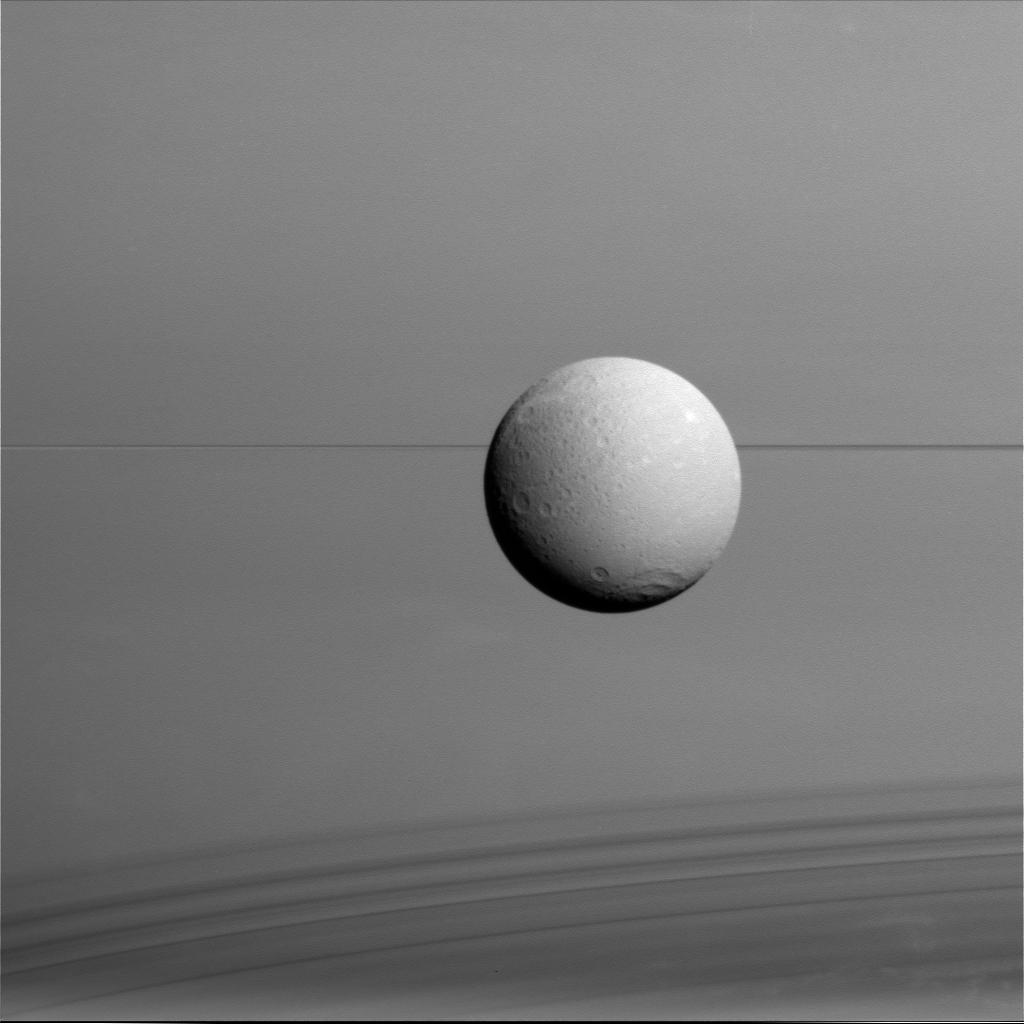
Dione, Rings, Shadows, Saturn
Image Credit: Cassini Imaging Team, SSI, JPL, ESA, NASA

Explanation: What's happening in this strange juxtaposition of moon and planet? First and foremost, Saturn's moon Dione was captured here in a dramatic panorama by the robotic Cassini spacecraft currently orbiting the giant planet. The bright and cratered moon itself spans about 1100-km, with the large multi-ringed crater Evander visible on the lower right. Since the rings of Saturn are seen here nearly edge-on, they are directly visible only as a thin horizontal line that passes behind Dione. Arcing across the bottom of the image, however, are shadows of Saturn's rings, showing some of the rich texture that could not be seen directly. In the background, few cloud features are visible on Saturn. The featured image was taken during the last planned flyby of Dione by Cassini, as the spacecraft is scheduled to dive into Saturn's atmosphere during 2017.

Teachers: Find classroom astronomy images through APOD's Index or Search engine.
Tomorrow's picture: skyfall washington < | Archive | Submissions | Index | Search | Calendar | RSS | Education | About APOD | Discuss | >

Authors & editors: Robert Nemiroff (MTU) & Jerry Bonnell (UMCP)
NASA Official: Phillip Newman Specific rights apply.
NASA Web Privacy Policy and Important Notices
A service of: ASD at NASA / GSFC
& Michigan Tech. U.

Expanded from APOD by Feed Readabilitifier.
25 Aug 19:24

Michael Kagan’s Space-Based Paintings Explore the Fatalistic Power of Manmade Machinery

by Kate Sierzputowski
Contact Light, 2014, Oil and linen, 60 x 45 inches

Contact Light, 2014, Oil and linen, 60 x 45 inches

Heavily tinted blue paintings form space stations, spacesuits, and rockets just after blast. Michael Kagan paints these large-scale works to celebrate the man-made object—machinery that both protects and holds the possibility of instantly killing those that operate the equipment from the inside. To paint the large works, Kagan utilizes an impasto technique with thick strokes that are deliberate and unique, showing an aggression in his application of oil paint on linen.

The New York-based artist focuses on iconic images in his practice, switching back and forth between abstract and representational styles. “The painting is finished when it can fall apart and come back together depending on how it is read and the closeness to the work,” said Kagan about his work. “Each painting is an image, a snapshot, a flash moment, a quick read that is locked into memory by the iconic silhouettes.”

Kagan exhibited this series of space-based paintings last year at Joshua Liner Gallery in an exhibition titled Thunder in the Distance. He was also recently commissioned by The Smithsonian to create three large paintings inspired by their air and space archives. You can see more of his work on his Instagram here. (via Fubiz)

One Day This Will All Be Yours, 2014, Oil and linen, 60 x 80 inches

One Day This Will All Be Yours, 2014, Oil and linen, 60 x 80 inches

Reflector, 2014, Oil and linen, 36 x 36 inches

Reflector, 2014, Oil and linen, 36 x 36 inches

We Live On In The Thoughts Of Others, 2014, Oil and linen, 36 x 36 inches

We Live On In The Thoughts Of Others, 2014, Oil and linen, 36 x 36 inches

Apollo, 2010, Oil and linen, 60 x 34 inches

Apollo, 2010, Oil and linen, 60 x 34 inches

Supersonic, 2014, Oil and linen, 72 x 54 inches

Supersonic, 2014, Oil and linen, 72 x 54 inches

Mankind, 2014, Oil and linen, 96 x 54 inches

Mankind, 2014, Oil and linen, 96 x 54 inches

With All The F*cking Force, 2011, Oil and linen, 60 x 80 inches

With All The Fucking Force, 2011, Oil and linen, 60 x 80 inches

25 Aug 19:24

Too Far

by Greg Ross

https://commons.wikimedia.org/wiki/File:Renouf_Brooklyn_Bridg_1889.jpg

“I would rather be the man who bought the Brooklyn Bridge than the one who sold it.” — Will Rogers

Please support Futility Closet on Patreon!

25 Aug 18:28

Never Drink Alone Again!

25 Aug 18:24

Photo


25 Aug 18:23

Saturday Morning Breakfast Cereal - Super Efficient

by admin@smbc-comics.com
25 Aug 17:20

25-05-2015

by Laerte Coutinho

25 Aug 17:19

01-06-2015

by Laerte Coutinho

25 Aug 17:17

A Handy Guide to Accidents

24 Aug 23:51

Photo


24 Aug 23:48

Saturday Morning Breakfast Cereal - The Joker

by admin@smbc-comics.com
24 Aug 23:46

The most difficult “Hello World” of your life

24 Aug 13:06

Fashion Illustrations with Embroidered Accents and Accessories by Izziyana Suhaimi

by Christopher Jobson

suhaimi-7

Singapore-based artist Izziyana Suhaimi introduces embroidered accents to her carefully rendered pencil and watercolor illustrations. Patterns of flowers unfold much like a tapestry across the paper canvas creating pieces she refers to as “evidence of the hand and of time.” For her series The Looms in Our Bones Suhaimi focuses mostly on fashion acessories where scarves, hats, and other clothing is depicted in thread, while she also uses the same techniques for more abstract shapes and designs. From her artist statement:

Embroidery for me is a quiet and still act, where each stitch represents a moment passed. The building of stitches then becomes a representation of time passing and the final work is like a physical manifestation of time – a time object. Each stitch is also a recording of the maker’s thoughts and emotions. I enjoy the duality of embroidery, in its movements of stabbing, cutting, covering, building, repairing, taking apart. Every stitch made seems to unfold a story and withhold it at the same time.

You can see much more of Suhaimi’s work here. (via Fubiz)

suhaimi-2

suhaimi-3

suhaimi-4

suhaimi-5

suhaimi-6

suhaimi-8

suhaimi-9

suhaimi-10

suhaimi-11

suhaimi-12

suhaimi-1

24 Aug 13:05

Welcome to KraftaNet.


Welcome to KraftaNet.