Shared posts

18 Sep 10:25

The psychology of saving

by Tim Harford
Undercover Economist

‘There is one dramatic success for behavioural economics — the way it has shaped pensions’

“THERE ARE IDIOTS. Look around.” So began a famous economics paper by Larry Summers — a lauded academic before he became US Treasury secretary. It is perhaps the most concise expression of behavioural economics, the branch of economics that tries to take psychology seriously.

Behavioural economics is appealing not only because it is realistic but also because it is vastly more charming than the traditional variety. Championed by economists such as Richard Thaler (co-author of Nudge and author of a new book, Misbehaving ) and psychologists such as Nobel laureate Daniel Kahneman (author of Thinking, Fast and Slow), it has triumphed in the “smart thinking” section of the bookshop and exerted increasing influence in academia.

It can be hard to turn psychological insights into rigorous academic models, and even harder to turn them into good policy. But there is at least one dramatic success for behavioural economics — the way that it has shaped pensions. At a recent Financial Times event, Professor Thaler rightly celebrated this as the field’s greatest triumph.

Other than Thaler’s own evangelism, the reason for this success is twofold. First, when it comes to pensions there is a large gap between what we do and what we should do. Second, bridging that gap is fairly simple: we need to encourage people to save more, and in most cases those savings should flow into simple, low-cost equity tracker funds. The only comparable example that springs to mind is smoking: many smokers are making themselves unhappy and would be better off if they could find a way to stop. And as a classic research paper in behavioural economics concludes, taxes on cigarettes seem to make smokers and potential smokers happier by prompting them to quit, or never start.

Given the problem — people need to be nudged into saving more — the biggest pension policy breakthrough has been automatic enrolment, a cornerstone of modern UK pension policy and widely used in the US too. A typical defined contribution pension invites people to pay money into a pension pot, often enjoying tax advantages and matching contributions from an employer. Yet people procrastinate: money seems tight, retirement is a long way off, and who wants to fill in forms? Automatic enrolment reverses the default, deducting pension contributions from our payslips unless we take active steps to opt out. The process respects our autonomy — you can opt out if you wish — but makes it easy to do what we probably should be doing anyway.

A clever supplement to this approach is “Save More Tomorrow”, a scheme in the US whereby people make an advance commitment to redirect part of their pay rises into the pension. At a 50/50 ratio, for example, a 2 per cent pay rise becomes a 1 per cent pay rise and a 1 percentage point increase in pension contributions. It doesn’t take long for a 3 per cent contribution (which is inadequate but typical in the US) to become something more sensible, such as 10 or 15 per cent. Thaler has been a driving force behind both ideas.

Of course, these tactics do not work for everyone. I once spoke at a book festival in Australia and found that a slice of my modest fee had been automatically invested in an Australian pension for me. This benefited nobody except some administrators and the postman who delivered the letters from Australia, detailing the evaporation of my tiny pension pot.

A more serious difficulty is choosing the right level of default contribution. A default that is too aggressive — automatically deducting 25 per cent of salary — jolts most people into opting out. A default that is too low, such as 3 per cent of salary, could conceivably be worse than the old opt-in default of zero. Many people who might have taken an active choice to save 6 or 7 per cent rather than nothing end up settling instead for the default. As mentioned, 3 per cent is a common level for automatic enrolment in the US, for no good reason other than historical accident. Yet it is dangerously low.

There is also a painful conflict of interest at the heart of any corporate pension plan. From the perspective of classical economics, companies will offer generous pensions if they want to attract capable staff. It is expensive to subsidise a pension but staff value the subsidy, making it worthwhile.

From the more realistic perspective of behavioural economics, a tension emerges. A benevolent planner, armed with behavioural insights, would nudge people into a passive pension investment with almost no conscious thought. But a corporate human resources director would want to remind employees how generously their pensions are being subsidised. That means frequent reminders and ample opportunity to admire the pension pot — even if such admiration leads to anxiety about uncertain returns, or expensively trading shares within the pension.

There are approaches that might keep both the behavioural economist and the HR director happy. For example, a pension pot that is expressed in terms of daily or weekly income in retirement, adorned with photographs of cruise ships, seems more appealing than an abstract and rather meaningless lump sum.

We cannot blame behavioural economics for this tension but it is real. As automatic enrolment becomes the norm, it will be important to keep an eye on how corporations respond.

Written for and first published at ft.com.

03 Jul 21:29

7×1 completa um ano. (E os protestos?)
by João Paulo Charleaux

golUm ano atrás, o Brasil levava uma pedrada de 7×1 dos alemães no Mineirão e encerrava de maneira trágica sua participação na Copa. O vexame da Selecinha só não foi pior que o da política. A meninada que queimava concessionárias em junho saiu para um sabático na casa de praia ou entrou num intercâmbio no Canadá, deixando de herança, meio sem querer, a maior onda conservadora em 50 anos de história do Brasil. “Mal aê”. Passada a temporada dos maracatus de rua, os profissionais assumiram o bufê com maior garbo: fizeram a reforma política do avesso, implodiram o PT com o Lula dentro e deram a Dilma Rousseff o mais longo fim de governo da história republicana. Sobre tudo isso, nem um “piu”. O que importava mesmo era a Copa (que, no fim, até que foi bacaninha). Quem achou que o movimento era pra valer, dançou. A PM não se desmilitarizou. Ui, que surpresa.

“Obrigado, obrigado!”, diz Kim Kataguiri se equilibrando na ponta dos pés, projetando uma vozinha miúda no fundo do salão. Segue o jogo. Não aprendemos nada em termos de futebol em 12 meses – o Brasil acaba de sair da Copa América derrotado pelo Paraguai, sob uma chuva de análises que preveem a necessidade de refundar o desporto nacional. Em Brasília é igual. O presidente da Câmara, Eduardo Cunha (PMDB-RJ), diz que o presidencialismo já era, prega reforma – mais uma. O negócio é aumentar o poder do Congresso, trazendo de volta o parlamentarismo. “O Brasil não é uma republiqueta“, aclara Cunha na Folha de hoje. Tudo bem que o parlamentarismo foi rechaçado em plebiscito há 20 anos, mas ele pode voltar por meio de “uma emenda”, emenda o homem que não se emenda.

Chama o ladrão

Tá fazendo um ano que o menino Fabio Hideki conta que tomou um soco na cara e uma joelhada na barriga quando entrou algemado na sede do Deic (Departamento Estadual de Investigações Criminais), em São Paulo. “Você está fodido”, teria dito no ouvido dele o polido Wagner Giudice, que aparece volta e meia de banho tomado no SPTV, com ares de gente equilibrada, representando a Polícia Civil. O pessoal que arrancou fora o olho do fotógrafo Sérgio Silva continua de boa. Não tem essa de reformar a polícia. A polícia tá boa, dizem os políticos. Ainda em novembro, o Ministério Público Federal pensou que o Brasil era sério e resolveu promover uma audiência pública para esclarecer as agressões policiais contra manifestantes no contexto da Copa. A reunião foi legal, mas o Comando da PM de São Paulo e o secretário de Segurança Pública deram o cano. O governador Geraldo Alckmin (PSDB) saiu tão bem da história toda que ainda teve crédito pra cortar a água na capital e sonhar em se eleger presidente em 2018. Como é grande o poder das ruas.

Com tanta volta vazia dando volta, a única conclusão possível é que o 7×1 ficou barato. Surpreende que o Paraguai não tenha metido 8×1 na Seleção 12 meses depois. Metade do que se dizia nas ruas então era conversa – gente falando em nome de causas mais ou menos ocultas. A montanha tremeu e, de dentro dela, saiu um pinto careca, de uma perna só. O bicho, manco, nem cisca.


03 Jul 15:18

Made to Order

by Greg Ross

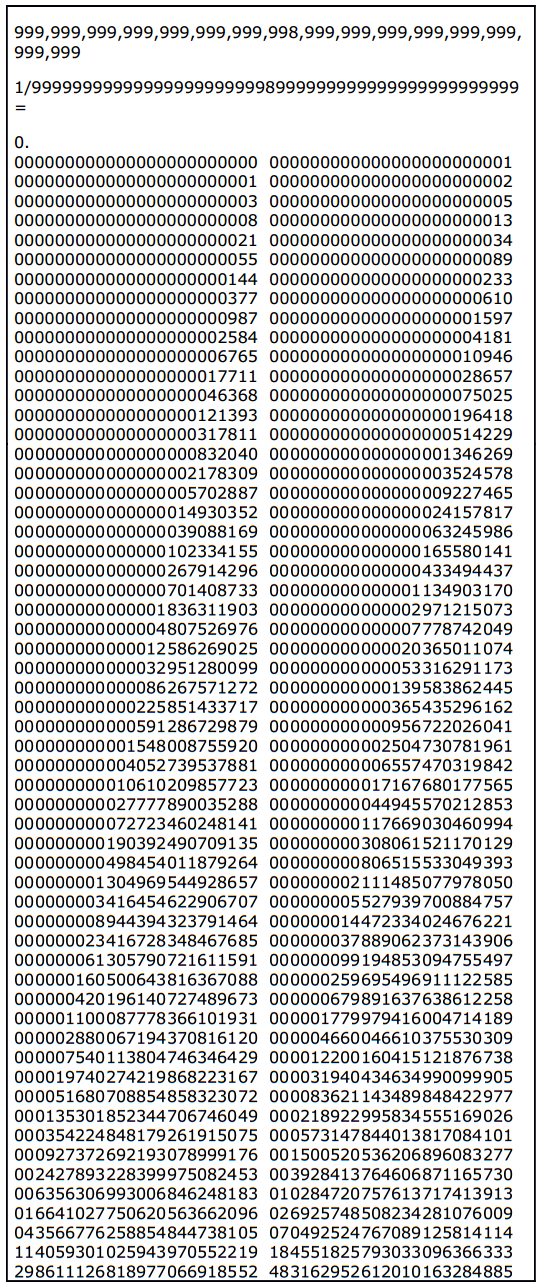
Divide the number 999,999,999,999,999,999,999,998,999,999,999,999,999,999,999,999 into 1 and express the result as a decimal expansion, and you’ll find the Fibonacci sequence presented in tidy 24-digit strings:

fibonacci expansion

(Thanks, David.)

Please support Futility Closet on Patreon!

02 Jul 21:02

Uma explicação blogueira da crise na Grécia (não é tese de PhD)

by gustavochacra

Sei que é confuso entender o que ocorre na Grécia. Tentarei, neste post, ser o mais didático possível. Notem que não se trata de uma tese de PhD em economia. Meu objetivo será apenas explicar de uma forma simples o que ocorre.

Primeiro, os países possuem duas principais ferramentas para ajustar a sua economia. Política fiscal e política monetária. A primeira se faz por meio do aumento ou corte de gastos e da elevação ou redução de impostos. Já a segunda se faz por meio da taxa de juros com o objetivo de estabilizar a inflação e a taxa de desemprego e da, genericamente falando, injeção ou retirada de dinheiro da economia, podendo valorizar ou desvalorizar a moeda.

A Grécia, ao integrar o Euro, assim como os demais países do bloco, perdeu a sua capacidade de fazer política monetária. Isto é, os gregos não podem estabelecer suas taxas de juros e tampouco mexer no valor da sua moeda, o que poderia tornar o país mais competitivo no mercado internacional. Para os gregos, sobrou apenas a política fiscal.

Quando a Grécia se viu incapaz de pagar as suas dívidas cerca de cinco anos atrás, o país precisou ajuda da Troika, formada pelo FMI, Banco Central Europeu e Comissão Europeia. Em troca da ajuda, eles exigiram que os gregos ajustassem suas contas.

Como os gregos possuem apenas a capacidade de fazer política fiscal, o país teve de fazer duros cortes nos gastos, além de levar adiante uma enorme elevação nos impostos. A economia entrou em depressão. E, cada vez mais, a Troika exigia mais austeridade, em um círculo vicioso. Compare com o Brasil, que também tem feito duros ajustes – no fim das contas, por pior que seja nossa situação, o Brasil tem o poder de desvalorizar o real, aumentando as exportações. Também pode mexer nos juros de acordo com as necessidades do país. Os gregos não possuem este poder sobre a própria economia.

No começo deste ano, cansados de tantos ajustes sem resultados práticos, os gregos elegeram um partido mais à esquerda que prometeu bater de frente com a Troika e conseguir termos melhores para os acordos. Incialmente, a relação foi boa. Mas se deteriorou nas últimas semanas. E, neste fim de semana, o governo grego anunciou que fará um referendo para a população grega decidir se aceita ou não os termos do ajuste.

Caso não aceite, a Grécia provavelmente terá de sair da zona do euro. Neste caso, adotaria uma nova moeda. Alguns poderão dizer que será bom porque o país poderá voltar a fazer política monetária. Sem dúvida, este seria um benefício. Com a desvalorização da moeda, após um caos inicial, os gregos poderão aumentar suas exportações.

O problema é que existe uma série de efeitos colaterais. Basta ver a Argentina, que passou por processo similar ao deixar o câmbio fixo, quando um peso valia um dólar. O país viveu um caos políticos, com presidentes passando dias no cargo. Até hoje, 15 anos mais tarde, segue fora dos mercados internacionais. E a inflação voltou fortemente. Por outro lado, realmente a economia cresce bem mais hoje do que nos tempos do ajuste. Mas há uma diferença – a Argentina era produtora de commodities e houve um boom dos commodities na década passada. A Grécia tem poucos produtos para exportar.

E por que a Troika não apresenta um plano mais brando para a Grécia? Porque outros países que passaram por problemas similares, embora longe de tão graves, como a Itália, Irlanda e Portugal, poderiam se sentir menos inclinados a manter suas contas ajustadas, imaginando que no último momento, a Alemanha, que comanda a Troika, virá ajuda-los.

E qual a melhor saída? Não há alternativa boa. Talvez, um plano um pouco menos austero, mantendo a Grécia no euro, mas permitindo que a economia grega se reaqueça um pouco, seja a melhor opção.

Guga Chacra, comentarista de política internacional do Estadão e do programa Globo News Em Pauta em Nova York, é mestre em Relações Internacionais pela Universidade Columbia. Já foi correspondente do jornal O Estado de S. Paulo no Oriente Médio e em NY. No passado, trabalhou como correspondente da Folha em Buenos Aires

Comentários islamofóbicos, antissemitas, anticristãos e antiárabes ou que coloquem um povo ou uma religião como superiores não serão publicados. Tampouco são permitidos ataques entre leitores ou contra o blogueiro. Pessoas que insistirem em ataques pessoais não terão mais seus comentários publicados. Não é permitido postar vídeo. Todos os posts devem ter relação com algum dos temas acima. O blog está aberto a discussões educadas e com pontos de vista diferentes. Os comentários dos leitores não refletem a opinião do jornalista

Acompanhe também meus comentários no Globo News Em Pauta, na Rádio Estadão, na TV Estadão, no Estadão Noite no tablet, no Twitter @gugachacra , no Facebook Guga Chacra (me adicionem como seguidor), no Instagram e no Google Plus.

02 Jul 20:58

Skateboard con sidecar, para niños

by Troy

longboard-sidecar

La familia que se desliza unida, permanece unida. Esto lo sabe muy bien Jared Braden, diseñador de tablas de skate en Braden Boards y padre de Jeff, un chiquillo de un año y medio.

Desde que Jeff tenía seis meses ha acompañado a su familia en sus paseos con monopatín gracias al longboard con sidecar que su padre ha diseñado para él.

La pequeña tabla lleva una barra de sujeción que mantiene protegido al chiquillo, y queda posicionada un poco por delante de la del padre, lo que le permite ir dándole consejos básicos sobre cómo posicionarse para poder patinar con seguridad. Ese proceso de aprendizaje se ve reforzado por el hecho de que el mecanismo de sujección está diseñado de forma que, en las curvas, la tabla del niño también se inclina hacia el interior de la curva, como lo hacen las tablas normales.

Visto en LaughingSquid

Ver más: Niños, skateboard
Síguenos: @NoPuedoCreer - @QueLoVendan - @QueLoVendanX


01 Jul 13:50

glukkake: asylum-art:DarkAngelØne“Native American digital...


glukkake:

asylum-art:

DarkAngelØne

“Native American digital artist, DarkAngelØne, collaborates with photographers to create fantastic gif artwork that transforms original still pictures into moving masterpieces. ”

What’s interesting to note is that the artist claims not to be an artist. Instead, DarkAngelØne writes in his About page that he sees himself “as someone who just likes to play with pictures”. A humble attitude for someone who comes up with the stuff you can see below.

I like the inspirational aspect in this. It opens a window to look out into what modern technology is only just starting to allow us to do with it creatively.

how i wish i could see at all times

01 Jul 13:50

Photo

Adam Victor Brandizzi

Esse dia foi massa.


01 Jul 13:50

June 29, 2015

Picture of a willow warbler splashing in a fountain

Put a Wing on It

Photograph by Mohd Khorshid, National Geographic Your Shot

In this picture by Mohd Khorshid, a willow warbler splashes in a pool of water in Al Ahmadi, Kuwait. Willow warblers pass through the country in large numbers during their long seasonal migrations.

This photo was submitted to the 2015 Traveler Photo Contest. Find your best travel photos and join the competition.

01 Jul 13:48

4gifs: I am the captain meow. [video]


4gifs:

I am the captain meow. [video]

01 Jul 13:42

Photo


01 Jul 13:39

ithelpstodream: In Nepal they have a festival that honours dogs...


ithelpstodream:

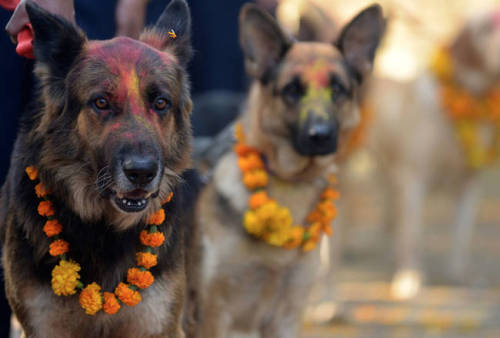
In Nepal they have a festival that honours dogs and thanks them for being our loyal furry friends.

01 Jul 13:38

4gifs: Laboratory work can get lonely. [video]


4gifs:

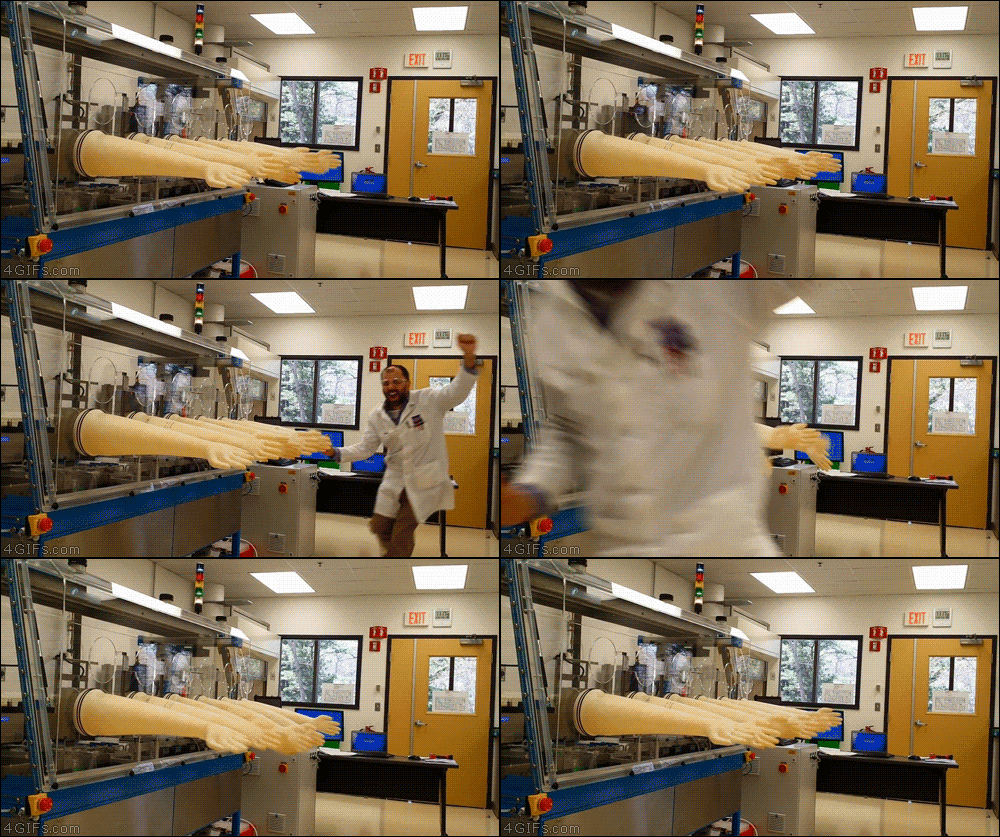
Laboratory work can get lonely. [video]

01 Jul 13:37

RT @filipesaraiva: Se Godzilla tentasse invadir o nordeste ele teria que enfrentar...

by Pai Osias
800px-Coturnix_coturnix_eggs_normal.jpg
Author: Pai Osias
Source: Buffer
RT @filipesaraiva: Se Godzilla tentasse invadir o nordeste ele teria que enfrentar nossos cajueiros gigantes e os bonecos de Olinda
01 Jul 13:35

lunarbaboon: lunarbaboon facebook twitter

01 Jul 13:34

Photos of Giant Science Facilities That Look Straight Out of Science Fiction

by Michael Zhang

unnamed

Scientists around the world create massive and elaborate facilities for carrying out groundbreaking research. Photographer Enrico Sacchetti is a guy who specializes in capturing them on camera. He’s a “science, technology, and industrial” photographer based out of Rome and London, and his images have appeared in many of the world’s top science and technology magazines.

Sacchetti just returned from Puerto Rico, where he photographed the William Gordon Radio Telescope at the Arecibo Observatory. At a whopping 1,000 feet from one side to the other, it’s the world’s largest single dish, radio telescope. You may recognize it from movies such as GoldenEye and Contact.

unnamed-6

unnamed-4

unnamed-3

unnamed-2

unnamed-1

“I mainly photograph large scale scientific projects in the field of particle physics, nuclear fusion and astronomy,” Sacchetti tells PetaPixel. “I’m also a specialized offshore photographer for various petroleum companies.”

Many of the images in Sacchetti’s portfolio look like still frames taken from science fiction movies. Here’s a selection:

Atlas Detector: A particle physics experiment at the Large Hadron Collider at CERN that is searching for new discoveries in the head-on collisions of protons.

Atlas Detector: A particle physics experiment at the Large Hadron Collider at CERN that is searching for new discoveries in the head-on collisions of protons.

The Caltech Submillimeter Observatory (CSO) is a 10.4-metre diameter submillimeter-wavelength telescope near the summit of Mauna Kea in the U.S. state of Hawaii.

The Caltech Submillimeter Observatory (CSO) is a 10.4-metre diameter submillimeter-wavelength telescope near the summit of Mauna Kea in the U.S. state of Hawaii.

Opera Detector: Opera is designed to test the phenomenon of neutrino oscillations. The experiment exploits a high-intensity and high-energy beam of muon neutrinos produced at the CERN SPS in Geneva, Switzerland and shot towards the Gran Sasso Laboratory in central  Italy, 730 km away in 3 milliseconds.

Opera Detector: Opera is designed to test the phenomenon of neutrino oscillations. The experiment exploits a high-intensity and high-energy beam of muon neutrinos produced at the CERN SPS in Geneva, Switzerland and shot towards the Gran Sasso Laboratory in central Italy, 730 km away in 3 milliseconds.

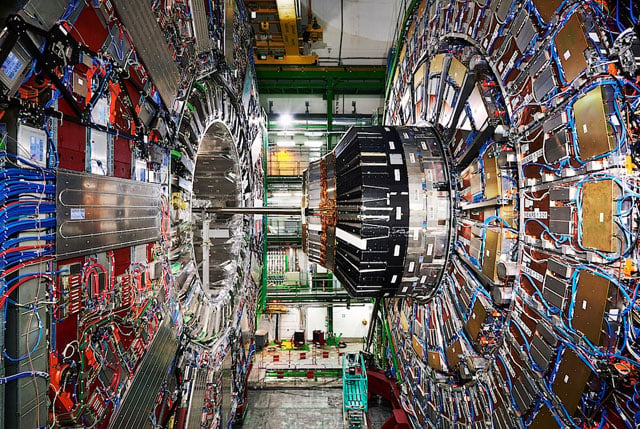
CMS Detector: Compact Muon Solenoid Experiment is one of two large general-purpose particle physics detectors built on the Large Hadron Collider at CERN, Switzerland. The CMS detector is capable of studying many aspects of proton collisions.

CMS Detector: Compact Muon Solenoid Experiment is one of two large general-purpose particle physics detectors built on the Large Hadron Collider at CERN, Switzerland. The CMS detector is capable of studying many aspects of proton collisions.

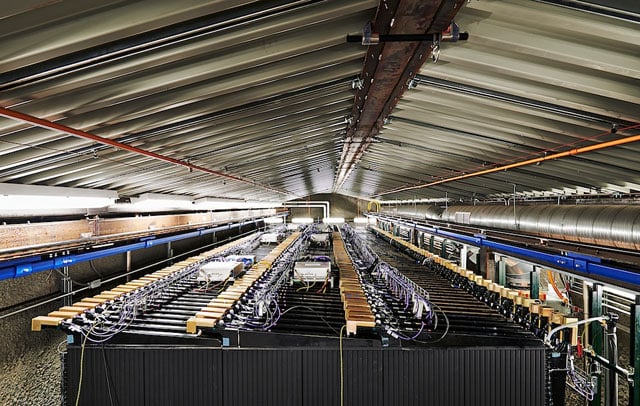
NoVA Near Detector: NoVA is a particle physics experiment designed to detect neutrinos. It consist of two detectors, the Near Detector at Fermilab, near Chicago and the other, the Far Detector, in northern Minnesota. Neutrinos shot from Fermilab will pass through 810 km of Earth to reach the far detector.

NoVA Near Detector: NoVA is a particle physics experiment designed to detect neutrinos. It consist of two detectors, the Near Detector at Fermilab, near Chicago and the other, the Far Detector, in northern Minnesota. Neutrinos shot from Fermilab will pass through 810 km of Earth to reach the far detector.

Subaru Telescope: The 8.2 meter Japanese optical telescope, located near the summit of Mauna Kea in the U.S. state of Hawaii. It has one of the largest monolithic primary mirrors in the world.

Subaru Telescope: The 8.2 meter Japanese optical telescope, located near the summit of Mauna Kea in the U.S. state of Hawaii. It has one of the largest monolithic primary mirrors in the world.

L.V.D. Detector: The Large Volume Detector (LVD) is a particle physics experiment mainly dedicated to the detection of neutrino bursts from stellar collapses. Situated at the Gran Sasso Laboratory in Italy.

L.V.D. Detector: The Large Volume Detector (LVD) is a particle physics experiment mainly dedicated to the detection of neutrino bursts from stellar collapses. Situated at the Gran Sasso Laboratory in Italy.

DarkSide Detector: Experiment designed for the direct detection of dark-matter particles. Located at the Gran Sasso Laboratory in Italy.

DarkSide Detector: Experiment designed for the direct detection of dark-matter particles. Located at the Gran Sasso Laboratory in Italy.

Telescope II of the W. M. Keck Observatory at an elevation of 4,145 meters near the summit of Mauna Kea in the U.S. state of Hawaii.

Telescope II of the W. M. Keck Observatory at an elevation of 4,145 meters near the summit of Mauna Kea in the U.S. state of Hawaii.

James Clerk Maxwell Submillimeter Telescope JCMT: A 15-meter submillimeter-wavelength telescope near the summit of Mauna Kea in the U.S. state of Hawaii.

James Clerk Maxwell Submillimeter Telescope JCMT: A 15-meter submillimeter-wavelength telescope near the summit of Mauna Kea in the U.S. state of Hawaii.

Large Hadron Collider (LHC) Tunnel: Is the world's largest and most powerful particle collider built by the European Organization for Nuclear Research (CERN). It lies in a tunnel 27 kilometers (17 mi) in circumference, as deep as 175 meters (574 ft) beneath the Franco-Swiss border near Geneva, Switzerland.

Large Hadron Collider (LHC) Tunnel: Is the world’s largest and most powerful particle collider built by the European Organization for Nuclear Research (CERN). It lies in a tunnel 27 kilometers (17 mi) in circumference, as deep as 175 meters (574 ft) beneath the Franco-Swiss border near Geneva, Switzerland.

Giant Magellan Telescope’s (GMT) third mirror being polished at the Steward Observatory Mirror Lab at the University of Arizona. GMT will become one of the worlds largest optical telescope planned for completion in 2020 and will be located in northern Chile.

Giant Magellan Telescope’s (GMT) third mirror being polished at the Steward Observatory Mirror Lab at the University of Arizona. GMT will become one of the worlds largest optical telescope planned for completion in 2020 and will be located in northern Chile.

You can find more of Sacchetti’s work over on his website.


Image credits: Photographs by Enrico Sacchetti and used with permission

01 Jul 13:32

(photos by divinelyminely)


(photos by divinelyminely)

01 Jul 13:30

Photo


01 Jul 13:22

How to Express Admiration

by Scott Meyer

As always, thanks for using my Amazon Affiliate links (USUKCanada).


01 Jul 13:20

Photo


01 Jul 13:20

Red White and Rainbow stripes

Red White and Rainbow stripes satwcomic.comMarriage equality!! Fuck yes USA!! Congratulations!!

But is in incredibly amusing to me how people on the internet are acting like it happened to the whole world and not just the US, what with various logos changing to rainbow colors and what not.
01 Jul 13:18

Arquivo confidencial

01 Jul 13:16

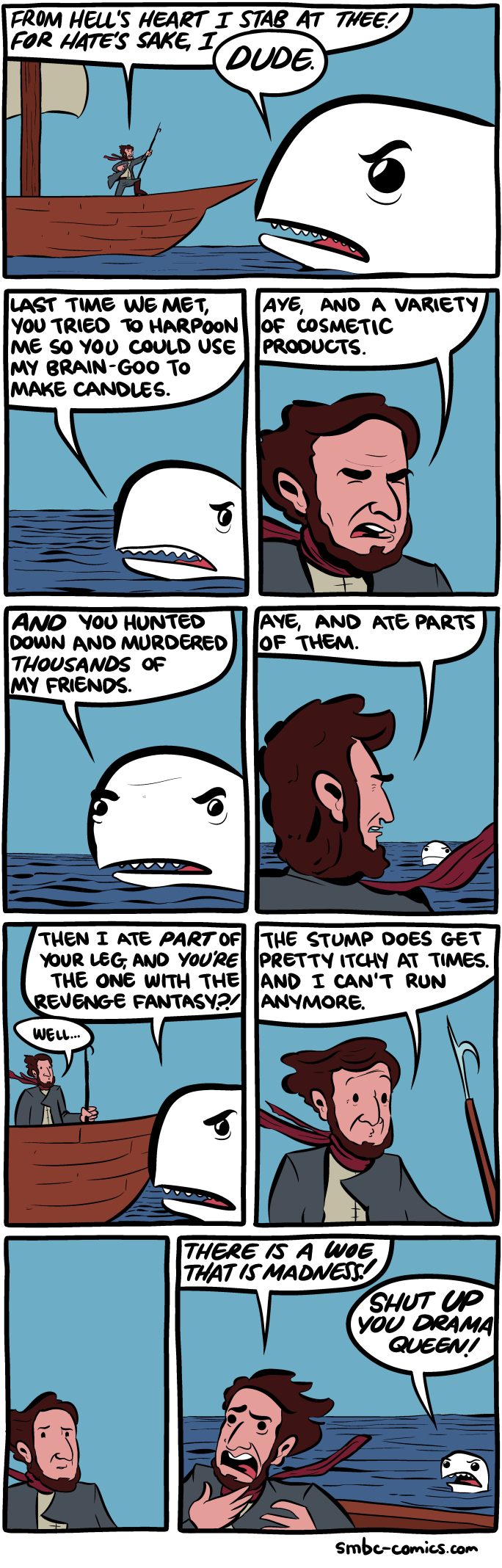
Saturday Morning Breakfast Cereal - From Hell's Heart

by admin@smbc-comics.com
01 Jul 13:14

Advanced court tactix.image | twitter | facebook


Advanced court tactix.

image | twitter | facebook

01 Jul 13:13

Canada Facts

by Doug

Canada Facts

Mostly true! Happy Canada Day!!

01 Jul 13:08

Nada pode ser mais forte do que um bar com os amigos

by Joe

bar

BRASIL: onde só dá merda, mas se a cerveja tá gelada, não tem porque se preocupar.

30 Jun 01:10

Photo


29 Jun 12:42

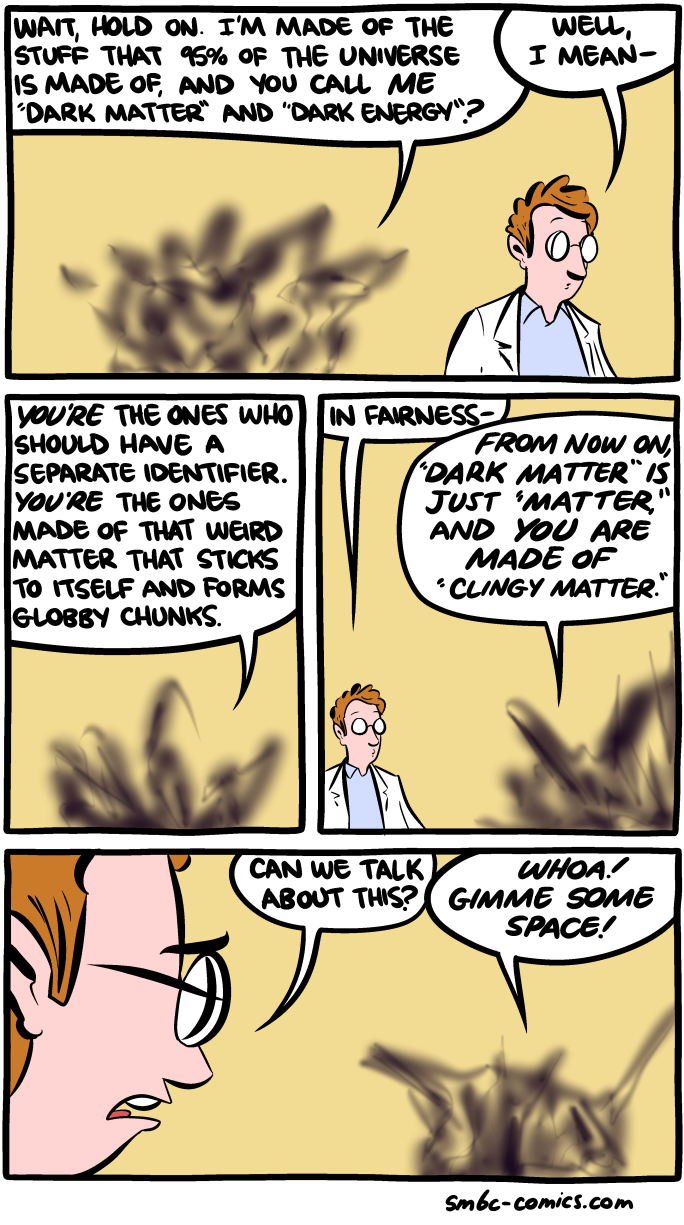
Saturday Morning Breakfast Cereal - Dark Matter

by admin@smbc-comics.com
29 Jun 12:37

Long-Exposure Photographs of a New Zealand Cave Illuminated by Glowing Worms

by Christopher Jobson

lumin-7

lumin-2

The twinkling lights dotting the ceiling of this dazzling cave system are the work of arachnocampa luminosa, a bioluminescent gnat larva (also called a glowworm) found throughout the island nation of New Zealand. It is believed that the light, emitted mostly from females, is how the insects find mates. These long-exposure photos by local photographer Joseph Michael capture small communities of worms amongst 30 million-year-old limestone formations on North Island. You can see more shots from the project titled Luminosity, here.

lumin-3

lumin-4

lumin-5

lumin-6

lumin-1

lumin-8

lumin-9

29 Jun 12:34

Photo


28 Jun 16:48

RT @EduardJorge43: *ouvi hoje no busão* - alô, aqui é o diretor da escola, seu filho...

by Pai Osias
800px-Coturnix_coturnix_eggs_normal.jpg
Author: Pai Osias
Source: Buffer
RT @EduardJorge43: *ouvi hoje no busão* - alô, aqui é o diretor da escola, seu filho foi suspenso por mentir - nossa o moleque é bom nisso…