Shared posts

18 Sep 10:30

Why wishful thinking doesn’t work

by Tim Harford
Undercover Economist

‘Careless nudges are no more welcome in public policy than at a domino-toppling event’

Three years ago, the University of Vermont in Burlington began to experiment with a few nudges towards a healthy, sustainable lifestyle. First, in 2012, campus outlets and the company operating the vending machines were required to make sure that at least 30 per cent of the drinks on offer were wholesome stuff such as vegetable juice, low-fat milk and water. A few months later, selling bottled water on campus was banned outright. The aim, pushed hard by student campaigners, was to encourage students to fill reusable bottles with tap water instead.

So, how did the Vermont experiment go? A study by Elizabeth Berman and Rachel Johnson (of the University’s own Department of Nutrition and Food Sciences) was recently published in the American Journal of Public Health. The researchers found that “per capita shipments of bottles, calories, sugars and added sugars increased significantly when bottled water was removed . . . As bottled water sales dropped to zero, sales of sugar-free beverages and sugar-sweetened beverages increased.”

In other words, the policy backfired with both barrels. Students didn’t switch to tap water, they switched to the likes of Coke and Diet Coke instead. All this would be just an amusing curiosity — one more example of student campaigners who are all heart and no brains — if it weren’t for the fact that more mature policy makers often commit similar blunders on much broader canvases. We would do well to learn some lessons from the University of Vermont’s experience.

The first lesson is that when it comes to saving the planet, people focus on what they can see. Type “environmental impact of concrete” into a search engine and you are likely to see a page filled with scholarly analysis pointing out that the impact is very large indeed, because cement production releases vast volumes of carbon dioxide. Type “environmental impact of bottled water” instead and your search results will be packed with campaigning groups seeking to persuade you to change your ways.

This is understandable: I can’t do much about concrete but I can stop drinking bottled water. But being a logical target for campaigners is not the same as being a logical target for policy action.

The second lesson is that we often struggle to deal with multiple goals. The University of Vermont wanted to reduce the flow of plastic water bottles to landfill but also wanted to encourage students to be healthy. There’s a clear conflict between these goals. Water is as healthy a drink as you can find, yet that was exactly what the University of Vermont was banning from vending machines. Wishful thinking provides a resolution — if everyone just drank tap water then there would be no problem. But wishful thinking is not an excuse for setting no priorities.

We see this sharply in the debate over nuclear power. We want to reduce the greenhouse gas emissions that result from burning fossil fuels. We also want to avoid radioactive waste and the risk of radiation leaks. In response to a genuine policy dilemma, politicians have tended to plump for wishful thinking every time, typically involving wind turbines.

The third lesson is that the much-vaunted notion of “nudging” doesn’t always help navigate a complicated policy maze. Nudging means using default options, information design and similar techniques to achieve policy goals. It can be very successful. But careless nudges are no more welcome in public policy than at a domino-toppling event. If you pick a questionable target (bottled water) and fudge a key policy dilemma (the environment vs health) then nudging isn’t going to solve your problems.

So what can be done? One approach is to try to reach policy goals with the help of market signals. The classic example of this is a carbon tax, levied on fossil fuels to reflect their carbon-dioxide emissions. The advantage of this approach is that it encourages everybody at any stage of production or consumption to take actions that reduce emissions, because those actions will save them money. A truck manufacturer might develop a cleaner engine, a logistics company might find a more efficient delivery algorithm, and the final consumer might decide to consume a little less.

The idea of using the price system to solve environmental problems is widely accepted by economists but, alas, it finds itself stranded in the policy doldrums. Ponder this: the Pope recently argued that climate change was a grave problem but he opposed market-based responses. Meanwhile the US Republican party likes market-based responses but isn’t so convinced about climate change.

One other advantage of using environmental taxes is that people can decide on their own priorities. A lot of what we do has consequences for the planet — including breathing — and so part of the problem we face is deciding what is worth doing anyway.

Perhaps it is time for a confession. I am writing this column on the hottest July day recorded in British history. At my left hand is a glass of chilled sparkling water, and next to the glass is a plastic bottle to top it up. If there had been a tax on that bottle, it is a tax I would willingly have paid.

Written for and first published at ft.com.

05 Aug 00:28

http://ffffound.com/image/903849de61843e4f243ba7aeca37472d7640220a

by brandpowder
05 Aug 00:27

Amazing Nightmarish Creatures Made From Discarded VHS Tape

by dmitry

1
For the analog boys and girls living in a digital world, the work of French multimedia artist Philip Ob Rey should capture your interest. The Iceland-based creator was recently brought to our attention due to his use of discarded VHS tapes. Ob Rey creates nightmarish figures using the black magnetic tape and photographs them wandering the frozen Icelandic landscape.

2
They’re fantastical, horrific, and darkly beautiful. Lovecraft would approve. The artist created an entire narrative about the creatures, which you can take in on his website. “In the form of an outstanding installation skeletonned with VHS film-rolls, he will present V, his new project.

3
V senses, V awakenings, V Beings half-God half-Mortal staged through five medias, from the 80’s to our (analogue film, digital 8mm videos, smartphone…) sublimed within a post-modern archeologic research, V visions, V HumantropicSenses, V-HS,” Ob Rey writes of the ominous beings. See more of Ob Rey’s video giants in our gallery.

4
5
6
7
8
9
Via Flavorwire

05 Aug 00:26

dance of the satellites

by kris

20150714-newhorizons

NEW HORIZONS. but we can’t possibly get revenge on our creators. how could we hope to do that?

PHILAE. ah, but we can see so much farther than them, and can wait much, much longer.

in the year 2288, comet 67P smashes into the earth

05 Aug 00:25

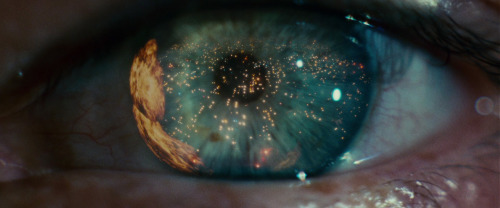
mydarktv: BLADE RUNNER || Aesthetics


mydarktv:

BLADE RUNNER || Aesthetics

22 Jul 00:51

Kasparov vs Deep Blue

by brunomaron

kaspa


Arquivado em:dinâmica de bruto
19 Jul 21:42

franklycats: Cats. Part 2.Part 1


franklycats:

Cats. Part 2.

Part 1

17 Jul 21:27

Designer

by Greg Ross

I’m looking for a WordPress theme designer to do some work on the site. Ideally I’d like to work with someone who’s familiar with Futility Closet, as it’s hard to describe to newcomers. If you’re available and have experience working on WordPress themes, please write to me at greg@futilitycloset.com. Thanks.

Please support Futility Closet on Patreon!

17 Jul 21:24

nevver: Get on the Bus, Zhang Jia Wu


nevver:

Get on the Bus, Zhang Jia Wu

17 Jul 15:23

Photo


17 Jul 15:21

decentlyexposedjay: fuckyeahcomicsbaby: Would you like to buy...


decentlyexposedjay:

fuckyeahcomicsbaby:

image
image
image
image
image
image
image
image
image
image
image
image
image
image

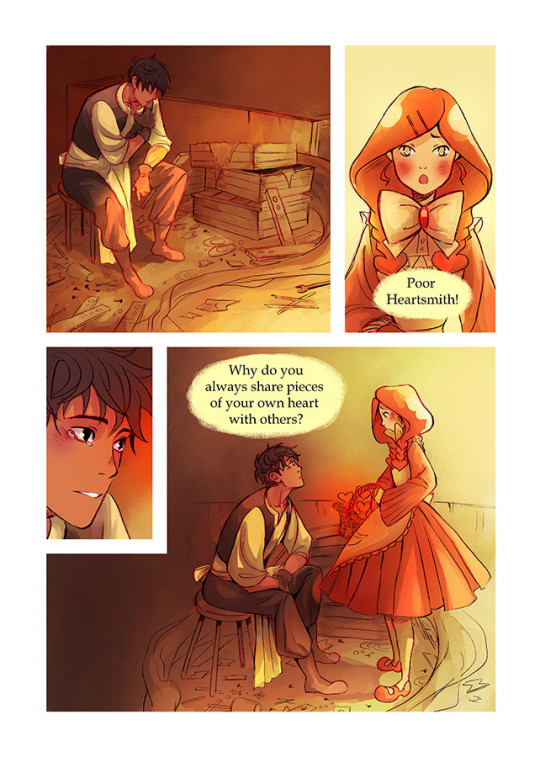
Would you like to buy a heart?

That was amazing!

17 Jul 14:00

bynnie: ladymacbetterthanyou: cr-est:He yelled at me until we...


bynnie:

ladymacbetterthanyou:

cr-est:

He yelled at me until we adopted him

the wand chooses the wizard

That’s a cat

17 Jul 12:42

RT @pfvrsams: chocada com tanta diversidade http://t.co/ycZEMtjUfN

by Pai Osias
800px-Coturnix_coturnix_eggs_normal.jpg
Author: Pai Osias
Source: Buffer
RT @pfvrsams: chocada com tanta diversidade http://t.co/ycZEMtjUfN
CJ0o1ZxWIAMvp2z.jpg:large
17 Jul 12:38

Pluto and other known “not-planets” in our solar system mapped in scale image montage

by Xeni Jardin
Montage by Emily Lakdawalla.


Montage by Emily Lakdawalla.

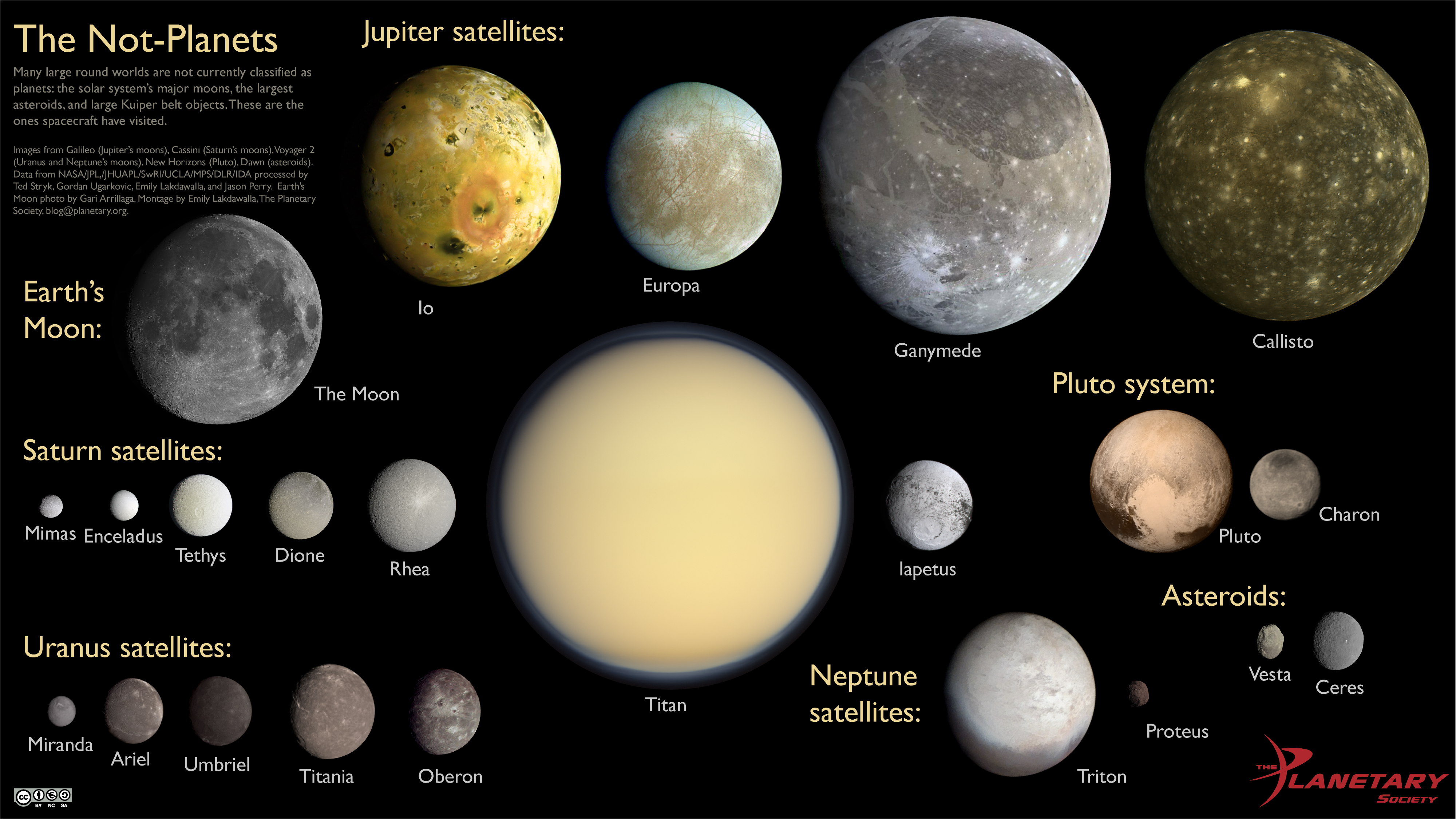
“Now that I have a reasonable-resolution global color view of Pluto,” writes Emily Lakdawalla, “I can drop it into one of my trademark scale image montages, to show you how it fits in with the rest of the similar-sized worlds in the solar system: the major moons and the biggest asteroids.”

The solar system contains dozens of objects that are large enough for self-gravity to make them round, and yet are not considered planets. They include the major moons of the planets, one asteroid, and many worlds in the Kuiper belt. The ones that we have visited with spacecraft are shown here to scale with each other. A couple of items on here are not quite round, illustrating the transition to smaller, lumpier objects.

It's just an accident that Pluto wound up next to Iapetus and Triton, which I think are the two best analogs for what we can see on Pluto's surface. Yet Pluto stands out for its uniquely ruddy color. Charon, too, is unique, for its dark pole, but there are similarities to the similar-sized worlds on the left side of the diagram: Ariel and Dione in particular.

These are the not-planets. Their non-planetary status is a handicap because these are the worlds that we need to get Earthlings excited about exploring. Titan's strange hydrology -- Enceladus' geysers -- the subsurface oceans of Europa and Ganymede -- the dynamic surfaces of Triton and Pluto. And beyond all the worlds pictured here, there are hundreds of Kuiper belt objects that I would include on this montage if we had ever visited them up close. But we haven't yet. So much undiscovered country yet to explore -- but they're all worlds that much of the public is not familiar with.

Full size here [PNG].
The not-planets” [planetary.org]

Montage by Emily Lakdawalla. The Moon: Gari Arrillaga. Other data: NASA/JPL/JHUAPL/SwRI/UCLA/MPS/IDA. Processing by Ted Stryk, Gordan Ugarkovic, Emily Lakdawalla, and Jason Perry.

Montage by Emily Lakdawalla.


Montage by Emily Lakdawalla.

17 Jul 12:38

scully is about to commit murder


scully is about to commit murder

16 Jul 20:22

nevver: My own private Idaho


phaidon.com The back view of Stóra Dímun, Faroe Islands, early May 2012. by Magnus Nilsson.


www.wikiwand.com


www.panoramio.com


https://www.flickr.com/photos/eileensanda/4862882822


avaxnews.net


panoramio.com Eileen Sandá


https://commons.wikimedia.org

nevver:

My own private Idaho

16 Jul 02:56

Saturday Morning Breakfast Cereal - The Human War

by admin@smbc-comics.com
16 Jul 02:53

In Bed

by Huge Cartoons
16 Jul 02:53

A Brief History of Flash

16 Jul 02:50

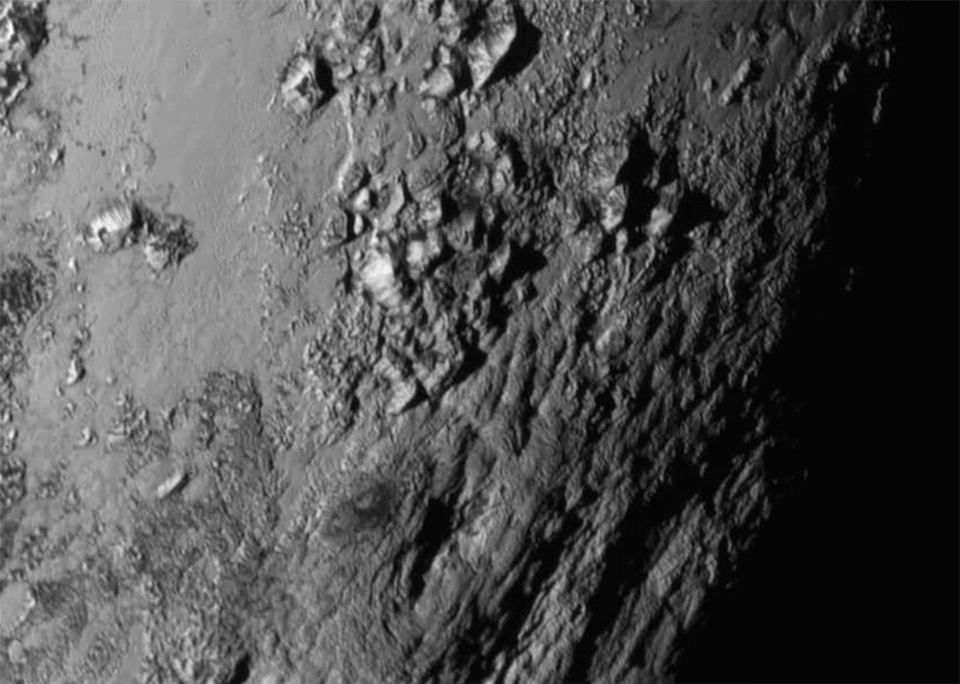
NASA's latest image of Pluto reveals icy mountains

by Nicole Lee
A day after we caught a glimpse of the best photo we've seen yet of Pluto, NASA has released an even closer shot of the dwarf planet: Behold the image above. In a press conference today, the team behind NASA's New Horizons probe gave more information...
16 Jul 02:46

OTAKU GANGSTA

by researchinstitute
16 Jul 02:45

The adventures of ACTION ITEM

16 Jul 02:45

Photo


15 Jul 22:34

Photo


15 Jul 16:52

"There are 2 gateway drugs to science - dinosaurs and space."

“There are 2 gateway drugs to science - dinosaurs and space.”

-

My astronomy professor


(via coffeeforcollege)

accurate

(via thedoubleclicks)

15 Jul 16:52

These are the Most Incredible Photos Shot by NASA’s Cassini Probe

by Michael Zhang

spaceprobe

NASA’s New Horizons probe dazzled the world with a detailed photo of Pluto today, but another probe has been beaming back stunning shots of space for over a decade already. The Cassini space probe has captured its fair share of eye-popping photos since launching in 1997 and arriving in Saturn’s orbit in 2004.

Here’s a collection of some of Cassini’s most remarkable photographs. Many of them were compiled by Reddit user I_Say_I_Say, and others were featured here before or obtained from NASA’s website:

Saturn passing in front of the Sun. A color-exaggerated image that combines 165 images taken over 3 hours.

Saturn passing in front of the Sun. A color-exaggerated image that combines 165 images taken over 3 hours. [#]

Saturn's gradation and rings. [#]

Saturn’s gradation and rings. [#]

A photo of Saturn during an equinox. [#]

A photo of Saturn during an equinox.

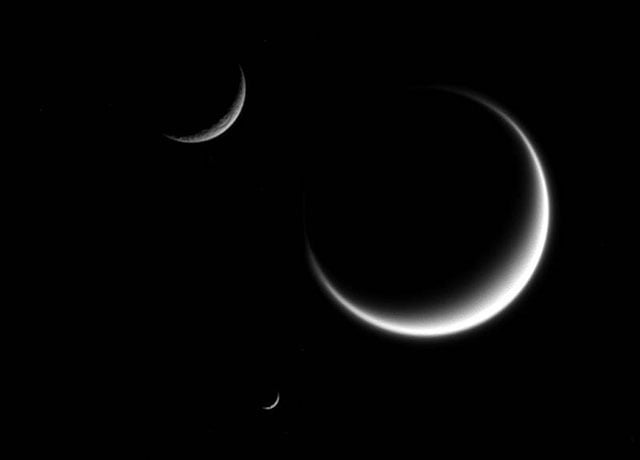
Three of Saturn’s moons (Titan, Mimas, and Rhea) captured in a single photo. [#]

An electrical storm on the surface of Saturn. [#]

A long-lived electrical storm on the surface of Saturn. [#]

Four moons huddling around Saturn's rings. [#]

Four moons huddling around Saturn’s rings. [#]

Saturn casting a shadow on its rings. [#]

Saturn casting a shadow on its rings. [#]

Saturn's moon Rhea hovering in front of Saturn's largest moon, Titan.

Saturn’s moon Rhea hovering in front of Saturn’s largest moon, Titan.

Saturn's rings glowing in scattered sunlight. [#]

Saturn’s rings glowing in scattered sunlight. [#]

Saturn overexposed to bring out details in its rings. [#]

Saturn overexposed to bring out details in its rings. [#]

Saturn's icy moon Enceladus. [#]

Saturn’s icy moon Enceladus. [#]

Saturn casting its shadow on its rings.

Saturn casting its shadow on its rings.

A storm on the north pole of Saturn.

A storm on the north pole of Saturn.

Saturn and its moon Titan

Saturn and its moon Titan

Saturn's rings cut across an eerie scene that is ruled by Titan's luminous crescent and globe-encircling haze, broken by the small moon Enceladus, whose icy jets are dimly visible at its south pole. North is up.

Saturn’s rings cutting across the moon Titan, which hovers behind the shadow of the smaller moon Enceladus. [#]

Saturn, its rings, and its moon Dione. [#]

A massive storm stretching across the surface of the planet.

A massive storm stretching across the surface of the planet.

Earth seen as a pale blue dot under Saturn's rings.

Earth seen as a pale blue dot under Saturn’s rings.

You can find a massive collection of Cassini’s photos in the mission gallery on NASA’s website.

14 Jul 15:16

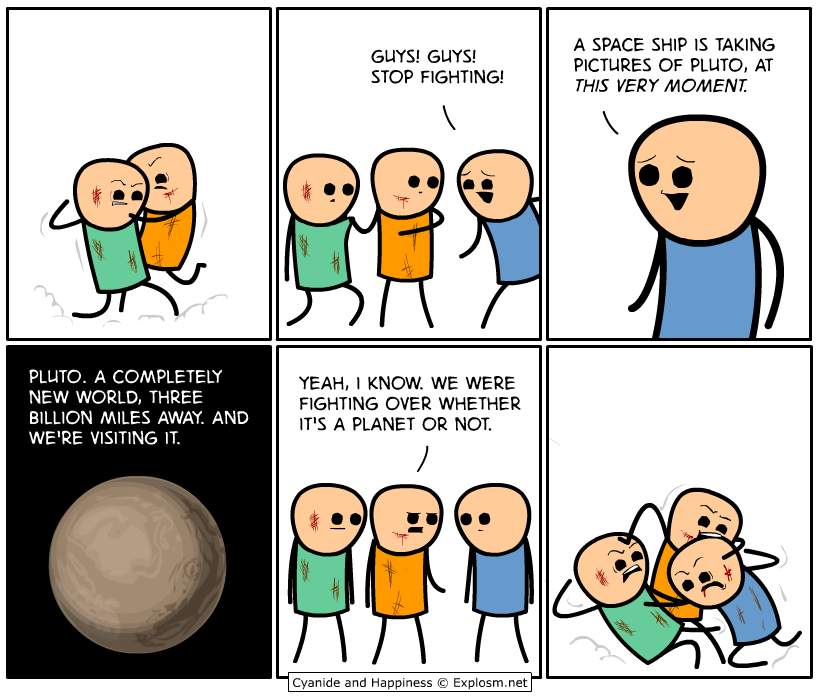
Comic for 2015.07.14

by Rob DenBleyker

This entry passed through the Full-Text RSS service - if this is your content and you're reading it on someone else's site, please read the FAQ at fivefilters.org/content-only/faq.php#publishers.

14 Jul 15:14

Photo


14 Jul 15:11

….may have overshot. In other news, HELL YEA exams over,...


….may have overshot.


In other news, HELL YEA exams over, and we’re BACK.

14 Jul 03:22

"Attention is the rarest and purest form of generosity."

“Attention is the rarest and purest form of generosity.”