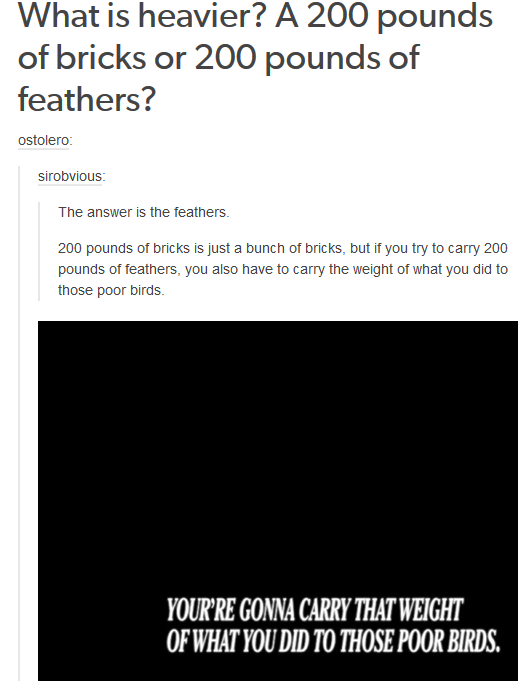
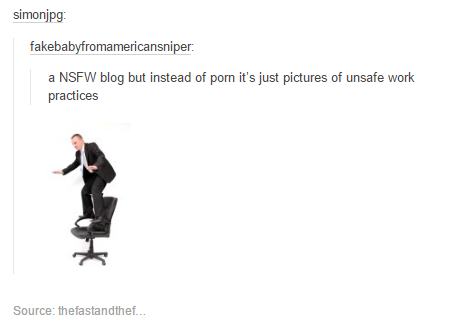
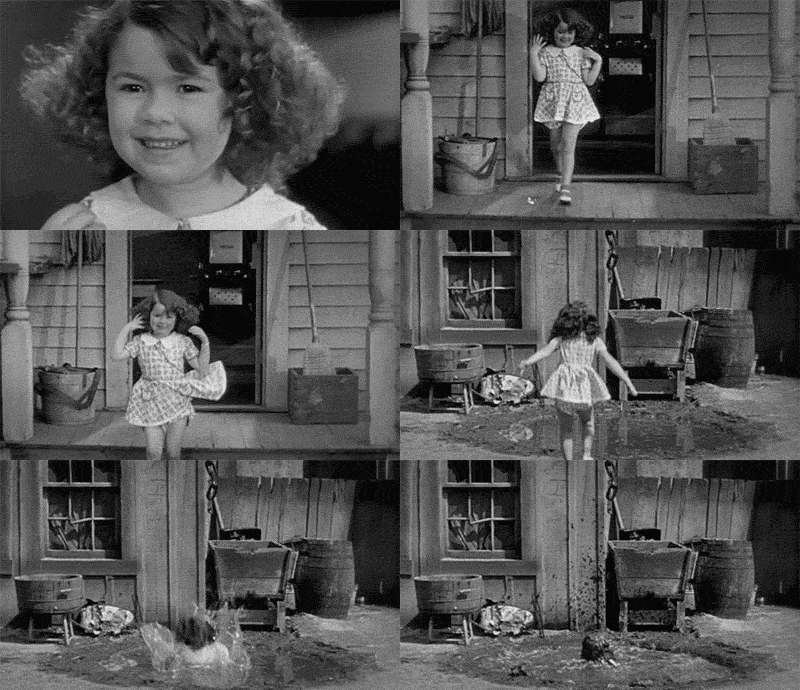
In a recent video by CollegeHumor, Emily Axford makes a staunch and high-five-filled defense of puns as she schools her coworkers and the viewer about wordplay.
As part of a reference photoshoot for an illustration project by Warsaw-based creative studio Ars Thanea, a bouquet of roses was set on fire and photographed as they smoldered in the dark. The glow of the dying embers is strangely evocative, it would be amazing to see an entire series of different flowers photographed like this. You can see the final illustration and how they caught the images over on Behance. (via Boing Boing)
Bethesda has been the steward of the Fallout franchise for nearly a decade at this point, and Fallout 4 will reportedly be the most detailed game the company has ever made. That’s thanks to an updated version of the Creation game engine, but before Creation, there was Gamebryo. This is the game engine that powered Fallout 3 and New Vegas, and it had an interesting set of quirks. After poking around in the game files, someone on 4chan noticed a fantastic detail — there’s a hat that is literally an entire train.
Gamebryo was not really designed with vehicles in mind. When you think about it, Skyrim is all horses and walking, but all the cars are wrecked in Fallout, so vehicles don’t come up much. There are a number of workarounds to make vehicles work the few times they appear. For example, the Fallout Vertibirds are just pre-rendered animations that don’t operate inside the physics of the game.
Far more interesting is the Presidential Metro Train in Fallout 3’s Broken Steel DLC. It turns out it was easier to make the train car a piece of head armor and slap it onto an NPC than it was to make a working vehicle. The NPC (with train hat) can be spawned wherever it needs to be. All you see is the train car on the tracks, but under the surface is a person with a train on her head.
There’s another trick when you actually board the train, and it’s almost as weird. Again, there aren’t physics for making a train car move in the Gamebryo engine, so you’re not actually on the train. Instead, the player is equipped with a piece of head armor that covers the field of view and looks like the inside of a train. Then a camera animation is played that makes it look like you’re on a moving train, but you really just have a helmet on.
The new Creation engine in Fallout 4 will be much more sophisticated than Gamebryo from Fallout 3, but they share much of the same DNA. I wouldn’t be surprised to see some clever workarounds in Fallout 4 too, but that’s not necessarily a bad thing. It’s a good solution if it doesn’t introduce any new bugs and can fool the player.
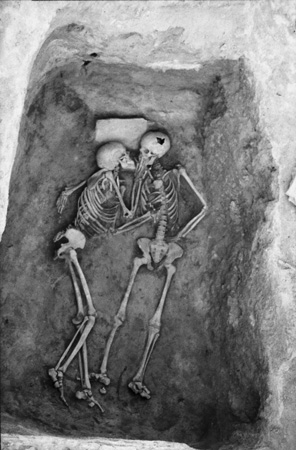
In 1972, archaeologists unearthed a plaster-lined brick bin in the Teppe Hasanlu site in northwestern Iran, an ancient city that had been violently sacked and burned at the end of the ninth century B.C. University of Pennsylvania archaeologist Robert Dyson wrote:
Lying in the bottom of the bin were two human skeletons, a male and a female. The male had one of its arms under the shoulder of the female, while the female was looking into the face of the male and reaching out with one hand to touch his lips. Both were young adults. Neither showed any evidence of injury; there were no obvious cuts or broken bones. There were no objects with the skeletons, but under the female’s head was a stone slab. The other contents of the bin consisted of broken pieces of plaster, charcoal, and small pieces of burned brick but nothing heavy enough to crush the bones.
“Two theories have been suggested to explain this unusual scene,” he wrote. “One, that a pair of lovers had crawled into the bin under some light material of some kind to hide in the hope of escaping the destruction of the citadel, and that this is a very tender moment between them. The other is that they were hiding and one is telling the other not to make any noise. In either case it would appear they died peacefully — probably by asphyxiation.”
All images @Brian Kane, photography by Nate Wieselquist and Simone Schiess
Created as a set of billboards along two Massachusetts highways, “Healing Tool” is a temporary public art installation by artist Brian Kane produced to temporarily relieve stress and promote introspection during one’s monotonous daily commute.
Kane’s digital billboards circulate between pictures of surrounding natural environments, creating “unvertisements” that promote nothing instead of shoving products, restaurants, and services in consumers’ faces from above. The piece builds upon a body of work Kane has been producing that places digital experiences into real world situations. “Healing Tool” is named after the Photoshop tool used to patch over errors in photographs, just as his project is patching over unnatural blips of landscape (billboards) seen from the highway.
The pieces change depending on the time of day. Daylight hours feature natural images of areas surrounding the billboards, while evening hours display high-resolution images of the moon and Milky Way that allow viewers a clear glimpse of the cosmos despite urban light pollution.
Kane explains, “By removing the marketing message from the advertising space, we create an unexpected moment of introspection. People are allowed to interpret an image based on their own experience, and not necessarily with the singular focus of the advertiser’s intent.” (via The Creator’s Project and Junkculture)
La beauté- The beauty. Arabic calligraphy. Tetouan, Morocco, 2015. Calligraphy by Julien Breton aka Kaalam. Photography by Cisco Light-painting.
Artist Julien Breton aka ‘Kaalam‘ is a master of photographic light painting, turning full-body gestures reminiscent of dance movements into the invisible pen strokes of Arabic calligraphy. Breton works silently in secluded urban environments and against dimmed architectural backdrops to execute perfectly rehearsed motions that translate on film to both abstract and literal Arabic handwriting. With its sweeping tails, loops, and punctuated diacritic dots, it’s difficult to imagine any other language more suited to the transcription of human body movement into written language.
Collected here are a number of works over the last few years, but you can see much more on Behance and on his website. If you liked this, also check out the work of Stephen Orlando.
Pensée – think. Arabic calligraphy. Saint-Laurent sur sèvres, France, 2014. Calligraphy by Julien Breton aka Kaalam. Photography by David Gallard.
Dead’s place. Abstract calligraphy. New York, USA, 2012. Calligraphy by Julien Breton aka Kaalam. Photography by David Gallard.
Getting the visual language for this joke right was surprisingly difficult. It involves a lot of cutting from place to place. I hope it comes together. —
cube-drone
ceo
walt
milo
meetings
O gênio Michael Kremer e Miguel publicaram, em 2004, um artigo na Econometrica em que mostram que os benefícios de dar vermífugo para as crianças no Quênia atingiam não só as tratadas, mas também as demais (por diminuir a contaminação).
Dez anos depois, outros autores pegaram os dados e o código do Kremer e Miguel e não encontraram os mesmos resultados, i.e. os benefícios para as crianças não tratadas. (Teve gente que não concordou com o estudo.)
Ben Goldacre, um craque na análise das políticas públicas (veja aqui um texto ótimo dele, em português), ressuscitou a polêmica com um post no Buzzfeed com aquele jeito Buzzfeed de ser: exagerado e com fotos sensacionalistas.
O debate foi para o Twitter e envolveu o grandes Chris Blattman e o Michael Clemens. A discussão foi para tecnicalidades e para saber o que é, afinal, replicação de um estudo.
Meu pitaco irresponsável: esse experimento com vermífugo tem interesse acadêmico, mas eu ainda não sei qual sua relevância para políticas públicas. Ora bolas, você deve matar os vermes da criançada de qualquer forma, mesmo sem benefício no desempenho escolar nem em externalidades. Experimentos devem ser guardados para aquelas políticas públicas cujo resultado não seja óbvio ou um fim em si mesmo.
There once was a ,cal fellow,
Who grew .ically mellow;
With a — he was gone
To the town of :
To write for a sheet that was yellow.
She was wooed by a handsome young Dr.,
Who one day in his arms tightly lr.;
But straightway he swore
He would do so no more,
Which the same, it was plain, greatly shr.
A boy at Sault Ste. Marie
Said, “To spell I will not agree
Till they learn to spell ‘Soo’
Without any u
Or an a or an l or a t.”
There was an old maid from Duquesne
Who the rigor of mortis did fuesne;
She came to with a shout,
Saying: “Please let me out;
This coffin will drive me insuesne.”


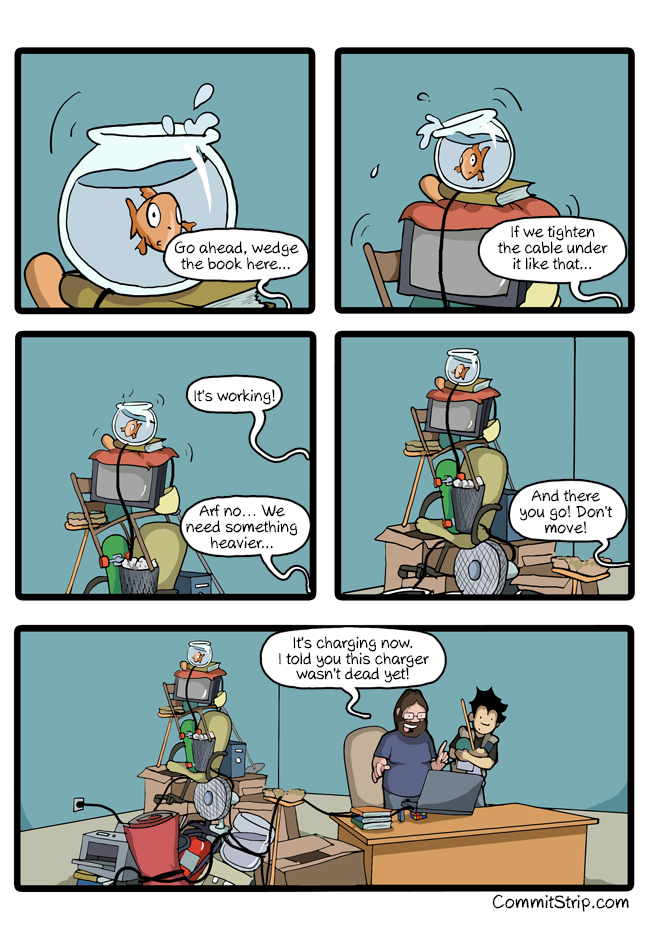
 Expanded from










 Special thanks to Cody and his family for supporting the comic!


 La beauté- The beauty. Arabic calligraphy. Tetouan, Morocco, 2015. Calligraphy by Julien Breton aka Kaalam. Photography by Cisco Light-painting.
 Pensée – think. Arabic calligraphy. Saint-Laurent sur sèvres, France, 2014. Calligraphy by Julien Breton aka Kaalam. Photography by David Gallard.