luso tropical, a Tumblr about 20th century colonial Portuguese architecture overseas.
Semana que vem, uma comissão do Senado Federal aprovará um projeto de lei para reduzir nossa dose cotidiana de brutalidade: em casos de prisão em flagrante, a polícia ficará obrigada a apresentar o detento perante um juiz em até 24 horas.
O magistrado então decidirá se o sujeito responde ao processo criminal em liberdade ou atrás das grades.
Trata-se de um direito já codificado em normas internacionais. Na América Latina, os únicos que não contam com o mecanismo são Cuba e Brasil.
Nosso atraso é terrível. A vasta maioria das pessoas presas em flagrante passa meses de prisão antes de ter a primeira audiência. O processo superlota o sistema prisional, fortalece as gangues que lá proliferam e faz do Brasil um campeão mundial de detenções arbitrárias em casos de ofensas não-violentas.
Tem mais. Pesquisas recentes revelam que o sistema atual contribui para o uso disseminado da tortura por parte de agentes do Estado brasileiro. Isso ocorre porque é nas horas imediatamente seguintes à detenção que se concentram os espancamentos, os estupros, os eletrochoques e a asfixia por saco plástico que compõem o repertório do terror. A evidência mostra que a apresentação imediata do detento perante um juiz tem poder dissuasório contra a prática da tortura.
A mudança na lei é impulsionada por uma aliança recente entre Comissão Nacional de Justiça, 12 governadores hoje acuados pela crise do sistema prisional e seus senadores.
Juntos, eles montaram um programa piloto com resultados impressionantes.
Quando um juiz decide sobre a custódia de prisioneiros com base em documentos escritos, apenas 10% dos detentos respondem ao processo em liberdade. Quando há uma audiência presencial, o número salta para 60%.
Se virar lei, o projeto que ora tramita no Senado transformará o sistema prisional. Para vingar, porém, o projeto terá de superar as forças do atraso à esquerda e à direita.
Basta lembrar da declaração de Dilma Rousseff em Harvard, há três anos: "Eu não tenho como impedir em todas as delegacias do Brasil de haver tortura", disse a presidente, ao arrepio da evidência empírica. E arrematou: "Sei do que acontece em Guantánamo", como se um crime justificasse o outro.
O projeto ainda terá de atravessar a Câmara dos Deputados, onde corporações policiais influentes são avessas à proposta. Elas já circulam um texto alternativo segundo o qual as audiências com detentos não seriam conduzidas por juízes, mas por delegados de polícia.
Com sorte, aqueles que resistem à ideia de que o Estado brasileiro serve ao cidadão não passarão.

Castel Meur, also known as La Maison du Gouffre or “the house between the rocks”, is a charming cottage wedged between two huge jagged rocks that has been drawing tourists to the otherwise quiet little village of Plougrescant, located in the department of Côtes-d’Armor in the region of Brittany, in France, since the 19th century.

The house has her back turned towards the sea, against which her owner sought to protect her by building the house in a cradle between the two rocks to shield her from the violent storms that frequent this place.

The tiny house was built in 1861, at a time when building permits did not exist, where anyone could build at will.

After the death of her original owner, Castel Meur served as the second home to the descendant’s family who lived here sporadically.

The current occupant, the granddaughter of the first master of the house, has lived here since 2004 after selling her business in America and returning back to her land.


Astronauts on board the International Space Station have sampled their first taste of space-grown “Outredgeous” red romaine lettuce grown in the station’s Veggie hardware validation test (Veg-01). This was the first time American astronauts have eaten space-grown vegetables, which have only been recently grown, analyzed, and deemed safe to eat.
The astronauts first cleaned the lettuce with a citric acid-based wipe to ensure the lettuce was safe to eat, and ate half their lettuce crop while the other half will be sent back to Earth for further study.
The technology used to grow the lettuce is important for the future of long-term space travel, and could one day be used to help colonize Mars. It also has applications here on Earth where similar technology can help grow food in harsh climates.


images via NASA
Adam Victor BrandizziYahoo! PIpes is shutting down, say goodbye to the extended SMBC feed :(

Frances Oldham Kelsey has been described as a hero, and for good reason. The Canadian-born doctor saved the U.S. from thalidomide – the dangerous drug that caused thousands of babies to be born with malformed limbs and countless more miscarriages.
Thalidomide was being used during the 1950s in Europe to treat insomnia and morning sickness in pregnant women. But when the drug reached the Food and Drug Administration in September 1960, Frances Kelsey – the new medical officer – was skeptical about its safety. Kelsey requested further information from the manufacturer and, despite significant pressure and complaints, persevered with her enquiry.
Her persistence paid off as evidence against thalidomide began pouring in. Thousands of babies whose mothers took the drug were born with flipper-like arms and legs, missing limbs and organs and other birth defects. Kelsey's refusal to approve thalidomide saved countless children from being born with birth defects associated with the drug. A number of lawsuits have been filed against thalidomide worldwide, which include recent bids from victims for compensation from manufacturers.
Kelsey, who died on Friday at the age of 101, helped improve the regulatory procedure for approving pharmaceutical drugs. CBC Canada reports that while thousands were affected in Europe, only 17 children were born with thalidomide-related defects in the U.S.
New legislation following the thalidomide disaster tightened regulations and gave more power to the FDA over drug testing. As the The Washington Post explains, the new regulations forced pharmaceutical companies to conduct phased clinical trials, to be honest about adverse effects and make sure participants give informed consent during drug testing. The law is still in force today.
Kelsey was awarded the Distinguished Federal Civilian Service by President John F. Kennedy. During the White House ceremony, Kennedy, according to The New York Times, said: “Her exceptional judgment in evaluating a new drug for safety for human use has prevented a major tragedy of birth deformities in the United States.”
Just 24 hours before her death, Kelsey was presented with the Order of Canada in a private ceremony. "We knew that death was imminent, and I sat beside her bed, held her hand, told her why I was there and why it was so important that we have the opportunity to recognize her, and took the medal and had an opportunity to put it in her hands," Elizabeth Dowdeswell, lieutenant governor of Ontario, told CBC Canada.
Read this next: Smoke From Africa's Agricultural Fires Inhibit The Formation Of Rain Clouds
Adam Victor BrandizziE esse ano nem pude voltar lá... :(
What the actual fuck?! Adrenalin ist einfach eine geile Droge.

Wer ist das?

(via manniac)
konzert | concert | gig | crowdsurfing | stagediving | metal | beer | skills overdose
-=daMax=-, Aug 11, 2015. |
Permalink |
4 Reaktionen |
Abgelegt unter: Bekloppte, Real life, Spaß
Feed enhanced by Better Feed from Ozh
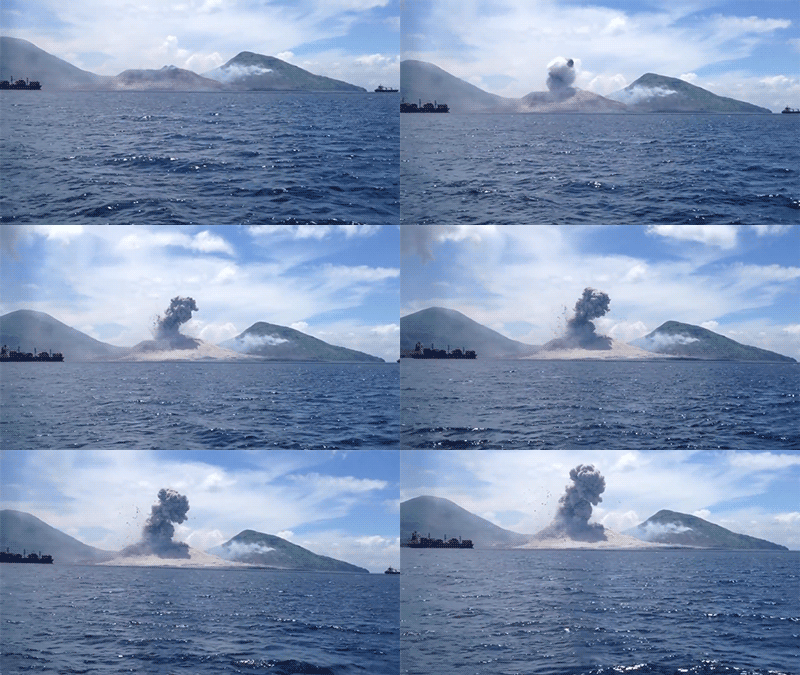
Shockwave from a volcanic explosion in Papua New Guinea.
 Take a look at the latest images from Botswana based fashion photographer Ray Geof. Posting the series on his Tumblr, the photographer (who describes his work as "abstract') captioned one of the image as, "Black Is The New Black!"; and these images are the perfect celebration of the bold and powerful color - shot at the RiverWalk Gaborone in Botswana and featuring models from the X models Agency. Explore below.
By Alexander Aplerku, AFROPUNK Contributor
.


After witnessing the destruction brought on by hurricanes in Thailand, the Southern U.S. and around the world, Italian sculptor Lorenzo Quinn began creating a series of sculptures titled ‘Force of Nature’. Made from bronze, stainless steel and aluminum, the sculptures, full of life and energy, depict mother nature hurtling planet earth around in circles. The powerful and furious image is meant remind us of the power of nature and what Quinn describes as our “false sense of security” towards it.
“After having seen the ravaged coast of Thailand and the Hurricane that affected the Southern States I decided to create a sculpture dedicated to Mother Nature,” explains Quinn. At any moment in time, nature’s wrath could be awakened, bringing with it sudden destruction. The sculptures, which have been installed all around the world, remind us of this fact. And for Quinn they also harken back to something more ancient and primitive: “This would be reminiscent of the early statues made as peace offerings to the Gods in the hope of quenching their anger.” (via Bored Panda)


Sex education varies widely between school districts, leaving many teens without comprehensive information. We made a video that covers what some schools are…
(via Last Week Tonight with John Oliver: Sex Education (HBO))

Mathematicians and designers are rejoicing as the 15th pentagonal tile pattern has just been discovered.

This entry passed through the Full-Text RSS service - if this is your content and you're reading it on someone else's site, please read the FAQ at fivefilters.org/content-only/faq.php#publishers.
Pastafarians, behold your god.
The video clip above shows what researchers believe to be the species Bathyphysa conifera, spotted off of Angola. But the BP workers who spotted it over 4,000 feet below the surface nicknamed it the "Flying Spaghetti Monster," after the satirical Internet deity it so closely resembles.
New Scientist reports that a team from BP passed the video, which was taken using a deep sea remote vehicle during oil rig maintenance, on to Daniel Jones of the National Oceanography Centre in Southampton. Jones is part of a project called Serpent, which uses videos such as these -- all taken by oil companies and the like working in the deep sea -- to identify little-known marine life.
[Scientists find yet another deep-sea weirdo, this time a new anglerfish]
Bathyphysa conifera is a member of the order Siphonophorae. Siphonophores may look superficially like jellyfish -- and they're not too distantly related -- but they're far weirder. Siphonophores actually clone themselves in order to grow. Instead of a single body, one siphonophore is in fact a tightly knit colony of many organisms -- sometimes thousands of them.
[Environmental groups call for regulation as world dives into deep sea mining]
With all of those individuals coming together, they can grow to be the longest animals in the sea. Meanwhile, the organisms that make them up serve different functions. Some are born to feed, others to reproduce. It's kind of incredible, and scientists aren't totally sure how the colonies manage to coordinate so seamlessly. It's a little tricky to figure out how one siphonophore can really be considered a single animal, with so many individuals comprising it. But because no part of the whole could function on its own, it really does take a village to make a single specimen.
The deadly Portuguese man o' war is Bathyphysa conifera's most famous cousin. But other, less toxic members of the order get scientists pretty excited, too:
Read More:
These deep sea ‘mushrooms’ don’t fit into any known category of life
The cutest octopus ever may end up with the name ‘adorabilis’
Ancient microbes from a Japanese wetland found deep beneath the sea
Ghostly new fish discovered at record-breaking depths
This slimy, pink-tongued green sea monster will haunt your dreams. But what is it?




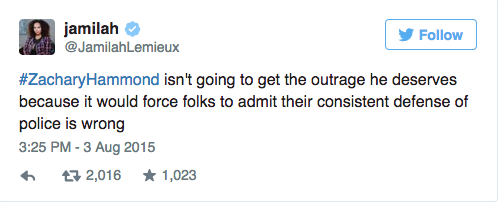

A Cop Killed A White Teen And The #AllLivesMatter Crowd Said Nothing
On the evening of July 26, Zachary Hammond pulled into the parking lot of a Hardee’s in Seneca, South Carolina. Seated next to him was a young woman who had arranged to meet someone there to sell a bag of weed. It’s unclear what Hammond knew about the transaction, but neither the 19-year-old nor his passenger had any idea that the buyer was actually an undercover police officer. Moments later, another officer fatally shot Hammond.
o.o wait what?! me: damn it. why does the world have so much wrong with it?
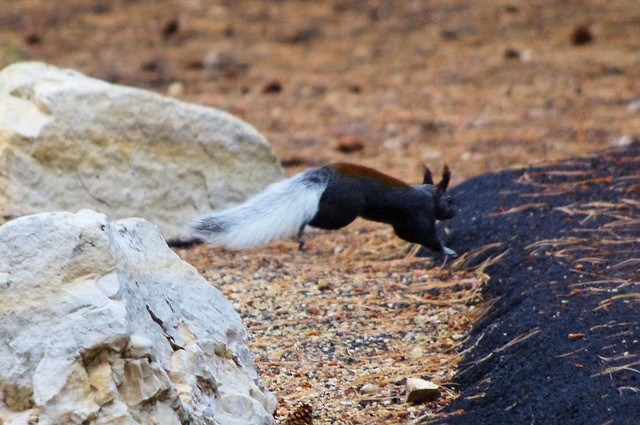
Kaibab squirrel, North Rim, Grand Canyon National Park, Arizona, October 4, 2011
Kaibab squirrel (Wikipedia)
The Kaibab squirrel (Sciurus aberti kaibabensis) is a tassel-eared squirrel that lives in the Kaibab Plateau in the Southwest United States, in an area of 20 by 40 miles (30 by 60 km). The squirrel’s habitat is confined entirely to the ponderosa pine forests of the North Rim of Grand Canyon National Park and the northern section of Kaibab National Forest around the town of Jacob Lake, Arizona.
This squirrel is not found anywhere else in the world. In 1965, 200,000 acres (800 km²) of Kaibab squirrel habitat within Grand Canyon National Park and Kaibab National Forest were declared the Kaibab Squirrel National Natural Landmark.
Os cristãos são perseguidos no mundo árabe e há uma enorme gritaria correta quando observamos o que grupos como ISIS (Grupo Estado Islâmico ou Daesh) e a Frente Nusrah fazem com os seguidores desta religião. Mas óbvio que poucos falam quem defende estes cristãos e o que se pode fazer mais para ajudar.
O Líbano é a nação com a maior proporção de cristãos no Oriente Médio. São 40% morando no país ou cerca de 60% se levarmos em conta os libaneses morando na diáspora. Também é o país onde os cristãos melhor vivem na região e o único que possui, por lei ou costume, calendário cristão (fim de semana sábado e domingo e celebração do Natal), metade do Parlamento cristão, metade do ministério cristão, presidente cristão e chefe das Forças Armadas cristão.
Neste momento, o principal líder cristão do Líbano se chama Michel Aoun. Não chega a ser novidade. Aoun ocupa este posto desde o fim dos anos 1980, embora tenha passado 15 anos no exílio. A maior parte dos parlamentares cristãos libaneses integram o partido de Aoun, conhecido como Movimento Patriótico Livre.
Este grupo cristão de Aoun é aliado do Hezbollah e do Irã pois vê o grupo xiita, o regime de Teerã e mesmo Bashar al Assad (de quem Aoun já foi inimigo) como as únicas garantias neste momento de o Líbano não ser sugado pelo ISIS ou pela Frente Nusrah (Al Qaeda na Síria). E Aoun defende o fortalecimento dos cristãos no Líbano, uma nação circundada por um inimigo (Israel) e uma guerra civil sanguinária (Síria).
Há mais de um ano, o Líbano está sem presidente. Existe um impasse envolvendo Aoun e seu maior rival no campo cristão, o ex-líder miliciano Samir Geagea, aliado dos sunitas. É urgente que os cristão libaneses se unam neste momento para evitar o enfraquecimento ainda maior da força dos cristãos no Líbano, o último oásis do cristianismo na região. Alguns já dizem que talvez o Líbano não tenha mais um presidente cristão.
Os cristãos estavam bem no Iraque até a invasão dos EUA. Os cristãos estavam bem na Síria até o início da guerra civil. Agora, sobraram apenas os cristãos do Líbano entre as nações do mundo árabe. E os cristãos são peça fundamental na identidade árabe e do Oriente Médio. São a ponte de ligação entre o ocidente e o oriente.
Os EUA apoiam os lados que estão contra os cristãos árabes. E, pior, os candidatos republicanos, embora retoricamente, defendam os cristãos, também sempre ficam no lado oposto os cristãos do Oriente Médio. O mesmo vale para grupos cristãos evangélicos nos EUA e mesmo no Brasil (mais por desinformação do que por qualquer outro motivo) – o cristianismo ortodoxo, porém, entende bem melhor o cenário na região. O Papa Francisco também conhece melhor a situação e costuma acertar nas suas análises.
Provavelmente, no Brasil, você tem um ou mais amigos de origem libanesa. E quase certamente ele tem origem cristã. Os cristãos libaneses, junto com os muçulmanos sunitas, xiitas, os drusos e, em um passado, recente, os judeus faziam o Líbano uma das nações mais cosmopolitas do mundo. Os libaneses se dão bem em todo o mundo, de São Paulo a Montreal, de Paris a Lagos. Falta apenas se darem bem em Beirute. O Líbano tem tudo para voltar a ser a Suíça do Oriente Médio, o símbolo da prosperidade da sociedade mediterrânea e o grande bastião do Ocidente no Oriente e do Oriente no Ocidente.
Guga Chacra, comentarista de política internacional do Estadão e do programa Globo News Em Pauta em Nova York, é mestre em Relações Internacionais pela Universidade Columbia. Já foi correspondente do jornal O Estado de S. Paulo no Oriente Médio e em NY. No passado, trabalhou como correspondente da Folha em Buenos Aires
Comentários islamofóbicos, antissemitas, anticristãos e antiárabes ou que coloquem um povo ou uma religião como superiores não serão publicados. Tampouco são permitidos ataques entre leitores ou contra o blogueiro. Pessoas que insistirem em ataques pessoais não terão mais seus comentários publicados. Não é permitido postar vídeo. Todos os posts devem ter relação com algum dos temas acima. O blog está aberto a discussões educadas e com pontos de vista diferentes. Os comentários dos leitores não refletem a opinião do jornalista
Acompanhe também meus comentários no Globo News Em Pauta, na Rádio Estadão, na TV Estadão, no Estadão Noite no tablet, no Twitter @gugachacra , no Facebook Guga Chacra (me adicionem como seguidor), no Instagram e no Google Plus

The El Portal Fire burns on a hillside in the Stanislaus National Forest and Yosemite National Park on Sunday evening July 27, 2014. The community of El Portal was under a mandatory evacuation. By Tuesday the blaze had burned nearly 3,000 acres. Long exposure image.

The Etiwanda Fire burns shortly after dusk on April 30, 2014 in Rancho Cucamonga, CA. Long exposure image.
The news of deadly wildfires ravaging California has been as awe-inspiring as it is terrifying. Great swaths of forests, mountains, fields, and entire neighborhoods can be incinerated in moments leaving nothing unscathed. For the last few years, Los Angeles-based photographer Stuart Palley has been shooting these fires as they rage across Southern California as part of a series he calls Terra Flamma.
More than just capturing flames or firefighters, Palley focuses instead on the entire landscape surrounding each event. By utilizing long exposure techniques he incorporates trails of sparks, the lights of firefighting aircraft, and even the stars above to create images that speak more to the strange beauty of wildfires than simple editorial documentation.
Though Palley often jumps at the opportunity to photograph a fire at a moment’s notice, he’s also well prepared. He takes a number of precautions including completion of the US Forestry Service’s “Introduction to Wildland Fire Behavior” to better ensure his safety.
You can follow more of Palley’s work on Instagram. (via PetaPixel)

The French Fire burns overnight in the Sierra National Forest near the town of North Fork, CA on August 1st, 2014. The blaze was burning in steep, rugged, and remote terrain.

The Way Fire burns on August 19, 2014 in the Sierra National Forest near Kernville, CA overnight. Long exposure image.

The Meadow Fire burns overnight near Half Dome in Yosemite National Park early Monday September 8, 2014. As of Wednesday the fire had burned over 4,500 acres and was 10% contained. Long exposure image.

The Shirley Fire burns at night off of Old State Rd near Lake Isabella, CA while a helicopter circles overhead and crews work on a slopover. Long exposure image.

The Lake Fire burns in the San Bernardino National Forest Thursday June 18, 2015. By evening the fire burned over 10,000 acres and was 5% contained. The Lake Fire burns along its northern flank at night in the San Bernardino National Forest Late Thursday night.

The Lake Fire burns in the San Bernardino National Forest Thursday June 18, 2015. By evening the fire burned over 10,000 acres and was 5% contained. The Lake Fire burns along its northern flank at night in the San Bernardino National Forest Late Thursday night.

The Lake Fire burns in the San Bernardino National Forest Thursday June 18, 2015. By evening the fire burned over 10,000 acres and was 5% contained. The Lake Fire burns along its northern flank at night in the San Bernardino National Forest Late Thursday night.

The Lake Fire burns in the San Bernardino National Forest Friday June 19, 2015. By evening the fire burned over 13,000 acres and was 10% contained.

The Lake Fire burns in the San Bernardino National Forest Friday June 19, 2015. By evening the fire burned over 13,000 acres and was 10% contained.
 Expanded from


 Expanded from