We present a quantum theoretical treatment of light-matter coupling in the system consisting of a quantum dot and a spherical core-shell metal-dielectric multilayer nanoparticle. It is shown that both weak and strong coupling regimes can be realized in the set-up. Specifically, we demonstrate a strong coupling regime between a quantum dot and a nanoparticle, when the quantum dot resonance is tuned to the frequency at which normal component of effective nanoparticle permittivity is crossing zero. Moreover, we demonstrate the regime at which the quantum dot decays much faster than in vacuum (due to the large Purcell factor) and at the same time radiates more power to the far field. This findings pave the way towards more efficient control over radiation properties of quantum emitters.
gevero
Shared posts
Core-shell multilayered nanoparticles: giant photonic density of states coupled to the far-field. (arXiv:1507.07440v4 [physics.optics] UPDATED)
Generalized circuit model for coupled plasmonic systems. (arXiv:1512.05521v1 [physics.optics])
We develop an analytic circuit model for coupled plasmonic dimers separated by small gaps that provides a complete account of the optical resonance wavelength. Using a suitable equivalent circuit, it shows how partially conducting links can be treated and provides quantitative agreement with both experiment and full electromagnetic simulations. The model highlights how in the conducting regime, the kinetic inductance of the linkers set the spectral blue-shifts of the coupled plasmon.
Interplay between plasmon and single-particle excitations in a metal nanocluster
Article
Plasmons can enhance hot-carrier generation for efficient photochemical reactions, but the interplay between plasmons and single-particle excitations are difficult to capture in models. Here, the authors use real-time time-dependent density functional theory to study these interactions in silver nanocrystals.
Nature Communications doi: 10.1038/ncomms10107
Authors: Jie Ma, Zhi Wang, Lin-Wang Wang
[Planetary Science] What counts as a planet?
Beam engineering for selective and enhanced coupling to multipolar resonances
Author(s): Tanya Das, Prasad P. Iyer, Ryan A. DeCrescent, and Jon A. Schuller
The ability to control multipolar light-matter interactions in metamaterials and other photonic systems has traditionally relied on engineering the physical properties of the resonators. In this paper, the authors follow the reverse approach. By tailoring the optical beam that illuminates a spherical nanoparticle, they demonstrate selective and enhanced coupling to the optical modes excited on the nanoparticle.
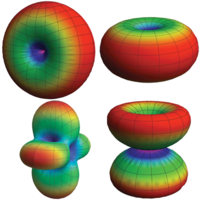
[Phys. Rev. B 92, 241110(R)] Published Mon Dec 14, 2015
Flexible thin-film black gold membranes with ultrabroadband plasmonic nanofocusing for efficient solar vapour generation
Article
Efficient steam generation under solar irradiation is of interest for energy harvesting applications. Here, Bae et al. develop a plasmonic nanofocusing film consisting of metal coated alumina nanowires to efficiently generate solar vapour with an efficiency up to 57% at 20 kWm −2 .
Nature Communications doi: 10.1038/ncomms10103
Authors: Kyuyoung Bae, Gumin Kang, Suehyun K. Cho, Wounjhang Park, Kyoungsik Kim, Willie J. Padilla
Enhanced light emission from top-emitting organic light-emitting diodes by optimizing surface plasmon polariton losses
Author(s): Cornelius Fuchs, Paul-Anton Will, Martin Wieczorek, Malte C. Gather, Simone Hofmann, Sebastian Reineke, Karl Leo, and Reinhard Scholz
Increasing the external quantum efficiency is currently an important goal in organic light-emitting diodes (OLED) research. Utilizing an altered optical design that involves a low refractive index hole transport layer in a monochrome green top-emitting OLED, the authors have managed to shift the surface plasmon polariton dispersion relation, which in turn decreases the power dissipated into lost evanescent excitations, thus enhancing the external quantum efficiency.

[Phys. Rev. B 92, 245306] Published Fri Dec 11, 2015
Nonradiating and radiating modes excited by quantum emitters in open epsilon-near-zero cavities. (arXiv:1512.01092v1 [physics.optics])
Controlling the emission and interaction properties of quantum emitters (QEs) embedded within an optical cavity is a key technique in engineering light-matter interactions at the nanoscale, as well as in the development of quantum information processing. State-of-the-art optical cavities are based on high Q photonics crystals and dielectric resonators. However, wealthier responses might be attainable with cavities carved in more exotic materials. Here, we theoretically investigate the emission and interaction properties of QEs embedded in open epsilon-near-zero (ENZ) cavities. Using analytical methods and numerical simulations, it is demonstrated that open ENZ cavities present the unique property of supporting nonradiating modes independently of the geometry of the external boundary of the cavity (shape, size, topology...). Moreover, the possibility of switching between radiating and nonradiating modes enables a dynamic control of both the emission by, and the interaction between, QEs. These phenomena provide unprecedented degrees of freedom in controlling and trapping fields within optical cavities, as well as in the design of cavity opto- and acousto-mechanical systems.
Strong-Field-Enhanced Spectroscopy in Silicon Nanoparticle Electric and Magnetic Dipole Resonance near a Metal Surface

Research funding goes to rich clubs [Applied Physical Sciences]
Reflection compensation mediated by electric and magnetic resonances of all-dielectric metasurfaces. (arXiv:1511.08473v2 [physics.optics] UPDATED)
All-dielectric nanostructures have recently emerged as a promising alternative to plasmonic devices, as they also possess pronounced electric and magnetic resonances and allow effective light manipulation. In this work, we study optical properties of a composite structure that consists of a silicon nanoparticle array (metasurface) and high-index substrate aiming at clarifying the role of substrate on reflective properties of the nanoparticles. We develop a simple semi-analytical model that describes interference of separate contributions from nanoparticle array and the bare substrate to the total reflection. Applying this model, we show that matching the magnitudes and setting the {\pi}-phase difference of the electric and magnetic dipole moments induced in nanoparticles, one can obtain a suppression of reflection from the substrate coated with metasurface. We perform numerical simulations of sphere and disk nanoparticle arrays for different permittivities of the substrate. We find full agreement with the semi-analytical results, which means that the uncoupled-element model adequately describes nanostructure reflective properties, despite the effects of induced bi-anisotropy. The model explains the features of the reflectance spectrum, such as a number of dips and their spectral positions, and show why it may not coincide with the spectral positions of Mie resonances of the single nanoparticles forming the system. We also address practical aspects of the antireflective device engineering: we show that the uncoupled-element model is applicable to the structures on top of silicon substrates, including lithographically defined nanopillars. The reflectance suppression from nanoparticle array on top of the silicon substrate can be achieved in a broad spectral range with disordered nanoparticle array and for a wide range of incidence angles.
Great enhancement in the excitonic recombination and light extraction of highly ordered InGaN/GaN elliptic nanorod arrays on a wafer scale
Localized Surface Plasmon Decay Pathways in Disordered Two-Dimensional Nanoparticle Arrays

Transverse Chiral Optical Forces by Chiral Surface Plasmon Polaritons

Resonant Enhancement of Magneto-Optical Activity Induced by Surface Plasmon Polariton Modes Coupling in 2D Magnetoplasmonic Crystals

Giant In-Particle Field Concentration and Fano Resonances at Light Scattering by High-Refractive Index Particles. (arXiv:1511.02931v1 [physics.optics])
A detailed analytical inspection of light scattering by a particle with high refractive index m+i\kappa and small dissipative constant \kappa is presented. We have shown that there is a dramatic difference in the behavior of the electromagnetic field within the particle (inner problem) and the scattered field outside it (outer problem). With an increase in m at fix values of the other parameters, the field within the particle asymptotically converges to a periodic function of m. The electric and magnetic type Mie resonances of different orders overlap substantially. It may lead to a giant concentration of the electromagnetic energy within the particle. At the same time, we demonstrate that identical transformations of the solution for the outer problem allow to present each partial scattered wave as a sum of two partitions. One of them corresponds to the m-independent wave, scattered by a perfectly reflecting particle and plays the role of a background, while the other is associated with the excitation of a sharply-m-dependent resonant Mie mode. The interference of the partitions brings about a typical asymmetric Fano profile. The explicit expressions for the parameters of the Fano profile have been obtained "from the first principles" without any additional assumptions and/or fitting. In contrast to the inner problem, at an increase in m the resonant modes of the outer problem die out, and the scattered field converges to the universal, m-independent profile of the perfectly reflecting sphere. Numerical estimates of the discussed effects for a gallium phosphide particle are presented.
Unusual Weak Interparticle Distance Dependence in Raman Enhancement from Nanoparticle Dimers

Optical Mode Control by Geometric Phase in Quasicrystal Metasurface
Author(s): Igor Yulevich, Elhanan Maguid, Nir Shitrit, Dekel Veksler, Vladimir Kleiner, and Erez Hasman
Quasi-crystalline metallic metasurfaces containing mis-orientated patterns of voids can be designed so that left- and right-handed polarized light is distinguishable after it has passed through the surface.
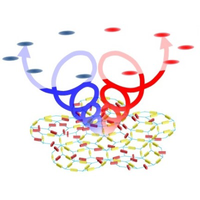
[Phys. Rev. Lett. 115, 205501] Published Mon Nov 09, 2015
Near-Complete Photon Spin Selectivity in a Metasurface of Anisotropic Plasmonic Antennas
Author(s): Robin Ogier, Yurui Fang, Mikael Käll, and Mikael Svedendahl
Many of tomorrow’s photonic devices, including optical biosensors, may rely on light signals with highly particular polarization properties. A new experiment shows that an ultrathin layer of gold particles can selectively absorb or reflect a light beam depending on its polarization handedness.
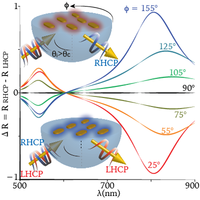
[Phys. Rev. X 5, 041019] Published Wed Nov 04, 2015
Scattering Suppression and Absorption Enhancement in Contour Nanoantennas. (arXiv:1511.01312v1 [physics.optics])
The expanding application spectrum of plasmonic nanoantennas demand versatile design approaches to tailor the antenna properties for specific requirements. The design efforts primarily concentrate on shifting the operation wavelength or enhancing the local fields by manipulating the size and shape of the nanoantenna. Here, we propose a design path to control the absorption and scattering characteristics of a dipole nanoantenna by introducing a hollow region inside the nanostructure. The resulting contour geometry can significantly suppress the scattering of the dipole nanoantenna and enhance its absorption simultaneously. Both the dipole and the contour dipole nanoantenna couple to equivalent amount of the incident radiation. The dipole nanoantenna scatters 84% of the coupled power (absorbs the remaining 16%) whereas the contour dipole structure scatters only 28% of the coupled power (absorbs the remaining 72%). This constitutes the transformation from scatter to absorber nanoantenna. The scattering of a contour nanoantenna can be further suppressed by incorporating a lossless dielectric in the hollow region without altering its absorption. We also demonstrate the applicability of scattering suppression and absorption enhancement features of the contour design in other nanoantenna geometries such as the self-assembly compatible nanoantenna structures of nanodisk and nanoring chains. The benefits of the contour design can be readily utilized in diverse applications; including bioplasmonics, medical diagnosis/therapy, cloaked sensing, photovoltaics and thermoplasmonics.
Dielectric metasurfaces for complete control of phase and polarization with subwavelength spatial resolution and high transmission
Nature Nanotechnology 10, 937 (2015). doi:10.1038/nnano.2015.186
Authors: Amir Arbabi, Yu Horie, Mahmood Bagheri & Andrei Faraon
Metasurfaces are planar structures that locally modify the polarization, phase and amplitude of light in reflection or transmission, thus enabling lithographically patterned flat optical components with functionalities controlled by design. Transmissive metasurfaces are especially important, as most optical systems used in practice operate in transmission. Several types of transmissive metasurface have been realized, but with either low transmission efficiencies or limited control over polarization and phase. Here, we show a metasurface platform based on high-contrast dielectric elliptical nanoposts that provides complete control of polarization and phase with subwavelength spatial resolution and an experimentally measured efficiency ranging from 72% to 97%, depending on the exact design. Such complete control enables the realization of most free-space transmissive optical elements such as lenses, phase plates, wave plates, polarizers, beamsplitters, as well as polarization-switchable phase holograms and arbitrary vector beam generators using the same metamaterial platform.
Memory-boosting devices tested in humans
Memory-boosting devices tested in humans
Nature 527, 7576 (2015). http://www.nature.com/doifinder/10.1038/527015a
Author: Sara Reardon
US military research suggests that electrodes can compensate for damaged tissue.
Nonlinear Fano-Resonant Dielectric Metasurfaces

Unidirectional Lasing from Template-Stripped Two-Dimensional Plasmonic Crystals

Crossover between Energy Transparency Resonance and Rabi Splitting in Antenna–Molecule Coupled Systems

Enhanced light extraction from organic light-emitting devices using a sub-anode grid
Nature Photonics 9, 758 (2015). doi:10.1038/nphoton.2015.194
Authors: Yue Qu, Michael Slootsky & Stephen R. Forrest
Metasurfaces: Simultaneous Stokes parameters
Nature Photonics 9, 709 (2015). doi:10.1038/nphoton.2015.211
Authors: Thomas Lepetit & Boubacar Kanté
Techniques for determining Stokes parameters, which fully define the polarization state of a wave, require multiple measurements, thus potentially leading to inaccuracies. Researchers now show how to simultaneously determine the parameters for visible light using periodic metal structures.
Bridging the Nanogap with Light: Continuous Tuning of Plasmon Coupling between Gold Nanoparticles

Coupled T-Shaped Optical Antennas with Two Resonances Localized in a Common Nanogap

Two-Color Single Hybrid Plasmonic Nanoemitters with Real Time Switchable Dominant Emission Wavelength
