Shared posts

19 Jul 07:18

Illegal dumping in Paphos as wait for waste site continues

by Evie Andreou
Illegal dumping on the increase as Paphos waits for a new site for waste from the construction industry

By Bejay Browne

PROBLEMS with waste management in the Paphos district is resulting in increased illegal dumping in the countryside, according to officials.

Following the closure of the landfill site at Marathounda, waste now has to be taken to a site in Limassol.

Andreas Chrysanthou, the chairman of the board of the Paphos refuse disposal sites, said that a tender to open a new site, which will accommodate by-products of the construction industry, will be announced in the coming days. He said this is urgently needed as some people are illegally dumping.

“The dump at Marathounda closed on May 31 and waste now has to be taken to the site close to Limassol. Unfortunately, some people are dumping illegally in Paphos, and it will take a few months to get the new site ready.”

Chrysathnou said that the documents for the tender are being prepared by the municipality of Paphos with advice from the agriculture ministry.

“With the new licensed landfill, we are insisting on separation at source. The tender documents are being prepared now with the help of the ministry. Any potential contractor must undertake separation at source as the EU stipulates, as long as it’s approved technology, we are open to any ideas. This way means it’s less expensive, it takes less space and there is less waste.”

They have also received applications for licences from two companies for two other sites. “They may get approved for this purpose, and competition is good,” he said.

Chrysanthou, also a Paphos councillor, said that Paphos municipality currently charges 146 euros per household per year for refuse tax. In other villages, charges may vary.

“Our aim is to substantially reduce the waste tax and our ultimate goal is to eliminate landfills. Germany is leading the way, I believe, where only five per cent ends up in a landfill. ”Currently people will have to go to Limassol,” he said.

Meanwhile, a few weeks ago, four green points to serve the Paphos district were successfully launched and are now operational at Koloni, Ayia Varvara, Peyia and Polis. A fifth is urgently needed to serve Paphos.

“All of the necessary studies, such as the environmental impact study, and so on are being completed. The new site is being proposed at an area known as ‘Mavrali’, in a disused marble cutting site, within the Paphos municipality boundaries and close to Chlorakas,” he said.

Paphos municipality trucks are currently using the green points at Ayia Varvara and Koloni.

Previous plans to create a fifth green point in Mouttalos were scuppered by angry residents who protested at the planned construction so close to their homes.

Green points are household recycling centres for households and local authorities for the collection of waste that can’t be put out for collection with household waste.
They are aimed at the collection and recycling of special categories of materials which are not accepted in landfills and which households are used to placing in bins with other household waste, or are sometimes illegally dumped in the countryside.

No commercial waste, clinical waste, asbestos, food or dangerous waste, or tyres are permitted. However, items such as, rubble and cement, aluminium, glass, furniture, grass cuttings, vehicle batteries, wood, plastic and paper are all accepted.
Up to two tonnes per household is allowed every six months. For example, if you are doing work at your house, you may use the green points. Residents do not pay for taking their items to these points.

However, the sites are already experiencing problems, as the shredders are undersized to cope with the demand, Chrysanthou said.

“I have sent a letter to the minister requesting that we need two larger shredders. One will be for use at the new Paphos green point, which is yet to open, and a second will be on rotation at the other points, when necessary.”

Chrysanthou said that once established, the new green point for Paphos will serve 44,000 people, around half the number of all of the other green points put together.

In another twist, Peyia councillor Linda Leblanc said that she is still receiving complaints that municipality trucks were being turned away by the green point operator servicing the Peyia area.

“Apparently, our trucks are still being turned away and we are trying to find a solution,” she said. “Illegal dumping is an ongoing problem in Peyia, which I am constantly trying to address.”

Chrysathnou emphasised that the points are also for use by the local authorities and was aware of  some occasions when Peyia trucks were refused.

“These loads contained soil and stones, which is not permitted, as well as palm and other cuttings which are. Loads such as this are not acceptable and will destroy the shredder. I have discussed this with the mayor and told him that waste must be free of such items.”
Green Points in Paphos are found at Koloni (roundabout Koloni),Ayia Varvara (North Warehouse AHK), Peyia (road to Akoursos), Chrysochou Village near Polis (next to the waste dump). For more information contact: 22818603

Send to Kindle

The post Illegal dumping in Paphos as wait for waste site continues appeared first on Cyprus Mail.

09 Sep 18:26

Spain !

by moi même

10 Aug 10:43

NSA tool collects "Nearly Everything You Do On the Internet"; Targeting Journalists; What Google Knows About You; Warrantless Cellphone Tracking Upheld

by noreply@blogger.com (Mike Mish Shedlock)
Today I offer a quartet of news stories on the NSA, widespread targeting of Journalists even by New Zealand, broad cellphone tracking, and a synopsis of what Google knows about you.

Let's kick off with the Guardian XKeyscore: NSA tool collects 'nearly everything a user does on the internet'.
• XKeyscore gives 'widest-reaching' collection of online data
• NSA analysts require no prior authorization for searches
• Sweeps up emails, social media activity and browsing history

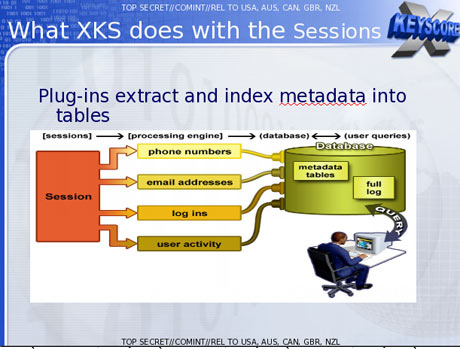
A top secret National Security Agency program allows analysts to search with no prior authorization through vast databases containing emails, online chats and the browsing histories of millions of individuals, according to documents provided by whistleblower Edward Snowden.

The NSA boasts in training materials that the program, called XKeyscore, is its "widest-reaching" system for developing intelligence from the internet.

XKeyscore, the documents boast, is the NSA's "widest reaching" system developing intelligence from computer networks – what the agency calls Digital Network Intelligence (DNI). One presentation claims the program covers "nearly everything a typical user does on the internet", including the content of emails, websites visited and searches, as well as their metadata.


The purpose of XKeyscore is to allow analysts to search the metadata as well as the content of emails and other internet activity, such as browser history, even when there is no known email account (a "selector" in NSA parlance) associated with the individual being targeted.

Analysts can also search by name, telephone number, IP address, keywords, the language in which the internet activity was conducted or the type of browser used.

William Binney, a former NSA mathematician, said last year that the agency had "assembled on the order of 20 trillion transactions about US citizens with other US citizens", an estimate, he said, that "only was involving phone calls and emails". A 2010 Washington Post article reported that "every day, collection systems at the [NSA] intercept and store 1.7 billion emails, phone calls and other type of communications."
Targeting of Investigative Journalists

Pater Tenebrarum on the Acting Man blog writes about the Targeting of Investigative Journalists and those opposed to the War in Afghanistan.
There are seemingly constantly new revelations about extremely questionable practices employed by the security apparatus. The latest comes from 'five eyes' partner New Zealand, which not too long ago had to admit that its spooks illegally spied on Kim Dotcom to help the FBI make an example of the man in the context of copyright enforcement (we have previously discussed the case of Dotcom, who is accused of breaking laws that apparently don't even exist).

New Zealand's reaction to this embarrassment was, as you may have guessed, to introduce new legislation that will henceforth legalize domestic spying. In the meantime, its security apparatus seems not really deterred by the embarrassment caused to it by the Dotcom case and continues to engage in  highly dubious surveillance activities, actively aided and abetted by US intelligence services. The target in the latest case was an investigative journalist working for McClatchy. Here is an excerpt from an article on the matter by the CPJ, [the Committee to Protect Journalists]. We want to direct your attention especially to the final paragraph below, which is quite chilling:

“Concern over government surveillance of journalists has washed up on the faraway shores of New Zealand, with a report in the country's Sunday Star this week asserting that the military there, with help from U.S. intelligence, spied on an investigative journalist who had been critical of its activities in Afghanistan.

Compounding concerns about the New Zealand military's targeting of journalists, the Sunday Star reported that a confidential military training manual drafted in 2003 lists investigative journalists as one of the top threats to state security–up there with terrorists and hostile foreign intelligence groups. A military official in New Zealand acknowledged the existence of the manual on Monday, referring to it as "inappropriate and heavy-handed," and ordered a revision to remove any references to journalists, news reports said.”


Whether or not they remove the references to journalists from their training manual, the mindset is clear – this is what they actually believe: “Investigative journalists are one of the top threats to state security–up there with terrorists and hostile foreign intelligence groups.”

We have to admit that this is actually true – in a dictatorship. In allegedly free countries, investigative journalists are usually deemed to be among the people who help seeing to it that they remain free.
Search for Pressure Cooker Leads to Knock on Door From Terrorism Police

Via reference from ZeroHedge, please consider pressure cookers, backpacks and quinoa, oh my!
It was a confluence of magnificent proportions that led six agents from the joint terrorism task force to knock on my door Wednesday morning. Little did we know our seemingly innocent, if curious to a fault, Googling of certain things was creating a perfect storm of terrorism profiling. Because somewhere out there, someone was watching. Someone whose job it is to piece together the things people do on the internet raised the red flag when they saw our search history.

Most of it was innocent enough. I had researched pressure cookers. My husband was looking for a backpack. And maybe in another time those two things together would have seemed innocuous, but we are in “these times” now.

I was at work when it happened. My husband called me as soon as it was over, almost laughing about it but I wasn’t joining in the laughter. His call left me shaken and anxious.

What happened was this: At about 9:00 am, my husband, who happened to be home yesterday, was sitting in the living room with our two dogs when he heard a couple of cars pull up outside. He looked out the window and saw three black SUVs in front of our house; two at the curb in front and one pulled up behind my husband’s Jeep in the driveway, as if to block him from leaving.

Six gentleman in casual clothes emerged from the vehicles and spread out as they walked toward the house, two toward the backyard on one side, two on the other side, two toward the front door.

They walked around the living room, studied the books on the shelf (nope, no bomb making books, no Anarchist Cookbook), looked at all our pictures, glanced into our bedroom, pet our dogs. They asked if they could go in my son’s bedroom but when my husband said my son was sleeping in there, they let it be.

They asked about me, where was I, where do I work, where do my parents live. Do you have any bombs, they asked. Do you own a pressure cooker? My husband said no, but we have a rice cooker. Can you make a bomb with that? My husband said no, my wife uses it to make quinoa. What the hell is quinoa, they asked.

Have you ever looked up how to make a pressure cooker bomb? My husband, ever the oppositional kind, asked them if they themselves weren’t curious as to how a pressure cooker bomb works, if they ever looked it up. Two of them admitted they did.

45 minutes later, they shook my husband’s hand and left. That’s when he called me and relayed the story. That’s when I felt a sense of creeping dread take over. What else had I looked up? What kind of searches did I do that alone seemed innocent enough but put together could make someone suspicious?

They mentioned that they do this about 100 times a week.

Mostly I felt a great sense of anxiety. This is where we are at. Where you have no expectation of privacy. Where trying to learn how to cook some lentils could possibly land you on a watch list. Where you have to watch every little thing you do because someone else is watching every little thing you do.

All I know is if I’m going to buy a pressure cooker in the near future, I’m not doing it online.

I’m scared. And not of the right things.

CLARIFICATION AND UPDATE

We found out through the Suffolk Police Department that the searches involved also things my husband looked up at his old job. We were not made aware of this at the time of questioning and were led to believe it was solely from searches from within our house.
Warrantless Cellphone Tracking Upheld

The New York Times reports Warrantless Cellphone Tracking Is Upheld
In a significant victory for law enforcement, a federal appeals court on Tuesday said that government authorities could extract historical location data directly from telecommunications carriers without a search warrant.

The closely watched case, in the United States Court of Appeals for the Fifth Circuit, is the first ruling that squarely addresses the constitutionality of warrantless searches of historical location data stored by cellphone service providers. Ruling 2 to 1, the court said a warrantless search was “not per se unconstitutional” because location data was “clearly a business record” and therefore not protected by the Fourth Amendment.

For now, the ruling sets an important precedent: It allows law enforcement officials in the Fifth Circuit to chronicle the whereabouts of an American with a court order that falls short of a search warrant based on probable cause.

“This decision is a big deal,” said Catherine Crump, a lawyer with the American Civil Liberties Union. “It’s a big deal and a big blow to Americans’ privacy rights.”

Cellphone privacy measures have been proposed in the Senate and House that would require law enforcement agents to obtain search warrants before prying open location records. Montana recently became the first state to require a warrant for location data. Maine soon followed. California passed a similar measure last year but Gov. Jerry Brown, a Democrat, vetoed it, saying it did not strike what he called the right balance between the demands of civil libertarians and the police.
What Google Knows About You

Tyler Durden at Zerohedge has an interesting post What Google Knows About You.

It's safe to assume Google knows everything you have ever searched for, every address you looked up on Google, every email you sent, every chat message, every YouTube video you watched. It's also safe to assume every entry is time-stamped, so it’s clear exactly, down to the minute, when all of this was done, and where you were at when you did it.

The data can and will be used against you, in many imaginable ways, and in some ways you may not have remotely conceived, such as how searching for pressure cookers may get you an unexpected call from the terrorist police.

My friend Pater Tenebrarum commented via email "The alleged 'separation of powers' is increasingly revealed as a sham - in the end, you have the government 'controlling' and 'limiting' itself."

Mike "Mish" Shedlock
http://globaleconomicanalysis.blogspot.com 
Mike "Mish" Shedlock is a registered investment advisor representative for SitkaPacific Capital Management. Sitka Pacific is an asset management firm whose goal is strong performance and low volatility, regardless of market direction. Visit http://www.sitkapacific.com/account_management.html to learn more about wealth management and capital preservation strategies of Sitka Pacific.
03 Jul 09:01

Why Did Most of Dartmouth’s Valedictorians Become Investment Bankers and Consultants? The Need for a Deeper Vocabulary of Career Aspiration

by Study Hacks

The Brain Drain

My alma mater, Dartmouth College, graduated five (!) valedictorians this year. The majority are moving on to jobs in finance or management consulting.

Dartmouth, of course, is not alone in sending a disproportionate number of its best and brightest to these narrow sectors. In recent years, to name an oft-cited example, Princeton sent 36% of its students to finance jobs while Harvard sent 17%.

There are many reasons proposed for this brain drain (whether or not this is really a “drain” is a different debate, though I tend to agree it is), including: prestige, money, the need to pass a new competitive admissions process to signal value, and psychologically-astute recruiting tactics.

I’m particularly interested, however, in an explanation offered by David Brooks in a recent column:

“Many of these students seem to have a blinkered view of their options.”

According to Brooks, elite students assume their choices are limited to: (a) making lots of money in finance and consulting, or (b) saving the world by working for a boots-on-the-ground non-profit. [Stanford students, Brooks notes, get an extra option less popular on the East Coast: (c) starting a tech company.]

This rings true.

A Stunted Career Vocabulary

Something I noticed time and again when out talking about SO GOOD is that the current generation of college students has a stunted vocabulary when it comes to discussing career aspirations.

I’m not exactly sure why, though I hypothesize it’s some combination of the character-crushing competitive college admissions process (which most students don’t understand) and the dulling effect of the “follow your passion” culture. When college graduation looms, these students realize that they lack the mental models needed to develop a sophisticated vision of the role work can play in a life well-lived. So they fall back on simplistic heuristics.

What we need is more career conversations, started much earlier, handled with significantly more subtlety and intelligence than most 19 year-olds, or the career advice industry that caters to them, seem willing to pursue.

A Deeper Career Vocabulary

In an effort to begin a transition toward a richer vocabulary of career aspirations, I’ve listed below three issues relevant to career choice that any ambitious college student, confused about life after graduation, should spend more time trying to understand…

  1. The Value of Craftsmanship. There’s a deep sense of satisfaction in the process of mastering a craft that produces things that the world values. There’s an even deeper satisfaction in subsequently applying this craft and receiving recognition for your competence. For millennia, human culture has understood and revered this value. Many different career paths can provide this return — if you know what you’re looking for.
  2. The Importance of Lifestyle. What traits define, to you, a good life? Autonomy? Time affluence? Mobility and adventure? Connection? Influence? Impact? Students tend to place too much importance on the specifics of a job, as if there was a specific knowledge work pursuit hardwired in their genes. It is instead the general traits of their lifestyle that tend to bring people satisfaction — not specific jobs. How deeply do you understand what general traits resonate with you? This understanding brings great clarity to your path through the working world.
  3. A Personal Ethic. Identifying your core values is important. But equally important is translating these values into an actionable ethic. As Brooks mentions in the column I cited earlier, too many students seem stuck with a watered down, college admission-style model of ethics, where doing volunteer work is sufficient to label your life as moral. Ethics run deeper. If, for example, you’re talented enough to graduate at the top of an Ivy League class, you need to ask: What is my responsibility to the world? What legacy do I want to leave behind? This doesn’t mean you must aspire to become the next Paul Farmer. On the other hand, it might mean that helping a hedge fund make a small number of wealthy people slightly more wealthy does not make the cut. (See Clayton Christensen’s recent book for interesting thoughts on this topic.)

 To summarize, what you do for a living is important. When you face this decision for the first (though certainly not last) time, you need to approach it with more than a slogan and a handful of cliches. This is a topic that deserves a deeper and more nuanced conversation.

30 Jun 11:25

Using baking soda for brushing teeth

by Jacob

I have started to use baking soda to brush my teeth (again). I don’t do this to save money on toothpaste, which is cheap and often free thanks to the lunacy of coupon clipping (this is the only place where we do this). Rather, I do it to save money on the dentist, who is evil and sadistic. For someone who is contemplating skipping dental insurance, this becomes a concern.

Baking soda raises the pH (I knew that) while bacteria in the mouth creates acid (low pH) as a byproduct (I knew that) which destroys the enamel (I knew that too). I just did not put those things together and thought that the main reason for including the baking soda was for its abrasive effect. In addition baking soda causes a lot of saliva which is why you can just put the powder on the toothbrush and start brushing. This saliva further helps the acid disposal process.

DIY toothpaste is basically composed of bacteria unfriendly ingredients. Use any combination of salt, baking soda, and high proof alcohol. The rest is just taste and advertising. Speaking of which; did you know that Listerine was originally invented to cure athletes foot? Instead it was turned into a mouthwash. Nothing wrong with that. Just good business practice.

Of course the main action is mechanical, so you could brush your teeth without any toothpaste whatsoever, and I suppose really frugal people chew on a stick. In that case, just keep your toothbrush in the sun to fry the bacteria with free UV radiation (not behind glass, glass has sun factor 40+ and stops most UV). Alternatively, if you’re a consumer, you just buy one of those electric toothpaste where you don’t have to move your hand and UV light so you don’t have to walk all the way over to the window to put the toothbrush down, but instead have to work a job to pay for it. Also the consumer product has the side effect of stimulating the economy(!)


Copyright © 2007-2023 earlyretirementextreme.com
This feed is for personal, non-commercial use only.
The use of this feed on other websites breaches copyright. If you see this notice anywhere else than in your news reader, it makes the page you are viewing an infringement of the copyright. Some sites use random word substitution algorithms to obfuscate the origin. Find the original uncorrupted version of this post on earlyretirementextreme.com. (Digital Fingerprint: 47d7050e5790442c7fa8cab55461e9ce)

Originally posted 2008-07-25 08:07:54.

29 Jun 21:48

Energy: EDR comes to town - in disguise

000a Guardian 027-gen.jpg

You might have thought that the low-circulation Guardian, being so much in favour of wind mills and other renewables, might actually understand something about our energy supply and the way the system is being tailored to accommodate the intermittency of most of the renewable sources.

But the moment we get an example of Electricity Demand Reduction (EDR) in action, the paper's "energy editor", Terry Macalister, goes hurtling in the wrong direction, squeaking about hospitals "being asked to cut their power demand from the National Grid as part of a government attempt to stave off power blackouts".

What we are actually seeing is a programme that has been operational for about six years and, in its current form, since April 2012. It is called the Short Term Operating Reserve and is managed by the National Grid and operated by a number of contractors such as Flexitricity, NPower and KiWiPower.  In part, has been developed to provide back-up to the system when the wind fails to blow

The theory behind the system is that, instead of operating extremely expensive and inefficient spinning reserve and back-up power stations, operators of large generators are recruited to a scheme where their equipment can be automatically switched on to supply power to the grid during peak periods. The minimum capability to qualify is 3 MW and units must be able to come into action no later than 240 minutes after instruction. The power must be deliverable for no less than two hours.

For institutions such as large hospitals, the scheme is a bonanza. Their back-up generators have to be test-run anyway, and running them occasionally on-load, delivering power to the grid, is one of the most effective ways of ensuring system reliability. Keeping their equipment available to the grid is also highly profitable, earning as much as £100,000 for a full season.

Nor is this penny-ante stuff. According to the National Grid, for part of year six (2012/3), 147 units were contracted, representing a potential maximum capacity of 3.2GW. For year seven (this current year), bids of 2.2GW capacity have been submitted from 64 units, most of it available on less than 20 minute notice. With existing, long-term commitments, the grid has available 3.5 GW if it needs it.

Thus, the four hospitals reported by the Guardian are only the tip of the iceberg, the paper having only just noticed what has been going on for years. Much more capacity is rejected by the grid than is accepted. As prices increase, more capacity can be dragged into the system with 6 GW or more potentially available – albeit with trebling the price.

Add to this the possibility of recommissioning mothballed power plants and potentially another 4 GW becomes available – if the price is right. Reuters certainly thinks that some plants could be returned to service quite quickly.

Thus, despite the failure of our energy policy, the possibility of the lights going out all over England is actually receding. But, as we have been reporting since 2008, the price of keeping the system running will be massively increased prices. This, we actually wrote in 2009, remarking that "price and not capacity" would most likely be the issue of the future. 

The wickedness of rationing power by price rather than availability means that the poorest will be hit hardest, more so as the impact will be concealed. With suppliers replacing defaulting customers' meters with pre-payment units, those who cannot afford the higher prices will "self-disconnect". Power cuts will become a very private affair - invisible to policy-makers and the media.