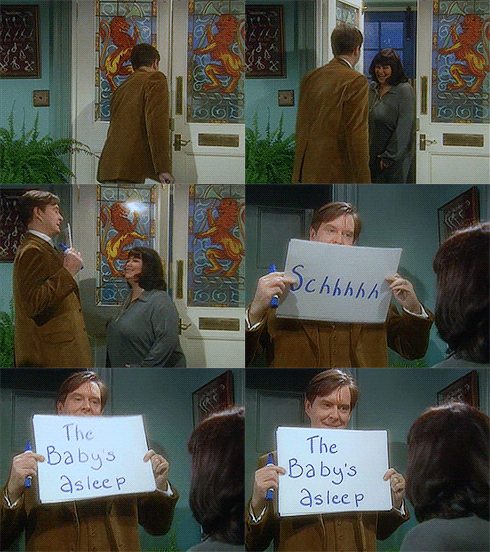
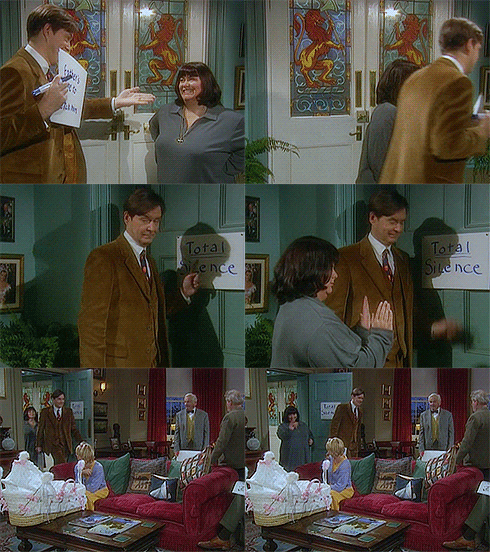



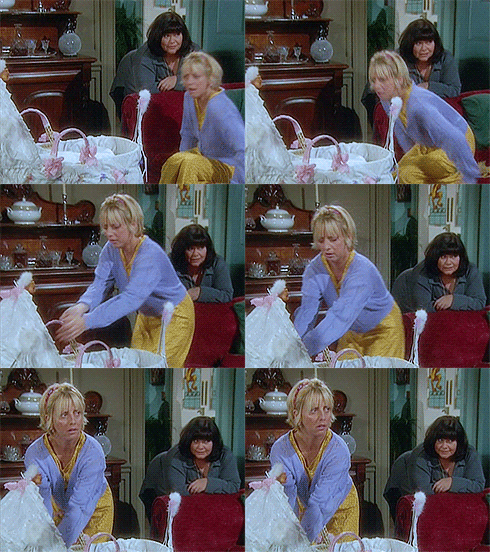


British Comedy at it’s finest.
I love ‘The Vicar of Dibley.’


Should be installed in every public bathroom

Well, sometimes things just happen…


Albener PessoaAcho que nunca tinha ouvido falar dele

I've become a huge fan of touch computing. I believe that most things we think of as "computers" will be de-facto tablets, either in our pocket, in our hands, possibly even mounted on our wrists or forearms.
I can't wait for the iPad 5 this week (I'll be ordering three), and my Surface Pro 2 should arrive this week too. Because it is a blazingly fast, modern Intel machine, I like to use the Surface Pro to predict where tablet performance ought to be for everyone in 2 to 3 years. I think of it as an iPad 7.
My main complaint with the Surface Pro is the incredibly lackluster battery life. Granted, this is a classic Intel x86 box we're talking about, not some efficient ARM system-on-a-chip designed to run on a tiny battery. Still, I was hopeful that the first Surface Pro with Haswell inside would produce giant gains in battery life as Intel promised. Then I saw this graph:
So WiFi web browsing battery life, arguably the most common user activity there is on a computer these days, goes from 4.7 hours on the Surface Pro to 6.7 hours on the Surface Pro 2, a 42% increase. That's a decent increase, I suppose, but I was hoping for something more like 8 hours, something closer to doubling of battery life – to bring the Surface Pro in line with other tablets.
Nearly 7 whole hours of WiFi web browsing for a real computer in tablet form factor … that's not bad, right? Let's see how the 2013 MacBook Air does, which spec-wise is about as close as we can get to the Surface Pro 2. The screen is somewhat lower resolution and not touch capable, of course, but under the hood, the i5-4200u CPU and LPDDR3 RAM are nearly the same. It's a real computer, too, using the latest Intel technology.
The Surface Pro 2 has a 42 Wh battery, which puts it closer to the 11 inch Air in capacity. Still, over 11 hours of battery life browsing the web on WiFi? That means the Air is somehow producing nearly two times the battery efficiency of the best hardware and software combination Microsoft can muster, for what I consider to be the most common usage pattern on a computer today. That's shocking. Scandalous, even.
UPDATE: Turns out the Surface 2 Pro was shipped with bad firmware. Once updated, the WiFi adapter enters lower idle power states and this helps a lot, going from 6.6 hours of browsing time to 8.3 hours, a 25% improvement! That puts it much more in line with the rest of the field, at least, even if it doesn't achieve Mac like runtime.
It's not exactly news that Windows historically doesn't do as well as OS X on battery life. Way back in 2009, AnandTech tested a MacBook Pro with multiple operating systems:
| 2009 15-inch MacBook Pro (73WHr battery) | OS X 10.5.7 | Windows Vista x64 SP1 | Windows 7 RC1 |
| Wireless Web Browsing (No Flash) Battery Life | 8.13 hours | 6.02 hours | 5.48 hours |
That's fine, I knew about this discrepancy, but here's what really bothers me:
(It's true that Bay Trail, Intel's new lower power CPU from the Atom family, achieves 8.6 hours of WiFi web browsing. That's solidly in the middle of the tablet pack for battery life. But all the evidence tells me that the very same hardware would do a lot better in OS X, or even iOS. At least Intel has finally produced something that's reasonably competitive with the latest ARM chips.)
Perhaps most damning of all, if you take the latest and greatest 13" MacBook Air, and install Windows 8 on it, guess what happens to battery life?
One of the best things about the standard 2013 MacBook Air 13" is that it has record-breaking battery life of 14 hrs 25 min (with the screen brightness at 100 cd/m², headphones plugged in and the Wi-Fi, Bluetooth and keyboard backlighting turned off). Under Windows 8 the results are more mixed [..] in the same conditions it lasts only 7 hrs 40 min. That's still very high—it's better than the Asus Zenbook Prime UX31A's 6 hours and the Samsung Series 7 Ultra's 5 hours—but it's only half the astronomical 14 hours + that the 13" MacBook Air is capable of.
Instead of the 26% less battery life in Windows that Anand measured in 2009, we're now seeing 50% less battery life. This is an enormous gap between Windows and OS X in what is arguably the most common form of computer usage today, basic WiFi web browsing. That's shameful. Embarrassing, even.
I had a brief Twitter conversation with Anand Shimpi of Anandtech about this, and he was as perplexed as I was. Nobody could explain the technical basis for this vast difference in idle power management on the same hardware. None of the PC vendors he spoke to could justify it, or produce a Windows box that managed similar battery life to OS X. And that battery life gap is worse today – even when using Microsoft's own hardware, designed in Microsoft's labs, running Microsoft's latest operating system released this week. Microsoft can no longer hand wave this vast difference away based on vague references to "poorly optimized third party drivers".
Apple is clearly doing a great job here. Kudos. If you want a device that delivers maximum battery life for light web browsing, there's no question that you should get something with an Apple logo on it. I just wish somebody could explain to me and Anand why Windows is so awful at managing idle power. We're at a loss to understand why Windows' terrible – and worsening! – idle battery life performance isn't the source of far more industry outrage.
| [advertisement] How are you showing off your awesome? Create a Stack Overflow Careers profile and show off all of your hard work from Stack Overflow, Github, and virtually every other coding site. Who knows, you might even get recruited for a great new position! |
Albener PessoaAutoman - quando era crianca eu adorava este seriado tosco. A serie eh um trash dos anos 80 mas o carro ainda eh muito legal

Walter Nebischer é um programador de computador que decide criar uma inteligência artificial para combater o crime. Mal sabia ele que isso teria outra consequência. Nas suas experiências, a tal inteligência criou um holograma, batizado de Automan.
Automan podia se materializar e assim cumprir o dever de proteger o cidadão americano. Disfarçado de agente do FBI, o programa assumiu o nome de Otto J. Mann para não levantar suspeitas. Durante perseguições, ele utilizava o Autocar, um Lamborghini Countach “virtual” criado por Cursor, outro programa que podia criar qualquer objeto.
Ele também criou um helicóptero (Bell Jet Ranger), uma moto e também um avião. Mas geralmente “Otto” estava a bordo do Autocar e na maior parte do tempo à noite, já que a luz solar ajudava no alto consumo de energia elétrica, necessária para a materialização do Automan. Assim, a dupla agia mais durante o período noturno.
Mas o que chamava atenção realmente era o Autocar. O Lamborghini Countach era coberto de placas que refletiam a luz, criando assim um efeito visual quase 3D durante as gravações. Ele podia fazer curvas de 90 graus sem sair de traseira e outras coisas irreais. Mas que carro era esse na realidade?

O Lamborghini Countach foi um dos superesportivos que mais duraram no mercado internacional. Foi lançado em 1974 como substituto do icônico Miura e durou até 1990, quando o Diablo assumiu seu lugar. De formas muito aerodinâmicas e portas com abertura do tipo “tesoura”, o super carro de Sant´Agata Bolognese foi um dos touros mais famosos da Emilia-Romagna.
Ele parecia muito maior do que realmente era, medindo somente 4,14 m de comprimento. O Lamborghini Countach tinha como destaque, além do visual, um motor V12 montado na parte central. O bloco surgiu com 4,0 litros e foi herdado do Miura, entregando 375 cv no LP400, o mesmo do Automan. O LP400S recebeu mudanças no propulsor, que fornecia 355 cv.

Depois surgiu o Lamborghini Countach LP500 S, que tinha o V12 já com 4,8 litros. Por fim, o modelo 5000QV (Quattrovalvole) tinha 5,2 litros e seis novos carburadores Weber na parte superior, entregando assim 455 cv. No entanto, os americanos tinham de se contentar com apenas 414 cv por causa da injeção eletrônica K Jetronic, obrigatório nos states.
O Countach ainda ganhou a versão de 25 anos da Lamborghini, redesenhado por ninguém menos que Horácio Pagani, assim como a versão Evoluzzione, que tinha 490 cv e o super poderoso LP500 Turbo S, um protótipo com dois turbos e 750 cv. Desde que nasceu, esse touro italiano sempre foi rápido, indo de 0 a 100 km/h em 5 segundos na primeira versão e fazendo o mesmo em 3,6 segundos no Turbo S. No total, foram construídos 2.042 exemplares. Duas réplicas surgiram nos anos 80, sendo uma de origem canadense com motor V8 da American Motors.
A noticia Um touro italiano coberto de luzes fez a alegria da garotada nos anos 80 (vídeo) foi publicada no site Notícias Automotivas - Carros.


While we've seen lots of remixes of Disney princesses—princesses dressed as the Doctors, as Sith Lords, as their princes, and more—but David J Prokopetz is flipping that artistic script, collecting drawings of Wolverine in gowns worthy of a singing princess.
 Se a vida real tivesse botão de curtir a gente se preocuparia mais com algumas coisas.
O post Mentirinhas #524 apareceu primeiro em Mentirinhas.

There’s a new book out for kids and teens (the original targeted demographic of the Raspberry Pi) called “Adventures In Raspberry Pi” by Carrie Anne Philbin. The book looks like an awesome resource for teaching kids to code and has an enthusiastic endorsement from Raspberrypi-spy.
The book takes the reader through 9 sections filled with tutorials and projects. Where possible the child can follow the instructions themselves.
What makes this book slightly different from your average Pi publication is that it is supported by a set of videos which help inject additional fun into the exercises. This is a welcome addition as it helps keep children engaged while also supporting the adults who may be using the material as a teaching resource.
Here’s one of Carrie Anne’s excellent tutorials for coding music using the sonic pi and raspberry pi.
Pre-order your copy here! The book officially hits the shelves on November 22.
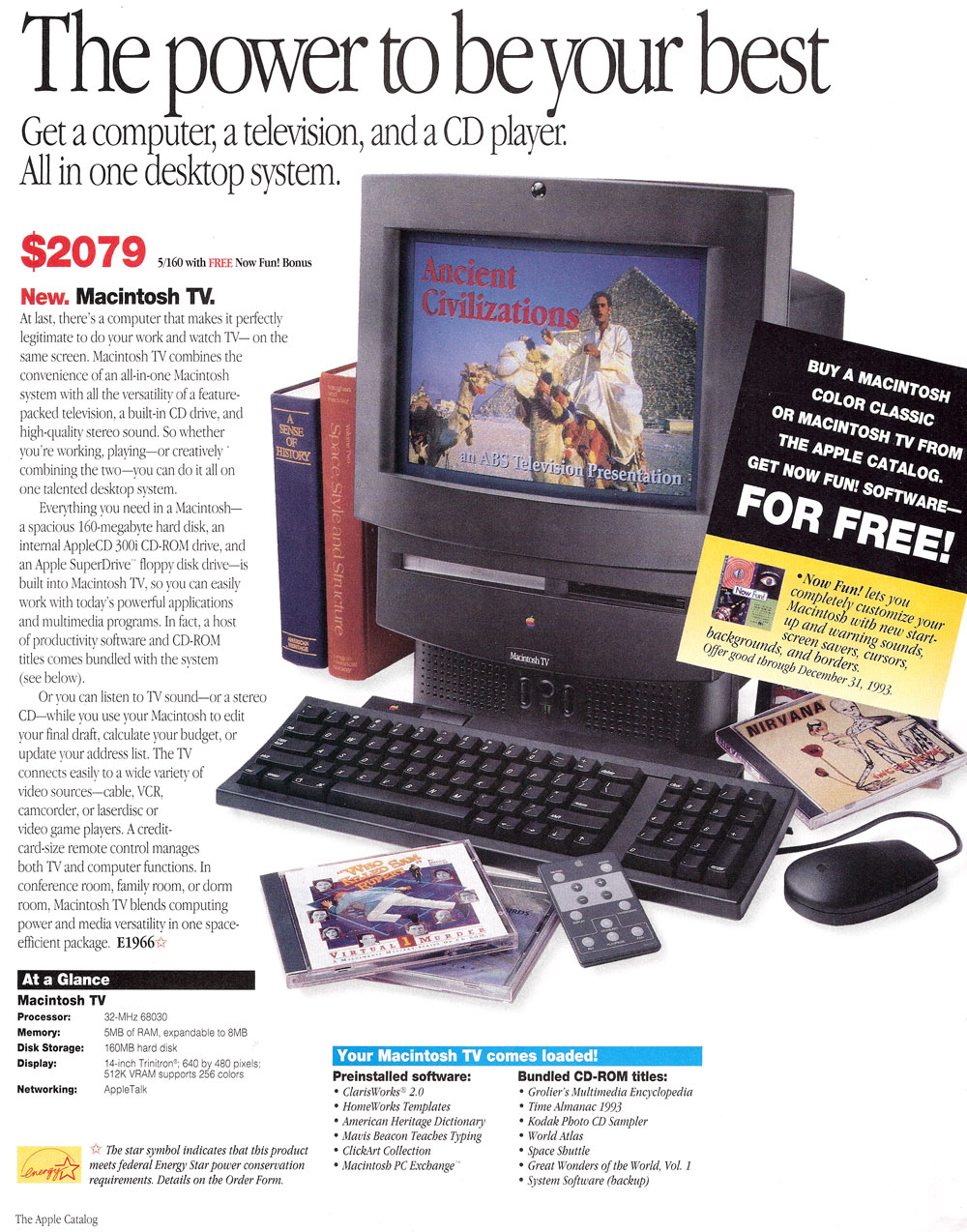
Twenty years ago today, the Macintosh TV was thrust upon an unsuspecting public. In addition to the aforementioned 32MHz CPU, the Macintosh TV shipped with 5MB of RAM (expandable to 8MB), a 160MB hard drive, and built-in 14" Sony Trinitron CRT running at 640×480. Priced at $2,099, it was expensive. For some context, a comparable all-in-one Mac with a color monitor was the $1,500 Color Classic II released earlier that year. That extra $599 bought you an internal CD-ROM drive, four additional inches of CRT space, a coat of black paint, and the killer app: a TV tuner.
I remember seeing a Macintosh TV in late 1993 and feeling a quick pang of desire. At the time, I was using my roommate's Mac Classic II and thinking about getting my own machine. I had a 13" TV in my bedroom, so why not kill two birds with one stone? I could replace the TV and get a computer all at the same time. The Macintosh TV even came with a remote control, something my decade-old dorm room holdover lacked. But that price!
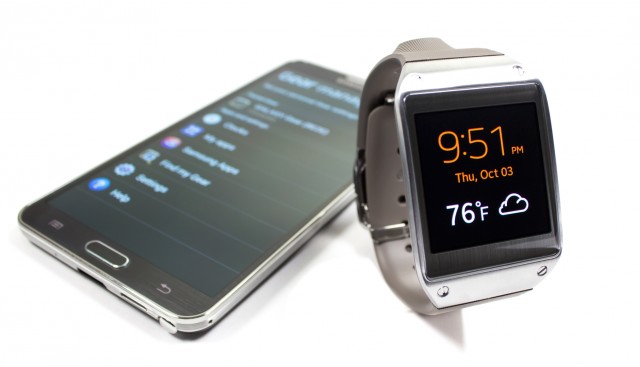
If you hesitated to call the Galaxy Gear a flop after all of the negative reviews, consumers have weighed in with their opinion of the device too, and it's not pretty: nearly a third of Galaxy Gear owners return the device.
Geek.com has obtained an internal memo from Best Buy and Samsung pegging the return rate at "above 30 percent." It sounds like the companies are somewhat puzzled by this, as the memo asks employees to help figure out why customers are so dissatisfied. Consumers are probably running into the same problems we found in our review: The Galaxy Gear requires a smartphone, but is incompatible with most smartphones. It's supposed to relay notification information from apps, but it doesn't support the vast majority of apps, including apps made by Google, which are among the most popular on Android.
While several Samsung phones will eventually be updated to work with the Gear, Samsung only controls about 24 percent of the US market. Even if the Gear worked with every Samsung phone, it would still be incompatible with 76 percent of smartphones.
The iPad 2 was released on March 11, 2011 for $499. Apple reduced its price to $399 in March 2012, and they announced this week that it will continue to be available at that price, probably until at least late 2014.
Steve Jobs proudly presented the iPad 2 to the world, in his second-to-last keynote, proclaiming that it had a whopping 65,000 apps.1 It was the first iPad to offer Verizon 3G, cameras, Smart Covers, and GarageBand, and it shipped with iOS 4.3: not only did this predate iCloud, but it predated Siri, which debuted seven months later on the cutting-edge iPhone 4S.2
BlackBerry was still a month away from releasing the PlayBook, HP was preparing to launch the TouchPad shortly after that, and the Kindle Fire was still six months out. Google was busy finishing the first version of Google+. President Obama hadn’t yet been re-elected, Osama Bin Laden was still alive, and most of the Arab Spring hadn’t happened yet.
It was a while ago.3
Not only will the iPad 2 likely remain for sale for another year, but Apple also repackaged its hardware into smaller dimensions just last year to make the first iPad Mini, which is also still for sale for at least another year. And the first-generation Mini is perfectly fine for most usage by most users, just like the iPad 2. I wouldn’t be surprised if the iPad 2 and iPad Mini both ran iOS 8 next year and continued to be useful well into 2015 — in fact, I’d be surprised if they didn’t.
Rather than asking how Apple can keep selling the relatively ancient iPad 2 at just 20% less than its original price, maybe we should be asking why all tablets aren’t expected to be fully useful for over three years after their launch.
Or maybe Apple should be concerned that most people are using their iPads for such mundane tasks that years-old hardware is still adequate.
In this week’s iPad event, Tim Cook announced that there are now 475,000 iPad apps. ↩
Which is still being sold. But at least it’s had a price cut every year. ↩
But the iPad 2 isn’t nearly as old as the Xbox 360. ↩
Great piece by Benedict Evans:
But there’s also another proposition, a $75-$150 black generic Chinese Android tablet, half the price of a Nexus 7. That proposition is also selling in huge numbers, but it appears to come with a very different type of use.
Why are people buying these? What are they being used for? They’re mostly in China (that’s the pink bar above) and emerging markets and in lower income groups in the west. And it seems that they’re being used for a little bit of web, and a bit of free gaming. Perhaps some book reading. And a LOT of video consumption. In fact, one might argue that for many buyers, these compete with TVs, not iPads, Nexuses and Tabs. But regardless of what they’re being used for, they’re not being used the way iPads are used. In effect, they are the featurephones of tablets.
If this theory is correct, it suggests that Apple’s $300 Mini really isn’t a competitive problem, because the iPad doesn’t yet face a strong competitive threat (quite unlike the iPhone). Rather, there are actually two quite different markets: the post-PC vision, where Apple is dominant, and a ultra-low margin product that’s also called a tablet but which is really a totally different product.
In short, Apple’s share of the overall “tablet” market is shrinking, fast. But the part of the market where the iPad is not dominating is nothing at all like the part where it is.


Read more of this story at Slashdot.

Albener Pessoa"Brought to you in collaboration with pin-up supermodel Mosh, this vintage inspired spider-web lingerie/swimsuit set will blow you away with it's unique applique, original pattern and a flattering fit. It features our trusted, comfortable push-up halter top design and our famous feminine high-waisted panties, made even sexier with the side cut outs! "
A mulher eh linda mas achei esta fantasia paia


Presenting Mosh Latex by Collective CHAOS Design - "Miss Venom", inspired by a stunning vintage suit and my love for old spiderweb motifs.
Photo by Cherie Roberts
Albener PessoaLuvas de latex seriam mais praticas ...

Are you mortally terrified that your bare hand might come close to your poop butt? Then check out Shittens, a butt-wipe that fits over your whole hand. The lone positive review said “My ass is just too big [...] inevitably I wound up with poop on the side of my hand, my knuckles, or wrist.” I think the problem this reviewer has could be solved in a better way than Shittens, but I’m glad he no longer has to deal with the horror of shitwrist.

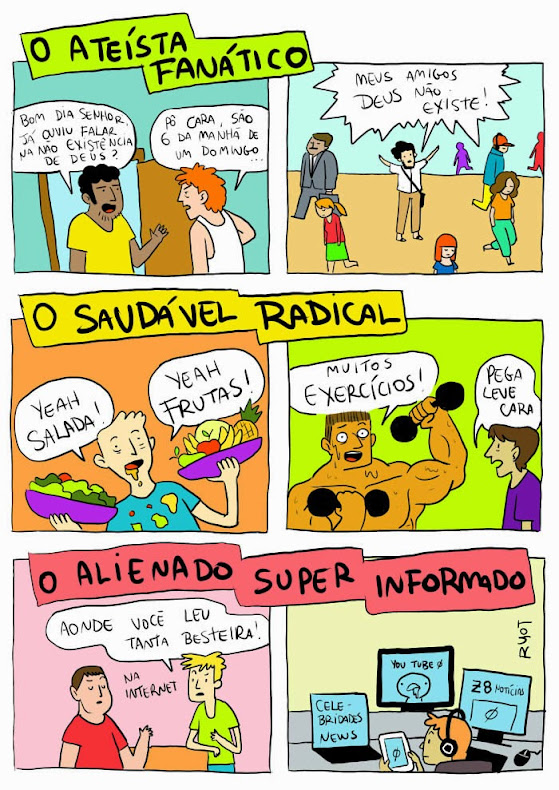
revirando as coisas aqui achei essas páginas antigas que fiz pra MAD
Albener PessoaAssistam o video. Cara, isto eh absurdo em tantos niveis que chega a ser hilario e assustador ao mesmo tempo. E fiquei pensando em engenhocas de desenhos animados tipo Ren & Stimpy (via Firehose)

Qylur Security Systems recently launched Qylatron, an automated self-service security-screening kiosk that can scan up to five bags simultaneously while requiring half the staff of a typical security checkpoint. The system uses multiple sensors to detect a variety of threats, and a learning computer that can adapt to new and evolving threats. The system is designed for large venues like stadiums, train stations, and airports. Silicon Valley-based Qylur Security Systems expects the first Qylatrons to be in place by 2014. For more on the system see this Businessweek article.
via Businessweek
photo via Qylur Security Systems, video via The Wall Street Journal