Shared posts
12 Dec 18:27
Comic for November 19, 2013
Dilbert readers - Please visit Dilbert.com to read this feature. Due to changes with our feeds, we are now making this RSS feed a link to Dilbert.com.
Tripartite, Realy.bored and one other like this
10 Dec 11:03
Comic for November 15, 2013
Dilbert readers - Please visit Dilbert.com to read this feature. Due to changes with our feeds, we are now making this RSS feed a link to Dilbert.com.
Tripartite and -1 others like this
10 Dec 11:02
Comic for November 14, 2013
Dilbert readers - Please visit Dilbert.com to read this feature. Due to changes with our feeds, we are now making this RSS feed a link to Dilbert.com.
10 Dec 11:00
Comic for November 13, 2013
Dilbert readers - Please visit Dilbert.com to read this feature. Due to changes with our feeds, we are now making this RSS feed a link to Dilbert.com.


09 Dec 23:14


What should we choose for our final minut?
Damiani.guilherme, dancisalpino and one other like this



23 Nov 15:23
269 milhões de chips: e “linhas”?
by @srlm
Pelos números da ANATEL, o brasil tem 269 milhões de chips em seus celulares. considere que “celular” também pode ser uma máquina de cartão de crédito [e há pelo menos 8.1 milhões delas] e o número de “pessoas” conectadas começa a cair. também há 7 milhões de terminais de banda larga [tablets, etc…], mas estes mais de 15 milhões não representam nada num mar de 269 milhões de chips. sabe o que faz diferença? no brasil?
a estrutura do nosso mercado de mobilidade faz com que ligações para a mesma ou outra operadora tenham uma separação infinita: pra sua, quase sempre grátis; pra qualquer outra, é caro. por isso que as operadoras dizem que o preço, no país, não é o que aparece nos relatórios internacionais. para analistas de fora do brasil, que vêem preço das ligações e não as promoções [há muito são parte do sistema, e não esporádicas], o preço é absurdo… a menos que você tenha mais de um chip. aí é onde entra o jeitinho brasileiro aplicado às estruturas de custo idem, sabotando os planos de fidelização das operadoras e redefinindo, com a ajuda dos fabricantes de celulares, o mercado de mobilidade.
dados da ANATEL apontam para 269 milhões de “chips”, mas é bom levar em conta que a venda de smartphones com dois chips cresceu 680% em um ano. e os smartphones serão uns 50% de todos os celulares vendidos no último trimestre.
então… no médio prazo… se a gente levar em conta que [fora terminais de dados e tablets] há uns 240 milhões de chips por aí, e que quase 50% dos smartphones vendidos pelo líder do mercado têm a capacidade de aceitar dois chips… será que a penetração real de celulares [real, aqui, significa celular, e não “chip”, por pessoa], no brasil, é qual, mesmo? estamos mais perto de 0.75/hab. [ou abaixo?] do que de 1.25?…
do meu lado, vejo um monte de planos de negócios de startups usando os números da ANATEL e afinando modelos de negócios para um brasil que já vende 50% de smartphones [ou quase] e tem uma penetração de mais de 1.25 cel./hab.; no papel, funciona. até porque papel aceita tudo. mas a vida real –e nela, o mercado- não dá os mesmos créditos que as teles dão, grátis, pra seus chips, e só entre eles. era bom que alguém publicasse [há quem os tenha…] números mais precisos, pra galera não ficar fazendo contas com 269 milhões de “celulares”… mas, quem sabe, metade. ou um pouco mais. ou bem menos. que, mesmo assim, já seria um monte, só que real.
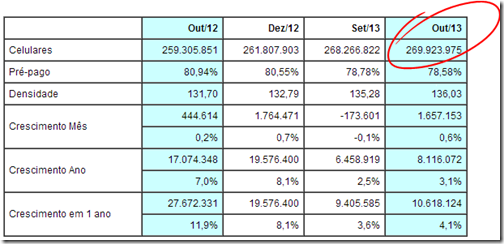
[dados da tabela acima: TELECO, neste link.]
22 Nov 18:36
1209 – Amor doentio
by Carlos Ruas
 -
-
Albener Pessoa, Marianajsmello and one other like this
21 Nov 11:20
"IKEA," a Parody Movie That Proves that Shopping for Furniture is as Desperate as Space Travel
Stefan and -1 others like this
20 Nov 16:45
Nokia Shareholders Approve Sale To Microsoft
by timothy
mrspoonsi writes "Nokia shareholders met today at an extraordinary general meeting (EGM) to vote on whether or not to accept the terms of the company's proposed sale of its devices and services business to Microsoft. The deal, which was first announced in September, is worth €5.44bn EUR ($7.35bn USD / £4.57bn GBP), and also includes provisions for Microsoft to license patents from the Finnish company. 78% of those eligible to vote had already voted before the EGM. Of those early votes, a staggering 99% had voted in favour of the sale to Microsoft." 


Read more of this story at Slashdot.
19 Nov 17:53
And Now For Something Completely Different: Monty Python Reunion Planned
by timothy
cold fjord writes with this report from The Telegraph: "The original members of Monty Python will reunite more than 30 years after the comedy troupe last worked together. John Cleese, Terry Gilliam, Terry Jones, Eric Idle and Michael Palin will officially announce their reformation at a London press conference on Thursday. The five surviving members have reportedly been in months of secret talks about getting the Flying Circus back on the road. The reunion comes after several failed attempts to reform by the group. However, according to The Sun, the surviving members realised 'it was now or never,' and had decided to embark upon 'a fully-fledged reunion.'" Related stories include this commentary, one take on the best of Python and this negative reaction, too. 


Read more of this story at Slashdot.
Massa, Albener Pessoa and -1 others like this
19 Nov 17:20


Range Rover Evoque atola em praia de Santa Catarina e quase é levado pelo mar
by Ricardo de Oliveira
Albener PessoaPerdeu playboy, perdeu. Ou melhor, quase perdeu o carro. Mas pagou mico.
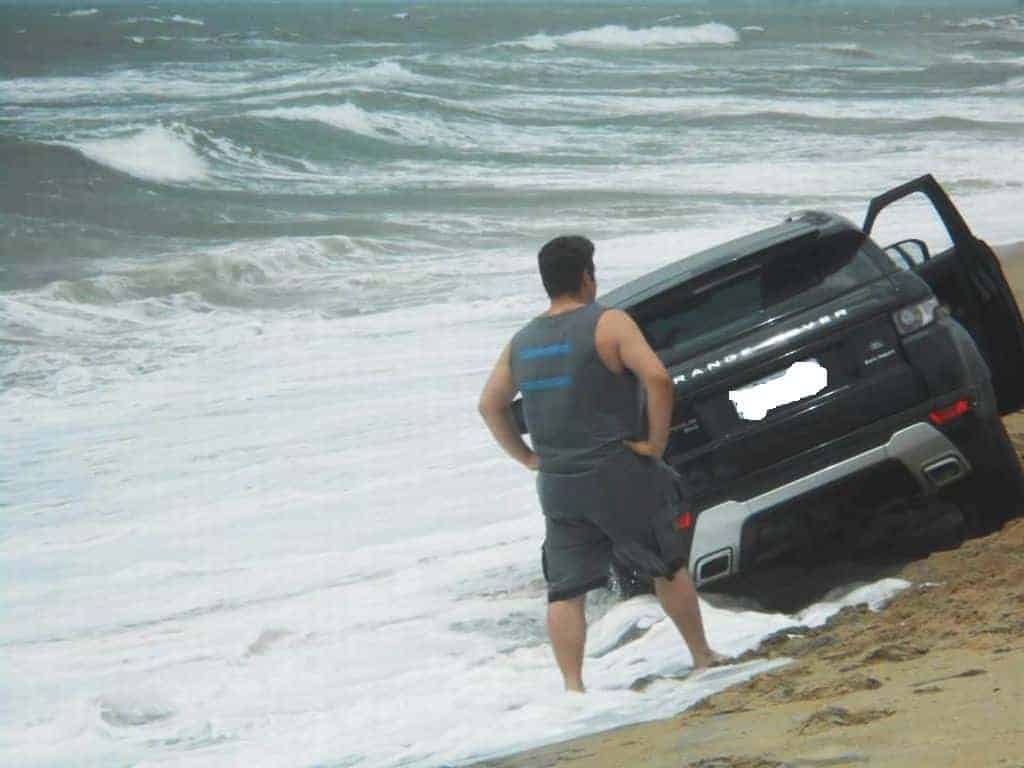
Um Range Rover Evoque quase foi levado pelo mar na Praia da Península, em Barra Velha/SC. O motorista achou que seu crossover britânico conseguiria andar tranquilamente pelo local e acabou ficando atolado na areia e bem perto da água.
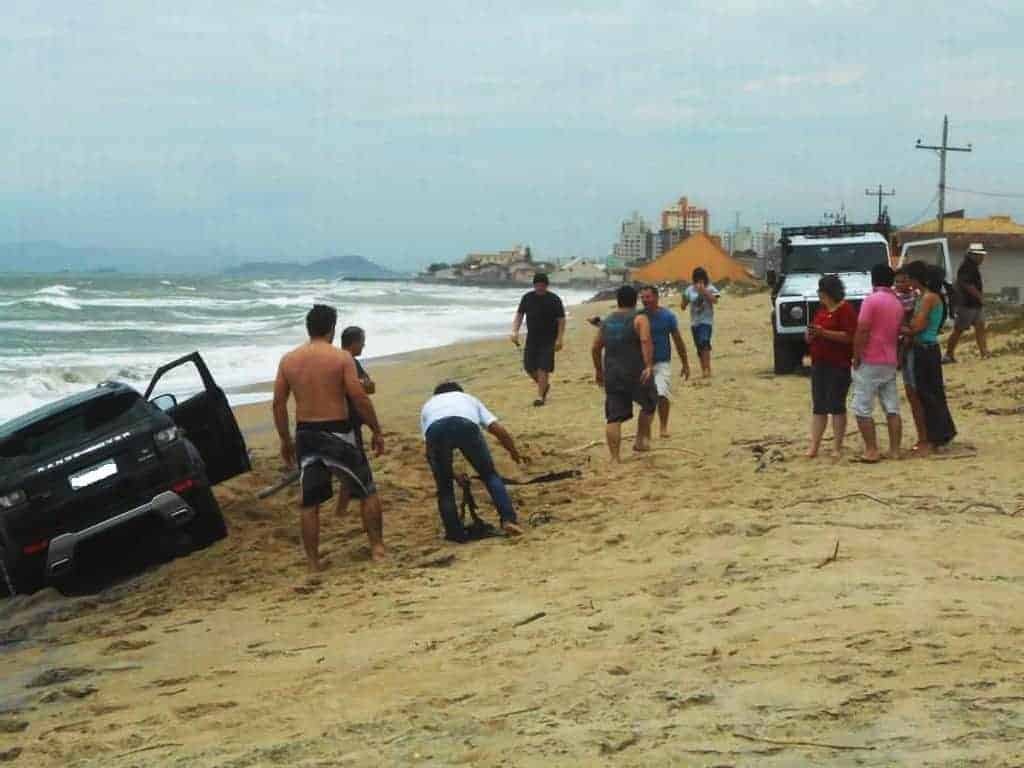
O veículo, avaliado em mais de R$ 160 mil, só conseguiu sair com a ajuda de moradores e outros motoristas, sendo rebocado por um Land Rover Defender. Felizmente, tinha um inglês para salvar o outro… Quanto ao motorista, este achou que era estrada, tentou a sorte e quase se deu mal. Aprendeu a lição?

[Fonte: Onda Gringa]
Agradecimentos ao Lukoh pela dica.
A noticia Range Rover Evoque atola em praia de Santa Catarina e quase é levado pelo mar foi publicada no site Notícias Automotivas - Carros.
19 Nov 12:46
This Fortune Knows the Pears Are Taking Over
Adam Victor Brandizzi, Tadeu and one other like this
18 Nov 22:50
Honda Urban SUV deve se chamar CR-U - em Pré-estreia
Albener PessoaCR-U ?!?!?
Utilitário estreia dia 22 de novembro, durante o Salão de Tóquio
18 Nov 22:48
The Economics of Infomercials
Albener PessoaPocketHose !

At $200 billion, the infomercial industry is twice the size of the entire TV business. How is that possible? We investigate the business model behind the Snuggie.
firehose, Albener Pessoa likes this
18 Nov 22:42
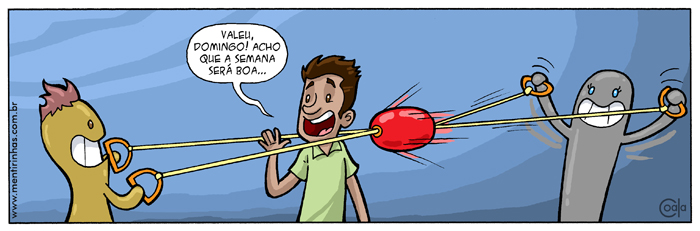
Muitirinhas #104
by Fábio Coala

Opa! O maior festival de Quadrinho do Brasil está nos últimos dias. Se você é apaixonado por quadrinhos (e mora perto) vem pro FIQ só tem hoje e amanhã, depois só daqui há dois anos. Estou lá no estande “WEBCOMICS in da house” com os lindos: Pedro Leite, Rafael Marçal, Wesley Samp, Digo Freitas, Lobo Limão, Pedro Hutsch Balboni, Carlos Ruas, Guilherme Bandeira, Marcos Noel e Leonardo Maciel.
Vem pra cá, vai ter bolo (mentira).
Acompanhe o Mentirinhas no TWITTER e no FACEBOOK
Animação – Tuurngait
Reviews – lançamentos e afins no mundo dos quadrinhos
O post Muitirinhas #104 apareceu primeiro em Mentirinhas.
17 Nov 20:39

Apple reportedly acquires the company behind Microsoft’s Kinect sensor
by Tom Warren
Albener PessoaWill Microsoft shit its pants now ?
(via Firehose)
Apple has reportedly acquired PrimeSense, an Israeli fabless semiconductor company, for $345 million. Israeli newspaper Calcalist claims Apple has finalized the acquisition and plans to announce it within the next two weeks. Primesense worked with Microsoft to include its technology, chips, and designs inside the first Kinect sensor for the Xbox 360, but Microsoft opted to build its latest Xbox One Kinect sensor without Primesense’s help. Microsoft’s changes led Primesense to focus on retail, robotics, and healthcare industries, alongside gaming and living room tech.
Rumors of a PrimeSense acquisition by Apple originated from the same Israeli newspaper, Calcalist, earlier this year. At the time, Apple was said to have offered $280 million to buy the 3D sensor specialist. If the acquisition reports are accurate, then this would be the second time Apple has purchased an Israeli component maker. In January 2012, the company revealed it had acquired flash storage company Anobit in a $400 million deal.
A Kinect-like camera for an Apple TV?
It’s obvious why Apple might be attracted to such a company. Primesense's 3D-scanning technology is used in more than 20 million devices worldwide, including sensors that can be embedded in smartphones and tablets. With persistent rumors of an Apple TV on the horizon, and recent reports suggesting it’s now planned for 2015, it’s possible that a PrimeSense acquisition may play some part in any Apple living room push or future tablet and smartphone devices. Apple has previously acquired companies to directly integrate technologies into new products. The iPhone maker acquired security hardware firm Authentec last year before shipping its latest iPhone 5S handset with a fingerprint sensor in September.
- Via Reuters
- Source Calcalist
- Related Items apple rumor acquisition calcalist primesense kinect technology sale
17 Nov 17:31


Hyundai 1.8 GDCi: surge um motor diesel que funciona com gasolina
by Ricardo de Oliveira

A Hyundai é mais um fabricante de automóveis que tenta conciliar gasolina e diesel em um mesmo propulsor. A Daimler prepara um motor de ciclo “DiesOtto” para 2018, enquanto a GM e a Bosch planejam algo semelhante com o HCCI. Porém, a montadora sul-coreana partiu na mesma direção com a Delphi, mas ela quer queimar apenas gasolina. Em sentido parecido, a Scania já tem motor diesel de 9 litros funcionando com etanol, mediante uma mistura de 5% de aditivo para detonação por compressão.
Já o Hyundai GDCi – Gasoline Direct-Injection Compression – é um bloco de 1,8 litros com injeção direta de combustível, duplo comando de válvulas variáveis e dois turbocompressores, sendo um de alta rotação e outro para baixa. A taxa de compressão é de 14,8:1, sendo aparentemente um motor de ciclo Diesel que pode queimar gasolina.
A Hyundai diz que o novo motor 1.8 GDCi terá desempenho igual ao superior ao de motores de ciclo Otto e rendimento melhor que um propulsor diesel 2.0, oferecendo ainda menor custo de produção e desenvolvimento. A intenção da montadora é oferecer um tipo de motor a gasolina com a mesma eficiência do diesel. Para a empresa, não há benefício algum para o consumidor ter um carro diesel pagando mais por isso.
Assim, a Hyundai quer oferecer a mesma eficiência energética do diesel, mas com preço de motor a gasolina. Limitado a 4.500 rpm, o propulsor coreano poderá ter mudanças na ECU para amenizar o ruído característico do “queimador de óleo”. O projeto está em fase final de desenvolvimento e os testes com veículos começam em 2014.
A previsão da Hyundai é de que em pouco tempo já esteja disponível no mercado internacional, possivelmente equipando a próxima geração do Sonata. Vai chegar ao Brasil? Seria uma boa. No entanto, com a possibilidade de ser movido também por diesel, este motor pode acabar sendo barrado em nosso país.
A noticia Hyundai 1.8 GDCi: surge um motor diesel que funciona com gasolina foi publicada no site Notícias Automotivas - Carros.
15 Nov 22:03
The Onion Explains the Difference Between the Xbox One and the PlayStation 4
by Kimber Streams
Albener PessoaUS$ 400 or 500 ? Hahaha. Let the Onion know about the prices in Brazil (via Firehose)
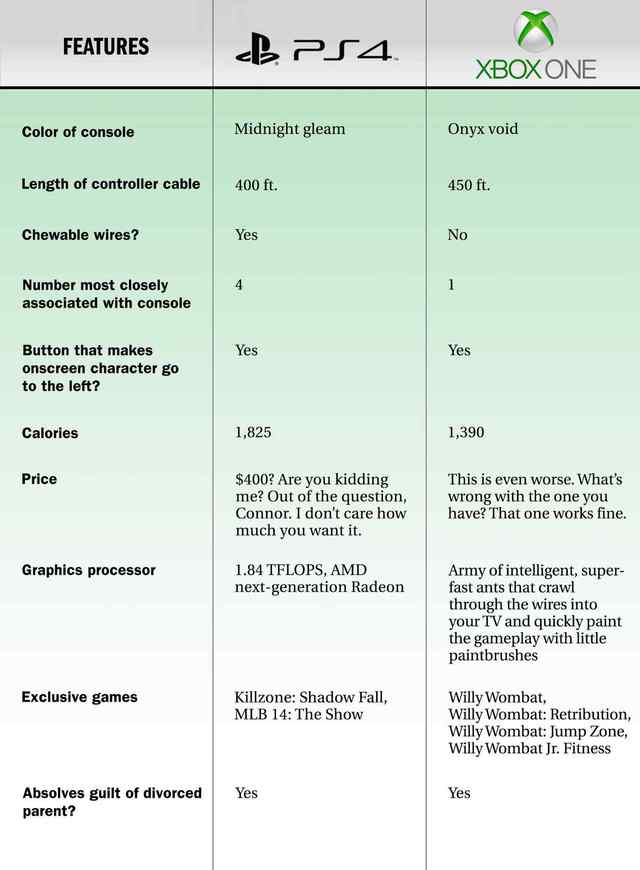
The Onion explains the difference between Sony’s PlayStation 4 and Microsoft’s Xbox One video game consoles with a funny comparison chart.
image via The Onion
firehose and -1 others like this
15 Nov 11:13
The One Surprising Thing That Speeds Up Your Aging: Depression
by John M. Grohol, Psy.D.
Albener PessoaORLY ?
 Researchers have discovered one thing that speeds up your body’s aging process that you may not be aware of — depression.
In a study of more than 2,400 Dutch subjects, researchers examined chromosomes within cells. What they found was surprising — people with clinical depression had shorter telomeres than their healthy peers.
Telomeres are strands of protective DNA that are found at the tips of chromosomes. As we age and our cells divide, telomeres get a little bit shorter each time. When they become so small that they lose their protective benefits, the cell dies. The more cells die, the quicker we age.
The length of telomeres is measured in terms of their number of DNA building blocks, called base pairs (bp). Shortened telomeres have been linked to a wide variety of health problems, including obesity, heart disease, diabetes, certain types of cancer and mental decline.
Study participants ranged in age from 18 to 65. The researchers found that with each year of age, telomeres shortened by 14 bp, on average, which is comparable to previous research findings.
The new study found that the telomeres in healthy people were about 5,540 bp on average, whereas in people with depression, their telomeres measured only about 5,460 bp — a significant difference.
Researchers said that based on telomere length, subjects in the study who suffered clinical depression for a period of two or more years actually aged seven to 10 years, when compared to non-depressed people.
“The most severely and chronically depressed patients had the shortest telomeres,” said lead author Josine Verhoeven, a psychiatric researcher at the Free University and Amsterdam’s VU University Medical Center.
“Overall, this study provides convincing evidence for the suggestion than an emotional stressful condition, such as [clinical depression], may truly impact on the physical ‘wear and tear’ of a person’s body resulting in accelerated biological aging,” wrote Verhoeven and colleagues.
The researchers said that while their data showed an association between depression and shorter telomere length, it could not demonstrate a clear cause-and-effect relationship. It is possible that some other factor, such as a genetic vulnerability, underlies both, the researchers said.
The study was published in the journal Molecular Psychiatry.
Source: VU University Medical Center
Tadeu likes this
15 Nov 11:12
Recognizing a Face Often Depends on Context
by Rick Nauert PhD
 Who hasn’t recognized a face but was then unable to place a name?… Or how you happen to know the person?
A new UK study provides a partial explanation as researchers discover the brain has particular processes that are used to learn and recognize faces.
As discussed in the journal Nature Communications, researchers performed an experiment in which study participants were shown faces of people that they had never seen before, while lying inside an MRI scanner.
The research subjects were shown some of these faces numerous times from different angles and were then asked to indicate whether they had seen that person before or not.
While participants were relatively good at recognizing faces once they had seen them a few times, the scientists found that people’s decisions of whether they recognized someone were also dependent on the context in which they encountered the face.
That is, if participants had recently seen lots of unfamiliar faces, they were more likely to say that the face they were looking at was unfamiliar, even if they had seen the face several times before and had previously reported that they did recognize the face.
Researchers discovered that activity in two areas of the brain matched the way in which the mathematical model predicted people’s performance.
“Our study has characterized some of the mathematical processes that are happening in our brain as we do this,” said lead author Matthew Apps, Ph.D.
“One brain area, called the fusiform face area, seems to be involved in learning new information about faces and increasing their familiarity.
“Another area, called the superior temporal sulcus, we found to have an important role in influencing our report of whether we recognize someone’s face, regardless of whether we are actually familiar with them or not.
“While this seems rather counter-intuitive, it may be an important mechanism for simplifying all the information that we need to process about faces.”
Said co-author Professor Manos Tsakiris, Ph.D., ”Face recognition is a fundamental social skill, but we show how error prone this process can be. To recognize someone, we become familiar with their face, by learning a little more about what it looks like.
“At the same time, we often see people in different contexts. The recognition biases that we measured might give us an advantage in integrating information about identity and social context, two key elements of our social world.”
15 Nov 11:11
What’s the Downside to Mindfulness?
by Rick Nauert PhD
 The concept of mindfulness has garnered significant attention as therapy based on mindfulness has been found to reduce anxiety, depression, and stress.
Mindfulness as a concept is the focusing of attention and awareness, non-judgmentally, on the present moment; the concept originates in Buddhist meditation.
Georgetown University researchers now believe that while mindfulness is beneficial in preventing the formation of bad habits, the approach may also inhibit development of good habits.
Overall, researchers are trying to unravel the mystery of implicit learning, or how individuals learn complex information in an incidental manner, without awareness of what has been learned.
Consider this: when testing who would do best on a task to find patterns among a bunch of dots many might think mindful people would score higher than those who are distracted, but researchers found the opposite — participants low on the mindfulness scale did much better on this test of implicit learning, the kind of learning that occurs without awareness.
This outcome might be surprising until one considers that behavioral and neuroimaging studies suggest that mindfulness can undercut automatic learning processes — the kind that lead to development of good and bad habits, said the study’s lead author, Chelsea Stillman.
This study was aimed at examining how individual differences in mindfulness are related to implicit learning.
“Our theory is that one learns habits — good or bad — implicitly, without thinking about them,” said Stillman, a doctoral student. “We wanted to see if mindfulness impeded implicit learning.”
That is in fact what they found.
Two samples of adult participants first completed a test that gauged their mindfulness character trait, and then they completed one of two sequence learning tasks that measured implicit learning (either the alternating serial reaction time task or the triplet-learning task).
Both tasks used circles on a screen and participants were asked to respond to the location of certain colored circles. These tasks tested the ability of participants to learn complex, probabilistic patterns, although test takers would not be aware of that.
The researchers found that people reporting low on the mindfulness scale tended to learn more — their reaction times were quicker in targeting events that occurred more often within a context of preceding events than those that occurred less often.
“The very fact of paying too much attention or being too aware of stimuli coming up in these tests might actually inhibit implicit learning,” Stillman said.
“That suggests that mindfulness may help prevent formation of automatic habits — which is done through implicit learning — because a mindful person is aware of what they are doing.”
Their findings were presented at Neuroscience 2013, the annual meeting of the Society for Neuroscience.
Source: Georgetown University
15 Nov 11:11
How Social Networks Are Making Us Smarter
by Rick Nauert PhD
 Many believe the secret to why some cultures thrive and others disappear may lie in our social networks and our ability to imitate — more important qualities than individual intelligence, according to researchers from the University of British Columbia.
As published by the Proceedings of the Royal Academy: Biological Sciences, investigators show that when people can observe and learn from a wider range of teachers, groups can better maintain technical skills and even increase the group’s average skill over successive generations.
The findings show that a larger population size and social connectedness are crucial for the development of more sophisticated technologies and cultural knowledge, said graduate student and lead author Michael Muthukrishna.
“This is the first study to demonstrate in a laboratory setting what archeologists and evolutionary theorists have long suggested: that there is an important link between a society’s sociality and the sophistication of its technology,” said Muthukrishna, who co-authored the research with Joseph Henrich, Ph.D.
For the study, participants were asked to learn new skills — digital photo editing and knot-tying — and then pass on what they learned to the next “generation” of participants.
The groups with greater access to experts accumulated significantly more skill than those with less access to teachers. Within 10 “generations,” each member of the group with multiple mentors had stronger skills than the group limited to a single mentor.
Groups with greater access to experts also retained their skills much longer than groups who began with less access to mentors, sustaining higher levels of “cultural knowledge” over multiple generations.
According to the researchers, the study has important implications for several areas, from skills development and education to protecting endangered languages nd cultural practices.
Source: University of British Columbia