Submitted by: (via Reddit)
Shared posts

01 Feb 15:31
Starship Troopers
by Teimosia
Starship Troopers: quando vi o filme pela primeira vez, fiquei alucinado. Tinha lá os meus 21 anos, e era ficção científica do jeito que gostava - com uma grande pitada de sátira contra os milicos. Quando fui ler o livro, a casa caiu: o autor falava sério, não tinha nada de bem-humorado na obra. E ainda assim (ou justamente por ser assim) era ainda muito mais foda que o filme. Resumindo: se tiver gostado do filme, leia pensando que é outra obra. Se não tiver gostado do filme, leia pensando que é outra obra. Se não tiver visto o filme, leia assim mesmo.


06 Jan 22:58
BlackBerry Sues Ryan Seacrest's Startup Over 'Typo' iPhone Keyboard [iOS Blog]
by Juli Clover
BlackBerry today announced that it has filed a lawsuit against Typo Products, a company that developed a BlackBerry-esque keyboard case for the iPhone designed to allow users to type with physical keys.
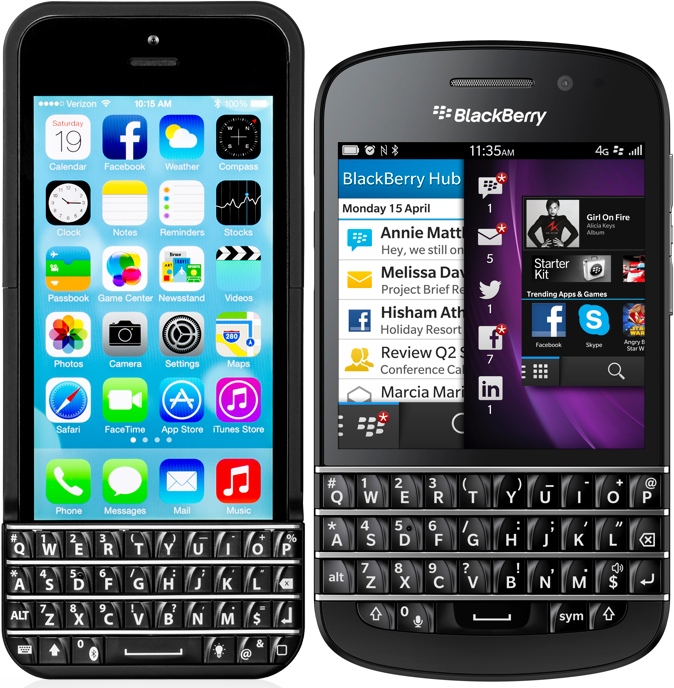 The Typo Keyboard on an iPhone next to the BlackBerry Q10
First announced in December of 2013, the Typo iPhone Keyboard Case was created by Laurence Hallier and media personality Ryan Seacrest (of American Idol fame), who reportedly invested $1 million into the product.
As detailed on the Typo's product page, many of Seacrest and Hallier's friends and colleagues carried two phones – one for typing and correspondence and an iPhone for other uses – a problem that the two aimed to solve with the snap-on Typo Keyboard.
According to BlackBerry, Typo has both infringed on patents and "blatantly copied" the BlackBerry keyboard, leading to a lawsuit filed in the Northern District of California.


The Typo Keyboard on an iPhone next to the BlackBerry Q10 First announced in December of 2013, the Typo iPhone Keyboard Case was created by Laurence Hallier and media personality Ryan Seacrest (of American Idol fame), who reportedly invested $1 million into the product.
As detailed on the Typo's product page, many of Seacrest and Hallier's friends and colleagues carried two phones – one for typing and correspondence and an iPhone for other uses – a problem that the two aimed to solve with the snap-on Typo Keyboard.
According to BlackBerry, Typo has both infringed on patents and "blatantly copied" the BlackBerry keyboard, leading to a lawsuit filed in the Northern District of California.
"This is a blatant infringement against BlackBerry's iconic keyboard, and we will vigorously protect our intellectual property against any company that attempts to copy our unique design. From the beginning, BlackBerry has always focused on offering an exceptional typing experience that combines a great design with ergonomic excellence. We are flattered by the desire to graft our keyboard onto other smartphones, but we will not tolerate such activity without fair compensation for using our intellectual property and our technological innovations," said Steve Zipperstein, BlackBerry's General Counsel and Chief Legal Officer.Currently, the Typo iPhone Keyboard Case remains available for pre-order for $99 and is scheduled to make its public debut at CES 2014 next week.
    
|
06 Jan 22:57
Corning Announces New '3D' Shaped Gorilla Glass
by Jordan Golson
Corning has announced a new shaped Gorilla Glass product to offer glass solutions for curved devices like smart watches. Corning is one of Apple's main suppliers for the glass in the iPhone and iPad, and, with Apple rumored to have a smart watch production the works, Corning's new product would make for a logical source component for the new device.
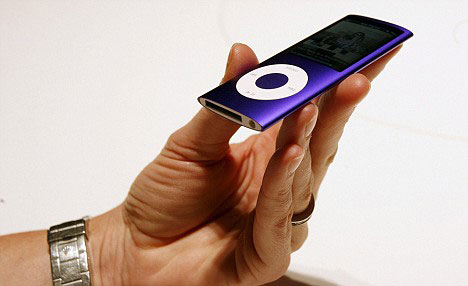


Product design continues to drive the consumer electronics industry. More than half of the top 10 smartphone manufacturers already market devices that incorporate cover glass with subtle curves, and the demand for even more-dramatic form factors is increasing. Corning’s 3D-forming technology meets this demand and expands the design possibilities for industrial designers.Apple has used curved glass in some of its products in the past, most notably in a previous generation iPod nano. There have been a number of rumors about Apple developing curved glass iPhones, most recently in November when Bloomberg said Apple would release 4.7" and 5.5" iPhones next fall with slightly curved screens.
The relationship with GTOC allows Corning to provide a “one-roof” solution. “We can now take Gorilla Glass all the way from flat sheet to a finished 3D-shaped product in Asia, expediting turnaround times and minimizing logistical complexity,” said James R. Steiner, senior vice president and general manager, Corning Specialty Materials. "That’s a win for Corning and our customers."
|
|
06 Jan 22:57
Apple Said to Be Targeting Fall 2014 Launch for 12-Inch iPad Focused on Enterprise
by Eric Slivka
Amid rumors of a larger "iPad Pro" perhaps arriving in 2014 with a larger display in the range of 12-13 inches, Evercore analyst Patrick Wang yesterday released a research report indicating that supply chain sources are indeed supporting the circulating claims.
According to Wang's sources, Apple is looking to launch a 12-inch iPad in the fall of this year, targeting enterprise with a new "hybrid" device intended to bridge the gap between tablets and notebooks. Wang believes that the larger iPad will unsurprisingly also include a new A8 processor from Apple that may be a quad-core chip, as well as increased storage.
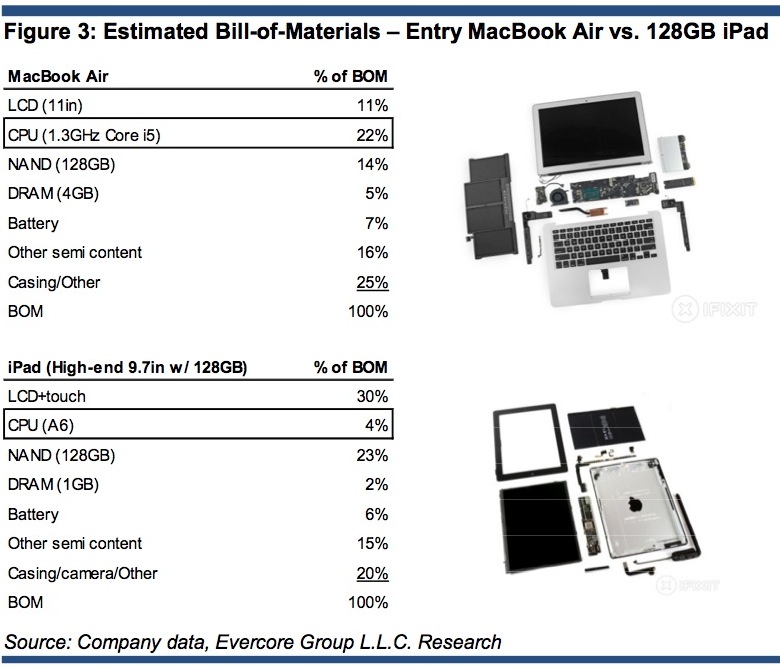
In his note, Wang points out that Apple faces two primary challenges in penetrating the enterprise notebook market with a larger iPad. The first is storage capacity, with the current iPad maxing out at 128 GB, while the second is support for the full Microsoft Office suite that is entrenched in the enterprise market. Microsoft has been reported for some time to be working on a version of Office for iPad, and the most recent reports have indicated that it could arrive in fall of 2014 following completion of the "Touch First" interface for Windows earlier in the year.


According to Wang's sources, Apple is looking to launch a 12-inch iPad in the fall of this year, targeting enterprise with a new "hybrid" device intended to bridge the gap between tablets and notebooks. Wang believes that the larger iPad will unsurprisingly also include a new A8 processor from Apple that may be a quad-core chip, as well as increased storage.
Arriving in fall ‘14, Apple goes Enterprise with an 12” iPad. Powered by the A8 chip (perhaps 4C), this expands ARM’s reach and, once again, transforms the traditional notebook market as we know it.Wang points out that bill-of-materials estimates peg the cost of the Intel processors used in the MacBook Air in excess of 20% of the machine's cost, while the ARM processors used in Apple's iPad represent only about 5% of total cost for high storage capacity models. The much lower pricing for Apple's A-series chips could allow the company to pose a serious threat to the business notebook market for those applications where a new and larger iPad would be appropriate.
- Expect a 2-1 hybrid – think iPad + MBA – similar to how most iPads are used in the workplace and in the same spirit of MSFT’s Surface.
In his note, Wang points out that Apple faces two primary challenges in penetrating the enterprise notebook market with a larger iPad. The first is storage capacity, with the current iPad maxing out at 128 GB, while the second is support for the full Microsoft Office suite that is entrenched in the enterprise market. Microsoft has been reported for some time to be working on a version of Office for iPad, and the most recent reports have indicated that it could arrive in fall of 2014 following completion of the "Touch First" interface for Windows earlier in the year.
|
|
06 Jan 22:55
 Apple has acquired SnappyLabs, a one-man app maker behind the now-discontinued SnappyCam app. The app was removed from the App Store -- along with its website and social media presence -- just before the end of the year.
According to TechCrunch, which first reported the acquisition:
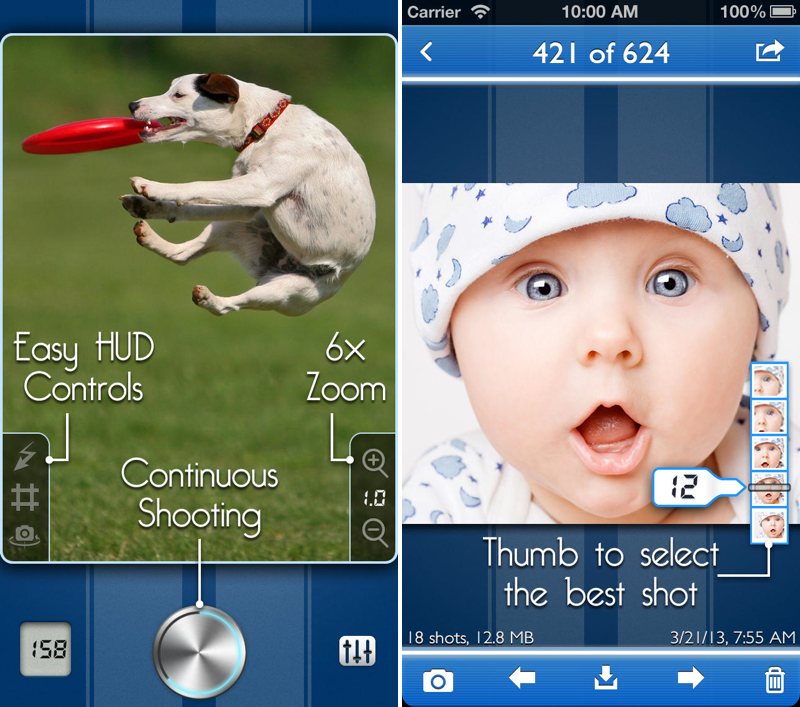
With the acquisition, it seems likely that Apple will integrate the SnappyCam technology into its native iOS and OS X camera programs and APIs. Apple added burst mode photo shooting to iOS 7, allowing iPhone 5s owners to shoot 10 photos per second at full resolution, in order to get the best shot in action scenes or with fast-moving children.
SnappyCam is no longer available for download from the App Store. Pricing and other details were not revealed, and Apple has not yet confirmed the acquisition.
Update: Apple has confirmed the acquisition to Kara Swisher at Re/code, the new home of the AllThingsD team.


Apple Acquires SnappyLabs, Maker of SnappyCam Burst Photo App [Confirmed]
by Jordan Golson
Apple has acquired SnappyLabs, a one-man app maker behind the now-discontinued SnappyCam app. The app was removed from the App Store -- along with its website and social media presence -- just before the end of the year.According to TechCrunch, which first reported the acquisition:
Sources have since affirmed that the company was acquired by Apple, and that there was also acquisition interest “from most of the usual players”, meaning other tech giants. I don’t have details on the terms of the deal, and I’m awaiting a response from Apple, which has not confirmed the acquisition.Back in July, SnappyCam was upgraded with new technology, detailed in a now-deleted blog post (still viewable via Archive.org), that explains how developer John Papandriopoulos was able to redesign how JPG images are compressed, allowing the iPhone to shoot full-quality burst mode photographs at significant higher frames per second than other competing technologies, including the new burst mode built into iOS 7.
With the acquisition, it seems likely that Apple will integrate the SnappyCam technology into its native iOS and OS X camera programs and APIs. Apple added burst mode photo shooting to iOS 7, allowing iPhone 5s owners to shoot 10 photos per second at full resolution, in order to get the best shot in action scenes or with fast-moving children.
SnappyCam is no longer available for download from the App Store. Pricing and other details were not revealed, and Apple has not yet confirmed the acquisition.
Update: Apple has confirmed the acquisition to Kara Swisher at Re/code, the new home of the AllThingsD team.
|
|
Tadeu likes this
03 Jan 12:50
Open-Source Blu-ray Decryption Library For Linux
Some days ago there was an update released to VideoLAN's libbluray Blu-ray library that began supporting BD-J Java and other new functionality. Making news now is another but separate open-source Blu-ray news...
03 Jan 12:49

Every so often a real estate agent will blur the boundaries...
Every so often a real estate agent will blur the boundaries between inept photography and conceptual art, and create something to baffle house-hunters and art historians for decades.
Follow on Twitter @BadRealtyPhotos
firehose likes this
03 Jan 12:33
Top Tech Policy Stories of 2013
by Ed Felten
As the year draws to a close, it’s time to review the top tech policy stories of 2013.
(1) NSA Surveillance. The most important story by far was the revelations about the scope and scale of surveillance by the U.S. National Security Agency and allied services. It took a major leak of documents by Edward Snowden to enable this conversation. Those of us in the independent security community were not suprised that the NSA had these capabilities in the abstract, but we were surprised at the scale and aggressiveness with which the agency has been eavesdropping on people all around the world, and even on Americans on U.S. soil. Snowden’s documents allowed us to push past the superficial denials, quasi-denials, and occasional lies that had shielded the agency’s practices for years. The implications of this story will take years to unfold.
(2) Aaron Swartz. Aaron’s death at the beginning of the year was a kick in the gut to many of us. We lost a thoughtful and talented activist who saw the best that technology could enable, due to an overzealous prosecutor wielding overly harsh laws, enabled by Aaron’s own bad judgement. If any good came from this tragedy, it was in the soul-searching at MIT and elsewhere about how to reconcile technical creativity with the desires of an increasingly powerful state.
(3) Bitcoin. The cryptocurrency hit the mainstream this year, with governments, investors, and academics all trying to understand its dynamics and implications. This story too will take years to unfold. Whether or not Bitcoin survives in the long run, it has opened the door to a new era of technically enabled currencies.
(4) Drones and robots. From drones to self-driving cars, this is an issue that began to hit the mainstream in 2013. Expect it to move higher on the list in upcoming years.
(5) 3-D printing. A bit farther from the mainstream policy discussion, but also likely to rise on the list as the technology continues to mature.
(6) Commercial privacy. Although it was pushed down the list by the attention lavished on government intrusions on privacy, the issues around commercial data collection continued a slow boil this year.
(7) Fairness and algorithms. Concern increased about the effect of complex data-driven algorithms on people, especially around fairness issues such as the thin line between personalization and redlining, and questions of digital due process.
(8) Cell phone unlocking. Consumers insisted on the ability to unlock their phones, and the policy community listened. The big question going forward is whether this is the beginning of a trend away from regulating consumers’ use of the technologies they have purchased.
(9) The TPP process and trade negotiations generally. Pressure mounted on the U.S. government to provide some transparency into the Trans Pacific Partnership negotiations, and more generally to be more open about trade negotiations and to refrain from using trade agreements as a backdoor path to creating new restrictive intellectual property laws.
03 Jan 12:31

On a cold winter’s night, there’s nothing quite like...
On a cold winter’s night, there’s nothing quite like a poorly executed drawing of a log fire.
Follow on Twitter @BadRealtyPhotos
firehose likes this
03 Jan 12:21
 Michael Bromwich, the external compliance monitor assigned to Apple as a result of its e-book antitrust case, has filed papers in a U.S. District Court accusing the company of being uncooperative and obstructive in his investigation, reports The Wall Street Journal.
The lawyer stated that Apple characterized his team's activities as a “roving investigation“ with no worthwhile purpose, even going on to say that individuals within the company purposely blocked him from interviewing top-level officials and senior executives.
In July, Apple was found guilty of of conspiring with five publishers to raise the retail price of e-books, following a lawsuit brought by the United States Department of Justice. As a result of its punishment, Apple was ordered to hire an external compliance monitor to ensure that the company complies with all antitrust requirements in the future.
Apple also continues to deny that it engaged in price fixing and filed a notice in October to appeal the case, with the company likely to submit its formal arguments in early 2014.
Update: The Justice Department has urged Judge Denise Cote to reject Apple's requests and that the attacks on Bromwich "only highlight the critical need for his monitorship to continue uninterrupted", saying the company was looking to "shield its highest-level executives and board members from the perceived inconvenience" of meeting with the court monitor.


External Compliance Monitor: Apple is Blocking Interviews, Disrupting E-Book Antitrust Investigation [Updated]
by Richard Padilla
Michael Bromwich, the external compliance monitor assigned to Apple as a result of its e-book antitrust case, has filed papers in a U.S. District Court accusing the company of being uncooperative and obstructive in his investigation, reports The Wall Street Journal.The lawyer stated that Apple characterized his team's activities as a “roving investigation“ with no worthwhile purpose, even going on to say that individuals within the company purposely blocked him from interviewing top-level officials and senior executives.
On Monday, Mr. Bromwich said he routinely met with top management at the three organizations he previously monitored and had "never before had a request for a meeting or interview in a monitoring assignment rejected or even deferred."The news follows a formal complaint filed by Apple last month over Bromwich's handling of the case, stating that the lawyer charged exorbitant fees that the company was unhappy with. Following two weeks of work, Bromwich sent Apple an invoice of $138,432, which the company described as "unprecedented in its experience." Apple also spoke out against Bromwich's requests for interviews with high level officials, stating that the lawyer was overstepping his bounds.
"This is far less access than I have ever received during a comparable period of time in the three other monitorships I have conducted," Mr. Bromwich said.
According to the emails filed by Mr. Bromwich, his relationship with Apple was rocky from the start. After Mr. Bromwich sent Kyle Andeer, Apple's director of competition law, an email detailing his rates and the contours of his oversight, the wide gaps between the two party's expectations came into focus.
In July, Apple was found guilty of of conspiring with five publishers to raise the retail price of e-books, following a lawsuit brought by the United States Department of Justice. As a result of its punishment, Apple was ordered to hire an external compliance monitor to ensure that the company complies with all antitrust requirements in the future.
Apple also continues to deny that it engaged in price fixing and filed a notice in October to appeal the case, with the company likely to submit its formal arguments in early 2014.
Update: The Justice Department has urged Judge Denise Cote to reject Apple's requests and that the attacks on Bromwich "only highlight the critical need for his monitorship to continue uninterrupted", saying the company was looking to "shield its highest-level executives and board members from the perceived inconvenience" of meeting with the court monitor.
|
|
firehose likes this
03 Jan 12:19
Early 'iWatch' Production Seeing Poor Yields Due to Issues with Body Finish Treatments?
by Eric Slivka
While Apple's long-rumored "iWatch" may be one of the products to look for in 2014, several rumors have suggested that the device is unlikely to launch until the latter half of the year as the company works to address technical challenges.
A new report from DigiTimes claims that one of those issues involves surface finish treatments for the body of the device, with both Apple and Qualcomm searching for ways to improve the look of chassis parts made using metal injection molding (MIM) methods. Qualcomm's Toq smart watch
Metal injection molding may sound very similar to what Apple is trying to achieve with Liquidmetal alloys, but there are distinct differences between the technologies, with MIM involving powdered metals that are combined with binder materials and placed into molds before being heated to very high temperatures to solidify while Liquidmetal alloys are heated to a molten state before being formed using molds and allowed to cool.
Liquidmetal Technologies argues that its alloys and processes offer significant advantages over MIM, including greater precision in molding shapes while offering higher strength, hardness, elasticity, and corrosion resistance than with typical metals. But while MIM is an established production process, Liquidmetal technology remains under development and its inventors have indicated that it will still be several years before it it can be used to produce major parts for Apple's products.


A new report from DigiTimes claims that one of those issues involves surface finish treatments for the body of the device, with both Apple and Qualcomm searching for ways to improve the look of chassis parts made using metal injection molding (MIM) methods.
Several wearable devices such as Apple's iWatch and Qualcomm's Toq are reportedly seeing less than 50% yield rates due to difficulties applying surface treatments on their metal injection molded (MIM) chassis, according to sources from the upstream supply chain. [...]
MIM-made components used to be used inside products, but as the components are now becoming part of the external design, surface treatments have become an important process for the look of products.
Qualcomm's Toq smart watch Metal injection molding may sound very similar to what Apple is trying to achieve with Liquidmetal alloys, but there are distinct differences between the technologies, with MIM involving powdered metals that are combined with binder materials and placed into molds before being heated to very high temperatures to solidify while Liquidmetal alloys are heated to a molten state before being formed using molds and allowed to cool.
Liquidmetal Technologies argues that its alloys and processes offer significant advantages over MIM, including greater precision in molding shapes while offering higher strength, hardness, elasticity, and corrosion resistance than with typical metals. But while MIM is an established production process, Liquidmetal technology remains under development and its inventors have indicated that it will still be several years before it it can be used to produce major parts for Apple's products.
|
|
03 Jan 12:17
 Readdle's popular document scanning app Scanner Pro has been named Apple's app of the Week, and as a result, it is available for free for the first time since its initial 2011 release.
Scanner Pro is one of the most highly rated scanning apps in the App Store and is designed to turn the iPhone or the iPad into a portable scanner for documents, receipts, notes, photos, and more. The app removes shadows, sharpens scans, and corrects perspective in order to make scans as "readable as possible."
It also utilizes edge detection in order to create fast, accurate scans, and it stores scans as PDF files that can be uploaded to Dropbox, Google Drive, Evernote, or emailed/printed.


Readdle's 'Scanner Pro' Named App of the Week, Available for Free [iOS Blog]
by Juli Clover
Readdle's popular document scanning app Scanner Pro has been named Apple's app of the Week, and as a result, it is available for free for the first time since its initial 2011 release. Scanner Pro is one of the most highly rated scanning apps in the App Store and is designed to turn the iPhone or the iPad into a portable scanner for documents, receipts, notes, photos, and more. The app removes shadows, sharpens scans, and corrects perspective in order to make scans as "readable as possible."
It also utilizes edge detection in order to create fast, accurate scans, and it stores scans as PDF files that can be uploaded to Dropbox, Google Drive, Evernote, or emailed/printed.
Scanner Pro transforms your iPhone and iPad into portable scanners. It allows you to scan receipts, whiteboards, paper notes, or any multipage document.While Scanner Pro has been priced as low as $1.99 during sales, it typically costs $6.99 to download. For the next week, it will be available from the App Store at no cost. [Direct Link]
Scanned documents can be emailed and printed, uploaded to Dropbox, Google Drive and Evernote, or simply saved on the iPhone/iPad.
|
|
Tadeu likes this
03 Jan 10:53


NHTSA: Câmera de ré, frenagem automática e comunicação entre carros em discussão
by Ricardo de Oliveira

Se aqui muitos comemoram a obrigatoriedade de airbag duplo e freios ABS em automóveis e comerciais leves a partir deste ano, nos EUA a segurança automotiva anda bem mais adiantada. A NHTSA já apresentou ao governo a proposta de instalação de câmera de ré em todos os carros vendidos no país.
Provavelmente a obrigatoriedade da câmera de ré deverá ser aprovada e imposta a partir do final de janeiro de 2015. A NHTSA defende que sensores de estacionamento, espelhos adicionais e outros recursos não cobrem totalmente o campo de visão da traseira dos veículos. Por isso, o dispositivo é fundamental para evitar choques contra pedestres e outros veículos durante manobras.

No entanto, a NHTSA derrapou em perder o prazo para decidir sobre outras duas tecnologias, que poderão se tornar obrigatórias nos próximos anos. O primeiro item é um sistema de comunicação vehicle-to-vehicle, que permite a conexão entre automóveis, reduzindo assim acidentes e congestionamentos nas estradas. Um estudo com 3.000 carros de teste conectados entre si revelou a eficácia do dispositivo.

Outro item é a frenagem automática, já presente em alguns veículos. A NHTSA acha fundamental a obrigatoriedade do dispositivo, mas demorou além do previsto (um ano) para definir os parâmetros do sistema, a fim de torna-lo um item de série nos automóveis. Agora espera-se que o órgão federal defina sua posição quanto à estas duas tecnologias nas próximas semanas. As montadoras são contra freios automáticos e “V-2-V”, alegando um aumento de milhares de dólares nos preços dos carros.
A noticia NHTSA: Câmera de ré, frenagem automática e comunicação entre carros em discussão foi publicada no site Notícias Automotivas - Carros.
02 Jan 18:05
Crime Happens When It's Warm Outside

Remember how this morning it was really cold and you didn’t want to get out of bed? Criminals feel the same way!
firehose likes this


02 Jan 13:19
Mendigos prometem arrastão em Copacabana para roubar oferendas de Iemanjá
by Sensacionalista
Atentos ao maior réveillon do mundo, mendigos famosos de Copacabana estão empolgados com a passagem do ano. Eles esperam arrecadar mais de meio milhão de palmas, 200 mil espelhos e 50 mil pentes e alguma comida e bebida para não passar de barriga vazia. Porém, eles dizem que o maior lucro estará com os turistas na areia: “A gente espera uma arrecadação de 500 celulares e alguns milhares de reais no total”, explica Cotonete.
O mercado de furtos tem aumentado no bairro. A Associação de Mendigos, Pivetes e Batedores de Carteira (AMPB) calcula um crescimento de 20% em 2013, e conforme a Copa e as Olimpíadas se aproximam, a cidade espera abrigar mais turistas otários, principal fonte de renda da Associação.
-Estamos otimistas com o próximo ano. – afirma Ricardo Silva, presidente da Associação. – Copacabana deve ficar lotada de trouxas com dinheiro e isso é muito bom pra gente.
Por Massacote e Cacofonias
02 Jan 13:18


Fiat compra o restante da Chrysler
by Ricardo de Oliveira

A Fiat começa 2014 em festa. A montadora italiana conseguiu adquirir os 41,5% restantes das ações da Chrysler. A empresa gastou US$ 3,65 bilhões para arrematar a parte que não controlava e que estava nas mãos da VEBA, um fundo pertencente ao sindicato UAW. Graças a um acordo com os trabalhadores, a Fiat pôde realizar a operação.
O UAW deverá receber US$ 1,7 bilhão imediatamente e outros US$ 1,8 bilhão através de dividendos adquiridos da Chrysler. Dessa forma, a Fiat passa a controlar 100% da Chrysler, que agora se transforma em mais uma empresa do grupo italiano, assim como Lancia, Ferrari, Alfa Romeo, etc. Com ela, as marcas americanas RAM, Dodge, SRT e Jeep, além da própria Chrysler e a famosa divisão Mopar.
A noticia Fiat compra o restante da Chrysler foi publicada no site Notícias Automotivas - Carros.
01 Jan 20:17
Dual_EC_DRBG Backdoor: a Proof of Concept
by Soulskill
New submitter Reliable Windmill sends this followup to the report that RSA took money from the NSA to use backdoored tech for random number generation in encryption software. From the article: "Dual_EC_DRBG is an pseudo-random number generator promoted by NIST in NIST SP 800-90A and created by NSA. This algorithm is problematic because it has been made mandatory by the FIPS norm (and should be implemented in every FIPS approved software) and some vendors even promoted this algorithm as first source of randomness in their applications. If you still believe Dual_EC_DRBG was not backdoored on purpose, please keep reading. ... It is quite obvious in light of the recent revelations from Snowden that this weakness was introduced by purpose by the NSA. It is very elegant and leaks its complete internal state in only 32 bytes of output, which is very impressive knowing it takes 32 bytes of input as a seed. It is obviously complete madness to use the reference implementation from NIST" 


Read more of this story at Slashdot.
Alessander, ken.elwell and -1 others like this
01 Jan 19:03
Russian Startup Offers Wireless Remote Controller For Cars
by Unknown Lamer
DeviceGuru writes "A Russian startup called Virt2real has produced a small $120 Linux-based WiFi controller board for remote control and video observation applications, and has demonstrated its use in a remote controlled car. Inspired by Back to the Future and James Bond film Tomorrow Never Dies, Virt2real's Bond Car demo (YouTube video) shows a Vauxhall (Opel) Vectra being remotely controlled by an iPad via WiFi. The iPad interface includes touchscreen-based steering wheel, brakes, and accelerator, which are mirrored in the car by a mechanical contraption that physically turns the steering wheel and pushes the brake and accelerator pedals. The company is now accepting orders for the first 1,000 of its Virt2real controller board, and is working on a Virt2real-based Bond Car it that will work with most cars." 


Read more of this story at Slashdot.
Albener Pessoa and -1 others like this
01 Jan 19:03
US Justice Blocks Implementation of ACA Contraceptive Mandate
by Unknown Lamer
theodp writes "First approved for contraceptive use in the U.S. in 1960, 'The Pill' is currently used by more than 100 million women worldwide and by almost 12 million women in the U.S. But just hours before the Affordable Care Act was to go into effect, Justice Sonia Sotomayor issued a stay temporarily blocking a mandate requiring health insurance coverage of birth control, and gave the Obama administration until Friday to respond to the Supreme Court on the matter. Sotomayor's order applies to a group of nuns, the Little Sisters of the Poor, and other Roman Catholic nonprofit groups that use the same health plan, known as the Christian Brothers Employee Benefit Trust (PDF). The group is one of many challenging the federal requirement for contraceptive coverage, but a decision on the merits of that case by the full Supreme Court could have broader implications. One imagines Melinda Gates is none too pleased. So, will U.S. health care require a Department of Personal Belief Exemptions that are dictated by employers (PDF, 'The Trustees of CBEBT and the management of Christian Brothers Services are dedicated to protecting the employers participating in the CBEBT from having to face the choice of violating their faith or violating the law')?" 


Read more of this story at Slashdot.
Ronald.phillips and -1 others like this
01 Jan 11:36

keetah-spacecat: tydusis: lawebloca: Nest of...
Nest of spiders
NOIPOOOOOOOOOOOOOOOOOOOOOOOOOOOOOOOOOOPPe
These are actually Daddy Long Leggers/Harvestmen and they are literally the most harmless critter out there. Especially the American ones. The worst they do is smell bad lol.
They are a whole other class of arachnids but tagging spiders for followers with phobias.
Albener Pessoa likes this
31 Dec 14:00
If UNIX Were a Religion
by Unknown Lamer
Hugh Pickens DOT Com writes "Charles Stross has written a very clever article where he describes the religious metaphor he uses with non-technical folks to explain the relationship between Mac OS X and UNIX. There is one true religion in operating systems says Stross and it is UNIX although there's also an earlier, older, more arcane religion with far fewer followers, MULTICS, from which UNIX sprang as a stripped-down rules-deficient heresy. If MULTICS is Judaism then UNIX is Christianity. By the mid-1970s there were two main sects: AT&T UNIX, which we may liken unto the Roman Catholic Church, and BSD UNIX, which we may approximate to the Orthodox Churches. In an attempt to control the schisms, the faithful defined a common interoperating subset of the one true religion that all could agree on—the Nicene Creed of UNIX which is probably POSIX. Stross says that today the biggest church in the whole of UNIX is Mac OS X, which rests on the bedrock of Orthodox BSD but "has added an incredible, towering superstructure of fiercely guarded APIs and proprietary user interface stuff that renders it all but unrecognizable to followers of the Catholic AT&T path." But lo, in the late 1980s, UNIX succumbed to the sins of venality, demanding too much money from the faithful and so, in 1991 Linus Torvalds nailed his famous source code release to the cathedral door and kicked off the Reformation. 'The Linux wars were brutal and unforgiving and Linux itself splintered into a myriad of fractious Protestant churches, from the Red Hat wearing Lutherans to the Ubuntu Baptists.' More recently, a deviant faith has sprung from Linux. 'Android is the Church of Latter Day Saints of UNIX: hard-working, sober, evangelizing the public, and growing at a ferocious rate. There are some strange fundamentalist Mormon Android churches living in walled communities under the banners of Samsung and Amazon, but for the most part the prosperous worship at the Church of Google.' Stross notes that as with all religion, those sects with most in common are the ones who hold the most vicious grudges against one another. 'Is that clear?'" 


Read more of this story at Slashdot.
Marek, Tripartite and 2 others like this