Greta Garbo Silent Film
Scott Lord
Shared posts
24 Sep 12:01
Scott Lord on Silent Film Hollywood, Lost Silent Film, Swedish Silent Film, Danish Silent Film: Greta Garbo Silent Film
Scott Lord likes this
24 Sep 12:01
Scott Lord on Silent Film Hollywood, Lost Silent Film, Swedish Silent Film, Danish Silent Film: Remade by Greta Garbo: Anna Christie
Scott Lord likes this
24 Sep 12:00
Scott Lord Mystery: Ellery Queen and the Perfect Crime (James Hogan, 1941)
Scott Lord likes this
24 Sep 12:00
Scott Lord Mystery: Satan Met A Lady (William Dieterle, 1936) theatrical trailer
Scott Lord likes this
24 Sep 12:00
Scott Lord Mystery: Ellery Queen and the Perfect Crime (James Hogan, 1941)
 victorseaful's YouTube Videos.

Scott Lord likes this
24 Sep 12:00
Scott Lord on Silent Film Hollywood, Lost Silent Film, Swedish Silent Film, Danish Silent Film: Garbo Sjostrom Stiller
Scott Lord likes this
24 Sep 12:00
Scott Lord on Silent Film Hollywood, Lost Silent Film, Swedish Silent Film, Danish Silent Film: Greta Garbo John Gilbert
Scott Lord likes this
24 Sep 12:00
Victor Sjostrom Swedish Silent Film
Scott Lord Swedish Silent Film: Forstadprasten (Suburban Priest, George ...
victorseastrom
shared this story
from  Soon to be revise: Swedish Film. Soon to be revise: Swedish Film.
|
Victor Sjostrom Swedish Silent Film
Scott Lord likes this
24 Sep 12:00
mystery silent film mystery
Scott Lord Mystery: Mystery of Marie Roget (Phil Rosen, 1942) theatrical...
scottlordpoet
shared this story
from  Scott Lord shared items on The Old Reader (RSS). Scott Lord shared items on The Old Reader (RSS).
|
mystery silent film mystery
Scott Lord likes this
24 Sep 12:00
mystery mystery mystery
Scott Lord Mystery: Murders in the Rue Morgue (Robert Florey, 1932) thea...
victorseastrom
shared this story
from  Coming Attractions (and Matinee Serials). Coming Attractions (and Matinee Serials).
|
mystery mystery mystery
Scott Lord likes this
24 Sep 12:00
Scott Lord Mystery: Mystery of the River Boat, theatrical trailer
Scott Lord likes this
24 Sep 12:00
Scott Lord Mystery: The Mysterious Dr. Satan (1940) theatrical trailer
Scott Lord likes this
24 Sep 12:00
Scott Lord Mystery: The Purple Monster Strikes (1945) theatrical trailer
Scott Lord likes this
24 Sep 11:59


 Mauritz Stiller
Swedish Silent Film Stars
Mauritz Stiller
Mauritz Stiller
Swedish Silent Film Stars
Swedish Silent Film Stars on the Theater Stage
Maurtiz Stiller
During 1911, Mauritz Stiller acted on stage at the Lilla Teaten.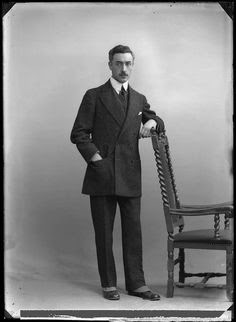


Scott Lord likes this
24 Sep 11:59
Please add this additional feature:
Scott Lord
Mystery
Basil Rathbone
Basil Rathbone as Sherlock Holmes
victorseastrom
shared this story
from  Blacklight Castle- Mystery Film. Blacklight Castle- Mystery Film.
|
Please add this additional feature:
Scott Lord
Mystery
Basil Rathbone
Scott Lord likes this
24 Sep 11:59
Motion Picture World Magazine reviewed the one reel film "Lady Godiva" directed by J.Stuart Blackton for the Vitagraph Company of America with Julia Swayne Gordon in the titular role, "There are many dramatic situations in this picture, especially where the appearance of of Lady Godiva is anticipated as she is about to start upon her journey...This climax touches our sympathy and we grasp the refinement and culture dispalyed by Miss Swayne in acting this part part so admirably and sucessfully, a matter not easy to accomplish."
Advertisements for the film were placed in the periodical Moving Picture World heralding the film, "A historic legend of the Eleventh Century. An old tale told with Vitagraph accuracy and clearness. A feature film that you can feature." The studio claimed to release five new films every week. Scott Lord Scott Lord Scott Lord Silent Film
Scott Lord Silent Film: Lady Godiva 1911
Motion Picture World Magazine reviewed the one reel film "Lady Godiva" directed by J.Stuart Blackton for the Vitagraph Company of America with Julia Swayne Gordon in the titular role, "There are many dramatic situations in this picture, especially where the appearance of of Lady Godiva is anticipated as she is about to start upon her journey...This climax touches our sympathy and we grasp the refinement and culture dispalyed by Miss Swayne in acting this part part so admirably and sucessfully, a matter not easy to accomplish."
Advertisements for the film were placed in the periodical Moving Picture World heralding the film, "A historic legend of the Eleventh Century. An old tale told with Vitagraph accuracy and clearness. A feature film that you can feature." The studio claimed to release five new films every week. Scott Lord Scott Lord Scott Lord Silent Film
Scott Lord likes this
24 Sep 11:59
 "A Narrow Escape" is evidently the only film in which both the doubling narrative, or bifidation narrative, used in crosscutting and the last minute rescue were present before their use in the films of D.W. Griffith. Scholar Phillipe Gauthier has noted that crosscutting had been present in the film "The One Hundred to One Shot" made by Vitagraph in 1906. D. W. Griffith used crosscutting frequently to depict the last minute rescue frequently during the beginning of 1909, particulalrly in the film "The Lonely Villa". The director at Biograph had been Wallace McCutcheon (Personal,1904) and it is him to whom, rightly or not, crosscutting has been attributed (Her First Adventure,1906;The Elopement,1907); on occaision directors were beginning to hint at cutting on action by 1907 and were also beginning to link scenes together, as when the same character appears in two scenes that are adjacent.
Author Tom Gunning, in his volume D.W. Griffith and the origins of Narrative Film, likens The Lonely Villa to "A Narrow Escape", only to descry D.W. Griffith's having developed its elementary techniques into a more narratively integrated work. "'A Narrow Escape' creates suspense through parallel editing, using the pattern tocreate an agonizing delay....which is a direct prefiguration of the narrator system." Gunning sees the techniques appearing in "The Lonely Villa" as only haing briefly appeared in "The Narrow Escape", included among those habing been a "three-pronged editing pattern" around which centered its principal characters. "Indebted although it may be, Griffith's film elaborates on the Pathe pattern through further articulation."
If within a cinema of attractions narrative exposition had previously used a discontinuous style, one of filming a single action within what was then an autonomous shot, it would acquire as form a continuous style; where there were to be juxtapositions within narrative from shot to shot, there would be decisions of editing used for the advancement of plot. Technique would become the ordering of images within an arrangement of shots that would bring seperate compositions into a relation with narrative-the film technique that would be later described by Christian Metz as consisting of syntagmatic categories, technique that would avail questioning whether a segment would be autonomous, chrological, linear, narrative or descriptive, chronological, linear, narrative or descriptive, continuous or whether it would be organized, was beginning to be decided. Metz in fact had viewed the narrative function in cinema as being what had brought about its development, it being more possible that the techniques developed by Ince and Griffith. Narrative would no longer need to be only linear in regard to its structure and the syntax of the film could include transitions between scenes: technique, in part could become the attraction. In fact, Roger Manvell quotes an author who credits Griffith with developing the "cinematic or conjunctive" method of narrative, where the tempo of "continuity movement" was accelerated.
During 1908, The Pathe studio, Societe Pathe Freres, founded by Charles Pathe in 1896, performed a magic trick exactly opposite of the break from non-narrative by the cinema of attractions and the temporalities being adapted by narrative form; while George Melies continued toward his 1912 Conquest of the Pole", Pathe invented the newsreel that was to be shown with cartoons and short subjects. Newsreels went to London during 1910 under the name Pathe's Animated Gazette. The temporality created by Segundo de Chemon in the Pathe film "The House of Ghosts" would become friendly competition for the immediacy of royal coronations being filmed as they happened, a diegesis of reality. Screen time transpired just outside the theater, based on an event, if not reverting to an earlier form of attraction. Perhaps at the core of the cinema of attractions are the actuality films of American Mutoscope and Biograph, despite Edison's choosing subjects which could be filmed theatrically indoors, including his film of Annie Oakley shooting. Crosscutting and D.W. Griffith Silent Film
Scott Lord Silent Film: A Narrow Escape (Pathe, 1908)

Author Tom Gunning, in his volume D.W. Griffith and the origins of Narrative Film, likens The Lonely Villa to "A Narrow Escape", only to descry D.W. Griffith's having developed its elementary techniques into a more narratively integrated work. "'A Narrow Escape' creates suspense through parallel editing, using the pattern tocreate an agonizing delay....which is a direct prefiguration of the narrator system." Gunning sees the techniques appearing in "The Lonely Villa" as only haing briefly appeared in "The Narrow Escape", included among those habing been a "three-pronged editing pattern" around which centered its principal characters. "Indebted although it may be, Griffith's film elaborates on the Pathe pattern through further articulation."
If within a cinema of attractions narrative exposition had previously used a discontinuous style, one of filming a single action within what was then an autonomous shot, it would acquire as form a continuous style; where there were to be juxtapositions within narrative from shot to shot, there would be decisions of editing used for the advancement of plot. Technique would become the ordering of images within an arrangement of shots that would bring seperate compositions into a relation with narrative-the film technique that would be later described by Christian Metz as consisting of syntagmatic categories, technique that would avail questioning whether a segment would be autonomous, chrological, linear, narrative or descriptive, chronological, linear, narrative or descriptive, continuous or whether it would be organized, was beginning to be decided. Metz in fact had viewed the narrative function in cinema as being what had brought about its development, it being more possible that the techniques developed by Ince and Griffith. Narrative would no longer need to be only linear in regard to its structure and the syntax of the film could include transitions between scenes: technique, in part could become the attraction. In fact, Roger Manvell quotes an author who credits Griffith with developing the "cinematic or conjunctive" method of narrative, where the tempo of "continuity movement" was accelerated.
During 1908, The Pathe studio, Societe Pathe Freres, founded by Charles Pathe in 1896, performed a magic trick exactly opposite of the break from non-narrative by the cinema of attractions and the temporalities being adapted by narrative form; while George Melies continued toward his 1912 Conquest of the Pole", Pathe invented the newsreel that was to be shown with cartoons and short subjects. Newsreels went to London during 1910 under the name Pathe's Animated Gazette. The temporality created by Segundo de Chemon in the Pathe film "The House of Ghosts" would become friendly competition for the immediacy of royal coronations being filmed as they happened, a diegesis of reality. Screen time transpired just outside the theater, based on an event, if not reverting to an earlier form of attraction. Perhaps at the core of the cinema of attractions are the actuality films of American Mutoscope and Biograph, despite Edison's choosing subjects which could be filmed theatrically indoors, including his film of Annie Oakley shooting. Crosscutting and D.W. Griffith Silent Film
Scott Lord likes this