Scott Lord
Shared posts
23 Oct 02:11
Scandinavian Silent Film: Victor Sjostrom as Seastrom, Mauritz Stiller, John Brunius, Greta Garbo: Scott Lord Silent Film: Beau Brummel (Beaumont, 1924)
Scott Lord, Scott Lord Mystery Film and 2 others like this
21 May 03:34
Swedish Silent Film, director George af Klercker
by Scott Lord on Silent Film
Anne-Kristin Wallengren, for Nordic Academic Press, only indirectly refers to the work of Gosta Werner and the restoration of lost silent film in the article, Welecome Home Mr. Swanson-Swedish Emigrants and Swedishness on Film. "There is the still extant film Storstadfaror (Perils of the Big City, Manne Gothson, 1918), in which a young man goes to America and at the end of the film, returns to Sweden, rich; however, while this was one of the very few films made in the 1910's to show America in a positive light, it is also significant that his was only a supporting role." The film Perils of the Big City was written by Gabrielle Ringertz and photographed by Gustav A. Gustavson. Appearing in the film were Mary Johnson, who, having made several films with George af Klerker, would later film under the direction of Mauritz Stiller. Appearing in the film with Johnson were actresses Agda Helin, Tekl Sjoblom and Lilly Cronin.
Author Peter Cowie, in his volume Swedish Cinema, From Ingeborg Holm to Fanny and Alexander, places Georg Af Klercker into his niche within the Golden Age of Swedish Silent Film by chronicling that Charles Magnusson in 1911 contacted Klercker to head the Lidingo studios, "None of his films from the Svenska Bio days are extant, but when one inspects the few films of Klercker's that have survived- all from the Gothenburg years- one is forced to recognize that here was a major talent.
Peter Cowie, in his volume Scandinavian Cinema, elaborates,"Several of the 27 features completed by Klercker at Hasselblad were enhanced by the etheral beauty of Mary Johnson,an actress in the mould of Lillian Gish; she would reachher apogee as Elsa Lilli in 'Sir Arne's Treasure'" The film apparently was the only film produced at Hasselblad Fotografiska, from its first film in 1915, untill it merged early in 1918 to become Filmindustri Skandia, not to have been directed by George af Klercker, Manne Gothson had previously been Klercker's assistant director. This having been said, scholar Astrid Soderberg Widding points out that Gosta Werner neglects or omits the films made by Af Klercker before he began with Hasselblad, almost to confer with other authors that place Sjostrom and Stiller at the forefront of Swedish Silent Film's Golden Age; Leif Furhammer has advanced that Af Klercker had been an Auteur only to heighten the comparison that can be made between George Af Klercker and Carl Th. Dreyer, despite Dreyer's having entered directing later and his only having scripted melodramas while searching for adaptations.
The fourty one minute film 'Mysteriet natter till den 25ie' proves to be more enigmatic than its director. it stars Swedish Silent Film actress Mary Johnson with Carl Barklind and was photographed by Sven Peutersson- one of the first films to demonstrate the need for silent film preservation, it was not shown to audiences until, 1975. Recently a genealogical study on the af Klercker family, which not only includes George af Klercker, but also Birgitta af Klercker and Fredrick af Klercker mentioned the film, but not as a film that had been lost, as many silent films have, or lost and then later found, but as a film that was originally banned by Swedish film censorship. The Swedish Film Institute confirms the film having been originally banned as a "Nick Carter" detective film, but that when the film became no longer lost, in 1975, the elements in the film that were objectionable were no longer able to be censored and the restored version was given a "for all" rating after having been missing for nearly sixty years. Describing the film as a "three act sensational drama", Peter Cowie writes, "Klercker's ingenuity yeilds constant suprises.", there being a sensibility in keeping with the director's eye evident in that "this fascination with mirrors and decor colours all Klercker's cinema".
Clearly George af Klercker was eclipsed by Mauritz Stiller and Victor Sjostrom in that af Klercker left had Svenska Bio before Stiller and Sjostrom had gained renown internationally for films of longer running length. The director Geroge af Klerker is portrayed by actor Bjorn Granath in the film "The Last Scream" ("The Last Gasp", Stig Bjornman, 1995), a two character play in one act lasting almost an hour which depicts a fictional, ie. Imaginary, meeting between the director Klercker and Charles Magnussion, founder of Svensk Filmindustri and which was written by Ingmar Bergman. Actress Anna Von Rossen stars as Miss Holm. The play was published by New Press in the volume, The Fifth Act, in which also appeared Monologue, After the Rehearsal and Presence of a Clown. Stig Bjorkman, noted for his interviews of Ingmar Bergman is also the director of I Am Curious Film, and But Film is My Mistress. It should be noted that Bjorn Granath portrays George af Klercker in the film "Jag ar nyfiken, film" (1999) in which he appears with, of course, Lena Nyman, who interviews Sven Nykvist, Eva Isaksen, Stefan Jarl and Liv Ullman, but it should also be noted that Victor Sjostrom and Ingmar Bergman are listed in the cast of players in the film "Images from the Playground" (Bilder fran Lekstugan,2009), written and directed by Stig Bjorkman, which appeared in the 2022 Cannes film festival- while many noted scholars have chosen to appraise Swedish film through the form of the essay, Stig Bjorkman has brought the interview into the onscreen literature of the documentary.
It is clear that Astrid Soderberg Widding outlines the ostensible difference between the director George af Klercker and his contemporaries Victor Sjostrom and Mauritz Stiller by accurately placing him as a director of "melodrama and sensational adventures" made in Denmark, those which had established the director Viggo Larsen ; he is also apart from the type of film made in Kristianstad before he had began with Svenska Bio at Lindingo. As academic writing among film historians can be cumulative, each seminal text nodding to what is salient in each of its predecessors, it is certain that Soderberg Widding will not only contribute to film history research, but will springboard later film theory. She describes the directing of Af Klercker with, "A purely film-theoretical aspect that becomes evident when looking at Af Klercker's production deserves to be highlighted. it has to do with the relationship between the visual and narrative elements: phenomena which in film-theoretical historiography are not infrequently regarded as counterpoints......Af Klercker's films are in their narratives quite conventional and typical of their time. They provide thrilling stories while expressing a supreme control over film as a medium." In describing this, Astrid Soderberg Widding articulates the interrelationship between content and form while praising the films of Af Klercker for their "stylistic stability and visual extravagance, if only to reiterate that characters are developed within the miss en scene context of their created environment in the narrative plots of both Danish and Swedish silent film "Here one encounters a driven visual narrator who demands a high degree of focus. many of the different narrative devices and stylistic features are noteworthy: his utilization of a qualified depth-of-focus cinematography aw well as the effect of advanced lighting." The author notes that one instance of this was Klerker's use of door frames within the image. In no academic papers already copyrighted, Soderberg Widding looks intricately at technique including the element of editing, so as not to neglect shot structure being in tandem with composition, by distinguishing a signature of Af Klercker's composition, "to use an undivided screen space where dissectons and doubling so takes place within a general frame rather than the introduction of several frames."
Swedish Silent Film director George af Klercker had been the head of the studios of Svenska Bio, Stockhom, his wife, Selma af Klercker often appearing on screen in his films. He was joined there by actorMauritz Stiler and Victor Sjostrom, who was then also leaving the theater. It has been noted that there were aprroximately 325 movie theaters open in Sweden during 1912.
Dodsritten under cirkuskupolen (1912) had been written by Charles Magnusson and photographed by Henrik Jaenzon. George Af Klercker had written his own screenplay to the 1912 film Jupiter pa Jorden, also filmed by Henrik Jaenzon. Although Af Klerker directed a short film photographed by Sven Petterson and starring actress Tyra Leijman Uppstrom during 1913, he that year also directed The Scandal (Skandalen) for Svenska Biographteatern, his photographer again Henrik Jaenzon, as was the case with the film Med Vapen I Hand that year,actress Selma Wiklund Af Klerker also returning for both films. As director, Klercker appeared on screen on camera in front of the lens of cameraman Henrik Jaenzon during "Med Vapen hand", which he did again while directing "For faderneslandent" with Jaenzon as camera man. Ragnar Ring codirected the film and wrote it's screenplay and actress Lilly Jacobsen starred in the film.
It has been noted that George af Klercker had spent time in Copenhagen and Paris after leaving Svenska Bio.
In Goteborg, Sweden, the two films produced by Hasselblads Fotofraphiska during 1915 were both filmed by George af Klerker and Sve Petterson. That year George af Klercker contributed the film "The Rose of Thistle Island" ("Rosen pa Tistelon), the first film in which actress Elsa Carlsson and Anna Lofstrom were to appear. The novel had been filmed previously by director Mauritz Stiller as "Pa livets Odesvager".
Among the films directed by George Af Klercker during 1916 was The Gift of Health (Aktie bolaget Halsams gave), the first film photographed by cinematographer Gustav Gustafson and the first film in which actress Tekla Sjoblom was to appear. Carl Gustaf Florin also is credited as having photographed with Gustafson. One of only two photoplays to be scripted by Gustaf Berg, the film is presumed to be lost with no suviving copies. Also starring in the film were Mary Johnson and Anna Lofstrom.
During 1916 cinematographer Carl Gustav Florin photographed the film "The Road Down" (Vagen Utfor) under the direction of Georg af Klercker for Hasselblad Photography. The film, starring actresses Sybil Simelova and Tekla Sjoblom, is presumed lost, with no surviving cooies existing. The running time of the film was a little over a half hour. That year Swedish film director Af Klercker also appeared on screen in the film Under the Spell of Memories (I minnenasband), in which he directed Elsa Carlsson, Tora Carlsson and Elsa Berglund. The film was written and photographed by Sven Pettersson. The 1916 film Hogsta Vinsten, in which director George Af Klercker appeared on screen with actress Gerda Thome Mattsson lasted a brief running time of only sixteen minutes at a time when the average running time had been increased from four reels to six. The film was photographed by Sven Pettersson. Also among the film's directed by George af Klercker in 1916 were "Triumph of Love" ("Karleken segrar") photographed by Carl Gustaf Florin and starring Mary Johnson, Teklas Sjoblom, Selma Wikland Klercker and Lily Cronwin in the first film in which she was to appear and the film "Mother in Law Goes for a Stroll" ("Svar pa rift") photographed by Gustav A. Gustafson and starring Greta Johansson, Maja Cassell and Zara Backman. Peter Cowie contrasts the directing of George af Klercker with that of Mauritz Stiller, "Mood and composition, however, distinguish Klercker's work more than performances." Cowie writes that the deep focus photography used in "Victory of Love" foreshadows that used by Renoir. Cowie adds, "Klercker seems equally at ease with natural or artificial light."
Af Klercker had gained renown not only for his blending artificial and natural light, but while at Hasselblad he innovated the techniques involved with a lens system that was suited for filming objects at a distance, ranging from a focal length of a few feet to that of a mile.
The Swedish Film Institute credits George af Klercker for having made two films in which actress Olga Hallgren starred whereas databases in the United States credit her with three films, all produced in Sweden during 1917 by Hasselblad studios. Klercker directed the 1917 "Ett Konstnarsode" photographed by Carl Gustaf Florin, in which Hallgren starred with actress Greta Pfeil and Klercker directed the 1917 film "Brottmalsdomanen" ("The Judge"), photographed by Carl Gustaf Florin, also starring Olga Hallgren. Sources from the United States credit Klercker with the film "Det Finns Inga Gudar pa Jordan" ("There are no Gods on Earth") from 1917 in which Olga Hallgren again starred with Greta Pfeil.
It wasn't untill 2017 that there was an unearthed copy of the 1926 film "Flickorna pa Solvik", the last film to be directed by George af Klercker, when it was rediscovered in a private collection. One of only two photoplays scripted by John Larson, the film starred actress Wanda Rothgardt, Anna Wallin and a young director Alice O Fredericks appearing in the film as an actress.
During 1918, George af Klercker directed the films "The Lighthouse Keeper's Daughter" (Fryvaktarens Dottar), photographed by Gosta Staring and starring Mary Johnson and Agnes Obergsson, "Night Music" (Nattliga Toner), photographed by Gustaf A. Gustafson and starring Agda Helin, Helge Kihlberg and Tekla Sjoblom, and "Nobelpristagaren".
Klercker would appear on screen as an actor during 1925, at the helm Carl Barklind to man the ship's wheel for the film "Tre Lejon", his costars Edit Rolf and Marta Ottoson. The film was photographed by Carl Hilmers.
"Flickorna pa Solvik", which George af Klercker directed in 1926 was thought to be a lost film untill 2017, left unseen by audiences untill then with no surving copies presumed to exist. The film stars actress Wanda Rothgardt.
Danish Silent Film
Victor Sjostrom and Mauritz Stiller
Swedish Silent Film
Swedish Sound Film
Greta Garbo Silent Film
Author Peter Cowie, in his volume Swedish Cinema, From Ingeborg Holm to Fanny and Alexander, places Georg Af Klercker into his niche within the Golden Age of Swedish Silent Film by chronicling that Charles Magnusson in 1911 contacted Klercker to head the Lidingo studios, "None of his films from the Svenska Bio days are extant, but when one inspects the few films of Klercker's that have survived- all from the Gothenburg years- one is forced to recognize that here was a major talent.
Peter Cowie, in his volume Scandinavian Cinema, elaborates,"Several of the 27 features completed by Klercker at Hasselblad were enhanced by the etheral beauty of Mary Johnson,an actress in the mould of Lillian Gish; she would reachher apogee as Elsa Lilli in 'Sir Arne's Treasure'" The film apparently was the only film produced at Hasselblad Fotografiska, from its first film in 1915, untill it merged early in 1918 to become Filmindustri Skandia, not to have been directed by George af Klercker, Manne Gothson had previously been Klercker's assistant director. This having been said, scholar Astrid Soderberg Widding points out that Gosta Werner neglects or omits the films made by Af Klercker before he began with Hasselblad, almost to confer with other authors that place Sjostrom and Stiller at the forefront of Swedish Silent Film's Golden Age; Leif Furhammer has advanced that Af Klercker had been an Auteur only to heighten the comparison that can be made between George Af Klercker and Carl Th. Dreyer, despite Dreyer's having entered directing later and his only having scripted melodramas while searching for adaptations.
The fourty one minute film 'Mysteriet natter till den 25ie' proves to be more enigmatic than its director. it stars Swedish Silent Film actress Mary Johnson with Carl Barklind and was photographed by Sven Peutersson- one of the first films to demonstrate the need for silent film preservation, it was not shown to audiences until, 1975. Recently a genealogical study on the af Klercker family, which not only includes George af Klercker, but also Birgitta af Klercker and Fredrick af Klercker mentioned the film, but not as a film that had been lost, as many silent films have, or lost and then later found, but as a film that was originally banned by Swedish film censorship. The Swedish Film Institute confirms the film having been originally banned as a "Nick Carter" detective film, but that when the film became no longer lost, in 1975, the elements in the film that were objectionable were no longer able to be censored and the restored version was given a "for all" rating after having been missing for nearly sixty years. Describing the film as a "three act sensational drama", Peter Cowie writes, "Klercker's ingenuity yeilds constant suprises.", there being a sensibility in keeping with the director's eye evident in that "this fascination with mirrors and decor colours all Klercker's cinema".
Clearly George af Klercker was eclipsed by Mauritz Stiller and Victor Sjostrom in that af Klercker left had Svenska Bio before Stiller and Sjostrom had gained renown internationally for films of longer running length. The director Geroge af Klerker is portrayed by actor Bjorn Granath in the film "The Last Scream" ("The Last Gasp", Stig Bjornman, 1995), a two character play in one act lasting almost an hour which depicts a fictional, ie. Imaginary, meeting between the director Klercker and Charles Magnussion, founder of Svensk Filmindustri and which was written by Ingmar Bergman. Actress Anna Von Rossen stars as Miss Holm. The play was published by New Press in the volume, The Fifth Act, in which also appeared Monologue, After the Rehearsal and Presence of a Clown. Stig Bjorkman, noted for his interviews of Ingmar Bergman is also the director of I Am Curious Film, and But Film is My Mistress. It should be noted that Bjorn Granath portrays George af Klercker in the film "Jag ar nyfiken, film" (1999) in which he appears with, of course, Lena Nyman, who interviews Sven Nykvist, Eva Isaksen, Stefan Jarl and Liv Ullman, but it should also be noted that Victor Sjostrom and Ingmar Bergman are listed in the cast of players in the film "Images from the Playground" (Bilder fran Lekstugan,2009), written and directed by Stig Bjorkman, which appeared in the 2022 Cannes film festival- while many noted scholars have chosen to appraise Swedish film through the form of the essay, Stig Bjorkman has brought the interview into the onscreen literature of the documentary.
It is clear that Astrid Soderberg Widding outlines the ostensible difference between the director George af Klercker and his contemporaries Victor Sjostrom and Mauritz Stiller by accurately placing him as a director of "melodrama and sensational adventures" made in Denmark, those which had established the director Viggo Larsen ; he is also apart from the type of film made in Kristianstad before he had began with Svenska Bio at Lindingo. As academic writing among film historians can be cumulative, each seminal text nodding to what is salient in each of its predecessors, it is certain that Soderberg Widding will not only contribute to film history research, but will springboard later film theory. She describes the directing of Af Klercker with, "A purely film-theoretical aspect that becomes evident when looking at Af Klercker's production deserves to be highlighted. it has to do with the relationship between the visual and narrative elements: phenomena which in film-theoretical historiography are not infrequently regarded as counterpoints......Af Klercker's films are in their narratives quite conventional and typical of their time. They provide thrilling stories while expressing a supreme control over film as a medium." In describing this, Astrid Soderberg Widding articulates the interrelationship between content and form while praising the films of Af Klercker for their "stylistic stability and visual extravagance, if only to reiterate that characters are developed within the miss en scene context of their created environment in the narrative plots of both Danish and Swedish silent film "Here one encounters a driven visual narrator who demands a high degree of focus. many of the different narrative devices and stylistic features are noteworthy: his utilization of a qualified depth-of-focus cinematography aw well as the effect of advanced lighting." The author notes that one instance of this was Klerker's use of door frames within the image. In no academic papers already copyrighted, Soderberg Widding looks intricately at technique including the element of editing, so as not to neglect shot structure being in tandem with composition, by distinguishing a signature of Af Klercker's composition, "to use an undivided screen space where dissectons and doubling so takes place within a general frame rather than the introduction of several frames."
Swedish Silent Film director George af Klercker had been the head of the studios of Svenska Bio, Stockhom, his wife, Selma af Klercker often appearing on screen in his films. He was joined there by actorMauritz Stiler and Victor Sjostrom, who was then also leaving the theater. It has been noted that there were aprroximately 325 movie theaters open in Sweden during 1912.
Dodsritten under cirkuskupolen (1912) had been written by Charles Magnusson and photographed by Henrik Jaenzon. George Af Klercker had written his own screenplay to the 1912 film Jupiter pa Jorden, also filmed by Henrik Jaenzon. Although Af Klerker directed a short film photographed by Sven Petterson and starring actress Tyra Leijman Uppstrom during 1913, he that year also directed The Scandal (Skandalen) for Svenska Biographteatern, his photographer again Henrik Jaenzon, as was the case with the film Med Vapen I Hand that year,actress Selma Wiklund Af Klerker also returning for both films. As director, Klercker appeared on screen on camera in front of the lens of cameraman Henrik Jaenzon during "Med Vapen hand", which he did again while directing "For faderneslandent" with Jaenzon as camera man. Ragnar Ring codirected the film and wrote it's screenplay and actress Lilly Jacobsen starred in the film.
It has been noted that George af Klercker had spent time in Copenhagen and Paris after leaving Svenska Bio.
In Goteborg, Sweden, the two films produced by Hasselblads Fotofraphiska during 1915 were both filmed by George af Klerker and Sve Petterson. That year George af Klercker contributed the film "The Rose of Thistle Island" ("Rosen pa Tistelon), the first film in which actress Elsa Carlsson and Anna Lofstrom were to appear. The novel had been filmed previously by director Mauritz Stiller as "Pa livets Odesvager".
Among the films directed by George Af Klercker during 1916 was The Gift of Health (Aktie bolaget Halsams gave), the first film photographed by cinematographer Gustav Gustafson and the first film in which actress Tekla Sjoblom was to appear. Carl Gustaf Florin also is credited as having photographed with Gustafson. One of only two photoplays to be scripted by Gustaf Berg, the film is presumed to be lost with no suviving copies. Also starring in the film were Mary Johnson and Anna Lofstrom.
During 1916 cinematographer Carl Gustav Florin photographed the film "The Road Down" (Vagen Utfor) under the direction of Georg af Klercker for Hasselblad Photography. The film, starring actresses Sybil Simelova and Tekla Sjoblom, is presumed lost, with no surviving cooies existing. The running time of the film was a little over a half hour. That year Swedish film director Af Klercker also appeared on screen in the film Under the Spell of Memories (I minnenasband), in which he directed Elsa Carlsson, Tora Carlsson and Elsa Berglund. The film was written and photographed by Sven Pettersson. The 1916 film Hogsta Vinsten, in which director George Af Klercker appeared on screen with actress Gerda Thome Mattsson lasted a brief running time of only sixteen minutes at a time when the average running time had been increased from four reels to six. The film was photographed by Sven Pettersson. Also among the film's directed by George af Klercker in 1916 were "Triumph of Love" ("Karleken segrar") photographed by Carl Gustaf Florin and starring Mary Johnson, Teklas Sjoblom, Selma Wikland Klercker and Lily Cronwin in the first film in which she was to appear and the film "Mother in Law Goes for a Stroll" ("Svar pa rift") photographed by Gustav A. Gustafson and starring Greta Johansson, Maja Cassell and Zara Backman. Peter Cowie contrasts the directing of George af Klercker with that of Mauritz Stiller, "Mood and composition, however, distinguish Klercker's work more than performances." Cowie writes that the deep focus photography used in "Victory of Love" foreshadows that used by Renoir. Cowie adds, "Klercker seems equally at ease with natural or artificial light."
Af Klercker had gained renown not only for his blending artificial and natural light, but while at Hasselblad he innovated the techniques involved with a lens system that was suited for filming objects at a distance, ranging from a focal length of a few feet to that of a mile.
The Swedish Film Institute credits George af Klercker for having made two films in which actress Olga Hallgren starred whereas databases in the United States credit her with three films, all produced in Sweden during 1917 by Hasselblad studios. Klercker directed the 1917 "Ett Konstnarsode" photographed by Carl Gustaf Florin, in which Hallgren starred with actress Greta Pfeil and Klercker directed the 1917 film "Brottmalsdomanen" ("The Judge"), photographed by Carl Gustaf Florin, also starring Olga Hallgren. Sources from the United States credit Klercker with the film "Det Finns Inga Gudar pa Jordan" ("There are no Gods on Earth") from 1917 in which Olga Hallgren again starred with Greta Pfeil.
It wasn't untill 2017 that there was an unearthed copy of the 1926 film "Flickorna pa Solvik", the last film to be directed by George af Klercker, when it was rediscovered in a private collection. One of only two photoplays scripted by John Larson, the film starred actress Wanda Rothgardt, Anna Wallin and a young director Alice O Fredericks appearing in the film as an actress.
During 1918, George af Klercker directed the films "The Lighthouse Keeper's Daughter" (Fryvaktarens Dottar), photographed by Gosta Staring and starring Mary Johnson and Agnes Obergsson, "Night Music" (Nattliga Toner), photographed by Gustaf A. Gustafson and starring Agda Helin, Helge Kihlberg and Tekla Sjoblom, and "Nobelpristagaren".
Klercker would appear on screen as an actor during 1925, at the helm Carl Barklind to man the ship's wheel for the film "Tre Lejon", his costars Edit Rolf and Marta Ottoson. The film was photographed by Carl Hilmers.
"Flickorna pa Solvik", which George af Klercker directed in 1926 was thought to be a lost film untill 2017, left unseen by audiences untill then with no surving copies presumed to exist. The film stars actress Wanda Rothgardt.
Danish Silent Film
Victor Sjostrom and Mauritz Stiller
Swedish Silent Film
Swedish Sound Film
Greta Garbo Silent Film
Scott Lord, Scott Lord and 3 others like this
21 May 03:33

 Author Paul Rotha, in his volume The Film Till Now, seems to have begun a retrospective on the work of film director Dimitri Buchowetski, "Of other European directors who have had their fling in Hollywood, Dimitri Buchowetski has not been successful." He apparently lacks the need to include Buchowetski having been taken of the set of the Greta Garbo film "Love", much like Mauritz Stiller had been taken of the set of the Greta Garbo film "The Temptress", and continues to asses other unsuccesul directors by merely listing them.
The review of "The Swan" (six reels) in the periodical "Film Daily" from 1925 predates Rotha, "Tinselled Production That Glitters With The Best Art Directors Can Give and the Best Buchowtski Direction" It noted the film's direction by Buchowetski as having been "excellant", claiming "his unusual skill is displayed throughout." Buchowetski wrote and directed the film. His cameraman was Alvynn Wycoff.
Silent Film
Victor Sjostrom
The Grand Duchess and the Waiter
Author Paul Rotha, in his volume The Film Till Now, seems to have begun a retrospective on the work of film director Dimitri Buchowetski, "Of other European directors who have had their fling in Hollywood, Dimitri Buchowetski has not been successful." He apparently lacks the need to include Buchowetski having been taken of the set of the Greta Garbo film "Love", much like Mauritz Stiller had been taken of the set of the Greta Garbo film "The Temptress", and continues to asses other unsuccesul directors by merely listing them.
The review of "The Swan" (six reels) in the periodical "Film Daily" from 1925 predates Rotha, "Tinselled Production That Glitters With The Best Art Directors Can Give and the Best Buchowtski Direction" It noted the film's direction by Buchowetski as having been "excellant", claiming "his unusual skill is displayed throughout." Buchowetski wrote and directed the film. His cameraman was Alvynn Wycoff.
Silent Film
Victor Sjostrom
The Grand Duchess and the Waiter
Scott Lord Silent Film: Frances Howard in The Swan (Dimitri Buchowetzki,...
by Scott Lord on Silent Film
Scott Lord, Scott Lord Mystery Film and 2 others like this
21 May 03:33
The Photoplay: Silent Movie Lobby Cards, Mary Pickford
by Scott Lord on Silent Film


Scott Lord, Scott Lord Mystery Film and 2 others like this
21 May 03:32


 "Outside the Law" (eight reels), directed by Tod Browning during 1920, was coscripted by Browning with Gardner Bradford and Lucien Hubbard and photographed by William Fildew. The films stars Lon Chaney and actress Priscilla Dean. Advertisements placed in the periodical Motion Picture News annouced Leo McCarey as first executive assistant to Tod Browning, whom it credited with not only being the film's director but its "Author". The Film Daily reviewed its direction as being "uniformly excellent" but its story as lacking stregnth although lifted by its actors Lon Chaney and Priscilla Dean.
Motion PIcture News reintroduced Tod Browning to its readers during 1921 as one of the youngest directors, then still in his thirties, whom D.W.Griffith had brought to Hollywood while with Mutual, which led to Browning directing two-reelers at Majestic. While reviewing "Outside the Law" the periodical credited Tod Browning, "master of melodrama" with priviledged knowledge of "underworld haunts". It reminded readers that they had seen Lon Chaney and Priscilla Dean together in the film "The Wicked Darling."
The later film, "Outside the Law" was directed by Tod Browning during 1930 but has different characters than the earlier film, his having coscripted the film with Garret Fort. The film was photographed by Roy Overbaugh and starred actress Mary Nolan. Lon Chaney Lon Chaney Silent Film
Scott Lord Silent Film: Lon Chaney in Outside the Law (Tod Browning, 1920)
by Scott Lord on Silent Film


Motion PIcture News reintroduced Tod Browning to its readers during 1921 as one of the youngest directors, then still in his thirties, whom D.W.Griffith had brought to Hollywood while with Mutual, which led to Browning directing two-reelers at Majestic. While reviewing "Outside the Law" the periodical credited Tod Browning, "master of melodrama" with priviledged knowledge of "underworld haunts". It reminded readers that they had seen Lon Chaney and Priscilla Dean together in the film "The Wicked Darling."
The later film, "Outside the Law" was directed by Tod Browning during 1930 but has different characters than the earlier film, his having coscripted the film with Garret Fort. The film was photographed by Roy Overbaugh and starred actress Mary Nolan. Lon Chaney Lon Chaney Silent Film
Silent Film
Scott Lord, Scott Lord Mystery Film and 2 others like this
21 May 03:32

 "She was nice and she was sweet, say many to explain the phenomenon...The reason can only be found in by relating the star to the social and cultural background of the time...Only the American civilization, a civilization materially in advance of the rest of the world could have produced Mary Pickford. We must try to realize the impact of Mary Pickford's appaearance and acting upon the consciousness of the world's population as it existed around 1909."
It is certain that the beginnings of the star system had made Mary Pickford an attractive commodity by 1918 when we had reluctantly taken part in the continuance of an unexpected war- the quote may point to the historical context and extratextural discourse that is a dynamic of that star system. A starsystem that has been called "a culture of celebrity", the silent film era has kept some of its first impressions as long lasting, albeit some were fleeting, authors often making comparisions between fixed points in the firmament, especially when introducing the newest foreign arrival, in as much as an actress was now considered "Sweden's Mary Pickford", or when there was a common theme between Gish, Pickford and Mae Marsh. Although far from the earliest example of film criticism, the quote is from a volume titled The Film Answers Back, an historical appreciation of the cinema. Authored by E.W. + M.M. Robson, it was published in 1939. Oddly, the review of the films of the actress begins to address, not gendered spectatorship, but her femininity within the expectations drawn by a woman on the screen and how it related to being a Suffragete. Notwithstanding, it was that Mary Pickford by then was sought after and Parmount Press Books from 1917 describe her having sold Liberty Bonds as a result of a request from United States Secretary McAdoo, her wearing the insignia of an honarary colonel. The pressbooks announced, "Famous Artcraft Star Stops All Film Activities When Call Comes To Help Country and Flag by Selling Liberty Bonds". Prior to the short 100% American, Mary Pickford released the full legnth feature film "Johanna Enlists", adapted by Frances Marion from the short story The Mobilizing of Johanna, published in 1917. Returning to the year the film was made and to contrast the on screen images with the extratextural discourse of the off screen lives of actresses, Mary Pickford and Linda A. Griffith during 1918 were given back to back bylines in the periodical Film Fun. The article written by Mary Pickford was a look toward the future of filmmaking, and thereby necessarily lending an assessment of the time period and historical context, her praising the work of Cecil B. DeMille. In turn, Linda A Griffith followed in the same issue and neglected entirely the gendered spectatorship that would view the talented Mary Pickford. She rather discusses Mary Pickford's salary with the claim that her husband, D.W. Griffith, saw her as being underpaid. Griffith's wife subtitled part of her 1918 article with "Adequate Payment for Good Work". There is almost an objective correlative, or perhaps a suspension of disbelief, in our agreement to walk into the theater and enter fictional worlds that the director's wife acknowledges, neglecting those fictional scenarios, while bringing us a real life Mary Pickford, who in fact later returned to sell bonds for the Defence Department during 1953. Silent Film Silent Film
Scott Lord Silent Film: Mary Pickford in 100% American (Arthur Rossen)
by Scott Lord on Silent Film
It is certain that the beginnings of the star system had made Mary Pickford an attractive commodity by 1918 when we had reluctantly taken part in the continuance of an unexpected war- the quote may point to the historical context and extratextural discourse that is a dynamic of that star system. A starsystem that has been called "a culture of celebrity", the silent film era has kept some of its first impressions as long lasting, albeit some were fleeting, authors often making comparisions between fixed points in the firmament, especially when introducing the newest foreign arrival, in as much as an actress was now considered "Sweden's Mary Pickford", or when there was a common theme between Gish, Pickford and Mae Marsh. Although far from the earliest example of film criticism, the quote is from a volume titled The Film Answers Back, an historical appreciation of the cinema. Authored by E.W. + M.M. Robson, it was published in 1939. Oddly, the review of the films of the actress begins to address, not gendered spectatorship, but her femininity within the expectations drawn by a woman on the screen and how it related to being a Suffragete. Notwithstanding, it was that Mary Pickford by then was sought after and Parmount Press Books from 1917 describe her having sold Liberty Bonds as a result of a request from United States Secretary McAdoo, her wearing the insignia of an honarary colonel. The pressbooks announced, "Famous Artcraft Star Stops All Film Activities When Call Comes To Help Country and Flag by Selling Liberty Bonds". Prior to the short 100% American, Mary Pickford released the full legnth feature film "Johanna Enlists", adapted by Frances Marion from the short story The Mobilizing of Johanna, published in 1917.
Scott Lord, Scott Lord Mystery Film and 2 others like this
21 May 03:30
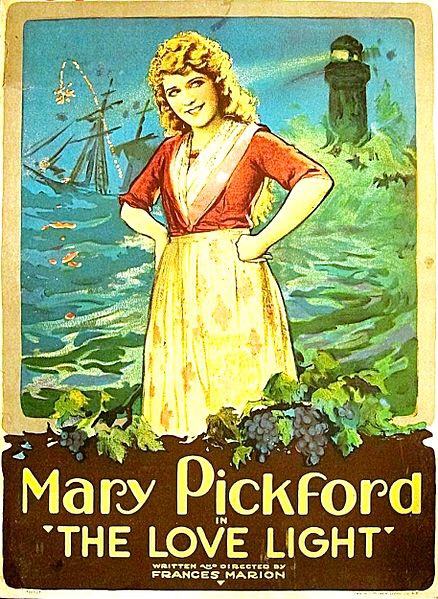
The Photoplay: Silent Film Movie Posters; Mary Pickford
by Scott Lord on Silent Film




Scott Lord, Scott Lord Mystery Film and one other like this
21 May 03:14
Scandinavian Silent Film: Victor Sjostrom as Seastrom, Mauritz Stiller, John Brunius, Greta Garbo: Scott Lord Silent Film: Mary Pickford in 100% American (Arthur Rossen)
Scott Lord, Scott Lord Mystery Film and 2 others like this
21 May 02:42
Scott Lord Mystery Film - YouTube
Scott Lord Mystery Film, Scott Lord and one other like this
21 May 02:11
Mystery: Chesterfield Studios-The Lady in Scarlet (1935)
by Scott Lord on Silent Film, Swedish Silent Film, Danish Silent Film,
Scott Lord, Scott Lord Mystery Film and 2 others like this
21 Jul 21:59
Scott Lord Swedish Silent Film: The Phantom Carriage (Korkarlen,Victor S...
by Scott Lord Mystery
Scott Lord likes this
14 Jul 04:30
Silent film art
by Scott Lord on Silent Film, Swedish Silent Film, Danish Silent Film,


Scott Lord, Scott Lord and one other like this
21 Feb 03:03
Seventies art
by Scott Lord on Silent Film, Swedish Silent Film, Danish Silent Film,

Scott Lord, Scott Lord and one other like this
02 Jan 02:29
Testing banners I’ve made for moving animation
by Scott Lord on Silent Film, Swedish Silent Film, Danish Silent Film,





Scott Lord, Scott Lord and one other like this
23 Dec 11:33
Swedish Posters
by Scott Lord on Silent Film, Swedish Silent Film, Danish Silent Film,


Scott Lord, Scott Lord and one other like this
08 Nov 01:59
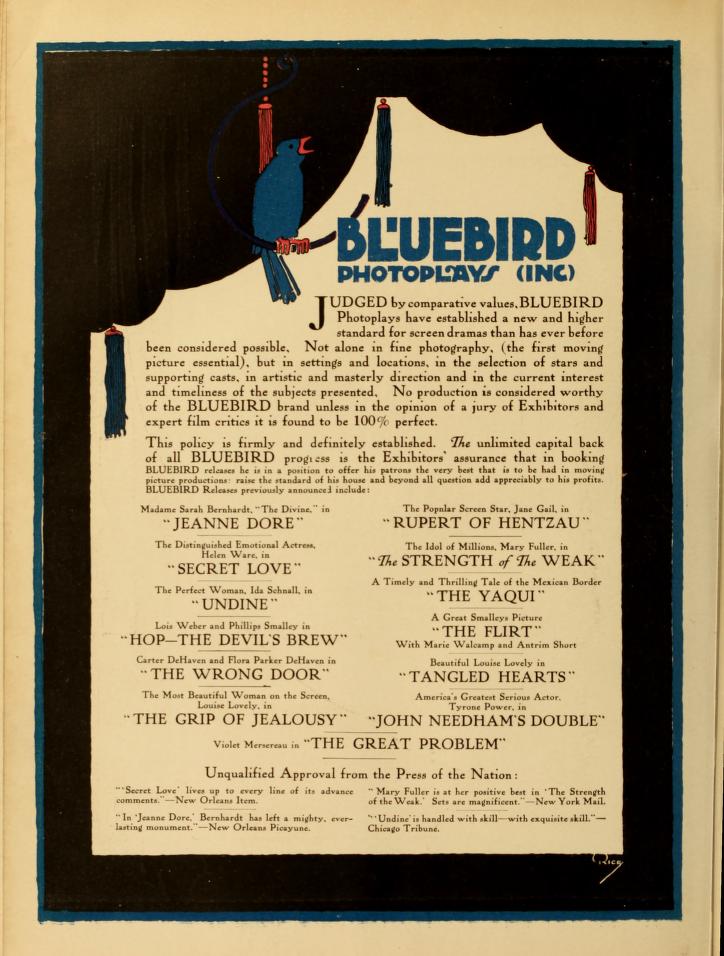
Bluebird Photoplays
by Scott Lord on Silent Film, Swedish Silent Film, Danish Silent Film,

Scott Lord, Scott Lord and one other like this
08 Nov 01:56
Bluebird Photoplays
by Scott Lord on Silent Film, Swedish Silent Film, Danish Silent Film,


Scott Lord, Scott Lord and one other like this
16 Oct 02:05
Scott Lord
by Scott Lord on Silent Film, Swedish Silent Film, Danish Silent Film,

Scott Lord, Scott Lord and one other like this
16 Oct 01:26
Film art
by Scott Lord on Silent Film, Swedish Silent Film, Danish Silent Film,

Scott Lord, Scott Lord and one other like this
16 Oct 01:23
Magazine Art
by Scott Lord on Silent Film, Swedish Silent Film, Danish Silent Film,

Scott Lord, Scott Lord and one other like this
08 Mar 05:13
Scott Lord Silent Film: Mary Pickford in What The Daisy Said (D.W. Griff...
by Scott Lord on Silent Film
During 1910 D.W. Griffith directed actress Mary Pickford in the short film "What The Daisy Said", photographed by G.W. Bitzer for the Biograph Film Company. Peter Cowie, in his volume Eighty Years of Cinema, gives the 1910 film "Simple Charity", directed by Griffith, as one of the earliest on screen appearances made by Mary Pickford.
Silent Film
Biograph
Silent Film
Scott Lord, Scott Lord Mystery Film and 2 others like this
07 Mar 06:17
 The caption to the review of "A Girl's Folly" (five reels) in the periodical Wid's Films and Film Folk during March 1917 read "Bad Moral and Tells Secrets, But Will Get Money." It elaborated further with "Very interesting, but tells studio secrets, which is dangerous," if that too can be deciphered by a modern audience sauntering through the cannon of silent films left remaining that have not yet deteriorated over time. The periodical then went so far as to, half-heartedly or not, suggest that "exhibitors", theater owners, should "protest" the film's having divulged what were "backstage secrets". The periodical admittedly was looking for the exploitation of silent films but it takes a historian's glance to decided if there was a sensationalism on which the reviewer may have counted during an extratextural discourse. It continued to question "purely from the viewpoint of whether you can get money with it" and conceded, "The thread of the story is quite slender and has a very questionable moral as presented, but the introduction of scenes showing clearly activity about a film studio is sure to prove exceptionally interisting to any film fan." It offerred the theater owner consolation, "Since the producer has already gone and 'done it', I presume you might as well go ahead and get the money with this, because it would be impossible to eliminate the back-stage scenes and have a picture left."
The photoplay was cowritten with director Maurice Tourneaur by Frances Marion and starred actresses Doris Kenyon, Robert Warwick and June Eldvidge. Frances Marion that year also wrote the photplays to to the films Rebecca of Sunnybrook Farm and Poor Little Rich Girl both starring Mary Pickford. Actress Doris Kenyon appeared on screen in the films of Alice Guy Blanche, in 1916 in the film "The Queen's Waif" and in 1917 in "The Empress".
During 1917 Robert Warwick and Doris Kenyon also starred together in "The Man Who Forgot" (Emile Chautard). The film is presumed to be a lost silent film, with no surviving copies existing.
Silent Film Silent Film
Scott Lord Silent Film: A Girl's Folly (Tourneur, 1917)
by Scott Lord on Silent Film

The photoplay was cowritten with director Maurice Tourneaur by Frances Marion and starred actresses Doris Kenyon, Robert Warwick and June Eldvidge. Frances Marion that year also wrote the photplays to to the films Rebecca of Sunnybrook Farm and Poor Little Rich Girl both starring Mary Pickford. Actress Doris Kenyon appeared on screen in the films of Alice Guy Blanche, in 1916 in the film "The Queen's Waif" and in 1917 in "The Empress".
During 1917 Robert Warwick and Doris Kenyon also starred together in "The Man Who Forgot" (Emile Chautard). The film is presumed to be a lost silent film, with no surviving copies existing.
Silent Film Silent Film
Scott Lord, Scott Lord Mystery Film and 2 others like this
06 Mar 05:29
The Photoplay: Silent Film Movie Posters
by Scott Lord on Silent Film


Scott Lord, Scott Lord Mystery Film and 2 others like this
05 Mar 04:08
Scott Lord Silent Film: Madge Bellamy in Soul of the Beast (John Griffit...
by Scott Lord on Silent Film


Scott Lord, Scott Lord Mystery Film and 2 others like this
26 Feb 02:54
Scandinavian Silent Film: Victor Sjostrom as Seastrom, Mauritz Stiller, John Brunius, Greta Garbo: Scott Lord Silent Film: Douglas Fairbanks in When the Clouds Roll By (V...
Scott Lord, Scott Lord Mystery Film and 2 others like this
10 Feb 03:00
Scott Lord Silent Film: Return of Draw Egan (William S. Hart, 1916)
Scott Lord, Scott Lord Mystery Film and 2 others like this
02 Feb 06:08
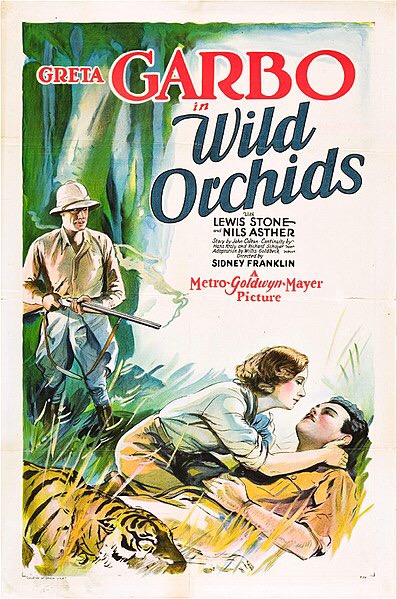
The Photoplay: Silent Film Movie Posters ; Greta Garbo and Victor Seastrom
by Scott Lord on Silent Film




Scott Lord, Scott Lord Mystery Film and one other like this
31 Jan 02:04
The Photoplay: Silent Film Movie Posters, D.W. Griffith
by Scott Lord on Silent Film


Scott Lord Mystery Film, Scott Lord likes this