Silent Film
Scott Lord
Shared posts
30 Jul 04:58
Scott Lord Silent Film: La Vie et la passion de Jésus Christ (1903) - YouTube
Scott Lord, Scott Lord and 4 others like this
18 Jul 21:42
Donna’s Birthday, Dinner near the Bunker Hill Monument, Charlestown Massachusetts
by Scott Lord on Silent Film, Swedish Silent Film, Danish Silent Film,
We were looking for a restaurant and the cab dispatch told us there was in fact one closer to our apartment than the one that had recently closed. For her birthday, she had a computer class, in which she was given a new computer, she lost twenty pounds and we celebrated by going to dinner when, after dinner, I looked up and noticed we were right near the Bunker Hill Monument, our having come from a different direction.
HAPPY BIRTHDAY, DONNA
and I look forward to our thirteenth anniversary this summer.
 Living on the thirteenth floor, I can see the monument, the entire monument, clearly from our living room, The Boston skyline has almost changed dramaticlly while we've been together.
Evacuation Day in New York City is on November 25, 1783, and also marks the British departure. (Donna's father went to NYU) Happy St. Patrick's Day.
ps. I ordered fish chowder for myself but she was hungary and couldn't wait for dinner, so I gave her mine untill my seafood came later, which was half the fun of an enjoyable evening- I was glad she liked dinner after our skipping lunch during a busy weekend.
Living on the thirteenth floor, I can see the monument, the entire monument, clearly from our living room, The Boston skyline has almost changed dramaticlly while we've been together.
Evacuation Day in New York City is on November 25, 1783, and also marks the British departure. (Donna's father went to NYU) Happy St. Patrick's Day.
ps. I ordered fish chowder for myself but she was hungary and couldn't wait for dinner, so I gave her mine untill my seafood came later, which was half the fun of an enjoyable evening- I was glad she liked dinner after our skipping lunch during a busy weekend.

Scott Lord, Scott Lord and 2 others like this
18 Jul 21:42
Bengt Forslund, in his article "Through a Glass Darkly, the silent era of Swedish Film", reminds us that Victor Sjostrom and Mauritz Stiller "made farces, comedies and melodramas, as well as medieval legends and romantic sagas, social films and realistic dramas." Interestingly enough Forslund tries to relate their affinity as having arisen not from a singleness of desire, or from a solidarity, but it having come rather from their disparity, from their having "little in common as individuals". This led to each learning the others technique of filmmaking. Peter Cowie, in his volume Scandinavian Cinema, sees the film as self-reflexive, writing "'Thomas Graal's Best Film' works primarily as a comedy of manners, but it also functions effectively as a satire on filmmaking, evene at this early stage of the industry's development. The implication is that cinema stands beyond reality, and as a medium attracts only the 'hammy' situation and the exagerrated personality." Peter Cowie notes that onscreen Victor Sjostrom and Karen Molander are the "ideal screen couple" and that Gustaf Molander, although only inevitably married to Karin Molander for eight years, wrote "scintillating" dialougue intertiles for her. Cowie points out that the film distinguishes Mauritz Stiller as one of the first directors to use a "film-within-a-film-format". Mauritz Stilleris particularly noted for having has directed Victor Sjostrom in two comedies for A.B Svenska, “Wanted A Film Actress” (“Thomas Graal’s Basta Film”, 1917) with actress Karin Molander and Jenny Tschernichin-Larsson and “Marriage ala mode” [“Thomas Graal’s First Child/ Thomas Graal’s Basta Barn”, 1918) also starring Karin Molander and Jenny Tschernichin-Larsson. The running time to the former, a film noted by Forsyth Hardy as one of the first comedies about filmmaking, was ninety minutes, the latter eighty nine minutes. Rune Carlsten and Henrik Jaenzon both appeared on screen in the film Thomas Graal’s Best Film, which was written under a pseudonym by Gustaf Molander. Molander continued as writer and director of “Thomas Graal’s Ward/ Thomas Graal’s mindling”, photographed by Adrian Bjurnman.
Louise Wallenberg, in her article Woman on Screen I, 1910's-1960's, feautured in the volume Now About All Those Women in the Swedish Film Industry, alludes to the director as spectator while evaluating Mauritz Stiller's view of his characters with his estimation of the while an invisible observer, his early comedies to "depict modern women who try to put an end to their as ribed position as wife and mother only to end up going ack to being docile and loving partners, they clearly express a desire to break free from conventional marital relations and gender roles. In this manner Stiller's comedies are indeed profeminist as they engage with public discourses and notions about women's societal positioning and personal subjecthood, and freedom in a society that is (still) strongly formed by patriarchal values."
Silent Film
Victor Sjostrom
Victor Sjostrom
Mauritz Stiller
Scott Lord Swedish Silent Film: Thomas Graal's Best Film (Mauritz Stille...
by Scott Lord Silent Film
Bengt Forslund, in his article "Through a Glass Darkly, the silent era of Swedish Film", reminds us that Victor Sjostrom and Mauritz Stiller "made farces, comedies and melodramas, as well as medieval legends and romantic sagas, social films and realistic dramas." Interestingly enough Forslund tries to relate their affinity as having arisen not from a singleness of desire, or from a solidarity, but it having come rather from their disparity, from their having "little in common as individuals". This led to each learning the others technique of filmmaking. Peter Cowie, in his volume Scandinavian Cinema, sees the film as self-reflexive, writing "'Thomas Graal's Best Film' works primarily as a comedy of manners, but it also functions effectively as a satire on filmmaking, evene at this early stage of the industry's development. The implication is that cinema stands beyond reality, and as a medium attracts only the 'hammy' situation and the exagerrated personality." Peter Cowie notes that onscreen Victor Sjostrom and Karen Molander are the "ideal screen couple" and that Gustaf Molander, although only inevitably married to Karin Molander for eight years, wrote "scintillating" dialougue intertiles for her. Cowie points out that the film distinguishes Mauritz Stiller as one of the first directors to use a "film-within-a-film-format". Mauritz Stilleris particularly noted for having has directed Victor Sjostrom in two comedies for A.B Svenska, “Wanted A Film Actress” (“Thomas Graal’s Basta Film”, 1917) with actress Karin Molander and Jenny Tschernichin-Larsson and “Marriage ala mode” [“Thomas Graal’s First Child/ Thomas Graal’s Basta Barn”, 1918) also starring Karin Molander and Jenny Tschernichin-Larsson. The running time to the former, a film noted by Forsyth Hardy as one of the first comedies about filmmaking, was ninety minutes, the latter eighty nine minutes. Rune Carlsten and Henrik Jaenzon both appeared on screen in the film Thomas Graal’s Best Film, which was written under a pseudonym by Gustaf Molander. Molander continued as writer and director of “Thomas Graal’s Ward/ Thomas Graal’s mindling”, photographed by Adrian Bjurnman.
Louise Wallenberg, in her article Woman on Screen I, 1910's-1960's, feautured in the volume Now About All Those Women in the Swedish Film Industry, alludes to the director as spectator while evaluating Mauritz Stiller's view of his characters with his estimation of the while an invisible observer, his early comedies to "depict modern women who try to put an end to their as ribed position as wife and mother only to end up going ack to being docile and loving partners, they clearly express a desire to break free from conventional marital relations and gender roles. In this manner Stiller's comedies are indeed profeminist as they engage with public discourses and notions about women's societal positioning and personal subjecthood, and freedom in a society that is (still) strongly formed by patriarchal values."
Silent Film
Victor Sjostrom
Victor Sjostrom
Mauritz Stiller
Scott Lord, Scott Lord and 2 others like this
18 Jul 21:42
Silent Film: Harold Lloyd in Haunted Spooks (Hal Roach, 1920)
by noreply@blogger.com (Scott Lord on Silent Film, Scott Lord on Mystery Film)
Scott Lord, Scott Lord and 2 others like this
18 Jul 21:38


 I took the time in the church library while Donna was reshelving books to look for the Articles of Faith from when the church was established. Between services, I said "hello" to Mark,the present minister, who was busy and remarked that we still use the Articles of Faith today, "I know that well." The first minister of the Park Street Church,Boston was Edward Griffin, also the first Phi Beta Kappa student at Yale, and apparently Donna was Phi Beta before I met her. His particular theme was preaching against something referred to as the New Divinity. I was surfing today and found that we are listed by the National Historical Park Service along with our adjacent Granary Burial Ground. The president at the time was James Madison. Below is a historical perspective.


From Donna's Library, The Articles of Faith from the founding of the Church
by Scott Lord on Silent Film, Swedish Silent Film, Danish Silent Film,


Scott Lord, Scott Lord and one other like this
18 Jul 21:37
Horror Comedy: The Haunted House (Buster Keaton, Edward Cline...
by Scott Lord on Silent Film, Scott Lord on Mystery Film
Scott Lord, Scott Lord and 3 others like this
18 Jul 21:37
Scott Lord on Silent Film Hollywood, Lost Silent Film, Swedish Silent Film, Danish Silent Film: Scott Lord Silent Film: Ben Hur, A Tale of Christ (Fred Niblo, 1925)
Scott Lord, Scott Lord Mystery Film and 2 others like this
18 Jul 21:36


 While listening to a 1939 radio braodcast of The Shadow of Fu Man Chu, an old time radio drama with Nayland Smith of Scotland Yard, the detective created by Sax Rohmer, I'm researching the mystery films made in 1913. Tonight's episode is The Golden Pomegranate.
Scott Lord Silent Film
Silent Fim Mysteries 1913
by noreply@blogger.com (Scott Lord on Silent Film, Scott Lord on Mystery Film)


Scott Lord Silent Film
Scott Lord, Scott Lord and 2 others like this
18 Jul 21:35
Silent Film: Silent Horror
by Scott Lord on Silent Film, Scott Lord on Mystery Film
Scott Lord, Scott Lord and 3 others like this
17 Jul 03:56

Lunch with Donna
by Scott Lord on Silent Film

Scott Lord, Scott Lord and 2 others like this
17 Jul 03:56

 (There might be some dust on the windows as we are under construction and of course I am not using a camera) Another rainbow. In the distance you can spot the Bunker Hill monument. We no loner have a terrace after ten years, but the room is larger.
Another rainbow
by Scott Lord on Silent Film


Scott Lord, Scott Lord and 2 others like this
17 Jul 03:56


 Donna was librarian today at The Park Street Church on Boston Common. A new minister has been installed since we were last there and we had the chance to meet him today. It has been over a year since we have attended due to CoVid 19.
Donna returned to the library after it was closed for over a year of CoVid 19
by Scott Lord on Silent Film


Scott Lord, Scott Lord and 2 others like this
17 Jul 03:55

 It seems like everything has been put back to where it was- a new minister introduced herself and I spoke with our newly installed Pastor, but there are certainly some familiar faces this week.
Donna spends second week after CoVid as church librarian
by Scott Lord on Silent Film


Scott Lord, Scott Lord and 2 others like this
17 Jul 03:55

Donna is Sixty Three Today, Happy Birthday
by Scott Lord on Silent Film, Swedish Silent Film, Danish Silent Film,

Scott Lord, Scott Lord Mystery Film and one other like this
17 Jul 03:55
Scott Lord: Donna on the Atlantic, Nahant, Massachusetts
by Scott Lord on Silent Film, Swedish Silent Film, Danish Silent Film,
Scott Lord, Scott Lord and 2 others like this
17 Jul 03:42
Once Taken From The Belongings of Ghosts
Mystery
Tags: Mystery
Scott Lord, Scott Lord and 4 others like this
15 Jul 23:50


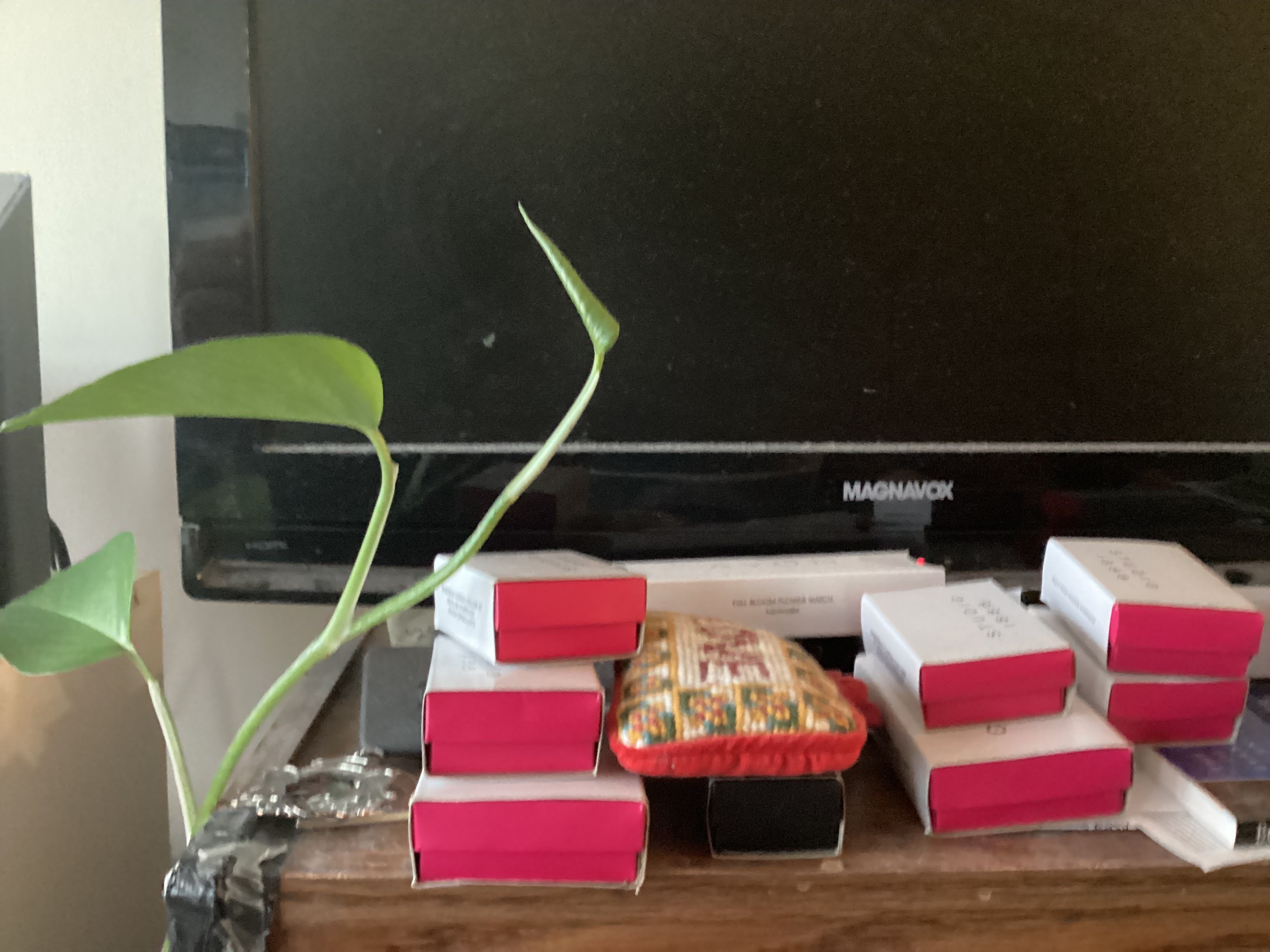
 It sprawled across the living room floor- over five feet diagnally from a shelf with three drawers, past a night table and a book shelf. It climbed over a plastic storage bin.
I don’t need to tell you how much our plant has grown
by Scott Lord on Silent Film, Swedish Silent Film, Danish Silent Film,


Scott Lord, Scott Lord and 3 others like this
15 Jul 23:49
Boston skyline from Donna’s Cambridge terrace,webcam video J...
by Scott Lord on Silent Film, Swedish Silent Film, Danish Silent Film,
Scott Lord, Scott Lord and 3 others like this
15 Jul 23:49
Greta Garbo in The Kiss (Feyder/Daniels, 1929)
by Scott Lord on Silent Film, Swedish Silent Film, Danish Silent Film,
Greta Garbo
 The Film Daily ran an announcement during 1929 titled "Feyder Directing Garbo" It related, "Greta Garbo has begun work on a new picture under the direction of Jacques Feyder, French director recently signed by M.G.M. Anders Randolph will play the husband in the film, an original by Feyder, not yet titled."
New Movie Magazine quoted the director, " 'Dialougue- that is what will make the love sparkle in American films.' Monsieur Feyder has a great vision of Greta Garbo's future. He directed her in her last silent film The Kiss. Says Mr. Feyder, "What possibilities are opened to her with her voice? She will branchout, her characterizations will broaden. She will enter into her cinema inheritance- and what a glorious inheritance it will be." The Film Daily inadvertantly reviewed the film as an "All-Talker", but the studio in its advertisements that ran in the magazine that year included the film in "a deluge of dialogue delights" that it would be offering. The subtitle to the review read, "Sophisticated drama of continental life puts Greta Garbo in a new kind of role but tragic story misses." The review explained, "Greta Garbo as always is very alluring and excersizes her erotic charm throughout the erotic portrayal. But the subject matter is too tragic and the ending not the type that her average fan looks for...Shapes up as a pretty sophisticated farce that lacks the American slant and is problematical whether Garbo fans will feel enthusiastic about seeing their favorite in this type of production...Feyder worked the camera technique in many novel ways and achives some effective shots." Richard Corliss aptly writes, "It's also true that Garbo looks beautiful but distracted. She walks through the role as if her mind were on other things." Picture Play summarily reported, "Commonplace story made glamorous by Greta Garbo, beautifully produced and directed. Film critic Paul Rotha, in his volume The Fill to Now, a survey of world cinema recognized the assingment of Greta Garbo to Jacques Feyder, "Quite recently Jacques Feyder, the Belgian, who in Europe is associated with the brilliant realization of Zola's Therese Raquin and the political satire Les Nouveaux Messiers, made his first picture for Metro Goldwyn Mayer, The Kiss, in which he skillfully combined intelligent direction with the necessary proportion of picture sense. his treatment of Greta Garbo was more subtle that that usually accorded to this actress by American directors...But there was a freshness about The Kiss that raised it above the level of the ordinary movie and a use of camera angle which was reminiscent of Feyder's earlier work." Earlier in the book Rotha had directed his attention to the film of Greta Garbo in an attempt to characterize the then contemporary film of the United States, "There is found then at the close of the pre-dialouge period of the American film, a mixed selection of production made according to formula...The ingredients of a successful film, conceived from a picture-sense point of view may be said to to: a strong, powerful theme (preferably sexual); a high-polished, quick moveing technique employing all the most recent discoveries (usually German); a story interest that will carry the sex at the same time allowing for spectacle and at least two highspots: and a cast of international players. Of such a type were Flesh and the Devil, The Last Command, The Patriot, Wild Orchids and The Kiss."
John Bainbridge reviews the film but more intriguing is his met intoning the social bond between Garbo and Feyder, I that she was less in contact with John Gilbert and both her sister and Mauritz stillerhas passed away. "however threadbare the plot, "The Kiss" has always been of interest to serious filmgoers for two reasons; it was Garbo's last silent film, and it was directed with consummate artistry...she also took pleasure from that Mrs Feyder was on the set nearly every day. After work the three often went to Feyders' house for dinner, and even once in a while to Garbo's." This was reiterated in Silver Screen magazine by Harriet Parson, who in 1930, penned, "24 Hours with Garbo"
It chronicled an evening where the journalist followed Greta Garbo "I caught my breath in excitement. It was Garbo! I sat breathless while she and her escort selected a table. It was the one next to mine, not four feet away. Garbo was dressed as no other girl in Hollywood would have dressed- a grey suit, severely tailored, a man's grey shirt, a navy blue tie with white dots, a navy blue topcoat and a dark blue beret with no hair showing from beneath it... Suddenly I recognized him- Jacques Feyder, the French director who made "The Kiss", Garbo's last silent picture. They began to eat...Afterward she drank black coffee and smoked a denicotinized cigarette. A flower woman came to the table with her little trey of blossoms. Feyder had purchased a gardenia and with a gallant guest urge handed it to Garbo" After dinner, Garbo and her former director went to a puppet show held in a theater next door where Greta Garbo was being portrayed bu a puppet dressed as Anna Christie. Feyder escorted her home that night as the 24 hour reporter followed, "A fortress as impenetrable as she is herself. She disappears-Feyder departs alone-midnight arrives."
The then twenty year old Lew Ayres was described by Screenland Magazine as a rare sensation that had unexpectedly catapulted on to the screen almost as if he had in fact been hurriedly signed as a newcomer in anticipation of the new technology of sound. When interviewed by Myrene Wentworth, Lew Ayers described his meeting Greta Gabo, " 'Gee, she is wonderful,' he said. 'I was scared to death when I walked on to the set but she made me feel right at home and helped me tremendously.'...It was a scene where he had to rush in and embrace her madly. 'And I hadn't even been introduced to her.', he said with an imagine-my-embarrassment gesture... Miss Garbo saw his discomforture and took his arm, turning to Jacques Feyder, the director. 'Would you mind making me acquainted with this young man?'."
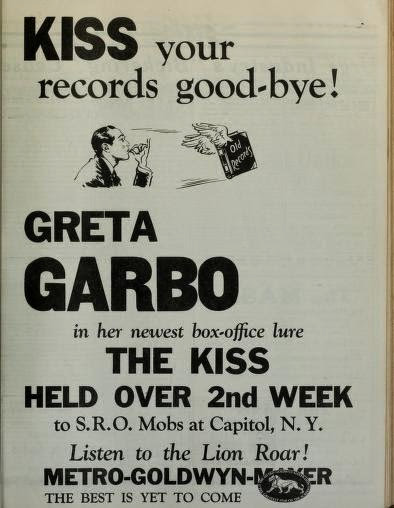

New Movie Magazine quoted the director, " 'Dialougue- that is what will make the love sparkle in American films.' Monsieur Feyder has a great vision of Greta Garbo's future. He directed her in her last silent film The Kiss. Says Mr. Feyder, "What possibilities are opened to her with her voice? She will branchout, her characterizations will broaden. She will enter into her cinema inheritance- and what a glorious inheritance it will be." The Film Daily inadvertantly reviewed the film as an "All-Talker", but the studio in its advertisements that ran in the magazine that year included the film in "a deluge of dialogue delights" that it would be offering. The subtitle to the review read, "Sophisticated drama of continental life puts Greta Garbo in a new kind of role but tragic story misses." The review explained, "Greta Garbo as always is very alluring and excersizes her erotic charm throughout the erotic portrayal. But the subject matter is too tragic and the ending not the type that her average fan looks for...Shapes up as a pretty sophisticated farce that lacks the American slant and is problematical whether Garbo fans will feel enthusiastic about seeing their favorite in this type of production...Feyder worked the camera technique in many novel ways and achives some effective shots." Richard Corliss aptly writes, "It's also true that Garbo looks beautiful but distracted. She walks through the role as if her mind were on other things." Picture Play summarily reported, "Commonplace story made glamorous by Greta Garbo, beautifully produced and directed. Film critic Paul Rotha, in his volume The Fill to Now, a survey of world cinema recognized the assingment of Greta Garbo to Jacques Feyder, "Quite recently Jacques Feyder, the Belgian, who in Europe is associated with the brilliant realization of Zola's Therese Raquin and the political satire Les Nouveaux Messiers, made his first picture for Metro Goldwyn Mayer, The Kiss, in which he skillfully combined intelligent direction with the necessary proportion of picture sense. his treatment of Greta Garbo was more subtle that that usually accorded to this actress by American directors...But there was a freshness about The Kiss that raised it above the level of the ordinary movie and a use of camera angle which was reminiscent of Feyder's earlier work." Earlier in the book Rotha had directed his attention to the film of Greta Garbo in an attempt to characterize the then contemporary film of the United States, "There is found then at the close of the pre-dialouge period of the American film, a mixed selection of production made according to formula...The ingredients of a successful film, conceived from a picture-sense point of view may be said to to: a strong, powerful theme (preferably sexual); a high-polished, quick moveing technique employing all the most recent discoveries (usually German); a story interest that will carry the sex at the same time allowing for spectacle and at least two highspots: and a cast of international players. Of such a type were Flesh and the Devil, The Last Command, The Patriot, Wild Orchids and The Kiss."
John Bainbridge reviews the film but more intriguing is his met intoning the social bond between Garbo and Feyder, I that she was less in contact with John Gilbert and both her sister and Mauritz stillerhas passed away. "however threadbare the plot, "The Kiss" has always been of interest to serious filmgoers for two reasons; it was Garbo's last silent film, and it was directed with consummate artistry...she also took pleasure from that Mrs Feyder was on the set nearly every day. After work the three often went to Feyders' house for dinner, and even once in a while to Garbo's." This was reiterated in Silver Screen magazine by Harriet Parson, who in 1930, penned, "24 Hours with Garbo"
It chronicled an evening where the journalist followed Greta Garbo "I caught my breath in excitement. It was Garbo! I sat breathless while she and her escort selected a table. It was the one next to mine, not four feet away. Garbo was dressed as no other girl in Hollywood would have dressed- a grey suit, severely tailored, a man's grey shirt, a navy blue tie with white dots, a navy blue topcoat and a dark blue beret with no hair showing from beneath it... Suddenly I recognized him- Jacques Feyder, the French director who made "The Kiss", Garbo's last silent picture. They began to eat...Afterward she drank black coffee and smoked a denicotinized cigarette. A flower woman came to the table with her little trey of blossoms. Feyder had purchased a gardenia and with a gallant guest urge handed it to Garbo" After dinner, Garbo and her former director went to a puppet show held in a theater next door where Greta Garbo was being portrayed bu a puppet dressed as Anna Christie. Feyder escorted her home that night as the 24 hour reporter followed, "A fortress as impenetrable as she is herself. She disappears-Feyder departs alone-midnight arrives."
The then twenty year old Lew Ayres was described by Screenland Magazine as a rare sensation that had unexpectedly catapulted on to the screen almost as if he had in fact been hurriedly signed as a newcomer in anticipation of the new technology of sound. When interviewed by Myrene Wentworth, Lew Ayers described his meeting Greta Gabo, " 'Gee, she is wonderful,' he said. 'I was scared to death when I walked on to the set but she made me feel right at home and helped me tremendously.'...It was a scene where he had to rush in and embrace her madly. 'And I hadn't even been introduced to her.', he said with an imagine-my-embarrassment gesture... Miss Garbo saw his discomforture and took his arm, turning to Jacques Feyder, the director. 'Would you mind making me acquainted with this young man?'."

Photoplay magazine during 1931 used two full pages to exhibit one photo of Jacques on the set to follow the director into the sound era in American film. It was a scene from his film "Daybreak", starring Ramon Novarro. The caption explains that the camera was "mounted on a rubber-tired 'dolly' for the making of traveling shots Jacques Feyder, director of Garbo's 'The Kiss' is the boss. He's at the extreme left, seated from the bottom." Film periodicals had counted on there being interest in the offscreen lives of film stars and in how they might put together a sound film, the extra-textual discourse embroidering distant super luminaries into the conversations that were held after the audiences left the public sphere of the theater and entered the fantasy objectifications of spectatorship that to some of the public may have seemed to be merely an ordinary walk home from the theater; and for theater goer Greta Garbo they may have been.
A publicity still published in Picture Play magazine during 1929 kept the caption, "Miss Garbo, at top of page, unhappy in the midst of luxury, reflects on how little life holds." Interestingly, although Greta Garbo in a low cut dress directing the view of the spectator to where she might not be wearing a bra is in front of a dressing room mirror it is not strictly a mirror shot in that she is also photographed in quarter profile as though nearing over the shoulder to effect a double image.

Greta Garbo Trade Magazines
Greta Garbo
Greta Garbo
Greta Garbo
Greta Garbo

Greta Garbo Trade Magazines
Greta Garbo
Greta Garbo
Greta Garbo
Greta Garbo
Scott Lord, Scott Lord and 4 others like this
15 Jul 23:49
Scott Lord Silent Film: One is Buisness, the Other Is Crime (D.W. Griffi...
by Scott Lord on Silent Film, Swedish Silent Film, Danish Silent Film,
D.W Griffith directed "One is Buisness, the Other is Crime", photographed by G.W. Bitzer, for the Biograph Film Company during 1912 The film stars actresses Blanche Sweet and Kate Bruce. Authors Edward Wagenkneckt and Anthony Slide, in their volume The Films of D.W. Griffith, put the film's themes of "stockmarket manipulation and political corruption" with those from Griffith's other films on the moral problems of "Gangsterism". It could be that modern audiences eventually view many of Griffith's films as being "lofty sensationalism", perhaps there being no direct link from the muckraking of Thomas Nast and Tammany Hall or from Naturalism. Scholar Mark Sandberg has termed Griffith's dramas as being "uplift cinema".
During 1912 actress Blanche Sweet also appeared onscreen under the direction of D.W. Griffith for Biograph in the film "The Lesser Evil", co-starring with actress Mae Marsh.The cinematographer to "One is Buisness, the Other Crime" was G.W. Bitzer.
D. W. Griffith
During 1912 actress Blanche Sweet also appeared onscreen under the direction of D.W. Griffith for Biograph in the film "The Lesser Evil", co-starring with actress Mae Marsh.The cinematographer to "One is Buisness, the Other Crime" was G.W. Bitzer.
D. W. Griffith
Silent Film
Scott Lord, Scott Lord and 4 others like this
15 Jul 23:49
 jpg)" width="480" height="360" src="https://youtube.com/embed/sPV6V5ZtSlM" frameborder="0">

Directed by D.W. Griffith and photographed by G.W. Bitzer, "The Girl Who Stayed At Home" (seven reels) showcased actress Carol Dempster.
In their volume The films of D.W. Griffith, Edward Wagenkneckt and Anthony Slide describe the theater transpiring onscreen during the film, its theatrical element, by contrasting the love scenes of its two couples; compared to the Seymour-Harron affair the "Carol Dempster-Richard Barthlemess love affair is strangely tepid; it lacks the joyful emotion of true feeling."
D.W. Griffith Silent Film
Scott Lord Silent Film: The Girl Who Stayed Home (D.W. Griffith, 1919)
by Scott Lord on Silent Film, Swedish Silent Film, Danish Silent Film,
 jpg)" width="480" height="360" src="https://youtube.com/embed/sPV6V5ZtSlM" frameborder="0">

Directed by D.W. Griffith and photographed by G.W. Bitzer, "The Girl Who Stayed At Home" (seven reels) showcased actress Carol Dempster.
In their volume The films of D.W. Griffith, Edward Wagenkneckt and Anthony Slide describe the theater transpiring onscreen during the film, its theatrical element, by contrasting the love scenes of its two couples; compared to the Seymour-Harron affair the "Carol Dempster-Richard Barthlemess love affair is strangely tepid; it lacks the joyful emotion of true feeling."
D.W. Griffith Silent Film
Scott Lord, Scott Lord and 4 others like this
15 Jul 23:49
Scott Lord on Film: Lillian Gish in Swedenborg, The Man Who Had to Know
by Scott Lord on Silent Film, Swedish Silent Film, Danish Silent Film,
Scott Lord, Scott Lord and 4 others like this
15 Jul 23:49
Anthony Slide, as part of his complete list of the films made by Vitagraph concluding his volume The Big V, A History of the Vitagraph Company, chronicles "The Deluge" with no director credited as having been released during February of 1911,
Most films made by the Vitagraph Company can be listed as Lost Silent Film.
Silent FIlm
Silent Film Adam and Eve (Vitagraph, 1911) The Deluge
Scott Lord Silent Film: Noah’s Ark (Vitagraph, 1911)
by Scott Lord on Silent Film, Swedish Silent Film, Danish Silent Film,
Anthony Slide, as part of his complete list of the films made by Vitagraph concluding his volume The Big V, A History of the Vitagraph Company, chronicles "The Deluge" with no director credited as having been released during February of 1911,
Most films made by the Vitagraph Company can be listed as Lost Silent Film.
Silent FIlm
Silent Film Adam and Eve (Vitagraph, 1911) The Deluge
Silent Film
Scott Lord, Scott Lord and 4 others like this
15 Jul 23:49
 THe periodical Motography announced in its November 23, 1912 issue that Thanhauser would release the three reel film "The Star of Bethlehem" one month later, on December 24, as its Christmas feature of that year. It describes the film and its costumes as being a spectacle film for its time period, which is early for the genre. The film gives an account of the prophet Micah and the "signs and portents" of the Old Testament continuing untill the Nativity.
A month later, when the company advertised the film as being on the same marquee as its "Romeo and Juliet", it promoted the films as belonging "an Easter programme", prompting exhibitioners to view it. The periodical The Cinema News and Property Gazzette explore the film belonging to a new genre during January 1913, "Of the making of films the stories of which are based upon Scripture there appears to be no end. There are some who would taboo this kind of picture, but for our own part, so long as we habe companies like Thanhauser, we care not how greatly this kind of film increases and multiplies. Reverence is the keynote..."
silent film silent film
Scott Lord Silent Film: The Star of Bethlehem (Marston, 1912)
by Scott Lord on Silent Film, Swedish Silent Film, Danish Silent Film,

A month later, when the company advertised the film as being on the same marquee as its "Romeo and Juliet", it promoted the films as belonging "an Easter programme", prompting exhibitioners to view it. The periodical The Cinema News and Property Gazzette explore the film belonging to a new genre during January 1913, "Of the making of films the stories of which are based upon Scripture there appears to be no end. There are some who would taboo this kind of picture, but for our own part, so long as we habe companies like Thanhauser, we care not how greatly this kind of film increases and multiplies. Reverence is the keynote..."
silent film silent film
Scott Lord, Scott Lord and 4 others like this
 Scott Lord shared items on The Old Reader (RSS).


09 Jun 16:44
Scott Lord Silent Film: Lonely Villa (D.W. Griffith, Biograph, 1909)
by Scott Lord on Silent Film, Swedish Silent Film, Danish Silent Film,
In her autobiography, Lillian Gish discusses D.W. Griffith's use of shot length in "The Lonely Villa". Linda Arvidson wife of D.W. Griffith, in her autobiography "When the Movies Were Young" claims that "The Lonely Villa" was the second film in which Mary Pickford had appeared, her having made her motion picture debut in the earlier "The Violin Maker of Cerona". Mack Sennett had gleaned the plot to "The Lonely Villa" from a newspaper.
Author Stanley J. Solomon, in his volume The Film Idea sees "The Lonely Villa" as only the beginning of the development of new film techniques by D.W. Griffith, almost intimating that there would be a synthesis of Griffith as an autuer and new developments in filmmaking would combine. "Although Griffith was working now with materials that could not be effectively duplicated onstage, 'The Lonely Villa' was not really totally cinematic. Griffith's understanding of spatial relationships was still limited; to get a person from one point to another, Griffith shows him moving there in stages." The passage is particularly refreshing because through it Solomon imparts to us where the title of his volume The Film Idea comes from and how it is his point of departure. He writes,"But Griffith learned quickly that a meaningful narrative must be embedded in a total film idea. Otherwise, when the surface movement is the whole film idea, the camera functions simply as a recording device and most of its expressive possiblilities are relegated to either unimportance or mere technique."
In her volume her volume D.W. Griffith, American film master, Iris Barry sees the film technique used by D. W. Griffith developed quickly during a short period of time, "In The Lonely Villa many scenes begin quietly with the entrance of the characters into the set, significant action follows this slow-paced start only belatedly. In The Lonedale Operator there is no leisurely entrance, the characters are already in mid-action when each shot begins and there is no waste footage- no deliberation in getting on with the story when haste and excitement are what is needed." Barry adds, "At no time did he use a scenario. But there was considerable protest when, quite early in his directorial career, he insisted on retaking unsatisfactory scenes and succedded in gaining permission to do so in The Lonely Villa. Bitzer and others were aghast at his extravagence with film."
Film historian Arthur Knight explains in his volume The Liveliest Art, "the legnth of time a shot remained on the screen could create very real psychological tensions in the audience: the shorter the shot, the greater the excitement. As early as 1909, he introduced this principle to build a climax of suspense in 'The Lonely Villa'....By cutting back and forth, from one to the other, making each shot shorter than the last, Griffith heightened the excitement of the situation."
Author Tom Gunning, in his volume D.W. Griffith and the Origins of Ammerican Narrative Film points out that D.W. Griffith had brought another innovation to film while at the Biograph Film Company, "The Lonely Villa" was comprised of a total of 52 seperate shots, compared to European film d'art that may have contained under 10. "The suspenseful parallel editing of 'The Lonely Villa' yeilded fifty-two shots from the twelve camera set-ups". The film was photographed by G.W. Bitzer
Adventures of Dollie: D.W. Griffith for the Biograph Film Company D. W. Griffith Biograph Film Company Biograph Film Company
Author Stanley J. Solomon, in his volume The Film Idea sees "The Lonely Villa" as only the beginning of the development of new film techniques by D.W. Griffith, almost intimating that there would be a synthesis of Griffith as an autuer and new developments in filmmaking would combine. "Although Griffith was working now with materials that could not be effectively duplicated onstage, 'The Lonely Villa' was not really totally cinematic. Griffith's understanding of spatial relationships was still limited; to get a person from one point to another, Griffith shows him moving there in stages." The passage is particularly refreshing because through it Solomon imparts to us where the title of his volume The Film Idea comes from and how it is his point of departure. He writes,"But Griffith learned quickly that a meaningful narrative must be embedded in a total film idea. Otherwise, when the surface movement is the whole film idea, the camera functions simply as a recording device and most of its expressive possiblilities are relegated to either unimportance or mere technique."
In her volume her volume D.W. Griffith, American film master, Iris Barry sees the film technique used by D. W. Griffith developed quickly during a short period of time, "In The Lonely Villa many scenes begin quietly with the entrance of the characters into the set, significant action follows this slow-paced start only belatedly. In The Lonedale Operator there is no leisurely entrance, the characters are already in mid-action when each shot begins and there is no waste footage- no deliberation in getting on with the story when haste and excitement are what is needed." Barry adds, "At no time did he use a scenario. But there was considerable protest when, quite early in his directorial career, he insisted on retaking unsatisfactory scenes and succedded in gaining permission to do so in The Lonely Villa. Bitzer and others were aghast at his extravagence with film."
Film historian Arthur Knight explains in his volume The Liveliest Art, "the legnth of time a shot remained on the screen could create very real psychological tensions in the audience: the shorter the shot, the greater the excitement. As early as 1909, he introduced this principle to build a climax of suspense in 'The Lonely Villa'....By cutting back and forth, from one to the other, making each shot shorter than the last, Griffith heightened the excitement of the situation."
Author Tom Gunning, in his volume D.W. Griffith and the Origins of Ammerican Narrative Film points out that D.W. Griffith had brought another innovation to film while at the Biograph Film Company, "The Lonely Villa" was comprised of a total of 52 seperate shots, compared to European film d'art that may have contained under 10. "The suspenseful parallel editing of 'The Lonely Villa' yeilded fifty-two shots from the twelve camera set-ups". The film was photographed by G.W. Bitzer
Adventures of Dollie: D.W. Griffith for the Biograph Film Company D. W. Griffith Biograph Film Company Biograph Film Company
Silent Film
Scott Lord Mystery Film, Scott Lord and 2 others like this
30 May 03:18
Scott Lord on Silent Film Hollywood, Lost Silent Film, Swedish Silent Film, Danish Silent Film: Scott Lord Silent Film: Harold Lloyd in Haunted Spooks (Hal Roach, 1920)
Scott Lord, Scott Lord and 2 others like this