Shared posts

18 May 16:13

Asu Cast One smartwatch with built-in projector is now a real thing you can buy

by Paul Miller

In China. Dreams, they arrive. A watch runs Android. 1280 x 800 laser projector. For American dollar, about $458.

Sorry I've just been reading a lot of Google Translate lately. The Asu Cast One, announced back in January, is patently crazy. A watch that has a built-in projector, and can project the future of user interfaces on the back of your hand, or, like, a movie on a nearby wall. You can buy one now in China for 2,999 Yuan. That's what I'm talking about. So now I guess I need to move to China. Brb.

Continue reading…

12 May 12:36

Get ready to change the way you type with this wearable keyboard

by Andy Boxall

The Tap Strap is an amazing wearable keyboard that turns gestures into taps, so you'll never need to touch your keyboard or touchscreen to type out a text message or email again.

The post Get ready to change the way you type with this wearable keyboard appeared first on Digital Trends.

10 May 13:21

MegaBots raises $2.4 million to create league of human-piloted, giant fighting robots

by Lora Kolodny
MegaBots MkII hydraulic robot weighs 12,000 pounds. Oakland, Calif. startup MegaBots Inc. has raised $2.4 million in seed funding to bring the robot-fighting stuff of manga and anime to a venue near you. According to MegaBots cofounders, Gui Cavalcanti, Matt Oehrlein, and Brinkley Warren, the startup aspires to follow in the footsteps of major sports associations like Formula 1 or UFC. With the seed funding, Warren said, MegaBots will be… Read More
10 May 09:15

Volkswagen crée un flyer miroir qui interagit avec votre rétroviseur

by Francois Castro Lara

En Allemagne, le constructeur Volkswagen a eu une excellente idée pour mettre en avant son « Side Assist ». Cette technologie permet aux conducteurs de pouvoir identifier les dangers (vélos, piétons, etc…) qu’ils ne peuvent pas voir grâce à des signaux au niveau des rétroviseurs. Pour communiquer sur cette technologie, le constructeur a mis au point un flyer simple mais intelligent en partenariat avec l’agence Grabarz & Partner.

L’idée : imaginer un flyer qui joue avec l’effet miroir des rétroviseurs. En le calant au niveau des rétroviseurs extérieurs, le conducteur peut voir un mot qui met en évidence des usagers de la route que l’on peut percuter facilement si on ne les voit pas, comme un vélo, un enfant ou une biche. Une idée toute simple et à moindre coût, qui part d’un simple flyer à imprimer, pour mettre en avant les avantages des véhicules Volkswagen. On aime !


Une idée de Volkswagen & Grabarz & Partner | Via adsoftheworld.com

Vous avez aimé cet article ? Découvrez toutes les idées créatives liées à l’automobile.

09 May 17:51

Siri-creator shows off first public demo of Viv, ‘the intelligent interface for everything’

by Lucas Matney
tcdisrupt_NY16-8916 Today, onstage at TechCrunch Disrupt NY, Siri creator Dag Kittlaus showed off the first public demo of Viv, an AI virtual system that aims to be “the intelligent interface for everything.” In a live presentation that mentioned the word “paradigm” at least a dozen times, Kittlaus talked a bit about the next wave of computer interaction methods and how Viv would… Read More
08 May 17:07

Un ado découvre la 5ème plus grosse cité maya en observant les constellations !

by Norédine Benazdia
Observer les étoiles peut aider à découvrir des cités mayas oubliées ! C’est exactement ce qu’a réalisé un ado de 15 ans qui a découvert une nouvelle cité maya grâce à une théorie qu’il a élaborée. Selon lui, les Mayas choisissaient l’emplacement de leurs villes selon la forme des constellations et non selon les ressources […]
22 Apr 07:20

Hans Jenssen et ses illustrations hyper-détaillées de Star Wars

by Ben
Auteur de la bible « Incredible Cross-Sections of Star Wars: The Ultimate Guide to Star Wars Vehicles and Spacecraft » sortie à la fin des années 90, l’illustrateur Hans Jenssen offre un nouvel éclairage à la saga Star Wars, et plus précisément encore à ses véhicules. Résultat, l’artiste aura accouché d’une série ultra-détaillée de croquis, découvrant les […]
17 Apr 12:15

Entretien - Jeff Clavier, investisseur dans la Silicon Valley

by Jean-Kléber Lauret
Les Numériques Comment présenteriez-vous votre métier à quelqu'un qui ne vous connaît pas ? Jeff Clavier : Nous sommes des investisseurs. Notre métier est de trouver, au sein d'un ensemble de sociétés qui démarrent, les jeunes pousses, comme on les appelle en France. Quelles sont celles qui ont une équipe, un produit, une vision et un marché qui...
24 Mar 22:02

Google's smart home assistant could take on Amazon's Echo

by Christian de Looper

The Amazon Echo has been a huge success, but Google is reportedly looking to build a home assistant of its own. Although little is known about the device itself, reports hint that Google will lead the project -- not Nest.

The post Google's smart home assistant could take on Amazon's Echo appeared first on Digital Trends.

18 Mar 08:12

Kinect to VR

by Greg Duncan

[A couple paragraphs of intro/comments]

Kinect lets you see yourself in VR game

What do you get when bring together the cutting-edge virtual reality (VR) of the HTC Vive system and the Kinect for Xbox One’s unparalleled ability to track multiple people in three-dimensional space? You get an experience that allows you to see not only what another player is doing in the VR space, but also to see a virtual representation of yourself. This is new and exciting, as current HTC Vive multiplayer games only show you representations of the other players, not yourself.

The work of Dutch developers Jasper Brekelmans (a Microsoft Most Valued Professional) and Jeroen de Mooij, the experimental process uses the Kinect sensor to track the bodies of two users in 3D space. By taking the Kinect data and aligning it with the Vive’s positional tracking, the developers have created a unique experience that lets users see a video representation of themselves and other players in a VR environment.

The setup that Brekelmans and de Mooij used in the video shown above consisted of two HTC Vive headsets and controllers, two workstation PCs, a Kinect for Xbox One sensor, and a laptop PC, all running on a local area network. But the developers point out that the same process could be used via the Internet, provided that both users use the exact same setup of HTC Vive components and Kinect sensors. And, as Brekelmans happily notes, “we managed to keep the data bandwidth to about 4 to 5 megabits per second, which took quite a bit of sweat.” ...

Project Information URL: https://blogs.msdn.microsoft.com/kinectforwindows/2016/03/07/kinect-lets-you-see-yourself-in-vr-game/

Collaborative VR experiment with multiple Valve/HTC Vive headsets

Recently we had the opportunity to play with two Valve/HTC Vive headsets and controllers so we opted to experiment a bit for a few days.

Since I strongly believe the Virtual Reality revolution needs a social element in order to really take of we implemented the following things to play with:
- multi user collaborative experience
- interaction with virtual objects using Vive's hand controllers
- implemented using two (networked) machines running Unity
- a live pointcloud of the users streamed in over the network

Note that in this example both users are in the same physical space, but we've designed all components so everything can be done over an internet connection (about 5 Mbps needed).

Project Information URL: https://www.youtube.com/watch?v=3OYY5n4U4JA

Follow @CH9
Follow @Coding4Fun
Follow @KinectWindows
Follow @gduncan411

14 Mar 10:07

Google : un système de reconnaissance vocale en mode déconnecté

Google a conçu un nouveau dispositif de reconnaissance vocale, lequel fonctionne en mode déconnecté et serait plus performant que ceux actuellement disponibles sur le marché. En lançant Google Now [...]


16 Feb 11:03

Transformez-vous en Captain America ou Iron Man !

by Flo
Le cosplay est une pratique très courante dans la communauté geek, et les noobs commencent également à s’y mettre depuis l’avènement des super-héros. Toutefois, à défaut de concevoir eux-mêmes leurs costumes, ceux-ci préfèrent acheter du « tout prêt ». Marvel et Hasbro vont ravir les fans d’Iron Man et de Captain America grâce à deux nouveaux accessoires. Il sera […]
16 Feb 10:12

KarTent Is a Cardboard Tent Designed For Music Festivals

Dutch designers developed the KarTent. It's a cardboard tent with a door and windows. It's easy to assemble and completely recyclable. The KarTent is made to withstand 3 days of constant rain. The cardboard allows for easy recycling of the tent. After the festival, the tent can go directly to the paper recycling industry, so that they can re-use your tent to make new products. Cool idea...(Read...)

16 Feb 10:05

Nissan’s self-parking office chair is here to make your Monday better

by Chris Plante

Technically, today is a holiday. You should probably have the time off, but you don't. You're here at the office, trying to catch up on email and a glut of busywork. I feel you. And so does Nissan. The carmaker has made this Monday slightly better by publishing a video of its self-parking chairs.

Inspired by the technology and learning behind its self-parking cars, Nissan designed what it calls the "Intelligent Parking Chair." Watching the mobile chairs skitter under tables is charming, like some sort of Pixar film about polite office furniture. "By day, these chairs are inanimate objects. By night, they park!"

The Intelligent Parking Chair can turn 360 degrees, and locates a target position with the help of four cameras, placed...

Continue reading…

16 Feb 10:03

See your home in VR before calling in the decorators

by Jon Martindale

Virtual reality is going to let us do more than just play games, it's going to help us design our homes. Put some new (virtual) furniture in yours with the new iStaging app, designed for interior design in AR and VR.

The post See your home in VR before calling in the decorators appeared first on Digital Trends.

11 Feb 12:31

Chrome for Android will soon alert you to nearby objects you can interact with

by Tom Warren

Google is moving forward with its plans to allow Bluetooth beacons to broadcast location-based information and URLs to your phone. The Bluetooth-based technology is designed so that a subway can tell you when the next train is coming, or a nearby parking meter can alert you how to pay when you park. This seamless interaction with, what Google calls, the "physical web" has long been promised, but an upcoming update to Chrome for Android will make it more of a reality.

Continue reading…

09 Feb 13:17

Riffing on Java vs. Node/JavaScript

by Jose Maria Arranz

I just watched an interesting discussion of Java and Node supporters on Youtube. The videos are in Spanish here and here. This subject is not indifferent to me. Soon my brain started to generate ideas, past facts, even traumatic experiences.

This article is an explosion of various ideas I have about Java, Node, JavaScript, and explicitly typed and weak typed languages.

02 Feb 13:16

Mysterious Magic Leap wraps up its mega-funding round

by Recode Staff

Magic Leap, the company that’s working on an “augmented reality” device that promises to blow your mind, has finished up a giant funding round.

Continue reading…

02 Feb 11:48

Myxypod : l’offre smart home & multimédia de Myxyty

by Hervé
myxypod-entete

Myxyty peut être catalogué comme acteur historique de la box domotique en France. Cette marque proposée par M2M Solution est celle qui a introduite sur le marché la Myxybox il y a plusieurs années à destinations des particuliers. Depuis ils travaillent activement pour proposer des solutions toujours pour la smarthome, mais pour le compte d’autres industriels. On pourra citer au palmarès des réalisations la Blyssbox de Castorama ou bien plus récemment  la  InTwo Box de Sagemcom ou encore la box SmartLife de Swisscom…  La marque Myxyty revient sur le devant de la scène à l’occasion du CES 2016 avec un nouveau produit: le Myxypod.

myxypod_entier

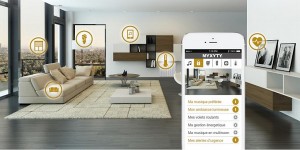
Myxypod est à ce jour un concept de smart home inédit. Cette solution française innovante tente de démontrer qu’il est possible de proposer via une solution grand public, un système approchant la convergence entre l’univers du multimédia et celui de la maison connectée.

myxypod-pictos

Le Myxypod est à considérer comme une fusée à étages où chaque étage recèle une fonctionnalité bien précise. La base du Myxypod est un savant mélange de box domotique et d’enceinte connectée dont le son peut être diffusé à 360° dans toute la pièce car elle dispose d’un son omnidirectionnel.

myxypod_noir

Il pourra diffuser des messages domotiques mais bien entendu des fichiers musicaux ou vos sons favoris issus de  d’une source DLNA ou encore de services de musique en streaming tels que Deezer ou encore Spotify pour ne citer qu’eux. Elle est conçue pour être utilisée seule ou en multiroom.  Elle offre en effet la possibilité de personnaliser la diffusion de la musique en fonction des pièces ou de synchroniser une ambiance musicale dans l’ensemble de la maison.

…cette enceinte à la silhouette élégante et aux courbes épurées dégage un son spatialisé à 360 degrés à la fois homogène et de qualité…

Sur le dessus de l’objet Myxypod trônent des boutons classique permettant d’agir sur la programmation musicale ou le niveau sonore de restitution. 3 boutons sont également prévus afin de donner accès au lancement de scénarii. Son look est issu d’une coopération entre Myxyty et le désigner Ora-ïto. Le but de cet objet est d’être neutre et beau afin de pouvoir s’intégrer facilement dans tous les intérieurs.

myxypod_boutons

Les fonctionnalités supplémentaires peuvent s’empiler sur cette solution qui fait rappelons-le office de box domotique modulaire. Pour cela il suffit de se procurer le module physique correspondant à la nouvelle fonctionnalité recherchée, de soulever le dessus du Myxypod qui présenteles boutons et de placer ce nouveau module sur la base. Toutes les connexions physiques sont présentes sur l’ensemble des modules pour que le nouvel rivant soit alimenté et vienne proposer ses services de manière entièrement Plug & Play. Il n’y a aucun branchements particuliers à prévoir.

myxypod_ouvert

Son évolutivité modulaire prévoit que l’on puisse rajouter les éléments suivants:

  • une caméra,
  • un éclairage d’ambiance,
  • un disque dur pour le stockage multimédia,
  • plus de connectivité radio,
  • un amplificateur,
  • un pico-projecteur,
  • un diffuseur de parfum,
  • la reconnaissance vocale,
  • la connexion GSM,
  • une batterie de secours,

Fonction-myxypod

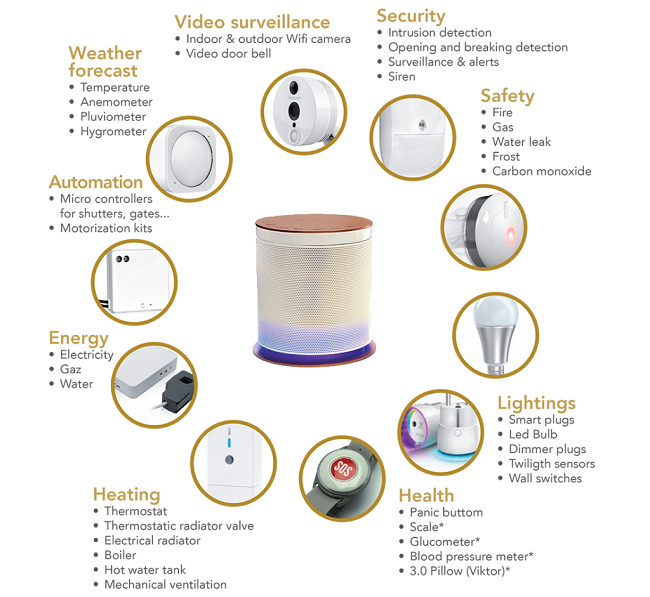
La bos domotique prévoit en effet de couvrir un peu tous les terrains de jeu de la smarthome moderne à savoir: musique, éclairage, sécurité, confort, efficacité énergétique, automatisme, santé connectée…
categorie-myxypod

Pour pouvoir y arriver elle pourra se reposer sur des périphériques domotiques classiques. Ces capteurs pourront être placés sur les portes, les fenêtres, les chauffages, … Myxypod prévoit d’être compatible avec les protocoles suivants : Zwave+, Zigbee, EnOcean, Thread, Bluetooth, WiFi ou encore le X2D qui est utilisé comme protocole dans la Myxybox. D’autres pourront venir enrichir le catalogue en fonction de la demande et des opportunités.

myxypod_blanc

La finalité de ce système à base de briques fonctionnelles physiques est de proposer un ensemble domotique cohérent. Cela permet également de donner la possibilité de gérer tous ces services via une seule et unique application. Elle permet de gérer à la fois la base, les modules additionnels, les périphériques et les autres bases présentes dans la maison. L’interface unifiée apporte une simplification de la gestion de la domotique.

myxypod_ecran1

myxypod_ecran2

myxypod_ecran3

myxypod_ecran4

L’expérience utilisateur devrait être facilitée par cette interface unique. C’est là que réside la promesse du système et le secret de la simplicité d’installation, de paramétrage et d’utilisation au yeux de Myxyty.

Il faudra patienter un petit peu pour que Myxypod arrive dans les bacs car la solution est prévue pour Noël 2016. Le tarif pour la brique de base de ce système plug & play devrait être proche des 300€. Le prix des autres modules n’a pas encore été communiqué. Une solution à suivre de près en tout cas.

Myxypod : l’offre smart home & multimédia de Myxyty

Cet article vous a été concocté par Abavala !!!

27 Jan 21:19

Google's neural nets are mastering one of the most complex games in the world

by Russell Brandom

A neural net system built by Google has beaten the European champion in the Chinese game of Go, winning five out of five games and crossing a new threshhold for machine intelligence. In a Google post and a paper published today in Nature, DeepMind researchers revealed how the system was constructed and how it was able to succeed where decades of previous Go systems have failed.

Go has long been considered one of the hardest games to automate, making the new DeepMind system particularly interesting for artificial intelligence researchers. Facebook is working on a similar Go-playing system, touted by Mark Zuckerberg in a Facebook post just days before the Google announcement.

Continue reading…

12 Jan 19:18

C’est fini ! Microsoft abandonne Internet Explorer 7, 8, 9, et 10

by Hadrien Miche

Aujourd’hui signe le jour de la fin du support officiel des anciennes versions d’Internet Explorer. Ainsi, les versions 7,8,9 et 10 ne recevront plus de correctifs de sécurité. L’occasion de passer à Internet Explorer 11 ou à Microsoft Edge, le navigateur de Windows 10. Internet Explorer, un calvaire pour les développeurs web, mais qui a […]

Cet article C’est fini ! Microsoft abandonne Internet Explorer 7, 8, 9, et 10 est apparu en premier sur .

12 Jan 19:10

CES 2016 – Ubot de Haier : la robotique rencontre les objets connectés

by Henry Grimaud
Lors du CES 2016, Haier a présenté Ubot. Ce petit robot représente une nouvelle façon de concevoir la maison connectée, puisqu'il a la lourde charge d'humaniser la relation entre l'utilisateur et les appareils de l'écosystème connecté de Haier baptisé U+. Ubot est capable de piloter tous les appareils de la maison connectée, du soin du linge à l'éclairage...
12 Jan 18:41

Device extends Bluetooth control in smart homes

by Aaron Towlson
cassia-bluetooth-smart-home

As more smart functions enter the home, innovations are offering ways to upgrade ‘dumb’ appliances. But for smart devices that use short range Bluetooth 4.0, Cassia has developed a way upgrade their functions, by boosting their control range to 1000 ft.

Cassia-hub-boost-bluetooth-signal-IoT-smart-devices-US-2

The wifi-connected Cassia Hub acts like a router, boosting Bluetooth signal from the standard open-air range of 30 ft to 1000 ft, making the signal detectable through three concrete walls. The hub works in two modes — Control Mode lets users pair all existing smart, Bluetooth devices in the Cassia app, acquiring control of up to 22 devices anywhere in the home, and Transparent Relay Mode boosts the signal of native apps when a device cannot be recognized. The Cassia Hub is available for preorder at USD 99, with shipping planned for early 2016.

With Bluetooth being widely used for Internet of Things networks, the hub could overcome the limitation of short-range signals. Could this tech be adapted for smart cities?

Website: www.cassianetworks.com
Contact: cassia@sparkpr.com

The post Device extends Bluetooth control in smart homes appeared first on Springwise.

08 Jan 16:45

The companies that rule mobile are taking over the smart home, too

by Jacob Kastrenakes

Smart home products have been part of CES for well over a decade. But it wasn’t until recently — really, just these past two years — that smart home products and the Internet of Things have become a huge deal. So why is it only now catching on?

Continue reading…

08 Jan 10:25

Smart Toy Maker Elemental Path Starts Accepting Pre-Orders For IBM Watson-Powered Dinos

by Sarah Buhr
NEW CogniToys_01 Elemental Path is now accepting pre-orders for its smart toy products. The smart toy maker made its debut on Kickstarter this year with a line of what it calls CogniToys, or toys that learn and grow with the child that plays with them. These toys, including a 3D printed dinosaur, are powered by IBM’s Watson supercomputer to help each toy listen to and engage with its child owner and… Read More
08 Jan 09:13

Panasonic's transparent display is hard for your eyes to believe

by Chris Welch

Transparent displays aren't really new in the technology industry, but this year at CES we're seeing some pretty amazing examples of them. There's LG's 18-inch display, which you can roll up like paper. And I just stopped by Panasonic's booth to check out the company's own transparent display. Unlike LG's, this one's not small enough to hold in your hand; it's meant for the living room. Panasonic's demo showcases the display attached to shelving with various home decor behind it. The wood you see beneath the glass is actually where all the technology is. Inside are micro LEDs that beam out the picture to the glass panel, which isn't completely transparent (Panasonic says engineers aim to get there), but still pretty amazing to see. It...

Continue reading…

07 Jan 13:45

Best of CES 2016: Rokid Amazing Robot AI Home Assistant As A New Family Member

by Charbax

Rokid Smart Robot Voice Assistant running Android on Samsung Exynos5410 Octa-core ARM Cortex-A15/A7 big.LITTLE with custom amazingly beautiful Android Launcher developed by Rokid projected using an integrated Texas Instruments DLP Pico Projector. Artificial Intelligence, Voice Conversations and Voice Commands are supported. Rokid supports far-field technology for 5-6 meters voice recognition with a bunch of algorithms with their microphones, such as AEC, beam forming, VAD, and more. Third party apps for music playback and perhaps even also Uber can be integrated, it's a Smart speaker with a microphone array it can detect where the voice is coming from, it can detect who is talking to it through voice print. Rokid implements Gesture Recognition, Face Recognition through it's front-facing camera, Rokid has Touch sensors on each side to do things such as turning up and down the brightness and volume. The experience with Rokid is totally amazing and the features for Smartly bringing notifications and voice commands to a room, this is how the Amazon Echo of the future could look like. There might be Robot Faces which a user can customize to choose if for example it should project a real face and perhaps also use speech based on a real recorded voice.

You can contact the project manager of Rokid here:

Logged-in Members of ARMdevices.net ($50/year) can see the full contact information for this company from the business card here. Become a Member Now!

07 Jan 13:41

Le Intel Compute Stick passe à l’architecture Skylake

by Yohann Poiron

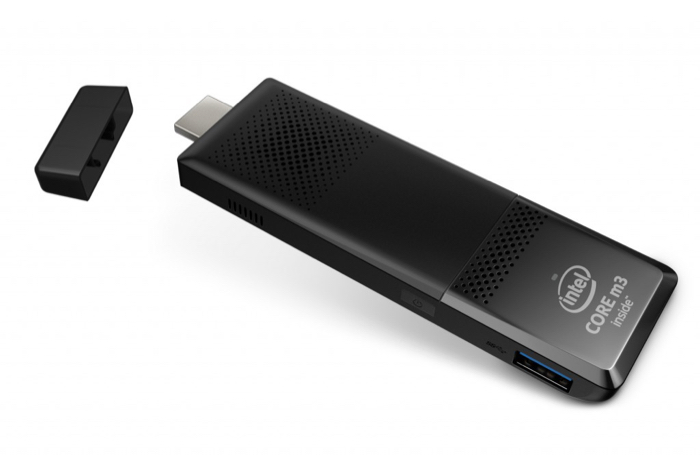
Le PC Stick d’Intel, ce fameux ordinateur qui prend la forme d’une clé USB, va devenir encore plus puissant et rapide cette année. Contrairement à la première génération du Intel Compute Stick, Intel a dévoilé une paire de Compute Stick avec ses nouveaux processeurs Core M, basés sur l’architecture Skylake de l’entreprise lors du CES 2016. Alors que le processeur Core M n’est pas aussi véloce que la populaire gamme Core i, il va offrir un gain de performances indéniable par rapport au processeur Atom Bay Trail de l’ancien modèle, introduit il y a un an au CES 2015.

Le premier modèle livré avec le processeur Intel Core m3 sera vendu au prix de 399 dollars. La version la plus puissante, avec une puce Core M5, sera au prix de 499 dollars. Les deux versions arriveront avec Windows 10. Les appareils vont disposer d’une connectivité Wi-fi 802.11ac, de 64 Go de stockage interne, de 4 Go de mémoire vive (RAM) et d’un port USB.

Intel n’a pas annoncé une date d’expédition pour les nouvelles versions de son Compute Stick.

Le Intel Compute Stick passe à l'architecture Skylake

Boost ton téléviseur en le transformant en Smart TV

Le Compute Stick est essentiellement un ordinateur de bureau sous Windows 10 qui est embarqué dans un périphérique de la taille d’un dongle HDMI pas beaucoup plus grand qu’une clé USB. L’avantage du dispositif est qu’il ne prend pas beaucoup de place, et s’avère être une solution pratique pour ceux qui cherchent à construire un ordinateur personnel destiné au home cinéma.

Pour ce faire, il suffit de brancher la clé HDMI sur votre téléviseur actuel, qui va automatiquement se transformer en une Smart TV. De même, vous pouvez recycler de vieux écrans et lui donner une nouvelle vie avec ce simple dispositif. Ce dernier est également facile à transporter, vous permettant d’avoir un PC dans une chambre d’hôtel, et que vous connectez le Compute Stick au téléviseur, et que vous y ajoutez une souris et un clavier en Bluetooth.

Le Compute Stick est essentiellement un ordinateur de bureau sous Windows 10

En plus des Compute Stick disposant d’une puce Core M plus puissants et plus coûteux, Intel a également annoncé une version avec un processeur Atom x5. Ce modèle va utiliser le processeur Atom Z8300 et sera équipé de 32 Go de stockage et de 2 Go de mémoire pour 159 dollars. Il arrivera aussi avec une connectivité Wi-fi 802.11ac et du Bluetooth.

Le facteur de forme du Compute Stick d’Intel est également adopté par d’autres fabricants de PC, dont Lenovo et ASUS.

Flattr this!

06 Jan 14:38

Razer’s Stargazer webcam is perfect for game streamers and Windows 10

by Tom Warren

Standalone webcams aren’t exactly exciting anymore, but Razer’s is a little unique. While Intel sells a developer kit for its RealSense 3D camera, Razer is bringing the technology to the masses with its Stargazer webcam.

Continue reading…

04 Jan 09:55

LG made an 18-inch display you can roll up like a newspaper

by Nick Statt

LG Display has a prototype 18-inch screen its showing off at the Consumer Electronics Show this week that rolls up like a piece of paper. The technology builds on LG's forward-looking OLED work focusing on bendable, rollable, and curving displays. The company showed similar technology last year as a proof of concept, but kept images behind closed doors. Now LG looks ready to show the world.

We've seen this type of concept display from the likes of Sony, SamsungSharp, and others in the past. However, it does indicate that LG sees these types of futuristic displays as differentiation points for smartphones, tablets, and TVs. LG envisions these types of screens rolling up into our pockets or being made to wrap around interior spaces, and...

Continue reading…