Note in the title of this article I said ALMOST. Having and maintaining a fish tank is a great deal of constant work. But seeing an original fish tank like this done so superbly in a Super Mario theme, I cannot but think of how cool that would look in my home.
But (and there is always a but)…
I have had fish tanks and know how much work they are so I will just save this picture to smile now and then and keep my fish tank-less life going just the way it is.
Bebop Sensors created the Marcel Modular Data Gloves for virtual (and augmented) reality capable of accurately tracking hands and fingers. They are designed to be modular so that headset makers can create unique experiences.
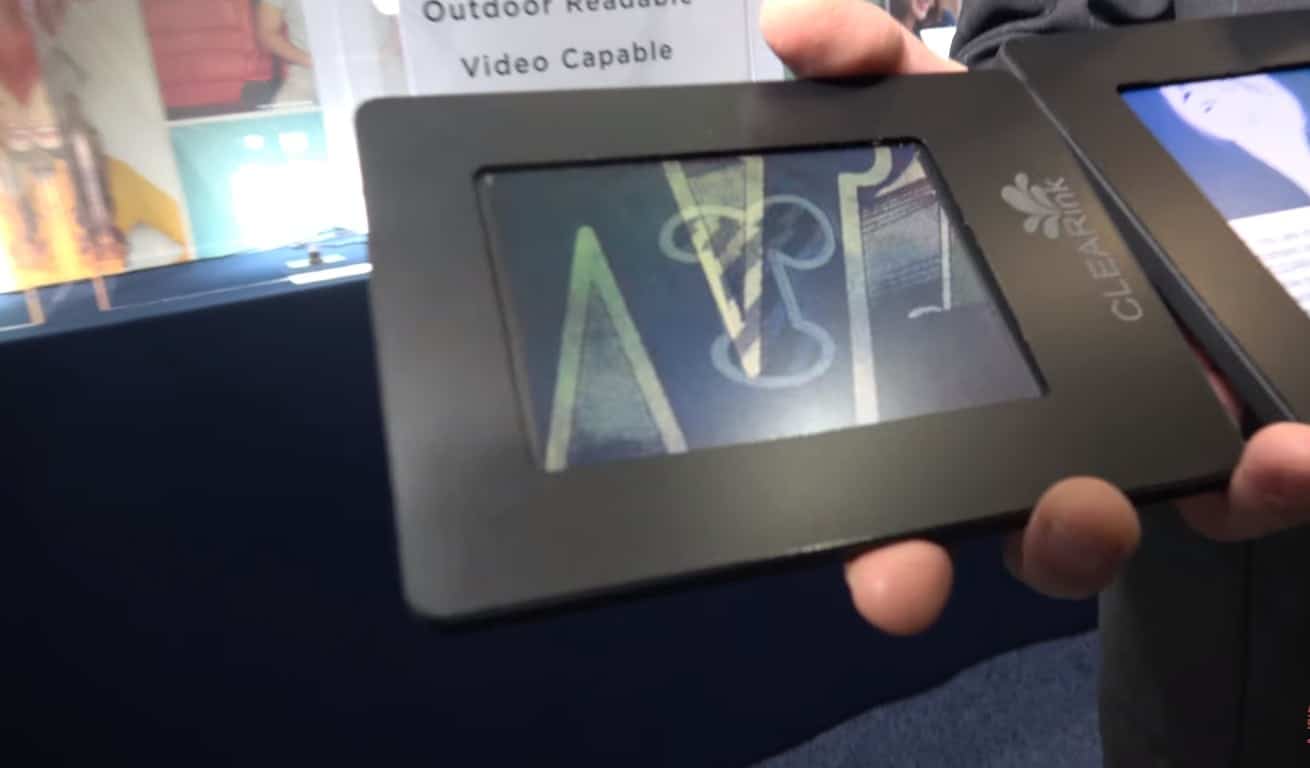
Charbax met with CLEARink Displays Chairman and CEO, Frank Christiaens and VP of Engineering, Scott Ferguson, at SID DisplayWeek 2017 in Los Angeles this week.
The company won the "Best of Show" award for its reflective screens.
CLEARink Displays' tech works on the principle of Total Internal Reflection (TIR) which occurs on the top plane of the display where light is reflected back creating white state images.
The top plane also encompasses an electrophoretic mechanism where applying a charge causes black particles to rise to the top and absorb light, thus creating the black state, and all this is driven by the back of the display, which is a TFT backplane essentially identical to what is used in E-ink screens and LCDs.
The CLEARink demos are running video at 30 frames per second. The company said that they are targeting wearables, mobile devices, electronic shelf labels as well as signage.
CLEARink is in trial production in a LCD fab and will have samples ready for the customer in the next few months with mass production in the first quarter of 2018.
I suggest that you take the claims of "first ever" with a grain of salt.
Reflective LCDs are old hat; the Pebble watch uses a reflective LCD screen made by Samsung, and you can even buy old stock reflective LCDs from discontinued product lines.
And of course Qualcomm's Mirasol and Pixtronix each had reflective screen tech. Their screens were based on very different tech from CLEARink, but the screen tech was low-power and reflective, and Mirasol could display video.
So CLEARink is not the first, but it does have at least one advantage over Mirasol and Pixtronix: CLEARink is still around, and it's about to bring a product to market.
E-ink screen tech hit a plateau three years ago when the Kindle Voyage was released with a 300 ppi screen. We haven't seen any increase in E-ink screen resolution (and not much in the way of new E-ink tech, either) since the Voyage was released, but that changed today.
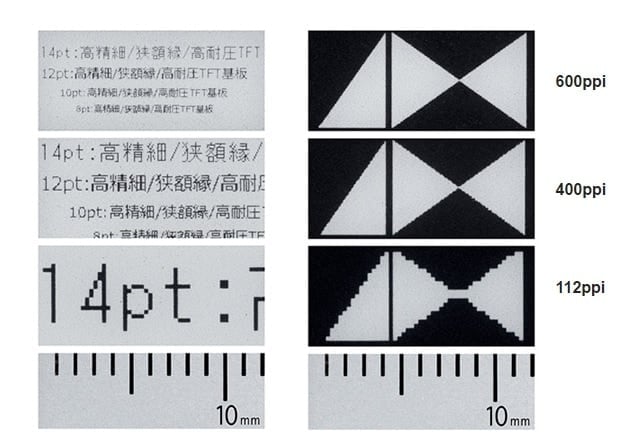
Japan Display is demoing a pair of new backplanes at SID Display Week this week. When used as parts of E-ink screens, the backplanes will allow for 400 ppi and 600 ppi screens.
JDI described the new backplanes as using LTPS (Low Temperature PolySilicon) tech, and said that it could be used for higher resolution screens on par with high-end smartphones screens.
Right now the sharpest e-ink screens on the market can be found on the Kindles, the Kobo Aura One, the Boyue T63, and a handful of other ereaders.
The new screen would be twice as sharp and have four times as many pixels.
It will also require a more powerful CPU to drive the extra pixels, and that means either a bigger battery or shorter battery life.
So while enthusiasts may one day get the high-res E-ink screens they've alway wanted, those screens are going to come at a price - a price that some won't want to pay because we can't really see the difference between a 300 ppi screen and one with 400 ppi, or 600 ppi - not when we're reading text, anyway.
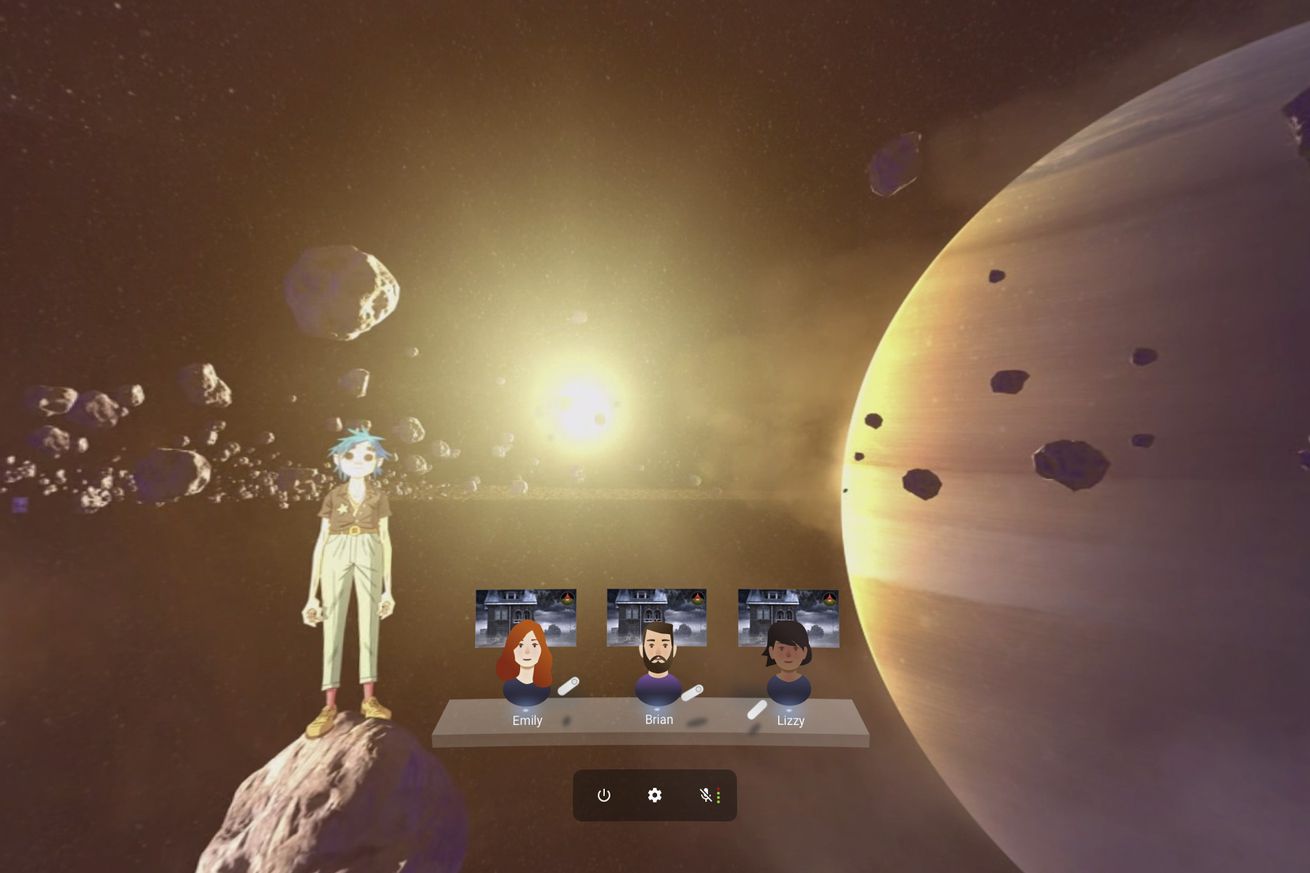
The virtual reality version of YouTube is adding shared rooms that will let people view 360-degree videos together, part of a larger update to Google’s Daydream VR platform. The new feature, coming later this year, offers what YouTube VR product lead Erin Teague calls a “co-watching experience.” That means that small groups of people can enter a viewing session, talking to each other via voice chat.
Teague describes community as “one of the core pillars that makes YouTube YouTube.” People will have control over what they’re viewing, but they’ll be able to see what other people are watching and choose to sync up the same video. People will appear as customizable (but generally human-looking) avatars, and they’ll speak out loud in real...
Microsoft a enchaîné les annonces à un rythme soutenu depuis l’année dernière. Après avoir levé le voile sur le tout premier tout-en-un de son histoire, le géant américain a remis le couvert avec un nouveau laptop conçu pour les utilisateurs les plus nomades. Ces deux machines arriveront en France le mois prochain. Plus précisément le […]
Not to be left out, AR also got some shine from Bavor and there are some cool things down the pipeline.
First up, the 2nd gen AR phone will go on sale this summer. The new Asus ZenFone AR is a far cry from the first Tango-equipped device, adopting the small form factor prevalent across the mobile phone industry currently. Bavor didn’t spend very time on hardware before he shifted right into new technology that could send shockwaves across the mobile industry.
“AR is most powerful when it’s tightly coupled to the real world,” says Bavor. “The more precisely, the better.” Google has been working with the Google Maps team to get precise location data for indoors. The result is Visual Positioning Service, or VPS, which uses your phone to find distinct visual features in your surroundings to triangulate and get you to your desired space.
The example on stage showed a VPS equipped phone take a user directly to the specific screwdriver he or she needed in a Lowe’s store. The visual representation of how this works showed the phone’s camera marking “feature points” with different color dots. It recognizes where items are in the space down to within a few centimeters. Then the user interface shows navigation-like elements as the user is guided down aisles.
Bavor followed the demo up with an anecdote on how an audio-based version of VPS could help those with impaired vision and “transform how they make their way through the world”.
He also revealed that VPS will also be one of the core capabilities of Google Lens, which we recently covered as well. A lightweight pair of AR equipped glasses with Lens tech and VPS would be incredible to experience and, hopefully, we’ll see that initiative come to fruition in the near future.
Lastly, Bavor tackled AR’s capacity as an educational tool. With over 2 million students served by the Expeditions VR experience, which gave teachers a way to travel with their students without leaving the classroom, Google is now adding an AR mode to give students an augmented way to learn about things seen in the classroom.
The video shown displayed a classroom where each student was equipped with phones on selfie sticks as they watched an augmented volcano erupt on their desk and a tornado take shape in the class. The AR mode got the students up, moving, and excited about the things popping up in their learning environment.
Implications are that Google is gearing up to take Tango and AR the extra mile as they add more and more functionality. It will be interesting to see what happens next.
La chine annonce son robot-combattant et provoque l'Amérique en duel !
Avez-vous déjà regardé des films dans lesquels des robots se battent, pilotés de l'intérieur, pour leur pays ou contre des monstres ? Si ces scènes épiques vont ont marquées, préparez-vous : des ingénieurs Chinois viennent de dévoiler le 3ème robot de combat : leur "robot-gladiateur" le Roi Singe (King Monkey) !
Silicon Valley is Mike Judge and Alec Berg’s biting comedy about the American tech industry, now in its fourth season. Every week, we’ll be taking one idea, scene, or joke and explain how it ties to the real Silicon Valley and speaks to an issue at the heart of the industry and its ever-lasting goal to change the world — and make boatloads of money in the process.
Spoilers ahead for the third episode of season 4, “Intellectual Property.”
What started as a silly and somewhat racially insensitive joke from last week’s episode has turned into Silicon Valley’s latest clever skewering of the tech industry’s fanciful obsessions. The show has always had a knack for tapping into lowbrow humor — who could forget season 1’s elaborate dick joke...
Hahna Alexander shares the journey the self-charging work boots that deliver actionable insights to increase efficiency and improve safety. At the core of SolePower’s development is a patented kinetic charger that generates power every step. Hahna is a 2017 winner of Toyota Mothers of Invention.
In building and testing our bot at Everist, we’ve applied many habit building principles to drive behavior change.
This is what we’ve learned so far.
Conversations Can Drive Habits
My co-founder Scot goes for a run every afternoon around 3pm. Before he does, he usually says, “hey, I’m going for a run.” I realized recently that just hearing him say those words causes me to get up and get a cup of coffee.
Think about that. A person says something and it triggers a physical reaction. I am aware that I usually have an afternoon coffee, but I only noticed it was on cue after hearing a similar habit described in this video.
If you work with other people, you might be saying a version of the same thing to the same person every day. Something like: “good morning, Jen.” The next time you do this, try to see what the recipient of your greeting does after you say it. Is your conversation a habit cue for them? If they get few other interruptions to their day, you could be influencing their behavior.
What Are Habits?
Habits are actions that we take without having to consciously decide to take them.
The part of the brain associated with habits is called the basal ganglia. It is separate from the part of the brain that makes decisions, the prefrontal cortex. Once you establish a habit, your basal ganglia doesn’t need to consult with your prefrontal cortex before taking action. (For an explanation of this concept, Thinking Fast and Slow by Daniel Kahneman is the go-to).
Think about a simple action like turning on the light when you enter a room. You reach for the switch automatically, sometimes even when the light is already on. It’s not a conscious decision.
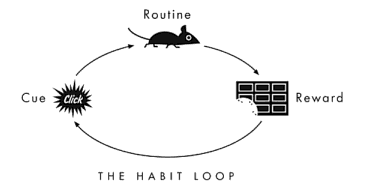
Every habit follows a psychological pattern that Charles Duhigg calls a Habit Loop. Something that serves as the cue, a routine happens without much thinking, then there’s a reward. For turning on the lights, the cue is that it’s dark, the routine is the action of flipping the switch and the reward is that the lights come on. We’re basically rats.
Charles Duhigg
Duhigg says, “when a cue and a behavior and a reward become neurologically intertwined, what’s actually happening is a neural pathway is developing that links those three things together in our head.” The reward we get from completing a habit is linked to the cue we get next time it’s time to perform the action.
How To Influence Habits Digitally
The point of establishing habits is to move as much action as possible to your subconscious mind. It follows that digital products influencing behavior should require little conscious effort.
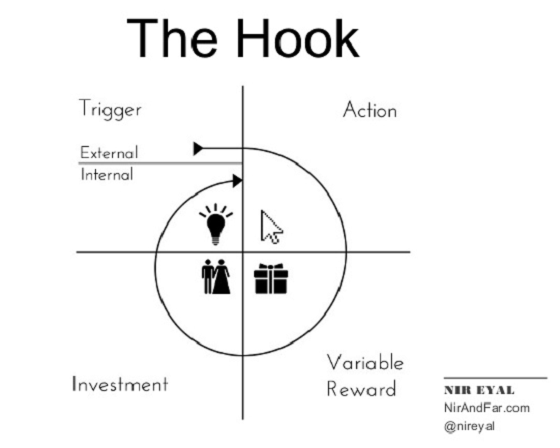
In Hooked, Nir Eyal takes the idea of the habit loop to designing products that become habitual.
Nir notably changes “reward” to “variable reward”. Variable rewards are what make Facebook or Pinterest so sticky. After you take the action (in this case to open the app), your reward (seeing your timeline) will never look the same. That unpredictability keeps you coming back for more.
Without a strong reward, notifications stop causing you to take action. Nir adds “investment” as the final step in the loop to emphasize the need for strong rewards to drive the next cue.
Why Chatbots Are Perfect For Habit Building
Bots are able to facilitate every part of the Habit Loop/Hook.
🔔 Cue/Trigger………………………Broadcast message from bot ✅ Routine/Action ………………….User action 🎁 Reward/Variable Reward ………Response from bot 💰 Investment ……………………….User becomes engaged
The most successful bots organically follow this process and have more engaged users as a result. If their end goal is not to build a habit, using the bot becomes the habit.
Below are some of the characteristics about bots that make them a useful tool for habit building with examples of bots already helping users build habits.
1. ACCESSIBILITY
Bots can live where you’re already chatting with real humans like Facebook Messenger or Slack. This makes them more literally accessible in that you don’t have to download another app.
But also, everything from the color of the icon and the format of the message makes the interaction feel more familiar, friendly and accessible. This drives a more positive association to the habit cues.
healthybot.io
Healthybot on Slack helps you build and track healthy habits at work. Healthybot lives within Slack which makes you more likely to read the its messages and track your progress without leaving the context of work.
2. PERSONALITY
Bots should have a personality and feel like a familiar person or character. The personification of the tool helps drive stickiness of the habit. Conversation is a more human way to influence behavior than push notifications, for example.
pennyapp.io
Penny, a bot that helps you build better spending habits, establishes personality really well. She is funny and supportive but her personality doesn’t distract from her function.
Habits related to money already carry a lot of baggage so keeping it positive and friendly is really helpful in helping users stick to using it. A good indicator of an established personality is when you call the bot “she” or “he” without even noticing as I’ve done here. :)
3. ACCOUNTABILITY
Chatbots provide the perfect level of accountability.
Humans are okay at holding each other accountable, but all relationships also come with lots of confusing context. When we interact with someone, we don’t just focus on the interaction. We are also thinking: “does this person like me”; “do I like this person”; “last week this person interrupted me in a meeting”.
There’s a natural level of judgement you feel when you interact with humans. This feeling sometimes drives you to complete an action, but it doesn’t help you to develop a habit.
You might try to hold yourself accountable to completing an action habitually. You can do this by using calendar reminders or push notifications, for example. But that experience is impersonal. It’s clear that no one else is seeing your progress or cares.
Chatbots have the opportunity to tow this line between I care a little bit what this thing thinks of me because it has a personality and I still know I’m smarter than it and don’t assign any other human baggage to our relationship.
It’s the right balance to influence a habit since they are subconscious but also require real action.
everist.ai
At Everist we’ve built Evie to influence productivity habits like prioritization and reflection at work. Our most interesting find in testing was that people felt MORE accountable to the bot than to a human.
4. SURPRISE
The most engaging human conversations are ones where you’re constantly surprised about what you hear. It’s the same with bots.
Within a conversational interface, we can provide strong variable rewards that would be disorienting in a visual context.
This is as simple as making the user feel heard by understanding their answers. The more unique and customized the rewards get, the deeper the investment the user makes.
m.me/hellojoyai
Joy on Facebook Messenger is a bot that that helps build a habit of reflection. It asks simple questions like, “how are you today?”. The bot runs sentiment analysis on your answers and reflects back to you how you’re feeling. This is surprising and delightful every time.
Why This Matters
People are more overwhelmed and distracted than ever. With so many constant digital distractions, we spend lots of time trying to decide what to do next. This makes building habits a crucial skill.
As we all speculate and try to figure out the right place for bots, habit building is a use case that could be native to the medium.
It is a fundamental shift in how we approach behavior change and there are opportunities in every industry to leverage it. Fields as diverse as healthcare, finance and government are already building bots with habits in mind.
What do you think? Could this be the superpower of bots?
Are there more examples of bots doing this well?
Call To Action
Our bot, Evie is in beta on Slack! Our users find it’s a painless way to be more productive and feel good about daily work. Click to join.
If you liked this post please hit us with a little ❤ below.
Cela fait longtemps que les psychothérapeutes utilisent des « jeux de rôle » pour aider leurs patients à mieux gérer leurs difficultés à affronter la société. Mais ces « jeux de rôle » n’ont pas grand-chose à voir avec les autres jeux de rôle, dont Donjons et Dragons est l’archétype, ceux joués sur tables avec des dés et qui précipitent les participants dans un univers fictionnel appartement généralement à la fantasy ou à la science-fiction.
Mais, nous raconte Kotaku, c’est en train de changer. Plusieurs équipes de psychologues, aux Etats-Unis, utilisent aujourd’hui D&D dans un but thérapeutique.
Adam Davis et Adam Jones ont fondé à Seattle le Wheelhouse Workshop, où sont organisées de telles parties de jeu de rôle. La journaliste de Kotaku, Cecilia D’Anastasio, nous donne l’exemple d’un adolescent, Frank, qui se révélait incapable de communiquer dans son environnement scolaire, et qui restait toujours isolé. Ils lui firent jouer le rôle d’un nain barbare, bruyant et sans manières. Ils firent asseoir Frank dans la position de son personnage, les jambes écartées et les coudes confortablement installés sur la table. En jouant ce personnage, explique Cecilia D’Anastasio, Frank a pu expérimenter d’autres manières d’interagir avec autrui.
Le jeu pourrait également aider les enfants qui se sentent désorientés dans la société, et même aider à mieux gérer l’autisme. Cecilia D’Anastasio raconte avoir rencontré la mère d’un enfant peu flexible, qui avait du mal à dévier de ses idées. Mais, lors d’une partie de D&D au Wheelhouse Workshop, les aventuriers constituent une « compagnie » qui doivent avoir à gérer des problèmes collectivement. On ne peut pas en faire qu’à sa tête. Parlant de son enfant à la journaliste de Kotaku, elle lui a expliqué qu' »il m’a effectivement dit qu’il n’était parfois pas d’accord avec ce que ses compagnons d’aventure avaient décidé…, et plus tard, il a fini par convenir que leur décision était la bonne… C’est une surprenante amélioration de sa flexibilité. »
En Pennsylvanie, le Bodhana Group s’occupe de cas particulièrement difficiles. Ces thérapeutes sont en charge d’un groupe exclusivement constitué de garçons au comportement difficile, certains ayant même commis des agressions sexuelles. Pour les aider, Jack Berkenstock, qui dirige l’équipe, conçoit des parties de Donjons et Dragons spécifiquement adaptées à ces jeunes.
Berkenstock s’efforce de concevoir des jeux où les actions des joueurs ont des conséquences, par exemple, il n’empêcherait pas un joueur trop impulsif de se précipiter dans un repaire de dragons. Si son personnage est sévèrement blessé, c’est une répercussion naturelle. Lorsque ses joueurs effectuent un raid sur un village d’orcs, il prend soin de montrer comment cela affecte les enfants orcs ou leurs mères. « Je crois que vous pouvez explorer les conséquences de vos actions dans un environnement où personne ne se blessera physiquement », a déclaré M. Berkenstock.
D&D va-t-il se professionnaliser et s’intégrer officiellement au catalogue des pratiques thérapeutiques ? Comme le conclut intelligemment la journaliste de Kotaku, certainement pas, et cela vaut mieux ainsi : « D&D n’a jamais été et ne sera jamais commercialisé comme un outil thérapeutique. C’est juste un jeu. C’est aussi pour ça qu’il pourrait fonctionner avec les enfants qui ont besoin d’aide. »
A new Bluetooth-enabled bottle cap called Pillsy is designed to prevent people from forgetting their pills. The device launches today for $39 and will remind you to take both medicine and vitamins, or really, whatever you need daily.
Pillsy syncs with a companion iOS / Android app that pulls information about different drugs from an FDA database. You can enter the name of a medication, the dosage amount, and what time you want to take it every day. Reminders will then come in the form of a text message, phone call, or lockscreen reminder. Of course, all this medical information is sensitive, so Pillsy says it’s HIPAA-compliant, meaning it can’t sell your data.
Vous connaissez Steam, et son quasi monopole sur le marche des jeux vidéos? Vous voulez passer à autre chose, qui respecte plus les créateurs, et qui n’ait quasiment aucune sélection à l’entrée? Bonne nouvelle ! Un tel site existe, et comme vous l’avez deviné, il s’agit d’itch.io ! itch.io : Un site destiné aux indépendants […]
Baidu recently made an astonishing breakthrough in machine learning. They’ve achieved zero shot learning by programming a bot to teach another bot how to read. But in a surprise twist, they ended up with an AI that is able to understand language at amazingly complex levels.
HTC has announced an announcement: something’s happening on May 16th, according to a flyer sent out with the tagline “Squeeze for the brilliant U.”
What on earth could that mean? Well, we’ve already heard word of an upcoming phone codenamed Ocean and likely to be officially called the HTC U, and it’s said to have a feature called “Edge Sense” involving touch sensors embedded in the frame around the phone — in other words, you could interact with the phone by squeezing it.
This isn’t a wildly new concept. Nearly five years ago my former colleague Jeff Blagdon and I saw a “Grip UI” prototype from Japanese carrier NTT Docomo that was designed to show off use cases for the same technology — it could launch apps, perform voice searches, and...
Les utilisateurs de Dropbox sous Android ne jalouseront plus leurs homologues sous iOS quand ils les verront mettre à profit la fonction de sauvegarde de documents de l'application.
Les trois principales étapes du fonctionnement de l'archivage de documents sur Dropbox, version iOS.
La fonction "Sauvegarde de documents" de Dropbox est bien pratique...
New York-based 3D capture startup GeoCV, raised $1.8 million in seed investment from Runa Capital, Emery Capital, and several New York angel investors.
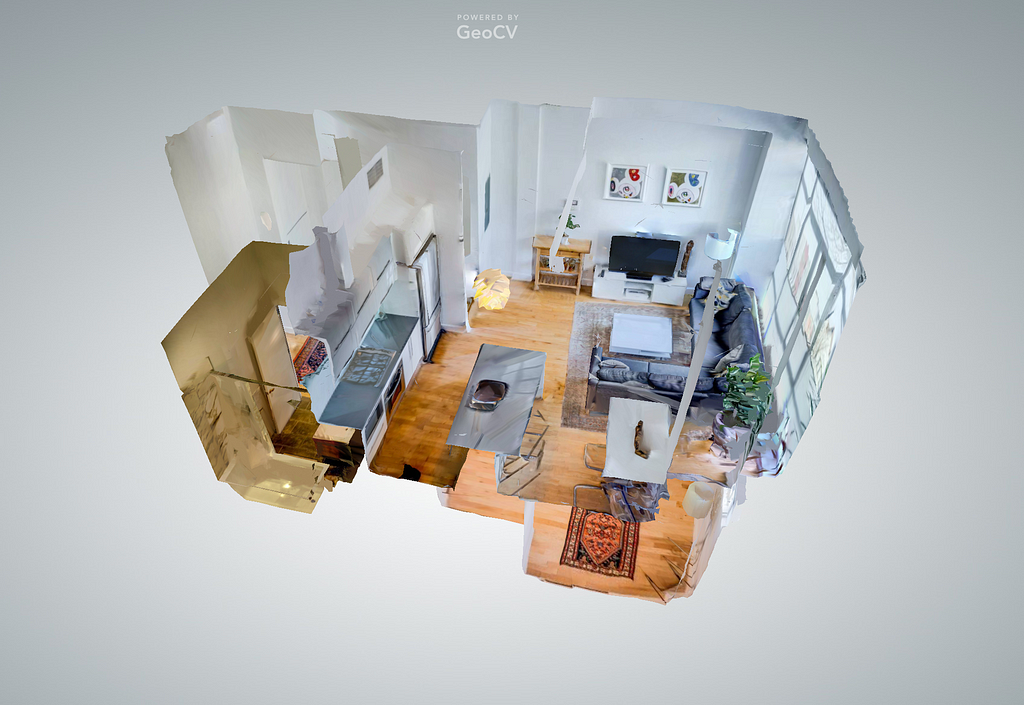
The company scans interior spaces using a 3D camera equipped smartphone and proprietary software. The space can be viewed in 3D from any angle in virtual reality (VR), or in a web browser.
Unlike the company’s competitors like Matterport, that offer 3D scanners at a price of $5,000, GeoCV utilizes $500 smartphones with 3D cameras such as Lenovo Google Tango.
“Our goal is to become the world’s №1 solutions provider for 3D capturing,” said Anton Yakubenko, GeoCV co-founder and CEO in an official statement.
“Real estate is a beachhead market, where agents can include a 3D virtual tour in their listing. Other brick and mortar industries such as construction, interior design, insurance and property management will follow. User-generated content creation tools are the longer-term future when everyone has a 3D camera in their pocket and can easily view in AR and VR.”
GeoCV was founded in 2014 by 3D computer vision experts with 12 years of experience in the industry. The company has previously raised $700,000 and is an alumnus of San Francisco-based Rothenberg Ventures River River accelerator for VR companies, and New York-based Starta Accelerator.
Sign up today! Our premium newsletters are designed to help you navigate the best practices of VR/AR in health care, education, entertainment and enterprise markets.
Follow us on Medium to get the latest Virtual Reality trends and news in your inbox every week.
Disclaimer: We publish affiliate links. If you purchase a product by using these links we may receive a small commission to support our service. We are an independent publisher committed to bring the latest trends, products and services on Virtual and Augmented Reality.
Utiliser la réalité augmentée pour révolutionner la technologie de projection, c’est le défi relevé avec brio par Lightform, une start-up californienne. La marque est en effet parvenue à développer un outil qui permet de réaliser des projections sur n’importe quel type de surface. Les utilisateurs n’ont plus besoin d’une surface parfaitement plane pour pouvoir diffuser […]
This is a video of Russian humanoid robot F.E.D.O.R. (Final Experimental Demonstration Object Research) blasting away with two handguns. But don't worry, guys, this totally isn't a Terminator. "The robot of the F.E.D.O.R. platform showed skills of firing using both arms. Currently the work on fine motor skills and decision algorithms is underway," [Deputy Prime Minister Dmitry] Rogozin wrote on his Twitter. âAccording to Rogozin, training to shoot is a way of teaching the robot to instantaneously prioritize targets and make decisions. "We are not creating a terminator but artificial intelligence which will have a great practical importance in various fields," he added...(Read...)
The Internet Archive is an indispensable resource for web users, backing up websites and documents, but also providing copies of historical software, such as the earliest home console and arcade games. Now, there’s a new collection that should delight anyone who grew up in the 1980s: an entire collection of Macintosh programs, which you can play right in your browser.
Earlier today, the site released a new software library: emulated programs from Macintosh computers dating from 1984 through 1989. The collection is a wonderful dose of nostalgia for anyone who grew up using these computers at home, work, or school. The best part is that you can emulate the programs right in your browser.
Google announced that it's working even harder to bring VR to entry-level price points, by adding WebVR support to Google Cardboard and launching its WebVR Experiments showcase for anyone to access and experience VR.
Gentrification oblige, Berlin est une ville dans laquelle les loyers sont de plus en plus élevés. Pour dénoncer le phénomène, l’architecte Van Bo Le-Mentzel du collectif berlinois Tinyhouse propose des mini-maisons à louer contre cent euros par mois. Dans ces 6,4 m2 et 3,60 mètres de hauteur sous plafond, tiennent une kitchenette, un poêle à bois, un lit, un bureau, un canapé et des toilettes.
Vingt de ces micro maisons ont déjà été installées dans les jardins du Bahaus Archiv, le musée berlinois. L’idée derrière est évidemment très politique. Les membres du collectif défendent l’idée que tout le monde devrait avoir le droit de vivre en ville. Tinyhouse compte pousser le projet plus loin en développant d’ici 2019 un complexe résidentiel de mini-maisons. A quand un tel projet à Paris?
En Australie, Heineken met les passants au défi avec un affichage publicitaire qui leur propose de gagner des places de formule 1.
Jusqu’où iriez-vous pour assouvir votre passion ? En Australie, la célèbre marque de bière Heineken propose une expérience surprenante aux amateurs de formule 1. La marque a eu l’idée d’installer un panneau publicitaire qui interagit avec les passants.
Une jeune femme, diffusée en temps réel sur le panneau-vidéo, communique avec les passants et leur propose de gagner des places pour le Grand Prix Rolex d’Australie. Mais en échange, ils vont devoir remporter des défis. Une idée amusante et originale qui témoigne de la volonté de Heineken de surprendre ses consommateurs et de leur offrir une vraie expérience inoubliable.
This video puts together a collection of some of the craziest urban climbing stunts from death-defying daredevils Jumping Buddah, Roof Runnerz, Oleg Cricket, Ivan Kiral, Sergey Tracer, and James Kingston...(Read...)


 Microsoft a enchaîné les annonces à un rythme soutenu depuis l’année dernière. Après avoir levé le voile sur le tout premier tout-en-un de son histoire, le géant américain a remis le couvert avec un nouveau laptop conçu pour les utilisateurs les plus nomades. Ces deux machines arriveront en France le mois prochain. Plus précisément le […]










 Utiliser la réalité augmentée pour révolutionner la technologie de projection, c’est le défi relevé avec brio par Lightform, une start-up californienne. La marque est en effet parvenue à développer un outil qui permet de réaliser des projections sur n’importe quel type de surface. Les utilisateurs n’ont plus besoin d’une surface parfaitement plane pour pouvoir diffuser […]


