Biotech company 23andMe was once hailed as one of the most successful businesses selling DNA analysis services to anybody who could afford one of its saliva test kits.
But 18 years after it was founded, the company is on the brink of bankruptcy. To date, 23andMe has yet to turn a profit, despite 14 million people taking its at-home tests.
The company's valuation was a lofty $6 billion shortly after going public in 2021. Since then, its valuation has plummeted a staggering 99 percent.
Then last month, the company's entire board resigned on the same day, publicly rebuking CEO Anne Wojcicki.
Now that 23andMe is teetering on the edge, it's raising glaring questions. Perhaps first and foremost: if it were to go under, what would happen to all of that extremely personal DNA data?
In a piece for The Conversation, University of Melbourne senior law lecturer Megan Prictor explored the possibly disastrous implications of 23andMe going bust.
For one, 23andMe is surprisingly open about its willingness to share private customer DNA data with service providers.
"If we are involved in a bankruptcy, merger, acquisition, reorganization, or sale of assets, your Personal Information may be accessed, sold or transferred as part of that transaction," the company notes in its privacy statement, "and this Privacy Statement will apply to your Personal Information as transferred to the new entity."
In other words, your DNA information could easily be passed on to an entirely separate company, a terrifying prospect for many trying to safeguard their privacy online.
As University of Iowa law professor Anya Prince explained in a recent interview with NPR, federal protections like the Health Insurance Portability and Accountability Act (HIPAA) do not apply.
"HIPAA does not protect data that’s held by direct-to-consumer companies like 23andMe," she said.
In a statement to The Conversation, a spokesperson reassured that Wojcicki is "not open to considering third-party takeover proposals." If the company were to change hands, the privacy agreement would "remain in place unless and until customers are presented with, and agree to, new terms and statements."
Worse yet, for 23andMe's existing customers, simply deleting the data may not even be on the table. The company reserves the right to "retain Personal Information for as long as necessary," per its privacy statement. Account deletions are also "subject to retention requirements and certain exceptions."
"Buying a DNA test online might feel fun and rewarding and it’s certainly been marketed that way," Prictor concludes in her piece. "There are plenty of good news stories about how getting those test results has helped people to connect with lost family or understand more about their health risks."
"People just need to buy tests with their eyes open about what this might mean," she added, especially considering the many "legal conditions attached."
Other legal scholars tend to agree.
"Having to rely on a private company's terms of service or bottom line to protect that kind of information is troubling — particularly given the level of interest we've seen from government actors in accessing such information during criminal investigations," American Civil Liberties Union staff attorney Vera Eidelman told NPR.
Wojcicki remains steadfast despite facing a major financial crisis.
"I remain committed to our customers’ privacy and pledge," she said in a September filing with the Securities and Exchange Commission, announcing that she was considering taking 23andMe private.
But how long the DNA company can stay afloat remains anybody's guess.
The fight-or-flight response is our body's automatic and ancient response to perceived threats or danger. This innate physiological response in animals and humans prepares us to either confront a threat (fight) or flee from it (flight). This mechanism, often referred to as entering fight-or-flight mode, likely played a critical role in our survival.
Face to face with a tiger
At the annual Wildlife Photographer of the Year Awards, I saw an astonishing photo of a tiger surprising workers in a field (Tiger Run by Nejib Ahmed). Everyone is in flight mode except one man, much braver than me, who perhaps through instinct has stood to fight, staring down the approaching tiger with a long stick. The photo is captivating in its drama and struck me as a perfect fight-or-flight example in action. Thankfully, no one—including the tiger—was hurt in this instance.
The adrenalin that can flood our bodies during such moments may sometimes give us strength to do what we didn't expect, surprising ourselves with what we are capable of—Nicola Morgan, when discussing the amazing teenage brain, gives an example of her leaping a 5ft fence and looking back with amazement. Sudden strength or speed like this is a well-known fight-or-flight symptom.
Reptilian brain, Lizard brain
The fight-or-flight response is linked to theories about how different parts of the brain developed during our evolution. Modern research has corrected some aspects of this idea, but the basic concept remains.
The most primitive parts of the brain—those we may share with, say, dinosaurs—are responsible for automatic behaviours like protecting territory, aggression, fear and fending off danger. This is often referred to as the reptilian brain or lizard brain. These brain areas are key to our survival instincts and play a critical role in activating fight-or-flight mode.
Years of evolution since then have given us brain structures like the limbic system, which is responsible for our emotions and social behaviours. The amygdala, part of the limbic system, is especially important in triggering fear and the fight-or-flight response.
Later, the neocortex evolved, enabling humans to assess threats rationally, solve problems, and make decisions—giving us more control over how we respond to fear or anxiety.
The response, also illustrated by the snake rearing up in the sketch, is a fallback to our oldest instincts from the oldest parts of our brain when faced with a threat, so the theory goes.
Freeze, Flight, Fight, Fright
Fight-or-flight psychology, coined by physiologist Walter Cannon in 1915, is only part of a broader spectrum of acute stress responses. A more accurate sequence we experience may be freeze, flight, fight, or fright.
Freeze: Our immediate reaction to danger might be to "stop, look, listen," remaining hyper-vigilant while we assess the threat, and perhaps hope by not moving, the dinosaur won't spot us.
Flight: We may flee the situation to safety.
Fight: If escape isn't possible, we might fight back, as shown by the brave individual in the tiger photo.
Fright: This might include panic and immobility, playing dead in case a predator decides we're not worth eating after all.
As you see, the updated list continues with excellent alliteration, which no doubt helped make the idea sticky in the first place (other proposals add fawn, faint, flock and more).
When Fight-or-Flight Doesn't Help
While the tiger scenario shows our ancient brain instincts at work, most modern-day situations don't involve life-or-death threats. However, we may still enter fight-or-flight mode during stressful, anxiety-inducing moments, such as public speaking, a challenging work interaction, or a difficult conversation.
In these cases, our age-old reactions may not serve us well. The same ancient brain that would help us survive a predator may now cause us to avoid daunting tasks. Whether it's a work presentation, a cold sales call, or confronting a personal issue, we may feel the urge to retreat from the action and get a snack from the kitchen instead.
When our ancient instincts—so finely tuned for survival—are no longer serving us in modern situations, it's helpful to pause and let our higher-order thinking take the lead. Techniques like box breathing or meditation help calm the body and mind, allowing us to move beyond fear and resistance. By doing so, we can overcome the automatic urge to "fight or flight," or even freeze or fright, and instead respond with clarity, control, and confidence.
Depuis des mois des fuites de données massives se succèdent en France, chez des marchands en ligne, des organisations variées et dernièrement des opérateurs. A chaque fois les mêmes éléments sont récupérés par des groupes et organisations variés qui vont en faire commerce ou opérer avec.
J’entends souvent les utilisateurs râler après ces fuites de données. Pester contre le partenaire qui a laissé une faille suffisante dans son système mais… ne pas faire grand chose pour s’en prémunir. Je connais même des utilisateurs qui ne vont pas changer leur mot de passe d’eux même après avoir reçu l’information d’une fuite. Mot de passe qui est pourtant utilisé de manière identique sur des dizaines et des dizaines d’autres sites. La problématique est connue, le commun des mortels n’a pas envie de changer ses mots de passe pour chaque site. Il sait pertinemment que c’est comme si il écrivait le code d’ouverture de sa porte affiché sur sa maison, mais il n’a pas le courage de tout changer.
L’idéal est comme toujours d’avoir une technique de mémorisation permettant de créer un mot de passe différent facilement pour chaque site ou d’utiliser une application de gestion de mot de passe multiplateforme. Ce n’est souvent pas gratuit (encore que KeePass soit libre, open source, léger et gratuit) mais c’est peu cher par rapport à un vol de données effectivement utilisé par un groupe mafieux. L’emploi d’un Passkey est également une solution très intéressante dans laquelle investir du temps.
Si je vous parle de ces fuites de données, c’est parce que la présence d’IBAN dans les dernières affaires de ce genre me rappelle une mésaventure qui m’est arrivée il y a quelques temps. Je n’ai jamais su d’où venait cette fuite de données mais toujours est-il qu’un malandrin s’est retrouvé avec en sa possession mes coordonnées personnelles et mon IBAN. Et si il avait été plus malin et moins gourmand, il aurait pu ponctionner mon compte pendant longtemps.
Je me suis rendu compte d’un souci avec mon compte suite à un débit de 120€ dont je n’avais absolument aucun souvenir. L’intitulé indiquait une formation étrange depuis un service tout aussi bizarre. Evidemment, j’ai mené ma petite enquête et je me suis rendu compte que depuis trois mois des débits du même genre apparaissaient dans mes relevés pour des montants de 9.90€.
En analysant ces relevés, je suis parvenu à un service de vente de formations en ligne, un site à priori légitime, exploité de manière tout à fait illégitime par des escrocs. Le site permet de proposer des formations à n’importe qui, sur n’importe quel sujet. C’est juste une de ces fameuses plateformes de « mise en relation » entre divers acteurs. Plateforme qui prend évidemment une commission au passage en jouant le rôle de tiers de confiance. Problème, cette plateforme n’a aucun moyen de vérifier si la formation est réelle et même si elle est simplement délivrée.
Résultat, une formation peut très bien s’intituler « EDF » ou « ASSURANCE ». Il est également facile de savoir quel est votre établissement bancaire à partir de votre IBAN et donc de générer un intitulé autour de cela comme des frais de gestion. Aucune limitation sur le nom de la formation n’est imposée et on peut choisir n’importe quel intitulé qui sera automatiquement lié avec le mois en cours dans votre relevé bancaire. Mais le pire c’est que le margoulin qui lance la formation bidon peut ensuite utiliser le même site et vous créer un profil à votre nom, prénom et adresse, en changeant évidemment juste votre email pour le sien. Pour le paiement, rien de plus simple, il suffit d’entrer… votre IBAN. Et voilà comment une personne mal intentionnée peut commencer à prélever régulièrement des sommes sur votre compte de manière totalement anonyme et en proposant un intitulé parfaitement invisible si vous n’y faites pas attention.
Contactée, ma banque a récupéré les sommes prélevées et a recrédité mon compte. Le problème est que si la personne qui avait récupéré mes informations et mon IBAN avait été un peu plus précautionneuse, avait par exemple débité pour une formation « PRLVM SEPA ASSURANCE OCT » quelques euros, je n’aurais probablement pas fait attention plus que ça pendant des mois. Le temps pour cette personne de ponctionner mon compte et pour moi de perdre pas mal de sous.
La réglementation bancaire impose pour toutes les banques de rembourser jusqu’à 13 mois après le prélèvement une opération de prélèvement de ce type effectuée sans autorisation validée de votre part. C’est à dire en utilisant simplement un IBAN. La banque n’a pas forcément besoin de cette autorisation de prélèvement pour opérer. Peu de banques ne réclament cette autorisation de manière systématique. Surtout pour les petites sommes comme les prélèvements d’abonnements variés que nous avons tous. Pour autant, avec un intitulé de prélèvement qui peut changer de mois en mois en modifiant la prestation de formation ou avec un nom ressemblant à des prélèvements légitimes, la traque aux opérations frauduleuse peut s’avérer complexe et chronophage.
Un conseil donc, si votre IBAN a fuité, n’hésitez pas a éplucher vos comptes de manière systématique et traquez vos prélèvements pour détecter toute anomalie pendant les mois qui viennent.
You’ll miss out on a cheery hello from a Walmart greeter, but then again, that’s pretty status quo when you’re lying in bed with the flu.
Walmart announced on Tuesday that it’s introducing a new same-day delivery service for prescription medication. This comes two weeks after Amazon announced it’s expanding its pharmacy operation and same-day medication delivery to 20 new US cities, bringing about 50% of the US population within Amazon’s delivery radius.
First: Do No Harm to Your Bottom Line
Amazon has been trying to break into healthcare for a while now, with mixed success. It acquired healthcare clinic chain One Medical for $3.9 billion in February 2023, and one year later, per reporting from Business Insider’s Eugene Kim, its integration into Amazon’s larger business was still experiencing serious growing pains. Walmart opened its first pharmacy in 1978, so it’s been in the business longer, but it hasn’t been able to expand into actual doctoring. Back in April, Walmart shuttered its Walmart Health operation, closing 51 health clinics in the process.
Both retail giants have struggled with the clinical side of healthcare. But if Amazon knows one thing, it’s absurdly fast delivery, and Walmart — which is slowly but steadily waking up to the wonderful world of e-commerce — is falling in lockstep:
Walmart is promising incredibly fast delivery times, as short as 30 minutes, the Financial Timesreported. Even by Amazon standards, that’s zippy.
Race to the Bottom: Elsewhere in e-commerce-land, The Information reports that Amazon has started setting prices for its planned rival to super-cheap Chinese e-commerce companies Temu and Shein. Per The Information’s reporting, Amazon is setting upper limits for items on the new service, including $8 for jewelry and $20 for sofas. If those sofas have any quarters stuck between the cushions, it’s practically a net gain.
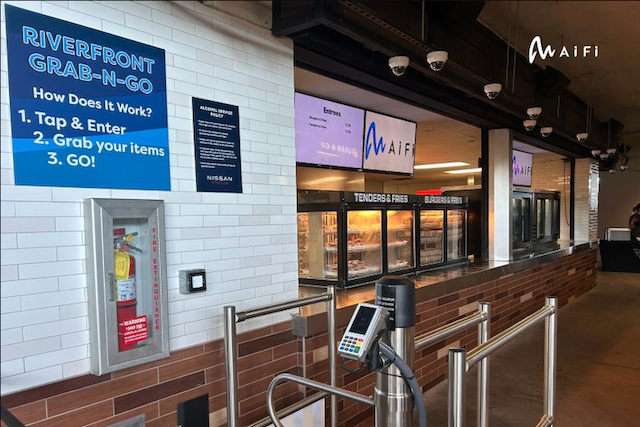
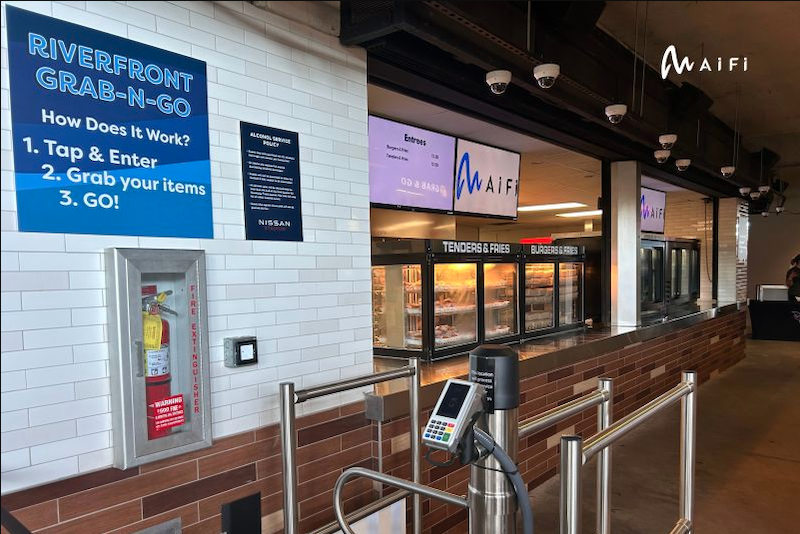
Spatial intelligence and autonomous solutions specialist, AiFi, has announced its growth in the stadium sector, serving customers with frictionless checkout in 20 sports stadiums.
One month into the 2024/2025 NFL season, ticket sales are already 38% higher than last season’s start, according to data from StubHub’s 2024 NFL Season Preview. With larger crowds packing into stadiums, the common pain point of long wait times for concessions and merchandise will only exacerbate, taking more game watching time away from fans.
AiFi’s frictionless checkout solution aims to reduce long lines and get fans quickly back in their seats. With checkout-free options in seven NFL stadiums and 13 total stores within these stadiums, the shopping experience for a quick bite or drink is smoother and faster.
The company is also growing and evolving into new sectors. It is deploying new applications of its camera led spatial intelligence platform, which tracks people and objects through space to unlock data and insights for businesses and operations including autonomous checkout, safety and compliance, consumer behaviour analysis, dwell time reports, and out of stock notifications.
To help lead this charge, AiFi recently hired Alan Flohr to serve as the company’s Spatial Intelligence Sales Lead. Flohr most recently served as SVP of Revenue & Growth at Zippin, another autonomous retail provider, and previously was the Chief Revenue Officer at Pathr.ai, which offers AI powered spatial intelligence capabilities as well.
“We’re incredibly proud of AiFi’s growth with our stadium partners, and are eager to continue transforming both the fan experience and critical business operations within major retail and event spaces, while also setting a new standard for what spatial intelligence technology is capable of,” says Steve Carlin, CEO at AiFi.
“We’ve spent the last eight years developing a platform capable of obtaining a complete three-dimensional understanding of any space and the objects and humans within it. Starting our business in the retail sector required us to achieve over 99% accuracy with our technology, and doing so has primed AiFi to apply its spatial technology platform in a variety of crucial sectors.”
AiFi’s latest NFL stadium collaboration is with Nissan Stadium, home of the Tennessee Titans. Aside from stadiums that serve NFL teams, it operates in ten other stadiums, one of its major and recent collaborations being with the Intuit Dome, the new home of the Los Angeles Clippers.
At the newly built venue, AiFi’s technology is powering stores of different formats including bars, markets, and merchandise. Its NBA involvement also includes a presence at the Footprint Center, home of the Phoenix Suns and Chase Center, home of the Golden State Warriors (in partnership with Verizon). AiFi’s reach extends beyond America, with stores at professional football clubs at American Express Stadium in the United Kingdom and Parken Stadium in Denmark.
"We are always looking for ways to enhance the fan experience at Nissan Stadium and offering a seamless process at concession stands is a top priority. Shorter lines mean more time at your seat enjoying the game,” says Adam Nuse, Titans Senior Vice President.
“AiFi provides a best-in-class AI platform to help simplify and streamline the checkout process. We look forward to working alongside their team as we provide fans with this innovative technology throughout the 2024 NFL season.”
With AiFi’s technology and partnership with Verizon's 5G network, their solutions have proven successful with numerous partners, including the Prudential Center in Newark, Ford Field in Detroit, Hard Rock Stadium in Miami, and Acrisure Arena in Palms Springs. The latest deployments include Guaranteed Rate Field in Chicago and Nissan Stadium in Nashville.
To date, AiFi has reached more than nine million customers and processed 7.1 million orders with over 30 million products sold.
The company says that it has consistently doubled products sold year over year since 2022 and plans to apply its spatial intelligence platform to new industries within the next year including pharmacies, retail manufacturing, fuel stations, hotels and hospitality, casinos and entertainment, quick serve restaurants, and athletic facilities.
HTML: Édimbourg s'engage dans une nouvelle ère de connectivité avec l'approbation de sa stratégie de ville intelligente. Cette initiative ambitieuse promet de transformer la capitale écossaise en un modèle de durabilité urbaine et d'efficacité technologique. Le plan met l'accent sur l'intégration de solutions numériques pour améliorer la qualité de vie des citoyens, tout en renforçant l'infrastructure urbaine. La vision d'Édimbourg inclut des innovations dans les réseaux d'énergie, la gestion des ressources, et les espaces de vie, garantissant ainsi une ville plus connectée et résiliente face aux défis futurs.
Édimbourg vient d'approuver sa dernière stratégie de ville intelligente, un projet ambitieux visant à améliorer la qualité de vie de ses habitants en intégrant technologies et durabilité. Cette nouvelle stratégie se concentre sur l'amélioration des services urbains, la réduction de l'empreinte carbone et le renforcement de la connectivité à travers la ville. En embrassant des solutions innovantes, Édimbourg aspire à se positionner comme un leader dans le domaine des villes intelligentes. Cet objectif sera mené à bien grâce à l'utilisation de la technologie pour créer un environnement urbain plus sûr, plus propre et plus efficient. La stratégie prend également en compte la participation active des citoyens, les amenant à devenir des acteurs clés dans le développement de leur ville.
Édimbourg redéfinit sa stratégie urbaine
La ville d'Édimbourg a récemment approuvé une nouvelle approche pour devenir une véritable ville intelligente, visant à transformer la manière dont ses habitants interagissent avec les services locaux. Cette initiative s'inscrit dans un cadre de développement durable et technologique, où l'efficacité de l'infrastructure numérique joue un rôle central. L'objectif est clair : améliorer la qualité de vie des citoyens tout en créant un milieu urbain plus écologique et mieux connecté. En investissant dans des technologies modernes, Édimbourg montre sa détermination à être à la pointe des innovations qui redéfinissent le paysage urbain mondial. Cela n'inclut pas seulement l'infrastructure physique, mais également une approche holistique qui intègre des solutions numériques à divers aspects de la vie en ville.
Les innovations au cœur de la ville
Édimbourg ne se contente pas de moderniser ses services publics ; elle intègre également des innovations qui favorisent une gestion urbaine plus intelligente et fluide. Des capteurs et systèmes de gestion intelligente sont installés à travers la ville pour superviser et optimiser la consommation énergétique et accroître la sécurité. Grâce à ces innovations, des solutions comme l'éclairage public connecté et des systèmes de transport intelligents sont en train d'être déployés. Ces projets s'inscrivent dans la volonté de la ville de réduire son empreinte carbone et de promouvoir une gestion durable de ses ressources.
En parallèle, les citoyens jouent un rôle actif grâce à des applications mobiles collaboratives qui encouragent la participation publique. Cela crée un vrai dialogue entre la municipalité et la population, transformant Édimbourg en un espace non seulement intelligent, mais aussi participatif et inclusif.
Défis et perspectives
Malgré les avancées notables, la transition d'Édimbourg vers une ville intelligente pose quelques défis. L'interconnexion des systèmes technologiques requiert non seulement un investissement financier conséquent, mais aussi des compétences spécialisées pour leur mise en œuvre. Une autre préoccupation réside dans la protection des données, alors que l'utilisation massive de capteurs et de technologies IoT est susceptible d'augmenter les risques potentiels pour la confidentialité des données. Il est crucial que la ville anticipe ce genre de défis pour assurer le succès et la sécurité de sa stratégie. Les citoyens doivent être informés des mesures de sécurité prises pour protéger leurs données.
Le spoofing téléphonique est l'un des fléaux qui peuvent toucher les particuliers. Dans le secteur de la banque, cela peut déboucher sur des virements frauduleux. En principe, la banque a l'obligation de rembourser la victime des sommes détournées. C'est ce qu'a rappelé la Cour de cassation.
Anthropic’s latest Claude 3.5 Sonnet AI model has a new feature in public beta that can control a computer by looking at a screen, moving a cursor, clicking buttons, and typing text. The new feature, called “computer use," is available today on the API, allowing developers to direct Claude to work on a computer like a human does, as shown on a Mac in the video below.
Microsoft’s Copilot Vision feature and OpenAI’s desktop app for ChatGPT have shown what their AI tools can do based on seeing your computer’s screen, and Google has similar capabilities in its Gemini app on Android phones. But they haven’t gone to the next step of widely releasing tools ready to click around and perform tasks for you like this. Rabbit promised similar...
Un nouveau composé pourrait-il remplacer l'exercice physique ? Ce substitut agit sur les niveaux de lactate et de cétone, deux substances naturelles générées par l'effort intense.
Développée...
Dream Lab is powered by Leonardo’s Phoenix model (not be be confused with Adobe’s Firefly AI) and allows users to generate images from descriptions in a variety of styles like “3D render” and “Illustration.”
Canva already has its own Stable Diffusion-based AI image generator and hosts several other third-party apps, but the new Dream Lab offering introduces some improvements to the platform. It’s seemingly better at...
Sous les profondeurs du Pacifique, des chercheurs viennent de découvrir les vestiges d'un plancher océanique âgé de 250 millions d'années.
Cette découverte pourrait bousculer notre...
Generative artificial intelligence (AI) tools like ChatGPT or Dall-E are changing how creative work is done, particularly in industries that rely on innovation.
Introducing the Tron 1, the bipedal robot from Limx Dynamics that’s basically what happens when a Star Wars Scout Walker and a Battlestar Galactica Cylon have a love child. With three sets of swappable feet — yes, including wheels — this little bot tackles stairs, takes leaps, and sticks the landing like a robotic Simone Biles. Despite rocking that classic “Cylon-eye” look, it’s surprisingly adorable… at least until they kick it to show off its recovery skills. Trust me, these designers will regret that when the robot uprising kicks off. Early bird price? A cool $15,000. Worth it, right? You know, before they take over.
Nvidia vient de publier sa propre intelligence artificielle en toute discrétion, basée sur celle de Meta en licence libre. La firme semble décidée à s’imposer sur le côté logiciel du marché de l’IA, après avoir dominé le côté matériel grâce à ses cartes graphiques.
There are ways of cooling the planet, and then there are cool ways of cooling the planet. Spending decades grinding up something approaching a quadrillion dollars worth of diamonds into dust, and then dispersing the powdered gemstones into our atmosphere? That falls into the latter.
Contrary to what you might think, such an audacious idea wasn't conceived by some sci-fi writer huffing fumes, but by researchers performing a rigorous scientific exercise. The point isn't necessarily whether this is a feasible or even good idea on its own — rather, the value lies in seriously weighing up all our options as we stare down the barrel of near-certain climate doom.
With that in mind, how would this — hypothetical — approach work? As detailed in a study published in the journal Geophysical Research Letters, injecting about five million tons of diamond dust into the atmosphere each year would be enough to cool our planet by nearly 2.9 degrees Fahrenheit.
Sure, it would take 45 years of nonstop injections and cost nearly $200 trillion — but the intervention would be enough to keep us just under the 2.7 degree warming threshold, past which the catastrophic effects of climate change are believed to be irreversible.
Atmos-Fears
This feat of solar geoengineering — via the deliberate release of small particles in the atmosphere — is known as stratospheric aerosol injection. The study also examined the use of sulfur, a far more practical option, along with five other aerosol candidates.
Using a 3D climate model, the researchers separately simulated the effects of using diamond, sulfur, and the other aerosols over nearly five decades, paying particular attention to how they coagulated, or clumped together, and how long they lasted in the atmosphere, a process known as sedimentation.
Too much coagulation causes heat to be trapped in spots instead of reflecting it, since the particles need to remain diffuse for the whole plan not to backfire. And of course, if the aerosols don't last long up there, neither will their supposed benefits.
In both respects, the pulverized diamonds really shined: they didn't clump, and they also stayed airborne, with the added bonus of resisting being turned into acid rain, Science notes. Sulfur, on the other hand, was the second worst of all the candidates because it tended to clump a lot.
Done and Dusted
That being said, sulfur remains an attractive and probably our best option because it's "basically free," Douglas MacMartin, an engineer at Cornell University whose work was cited in the study, told Science. We can readily examine its effects on a large scale through volcanic eruptions, MacMartin said, and because it's a gas, it'd be easier to disperse through aircraft than with the heavy payloads of diamond.
"I do think that it's interesting to explore these other materials," MacMartin told the journal. "But if you ask me today what's going to get deployed, it's gonna be sulfate."
As such, we're probably not going to have a sky shimmering with micro-diamonds anytime soon. But we're continuing chip away at the huge question marks around deliberately tampering with our climate, making a study like this "really valuable," Shuchi Talati, founder of the Alliance for Just Deliberation on Solar Geoengineering who was not involved with the study, told Science.
"You need to understand the early-stage physics of potential particles to then have the conversations about broader impacts," she added.
Les caisses automatiques, jadis considérées comme une révolution dans les supermarchés, font aujourd'hui l'objet d'une remise en question. Une nouvelle étude révèle que cette technologie, loin d'être la panacée espérée, engendre des défis inattendus pour les enseignes. Quels sont les facteurs...
La France a réalisé en 2023 un premier essai d’un planeur hypersonique, capable d'aller au-delà de Mach 5. Par ailleurs, il y a dans les tuyaux un missile air-sol de nouvelle génération. Deux programmes d'armes hypersoniques qui doivent permettre à la dissuasion nucléaire française de rester crédible.
Ray-Ban Meta glasses are the top selling product in 60% of Ray-Ban stores in EMEA.
EMEA is a geographical region encompassing Europe, the Middle East, and Africa, typically used as a global division by companies.
The revelation comes from EssilorLuxottica's CFO Stefano Grassi on the company's Q3 2024 earnings call. EssilorLuxottica is Ray-Ban's parent company, which has a near monopoly on the eyewear market worldwide and also owns other iconic brands like Oakley.
Here's what Grassi told investors on the earnings call:
"Ray-Ban Meta, very happy about the performance that we've seen. I mean, we, it's an overall success story that we see.
Just to give you an idea, it's not just a success in the US, where it's obvious. But it's also success here in Europe. Just to give you an idea, in 60% of the Ray-Ban stores in Europe, in EMEA, Ray-Ban Meta is the best-seller in those stores. So it's something that is extremely pleasing."
Given that multiple sources point to the average selling price (ASP) of Ray-Ban products landing around $150-$200, that the Ray-Ban Meta glasses, which start at $300, are the top selling product in more than half of stores in the EMEA region is an early indicator that consumers are willing to pay more for smart glasses if they're stylish and widely available to try on.
Of course, the Ray-Ban Meta glasses are relatively primitive smart glasses. They lack any kind of display, and EssilorLuxottica reportedly "balked" at the thickness of a design needed to integrate one for next year. There's still a very long path from this to appealing true AR glasses even being available, never mind widespread, likely spanning decades rather than years.
On the software side, Meta has been adding new features to the Ray-Ban glasses to make them more useful, much the same as it does with its Quest headsets. It recently added reminders, timers, WhatsApp voice messages, QR code scanning, and more natural Meta AI invocation, and it plans to add live translation, Spotify controls, and more later this year.
Meta and EssilorLuxottica recently extended their partnership into the 2030s, and the companies say they will develop “multi-generational smart eyewear products”. Samsung and Google are reportedly working on a competitor, and Apple is reportedly exploring releasing one in 2027 too.
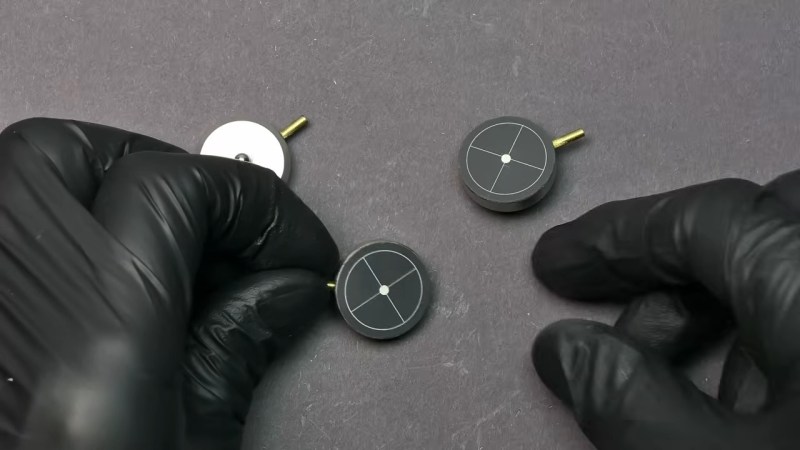
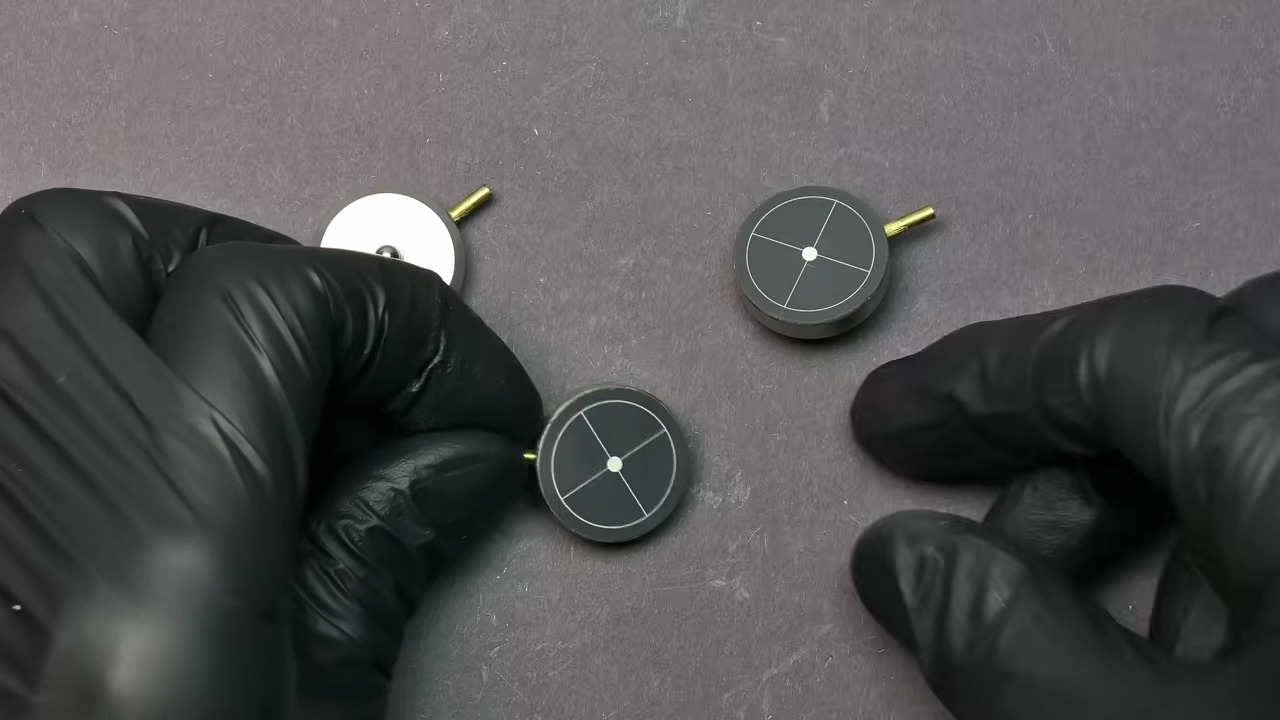
Seeing a heavy load slide around on nearly frictionless air bearings is pretty cool; it’s a little like how the puck levitates on an air hockey table. Commercial air bearings are available, of course, but when you can build these open-source air bearings, why bother buying?
One of the nice things about [Diffraction Limited]’s design is that these bearings can be built using only simple tools. No machining is needed past what can be easily accomplished with a hand drill, thanks to some clever 3D-printed jigs that allow you to drill holes with precision into stainless steel discs you can buy on the cheap. An extremely flat surface is added to the underside of these discs thanks to another jig, some JB Weld epoxy, and a sheet of float glass to serve as an ultra-flat reference. Yet more jigs make it easy to scribe air channels into the flat surface and connect them to the air holes through a bit of plaster of Paris, which acts as a flow restriction. The video below shows the whole process and a demo of the bearings in action.
[Diffraction Limited] mentions a few applications for these air bearings, but the one that interests us most is their potential use in linear bearings; a big CNC cutter using these air bearings would be pretty cool. We seen similar budget-friendly DIY air bearings before, including a set made from used graphite EDM electrodes.
A second reader with expertise in Waveguide believes (but, like my other reader, does not have direct knowledge) that the Snap Spectacles 5 is still using a waveguide with gratings on only one side. This second reader cites the shape of the “eye glow,” particularly the triangular shape from the entrance grating. This reader says that the gradations that are visible in the Snap Spectacles 5 passive light capture are likely due to making the pillar gratings deeper to try and give a more uniform output. The reader also cites the much simpler process of making grating on one side.
The first reader was not certain and speculated based on some insider rumors about the Snap Spectacles 5 (there has been considerable movement of personnel between companies that design waveguides). Neither reader claimed to have firsthand knowledge of the Spectacles 5.
Introduction
The general premise of my last article, Meta Orion AR (Pt. 2 Orion vs Wave Optics/Snap and Magic Leap Waveguides), is that Meta Orion is using similar waveguide technology to Snap (Wave Optics) and that Magic Leap Two (ML2) is correct. However, several comments and assumptions about the specifics of waveguides with a diffraction grating on both sides were incorrect.
As I often say, “Few people will volunteer information, but many will correct you if you are wrong.” As my direct knowledge of the waveguide structures was limited, I reached out to readers in the article with an email address (newsinfo@kgontech.com). One of my readers (who wishes to remain anonymous), who designs waveguides, responded. This person explained how Wave Optics 2D waveguide works and had information about the waveguide structures used in Meta Orion, Wave Optics (now Snap), Magic Leap Two, and Hololens 2 (HL2).
I want to be clear that I am far from being a waveguide expert (see my background in the Appendix), and my descriptions of the various waveguides will probably be considered, at best, loose by experts (as they say, “I know just enough to be dangerous”). I’m primarily concerned with contrasting the various approaches and reviewing the resultant images based on the many different approaches I have seen. For example, it is generally true that as FOVs increase, image quality degrades with diffractive waveguide. Also, going to higher index waveguide substrates enables wider FOV and should require fewer TIR bounces for a given FOV, which will improve image quality.
Based on my readers’ information and some further studying, I am making this update. I am going to summarize some information from the prior article so this one can stand on its own without needing to reference back continually.
More on diffraction grating
The article “Optimization of gratings in a diffractive waveguide using relative-direction-cosine diagrams” provides a more in-depth explanation and many good diagrams showing how light propagates via various waveguide designs, including the common planar three gratings (Fig 6), a more complex grating structure (Figs 7a and 7b), and a Wave Optics type with a 2D grating (Figs 7c and 7c).
In the diagrams above, you will see a series of gray rings with red circles. These diagrams show the allowable FOV. The width of the gray rings, and thus FOV, increases as the index of refraction of the waveguide substrate increases.
Greatly Simplifying
I’m not going to profess that I understand waveguides well. However, a key basic rule is that the light in a waveguide must be turned at 360 degrees. You will note all the triangles in the diagrams with some of the three angles, of course, summing to 360 degrees. With separate gratings (such as in Fig. 7 above), the angles don’t have to be equal. In the case of older Wave Optics and Snap Spectacles 4 waveguides, the pillars that form the gratings are in an equilateral triangle arrangement to impart two 60-degree turns of the light.
Meta Orion’s Waveguide with Diffraction Gratings on Both Sides
Meta Orion, in addition to using Silicon Carbide, has what, in my experience, was an unusual waveguide structure with overlapping diffraction gratings on both sides of the waveguide substrate. Most waveguides I have seen have three gratings, entrance, expansion, and exit, on only one side of the waveguide. I then remembered Wave Optics (bought by Snap) had a similar unusual waveguide structure. I then wondered how Magic Leap 2 got its wide FOV, which resulted in my discovering that they were doing something similar.
Meta’s Orion, which has overlapping grains on both sides of the waveguide, must also have light turned by three gratings to exit. In the Orion waveguide, the two large gratings act simultaneously as expansion gratings and exit gratings. The light is first turned by the entrance gratings (1020 for red, 1022 for green, and 1024 for blue). About half the light is then turned by one of the large overlapping gratings into the opposite overlapping grating, where the light is turned to exit. The other half of the light it turned by the large gratings in the opposite order.
Another feature shown in Fig 12A above is the “Disparity correction,” which is not in Orion but, according to Meta CTO Bosworth, would be in future versions. Interestingly, the Magic Leap Two (ML2) appears to have implemented this “disparity correction” as what they called “On-Line Display Calibration” (right). The same figure below from Magic Leaps SPIE AR/VR/MR 2022 presentation shows that the ML2 has a 2D expander.
Wave Optics (Snap) 2D Diffraction Gratings on One Side (Spectacles 5 Might Have Gratings on Both Sides)
My main error about the nature of waveguide “grating” structures was a bias toward linear gratings, with which I was much more familiar. As I wrote, I hadn’t studied Wave Optics waveguides before, and I misunderstood that Wave Optics was using a set of “pillar” gratings that act like a 2D set of linear gratings, even though that was shown in their patents (see below). It turns that pillars arranged in an equilateral triangle can behave like a linear grating in two directions (see green and red lines in FIG. 16 below).
As with the “conventional” three gratings on a single plane (and with gratings on both sides of the waveguide), the light must be “turned” by three gratings. In this case, the light is first turned by the entrance grating, then turned by the effective grating on one diagonal, and then turned by the effect grating on the other diagonal in order to exit. This process is better explained in the article “Optimization of gratings in a diffractive waveguide using relative-direction-cosine diagrams.”
I have not had the chance to evaluate Snap Spectacles 4 or 5 extensively. I do have Wave Optics’ Titan development kit waveguides, which I think are similar in design (although rotated 90 degrees relative to Spectacles 4). The color uniformity issues with the Titan waveguide are shown above right (click on the image for a high-resolution picture). It will be interesting to see how this has improved on the Spectacles 5.
Wave Optics used a single-layer “pillar” in their previous devices, including the Snap Spectacles 4. However, my source thinks (I’m not sure) that the new Snap Spectacles 5 might use linear gratings on both sides of their waveguide, as shown in FIGs. 3 and 15B below, making it closer to Meta’s Orion in design. So, in a way, the last article may have been somewhat correct after all 😊.
There is evidence that Snap Spectacles 5 waveguides are significantly different than Spectacles 4. While gen 5 and 4 exhibit a similar “eye glow” with a triangle from the side of the exit grating(s), the passive (device off) light capture is different between the two generations. Note that in the Gen 5 spectacles, the light capture has gradations, whereas there are no gradations in the light capture in the Gen 4 spectacles. The passive light capture on the Gen 4 is similar to what I see with the older Titan development kit waveguides, which, no matter how I illuminate them, don’t exhibit these gradations.
Magic Leap Two with Three Waveguides with Diffraction Gratings on both sides
My source is reasonably confident that the ML2 has three waveguides with diffraction gratings on both sides. Knowing this, it becomes easier to sort through the massive number of large (many over 200 pages) applications that show what ML2 might be doing.
As stated in my last article (Part 2), US 2018/0042276 was an “omnibus application” that combined many different concepts into a single application. The filing entity will later file “divisional” applications based on the original specification (text and figures) with different sets of claims for the different concepts. This particular application was 272 pages long, with over 150 figures. The patent discussed putting exit gratings on only one side or both sides (see Fig 34B).
Based on many patents and Magic Leap’s SPIE 2022 presentation, Magic Leap has spatially separate color inputs for each of the waveguides (see below).
I also found application 2020/0158942, which showed how to put a 2D grating on one side. The details showed pictures of SEM (scanning electron microscope), showing that Magic Leap had seriously developed this approach. This led me to believe that Magic Leap 2 might be using a complex diffraction grating on one side. However, as with many patents/applications, many things that are developed don’t make it into products (at least not the ML2).
Magic Leap has literally hundreds of patent applications that discuss diffractive waveguides. Many of their new application specifications are more or less appended to their old Magic Leap One applications (“Omnibus” Applications). Thus, concepts that appear on the ML2 are buried in specifications that show details of the Magic Leap One.
Additional Correction: Hololens 2 Has Diffraction Gratings on Both Sides of Each of Two Waveguides
My first mistake in the article was stating that the Hololens 2 gratings were on one side. In going back to the patent application US2017/0353871 that I used in Hololens 2 Display Evaluation (Part 4: LBS Optics), it states, “That is, the left and right intermediate DOEs [diffraction gratings] are located on opposite sides of the waveguide.” In the combined FIGs. 13 and 14 below, the right intermediate DOE, which overlaps with the left, is on the opposite side of the waveguide, as indicated by the dotted line.
Summary
Hololens 2 had a two-sided waveguide. The left and right expansion gratings are on opposite sides of the waveguide.
Prior Wave Optics (Snap) waveguides use a pillar-type 2-D diffraction grating on one side. There is a single waveguide for full color. The new Snap Spectacles 5 is possibly using linear diffraction gratings on both sides of a single waveguide full color, as shown in this article.
If this is true, then Snap and Meta Orion could be using very similar waveguide structures. However, Snap may be using a single entrance grating for all colors from a field sequential LCOS device. In contrast, Meta Orion has three spatially separate entrance gratings due to using three primary color MicroLED projectors with the waveguide acting to combine them
Magic Leap Two uses linear diffraction gratings on both sides of the waveguide. It does use three waveguides with spatially separate entrance gratings per primary color.
As stated in the previous article, I did not attempt to determine anything about inventiveness or who invented what first. That would be a massive effort and could only be settled in court. Over the years, there have been massive amounts of people moving between companies, plus some of this could be “form following functions,” causing independent invention.
Conclusion (and Comments from Others)
The above corrections indicate that Meta Orion, Snap Spectacles 5 (Wave Optics), and Magic Leap all have overlapping linear gratings on both sides. Meta Orion and Snap likely use a single waveguide for full color, whereas the Magic Leap 2 has separate waveguides for the three primary colors.
Without seeing Meta’s Orion with my own eyes and using good test patterns (and not “demo” content that can avoid problems), I can’t say anything definitive about the image quality. I am skeptical about the image quality, considering they use a single waveguide to combine all three primary colors with a wide FOV. But I am happy to be proven wrong if I can get a unit for evaluation. There are massive numbers of variables that could affect image quality, including defects in the printing/etching of the diffraction gratings and the alignment of the top and bottom layers.
There remain the social problems of the eye glow exhibited by Meta’s Orion and Snap Spectacles 4 & 5. I found it funny that some of the Orion reviewers talked about the ability to see the eyes but nothing about the eye glowing.
Brad Lynch of the SadleyItsBradley YouTube channel uses the Apple Vision Pro (AVP) almost every day and commented that the user’s eye in Orion, which are dimmed and with eye glow, look a lot like the much-maligned AVP Eyesight front display😀.
On the right is a picture I took through a Wave Optics “Titan” waveguide from circa 2020 (they have likely improved since then). Notice the color variations, which are a common problem with using a single waveguide for all three colors.
I would also like to add some observations made by David Bonelli (of Pulsar Solutions):
He notes that with the high-index Silicon Carbide waveguides, a person’s eyes shift more than is “natural.” Humans are very sensitive to eye behavior.
He noted that the projection optic’s exit lens is extremely small (below Right) for making a 70-degree FOV. He is concerned that there will be a lot of optical distortion that could cause Orion’s already low resolution to drop outside the center of view, as seen with the Apple Vision Pro (see: Apple Vision Pro’s (AVP) Image Quality Issues—First Impressions) and most other VR headsets.
Coming Soon: A Video Roundtable Discussion of Snap Spectacles 5 and Meta’s Orion
Last week, Jason McDowell (The AR Show), Jeri Ellsworth (CEO Tilt 5), David Bonelli (Pular Solutions), and Brad Lynch (Sadly Its Bradley YouTube Channel) recorded a round table discussion of Snap Spectacles 5 and Meta Orion. I plan on releasing the video in several parts over the next week or so.
Appendix: Summary of My Background and the Blog
My readers should note that I have BS and MS degrees in electrical engineering. I designed and architected CPUs, Graphics Processors, Image Processors, Video Chips, and memory devices (Video RAM and Synchronous DRAM) in my 20 years at Texas Instruments (TI) and became the youngest TI Fellow in the history of TI. For about 18 of my 20 years at TI, I worked on ICs for generating images and graphics. Along the way, I studied issues of visual human factors. Most of my 150 US patents are related to my work on ICs for computer graphics and image processing.
After leaving TI (having never directly worked on DLP, I should add), I worked on LCOS devices, which were essentially (digital) CMOS I.C.s with liquid crystal on them, at two startups from 1998 to 2011. As part of my work in LCOS and my interest in photography, I started to pick up some working knowledge of optics.
Since starting this blog in 2011, my “working knowledge of optics” has grown considerably as I tried to figure out the optics that went with various display devices. Through this blog and my reporting, I have seen many different types of headsets with various optics. I believe I have “broad knowledge,” having seen and studied so many optical systems to some degree, but in some areas, such as waveguides, I have a more shallow understanding. My understanding improves as I drill down to figure out what the various companies are doing.
My main goal is always to understand the contrast and compare various displays and optics and not to design optics. Thanks to my access to many headset systems and photography experience, I try to get good “through the optics” pictures to share that help with comparing the various designs. I use my knowledge of photography, optics, and display devices to take pictures that fairly represent the image quality of these headsets.
I am trying to write this blog for a person interested in technology but without a deep understanding of optics. I try to include background information and links for more information.
While Amazon has been offering free movies and shows to Prime members since 2011, more retailers and delivery platforms have added streaming to boost their subscription services over the last few years.
Retailers are now looking beyond the standard perks of free delivery, savings on gas and restaurant discounts as they look for new ways to retain and attract people to their membership programs. Kroger announced this month that it would add a choice of Disney streaming options — Disney+, Hulu or ESPN+ — for Kroger Boost members paying $99 or $59 annually. The program also offers benefits like free next-day delivery from Kroger stores and added fuel points. “Collaborating with Disney takes Boost member savings and benefits to the next-level, making our industry-leading program even more valuable and convenient for our members,” Stuart Aitken, Kroger’s senior vice president and chief merchant and marketing officer, said in a statement.
In 2022, Walmart announced it would add a Paramount+ Essential subscription to its Walmart+ membership program. This past November, Instacart and Peacock announced a similar partnership to offer Peacock Premium to Instacart+ members in the U.S. The practice is similar to how cell phone carriers offer streaming deals: Verizon announced earlier this year it would offer six months of the Disney+, Hulu and ESPN+ bundle (with no ads on Disney+ but ads on Hulu and ESPN+) to some mobile customers. Some T-Mobile unlimited plans also come with ad-supported Netflix subscriptions.
Continue reading this article on modernretail.co. Sign up for Modern Retail newsletters to get the latest on the shifting dynamics between retail’s old and new guards.
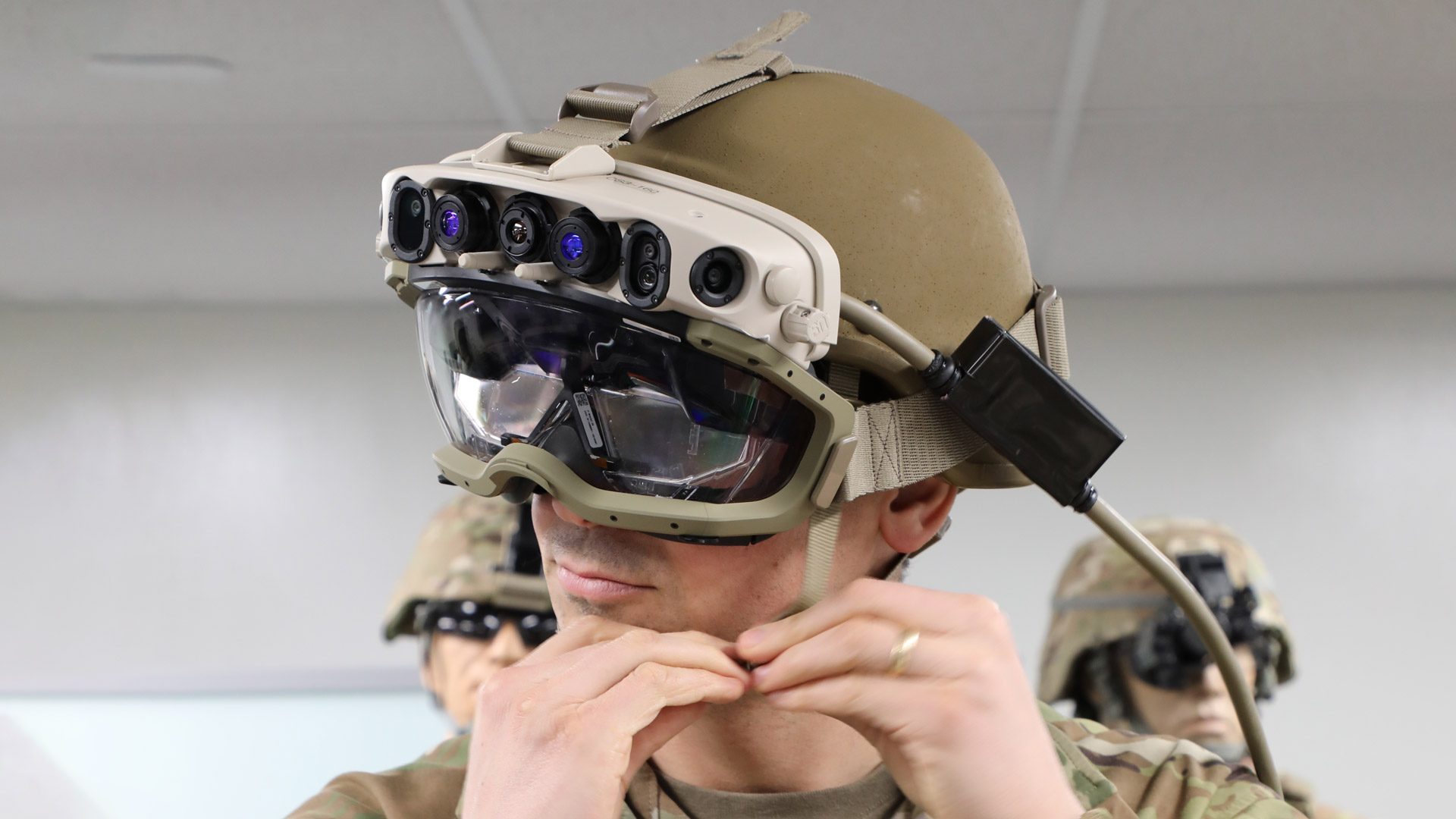
Microsoft’s contract with the U.S. Army to build a combat-ready AR headset is worth up to $22 billion, but only if the company can deliver the goods at “substantially less than” the projected $80,000 per unit, the Army tells Bloomberg. Requirements also include definitively positive field testing, set to take place early next year.
Based on HoloLens 2, Microsoft’s specially-built Integrated Visual Augmentation System (IVAS) has faced multiple challenges since being awarded the Army contract in 2019, including poor field testing results due to reliability and ruggedness issues. Despite recent improvements in the 1.2 version, such as better reliability and display clarity, and a flip-up design, the Army hasn’t scaled up orders yet.
While the contract stipulates the Army could order up to 121,000 of Microsoft’s IVAS, that’s pending further field testing—set to take place from April to June 2025. Price is also a “key factor,” Army acquisition chief Doug Bush says.
At the annual Association of the United States Army (AUSA) conference last week in Washington D.C., Bush said testing is “going much better than the first time around,” adding that “a lot of the problems have been fixed.” The Army still needs to “something that’s affordable” in order to cue up full production, however.
2021 prototype Microsoft IVAS | Image courtesy Microsoft
Unit cost is “a key factor next year when senior leaders make decisions about going into production,” Bush said. And the pricing goal should be “substantially less than $80,000,” an Army statement obtained by Bloomberg maintains.
Around half of the bill of costs can be chalked up to the system itself, which includes the AR headset—modified with sensors and thermal imaging—a battery, and chest unit for displaying information, such as the location of overhead drones. The remainder includes increased expenditures, such as Army program management to Microsoft engineering and software support, as per the Bloomberg report.
“We are going through the program to identify where we can reduce costs,” Microsoft’s Mixed Reality and HoloLens chief Robin Seiler told reporters last week. “It’s a fairly complex system, so when you look at cost reduction you have to look at it from a component level, from a labor level and from your supply chain.”
Despite best efforts, Microsoft’s contract may actually be at risk. The Army is reportedly preparing to hold ‘IVAS Next’ later this year, a new open competition that could see Microsoft replaced entirely as the prime contractor of IVAS.
Meanwhile, in an apparent bid to boost Microsoft’s chances at keeping the contract, Oculus founder Palmer Luckey’s defense startup Anduril has partnered with Microsoft to provide the combat-ready headset with its Lattice platform, which integrates real-time threat detection to improve battlefield awareness and survivability by sourcing data from drones, ground vehicles, and aerial defense systems.
Organic electrochemical transistors (OECTs) are neuromorphic transistors made of carbon-based materials that combine both electronic and ionic charge carriers. These transistors could be particularly effective solutions for amplifying and switching electronic signals in devices designed to be placed on the human skin, such as smart watches, trackers that monitor physiological signals and other wearable technologies.
Que ce soit dans la mode ou l'automobile, l'Inde est pris d'assaut par l'industrie du luxe. Et à raison. En termes de beauté, le marché devrait connaître l'une des croissances les plus rapides en Asie et dans le monde, avec un TCAC attendu de +14%, selon
Lamborghini renforce sa présence dans le secteur des jeux vidéo à travers la création d'une nouvelle plateforme de gaming, Fast ForWorld. L'expérience immersive permettra aux membres de posséder et conduire des voitures de luxe sur le canal digital.
Jusqu'au 15 novembre prochain, les diplômés peuvent déposer leur candidature pour travailler au sein de Rolls-Royce, et plus largement dans le groupe BMW.
Selon une récente note partagée par l’analyste Luca Solca, une potentielle sortie de crise serait envisageable pour le second semestre 2025, comme une nouvelle preuve de résilience du secteur du Luxe. Échange avec Eric Briones, DG du Journal du Luxe.
Le monde de la photographie traverse une véritable révolution nostalgique : les appareils photo compacts et argentiques sont de nouveau sur le devant de la scène. Alors que tout est devenu rapide et instantané avec les smartphones, de plus en plus de personnes recherchent le charme d’une photo plus authentique, où chaque cliché est pensé et attendu avec patience.














 UploadVRDavid Heaney