Shared posts

01 Mar 08:24

⏰ Le temps pourrait s'écouler à l'envers, et cela rend cohérent les ponts spatio-temporels

by Adrien BERNARD
Le temps pourrait-il s'écouler dans les deux sens ? Cette interrogation, qui contredit notre vécu quotidien, émerge d'une réinterprétation surprenante des ponts spatio-temporels imaginés par...
27 Feb 23:09

Microsoft’s new Copilot Tasks finally does the work for you

by Paulo Vargas

Microsoft's Copilot Tasks shifts AI from chat to action, silently handling everything from apartment hunting to canceling subscriptions while you focus on other things.

The post Microsoft’s new Copilot Tasks finally does the work for you appeared first on Digital Trends.

27 Feb 16:50

Last 24 hours to get TechCrunch Disrupt 2026 tickets at the lowest rates of the year

by TechCrunch Events
The lowest rates of the year for TechCrunch Disrupt 2026 end after today. Prices go up at 11:59 p.m. PT. Don't miss connecting with 10,000 founders, investors, and operators, and key takeaways from 250+ industry leaders. Register now to save up to $680, or up to 30% on group passes.
26 Feb 19:59

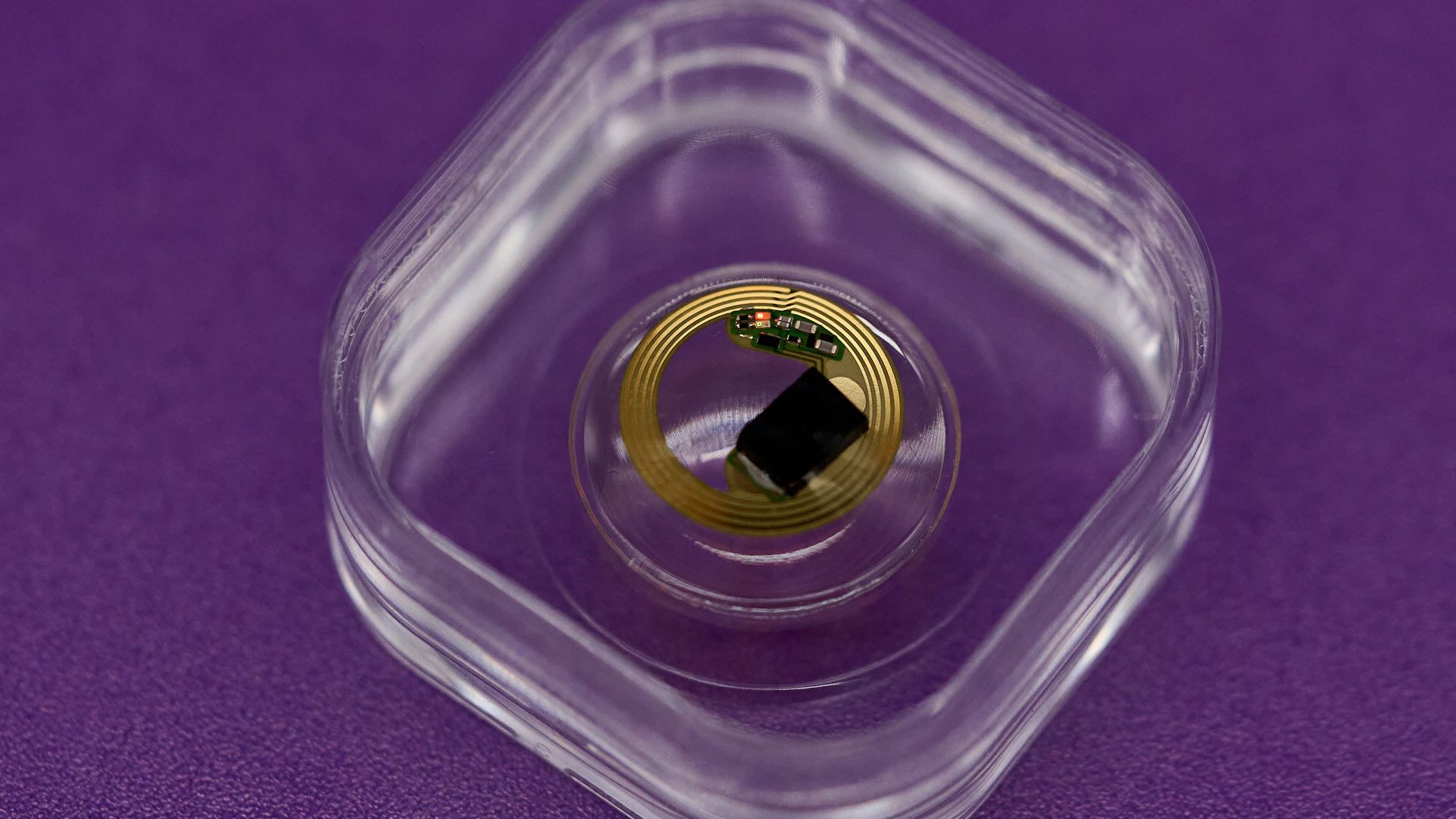
Actualité : Un labo d'analyse dans votre smartphone : ce capteur miniature veut détecter drogues, pesticides et contrefaçons

by Aymeric Geoffre-Rouland
Un spectromètre, c'est un instrument qui décompose la lumière en ses différentes longueurs d'onde, un peu comme un prisme qui révèle l'arc-en-ciel caché dans un rayon blanc. Chaque matière, chaque molécule absorbe et réfléchit la lumière d'une façon qui lui est propre : en lisant cette signature lumineuse, on peut identifier ce qu'on observe sans le...
26 Feb 19:53

Stop Ironing 3D Prints

by Al Williams

If you want smooth top surfaces on your 3D printed parts, a common technique is to turn on ironing in your slicer. This causes the head to drag through the top of the part, emitting a small amount of plastic to smooth the surface. [Make Wonderful Things] asserts that you don’t need to do this time-consuming step. Instead, he proposes using statistical analysis to identify the optimal settings to place the top layer correctly the first time, as shown in the video below.

The parameters he thinks make a difference are line width, flow ratio, and print speed. Picking reasonable step sizes suggested that there were 19,200 combinations of settings to test. Obviously, that’s too many, so he picked up techniques from famous mathematician [George E. P. Box] and also used Bayesian analysis to reduce the amount of printing required to converge on the perfect settings.

Did it work? Judging from the video, it appears to have done so. The best test pieces looked as good as the one that used traditional ironing. Compared to ironing, the non-ironed parts saved about 34% of print time. Not bad.

Of course, there are variations on traditional ironing, so your results may vary.

26 Feb 17:43

New York sues Valve for enabling "illegal gambling" with loot boxes

by Kyle Orland

New York state has filed a lawsuit against Valve alleging that randomized loot boxes in games like Counter-Strike 2, Team Fortress 2, and Dota 2 amount to a form of unregulated gambling, letting users "pay for the chance to win a rare virtual item of significant monetary value."

While many randomized video game loot boxes have drawn attention and regulation from various government bodies in recent years, the New York suit calls out Valve's system specifically for "enabl[ing] users to sell the virtual items they have won, either through its own virtual marketplace, the Steam Community Market, or through third-party marketplaces." The vast majority of Valve's in-game loot boxes contain skins that can only be resold for a few cents, the suit notes, while the rarest skins can be worth thousands of dollars through marketplaces on and off of Steam. That fits the statutory definition of gambling as "charging an individual for a chance to win something of value based on luck alone," according to the suit.

The Steam Wallet funds that users get through directly reselling skins "have the equivalent purchasing power on the Steam platform as cash," the suit notes. But if a user wants to convert those Steam funds to real cash, they can do so relatively easily by purchasing a Steam Deck and reselling it to any interested party, as an investigator did while preparing the lawsuit.

Read full article

Comments

24 Feb 08:16

How to master the WoW economy: a pro goblin’s guide

by Staff Writer

Gold is the true power in Azeroth. It buys the fastest mounts. It pays for the best gear. Most players have difficulty staying afloat. They waste time doing low profit work. The top farmers did not get rich by chance.

They spent years studying the markets, and that mastery led them to the gold cap. You can get there too. You just need a plan. Stop playing like a casual player. Start thinking like a tycoon. This guide will show you how.

Many beginners find the early game to be very slow. To get around the boring bits, some players prefer to buy WoW gold to pay for their first profession kits. This alternative enables them to work on high-level raiding straight away. When they do, they rely on specialised platforms and well established websites rather than random sellers.

If you also decide to use similar services, it is strongly recommended to choose providers with a solid reputation — for example, a Trustpilot rating above 4.5, a long track record, and consistent user feedback. If you are going the self-made way, you need to be smart. You need to utilise your time well. We will rank the methods from simplest to most complex.

#1 — Gathering: The Foundation (Beginner)

Gathering is the easiest way to start your wealth. You do not need any gold to get started. You only need time and a mount. Most players choose to play Herbalism and Mining together. This lets you track both of them on your map. You should be concerned with materials for the current expansion. These items sell the fastest. To get the best results, you need a specific setup for your character.

●      Druids are best — You can gather while in flight form.

●      Sky Golem — This mount lets you pick herbs without dismounting.

●      Darkmoon Firewater — This drink speeds up your gathering animations.

●      Enchants — Use glove enchants to make your gathering even faster.

These tools transform a sluggish job into a high-speed operation. You should follow a certain path to find more nodes.Use an addon to draw these routes onto your screen. This way, you never miss a spawn. It is a stable and secure income at any level.

#2 — Mob Grinding and Raw Gold (Intermediate)

Once you have some decent gear, you can have a go at mob grinding. This is sometimes referred to as "spot farming."You find a place where there are a lot of weak enemies. You extinguish all of them as quickly as you can. This method is great as it is predictable. You are not fighting against the Auction House. You are pillaging raw gold and items for vendors. For this task, you should choose a class with powerful AoE spells. 

●      Tanks — You can pull fifty mobs at once and survive.

●      Mages — Your frost spells can slow and kill large groups.

●      Loot-a-Rang — This toy lets you loot mobs from a distance.

●      Speed Sets — Gear with the "Speed" stat helps you move between pulls.

This method works because you loot "grey" items. These have a high vendor value. You also find cloth and reagents to sell to other players. The biggest challenge is to find an empty spot. Many players fight for these hyperspawn locations. You may have to battle with the opposing faction to maintain your position.

#3 — Making and Gem Markets (Advanced)

That is where the real money starts, in crafting. You are no longer selling raw materials. You are selling finished products. This means that you have to invest in gold first. You purchase ores and make rings out of them. You buy herbs and make potions out of them. The profit is the difference between the material cost and the price of the sale.Jewelcrafting and Alchemy are the most stable professions.

●      Gems — Every raider needs gems for their new gear.

●      Flasks — These are mandatory for every dungeon run.

●      Enchants — Players constantly replace their gear and need new buffs.

●      Armor — Blacksmiths can craft high-level pieces for a huge profit.

You have to use an addon such as TradeSkillMaster (TSM) here. It automatically calculates your profit. Never create something when the market is too low. You have to wait for the right time to sell. The prices generally rise on Tuesday nights. That is when the raid week starts over.

#4 — Market Flipping (Expert)

Flipping is the purchase of low and selling high. You do not leave the city. You sit in the Auction House all day. This is the most efficient way of making gold. But it is also the most risky. You can lose everything if you make a mistake. You need to know the price of each item. You need to look for some items that are listed too cheaply. 

●      Undercuts — Some players list items for 50% less by mistake.

●      Stacks — People often pay more for a full stack of items.

●      BoE Gear — Rare armor drops can be flipped for a massive gain.

●      Battle Pets — Rare pets can be bought cheaply and sold for high prices later.

This method requires a lot of patience. You may purchase something and wait a week to sell it. You are the middleman in the economy. You give away things to people who are in a hurry. They pay more for the convenience that you offer them. It is a game of numbers and nerves.

#5 — Expansion Speculation (Master)

This is the ultimate goblin strategy. You are not looking at the current day. You are looking at the next month. You read the patch notes very carefully. You search for things that will be valuable. If you need a particular herb for a new recipe, you buy it all now. You corner the market before the news gets out. This strategy requires a profound knowledge of the game mechanics.

●      Hoarding — Buy thousands of materials when they are at their lowest.

●      Resetting — Buy every single listing of an item to set a new price.

●      Patch Prep — Invest in materials that will be needed for new content.

●      Event Trading — Buy holiday items and sell them six months later.

This is how the richest players keep their wealth. It is not about hard work. It is about foresight. You are gambling against the rest of the server. If you are right, you can make millions in one day. If you are wrong, you are stuck with useless things. It is the most exquisite way of playing the game.

Success Through Consistency

The best gold makers do not farm for ten hours straight. They log in for half an hour a day. They check their auctions and repost their items. They seek out new deals and move on. Consistency is more significant than effort. You have to create a system that works for you.

Start with gathering to build your initial bankroll. Move on to grinding after you have the gear. Then, use that gold to begin crafting. Finally, use your knowledge to flip and speculate. This is the natural progression of a wealthy player.

23 Feb 08:05

AI Is Destroying Grocery Supply Chains

by Joe Wilkins

Whole Foods shelves sit empty after a data breach shut down its wholesale distributor. Meat packers working for JBS Foods are paralyzed as an $11 million ransomware attack takes out their processing facilities. Some 2.2 million workers at Stop & Shop and Hannaford have their personal data exposed as the result of a cyberattack on parent company Ahold Delhaize USA.

These scenarios, straight from a William Gibson novel, are becoming increasingly common in supply chains across the world. As recently noted by Mohammed Alzuhair, a doctoral candidate in business administration at Durham University, the growing number of grocery store failures isn’t a coincidence, but the result of AI’s pernicious creep into the global food network.

In a bygone age, food went from farm and orchard straight to the general store — the only middleman being a clerk whose storefront served as an easy rallying point for consumers. Today, the supply chain is like a spider web of contractors and wholesalers, where every shipment is insured based on risk algorithms and tracked by transportation management systems.

Just as AI’s being pushed into every other facet of our lives, it’s coming for each point in the supply chain too, turning an already vulnerable system into an automated security nightmare.

Alzuhair notes that the number of businesses choosing AI automation over human-level supply management has gone through the roof in recent years.

As one study found, AI is now deeply embedded in all six stages of the UK’s food system: supply, production, processing, distribution, consumption, and waste. Farms across the world are turning to precision agriculture models powered by AI, which is said to track individual plant and animal data and all the logistics they encompass — from seed procurement to harvest, from livestock feed to the slaughterhouse.

This is all well and good if we’re only worried about productivity. But as the rise in devastating cyber-attacks makes clear, the increasing reliance on AI also has the effect of removing human judgement from the supply chain. When cyberattacks reshuffle stores’ digital records, there are increasingly few personnel who know how to right the ship. In many cases, Alzuhair writes, human supply chain managers are no longer being asked to override automatic shipments or intervene when discrepancies occur under their jurisdiction.

The result of all this may be catastrophic. Should a worst-case scenario ever occur — a cyberattack, a natural disaster, an internet outage — there may be no human workers left with the skills that once kept food on the shelves.

More on AI: AI Delusions Are Leading to Domestic Abuse, Harassment, and Stalking

The post AI Is Destroying Grocery Supply Chains appeared first on Futurism.

23 Feb 08:02

Kieran O'Brien exits Retail Insight for customer success role at electronic shelf labels firm Vusion

by Staff Writer

Vusion, an AI powered digitalisation solutions provider for physical commerce, has appointed Kieran O'Brien as Customer Success Manager.

He joins from Retail Insight where he spent almost five years, most recently serving as Vice President Customer Success - EMEA. O'Brien has also worked at Asda, spending eight and a half years at the UK grocery giant, and holding such roles as Supply Chain Manager - Beers, Wines & Spirits.

In a LinkedIn post, he said: "Delighted to be starting a new chapter at Vusion I’ve recently joined as Customer Success Manager, and it’s been a busy first week getting up to speed. I’m genuinely grateful to everyone who’s taken the time to support my onboarding and make me feel welcome. A strong start always comes down to the people around you."

He added: "Retail is evolving quickly, and it’s great to be joining a business helping shape the connected store of the future. Vusion work in digital shelf technology and retail IoT is enabling smarter operations, improved on-shelf availability, and more data driven decision-making in-store.”

“I’m looking forward to getting my teeth stuck into the role, working closely with customers, and helping retailers unlock real, measurable value as they continue their digital transformation journeys."

2026 RTIH Innovation Awards

Electronic shelf labels will be a key focus area at the 2026 RTIH Innovation Awards.

The awards will open for entries in April. They celebrate global retail technology innovation in a fast moving omnichannel world.

Our winners will be revealed at the 2026 RTIH Innovation Awards Ceremony, taking place at The HAC in Central London on Thursday, 15th October.

Check out our 2025 winners here.

Our 2025 hall of fame entrants were revealed during a sold out event which took place at The HAC on 16th October and consisted of a drinks reception, three course meal, and awards ceremony presided over by award winning comedian, actress and writer Tiff Stevenson.

In his welcome speech, Scott Thompson, Founder and Editor, RTIH, said: “This is the awards’ fifth year as a physical event. We started off with just 30 people at the South Place Hotel not far from here, then moved to London Bridge Hotel, then The Barbican, and last year RIBA’s HQ in the West End.”

“But I’m conscious of the fact that, to quote the legend that is Taylor Swift, You’re only as hot as your last hit, baby. So, this year we’ve moved to our biggest venue yet, and also pulled in our largest number of entries to date and broken attendance records.”

He added: “This year’s submissions have without doubt been our best yet. To quote one of the judges: The examples of innovative developments across both traditional and digital retail spaces were truly remarkable.”

Congratulations to our winners, and a big thank you to our sponsors, judging panel, the legend that is Tiff Stevenson, and all those who attended our 2025 gathering.

21 Feb 21:56

Have we leapt into commercial genetic testing without understanding it?

by Diana Gitig

Daphne O. Martschenko and Sam Trejo both want to make the world a better, fairer, more equitable place. But they disagree on whether studying social genomics—elucidating any potential genetic contributions to behaviors ranging from mental illnesses to educational attainment to political affiliation—can help achieve this goal.

Martschenko’s argument is largely that genetic research and data have almost always been used thus far as a justification to further entrench extant social inequalities. But we know the solutions to many of the injustices in our world—trying to lift people out of poverty, for example—and we certainly don’t need more genetic research to implement them. Trejo’s point is largely that more information is generally better than less. We can’t foresee the benefits that could come from basic research, and this research is happening anyway, whether we like it or not, so we may as well try to harness it as best we can toward good and not ill.

Obviously, they’re both right. In What We Inherit: How New Technologies and Old Myths Are Shaping Our Genomic Future, we get to see how their collaboration can shed light on our rapidly advancing genetic capabilities.

Read full article

Comments

19 Feb 20:19

Walmart says AI users build 35% bigger baskets than others

by Mitchell Parton

Walmart customers who use the company’s Sparky AI-powered shopping assistant have an order value that’s about 35% higher than those who don’t, newly appointed Walmart CEO John Furner said in the company’s fourth-quarter earnings call Thursday morning.

Sparky is a shopping assistant housed in the “Ask Sparky” button marked by a smiley face in the Walmart app. As the company described in a news release when it launched in June, the assistant helps customers find items, synthesize reviews and prepare for special occasions, such as by answering what sports teams are playing that night or checking the weather at the beach they’re headed to. The company also launched an assistant for merchants called Wally last March.

“I love how Sparky perfectly fits within our omnichannel strategy; it connects digital intent to fulfillment through forward-deployed inventory and 1.5 million associates here in the U.S.,” Furner said. “When Sparky builds a basket, we execute it through fast delivery, pickup or in-store, turning AI engagement into immediate physical outcomes.”

Continue reading this article on modernretail.co. Sign up for Modern Retail newsletters to get the latest on the shifting dynamics between retail’s old and new guards.

19 Feb 13:20

Google Gemini adds Lyria 3, an AI model that can create music with words and photos

by Nadeem Sarwar

Lyria 3 can take your words, photos, and videos, and turn them into a custom 30-second track with lyrics in tow. It's free to use and available within the Gemini. tool picker.

The post Google Gemini adds Lyria 3, an AI model that can create music with words and photos appeared first on Digital Trends.

19 Feb 13:15

Pricer loses ESLs exclusivity agreement with Carrefour as retailer inks deal with Vusion

by Staff Writer

As part of its Carrefour 2030 plan, Carrefour is tapping Vusion’s platform as it looks to digitalise all of its hypermarkets and supermarkets in France by 2030. The partnership covers deployment of electronic shelf labels, smart rails, and AI driven cameras.

The deal sees Pricer lose its position as exclusive ESLs supplier to the retail giant.

In a press release, it said: “Today Carrrefour has decided to introduce an additional supplier for the sourcing of digital in-store solutions based on electronic shelf labels in France. In 2025 total sales to Carrefour was below 10% of our total net sales, and its contribution to our total gross profit was mid-single digit. The assessment for 2026 is that the contribution to Pricer total gross profit will be low single digit.”

“We look forward to continuing to build on our long lasting relationship, serving our large base of Carrefour stores, and supporting the growing base of franchise stores in Europe,” said Magnus Larsson, President and CEO at Pricer.

Meanwhile, Alexandre Bompard, Chairman and CEO at Carrefour, commented: “Carrefour 2030 is a growth plan that relies notably on accelerating tech and AI. By partnering with Vusion, a French technological champion with global reach, we are propelling our stores into a new era. The digitalisation of our shelves is the essential foundation for deploying our vision of modern retail, serving competitiveness, quality of life at work for our employees, and customer satisfaction.”

Thierry Gadou, Chairman and CEO at Vusion, said: “With Carrefour, we share the same vision of a modern store at the heart of tomorrow's omnichannel commerce. We are going to make this vision a reality in the coming years.”

Following Walmart's decision to deploy EdgeSense across all its stores in the US, Carrefour is the first major European retailer to deploy the latest generation Vusion platform at scale. The objective is threefold: to improve the banner's performance and the satisfaction of both customers and employees.”

Carrefour is also joining Vusion's international advisory board. A joint laboratory (Next Retail Experience Centre) will be set up, with a particular focus on the use of AI to improve operational performance and personalised customer experience, agentic commerce, and the activation of consumer data in-store.

RTIH AI in Retail Awards

Brarista, IBM Consulting, Foundit!, Quorso, Vusion, Sensei, Reckon.ai, EE, Walkbase, Globant, Riskified, and Goddiva were among the winners at the RTIH AI in Retail Awards, sponsored by VenHub Global, 3D Cloud, EdTech Innovation Hub, and Retail Technology Show.

Our 2026 hall of fame entrants were revealed during a sold out event which took place at The Barbican in Central London on Thursday, 29th January, and consisted of a drinks reception, three course meal, and awards ceremony presided over by award winning comedian, actress and writer Lucy Porter.

In his welcome speech, Scott Thompson, Founder and Editor, RTIH, said: “According to Amazon’s Andy Jassy: AI is a once in a lifetime reinvention of everything we know, and the largest technology transformation since the cloud.”

“Whether that’s overstating it or not, we're certainly seeing an increasing number of innovative, potentially game changing developments in this space across both traditional and digital retail spaces. And that is reflected in tonight's finalists, who are boosting customer experiences and tackling retailers' painpoints across the likes of physical stores, online, omnichannel, supply chain, and payments.”

“To quote one of our judges: I have to admit, judging these awards was so difficult. So many that would have been worthy winners. And great to see how AI has moved firmly into delivery mode. Firmly into delivering for customers and driving huge innovation.”

Congratulations to our 2026 winners, and a big thank you to our sponsors, judging panel, the legend that is Lucy Porter, and all those who attended our Thursday, 29th January gathering.

Stay tuned for an indepth review of the awards ceremony in the next edition of RTIH magazine.

You can also download our awards brochure here.

18 Feb 16:09

Après Disney, Netflix entre en guerre contre l’IA chinoise Seedance 2.0

by Lisa Imperatrice

Dans une lettre envoyée le 17 février 2026, Netflix menace ByteDance de poursuites judiciaires immédiates contre son outil d’IA vidéo Seedance 2.0. La plateforme accuse le géant chinois d’avoir permis la reproduction massive et non autorisée de ses licences phares, de Stranger Things à Bridgerton, et lui donne trois jours pour se conformer à ses exigences.

17 Feb 22:43

Meta Patented AI That Takes Over Your Account When You Die, Keeps Posting Forever

by Victor Tangermann

What happens to social media accounts belonging to those who shuffle off this mortal coil has been a subject of debate ever since the tech went mainstream. Should dormant accounts be left alone, or should their surviving loved ones be given backdoor access to maintain them as digital memorials?

To Meta, there could be a morbid alternative: training an AI model on a deceased user’s posts, keeping post-mortem accounts active by uploading new content in their voice long after they passed away.

As Business Insider reports, Meta was granted a patent in 2023 for the idea, outlining how a large language model (LLM) can “simulate” a user’s social media activity.

“The language model may be used for simulating the user when the user is absent from the social networking system, for example, when the user takes a long break or if the user is deceased,” reads the goosebump-raising patent, which lists the company’s CTO Andrew Bosworth as the primary author.

However, the conversation appears to have dramatically shifted over the last three years, especially now that AI slop has infiltrated and practically assumed control over platforms like Facebook and Instagram: Meta now says it’s given up on the sepulchral concept.

“We have no plans to move forward with this example,” a spokesperson told BI.

We’ve already come across countless examples of using AI to emulate dead people, from a grandmother who was resurrected as an AI model for her funeral to “grief tech” startups aiming to let grieving loved ones train AI models on images, recordings, and footage of the deceased.

“The impact on the users is much more severe and permanent if that user is deceased and can never return to the social networking platform,” read the Meta patent.

A digital clone of the deceased person would have been able to interact with people through likes and comments — and even DMs — according to the patent.

While the company has since distanced itself from the grisly idea, the mere existence of the patent highlights how companies were — and in many ways, still are — throwing everything at the wall to discover new use cases for LLMs, and how far they’re willing to go.

Last year, for instance, Meta CEO Mark Zuckerberg even suggested that lonely users could make friends with the company’s bots instead of with living humans. In a 2023 interview with podcaster Lex Fridman, he seemed to echo the ideas in the patent by saying virtual avatars could take over the accounts of deceased people.

“If someone has lost a loved one and is grieving, there may be ways in which being able to interact or relive certain memories could be helpful,” he told Fridman at the time.

“But then there’s also probably an extent to which it could become unhealthy,” he admitted. “And I mean, I’m not an expert in that, so I think we’d have to study that and understand it in more detail.”

“We have, you know, a fair amount of experience with how to handle death and identity and people’s digital content through social media already, unfortunately,” Zuckerberg said.

It’s not a stretch to assume Meta may have had an ulterior motive to create digital avatars masquerading as the deceased. Facebook has quickly turned into a graveyard of long-forgotten accounts, never-ending ads, unanswered birthday wishes, and updates from that band you hadn’t thought about since high school. At the same time, its feeds are filling with toxic AI slop.

As engagement drops, the company’s core business — selling ads — could take a hit.

“It’s more engagement, more content, more data — more data for the current and the future AI,” University of Birmingham law professor Edina Harbinja told BI. “I can see the business incentive for that. I’m just curious to see how they would, when, and if they will implement this innovation.”

Other experts were taken aback by the idea of training an LLM on a deceased person’s posts.

“One of the tasks of grief is to face the actual loss,” University of Virginia sociology professor Joseph Davis told BI. “Let the dead be dead.”

More on Meta: Meta Adding Facial Recognition to Its Smart Glasses That Identifies People in Real Time, Hoping the Public Is Too Distracted by Political Turmoil to Care

The post Meta Patented AI That Takes Over Your Account When You Die, Keeps Posting Forever appeared first on Futurism.

17 Feb 22:39

Apple racing to launch an AI pendant to serve as your iPhone’s eyes and ears

by Nadeem Sarwar

Apple has reportedly sped up efforts to develop an AI-powered pendant equipped with a camera that could launch next year.

The post Apple racing to launch an AI pendant to serve as your iPhone’s eyes and ears appeared first on Digital Trends.

17 Feb 22:36

Un comparateur d'assurances dans ChatGPT

by Patrice
Experian
Dans une vaste démarche de diversification, Experian annonce, aux États-Unis, le déploiement de son comparateur d'assurance sur la star des plates-formes d'intelligence artificielle générative ChatGPT, qui devient progressivement le nouveau canal sur lequel les entreprises se doivent désormais d'être présentes en vue d'atteindre le grand public.

L'application, officiellement disponible sur la place de marché d'OpenAI, propose aux consommateurs d'effectuer leur recherche de couverture – uniquement pour l'automobile, a priori – via une interface conversationnelle qui se veut plus intuitive et plus « libre » que les formulaires plus ou moins statiques habituels. En arrière-plan, elle met en concurrence 37 compagnies différentes, qu'elle est donc capable d'évaluer de manière dynamique sur des critères personnalisés affinés au fil des interactions.

Les résultats eux-mêmes sont adaptés au média, avec une approche qui est plus centrée sur des réponses aux questions que posent les utilisateurs sur les produits qui leur sont recommandés, par exemple sur les garanties incluses ou les options complémentaires, dans un langage clair, plus compréhensible que les classiques tableaux de synthèse de l'industrie. Notons cependant que ceux qui souhaitent obtenir un devis formel à l'issue de leur exploration sont redirigés vers le site dédié d'Experian.

Experian Insurance in ChatGPT

À ce stade, il faut tout de même expliquer que l'intégration avec ChatGPT s'avère relativement limitée. Si le socle d'IA est effectivement exploité pour le traitement du langage naturel – côté interprétation et expression –, le moteur de comparaison reste intégralement celui d'origine, élaboré avec l'expertise propre du spécialiste du score de crédit, à partir des données qu'il collecte et agrège. La nouveauté réside donc exclusivement dans le mode de communication mis en place pour son interrogation.

On retrouve ici, dans une certaine mesure, le cycle traditionnel d'adoption d'un canal émergent, tel que déroulé pour, entre autres, l'appropriation des smartphones ou des réseaux sociaux par les acteurs économiques. La première phase consiste toujours à plaquer les pratiques pré-existantes sur le nouveau support. C'est un moyen de se donner une image de pionnier, qui ne durera pas. Si ces essais semblent attirer une audience, viendra ensuite la deuxième vague, plus intéressante, qui cherchera à capitaliser sur les spécificités du média afin d'offrir une expérience réinventée.
14 Feb 22:51

Google boosts Gemini 3 Deep Think AI and it’s a huge milestone for 3D printing

by Nadeem Sarwar

Gemini 3 Deep Think is focused on scientific and engineering work, and it's now now available to Google AI Ultra subscribers in the Gemini app.

The post Google boosts Gemini 3 Deep Think AI and it’s a huge milestone for 3D printing appeared first on Digital Trends.

14 Feb 22:05

Meta plans to add facial recognition to its smart glasses, report claims

by Aisha Malik
The feature, internally known as “Name Tag,” would allow smart glasses wearers to identify people and get information about them via Meta's AI assistant.
14 Feb 22:04

MyMiniFactory has Acquired Thingiverse Bringing Anti-AI Focus

by Maya Posch

One of the best parts of 3D printing is that you can freely download the plans for countless models from sites like Thingiverse, Printables, and others. Yet with the veritable flood of models on these sites you also want to have some level of quality. Here recent news pertaining to Thingiverse is probably rather joyful, as with the acquisition of Thingiverse by MyMiniFactory, it should remain one of the most friendly sites for sharing 3D printing models.

Although Thingiverse as a concept probably doesn’t need much introduction, it’s important here to acknowledge the tumultuous times that it has gone through since its launch in 2008 as part of MakerBot. Both were acquired by Stratasys in 2013, and this has led to ups and downs in the relationship with Thingiverse’s user base.

MyMiniFactory was launched in 2013 as a similar kind of 3D printing object-sharing platform as Thingiverse, while also offering crowdsourcing and paid model options. In the MyMiniFactory blog post it’s stated that these features will not be added to Thingiverse, and that nothing should change for Thingiverse users in this regard.

What does change is its joining of the ‘SoulCrafted‘ initiative, which is an initiative against machine-generated content, including so-called ‘AI slop’. There will be a live Q & A on February 17th during which the community can pitch their questions and ideas, along with a dedicated Thingiverse group.

13 Feb 08:12

Meta & EssilorLuxottica Sold 7 Million Smart Glasses In 2025

by David Heaney

Meta and EssilorLuxottica sold more than 7 million smart glasses in 2025, and they were the "dominant driver" of the Ray-Ban owner's wholesale growth in H2.

Exactly one year ago, EssilorLuxottica told its investors that the Ray-Ban Meta glasses had sold 2 million units so far, a period spanning from the launch in October 2023 until February 2025.

Now, during its Q4 2025 earnings report, the company announced that it sold 7 million units of Ray-Ban and Oakley smart glasses in 2025 alone – meaning more than triple that of 2024. This suggests that around 9 million have been sold to date since the launch of Ray-Ban Meta two and a half years ago.

For comparison, Quest 2 sold an estimated 20 million units in two and a half years, while Steam Deck sold around 4 million units over the same timespan.

EssilorLuxottica says smart glasses drove significant growth for both its wholesale and retail business, describing the former in North America as "exponential".

What Is EssilorLuxottica?

The French-Italian giant EssilorLuxottica is the largest eyewear company in the world by far. It owns iconic brands like Ray-Ban, Oakley, Oliver Peoples, and Persol, and has exclusive licenses with major fashion companies like Prada, Armani, Burberry, and Chanel. It also owns Sunglass Hut, and has almost 18,000 retail stores in total worldwide.

Meta has so far partnered with EssilorLuxottica for six smart glasses products:

The sales figure comes one month after Bloomberg reported that Meta and EssilorLuxottica were discussing doubling or even tripling smart glasses production capacity.

When announcing the 2 million sales mark a year ago, EssilorLuxottica told investors that it planned to increase annual production capacity to 10 million units by the end of 2026, citing the "great success" of the product. Bloomberg's report suggests that target is being increased to 20 or 30 million.

It's undeniable at this point that smart glasses are an appealing consumer product. The question now is whether Meta will maintain its lead once serious competition from Apple and Google arrives.

Google has repeatedly teased smart glasses with a HUD at events like TED and I/O, and announced last year that it's working with the eyewear companies Gentle Monster and Warby Parker on Gemini smart glasses, and will work with Kering Eyewear in the future. Multiple South Korean news outlets have reported that Samsung plans to launch a Meta Ray-Ban Display competitor this year, powered by Google software, a similar strategy to the Galaxy XR headset.

Meanwhile, in October Bloomberg reported that Apple moved staff off the cheaper and lighter Vision headset project to prioritize shipping smart glasses sooner. Apple's first glasses could be revealed as soon as this year ahead of a release in 2027, the report claimed.

12 Feb 23:11

Looking Glass 86 HLD + faytech: 4K hololuminescent signage, IR touch, AI avatars

by Charbax

Looking Glass and faytech are showing a new way to deploy “holographic” digital signage without changing your content pipeline: the 86-inch Hololuminescent Display (HLD). The idea is to move the 3D effect into the optical stack, so the playback device and CMS still see a standard 4K screen, while viewers see a person or product rendered on a fixed spatial stage with convincing depth. https://lookingglassfactory.com/86-hld


HDMI® Technology is the foundation for the worldwide ecosystem of HDMI-connected devices; integrated with displays, set-top boxes, laptops, audio video receivers and other product types. Because of this global usage, manufacturers, resellers, integrators and consumers must be assured that their HDMI® products work seamlessly together and deliver the best possible performance by sourcing products from licensed HDMI Adopters or authorized resellers. For HDMI Cables, consumers can look for the official HDMI® Cable Certification Labels on packaging. Innovation continues with the latest HDMI 2.2 Specification that supports higher 96Gbps bandwidth and next-gen HDMI Fixed Rate Link technology to provide optimal audio and video for a wide range of device applications. Higher resolutions and refresh rates are supported, including up to 12K@120 and 16K@60. Additionally, more high-quality options are supported, including uncompressed full chroma formats such as 8K@60/4:4:4 and 4K@240/4:4:4 at 10-bit and 12-bit color.

In the demo, a simple iPhone video of Looking Glass CEO Shawn is played back as an MP4 through a normal signage workflow, yet it reads as a life-size presence inside the display volume. Because the system behaves like a regular monitor over HDMI or DisplayPort, you can feed it from Windows, macOS, BrightSign-style players, or a workstation GPU, and keep using familiar tools for scheduling, color grading, and campaign variants such as tinting and mood shifts for the same scene here.

The conversation frames HLD as a “magic problem” product: it’s meant for retail, lobbies, endcaps, digital-out-of-home, and museum-style storytelling where attention and dwell time matter, not for precision depth measurements. It’s also designed for group viewing without glasses or per-viewer tracking, and the production units are targeted around 400–500 nits for brighter storefront conditions. This video was filmed at ISE 2026 in Barcelona, where the emphasis is clearly on deployability at scale today.

They also switch to an interactive mode that combines the holographic stage with an IR touch overlay, running a Unity application on a compact PC (shown on an Intel NUC). Touch input lets users browse product variants and manipulate “in-box” lighting and styling across the whole volume, which is a useful mental model for POS configurators, virtual shelves, and guided product education where the UI stays 2D-simple while the presentation feels spatial now.

The faytech partnership is positioned as the practical integration layer: custom bezels, kiosk enclosures, and fit-and-finish for AV rollouts, plus accessory options as needed. Looking Glass says production units will integrate a 4K camera, microphone, speakers, and touch, which opens the door to telepresence-style “beaming,” guided museum narration, or AI-avatar front-of-house experiences (their earlier Uncle Rabbit demo gets a mention), while keeping the core promise: treat it like a 4K display, get a 3D effect next.

I’m publishing about 75+ videos from ISE 2026, check out all my ISE 2026 videos in my playlist here: https://www.youtube.com/playlist?list=PL7xXqJFxvYvjUiepj5jbL6aIt6QB9jeCk

This video was filmed using the DJI Pocket 3 ($669 at https://amzn.to/4aMpKIC using the dual wireless DJI Mic 2 microphones with the DJI lapel microphone https://amzn.to/3XIj3l8 )

“Super Thanks” are welcome 😁

Check out my video with Daylight Computer about their revolutionary Sunlight Readable Transflective LCD Display for Healthy Learning: https://www.youtube.com/watch?v=U98RuxkFDYY

source https://www.youtube.com/watch?v=-RQQXGGrsDU

12 Feb 23:10

Add a tiny desktop monitor to your PC with the ESP32 Desktop Monitor project

by Debashis Das
TENSTAR T Display ESP32

While searching AliExpress for new products, I found the TENSTAR T-Display ESP32-D0WD with a 1.14-inch IPS color IPS LCD and 16MB of QSPI flash that’s used by some as a tiny secondary mirrored monitor for their PC.

The board appears to be a low-cost alternative to the original LilyGo T-Display, and also integrates a USB-to-TTL converter (CH9102F), a battery charging circuit, a toggle switch, and two user-programmable buttons, which makes it suitable for projects like the NerdMiner and small-scale dashboards for home automation. The hardware does not seem special, yet they sold over 10,000 pieces of the board. After looking into it, the ESP32 Desktop Monitor project is probably the “culprit” for the high sales number, as it transforms the board into a regular monitor, albeit with a tiny 1.14-inch LCD. More on that after the specifications.

TENSTAR T-Display - ESP32 desktop screen mirror support

TENSTAR T-Display Specifications:

  • SoC – Espressif Systems ESP32-D0WDQ6-V3
    • MCU cores – Dual-core Xtensa LX6 32-bit microprocessor up to 240 MHz
    • Memory – 520 KB SRAM (+ 448 KB ROM for booting/core functions)
    • Wireless – 2.4 GHz 802.11 b/g/n WiFi 4 and Bluetooth v4.2 + EDR
  • Storage – 16 MB SPI flash
  • Display – 1.14-inch 135×240 resolution color IPS LCD (ST7789V driver)
  • USB – USB Type-C port for power and programming (via CH9102F)
  • Expansion – 2x 12-pin headers with GPIO, SPI, I2C, UART, ADC, DAC, and Touch interfaces
  • Misc
    • Reset and user buttons
    • Sider switch for display/reset control
    • PCB antenna
  • Power
    • 5V via USB Type-C
    • 3.7V Lithium battery support via 2-pin 1.25mm JST connector
    • Integrated charging circuit (approx. 500mA charging current)
  • Dimensions – ~51.5 x 25 x 8.5 mm
  • Temperature – -40°C to +85°C
TENSTAR T-Display Pinout
TENSTAR T-Display top and bottom
TENSTAR T-Display Top and Bottom view

As the device is built around an ESP32, it can be easily programmed using the Arduino IDE or PlatformIO, and the 1.14-inch ST7789V SPI display is compatible with graphics libraries like the TFT_eSPI and LovyanGFX. More information about the board can be found on the Manuals+ website.

While searching, I also came across a Tom’s Hardware post that led me to the ESP32-Desktop-Monitor project on GitHub. It allows you to mirror your desktop screen onto a TENSTAR T-Display connected to an ESP32 over Wi-Fi. A Python script on the PC captures the screen in real time, compresses and diffs each frame to reduce bandwidth, and streams only the changed pixels to the ESP32 running Arduino firmware, which then renders them on the small display. In effect, it turns the ESP32 T-Display into a low-latency desktop status/monitor viewer, which explains those high sales numbers.

ESP32 Desktop Monitor
Browsing the web on a tiny display with the ESP32 Desktop Monitor project… Source: Reddit

As a side note, the T-Display series is quite extensive, with products such as the LILYGO T-Display S3 Pro, T-Display S3 Pro LR1121, T-Display RP2040, and T-Display-S3-AMOLED-1.43.  Competing ESP32-based display development boards include the M5Stack StickS3 and ESP32-C6-Touch-AMOLED-1.8. There’s a wide choice, and that’s why the TENSTAR T-Display ESP32 didn’t feel special at first.

The TENSTAR T-Display ESP32-D0WD is available on AliExpress, and I found multiple listings for it. One listing is priced at $0.99 as part of a welcome deal for Valentine’s Day, although I’m not certain that offer would apply to everyone. I also came across other listings starting at $1.82, and up to $5.99 from different stores. In the package, you will get the development board itself, two male headers, and a JST 2-pin cable for battery connection. Similar boards can also be found on Amazon, but it’s not 100% clear whether they’d also be compatible with the ESP32 Desktop Monitor project.

TENSTAR T Display ESP32 box content

The post Add a tiny desktop monitor to your PC with the ESP32 Desktop Monitor project appeared first on CNX Software - Embedded Systems News.

12 Feb 23:09

Framework d'évaluation RAG pour LLM 100% local, sans clé API.

by abdel

J’ai créé un framework d’évaluation RAG 100% local: v1.2 avec LLM-as-Judge et Prometheus 2

Je bosse dessus depuis quelques mois. Le problème : évaluer des pipelines RAG localement sans envoyer ses données chez OpenAI.

RAGAS nécessite des clés API. Giskard est lourd et plante en plein scan (j’ai perdu ma progression trop de fois). Du coup j’ai construit mon propre outil.

L’objectif principal : tout garder sur ta machine. Aucune donnée qui sort de ton réseau, pas d’appels API externes, pas de prise de tête niveau conformité. Si vous bossez avec des données sensibles (santé, finance, juridique) et/ou vous souciez du RGPD, vous ne devriez pas avoir à choisir entre une évaluation correcte et la confidentialité des données.

Ce que ça fait : - Métriques de retrieval (precision, recall, MRR, NDCG) - Évaluation de génération (fidélité, pertinence, détection d’hallucinations) - Génération de jeux de test synthétiques à partir de vos docs - Checkpointing (crash ? reprends où on en était) - 100% local avec Ollama

Nouveauté v1.2 — LLM-as-Judge : Quelqu’un sur r/LocalLLaMA a fait remarquer que les modèles 7B classiques ne sont pas de bons juges. Point valide. J’ai donc intégré Prometheus 2 — un modèle 7B fine-tuné spécifiquement pour les tâches d’évaluation. Pas parfait, mais bien meilleur qu’un jugement zero-shot avec un modèle généraliste. (comme quoi les feddbacks, ça aide^^).

Tourne sur 16GB de RAM avec la quantization Q5 (modèle ~5GB). Environ 20-30s par évaluation sur mon M2.

Limitations : - Toujours plus lent que les APIs cloud (c’est le compromis du local) - Prometheus 2 est conservateur dans ses scores (tendance à donner 3/5 plutôt que 5/5) - L’évaluation du raisonnement multi-hop est limitée (sur la roadmap)

PyPI : pip install ragnarok-ai

J’ai construit ça parce que j’en avais besoin, j’espère que d’autres le trouveront utile aussi.

J’ai besoin de user feedbacks pour avancer Merci.


Commentaires
L'article Framework d'évaluation RAG pour LLM 100% local, sans clé API. a été posté dans la catégorie IA de Human Coders News
12 Feb 23:07

Les coulisses du développement de Heroes of Might & Magic

by Bertrand L.
En attendant que Olden Era enchante nos écrans cette année, voici la transcription d’un très intéressant entretien réalisé par FYNG – Find Your Next Game, récent interview dans lequel Jon Van Caneghem, le créateur original de Heroes, explique comment le jeu est né et a évolué en partant d’un RPG classique pour devenir un jeu […]

Source

12 Feb 22:57

Atlas fait ses adieux en salto

by Korben

Atlas , le robot humanoïde de Boston Dynamics, vient de faire ses adieux en beauté. Et quand je dis en beauté, c'est salto arrière enchaîné avec une roue... le tout sans se vautrer la gueule. Pas mal pour une machine de 90 kg !

Cette vidéo "Atlas Airborne" publiée il y a quelques jours, c'est en gros le pot de départ de ce modèle de recherche. Celui qui nous a fait halluciner depuis 2013 avec ses cascades de parkour et ses backflips, sauf que cette fois, les ingénieurs ont voulu pousser le curseur au maximum avant de ranger le bonhomme au placard.

Les ingés ont bossé avec le RAI Institute (le labo fondé par Marc Raibert en 2022, après avoir quitté la direction de Boston Dynamics) pour développer un truc qui s'appelle le "whole-body learning". En gros, c'est de l'apprentissage par renforcement appliqué au corps entier du robot, et pas juste aux jambes ou aux bras séparément.

Tout ce qu'Atlas apprend en simulation (via IsaacLab, le framework de Nvidia basé sur Python), il le reproduit alors direct sur le vrai hardware. Y'a besoin d'aucun ajustement et ça s'appelle le "zero-shot transfer"... c'est-à-dire que vous entraînez le robot dans un monde virtuel sur GPU, hop, vous le branchez dans le monde réel et ça marche du premier coup. Bon, "du premier coup" c'est la théorie évidemment, car pratique, ça plante probablement 3 fois sur 10, sauf que la vidéo promo ne montre pas les gamelles.

Le plus tordu dans l'histoire, c'est que cette même techno qui lui permet de faire des acrobaties est celle qui lui donne sa démarche naturelle (celle qui a été primée "Best Robot" au CES en janvier). Un seul framework pour tout, de la roulade au rangement de cartons, c'est dingue quand même !

Et pendant que la version recherche fait le show, l'autre Atlas, le nouveau, se prépare à rentrer à l'usine . D'après Hyundai, le bestiau devrait débarquer dans leur Metaplant à Savannah en Géorgie d'ici 2028 pour du tri de pièces, puis de l'assemblage de composants d'ici 2030. Il embarque 56 degrés de liberté et un gripper tactile avec pouce opposable... en gros, des mains presque humaines. J'aurais préféré qu'ils gardent le modèle acrobate plutôt que de tout miser sur l'ouvrier, parce que le parkour c'est quand même carrément plus fun à regarder, mais bon, c'est pas (encore) moi qui signe les chèques chez Hyundai.

De son côté, le robot Spot a déjà atteint les 19 km/h grâce au même type d'apprentissage par renforcement (contre 5,8 km/h en config d'usine, soit plus du triple). Ça promet pour la version industrielle d'Atlas.

Après je crois me souvenir que le problème sur le Spot c'était pas les moteurs mais les batteries qui ne suivaient plus. Sauf si Hyundai a trouvé une solution côté autonomie, Atlas aura donc le même souci à l'échelle humanoïde... parce que faire un salto c'est rigolo, mais tenir 8h sur une chaîne de montage c'est un autre délire.

Je ne sais pas si vous avez déjà regardé la vidéo mais quand le robot se loupe légèrement sur un atterrissage, il corrige en temps réel avec un micro-repositionnement du pied. Comme un ajustement instinctif... c'est subtil et finalement très... humain.

J'suis pas pressé de me faire courser par ces trucs.

12 Feb 22:08

Law Firm Sacks Hundreds of Employees Amid Pivot to AI

by Frank Landymore

The Chicago based multinational law firm Baker McKenzie is laying off up to a thousand employees as part of its pivot to embracing AI, the legal hub RollOnFriday reports.

In what might be an augury of how further AI related cuts could sweep other industries, it’s not the lawyers getting the axe, but instead hundreds of their support staff. These include “dozens of roles in London and Belfast,” and hundreds across functions including know-how, research, marketing, and secretarial, according to the reporting.

The cuts, which could affect up to ten percent of its global workforce, or between 600 to 1,000 people, were conducted after the company “undertook a careful review” of its “business professionals functions,” a spokesperson told ROF, with AI explicitly mentioned as a factor in the decision.

“This review was aimed at rethinking the ways in which we work, including through our use of AI, introducing efficiencies, and investing in those roles that best serve our clients’ needs,” the spokesperson added.

The law firm’s reported layoffs come after Anthropic’s new Claude Cowork AI agent sparked a panicked sell off that sent the stock market plunging last week. Investors feared that Claude’s plugin for automating some legal tasks and paperwork could lead to layoffs and outmode the expensive software that legal firms and other white collar organizations use.

Perhaps the fate of Baker McKenzie’s support staff confirms all those worst fears. Or it could be a sign of something else that’s been dominating the discourse in tech and finance circles recently: so-called “AI washing.” 

More and more companies are justifying headcount reductions by invoking the tech’s dubious promises, with one report finding that AI was cited in the announcements of more than 54,000 layoffs last year. But critics say that business leaders are simply using AI to justify cuts that were driven by other financial reasons, and point to the fact that many firms don’t have serious AI replacements lined up to make up for the shortfall.

“Companies are saying that ‘we’re anticipating that we’re going to introduce A.I. that will take over these jobs.’ But it hasn’t happened yet. So that’s one reason to be skeptical,” Wharton School professor Peter Cappelli told the New York Times.

Moreover, plenty of research and real-world cases has shown that AI tools and agents can’t reliably do a human’s job, or at least not yet. The tech’s introduction into legal settings has been particularly comical, with numerous lawyers being chewed out and punished by judges after the AI they used included botched citations and fabricated case law. Hallucinating AIs have been such a thorn in law firms’ sides that one firm adopted the desperate measure of employing its own AI to catch LLM usage.

Time will tell if the layoffs, whether “AI-washed” or actually inteded to replace human grunts, will come back to haunt them. At Baker MacKenzie, one employee on the chopping block called his bosses’ decision “short sighted,” per ROF, in an expletive-filled rant.

More on AI: Google Has a Major Problem With ICE

The post Law Firm Sacks Hundreds of Employees Amid Pivot to AI appeared first on Futurism.

12 Feb 22:02

Ring Boasts About Power to Surveil Entire Neighborhoods

by Joe Wilkins

When Ring’s latest commercial came on over a Super Bowl ad break, it offered a service that seems like a no-brainer. Called “Search Party,” it’s a new function that lets Ring devices help canvas the neighborhood through its vast network of cameras to find lost pets.

“One post of a dog’s photo in the Ring app starts outdoor cameras looking for a match to help families find lost dogs,” the company’s Super Bowl ad enthuses.

Yet beneath all that is a startling revelation: that Ring doorbells can now surveil living beings throughout every neighborhood the devices might be found.

For those unfamiliar, Ring is Amazon’s doorbell camera company — those ubiquitous gadgets mounted on front porches that record everyone who walks by.

The devices have been the target of widespread privacy criticisms for years at this point. However, their latest data sharing agreement with surveillance company Flock has many activists up in arms, as that startup has no qualms with working closely with federal agencies like Immigration and Customs Enforcement.

With those kind of optics swirling around, the decision to highlight new dog-finding capabilities is a clever PR move for Ring. Who would say no to reuniting lost puppies with their families?

At the same time, the new Search Party function represents a troubling development. Where the company’s Fire Watch system is said to index neighborhood devices to watch for signs of fire emergencies, the Search Party function means the company is capable of tracking living things as well. Who decides when and how to deploy that power is another story — but it’s obvious that Ring has opened Pandora’s box.

As MS Now columnist Hayes Brown observed: “there’s no world in which finding lost dogs is the final end-use for this technology.”

“Ring’s Search Party feature does what neighbors have done for generations — help reunite lost dogs with their families — just with better technology,” a Ring spokesperson told us in a statement. “We built the feature with strong privacy protections from the start and camera owners choose on a case-by-case basis whether they want to share videos with a pet owner to support a reunion. Since launch, Search Party has helped bring home more than a dog a day.”

More on surveillance: AI Surveillance Systems Are Causing a Staggering Number of Wrongful Arrests

The post Ring Boasts About Power to Surveil Entire Neighborhoods appeared first on Futurism.

12 Feb 21:56

Shannon - L'IA qui pentest votre code toute seule

by Korben

Vous connaissez tous Kali Linux , Metasploit et compagnie… Mais est-ce que vous avez déjà vu une IA faire un pentest toute seule ? Genre, VRAIMENT toute seule. Shannon , c'est un framework open source qui lâche un agent IA sur votre code, et qui enchaîne recon, analyse de vulns, et exploitation, tout ça sans intervention humaine.

En gros, vous lui filez une URL cible et l'accès à votre code source (faut que le repo soit accessible, c'est la base), et l'agent se débrouille. Il commence alors par analyser le code en statique… puis lance des attaques dynamiques sur l'app en live. Pour cela, il déploie plusieurs sous-agents spécialisés qui bossent en parallèle via Temporal, un moteur de workflow.

Un agent pour la reconnaissance, un pour chercher les injections SQL, un autre pour les XSS, un pour les SSRF, un pour les problèmes d'authentification… Bref, chacun fait son taf et tout remonte dans un rapport final au format JSON.

Le truc, c'est que Shannon ne se contente pas de scanner bêtement comme un Nessus ou un Burp. L'agent COMPREND votre code. Il lit les routes, les middlewares, les requêtes SQL, et il construit ses attaques en fonction. Du coup, il trouve des trucs que les scanners classiques loupent complètement, genre une injection NoSQL planquée dans un endpoint obscur ou un bypass d'auth via un cookie mal valide. Attention par contre, si votre app utilise un framework un peu exotique ou du code obfusqué, y'a des chances que l'agent passe à côté… comme tout scanner, hein.

Pour ceux qui se demandent combien coute un test d'intrusion classique, ça va de 3 000 € à plusieurs dizaines de milliers d'euros. Shannon, c'est open source et ça tourne sur Docker, par contre, faudra compter environ 50 dollars en tokens API Anthropic par run… c'est pas gratuit mais c'est quand même 60 fois moins cher qu'un audit humain.

Cote installation, c'est Docker + Docker Compose, un fichier .env avec votre cle API Anthropic (la variable ANTHROPIC_API_KEY, classique), et hop, un docker compose up pour lancer le tout. Le workflow complet prend entre 1 h et 1 h 30 selon la taille de votre base de code. Vous pouvez suivre la progression en temps réel via l'interface web Temporal sur localhost:8233. (perso, j'aime bien voir les agents bosser en parallèle, ça a un côté satisfaisant).

Et attention, Shannon exécute de VRAIES attaques. C'est mutatif. Ça veut dire que si l'agent trouve une injection SQL, il va l'exploiter pour de vrai pour prouver que ça marche. Du coup, on le lance sur du code à soi, en local ou sur un environnement de test. Mais jamais en prod. JAMAIS !!!

Bon, sauf si vous aimez vivre dangereusement et que votre boss est en vacances… ^^

Les agents d'exploitation (Auth, SSRF, XSS, AuthZ) en parallèle sur la timeline Temporal

Pour en avoir le cœur net, je l'ai lancé sur une app Node.js/Express maison avec 27 endpoints d'API. 2 heures de scan, 287 transitions d'état, 7 agents qui ont bossé en parallèle… et une facture Anthropic qui pique un peu. Parce que oui, chaque agent consomme des tokens Claude à chaque étape d'analyse et d'exploitation, et ça s'additionne vite. Comptez une cinquantaine de dollars pour un run complet. Bref, c'est pas gratuit de se faire hacker par une IA.

Cote résultats par contre, plutôt parlant. Zero injection SQL exploitable, les 23 paramètres utilisateur ont été tracés jusqu'aux requêtes et Shannon a confirmé que tout était paramétré correctement. Bien joué. Par contre, il a détecté 6 failles SSRF liées à des contournements IPv6, des XSS stockées via innerHTML sans aucun échappement dans le frontend, et surtout… ZERO authentification sur les 27 endpoints. Genre, n'importe qui peut purger ma base ou cramer vos crédits API Claude sans se connecter. Bon après, c'est un outil que je me suis dev, qui est un proto local, donc c'est pas exposé sur internet.

Le rapport final est plutôt bien foutu, je trouve. Pour chaque vuln trouvée, vous avez la sévérité CVSS (critique, haute, moyenne), le vecteur d'attaque utilisé, une preuve d'exploitation avec les payloads, et surtout des recommandations de correction. Shannon va jusqu'à vous montrer la ligne de code fautive, expliquer pourquoi le bypass fonctionne, et proposer le fix. Si vous utilisez déjà des outils comme Sploitus pour votre veille secu, Shannon c'est le complément parfait pour passer de la théorie à la pratique sur votre propre code.

Le projet est encore jeune, c'est vrai, mais l'approche est intéressante. Plutôt que d'automatiser bêtement des scans, on a donc un agent qui raisonne sur le code et adapte sa stratégie. Ça change des outils qui balancent des milliers de requêtes à l'aveugle et qui vous noient sous les faux positifs.

Alors après, je vous vois venir, vous allez me dire : est-ce que ça vaut un vrai pentester qui connait votre infra par cœur et qui sait où chercher les trucs tordus ?

Pas vraiment, mais pour un premier audit à moindre coût, ça fait le taf.

Source

12 Feb 21:03

L’IA du ministère américain de la Santé recommande de s’insérer des bananes dans le rectum 

by Eitanite Bellaiche

drapeau usa états-unis

Censé promouvoir une alimentation plus saine, le nouveau chatbot officiel du gouvernement américain répond très sérieusement à des requêtes absurdes. Reposant sur Grok, il met en lumière les risques de l’automatisation des conseils nutritionnels.