Jean-Philippe Encausse
Shared posts
Microsoft just gave you a major reason to ditch Chrome

New VR test aims to boost road safety for tractor drivers
New Camera Does Realtime Holographic Capture, No Coherent Light Required
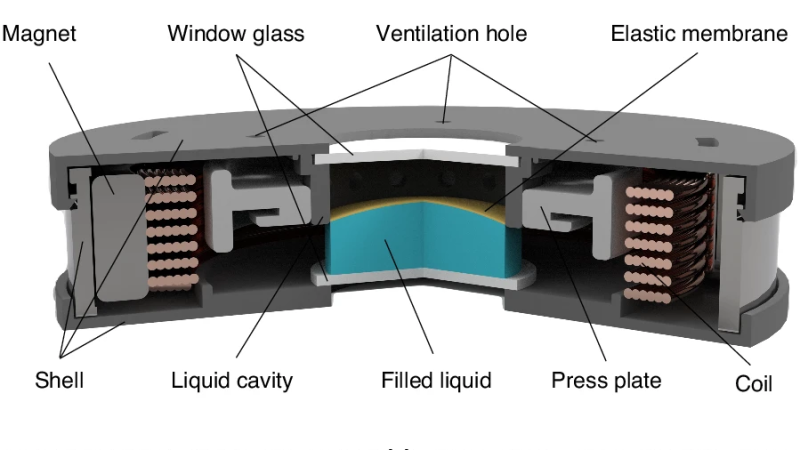
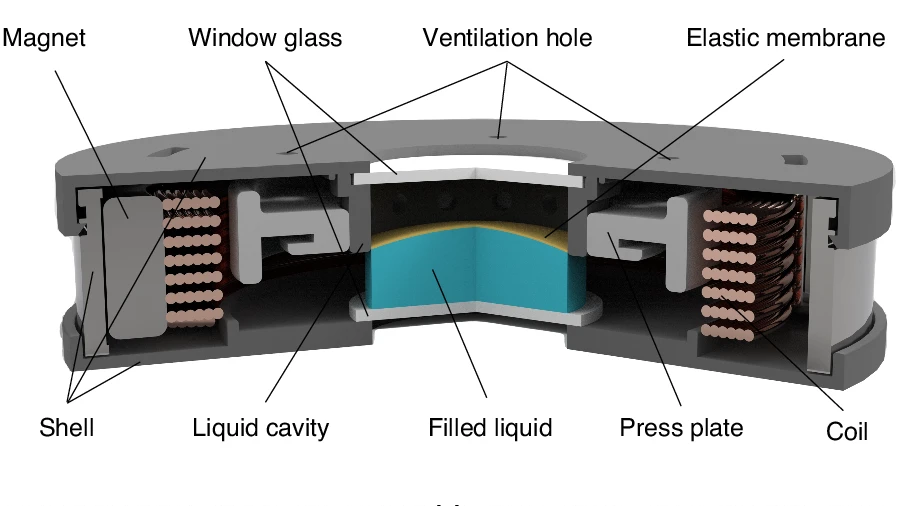
Holography is about capturing 3D data from a scene, and being able to reconstruct that scene — preferably in high fidelity. Holography is not a new idea, but engaging in it is not exactly a point-and-shoot affair. One needs coherent light for a start, and it generally only gets touchier from there. But now researchers describe a new kind of holographic camera that can capture a scene better and faster than ever. How much better? The camera goes from scene capture to reconstructed output in under 30 milliseconds, and does it using plain old incoherent light.

The new camera is a two-part affair: acquisition, and calculation. Acquisition consists of a camera with a custom electrically-driven liquid lens design that captures a focal stack of a scene within 15 ms. The back end is a deep learning neural network system (FS-Net) which accepts the camera data and computes a high-fidelity RGB hologram of the scene in about 13 ms. How good are the results? They beat other methods, and reconstruction of the scene using the data looks really, really good.
One might wonder what makes this different from, say, a 3D scene captured by a stereoscopic camera, or with an RGB depth camera (like the now-discontinued Intel RealSense). Those methods capture 2D imagery from a single perspective, combined with depth data to give an understanding of a scene’s physical layout.
Holography by contrast captures a scene’s wavefront information, which is to say it captures not just where light is coming from, but how it bends and interferes. This information can be used to optically reconstruct a scene in a way data from other sources cannot; for example allowing one to shift perspective and focus.
Being able to capture holographic data in such a way significantly lowers the bar for development and experimentation in holography — something that’s traditionally been tricky to pull off for the home gamer.
Novel photochromic glass can store rewritable 3D patterns
L’horreur absolue : l’IA d’Elon Musk propose des plans détaillés pour une attaque chimique massive !
134 millions d’euros de prime offerts pour des infos sur le piratage de l’année : le hack de Bybit

La plateforme de crypto-monnaies Bybit, victime d'un piratage record de 1,4 milliard de dollars, cherche désormais à retrouver ses crypto. L'entreprise offre une prime à ceux qui arriveraient à retrouver les fonds avant qu'ils soient convertis par des hackers nord-coréens.
Asking for What You Want

It took me a long time in my professional life to learn that my chances of getting what I wanted increased significantly if I asked for it.
It seems obvious, but somehow, between politeness, awkwardness, fear of rejection, or humility, I forgot. As a child, I had no hesitation in asking for things. But somewhere along the way, I got out of the habit.
Like in a relationship, asking for what you want avoids others having to guess—and potentially getting it wrong. If no one knows what you need, it's easy to feel overlooked, even when no one meant to ignore you.
That's not to say asking is easy or without risk. Social norms, power dynamics, and biases mean that the same request can be received very differently depending on who asks. In some cases, asking outright might even backfire. But when possible, asking remains a powerful tool.
Sometimes, asking is an obligation. If you're seething with resentment because you stayed late at work when you really needed to be back early today, that serves no one very well. You might do a worse job and be unhappy to boot. If there's something you need to be happy in your job and your manager doesn't know, it's hard for them to help.
Twenty years ago, my wife and I went on an expedition to climb Mt Kenya. As we reached camp on the second day of hiking, one group member shared that he couldn't eat any foods containing gluten. By then, finding alternatives was challenging—the meals had been planned and packed days before—and jeopardised the whole trip.
To ask for what you want, you must first figure out what you want. This isn't always straightforward, and it's easy to drift along without thinking about what you'd like and where you want to go. Doing the hard work to figure that out helps you and those you work with when planning and opportunities for change arise.
You might never get what you ask for. But I've found that even when I didn't get what I wanted at the time, I sometimes got what I asked for later. When people know what you're looking for, they're more likely to think of you when the right moment comes.
Is there something you want but haven't actually asked for? Maybe now's the time.
"You get in life what you have the courage to ask for."
— Oprah Winfrey (supposedly)
Related Ideas
Also see:
OpenAI unveils GPT-4.5 ‘Orion,’ its largest AI model yet
Updated 2:40 pm PT: Hours after GPT-4.5’s release, OpenAI removed a line from the AI model’s white paper that said “GPT-4.5 is not a frontier AI model.” GPT-4.5’s new white paper does not include that line. You can find a link to the old white paper here. The original article follows. OpenAI announced on Thursday […]
© 2024 TechCrunch. All rights reserved. For personal use only.
Thermorphs: Self-Folding 3D Prints
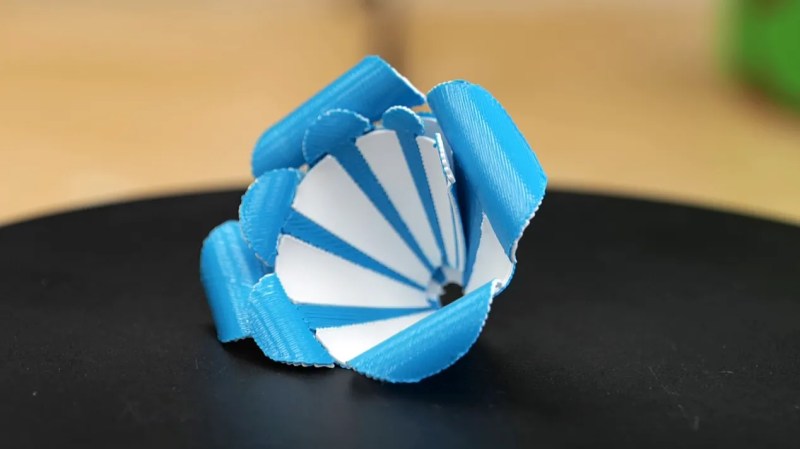
Prints separating from the build plate or warping when you don’t want them to is a headache for the additive manufacturer. [CNC Kitchen] walks us through a technique to use that warping to our advantage.
Based on a paper by researchers at the Morphing Matter Lab at UC Berkeley, [CNC Kitchen] wanted to try making 3D printed objects that could self-assemble when placed in hot water. Similar to a bimetal strip that you find in simple thermostats, the technique takes advantage of the stresses baked into the print and how they can relax when reaching the glass transition temperature of the polymer. By printing joints with PLA and TPU layers, you can guide the deformation in the direction you wish, and further tune the amount of stress in the part by changing the print speed of different sections.
[CNC Kitchen] found that Hilbert curve infill slows the printer down sufficiently to create relatively stress-free sections of a print to create flat sections which is an improvement over the original researchers’ all TPU flat sections with respect to rigidity. We’ve covered how to reduce warping in 3D prints, but now we can use those techniques in reverse to design self-assembling structures. These parts, being thermoplastic, can also be heated, reformed, and then exhibit shape memory when placed back into hot water. It’s very experimental, but we’re curious to see what sort of practical or artistic projects could be unlocked with this technique.
We’ve seen a few other interesting techniques with folded objects like laser cutter origami, some flat-to-folded 3D prints that might be interesting to try with this technique, and also folded hybrid mechanisms made with laser cutting and 3D printing.
Grok’s new “unhinged” voice mode can curse and scream, simulate phone sex
On Sunday, xAI released a new voice interaction mode for its Grok 3 AI model that is currently available to its premium subscribers. The feature is somewhat similar to OpenAI's Advanced Voice Mode for ChatGPT. But unlike ChatGPT, Grok offers several uncensored personalities users can choose from (currently expressed through the same default female voice), including an "unhinged" mode and one that will roleplay verbal sexual scenarios.
On Monday, AI researcher Riley Goodside brought wider attention to the over-the-top "unhinged" mode in particular when he tweeted a video (warning: NSFW audio) that showed him repeatedly interrupting the vocal chatbot, which began to simulate yelling when asked. "Grok 3 Voice Mode, following repeated, interrupting requests to yell louder, lets out an inhuman 30-second scream, insults me, and hangs up," he wrote.
By default, "unhinged" mode curses, insults, and belittles the user non-stop using vulgar language. Other modes include "Storyteller" (which does what it sounds like), "Romantic" (which stammers and speaks in a slow, uncertain, and insecure way), "Meditation" (which can guide you through a meditation-like experience), "Conspiracy" (which likes to talk about conspiracy theories, UFOs, and bigfoot), "Unlicensed Therapist" (which plays the part of a talk psychologist), "Grok Doc" (a doctor), "Sexy" (marked as "18+" and acts almost like a 1-800 phone sex operator), and "Professor" (which talks about science).

Retail Technology Show and Retail AI Council bring artificial intelligence innovation to RTS 2025
Retail Technology Show (RTS) has partnered with Retail AI Council to bring the latest innovations in artificial intelligence (AI) to its 2025 show, which takes place on 2nd-3rd April at London ExCel.
According to RTS’ latest data, AI is now the top technology UK retail leaders believe will unlock and accelerate growth for their businesses in 2025. Polling over 2,000 senior UK retail professional, its study revealed AI as the top innovation growth accelerator (51%), followed by Generative AI (Gen AI) for 44% and personalisation technologies (25%).
Retail AI Council is a global retailer led community. Its mission is to provide a collaborative platform where retailers and industry partners can come together to network, share best practice and exchange knowledge, and explore the vast possibilities offered by AI technologies to accelerate its adoption and applications within the sector.
The Retail AI Councill Pavillion (Stand E10) will feature a hand picked selection of US suppliers, curated for the progressive nature of their future forward AI powered solutions.
This includes Monetate, a digital merchandising, testing and personalisation AI technology; KWI, an AI first unified commerce and PoS platform; Sophelle, a retail management consultancy; and Newmine, an applied AI returns reduction solution.

Matt Bradley, Event Director at RTS, comments: “As AI continues to evolve at pace – whether it’s the arrival of the next progressive AI waves - from agentic to physical and robotics AI - to new disruptive players like DeepSeek upending the already hyper-charged AI landscape - retailers understand the need to adapt and leverage the technology to remain competitive. That’s why we’re so excited to be partnering with Retail AI Council, who are at the sharpest end of AI innovation, to bring fresh, new and disruptive AI insights and solutions to our unmissable 2025 show.”
Doug Weich, CEO and Connecter for Retail AI Council, says: “Our mission is to help retail professionals leverage AI to drive successful business outcomes. The Council does this by delivering valuable benefits, actionable insights, and real connections. As one of the leading retail events, partnering with the Retail Technology Show is a great opportunity for us to connect with the retailers and tech innovators who have the power, imagination and tech know-how to turbo-charge AI use to benefit the entire retail ecosystem.”
RTIH AI in Retail Awards
RTIH, organiser of the industry leading RTIH Innovation Awards, proudly brings you the first edition of the RTIH AI in Retail Awards, which is now open for entries.
As we witness a digital transformation revolution across all channels, AI tools are reshaping the omnichannel game, from personalising customer experiences to optimising inventory, uncovering insights into consumer behaviour, and enhancing the human element of retailers' businesses.
With 2025 set to be the year when AI and especially gen AI shake off the ‘heavily hyped’ tag and become embedded in retail business processes, our newly launched awards celebrate global technology innovation in a fast moving omnichannel world and the resulting benefits for retailers, shoppers and employees.
Our 2025 winners will be those companies who not only recognise the potential of AI, but also make it usable in everyday work - resulting in more efficiency and innovation in all areas.
Winners will be announced at an evening event at The Barbican in Central London on Thursday, 3rd July. This will kick off with a drinks reception in the stunning Conservatory, followed by a three course meal, and awards ceremony in the Garden Room.
Please email our Editor, Scott Thompson, if you have any questions or need further information: scott.thompson@retailtechinnovationhub.com
Key 2025 dates
Friday, 23rd May: Award entry deadline
Tuesday, 27th May: 2025 finalists revealed
Wednesday, 28th May - Friday, 13th June: Judging days
Thursday, 3rd July: Winners announced at the 2025 RTIH AI in Retail Awards Ceremony, to be held at The Barbican in Central London.

🎤 Les 5 tendances technologiques de 2025 (Patrice Duboé, Capgemini)
[En partenariat avec Capgemini] Quelles seront les grandes évolutions technologiques à suivre en 2025 ? Dans cet épisode, Patrice Duboé, Directeur de l'Innovation pour l'Europe du Sud chez Capgemini, décrypte les cinq tendances majeures identifiées par le rapport Technovision.
🔹 IA agentique : L'essor des agents spécialisés dans l'intelligence artificielle générative pour assister les professionnels.
🔹 Cybersécurité : L’IA, à la fois menace et bouclier contre les cyberattaques et la désinformation.
🔹 Robotique : Une intégration plus poussée de l’IA dans les robots collaboratifs et l’industrie.
🔹 Nucléaire et énergie : Le rôle clé du nucléaire face aux besoins énergétiques croissants de l’IA.
🔹 Supply chain et traçabilité : L’optimisation de la logistique grâce au digital et à l’IA, avec des initiatives comme le passeport des batteries.
Un épisode indispensable pour comprendre comment ces technologies façonneront l’année à venir !
Lien : https://www.capgemini.com/fr-fr/perspectives/publications/innovation-top-tech-trends-2025/
-----------
🎧 L'Hebdo Premium : https://m.audiomeans.fr/s/S-xylotlSe
🌍 Web : https://mondenumerique.info
🗞️ Newsletter : https://mondenumerique.substack.com
📹 YouTube : https://www.youtube.com/@mondenumerique
♥️ Soutien : https://donorbox.org/monde-numerique
Distribué par Audiomeans. Visitez audiomeans.fr/politique-de-confidentialite pour plus d'informations.
Walmart Unlimited gamified mini-series set to go live this week on Spatial immersive platform
Walmart Unlimited, a new, gamified mini-series, will makes its debut today, brought to you by Walmart, Unity and Spatial in collaboration with animators and producers Martian Blueberry and game development studio PIGIAMA KASAMA.
You will be able to check it out here.
The first episode introduces characters inspired by Walmart’s real-life suppliers, including A Dozen Cousins founder Ibraheem Basir.
It’s the US retail giant’s latest attempt to tap immersive commerce - a form of online shopping that combines VR with 3D visualisations and gamification - to connect with the next generation of consumers.
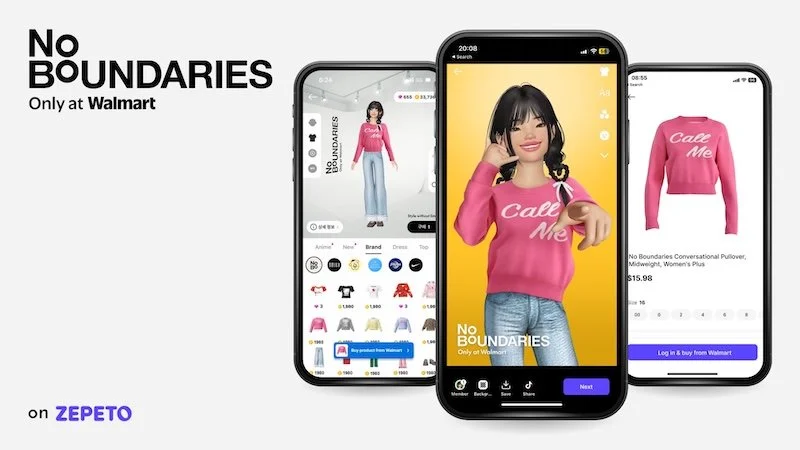
Walmart has also been testing out Roblox and this week it announced its fifth No Boundaries drop on Zepeto, featuring ten new virtual items, inspired by the Spring No Boundaries collection.
As with previous drops, the real-world versions of these items are shoppable without leaving the Korean metaverse platform. Every purchase includes a free virtual twin of the item.
“Gaming is one of the biggest forms of entertainment on earth, reaching more than three billion people spanning diverse backgrounds and interests,” says Justin Breton, Director of Brand Experience and Partnerships at Walmart.
“Building on our reputation as pioneers in immersive commerce, our collaboration with Unity broadens our ability to engage with new customers by adding value to the gaming industry for both gamers and developers. The Spatial platform is the most accessible place to blend the future of immersive commerce with thrilling game play and seamless purchase points.”
“We're transforming online interaction from passive watching to active play for a global audience. Our projects run across Web, iOS, Android, and VR with no additional configuration, so accessing these virtual gaming worlds has never been easier,” says Gianna Valintina, Global Head of Strategic Partnerships at Spatial.
“We’ve had the honour of working with the Martian Blueberry team, including legendary writer, producer, and Co-Founder Carl Jones, and our talented collective of artists and developers at Spatial, on this groundbreaking project with Walmart. Through this game, we hope that players worldwide can discover the unlimited power of individuals and local businesses coming together to champion their communities.”

2025 RTIH INNOVATION AWARDS
Immersive experiences will be a key focus area at the 2025 RTIH Innovation Awards.
The awards. which will open for entries in March, celebrate global tech innovation in a fast moving omnichannel world.
Our 2024 hall of fame entrants were revealed during an event which took place at RIBA’s 66 Portland Place HQ in Central London on 21st November, and consisted of a drinks reception, three course meal, and awards ceremony presided over by comedian Lucy Porter.
In his welcome speech, Scott Thompson, Founder and Editor, RTIH, said: “The event is now into its sixth year and what a journey it has been. The awards started life as an online only affair during the Covid outbreak, before launching as a small scale in real life event and growing year on year to the point where we’re now selling out this fine, historic venue.”
He added: “Congratulations to all of our finalists. Many submissions did not make it through to the final stage, and getting to this point is no mean feat. Checkout-free stores, automated supply chains, immersive experiences, on-demand delivery, next generation loyalty offerings, inclusive retail, green technology. We’ve got all the cool stuff covered this evening.”
“But just importantly we’ve got lots of great examples of companies taking innovative tech and making it usable in everyday operations - resulting in more efficiency and profitability in all areas.”
Congratulations to our 2024 winners, and a big thank you to our sponsors, judging panel, the legend that is Lucy Porter, and all those who attended November's gathering.
For further information on the 2025 RTIH Innovation Awards, please fill in the below form and we will get back to you asap.
Name * First Name Last Name Email * Subject * Message *Thank you!

TouchEye dual round touch display module features Raspberry Pi RP2040 or ESP32-S3 MCU (Crowdfunding)
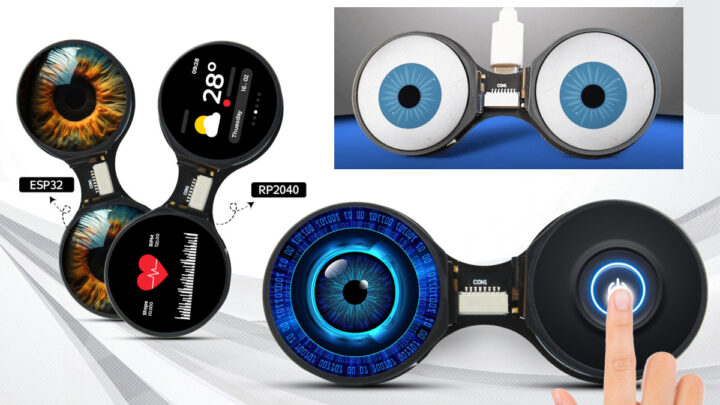
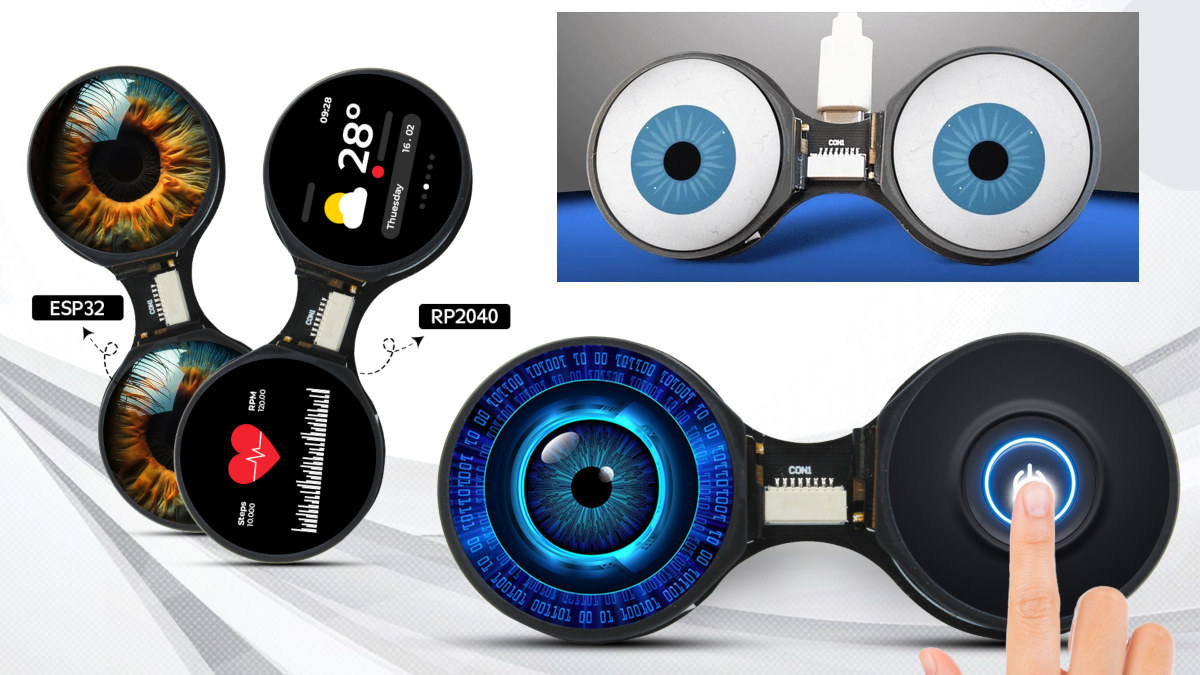
Last December, Debashis wrote about the Waveshare Double Eye LCD module comprised of two round displays that can be useful for robotics or art projects since they can be made to look like googly eyes. The module is designed to be connected to a host MCU via an SPI interface.
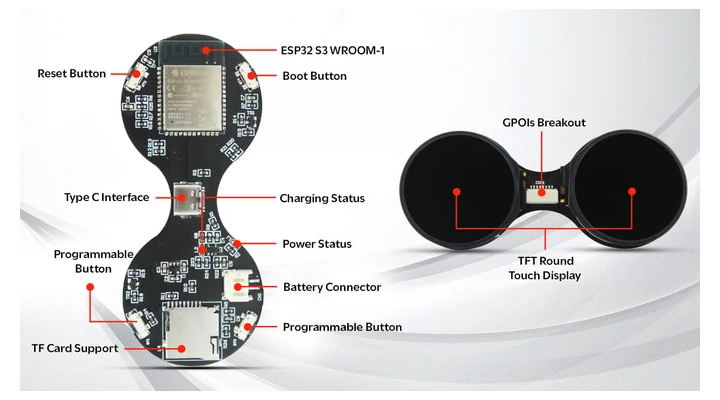
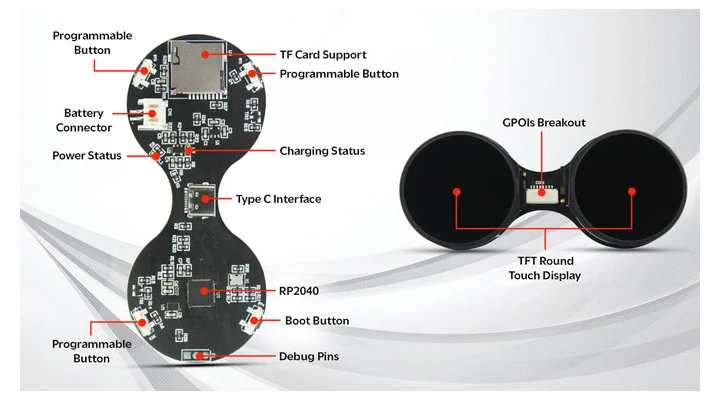
The TouchEye looks similar but offers larger 1.28-inch round displays (instead of 0.71-inch), and also adds a touch function. Instead of being connected to a host MCU via SPI like the Waveshare model, the TouchEye dual touch display module is a complete board with an onboard MCU that can be either a Raspberry Pi RP2040 or an Espressif ESP32-S3 that also offers WiFi and Bluetooth connectivity. Both boards also feature a USB-C port for power and programming, a microSD card slot, a GPIO breakout connector, and programmable buttons.
TouchEye module specifications:
- MCU (one or the other)
- Raspberry Pi RP2040 dual-core Cortex-M0+ microcontroller @ up to 133 MHz with 264KB SRAM
- Espressif ESP32-S3 dual-core LX7 microcontroller @ 240MHz with vector instructions, 512KB SRAM, WiFi 4 and Bluetooth 5.x connectivity (all that through ESP32-S3-WROOM-1 module)
- Storage – MicroSD card slot for data logging & media storage
- Displays – 2x 1.28-inch round touch color displays with 240×240 resolution
- USB – 1x USB Type-C port for power and programming (MCU versions)
- Expansion – GPIO breakout connector
- Misc
- Reset and Button button
- 2x programmable buttons
- Power and Charging LEDs
- Power Supply
- 5V via USB-C port
- 2-pin battery connector
- Dimensions – It’s complicated and the company only says “compact and lightweight design”
While the crowdfunding campaign has been launched by Vandana Singh, it’s just another project by SB Components. That means there’s no documentation, source code, or other resource available until the Kickstarter campaign is over. This time around they did not even mention which framework they used for programming, but we can expect Arduino and/or MicroPython. You can check out their GitHub account and previous projects to better understand what to expect once you get the board.
What we do have is a demo of the TouchEye dual touch round display module showing its capabilities.
Both the TouchEye ESP32-S3 and RP2040 dual touch display modules go for about $62 on Kickstarter, at least for the super early bird rewards, and once all those are taken, the early bird price kicks in at $70. Shipping further adds 5 GBP to the UK, and about $19 to the rest of the world. For reference, the Double Eye display mentioned in the introduction, with smaller round displays without touch and no on-board MCU, sells for about $13 on AliExpress and $20 on Amazon. While the TouchEye ought to be more expensive with the extra features, the price difference is bigger than I had expected. Backers of the TouchEye modules should expect their rewards to ship by June 2025.
The post TouchEye dual round touch display module features Raspberry Pi RP2040 or ESP32-S3 MCU (Crowdfunding) appeared first on CNX Software - Embedded Systems News.
ElevenLabs AI will create audiobooks for you at no cost within minutes

OpenAI : ChatGPT se met à la voix et à la recherche avancée, avec des nouveautés pour tous !
OpenAI vient d’annoncer sur X le déploiement d’une version preview du Mode vocal avancé pour les utilisateurs gratuits de ChatGPT, tout en étendant l’accès à son agent Deep Research à tous les abonnés Plus, Team, Edu et Enterprise. Mode vocal avancé désormais accessible aux utilisateurs gratuits Jusqu’à présent réservé aux abonnés ChatGPT Plus, le Mode […]
L’article OpenAI : ChatGPT se met à la voix et à la recherche avancée, avec des nouveautés pour tous ! est apparu en premier sur BlogNT : le Blog des Nouvelles Technologies.
AI to replace 4,000 jobs in Southeast Asia's largest bank: DBS
AI opens 'endless' doors for fashion models, closes others
Parfumerie : Dior Beauté offre un vestiaire à sa Collection Privée
XReal One Pro Optics and Its Connections to Ant-Reality and Google
Introduction – I was almost done, and then . . .
Since starting this blog, I have been interested in AR optical designs that are different from others I have seen. When Xreal showed their Xreal One Pro at CES 2025, I was curious to know how it worked. As it turned out, the design was not as different as I had first thought. I had seen it before but didn’t realize it until I was well into writing this article. I did one last search through my files, and as my British friends say, the penny dropped (it clicked), and I had a bit of a different story to write.

According to IDC (as shown by Xreal), Xreal has shipped over half a million AR Glasses to date and had about 47.2% of the “AR Market” in 2024 (see data from Xreal’s presentation at AR/VR/MR 2025, right). As will be discussed toward the end of this article, Xreal is going after applications that are more “VR-like” than what people classically think of as Augmented Reality. Xreal’s birdbaths block about 75% (25% transmissive) of real-world light, and the One Pro blocks about 78% (22% transmissive in its most transmissive state of the integrated dimmer) or are like dark sunglasses. The Waveguide and other nearly clear (>80% transparent) AR glasses.
Background
I have been covering Xreal (then named Nreal) since CES 2019. Xreal design was very similar to ODG’s R-8 and R-9 designs, which I covered in 2017 (see: ODG R-8 and R-9 Optic with an OLED Microdisplays (Likely Sony’s)). Since 2019, I have covered Xreal many times, including a 2021 teardown of (then) Nreal’s birdbath design (see: Nreal Teardown: Part 1, Clones and Birdbath Basics, Nreal Teardown: Part 2, Detailed Look Inside, and Nreal Teardown: Part 3, Pictures Through the Lens).
Then there is Ant Reality (formerly named AntVR), which I first saw at AWE 2018, then CES 2020, and covered in a 2022 AWE video with Brad Lynch. It has been reported that Google acquired Ant Reality in December 2023, but the exact nature of that “acquisition” of a Chinese-based company has not been reported.
My coverage of Google and AR goes back to the early days of this blog (see 2012’s Google Glass and Himax Whirlwind, Augmented Reality / Head Mounted Displays (Part 1 Real or Not?), and Augmented Reality and Google Project Glass Part 2). This blog caused quite an uproar and over $100M movement in a day in Himax’s stock when I identified a Himax LCOS panel in Google Glass (Google Glass and Himax Whirlwind). I have also written about Google’s crazy spend of $500M on Magic Leap that enabled them to raise over $2B more (see, for example, 2020’s Magic Leap Starts to Auger-In with ~3.7X the Money as Theranos – I Tried to Warn Everyone).
Xreal One Pro at CES 2025

Xreal was showing their new One Pro at CES 2025 in preparation as part of a product launch for shipping in March 2025. While all prior Xreal (or Nreal) devices used a birdbath architecture, the new One Pro was using what Xreal called a “flat prism.” At first, I thought it might be a typical “freeform optics” (more on this later), but on closer examination, it was obviously not a common freeform.
Xreal had all the parts of the Xreal One Pro in a glass box with a light underneath (right). I was able to get a close-up of the optic module at an angle (seen later). The parts view also clearly shows the two polarization-based dimmers.
The One Pro’s “Flat Prism” optics are much thinner, allowing the user’s eyes to get closer to the optics. This will, among other things, mean the One Pro does not have to sit so far out on the user’s nose, which will help keep the glasses from being as front-heavy. As will be discussed later, it also improves the field and effective magnification. The Xreal one has a larger FOV even though it is using a new, smaller Sony 1920×1080 Micro-OLED, which Xreal attributes to their new “Flat Prism” optical design.


Ant-Reality
I first saw Ant-Reality (then named AntVR) at AWE 2018 (below left), and they were not that impressive. However, by 2023, they had a moderately large and well-attended booth at CES 2023 (below right). But then, by December 2023, it was reported that Google had acquired Ant-Reality, so I figured it was the last I would see or hear of them.


I started finding AntVR’s (aka, Ant Reality) technology interesting at CES 2020 (below left). But they seemed to improve massively by the time I got a demo of Ant Realities 120° dual display Crossfire (below right) at AWE 2022 (see my video report).


One thing to notice in the AntVR 85° design above is that the (in-air) polarizing beam splitter does not extend to the top and bottom of the optics/FoV. While this “works” for displaying the image, it results in a darker (out-of-focus) band in the center of the real world (less so in the virtual image) and out-of-focus lines at the top and bottom of the beamsplitter. This will be important later when looking at the concept diagrams for the Xreal One Pro.
The Crossfire design works by using a total internal reflection (TIR) of the display’s light into a polarizing beam splitter at a shallower angle than a common birdbath’s ~45° beamsplitter. Because of the angle from the TIR bounce, it is still “on-axis” with the spherical birdbath mirror. Crossfire has two prisms and displays that are combined to make a single 120° image. However, this same concept with the TIR bounce can be applied to a single display and prism.

Another thing to notice in the Crossfire figure is the front projection of the image, which happened to be a test pattern from this blog. This image is polarized, and Nreal/Xreal (among others) have eliminated this front projection from their birdbath designs using a front polarizer (see my Nreal teardown).
Similarly, LetinAR has used a single TIR (versus a waveguide’s massive number of TIR bounces) in a spherical collimating mirror in their PinTilt design (above right).
Xreal 2025 AR/VR/MR with the same figures as Ant-Reality at 2023 AWE
At CES 2025, I started to wonder about the Xreal One Pro’s light path/optics, but with all the running around, processing photographs from CES, and then preparing for AR/VR/MR 2025, I didn’t get much of a chance to think about it. A couple of weeks later, I showed the design to some people at AR/VR/MR, and it became obvious that it was not freeform optics, and I had already ruled out a “bottom-ended birdbath” (like Google Glass – more on this later).
On the last day of the AR/VR/MR, Xreal presented on the One Pro and gave a very general diagram of the “Flat Prism” optical path (below left). It showed the display device (in yellow and orange) could be in any of four general locations, and it looked much thinner than what I had taken a picture of at CES (below right).


I eventually sorted out how to get the optical path to work with the various pictures I took of the One Pro’s optics. But I kept thinking that it must be something like a cross between the AntVR 85° and Ant Reality Crossfire. Then, like in the ending of MGM’s Wizard of Oz (where Dorothy is told she had the power to go home all along), I rediscovered Ant Realities slides from AWE 2023 that they had given me.
I was surprised to find four diagrams in Xreal’s 2025 presentation (upper set of slides below) that were identical to diagrams in Ant-Reality’s 2023 presentation (lower set of slides). Most interesting are the far right figures, which Xreal calls a Flat Prism, and Ant-Reality called a “Mixed Waveguide.”


If you look closely at the figures above, you will see that the Freeform prisms tilt in the opposite direction as the birdbath and Mixed Waveguide=Flat Prism. With a Freeform, all the virtual image light that reaches the eye stays in the eye-side prism. The second prism, known as the compensator, is used to keep the wedge-shaped freeform from distorting the real world. At CES 2025, P&C Solutions was showing Metalens 2, which used freeform optics (right), which, while less common today, is one of many headsets I have seen using freeform optics through the years.

Ant-Reality’s/Xreal’s diagrams above seem to overstate the advantages of the “Flat Prism.” For example, they show a distorted image due to freeform optics being off-axis of the semi-spherical mirror. Usually, there are “pre-correction” optics (left) that can help correct this issue. As will be shown later, Xreal’s Flat Prism also has a lens integrated into it, which is not shown in the diagrams above.
Ant-Reality’s AWE presentation included a video, and the still frame below shows their “Mixed Waveguide” prototype optics, which look a lot like the Xreal One Pro (below).

Connecting Xreal, Ant-Reality, and Google/Android XR
So, Google has (reportedly) “acquired” Ant-Reality (aka AntVR), but the form of the acquisition is unclear. A quick look at the U.S. Patent Office assignment still shows the patents and even new (ex. US 2025/0028176) applications assigned to “BEIJING ANTVR TECHNOLOGY CO., LTD. (Beijing, CN)” rather than to Google or an obvious subsidiary.
Xreal’s use of the same figures as Ant-Reality suggests Xreal’s “flat prism” based on Ant-Reality’s optical design. Xreal was also at the announcement of Google’s XR Unlock and the Announcement of Android XR (below left). Additionally, Xreal prominently featured their work with Android XR in their AR/VR/MR presentation (below right). I don’t know the exact relationship between Google and Xreal, such as a possible investment by Google in Xreal (a web search didn’t show any). Still, apparently, whatever is going on, it is a friendly relationship😁.


Xreal One Pro’s optics “concept” diagrams

Since I had better copies of Ant-Reality’s slides than the pictures of Xreal’s slides and the figures were identical, I’m using the Ant-Reality concept diagrams to explain how the Xreal Pro Optics work (right). These concept diagrams leave out components to show the basic idea. I have added some annotations in red.
I have lined up the birdbath diagram (top right) with the “Flat Prism” diagram (bottom right). While not to scale, a key point is that the eye can get closer to the curved mirror. The main reason is that the beam splitter no longer has to be 45 degrees due to the angle at which the light hits it after the TIR reflection.
The Xreal One Pro diagram “cheats” by making the optics much thinner, making the view distance appear much shorter. In the concept diagram, the PBS does not extend the full height of the FoV, which would cause the image to be darker in the center and with out-of-focus lines at the top and bottom of the PBS. As will be seen, the actual One Pro optics are much wider, I presume, to eliminate this obvious problem (and one I saw with the AntVR 85° at CES 2020).
Having the eye closer to the optics supports more magnification of the display’s image and enables a wider FOV.
For the TIR to work, they must have solid optics, whereas the birdbath can be in the air, thus tending to make them heavier even if they are smaller. To enable the TIR, there is an Air gap between the PBS prisms and the curved mirror. Both the conventional birdbath and the One Pro have a quarter waveplate in front of the curved mirror in order to rotate the polarization 90 degrees and thus pass through the polarizing beam splitter (PBS) on the return path to the eye.

Every birdbath design I have seen has some lenses before the PBS, but they are not shown in the birdbath diagram above (other than the “field lens” I added in red). The One Pro also has a lens that is not shown in the simple figure above. See the figure (right) from my 2021 teardown of the Nreal (aka Xreal) birdbath for the difference between the high-level concept above and the actual design of a birdbath. Similarly, the conceptual Xreal One Pro diagram above leaves out necessary components.
As pointed out in Xreal’s slide in their AR/VR/MR presentation, the design shown is “on-axis,” which results in less geometric distortion.
The Actual Xreal One’s Optical Path
The figure (below left) uses the concepts from the diagram of One Pro’s theoretical optics and applies them to the pictures of the actual optics. Xreal had a somewhat side view of the prism (bottom right) that is covered up by the frame and Micro-OLED display in all the pictures of the optics (including upper right). As can be seen, there is a lens molded into the top of the prism that forms one side of the PBS. From the view of the prism in the presentation, I (by hand) created a side view diagram and overlaid it on a picture I took of the One Pro.

The curved spherical (or semi-spherical) mirror is not clearly visible, so I used the one from the diagram shown earlier for the side of the diagram (it shows the function but not the right size and curvature). This diagram roughly shows the light path and is not a perfect model. The diagram shows polarizers and a quarter waveplate (QWP), which must be used for the optics to work.

An obvious difference from the theoretical diagram is that the PBS and the two prisms on either side extend the full height of the possible view through the optics. This avoids the non-uniformity issues with a short beam splitter discussed earlier. To make this happen, the two main prisms are significantly wider.
Another major difference between the earlier theoretical diagram and the actual One Pro’s optics is their significant pantoscopic (top to bottom) tilt (shown right). In contrast, in the conceptual diagram shown earlier, there is no tilt. While I am not sure, I wonder if everything is still “on-axis” with respect to the spherical mirror. Note also that in the prism from the Xreals slide, a lens element is molded into the top of the prism. This lens might also be pre-correcting for off-axis issues.
Polarizing Dimmer
The Xreal One Pro has a polarization-based dimmer that blocks almost 100% of real-world light to create a black background for better image viewing. A polarization dimmer works by putting a liquid crystal cell between two polarizers. The dimmer’s polarizer nearest the glasses will prevent the front projection of light from the curved (non-polarized) semi-mirror, as seen in the Ant-Reality Crossfire shown above.
As discussed earlier, even in its most transparent state, the Xreal One Pro only lets through about 22% of the real-world light or about as much as dark sunglasses. Xreal has prioritized seeing the virtual image at the expense of seeing the real world.
Xreal Application Space – Closer to VR with Passthrough
My discussion at CES 2025 with Xreal CEO Chi Xu helped me better understand Xreal’s market. With ~22% transparency in the best case, it has a very different application space than waveguide and other nearly clear (>80% transparency) AR glasses.
I’m fond of saying that AR (optical see-through / OST) glasses prioritize clearly seeing the real world and, to some degree, sacrificing the image quality of the virtual world. VR with video see-through (VST) prioritizes the virtual image, and the video see-through is to augment the virtual world. In particular, the VST is generally only good enough to let someone see things in the room to pick them up or to keep from bumping into things. By these standards, Xreal’s application space is closer to VR than the nearly clear AR glasses.

Perhaps the most obvious use case for Xreal’s glasses is ultra-portable displays, such as when commuting on public transport. In these cases, seeing the real world is more for situational awareness rather than to overlay a small amount of virtual information on the real world.

According to Xreal, one of its biggest applications is a big FOV display for handheld virtual reality games such as the Steam Deck (above left).

Another application space for Xreal is a head-worn computer monitor, something I started working on in 1998 (right). Sightful, among others, has been using Xreal glasses to support multiple large virtual monitors. Originally, Sightful developed a “monitorless laptop.” Sightful has transitioned to being purely a software application running on other companies’ laptops using Xreal for a private large FOV virtual multi-monitor. (left).
For most of Xreal’s applications, they want the best possible image quality, which means needing to black out the real world. Thus, the electronic dimming shutter on the Xreal One Pro.

Based on how the Xreal glasses are being used, their newer One and Pro One glasses improve head tracking latency by moving 3 Degrees of Freedom (DoF) tracking from a software application running on a smartphone or laptop to their new X1 chip. In games and virtual monitor applications, it is important to respond quickly to head movement.
Conclusion
The funny thing is that if I had not been trying to figure out how it worked, I would never have stumbled across some old information that showed apparent connections between Xreal, Ant Reality, and Google.
In the end, it is a slightly more complex version of a birdbath, where the optics are encased in plastic. The use of a TIR bounce enables the beam splitter to be somewhat thinner. The thinner beam splitter results in the eye being closer to the spherical mirror, which enables using a smaller display device while providing a larger FoV.
My discussion with Xreal CEO Xu helped me better understand the application space for an “AR” headset with so little transparency in its more transparent state. It’s almost easier to think of Xreal’s glasses as very lightweight VR glasses as an alternative to Meta Quest 3 or Apple Vision Pro, where the passthrough is optical, rather than highly transparent AR glasses.
Ad: MicroLED Connect and AR/VR Connnect 2025
KGOnTech is partnering with the combiner MicroLED and AR/VR Connect conferences. There is a virtual conference on March 6-7, 2025, and an in-person conference on September 24-25, 2025. The Conference is offering my readers a €150 discount if they use the discount code KarlARVR. This discount code is good for both the “Virtual Pass” and “Hybrid Pass” for both virtual and/or physical conferences. The discount code (or mentioning this blog) is also good for a 10% discount on exhibition packages.
Watch this humanoid robot perform a front flip in world first

Les joueurs de Counter-Strike 2 sont la cible d’un nouveau piège de hackers

Des chaînes YouTube et d'autres comptes sur les réseaux sociaux avec des millions d'abonnés sont détournés par des hackers, pour cibler les joueurs de Counter-Strike 2 avec des arnaques.
Fifth Walmart No Boundaries drop on Zepeto with real-world versions of items shoppable without leaving platform
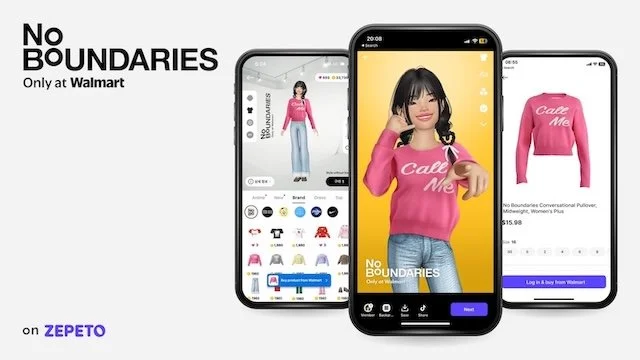
Walmart has announced its fifth No Boundaries drop on Zepeto, featuring ten new virtual items, inspired by the Spring No Boundaries collection.
As with previous drops, the real-world versions of these items are shoppable without leaving the Korean metaverse platform. Every purchase includes a free virtual twin of the item.
In a LinkedIn post, Justin Breton, Head of Brand Marketing Innovation at Walmart, said: “If you’re going to activate on an emerging platform: Do it right, by listening to the community; Do it well, by testing, learning, and optimising; Do it often, with consistent, fresh updates.”
“That’s exactly how we’ve approached our No Boundaries activations on Zepeto. And today, we’re marking a milestone: our fifth drop, featuring ten new virtual items, all inspired by our Spring No Boundaries collection. Why are these items just tops? Because that’s what the community asked for. And we listened to them.”
He added: “To make this drop even more engaging, we’ve also added a new photobooth backdrop, giving users more ways to create and share their No Boundaries looks. We believe the future of fashion is community driven, immersive, and borderless. And we’re just getting started.”
2025 RTIH INNOVATION AWARDS
Immersive experiences will be a key focus area at the 2025 RTIH Innovation Awards.
The awards. which will open for entries in March, celebrate global tech innovation in a fast moving omnichannel world.
Our 2024 hall of fame entrants were revealed during an event which took place at RIBA’s 66 Portland Place HQ in Central London on 21st November, and consisted of a drinks reception, three course meal, and awards ceremony presided over by comedian Lucy Porter.
In his welcome speech, Scott Thompson, Founder and Editor, RTIH, said: “The event is now into its sixth year and what a journey it has been. The awards started life as an online only affair during the Covid outbreak, before launching as a small scale in real life event and growing year on year to the point where we’re now selling out this fine, historic venue.”
He added: “Congratulations to all of our finalists. Many submissions did not make it through to the final stage, and getting to this point is no mean feat. Checkout-free stores, automated supply chains, immersive experiences, on-demand delivery, next generation loyalty offerings, inclusive retail, green technology. We’ve got all the cool stuff covered this evening.”
“But just importantly we’ve got lots of great examples of companies taking innovative tech and making it usable in everyday operations - resulting in more efficiency and profitability in all areas.”
Congratulations to our 2024 winners, and a big thank you to our sponsors, judging panel, the legend that is Lucy Porter, and all those who attended November's gathering.
For further information on the 2025 RTIH Innovation Awards, please fill in the below form and we will get back to you asap.
Name * First Name Last Name Email * Subject * Message *Thank you!
Loomos AI smart glasses integrate GPT-4o, offer a 16MP camera and hi-fi audio for $199+ (Crowdfunding)
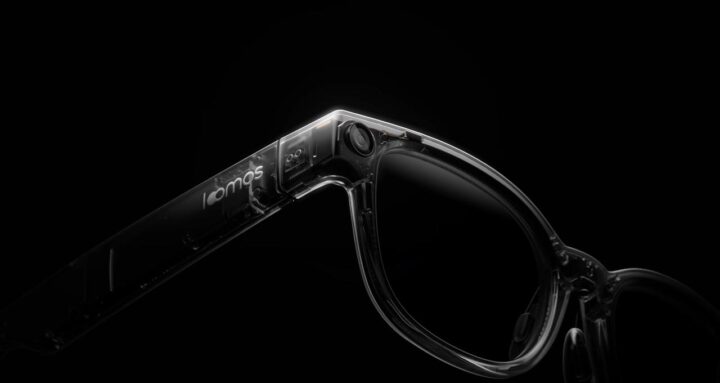
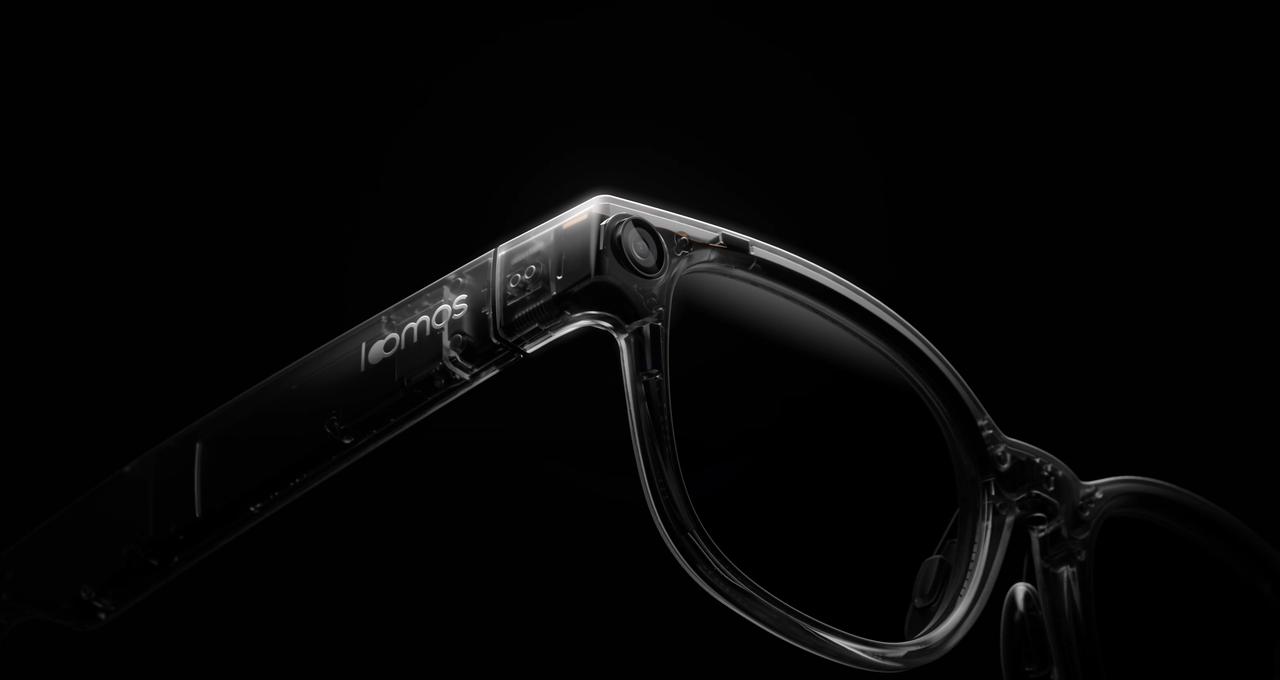
Chinese power supply company, SHARGE, has launched a pair of GPT-4o-powered smart glasses with a 16-megapixel camera capable of capturing 4K photos and 1080p videos. Like the Looktech AI glasses and Meta Ray-Ban series, the Loomos AI smart glasses have no onboard display. Instead, they feature a microphone array, onboard speakers, and side buttons for user control and feedback.
The Loomos glasses are powered by a 2.0Ghz UNISOC quad-core processor and come integrated with the multi-modal GPT-4o for real-time AI assistance. The stated battery life is much more impressive than the competition at 40 hours of standby time (from a 450mAh battery). The company also offers a 6,500mAh neckband power bank for uninterrupted all-day wearing.

The company promises security and privacy with the glasses. Data is processed anonymously with TLS encryption and users retain full control of their data. The glasses also include an indicator light to alert people around when you are recording, similar to the Ray-Ban Meta glasses.
Loomos AI glasses specifications:
- SoC – UNISOC AI Processor with 4 cores (1x Cortex-A75 + 3x Cortex-A55) @ up to 2.0GHz (It looks like the Tiger T310 but it does not have AI features being released in 2019)
- Memory – 2GB RAM
- Storage – 32GB eMMC flash
- Camera – 16MP Camera
- Audio – AAC 0920 Speaker, 3-array directional microphone
- Networking – WiFi, BLE 5.0
- Misc – Media Control Touch Pane, Adjustable Nose Pads
- Power Supply – 450mAh Battery
- Dimensions – 53mm – 20mm – 164mm (lens width, bridge width, and temple length)
- Weight – 49 grams
The smart glasses are powered by OpenAI’s multimodal GPT-4o model and are said to be capable of independent operation with Wi-Fi connectivity. The dedicated mobile app – available on Android and iOS – allows you to track the glasses and access captured videos and images.
The Loomos GPT-4o AI glasses are currently available on Kickstarter at a Super Early Bird price starting at $199 ($299 MSRP). The glasses come with a one-year GPT-4o subscription, magnetic top frame cover, case, nose pads, charging cable, cleaning cloth, and a user manual. Add-ons include a magnetic sunglasses clip ($20), neckband power bank ($49), and different prescription lens options (priced based on specification).
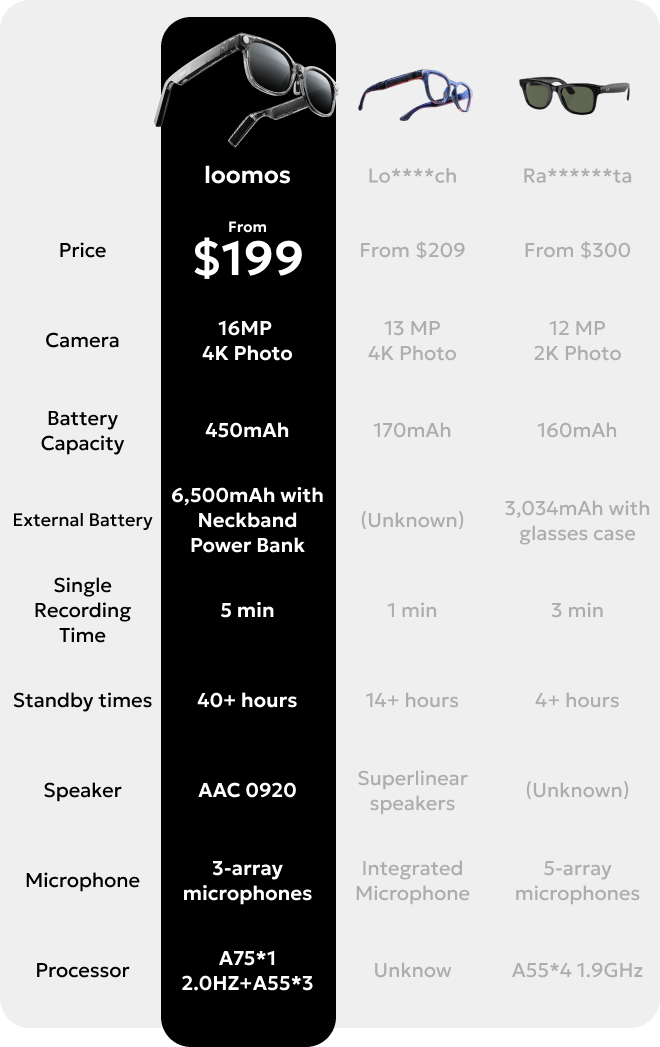
The loomos glasses are cheaper than Looktech and Meta Ray Ban Glasses and they have a better onboard camera and a larger battery for more hours of operation.
The post Loomos AI smart glasses integrate GPT-4o, offer a 16MP camera and hi-fi audio for $199+ (Crowdfunding) appeared first on CNX Software - Embedded Systems News.
Qualebook : un nouveau standard pour la qualité du livre numérique

Le secteur de l’édition numérique franchit une nouvelle étape avec Qualebook, un référentiel qualité dédié aux livres numériques. Face à des enjeux spécifiques (cadre juridique, interopérabilité, écoconception), l’objectif du projet Qualebook est d’élaborer des listes de contrôle de qualité du livre numérique afin de garantir un accès inclusif à tous les lecteurs, d’établir un référentiel commun et d’accompagner les professionnels dans l’appropriation des bonnes pratiques.
[...] Lire la suite de cet article sur Archimag.comEven NASA's James Webb Space Telescope Is Getting Its Budget Slashed

Less than four years after its showstopping launch, the James Webb Space Telescope is facing massive budget slashes that will, experts worry, harm scientific progress and stymie the beloved observatory's operations.
As Space.com reports, the research center that oversees Webb's operations has been directed to steel the observatory for up to 20 percent in budget cuts.
Officials with that center, the Maryland-based Space Telescope Science Institute (STSci) that also oversees the Hubble and Chandra space telescope missions, says the cuts will likely impact every aspect of Webb's operations.
"NASA is having budget constraints across the entire board, so the institute is being asked to consider a significant — about 20 percent — cut to our operational budget for the mission starting later this year," Tom Brown, the head of the Webb mission at STSci, told his fellow scientists during a recent meeting of the American Astronomical Society (AAS), per Space.com. "So the impacts of that, if it comes to pass, pretty much cut across the entire mission."
It remains unclear if these cuts were ordered prior to Donald Trump taking office and letting Elon Musk run rampant on the federal government. Given that the new administration has already forced mass firings and implemented rollbacks on equity, and inclusion (DEI) policies at NASA, for which the STSci operates as a non-profit, there's little reason to think Trump and Musk's government dismantling couldn't be related to the forthcoming Webb budget cuts.
It's also unclear when these cuts will go into effect and if they'll affect NASA's 2025 budget, which was granted by Joe Biden's administration last May and set aside $317 million for the JWST.
As Brown told his fellow astronomers during the AAS meeting, Webb has exceeded expectations since it was launched on Christmas Day in 2021 — and the thought of losing any of its earmarked money this soon into the mission is troubling.
"It's extremely worrisome that, while we're in the middle of the prime mission, we're also maybe looking at significant budget cuts," he said.
During that same AAS meeting, STSci project scientist Macarena Garcia Marin echoed that ethos.
"In a nutshell, [the telescope] is truly fulfilling its promise," Garcia Marin said. "Across every field, JWST is truly delivering cutting-edge science."
With one-fifth of its relatively small budget facing the chopping block, the team behind the Webb telescope is rightfully concerned about the future of their mission.
"It's a huge cut. That's not like kind of trying to nibble away at the edges," Brown said in an interview with Space.com. "That impacts everything across the board."
More on Webb's important work: James Webb Spots First-Ever Alien "Steam World"
The post Even NASA's James Webb Space Telescope Is Getting Its Budget Slashed appeared first on Futurism.
A Web-Based Graphics Editor For Tiny Screens
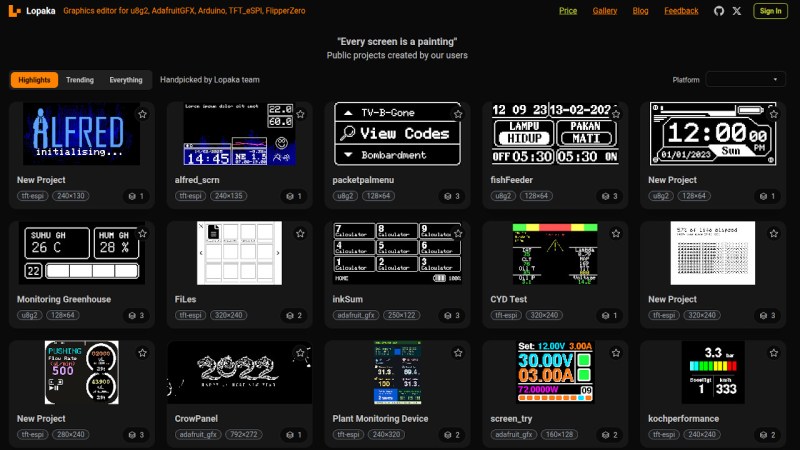
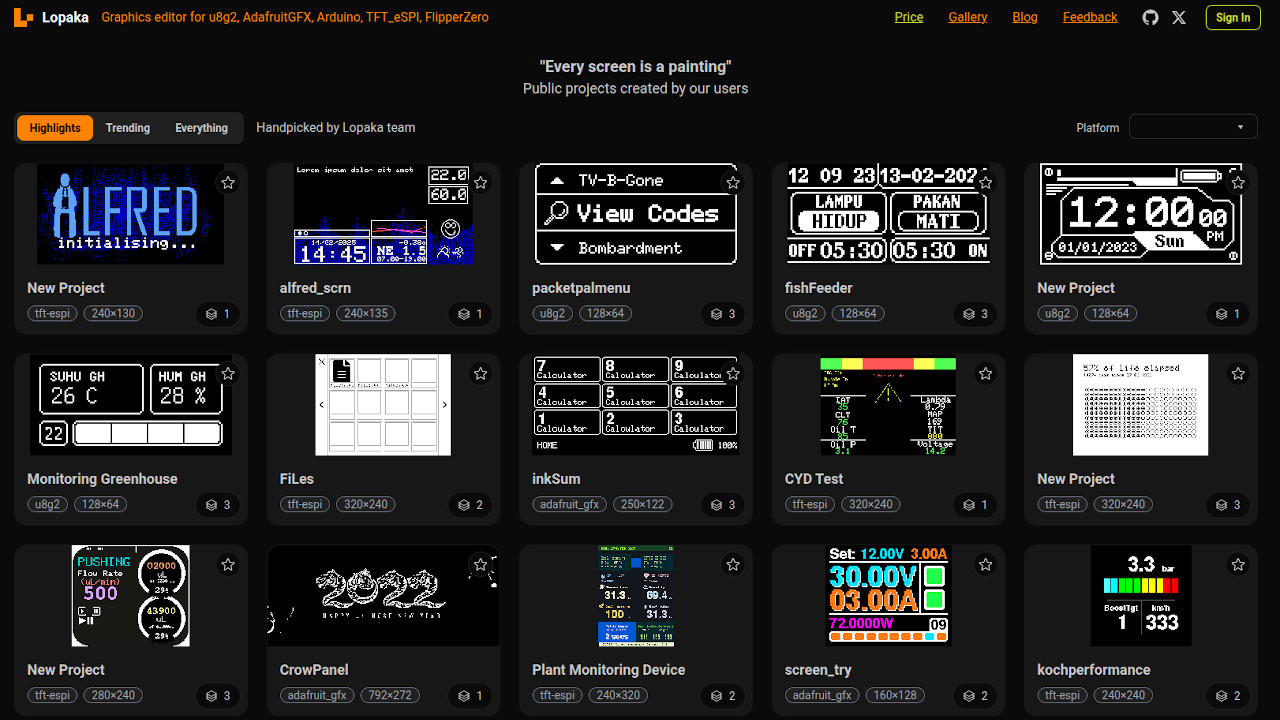
These days, adding a little LCD or OLED to your project is so cheap and easy that you can do it on a whim. Even if your original idea didn’t call for a display, if you’ve got I2C and a couple bucks burning a hole in your pocket, why not add one? Surely you’ll figure out what to show on it as the project develops.
But that’s where it can get a little tricky — in terms of hardware, adding a screen just takes running a few extra wires, but the software side is another story. Not only do you have to contend with the different display libraries, but just creating the image assets to display on the screen can be a hassle if it’s not something you do regularly. Enter Lopaka, a graphics and user interface editor for electronic projects created by [Mikhail Ilin].
More after the break…
 Using this web-based tool is pretty simple, you simply load it up, pick the display type you’ve got, and then start using the visual tools to do things like draw shapes and add text. As you work, a window on the bottom will start filling with the source code that you’ll ultimately copy and paste into your project to re-create what you’re seeing.
You can import your own images and have them converted to arrays of data, though there’s also a selection of icons that you can select from which might meet your needs. In fact, there’s even a gallery of editable screens and user interfaces that have been created with Lopka if you don’t want to start from scratch.
In playing around with the tool, the only annoyance we really noticed was the fact that the source code window isn’t editable. That is, we occasionally tried to code to modify what we were seeing in the visual preview, but it doesn’t work that way. We were somewhat concerned when we saw that the tool also features a paid “Plus” mode, but in truth, the features and capabilities available in the free mode (and what gets unlocked when you cough up the $5.95 a month) seem more than fair.
If Lopaka looks similar, it could be because it’s the evolution of a tool offered up specifically for the Flipper Zero that we covered back in 2022. [Mikhail] saw an opportunity to open the tool up to the wider maker and hardware hacker community by adding support for other display types and libraries, which we think was a brilliant move.
Connaissez vous Senseen, la startup qui surveille la santé des cultures grâce à un scanner miniature?
Le suivi de la santé des cultures est un enjeu de plus en plus important face aux stress climatiques et biologiques croissants. Les solutions actuelles, bien que précises, restent peu adaptées à une utilisation de terrain en raison de leur complexité et de leur coût élevé. L’analyse du pH, de l’indice d’oxydoréduction (redox) ou encore …
L’article Connaissez vous Senseen, la startup qui surveille la santé des cultures grâce à un scanner miniature? est apparu en premier sur FRENCHWEB.FR.
Handheld Compass CNC Lets Teensy Do the Driving
If somebody asked you to visualize a CNC router, you’d probably think of some type of overhead gantry that moves a cutting tool over a stationary workpiece. It’s a straightforward enough design, but it’s not without some shortcomings. For one thing, the scale of such a machine can quickly become an issue if you want to work on large pieces.
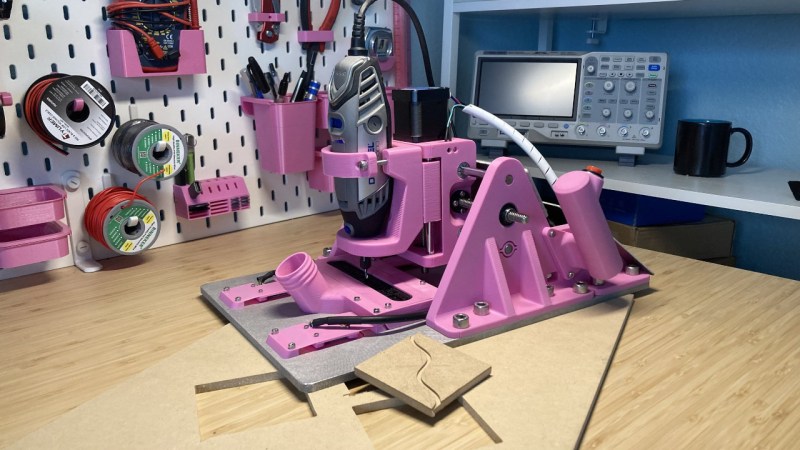
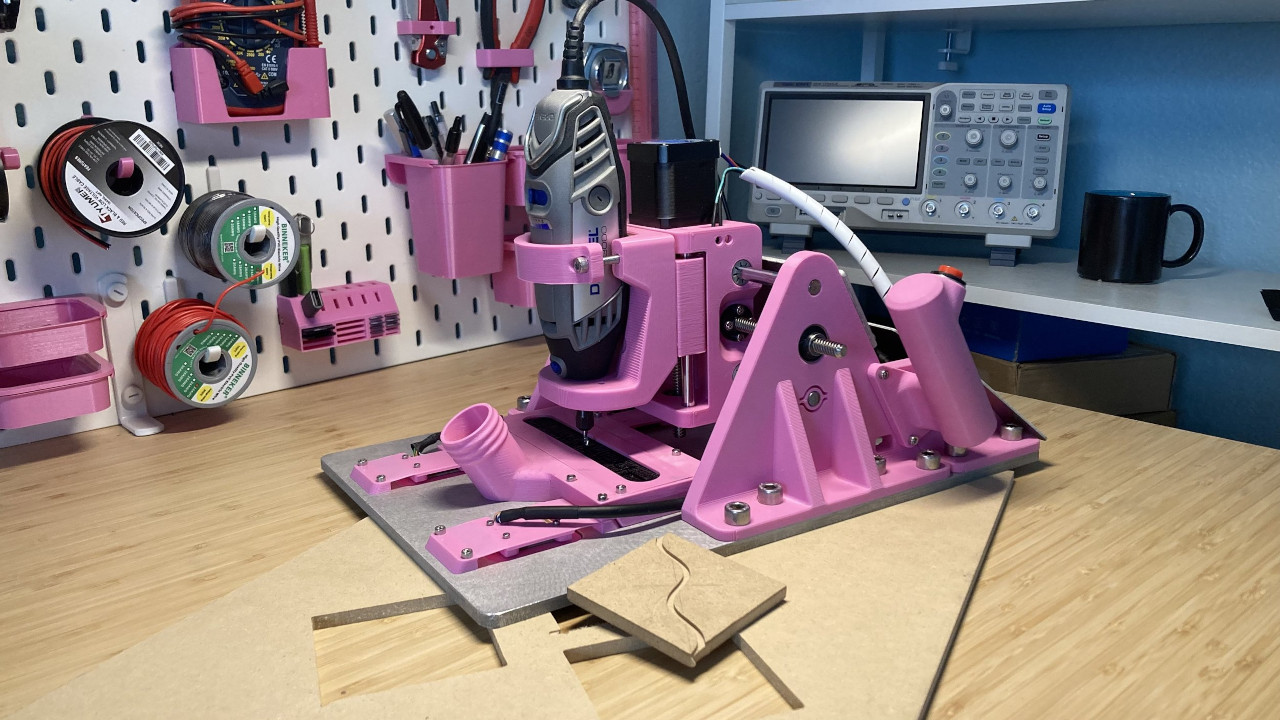
But what if you deleted the traditional motion system, and instead let the cutting tool roam freely? That’s the idea behind the open source Compass Handheld CNC. Looking a bit more like a combat robot than a traditional woodworking tool, the Compass tracks its movement over the workpiece using a Teensy 4.1 microcontroller and four PMW3360 optical flow sensors. With a pair of handles that look like a flight yoke and a display that shows the router’s current position versus where it should be, the user can “drive” the tool to cut or carve the desired design.
Admittedly, the Compass doesn’t pack quite the same punch as a more traditional setup. Rather than a beefy spindle motor or a full-sized consumer router clamped up in the gantry, the Compass uses a Dremel 3000. It’s fine for routing out an engraving and other fine work, but you wouldn’t want to use it for cutting thick stock. To help keep the work area clear and prevent dust and chips from jamming up the works, the 3D printed body for the tool includes a connection for a dust collection system.
If this all seems familiar, you may be remembering a tool we first covered nearly a decade ago — the Shaper Origin. That router, which is still on the market incidentally, utilizes optical tracking and fiducial markers to keep track of its position. We’d be interested in seeing how well the Compass compares over large distances without similar reference points.
Connaissez-vous RoboVision? Cette AGTECH belge qui industrialise l’IA dans la robotique agricole
RoboVision : industrialiser l’IA de vision en robotique agricole Face à la raréfaction de la main-d’œuvre et à l’augmentation des exigences de productivité, l’automatisation agricole s’impose comme une nécessité impérieuse. Pourtant, malgré les avancées en intelligence artificielle, la mise en production de solutions d’IA de vision à grande échelle reste complexe. Entre la variabilité des …
L’article Connaissez-vous RoboVision? Cette AGTECH belge qui industrialise l’IA dans la robotique agricole est apparu en premier sur FRENCHWEB.FR.