Jean-Philippe Encausse
Shared posts
Curiosity rover finds tantalizing hints that Mars could once have been habitable

ChatGPT’s image-generation feature gets an upgrade
A new, challenging AGI test stumps most AI models
OpenAI says its AI voice assistant is now better to chat with
23andMe Is Crumbling, and That Means Your Genetic Data Is Blowing in the Breeze

Genetics firm 23andMe, maker of the once-popular take-home DNA testing kits, has filed for Chapter 11 bankruptcy, casting a looming shadow over the extremely sensitive user data it's still storing on its servers.
The company, which was founded almost two decades ago, has been in severely dire financial traits for years now, struggling to effectively monetize its service, which most customers will only buy once.
Now, its cofounder and CEO Anne Wojcicki — a die-hard for the company, who has made several takeover bids — has resigned, leaving behind a shell of its former self.
And that could spell a data privacy disaster of unprecedented proportions as 23andMe is more vulnerable than ever to being snatched up by another company — along with its treasure chest of DNA data.
In a "consumer alert" to California residents, the state's attorney general Rob Bonta implored them to invoke "their rights" and direct "23andMe to delete their data and destroy any samples of genetic material held by the company."
As the Washington Post columnist Geoffrey Fowler points out in a helpful piece, it takes just a minute to delete your data from the website.
Besides the threat of a takeover, consumer data could already be vulnerable to hacking. Case in point, the personal data of nearly seven million customers was exposed for a whopping five months in 2023, greatly undermining the company's reputation.
Mass layoffs, including the resignations of most of its governing board, have left the company in tatters. Its share price has been turned into a penny stock, dropping well over 50 percent in value just today.
23andMe maintains that everything is fine, promising that there will be no changes to how it manages and protects people's data, as CBS News reports.
But that shouldn't dissuade users from deleting their data before it lands in the wrong hands. Besides, it's not just their own DNA that's at stake.
"If you gave your data to 23andMe, you also gave the genetic data of your parents, your siblings, your children, and even distant kin who did not consent to that," privacy expert Carissa Veliz told the BBC in November.
In the meantime, Wojcicki is still hoping to pick up the pieces.
"While I am disappointed that we have come to this conclusion and my bid was rejected, I am supportive of the company and I intend to be a bidder," she tweeted on Monday. " I have resigned as CEO of the company so I can be in the best position to pursue the company as an independent bidder."
"Our foundation was the trust and respect of our customers, and they were always the guiding light on how we made decisions," she added. "If I am fortunate enough to secure the company’s assets through the restructuring process, I remain committed to our long-term vision of being a global leader in genetics and establishing genetics as a fundamental part of healthcare ecosystems worldwide."
More on 23andMe: As 23andMe Crumbles, It Ceases All Efforts to Develop Drugs Using DNA Data
The post 23andMe Is Crumbling, and That Means Your Genetic Data Is Blowing in the Breeze appeared first on Futurism.
Des matériaux transforment le CO₂ en structures résistantes
Des chercheurs de l'Université de Californie du Sud ont mis au point une technologie capable de capturer le dioxyde de carbone et de le transformer en matériau de construction durable. Inspirée des récifs coralliens, cette avancée promet des bâtiments à bilan carbone négatif.
D'ailleurs, la méthode pourrait profondément modifier l'industrie du bâtiment, un secteur responsable d'environ 11 % des émissions mondiales de CO₂. Grâce à cette innovation, il serait possible de construire des structures solides tout en réduisant l'impact environnemental.
Des coraux à l'impression 3D : un procédé biomimétique révolutionnaire
Les récifs coralliens ont inspiré cette technologie, car ils transforment naturellement le dioxyde de carbone en calcaire. Par photosynthèse, les coraux capturent le CO₂ atmosphérique et le combinent à des ions calcium pour créer des structures minérales. Les chercheurs ont imité ce mécanisme en imprimant en 3D des échafaudages polymères recouverts d'une couche conductrice. Ces structures sont ensuite plongées dans une solution de chlorure de calcium et soumises à des réactions électrochimiques précises.
Le CO₂ devient du carbonate de calcium solide et résistant
Une fois immergées, les structures reçoivent un flux de dioxyde de carbone, qui se décompose en ions bicarbonate. Ces ions réagissent avec le calcium présent dans la solution pour former du carbonate de calcium, un minéral très résistant. Ainsi, les pores du polymère imprimé se remplissent progressivement. Ceci en formant un composite minéral-polymère dense et mécaniquement robuste. Ce matériau pourrait être utilisé dans des structures porteuses de grande échelle, comme des murs ou des colonnes.
Un matériau résistant au feu avec un mécanisme d'extinction intégré
Lors de tests de résistance au feu, les matériaux fabriqués ont maintenu leur intégrité malgré 30 minutes d'exposition aux flammes. Le carbonate de calcium libère alors de petites quantités de CO₂. Cela contribue notamment à éteindre naturellement l'incendie. Cette propriété unique constitue un atout majeur pour les applications dans la construction, notamment dans les zones à risque d'incendie. Les chercheurs soulignent que cette fonction de sécurité est entièrement intégrée au matériau, sans additif extérieur.
Un procédé durable, réparable et à empreinte carbone négative
Au-delà de sa performance technique, le matériau peut être réparé simplement par une réaction électrochimique à basse tension. Cela prolonge sa durée de vie tout en limitant les déchets liés au remplacement de composants endommagés. Après analyse du cycle de vie, l'équipe a prouvé que la capture de carbone dépasse les émissions générées lors de la fabrication. Le matériau offre donc un bilan carbone négatif, ce qui constitue un progrès majeur dans la lutte contre le réchauffement.
Vers une commercialisation rapide et un changement d'échelle
Les chercheurs ambitionnent désormais de commercialiser la technologie brevetée. Grâce à une approche modulaire, les éléments peuvent être assemblés en grandes structures prêtes à l'emploi. Cette méthode de fabrication pose les bases d'une nouvelle génération de bâtiments écologiques, capables de stocker du carbone au lieu d'en produire. Elle représente un tournant pour le secteur du bâtiment face à l'urgence climatique.
Cet article Des matériaux transforment le CO₂ en structures résistantes est apparu en premier sur OBJETCONNECTE.COM.
Google NotebookLM : Révolutionnez l’analyse de documents avec Mind Map et support multilingue
Google améliore son outil d’intelligence artificielle NotebookLM avec plusieurs nouvelles fonctionnalités, dont « Mind Map », un outil visuel de synthèse qui promet de transformer la façon dont les utilisateurs interagissent avec leurs documents. Qu’est-ce que NotebookLM ? NotebookLM est un assistant IA conçu par Google pour résumer, rechercher et analyser des bibliothèques d’informations. Il permet aux utilisateurs […]
L’article Google NotebookLM : Révolutionnez l’analyse de documents avec Mind Map et support multilingue est apparu en premier sur BlogNT : le Blog des Nouvelles Technologies.
BYD révolutionne la recharge ultra-rapide des voitures électriques
Le constructeur chinois BYD veut rendre la recharge des véhicules électriques aussi rapide que celle des voitures thermiques. Sa nouvelle berline Han L promet d'ajouter jusqu'à 400 kilomètres d'autonomie en cinq minutes seulement. D'ailleurs, même si BYD reste discret sur les détails techniques, plusieurs sources confirment la faisabilité de cette performance. Une telle avancée pourrait transformer la perception des voitures électriques, longtemps freinée par le temps de recharge.
Une batterie LFP et une architecture à haute tension
Au cœur de cette prouesse se trouve une batterie lithium-fer-phosphate (LFP) de 83,2 kWh qui fonctionne à 945 volts. Cette chimie est connue pour sa stabilité thermique et sa sécurité, en plus de sa capacité à supporter des charges plus rapides. De plus, BYD utilise sa nouvelle technologie Blade 2.0, développée en interne, qui optimise encore les capacités de la cellule. Grâce à cette architecture et à l'expérience acquise sur les LFP, BYD atteint une puissance de charge pouvant aller jusqu'à 1 mégawatt.
Une recharge possible grâce à deux ports de 500 kW
Pour atteindre cette puissance, BYD a adopté une stratégie inédite : un double port de charge. Chaque port supporte jusqu'à 500 kW, permettant à la voiture de se connecter à deux chargeurs simultanément. Ainsi, cette approche « double canon » réduit la taille des câbles nécessaires, souvent volumineux et refroidis par liquide. Elle permet également une répartition plus sûre et plus stable de l'énergie pendant les sessions de recharge ultra-rapides.
Des chiffres impressionnants à relativiser
Selon BYD, cinq minutes suffisent pour ajouter 248 miles (400 km) d'autonomie. Cependant, ces chiffres reposent sur le cycle chinois CLTC, réputé trop optimiste. En réalité, selon des estimations ajustées, la recharge proposerait plutôt environ 257 kilomètres d'autonomie. Même ainsi, la performance reste remarquable, avec un passage de 16 % à 80 % en seulement 10 minutes.
Des infrastructures encore limitées, mais en expansion
Pour accompagner cette technologie, BYD prévoit d'installer plus de 4 000 bornes de recharge ultra-rapides en Chine. Toutefois, chaque borne nécessitera de lourds investissements pour adapter le réseau électrique à cette consommation. Et pour les marchés étrangers ? Il faudra encore attendre. Les véhicules BYD restent pénalisés par des droits de douane de 100 % aux États-Unis. Cela rend leur exportation difficile. Mais la technologie, elle, pourrait inspirer d'autres constructeurs.
Un signal fort pour l'avenir de la mobilité électrique
La course à la recharge rapide est lancée, et BYD veut clairement jouer un rôle de leader. Grâce à son expérience en batteries et à une approche innovante, l'entreprise pousse l'industrie vers une expérience de recharge proche des véhicules à essence. Avec des technologies comparables déjà en développement chez Lucid, Porsche ou Hyundai, cette avancée confirme que la recharge ultra-rapide deviendra bientôt une norme. Ce n'est plus qu'une question de temps avant de la voir se généraliser dans le monde.
Cet article BYD révolutionne la recharge ultra-rapide des voitures électriques est apparu en premier sur OBJETCONNECTE.COM.
Flagging up the best retail technology conferences in the US
Attending retail conferences is an excellent way for professionals to network, learn about emerging trends, and grow their business.
If you are in the retail industry, you may find this structured list of best US retail conferences in 2025 very handy. Each conference section includes location, dates, notable speakers and a brief overview of what to expect from the event in terms of both content and audio visual services.
NRF Retail’s Big Show 2025
Location & Dates
12th-14th January 2025 – Jacob K. Javits Convention Center, New York City
Overview
The NRF Big Show is the world’s largest general retail conference with over 40,000 retail professionals gathering for three days of learning and networking. It features 175+ sessions from AI and digital transformation to customer experience and marketing.
Attendees range from C-level executives to tech entrepreneurs, making it a prime event for gaining broad retail insights. This year’s roster features industry leaders such as John Furner (Walmart) and Tommy Hilfiger.
Key Benefits
○ Networking: Throughout the event you can connect with top retail CEOs and brand leaders who will be showcasing their achievements and experience in omnichannel marketing, merchandising, and more.
○ Business Growth: You can test drive the latest technology and see how it can transform your business.
○ Special Programmes: NRF offers extras like a Startup Hub for new ventures, store tours around NYC to see retail innovation in action, and even an opening night party and concert.
○ Audio-Visual Experience: The Big Show’s keynote stage is legendary: gigantic LED screens, concert-quality sound, and dynamic lighting turn presentations into captivating experiences.

Shoptalk 2025
Location & Dates
25th-27th March 2025 – Mandalay Bay, Las Vegas, Nevada.
Overview
Shoptalk is a premier event for e-commerce and retail innovation. It brings together more than 10,000+ attendees ranging from established retail brands to startups. The event is known for covering the latest trends in retail technology.
The 2025 agenda covers everything from AI driven tech to the future of retail media and brand marketing. Past Shoptalk speakers have included leaders like Walmart’s Chief Product Officer and Target’s Chief Marketing Officer. A new addition in 2025 is “The New Market” programme connecting media buyers, tech firms, and agencies.
Key Benefits:
○ Content: Shoptalk is all about covering the cutting-edge industry trends. You’ll hear from retail CEOs and innovators about AI-based customer experience enhancement and new marketing strategies.
○ Networking: A standout feature is Shoptalk’s curated one-to-one “Meetup” networking programme, which facilitated over 75,000 15-minute meetings in the past year. Through double opt-in matchmaking, you can schedule personalised meetings with potential partners, clients and investors.
○ Business Growth: Retailers and brands are incentivised to attend with free or discounted passes so you will meet the mix of attendees from small startups to Fortune 500 brands.
○ Audio Visual Excellence: Expect huge screens and theatrical lighting on the main stage, slick video interludes, and live demos during talks.
eTail West 2025
Location & Dates
24th-27th February 2025 – JW Marriott Desert Springs Resort, Palm Springs, California.
Overview
eTail West (a.k.a. eTail Palm Springs) is a long-running conference (since 1999) focused on e-commerce and marketing strategy. It gathers over 2,500 senior e-commerce and digital marketing leaders for four days.
The content is very practical and covers topics like customer loyalty programmes, performance marketing, UX optimisation, unified commerce, and leveraging AI in retail. Past eTail speakers have included the EVP of Walmart, the Head of Digital at H&M, and the CMO of Designer Shoe Warehouse.
Key Benefits
○ Insights: eTail is known for its tactical sessions. Speakers often share real-world results and “how we did it” playbooks that you can take home to your team.
○ Networking: There are workshops and small group discussions tailored for specific roles (e.g. CMOs, heads of CX), as well as social activities.
○ Business Growth: You can meet vendors offering the latest in AI driven analytics, email personalisation, payment solutions, etc. It’s a great opportunity to discover tools and partners to help scale your business.
○ Audio Visual Impact: All presentations and panel discussions are supported by professional AV setups. The result is engaging sessions where technology and marketing concepts are brought to life on stage.
Retail Innovation Conference & Expo
Location & Dates
5th-6th June 2025 – McCormick Place, Chicago, Illinois.
Overview
The Retail Innovation Conference & Expo is a leading event for retail technology and innovation, covering how emerging tech can transform retail.
The 2025 conference will focus on modern technologies like AI, robotics, and new marketing strategies. RICE is a bit smaller and more focused than NRF’s Big Show, but it attracts a highly engaged audience and progressive retail brands. Attendees get to directly connect with solution providers and even see robotics and other tech demos up close.
Key Benefits
○ Content: If you’re looking to future-proof your retail business, RICE delivers concentrated insights on what’s next. You’ll gain a roadmap of which technologies are truly making an impact and how to implement them.
○ Hands On Experience: Attendees can explore startups and established tech vendors showcasing things like robotics, smart checkout systems, IoT devices, and more.
○ Business Growth: The event draws professionals ranging from tech savvy retail executives to digital product managers and tech entrepreneurs. You might meet a peer who already implemented a solution you’re considering, or find a partner to pilot a new concept.
○ Audio Visual Highlights: Given its tech focus, RICE makes heavy use of audio visual elements to showcase innovation. Keynotes often incorporate high definition videos of new tech in action, and expo booths use large displays and interactive screens to let attendees experience product interfaces.
CommerceNext Growth Show 2025
Location & Dates
24th-26th June 2025 – New York Hilton Midtown, New York City.
Overview
CommerceNext is a conference squarely focused on retail and e-commerce marketing, specifically customer acquisition and digital growth strategies.
It’s designed for marketing leaders (CMOs, CXOs, digital directors) from retailers and direct-to-consumer brands aiming to scale their business online. In 2025, the Growth Show will cover how to leverage data analytics, AI, and automation to optimise marketing ROI and customer experience.
Key Benefits
○ Content: This conference is all about actionable marketing insights. You’ll learn the latest in SEO/SEM, email and SMS marketing tactics, how to harness TikTok and emerging channels for retail.
○ Networking: CommerceNext brings together a concentrated group of retail marketing professionals. You can swap stories with peers facing similar challenges and brainstorm solutions.
○ Business Growth: Beyond content, you may meet technology providers in areas like martech, analytics, and e-commerce platforms suited to your needs.
○ Audio Visual Engagement: As a modern marketing event, CommerceNext leverages AV to make data and creative examples pop.

Using ChatGPT too much can create emotional dependency, study finds

Everyone's a Geek About Something — Revised and Expanded
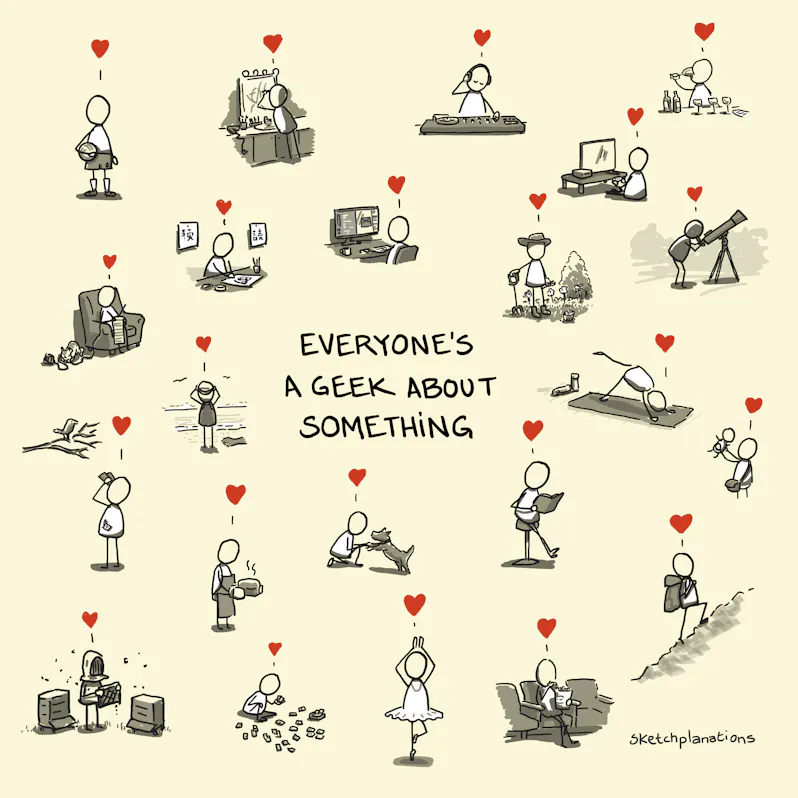
Are you passionate about something? Do you know something inside out where others barely give it a glance?
As a schoolboy, I thought I was into birds—until my dad and I stayed with some family friends who were truly into birding.
They had a powerful telescope trained on the birds at the feeder in their garden. They had crystal-clear binoculars we used on a bird walk, which showed me birds clearer and closer than I'd ever seen. They knew what birds to look for and had tape recordings of specific bird calls that brought them to nearby bushes. They talked us through trips they'd been around the world to spot rare and remarkable birds.
Spending time with them changed how I saw birds forever. It was impossible to be around them and not start to love birds.
There are classic disciplines for geekiness: science, maths, computers, birdwatching, plane spotting, model trains.
But over the years, I've seen people geek out about so much more: gardening, plants, pottery, DJ'ing, Pokemon, sport, skiing, cycling, endurance, beekeeping, writing, business, spreadsheets, coding, magic tricks, sailing, a musical instrument, nightclubs, restaurants, personal development, gaming, crypto, cooking, travel, film, thrillers, local history, deals, football boots, coaching, shopping, clothes, cars, building, cameras, art, museums, relationships, pets, insects, decorating, and on and on.
If you don't pay close attention to Premier League football, it might be boring, but if you follow every detail, it can be engrossing. I didn't think much of textiles, but I found it fascinating after spending an afternoon weaving in Laos.
One of the 5 Ways to Wellbeing is Take Notice. Being a geek is noticing everything about something. It can also Connect you with others and keep you Learning—two more of the five.
The word geek derives from a word meaning fool or freak as if it's foolish to devote so much attention and time to one area. But the truth is, as the physicist Richard Feynman says: "Nearly everything is really interesting if you go into it deeply enough."
And the writer Henry Miller wrote:
"The moment one gives close attention to anything, even a blade of grass, it becomes a mysterious, awesome, indescribably magnificent world in itself."
Some of us had "publicly being a geek about something" trained out of us at school. The challenges of trying to fit in, to look cool, to make ourselves less vulnerable, to conform to social stereotypes (pretty, sporty, funny...), and to avoid snarky comments. As I've gotten older and more confident in myself, it's easier to unashamedly be a geek about something. I still meet with sarcasm and raised eyebrows at times, but now I'm comfortable enough to brush it off (most of the time). I love this quote from Simon Pegg about it:
"Being a geek is all about being honest about what you enjoy and not being afraid to demonstrate that affection. It means never having to play it cool about how much you like something. It's basically a license to proudly emote on a somewhat childish level rather than behave like a supposed adult. Being a geek is extremely liberating."
Let's embrace our inner geeks. Dive deep into what fascinates you.
Try not to dismiss others' passions until you've had a go at getting into depth yourself. Their joy could be just the same that you feel with something else.
Everyone's a geek about something. And that's wonderful.
This is a revised and expanded version of my original sketch, which had just a few passions. I've thought about it so much since I first heard the phrase—I couldn't remember where—that I thought it needed an update. And we had a blast talking about this on the podcast.
When putting together a draft of a Sketchplanations book, this was my first title idea (preview).
Related Ideas to Everyone's a Geek About Something
Also see:
Microsoft is exploring a way to credit contributors to AI training data
Bigscreen Beyond 2 Outsells Original in First Day, Surpassing Months of Beyond 1 Sales
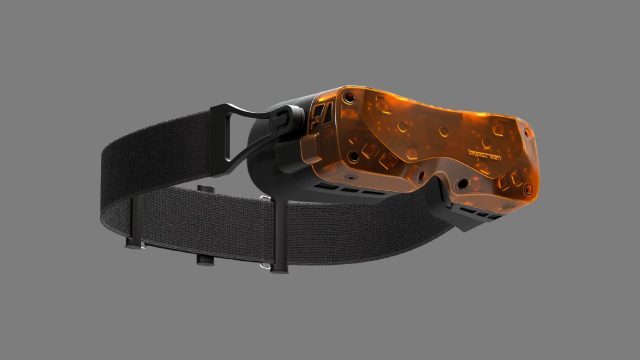

Bigscreen launched orders for its upcoming Beyond 2 PC VR headset yesterday, which is boosting field-of-view and clarity thanks to the inclusion of a new pancake lens design. Now, the company says that within a mere 10 hours of sales going live, Beyond 2 has already outsold the original Beyond by a significant margin.
In a series of updates on X, Bigscreen revealed just how well Beyond 2 was doing among PC VR enthusiasts.
“In just the first 25 minutes, Beyond 2 outsold the first day of Beyond 1 sales. In the first hour, we’ve doubled Beyond 1 launch day sales.” Bigscreen said early yesterday.
As the day went on, the company released more info on sales performance of Beyond 2 and its eye-tracking variant, Beyond 2e. And the most recent stat is pretty staggering.
“Within 10 hours of launch…Beyond 2 has sold more than the first FOUR MONTHS of Beyond 1 sales.”
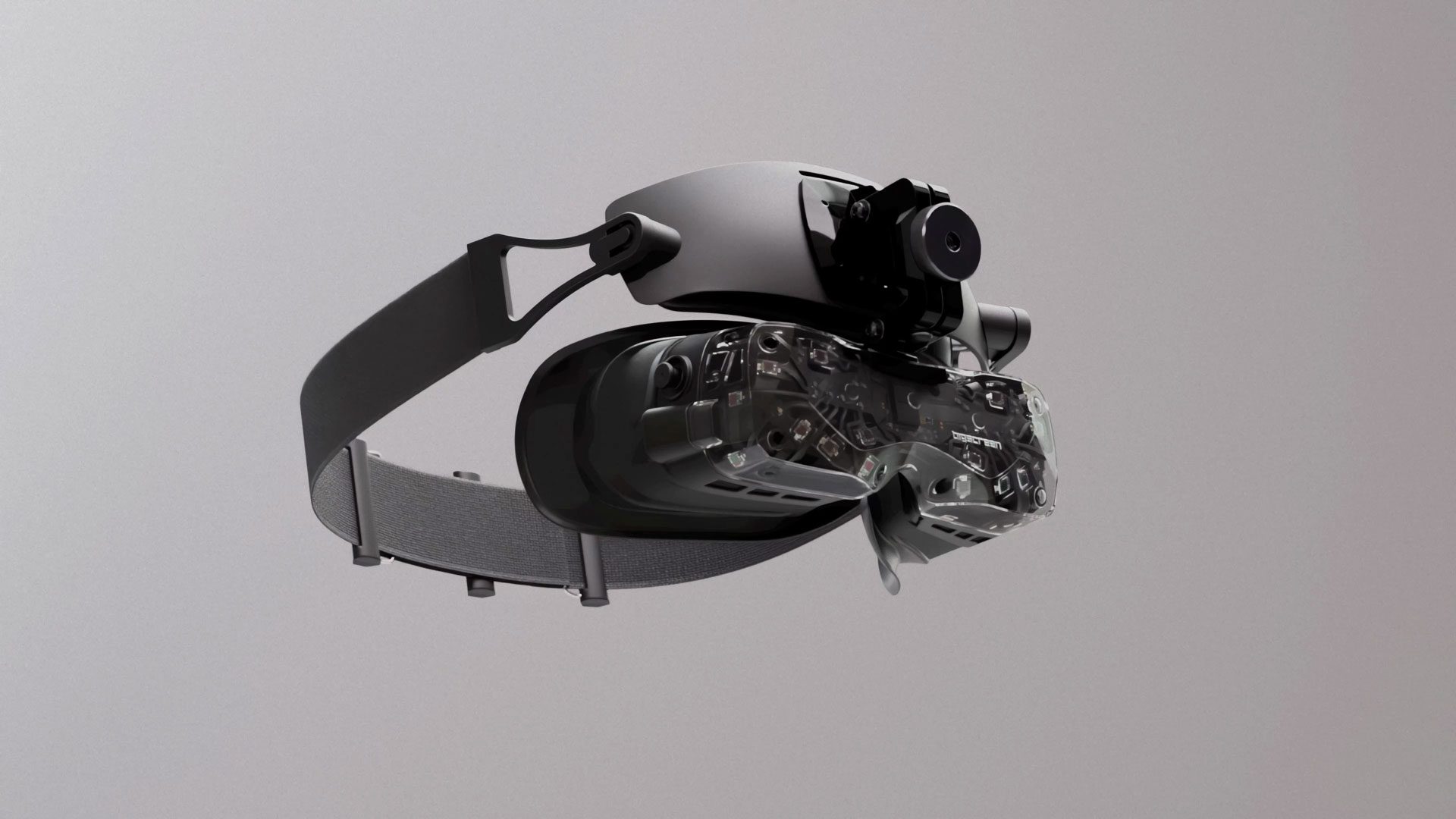
At the time of this writing, Beyond 2 and Beyond 2e are now quoted to ship in June 2025, already blowing past the first shipment batches, which were planned for April and May respectively.
But why the hype for Beyond 2? While you can read more about Beyond 2 here, including specs, it may come down to the easy upgrade pathway laid out by Bigscreen. Not only can Beyond 1 users purchase at a discount—$849 for Beyond 2 and $1049 for Beyond 2e—but it’s also backwards compatible with most Beyond 1 accessories, including the custom facial interface that’s required for Beyond 1.
Moreover, Beyond 2 packs in a new pancake lens design, offering up a wider 116-degree diagonal FOV, an adjustable IPD mechanism, and a lighter 107g design, with the 2e model adding AI-powered eye-tracking. It still has the same dual 1-inch 2,560 × 2,560 micro-OLED displays as the original Beyond, although its new lenses boast better clarity and FOV over the original.
Beyond 2 and 2e are priced at $1,019 and $1,219 respectively (or discounted for Beyond 1 owners). It was also unveiled alongside a new halo-style mount and Lightblocker facial interface, which is set to arrive in Q3 2025.
You can find all of that available for purchase over on the Bigscreen website.
The post Bigscreen Beyond 2 Outsells Original in First Day, Surpassing Months of Beyond 1 Sales appeared first on Road to VR.
Check out these reasons why Dungeons & Dragons should be your next hobby
Dungeons & Dragons (D&D) has enjoyed an incredible resurgence over the past few years, evolving from a niche tabletop game to a cultural phenomenon. If you're looking for a hobby that combines creativity, strategy, and camaraderie, then D&D might just be the perfect fit for you.
Whether you’re someone who’s never picked up a die or a long-time player, D&D offers a rich, immersive experience that’s hard to match. In this post, we’ll explore why Dungeons & Dragons should be your next hobby and how it can enrich your life in ways you may not expect.

D&D Fosters Creativity
Dungeons & Dragons is a game where creativity knows no bounds, and the right equipment can make the experience even more immersive. Players often invest in beautifully designed game pieces like miniatures, custom battle maps, and thematic props to bring their campaigns to life.
Many also collect Liquid Core Dice, which adds a mesmerising touch to every roll, enhancing the magic of gameplay. Whether sketching custom character portraits, crafting hand-painted terrain, or designing elaborate storytelling elements, the creative possibilities in D&D are endless. Investing in unique gaming tools fuels imagination and makes every adventure feel truly personal and engaging.
Builds Strong Friendships and Community
This isn’t just a game; it’s a social activity. When you join a D&D campaign, you're not just playing a game—you’re joining a community of like-minded individuals. Whether you’re gathering around a table with friends or connecting virtually with players across the globe, D&D fosters camaraderie.
The shared experience of embarking on quests, overcoming challenges, and celebrating victories strengthens bonds between players. Many D&D players talk about the lasting friendships they’ve formed, which is one of the most rewarding aspects of the hobby. It’s a great way to meet new people, whether you're playing in person or online.
Encourages Problem Solving and Strategic Thinking
Dungeons & Dragons is far more than just rolling dice—it’s a game of strategy, critical thinking, and problem-solving. Each campaign presents a unique set of challenges, from navigating dangerous terrain to solving complex puzzles or battling formidable enemies.
Players must think on their feet, make quick decisions, and collaborate with their fellow adventurers to succeed. The tactical aspect of the game teaches valuable skills like resource management, teamwork, and the ability to adapt to unexpected situations. For those who enjoy games that require deep thought and strategy, D&D is a perfect match.
A Welcome Escape from Reality
Many of us are looking for ways to unwind and de-stress. Dungeons & Dragons offers a great escape. The game provides a chance to step into a completely different world—one where you can be whoever you want and live out epic adventures.
For a few hours, you can forget about the stresses of daily life and immerse yourself in a world full of dragons, magic, and mystery. This kind of escapism can help alleviate stress and improve mental well-being. For those looking for a break from the mundane, D&D is a thrilling way to spend your downtime.
Offers Endless Replayability
One of the reasons Dungeons & Dragons has remained so popular for decades is its incredible replayability. Every campaign is different, offering a unique experience based on the Dungeon Master (DM), the players, and the decisions made throughout the game. No two campaigns are the same, even if you're using the same rules or settings.
The endless variety of character combinations, storylines, and possible outcomes keeps the game fresh and exciting. Whether you’re running a campaign for the first time or you’re an experienced player, there’s always something new to explore in D&D.
Accessible for All Skill Levels
Another reason to embrace Dungeons & Dragons is that it’s accessible to people of all skill levels. Whether you're a seasoned gamer or a complete beginner, D&D has something to offer. The rules may seem intimidating at first, but once you get the hang of them, they become second nature. There are also plenty of resources available for beginners, such as online tutorials, beginner's guides, and communities where you can ask questions.
The game can be played in many different ways. If you prefer a more casual, storytelling focused experience, you can lean into that. If you enjoy the mechanics of the game, there’s plenty of strategy to dig into. The flexibility of D&D makes it easy for anyone to jump in and start playing.

Whether you're looking to enhance your creativity, form lasting friendships, challenge your problem-solving skills, or simply enjoy an exciting escape, Dungeons & Dragons has something for everyone. The beauty of D&D is in its versatility; it can be as casual or as intense as you want it to be.
With an ever expanding community and endless opportunities for adventure, now is the perfect time to start your journey into the world of Dungeons & Dragons. So grab some dice, gather your friends, and prepare for a journey like no other. Your next great adventure awaits!

Actualité : L'Univers condamné ? La théorie choc du Big Crunch refait surface

Italian paper prints fully-AI edition, but not to 'kill' journalism
Suno dans Alexa+ : l’IA musicale qui bouleverse la législation sur les droits d’auteur

Amazon se retrouve au cœur d’une polémique juridique après l’intégration de Suno, une IA générant de la musique, dans Alexa+.
Watch a robot dog learn to stand and walk thanks to its ‘digital brain’

These Nvidia-powered Star Wars droids are the cutest robots I’ve ever seen

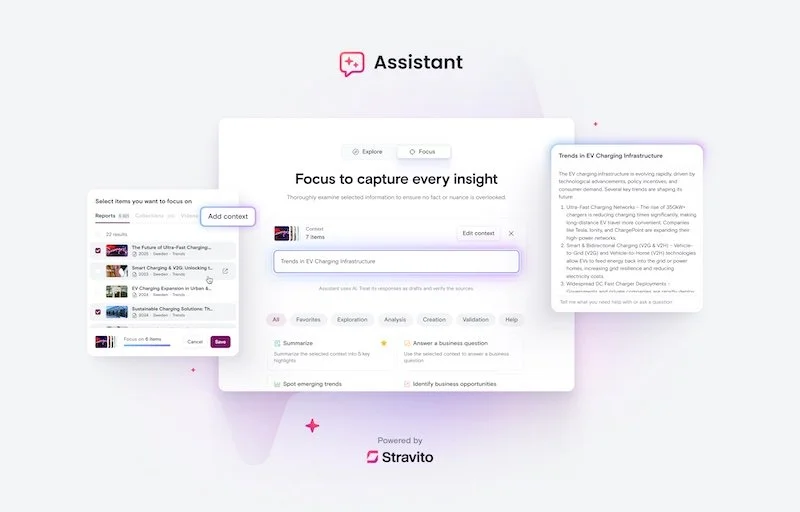
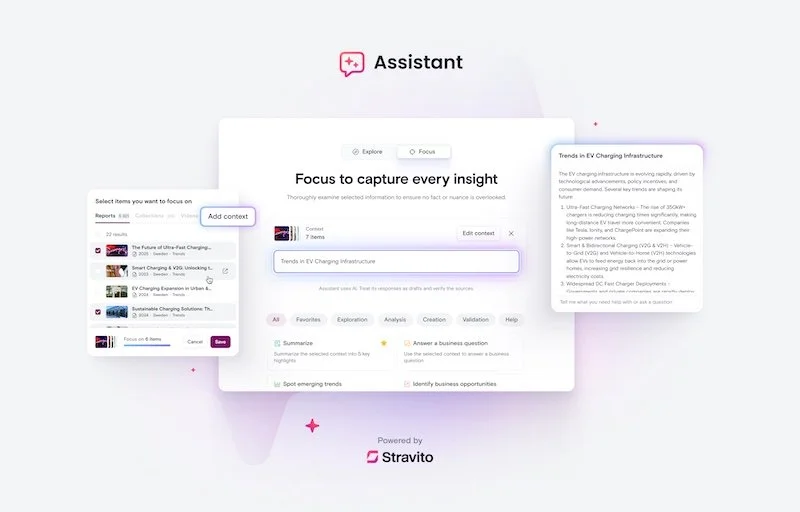
Stravito enhances GenAI Assistant tool with additions of Focus Mode, Snapshots and multilingual support
Stravito, an AI powered knowledge management solution that enables teams in retail organisations to extract and use insights for critical decision-making, has announced the roll-out of Focus Mode, Snapshots, and multilingual support to its generative AI tool, Stravito Assistant.
Krzysztof Sadowski, Insight Platforms & Tools Lead at Shell, has been testing Snapshots and comments: "We have a library of over 5,000 reports, offering a wealth of knowledge. However, navigating through this extensive collection can be overwhelming and time consuming. The new Snapshot feature addresses this challenge by providing automated summaries with key insights and recommendations. Additionally, the generated summaries are both relevant and coherent."
Featuring compatibility with French, German, Spanish and 100+ languages, Stravito Assistant has also rolled out multilingual support. The tool can respond in the same language as a user’s prompt and reference sources in multiple languages - with links to original documents for transparency. This ensures knowledge is not siloed by language barriers and organisations can access research across global markets to make informed, locally relevant decisions.
Thor Olof Philogène, Founder and CEO at Stravito, comments: "Generative AI has increased the speed and accuracy of market research analysis at an unprecedented rate, helping businesses make informed decisions faster than ever. Stravito Assistant’s unique features - Focus Mode, Snapshots and multilingual support - have been created to further enhance efficiency and empower teams with an engaging and user-friendly way to uncover trusted insights that may have taken hours or days to produce."
“These updates reinforce our commitment to providing purpose built AI powered tools that help global enterprises leverage their market research to make data driven, cost-effective decisions that fuel innovation and long-term growth.”
RTIH AI in Retail Awards
RTIH, organiser of the industry leading RTIH Innovation Awards, proudly brings you the first edition of the RTIH AI in Retail Awards, which is now open for entries.
As we witness a digital transformation revolution across all channels, AI tools are reshaping the omnichannel game, from personalising customer experiences to optimising inventory, uncovering insights into consumer behaviour, and enhancing the human element of retailers' businesses.
With 2025 set to be the year when AI and especially gen AI shake off the ‘heavily hyped’ tag and become embedded in retail business processes, our newly launched awards celebrate global technology innovation in a fast moving omnichannel world and the resulting benefits for retailers, shoppers and employees.
Our 2025 winners will be those companies who not only recognise the potential of AI, but also make it usable in everyday work - resulting in more efficiency and innovation in all areas.
Winners will be announced at an evening event at The Barbican in Central London on Thursday, 3rd July.
This will kick off with a drinks reception in the stunning Conservatory, followed by a three course meal, and awards ceremony in the Garden Room.
Please email our Editor, Scott Thompson, if you have any questions or need further information: scott.thompson@retailtechinnovationhub.com
Key 2025 dates
Friday, 23rd May: Award entry deadline
Tuesday, 27th May: 2025 finalists revealed
Wednesday, 28th May - Friday, 13th June: Judging days
Thursday, 3rd July: Winners announced at the 2025 RTIH AI in Retail Awards Ceremony, to be held at The Barbican in Central London.
When humans use AI to earn patents, who is doing the inventing?

W. Keith Robinson, Wake Forest University
The advent of generative artificial intelligence has sent shock waves across industries, from the technical to the creative. AI systems that can generate viable computer code, write news stories and spin up professional-looking graphics have inspired countless headlines asking whether they will take away jobs in technology, journalism and design, among many other fields.
And these new ways of doing work and making things raise another question: In the era of AI, what does it mean to be an inventor?
Among technologists who build digital tools or programs, it is increasingly common to use AI as part of design and development processes. But as deep learning models flex their technical muscles more and more, even highly skilled researchers who are using AI in their work have begun to express concerns about becoming obsolete.
There is much debate about whether AI can augment human creativity, but emerging data suggests that the technology can boost research and development where creativity typically plays an important role. A recent study by MIT economics doctoral student Aidan Toner-Rodgers found that scientists using AI tools increased their patent filings by 39% and created 17% more prototypes than when they worked without such tools.
While this study indicates that AI seemed to help humans be more productive, it also showed there was a downside: 82% of the surveyed researchers felt less satisfied with their jobs since implementing AI in their workflows. “I couldn’t help feeling that much of my education is now worthless,” one researcher said.
This emerging dynamic leads to a related question: If a scientist uses AI in order to build something new, does the output still qualify as an invention? As a legal scholar who studies technology and intellectual property law, I see the growing power of AI shifting the legal landscape.
Natural persons
In 2020, the United States Patent and Trademark Office refused to list the AI system DABUS, which purportedly designed a food container and a flashing emergency beacon, as an inventor on patent applications. Subsequent court rulings clarified that under current U.S. law, only humans can be listed as inventors, but they left open the question of whether inventions developed by scientists with the help of AI qualify for patent protection.
The concept of inventorship and legal protections for inventions have deep roots in the U.S. The Constitution explicitly protects the “exclusive rights” of authors and inventors “to their respective writings and discoveries,” reflecting the framers’ strong conviction that the state should protect and encourage original ideas.

U.S. law today defines an inventor as a natural person who has conceived of a complete and operative invention that can be used without extensive research or experimentation. An inventor must do more than follow routine instructions – they must make an intellectual contribution in producing something novel.
That contribution can be a key idea that sparks the invention or a crucial insight that turns the concept into a working product. If a person’s input is routine or just explains what’s already known, they are not an inventor.
Role of AI
To what extent can or should AI become part of the invention process? The release of AI applications such as ChatGPT in 2022 introduced the public to large language models and sparked renewed debate about whether and how AI should be used in the inventive process. That same year, the U.S. Court of Appeals for the Federal Circuit heard a case that tested whether AI could be named as an inventor on a patent application.
The court concluded that under U.S. law, inventors must be human beings. The ruling reaffirmed the idea that Congress intended to encourage human beings, not machines, to invent. This idea remains foundational to current patent policy.
In light of the court’s decision, in 2024 the United States Patent and Trademark Office updated its guidance to clarify the role of AI in the inventive process. The guidance reaffirms that an inventor must be human. However, the Patent and Trademark Office explained that the policy did not preclude inventors from using AI tools to assist in the research and development of inventions. This approach acknowledges how the rapid development of AI technologies has allowed researchers to make exciting breakthroughs.
Policymakers seem to understand that if the U.S. is to continue to lead the world in innovation, the mythology of a sole inventor toiling away in a garage and relying on pure intellect must evolve to account for the value of AI tools that research has proven make humans more productive.
Nevertheless, since only human beings can be named as inventors on a patent, current policy does not quite answer the question of who or what should get credit for doing the work. Despite a growing trend where researchers are expected to disclose whether they’ve used AI tools, for example in academic papers, the U.S. patent system makes no such demand.
Regardless of AI’s role in the research and development process, a U.S. patent will list only the names of human inventors so long as those humans made a significant contribution to the invention. As a result, current policy is not concerned with how to recognize the contributions of AI. AI is considered a tool like a microscope or a Bunsen burner.
Personal ingenuity in the age of AI
Given this shifting legal landscape, I see that U.S. innovation policy is at a crossroads. The Patent and Trademark Office’s guidance reaffirming human inventorship and simultaneously embracing AI as an innovation tool is only a year old. It is unclear how the Trump administration’s forthcoming action plan to “enhance America’s global AI dominance” will affect this guidance.
Some observers expect the rate of scientific discovery to increase dramatically with the assistance of AI tools. But if the majority of those same productive researchers enjoy their jobs less, is the act of inventing being encouraged as the framers envisioned?
Current U.S. policy attempts to strike a balance and recognize the concept of personal ingenuity, stemming from the principle that for an invention to be patented in the U.S., a human must have led the way. Yet the guidance also implicitly acknowledges that AI can lend a helping hand in modern research and development. Whether and how policymakers maintain this balance – and how leaders in industry and science respond – will help shape the next chapter of American innovation.
W. Keith Robinson, Professor of Law, Wake Forest University
This article is republished from The Conversation under a Creative Commons license. Read the original article.
Click This Link for the Full Post > When humans use AI to earn patents, who is doing the inventing?
Top car brands in China, by market share
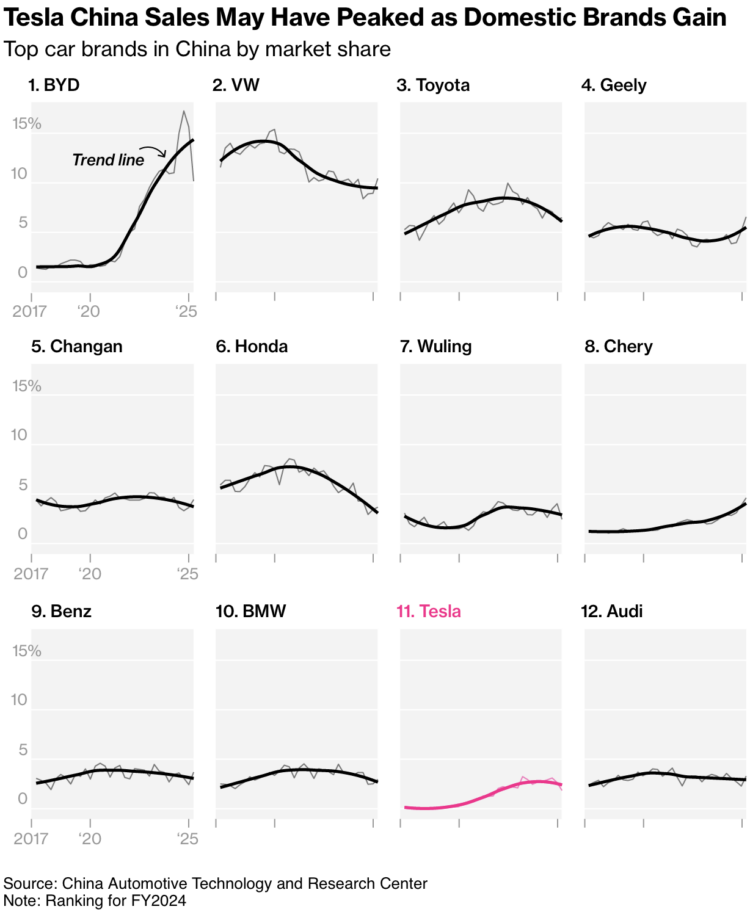
I like this chart set from Bloomberg that shows the top brands, ranked by market share in 2024. Faded lines show true estimates, and thicker lines in the foreground provide the trends. Tick labels are limited to the first column on the left to avoid busyness. Straightforward but effective.
In the U.S., we usually see BYD, an electric vehicle car brand, mentioned in the context of Tesla as the competition. But it doesn’t look like much of a competition. BYD has rapidly gained market share in China over the last five years.
Tags: Bloomberg, BYD, China, market share, Tesla
Le retail de demain sera encore plus émotionnel, expérientiel et différenciant
Quantum computing just got an AI upgrade

Animal sounds in different languages

The purpose of onomatopoeia is to imitate sounds with words, so you might expect the words for animal sounds to be similar across languages. For the Pudding, Vivian Li shows that this is not always the case.
Onomatopoeia offers a fascinating glimpse into the interaction between sound and language. The way humans mimic animal sounds reflects not only shared biological instincts but also distinct cultural filters. Although onomatopoeia intends to imitate faithfully, its differences are ultimately far from arbitrary. In trying to capture the same auditory essence, English interprets a pig’s sound as [ojŋk], yet Hungarian hears [røf], and Vietnamese hears [ʔut it]. Even among the three animals discussed, cats are more consistent in their sound interpretation, while pigs are more variable — whether because pigs’ vocalizations are innately more complex, or because they call upon different phonotactic rules.
All the words are clickable so that you can hear pronunciations for different languages. Colors indicate phone groups, such as nasal consonants and mid central vowels.
NVIDIA DGX Spark – A desktop AI supercomputer powered by NVIDIA GB10 20-core Armv9 SoC with 1,000 TOPS of AI performance
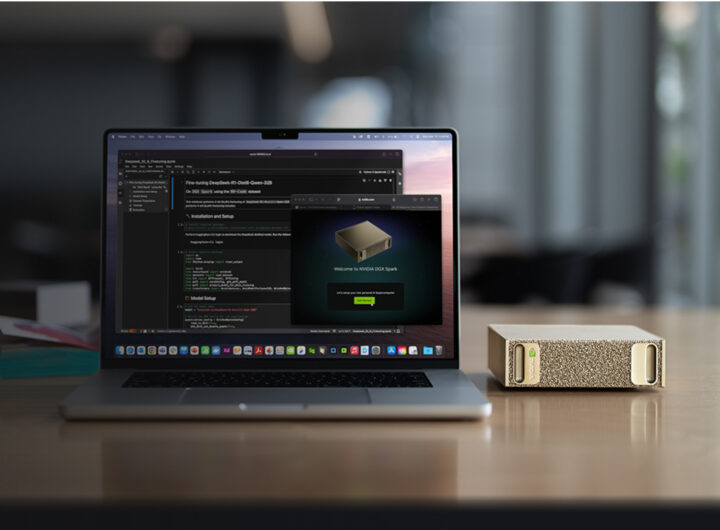
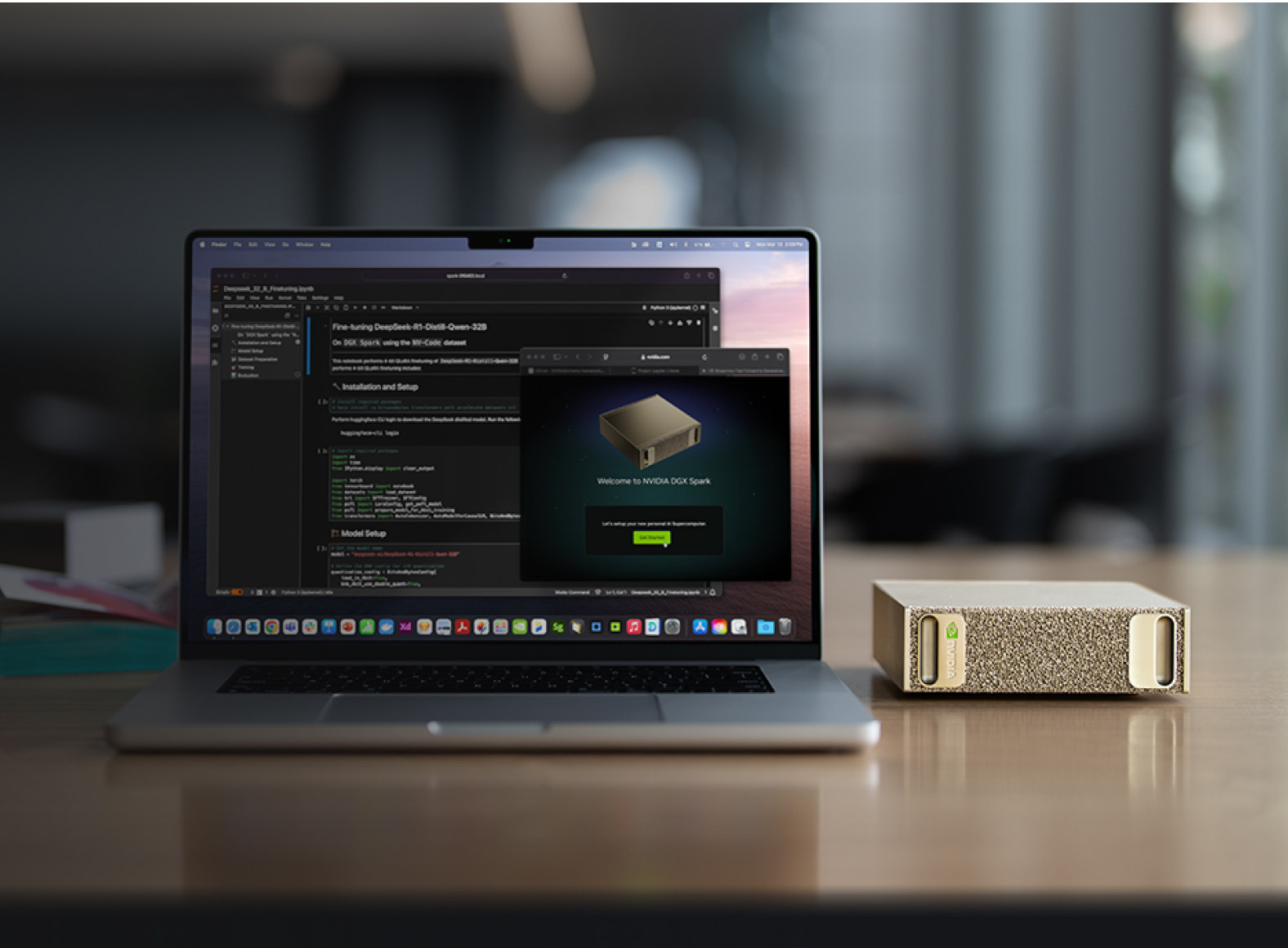
NVIDIA DGX Spark may look like a mini PC, but under the hood, it’s a powerful AI supercomputer based on the NVIDIA GB10 20-core Armv9 SoC with Blackwell architecture delivering up to 1,000 TOPS (FP4) of AI performance, and high memory bandwidth (273 GB/s) with 128 GB 256-bit LPDDR5x.
The GB10 SoC is equipped with ten Cortex-X925 cores, ten Cortex-X725 cores, a Blackwell GPU, 5th Gen Tensor cores, and 4th Gen RT cores. The system also features a 1 TB or 4TB SSD, an HDMI 2.1a video output port, 10GbE and WiFi 7 networking, and four USB4 ports.
NVIDIA DGX Spark specifications:
- SoC – NVIDIA GB10
- CPU – 20-core Armv9 processor with 10x Cortex-X925 cores and 10x Cortex-A725 cores
- Architecture – NVIDIA Grace Blackwell
- GPU – Blackwell Architecture
- CUDA Cores – Blackwell Generation
- 5th Gen Tensor cores
- 4th Gen RT (Ray Tracing) cores
- Tensor Performance – 1000 AI TOPS (FP4)
- VPU – 1x NVENC, 1x NVDEC
- System Memory – 128 GB 256-bit LPDDR5x with 273 GB/s memory bandwidth
- Storage – 1 TB or 4 TB NVMe M2 SSD with self-encryption
- Display – HDMI 2.1a port
- Audio – HDMI multichannel audio output
- Networking
- 10GbE RJ45 port
- ConnectX-7 Smart NIC to connect two Spark DGX together with a speed of up to 200Gbps
- WiFi 7 and Bluetooth 5.3
- USB – 4x USB4 Type-C ports
- Power Consumption – 170 Watts
- Dimensions – 150 x 150 x 50.5 mm
- Weight – 1.2 kg

Bandwidth is critical for AI workloads, and NVIDIA further highlights that the GB10 superchip uses NVIDIA NVLink-C2C interconnect technology to deliver a CPU+GPU-coherent memory model with 5x the bandwidth of fifth-generation PCIe.
The DGX Spark runs NVIDIA DGX OS based on Ubuntu 22.04 and the company says the system supports the NVIDIA Cosmos Reason world foundation model and NVIDIA GR00T N1 robot foundation model. The NVIDIA AI platform includes tools, frameworks, libraries, and pre-trained models to allow developers to prototype, fine-tune, and inference the latest generation of reasoning AI models from DeepSeek, Meta, Google, and others with up to 200 billion parameters locally. But you can work on even larger models, as the NVIDIA Connect-X Networking can connect two NVIDIA DGX Spark systems to work with AI models up to 405 billion parameters.
Developers can reserve a DGX Spark in the US, UK, France, Italy, Germany, and Spain through partners such as ASUS, Dell, or HP. The price should be around $3,000 to $4,000 and the system will become available in May. More details can be found on the product page and the announcement which also includes the much larger DGX Station which looks like a desktop PC and delivers “data-center-level performance”.
The post NVIDIA DGX Spark – A desktop AI supercomputer powered by NVIDIA GB10 20-core Armv9 SoC with 1,000 TOPS of AI performance appeared first on CNX Software - Embedded Systems News.
Volvo is using Gaussian splatting in virtual worlds to make safer cars
Safety is Volvo's big thing. From three-point seatbelts to side-impact protection to blind-spot monitoring and much more, the Swedish automaker focuses its innovation on making its cars safer rather than faster around the Nürburgring. (Although in the past, it has set records there too.) As part of its efforts, Volvo has collected data from tens of thousands of car crashes, which it's now leveraging in virtual worlds to put simulated cars and SUVs through the wringer with the help of something amusingly named "Gaussian splatting."
"We've been visiting crash sites since the '70s. We've been recording event data from a fleet of cars for many, many years," said Alwin Bakkenes, head of global software engineering at Volvo Cars. "And all of those data points have actually helped us create safety innovations... from the three-point safety belt to whiplash protection systems and now also, as we're introducing in the ES90, a function called 'lidar AS,' which helps the car steer away from vulnerable road users in the dark," he said.
Like some others in the industry, Volvo is an early adopter of the software-defined vehicle, or SDV. As a quick refresher, SDVs are clean-sheet designs in terms of their electronic architecture. Instead of dozens or even a hundred discrete black boxes, each with its own hardware and running its own software, each doing a discrete job (like controlling the air conditioner or managing traction control), four or five powerful central computers take over those roles, overseeing domains like infotainment, advanced driver assistance systems, handling and powertrain, and interior comfort.

Actualité : Ces nouveaux muscles artificiels pourraient révolutionner la robotique

Stability AI’s new AI model turns photos into 3D scenes
Stability AI has released a new AI model, Stable Virtual Camera, that the company claims can transform 2D images into “immersive” videos with realistic depth and perspective. Virtual cameras are tools often used in digital filmmaking and 3D animation to capture and navigate scenes in real time. With Stable Virtual Camera, Stability sought to add […]
© 2024 TechCrunch. All rights reserved. For personal use only.
Relativity Space Changes Course on Path to Orbit

In 2015, Tim Ellis and Jordan Noone founded Relativity Space around an ambitious goal: to be the first company to put a 3D printed rocket into orbit. While additive manufacturing was already becoming an increasingly important tool in the aerospace industry, the duo believed it could be pushed further than anyone had yet realized.
Rather than assembling a rocket out of smaller printed parts, they imagined the entire rocket being produced on a huge printer. Once the methodology was perfected, they believed rockets could be printed faster and cheaper than they could be traditionally assembled. What’s more, in the far future, Relativity might even be able to produce rockets off-world in fully automated factories. It was a bold idea, to be sure. But then, landing rockets on a barge in the middle of the ocean once seemed pretty far fetched as well.
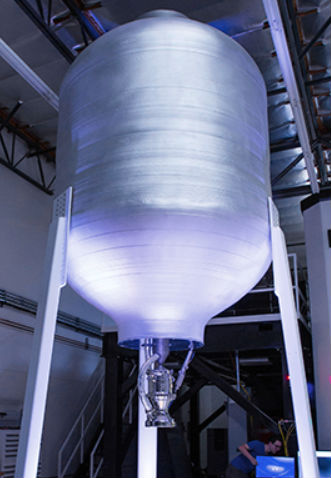
Of course, printing something the size of an orbital rocket requires an exceptionally large 3D printer, so Relativity Space had to built one. It wasn’t long before the company had gotten to the point where they had successfully tested their printed rocket engine, and were scaling up their processes to print the vehicle’s propellant tanks. In 2018 Bryce Salmi, then an avionics hardware engineer at Relatively Space, gave a talk at Hackaday Supercon detailing the rapid progress the company had made so far.
Just a few years later, in March of 2023, the Relativity’s first completed rocket sat fueled and ready to fly on the launch pad. The Terran 1 rocket wasn’t the entirely printed vehicle that Ellis and Noone had imagined, but with approximately 85% of the booster’s mass being made up of printed parts, it was as close as anyone had ever gotten before.
The launch of Terran 1 was a huge milestone for the company, and even though a problem in the second stage engine prevented the rocket from reaching orbit, the flight proved to critics that a 3D printed rocket could fly and that their manufacturing techniques were sound. Almost immediately, Relativity Space announced they would begin work on a larger and more powerful successor to the Terran 1 which would be more competitive to SpaceX’s Falcon 9.
Now, after an administrative shakeup that saw Tim Ellis replaced as CEO, the company has released a nearly 45 minute long video detailing their plans for the next Terran rocket — and explaining why they won’t be 3D printing it.
Meet the New Boss
For the mainstream press, the biggest story has been that former Google chief Eric Schmidt would be taking over as Relativity’s CEO. Tim Ellis will remain on the company’s board, but likely won’t have much involvement in the day-to-day operation of the company. Similarly, co-founder Jordan Noone stepped down from chief technology officer to take on an advisory role back in 2020.

With the two founders of the company now sidelined, and despite the success of the largely 3D printed Terran 1, the video makes it clear that they’re pursuing a more traditional approach for the new Terran R rocket. At several points in the presentation, senior Relativity staffers explain the importance of remaining agile in the competitive launch market, and caution against letting the company’s historic goals hinder their path forward. They aren’t abandoning additive manufacturing, but it’s no longer the driving force behind the program.
For his part, The New York Times reports that Schmidt made a “significant investment” in Relativity Space to secure controlling interest in the company and his new position as CEO, although the details of the arrangement have so far not been made public. One could easily dismiss this move as Schmidt’s attempt to buy into the so-called “billionaire space race”, but it’s more likely he simply sees it as an investment in a rapidly growing industry.
Even before he came onboard, Relativity Space had amassed nearly $3 billion in launch contracts. Between his considerable contacts in Washington, and his time as the chair of the DoD’s Defense Innovation Advisory Board, it’s likely Schmidt will attempt to put Relativity the running for lucrative government launches as well.
All they need is a reliable rocket, and they’ll have a revenue stream for years.
Outsourcing Your Way to Space
In general, New Space companies like SpaceX and Rocket Lab have been far more open about their design and manufacturing processes than the legacy aerospace players. But even still, the video released by Relativity Space offers an incredibly transparent look at how the company is approaching the design of Terran R.
One of the most interesting aspects of the rocket’s construction is how many key components are being outsourced to vendors. According to the video, Relativity Space has contracted out the manufacturing of the aluminium “domes” that cap off the propellant tanks, the composite overwrapped pressure vessels (COPVs) that hold high pressure helium at cryogenic temperatures, and even the payload fairings.
This isn’t like handing the construction of some minor assemblies off to a local shop — these components are about as flight-critical as you can possibly get. In 2017, SpaceX famously lost one of their Falcon 9 rockets (and its payload) in an explosion on the launch pad due to a flaw in one of the booster’s COPVs. It’s believed the company ultimately brought production of COPVs in-house so they could have complete control of their design and fabrication.
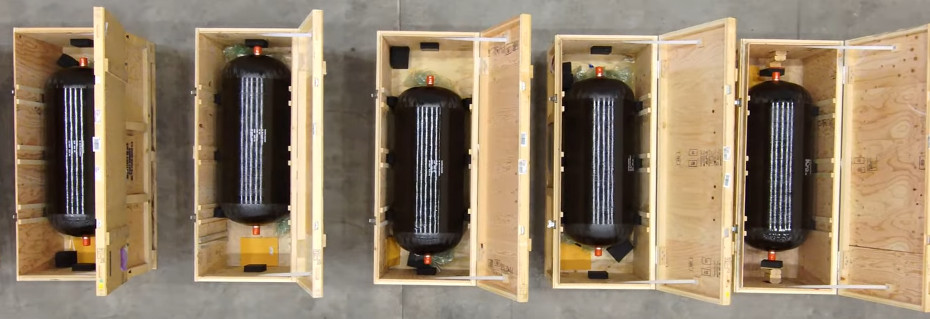
Farming out key components of Terran R to other, more established, aerospace companies is a calculated risk. On one hand, it will allow Relativity Space to accelerate the booster’s development time, and in this case time is very literally money. The sooner Terran R is flying, the sooner it can start bringing in revenue. The trade-off is that their launch operations will become dependent on the performance of said companies. If the vendor producing their fairings runs into a production bottleneck, there’s little Relativity Space can do but wait. Similarly, if the company producing the propellant tank domes decides to raise their prices, that eats into profits.
For the long term security of the project, it would make the most sense for Relativity to produce all of Terran R’s major components themselves. But at least for now, the company is more concerned with getting the vehicle up and running in the most expedient manner possible.
Printing Where it Counts
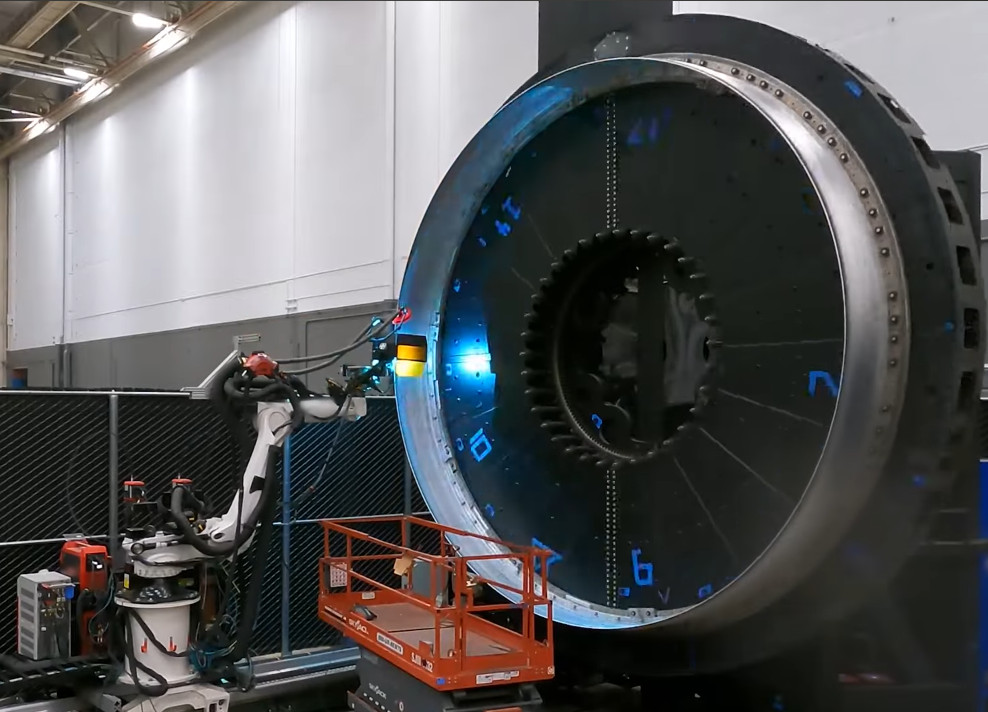
In some cases, this is where Relativity is still banking on 3D printing in the long term. As explained in the video by Chief Technology Officer Kevin Wu, they initially planned on printing the propellant tank domes out of aluminum, but found that they couldn’t produce them at a fast enough rate to support their targeted launch cadence.
At the same time, the video notes that the state-of-the-art in metal printing is a moving target (in part thanks to their own research and development), and that they are continuing to improve their techniques in parallel to the development of Terran R. It’s not hard to imagine a point in the future where Relativity perfects printing the tank domes and no longer needs to outsource them.
While printing the structural components of the rocket hasn’t exactly worked out as Relativity hoped, they are still fully committed to printing the booster’s Aeon R engines. Printing the engine not only allows for rapid design iteration, but the nature of additive manufacturing makes it easy to implement features such as integrated fluid channels which would be difficult and expensive to produce traditionally.
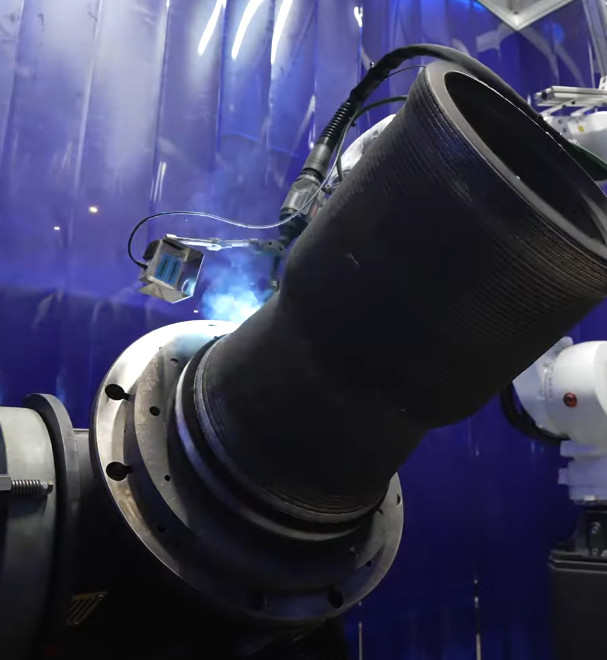
Of course, Relativity isn’t alone in this regard. Nearly every modern rocket engine is using at least some 3D printed components for precisely the same reasons, and they have been for some time now.
Which in the end, is really the major takeaway from Relativity’s update video. Though the company started out with an audacious goal, and got very close to reaching it, in the end they’ve more or less ended up where everyone else in aerospace finds themselves in 2025. They’ll use additive manufacturing where it makes sense, partner with outside firms when necessary, and use traditional manufacturing methods where they’ve proven to be the most efficient.
It’s not as exciting as saying you’ll put the world’s first 3D printed rocket into space, to be sure. But it’s the path that’s the most likely to get Terran R on the launch pad within the next few years, which is where they desperately need to be if they’ll have any chance of catching up to the commercial launch providers that are already gobbling up large swaths of the market.