En février dernier, le PDG d’OpenAI, Sam Altman, a partagé la feuille de route pour la sortie de GPT-5. Il a révélé que le puissant modèle de raisonnement o3 ne serait pas disponible en tant que modèle autonome, mais qu’il serait intégré à GPT-5. Aujourd’hui, Altman indique que les modèles de raisonnement o3 et o4-mini […]
L’électronique atteint ses limites. Alors que les modèles d’intelligence artificielle deviennent de plus en plus massifs, connectés et complexes, les géants de la tech et les startups misent désormais sur la photonique pour franchir une nouvelle frontière technologique : transmettre l’information non plus par des impulsions électriques, mais par la lumière. Au cœur de cette …
Après 4 mois d’attente, Meta a sorti une nouvelle série de modèles Llama 4 open-weight. Les nouveaux modèles d’IA sont Llama 4 Scout, Llama 4 Maverick et Llama 4 Behemoth. Contrairement aux précédents modèles denses, Meta a opté cette fois pour l’architecture MoE (Mixture of Experts), tout comme DeepSeek R1 et V3. Tous les modèles […]
A British startup called Pulsar Fusion has come up with a wild new concept for a nuclear fusion-powered space rocket that, it claims, could significantly cut down the time it takes to travel to Mars in half.
As CNN reports, the UK Space Agency-funded company's Sunbird rocket harnesses the power of nuclear fusion, the same process that powers stars, as a form of propulsion.
"It’s very unnatural to do fusion on Earth," Pulsar founder and CEO Richard Dinan told CNN. "Fusion doesn’t want to work in an atmosphere. Space is a far more logical, sensible place to do fusion, because that’s where it wants to happen anyway."
It's important to note that the propulsion device is still almost entirely theoretical. But Pulsar sees potential.
The firm is hoping to achieve fusion in orbit for the first time in 2027, a moonshot plan that could put far-flung destinations in our solar system within much easier reach — if everything goes perfectly according to plan, at least.
Instead of splitting atoms to release copious amounts of energy, fusion energy involves combining isotopes into heavier ones. For decades, scientists have tried to replicate this process inside special reactors, using immense amounts of heat and pressure.
Turning that idea into a viable source of renewable energy has proven extremely difficult, particularly at a meaningful scale. Scientists are still breaking their heads over how to do so efficiently, and are only starting to devise methods that allow them to harvest more energy than what they had to put in to get the reaction started.
In space, however, where fusion reactors in the form of stars and our Sun, are abundant, the situation could look quite different. Instead of having to harness the swirling plasma inside circular reactors, Pulsar Fusion's rocket would have a "nuclear exhaust," shooting out protons from an expensive type of fuel called helium-3.
In the long run, Pulsar Fusion envisions an entire gas station-like system.
"We launch them into space, and we would have a charging station where they could sit and then meet your ship," Dinand told CNN. "You turn off your inefficient combustion engines, and use nuclear fusion for the greater part of your journey."
"Ideally, you’d have a station somewhere near Mars, and you’d have a station on low Earth orbit," he added, "and the (Sunbirds) would just go back and forth."
As Live Science reports, each Sunbird would be around 100 feet in length and feature "tank-like" armor plating to protect them from cosmic radiation and micrometeorites. Each rocket could cost upwards of $90 million, a steep price in large part due to its unusual fuel source.
For its inaugural proof of concept test in 2027, the company is hoping to construct a "linear fusion experiment" to test "key technological components." A fully functional prototype could be ready four to five years after that — if the company doesn't run out of funding by then.
"If we are going to be the species that actually get to other planets, then exhaust speeds are pretty much the most important thing," Dinan said during a space convention earlier this year, as quoted by Live Science. "In terms of what can be [theoretically] produced in exhaust speeds, fusion is king."
OpenAI's latest image-generating 4o model is surprisingly good at generating text inside images, a feat that had proved particularly difficult for its many predecessors.
And that makes it a powerful tool for generating images of fraudulent documents, as users have found.
"You can use 4o to generate fake receipts," Das wrote. "There are too many real-world verification flows that rely on 'real images' as proof. That era is over."
Doc Holiday
The image itself, at first blush, is pretty convincing and includes a breakdown of a multicourse meal, a correct subtotal, and even a tip calculation.
Another user even managed to edit the image further by adding a realistic filter and food stains — the perfect way to commit expense fraud, if you were so inclined.
And that's the tip of the iceberg. Das also found that 4o was happy to generate fraudulent prescriptions for controlled substances like Zoloft.
Fraud Squad
The development highlights how far AI-powered image generators have come. Previous models infamously struggled with recreating letters, often resulting in garbled shapes and unintentionally hilarious phrases.
Beyond faking expenses for lavish meals, OpenAI's increasingly canny ability to generate fake documents could open up the door for everything from phony tax forms and bank cheques to fake IDs and birth certificates.
Whether our ability to detect this storm of faked documents remains to be seen. But given AI companies' current efforts, it's not looking good. Guardrails like appended metadata or watermarks that divulge whether an image was generated by an AI are easily overcome.
Even before the advent of powerful AI-powered image generators, a 2015 survey found that 85 percent of respondents admitted to lying to get reimbursed with more money. Many of these kinds of fraud cases fall through the cracks due to a lack of internal controls and flawed accounts payable processes.
In other words, you can no longer believe anything you see online.
3D scanning is becoming much more accessible, which means it’s more likely that the average hacker will use it to solve problems — possibly odd ones. That being the case, a handy tool to have in one’s repertoire is a way to work with point clouds. We’ll explain why in a moment, but that’s where CloudCompare comes in (GitHub).
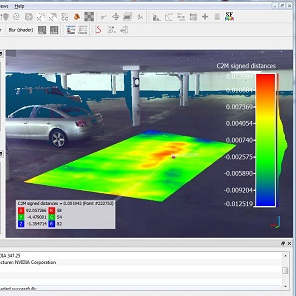
Not all point clouds are destined to be 3D models. A project may call for watching for changes in a surface, for example.
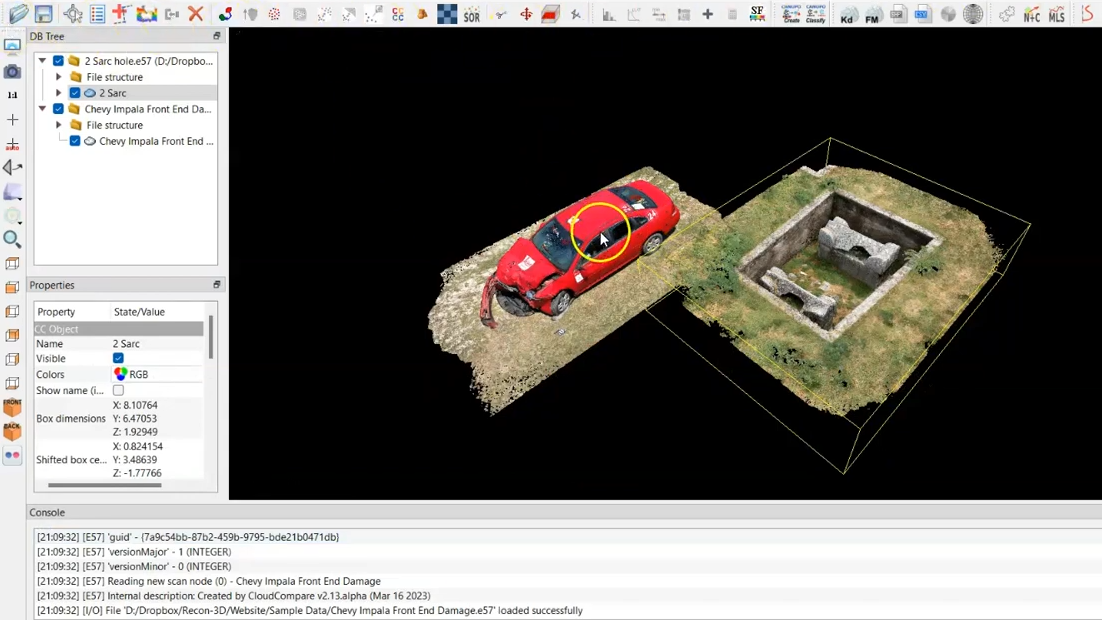
CloudCompare is an open source tool with which one can load up and do various operations on point clouds, including generating mesh models from them. Point clouds are what 3D scanners create when an object is scanned, and to become useful, those point clouds are usually post-processed into 3D models (specifically, meshes) like an .obj or .stl file.
We’ve gone into detail in the past about how 3D scanning works, what to expect from it, and taken a hands-on tour of what an all-in-one wireless scanner can do. But what do point clouds have to do with getting the most out of 3D scanning? Well, if one starts to push the boundaries of how and to what purposes 3D scanning can be applied, it sometimes makes more sense to work with point clouds directly instead of the generated meshes, and CloudCompare is an open-source tool for doing exactly that.
For example, one may wish to align and merge two or more different clouds, such as from two different (possibly incomplete) scans. Or, you might want to conduct a deviation analysis of how those different scans have changed. Alternately, if one is into designing wearable items, it can be invaluable to be able to align something to a 3D scan of a body part.
It’s a versatile tool with numerous tutorials, so if you find yourself into 3D scanning but yearning for more flexibility than you can get by working with the mesh models — or want an alternative to modeling-focused software like Blender — maybe it’s time to work with the point clouds directly.
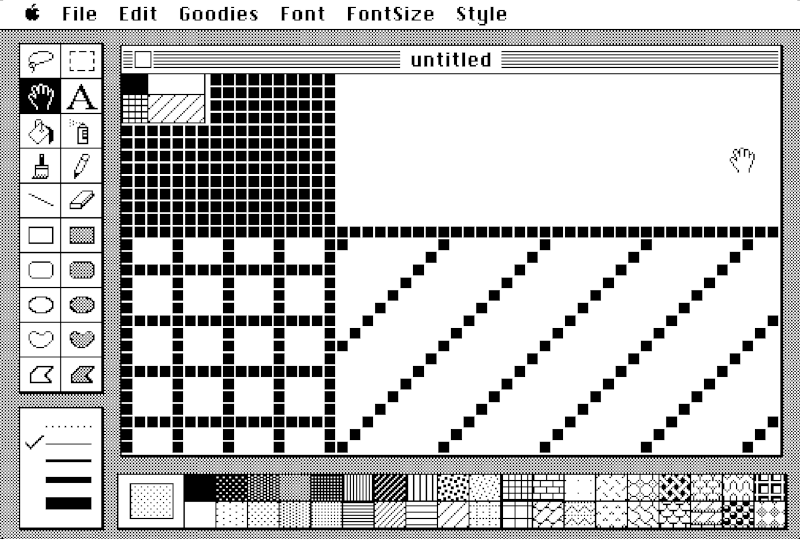
Usually when we talk about retrocomputing, we want to look at — and in — some old hardware. But [Z→Z] has a different approach: dissecting MacPaint, the Apple drawing program from the 1980s.
While the program looks antiquated by today’s standards, it was pretty hot stuff back in the day. Things we take for granted today were big deals at the time. For example, being able to erase a part of something you drew prompted applause at an early public demo.
We enjoyed the way the program was tested, too. A software “monkey” was made to type keys, move things, and click menus randomly. The teardown continues with a look inside the Pascal and assembly code with interesting algorithms like how the code would fill an area with color.
The program has been called “beautifully organized,” and [Z→Z] examines that assertion. Maybe the brilliance of it has been overstated, but it did work and it did influence many computer graphics programs over the years.
After The New York Times sued OpenAI in December 2023—alleging that ChatGPT outputs violate copyrights by regurgitating news articles—the ChatGPT maker tried and failed to argue that the claims were time-barred.
According to OpenAI, the NYT should have known that ChatGPT was being trained on its articles and raised its lawsuit in 2020, partly because of the newspaper's own reporting. To support this, OpenAI pointed to a single November 2020 article, where the NYT reported that OpenAI was analyzing a trillion words on the Internet. But on Friday, US district judge Sidney Stein disagreed, denying OpenAI's motion to dismiss the NYT's copyright claims partly based on one NYT journalist's reporting.
In his opinion, Stein confirmed that it's OpenAI's burden to prove that the NYT knew that ChatGPT would potentially violate its copyrights two years prior to its release in November 2022. And so far, OpenAI has not met that burden.
Le 4 avril 2025 marque le 50e anniversaire de Microsoft, une entreprise qui a profondément façonné l’histoire de l’informatique. Dans cet épisode, retour sur les grandes étapes de cette success story hors normes, des débuts modestes à Albuquerque à l’hégémonie mondiale.
Tout commence en 1975, lorsque deux jeunes passionnés, Bill Gates et Paul Allen, lancent Micro-Soft pour développer un langage de programmation destiné à l’Altair 8800, l’un des tout premiers micro-ordinateurs. Leur intuition géniale : parier sur l’ordinateur personnel.
On revient sur les moments clés : le deal historique avec IBM pour MS-DOS, la révolution Windows 95 et le passage au tout-logiciel avec la suite Office. L’épisode aborde aussi les échecs notables — du Zune à Windows Vista — qui n'ont pas empêché l'entreprise de se réinventer à chaque fois.
Aujourd’hui, Microsoft est un acteur majeur du cloud et de l’IA, avec Azure et Copilot, sous la direction de Satya Nadella. Plus discret, Bill Gates se consacre désormais à sa fondation, mais son rêve d’un ordinateur dans chaque foyer s’est largement réalisé… non sans poser de nouvelles questions de souveraineté technologique.
Fashion is found on runways, shop windows and the accounts of social media influencers. Until recently, Varun Grover, Distinguished Professor at the Sam M. Walton College of Business, and other information systems researchers had considered fashion and technology uncomfortable bedfellows.
It looks like voice AI may have found its sweet spot: ordering fries with that.
Yum! Brands — which owns Taco Bell, KFC, and Pizza Hut and has a larger restaurant footprint than any other company globally — recently announced a partnership with Nvidia to deploy AI (including AI voice ordering) throughout hundreds of restaurants starting in April.
Voice AI stands to reduce labor costs in high-turnover positions while also increasing order throughput and accuracy. It also means staff can be redeployed to food preparation or customer service roles that drive higher satisfaction.
But fast food is just the tip of the iceberg for voice AI.
Get the world’s best tech research in your inbox
Billionaires, CEOs, & leading investors all love the CB Insights newsletter
Below, we get into:
Why voice AI matters
Market maturity
Challenges to adoption
Why does voice AI matter?
For customer interactions, voice conversations offer a far more expressive mode of communication than text-based channels.
Yet the industry remains stuck in a purgatory of robo-call decision trees and endless holds. 62% of customer calls to SMBs go unanswered, while upwards of 70% of business calls that connect still end up putting customers on hold, with most hanging up within minutes.
Advances in AI speech models could break this cycle. Voice AI models are shifting toward processing audio directly — rather than needing to translate it to text, process it using an LLM, then convert it back into speech — and are getting closer to the cadence of human conversation (<300ms latency).
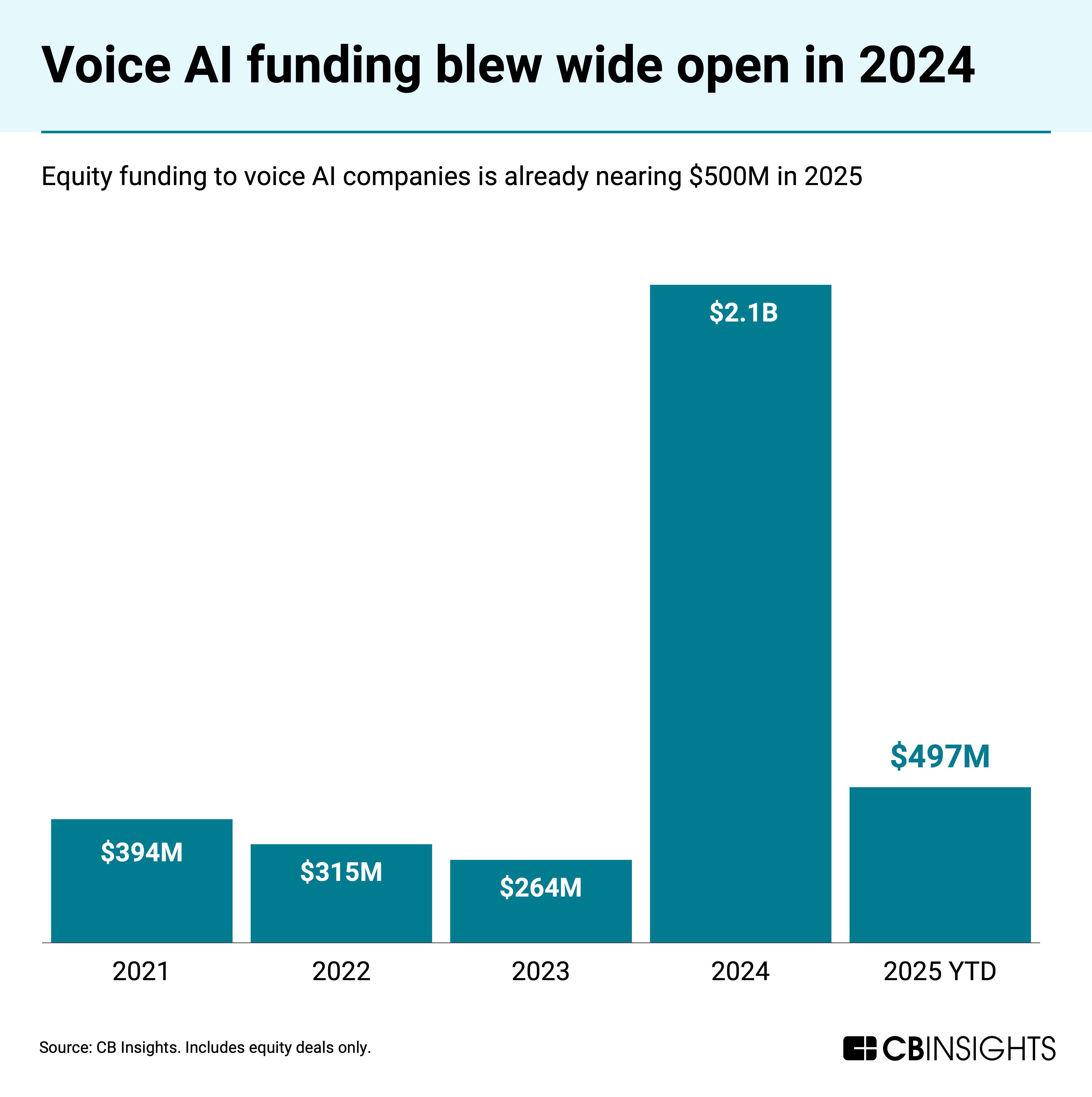
The progress has fueled a surge in equity funding to voice AI solutions, which grabbed $2.1B in 2024, per CB Insights’ funding data. Momentum has continued in 2025 so far, with companies raising nearly $500M in Q1’25.
ElevenLabs‘ $180M round from investors including a16z, Salesforce Ventures, and Sequoia Capital was a big part of this year’s strong start. ElevenLabs has already hit $100M in ARR — just 3 years after its founding.
On the whole, though, the voice AI market remains in its early stages — and faces growing pains.
The market is still nascent
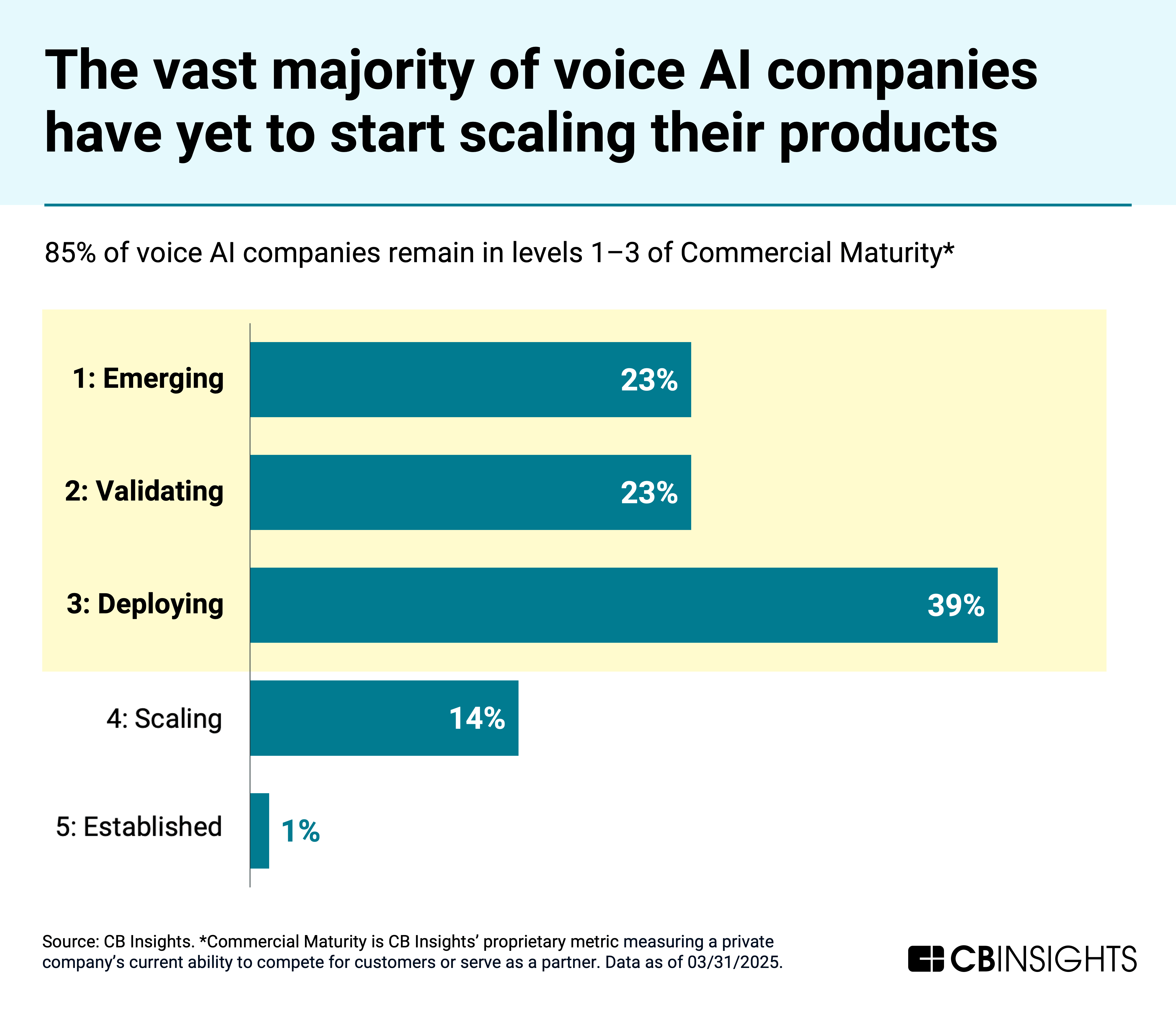
Most of the voice AI market remains in the earlier stages of commercial maturity, with 85% in levels 1, 2, or 3 on CB Insights’ Commercial Maturity scale. More than half are still developing or validating their products, while 39% are beginning commercial distribution and starting to gain customers.
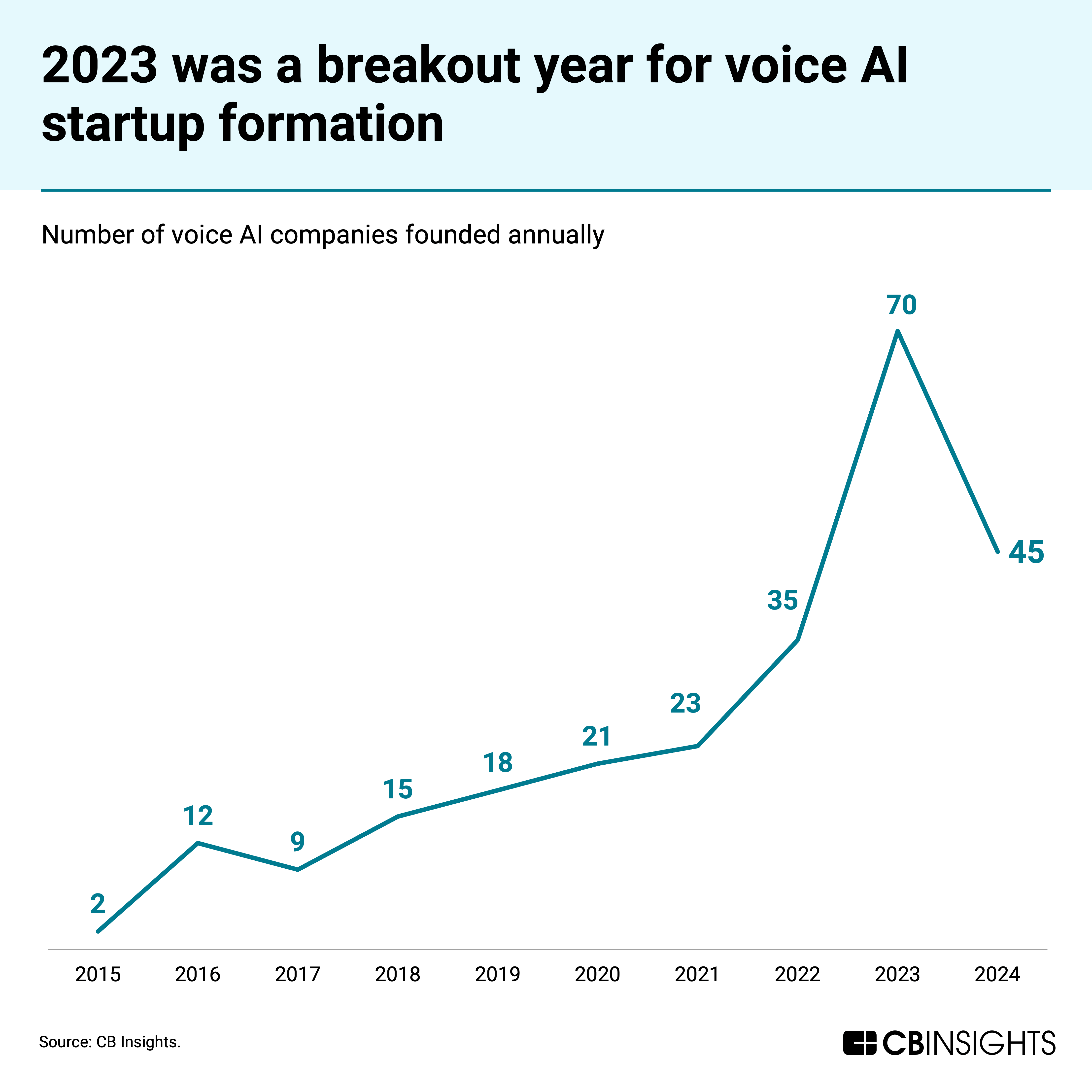
Most startups here were founded in just the last 3 years, as the chart below demonstrates. 2023 was a breakout year, seeing the number of companies founded grow 2x year-over-year, from 35 to 70.
This growth has been driven by advancements in voice AI models — including OpenAI‘s Realtime API for speech-to-speech applications, launched in late 2024 — which jumpstarted applications across use cases.
Despite the excitement, challenges remain around reliability and trust.
Voice AI agents still struggle with complex conversations and unpredictable inputs, leading most enterprises to start out by deploying them in low-stakes scenarios.
In theory, fast-food ordering should be a natural fit — interactions are brief and highly predictable. The AI only needs to understand a limited vocabulary of items and modifiers.
But the reputational risk of even the occasional mishap can be high. McDonald’s, for instance, started a voice AI pilot with IBM back in 2021, but pulled it in 2024 after videos of inaccurate orders went viral on TikTok.
Customer acceptance of voice AI interaction also varies dramatically by region. As one Cognigy customer told us:
Meanwhile, a strategic divide is emerging in the voice AI market: cloud vs. edge processing.
Cloud-based solutions from tech giants offer advanced capabilities but raise privacy concerns, while edge-based platforms process data locally with better privacy but more limited features.
This divide will shape which players win in different sectors, with edge solutions likely dominating in sensitive industries like healthcare and financial services, while cloud platforms prevail in consumer and retail applications.
For more on how AI will shape every aspect of the customer experience, get the free report here.
Dans cette interview, Mina Ghobrial revient sur son parcours atypique dans le domaine de la réalité augmentée, commencé en 2020. Ce qui n’était au départ qu’un stage de fin d’études ...
OpenAI’s new image-generation feature is on track to be one of the company’s most popular product launches ever. According to Brad Lightcap, who oversees day-to-day operations and global deployment at OpenAI, over 130 million users have generated more than 700 million images since the upgraded image generator launched in ChatGPT on March 25. “[W]e appreciate […]
The global artificial intelligence market is projected to reach $4.8 trillion—roughly the size of Germany's economy—by 2033, the UN said Thursday, warning nearly half of jobs worldwide could be affected.
OpenAI will soon offer its Deep Research feature, which allows for extended AI research tasks, to free ChatGPT users, expanding access beyond paid subscribers.
C’est officiel : Neuralink implantera sa toute première puce Blindsight dans le cerveau d’un patient humain d’ici la fin de l’année 2025. L’annonce, confirmée par Elon Musk sur X, marque un tournant décisif non seulement pour l’entreprise, mais pour la neurotechnologie dans son ensemble. Il ne s’agit plus seulement de bouger un curseur par la pensée...
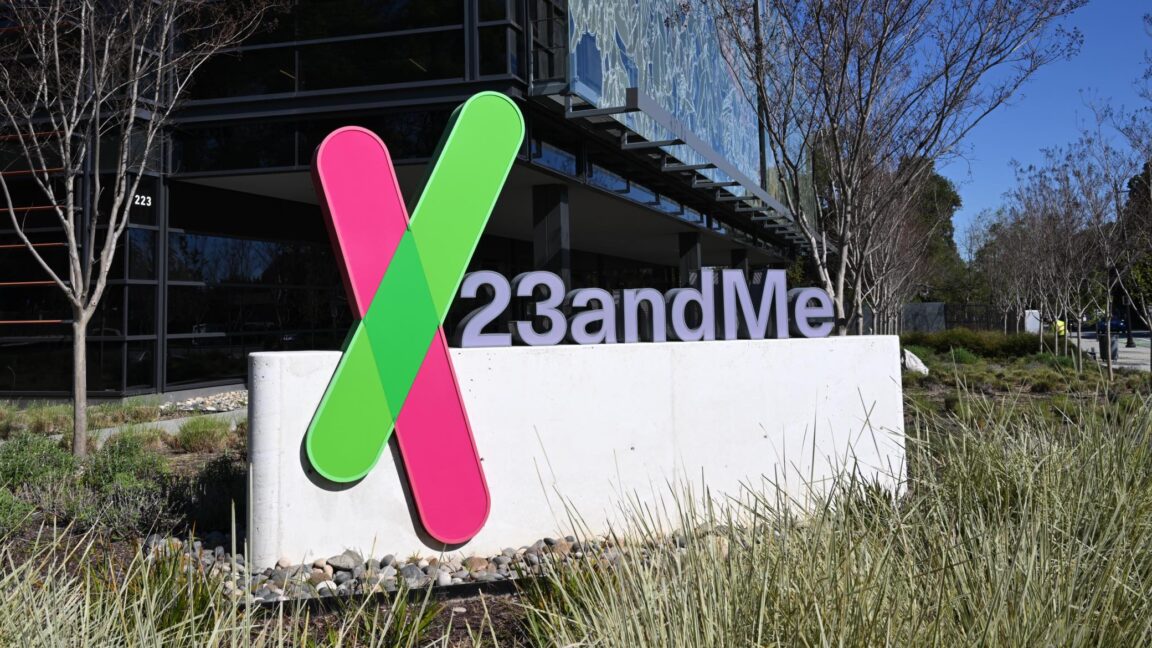
Federal Trade Commission Chairman Andrew Ferguson said he's keeping an eye on 23andMe's bankruptcy proceeding and the company's planned sale because of privacy concerns related to genetic testing data. 23andMe and its future owner must uphold the company's privacy promises, Ferguson said in a letter sent yesterday to representatives of the US Trustee Program, a Justice Department division that oversees administration of bankruptcy proceedings.
"As Chairman of the Federal Trade Commission, I write to express the FTC's interests and concerns relating to the potential sale or transfer of millions of American consumers' sensitive personal information," Ferguson wrote. He continued:
As you may know, 23andMe collects and holds sensitive, immutable, identifiable personal information about millions of American consumers who have used the Company's genetic testing and telehealth services. This includes genetic information, biological DNA samples, health information, ancestry and genealogy information, personal contact information, payment and billing information, and other information, such as messages that genetic relatives can send each other through the platform.
23andMe's recent bankruptcy announcement set off a wave of concern about the fate of genetic data for its 15 million customers. The company said that "any buyer of 23andMe will be required to comply with our privacy policy and with all applicable law with respect to the treatment of customer data." Many users reacted to the news by deleting their data, though tech problems apparently related to increased website traffic made that process difficult.
There are a remarkable number of commercial fusion power startups, considering that it's a technology that's built a reputation for being perpetually beyond the horizon. Many of them focus on radically new technologies for heating and compressing plasmas, or fusing unusual combinations of isotopes. These technologies are often difficult to evaluate—they can clearly generate hot plasmas, but it's tough to determine whether they can get hot enough, often enough to produce usable amounts of power.
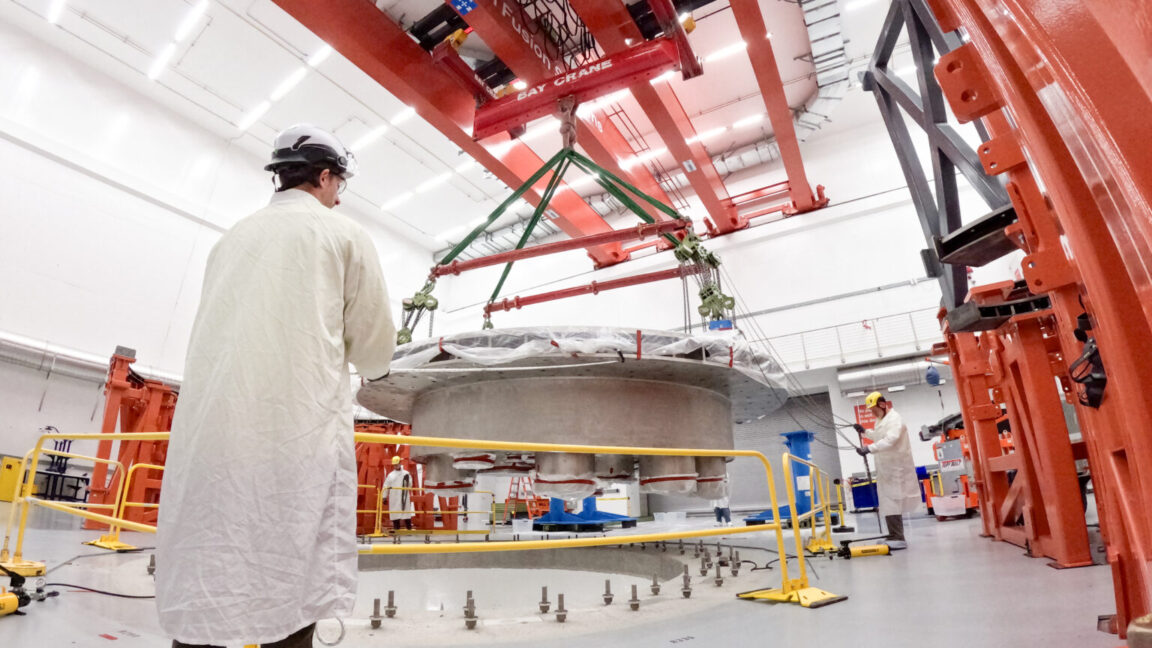
On the other end of the spectrum are a handful of companies that are trying to commercialize designs that have been extensively studied in the academic world. And there have been some interesting signs of progress here. Recently, Commonwealth Fusion, which is building a demonstration tokamak in Massachussets, started construction of the cooling system that will keep its magnets superconducting. And two companies that are hoping to build a stellarator did some important validation of their concepts.
Doing donuts
A tokamak is a donut-shaped fusion chamber that relies on intense magnetic fields to compress and control the plasma within it. A number of tokamaks have been built over the years, but the big one that is expected to produce more energy than required to run it, ITER, has faced many delays and now isn't expected to achieve its potential until the 2040s. Back in 2015, however, some physicists calculated that high-temperature superconductors would allow ITER-style performance in a far smaller and easier-to-build package. That idea was commercialized as Commonwealth Fusion.
Social media has recently been flooded with images that looked like they belonged in a Studio Ghibli film. Selfies, family photos and even memes have been re-imagined with the soft pastel palette characteristic of the Japanese animation company founded by Hayao Miyazaki.
A microbial electrochemical technology capable of recovering 90%–95% of lithium from spent lithium-ion batteries has been developed by scientists at the University of Surrey. The breakthrough offers a more sustainable and cost-effective alternative to conventional recovery methods and could be expanded to reclaim other valuable battery metals, like cobalt.
visionOS 2.4 is out now, bringing Apple Intelligence to Vision Pro, a Spatial Gallery app, an iPhone app for remote installs, and a new iPhone/iPad-driven guest flow.
The last significant visionOS update was 2.2 in December, which brought the Wide and Ultrawide Mac Virtual Display modes. visionOS 2.3 instead focused on bug fixes and security updates.
The first visionOS 2.4 developer beta released in February, when Apple announced visionOS 2.4, and now the stable release is available for all Apple Vision Pro owners.
Apple Intelligence
Apple Intelligence is the company's name for its generative AI features. Some features run on-device, while others are offloaded to the company's Private Cloud Compute (PCC) servers, and certain requests reach out to OpenAI's ChatGPT, if you give permission for that.
Apple Intelligence arrived on iPhones (15 Pro and later), iPads (M-series or A17 Pro chips only), and Macs (M-series chips only) late last year, and Apple didn't say at the time whether Vision Pro would get it too.
With visionOS 2.4 Apple has brought the following Apple Intelligence features to Vision Pro: Priority Notifications, Notification Summaries, Smart Reply, Memory Movie creation and Natural Language Search in Photos, Priority Messages & Mail Summaries In Mail, Writing Tools, Image Wand in Notes, Genmoji, and Image Playground.
At launch, Apple Intelligence on Vision Pro only supports US English, with "additional languages" coming later this year.
Priority Notifications & Notification Summaries
Apple Intelligence automatically decides which notifications are most important, such as messages from loved ones about imminent events, and surfaces them at the top of the notification stack.
Further, longer notifications and groups of notifications from the same apps show an AI-generated summary in place of their content. We should note that this feature has been widely criticized for sometimes misconstruing the content of notifications, however.
Tapping the notification summary brings up the original notification.
Smart Reply In Messages & Mail
Smart Reply "identifies questions and suggests relevant replies" to messages and emails, which Apple says lets you "easily respond to texts and emails with just a few taps" on Vision Pro.
Smart Reply on iPhone, as an example.
This feature should be particularly useful when you don't have a Bluetooth keyboard connected at least, since floating virtual keyboards are slower to type on than touchscreen keyboards.
Memory Movies & Natural Language Search In Photos
In the Photos visionOS app, Apple Intelligence brings the ability to generate a Memory Movie, as well as more advanced search.
"Simply type a description, and Apple Intelligence will pick out the best photos and videos, craft a storyline with chapters based on themes identified from the photos, and arrange them into a movie with its own narrative arc and a soundtrack," Apple explains.
0:00
/0:34
1×
Meanwhile, the Natural Language Search feature lets you find photos and videos in your library by just describing them.
Priority Messages & Mail Summaries In Mail
Just like with notifications, in the visionOS Mail app Apple Intelligence surfaces the most salient messages at the top of the stack.
Each email in the list has an AI-generated short summary of its content, instead of just the first line as in traditional email clients.
Further, upon opening an email you can choose to AI-generate a medium-length summary of its content.
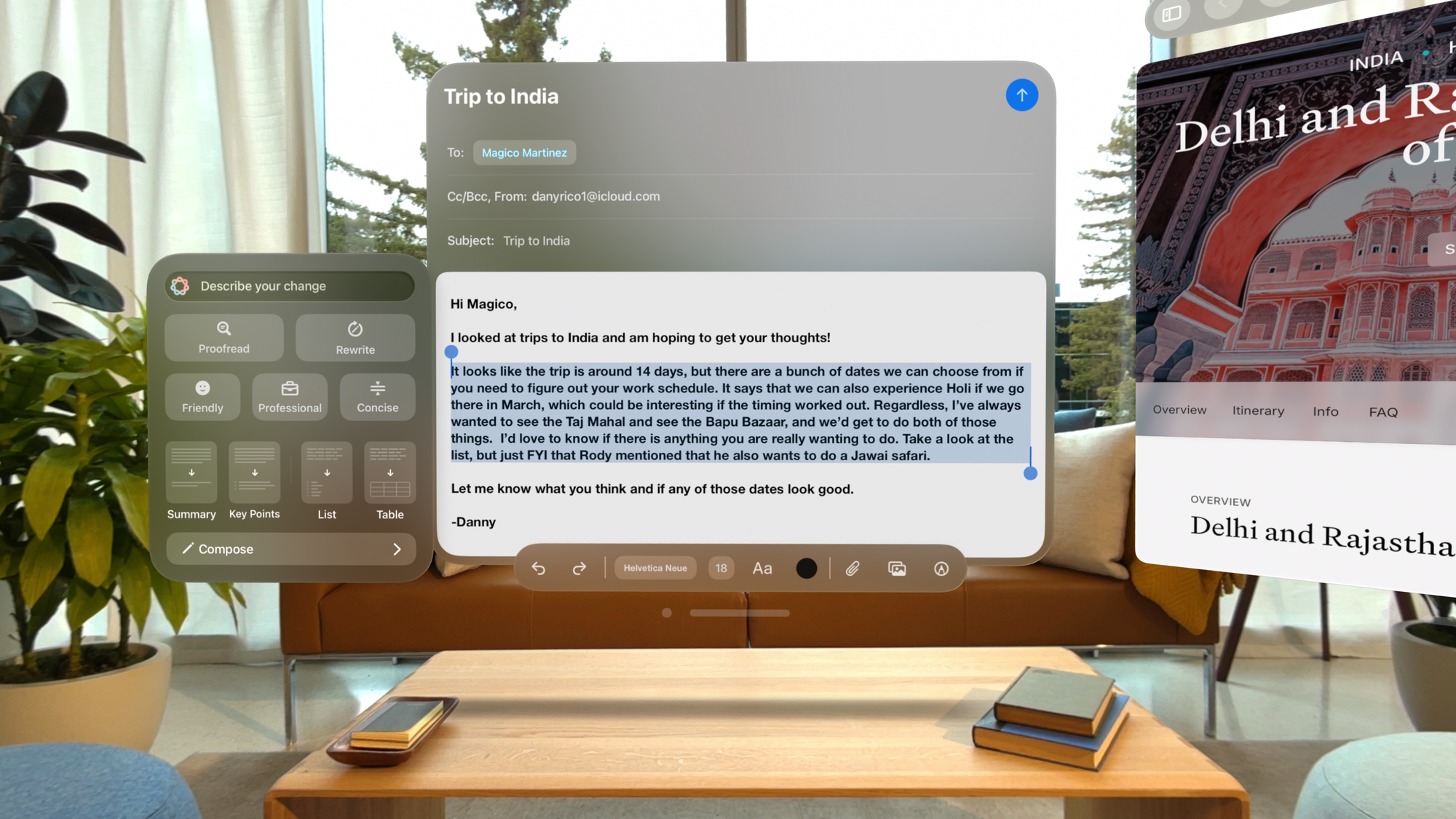
Writing Tools
The Writing Tools feature offers four kinds of tools for "rewriting, proofreading, and summarizing" long-form text that you type or dictate "nearly everywhere" in visionOS, including Mail, Notes, and many third-party apps.
These tools are:
Proofread: "checks grammar, word choice, and sentence structure with suggested edits".
Rewrite: "adjust the tone of text to make it more friendly, professional, or concise", or use Describe Your Change to specify the exact kind of change you want.
Summarize: recap the text, break it out into Key Points, or turn it into a bullet point list or table.
Compose: leverages OpenAI's ChatGPT to generate any kind of textual content.
Image Wand In Notes
Image Wand in the visionOS Notes app lets you "create images based on rough sketches you create", or AI-generate an entirely new image "based on words and images from the surrounding area".
Genmoji In iMessage
Genmoji is Apple's feature to generate your own custom emoji in iMessage by typing or speaking a description of it.
0:00
/0:20
1×
Within iMessage, these Genmoji can "be added inline to messages, shared as a sticker, or sent as a Tapback".
Image Playground
Image Playground lets you AI-generate "fun and unique images from themes, costumes, accessories, and places".
0:00
/0:37
1×
According to Apple, "users can add their own text descriptions, and can even create images in the likeness of a family member or friend using photos from their photo library."
Image Playground is integrated into apps like Messages and Freeform, and is also available as a new standalone visionOS app.
Spatial Gallery
Spatial Gallery is a new visionOS app from Apple that "features a curated collection of spatial photos, spatial videos, and panoramas from artists, filmmakers, photographers, and more."
At launch, Apple says it offers "remarkable perspectives from photographers like Jonpaul Douglass and Samba Diop; new stories and experiences from iconic brands including Cirque du Soleil, Red Bull, and Porsche; behind-the-scenes moments from Apple Originals like Disclaimer, Severance, and Shrinking; and special moments from top artists."
0:00
/0:26
1×
Rather than being an open platform like YouTube or Vimeo, which added spatial video support in October, Apple's Spatial Gallery sounds like a highly curated closed platform, offering quality over quantity.
Spatial Gallery is available in all Apple Vision Pro countries except for mainland China.
Apple Vision Pro iPhone App
The new Apple Vision Pro app for iPhone lets you remotely queue apps to download & install to your headset, see device information, and browse curated recommendations of the best visionOS content.
The My Vision Pro interface shows device tips, the current visionOS version, and the serial number. It also lets you set up Personalized Spatial Audio by scanning your face shape with your iPhone's TrueDepth sensor.
Meanwhile, the Discovery interface shows "popular apps and games on the App Store; nearly 300 3D movies, Apple Immersive titles, and more video content on the Apple TV app; and the latest spatial photos, spatial videos, and panoramas featured in the Spatial Gallery".
The Apple Vision Pro app is part of iOS 18.4, and is also downloadable from the iOS App Store.
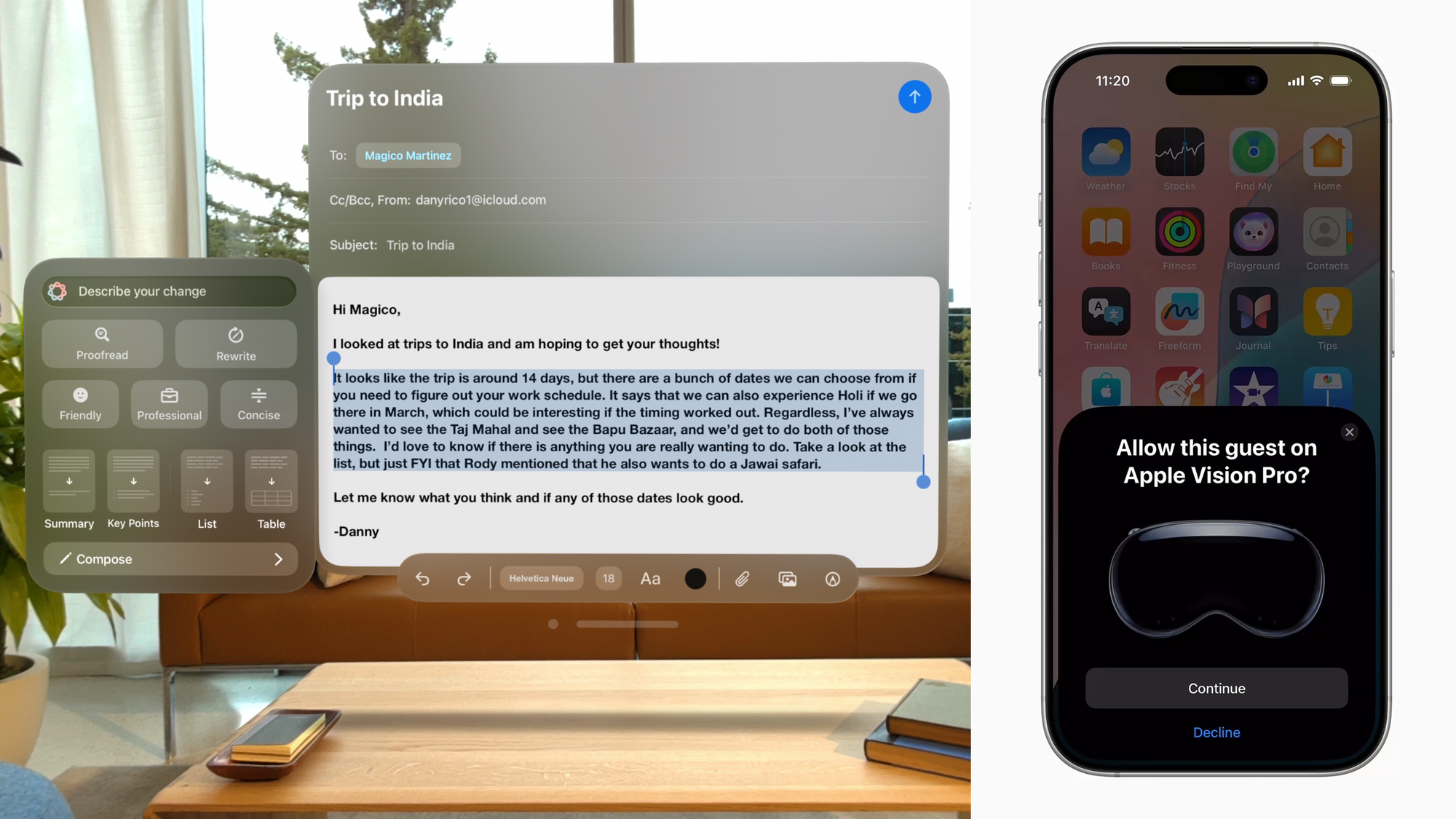
iPhone/iPad-Driven Guest User Mode
Previously, initializing Guest User mode on Vision Pro required putting on the headset and unlocking it first, and if there were any issues you needed to adjust for after the guest put the headset on, you needed to do that all over again. From experience, this led to frustration.
With visionOS 2.4, Apple has added the ability to approve Guest User mode from a nearby iPhone or iPad signed in to the same Apple Account.
0:00
/0:09
1×
As with the in-headset Guest User interface, this iPhone/iPad interface lets you choose which apps the guest has access to, as well as initiate View Mirroring with AirPlay.
Pour ce nouveau numéro, qui aura lieu le jeudi 10 avril à 11h30, le thème principal sera celui du futur du retail dans le Luxe, en collaboration avec Valtech.
Les deux grands magasins parisiens La Samaritaine et Le Bon Marché feront partie d’une nouvelle structure de gouvernance unique, a annoncé LVMH, propriétaire des deux adresses. Une réorganisation stratégique pour donner un nouvel élan à La Samaritaine.
The Gemini API and ESP32 microcontroller simplify custom voice commands for IoT devices, leveraging speech recognition for devices to understand and react to custom commands, bridging the gap between digital and physical worlds.
A brain implant using artificial intelligence was able to turn a paralyzed woman's thoughts into speech almost simultaneously, US researchers said Monday.
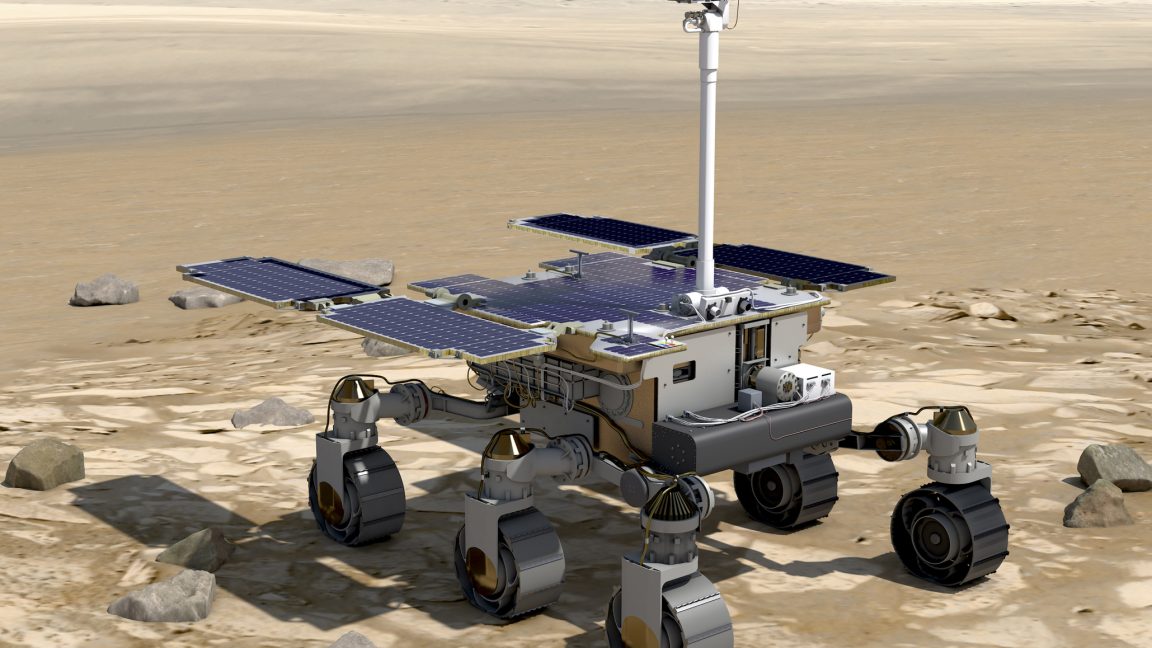
Oh, ExoMars, what a long, strange trip it has been. Are you ever going to go to space?
The ExoMars mission represents Europe's third attempt to land successfully on Mars, and at a cost of more than $1.3 billion. there is a lot riding on its success. But success is far from assured for a mission that has been whipsawed by geopolitical tensions, budget cuts, and an ever-changing architecture over the last 20 years.
The latest news, announced Sunday, is that Airbus will design and build the lander that will carry the ExoMars down to the surface of Mars. The mission is scheduled to launch no earlier than 2028 on a US rocket. But there have been so many twists and turns in the ExoMars story that it's very difficult to know what will ultimately happen.
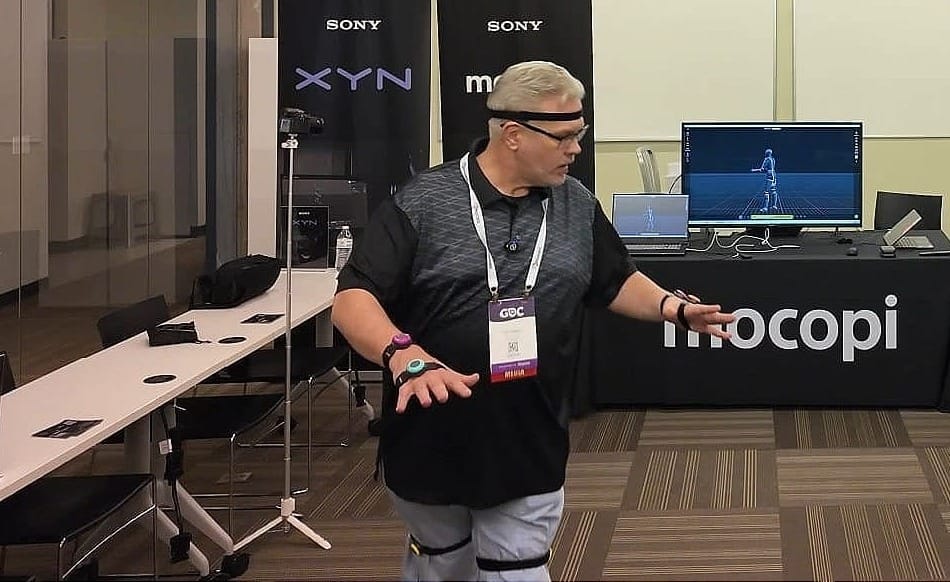
I went body-in with Sony's new mocopi Pro motion capture system with 12 points of body tracking at GDC 2025.
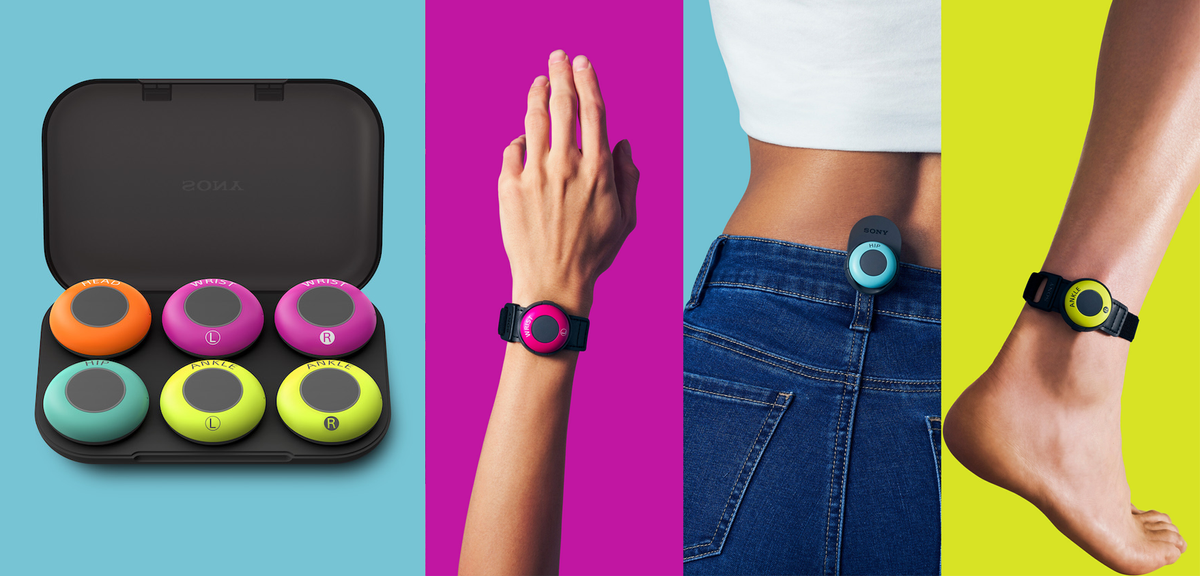
The mocopi Pro system from Sony aims to elevate its body tracking system beyond the six points of the base system by adding six more. It integrates with Sony's XYN Motion Studio, a motion capture pipeline intended for both professional production and VTubers.
That said, the other interesting use case for mocopi Pro is full body tracking for VR. VRChat and Resonite users who want to spend extraordinary amounts of time in VR want to bring their full bodies in with the highest possible fidelity, and so I suited up and put the system to the test at GDC.
For readers who might be unaware of what Sony's mocopi system is or does, these sensors attach to straps on the body to track movements in supported applications or games using the mocopi VR app on Steam, or for use with the XYN Motion Studio software and headset solution Sony recently revealed at CES 2025.
Announced in 2022 and released in 2023, Sony's mocopi sensors initially required a smartphone to operate with SteamVR. In a recent major update, the necessity for the smartphone was eliminated, allowing you to connect the trackers directly to a PC for full body tracking in compatible games and applications.
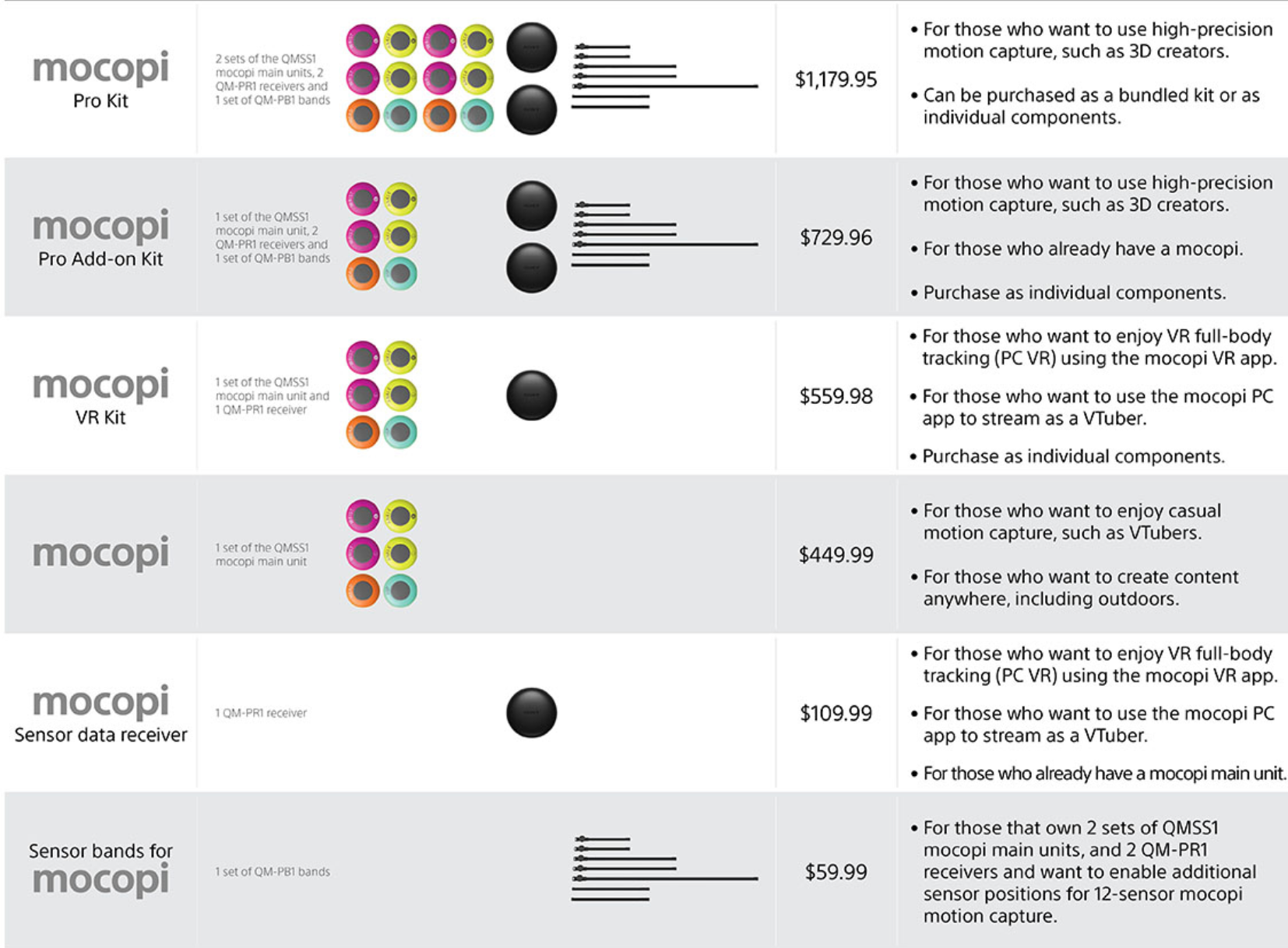
Mocopi is both modular and expandable. For newcomers wanting to experience full body tracking in applications like VRChat, the "VR Kit" priced at around $560 is their starting point for a direct PC connection.
This system offers six sensors, providing full-body tracking, which Sony says should be "good-enough" for most users, at least according to the representative at the demo session I attended. There's an add-on kit available for folks who bought the original mocopi system meant to connect through mobile devices priced around $730. Going from six to 12 potential tracking points should allow for better accuracy and more precise translation of body positions.
Testing The mocopi Sensors
During the hands-on demonstration, other participants opted for making simple motions such as waving their arms around or walking a few steps across the room. But I wanted to test the system more thoroughly.
0:00
/0:45
1×
Calibration and first test
I attempted army crawling, jump kicks, and even pretended to be a quarterback scrambling in the pocket trying to land the perfect touchdown pass.
0:00
/0:33
1×
Recalibration due to tracker movement
I saw the tracking system occasionally slip out of position during this aggressive testing. If the strap slips out of place in any way on my body, it seemed enough to confuse the system and trigger the need for a recalibration. That's a quick process, but one that could be annoying if you had to do it multiple times during a play session. I suspect that for high-intensity movements, mocopi Pro might need a more robust harnessing system to ensure reliable tracking.
Overall, though, I was impressed testing mocopi Pro, and it seemed to have solid performance to my eyes. Of course, incorporating Sony's software ecosystem into the workflow of a professional would be an entirely different question.
0:00
/0:58
1×
High-intensity testing.
After the demonstration, Sony provided us with a mocopi Pro review kit that I have sent off to our Editor-in-Chief, Ian Hamilton for further evaluation. Keep an eye on UploadVR.com for Ian's upcoming insights on how the mocopi Pro performs in his home.
We also talked about my experience with this system on our weekly VR Gamescast so if you missed it, you can see the replay here:
Over the past year, AI researchers have found that when AI chatbots such as ChatGPT find themselves unable to answer questions that satisfy users' requests, they tend to offer false answers. In a new study, as part of a program aimed at stopping chatbots from lying or making up answers, a research team added Chain of Thought (CoT) windows. These force the chatbot to explain its reasoning as it carries out each step on its path to finding a final answer to a query.
Une nouvelle version majeure de Babylon.js vient d’être publiée, confirmant l’ambition de devenir l’un des moteurs de rendu web les plus puissants et accessibles. Cette bibliothèque JavaScript open source, prisée des développeur·se·s pour la création d’expériences 3D dans le navigateur, promet des améliorations significatives en termes de performances et de rendu graphique.










 UploadVRDavid Heaney