A small number of Google Street View cars are recording more than photos of the road — they're also taking snapshots of the air quality around them. Aclima, a company that makes environmental sensors, announced this week that it's been working with Google to put air quality detectors on some of its cars. The sensors allow Google's vehicles to pick up information on carbon dioxide, methane, black carbon, particulate matter, and other pollutants on a block-by-block basis. "We hope this information will enable more people to be aware of how our cities live and breathe and join the dialogue on how to make improvements to air quality," Karin Tuxen-Bettman, a Google Earth Outreach program manager, says in a statement.
Amazon has been amassing computer vision expertise for a long time. And continues to do so. A LinkedIn search for computer vision jobs at the company currently returns more than 50 posts — mostly split across research and software engineering roles. But is there more than meets the eye to the ecommerce giant’s interest in technologies that can sense the world around them? Read More
Voxel8, the startup behind the first multi-material 3D electronics printer, has raised $12 million to bring its printers to the desks of engineers and designers everywhere. ARCH Venture Partners and Braemar Energy Ventures led the Series A round, joined by Autodesk, through its Spark Investment Fund, and In-Q-Tel. Read More
IBM today announced that it has acquired Compose, the Y Combinator-backed database-as-a-service startup originally known as MongoHQ. Financial terms of the acquisition were not disclosed. Compose had raised $6.4 million since it launched in 2010 — most of it in a Series A round in 2012 that was led by Trinity Ventures. And IBM spokesperson tells us that Compose, which has offices in… Read More
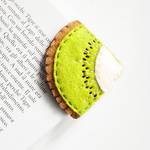
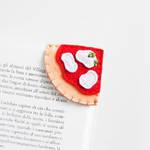
Une jeune étudiante italienne en sciences naturelles, Francesca, a imaginé de jolis petits marque-pages représentant des aliments et disponibles sur sa boutique en ligne. Ces petites créations s’insèrent parfaitement dans le coin de supérieur de la page du livre. Une manière acidulée de ne pas perdre le fil de votre lecture.
Cars are not usually thought of as living things, except in the movie Christine (and also the movie Cars). Still, it's hard not to see something a little anthropomorphic about them. Now Lexus has made automotive sentience even easier to imagine, by equipping a custom RC-F coupe with a human heartbeat.
Using simple imagery and Google’s layered artificial neural network, the deep stereo technology can create some relatively fluid footage of a scene using two or more pictures of the location and then “creating” what is missing in between to make everything look like it was actually filmed. Just look at the video and be amazed.
On Friday PayPal spun out from eBay. This morning its shares started trading openly. By noon the market was valuing the company at over $50 billion, roughly 43 percent more than eBay. Not bad considering that eBay acquired the payment company back in 2002 for just $1.5 billion.
PayPal is still a dominant force in payments on the web. More importantly, it has branched out into mobile payments with the acquisition of Braintree, one of the leading providers of back-end technology for in-app payments. Braintree, in turn, had acquired Venmo, one of the fastest-growing peer-to-peer payment apps in the US. At the start of this month PayPal also acquired Xoom, giving it a play in the booming world of international money transfers. Taken...
Les clients Norauto pourront, bientôt, se laisser installer un boîtier connecté dans leur auto. Le but : leur fournir des informations, des services, et les alerter de la prochaine révision. En ass [...]
Développé par le studio français Nyx, voici venir en cette fin de semaine Legions of Steel, adaptation sur PC et iPad du jeu de plateau du même nom paru au début des années 90 et que l’on peut comparer à un autre fameux jeu de plateau tactique de l’époque, Space Hulk, mais se déroulant ici […]
Les DRC nous l’ont montré, pour qu’un robot réussisse à identifier son environnement il faut de longs mois de préparation. Aujourd’hui, la plupart des robots possèdent suffisamment de capteurs pour être capables de reconnaître l’environnement dans lequel ils évoluent. Le prochain défi est de réussir à les faire se reconnaître.
Un premier test avait été effectué avec le robot Qbo. Après avoir placé le robot devant un miroir, son opérateur lui avait demandé qui était la personne en face de lui. Qbo n’avait pas su répondre. Toutefois, une fois que son opérateur lui a indiqué qu’il s’agissait de lui-même, Qbo a enregistré l’image qu’il voyait afin de s’en souvenir. Replacé devant un miroir, il a été capable de s’identifier en allumant la diode de son nez et en regardant si le nez du Qbo en face de lui s’illuminait aussi. Constatant que c’était le cas, Qbo a pu affirmer qu’il se trouvait devant un miroir. A l’Université de Yale, un autre test de ce type a démontré qu’un robot pouvait se reconnaître face à un miroir.
Un test mené par des roboticiens à l’institut polytechnique Rensselaer de New York a conduit un robot NAO à s’identifier lui-même, non pas grâce à un stimulus visuel, mais uniquement par la réflexion. Le test était une variante d’une énigme populaire dans laquelle un roi invite trois sages pour trouver un nouveau conseiller. Il place sur la tête de chacun un chapeau bleu ou blanc et les sages doivent trouver la couleur de leur couvre-chef sans pouvoir voir le leur. Le seul indice qu’ils aient est qu’il n’y a pas trois chapeaux blancs.
Dans notre cas, il s’agissait de trois NAO à qui l’on a expliqué que certains d’entre eux avaient reçu une pilule abrutissante les empêchant de parler. Selmer Bringsjord, le responsable du test, a ensuite demandé aux trois robots quelle pilule ils avaient reçu. Le seul capable de répondre a déclaré : “Je ne sais pas.” Puis il a semblé réfléchir quelques secondes, durant lesquelles il a été capable de reconnaître sa propre voix et donc d’en déduire que puisqu’il pouvait parler, cela signifiait qu’il n’avait pas reçu de pilule. Il s’est donc repris et a dit : “Pardon, je sais maintenant. J’ai pu prouver que je n’avais pas reçu de pilule abrutissante.”
Si ce test semble enfantin pour un humain, puisqu’un enfant est capable de savoir que son reflet dans un miroir n’est qu’une image de lui à partir de 12 à 24 mois, pour un robot, c’est une grande première. Afin de réussir le test, les robots devaient écouter et comprendre la question, puis entendre et identifier leur propre voix et enfin relier le fait de pouvoir parler à la première question posée.
Le studio Israélien Artori Design a inventé le Supershelf, un serre-livres ainsi qu’une tablette au design malin donnant chacun l’illusion d’un super-héros maintenant les livres par la force.
Stay connected to nature while trapped in the confines of your work cubicle by accenting your outfit with this wearable planter necklace. All day long you'll have a tiny soil-free plant growing while brightening up your look on a natural hemp fiber chain.
This is the first tutorial of a series in which I'll be focusing on encrypting your email. In this tutorial, I'll introduce the general concepts of encryption and how they can be used to secure and verify our emails. In the second tutorial, I'll guide you through installing encryption software on your computer and getting started sending your first messages.
We'll also explore encrypting browser-based email and strengthening the "web of trust", and then we'll switch topics a bit to encrypting your Internet activities with the use of a VPN. Finally, as part of the series on managing your digital assets after your death, we'll use what we've learned to create a secure cache of important information for your descendants in case of emergency.
Getting Started With Encryption
In this series, I'll refer repeatedly to a great resource set up by the Electronic Frontier Foundation (EFF) called The Surveillance Self-Defense Guide. You may also want to read one of their explainers, An Introduction to Public Key Cryptography and PGP, which this particular tutorial parallels. I've tried to make this tutorial a bit simpler to read.
Frankly, the architecture of our global email system isn't built for privacy or authentication. In fact, I'd argue it's fundamentally broken in ways that we need to overhaul for the modern digital communications age. Until then, the best way to protect our privacy and authenticate our communications is Pretty Good Privacy, also known as PGP.
Activist and technology expert Phil Zimmerman invented PGP in 1991. The U.S. government persecuted him for his work, and it's worth reading about his work and the history.
In this tutorial, I'm going to explain the basics of PGP and how you can use it to ensure the confidentiality of your communications in a surveillance society and also how to authenticate the identity of people you communicate with.
Keep in mind, I do participate in the discussions below. If you have a question or topic suggestion, please post a comment below. You can also follow me on Twitter @reifman or email me directly.
What Is Pretty Good Privacy (PGP)?
A System of Encryption With Paired Keys
PGP is a system of encryption that operates with a pair of keys that operate symmetrically. A pair of keys is referred to as a private key and a public key. People must keep their private key safe and secure at all times, not shared with anyone. However, they can share their public key on reputable public key exchanges and in person.
Typically, PGP users install some kind of commercial or open source encryption software compatible with the OpenPGP standard. GnuPG is a common implementation of OpenPGP. Some of the images I'm using in the tutorial are from the Free Software Foundation's GnuPG Email Self Defense infographic.
Sending an Encrypted Message
You can use your PGP software to send encrypted messages. Your software will encrypt the outbound message with your recipient's public key.
The message itself will bounce around the Internet as gibberish, indecipherable to anyone without the recipient's private key.
Any surveillance authority intercepting the message will be unable to decipher its contents.
When your recipient receives the message gibberish, they will use their PGP software with their private key and your public key to decrypt the message.
A Few Very Important Things
Protect Your Private Key With a Password
If you allow your private key to fall into the wrong hands, then other people will be able to impersonate you by sending encrypted messages on your behalf. They'll also be able to read confidential messages sent to you with encryption.
Your private key could be stolen without you realizing it. For example, if malware is placed on your computer, criminals or government spies could obtain it illicitly. You'd never know.
It's very important to protect your private key with an incredibly strong password. When Edward Snowden types in his password under a blanket in Citizenfour, he's protecting his private key password from possible video surveillance.
If your private key, perhaps stored on a laptop or thumb drive, is stolen, your password will slow perpetrators from accessing it. But ultimately, they will be able to access it.
Notify Others If Your Private Key Is Compromised
If you ever discover your private key has been compromised, you can notify others to preserve the web of trust, which we'll discuss further below.
PGP Doesn't Conceal Who You Know
PGP won't encrypt the subject line or To: address line of encrypted messages, sometimes called the message envelope. Therefore, PGP won't conceal who you know unless you have a way to exchange anonymous public keys with people using anonymous email addresses who only access their email using Tor to disguise their IP address.
What Is a Digital Signature?
Digital Signatures can authenticate that a message was sent by the person holding the sender's private key and verify that the message hasn't been tampered with.
Typically, this is done by generating a cryptographic hash of the original message and then encrypting the hash with the sender's private key (the reverse of what is done to encrypt the message body). This is called signing the message. The image below is from Wikipedia.
Even minute changes to the message radically alter the hash.
When the recipient receives the message, they decrypt the hash with the sender's public key and verify the result. If the hash is correct, it proves that the person holding the sender's private key sent the message. If the hash is incorrect, then the message has been tampered with—or it wasn't sent by the alleged sender.
What Is the Web of Trust?
Your ability to trust PGP relies on the trustworthiness of the public key you received from the sender. For example, if I emailed you my public key—and the NSA intercepted the message and replaced it with their public key—they could begin sending encrypted messages to you that you would believe are from me. Or, if you've been exchanging encrypted messages with your friend and their private key has been compromised, other people could be reading your private messages.
This could be very significant if you're a spy or an activist.
The trustworthiness of keys is known as the Web of Trust.
If you read about PGP, you'll see mentioned mythological "key parties" (probably organized by Jake Applebaum). You'll likely never be invited to one. (I've actually met Jake a couple of times but I'm not cool enough to be invited to his key parties.)
Most of us little people use key servers to exchange our keys. Users we trust may digitally sign the public keys of other people we wish to message, and this allows us to have some certainty of the validity of specific public keys.
Ultimately, the only way to be sure you have someone's actual public key is to exchange it with them in person.
However, there are some interesting new services that are trying to improve the web of trust, which I'll review in upcoming episodes.
What's Next?
I hope you're feeling inspired to secure your email. Coming up in the next tutorial, I'll guide you through installing encryption software on your computer, creating your first key pair, and getting started sending your first secure messages.
Please feel free to post your questions and comments below. You can also reach me on Twitter @reifman or email me directly. You can find my other tutorials by browsing my Tuts+ instructor page.
In the world of whistleblowers, any packet of revealed identifying information means game over. ProxyHam, a $200 WiFi router aimed at those seeking the utmost in anonymity, promised to mask users’ IP addresses and place their geographic coordinates miles away from their actual locations. Plans to create the device, set to be unveiled at August’s Las Vegas Def Con convention,… Read More
Iron deficiency affects nearly 3.5 billion people worldwide. The condition can lead to anaemia, weakness, impaired cognitive ability and even death, but now a reusable supplement — in the form of a small black fish — could change all that. The Lucky Iron Fish can be added to every cooked meal and will release a small amount of iron with each use, enabling families to get a reliable, daily iron intake.
The affordable solution is already being implemented in Cambodia, where almost 50 percent of women and children suffer from anaemia caused predominantly by insufficient iron intake. The Lucky Iron Fish was created by Canadian Dr Charles who was inspired by reports that cooking in cast iron pots increased the iron content of food. It is shaped like a fish since this is the Cambodian symbol of luck, and has been trialled on hundreds of villagers — nearly half were no longer anaemic after twelve months. To use, the cook simply add the specially formulated iron ingot to the cooking pot, which causes it to release an average of 70 µg/g of iron — providing the diners with 75 percent of their recommended daily requirement. Each fish lasts up to five years. Supporters can purchase one Lucky Iron Fish for themselves for USD 25 and the organization will give one to a family in Cambodia.
Of course, there may be unknown negative health effects in consuming iron this way, but each batch undergoes extensive testing to ensure that the ingots only release quantities of iron that can be absorbed by the body, and won’t cause toxicity. Are there other necessary vitamins and minerals which could be consumed in similar ways?
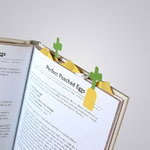
Après le très créatif crayon arc-en-ciel, nous vous présentons les marque-pages ludiques de Duncan Shotton. Des autocollants très originaux développés en plusieurs kits correspondant à une thématique et qui permettent de composer des petits paysages sur le bord des livres tout en marquant les pages de son choix.
I have been waiting and waiting and waiting for the age of home automation to arrive for most of my life. I took the first step towards a smart home about 8 years ago when I installed a handful of Z-Wave light switches and sensors. I’ve been using Sonos speakers to stream audio into every room of my house for about six years. I’ve watched with unyielding interest over the last year as Google, Apple, Microsoft, and Samsung all embraced home automation, but I’ve only recently discovered the product that will take it mainstream: Amazon’s Echo — a Trojan Horse that can also order Trojans.
Echo’s ability to control smart gear in the home has expanded quickly and broadly since launch. It now supports Hue and WeMo devices, with IFTTT scripting...
The US might have just beaten Japan at soccer in the Women's World Cup, but the Japanese are already moving onto another great sport: giant robot fighting. Japanese company Suidobashi Heavy Industry has accepted the challenge from US rival MegaBots Inc. to a giant robot duel, with Suidobashi founder Kogoro Kurata saying: "Yeah, I'll fight. Absolutely." Kurata, who designed and built Suidobashi's 4-ton mech robot, said: "We can't let another country win this. Giant robots are Japanese culture."
La plupart des outils de management et des principes d’organisation, pensés et recommandés depuis des décennies, se retournent en ce moment contre nous. Lorsque c’est le prestigieux Boston Consulting Group (BCG) -- par la voix d’Yves Morieux[1] -- qui le dit, çà mérite de tendre l’oreille.
Tout le monde est d’accord, les changements qu’induit la révolution numérique, et le rythme rapide auquel ils se produisent, sont tels qu’il y a urgence à repenser les principes d’organisation qui prévalent dans nos entreprises, ont estimé les experts, qui ont planché il y a quelques jours à Paris, lors de la 8ème conférence annuelle de l’USI.
Car la plupart des grandes firmes continuent de travailler globalement comme par le passé, constate Aaron Dignan, en lançant la conférence. Il faut admettre que nous sommes entrés dans un monde plus complexe et plus incertain qu’il ne l’a jamais été. « Il est impossible de prévoir ce qui vient. », prévient le CEO d’Undercurrent, cabinet de conseil en organisation et stratégie à New York.
En cela, le mathématicien français Cédric Villani qui se demande ce qui fait naître les idées, ne le dément pas, citant Poincaré à loisir avec facétie sur l’évolution des sciences : « Je crois que l’on obtiendra des résultats étonnants. C’est justement pour cela que je ne puis rien vous en dire. Car, si je les prévoyais, que resterait-il d’étonnant ?»
Dignan enchaîne : aux Etats Unis, 68% des salariés des entreprises se déclarent non investis. Au rythme où vont les choses, 50% des plus grosses entreprises changeront tous les 5 ans. Ce serait un « crime » de ne pas adapter nos organisations à ce nouveau contexte.
« Personne n’a de théorie », poursuit il.
Alors, où trouver l’inspiration ? Dans l’observation des fourmis, par exemple ! La reine ne fait que procréer, c’est la directrice des Ressources Humaines. Lorsque le soleil est trop présent, les fourmis ne travaillent pas et si l’une est défaillante, une autre la remplace instantanément. Recrutement, polyvalence, adaptabilité, tels sont les concepts à méditer…
6 évolutions fondamentales
Mais parce qu’une keynote reste une keynote, Dignan nous propose de repartir avec 6 évolutions fondamentales, et parfois disruptives, à garder en tête au moment de penser l’organisation de demain :
Arrêter de se focaliser sur le profit, mais se recentrer sur le but, ce qui donne du sens. Ce que l’on fait a-t-il du sens pour les gens ?
Plus communément admis : bannir les silos et privilégier les réseaux. Est ce qu’en agissant, on profite des leviers et on fait grandir les réseaux de gens et de technologie ?
Ne pas passer trop de temps à planifier mais être attentif à « l’émergence ». Faire des plans n’a plus de sens au regard du rythme des changements en cours. Etre attentif à ce qui émerge, c’est se fier aux données, renoncer à avoir trop de conviction : « one day of data is better than one year of planning ». Pour cela, il faut tester et apprendre. L’empirisme encore et toujours, Hume contre Descartes.
Dans le même esprit, plus question de trop s’intéresser à l’efficience. Il s’agit de valoriser l’adaptabilité. Est ce qu’on ne cherche pas trop à organiser et contrôler les choses pour protéger nos acquis, nos statuts ?
Fi du contrôle a posteriori qui ne produit que de la frustration, vive « l’empowerment ». Qu’est ce que l’autorité et à quoi cela sert il ?
Enfin, l’ère du secret a fait long feu. Il s’agit maintenant d’agir dans la transparence.
On comprend qu’il y a du pain sur la planche de la plupart des grandes entreprises. A défaut d’un exemple applicable immédiatement, Aaron Dignan rapporte comme un point de fuite et de réflexion que l’entreprise Valve, studio US de développement de jeux vidéo n’inscrit sur le descriptif de poste de ses nouvelles recrues que deux choses :
find other great people like you
go find something to do
« Passion + Purpose = Win »
Au chapitre de « l’empowerment », Mark Randall, Chief Strategist, VP of creativity chez Adobe , vient présenter sa « boîte rouge », un processus créé pour stimuler l’innovation produit. Tous les collaborateurs (sans exception, sans choix a priori) reçoivent une boîte rouge qui contient 1.000 dollars, un crédit chez Starbucks pour consommer café et céréales et des instructions pour imaginer une évolution des produits de la maison.
Pas de contrôle des dépenses, pas même de justificatif de frais, pas de friction et… un énorme taux d’échec revendiqué. Au final, 92% des collaborateurs passeront la première étape des instructions qui en comptent six, celle de la motivation et 6% parviendront à la dernière. Et après ? Une boîte bleue. 23 d’entre elles furent distribuées et donnèrent lieu à des projets qui changèrent les produits d’Abode. Et Randall de conclure : « Passion + Purpose = Win »
Moins disruptif, mais aligné sur les mêmes concepts, Gilles Babinet, entrepreneur et Digital Champion de la France à Bruxelles, y va de ses 4 fondements pour entamer la transformation digitale des entreprises :
D’abord, reconnaît il, si le top management n’est pas intimement convaincu de ce que change le numérique, s’il ne ressent pas cela comme un profond changement de la donne, çà n’arrivera pas. Car ce n’est pas une partie de plaisir que de s’attaquer aux baronnies et autres modes opératoires cristallisés dans l’histoire.
Ensuite, former le personnel « du sol au plafond » est indispensable. Il faut expliquer, un gigantesque travail d’acculturation est à mettre en œuvre. Et ici pas de miracle, il est long.
C’est aussi une gestion double de la temporalité justement. Il s’agit de mener en parallèle des plans d’évolution des systèmes et des process et de réaliser quelques preuves de succès rapides.
Enfin, il faut penser le futur ouvert, il s’agit de construire une culture de l’ouverture. Et de recommander l’exposition par l’entreprise de ses APIs. Dit autrement, de bénéficier de la richesse de la multitude.
Tous « responsive » !
A des degrés divers, tous les intervenants sont d’accord : l’entreprise de demain, comme le design aujourd’hui, sera « responsive », c’est à dire qu’elle mettra en place ce qu’il faut pour évoluer en temps réel. La désormais fameuse méthode agile appliquée à la théorie des organisations. Pour cela, il faut accepter un peu de flou et de redondance. Tout un programme.
[1] Yves Morieux est Senior Partner et Managing Director au Boston Consulting Group
For all the horrible possible outcomes of killer robots on the battlefield, we are, apparently, quite happy to get behind non-killer robots duking it out in stadiums. Earlier this week, US company and giant robot maker MegaBots Inc. challenged its Japanese rivals Suidobashi Heavy Industry to a duel via YouTube. "Suidobashi. You have a giant robot, we have a giant robot," announces one of MegaBots' cape-wearing patriots in the video. "You know what needs to happen."
MegaBots has already tried to crowdfund its robot tournament
The challenge appears to be the latest marketing stunt from MegaBots, which previously tried to raise $1.8 million on Kickstarter to create the "sport of the future," otherwise known as giant robot fighting...
A Norwegian company wants to help you get every drop of mayo out of the bottle. It’s licensing a non-stick coating from a US company that already works with glue manufacturers.
The US firm, LiquiGlide, says it can coat the inside of food containers in a totally safe way. It customizes its coating manufacture process for individual uses and says in this case it could make the coating entirely from food materials, thus meeting health and safety standards.
According to LiquiGlide, its product isn’t simply a super-hydrophobic material that creates a cushion of air between itself and a product. Instead it’s a liquid-impregnated surface. In effect it’s a flat surface with a raised matrix (looking a little like a city grid from above). The matrix is designed so that a liquid not only perfectly fills the gaps between the raised bumps but is held permanently in place.
The result is an overall surface that’s consistently slippery and allows the relevant liquid in the container to pass smoothly. As well as using custom materials, the company also adjusts the structure to give a custom level of slipperiness: that is, controlling the speed at which the liquid in the container passes by.
Earlier this year the company licensed its technology to glue manufacturer Elmers with the aim of making it easier to get glue out of the container. Now it’s done a deal with Norwegian food manufacturer Orkla. The initial deal covers mayonnaise products across Northern Europe.
The theory is that as well as customers feeling they get a better deal by not wasting any of the product, it could boost recycling, either by customers reusing products at home, or by making it easier for waste management products to reclaim the container without having to deal with gunk on an epic scale.
LiquiGlide is selling it as a boost for the manufacturers as well: it argues that customers who can get the product out easier will finish it off quicker and buy replacements, rather than give up out of frustration but be unwilling to make a new purchase while there’s still some left in the bottle.
Of course, while the logic of the coating makes sense, and it may well work perfectly with mayo, here in the UK shoppers will be forgiven for wondering how it will cope with Marmite, a yeast extract spread (similar to Australia’s Vegemite) notorious for the last few servings being irretrievable.
Technology that can wirelessly power our devices on the go could change our world. Imagine never having to plug in your cell phone again, or technology that continuously keeps your electronic car battery running. According to Energous Corporation, that day is just around the corner. Energous’ WattUp is a wireless charger for electronic devices. It can charge your cell phone and… Read More
L’artiste parisien Nairone, bien connu pour ses compositions détaillées et colorées a été appelé par la marque Nutella pour styliser le célèbre pot de pâte à tartiner. Un projet nommé « L’Atelier », décliné en trois illustrations typographiques qui seront appliquées au packaging. À découvrir en images.

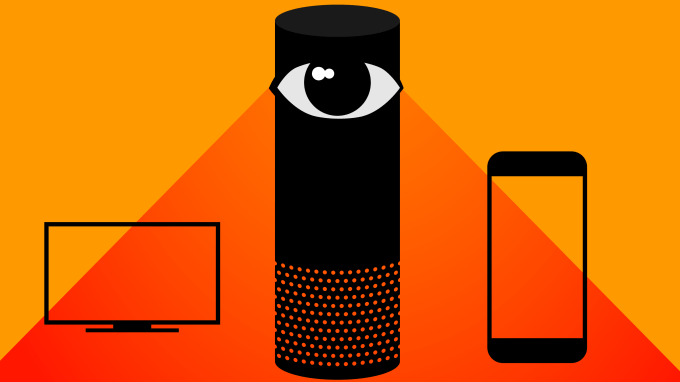 Amazon has been amassing computer vision expertise for a long time. And continues to do so. A LinkedIn search for computer vision jobs at the company currently returns more than 50 posts — mostly split across research and software engineering roles. But is there more than meets the eye to the ecommerce giant’s interest in technologies that can sense the world around them?
 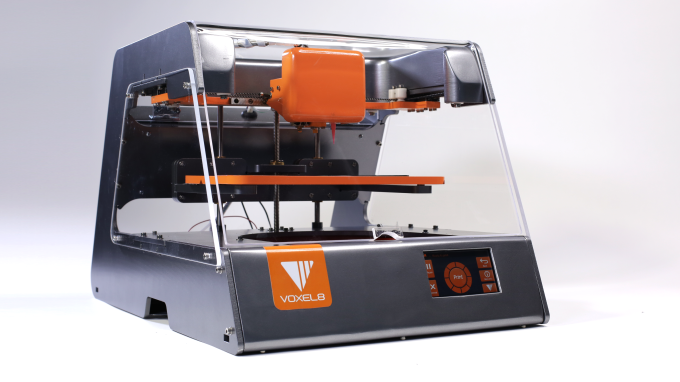 Voxel8, the startup behind the first multi-material 3D electronics printer, has raised $12 million to bring its printers to the desks of engineers and designers everywhere. ARCH Venture Partners and Braemar Energy Ventures led the Series A round, joined by Autodesk, through its Spark Investment Fund, and In-Q-Tel.
  IBM today announced that it has acquired Compose, the Y Combinator-backed database-as-a-service startup originally known as MongoHQ. Financial terms of the acquisition were not disclosed. Compose had raised $6.4 million since it launched in 2010 — most of it in a Series A round in 2012 that was led by Trinity Ventures. And IBM spokesperson tells us that Compose, which has offices in…



















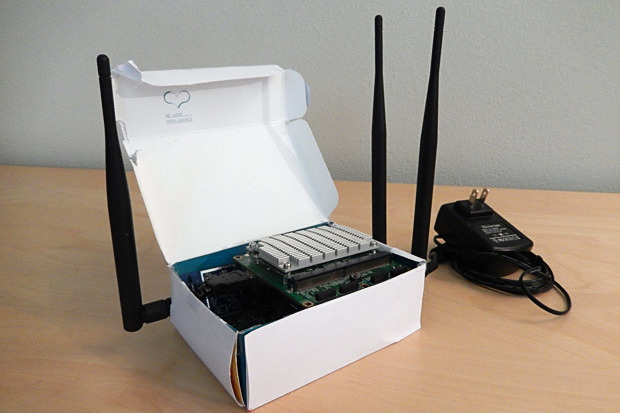 In the world of whistleblowers, any packet of revealed identifying information means game over. ProxyHam, a $200 WiFi router aimed at those seeking the utmost in anonymity, promised to mask users’ IP addresses and place their geographic coordinates miles away from their actual locations. Plans to create the device, set to be unveiled at August’s Las Vegas Def Con convention,…















 Technology that can wirelessly power our devices on the go could change our world. Imagine never having to plug in your cell phone again, or technology that continuously keeps your electronic car battery running. According to Energous Corporation, that day is just around the corner. Energous’ WattUp is a wireless charger for electronic devices. It can charge your cell phone and…


