The Competition Authority in Brazil (CADE) convicted om March 20th the country's six major collecting societies and their central office (ECAD) - responsible for the collection of music royalties for public performance in Brazil - of formation of cartel and abuse of dominant position in fixing prices. According CADE, the Ecad and its associations not only organized to abusively fix prices, but also created barriers of entry for new associations to join the entity.
All entities will have to pay a fine of R$38 million (approximately US$ 20 million) and will have to reorganize the whole collection system, both by offering arrangements beyond the "blanket license" model, the only license ECAD and their associations made available for the performance of music, and by allowing each association to compete for different prices.
The rapporteur of the Case, Elvino Mendonça, said after the conviction: "The behavior of cartel is visible. The current collection system prevents all forms of competition. ECAD and its associations abused their market power and fixed prices. The evidence is abundant."
This week your photographic challenge is to shoot and share a Silhouette image.
Silhouettes are images that often have a lot of drama and visual punch – yet they are not that hard to take. Here’s how to photograph stunning silhouettes.
If you tag your photos on Flickr, Instagram, Twitter or other sites with Tagging tag them as #DPSSILHOUETTE to help others find them. Linking back to this page might also help others know what you’re doing so that they can share in the fun.
Also – don’t forget to check out some of the images posted in our last challenge – Delicate challenge where there were some great images submitted.
Occasionally, if you're troubleshooting your PC or installing a new operating system, you'll have to "boot it from a disc" or USB flash drive. Here's what that means, and how to do it.
When you press the power button on your computer, it boots up from its internal hard drive, where your operating system (usually Windows, OS X, or Linux) is stored. But sometimes, you need to boot into something different. Maybe you need to boot from your Windows installation disc to reinstall Windows, or perhaps you need to boot from a system rescue disc to solve a problem with your machine. When you're told to boot from a CD or USB drive, here's what you need to do.
On a Windows PC
Every Windows PC is different, but once you get into your system's boot menu you should be able to find what you're looking for. To boot from a CD or USB drive:
Restart your computer and wait for that first screen to pop up. Often, it'll say something like "Press F12 to Choose Boot Device" somewhere on the screen. Press that key now.
Give it a moment to continue booting, and you should see a menu pop up with a list of choices on it. Highlight your CD or USB drive and press Enter.
Alternatively, you can set your computer to always check for a bootable CD or USB drive. That way, when you have one inserted, it'll boot from it automatically, and when you don't, it'll head into your regular operating system. To set this up, follow these instructions:
Restart your computer and watch for the first screen that shows up when you boot. You should see something that says "Press DEL to enter setup," or something similar. Press the noted key on your keyboard and wait for setup to start.
You should see a new screen pop up, called your BIOS. This is where you set a lot of low-level settings for your computer. Look through the options (being careful not to change anything) for a setting called "Boot Device," "Boot Order," or something similar. Select that option.
From the menu that pops up, choose your computer's disc drive and press Enter. If you're trying to boot from a USB drive, choose USB-HDD instead and press Enter. Depending on your BIOS, you may need to use the Page Up and Page Down keys to move your selection to the top of a list, instead.
Exit out of your BIOS, saving your changes. Usually, this option is under "Exit" on the main menu, or available via a keyboard shortcut listed somewhere on your screen.
Your computer should reboot. Make sure your CD or USB drive is in your computer. If you're prompted to "Press any key to boot from CD/DVD," do so. Your computer should boot into the CD or USB drive instead of your normal operating system.
From there, you can follow the instructions on-screen to install Windows, troubleshoot issues, or do whatever else it is you need to do. Image by TechnoGeek95.
On a Mac
Booting from CD or USB is very, very easy on a Mac. All you need to do is:
Reboot your computer. When the white screen first shows up and you hear the startup chime, press and hold the "Option" key.
You should see a list of drives show up. On the right, you'll find your CD or USB drive, listed with its name under it. Use your arrow keys or your mouse to highlight that drive, then press Enter or click on the arrow below it.
From there, your computer will boot into the CD or USB drive instead of OS X, and you can do whatever it is you need to do following the instructions on-screen.
It's a pretty simple process once you get used to it, and it can be immensely useful if you're taking the maintenance of your computer into your own hands.
Emailable Tech Support is a series of easy-to-share guides for the less tech savvy people in your life. Got a beginner tech support question you constantly answer? Let us know at tips@lifehacker.com. Remember, when you're just starting out computing, there's very little that's too basic to learn.
There's a little over a week left until Game of Thrones season 3 arrives on HBO and Google wants to make sure you're entirely prepared. The trailer below depicts the machinations of a plot to overthrow enemies, mercilessly and without hesitation. We won't spoil it for you, so take a look at and see if you can guess who's using the Play Store to take over Westeros (if not, the end will spoil it for you plenty).
While, unfortunately, the show itself is not on the Play Store, Google's quick to point out that you can get all kinds of peripheral or related content, including kick-ass soundtracks, ambitious literature, fantasy games, and movies about dragons.
The BBC News reader on Android got an update today that should please the pixel poppers among the audience. The app has been optimized to take advantage of Super Mega Ultra dense displays like on the Xperia Z and Droid DNA (to say nothing of the upcoming HTC One and Galaxy S 4). A pile of bugs have been squashed in the new update as well.
Here's the full change log:
What's in this version:
This is a major update of our app, with improved performance and image quality. The app is now optimised across different screen sizes and we've also fixed a number of bugs.
Welcome back to Android Gaming Weekly, our weekly recap to focus on new releases. We still plan to cover upcoming releases and games we’re playing, but this column is dedicated to new games you can install and start playing right now. Check out our top picks and let us know if you have any...
We might look back on 2013 as the year when wearable computing came in vogue. Apple is reportedly working on a smartwatch. Samsung too. The rumor mill now tells us that Google is working on the concept of a smartwatch and has been for some time.
Google apparently gave the future of mobile technology a thorough look several years ago, and seems to have decided that wearable computing might well be the next hot area. The search giant has made waves with its Google Glasses and revealed a talking smart shoe during South By Southwest Interactive earlier this month. A smartwatch would fit perfectly into Google’s coalescing vision of wearable computing.
From the abstract to Google’s patent, here is its concept for what a smartwatch might entail.
A smart-watch can include a wristband, a base, and a flip up portion. The base can be coupled to the wristband and include a housing, a processor, a wireless transceiver, and a tactile user interface. The wireless transceiver can be configured to connect to a wireless network. The tactile user interface can be configured to provide interaction between a user and the smart-watch. The flip up portion can be displaceable between an open position exposing the base and a closed position concealing the base. Further, the flip up portion can include: a top display exposed when the flip up portion is in the closed position, and an inside display opposite the top display. The inside display can be concealed when the flip up portion is in the closed position and be exposed when the flip up portion is in the open position.
The patent description gives us a better idea on what a smartwatch might entail. It would have its own wireless connectivity (not using a smartphone’s connection, like the Pebble smartwatch does). It would have a touchscreen. It would have its own processor, likely to run the Android operating system.
The language and the “flip up portion” is a little confusing. From the pictures in the patent filing, it looks like the watch could have a flip top that could be used as an augmented reality layer, not unlike how Google employs augmented reality in Google Glass.
The race for the smartwatch is truly on. We have three great companies in Apple, Google and Samsung looking to push the bounds of mobile innovation and cross it with wearable computing. In the end, it looks like we as consumers become the winners.
Here are several of Google's smartwatch diagrams from its patent:
Perspective view of the smart watch, with a flip-up portion in the closed position
Perspective view of the smart watch with a flip-up portion in the open position
Perspective view of the smart watch in a "first application" (apparently real-time price and health-benefit comparison of coffee drinks)
Perspective view of the smart watch in a "second application" (apparently real-time urban navigation)
In January 2012 it was revealed that the United States, tired with Spain’s apparent lack of protection for intellectual property, had threatened to put the European country on a trade blacklist.
Four months later Spain introduced the so-called Sinde Law which was designed to offer greater protections for rightsholders. It included a provision to close infringing sites but to date that has never been used.
“More than ever, websites providing or linking to illegal content can be secure in the knowledge that takedown measures are nonexistent and result in no consequences,” the international Intellectual Property Alliance complained last year.
However, all that could be about to change. Today the Spanish Government unveiled its plans for amendments to its copyright law that will excite copyright holders eager for protection. During a press conference Culture Minister José Ignacio Wert said that the reforms have three objectives.
The first, with a nod to the SGAE scandal in 2011, is to ensure that content rights management entities operate with “greater transparency” than they did in the past, with fines being levied if irregularities are found.
The second objective is to crack down on those who facilitate “large-scale” downloading of movies, music, TV shows and other cultural content.
Finally there is to be a review of the right to make private copies, for which rightsholders are currently compensated through a levy on blank media. As we will see, objectives two and three are linked.
In respect of piracy, the reforms aim to boost the powers of the Comisión de Propiedad Intelectual (Copyright Commission). The draft, known as ‘Lassalle Law’ after Secretary of State for Culture Jose Maria Lassalle, envisions the Commission obtaining new power to deal with infringement.
Sites will be required to remove wide ranges of infringing content on request, such as that from a particular rightsholder or artist, without having to deal with each instance individually as is the case today. Failure to comply will be costly, with penalties of up to 300,000 euros ($388,400) for sites that repeatedly fail to remove illicit content.
“This is about putting in measures to prevent recurrence,” said Culture Minister Wert, who went on to clarify that search engines such as Google, that may unwittingly link to content but comply with takedown requests, would be exempt.
Further augmenting the tools available, the draft sees the Commission being empowered to force companies to remove their advertising from illicit sites. In line with moves already underway in the United States and elsewhere in Europe, payment processors will also be forced to withdraw their services.
Finally, the amendments to the right to make private copies will be of real interest to users of file-sharing networks such as BitTorrent and eD2K. Currently Internet users aren’t prosecuted since their downloads are covered by a levy on blank media, but the draft envisions these freedoms being removed – and then some.
The reforms see the right to private copying only covering legally obtained media, meaning that in theory file-sharers could be prosecuted for their downloads from unauthorized sources. But that’s not all. Even though the blank media levy will be removed, compensation will still be paid to rightsholders. However, in future it will be the general Spanish tax-payer footing the bill, rather than just those doing the copying.
The various challengers for the Iron Throne of Westeros will be back on our screens next month when Game Of Thrones returns. But with the huge success of the show, there’s clearly room for more Thrones action, and given the expansive scope of George R.R. Martin’s universe, plenty of possibilities for new stories. Now, asked by IGN about prequel rumblings at the Season Three premiere in Los Angeles, Martin has admitted that he’s been considering the idea.
Right now, it’s all just that: thoughts and conversations with the HBO brass. But Martin, who recently signed a deal to develop other shows for the channel, has clearly also targeted what he thinks might make a good spin-off, bringing up the Dunk and Egg series of novellas.
“I have been writing for a number of years a series of novellas set in the same world, the world of Westeros, but a hundred years earlier, about two characters called Dunk and Egg,” Martin tells IGN. “And I published three of those novellas, The Hedge Knight, The Sworn Sword, and The Mystery Knight, and I have in mind about nine or ten more novellas about the adventures of Dunk and Egg.
“So we have been playing with the idea of doing those as prequels. They would be prequels, in a sense, they’re a hundred years earlier but in the same world. They’re somewhat lighter in tone than the main series, a little more adventurous. But my fans love them and I love the two characters too, and it all ties into Westeros history.”
Dunk is Ser Duncan the Tall, a legendary figure in the Kingsguard before the time of the Song Of Ice And Fire, while Egg is a nickname for Aegon V Targaryen, a prince destined to become king of Westeros.
Of course, thinking up the ideas is one thing but getting them made is another matter, especially since the production of just 10 episodes a season on the regular show is a costly, demanding business. And the path for any prequel must be trod carefully, lest spoilers about the current series slip out. But who wouldn’t want to see more Thrones goodness?
HTC’s new flagship smartphone, the HTC One, will go on sale in the U.K., Germany and the company’s home market of Taiwan next week, HTC has confirmed today. The rollout will then ramp up “across Europe”, North America and “most of Asia-Pacific” before the end of the April.
The company had previously said the handset would start rolling out to customers “from mid-March”.
A HTC spokeswoman provided the following statement: “HTC has seen unprecedented demand for and interest in the new HTC One, and the care taken to design and build it is evidenced in early reviews. The new HTC One will roll out in the UK, Germany and Taiwan next week and across Europe, North America and most of Asia-Pacific before the end of April. We appreciate our customers’ patience, and believe that once they have the phone in their hands they will agree that it has been worth the wait.”
The One has a 4.7-inch 1080p screen — putting it close in screen size to ‘phablet’ territory — which is topped and tailed with aluminium trim. Inside it’s powered by one of Qualcomm’s new quad-core Snapdragon 600 chipsets, clocked at 1.6GHz, and also packs in 2GB of RAM.
In looks the One resembles BlackBerry’s Z10, and that’s not the only similarity between the two companies at this point. Both have a lot riding on their respective flagships as rivals have gobbled up huge chunks of the smartphone market.
HTC needs the One to fly, having struggled to make an impact in an Android space dominated by Samsung’s Galaxy series of devices. Earlier this month the company reported its lowest sales since January 2010. Sales for the month of February fell by nearly 44% to 11.37 billion Taiwan dollars ($384 million). But with falling revenues, HTC has fewer resources to marshal in its fight with Samsung — perhaps explaining the One’s staggered rollout — making it all the more important it gets a hit with the device.
Enders Analysis analyst Benedict Evans noted recently that HTC has now “given up every penny of revenue growth it picked up from Android” — illustrating the rise and fall on the following graph:
Evans added that while the HTC One “is a very nice phone” in the current highly competitive handset market nice hardware is ” insufficient to compete”. HTC will be hoping it can prove him wrong.
Apple has made a tweak to the way it shows that free apps that have in-app purchases, the Guardian noted today. The new notice appears under the price bar and the app icon in app listings on iTunes on the desktop, though it doesn’t yet appear in the mobile App Store or on the web-based iTunes application pages. The change comes after a number of high-profile complaints re: accidental spending on the App Store.
$2,500 in in-app purchases in 15 minutes: that’s how much a single five-year old boy managed to spend via in-app purchases in a recent incident in the U.K. Sarah argued in a post following that incident that Apple needed to implement a “Kid Mode” to prevent this kind of thing from happening. The new label is hardly that, but it is a tool that should increase awareness about exactly what parents are getting when they download what looks like an otherwise free, kid-focused application for iPhone or iPad.
The fact is that a huge chunk of App Store revenue is now being driven by in-app purchases; you have to scroll past a lot of apps to find one that charges for the actual app itself in the Top Grossing section of the App Store, and out of the top 100, less than 20 percent are paid apps. Freemium is big business on the App Store, with in-app purchases accounting for around 39 percent of app spending as of last January according to IHS. A lot of these titles are particularly oriented towards a younger demographic, too, which makes them susceptible to the kind of incident described above.
For developers, increased restrictions and additional friction between customers and in-app purchases is obviously not a desirable outcome, and that means Apple likewise probably isn’t crazy about the idea. Adding a more obvious notice about the presence of in-app purchases in titles is a good middle ground between enforcing some kind of restrictions that potentially inhibit revenue-generating capabilities, and raising awareness about when there’s potential for accidental spending. It’s a small thing, but a helpful one, and hopefully the feature will make its way out to mobile and web app listings, too. I contacted Apple to find out if that’s in the cards and will update with their response.
Where are the users headed following news of Google Reader’s shutdown? To Feedly, it seems. We already heard the company announce it had passed half a million new users, but more importantly, Feedly is now winning on mobile, too. According to new U.S. App Store and Google Play data, Feedly is leaving competitors like NewsBlur and Reeder far behind. Even though Google Reader will remain for a few months more, Feedly became the No. 1 news app across all three top mobile platforms (iPhone, iPad and Android) this week. It even climbed into the “Top Overall” section within all three stores.
This data is current as of mid-week. Today, Reuters moved up on iOS to bump Feedly to No. 2 on iPad, and No. 4 on iPhone. On Android it’s still No. 1.
Also, the data is U.S.-only, so it doesn’t present a complete view of the situation. But it’s notable as to where the Reader-replacement race stands now in one of Google Reader’s top regions.
Ten days prior to the Reader announcement, the average daily downloads for the Apple App Store for Feedly were around 1,200 to 1,300, according to app analytics firm Distimo. Since the news broke, Feedly downloads have increased more than tenfold to over 16,000 per day, on average.
Competitor NewsBlur, which also has a mobile client, is currently generating 1,000 to 2,000 downloads per day since the news broke – Feedly’s pre-Reader shutdown levels, basically.
It’s worth noting that Feedly has been at the game longer, and has been preparing in advance for the end of Reader. It has a transition plan in place already. NewsBlur, admirably, is a one-man shop. It’s inspiring to watch Samuel Clay scale that thing on his own. And it’s open source, so it has that going for it. But a mission-critical app can’t go into maintenance mode after Reader is gone, so people may be nervous about NewsBlur right now.
By the numbers, it’s Feedly’s half million users vs. NewsBlur’s 60,000+, currently. Things, of course, could quickly change – and the horse race is not limited to these two.
In The Running?
People are also responding to the branding of “The Old Reader“ (though it’s not really like the old one). It also struggles under the load, and the mobile interface needs work. Digg has pre-announced its intentions, but we know nothing of the final product. Black Pixel surprised everyone with plans for the return of NetNewsWire, which happens to be TechCrunch writer Frederic Lardinois’s preferred client. Reeder has a plan for D-Day, but limits itself to the Apple world.
But only some are true replacements. Everybody with a remotely related news-reading service is trying to get a piece of the action these days. Zite, for example, very disingenuously posted last week that it had “rebuilt” Google Reader in six hours. That was seriously messed up. Zite is a news magazine. A news magazine is by no means a Reader replacement.
Feedly might not ever transition into a full Reader replacement, either. Founder Edwin Khodabakchian says he’s “trying to find the right balance” between what Feedly has built and serving the news of its new audience, which is demanding a minimalistic view of their feeds, like Reader offered. To some extent, he’s responding to their concerns. (And for those still not happy with the Feedly UI, there are always userscripts and Chromeextensions.)
“Our goal is not to copy per se, but understand the behaviors and workflows and try to support them as best as we can,” Khodabakchian says.
He also tells us that Feedly has been working for the past five months on a very big mobile update, which is being approved by Apple right now. The app should be out soon – maybe a week at best.
“The private beta feedback we collected on that update is by far the best we have had over the last 18 months,” he says. And he promises that Google Reader refugees will appreciate the new title view that the app offers.
The Electronic Frontier Foundation has weighed in on the growing controversy over the proposal to build DRM into HTML5, the next version of the standard language for building Web pages and applications. Staff technologists Seth Schoen and Peter Eckersley have written a great essay explaining how this kind of work is totally incompatible with the mission of the W3C and how its proponents' insistence that this isn't really DRM are just hollow jokes:
The EME proposal suffers from many of these problems because it explicitly abdicates responsibilty on compatibility issues and let web sites require specific proprietary third-party software or even special hardware and particular operating systems (all referred to under the generic name "content decryption modules", or CDMs, and none of them specified by EME). EME's authors keep saying that what CDMs are, and do, and where they come from is totally outside of the scope of EME, and that EME itself can't be thought of as DRM because not all CDMs are DRM systems. Yet if the client can't prove it's running the particular proprietary thing the site demands, and hence doesn't have an approved CDM, it can't render the site's content. Perversely, this is exactly the reverse of the reason that the World Wide Web Consortium exists in the first place. W3C is there to create comprehensible, publicly-implementable standards that will guarantee interoperability, not to facilitate an explosion of new mutually-incompatible software and of sites and services that can only be accessed by particular devices or applications. But EME is a proposal to bring exactly that dysfunctional dynamic into HTML5, even risking a return to the "bad old days, before the Web" of deliberately limited interoperability.
Because it's clear that the open standards community is extremely suspicious of DRM and its interoperability consequences, the proposal from Google, Microsoft and Netflix claims that "[n]o 'DRM' is added to the HTML5 specification" by EME. This is like saying, "we're not vampires, but we are going to invite them into your house".
Proponents also seem to claim that EME is not itself a DRM scheme. But specification author Mark Watson admitted that "Certainly, our interest is in [use] cases that most people would call DRM" and that implementations would inherently require secrets outside the specification's scope. It's hard to maintain a pretense that EME is about anything but DRM.
The National Sheriffs’ Association (NSA) awarded LA County Sheriff Lee Baca "Sheriff of the Year."
What does it take to win Sheriff of the Year?
1,480 wrongful incarcerations? The LA Times reported that "hundreds of people have been wrongly imprisoned inside the Los Angeles County Sheriff's Department jails in recent years, with some spending weeks behind bars before authorities realized those arrested were mistaken for wanted criminals."
Widespread prison rape? Just Detention International reported that "Two years ago, it came to light that gangs of deputies were brutalizing jail inmates, using sexual assault and excessive force to instill a climate of terror. Sheriff Baca has repeatedly sought to duck responsibility for the crisis. Yet the Citizens’ Commission on Jail Violence placed the blame squarely on his shoulders, citing a 'failure of leadership.'"
Pervasive abuse of jail inmates? An ACLU report quotes Thomas Parker, a former FBI agent as saying "Of all the jails I have had the occasion to visit, tour, or conduct investigations within, domestically and internationally, I have never experienced any facility exhibiting the volume and repetitive patterns of violence, misfeasance, and malfeasance impacting the Los Angeles County Jail system..."
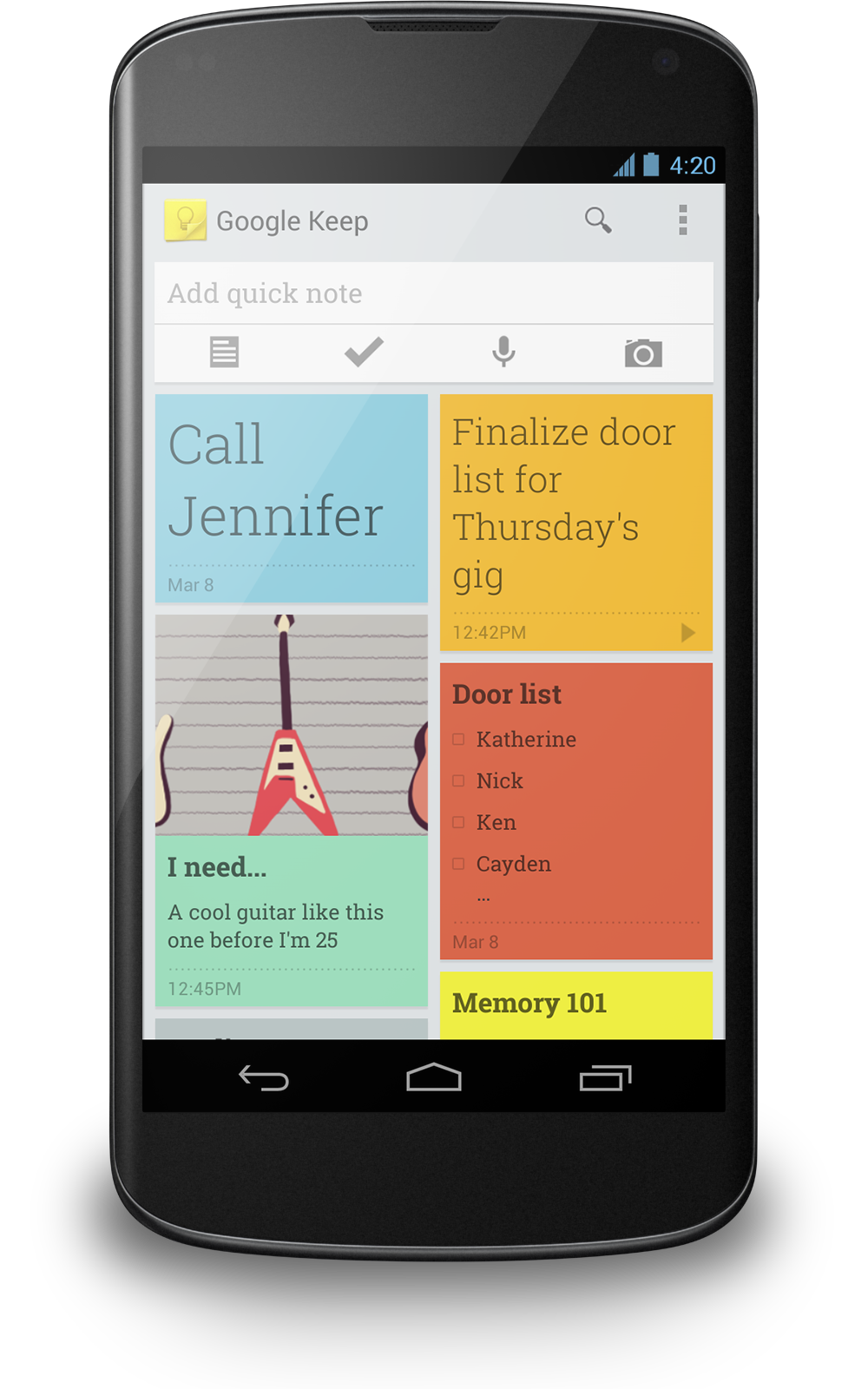
Every day we all see, hear or think of things we need to remember. Usually we grab a pad of sticky-notes, scribble a reminder and put it on the desk, the fridge or the relevant page of a magazine. Unfortunately, if you’re like me you probably often discover that the desk, fridge or magazine wasn’t such a clever place to leave the note after all...it’s rarely where you need it when you need it.
To solve this problem we’ve created Google Keep. With Keep you can quickly jot ideas down when you think of them and even include checklists and photos to keep track of what’s important to you. Your notes are safely stored in Google Drive and synced to all your devices so you can always have them at hand.
If it’s more convenient to speak than to type that’s fine—Keep transcribes voice memos for you automatically. There’s super-fast search to find what you’re looking for and when you’re finished with a note you can archive or delete it.
Changing priorities isn’t a problem: just open Keep on your Android phone or tablet (there’s a widget so you can have Keep front and center all the time) and drag your notes around to reflect what matters. You can choose the color for each note too.
Pro tip: for adding thoughts quickly without unlocking your device there's a lock screen widget (on devices running Android 4.2+).
Google Keep is available on Google Play for devices running Android 4.0, Ice Cream Sandwich and above. You can access, edit and create new notes on the web at http://drive.google.com/keep and in the coming weeks you'll be able to do the same directly from Google Drive.
Samsung (005930) already confirmed that it is working on a smartwatch to take on Apple's (AAPL) still mythical "iWatch," and now a new report suggests that Google (GOOG) is also hard at work on its own wearable Android device. The Financial Times on Thursday evening cited a single unnamed source in claiming that Google has a smartwatch in development. The company's Android team is reported spearheading the project, which will apparently yield a smartphone companion similar to Samsung and Apple's efforts rather than a connected device. No launch timing or additional details about the device were reported.
Amazon’s on-demand video streaming service, LOVEFiLM Instant, which competes with Netflix in the U.K., is continuing to build out its children’s content corner, today inking a content licensing deal with BBC Worldwide to license a range of children’s content for streaming.
The newly licensed content from BBC Worldwide, available to stream immediately, includes The Story of Tracy Beaker, pre-school show Teletubbies, family drama The Sarah Jane Adventures and the interactive live-action show Balamory. Details of the number of shows licensed have not been disclosed.
The content deal is just the latest between LOVEFiLM and BBC Worldwide. Last month the pair beefed up their content partnership, adding a variety of drama series and factual programming including Top Gear. Announcing that agreement with the BBC’s commercial arm, Jim Buckle, MD at LOVEFiLM, said in a statement: “We kicked off 2012 by announcing a new deal with BBC Worldwide and it is great to see-in 2013 by adding to that agreement.”
LOVEFiLM Instant has previously licensed children’s content from the likes of Aardman, eOne, DHX Media, Disney and Saban Brands. The deal with DHX Media added 2,000 childrens shows to its UK catalog.
Building out rich kids’ offerings is a key strategy for on-demand streaming services, as they seek to make themselves indispensable to the parents who pay for the service.
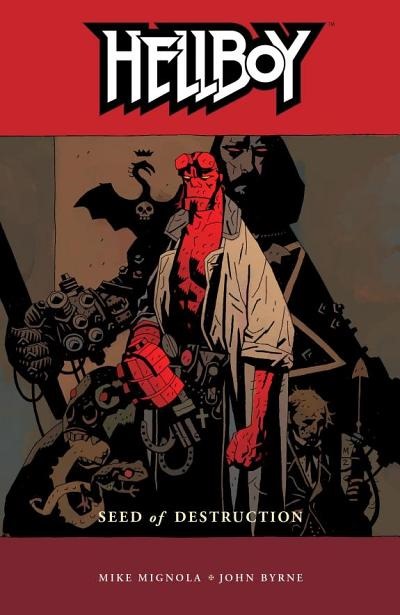
Android devices are already pretty awesome comic readers. There's very little I love in the world more than watching Deadpool hack and slash everything in the universe up on the ultra-high resolution display of my Nexus 10. Though, if anything is gonna give the merc with a mouth a run for his ill-gotten money, it may just be the collective comic anthologies of properties like Star Wars, Hellboy, Serenity, Buffy the Vampire Slayer and more. Yes, Dark Horse comics are live on the Play Store.
The titles will launch in every country that Play Store books are sold (which, as of right now, includes Australia, Canada, Spain, Germany, Italy, the United Kingdom, India, South Korea, Japan, Mexico, Brazil, France, Russia and the United States).
KickassTorrents is currently listed among the 50 most visited websites in the UK, but this is about to change.
Starting today, several British Internet providers started blocking the popular torrent site, as well as Fenopy and H33T.
The blockades follow on from the High Court verdict last month which required six ISPs (BT, Sky, Virgin Media, O2, EE and TalkTalk) to block subscriber access to the three torrent sites. The legal action was initiated by the music industry group BPI, representing a variety of major labels.
Previously a similar order took down The Pirate Bay in most of the UK.
According to the High Court ruling the three sites are profiting heavily from the copyright infringements carried out by their users. For example, the annual revenue of KickassTorrents was estimated to be between $12,525,469 and $22,383,918 according to an expert quoted in the verdict.
The verdict doesn’t detail when the blockades should go into effect but TorrentFreak learned that today BT, Virgin Media, O2 and BE began censoring the sites in question. The screenshot below shows the notice Be There subscribers see when they try to access the sites.
Be There block
While the blockades of the other ISPs appear to be more nationwide, Virgin Media subscribers report differing results around the country, with some able to access the sites and some not. It is expected that all Virgin customers will be blocked during the hours to come.
Virgin Media block
The admin of H33T, one of the sites that’s now blocked, told TorrentFreak previously that the blockades are the music industry’s instrument to keep their monopoly intact.
“Attacking H33T is an attack on sharers, that is the real BPI agenda. The BPI and their MAFIAA masters are playing for control of consumption of digital media in the UK. Independent networks of people freely sharing content is a challenge to their broken business model,” he said.
The UK Pirate Party is disappointed with the increase in website blocking as well.
“This is the latest in the continuing Internet whack-a-mole farce. This comes just after the European Commission study which reported that ‘illegal music downloads have little or no effect on digital music sales’,” UK Pirate Party leader Loz Kaye told TorrentFreak.
“In the Pirate Party we have always maintained that website blocking is dangerous, it is now clear that it is misguided too. The number of these blocks is now rapidly expanding. Where does this end? The BPI is out of control,” Kaye adds.
TorrentFreak contacted BPI who confirmed that the blocking started today, but the music group didn’t comment on the expected efficacy. Recent history, however, shows that it might not be the silver bullet the music industry is hoping for.
Several Dutch and UK Internet providers argued previously that the Pirate Bay blockades were not preventing people from sharing, as BitTorrent traffic didn’t decline after the blockades were implemented.
When The Pirate Bay was blocked hundreds of proxy sites popped up, making it very easy for people to circumvent the blockade. Thus far there are few dedicated reverse proxies for KickassTorrents, Fenopy or H33T, but availability is sure to increase in the days to come.
Update: we added responses fron the UK Pirate Party and BPI.
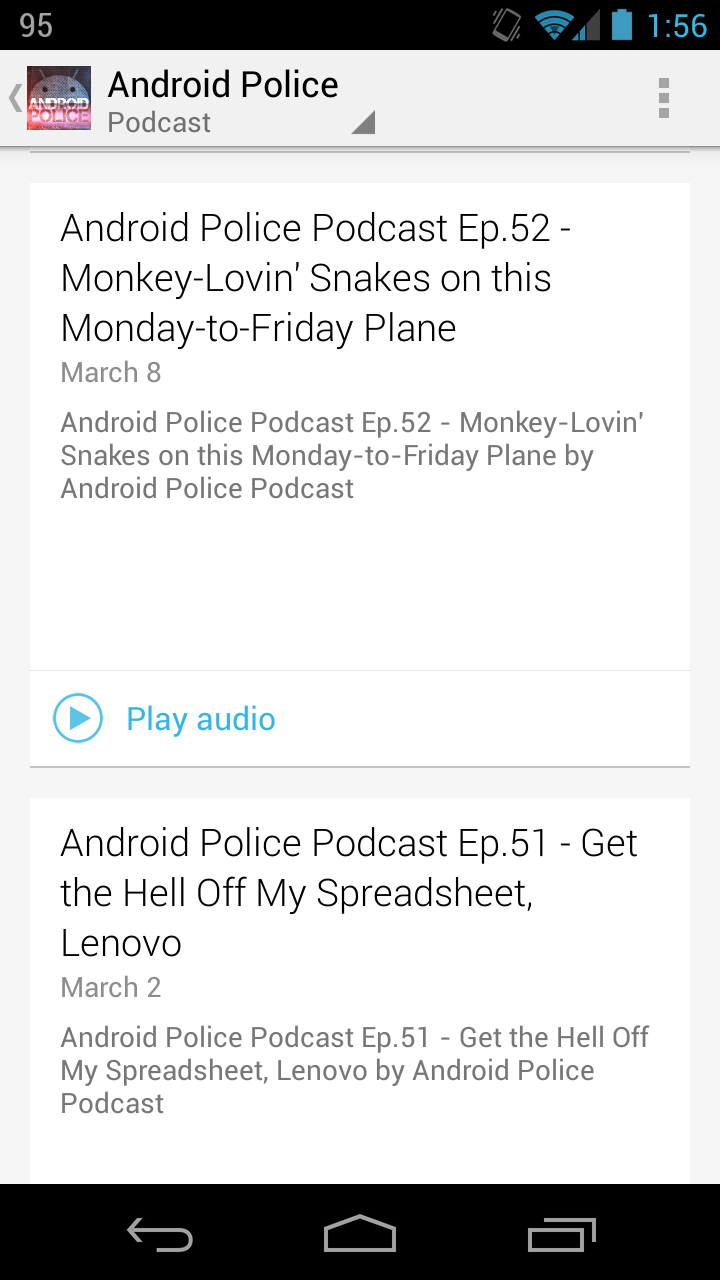
Yesterday, Google added support for audio playlists and media controls to Google Currents. We thought this sounded like a pretty neat feature, and, hey! We're on Google Currents! So why not put two and two together? Today we updated our Currents edition to include a feed of our audio podcast and it's actually kind of beautiful. Take a look:
It was possible to add audio before, but it wasn't quite this nice. The feed works on both phones and tablets. Just open up the Android Police edition, tap the drop down that will initially say "Articles", tap on "Podcast" and boom!
Apple is finally ramping up security around Apple ID / iCloud accounts with the introduction of two-step verification. The new safeguard requires users to verify their identity on a trusted device before making changes to their personal information. Much like the way Google and other companies handle the two-step login process, Apple will send out a verification code to one of your devices that must be entered before your sensitive data can be accessed or changed. Users will also receive a recovery key that serves as a last-ditch verification method if they forget their main password or lose a trusted mobile device.
In offering the new measure, Apple is addressing critiques that the company hasn't gone far enough to protect its users....
For an industry that has such a hard time making money, digital music sure is hot right now. Everybody wants in. Amazon is now the latest tech giant rumored to be eyeing a slice of this increasingly tempting pie, according to a report on The Verge. But why?
News that Amazon is in negotiations with music labels comes mere weeks after Google was revealed to be having similar discussions of its own. The search giant already has a huge presence in digital music thanks to YouTube, but seeks to solidify its role by launching a Spotify-style subscription service on top of its existing music products. Like Google, Amazon already has content relationships and infrastructure in place that will simplify the process of entering what is typically a very challenging and cost-prohibitive marketplace.
It will still be an expensive endeavor, given the high cost of licensing music from the major labels, but companies like Google and Amazon are well-positioned to negotiate those dollar figures down and, if necessary, operate at a loss without discernibly denting their bottom line.
Fine-tuning the financial details is what these negotiations are all about. And it's important to note that they are just that: negotiations. They could wind up hitting a roadblock, as has allegedly happened with Apple in its rumored quest to launch a Pandora competitor. However it pans out, it's now known that Google and Amazon are at least attempting to enter the streaming music space. If all goes according to both companies' plans, they'll soon be in direct competition for digital music subscribers.
Google vs. Amazon: From Frenemies To Rivals
The rivalry between Google and Amazon is expected to heat up this year, and this would just be the latest source of competition between the two companies. While they started as two very different, seemingly unrelated businesses, the companies have both evolved into new territories, occasionally bumping into each other in the process. Today, both companies sell digital content like ebooks and music, as well as the hardware required to read and view that content. Like Google's arch nemesis Apple, Amazon is now rumored to be building its own mapping service as well.
Digital music is not an easy business to be in. Six million people are now paying for Spotify, with 18 million more listening for free on the desktop. That's stellar growth in just under two years and an impressive conversion rate for any freemium business. Still, Spotify isn't touting massive profits, and nor are any of its competitors.
That's because they're all paying a massive chunk of their revenues to rights holders (record labels, mostly) and struggling to find ways to drive those costs down. Pandora's legislative efforts haven't met with much success on that front.
Why Streaming Music?
A company like Amazon might be able to use its might to negotiate better licensing deals. Even if it fails to do so, running an unprofitable streaming service (or bundling music with Prime) could rope enough additional people into Amazon's ecosystem to make the effort worthwhile.
Or, if nothing else, it could prevent Google from getting a leg up on Amazon in the broader digital music space, in which both companies are already present. In an excellent post, The Verge's Tim Carmody points out that "few of these larger tech companies embracing streaming music seem to be doing so as an affirmative strategy, because they ultimately believe streaming music will help sell their other devices or services. Instead, they're primarily worried that if they don't offer a streaming music service, they'll be seen as deficient in some way."
It's also worth keeping in mind the mobile aspect. Google's stake in mobile is obvious, and Amazon's is expected to get even more serious if, as expected, the company eventually unveils a smartphone of its own. As Wired's Mat Honan wisely points out:
Subscription and streaming only took off once 3G made it possible for you to carry your music with you everywhere. Pandora, Spotify, and Rdio have proved there’s an attractive market. But imagine what happens when a streaming-music app ships with your phone, with every phone, and all you have to do is turn it on, using an account you’ve already set up for billing. Or even worse (if you are an existing streaming-music provider) if it’s a free, advertising-supported service.
All this action in the streaming music space leaves little doubt that this model will be a crucial component of how we consume music in the future. It's the "music like water" model that music futurists once dreamed about. Exactly how it takes shape will depend on economic questions: how the business model evolves, how artists get paid, which companies will dominate distribution.
This year was already poised to be an interesting one in digital music with the impending U.S. launch of Deezer, the arrival of Daisy and ongoing rumors about Apple's plans to build a Pandora competitor. Now Google and Amazon are also both gunning for Spotify.
When you think about a site like YouTube, you can easily lose sight of just how huge its presence is on the internet. Google is announcing that YouTube’s monthly unique visitor count just cracked one billion for the first time — nearly one out of every two people on the internet. Even more interesting is how quickly YouTube keeps expanding its reach. A year ago, it was just scratching 800 million unique visitors — that’s 25 percent annual growth for an eight-year-old site.
When a note-taking app called Google Keep surfaced briefly the other day, it did so to considerable fanfare. This kind of service has been missing since Google killed off Notebook in 2009, and a competitor to Evernote or Simplenote seemed like something the company could do quite well. Turns out Keep was leaked only slightly ahead of its time — the app was officially announced this afternoon, and Keep is now available on the web and to Android users. Once we got past the myriad "Oops! An error occurred" messages that plagued Keep's first minutes of life, we've spent a bit of time playing with the app — but a few minutes is really all it takes to get the idea.
Just because something is built with plastic doesn't necessarily make it cheap to build. The researchers at IHS on Tuesday released their bill of materials (BOM) estimate for the Galaxy S 4 and found that the HSPA+ version has a BOM of $236 while the LTE version has a BOM of $233. When factoring in an $8.50 cost of labor per device, IHS estimates that the HSPA+ Galaxy S 4 costs around $244 to build while the LTE version costs $241 to build. The reason that the LTE version is cheaper, says IHS, is that it uses a less costly processor than the HSPA+ version. As Business Insider's Steve Kovach notes, IHS's Galaxy S 4 manufacturing cost estimate is significantly higher than the $207 manufacturing cost estimate the firm had for Apple's (AAPL) 16GB iPhone 5.
App switchers are a fast and flexible way to move between the app you have open and the one you want to use. No swiping through home screens, no endless scrolling through your app drawer. Here are some of the best, and how to pick the one that's right for you.
Why You Should Try an App Switcher
Switching apps in Android isn't difficult, but it could be faster. If you're using Gingerbread (as many people still are,) most phones let you long-press the home or search buttons to bring up a list of running or recently used apps, but if you want one not in the list, you have to find it on your home screen or dig through your app drawer. Ice Cream Sandwich and Jelly Bean users have quicker access to their app switcher through a dedicated button. App switchers give you a little more simplicity and configurability, letting you get not only a list of recently used apps but also a customized list of your favorite apps, through a number of different gestures.
The catch is that there are so many app switchers available that it's tough to tell which ones work well and which ones aren't worth your time. Here's a look at the best ones for different types of users.
For the Speed Freak: Swipepad
If you just want the quickest possible way to get from the app you're in to the app you want to use, Swipepad is the app for you. Swipepad sports a 12-button launcher that you can customize with your favorite apps, folders, or shortcuts. When you need them, a simple swipe from the edge of your screen will open the grid on top of whatever app is currently running. Move your finger to the item you want to open, and it'll launch. It's simple, fast, and free. The video here show you how the app works, but don't blink: it's fast.
Swipepad has come a long way since we last mentioned it, and if you're willing to spend a dollar here or there, you can get more pads with the MoreSpace add-on ($1), launch widgets with the WidgetPad add-on ($1), or let Swipepad dynamically assign apps to the launcher based on your habits with the Dynamic Pads add-on ($1).
For the Minimalist: Sidebar
If you wish Android had a dock, you're in luck. The panel at the bottom of your home screen already keeps a handful of app shortcuts ready. In Ice Cream Sandwich and Jelly Bean, you can make app "folders" down there, and some ROMs let you expand or scroll the dock. Problem is, to use it you have to exit the app you're running. Previously mentionedSidebar does away with that annoyance and puts a dock right on the side of your screen that opens it on top of the app you're using. It's much faster and more flexible.
The video here shows you how Sidebar works. You can customize the shortcuts in the sidebar with your preferred apps, or get one-swipe access to your phone's settings. Sidebar is free, but a $2 pro version unlocks more customization features. Want more choices? Glovebox and previously mentionedHomeFlip both offer similar minimal, dock-style approaches to app switching, and they're both also free.
For the Feature Freak: Swapps
Sidebar is a fast, simple dock-style app switcher, but if you refuse to install an app unless it's packed with features, Swapps is your best bet. It also gives you a sidebar packed with apps you select, but Swapps is much more flexible in terms of the apps listed. Swapps lets you "star" apps to mark them as favorites, so when you swipe open the sidebar, you'll see those apps first. Scroll down a bit and you'll see your recently used and running apps. Scroll a bit more and you'll see all the apps installed on your phone. Don't like the order of the shortcuts? Drag and drop them around. Swapps even lets you close running apps by long-pressing them in the "recent/running" list.
Swapps has more customization options than other apps like it, but there's a tradeoff: Swapps is a little slower and has some UI issues, even though we love its extra features. If you prefer minimalism, Sidebar may be better, but if you want total control, Swapps is a better choice. It's free, but ad-supported. A $2.50 in-app "upgrade" will strip them out though.
For the Folder Fanatic: Wave Launcher
So far, all of the switchers we've looked at are sidebars, docks, and grids. Wave Launcher is different. One swipe brings up a scrolling "wave" of apps across the center of your screen that you can navigate like a rotary dialer. The tool can support hundreds of apps, and where it really shines is when you start making folders and packing shortcuts and widgets into those folders. With a little customization, Wave Launcher can basically replace your home screen or app drawer.
Wave Launcher also opens on top of the running app (or on top of the home screen, if you prefer), and you move your finger left or right on your screen to scroll the wave in that direction. Lift up your finger to open the app or folder at the top of the wave. If you like keeping all of your apps neatly organized into topical folders, Wave Launcher lets you add those folders to the wave, and from there it's all downhill: the combinations of folders and shortcuts is almost endless. It's probably one of the most customizable app switchers we've seen. Wave Launcher is $2. Check out the video here to see how it works.
Even if you're comfortable with the default app switcher, a third-party one can make using your phone even faster and more convenient. They'll work on a ton of different versions of Android (for you Gingerbread-using folks out there), and get you to the apps you want to use or the settings you want to toggle quickly. App switchers give you a fast and free way to make your phone work for you instead of the other way around.
The community around Bitcoin, the fast-growing virtual currency that sustains an economy worth more than $650 million, has been shaken by what seems to be the first government response to its phenomenal rise. Yesterday the Financial Crimes Enforcement Network (FinCEN), a bureau of the US Treasury Department, published some guidelines for how virtual currencies should be regulated — and it says many Bitcoin businesses need to register with the US government.
After mulling over its response for a day, the Bitcoin Foundation — the closest thing the decentralized currency has to a spokesperson — has released a statement condemning the rules. "I’m a little disheartened that FinCEN appears to be creating an entirely new regulatory...
More than 35 years after leaving Earth, scientists say the Voyager 1 spacecraft appears to have left our solar system. Astronomers funded by NASA's Jet Propulsion Laboratory today announced their study, reporting that Voyager 1 measured drastic changes in radiation levels — an indication that the spacecraft has left the wind of the Sun's energetic particles behind, traveling into unknown space. In December, scientists observed that Voyager had entered the penultimate stretch of its journey to interstellar space: an area called the "magnetic highway." At the time, NASA predicted that Voyager was anywhere from "a few months to a couple of years away" from leaving the solar system.
Voyagers 1 and 2, launched in 1977 under the Carter...
Today marks the start of The You Generation, a talent competition orchestrated by Simon Cowell (of American Idol and X Factor fame) and YouTube. But unlike Cowell's typical productions, which involve TV cameras and flashy theatre stages, this time the search begins and ends on the internet. Starting at 2PM Eastern, you'll be able to upload an audition showcasing your talent for consideration in the contest — and public ridicule from viewers across the globe, of course.
So if you'd like to check out Google's new note-taking app, I suggest you hurry and head on over to https://drive.google.com/keep/. Until we see some kind of official launch post from a Google blog, I don't expect it to be there for long.











 Occasionally, if you're troubleshooting your PC or installing a new operating system, you'll have to "boot it from a disc" or USB flash drive. Here's what that means, and how to do it.
  You should see a new screen pop up, called your BIOS. This is where you set a lot of low-level settings for your computer. Look through the options (being careful not to change anything) for a setting called "Boot Device," "Boot Order," or something similar. Select that option.
 You should see a list of drives show up. On the right, you'll find your CD or USB drive, listed with its name under it. Use your arrow keys or your mouse to highlight that drive, then press Enter or click on the arrow below it.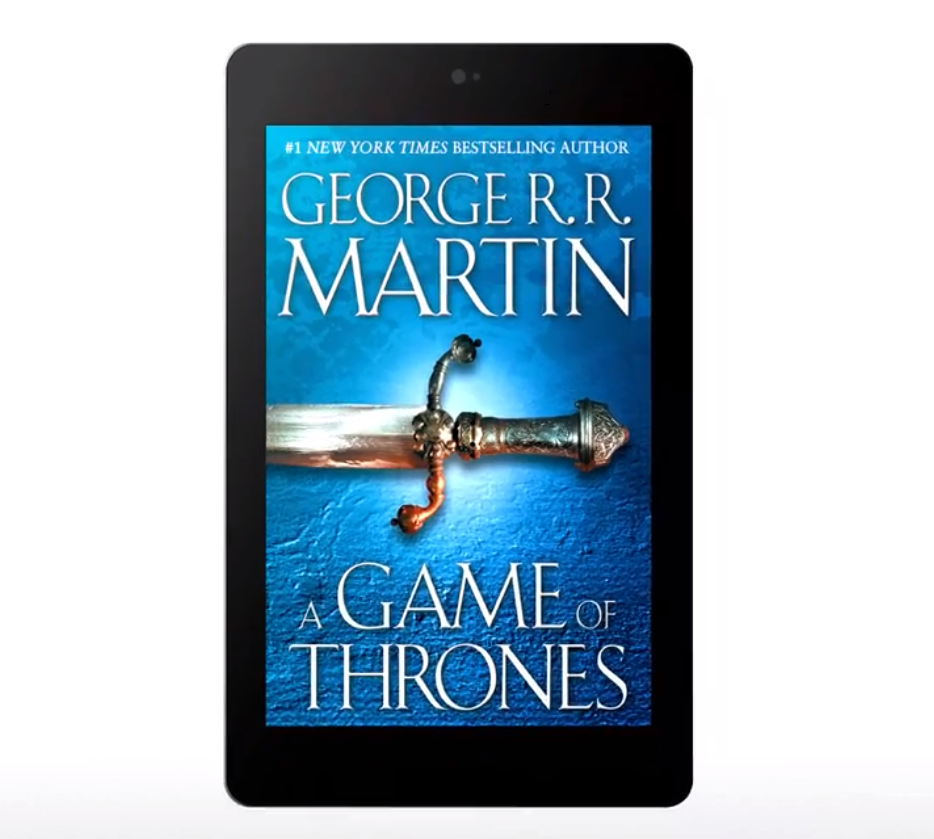


 Perspective view of the smart watch, with a flip-up portion in the closed position
 Perspective view of the smart watch with a flip-up portion in the open position
 Perspective view of the smart watch in a "first application" (apparently real-time price and health-benefit comparison of coffee drinks)
 Perspective view of the smart watch in a "second application" (apparently real-time urban navigation)
 In January 2012 it was revealed that the United States, tired with Spain’s apparent lack of protection for intellectual property, had
.jpg)









 KickassTorrents is currently listed among the 50 most visited websites in the UK, but this is about to change.