India is celebrating a major milestone today, after becoming the first country to reach the orbit of Mars on its very first attempt. After launching in November 2013, an Indian spacecraft called Mangalyaan finally reached the red planet's orbit early Wednesday morning, marking what Prime Minister Narendra Modi described as a "near impossible" feat. The successful mission makes India the first Asian country to reach Mars' orbit, beating neighboring rival China, whose 2012 attempt ended in failure. The country's Mars Orbiter Mission (MOM) was also financed for just $74 million — less than it cost to make the movie Gravity, as Modi and others have pointed out.
Amazon has finally brought across its Kindle Unlimited service to the UK, which launched in the US back in July. The service offers consumers unlimited e-book enjoyment for £7.99 a month, granting access to over 650,000 digital books, as well as thousands of audiobooks from Audible.
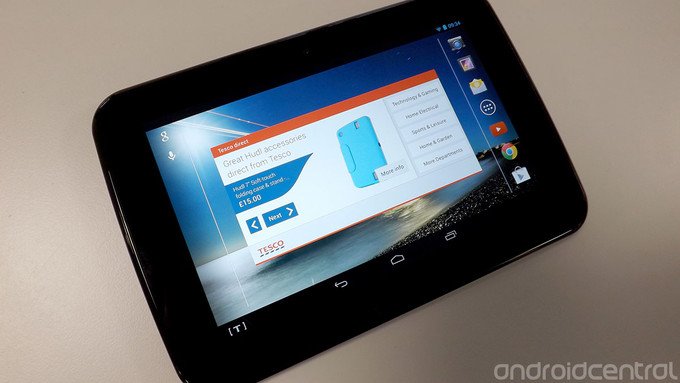
Tesco is set to announce the Hudl 2 next week, according to invites being fired out to various media outlets. Using the hashtag #Letshudl, it's pretty clear the UK retail chain plans to launch a second Android-powered tablet. This announcement follows the supermarket shelving smartphone plans.
Whether you're at work or at home, it can be hard to get information or help from someone who just likes to be difficult. Asking them a question that gets them involved—instead of just being demanding—can help.
When someone is being difficult when you request something from them, it's likely that disagreeing with you is an instinctive, defensive reaction because they want to feel like a contributing factor and not a lesser individual. When you say something like "Let's do X," all you're opening up for them is two options: "I agree, let's do X," or something like "I think Y would be better." Kate Matsudaira at weblog Dumb Little Man suggests presenting your request in question form instead:
By rephrasing your statement into question "Given the priorities, do you think we should start with Project B instead of Project A?" allows the person to add value with their reply. By inviting them to the conversation, you give them a chance to contribute. If you ask them for their opinion, you are giving them credibility, which actually reduces their need to disagree and resist. You are showing that you value their input by asking for it. By asking questions you can also pique their curiosity, and people who are more curious and interested in what you have to say are a lot less likely to meet you with resistance and disagreement. They're more likely to want to go along for this amazing ride where they can be a leader, rather than shoot down something they're worried might be happening without them.
You're still asking them to get something done, but you're approaching it in a way that removes confrontation and supplements constructive dialogue. Remember, we're all difficult to deal with at times, so it's important to always keep that in mind.
Tony Abbot's given a speech warning Australians that the police state is inevitable, saying there would be "more restrictions on some so that there can be more protections for others."
Read the rest
The blocking of sites such as The Pirate Bay, KickassTorrents and Torrentz in the UK led to users discovering new ways to circumvent ISP-imposed censorship. There are plenty of solutions, from TOR and VPNs, to services with a stated aim of unblocking ‘pirate’ sites deemed illegal by UK courts.
Last month, however, dozens of these went offline when the operator of Immunicity and other related proxy services was arrested by City of London Police’s Intellectual Property Crime Unit. He now faces several charges including breaches of the Serious Crime Act 2007, Possession of Articles for Use in Fraud, Making or Supplying Articles for use in Frauds and money laundering.
While it’s generally accepted that running a site like The Pirate Bay is likely to attract police attention, merely unblocking a domain was not thought to carry any such risk. After all, visitors to torrent sites are just that, it’s only later on that they make a decision to infringe or not.
In our earlier article we discussed some of the possible reasons why the police might view “pirate” proxies to be illegal. However, there are very good arguments that general purpose proxies, even ones that are expressly setup to bypass filtering (and are able to unblock sites such as Pirate Bay), remain on a decent legal footing.
One such site is being operated by Gareth, a developer and networking guru who grew so tired of creeping Internet censorship he began lobbying UK MPs on the topic, later moving on to assist with the creation of the Open Rights Group’s Blocked.org.uk.
After campaigning and documenting Internet censorship issues for some time, Gareth first heard of last month’s proxy arrest during a visit to the United States.
“I was at DefCon in Las Vegas when the news of the Immunicity arrest reached me and I realized that for all my volunteer work, my open source applications, operation of Tor relays, donations and letters to MPs to highlight/combat the issues with Internet censorship, it was not enough,” the developer told TorrentFreak.
“I felt that this issue has moved from a political / technical issue to one about personal liberty and Internet freedom. e.g. first they came for the ‘pirate proxies’, then the Tor operators, then the ISPs that don’t censor their customers. The slippery slope is becoming a scary precipice.”
Since his return to the UK, Gareth has been busy creating his own independent anti-censorship tool. He’s researched in detail what happened to Immunicity, taken legal advice, and is now offering what he hopes is an entirely legal solution to website filtering and subsequent over-blocking (1)(2).
“Unlike Immunicity et al I’m not specifically building a ‘Pirate Proxy’. Granted people might use this proxy to navigate to torrent websites but were I to sell a laptop on eBay that same person may use it for the same reasons so I see no difference,” he explains.
“In fact Section 44, subsection 2 of the Serious Crimes Act 2007 even states [that an individual] is not to be taken to have intended to encourage or assist the commission of an offense merely because such encouragement or assistance was a foreseeable consequence of his act.”
The result of Gareth’s labor is the anti-censorship service Routing Packets is Not a Crime (RPINAC). People who used Immunicity in the past should feel at home, since RPINAC also utilizes the ability of popular browsers to use Proxy Auto-Config (PAC) files.
In the space of a couple of minutes and with no specialist knowledge, users can easily create their own PAC files covering any blocked site they like. Once configured, their browser will silently unblock them.
Furthermore, each PAC file has its own dedicated URL on RPINAC’s servers which users can revisit in order to add additional URLs for unblocking. PAC ‘unblock’ files can also be shared among like-minded people.
“When someone creates a PAC file they are redirected to a /view/ endpoint e.g. https://routingpacketsisnotacrime.uk/view/b718ce9b276bc2f10af90fe1d5b33c0d. This URL is not ephemeral, you can email it, tweet it (there is a tweet button on the left hand side of the site) etc and it will provide the recipient with the exact same view.
“It’ll show which URLs are specified to be proxied, which have been detected as blocked (using the https://blocked.org.uk database) and if the author passed along the password (assuming the PAC was password protected) they can add or remove URLs too,” Gareth explains.
“Each view page also has a comments section, this could allow for a small collection of individuals to co-ordinate with a smaller subset of password possessing moderators to create a crowd sourced PAC file in an autonomous fashion. There is also a ‘Clone’ button allowing anybody to create their own copy of the PAC file with their own name, description and password if the PAC file they’ve received isn’t quite what they need.”
This user-generated element of the process is important. While dedicated ‘pirate’ proxy sites specifically unblock sites already deemed illegal by the UK courts (and can be deemed to be facilitating their ‘crimes’), RPINAC leaves the decision of which sites to unblock completely down to the user. And since no High Court injunction forbids any user from accessing a blocked domain, both service and user remain on the right side of the law.
In terms of use, RPINAC is unobtrusive, has no popups, promotions or advertising, and will not ask for payment or donations, a further important legal point.
“To avoid any accusations of fraud and to avoid any tax implications RPINAC will never ask for donations,” the dev explains. “The current platform is pre-paid for at least a year, the domain for 10. At a bare minimum PAC file serving and education for creating local proxies will continue indefinitely.”
Finally, Gareth notes that without free and open source software his anti-censorship platform wouldn’t have been possible. So, in return, he has plans to release the source code for the project under the GPL 3.0 license.
RoutingPacketsIsNotACrime can be found here and is compatible with Firefox, Chrome, Safari and IE. Additional information can be sourced here.
After launching the Wink Hub at Home Depot earlier this summer, Quirky is hoping that its Wink Relay will be the central command center and hub to your smart home. With built-in wireless standards for WiFi, Zigbee, and Bluetooth, the Relay replaces a traditional light switch and brings a 4.3-inch touchscreen controller to allow you to connect all things that are Wink-compatible, including lights, smoke alarms, garage doors, locks, thermostats, blinds, and more.
Though the Wink Relay supports a number of protocols, notably absent are the Z Wave standard and the wireless standard that Lutron lights and blinds use, both of which are supported via the Wink Hub. This means that though the Relay can overlap with functionality of the Hub, it cannot effectively replace the Hub just yet, at least in this hardware incarnation.
Essentially, the Relay is like mounting a smartphone loaded with the Wink app, available presently on iOS and Android, onto your wall so you can control your smart home. There are two manual control switches to give you physical control of your lights in the room.
Along with the control features, there are sensors for proximity, sound, temperature, humidity, and motion. A built-in microphone and speaker can turn the Relay into an intercom if you have more than one mounted around the house.
The Relay is quite pricey with pre-orders starting at $300 via Amazon.
Have you bought into the Wink system? Is the Relay a gadget you're looking to get or will you save the $300 and control your connected house via the app on your phone?
Google is continuing to harness everything its search engine is learning through Knowledge Graph with a new feature it's calling "Structured Snippets." For select search terms, you'll now see facts and data points appear right underneath individual search results. That might sound confusing, so Google's explaining it with a visual example. If you search for Nikon's D7100 right now, you'll see the camera's core specs appear beneath DPreview's search result, like this:
Whether you see snippets for a given search is pretty hit or miss right now. Google pulls all of this data from tables on the linked website, and the company says it'll keep working to ensure the "facts" you see are relevant — and hopefully correct. "Fact quality will...
Samsung will stop selling laptops in Europe due to "market demands", according to a statement from the company obtained by PC Advisor . As the Samsung spokesman said: "We quickly adapt to market needs and demands. In Europe, we will be discontinuing sales of laptops including Chromebooks for now. This is specific to the region – and is not necessarily reflective of conditions in other markets."
The move follows several years' worth of declining PC sales globally and Sony's sale of its own laptop business. Yet it also comes after Samsung announced a new Ativ Book laptop running Windows at CES 2014 and a Chromebook 2 later in the year, and in spite of the fact that Western Europe has been one of the better performing markets for laptop...
Google Currents, Google’s magazine-like news reading iOS app and a competitor to Flipboard, is rolling out a redesign and a handful of new features, including a way to subscribe to topics you’re interested in, instead of only subscribing to publishers, blogs and RSS feeds. The company is also ditching the name “Currents,” and renaming the app “Google Play… Read More
Bitcoin’s momentum among key merchants and platforms on the web keeps accelerating. After hinting at it a few weeks ago when Braintree enabled Bitcoin-based transactions for PayPal developers, the company is now enabling Bitcoin across the PayPal network for merchants of digital goods. The company has expressed interest in bitcoin for a while, with eBay CEO John Donahoe saying in the… Read More
If a mobile camera app icon manifested into a physical product, it would be the new Polaroid Cube. And judging by the looks of this wee little box, the action camera might just win over plenty of hearts, helmets and handlebars.
The Cube, which starts shipping next month, offers 1080p video recording and a retro-fabulous aesthetic for a price tag of $99. That’s half the price of a base model GoPro, the leading brand that defines this category.
Polaroid seems to have the makings of a mainstream hit. That’s no accident. The company hired design house Ammunition to mastermind the Cube, and says Robert Brunner, Ammunition’s founder and partner, the mission was clear: Take a device with decent technical chops and turn it into a fun, clever product that people would want.
That’s not easy to do in a niche owned by GoPro and fleshed out with others, including cheaper knock-offs and also-rans. But Ammunition and its client have one thing that the others don’t: nostalgia. And they’re milking it for all it’s worth.
Photographic Charm, Cubed
An elder statesman in consumer photography, Polaroid scored major retail hits with instant film cameras dating back to the 1940s. But the aging brand couldn’t overcome the onslaught of digital cameras that would later arrive, leading the company to go bankrupt not once, but twice—in 2001 and again in 2008. And yet, the camera maker managed to survive. Now it appears to be pinning its hopes on one itty bitty device.
First introduced at the Consumer Electronics Show as the Polaroid C3, the Cube now readies itself for its public debut in October. I got a chance to take a look at this action camera, and one thing became clear to me: This is no GoPro.
In fact, anyone expecting a fierce competitor to that high-octane camcorder will be disappointed. Apart from high-resolution video capture, at 720p or 1080p, the rest of the hardware specifications are rather mediocre: 6 MP sensor for still photos, support for 32GB microSD cards, 90-minute battery life, 124-degree wide angle lens and an (optional) waterproof case up to 10M. GoPro tops them all.
But that may be an unfair comparison. The Cube isn’t targeting the adrenaline junkies or extreme athletes served by GoPro, Mobius and other competitors.
“Other cameras in the action space come from an extreme sport perspective, but for a lot of people, that can feel intimidating,” said Brunner. “We felt this product needed to be more accessible.” Think bike rides and snorkeling, not high-elevation mountain biking and cliff diving. For those scenarios, the specs will probably suffice for most people.
The relatively affordable $99 price helps make the case. So does ease of use. To make things even easier, the Cube—which also features a LED light and microphone—offers a single button on top that turns it off and on, and acts as a shutter. On the bottom, a built-in magnet lets users attach it easily to lockers, bike handlebars and other metals. Extra mounts, like a helmet attachment, are also available.
My favorite is the monkey mount. I have no idea what this item is for, and I don’t really care. I just know that I want it.
Cute, Clever And Easy On The Eyes
If the price, specs and ease of use don’t attract interest, the camera’s looks probably will.
The square camera measures a mere 35mm size, which is practically an inside joke for people who remember 35mm film. According to Ammunition’s Brunner, “the challenge was to create a small product with clever branding, [that’s] iconic enough that it is instantly recognizable as a Polaroid camera.”
The fun, laid-back approach to design eschews the bland, no-nonsense design of GoPro and others of its ilk, opting instead for a grippy, rubberized shell decked out with Polaroid’s signature rainbow stripes.
Does that seem familiar? It should. It’s a common app icon theme that smartphone photographers are already acquainted with.
Those spoiled by the advanced features of their smartphone cameras will find one major omission here, though: wireless connectivity. There’s no Bluetooth or Wi-Fi support in that teeny box—which means there’s no remote shutter to snap photos, and users can only download pics and videos by connecting it via USB to their computers.
Somehow, though, the lack of connectivity could be passed off as a quirk—a throwback to yesteryear that actually fits with the Cube’s retro persona. Plus, if some would-be customers really want wireless features in a Polaroid that looks like a smartphone app, the company won’t necessarily lose business. Its long-awaited Instagram-styled, sharing-oriented Socialmatic camera should be ready early next year.
As for the Polaroid Cube, it arrives in October, which is plenty of time for the holiday season. And could you imagine a more charming stocking stuffer than this?
UK users of Instagram, the Facebook-owned photo sharing app, will now begin seeing sponsored content — i.e. ads — show up in their Instagram feeds. Advertising on Instagram was first introduced in the U.S. all the way back in September 2013, but, until today, Brits have escaped the invasion of sponsored content, though, of course, plenty of brands have already set up shop on the… Read More
by Tracy Moore on Jezebel, shared by Whitson Gordon to Lifehacker
You're supposed to squat when you poop. Did you hear me? Squatting. While pooping. Is the way to do it. Not this hunching-over thing you're doing now which takes forever and is not nature's way. Everyone else has figured it out and you are the last person still retro-pooping, so let's get you on the right path.
When you think about squatting to poop you probably think about camping or cavemen or god forbid, what animals do. Here is some news: You are an animal, except worse, because you're the kind who ditched a more effective form of bowel-elimination for something you think is more civilized, when in fact you have effectively regressed to a state that never existed, because it was so ineffective.
Here is a credentialed smart person saying just that. In a piece at Medium called "You're Sitting On Your Toilet Wrong," Kevin Roose writes:
Cornell professor Alexander Kira called the modern, sit-down toilet "the most ill-suited fixture ever designed."
Kira believed—and subsequent studies have confirmed—that toilets work against our bodies by forcing us into unnatural angles when we sit down to defecate.
The solution to hunched-over posture, Kira wrote, is squatting—a more natural position that opens the anal sphincter, moves the body's plumbing into proper alignment, and allows us to evacuate more freely.
According to a study Roose cites in Digestive Diseases and Sciences from 2003, sitters spend 79 seconds longer getting the deed done than squatters, who shit so efficiently on account of being aligned correctly that they have, you know, 79 more seconds than you on their hands (instead of poop lololololololololol). What if that 79 extra seconds is cumulatively the difference between full-on contentedness and mediocre satisfaction in life? How would you ever find out?
Go old-school. Luckily that does not mean popping a squat in your neighbor's jacuzzi. There are companies that make stepping stools designed to mimic this posture.
One is the Squatty Potty, which Roose tries out for $25:
There are two ways to use the Squatty Potty, Edwards said. The easy (and recommended) way is to put your feet up on it while sitting down on the toilet, which raises your legs and simulates a shallow squat. The even more effective, harder way is to stand on the Squatty Potty and lower yourself into a deep squat, either hovering over or barely touching the seat while you do your business.
I experimented with both methods for several days, and I found the hard-core one more satisfying.
There is also a similar product called the Step and Go. Roose's piece is written in the spirit of overall bathroom improvement, but other folks have pursued the squat for weight loss and overall better bowel health.
At NPR, Eliza Barclay writes that this "squatting counterculture" claims modern toilets are responsible for hemorrhoids and constipation:
As neuroscientist Daniel Lametti wrote in Slate in 2010, squatting allows the, er, anorectal angle to straighten, so that less effort is required for evacuation. And today there are lots of squatting evangelists on the Internet who marshal scientific evidence, limited as it may be, and ample cultural evidence of the practice enduring in many parts of the world to make their case that squatting is superior.
Barclay also spoke with a colorectal surgeon in Virginia, Dr. Rebekah Kim, who said she does tell her own patients with difficulty going to rest their feet on stools or stacks of phone books (which is basically a Squatty Potty or Step and Go), however:
"Squatting on a stool can reduce the amount of straining on the toilet, which may mean less hemorrhoids, but there are no clinical studies proving that," she says.
And
"For most people, the modern toilet doesn't cause any problems," she says. But if you're to believe Slate's Lametti, squatting on top of the toilet could be a time-saver — he managed to drop his 10-minute routine down to a minute.
So, like most older-is-better stuff, like running barefoot or going paleo, don't feel that you must change horses mid-shit here simply because it was what everyone has done for most of human history. (And yes, fitness types love it).
Here is an illustration of how it supposedly works:
But obviously if your shit works, don't mess with your shit. That was more or less the conclusion reached by Men's Health's Eric Spitznagel, who tested the Squatty Potty, which claims users can see weight loss of up to 20 pounds of pure unadulterated poop after regular use. The result?
Meh:
Changing your defecation physics isn't as easy as the brochure illustrations would makes it appear. It's like trying to drop a load while sitting criss-cross applesauce. It feels unnatural and wrong. During my first attempt, peeing on my shoes didn't just seem plausible but extremely likely. I tried leaning forward, like the relaxed-looking fellow in the illustration, and almost took a nose-dive onto cold linoleum.
After almost a week of trying and failing to have a successful bowel movement by squatting—I always eventually returned to the shame of sitting—I went to my first yoga class. By day 10, thanks to the Garland Pose, I was successfully maneuvering a "dry run." By day 14, I launched a full-scale number two. I was so shocked that I almost ran out into the living room, my pants still around my ankles, to share the good news with my wife. I thankfully resisted this urge.
He spoke with a gastroenterologist, Dr. Darren Brenner, who told him there may not be that much poop hanging around in his body to being with, and that if he's already experiencing normal bowel movements, what does he really need to improve?
"We do not usually carry 20 pounds in our colon," Dr. Brenner assured me. "Stool is continuously cleared."
Spitznagel insists he's gotten used to using the stool now though, and he "swears" it has improved things. I've experienced the same thing using the Step and Go for a few weeks now (one was gifted to me) — it took something I had no real complaints about and made it seem faster, and more streamlined, and seemingly better, but I can't for sure prove that or say why. It just feels like a cleaner poop? And definitely faster.
(I will, however, probably never feel like the girl on the Step and Go literature because I just don't have her bathroom disposition):
But because this stool stays in the bathroom at all times, both my husband and I use it and it now doubles as my preschooler's stepping stool. My husband said he thought it was great though, and gave it three thumbs up. I can only assume the third thumb is the extra poop, a.k.a., 79 more seconds of freedom.
by Kristin Wong on Two Cents, shared by Andy Orin to Lifehacker
Many times, being broke means being desperate. Your mind is stressed, your finances are stretched like nobody's business, and you don't have many options available. And, unfortunately, there are a lot of "debt traps" that can keep you stuck in a paycheck-to-paycheck cycle. Let's go over some of these traps and check out better solutions.
Payday Loans
Payday loans are notorious debt traps. They're small, short-term loans with high interest rates that, ideally, you're supposed to pay back with your next paycheck. The problem is, many people can't afford to pay them back in full, so they either default on them, or they end up taking out another loan to pay off that loan. Then, they're stuck in an debt cycle.
The Consumer Financial Protection Bureau (CFPB) is one of many groups that have studied payday loans and the negative impact they have on borrowers. In their report, "CFPB Data Point: Payday Lending," they found all sorts of awful things:
80% of loans are rolled over or renewed every 14 days, leading borrowers to pay more in fees than the original amount of their loan.
Signing up for a payday loan makes borrowers more likely to stay in debt 11 months or longer.
Only 15% of borrowers are able to repay their debt without re-borrowing.
Another report from the National Consumer Law Center (NCLC) says that payday loans lead to losing bank accounts and filing for bankruptcy, among other financial hits. Most people already know this, so what are the alternatives?
Solutions
In that report from the NCLC, they go over some possible solutions. They actually categorize these solutions (or alternatives, as they call them):
Genuine Alternatives and Ones That Come Close
Better Than a Payday Loan But Still Very Problematic
A Payday Loan By Any Other Name (Just as bad)
"Genuine alternatives" include loans from credit unions (not credit union payday loans—more on those later). Credit unions are nonprofits meant to serve their communities, so it's not surprising that they offer the most attractive alternative. The report discusses the National Credit Union's REAL ("Relevant, Effective, Asset-building, Loyalty-producing") Solutions program:
The goal of the program is to provide loan products that support borrowers' efforts not only to obtain short-term funds but also to build good credit and savings. The REAL Solution effort includes 650 credit unions across 34 states.
Credit unions offer other loans that aren't meant as alternatives to payday loans, but they still serve the same purpose. Signature loans, for example, are sometimes offered in small amounts for borrowers with less-than-stellar credit.
Bank loans were also in the "genuine alternative" category. Some banks offer loans via the FDIC's "Small-Dollar Loan Pilot Program."
Of course, even if you take out a credit union or bank loan, you should be careful about it. Look into the details—how much is the APR? What are the fees? For more info on these alternatives, check out the NCLC's report.
The alternatives that were "still very problematic" or just as bad as pay day loans: credit cards, bank and prepaid card direct deposit account advances, fee harvester credit cards, overdraft loans, and, yes, credit union payday loans. Even though credit unions top their list of good alternatives, some of them offer triple-digit payday loans, and those should be avoided.
The "Cutting Back" Method
If you're already stuck in a payday loan trap, consider a method one writer for MSN Money used. The writer suggests gradually borrowing less—$20 less each time—and then boosting your payoff amount:
Notice how you're getting $20 less each time but your payments aren't even decreasing by $15 — that's another way they keep you stuck. Obviously if you keep dropping by $20 increments, it will take you about 100 years to pay off the loan entirely. It's a good start, but it's not enough. Time to get creative. What can you sell to make extra money? Do you have any skills that someone would pay for, like cleaning houses or mowing lawns? Any extra money you make should be saved for the next pay period — and that's how much you decrease your loan. If you're at $360 and you make $100 on the side, borrow $260 next time. Doing this takes A LOT of discipline. It sucks. But it's better than being stuck forever.
Once you're trapped, there's no easy way to get out, unless you run into a windfall or something. That's why it's best to avoid this debt trap altogether.
Skimping on Insurance
In a book called Scarcity: Why Having Too Little Means So Much, authors Sendhil Mullainathan and Eldar Shafir study how not having enough causes us stress, and that stress leads to poor decision making, and those poor decisions lead to us not having enough.
They give an example: skimping on insurance. They point to money saving advice that instructs readers to raise their car insurance deductible so their monthly premium can be lower. But that's a risk. And some people take that risk up a notch and decide to save money by forgoing insurance altogether.
But, as the authors point out, this is a short-term solution to a long-term problem: the trap of scarcity. And it's this type of short-term solution that keeps people stuck in that trap. One accident and you're set back even more than you would have been.
Solutions
Still, most of us can't (or just don't want to) afford a super high premium to pay for the best insurance possible. So the "short-term" advice makes sense. But the solution is to find a happy medium. If you're struggling, you're not going to pay for rental insurance with all the bells and whistles. But that doesn't mean you should risk it by opting for a deductible you could never afford, or worse, not having insurance altogether.
The Simple Dollar offers a solution for raising your deductible without setting yourself up for failure:
The solution is simple: if you have a well-funded emergency fund in a savings account somewhere, you can raise your deductibles some without worry. A well-funded emergency fund means a minimum of a couple months' worth of living expenses, plus more if you have dependents. If you have that kind of cash that can be accessed with ease, then by all means, raise your deductibles.
Consider saving up this amount before you make any changes to your insurance policy.
No, it's also not easy to save up that amount when your finances are already stretched. However, consider how much more your finances would be stretched if you had to pay an incredibly high deductible that you couldn't afford. Skimping might seem like an easy short-term fix, but it can have long-term consequences that keep you stuck in a debt trap. If you can avoid that, it's for the best.
Look for Other Ways to Save
Meanwhile, look for discounts to lower your premium instead. Shop around—insurance companies are pretty sneaky. As one insider told Credit.com, customers who are unlikely to shop around usually get charged more:
"Price optimization is a data mining tool used by insurers to charge higher premiums to those consumers least likely to shop for a new policy in the face of a rate increase," says CFA.
How do they know whether you are likely to shop around? For now at least, that information isn't public. "I don't know what's in the black box," says Bob Hunter, CFA's Director of Insurance. But he notes that insurance companies typically can review credit report data, information provided on applications, and a host of other data available from third-party sources about current and prospective customers.
Drive less (maybe carpool until you get that emergency fund saved)
Obviously, these aren't one-size-fits-all solutions. They're just options that might be available to you.
Finally, if you're in California, you might qualify for their Low Cost Automobile Insurance Program. According to insurance site Netquote:
For those who qualify, the CLCA offers low rates. According to the Insurance Information Institute, Californians paid an average of $450 a year for minimum liability California auto insurance. CLCA enrollees, however, can get rates of between $200 and $400 a year for each covered vehicle, depending on which county they live in....
Of course, there are income limits. If you're a one-person household, you can't earn more than $29,175 a year to qualify. Check out their website for more eligibility requirements.
Debt settlement is a form of debt relief that is considered by financial experts to be extremely dangerous. The process often leaves consumers with damaged credit scores and can sometimes lead to even deeper debt. Perhaps the worst thing about debt settlement is the way it has hurt the reputations of good debt relief services like credit counseling and debt management.
Some cons of debt settlement:
If your forgiven debt is larger than $600, it's considered taxable income.
It can actually make your credit score worse, depending on how the settlement company handles it.
Fees and rigid contracts: They charge you a fee for settling, and if you miss a payment, you could lose all of your money—none of it will go toward your debt.
If you need more reasons not to settle your debt, check out ClearPoint's infographic on this topic.
Solutions
Here's what you should probably do instead of settling your debt.
Try to settle on your own: ClearPoint says, in some rare cases, it may be possible to work something out directly with your creditor. You should be careful about the fine print if you go this route, though.
Get help managing your debt: This is what ClearPoint is all about, and they consider it the best option. Meet with a nonprofit credit counseling service to discuss the best way to manage your debt. The session should be free, and the counselor will give you customized advice for what you should do moving forward.
Debt Consolidation
While debt consolidation can be helpful in some cases, it often gets people into even more trouble. Actually, we've written about the caveats of debt consolidation. Our own Alan Henry pointed out that, more often than not, debt consolidation isn't a good option.
Debt consolidation can be dangerous because it stretches out the term of your debt. So you usually pay more over time than you would just paying back your lenders.
Ready For Zero adds some other drawbacks:
And if you miss a payment (or are late) you could face costly penalties and your interest rate could be increased. You also must be careful not to continue using more credit (with credit cards) after entering the debt consolidation program. Otherwise, you'll end up with the same amount of debt – or more.
For more info on the drawbacks of different types of debt consolidation, including balance transfers and home equity loans, check out their full post.
Solutions
These solutions are similar to the debt settlement solutions—simply come up with your own debt payment plan, or schedule a session with a debt repayment or credit counseling program.
In his article, Alan explains:
Debt repayment and credit counseling programs can negotiate lower interest rates on your behalf, or help you do it yourself. They can help you with your budget, and help you plan a route out of debt that turns your credit into a tool you control, as opposed to a monster than controls you.
When your finances are tight, it's way too easy to fall into stress-induced debt traps. They seem like a quick fix for a problem, but they can end up making things much, much worse. Over time, you end up even deeper in the hole than you were to begin with. It takes some effort (okay, a lot of effort) to avoid the trap, but knowing what to do instead can at least get you started.
Given the success of X-Men: Days Of Future Past and his comments after the film’s release about follow-up plans, it was all but a foregone conclusion that Bryan Singer would return to direct the new film, X-Men: Apocalypse. But the vagaries of filmmaking deals ensure that things take time to lock in and Singer has only just officially signed his contract to tackle the next instalment.
With Simon Kinberg back writing the script, based on ideas he’s thrown around with Singer, Michael Dougherty and Dan Harris, the new film will be set a decade after Days, in the 1980s, and chronicles what happens when the powerful mutant Apocalypse causes trouble for our heroes.
And who will those heroes be, given that time has now marched on even further? Kinberg took part in a Yahoo video Q&A to talk about the future of the past.
"The X-Men film that we're working on now as everybody knows is X-Men: Apocalypse and that really follows the stories of the First Class X-Men: Jennifer Lawrence, Michael Fassbender, James McAvoy, Nicholas Hoult, many others of that generation,” he says. “So, in future X-Men films? Perhaps, but in Apocalypse it will really be the continuation of the 'past' of Days Of Future Past."
As for characters from the original trilogy, some of whom were returned in the timeline glimpsed at the end of Future Past? "If we included some of the original X-Men, like Storm, Jean, Scott, and others, we would have to recast them, because Apocalypse takes place a good twenty years before X1, which now insanely was fifteen years ago. It would be very hard to do. Halle, Famke, and Jimmy, and others have done such wonderful jobs of bringing those characters to life and they're so identified, those actors, with the parts now,” says Kinberg. “So it would be a tall task, but I also would have said before First Class there would be no way we could find actors who could stand alongside Ian McKellen and Patrick Stewart, and I think we managed to with Michael and James finding their own interpretation of the characters, not doing an impersonation. So, are we going to have to recast? If some of those characters were in the movie we would, but we'll see."
Welcome to the roundup of the best new Android applications, games, and live wallpapers that went live in the Play Store or were spotted by us in the previous 2 weeks or so.
Please wait for this page to load in full in order to see the widgets, which include ratings and pricing info.
Looking for the previous roundup editions? Find them here.
Featured App
Stocks IQ - Stock Tracker
Today's roundup is brought to you by Stocks IQ - Stock Tracker from HandyApps.
Apple will discontinue the streaming music service Beats Music it acquired in May, according to five sources, including several prominent employees at Apple and Beats. Many engineers from Beats Music have already been moved off the product and onto other projects at Apple, including iTunes. It’s not clear when exactly Jimmy Iovine and Dr Dre’s music service will be shut down or… Read More
by SteveLehto on Oppositelock, shared by Whitson Gordon to Lifehacker
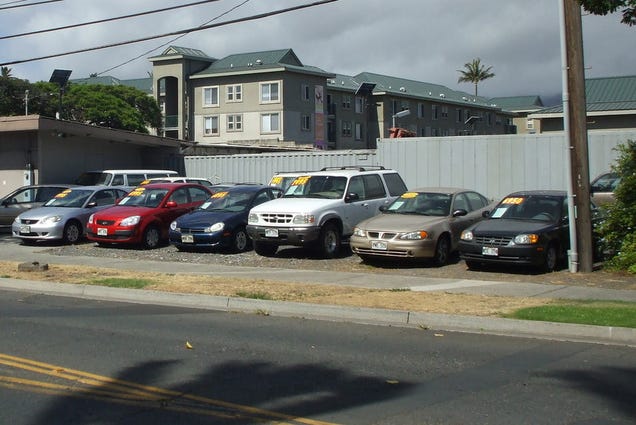
You bought a car and a couple days later the dealership comes by in the middle of the night and steals it back from you. Surprised? It happens all the time.
JT went to a car dealer and found a late model used vehicle he liked. His credit was okay – not stellar – but good enough to allow him to finance the car without getting a co-signer. The salesman and the others involved in the deal kept coming and going from the desk where he was sitting, bringing papers and talking about different lenders but assured JT they could get him financed. He had $1,000 for a down payment. As closing time at the dealer approached, they put some papers in front of him and said they had worked everything out. He signed and gave them the $1,000. He got in his new (but gently used) car and drove home.
A few days later, the salesman called him and told him there was a "problem" with the paperwork. Could JT come back to the dealership? JT went in and found his salesman who took him back to see the finance people. They told him that the bank which had approved his loan the other night had reneged. The good news is that they had found him a new bank and this one would move forward with a loan – even though JT already had the car – and only at a slightly higher interest rate. The papers were all filled out for JT's signature. They wanted to tear up the paperwork from the other day.
I have heard from many consumers who sat down and signed the new papers at this point. Instead, JT said words to the effect of, "Gentlemen, I believe you are attempting to be dishonest with me. Hence, I shall exit now." I wasn't there so we'll go with that.
The next morning he looked at his driveway and his car was gone. He called the police to report the stolen car. Shortly after, he was notified that the car wasn't stolen; it had been "repossessed" by the dealer. When he called them, his salesman said they were forced to do that when JT had refused to sign the new papers. All he had to do to get the car back was sign the new papers and pay the towing bill. The car was at the dealer. If he did not want to do that, they would simply keep his down payment for their troubles.
JT called an attorney and brought in all of his paperwork. Please keep in mind that this transaction took place in Michigan and this is an area of law that varies wildly from state to state. In JT's case, there was a Purchase Agreement which was signed by both parties. And then there was a finance contract. That contract was typical for Michigan in that it said that the buyer and seller agreed to a financial arrangement (down payment, monthly payments etc) and that the dealer was then authorized to assign the loan to a lender. But, it was the seller who was initially lending JT the purchase money.
What had most likely happened was that the assignment of the loan had failed. The dealer hadn't gotten anything approved and just hoped they could find a bank willing to take over the deal. Or, they had planned on ripping off JT all along. Interestingly, this meant JT could simply make his monthly payments to the dealer until they managed to reassign his loan and he would not be in breach. Of course, the dealer was not trying to reassign the loan; they were trying to shake him down for more money.
I advised JT to make his monthly payments to the dealer and we filed suit. The transaction JT saw is sometimes called a "Spot Delivery" – although those are quite often cases where the vehicles are given to the buyer without even pretending there is financing in place. In JT's case, they told him the financing was there. These deals are also sometimes called "Yo-Yo Financing" for obvious reasons.
Our lawsuit was simple: JT owned a car. The dealership stole it. We sued them for theft. Michigan has an interesting law that allows you to sue a thief for treble damages. And those can be construed as the value of the goods at the time of the theft. So, the moment we filed suit, JT was into this for $1,000. Each month he made a monthly payment. But our lawsuit named a sum closer to $50,000 (three times the purchase price of the car). The statute also allows for the recovery of court costs and attorney fees. It's cases like these which defendants are not wise to drag out. And they didn't. A short while later, they agreed to settle.
JT didn't get a gigantic windfall but he did get all his money back and something for his trouble. His attorney fees and court costs were likewise paid. During the case, I took the deposition of one of the dealership's finance people. That is, I got to question him under oath in front of a court reporter about the case. A few months after the case resolved, I saw the man in a restaurant and he came over and said Hello. He said he no longer worked at the same dealer. I asked him about JT's case. How common was something like that?
"Grabbing a car to get more money? They did it all the time."
"No, I mean that you guys settled with us?"
"Oh, that never happens. No one ever sues us. Most everyone just paid to get the car back. Why do you think they keep doing it?" He gave me his card.
There are many variations on this scam but the upshot is that the buyer is asked to come back to the dealer after the deal has been finalized, to "correct" or "redo" some paperwork. And it happens all the time. Search the term "spot delivery" on the interwebs if you are curious.
I implore you: If this ever happens to you, call an attorney before you go back to the dealer. Simply do a web search for an attorney who handles "auto fraud" or even "lemon law" (the fields are closely enough related) and simply ask for some free advice. It might mean the difference between you keeping the car or walking home from the dealer.
A few readers will gripe about my "call an attorney" advice here and ask if there isn't some self-help they can resort to. No, there isn't any simple advice I can give you like that. The laws on this really are different from state to state. Further, there are a variety of other laws which might prove helpful in your case that were not mentioned above, both Federal and state. Depending on how your situation unfolded, there might be violations of the Truth in Lending Act, Equal Credit Opportunity Act, the Motor Vehicle Sales Finance Act (a state law in Michigan but most states have a similar one) and the Fair Credit Reporting Act, just to name a few. A local attorney who is versed in them is the best place for an aggrieved consumer to start.
Metaio and Timetraveler Augmented announced the Timetraveler application today. Using Augmented Reality (AR), smartphone and tablet owners can view historical content about the Berlin Wall, in and near the locations where it used to stand. Content includes historical film footage, reconstructions of demolished sites, and stories about the divisive impact the wall had on Germany during… Read More
Google's self-driving cars have made impressive progress in the past few years, logging over 700,000 accident-free miles without human intervention, according to the company (there has been at least one accident reportedly caused by a human driver). But those test-drives have been limited to a few closed courses and select areas. Starting this month, Google and a few other ambitious automakers will be able to unleash self-driving vehicles on any public road in the state of California. Last week, the state Department of Motor Vehicles (DMV) handed out its first 29 permits for testing autonomous cars on all of the state's public roads. Google won 25 of the 29 total permits, which will allow the company to test 25 modified, self-driving...
Google today dropped word on the developer dashboard that the price-range for in-app purchases on a given app soon will be listed in the app description. The change takes effect Sept. 30.
Basically if an app has in-app purchases or subscription rates, you'll be able to see the ballpark cost first thing and not get blindsided later by, for (extreme) example, a free app that for some reason charges $20 later to do something. (And for parents, this definitely is a good thing.)
The good news: Jacques Tati's daring masterpiece PlayTime is being re-released on November 7 in the UK. The even better news: we have a brand-new poster to share with you in honour of this momentous occasion, and here it is for you below. Please accept 0 Empire points if you can spot Monsieur Hulot.
{PlayTime Poster}
Unloved on its initial release, now is the perfect time to rediscover the absurdity inherent in modern life, as seen through the eyes of both Monsieur Hulot and Monsieur Tati. Intricate, incisive and inspirational, it's a 70mm delight that was the much-loved director's most ambitious project, featuring a gigantic set built exactly to his instructions. Now it's been 4K-ified, in a way all the glass and concrete and joyful pratfalls have long demanded.
The story, should you demand one, sees Monsieur Hulot taking on the tricky problems of finding and completing a job interview. A reimagined modernist Paris blesses him with several comedy bear traps, some in the form of never-ending corridors, others as slippery floors, sinking chairs, or sliding doors. As you'll see from the trailer below, a restaurant is also involved, as is a lot of sheet glass. Do not watch it if you respond badly to broken glass (you'll probably want to dodge Die Hard for similar reasons, too).
Look out for PlayTime at BFI Southbank as part of a wider Jacques Tati season come November 7, as well as in selected cinemas nationwide.
There was once a time when my search for a new phone would start (and likely finish) with a visit to Nokia.com. The Finnish company had the widest choice, the best designs, and the most respected brand around the world, so it was pretty hard to pick a bad phone from its catalog. Try doing the same thing today, however, and you’ll find every link on the Nokia homepage pointing to Microsoft’s Mobile Devices division — the new incarnation of the Nokia most of us knew and loved. It’s a vastly different mobile world we’re living in now, but what’s most striking about it is that Nokia saw it all coming.
The best phone in the world today is dressed from head to toe in aluminum and has an outstanding camera that protrudes from its body. So did...
Android: With one swipe, Pie Control will give you access to your Android device's settings, favorite apps, menu buttons, app drawer and more.
Custom Android ROM Paranoid Android has long had this pie-like, gesture-activated control center, but you can now get it on any phone, without rooting. Swipe from the right, left or bottom of the screen to activate Pie Control. In the app's settings, you can customize the phone options, apps and other features you want to see. Pie Control launches even from full-screen mode, so if you're playing a game, you can quickly switch to another app.
The free version has plenty of options already, including a notepad, an app drawer widget, Wi-Fi toggle and more. In the $1.99 Pro version, you can add a total of eight shortcuts (five in free), a battery bar, and recent apps.
UK retailer Phones 4u has recently gone into administration, announcing the closure of 700 stores and placing 5,600 positions at risk. Luckily for those involved, there is - at least - some light at the end of this tunnel with multiple parties picking up stores and absorbing employees, including both EE and Vodafone.
A few months ago, on-demand home services startup Handy opened up its first international office and launched services in London. In an effort to quickly grow its business there, today the company is announcing it’s acquired local competitor Mopp, which also provides home cleaning services in select U.K. markets. Read More
Apple released its iPhone 6 and iPhone 6 Plus handsets last week, and they’re already setting new sales records. The company reports that it has sold more than 10 million new iPhone 6 and iPhone 6 Plus devices in just three days since launch. That’s 1 million more than the combined 9 million sales of the iPhone 5C and 5S last year, despite the new devices not being on sale in China yet. Apple isn't revealing the mix of iPhone 6 vs. iPhone 6 Plus, but impressive iPhone sales aren't surprising given the company announced a record 4 million pre-orders for the iPhone 6 and iPhone 6 Plus in just 24 hours.





 Tony Abbot's given a speech warning Australians that the police state is inevitable, saying there would be "more restrictions on some so that there can be more protections for others."
Read the rest
Tony Abbot's given a speech warning Australians that the police state is inevitable, saying there would be "more restrictions on some so that there can be more protections for others."
Read the rest


 The blocking of sites such as The Pirate Bay, KickassTorrents and Torrentz in the UK led to users discovering new ways to circumvent ISP-imposed censorship. There are plenty of solutions, from TOR and VPNs, to services with a stated aim of unblocking ‘pirate’ sites deemed illegal by UK courts.


 Google Currents, Google’s magazine-like news reading iOS app and a competitor to Flipboard, is rolling out a redesign and a handful of new features, including a way to subscribe to topics you’re interested in, instead of only subscribing to publishers, blogs and RSS feeds. The company is also ditching the name “Currents,” and renaming the app “Google Play… Read More
 Bitcoin’s momentum among key merchants and platforms on the web keeps accelerating. After hinting at it a few weeks ago when Braintree enabled Bitcoin-based transactions for PayPal developers, the company is now enabling Bitcoin across the PayPal network for merchants of digital goods. The company has expressed interest in bitcoin for a while, with eBay CEO John Donahoe saying in the… Read More


 UK users of Instagram, the Facebook-owned photo sharing app, will now begin seeing sponsored content — i.e. ads — show up in their Instagram feeds. Advertising on Instagram was first introduced in the U.S. all the way back in September 2013, but, until today, Brits have escaped the invasion of sponsored content, though, of course, plenty of brands have already set up shop on the… Read More





 Welcome to the roundup of the best new Android applications, games, and live wallpapers that went live in the Play Store or were spotted by us in the previous 2 weeks or so.
 Apple will discontinue the streaming music service Beats Music it acquired in May, according to five sources, including several prominent employees at Apple and Beats. Many engineers from Beats Music have already been moved off the product and onto other projects at Apple, including iTunes. It’s not clear when exactly Jimmy Iovine and Dr Dre’s music service will be shut down or… Read More


 Metaio and Timetraveler Augmented announced the Timetraveler application today. Using Augmented Reality (AR), smartphone and tablet owners can view historical content about the Berlin Wall, in and near the locations where it used to stand. Content includes historical film footage, reconstructions of demolished sites, and stories about the divisive impact the wall had on Germany during… Read More


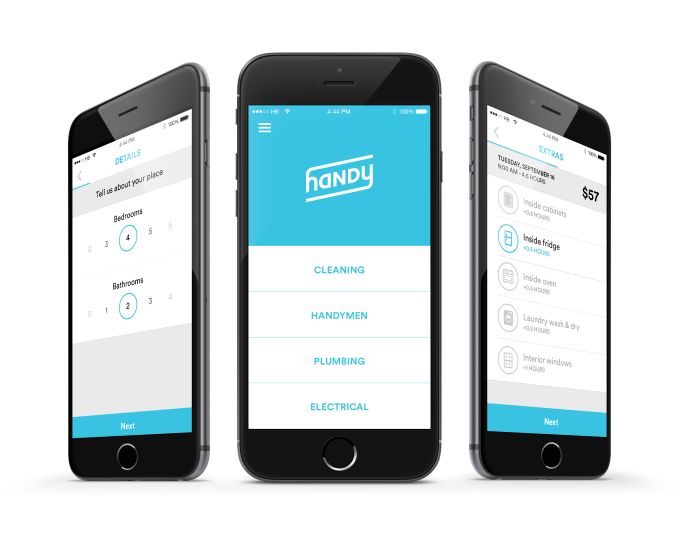 A few months ago, on-demand home services startup Handy opened up its first international office and launched services in London. In an effort to quickly grow its business there, today the company is announcing it’s acquired local competitor Mopp, which also provides home cleaning services in select U.K. markets. Read More
