September was a solid month for new Android releases. The new phone call functionality in Hangouts is easily the biggest news, but in our top picks below you'll find new media app options, new customization tools, ways to improve your videography, and all manner of interesting stuff to do on your phone or tablet. The honorable mentions section has even more goodies for you to check out. Your Android device won't be wanting for new things to do.
The Windows 10 technical preview is out with a peek of some new upcoming features. If you don't feel like installing it yourself, this video walkthrough should give you a brief idea of what it looks and feels like.
Things aren't too different from Windows 8 (yet), and most of the features you already know: the Start menu's back, Modern apps can be run as a window, multitasking and virtual desktops are here, and so on. But there are a few other cosmetic changes—like the removal of window borders—that are pretty interesting.
We're still playing around with Windows 10 and finding little tidbits inside, but if you just want to see what it looks like, this should give you a feel. If you're trying it out yourself and find anything cool, let us know!
Hundreds of law enforcement offices across the United States are handing out free copies of software that claims to protect children and families while they browse the Web. But according to an investigative report by the Electronic Frontier Foundation, this software is actually spyware, and can put your data at risk.
Called ComputerCOP, the software reportedly allows parents to view recently downloaded material, identify keywords like “drugs” or “sex,” and uses a “KeyAlert” system that logs keystrokes to the hard drive, so that parents can see what their kids have been typing.
The software works by placing the CD-ROM into the computer, and if parents choose to enable KeyAlert, the system will to capture conversation when one of the suspicious keywords or phrases is typed.
Outdated and complicated to use, ComputerCOP is also ineffective, according to the EFF report. Researchers found that the software doesn't do what it claims accurately—like identifying trigger words such as "gangs" in Web chat histories or in documents. What's more, it regularly identifies documents that don't include any of the trigger words.
According to the EFF, the key logs are unencrypted when running on a Windows machine, and easily decrypted on a Mac. If parents choose to get emails regarding the key logs, which they can through the ComputerCOP software, the information is sent unencrypted to third-party servers, not only putting information at risk, but rendering HTTPS protection on websites useless. The EFF was able to copy passwords using KeyAlert with "shocking ease."
ComputerCOP's Clumsy Defense
Stephen DelGiorno, the head of ComputerCOP operations, told ReadWrite that ComputerCOP only captures 500 characters at a time when a trigger word is identified, and saves them on the computer's local hard drive to be viewed by parents later. But even DelGiorno was unclear about how secure the data is.
"I'd have to ask the programmers, I'm not 100% sure," DelGiorno said when asked whether or not key logs are encrypted on local hard drives. "I know you can't find it, but I don't want to say it's encrypted at this point."
"It’s no more dangerous than them sending any email from that computer to another computer," DelGiorno said. "But I’m not saying [encrypting data sent via email] is a feature we can’t go back and add."
About 245 law enforcement agencies including sheriff’s departments, police departments, and district attorneys offices have spent thousands in tax dollars to purchase the software and distribute for free to parents, without, apparently, checking the veracity of ComputerCOP's claims.
Apart from the security risk ComputerCOP has posed to an as-yet-unknown number of families, the New York-based company which distributes the software also used false approvals from the ACLU, National Center for Missing and Exploited Children, and the U.S Department of Treasury, which has since issued a fraud alert. DelGiorno told ReadWrite that the company never said the Treasury endorsed the product, rather just said the government body approved the allocation of funding.
The EFF estimates anywhere from hundreds of thousands to one million copies of ComputerCOP were purchased by law enforcement, but because it's complicated to set up, and doesn't do what it claims to, many families might not be using it.
September was an unusually good month for high-end Android games, especially those that are ported or simultaneously released on other platforms. The latest entry in the Anomaly series is sure to please tower defense fans, Mage Gauntlet will make action RPG players happy, the original Dragon Quest is available for those who appreciate the classics, and the much-loved Goat Simulator is there for... well, for gamers who like goats, I suppose.
Julieanne Kost took these otherworldly aerial photographs of the salt flats and baylands just south of San Francisco that always surprise newcomers when flying into SFO. Read the rest
It appears Grooveshark's days are just about numbered. The music sharing service has been dealt what could easily amount to a death blow by a US District Court judge, which found that Grooveshark's own employees personally (and willfully) violated and profited from copyright infringement. It's been a long saga; Grooveshark has faced lawsuit after lawsuit in recent years. It's managed to overcome some by striking deals with publishers, but vengeful music labels haven't given up on sinking the company.
Most recently, Grooveshark had tried to seek protection under the "safe harbour" provision of the Digital Millennium Copyright Act. It took on a Google-like approach when responding to takedown notices by taking down unauthorized files...
Yesterday, Microsoft announced the newest version of Windows. Today, the company is allowing adventurous users (like yourself) to try it out for free. Here's how.
Before You Install
There are a couple warnings you should be aware of before you do anything:
Back up your data first!Not that you had any excuse not to anyway, but be sure to perform a backup on your data before you upgrade if you have anything you can't recover. Or even if you don't. Just do a backup.
You won't be able to use your recovery partition to downgrade. If you have a recovery partition on your system, it will no longer be able to restore your computer to the version of Windows you had before.
You'll need external recovery media to undo the upgrade. As you might expect since you don't have a recovery partition, you'll need a disc or USB drive with Windows 8 (or older) on it to get back to the way things were if you don't like or can't use Windows 10.
As Microsoft mentions multiple times, this is pre-release software and is expected to be very buggy and probably crash-prone. It's not advisable that you install this on your work machine or anything you need daily use out of. We'll show you how to install it on a spare PC, or—if you don't have one—in VirtualBox.
What You'll Need
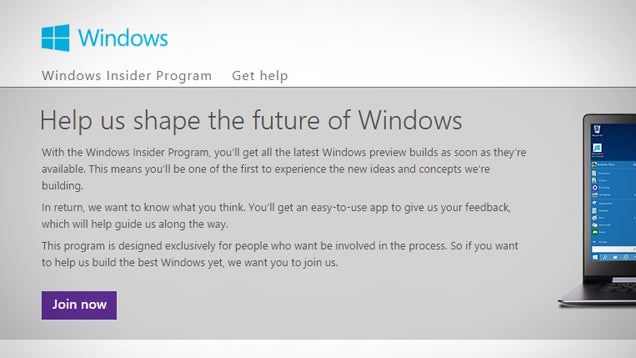
This time around, Microsoft has created the Windows Insider Program to allow users to test out the new hotness. You'll need to agree to a special terms and condition, which likely mostly consists of "don't blame us if this breaks your stuff" in addition to the usual jargon. In addition to downloading the update, the Insider Program will be how you provide feedback and get help from the community.
Once you're enrolled in the program, here's what you'll need:
A DVD or USB drive large enough to hold a 4GB ISO file.
One of the Windows 10 ISO files
A spare computer to install it on (Microsoft does not recommend using your daily driver), or VirtualBox installed on your main machine.
As soon as you're enrolled in the Insider Program, you'll be directed to download one of several ISO files. Currently, there are four languages supported (English, English UK, Chinese Simplified, and Portugese Brazil), in both 32- and 64-bit configurations. Grab the version that matches your needs and let the download do its thing. Though you may want to grab a snack, as the downloads range from 3-4GB, depending.
Option One: Install the Windows Technical Preview on Your PC
Once you have everything you need, follow these steps:
Copy the ISO to a disk or USB drive. You can use a tool like ImgBurn to unzip the contents, though if you're installing on a device that's already running Windows, the OS should be able to mount the ISO itself.
Insert the disk or USB drive in the computer that you want to install Windows 10 on.
If you have an older copy of Windows installed on that machine, start it up and double-click setup.exe from the installation media. If not, you can boot up your PC from the installation disc to start installation.
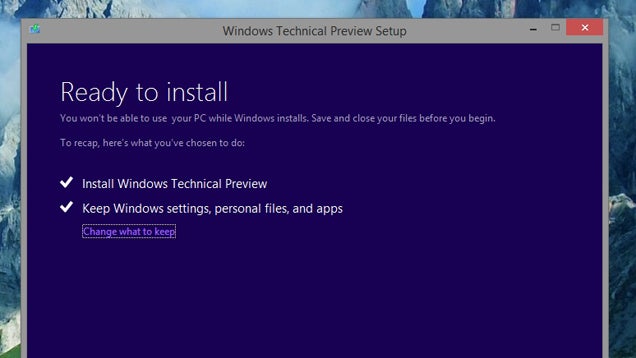
Follow the wizard to install Windows on your machine.
Microsoft's wizard will walk you through the rest of the installation process. If you want to do a clean install, make sure you choose to "Keep Nothing" during the wizard.
Option Two: Install the Windows Technical Preview in VirtualBox
If you don't have a spare machine to try out the Technical Preview, we recommend installing it in VirtualBox. That way, you can try it out, see what's new, and play around without overwriting your main system.
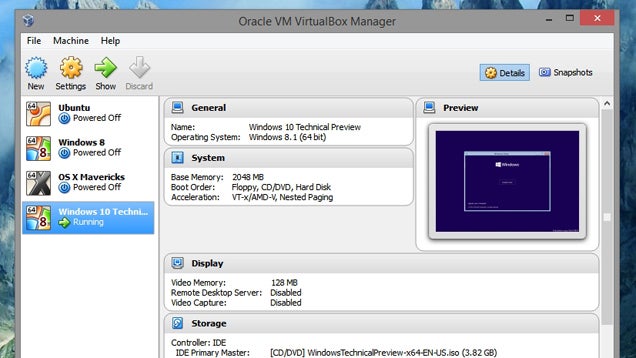
Click the "New" button in the main window to create a new virtual machine.
Give your operating system a name (like "Windows 10 Technical Preview") and choose Windows 8.1 from the list (since VirtualBox doesn't have a Windows 10 option yet).
When it finishes, you should see your new machine in the left-hand sidebar. Click on it and hit the Settings button along the top of the VirtualBox window.
Head to Storage in the left sidebar, and next to "Controller: IDE", click the Add CD button.
Select "Choose Disk" and navigate to your downloaded Windows 10 ISO.
Click OK.
Press Start to start up your new virtual machine and go through the Windows 10 installation process.
Remember, this is pre-release software, so install at your own risk! If you aren't interested in risking your machine, we'll be poring over the new OS to let you know what other cool stuff Windows 10 has in store over the next couple days. Good luck!
Microsoft is launching Sway today, a new app that’s part of the company’s Office family of products. It will sit alongside the regular Word, Excel, PowerPoint, and OneNote apps as a rich content creation tool. In its most basic form, Sway allows anyone to create a beautiful website from just images and text without any effort, and it’s all what you see is what you get (WYSIWYG) — a modern and simple version of FrontPage. Despite that, Microsoft is taking an interesting approach with Sway, using the company’s powerful Azure cloud servers to suggest page layouts and quickly render content on the fly.
Sway will format pictures and text in a way that its algorithm feels is appropriate, even picking colors from photos to apply to the site....
For the past year or so, Yahoo has been working through a major design overhaul under CEO Marissa Mayer, and it looks like it has now started testing out new formats for its biggest property of all, Yahoo.com. From the looks of tips that we’ve received from readers, and a handful of others on Twitter, the new site will sport a much cleaner look, with a collapsable vertical menu bar… Read More
Tile, the lost-item tracker that raised millions in crowdfunding wants to give objects a voice by connecting them to the web. To capitalize on the growing demand for Tile’s small, square-shaped devices that attach to bags, bikes, keychains and more, the company has raised $13 million in funding, in a $9.5 million Series A round led by GGV Capital, a firm known for its global ties, and… Read More
EE today announced the mobile network has launched 4G in 18 new towns across the UK, including Sandhurst. This takes the total number of major towns and cities with LTE connectivity through the company to 281 – reported to be over 75 percent of the UK population.
Yeah, this is Merry Olde England, but give it time to become law over here. Probably start with the podcasting licensing John and Adam keep saying is coming. Do it for the children!
Extremists will have to get posts on Facebook and Twitter approved in advance by the police under sweeping rules planned by the Conservatives.
They will also be barred from speaking at public events if they represent a threat to “the functioning of democracy”, under the new Extremist Disruption Orders.
Theresa May, the Home Secretary, will lay out plans to allow judges to ban people from broadcasting or protesting in certain places, as well as associating with specific people.
The plans — to be brought in if the Conservatives win the election in May — are part of a wide-ranging set of rules to strengthen the Government’s counter-terrorism strategy.
To most consumers it’s common sense that they can make a backup copy of media they own, but in the UK this has been illegal until today.
After consulting various stakeholders the Government decided that it would be in the best interests of consumers to legalize copying for personal use.
Earlier this year the UK Intellectual Property Office announced that the changes would go into effect in June. However, when June came around the most crucial changes were still pending Parliamentary approval.
These final issues were resolved this summer and after a brief delay private copying is now legal.
This means that people are now free to make copies of DVDs, CDs and other types of media, as long as they’re for personal use and without copyright protection. In addition, it’s no longer copyright-infringing to store copies of legally purchased media to the cloud.
“These changes are going to bring our IP laws into the 21st century,” IP Minister Baroness Neville-Rolfe says commenting on the changes. “They will mean that the UK IP regime will now be responsive to the modern business environment and more flexible for consumers.”
The changes aim to fix the mismatch between the law and public opinion. A Government-commissioned survey previously found that 85% of consumers believed that DVD and CD ripping was legal already, while more than one-third of all consumers admitted that they’d made copies of media they purchased.
Besides the new private copying rights, the upcoming amendments will also broaden people’s fair use rights. For example, people no longer have to ask permission to quote from or parody the work of others, such as a news report or a book, as long as it’s “fair dealing” and the source is recognized.
For the public the amendments are certainly a welcome change from the more restrictive copyright laws that were previously in place. For those who are interested, a full overview of the upcoming changes is available here.
Update: The time-shifting reference was removed from this article, as that was already allowed under a previous amendment. Apologies for the confusion.
California has become the first US state to sign into law a ban on single-use plastic bags, including those used for bagging up purchases at grocery stores. The legislation is meant to cut down on waste throughout the state and to help protect its land from pollution. The ban will begin this coming July in grocery stores and pharmacies, and it'll expand to convenience stores and liquor stores one year later. "This bill is a step in the right direction," California Governor Jerry Brown says in a statement. "It reduces the torrent of plastic polluting our beaches, parks, and even the vast ocean itself.
Pebble announced Tuesday that its smartwatch has officially become a bona fide activity tracker—and an affordable one at that.
Last year, its PebbleKit software developer kit gave app makers access to the device’s accelerometer. Now that effort has born fruit with a new breed of more robust fitness-tracking features from partners Swim.com, Jawbone and Misfit.
This news alone might appeal to fitness buffs, but Pebble—the little Kickstarter startup that sparked the recent smartwatch trend—had another announcement that could give this news a major boost: a steep price cut. The watch starts at just $99.
So for a price that costs less than many standalone step counters or smartwatches, customers can have both in one device.
Track This, Quantified Selfers
Several existing Pebble apps promise some fitness-tracking features, but they’ve been a bit half-baked. Some merely channel and display details from a companion smartphone app. Others use the accelerometer, but are roughed out and can only run when the relevant Pebble app has been launched.
Not so with the new Pebble-sanctioned troika of quantified fitness, which take advantage of a new update that lets them run in the background continuously.
Yes, you can swim with this: Swim.com's Pebble watch app
As the name suggests, the Swim.com app tracks swim workouts, including distance, pace, times, strokes and efficiency while people swim with their Pebble watches (which are water-resistant up to 5 atmospheres). The watch app can then sync the data to the phone and over to the cloud.
Look, ma! No wristband: Jawbone's UP step-counting watch face
Jawbone has been very busy, opening its API (see our API explainer) so developers can work with its system, launching a new wristband-free mobile app, and developing for the Pebble platform.
Now it’s ready to launch its new activity-tracking watch face. In some ways, it manages to do what its full-blown step-tracking bracelet can’t: It puts the data directly on your wrist. The physical Jawbone wristband has no display.
Steps and sleep—maybe even both, if you sleepwalk: Misfit's newly updated Pebble app
Misfit’s watch app, which first debuted in June, now gets an update that takes advantage of round-the-clock tracking to reveal steps, show weekly activity and log sleep.
These are likely only the first waves of this new class of Pebble apps. Earlier this month, the company issued an iPhone update that let loose some handy features, like iOS 8 compatibility and the ability to dismiss notifications right from the wrist. But for activity tracking, the more interesting tidbit is the new support for the watch’s built-in compass.
Not only can users download the company’s free, basic Compass app now, but developers can also support it for geo-caching features or even full-fledged mapping. Those could come in very handy for runners, bicyclists, hikers and other outdoor sports enthusiasts.
If you don’t want those watch apps to sync to your phone or the cloud, they don’t have to, since they don’t require companion smartphone apps. So if you only want Jawbone on your watch, but not your phone, you have that option. According to a company rep, Pebble can hold about a day’s worth of data, should you choose to record the numbers elsewhere.
Stepping Things Up
All that background tracking makes the device more useful, but it will also affect battery life. However, according to Pebble founder Eric Migicovsky, the hit isn’t as bad as you might think. “The average Pebble user gets a six-day battery life,” he said. Part of the secret to that sauce is the low-power, non-touch e-paper display. End result: “When you run activity tracking in the background, the power implications are roughly half a day,” Migicovsky said.
If that holds true, it should result in four-to-five day battery life, which seems average for dedicated fitness trackers. My Jawbone UP24 lasts for at least five to seven days; the Basis fitness watch offers three to five days. (The next-generation Basis Peak heart rate monitor, tracker and watch promises to improve on that.) The Fitbit One claims to offer at least 10 days.
As for smartwatches, competitors like Samsung, LG, Motorola and Sony can't hold a candle to Pebble's battery life—with or without full-fledged activity-tracking enabled. I’ve tested several of those devices, and while those beautiful color touchscreens are far more beautiful than Pebble’s display, they are a major factor in that downright depressing battery life.
Samsung Gear Live, Pebble Steel, LG G
By all accounts, Apple’s upcoming wearable won’t improve on that experience either. According to Apple CEO Tim Cook, his Watch will require daily charging. So it will only last one day, at best. Possibly even less.
Migicovsky considers the Apple Watch interesting, but as “an expensive, high-quality luxury watch made of high-class materials,” it’s a different category of device than his Pebble. He’s not wrong. Smartwatches from major companies run roughly $250 to $350, with Apple hitting the high end of that range. Pebble—in its new fruity colors—is what he deems a “fast fashion” wearable, with a fast price set to move units.
The classic plastic model takes off about a third of its $149 retail price, landing at $99. The more grown-up steel version chopped about $50 off, for a $199 price tag. For the money, users get new activity-tracking features (with more on the way), longer battery life, a bustling watch app store and dual-platform support for Android and iOS.
For a while there, it looked like Pebble was getting eclipsed by far bigger tech companies’ smartwatch initiatives and their ambitious health and fitness ambitions. Android Wear gadgets have Google Fit, and the Apple Watch will boast its homegrown Health app and HealthKit system for health and fitness monitoring. Now Pebble rolls in, armed with a new round of fitness watch apps and boasting a few things even the big boys can’t touch.
It’s great timing. How apropos for a smartwatch company.
Photos and Pebble watch images by Adriana Lee for ReadWrite. Actual Swim.com, Jawbone and Misfit screenshots courtesy of Pebble.
Update: Perhaps emboldened by new features that keep it competitive in a landscape filled with giants, Pebble couldn't resist throwing a little shade in one's direction. On Getpebble.com, the landing page takes a poke at Apple design honcho Jony Ive's reverence for his own work, which includes the Apple Watch. We'll see if this scrappy smartwatch maker didn't just wake a sleeping giant.
The next major version of Windows, Windows 10, will be available late next year. The new operating system is being unveiled today at an event in San Francisco, where Microsoft announced its name and began detailing new features, including the return and makeover of the Start Menu, the introduction of multiple desktops, and a new universal search feature. Microsoft isn't hiding that, for mouse and keyboard users, this is a move back toward what Windows users are used to and away from the contentious changes in Windows 8. "It gives the familiarity of Windows 7 with some of the elements of Windows 8," Windows chief Terry Myerson says.
Last Friday Radiohead frontman Thom Yorke released his new solo album via BitTorrent. A few tracks were made available for free, but those who want the full album are charged $6.
The new experiment is part of BitTorrent Inc’s bundles project, which allows artists to easily share their work with fans. While many artists tested the waters before Yorke, he is the first to ask for money directly from consumers.
“If it works well it could be an effective way of handing some control of Internet commerce back to people who are creating the work. Enabling those people who make either music, video or any other kind of digital content to sell it themselves. Bypassing the self elected gate-keepers,” commented Thom Yorke on his decision to join.
Fast forward a few days and the album release has turned out to be a great success. At the time of writing the number of downloads surpassed 500,000, and at the current rate this will have doubled before the end of the week.
These numbers are for both the free sample and the full album, which are both being counted by BitTorrent. Thom Yorke doesn’t want the sales figures to become public but judging from the number of people sharing the torrent this lies well above one hundred thousand.
“When the Bundle is downloaded using one of our clients, it pings back with a torrent added event which is how these are being counted. Thom Yorke has asked that sales figures remain undisclosed, which is his discretion,” BitTorrent spokesman Christian Averill told TorrentFreak.
Now that BitTorrent Inc. has become a paid music service, a whole new world opens up. Will there soon be a BitTorrent release at the top of the charts for example? We asked BitTorrent whether they are considering becoming an RIAA-certified seller, and the company’s answer was an unequivocal yes.
“Our vision is absolutely that Bundles will count toward all the usual industry accolades and charts. Again, it will be up to the publisher of the specific Bundle. But the numbers certainly merit the recognition,” Averill says.
If that happens, BitTorrent sales will be eligible for RIAA’s gold and platinum awards as well as other charts.
While some music industry insiders may need some time to adjust to the idea of BitTorrent (Inc) as an authorized music service, the RIAA itself doesn’t see any reason why the company can’t apply.
“Music sales … on digital music services that are authorized by and reported to the record labels, whether paid for by the consumer through a subscription or free to the consumer through ad-supported services, are accepted for RIAA certifications,” RIAA’s Liz Kennedy tells TorrentFreak.
Becoming RIAA-certified doesn’t happen overnight though. BitTorrent would first have to request the certification and a full audit is then required to receive an Authorized service stamp and a possible listing on whymusicmatters.com.
“Whymusicmatters.com, a joint initiative of the RIAA and Music Biz, lists the leading authorized music services in the United States,” Kennedy explains.
For BitTorrent this would be a great achievement. The company has had to withstand a fair amount of criticism from copyright holders in recent years, and recognition as an authorized music service will surely silence some of it.
Pushbullet Channels are the headlining feature in the app's latest update. In short, these are feeds that can push out notifications to subscribers whenever something new happens. Want to keep up with our APK downloads? You can simply subscribe to the channel to get notified whenever we have something fresh to send your way.
People who walk around Scotland's Edinburgh airport may see a lot more people wearing Google Glass on their heads. That's because the airport's customer service reps have begun a trial of the wearable device to see if it will help them give better answers to travelers.
Not to be mistaken as leaked photos from the set of the new Stars Wars movie, Hub by Premier Inn is a new hotel opening in London later this year. Futuristic rooms at the hotel will be available from November and will contain enough connected gadgetry to excite anyone with a smartphone or tablet. The company has released an app for iOS and Android in preparation of the London Hub opening, which will be able to control everything from lights to booking and food ordering.
A couple of days after I received a review copy of Hello Kitty Crochet I read an article in the LA Times about the 40th anniversary of Sanrio’s iconic character.
In a gritty intersection on Folsom Street, the famous thoroughfare of San Francisco's SoMa district, the past and future of wearables face off.
On the south side, there's Mr. S Leather, which has offered a certain genre of hardware to its clientele for decades. Across the way, in a sun-dappled loft, there's a new outpost of Intel. Since they became employees of the giant chipmaker in March, the hardware and software engineers of Basis Science have been working on a new fitness-tracking smartwatch.
If Mr. S's wares make people's heart race, then Basis wants its gear to be on hand to record every beat. On Tuesday, Intel is announcing the Basis Peak, a device it will start selling in November for $199, in matte-black and brushed-aluminum styles. Amazon, Best Buy, and REI will stock the device.
Intel's Basis Peak fitness tracker and smartwatch.
A Fitness Tracker With Heart
Like Basis's original B1 band, the Peak will capture users' heart rate all day. That's a key differentiator from simple fitness trackers like the Jawbone Up and Fitbit.
So what's new? The Peak will—how to put this delicately?—actually do the job right. There are a host of improvements in the Peak, from the charger design to the setup process to the wristbands, but the most important is in its core heart-rate function.
The problem with the B1's optical heart-rate technology, Basis CEO Jef Holove acknowledged in a recent interview, is that it got heart rate right for most of the day, but it failed to capture the swings in heart rate that people achieve during vigorous exercise.
If you look at the backside of the B1 and the Peak, you notice a glaring difference: Basis has dramatically boosted the power of the LEDs that light up your skin to read minute variations in your blood vessels that indicate your pulse. That power boost allows the Peak—as the name suggests—to better capture variations in heart rate. (Basis's sensors also detect perspiration and body temperature.)
At the same time, the Peak still uses all-day heart-rate data to assess your overall health, including factors like sleep quality. (There's some controversy among scientists over Basis's claims about sleep tracking via heart rate.)
"We still value 24/7 tracking," Holove told me. "It turns out you can do both."
And a little more, too: Basis says a future software update will let the Peak, which has a touchscreen, display notifications from a paired smartphone. That will put it in competition with the likes of the Pebble, smartwatches running Android Wear, and the forthcoming Apple Watch. The Peak's price and capabilities put it in the middle of the pack—more expensive than a Pebble, cheaper than a Moto 360 or Apple's heart-rate-tracking smartwatch.
But health measurement will remain the crucial differentiator for the Basis Peak. Its jacked-up heart-rate capabilities will make it more appealing to runners and cyclists, who are more likely to spend $199 on a piece of gear that tracks their heart rate.
The challenge for Basis and Intel will be to market the Peak to the rest of us.
"Our job is to make heart rate relevant to people who don't have a clue about heart rate," said Holove. "People who are intrinsically motivated, the thing they love about devices like us is how much data we give them. It's like sports tuning. But the vast, vast majority aren't that. They're extrinsically motivated."
What that means is that most people need some kind of push to pursue healthy habits. Basis's companion mobile apps for iOS and Android will provide that, giving users a sense of "virtual progress," Holove said, until they can see visible improvements in their health from pursuing new habits like exercise.
From the brief look I got at the Peak, Basis under Intel has made more than just virtual progress. The device is a substantial improvement over the B1, which I found deficient in both performance and design. But it's entering a far more crowded market. If the Peak on Holove's wrist is measuring an increase in his heart rate today, he's got good reason.
The race to the bottom is back. Reminiscent of the netbook war of yesteryear, HP just followed Toshiba’s lead with a $99 tablet along with introducing a $199 Windows notebook. Expect to see these colorful devices at a department superstore near you. HP hasn’t revealed the specs powering these Windows 8 machines. That’s by design and as we’ve said for years, the spec is… Read More
Netflix has made original, exclusive TV shows like House of Cards and Orange is the New Black a major part of its content strategy over the last few years, and now the company has a new piece of the puzzle to unveil. According to Deadline and Variety, Netflix will release the sequel to Ang Lee's surprise international hit martial arts film Crouching Tiger, Hidden Dragon at the same time as it hits movie theaters.
Crouching Tiger, Hidden Dragon: The Green Legend will feature the first film's star Michelle Yeoh and will premiere on August 28th, 2015 on Netflix as well as in IMAX movie theaters. It's worth noting that theatrical distribution for this film will be limited to only IMAX screens, at least initially. For those who don't have a...
Citing a "rapidly changing global commerce and payments landscape," eBay has just announced plans to separate its business into two distinct and independent companies: eBay and PayPal. Spinning off PayPal is seen as a way to refocus both companies on the "enormous opportunities" before them and to ensure that they move to grasp them as quickly as possible. Current eBay Marketplaces chief Devin Wenig will become the new eBay Inc. CEO when the restructuring is completed in the latter half of next year, while American Express executive Dan Schulman has been recruited to helm the new PayPal. He joins today as president and CEO-designee.
The separation of eBay, whose focus is facilitating online commerce, and PayPal, who wants to be seen as...
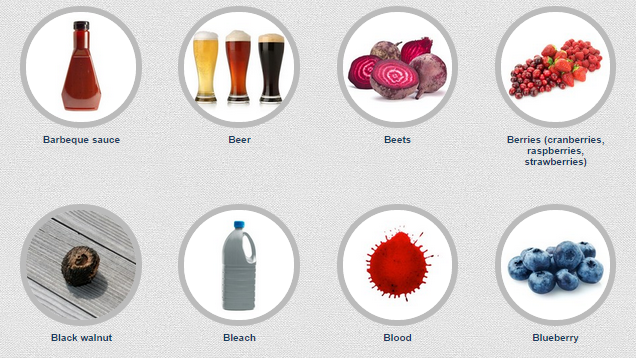
Nobody likes a big ugly stain on their carpet or clothing. This searchable database has stain solutions for everything from automotive oil to mustard.
The database comes from the University of Illinois and covers carpets, upholstery, and washable fabrics. You can browse their stain solutions from A to Z, or narrow things down with a quick search. The database covers common stains like berries and wine, but also covers uncommon stains like ashes, chalk, cough syrup, soy sauce, and maple syrup. Bookmark the database at the link below and always be prepared for any stain.
Government employees and politicians get special status from TSA: Meanwhile, everyone else is stuck in an “aviation security caste system” based on dozens of watchlists compiled by the TSA, FBI and other law enforcement agencies, along with a secret formula the TSA believes can sort passengers based on hypothetical analyses and conjecture.
In a bit of non Android-related news that we just couldn't pass up, Adobe and Google have announced "Project Photoshop Streaming" for Chrome OS, which is exactly what it sounds like.
Adobe is looking to bring access to its Creative Suite Creative Cloud suite of products to Chromebook users, and the journey begins with Photoshop.
Before you get too excited, there are a few caveats. First, you've got to apply to be a tester.
Welcome to the roundup of the best new Android applications, games, and live wallpapers that went live in the Play Store or were spotted by us in the previous 2 weeks or so.
Please wait for this page to load in full in order to see the widgets, which include ratings and pricing info.
Looking for the previous roundup editions? Find them here.
The king of kook, the duke of deranged, the national champion of nonsensical, Goat Simulator is simultaneously a free-roaming absurdity of a game and a conceptual rebuke of the Boring Stuff Simulator 2014 genre.
 September was a solid month for new Android releases. The new phone call functionality in Hangouts is easily the biggest news, but in our top picks below you'll find new media app options, new customization tools, ways to improve your videography, and all manner of interesting stuff to do on your phone or tablet. The honorable mentions section has even more goodies for you to check out. Your Android device won't be wanting for new things to do.


 September was an unusually good month for high-end Android games, especially those that are ported or simultaneously released on other platforms. The latest entry in the Anomaly series is sure to please tower defense fans, Mage Gauntlet will make action RPG players happy, the original Dragon Quest is available for those who appreciate the classics, and the much-loved Goat Simulator is there for... well, for gamers who like goats, I suppose.



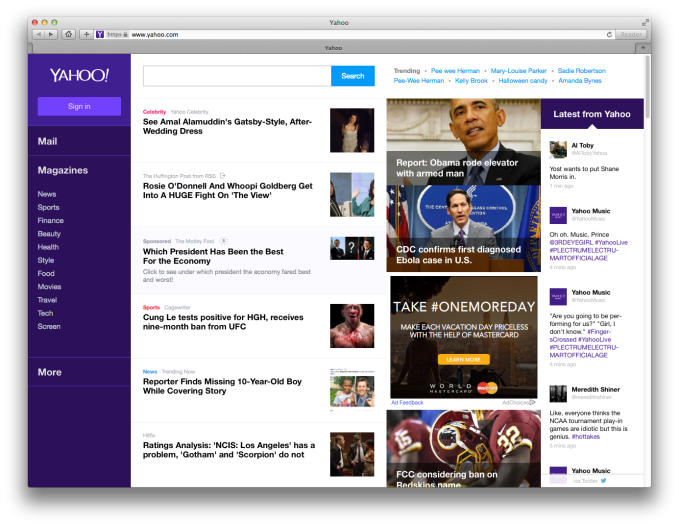 For the past year or so, Yahoo has been working through a major design overhaul under CEO Marissa Mayer, and it looks like it has now started testing out new formats for its biggest property of all, Yahoo.com. From the looks of tips that we’ve received from readers, and a handful of others on Twitter, the new site will sport a much cleaner look, with a collapsable vertical menu bar…
 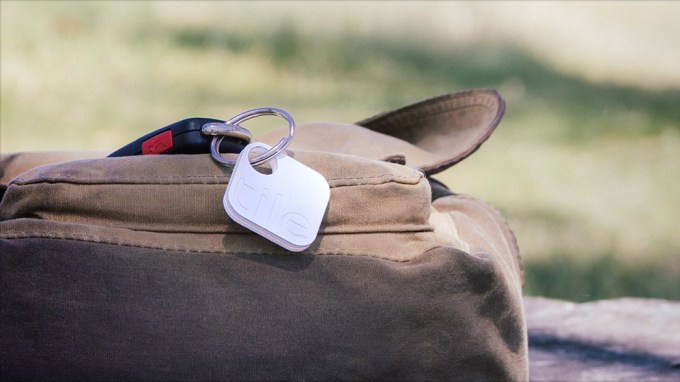 Tile, the lost-item tracker that raised millions in crowdfunding wants to give objects a voice by connecting them to the web. To capitalize on the growing demand for Tile’s small, square-shaped devices that attach to bags, bikes, keychains and more, the company has raised $13 million in funding, in a $9.5 million Series A round led by GGV Capital, a firm known for its global ties, and…




 Pushbullet Channels are the headlining feature in the app's latest update. In short, these are feeds that can push out notifications to subscribers whenever something new happens. Want to keep up with our APK downloads? You can simply subscribe to the channel to get notified whenever we have something fresh to send your way.


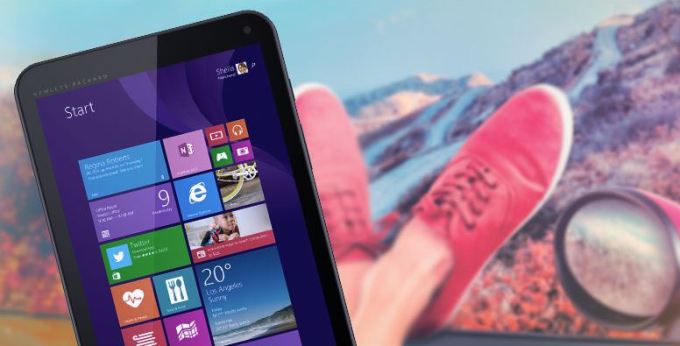 The race to the bottom is back. Reminiscent of the netbook war of yesteryear, HP just followed Toshiba’s lead with a $99 tablet along with introducing a $199 Windows notebook. Expect to see these colorful devices at a department superstore near you. HP hasn’t revealed the specs powering these Windows 8 machines. That’s by design and as we’ve said for years, the spec is…