Shared posts

17 Feb 23:42

How Pebble Became The Cheapest Android Smartwatch Around

by Brian P. Rubin

Pebblers with Android smartphones can now receive and respond to Android Wear notifications, a big step forward that might actually make the Pebble the least expensive Android Wear smartwatch currently available.

A new firmware update basically bring to Pebble the same active notifications that Android Wear users enjoy on their fancier—and more expensive—smartwatches. A navigation app's notifications, for instance, will appear as turn-by-turn directions on the watch; a music app's notifications could let you pause, skip a song and adjust the volume.

While the new addition isn't as easy-to-use as it is on Android Wear devices (users can't swipe to interact with notifications, and instead have to navigate the Pebble's menus via its side buttons), it'll still helps the elder statesman of the smartwatch world stay competitive as the countdown to the Apple Watch continues.

Androidizing Your Pebble

Square Cash via Android Wear notifications on the Pebble smartwatch.

Start by updating your Pebble to the latest firmware (version 2.9), then download version 2.3.0 of the Pebble Android app from the Google Play Store. From there, you'll also need to also install the Android Wear app.

The Pebble troubleshooting page explains a few workarounds for making the new Android Wear features work to your liking. Depending on the apps, there still may be a few hiccups along the way.

There are some unexpected pluses as well. Android Wear notifications on Pebble will allow users to store canned responses that users can send in response to text messages—a feature still missing from Android Wear without the use of a third-party app.  The update also allows users to receive Gmail notifications and send and receive money via Square Cash.

Is Pebble's Gain Android Wear's Loss?

There are still some unknowns as well. It's not clear that Pebble will handle all Android Wear notifications with equal grace, or if some won't work at all. And we don't know if Pebble has a "whitelist" of Android apps whose notifications will definitely work with the watch. I've reached out to Pebble and will update if I hear back. (See update below.)

Meanwhile, Pebble’s embrace of this Android Wear feature may have other implications worth considering. Google’s hardware partners are already hedging their bets on Android Wear by embracing alternative operating systems, either as replacements for Google or as experiments they could turn to should Android Wear falter.

Pebble’s Android Wear compatibility might, conceivably, strengthen the software platform by greatly expanding its wearable reach. On the other hand, if the integration works well, Pebble might well become a less expensive alternative that could ultimately impact the already limited sales of dedicated Android Wear smartwatches.

Update: A spokesperson from Pebble has reached out to ReadWrite to further elaborate on the new Android Wear feature in the latest firmware update.

"Pebble can perform any action or interact that is possible on an Android wear device in response to an incoming message, except for reply by voice," said Rachel Manson from Pebble's press team. "On top of that, Pebble can respond with things that Android Wear cannot at this time. For example, Pebble lets you reply to any notification with emoji, something that regular Android Wear watches cannot do right now."

As far as whether there's a list of pre-approved compatible apps, Manson says "there is no 'whitelist.' All notifications will work out of the box."

Photos courtesy of Pebble

17 Feb 21:03

37 New And Notable Android Games From The Last 2 Weeks (2/3/15 - 2/17/15)

by Michael Crider
multi-page article Page 1 Page 2

nexus2cee_gamethumbWelcome to the roundup of the best new Android applications, games, and live wallpapers that went live in the Play Store or were spotted by us in the previous 2 weeks or so.

Please wait for this page to load in full in order to see the widgets, which include ratings and pricing info.

Looking for the previous roundup editions? Find them here.

Games

LIMBO

Android Police coverage: Creepy Platformer And Steam Favorite LIMBO Crawls Into The Play Store For $5

LIMBO is a platformer and puzzler favorite among the Steam and console download crowd.

Read More

37 New And Notable Android Games From The Last 2 Weeks (2/3/15 - 2/17/15) was written by the awesome team at Android Police.


17 Feb 21:01

WATCH: American kids react to breakfasts from around the world

by Mark Frauenfelder

American kids attempt to eat traditional breakfasts from Korea, Brazil, Finland, Vietnam, Poland, and Netherlands. (more…)

17 Feb 18:07

Pushbullet Updated With Support For Replies Via Hangouts, WhatsApp, And More On Your Computer

by Ryan Whitwam

Pushbullet-ThumbOne of Pushbullet's coolest tricks is the SMS reply functionality accessible on your computer. Just hit the reply button on your PC or Mac when a synced notification pops up, and you can type a reply. There's a new update today that extends this feature to the top messaging apps on Android, but there are a few small caveats.

Messaging replies in Pushbullet will work for WhatsApp, Telegram, Hangouts, Facebook Messenger, and Line. The team plans to add more services soon, so don't fret if you preferred platform isn't supported yet.

Read More

Pushbullet Updated With Support For Replies Via Hangouts, WhatsApp, And More On Your Computer was written by the awesome team at Android Police.


17 Feb 15:32

Free NASA sounds (MP3s and ringtones)

by David Pescovitz
ksc-68pc-327

NASA offers a terrific collection of free MP3 sound files and M4R ringtones, from astronaut quips and greetings to the explosive liftoff of rockets to Sputnik's pulsing beep. Read the rest

17 Feb 12:31

The Most Effective Stain Removal Products for Common Kitchen Stains

by Patrick Allan

When it comes to cooking, stains are everywhere. From bacon grease to berry purée, these are the most effective stain removing products for folks who spend their time in the kitchen.

In this video from America's Test Kitchen, seven popular stain removal products are put to the test against some of the toughest stains in the kitchen. Each of the seven products were tested against a variety of stains, including heavy hitters like melted dark chocolate, yellow mustard, and chipotle chiles with adobo sauce smeared on white t-shirts and pieces of blue cotton fabric.

When it was all said and done, there was a clear winner: OxiClean Versatile Stain Remover. It took quite a bit more time to treat each stain, but it did the best job at removing even the oldest of stains. The only other product they recommend is the Tide Ultra Stain Release, but it didn't perform nearly as well as the OxiClean did. If you don't happen have any products on hand when a stain happens, there are plenty of DIY remedies out there that can help too, so don't stress. If you're still curious about their methodology, you can read more about it here.

Equipment Review: Best Laundry Stain Removers | YouTube via Cook's Illustrated

17 Feb 00:17

Pebble 2.3 goes live with Android Wear notification and interaction support

by Dan Thorp-Lancaster

Pebble users on Android are in for quite the treat today, as the Pebble app has been updated to version 2.3 with support for interacting with Android Wear notifications, setting defined replies, and the ability to reply from your Pebble through Android SMS apps.

16 Feb 23:13

Lesley Gore, singer of "It's My Party," RIP

by David Pescovitz

Lesley Gore, singer of the 1963 hit "It's My Party," died today from cancer at age 68. (more…)

16 Feb 14:04

Dreamland: Adventures in the Strange Science of Sleep

by Cory Doctorow
David K Randall's Dreamland is a reivew of the best scientific thinking that illuminates and important subject: namely, why do we spend a third of our lives paralyzed, eyes closed, having vivid hallucinations? Read the rest
15 Feb 20:46

Scientists have found a way to see through opaque material using light

by Lizzie Plaugic

Scientists at the University of Twente in the Netherlands have found a way to see through opaque barriers, Nature reports. This is done by recording wavelengths from visible light, which can pass through solid material like paint or skin. Researchers are now working on methods to reassemble scattered light that has passed through opaque barriers to create a useable image on the other side.

In 2007, scientists Allard Mosk and Ivo Vellekoop attempted to shine a beam of visible light through a glass slide covered with white paint and focus the beam on the other side. They didn't expect it to work — but it did. "I really just wanted to try this because it had never been done before," Mosk said. Mosk and his team used a "spatial light...

Continue reading…

15 Feb 12:32

Hackers rob US and global banks of millions in one of the largest heists ever

by Kwame Opam

Banks in Russia, Japan, the US, and Europe have fallen victim to a massive, sophisticated malware hack, allowing the perpetrators to steal hundreds of millions of dollars since 2013. According to a Kaspersky Labs report provided to the New York Times, more than 100 banks in 30 nations have been affected by the breach, with upwards of $300 million stolen in the process.

Continue reading…

15 Feb 12:31

Remove uTorrent Ads in One Click With “Pimp My uTorrent”

by Ernesto

utorrent-logo-newWhen BitTorrent Inc. announced its plan to add advertising to its flagship uTorrent client a small user revolt broke out.

The people complaining were mostly annoyed that there would be no option to disable the ads. Luckily, BitTorrent listened to the feedback and decided that users would indeed get a chance to opt-out from the ads.

Despite the initial complaints, nowadays most users probably aren’t aware of the opt-out settings. uTorrent previously reported that it’s serving billions of ads per month, quite a significant number.

Even for those users who do know, uTorrent doesn’t make it very easy for them to remove the ads. They will have to mess with the advanced settings, search for the relevant variables, and change them one by one.

The developer of the torrent optimized TV-calendar DuckieTV was confronted with this issue a few days ago when he introduced a friend to BitTorrent. After first installing uTorrent, he noticed that the client was littered with ads he disabled himself a long time ago.

utorrentads

After manually changing several settings to strip the ads, he came up with the idea to automate the process.

“I turned them off for my friend, and decided to try and see if I could automate the process the next day,” Schizoduckie tells TF.

For DuckieTV, the developer previously reverse-engineered BitTorrent’s Torque and BtApp.js tools, which are able to talk to uTorrent via the browser. He therefore decided to see if the same code could also be used to change uTorrent’s settings.

“I remembered that BitTorrent previously ran an experiment with btApp.js that fiddled with settings, so all I needed to do was hook up the settings functionality in my library and set up a page so users can disable ads in one click,” Schizoduckie says.

Fast forward a few hours and “Pimp my uTorrent” was born.

pimpmut

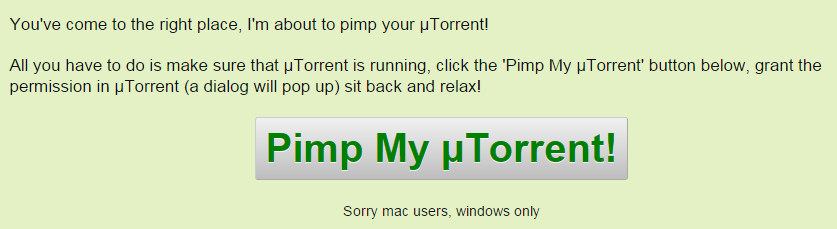
Pimp my uTorrent literally requires just one click to disable the ads on Windows clients. There is nothing to install as the page uses JavaScript to communicate with uTorrent.

After the “pimping” is done, uTorrent might need to be restarted before the changes are visible. People who are not happy with the result have an option to reverse them with another click.

It can’t get much simpler than that.

Those who are interested in what the tool does can inspect the relevant variables here. A more detailed overview of all ad related settings and how these can be changed is available in the uTorrent forums. A more detailed how-to with many more tips and tricks is available here.

Happy pimping!

Source: TorrentFreak, for the latest info on copyright, file-sharing, torrent sites and anonymous VPN services.

14 Feb 11:28

Easily Arrange Flowers In a Vase with Some Clear Tape

by Patrick Allan

If you receive a lovely bouquet, or you're making a last minute gift, you can easily arrange flowers—and keep them standing up—in a vase, using some clear tape.

This video from YouTuber DaveHax demonstrates a simple way to keep flowers looking just right in a vase. Depending on the size of the vase, flowers can slump down or spread out in a way that makes them look a little less appealing. You can create a—mostly hidden—clear tape lattice that will hold the flowers upright and let you arrange them however you like. Just make sure the top of the vase is dry. Flowers can be a lovely gift, but make sure you give them the proper care.

Flower Arranging Trick | YouTube

13 Feb 21:16

What Happens To Your Body When You Drink Too Much Water?

by Robbie Gonzalez

What Happens To Your Body When You Drink Too Much Water?

The question How much water do I need to drink? is often followed with the related question Can I drink too much of it? We're here to tell you that, while difficult to do accidentally, it is in fact possible to drink too much water – and the repercussions can be deadly.

Photo Credit: Lora Rajah | CC BY 2.0

The Dose Makes The Poison

Too much of anything will kill you. But then, "too much" is a relative concept. "The dose makes the poison," Paracelsus, the founder of modern toxicology, famously said. Today, we call that dose a substance's LD50. Also known as the "median lethal dose," LD50 is the amount of something needed to kill 50% of those exposed to it.

As you might imagine, median lethal doses can vary dramatically. The human tolerance for botulinum toxin, for example, is as close to zero as you'll find among substances known to science; with an estimated LD50 of 1.3–2.1 ng/kg, a few hundred nanograms of the potent neurotoxin (that's a few hundred billionths of one gram), delivered via injection, is enough to put just about anyone down for good.

For most substances, of course, the bar of lethality sits a lot higher than that of a notoriously deadly toxin. Among these substances is water, a compound so essential to life as we know it, scientists hunting for Earth-like worlds beyond our solar system have defined their search criteria as "planets capable of supporting liquid H2O." Water, we're taught from a young age, is everywhere. I don't even need to tell you what percent of the Earth's surface is covered in the stuff, or what proportion of your body is made up of it, or how many glasses of it you should drink daily to keep hydrated. (Fun fact: Nowhere is it written in stone that you must consume eight glasses a day to keep your body adequately watered, and the origins of this ubiquitous health tip remain elusive – much more on this below.) You may even know that, chemically and physically speaking, water is pretty strange, and that its strangeness actually probably has a lot to do with why life needs it in the first place.

But every substance, even life-giving one like H2O, has its limit. Water's estimated LD50 is 90 ml/kg, a figure arrived at by studying rats. Assuming rat biology and human biology are interchangeable when it comes to the quick consumption of large volumes of water, if 100 people each weighing 150 pounds each drank about six liters of water all in one go, around fifty of those people would die, an the cause of death would probably be water intoxication.

Water And Electrolytes

Water intoxication is the extreme result of a bodily imbalance between electrolytes (the minerals in your blood and body fluid that carry an electric charge) and water, a condition called "hyponatremia." Chemically speaking, an electrolyte is any substance that ionizes, i.e. gains or loses an electron or electrons, when dissolved in a solvent like water. A classic example is table salt, chemical formula NaCl, which dissociates into a positively charge sodium ions and negatively charged chloride ions when dissolved in water.

Water just so happens to be the most versatile solvent there is, a property it owes to the arrangement of its hydrogen and oxygen atoms. Without getting too into the details, every H2O molecule possesses a partial negative charge near its oxygen atom and partial positive charge near its hydrogen atoms. The polar nature of water's structure allows it to dissolve more substances than any liquid on Earth (which explains why it's known in chemistry circles as "the universal solvent"), including electrolytes like sodium, potassium, calcium, chloride, magnesium, and hydrogen phosphate. There are many other electrolytes, but these, in particular, are important for normal physiological function. Water doesn't contain any electrolytes naturally, which is why you'll find these physiologically important ones listed on the label of your favorite sports drink and enhanced water products – though too much of these can actually lead to hyponatremia, too. As Deadspin reported last year, "neither sports drinks nor water can keep your sodium levels in line with where they are at a rest during prolonged exercise, and while Gatorade will have a slight improvement from water, drinking it to excess will do more harm than good." More on this below.

In severe cases of hyponatremia, the kidneys – which help, among other things, to regulate water and electrolyte levels in the body – become overwhelmed. At rest, under normal conditions, your kidneys are a supremely efficient filtration system. In an interview with Scientific American, Joseph Verbalis, chairman of medicine at Georgetown University Medical Center explains that a healthy kidney can process water at a rate of 800–1000 mL per hour without affecting the body's net H2O levels. Consume water at a faster rate than the kidneys can process it, however, and the excess is driven by osmosis to regions of the body with high electrolyte concentration, beginning with the blood and eventually seeping into the salt-rich interiors of cells throughout the body. The cellular influx of water is manifest as swelling known as edema; the cells of your body become turgid, ballooning and distending with their newly acquired water weight.

Edema can affect any cell and can therefore occur anywhere in the body, though it is most immediately noticeable in the hands, feet, ankles, and legs, which appear to plump. But it's when the cells in the brain begin to swell that edema becomes most problematic. Confined to the skull, ballooning neurons quickly run out of room to expand – and when the brain swells, things can get ugly. Early symptoms can, paradoxically, resemble heat stroke, and include headache, diarrhea, nausea, cramping, and vomiting. In cases where water intake greatly exceeds the kidney's processing abilities, M. Amin Arnaout, chief of nephrology at Massachusetts General Hospital and Harvard Medical School tells Scientific American that symptoms can escalate to include seizure, coma, respiratory arrest, brain stem herniation, and death.

Cases Of Extreme Hydration

It is, thankfully, quite difficult to flummox a healthy pair of kidneys accidentally. It is a testament to the water-processing abilities of this organ that most cases of water poisoning are restricted to extreme instances of hazing and drinking contests. An instance of the latter occurred in 2007, when a 28-year-old woman consumed six liters of water over a three-hour period for a radio station's on-air drinking contest. "She said to one of our supervisors that she was on her way home and her head was hurting her real bad," one of the woman's co-workers would tell reporters. "She was crying and that was the last that anyone had heard from her."

Athletes – endurance athletes, especially – are also recognized as being at risk of water poisoning. In 2005, results of a study published in the New England Journal of Medicine suggest nearly one in six participants in 2002's Boston Marathon experienced some degree of hyponatremia. A 2006 study published in the British Journal of Sports Medicine states unequivocally that "exercise associated hyponatremia is due to overdrinking." In the article, sports physiologists Timothy David Noakes and Benjamin Speedy lament the biomedical community's slowness to acknowledge the risks over over-hydration in endurance athletes.

The paper recounts the upsetting story of a marathon runner in 1981, who, reporting to a hospital with symptoms resembling dehydration, received two liters of fluid delivered intravenously and was sent home. But the treatment didn't work. On the way home from the hospital, the woman suffered a grand mal epileptic seizure and descended into a coma. When she was readmitted to the hospital, blood tests revealed her serum sodium concentrations to be dangerously low. She was later diagnosed with "exercise associated hyponatraemic encephalopathy (EAHE) with neurogenic (non‐cardiac) pulmonary oedema, the first such known case." She was later treated intravenously with 0.9% saline solution, and made a slow recovery.

A handful of other exercise-related cases of hyponatremia would make headlines in the early eighties, but the biomedical community was slow to learn from them:

...by 1986 a body of evidence showed that: (a) EAHE is caused by excessive fluid consumption during exercise; (b) athletes who drink to excess during exercise usually do so on the well meaning advice of others, including race organisers; (c) the condition responds hardly at all to treatment with 0.9% normal saline, whereas recovery is rapid when hypertonic (3–5%) saline solutions are used. It would take almost another 20 years before this wisdom would be universally applied.

In their paper, Noakes and Speedy write that "the reluctance to accept the evidence may be because it conflicted with the prevalent message of the sports drink industry." Deadspin provided an excellent summary of the researchers' criticisms of the sports beverage industry last year, but their stance on the matter, and their opinion of how much people should actually be drinking, is well summarized by the title of another paper published in the British Journal of Sports Medicine in 2007, which reads: "Time for the American College of Sports Medicine to acknowledge that humans, like all other earthly creatures, do not need to be told how much to drink during exercise."

13 Feb 18:07

British Gas to purchase Hive thermostat maker AlertMe

by Rich Edmonds

British Gas Hive

British Gas today announced the company will be acquiring AlertMe, the platform provider behind the Hive smart thermostat, for a total of £44 million. British Gas offers Hive to its customers to provide home automation and help save money with regards to heating the home (think of it as a Nest competitor).

Purchasing AlertMe will enable British Gas to expand beyond the Hive thermostat, adding yet more gadgetry into homes worldwide. As touched on above, Hive is directly competing against Google's Nest, so it makes sense for British Gas to ramp up efforts and acquire the company behind its connected home tech.

If you're currently using Hive in the home, you shouldn't notice a difference once AlertMe becomes a part of British Gas.

Source: Hive

13 Feb 16:58

This Cheat Sheet Shows You How to Make Every "Official" Cocktail

by Kristin Wong

This Cheat Sheet Shows You How to Make Every "Official" Cocktail

You don't have to be a bartender or a mixologist to pour a decent cocktail. You do, however, need to know what goes into it. This cheat sheet shows you how much of which ingredients to put in over 75 different, delicious cocktails.

The graphic is based on the International Bartender's Association's list of "official" cocktails. You'll find everything from a French Martini to a Pisco Sour. They don't offer exact measurements, just ratios, with a visual guide to help you along. They also give some basic instructions on how to mix it up.

Expand for the larger version, or check it out at the link below.

Cocktails | Information is Beautiful

This Cheat Sheet Shows You How to Make Every "Official" Cocktail

13 Feb 14:16

Instant for Android lets you track your smartphone addiction levels

by Harish Jonnalagadda

Instant for Android is an all-in-one tracking app that monitors your daily device usage, as well as fitness data and device unlock count. Want to know how many minutes you've spent on Facebook? Instant's app usage tab gives you an overview of time spent on each app.


13 Feb 14:13

Torrent Sites Shut Down After Swedish Police Arrest Five

by Andy

swedpoliceIt’s been just over two months since Swedish police carried out a dramatic raid that took the infamous Pirate Bay offline. While the action certainly had an impact on its raid-proof reputation, the torrent site rose from the ashes two weeks ago with its databases largely intact.

While that resurrection must’ve been a blow to Swedish authorities, action against torrent sites is far from over. As the investigation into The Pirate Bay and former operator Fredrik Neij continues, police have struck again in the notorious torrent site’s backyard. In common with December’s raid, local authorities are providing a bare minimum of details.

“We have made ​​significant seizures, but I will not say more than that,” said prosecutor Mats Ljungqvist.

It is known that five people are in police custody under suspicion of being involved in the unlawful distribution of copyrighted movies. While it’s yet to be confirmed, the investigation will almost certainly have been launched at the behest of the major Hollywood studios and local anti-piracy group Rights Alliance.

One of the sites targeted is Tankafetast, Sweden’s second largest torrent site. It’s been hit before, at least a couple of times, but has always managed to reappear. This time the situation seems more serious.

Also down is torrent site PirateHub and streaming portal Tankefetast Play. The latter is currently redirecting to the same political site as its namesake.


Promotional image previously released by Tankafetast

tankafetast

While confirming that an investigation into PirateHub had been ongoing for some time, Ljungqvist did not reveal whether equipment such as servers had been seized in the latest operation. When quizzed about the downtime of the sites listed above, however, the prosecutor said that they’d been disabled by their operators.

“It is not us who have taken down the sites, it is they themselves who did so in order to prevent further crime,” Ljungqvist said.

dreamfilmIf that is indeed the case, the development has clear parallels with the news last week concerning streaming portal DreamFilm.se. The operators of that site reported that after one of their admins was arrested the site did a deal with police to close down voluntarily.

While that didn’t go quite to plan, with some admins leaving to start a new venture with a similar name, it’s possible that the replacement URL won’t be reported on the old DreamFilm.se homepage for long. According to IDG, the prosecution in the case has now filed a motion at the district court in Linköping for that domain name to be forfeited.

As reported earlier this week, two Pirate Bay domain names are also under threat, with authorities targeting the Punkt SE registry with pioneering legal action to have the domains revoked and/or seized by the state.

Source: TorrentFreak, for the latest info on copyright, file-sharing, torrent sites and anonymous VPN services.

13 Feb 14:07

Apple promotes 'Pay Once and Play' games in App Store

by James Vincent

Apple is promoting "Pay Once and Play" games as part of the company's regular refresh of featured App Store titles. "Enjoy hours of uninterrupted fun with complete experiences spanning the App Store's most beloved genres," says the blurb for the new collection. "Packed with thrills and unforgettable moments, these powerhouse games belong in every collection."

this isn't really a sign of Apple's allegiance

It's tempting to say that the promotion shows that Apple prefers pay-once titles to freemium ones, but really, this is just one of the many angles that the company has taken with its App Store collections. It doesn't really say anything about Apple's wider motivation.

The new "Pay Once and Play" promotion.

There's no doubt, of...

Continue reading…

12 Feb 22:52

Apple now protects FaceTime and iMessage with two-step verification

by Chris Welch

Apple's two-step login security is now keeping hackers away from some of the company's popular services — not just iCloud. iMessage and FaceTime both take advantage of the added verification measure, which requires users to enter a unique code in addition to the regular account password before they're able to send messages or launch a video chat. The Guardian first reported Apple's latest expansion of two-step verification.

If you're already signed into FaceTime or iMessage on an iOS device, you won't suddenly need to worry about authenticating your identity. But if you log out of either service and attempt to sign back in, that'll trigger the two-step verification. In the case of FaceTime, Apple requires you to log into your account on...

Continue reading…

12 Feb 22:51

Google Maps gets lane guidance in 15 more European countries

by Dan Thorp-Lancaster

Google Maps for Android has picked up support for lane guidance, a feature that tells you which lane you should be in before your next turn, in a whole slew of new European countries today, including Denmark, Portugal, Austria, Greece, and many more.


12 Feb 21:38

How Dogs Love Us: A Neuroscientist and His Adopted Dog Decode the Canine Brain

by Jason Weisberger

A scientist, his dog and an MRI machine. In How Dogs Love Us, Gregory Berns tells the story of how he is seeking to decode the canine brain.

Read the rest
12 Feb 21:37

Capybaras enjoy hot springs

by Mark Frauenfelder

Capybaras are my favorite animal, and it makes me happy to see them enjoying a day at a hot springs.

12 Feb 21:34

Christian Kane's "The Librarians" renewed for a second season.

12 Feb 18:17

Phorm iPad mini case has physical 'key guides' that appear and disappear when you need them

by Nathan Ingraham

Back in the spring of 2012, I got a chance to see the first demo from a company called Tactus Technology. The pitch was simple: the company recognized the fact that we're all typing on glass screens these days, an experience that generally is lacking when compared to using something with actual physical feedback. To solve that, the company showed me a prototype tablet that had a screen with "keys" that could rise out from nothingness to guide you as you type. Those keys would disappear and reappear on command thanks to near-invisible channels in the screen that filled with fluid to provide a tactile response.

Continue reading…

12 Feb 18:14

I'm Sure You'll All Agree

by Bill Crider
12 Feb 18:13

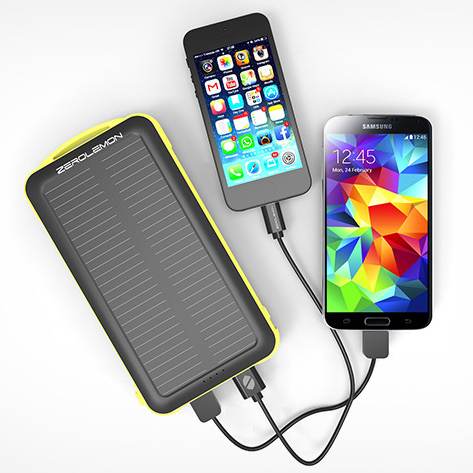
Solar-charging battery for USB devices with massive 20000mAh

by Mark Frauenfelder

zerolemon

The ZeroLemon SolarJuice 20000mAh Battery, which sells on Amazon for $80, is on sale for the next five days at Stacksocial for $50. I'm getting it for an upcoming trip with the family.

12 Feb 18:10

How Your Expectations Mess with Your View of the Present

by Thorin Klosowski

How Your Expectations Mess with Your View of the Present

We all have expectations about upcoming events, current events, ourselves, and others. Those expectations can alter your view of the present more than you'd think though. Sometimes it's for the better, sometimes it's for the worst. Let's take a look at how it works.

Your Expectations Affect Your Likes and Dislikes

This might sound absurd, but when we're told that something will be good, we tend to believe it, especially if we're told by an expert. Whether it's movie reviews, book reviews, or—in the case of the Penn & Teller clip above—water, our expectations often outweigh the more critical side of our brains.

This is especially the case with foods. Over time, we've seen plenty of studies that show how our expectations change our perception of taste. For example, one study published in Food Quality and Preference tested the role of expectation on taste using smoked salmon flavored ice cream (yes, you read that correctly). They found when people read the label "ice cream", they disliked it and found it salty and savory. When they labeled it "frozen savory mousse," people liked it more because they weren't expecting the usual sweetness of ice cream.

In a more classic study published way back in 1964, researchers looked at how beer brand labels affected taste. Researchers asked brand loyal college students to rate a bunch of unlabeled beers. In general, participants of the study didn't seem to discern the taste differences among beer brands when they weren't labeled, which suggests the brand name has a pretty big impact on how much we enjoy something.

And that's just a few examples. Coke rates higher when consumed from a cup with the brand logo, the presence of the word "soy" on nutrition bars makes them taste more grainy, coffee tastes less bitter when we're told it's not bitter, and wine is a classic example of how expectations alter our perception of quality. In a truly bizarre study, researchers found that when they told people a comic was funny, they tended to agree, even when it wasn't.

As far as preferences go, when we're primed with an idea before taking something in, we tend to agree with whatever that initial expectation is and ignore what we're actually thinking.

Why Expectations Change Your Perception of Reality

It's not just taste and personal preference, either. Our expectations can alter how we view reality as a whole. It sounds absurd, but psychology and behavioural economics professor Dan Ariely describes it in the video above like so:

The way we anticipate something changes the way we perceive it... It suggests that the way the brain works is to influence our perception. If our perception has been established without the information from the brain, the information of the brain is no longer relevant...

If you think about it more generally, there's a question about how our preconceived notions color our view of reality... what happens when we view the world with glasses that are strongly tinted by our preconceived notions? What these results suggest is an interesting connection between the body and the mind... it suggests our mind tries to predict the future... by anticipating the future the mind actually changes our physiology... it prepares us for that future. By doing so the mind basically gets us to experience the reality that we anticipate.

This concept falls in line with the idea of the hedonic treadmill. We have a tendency to increase our expectations in a way that tends to devalue our accomplishments. Basically, if a B+ made you happy last year, it'll take an A- to register the same satisfaction again. You've probably heard the classic phrase "happiness equals reality minus expectations," and it's true. In short: you can theoretically apply the placebo effect to your day-to-day life.

Speaking with Scientific American, science journalist and author Chris Berdik offers up this example of how exactly this works:

For instance, many people worry that they're likely to choke under pressure. They look to coaches and elaborate training techniques to overcome this tendency. Or they just worry and bite their nails before important presentations or competitions. But in one study, researchers told some track athletes that what they thought of as pre-race jitters actually improved performance, while telling another group that this sort of arousal was usually detrimental. The athletes performed accordingly when the pressure was on. In another athletics study, the researchers gave every subject a personality questionnaire and then randomly gave some of them false feedback that their answers indicated they were the sort of person who thrives under pressure. When it came time to compete, the athletes told they would likely do better under pressure did so.

Of course, this doesn't mean you can change the world around you with your mind. If you're sick, you'll still be sick. If you're sad, you'll still be sad. But what it does suggest is that we're more in control of our future than we think, at least on a subtle level. If you expect to perform poorly, that thought might influence your behavior in the present. This applies to all aspects of everyday life, from work to school to dating to exercise. You can't physically alter the world, but your expectations play a key role in how you experience the present.

Other People's Expectations Change You

How you think other people perceive you (or how they actually do, for that matter), changes how you act as well.

The most classic example of this comes from The Journal of Personality and Social Psychology back in 1977. This study looked at how various stereotypes might play a role in interpersonal attraction. Researchers gave men a photograph of a woman before a telephone conversation. Some of these photos showed attractive woman, others less attractive woman. Then the men talked to the women, half the men thinking they were talking with an unattractive woman and the other half thinking they were attractive. The women didn't know this was going on. However, the men who thought they were talking to an attractive woman spoke differently, and the woman subsequently adapted behaviours stereotypically associated with attractive people. Basically, when the men thought they were talking to someone attractive, they changed speech patterns and conversation type, the woman then did so as well.

It works with teaching too. Psychologist Robert Rosenthal has been studying the link between teacher's expectations and children's performance for years. NPR breaks down his research like so:

As he followed the children over the next two years, Rosenthal discovered that the teachers' expectations of these kids really did affect the students. "If teachers had been led to expect greater gains in IQ, then increasingly, those kids gained more IQ," he says...

As Rosenthal did more research, he found that expectations affect teachers' moment-to-moment interactions with the children they teach in a thousand almost invisible ways. Teachers give the students that they expect to succeed more time to answer questions, more specific feedback, and more approval: They consistently touch, nod and smile at those kids more.

Again, like your own perceptions, this isn't an always-on, hard science thing. You may not notice the subtle clues someone's giving you about their expectations, or you might not need those social cues to act a certain way.

Expectations of others play a role in how we behave. In a recent episode of NPR's Invisibilia, they explain how the world's expectations of blind people change a blind person's view of reality. It's a large scale example of stereotyping as a whole, but it's obvious how this could apply to race, gender, religion, and plenty of other characteristics. You don't realize it, but we all tend to conform to the perceived expectations around us. Perhaps your friends call you the "quiet one," or the "adventurous one," or the "life of the party," and you subconsciously conform to those stereotypes—even if that's not who you are anymore.

Keep Your Expectations in Check

You can't control what others expect of you, but you can work on your own expectations...at least to a point. Like a lot of these types of things, it's about recognizing your behavior, and trying to be mindful of it as best you can.

That said, you can remember a couple simple tips. Psychologist Bob Taibbi suggests separating your "wants" from your "shoulds:"

The herd mentality and auto-pilot are usually tied to the shoulds. These come from our heads, our superego, the parent voice in our heads. Shoulds are by definition expectations imposed by others. When we fail to do them we feel guilty. When we do follow them we often feel driven...and expect a payoff for our efforts: Since I am doing what I really don't want to do, I do expect others to appreciate, notice, give me a reward, pat me on the head, do what I expect. When the expected payoff doesn't come, our disappointment and resentment are fueled.

Likewise, coming back to science journalist Chris Berdik, it's important to use those expectations to your advantage:

On the other hand, if you can do things to alleviate anxiety, you give that anticipation a glide path. This is a theory that fatigue is governed by the brain in an anticipatory manner. So if you have run a lot of 10K races, your brain knows what your body needs, how much energy it's going to take and what pace to set and it takes a lot of things into account like how you're feeling and whether you're hydrated. It eventually though can put on the brakes. It's not just that you're running out of gas. Your brain is like "Uh-oh. You're going to run out of gas. It's going to be trouble for you." So it basically induces fatigue for you ahead of time.

Expectation isn't some limitless resource, nor does it allow you to do something you couldn't otherwise do, but it is a useful reminder that sometimes those self-fulfilling prophecies can alter our behavior.

In the end, it's about paying attention to what you think will happen, what's actually happening in a moment, and how you might be projecting onto others. Take a week and think about your expectations for yourself and for your friends. Then watch how they play out in real time. Just how much your expectations for events, foods, and people affect your views might surprise you.

Photo by Geralt, Mansgsaab.

12 Feb 15:34

25 Images That Show How Big Our Cities Have Gotten

by Bill Crider
12 Feb 13:37

Amazon offering $140 worth of apps for free in latest giveaway

by Harish Jonnalagadda

Amazon's latest app giveaway is here, and includes over $140 worth of premium content that is available for free from now until February 14. The giveaway features a total of 37 apps, including Listure, Sleep as Android, Runtastic Pro and more.