 Microsoft has broadened a previously announced agreement with Samsung to preinstall its software on the latter firm’s hardware it announced today, and landed nearly a dozen separate, similar arrangements with other OEMs including Dell. As a company, Microsoft is pursuing an increasingly cross-platform software strategy, one in which it is content to ensure that its applications are… Read More
Bcstevieb
Shared posts
23 Mar 21:13
Microsoft has broadened a previously announced agreement with Samsung to preinstall its software on the latter firm’s hardware it announced today, and landed nearly a dozen separate, similar arrangements with other OEMs including Dell. As a company, Microsoft is pursuing an increasingly cross-platform software strategy, one in which it is content to ensure that its applications are… Read More
Microsoft Signs 11 Agreements With OEMs To Bring Office To More Android Handsets And Tablets
by Alex Wilhelm
Microsoft has broadened a previously announced agreement with Samsung to preinstall its software on the latter firm’s hardware it announced today, and landed nearly a dozen separate, similar arrangements with other OEMs including Dell. As a company, Microsoft is pursuing an increasingly cross-platform software strategy, one in which it is content to ensure that its applications are… Read More
23 Mar 21:05
Five things to know about the HTC One M9
by Phil Nickinson

Now that we've got our massive HTC One M9 review out the door, it's time to step back and take a top-down view. Because for as much as we care about the details, we get that it can be a bit much. And there are few important things about the M9 that help define it as a smartphone, as well as help put it in context with everything else that's out there — and with what's to come.
So here, now, are the top five things you need to know about the HTC One M9.
23 Mar 20:59

Fritz the Golden Retriever is not very good at catching food
by Xeni Jardin
He's learning, says his human. Read the rest
23 Mar 17:52
 A forthcoming feature arriving in the next version of Apple’s iOS operating system, iOS 8.3, could make it easier for developers of free applications to acquire new users. Thanks to a new option found under the “iTunes & App Store” section with the iOS Settings application, iOS device owners will be able to disable the password requirement for free apps and other downloads. Read More
Next Version Of iOS Will Let You Download Free Apps And Other Content Without A Password
by Sarah Perez
A forthcoming feature arriving in the next version of Apple’s iOS operating system, iOS 8.3, could make it easier for developers of free applications to acquire new users. Thanks to a new option found under the “iTunes & App Store” section with the iOS Settings application, iOS device owners will be able to disable the password requirement for free apps and other downloads. Read More
23 Mar 17:49

Twitter partners with Foursquare to add specific locations to your tweets
by Jacob Kastrenakes
You've long been able to include your location with every tweet, but now Twitter is working with Foursquare to make that location information a bit more useful. Twitter currently supports the tagging of general areas, like a city or neighborhood, but with this partnership, tweets will soon be able to include more specific locations, like businesses and landmarks — basically, anything that you can find on Foursquare. It's not a big change, but it'll make Twitter's location feature a bit more interesting, especially if you're looking for tweets sent from a specific location. Twitter says that the integration is "coming soon," without listing a specific timeframe.
22 Mar 18:22

Mission Impossible 5's first trailer is just stunt-filled chaos
by Lizzie Plaugic
We knew the fifth installment of Mission Impossible was coming this summer, but we didn't know much about it — until now. A trailer just made its way onto the internet that confirms the Christopher McQuarrie-directed film will be called Mission: Impossible Rogue Nation.
In the trailer, Tom Cruise gets shirtless and death-defying, Alec Baldwin looks menacing in a tux, and the villains are, presumably, villainous. MI5 reportedly pushed up its release date to avoid competition with the James Bond movie Spectre, out in November, and the new Star Wars film, out in December.
22 Mar 13:55

Google? Evil?
by Jeff Jarvis

A few folks on Twitter have asked for my reaction to the accidental sharing of an FTC staff report on Google, wondering whether it will cause me to eat Crow McNuggets given that I am known to defend Google against some of the frequent attacks against it.
It’s difficult to judge the entire FTC report based on the excerpts and reports written by The Wall Street Journal. I figured the best I could do would be to ask myself where I draw the line between evil and good, illegal and legal in the behaviors alleged against Google.
* * *
First, the coverage says that Google scraped content from Yelp, TripAdvisor, Amazon, and other sometimes-competitors. Well, of course, Google scrapes content everywhere; that its Job 1. Scraping is no more illegal or evil than reading, just a helluvalot faster. Any site can stop scrapers at the door with robots.txt instructions. Once scraped or read, information itself cannot be copyrighted, so there is nothing evil or illegal about consuming, using, and repeating that information.
It does not violate copyright law to reuse the information itself so long as the use does not infringe on its creator’s presentation of it. In other words, I can read on Yelp that a restaurant is open until 10 p.m. and repeat that in a restaurant listing on my newspaper site without fear; it’s information. (Whether I trust the source of that information and whether I link to it are separate questions that are also worthy of discussion in regards to journalism, where we read and repeat for a living.)
I see nothing wrong with Google and other search engines scraping and retaining content from a site in their unseen databases for the purpose of analyzing that content to decide how to present links to it in search. It is in sites’ enlightened self-interest for that to occur.
I also see nothing wrong with quoting from these services’ content for the purpose of linking to them. I would call that fair use. This is the behavior at the heart of the fight with publishers in Germany, where the word “snippet” is now a legal term, though — like “fair use” — it is not and should not be precisely defined. This is also the behavior that is now being taxed in Spain — that is, those quoting and linking to sites are now required to pay those sites, whether the quoted sites demand it or not. This is what led Google to shut down Google News there. With this law, Spain has attacked the heart of the web.
Now here is where the line would be crossed: If Google republished these services’ content in whole and without permission, then that is a violation of copyright law and Google would be in the wrong. Google and Yelp have tussled over just this in the past; Yelp’s reviews appeared on then disappeared from Google’s Places pages. The Journal’s report says:
When competitors asked Google to stop taking their content, it threatened to remove them from its search engine.
“It is clear that Google’s threat was intended to produce, and did produce, the desired effect,” the report said, “which was to coerce Yelp and TripAdvisor into backing down.”
I can’t tell exactly what happened here. If Google did indeed threaten to stop listing Yelp in search if it stopped Google from wholesale republishing its content, then I would call that an improper use of its power: evil. But I am not sure that is what happened. Yelp disappeared from the Places pages (which since themselves disappeared) but Yelp stayed in search (that’s how I get to it all the time). So without more information, I can’t draw a verdict on this point.
* * *
The next question is whether Google favors its own services in search. I’ve long found this allegation odd. First, publishers routinely promote their own services and fail to promote competitors’. When European publishers attacked Google, they complained that when searching on “running shoes” one finds Google’s ads for its own shoe advertisers and partners atop the page. But I have pointed out that if you go to the “Schuhe” link on Bild.com — the largest newspaper in Europe, owned by one of Google’s betes noires — one finds no promotion of competitors’ offerings. On Google, one does indeed find ads from its shoe advertisers and retailers, clearly labeled, but then on the top screen one also finds links to their competitors in shoespace, Zappos and Nike.

And if one searches for “maps” one finds Google Maps first (they are the best) but then links to competitors Mapquest, Yahoo, and Bing. What publisher does that? Aren’t news organizations supposed to be impartial? Then under this doctrine shouldn’t People promote Us?
That’s an even odder expectation of Google: that it be impartial. I know of no law that decrees that search must be impartial. Hell, a U.S. district judge said that Chinese search engine Baidu had a First Amendment right to be partial and censor search results. I would find it even harder to define impartiality in search than I would in journalism. In fact, I want my search results to be partial, to favor quality, originality, authority, relevance (to my request and ultimately to me), and timeliness (when that is relevant). Impartial search would be noisy, spammed, useless search.
Also note that history’s first ads in search — on Bill Gross’ GoTo.com, which became Overture, which was acquired by Yahoo — featured paid placement in rather than merely alongside search. Indeed, Google had to pay Yahoo $300+ million in settlement for infringing on the patent for advertising in search from Overture. But along the way, it was Google itself that instilled in us the idea that ads should not appear in search and that one should not be able to pay for placement. So Google set that standard. Now it’s true that the FTC makes it living holding commercial entities to their own standards. But to be found guilty of such consumer fraud, Google must have made the promise to which it is now being held. Does it? In its principles, Google says ads should be relevant and labeled — and they are — but doesn’t say anything that I can find about impartiality.
Now if it’s true that Google purposefully and secretly downgrades competitors, I would find that to be a betrayal of the trust we hold in it: evil. I don’t know whether that’s proven here. If Google promotes its own sites without labeling that as promotion, I would find that hypocritical, but I also don’t know whether that is happening here.
* * *
The next allegation in The Journal’s report is that Google restricted advertisers from using data obtained while advertising on Google in campaigns placed on competitors’ services. I’m not sure precisely what this means but I will say that Google — a company that believes information should flow freely — should allow brands that have paid to advertise to use whatever intelligence they gain however and wherever they wish. More broadly, I have argued that point in posts about what both Google and Facebook could do for news, advocating a freer exchange of data about users and content. In any case, The Journal says Google revised its terms to “give advertisers more control over their own ad-campaign data.”
* * *
Finally, The Journal says (in an abbreviated graphic) that Google tried to restrict sites that did search deals from also doing deals with competitors, including Bing. I’d call that just stupid: a red cape for antitrust investigators. The Journal said one investigator cited a lack of evidence of this complaint.
* * *
Please keep in mind two things about this report. First, Journal owner Rupert Murdoch has what one might call in my impolite company a hard-on for Google. Second, a much more reasoned Washington Post report explains that the accidentally leaked report was from the FTC’s lawyers, who tend to itch for antitrust fights, while a separate report from the agency’s economists — who look for impact of companies’ behavior on consumers — argued against taking on Google.
Let’s also remember that it’s the market that made Google as big as it is. In Germany — the front line of the war against Google — the company has its second highest market penetration of anywhere in the world, 50 percent higher than in America. German consumers obviously use and apparently like Google and I must ask whether their media and government are in sync with them. Google argues — and I agree — that there are perfectly good alternatives for every consumer service it offers: Bing for search, Mapquest for Maps, Outlook for mail, and so on.
But — and this is a huge but — there is no easy alternative for advertisers. That is where I have long argued that Google is vulnerable to accusations of abuse of power. When it comes to which advertisers are deemed to be bad actors, Google wields the power of God. Some shopping comparison sites are pure spam and Google is right to ban them. But should we always trust Google to make that decision? I’ve suggested that Google should have a jury of commercial peers help with that judgment.
My bottom line: If Google secretly disadvantages quality — not spammy — competitors, that would be wrong. If Google presented others’ *complete* content without permission and ejected sites that resisted such wholesale copying from search, that would be wrong. But in the Journal report, I don’t see sufficient evidence of either act to definitively declare guilt. More to the point in the discussion of antitrust at the FTC and in Europe, I don’t see cause to break up the company.
The other day, I spoke at length with a European journalist who disagrees with me about Google, Silicon Valley, Eurotechnopanic, and regulation. She reflexively leapt to regulation as a necessary reaction to any company that grows “too big.” I asked her, as I ask many with whom I have this conversation, to show me the statutory definition of “too big.” The issue is not how big a company is but what it does with that size. The issue is not what a company could do with that power but what it does with that power. I also asked her to show me why I should trust government to do a better job managing these processes than the market. The market took care of Microsoft’s excesses, not the EU. And governments in Europe are doing much to damage the net, from the Germany’s Leistungsschutzrecht to Spain’s link tax to the EU court’s right to be forgotten. I acknowledge that I sound like a libertarian when I say this but I will point out that I am a Hillary Clinton Democrat. But I do not favor regulation for regulation’s sake.
I sometimes wish Google would fuck up more so I could criticize it more often. I have criticized Google. But I have defended it because I generally find it to be a good company and because it is often the whipping boy for those who would attack not just Google but the net and its disruption as well as American technology companies. If on the basis of the Journal report you want to see me repudiate Google and call for its dismembering, sorry.
The crow flies. It doesn’t fry tonight.

21 Mar 20:59


SXSW 2015 on BitTorrent: 8.42 GB of Free Music
by Ernesto
 Since 2005 the SXSW music festival has published thousands of DRM-free tracks from participating artists.
For some of the first releases the festival organizers created the torrents for the artist showcases themselves, but since 2008 this task has been in the hands of the public.
In 2014 SXSW replaced the MP3 files with Soundcloud links, which complicated the archiving process. Luckily, this year all of the regular SXSW showcase MP3s are freely available again on the festival site for sampling purposes.
In common with previous years, Ben Stolt has taken the time and effort to upload all of the MP3s onto BitTorrent with proper ID3 tags. The 2015 release is out now and comes in two torrents containing 1,291 tracks.
That’s 8.42 gigabytes of free music in total, which is a new record.
“These torrents include tracks that can be previewed on the SXSW website for SXSW 2015. This year’s includes 1,291 files totaling 8.42GB, making it the largest to date,” Stolt notes.
All the tracks released for the previous editions are also still available for those people who want to fill up their MP3 players without having to invest thousands of dollars. The 2005 – 2015 archives now total more than 55 gigabytes.
Every year SXSW torrents are a great success, with many thousands of music aficionados downloading gigabytes of free music across virtually every genre from both established acts and upcoming bands.
This year’s SXSW music festival is currently underway in Austin, Texas and ends tomorrow. The torrents, however, are expected to live on for as long as there are people sharing.
Source: TorrentFreak, for the latest info on copyright, file-sharing, torrent sites and anonymous VPN services.
21 Mar 19:51
 Property Partner is a London-based startup that lets anybody invest in the ‘buy to let’ market (as it’s called here in the UK) starting from as little as £50. Today the company is disclosing new backing to help expand across the UK and beyond: a £5.2 million Series A round led by Index Ventures. Read More
Property Partner Raises £5.2M To Let Anybody Invest In The UK ‘Buy-To-Rent’ Real Estate Market
by Steve O'Hear
Property Partner is a London-based startup that lets anybody invest in the ‘buy to let’ market (as it’s called here in the UK) starting from as little as £50. Today the company is disclosing new backing to help expand across the UK and beyond: a £5.2 million Series A round led by Index Ventures. Read More
21 Mar 19:48

Scan Images Into Text with Google Keep's OCR Feature
by Dave Greenbaum

Web: If you're a regular Google Keep user, you might have missed a (relatively) new feature in the app. If you paste an image into a note, Google lets you convert the image into editable text.
Open the note with the image and click the three dot overflow menu button. Pick "Grab image text" and the text from that image shows up underneath it on that same note. The OCR engine needs an internet connection to do its magic, but it works quite well.
Five Powerful Google Keep Features You Should Start Using | OMG! Chrome!
20 Mar 23:29

This Video Clears Up 10 Popular Misconceptions About Psychology
by Patrick Allan
The world of psychology can be pretty extensive, and because of that, a lot of things can be unclear. This video will help clear your mind of all the myths and old wives' tales.
On the Mental Floss YouTube channel, Elliott Morgan explains 10 of the major psychology misconceptions plaguing the internet and beyond. You'll learn things like the fact that opposites don't usually attract (so look for people with similar values as you), therapists probably won't probe you about your dreams, forcing your child to learn to play an instrument won't guarantee that they'll be smarter, subliminal messaging won't make you want a product you didn't already want, and that psychiatrists are not the same thing as psychologists. Psychology is an important field of study when it comes to our well-being, but it can only help us when we separate fact from fiction.
Misconceptions about Psychology | YouTube
20 Mar 21:23


Amazon Rumored To Launch 'Unlocked' Service To Offer Paid Apps And Games For Free
by Ryan Whitwam
 Amazon has been giving away one paid app for free each day since the Appstore launched in 2011. It hasn't been the rousing success Amazon probably hoped for, but the Appstore is still doing okay with about 400,000 listings. Now, the company is rumored to be prepping a big project called Unlocked to generate more interest in the Appstore. It's basically Amazon Prime for apps.

According to the internal presentation leaked to TechCrunch, Unlocked will offer paid apps and games at absolutely no charge.
Read MoreAmazon Rumored To Launch 'Unlocked' Service To Offer Paid Apps And Games For Free was written by the awesome team at Android Police.
20 Mar 21:21

Bulldog appears to answer owner with thoughtful yes and no replies
by Xeni Jardin
I can't tell what's going on in this compilation, but the dog sure is cute. (more…)
20 Mar 16:18


Received a Piracy Letter? UK Solicitor Will Defend You For Free
by Andy
 Early March, US-based company TCYK LLC began demanding cash from customers of the UK’s second largest ISP, Sky Broadband. In 2014 TCYK monitored BitTorrent swarms for individuals sharing their movies without permission and eventually forced Sky to hand over the alleged file-sharers’ personal details.
Virgin Media customers were targeted by an almost identical wave of letters shortly after, this time sent by well-known copyright troll outfit Mircom. Representing several overseas porn companies, Mircom also want cash to make supposed lawsuits go away.
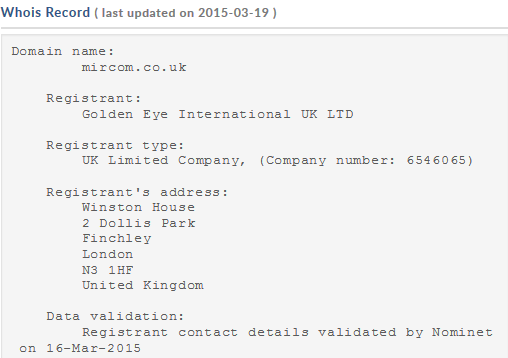
This week the latter case provided a sinister twist. After TF revealed that Mircom was trying to hide its identity from its domain WHOIS, a reader reported the company to domain registry Nominet. Soon after Mircom.co.uk revealed its true operator to be GoldenEye International, another copyright troll outfit that had featured in previous UK cases. Emails currently being sent to letter recipients also confirm that GoldenEye are handling their claims.
The apparent murkiness of these cases only adds to the anxiety of letter recipients, but today they have some good news. Michael Coyle of Southampton-based Lawdit Solicitors informs TorrentFreak he will give his time for free to defend those accused.
Coyle is one of the most experienced UK-based solicitors in the file-sharing arena. Since 2008 he has spoken with or acted for more than 700 individuals who have received so-called Letters of Claim, including those involved in the infamous ACS:Law case that ended with solicitor Andrew Crossley being severely disciplined.
Coyle says he expected that affair to signal the end of ‘trolling’ in the UK but recent events have sadly proven him wrong.
“I am a Copyright Solicitor and regularly enforce copyright where it has been infringed. People should respect the copyright of third parties. However, are some copyright holders abusing the great British public?” he questions.
The general consensus to that proposition is yes, most likely. And according to Coyle there is serious money involved.
“The amounts are quite staggering. In the most recent campaign 2500 letters were sent out. Typical sums demanded are in the range of £500 to £1000. If everyone pays say £700.00 this would generate £1,750,000 which is not bad even for the porn industry.”
“The tactic is to scare people into paying the sums by threatening to issue court proceedings. If this does not work, proceedings are not normally issued,” says Coyle quoting Justice Arnold who dealt with previous cases.
“This is because the economic model for speculative invoicing means that it is more profitable to collect monies from those who pay rather than incur substantial costs in pursuing those who do not pay in court. Where proceedings are issued, they are not pursued if a default judgment cannot be obtained.”
By now this strategy is relatively common knowledge to those following these cases, but for those targeted the experience can be a painful one.
“The whole process is indiscriminate and causes immense worry and suffering. It’s frustrating and brings the whole concept of protecting your copyright in to disrepute,” Coyle says.
So, with this in mind, he’s stepping up to help level the playing field.
“I’ve decided to act [by offering time for free] and hopefully my small input along with consumer groups can persuade the Courts to prevent such conduct. However I suspect that it will require parliament to effect any change,” he adds.
So, faced with the dilemma of whether to go it alone, pay up, or seek legal advice, those in receipt of a letter can now take the latter option for free, albeit it with a minor string attached.
Coyle is a regular runner of the London Marathon and has raised thousands for children’s charities while doing so. If people want his help in these cases they’re going to have to get generous via this year’s donation page, located here.
It’s a rare thing to be able to fight trolls and support a charity all at once so anyone with a desire to contribute to the fun is invited to do so, letter recipient or not.
Michael Coyle can be contacted on michael.coyle[at]lawdit.co.uk.
Source: TorrentFreak, for the latest info on copyright, file-sharing, torrent sites and anonymous VPN services.
20 Mar 16:17
Google wants you to 'wear what you want' with new Android Wear ad
by Harish Jonnalagadda
Google's new Android Wear commercial — part of the search giant's "Be together. Not the same" campaign — showcases the many different varieties of smartwatches available with Android Wear.
20 Mar 16:06

Disable YouTube's New AutoPlay Feature with This Button
by Eric Ravenscraft

YouTube has quietly been rolling out a new feature that will automatically play the next suggested video when the current one you're watching is done. Here's how to disable it.
At the very top of the suggested videos (which may be next to your video or just below it, depending on the size of your player), there's a blue button that says Autoplay. This button is in the same space that YouTube's ads usually go, so you might already be trained to ignore it. Simply click this button and videos should stop autoplaying.
How To Disable The New Autoplay Feature On YouTube | Addictive Tips
20 Mar 16:05

Make Your Own Dryer Sheets With Fabric Scraps
by Kristin Wong

Dryer sheets make for fresh, fluffy loads of laundry. And it's easy enough to make your own. All you need are a couple of ingredients and some scrap fabric you probably already have lying around.
The San Francisco Gate's Home Guides has a pretty simple recipe for DIY dryer sheets. You'll need a container—a baby wipes box, for example—and some fabric, like an old shirt or a towel. Cut the fabric into sheets and stack them in the container. From there, all you need is a little vinegar and some kind of essential oil:
Pour 1/2 cup of white vinegar into a large glass bowl; its naturally deodorizing properties will freshen duds, combat static cling, and preserve the intensity of clothing pigments. Next, whisk 6 to 8 drops of grapefruit seed or tea tree oil into the vinegar; either essential oil will work synergistically with the vinegar to kill the bacteria and germs found in laundry, as well as impart clothing with a subtle yet pleasant scent. Pour the thoroughly blended mixture directly onto your stacked fabric sheets, making sure to saturate them evenly.
Easy enough, and it's also eco-friendly, as you can simply wash and reuse the sheets. For the full post, click the link below.
DIY Eco-Friendly Dryer Sheets | SFGate
Photo by Sean Freese.
19 Mar 20:58

Make a Week's Worth of Interesting Soups with the Never-Ending Soup Pot
by Melanie Pinola

Many of us have fond memories of mom's or grandma's kitchen, usually with a constantly simmering pot of soup on the backburner—a never-ending pot of soup that adapts over the week with scraps of this and that.
Serious Eats shows us how to take this frugal, perhaps peasant, cooking approach in our own kitchens.
You start with one type of simple soup, such as a French onion soup, and tweak with additional ingredients to make more complex soup each day. (Because who wants to eat the same bowl of soup every day for a week?) It is very much an improvisation, but the example menu in the article is helpful, as are these recommmendations:
The Neverending Soup Pot is a snowballing process, and the simpler the beginning soup, the more you can do with it. Something brothy is a good start, perhaps with a few vegetables. Maybe an addition of meat on day two. Creamy components might find their way into the soup pot toward the end of the week, taking dinner from broth to chowder, never allowing boredom to set in. The one major change from great-great-grandmother Ray's approach: For food safety reasons, refrigerate your soup after each day instead of leaving it out on the stove all week.
The good thing about this soup making strategy is you can use just about anything you have on hand for a variety of soups all week.
The Neverending Soup Pot: An Improv Routine to Kick Your Dinner Rut to the Curb | Serious Eats
19 Mar 20:56


Chrome Remote Desktop becomes stand-alone Chrome app
by Jared DiPane
After a long wait, Chrome Remote Desktop is now available as a stand-alone app for Chrome.

Remote desktop apps provide the ability to access other computers, or your own, without needing to be in the same location as the computer. Thanks to Chrome Remote Desktop this access can be done through a Google Chrome app. With Chrome Remote Desktop users can, regardless of platform, establish short-term or long-term connections between two devices.
19 Mar 20:55
 Magic Leap is showing what it might look like to use its hardware for augmented reality gaming in the future, with a new demo of what the team is apparently “playing in the office” right now. The interface, which includes non-game interaction and then a short demo of an in-office virtual shooter experience, was created in tandem with Weta Workshop, a concept art studio responsible… Read More
Watch Magic Leap’s Video Of Seamless Augmented Reality Office Game Play
by Darrell Etherington
Magic Leap is showing what it might look like to use its hardware for augmented reality gaming in the future, with a new demo of what the team is apparently “playing in the office” right now. The interface, which includes non-game interaction and then a short demo of an in-office virtual shooter experience, was created in tandem with Weta Workshop, a concept art studio responsible… Read More
19 Mar 18:04
 While the world lauded Nigeria’s noteworthy successes and worried about Boko Haram’s kidnappings and murders, most media ignored a troubling and growing kidnapping-for-profit racket.
If Nigeria wants to convince the world she’s open for business and can lead the so-called MINT economies (Mexico, Indonesia, Nigeria, Turkey), this kidnapping industry has to stop. Read More
While the world lauded Nigeria’s noteworthy successes and worried about Boko Haram’s kidnappings and murders, most media ignored a troubling and growing kidnapping-for-profit racket.
If Nigeria wants to convince the world she’s open for business and can lead the so-called MINT economies (Mexico, Indonesia, Nigeria, Turkey), this kidnapping industry has to stop. Read More
Kidnapping, Nigeria’s Quick Pay Day, Ransoms Its Future
by Yaw Boateng and Richard Slota
While the world lauded Nigeria’s noteworthy successes and worried about Boko Haram’s kidnappings and murders, most media ignored a troubling and growing kidnapping-for-profit racket.
If Nigeria wants to convince the world she’s open for business and can lead the so-called MINT economies (Mexico, Indonesia, Nigeria, Turkey), this kidnapping industry has to stop. Read More
19 Mar 18:01


Android Device Manager App Gains Android Wear Support With 'Find My Phone' Feature
by Michael Crider
 When your watch and your phone are connected, the ability for one to find the other seems like a natural feature to add. Oddly, Android Wear hasn't been able to do that so far, at least not without third-party apps adding it in. Google is correcting this oversight today with a new update to the Android Device Manager system. With ADM installed on your phone, you can issue an "OK Google, find my phone" voice command to your Wear device to make it ring out like a mildly annoyed baby.
Android Device Manager App Gains Android Wear Support With 'Find My Phone' Feature was written by the awesome team at Android Police.
19 Mar 18:00


Huawei to launch its next big thing on April 15 in London
by Alex Dobie

Huawei has begun sending out invites for the launch of its next major smartphone, which is set to take place in mid-April.
The Chinese manufacturer is inviting press to an event in Central London on April 15, and all eyes are on a possible successor to last year's Ascend P7 as Huawei looks to expand its presence in the European market.
19 Mar 17:55


Quip-Filled Avengers: Age Of Ultron TV Spot Arrives

Avengers: Age Of Ultron is just days away - as it always has been when you think about it, but never mind - which means hype for the superhero super-sequel is at fever pitch. Adding to Marvel fans' supersonic screams of excitement is this quip-filled TV spot, so full of air-punching moments that some spoiler avoiders may want to click away now. But if you're willing, stop reading this and press play immeadiately.
The plot, as you’ll likely know by now, finds malevolent machine intelligence Ultron (voiced and performed by James Spader along with a team of CG experts) posing a terrible threat to Stark, Cap, Banner and the rest – not only is it powerful enough to reduce large swathes of the world to rubble, it also helps sprout the lingering seeds of discontent between the Avengers themselves, which could well tear them apart from within.
Back on heroic duty again are Iron Man (Robert Downey Jr.), Thor (Chris Hemsworth), Hulk (Mark Ruffalo), Black Widow (Scarlett Johansson), Maria Hill (Cobie Smulders), Nick Fury (Samuel L. Jackson) and Falcon (Anthony Mackie). They’ll need all the resources at their disposal to tackle Ultron plus troublemaking powered twins Scarlet Witch (Elizabeth Olsen) and Quicksilver (Aaron Taylor-Johnson).
Joss Whedon is back marshalling this one, and the film also features the likes of Don Cheadle, Andy Serkis, Paul Bettany (whose character, The Vision, finally shows his face properly, if briefly, at the end), Hayley Atwell and Thomas Kretschmann. Avengers: Age Of Ultron will be out in the UK on April 23.
19 Mar 15:29

Streaming music revenue beat CDs in the US last year for the first time
by Jacob Kastrenakes
Streaming music services accounted for more music industry revenue than CDs in the US last year, beating the dominant physical format for the first time. In total, streaming services were responsible for $1.87 billion in revenue, compared to CDs' $1.85 billion. Those streaming services include subscription options like Spotify, radio models like Pandora, as well as other platforms like YouTube and Vevo. Though it was only by a slight margin this year, the trend is clear: streaming services are moving toward the top of the industry, while CDs continue to fall. The figures were released this week by the RIAA.
19 Mar 14:02

JobHero Organizes Your Job Hunt, Reminds You to Follow Up
by Eric Ravenscraft

Arguably, following up with a job application is even more important than applying to begin with. JobHero helps you keep track and organize your job hunt from start to finish.
The site allows you to add entries for each company that you've applied to. You can include information on the company, as well as the status of your application. JobHero allows you to set reminders to follow up, or add any interviews you receive to the schedule. You can also upload documents like your resume or cover letters so you have them handy when job searching. There is even a bookmarklet on your main dashboard that you can use to add job opportunities you find around the web directly to JobHero.
19 Mar 13:56
Amazon Appstore turns 4 years old, offers $105 in paid apps for free to celebrate
by Jared DiPane
To celebrate the Appstore turning 4 years old Amazon has made 34 paid apps free for a limited time.

Amazon's latest giveaway in the Amazon Appstore includes $105 of paid content for free now through March 21. Titles in this promotion include Cut the Rope, World of Goo, EasyTether and many more.
19 Mar 13:47
 Late last year the UK government commissioned an independent (or not-so independent) report into the so-called sharing economy, epitomised by companies such as Airbnb and Zipcar, and how to position the country to be a leader in the space.
That report — headed up by Debbie Wosskow, CEO of holiday home-swapping startup Love Home Swap — was issued a few months later, and today (to… Read More
Late last year the UK government commissioned an independent (or not-so independent) report into the so-called sharing economy, epitomised by companies such as Airbnb and Zipcar, and how to position the country to be a leader in the space.
That report — headed up by Debbie Wosskow, CEO of holiday home-swapping startup Love Home Swap — was issued a few months later, and today (to… Read More
Collaborative Consumption Of Stationery! (And Other UK Gov Responses To Sharing Economy Report)
by Steve O'Hear
Late last year the UK government commissioned an independent (or not-so independent) report into the so-called sharing economy, epitomised by companies such as Airbnb and Zipcar, and how to position the country to be a leader in the space.
That report — headed up by Debbie Wosskow, CEO of holiday home-swapping startup Love Home Swap — was issued a few months later, and today (to… Read More
19 Mar 13:47
 Urban transportation company Uber is having a rough week. The company is encountering legal struggles in a few of its international markets. On Monday, around 25 armed police officers searched the company’s office in Paris. In Germany, a court ordered a nationwide ban on Uber’s cheaper ride-sharing service UberPOP. In South Korea, executives and employees were charged with… Read More
Uber Faces Legal Challenges In France, South Korea And Germany
by Romain Dillet
Urban transportation company Uber is having a rough week. The company is encountering legal struggles in a few of its international markets. On Monday, around 25 armed police officers searched the company’s office in Paris. In Germany, a court ordered a nationwide ban on Uber’s cheaper ride-sharing service UberPOP. In South Korea, executives and employees were charged with… Read More
19 Mar 13:45

Android Wear is coming to luxury watches
by Dan Seifert
Announced one year ago, Google's Android Wear software is available on a half-dozen different smartwatches, ranging in price from $200 to $300. All of those smartwatches, whether they're the Motorola Moto 360, LG G Watch R, or Sony Smartwatch 3, are from traditional consumer electronics and smartphone makers. Today, Google is announcing a partnership with Swiss watchmaker Tag Heuer that will put Android Wear on luxury timepieces for the first time.