Shared posts
Unreal Engine 4 demoed on Nexus 5
Microsoft Announces DirectX 12: Low Level Graphics Programming Comes To DirectX
With GDC 2014 having drawn to a close, we have finally seen what is easily the most exciting piece of news for PC gamers. As previously teased by Microsoft, Microsoft took to the stage last week to announce the next iteration of DirectX: DirectX 12. And as hinted at by the session description, Microsoft’s session was all about bringing low level graphics programming to Direct3D.
As is often the case for these early announcements Microsoft has been careful on releasing too many technical details at once. But from their presentation and the smaller press releases put together by their GPU partners, we’ve been given our first glimpse at Microsoft’s plans for low level programming in Direct3D.
Hatékonyabb DirectX drivert ír az NVIDIA
DDR4-gyel és friss magokkal érkezik az új AMD APU
The Elder Scrolls IV: Oblivion (2006) ретро тест GPU
Szdani88nagyon unatkoznak ilyen fpsek mellett tesztelni kell tényleg
 |
Oblivion выполнен в лучших традициях серии The Elder Scrolls, предлагая вашему вниманию графику высочайшего уровня и неограниченную свободу действий в огромном, высокодетализированном мире. Сюжет игры перенесет вас в самое сердце Тамриэльской империи - провинцию Киродиил. |
Vertu Ti - ti tán erre vágytok?
Unreal Engine 4 Demoed on Snapdragon 805 Reference Design Tablet, Looks Spectacular (Video)
This week’s big tech event was GDC 2014, the Game Developers Conference in San Francisco. Obviously, mobile devices were also there to showcase the power of the latest CPUs, that will turn slates into console rivals. Below you can see a Snapdragon 805 reference design tablet demoed with Unreal Engine 4 on board.

The Adreno 420 GPU is actually being tested here and the graphics look spectacular on it. Snapdragon 805 fully supports Unreal Engine 4 and 4K video streaming. The aim of Nvidia and Qualcomm is to finally give us an alternative to the PS3 and Xbox 360 graphics on mobile. The Snapdragon 805 solution seems to generate impressive graphics, but we’ll have to wait for finalized devices to truly be impressed by it.
The Adreno 420 brings a 40% performance enhancement compared to the Adreno 330 predecessor and adds support for D3D-11 classes and OpenCL 1.2 API. Tessellation is also supported, improving the graphics level in a game, particularly one that uses a lot of polygons. New tablets with Snapdragon 805 CPUs will be able to integrate Ultra HD screens and also mini HDMI 1.4 or 2.0 ports.
Related posts:
GSMArena smartphone shopping guide: March 2014

We're back with our latest smartphone shopper's guide, and our first for 2014! In this edition we'll see which new devices announced at the MWC made the cut as good buys, next to some former flagships...
A vég kezdete: szelfi részleg az iOS App Store-ban
Már a légkondi is okos
Samsung Galaxy Tab 3 Lite - közelebb a határ
Nvidia talks DirectX 12 support
AMD talks DirectX 12
“Bulletproof” iPhone screen protector fails to impress (video)

Ever since the dawn of the iPhone, we’ve seen how the glass made by corning has done a decent job in durability. Surely it’s not perfect, and we’ve seen how Apple is now investing heavily in sapphire glass as well, but that’s not necessarily shatterproof either. A case maker named Sir Lancelot’s Armor has made an effort to provide us with a “bulletproof” solution, and there’s a video to show the results. Now bare in mind that even the Motorola devices are made of Kevlar, which is a material used for bulletproof vests, and that doesn’t ...
The post “Bulletproof” iPhone screen protector fails to impress (video) appeared first on Pocketnow.
DirectX 12 braucht keine neue Hardware
A World of Tanks iPad-re költözik – már zajlik a béta teszt

A World of Tanks neve sokak számár a ismerős lehet, ha más nem reklámokon keresztül akár televízióból, akár YouTube videók előtt lejátszott hirdetésekből, jobb esetben pedig játéktapasztalat útján. A Wargaming nagy sikerű PvP játékában két csapatra osztva harcolhatunk a 20. század első felében alkotott tankmonstrumok valamelyikével, különféle játékmódokban. A freemium típusú játék jelenleg közel hetvenmillió felhasználóval rendelkezik és február óta már nem csak PC-n, hanem Xbox 360-on is játszhatóvá vált.
A szeptemberi Xbox tesztidőszak után a fejlesztők most egy új irányba kanyarodtak és iPad tulajdonosokat invitálnak a zárt tesztre. A World of Tanks Blitz néven futó kliens Appl iPad 2, 3, 4 mini (retina kijelzős változat is) és iPad Air készülékeken fut, a végleges változat megjelenéséről még természetesen nincs információnk, ahogy arról sem, más táblagép platformra várható-e a közeljövőben. A feliratkozáshoz a forrásban megjelölt linkre érdemes kattintani.
GDC 2014: NVIDIA, AMD Announce New Game Dev Partnerships - Crytek, Epic, & More

With GDC 2014 taking place this week in San Francisco, there are a number of gaming related announcements occurring over the next couple of days. These announcements in turn frequently intersect hardware announcements and relationships, as both NVIDIA and AMD have made it a priority to form partnerships with various game development houses to promote their various technologies and to have them implemented into high visibility games.
To that end both NVIDIA and AMD are announcing new game development partnerships, which we’ll be briefly covering.
NVIDIA
NVIDIA is at GDC 2014 showing off their GameWorks effects libraries. GameWorks is a reorganization of NVIDIA’s existing effects libraries, bringing them together under the umbrella of the singular GameWorks initiative. GameWorks includes NVIDIA’s PhysX and OptiX (ray tracing) libraries, along with their VisualFX suite of libraries including FaceWorks, WaveWorks, and Turbulence.
First up, NVIDIA has announced that Crytek will be adopting GameWorks for their free-to-play online FPS Warface. Warface will be integrating Turbulence and PhysX for improved debris and particle simulations. These enhancements will be released in a future patch.
Epic is also partnering with NVIDIA to integrate GameWorks into Unreal Engine 4. The various GameWorks libraries are being integrated into the mainline Unreal Engine 4 codebase, making them directly available to UE4 developers rather than requiring individual developers to bolt them on after the fact. Given Unreal Engine’s heavy use as middleware in game development, having GameWorks available to all of the UE4 licensees is a significant step up for NVIDIA, as it exposes GameWorks to a large number of developers with just a single partnership.
Update: In a late-in-the-day announcement, NVIDIA has announced that they’re also partnering with Respawn Entertainment, the developers of Titanfall. Titanfall with be receiving NVIDIA technology enhancements, specifically support for TXAA anti-aliasing (something we haven’t seen much news of lately) and HBAO+ ambient occlusion. Like Warface, these features will be patched in at a later date. Furthermore, NVIDIA also mentions that future Titanfall updates will include support for 4K resolution displays and SLI; though the nature of this announcement makes it sound like it’s generic functionality that won't be NVIDIA-exclusive.
AMD
First and foremost, AMD has announced that they are partnering with Crytek (everybody loves Crytek, it seems) to bring Mantle support to CRYENGINE. After spending the past few years attempting to license out CRYENGINE Crytek is finally having some success there, so as with AMD’s previous efforts to get Mantle into Frostbite this is another important middleware partnership for AMD. For AMD’s ISV relations efforts, this means that licensees will now have access to Mantle through CRYENGINE rather than having to undertake the more difficult task of adding it themselves.
Next up, AMD is also working with Rebellion Developments to get Mantle support in Sniper Elite III. AMD has previously worked with Rebellion on their earlier Sniper Elite titles to add Eyefinity support, SSAA, and other graphical features, so this is an expected extension of that partnership.
Square Enix is also partnering with AMD for their forthcoming game Murdered: Soul Suspect. Murdered will be integrating a number of unspecified Direct3D 11 effects. Like Rebellion Developments, Square Enix is a regular AMD partner, having worked with AMD on past titles such as Tomb Raider.
Finally, AMD and developer Xaviant have confirmed that Lichdom will be integrating support for AMD’s TrueAudio technology and their TressFX Hair technology. Lichdom was already being used to demonstrate TrueAudio back at AMD’s Hawaii press event, so this is largely a confirmation that the final game will include the technology. TressFX ont he other hand is a more recent addition.
More games will do native 1080p on Xbox One
Szdani88gondolom milyen szépek
Intel Haswell-E & Broadwell für Desktop mit Iris Pro
Intel Pentium Anniversary Edition zum 20. Geburtstag
„Az normális, hogy nincs erő az autómban?”
Szdani88persze xdd komoly beszélgetés ovlt

Folytatódik itthon a Family Guy
Kiállítás James Bond autóiból
Pwn2Own 2014: All Browsers Defeated
Khronos Announces WebCL 1.0, SYCL 1.2, and EGL 1.5 Specifications
Following Monday’s announcement of OpenGL ES 3.1, Khronos is back again with a slate of new standards announcements. Unlike Monday’s focus on OpenGL ES, the bulk of these announcements fall on the compute side of the spectrum, which for Khronos and its members is still a new and somewhat unpredictable market to participate in.
WebCL 1.0

The headliner for today’s specification releases is WebCL, Khronos’s standard for allowing OpenCL within a web browser. Khronos has been working on the standard for nearly 2 years in draft form, and as of today the final specification is being released.
With WebCL Khronos and its members are looking to do for OpenCL what WebGL has done for OpenGL, which is to make a suitable subset of these APIs available in browsers. With heavy “web application” style websites continuing to grow in popularity, the idea is to expose these APIs to programs running in a web browser, to reap the many of the same benefits that native programs would have from using the full-fledged version of their respective API. WebGL has already seen some success in offering hardware accelerated 2D/3D graphics within browsers, and now Khronos has turned their eye towards high performance heterogeneous computing with WebCL.
Fundamentally, WebCL is based on the OpenCL 1.1 Embedded Profile. OpenCL 1.1 EB is a scaled down version of OpenCL that was originally designed to be a better fit for embedded and other non-desktop devices, offering a relaxed set of OpenCL 1.1 features that are better matched to the more limited capabilities of hardware in this class. This means that devices and web browsers that implement just the baseline WebCL specification won’t have access to the full capabilities of OpenCL, but many of the differences come down to just floating point precision and memory access modes. Not surprisingly then this makes WebCL a lot like WebGL: WebGL is based on OpenGL ES, Khronos’s OpenGL standard for handheld/embedded devices, and now WebCL is based on Khronos’s OpenCL standard for handheld/embedded devices.
Ultimately with WebCL Khronos is looking at solving the same general issues that led to OpenCL in the first place: the need for high performance computing, chiefly on non-CPU devices. On the consumer desktop OpenCL hasn’t been a massive success so far but it does have its niches, and those niches are expected to be similar for web based applications. This would mean image manipulation would be a strong use case for WebCL, similar to how we see OpenCL and OpenGL used together on the desktop, the API reflecting which style of programming is faster for the algorithm at hand. Though as with WebCL, as an open ended compute programming environment, it’s up to programmers to figure out how to best fit it in to their workflows.
In the meantime however, Khronos and its members have first needed to address the potential security implications of WebCL, which is part of the reason it has been in development for so long. The release of WebGL brought to light the fact that GPU drivers weren’t fully hardened against exploitation, due to the fact that until WebGL there was an implicit assumption that all code was trusted before it was being run in the first place, an assumption that is not true for web environments. WebCL in turn has amplified these concerns due to the fact that it is a far more flexible and powerful environment, and conceivably would be easier to exploit.
The end result is that a number of steps have been taken to secure WebCL against exploits. Chief among these steps, a collection of inherently risky OpenCL features have been dropped, particularly pointers (pointers can be used safely, but often are not). At the same time the WebCL environment itself will undertake its own exploit mitigation efforts; the runtime dynamically checks for exploit behavior, and Khronos is providing a validation tool for developers to do static kernel analysis to identify potential security problems ahead of time. Finally, driver vendors have played their own part in locking down WebCL (being the final failsafe), hardening their drivers against attacks and implementing better context management to ensure that contexts stay separated (the WebCL equivalent of preventing a XSS attack). Ultimately we can only wait and see how well WebCL is going to be able to resist attacks, but it’s clear that Khronos and its members have put a lot of thought and effort into the matter.
SYCL 1.2
Khronos’s second announcement of the day is SYCL 1.2 SYCL (pronounced like sickle) is being released as a provisional specification, and is designed to provide an abstraction layer for implementing C++ on OpenCL. SYCL in turn builds off of SPIR, the standard portable intermediate representation format for OpenCL.
With SYCL, Khronos is looking to solve one of the greatest programmer demands of OpenCL, which is to enable OpenCL programming in C++. OpenCL itself is based on C, and while the languages have similarities, at the end of the day C is functionally a lower level language than C++, both a blessing and a curse in the case of OpenCL. One of the reasons for the success of competing platforms such as CUDA has been their better support for high level languages like C++, so SYCL is Khronos’s attempt to push ahead in that space. And unlike platforms like CUDA, the wider array of hardware OpenCL supports means that SYCL will be focusing on a few features that don’t necessarily exist on alternative platforms, such as single source C++ programming for OpenCL.

The consumer impact of SYCL is going to be minimal (at least at first), but given SYCL’s intended audience it’s expected to be a very big deal for developers. AMD in particular has a very vested interest in this, as OpenCL is one of the chief platforms intended to expose their Heterogeneous System Architecture; so having C++ available to OpenCL in turn makes it easier to use C++ to access HSA. Though similar principles apply to any program that wants to use C++ to access GPUs and other processors through OpenCL.
Finally, for the moment SYCL is starting out as a provisional specification. Despite the 1.2 version number, this is the first release of SYCL, with the version number indicating which version of OpenCL it’s being designed against – in this case OpenCL 1.2 Future versions of SYCL will target OpenCL 2.0, which should prove to be interesting given OpenCL’s virtual memory and dynamic parallelism improvements. Though the multi-layered approach of this setup – SYCL is built on SPIR is built upon OpenCL – means that SYCL itself will always trail OpenCL to some extent. SPIR 1.2 was only recently finalized, to give you an idea of where the various standards stand.
EGL 1.5

Khronos’s final announcement of the day is that the EGL specification is now up to 1.5. EGL is not a standard we hear much about, as it’s primarily used by operating systems rather than applications. To that end, EGL in a nutshell is Khronos’s standard for interfacing their other standards (OpenGL, OpenCL, etc) to the native platform windowing system of an OS.
EGL is used rather transparently in a number of operating systems, the most significant of which for the purposes of today’s announcement is Android. Significant portions of the Android rendering system use EGL, which mean that certain aspects of Android’s development track EGL and vice-versa. EGL 1.5 in turn is introducing some new features and changes to keep up with Android, chief among these being enhanced support for 64bit platforms (to coincide with the 64bit Android transition). Also a highlight in EGL 1.5 is the addition of support for sRGB color rendering, which will make it easier for OS and application developers to properly manipulate images in the sRGB color space, improving color accuracy in a class of products that until recently haven’t been concerned with such accuracy.
Finally, EGL 1.5 also introduces some changes to better support WebGL and OpenCL. These are fairly low level changes, but we’re looking at interoperability improvements to better allow OpenGL ES and OpenCL to work together when EGL is in use, and some new restrictions on graphics context creation to better harden WebGL against attacks.
Mégsem a 4K lesz a tévézés csúcsa
Szdani88xd midnen napra jut lassan vmi
LEPA Releases 1700W MaxPlatinum Power Supply, EU Only
Szdani8821. századi bányászoknak
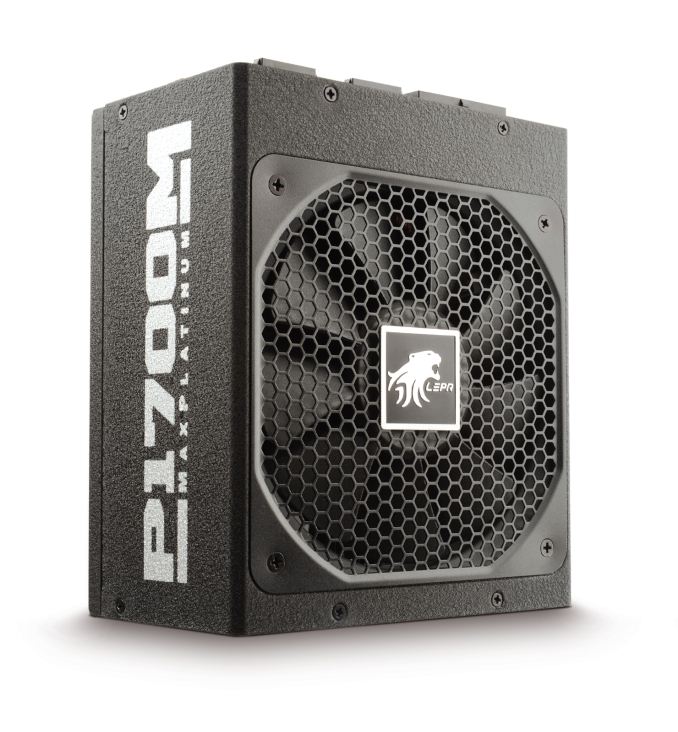
In the major PC component spaces, there comes a time when a product stack fits nicely with what needs to be done. In the GPU area, we have had discrete and onboard graphics that run normal web computing for 85% of regular users as well as it needs to. But the boundaries are pushed at the upper limit, where resolution and pixel power matter most. With power supplies, it is kind of the same thing – with most desktop computers using sub-400W at peak, there is no real need for these users to spend money on 1000W power supplies. But for the extreme enthusiast end, this need exists. For these users, LEPA has released their 1700W MaxPlatinum power supply as part of their CeBIT 2014 launch.

The MaxPlatinum range features 1050W, 1375W and 1700W models, all 80 PLUS Platinum certified (on 115V, >90% efficient at 20% load, >92% @ 50% load, >89% @ 100% load). The designs are modular, the 1700W unit measures 180x150x86mm, all units support C6/C7 power states for Haswell and up to 10 PCIe 6+2 power connectors depending on the model. The device uses a multi-rail design, with two of the rails at 20A and four rails at 30A. The base design is performed by Enermax, and uses a 135mm ball bearing fan with thermal speed control. The official specification sheet, along with cable lengths, can be found here.
The title for this news piece includes the phrase ‘EU Only’. This applies to the 1700W model only, which appropriately has the SKU code P1700-MA-EU. The other models will be available in other regions, but having an EU centric model is a little confusing. This is presumably due to efficiency using a 220-240V input – these regions tend to have higher efficiency ratings, and I wonder if LEPA was not able to hit 80 PLUS Platinum without this input. That would suggest the possibility of an 80 PLUS Gold or Silver 1700W edition might be on the cards.
Addendum: Enermax (who make the unit) has told me that to make a 1700W Platinum model for 110/115V regions requires a different design. At the minute this is not planned, with the G1600 model being the focus for North America.
So the question at the end of the day still is ‘What do you need 1700W for?’ Back when I tested an EVGA SR-2 with dual Westmere-EX Xeons and quad ASUS HD 7970 GPUs, I used a 1600W power supply that was hitting 1550W when the system was overclocked. Or take for example Cryptocurrency mining, whereby five R9 290X GPUs are being powered by a single power supply, also potentially overclocked. There is also a wealth of compute possibilities to be considered. Regular users need not apply.


