Shared posts

28 May 22:49

Facebook Wants Your Nude Pics in an Effort to Protect You From Revenge Porn

by Chelsea Steiner

Mark Zuckerberg

In lieu of protecting our elections, Facebook has decided to protect our boobies. The social networking giant launched an experimental program designed to combat the scourge of revenge porn by taking preemptive measures. The program, called the Non-Consensual Intimate Image Pilot, was launched in Australia in November 2017, and expanded to the US, the UK, and Canada last week. The program works by assigning a digital fingerprint to nude content, which will then block the image from spreading. The only catch: you have to send your nude photos to Facebook.

“But how does it work?” you may ask while repeatedly banging your head against the wall. Once you fill out a permission form, Facebook sends you an encrypted link where you can upload your images. Then, “a specially trained representative from our Community Operations team” eyeballs your photo before attaching a digital marker, after which they delete the image from Facebook’s storage. The whole process takes about a week.

Let’s just take a moment to step back and marvel at the sheer audacity of these nerd burgers. After making explosive headlines over data breaches that swung the outcome of the 2016 presidential election, they now expect us to trust them with our nudes? I would sooner trust my bank account numbers to a Nigerian prince. And what’s to stop another high powered company (let’s call them Schmambridge Schmanalytica) from accessing this data for nefarious purposes? Nothing. Now send over them dick pics!

This tone-deaf request is not only wildly invasive, but it also puts revenge porn prevention squarely in hands of the victims. Wouldn’t it make more sense to target and delete accounts that engaged in revenge porn distribution? And why should we trust a company whose employees are accessing private data to stalk their Tinder dates? Facebook, like other social media sites, has also come under criticism for ignoring reports of harassment from women, choosing to flag the victims instead.

I might be wrong, but I would bet all my Trump/Kim Jong Un collective coins that this pilot program was never approved by a human woman. The complete lack of self awareness is truly mind melting.

bridesmaids

(via Vox, image: ALAIN JOCARD/AFP/Getty Images)

Want more stories like this? Become a subscriber and support the site!

The Mary Sue has a strict comment policy that forbids, but is not limited to, personal insults toward anyone, hate speech, and trolling.—

28 May 20:59

As Marías locen xa novas cores tras o traballo do escultor César Lombera

Maruxa e Coralia contan dende onte con novas vestimentas, nas que predomina a cor amarela, o rosa e o vermello. O novo aspecto da estatua das "Marías" está baseado en fotografías e documentación histórica que usou o escultor César Lombera para pintalas.
28 May 20:58

Tropa Korriban, 'limpia' de contratos

by


28 May 20:57

A segunda edición da SELIC encherá a Quintana de actividades arredor do libro do 1 ao 10 de xuño

Máis dunha trintena de expositores, entre editoras, librarías e institucións tomarán parte na segunda Semana do Libro de Compostela (SELIC), que se desenvolverá na praza da Quintana do venres 1 ao domingo 10 de xuño. O alcalde de Santiago, Martiño Noriega, presentou esta mañá o programa de actividades nunha rolda de prensa que compartiu coa concelleira de Acción Cultural, Branca Novoneyra, e con Carlos Valdés, membro da editora Irmás Cartoné e un dos representantes da Mesa do Libro de...
28 May 20:54

El Gamela cierra una etapa

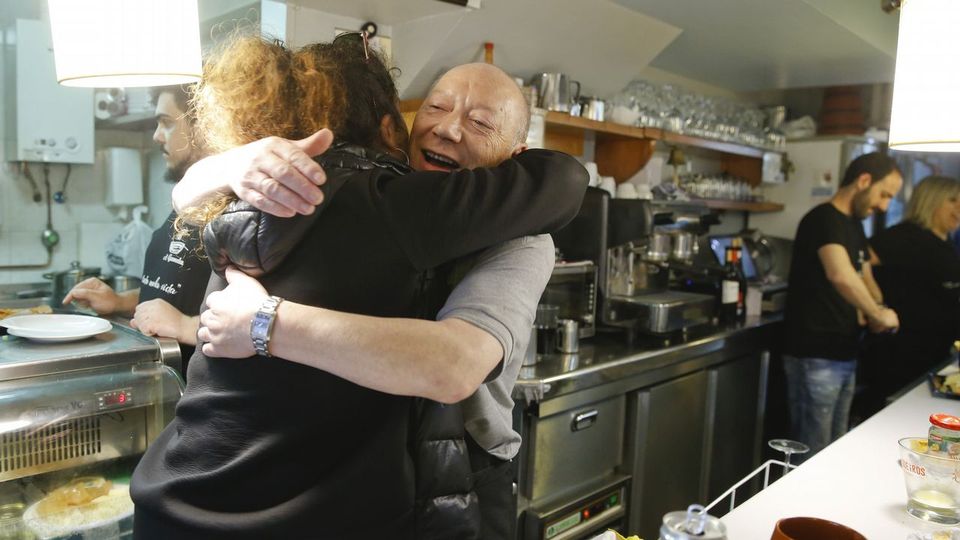
Manuel Fajín se despedía ayer de sus clientes tras 37 años

28 May 20:52

Gumersindo Guinarte, decano de Derecho en Santiago, se postula como candidato del PSOE a la alcaldía

El decano de la Facultad de Derecho de Santiago de Compostela, Gumersindo Guinarte, se ha postulado como candidato del Partido Socialista a la alcaldía de la ciudad, tras haber convocado a los militantes de la formación a una reunión el próximos jueves en la que presentará las líneas maestras de su proyecto.
28 May 20:32

García Lorca e Maside, no Bar Viño

by Quique alvarellos

O pintor debuxou neste lugar en 1932 o célebre retrato do poeta

28 May 20:28

La histórica farmacia de Patio de Madres cierra y se traslada a Santa Marta

by SANDRA COUSO. SANTIAGO


28 May 20:02

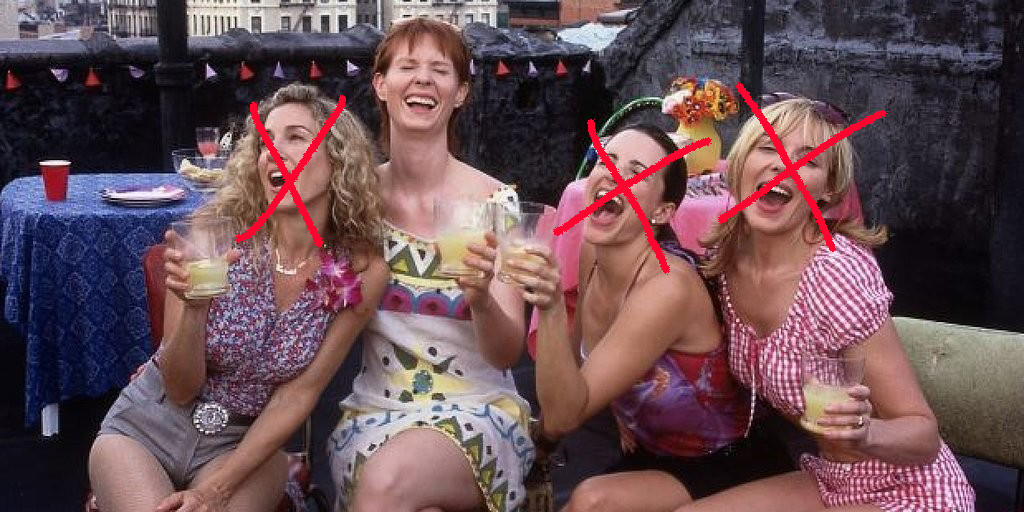
Miranda Is the Only Redeemable 'Sex and the City' Character

by Sara David

It is widely known that although Sex and the City is a beloved (including by me!) classic, all of its main characters are evil.

To celebrate the tenth anniversary of the Sex and the City movie this weekend, I revisited the fashionable universe containing bottomless cosmopolitans, enough handsome and eligible bachelors to guarantee a lay every other night, and very few people of color. I rediscovered puns that wormed their way permanently into my memory, absurd comedy gags, and a cast of shallow, entitled characters with no moral compasses. Also, Miranda Hobbes.

Sex and the City centered four characters built on the following archetypes: the Slut, the Prude, the Career Woman, and the Heroine, the New Yorker’s Emily Nussbaum writes—though it’s clear that "heroine" Carrie is more accurately television’s "first female anti-hero." With these limited stereotypes, I couldn't help but wonder: Isn't Career Woman Miranda the only one to aspire to?

To answer that question, I decided to compile some choice moments from each character to remember next time someone asks which Sex and the City character you are:

Samantha Jones

  • Said "I don’t see color, I only see conquests," and then referred to her partner’s "big black cock" in the same episode.
  • Dumped a man she loved because his penis was "too small."
  • Said stupid things like "I don't believe in the Republican party or the Democratic party. I just believe in parties."
  • Committed an actual hate crime against a trans sex worker.

Charlotte York (MacDougal / Goldenblatt)

  • Made her future husband wax his back before she’d go public with their relationship, and on multiple occasions berated his looks.
  • Constantly judged her friend’s sexual choices even though she basically fucked (more boring and also exclusively white) men at the same rate the others did.
  • Is a Republican.
  • Is also a racist who refused to eat anything at a five-star resort because "....it’s Mexico!"
  • Is objectively the worst.

Carrie Bradshaw

  • Is an awful friend who expected people to loan her money after admittedly cornering herself into debt with her fetish for $400+ shoes.
  • Is a terrible writer with bad ethics (remember when she wrote about Roger Sterling’s golden shower fetish even though his behavior really didn’t warrant a public outing that ruined his career?)
  • Doesn’t believe in bisexual people and even told one bisexual man to his face that she thinks his identity is "a layover on the way to Gaytown."
  • Whined about getting dumped via post-it even though she dumped the bisexual man by leaving a party without saying good bye.
  • Is the biggest White Feminist, believing herself to be an empowered girl boss for writing about sex—while simultaneously judging her "best friend" Samantha when she dated a woman.
  • Is a white girl who thinks she invented the nameplate necklace.
  • Did this weird, disgusting accent in a bizarre combination of appropriation and hate speech, and also called trans sex workers "the up-my-ass players."

Miranda Hobbes

  • Briefly pretended to be a lesbian to get ahead (at her male-dominated law firm where all of the partners are married and assumed she was gay, so they set her up with a woman!)
  • Gets in her own head and snaps at people who care about her (same).
  • Wanted to fuck a sandwich (fair).
  • Is avidly against anilingus.

For More Stories Like This, Sign Up for Our Newsletter

Though Miranda has her flaws—the worst of which, in my opinion, is that she's judgmental of ass-eating—she was always portrayed as the show's token cynical bitch. A rewatch of the show and movies has proved that it's definitely a better aspiration than the other characters' frivolous options. Miranda truly had it all: a successful career, a house in Brooklyn, a husband, a baby, and even a dog.

So when people ask you which Sex and the City character you are, think: Are you a Charlotte (a Republican), a Carrie (a terrible friend), a Samantha (someone who hate-crimed a trans woman) or a Miranda (future governor of New York)?

28 May 19:59

Por que Santiago acabou celebrando as súas festas nos xardíns da Alameda?

by Íñigo Mouzo Riobó

Vai poucos días Santiago de Compostela celebraba un ano máis as multitudinarias festas da Ascensión. Como todos os anos, polbeiras, atraccións de feria, tómbolas,...

O artigo Por que Santiago acabou celebrando as súas festas nos xardíns da Alameda? publicouse primeiro en Historia de Galicia.

28 May 19:55

San Simón deixa de ser a capital dos Premios Xerais

by @cequelinhos

Unha festa dos Xerais en San Simón.

Este ano non se coñecerán as obras premiadas coas tres modalidades do Xerais na illa de San Simón. A festa da editorial viguesa víñase celebrando sen interrupción na insua da ría de Vigo desde o 2005. Hai máis novidades neste ano, non na contía nin na categorización dos textos senón na presenza da propia editorial en cada un dos tres xurados. Xurado que, na categoría do Premio Xerais de Novela, incorpora por primeira vez o gañador da edición anterior.

A cultura galega dáse habitualmente ás tradicións. Témolas antigas, clásicas (o Día das Letras, que vai camiño dos 60 anos) e modernas. Unha destas tradicións modernas era a festa literaria que Xerais celebraba cada mes de xuño (case sempre o segundo sábado do mes) na illa de San Simón, un dos símbolos xeográficos, literarios e históricos de Galicia. Tradición feliz que vincula a cultura galega co escenario da cantiga de Mendiño desde o 2005. En realidade a primeira festa insular ía celebrarse un ano antes. Mais os gañadores do 2004, Manuel Veiga Taboada en novela e Xesús Manuel Marcos co Merlín, recibiron o premio en Vigo tras suspenderse a festa prevista tras o naufraxio do buque Bahía, que tiña base en Cesantes, xusto enfronte da illa.

O ano seguinte empezou unha tradición en San Simón que case sempre tivo catro elementos principais: as viaxes no catamarán, a figura dun mantedor literario, cada ano distinto, con discursos memorables e moi emocionantes, a merenda ao aire libre amenizada con música do país e os fogos artificiais que lles indicaban aos asistentes a hora de voltar á terra firme e esquecer a concentración de alegría, diseminada loxicamente polos, nun caso dous nun caso tres gañadores dos máis famosos premios das letras galegas actuais. Tradición cuxa mestra de cerimonias, Celia Torres, mantivo sempre a un altísimo nivel organizativo.

Mais a tradición chega á súa fin. Dentro da etapa de cambios que vive Edicións Xerais de Galicia, no 2018 desvincúlase a noticia dos premios da festa para celebralos. O nome dos gañadores do Xerais, Jules Verne e Merlín coñecerase tras a decisión dos xurados o 2 de xuño. E será en outubro, cando se publiquen os tres libros gañadores, cando a editorial organizará unha festa literaria da que aínda non deu detalles. Pola época do ano parece improbable que a editora pense en organizar tal acto en San Simón. Na súa nota oficial, Xerais non explica se a decisión é de carácter económico ou comercial aínda que todo parece indicar que a reestruturación interna ten moito a ver con este cambio.

Tamén hai cambios na definición dos equipos dos xurados. Xerais cambia os secretarios (con voz e sen voto) das tres categorías. A partir de agora non son persoas da propia editorial quen desenvolvan esta función. O profesor e crítico Ramón Nicolás será o secretario do Xerais; a profesora e crítica Isabel Mociño, o Jules Verne, e o profesor e escritor Miguel Vázquez Freire, o Merlín. Até agora desenvolvían esas funcións Fran Alonso, Noli Moo e Helena Pérez. O relevo máis sorpresivo foi o de Helena Pérez no Merlín. A identificación entre a editora e o premio era plena e moitos aspirantes que enviaron orixinais ao premio ficaron sorprendidos ao saber que ela non estará, como xa foi de costume durante tantos anos, coordinando o xurado. Pérez foi secretaria desde a creación do certame. Pérez, posteriormente, foi relevada da dirección da colección Merlín pero o cambio na secretaría dos xurados foi previo a esta remuda.

Nos xurados haberá tamén novidades. No xurado do Xerais de novela estará o último gañador do certame, o escritor Santiago Lopo. É a primeira vez que ocorre. De feito, Xerais sempre intentara fuxir do xurado “literario” e abrira o arco a profesionais doutras áreas. Mais si é certo que nos últimos anos foise consolidando un deseño de xurados relacionados coa comunicación e a lectura nalgunha das súas facetas. Tamén se experimentou con abrir unha convocatoria pública para escoller un dos membros do xurado. Mais o resultado non debeu gustar na editorial, vendo que se consolida un xurado onde o gusto pola lectura é o ingrediente común a todos os membros.

Onde non houbo cambios foi no equilibrio na dotación dos premios: 10.000 para cada categoría. Aínda así, como de costume, hai máis aspirantes ao Xerais de novela (37) ca ao Merlín (32). O Verne é o estatisticamente máis doado de gañar, con só 22 obras aspirantes. Tamén se demostra ano tras ano que a trascendencia da obra gañadora nesta categoría é ben menor que nas outras dúas, a teor da atención da crítica e dos lectores dunhas ou doutras categorías.  O ano pasado presentáranse 42 novelas ao Xerais, 35 no Merlín e 19 no Jules Verne.

Xustamente o cambio no calendario da festa dos Xerais pode procurar unha maior inmediatez entre a repercusión da gala de entrega dos galardóns e a posibilidade de comprar os propios libros, algo que co actual sistema non se podía lograr; cando os Xerais saían ao mercado xa había tempo que se apagaran os (modestos) ecos da gran festa de San Simón.

27 May 19:26

'Wild Wild Country': los españoles que vivieron en la loca comuna de Osho

by Jesús Gámiz

Luis Martín Santos llega paseando tranquilamente a la plaza de Salvador Dalí, en Madrid, vestido con un pantalón vaquero y una camisa azul. Saluda con un apretón de mano. Nada de túnicas naranjas, ni colgantes estrafalarios, ni reverencias. Es un tipo simpático y hablador, que matiza sus palabras de manera constante porque sabe que el tema que nos traemos entre manos puede resultar polémico. Charna (su nombre espiritual) fue uno de los poquísimos españoles que vivieron en Rajnishpuram, la comuna hippy en medio de Oregón que retrata la exitosa serie documental de Netflix 'Wild Wild Country'.

Dividido en seis partes, el documental narra la creación de una comuna de seguidores de Osho, uno de los maestros espirituales más populares de los ochenta, en medio de Oregón, y el choque con los residentes del pequeño pueblo de Antelope.

"Yo llegué en el 83", recuerda Martín Santos, "vi cómo crecieron muchos edificios y participé en la construcción de una de las carreteras. Estuve hasta el final. Vi cuando Osho abandonó el rancho. También cuando volvió y cuando se volvió a ir a Portland a declarar y abandonar el país". De origen donostiarra, con apenas 23 años, a principios de los ochenta, se había ido interesando por Osho cuando empezaron a llegar a España sus primeras publicaciones. Comenzó a practicar sus meditaciones y le parecieron un salto cualitativo de todo lo que había probado antes.

Tanto le interesó, que acabó cruzando el Atlántico en un velero. A su llegada a Estados Unidos, se fue a Oregón: "Pasé un total de 18 meses en 3 estancias. Presencié todo menos el suceso de los sin techo, en ese momento yo estaba en España. Pude observar el ascenso y la caída de Sheela. Observé la llegada de la seguridad y la paranoia, la transición de un experimento maravilloso en el que lo pasamos fenomenal, con sensación de ser unos privilegiados por participar en algo tan loco".

El contingente español en Oregón era mínimo. Martín Santos, haciendo memoria, recuerda a otros dos más, de los que solo guarda la pista de uno. Es Alejandro Maíquez, 'Avigan', un abogado madrileño que hoy trabaja como practicante de medicina tradicional en el Alentejo portugués (Maíquez, por su parte, recuerda a otra chica catalana, llamada Cándida, que según él pasó varias veces por el rancho).

Luis Martín Santos fue uno de los pocos españoles que vivió en la comuna de Osho en Oregón. (Jesús Gámiz)

Alejandro vive hoy a medias entre su casa y Monte Sahaja, una comunidad agrupada en torno al maestro espiritual jamaicano Anthony Paul Moo-Young, Mooji. En los ochenta, pertenecía a lo que él llama "la clase alta española de la época, de derechas". A los 17 años, lo enviaron un curso a Berkeley, en California, con un programa de intercambio. "Me llevaron un día a la Universidad de Berkeley y yo vi a la gente allí en el campus y todo lo que procedía de esa época hippy, que estaba en su auge", recuerda, "aquello fue lo que más me tocó. Me impactó una barbaridad. Algo se quedó ahí que me hizo pensar que había otra cosa".

A diferencia de Martín Santos, Maíquez estuvo de corrido en la comunidad de Oregón, unos veinte meses. Además, había vivido antes en la comuna original en India, a donde había viajado por tierra desde Turquía: "Conocí a un discípulo de Osho que me contó más sobre él. Al día siguiente cogí el tren y me fui para Puna. Era lo que quería hacer".

En aquella comunidad primitiva, Maíquez se topó con un ambiente de "increíble libertad sexual, pero una libertad más consciente, no pornográfica, con la sexualidad fluyendo entre todo el mundo". Su día a día en Puna lo resume de forma gráfica: "Yo vivía en una plataforma, en una palmera, todo el día con una tela alrededor del culo. Trabajaba como jardinero. Era como ir volando por la vida".

Alejandro Maíquez (izquierda) pasó veinte meses seguidos en la comuna.

En 1981, la comuna se trasladó a Oregón, en buena parte por la creciente tensión con el gobierno indio. Maíquez se volvió a España. Medio peleado con su familia, desempeñó varios trabajos hasta reunir dinero para poder viajar a San Francisco. Allí, apañó por su cuenta un matrimonio de conveniencia con una estadounidense y estuvo un año y medio buscándose la vida antes de irse a Oregón. "Cuando yo llegué", dice, " la comunidad estaba, más o menos, en el punto en el que empieza el documental. Un poco antes de que tuviéramos nuestra propia policía. Era una comunidad muy distinta a la anterior, era otro juego completamente distinto, un juego del poder. Trabajábamos mucho, montamos una ciudad desde el principio, era muy ilusionante".

Los dos han visto el documental. Tienen algunas reservas y lamentan cierto sensacionalismo; que se centre más en los aspectos truculentos y en la figura de Sheela. Sin embargo, en líneas generales les ha parecido bien. "Me parece emocionante", apunta Martín Santos, "creo que han hecho un gran trabajo de fijación y recopilación de imágenes". Pero matiza: "creo que le da demasiado protagonismo a Sheela; entiendo que es atractiva mediáticamente, pero no han preguntado suficientemente lo que pasó. A Osho lo sacan de lejos y evitan hablar de él, no tienen tiempo para sus enseñanzas. ¿Cómo consiguió este señor reunir ese grupo de gente guapísima y maravillosa allí? ¿Qué les daba?". Por su parte, Maíquez valora que se haya dado voz a Swami Prem Niren (el abogado de Osho), con cuya posición se identifica totalmente: "que haya alguien que dé esa versión ya me parece un avance importante".

Llegan las armas

Los dos insisten en que para la gran mayoría de los residentes en Rajnishpuram, las maquinaciones del grupo dirigente que se creó alrededor de Sheela eran algo más o menos ajeno. "Yo estuve trabajando en una carretera, también en la panadería", señala Martín Santos, "era muy divertido porque era un lugar con mucha energía, con gente de otros países, un experimento comunitario muy divertido". Aunque apenas hablaba inglés y recuerda sentirse "deslumbrado" por el lugar, sí admite que en cierto punto el ambiente empezó a cambiar: "hubo un momento en el que empezaron los problemas de seguridad y pusieron las armas, aquello empezó a sonar un poquito raro".

Maíquez tampoco trataba de manera habitual con los dirigentes de la comunidad y recuerda más los aspectos cotidianos de la experiencia: "trabajábamos mucho, estábamos montando una ciudad desde el principio, era muy ilusionante. El tema del documental no era nuestro día a día, de los que estábamos allí dentro. Todos los días bailabas con Osho. Pasaba con el coche y se paraba donde tú estabas, si tocabas música, y podías tener un intercambio energético con él". Sí que estuvo implicado directamente en el programa de los sin techo, distribuyendo ropa, y recuerda que "a veces alguno daba problemas y aparecía una de las chicas. Una noche tuve que hacer de traductor para un portorriqueño". De cualquier modo, apunta que "hay una parte del documental que retrata a gente construyendo con ilusión una ciudad, y esta era la energía en la que nosotros estábamos. Riendo y trabajando muchas horas, pero de buen rollo".

Sin embargo, Maíquez también pasó un tiempo en la panadería, y años después ataría cabos entre una anécdota que le ocurrió allí y uno de los episodios más oscuros del documental: la intoxicación con salmonela de más de 700 residentes locales para impedir que votaran en las elecciones del condado de Wasco. "En una cena", recuerda, "yo estaba en la cocina de la panadería y había cajitas con fruta, queso, un panecito, y nos dijeron que las tiráramos todas. Yo las tiré. Luego caí con el tiempo en que eso era en la época de la salmonela y que quizás querían infectarnos a nosotros también para defenderse ante los medios".

Las relaciones entre los seguidores de Osho y los residentes de Antelope se fueron deteriorando hasta que las autoridades estadounidenses intervinieron para cerrar la comuna por todos los medios posibles. ¿Se podría haber reconducido la relación entre las dos partes? Con la perspectiva de los años, Alejandro Maíquez lo ve complicado: "tú pon a un cristiano fundamentalista y a un hippie que esté viviendo en libertad y ya me explicarás a mí adónde va a parar". Maíquez recuerda que, una vez, después de un festival, estaba sentado a la orilla de un lago y dos tipos lo empujaron al agua. "Si fuésemos quienes somos hoy, haciendo una cosa completamente distinta, con menos espíritu rebelde, quizás sí", dice, "pero en aquel momento pasó lo que tuvo que pasar". Hay un punto especialmente tenso en el documental, cuando las autoridades se preparan para entrar en el rancho a detener a Osho y se moviliza a la Guardia Nacional ante la posibilidad de un enfrentamiento armado. Martín Santos no cree que la gente estuviera de verdad dispuesta a luchar y justifica las medidas de seguridad "porque hubo un bombazo en Portland". Aun así, reconoce que "hubo una amenaza real y tuvimos suerte de que Osho escapara a Charlotte, porque de algún modo desvió el foco de atención". Y remata: "yo no estaba allí para defender nada ni me iba a poner a pegar tiros, entre otras cosas porque no tenía ningún arma".

Adoración a Osho: escena de 'Wild Wild Country'. (Netflix)

Una de las cuestiones que revolotean sobre el documental cuando las cosas se descontrolan es hasta qué punto Osho era consciente de las ilegalidades que se cometieron o si estaba implicado en ellas. Martín Santos apunta a Sheela ("estoy seguro de que Osho no estaba metido en las ilegalidades, ni se me pasa por la cabeza") y tampoco tiene palabras amables para el gobierno estadounidense: "Yo no tomé parte en ninguna de las intrigas y tengo la opinión personal de que la exsecretaria fue responsable directa de los crímenes por los que fue acusada. La intención principal de las autoridades americanas, aprovechando la invitación de Osho a investigar, fue cargarse el experimento comunitario y acabar con Osho, y en ese empeño se produjeron un montón de irregularidades que pusieron en peligro su vida en el peor estilo al que nos tiene acostumbrados el gobierno americano". De esos últimos días de la comuna, tiene dos recuerdos especiales. Uno, cuando Sheela se fue, y con ella gran parte de la tensión: "la gente de la fuerza de paz tiraba las gorras al aire, como si se hubieran licenciado de la universidad". El otro, cuando empezaron a descubrirse cosas como las grabaciones clandestinas dentro de Jesus Grove, el centro operativo de poder. Describe una sensación de "decepción y rabia", que alguna gente proyectó sobre Osho y otros (la mayoría) sobre Sheela.

"The dream is over"

"Mal que bien, todo acabó con el acuerdo de Osho con las autoridades para abandonar Estados Unidos. Nos estuvo explicando lo que había pasado, nos dijo que nos podíamos quitar la túnica, de alguna manera desmontó aquello. Cuando se fue, hicimos una reunión con toda la comunidad, dijeron 'the dream is over' y ciao, se acabó". Maíquez, por su parte, quita drama a aquellos días crepusculares: "Yo me eché una novia alemana, cogimos un autobús y nos fuimos a Seattle, donde pasé algunos de los mejores años de mi vida". También participó en la segunda parte de la comunidad de Puna y estuvo allí en el momento de la muerte del maestro, y dice que estuvo tres meses con un subidón espiritual como no ha vuelto a tener otro.

"Osho era una especie de caravana", señala Martín Santos, "íbamos de un lado a otro intentando estar cerca de los experimentos que él montaba, pero luego tuve que rehacer mi vida tras volver a España".

Hoy él es traductor de la obra de Osho, agente literario y representante de su obra en castellano, publicada en 13 editoriales diferentes dentro del ámbito hispano. Aunque el maestro indio es una fuente de inspiración para él, un estilo y una forma de vida, insiste en que no le gusta la palabra "seguidor", que tiene, para él, un carácter borreguil con el que no se identifica. Subraya que no habla por nadie más que por sí mismo. También comparte y enseña sus famosas meditaciones activas y organiza eventos. Para agosto, está preparando un festival Osho en la localidad vasca de Artzentales (Vizcaya). Tiene un canal de Youtube que ha experimentado un crecimiento exponencial de visitas con el documental de Netflix y su página de Facebook cuenta con unos 900.000 seguidores.

A pesar de todo, de las maquinaciones, la tensión, los enfrentamientos, tiene un recuerdo bonito de Rajnishpuram, un recuerdo "vibrante y extraordinario, a estas alturas incluso con un cierto tinte romántico". Reconoce que hubo momentos duros, pero insiste en que no da por desperdiciado ninguno de los días que pasó allí. Cuando acabó, se alegró también por el fin de una etapa: "Las historias al final se pudren un poco, yo he aprendido a caminar". Cree que ha pasado mucho tiempo de todo aquello y lo encuadra en el cuelgue general de los años ochenta: "en esa época estaban los punkis, ETA matando en España... el mundo era una locura, no solo los sannyasin. Ver gente por la calle de rojo, con fotos de un señor que parecía Georges Moustaki, no era tan raro. Todo era un disparate y nosotros éramos un ingrediente más. A veces, en España, íbamos al Rastro en Madrid, no teníamos un duro. Nos señalaban y nos decían '¡mira, los orange, los de Baghwan!"

Por su parte, Maíquez también siguió su camino: acabó estudiando medicina tradicional china, hipnosis y otras disciplinas alternativas. Aunque ha tocado más palos, Osho lo ha acompañado siempre de un modo u otro. Al otro lado del teléfono, desde su casa en Portugal, resume su periplo en Estados Unidos mientras intenta, a duras penas, contener las lágrimas: "yo de toda la experiencia de Oregón no puedo estar más feliz. Estoy absolutamente agradecido. Me emociono porque me toca el corazón. Solo siento que fue un privilegio estar con Osho y me siento inmensamente agradecido".

26 May 17:10

George Takei’s Accuser Walks Back Story of Sexual Misconduct in New Report

by Chelsea Steiner

George Takei

The long overdue #MeToo Movement continues to take Hollywood by storm; each day brings another accusation, another abuse brought to light. The reckoning has been swift, with notorious long-time abusers like Bill Cosby and Harvey Weinstein finally being held accountable after decades of using their money and influence to shield themselves. When Scott Brunton accused George Takei of drugging and groping him in 1981, we were outraged and upset.

The court of social media took to the Takei allegations like it takes to all things: with fast, furious anger until the next hashtag-worthy news story comes along. Takei’s accusations quickly fell by the wayside as new stories of harassment and abuse were published. Takei’s story joined all the others, lumped in with all the other villainous events perpetrated by powerful men. That is, until Shane Snow at The Observer dug deeper into the case, and after a months-long investigation and numerous interviews with Brunton, he published an article that could exonerate Takei.

Takei, beloved for his iconic role as Mr. Sulu on Star Trek, was not just an actor. He was a fierce activist for gay rights and a spokesperson for the Human Rights Campaign. An outspoken advocate against the Trump administration’s immigration policies, Takei frequently cited his own childhood experiences in a Japanese internment camp as his reason for speaking out against the racist and hateful rhetoric behind the Muslim ban. His witty and tireless social media profile made him an internet icon of the left, which made these accusations all the more painful. Takei was supposed to be one of the good ones, one of us. It stung, but the pain wasn’t unfamiliar. It was shared by die-hard fans of Arrested Development and House of Cards. Another pop culture fave tarnished.

Snow noticed that, after doing some research, the evidence of Takei’s case didn’t contain the usual traits of a sexual predator. Brunton’s accusations did not compel more accusers to come forward. There were no rumors, no whisper mill surrounding the Star Trek star. And then there were the facts of the case, facts that Brunton couldn’t seem to keep straight. Snow writes:

What I discovered after months of investigation—and after speaking at length with Brunton, people close to Takei, medical toxicologists and legal experts in sex offenses—suggests that this story needs to be recast significantly.

Brunton, a sympathetic and well-intentioned man, would go on to walk back key details and let slip that, in his effort to be listened to, he’d fabricated some things. This and other evidence would indicate a hard-to-swallow conclusion: We—both public and press—got the George Takei assault story wrong.

Snow’s article, which is worth reading in its entirety, features multiple interviews with Brunton, as well as discussions with toxicologists about Brunton’s symptoms and the medical effects of ingesting a date rape drug. The toxicologists concluded that, given Brunton’s own account, he was most likely not drugged. Then there was the issue of Brunton himself, who kept changing his account of his evening with Takei. Essentially, it appears that Brunton, who was friendly with Takei, was hurt when Takei made a pass at him. Once he rejected his advances, Takei backed off. An unwanted sexual advance can stir lots of emotions and feeling of vulnerability and betrayal, but given the sexual mores and codes at the time, it seems that Takei misread the situation. A case of mixed signals and hurt feelings.

Mob justice is compelling and cathartic, especially after decades of silenced voices and dismissed assaults. But in the age of social media, there is no room for nuanced debate and conversation. You can’t squeeze critical thinking and analysis into 280 characters. And it’s unfair and irresponsible to lump in Takei’s behavior with repeat violent offenders like the Cosbys and Weinsteins of the world. Takei, for his part, is relieved, saying:

(via The Observer, image: Neilson Barnard/Getty Images)

Want more stories like this? Become a subscriber and support the site!

The Mary Sue has a strict comment policy that forbids, but is not limited to, personal insults toward anyone, hate speech, and trolling.—

26 May 12:48

50+ Sexual Fetishes You’ve Never Heard Of

by Sylvie Quinn

As a species, our sexual tastes are as varied as our fingerprints. Below is a list of every sexual fetish we can think of. Some, like the widely parodied foot fetish, are more commonplace, while others, like vorarephilia, are less well understood. (Please keep in mind that a “paraphilia” is a condition involving an atypical sexual desire that can sometimes include activities considered dangerous or extreme.) 

1. Vorarephilia

Vorarephilia is an abnormal sexual condition characterized by the tendency to become aroused by the idea of eating someone, the idea of being eaten by someone, or by witnessing a cannibalistic scene. People with this particular paraphilia are commonly referred to as vores.

2. Hybristophilia

Hybristophilia is an abnormal sexual condition in which sexual desire and climax occur in response to the knowledge that one’s partner has committed a heinous act such as infidelity, lying, or criminal acts such as rape, murder, or robbery.

3. Diaper Bondage

Diaper bondage is a specific form of submission that involves role-play in which an adult regresses to an infant-like state. Often, the adult performing this sexual fetish will wear a diaper and act like a baby, seeking nurturing from their sexual partner. This condition is also known as paraphilic infantilism,autonepiophilia, psychosexual infantilism or, more commonly, adult baby syndrome.

4. Sleeping Sex

Sexsomnia is a rare sleep disorder that prompts an individual to seek sexual activity in their sleep. Although most reported cases involve men, both males and females may initiate sleep sex.

5. Cuckolding / Cuckoldry

Cuckolding or cuckoldry is a sexual fetish in which someone experiences sexual arousal by way of observing their partner having sex with a another man or woman. Some report an associated feeling of humiliation and /or rejection as part of the allure.

6. Omorashi

Omarashi, or “omo” for short, falls within the urolagnia family of sexual fetishes, which are related to urine. Those who identify as omo become aroused when they have a full bladder and wet themselves, or observe their partner wetting themselves. Other phrases used to describe this particular fetish are “bladder desperation” and “panty wetting.” The word omarashi is Japanese for “to wet oneself.”

7. Spanking Art

Spanking art is generally enjoyed by people who identify as spanking enthusiasts in the bedroom. Spankophilia is a paraphilia characterized by arousal from spanking or being spanked. It falls within the realm of of BDSM (bondage, discipline, submission, sadomasochism) behaviors, although it’s a sexula fetish in and of itself.

8. Somnophilia

Somnophilia is erotic arousal dependent upon the act of intruding on a stranger mid-sleep, or waking someone up with erotic caresses.

9. My Little Pony Sex

The adult male fans of ‘My Little Pony’ are colloquially known as “bronies.” While not all bronies associate this cartoon program created for children with sex, there is a niche community of people who fetishize ‘My Little Pony’ and watch porn related to these series and / or roleplay scenes based on the show.

10. Teratophilia

Teratophilia is a sexual fetish that involves being attracted to people with physical deformities. There are many subsets of teratophilia specific to different types of human deformities. For instance, acrotomophilia involves sexual attraction to amputees and stigmatophilia refers to deriving sexual pleasure from people whose bodies are marked or scarred in some way.

11. Coprophilia / Scatophilia

Coprophiila / Scatophilia (otherwise known as “scat sex) is a sexual fetish rooted in a fixation with feces and defecation. People who gravitate towards poop play experience sexual pleasure through the act of crapping on another person or being crapped on, for instance.

12. Dendrophilia / Arbophilia

People with this particular paraphilia are sexually attracted to trees. The term dendrophilia literally means “love of trees.” While some are turned on by the combination of textures (the roughness of tree bark in contrast to the softness of tree leaves), others simply find trees to be phallic symbols that arouse them.

13. Breath Play

Breath play involves the restriction of oxygen to the brain to achieve a heightened orgasm. Self-induced breath play during masturbation is known as autoerotic asphyxiation. Breath play within a couple can be achieved by nose pinching, holding your breath, cover the face with a hood or plastic bag, “corseting” (pushing down on someone’s chest), choking, hanging, or “kinging” / “queening” (smothering your partner with your genitals). Any time you restrict someone’s ability to breathe, you’re engaging in a risky behavior, so breath play falls within the realm of BDSM behaviors known as “edge play,” in which your partners is very much responsible for your life.

14. Daddy Kink

Daddy kink is a relatively simple sexual fetish that involves submission / domination play during which the submissive refers to her dominant partner as “daddy.”

15. Pee Fetish

You’ve likely heard of a “golden shower” (the act of peeing on someone for the purpose of sexual pleasure)) and the people who like giving or receiving golden showers are characterized as having a pee fetish. The clinical term for this paraphilia is “urolagnia.”

16. Cum Fetish

People who identify as having a cum fetish are aroused by the act of cumming on their partner, being cummed on, and / or images of people who have been cummon-on. Something about the sticky mess of ejaculate on someone’s face, stomach, chest, or ass is tantalizing to those with a cum fetish.

17. Mechanophilia

Mechanophilia is characterized by sexual attraction to machines, sometimes a desire to engage in sexual relations with (or in) an airplane, car, bicycle, or helicopter.

18. Macrophilia / Giantess Sex

Macrophilia or giantess sex is an abnormal sexual condition that involves being attracted to and aroused by someone who is much larger than you are physically. In short, it’s a phenomenon in which people are turned on by giants and fantasies involving giants.

19. Pedal Pumping / Revving

Pedal pumping or “revving” is a subset of foot fetishism that involves watching someone, often a woman wearing high heels, push a gas pedal with masturbatory rhythm.

20. Balloon Fetish / Looners

People with a balloon fetish (aka “looners”) find balloons sexually attractive and incorporate them into their sex lives. While some find creative ways to have sex with balloons, others simply enjoy the sight of their partner sitting on a balloon and popping it.

21. Quorofilia / Hand Fetish

Some people who experience a hand fetish or quorofilia are attracted to a specific part of the hand, such as the fingers (which might appear phallic), the nails, or the palm. Others are aroused by actions performed with the hand, whether overtly sexual (e.g. masturbation) or traditionally asexual (e.g. handwashing or rinsing dishes).

22. Sensation Play

While many forms of erotic play are fundamentally cerebral and centered on power exchanges (think domination / submission), sensation play is eroticism that is physical first. In sensation play, the physical stimuli (e.g. silk scarves, ice, candle wax, massage oils, feathers) are applied in a controlled manner with the purpose of eliciting the release of pleasure triggering endorphins. While their may be pain involved, the effect is similar to that of a “runner’s high.”

23. Extreme Feeding / Feederism

Feeders or “encouragers” take pleasure in funneling excessive quantities of food into the mouths of “gainers.” Some extreme feeders enjoy the sensation of inserting their penis between a gainer’s fat folds.

Sexual Fetishes

These sexual fetishes are yet more specific (think attraction to people with neck braces or arousal from vomit) and more obscure. But they are also very real. What can we say? The world is a fascinating place, especially when it comes to human sexual behavior.

  • Pygophilia — Attraction to the human butt.
  • Hematolagnia — Also known as “vampire syndrome,” hematolagnia is sexual interest in blood or the desire to drink blood sensually.
  • Salirophilia — The love of getting dirty (or getting your partner dirty), literally, prior to or during sexual intercourse.
  • Katoptronophilia — Intense sexual satisfaction derived from mirrors, often satisfied by having sex, stripping, or masturbating in front mirrors.
  • Food Fetish — While some foods are actually aphrodisiacs because they have properties that induce sexual desire, sexual food play can involve any food that a person finds sexually stimulating. Food play is a form of sitophilia, which refers to arousal by erotic scenes centering food.
  • Teleiophilia — Sexual attraction to adults.
  • Microphilia — Sexual attraction to small people or tiny things.
  • Claustrophilia — People who are turned on by and / or prefer to have sex in tiny spaces.
  • Agalmatophilia — A love of mannequins and/or statues.
  • Hotdogging — Rubbing your penis between another person’s butt cheeks. (This is not about anal penetration, though it can lead there.)
  • Tricophilia — Arousal from hair.
  • Retifism — Arousal from shoes.
  • Abasiophilia — Attraction to people with leg braces.
  • Spectrophilia — Attraction to ghosts.
  • Trichophilia — Arousal from hair.
  • Abasiophilia — Love of people with neck braces.
  • Phalloorchoalgolagnia — Arousal from pain to male genitalia.
  • Plushophilia — Attraction to stuffed animals or people in animal costume.
  • Aquaphilia — Arousal from water.
  • Necrozoophilia — Attraction to dead animals.
  • Apotemnophilia — Arousal from amputation.
  • Emetophilia — Attraction to vomit.
  • Frotteurism — Arousal from rubbing against non-consenting people.
  • Eproctophilia — Attraction to farts.
  • Maisesiophilia — Attraction to pregnant women.
  • Homeovestism — Attraction to the clothing of one’s own gender.
  • Dacryphilia – Attraction to making someone cry.
  • Nasophilia —Attraction to noses.

Bonus: 32 People On Reddit Reveal Their Weirdest Sexual Fetishes

We all have our turn-ons and turn-offs. But these people have some very specific sexual fetishes that fall outside the realm of what you might consider “normal.” Read these accounts of what it’s like to experience sexual arousal from something like a silky soft sweater or human piss. 

1. Soft sweaters — duh.

“Weird sexual fetishes, eh?

Well, if by “weird” you mean “rare,” I bet nobody here shares this one: I love women who wear soft sweaters (angora, mohair, etc.). I don’t know what it is, but if a sexy woman is wearing a soft sweater, I’m immediately and irretrievably infatuated.”

2. Thank you, Nickelodeon!

“Can’t believe I’m going to post this, but it’s no weirder than most in this thread.
I’m bisexual and into BDSM, but the thing I consider weirdest is that I’m a wet and messy fetishist.

I like to see girls slimed, covered in mud, pied in the face, or just generally messy. Growing up with Nickelodeon was a strange and interesting experience…”

3. He takes Sleeping Beauty to a whole new level.

“I’ve got a thing for sleeping girls. Yes, it’s weird, but I never acted on it until my current girlfriend.

She’s into it, though, and sometimes as a special treat, she’ll get super wasted and pass out, or take heavy duty sleeping pills and tell me to fuck her while she’s out cold.”

4. Well this is definitely a first.

“I like to watch videos where doctors and paramedics try to resuscitate fat men who are having heart attacks.”

5. …And another first.

“Australian redheads.”

6. A certain ilk of public nudity.

“Not so weird, but I am absolutely enthralled with public nudity, whether it is in a crowded public area or secluded mountain trail, and whether it is nonsexual or public humiliation/bondage. On that note, girls that flash poorly (pull shirt down, turn around for the camera, then pull shirt back up) or completely spreading themselves is an instant turn off.”

7. This guy is straight, but he fantasizes about being a woman.

“Am I the only throwaway account on here that likes the idea of transforming into a woman (I’m a man) and having wild sex? It started out as a fetish for purely lesbian sex, evolved into a fetish involving myself taking part in lesbian sex (obviously as a woman), and these days it can involve myself as a woman having sex with guys and even pregnancy as well (one of my more normal fetishes is pregnant women and insemination in general, so of course it factors in here).

Strange thing is that I’m not gay, or even feminine. The idea of having sex with a man as a man is completely unappealing to me and so is getting a sex change — there’s nothing appealing to me about artificial women (often too ugly, don’t actually function sexually as women etc). It’s all about being a fully functional woman, or more recently a ‘female’ hermaphrodite.

I believe the term for my fetish is autogynephilia. It’s really my only active fetish these days, the rest are offshoots.

Also, I should note another strange thing: I have a perfectly healthy sex life with my fiancée. I rarely fantasize about being a woman unless I’m masturbating alone.”

8. A stand-up guy.

“I get turned on by women with MBAs.”

9. I’d venture to say this isn’t a fetish.

“I like my women built, son. It’s so frustrating when my friends and I are scoping out a chick and no one else notices the ass. But not just the ass– the angle it makes with the small of the back. And the rate at which the small of the back arcs into the back.

Also, if you bang on her ass like a bongo, there needs to be a decent sound. That’s how you know it’s ripe, like a watermelon. Her hip bones should make a good woodblock, and her thighs should just have just the right amount of tension to get that kwwww sound.”

10. Using a strap-on.

“Pegging. Not femdom though, that doesn’t do anything for me. Occasionally I get that itch and would like to have it scratched by my girlfriend.

It’s tiring always having to be the top.”

11. Riiiiiiight.

“Well defined collar bone and tendon on inner thigh = heaven.”

12. Basically, this guy is probably into the “Twilight” series.

“Expansion fetish here: basically it means I like girls who are going through some kind of transformation process. Originally started out with girls turning into animals and anthro animals, got sick of the animal part, and now I’m more into chicks whose boobs are growing or if their bodies are changing or growing in general… Never told a partner this, seems too hard to work into a sex conversation.”

13. You can have a lifetime of bad hair days with this guy.

“Bald women…I adore them. Luckily I have developed enough game over the years that every woman I have dated longer than a few weeks has shaved her head. Honestly most women seem to think about it at some point and I think when they find out they have steady sex until they can grow it back out they go for it. It can go badly though so be warned.”

14. Weight fetish.

“Weight gain. Yeah, I know — this one is really weird. The most common time this comes up is if someone grumbles that they gained some weight, or they’re stuffed, or their pants don’t fit.

Sometimes I watch shows like The Biggest Loser and get really aroused looking at the before and after (imagining them reversed, of course), or thinking about the people who were kicked off the show and will gain it all back. The most unrealistic fantasy is my s/o somehow getting fatter and fatter as I have sex with them.

Phew. Nice to get that off my chest.”

15. So he’s a self-hating Jew…

“As a Jew, one of my biggest fantasies has always been to sleep with a German girl. And I want her to yell at me in German the whole time, like only an angry kraut could. And I want to give her the hate-fucking of a lifetime, something that would make Golda Meir proud.”

16. Cuckolding fantasy.

“I want to watch my girlfriend fucked by another man. Just thinking about it turns me on. It would make me view her in a 100% sex-object-like way, like watching a pornstar get fucked.

It would also make me jealous, but not in a bad way. More like a “Oh yeah? Now let me show you how its really done” kind of way.

I thought I could never tell her this, but we recently had a big night out a club and wound up taking some E’s. In a fit of ecstasy-fueled honesty, I admitted my fantasy to her and she got super excited by the idea. She even wants to do the reverse and watch me fuck another woman.

I know all this probably sounds really messed up. Obviously this is a throwaway account.”

17. True…

“I’m male and enjoy fully dressing up as a female rubber doll with big torpedo tits, latex mask and ballet boots.”

18. Leap years really GET HIM GOING.

“I can only have sex on a leap year. It’s not my decision.”

19. Tickle-me-Elmo.

“Tickling. Either doing the tickling or watching it.”

20. I think the real question is: Who WOULDN’T like this?

I like men to give me a pedicure while I whip them. It’s a hard life.

21. Finally, a man who appreciates hair!

“I’m way more into a girl’s hair than I can explain. Length, color, style…girls who change it up frequently, or do something a little unusual, will always get 10x the attention from me.”

22. Urine!

“I have a bizarre fascination with piss. Sometimes I feel great about embracing it and sometimes it’s the most embarrassing thing ever.”

23. Armpits!

“I don’t really obsess over them or have some collection of armpit porn or anything but they turn me on.

I love my girlfriends armpits, the way they smell, they way they look, shaved, unshaved, stubbly, whatever. I’ve came on her armpits before and fucked them with lube.”

24. Yeah, again, does not sound like a fetish to me.

“Satin. I can’t even walk past a satin garment without being compelled to touch it.”

25. An uninterested partner.

“Fucking from behind, but she’s completely disinterested. Like she’s doing paperwork or something.”

26. A nice, sexy, old pair of sneaks.

“Sneakers. I’m really not a fan of shoes that are traditionally considered “sexy.” I don’t like heels, or really anything open-toed. I like some boots, but again, not a fan of heels. I really love a girl in a pair of sneakers. Less jewelry (if any), less makeup (though most people subscribe to the “less is more” school of thought in terms of makeup), no nail polish, less “sexy” clothes, and sneakers. That is what I love a girl to look like.”

27. This sounds kind of nice, actually.

“I’m an adult baby. I’m into being diapered, dominated, and babied by someone. I’ve got tons of paraphernalia including bottles, an adult sized pacifier, tons of diapering supplies and diapers, stuffed animals, and onesies and other baby clothes. My boyfriend even has an adult sized nursery at his house for me. So I think I win this thread.”

28. A TAD unsettling…

“Cold limbs. That’s really the only one. I’m happy to stall the actual sex for a long, long time if I can just caress her freezing cold arms and legs and run my lips over them.”

29. Something about this feels wrong.

“I have posted about this before, but guys with Asperger’s syndrome turn me on incredibly. There is something so sweetly gentle and innocent about them that just makes me want to… DEFILE them.”

30. You have to at least give him credit for being so in touch with his fantasies.

“Hoo boy. I am one screwed up individual :P

I’m into furry stuff. I’m bisexual when it comes to furry porn, but not with actual people (totally straight in real life).

I’m also a voraphile: this means I enjoy fantasizing about people (and animals, furries, etc.) swallowing me, and me swallowing them (occasionally). It’s mostly the “being in the throat” that turns me on. Also, large bellies (mostly from someone being in the stomach); this is probably an extension of the vore fetish and is sort of a pseudo-pregnancy-fetish.

I did an AMA about this a while back. Maybe I should do another one since this one was so long ago.

Oh, and I’m a zoophile too. Never actually done that, though, and probably will keep it confined to my fantasies.”

31. He’s a feeder!

“Feeder fetish. Not to the extent of the movie feed or anything like that, I just really like fat girls and I like to watch girls indulge in food. I always encourage girls, even those that I have no interest in, to eat. If I’m at a restaurant or cafeteria with a girl and they are trying to decide between two things I’ll suggest both. Or if they’re contemplating dessert I’ll tell them to go for it.”

32. At least he can admit it.

“I was going to post under a different account but what the hell. I love girls with big eyes. I like to take my dick and poke them in the eyes, although I do it gently. I know it might be frowned upon but I can’t help it.” TC mark

26 May 12:44

The New Breakup Equation: How Long It Will Take to Get Over Your Ex

by Maria Yagoda

How long does it take to get over someone? Well, that depends. I miss some sandwiches more than men I brought home for Christmas, and I miss some random men I slept with once more than dear old friends. In my experience, there’s no real logic to the process of getting over someone, which I define as: Thinking of him no longer causes you pain, which is to say, he isn’t in your top five most-searched on Instagram.

Most people who’ve experienced particularly brutal break-ups are familiar with a certain equation, thrown around by friends “just trying to be helpful” or found by you on the 2:00 AM Google search “when will breakup make me not want to die.” And the equation is this: Getting over a person takes half the time you were together. So if you dated Jeremiah for eight months, and he just ended things because he “can’t be a good boyfriend right now,” it should, theoretically, take you four months to get over his noncommittal ass.

x/2 = y. (In this equation, x is the amount of time, in months, you dated, and y is the amount of time, in months, it will take for you to stop baiting him on your Instagram story.)

Obviously, the process of getting over someone isn’t as simple or reductive as that equation suggests. But it makes sense why people cling to it.

“The equation is mostly just a way for people to feel like their pain has a finite time stamp – especially if you have strong feelings for someone you dated for a short amount of time and want to know that you won't be sad for too long, because you're ‘supposed’ to feel better by now,” says one female friend I spoke with about this story. “We never have the same exact feelings of romantic attraction for two people, so how could be possibly quantify an end date to us being hurt?”

I’ve certainly clung to that equation as a metric—mentally ticking each day in chalk on the prison cell that is my brain, waiting to reach the month count that’s half the time I dated the person. (I’ve never dated someone for several years; leave me alone about it!)

And I find that, yes, halfway through the amount of time we dated, the hard feelings lessen, but I need longer. Unless I don’t, and I’m over it almost right away because I was never that into it. See, it’s almost unquantifiable. Almost.

“I feel like this equation is roughly a good guideline but definitely not hard and fast,” another friend told me. “I once got out of an eight-month relationship that I felt totally fine about within a few days, and similarly I'd say it took years for me to get over a guy I never truly called my boyfriend but fell deeply in love with over an intense six months before he moved out of the country.”

Some studies have attempted to identify the exact length of time it takes to recover. A 2007 study published in the Journal of Positive Psychology put forth the magic number at three months. The participants were 155 undergraduates who had gone through breakups in the past six months, and 71 percent of people started to feel much better at the 11-week mark. (They had been in relationships of different lengths of time, and a blend of dumpers and dumpees.) A 2009 study found that divorcees take, on average, 17 months and 26 days to get over their splits.

But every breakup is different because every relationship is different and everyone is fucked up and fucked over in different ways. So not only can there not be one number that applies to all relationships, no matter the quality or length, but there can’t be an equation that exclusively factors in length of the relationship and not, say, how well they integrated into your friend group, or if they got you into a show that hurts to watch now because it reminds you of them. Because with an upsettingly vast new array of ways to be romantically engaged with someone—as fuck buddies, as boyfriends or girlfriends, as several-night stands, as married partners, as back-burners, as two-off hook-ups—we must identify what, exactly, it is that gives us the feelings that turn us into depressed monster people until they go away.

Every breakup is different because every relationship is different and everyone is fucked up and fucked over in different ways.

I tried to come up with a new break-up equation, as simple as I could make it. Even though we’ve already established, in several long-winded ways, that a formula could never calculate or project emotional progress, sometimes we need to fix our eyes on a date when things won’t suck so much. Because when you’re in the middle of getting over someone, you feel like the pain is endless; like your dreams will always be poisoned by reunion fantasies; like you’ll think of him every time you see a 5’10 man on the L train. You need an expiration date, even an unscientific one made up by a horny sex blogger, to remind yourself that it will be over, eventually.

There are a few key variables, however, that you’ll probably object to me leaving out, like: Whether or not you’re the dumper or dumpee, or whether or not you decided to stay friends after, or whether or not the breakup was abrupt. I didn’t include these because, in my experiences and those of people I’ve talked to, they can affect the getting-over process in opposite ways, so statistically, they may cancel each other out. (For example: The easiest breakup for me to get over was the one where I was dumped; for my friend, being on the receiving end of a dump made her relationship excruciatingly hard to let go of.) If you made the choice to continue sleeping with your ex, no judgement at all — just make sure to tear up the entire formula, throw it in a trash fire and walk straight into the sea, because nothing can help you now.

Okay, here’s the formula I came up with: x/2 + j + l - t + k/2 + r = y.

x = Amount of time in months you dated. Remember: It doesn’t matter if you were in a defined relationship or not.

y = Amount of time in months it will take for you to get over them.

j = x/3 If you can’t quite wrap your mind around why the breakup happened, and you’re left feeling Clare-Danes-Trying-To-Piece-Together-a-Terror-Plot confused, and you think you were really, really good together, you have to add more time to the getting-over process because the denial/confusion period will take longer. That’s what j is. And j equals roughly a third of the amount of time, in months, you dated. Also, j comes into play if you were cheated on. But if the breakup completely checks out to you, j=0.

l = 4 Are you soft? Do things upset you a lot of the time? Add four months. If not, l=0.

t = x/3 If, at any point post-breakup, you get romantically involved with someone else, and the sex is alright and they’re sort of nice to you, take a chunk off. If you’re not dabbling in rebounds, t=0. (One man I spoke to for this piece told me, “New sex is probably the fastest way to recover from lingering feelings, especially if you can convince yourself that new person is better than old person. Relationships often take the form of a psychosexual battle and nothing helps putting someone in the rearview like convincing yourself that you've ‘won’ the experience.”)

k = The amount of times you check his social media per day

r=3 If you feel conflicted between blocking them or letting them watch your Instagram stories for validation that they still are interested in you, add three months. If not, r=0.

I applied this formula to my past relationships, one of which I’m still not “super over,” and it was spot on. Maybe it’s helpful for you. Hopefully, it’s useless, and you’ve never been hurt.

This article originally appeared on VICE US.

26 May 12:39

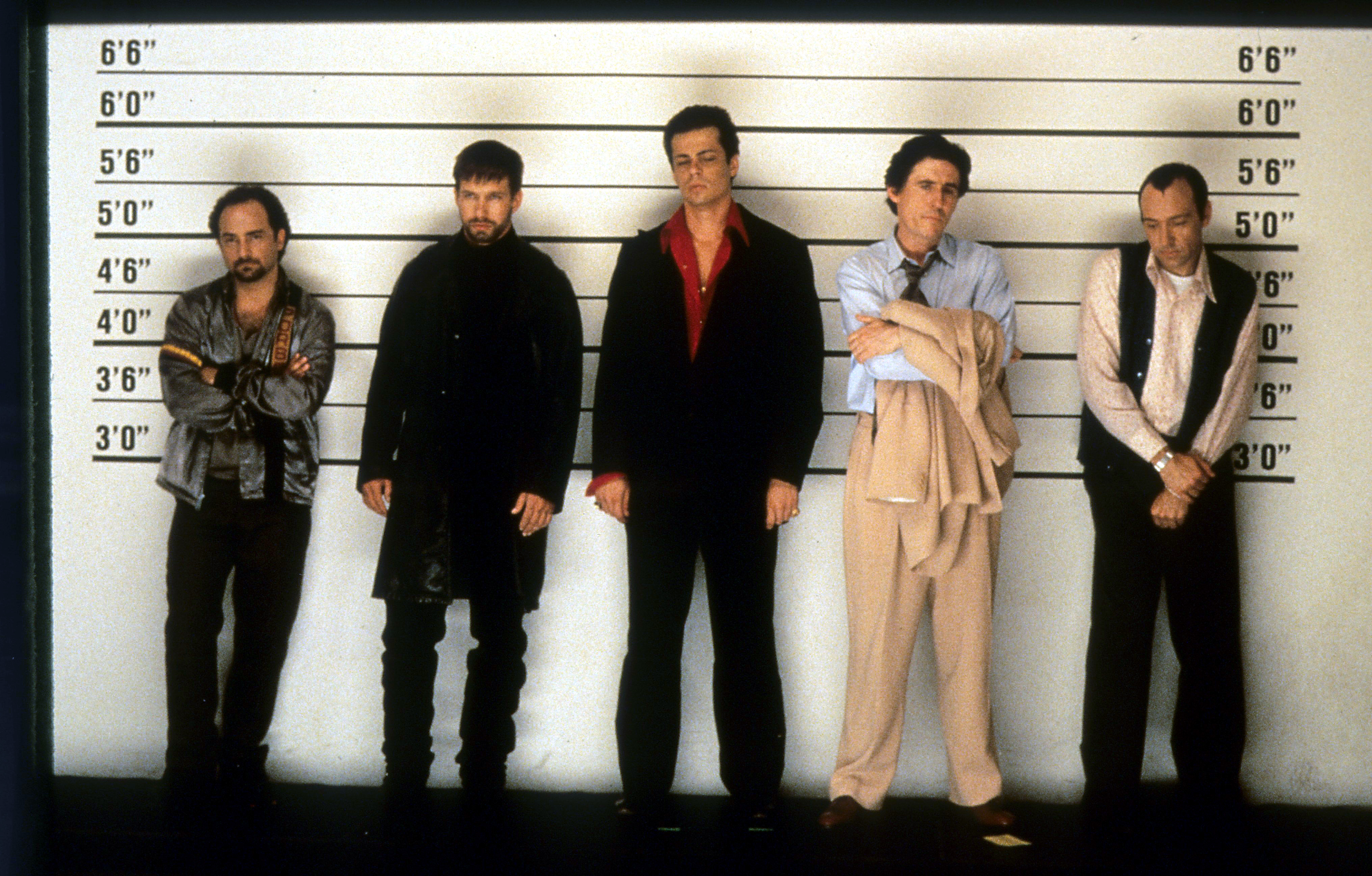
'The Usual Suspects' Is a Gimmicky Movie Stupid People Think Is Smart

by Rick Paulas

This article contains spoilers for The Usual Suspects.

The first time I saw The Usual Suspects was in 1996. I was a freshman in high school, and I’d taped it off cable. It had already been heralded as a masterpiece when it came out the year before, the next big seismic shift in indie filmmaking. Michael Wilmington at the Chicago Tribune called it a “near-classic blend of mystery, personality, humor and terror, laced with one stunning shock after another,” while Peter Travers of Rolling Stone said it was “the freshest, funniest and scariest crime thriller to come along since Pulp Fiction.” This was in the days before movie reviews aggregate websites, but even now, using those archived reviews, it has 88 percent rating on Rotten Tomatoes, and 77 on Metacritic.

But more than that was the word-of-mouth buzz surrounding it. Unlike the universal praise that gets heaped onto more traditionally “respectable” film-making enterprises like 3.5-hour period pieces, this one actually seemed cool. People in my high school were talking about it as a movie that you have to see, hype generally reserved for, like, Billy Madison or Tommy Boy, not legitimate films getting top-notch reviews from critics.

When I finally sat down to watch it, it seemed fine enough—vaguely badass, in that way every low-budget white guy director back then was aping Tarantino’s fast-talkin’ wise guy dialogue. But when that final scene rolled, and Kevin Spacey twisted his ankle back into working order just as the coffee mug shattered on the precinct’s linoleum floor, I jumped up and down in the basement like my favorite team had pulled off a miraculous last-minute upset. I ran upstairs to my parents. “I may have just watched the greatest movie of all time,” I told them. They remained skeptical.

The second time I saw The Usual Suspects was a week later. I’d harangued friends over for a viewing of that same VHS tape. During the first hour and a half, whenever my friends would start to doze off or lose interest, I’d prod them along. “Pay attention,” I’d say. “It’ll be worth it.” When that ending came again, my friends were ecstatic. “What a goddamn film!” I remember one of them saying.

But I wasn’t as pumped this time around. I got some primal enjoyment out of watching my friends be tricked as I had been, and seeing their faces during that ending, but this time I had a lot more questions throughout. Holes started to develop. If Keyser Söze’s entire complicated scheme was set in motion to kill the guy who was going to ID him, well... wasn’t he just ID’d by that fax that came in at movie's end with a sketch of his face? Söze lights a cigarette and hops in a getaway car, leaving chaos in his wake as Chazz Palminteri's Special Agent Dave Kujan figures it all out just seconds too late, but why was he even dicking around at the police station anyway? Kujan said he could go whenever he wanted, and instead of leaving, the master criminal decided to kill an hour messing with a cop?

Anyone who has ever watched even a single segment of a cop procedural or dealt with police in real life knows you have the right to remain silent. It's actually recommended you do! It's never a good idea to talk to cops. By choosing to spin a tall tale in literally the laziest way imaginable—by weaving references and names together that he's pulled from flyers hanging on a wall behind the officer's desk—Söze is being, as Stormy Daniel's lawyer Michael Avenatti might say, "very undisciplined," and hence a gift to those looking to nail him down. There's no upside to talking for a defendant. Surely the genius criminal we're to believe Söze is would know this, and put it in practice.

Beyond that, in his original one-and-a-half star review of the film in '95, no less than Roger Ebert explained that he simply couldn't follow the plot, even after multiple meticulous viewings with the aid of a notepad. The "blinding revelation" at movie's end, Ebert writes, didn't delight him so much as make him wish the movie could've just told a good story. "I prefer to be amazed by motivation, not manipulation." This is something I felt strongly, in college, when I watched the movie for a third time. Absolutely none of the movie matters. Its twist ending makes everything that preceded it pointless, just a bunch of cut-and-paste classic film-noir dialogue for characters created in an Oddball Tough Guy Generator. That was all it took to trick the bro sect and critics not of Ebert's salt into believing this shit was deep and meaningful.

Twelve years after his review ran, a reader wrote his website to thank him for it. After years of fighting with friends who loved the film, he finally felt seen by someone who, like him, the movie simply "doesn't make narrative sense." He writes: "The film is told in flashback via the Kevin Spacey character, and like a lot of movies with flashbacks what's told concerns a lot of events peripheral to the character's story (to give background information on the event told), such as conversations between characters that didn't involve the Spacey character (and which he wouldn't know about)...

"So in the end when it's revealed that the story told was a lie, down to the characters names, by Spacey's character all the peripheral business doesn't make sense (since in the film's world it doesn't exist)."

Great points all, Joseph Brunetta from Santa Rosa, California.

The fourth time I saw The Usual Suspects was in Los Angeles in 2005. I’d just moved into this foreign land and was home sick with flu, and decided to give it another whirl. By then, Stephen Baldwin had pivoted to Jesus and Benicio del Toro’s mumble routine was exposed as a waste of a decent actor. I made it about halfway until I fell asleep. I woke up to see that coffee mug explode, but didn’t care. I began to accept that this adored, Oscar-winning cult hit just wasn't for me.

I watched it again in February. A lot’s changed since I first saw it. The movie's then hot-shit director Bryan Singer turned out to mostly be a dud, making a bunch of debatably bad X-Men movies, an undeniable stinker in Superman Returns, and the overlong Tom Cruise snooze Valkyrie. Meanwhile, the screenwriter, Christopher McQuarrie, parlayed this frat house trickery into one of the most jaw-dropping opening scenes of all time, and then a bunch of gimmicky action movies that also star Tom Cruise.

Kevin Spacey, meanwhile, has since been outed as the predator he’d long been rumored to be, and Singer has removed himself from the public spotlight after similar accusations. And though, depending on where you fall on the whole art versus artist debate, that may not weigh on how you feel about the content contained within The Usual Suspects, the recent revelation that the set was temporarily shut down due to Spacey's behavior is pretty hard to forget while watching it now.

This last time I watched The Usual Suspects I was high, and throughout was mostly just upset McQuarrie didn’t use his blank slate, where the first hour and a half literally doesn’t matter, to do something—anything—interesting or cool. Put in a magician, add a talking lion, who cares, go nuts. “What a waste,” I thought. (It was really good weed.)

I was upset at the generation of suckers who allowed gimmicky schlock to trick them into thinking there was something profound or clever about its paint-by-numbers bullshit. It was this hype, and its place as some Generation X cultural touchstone, that had me, like the reader who found solace in Ebert's words, returning to the well so many times to try to find what I was missing. But no more! Fool me five times, I won’t get fooled again.

Turns out, the greatest trick the devil ever pulled was making anyone think this movie was groundbreaking.

Sign up for our newsletter to get the best of VICE delivered to your inbox daily.

Follow Rick Paulas on Twitter.

26 May 12:35

5 Ways Personality Changes in the First Year of Marriage

by Cari Romm

Hitch yourself to another human being for long enough, and eventually you’ll notice yourself starting to change in subtle and not-so-subtle ways. Maybe you’ll take on some of their weird habits, or find yourself watching the same TV shows or buying the same brand of toilet paper they like. Maybe...More »

25 May 17:07

Fishmonger buys 70-pound octopus just to set it free

by Rusty Blazenhoff

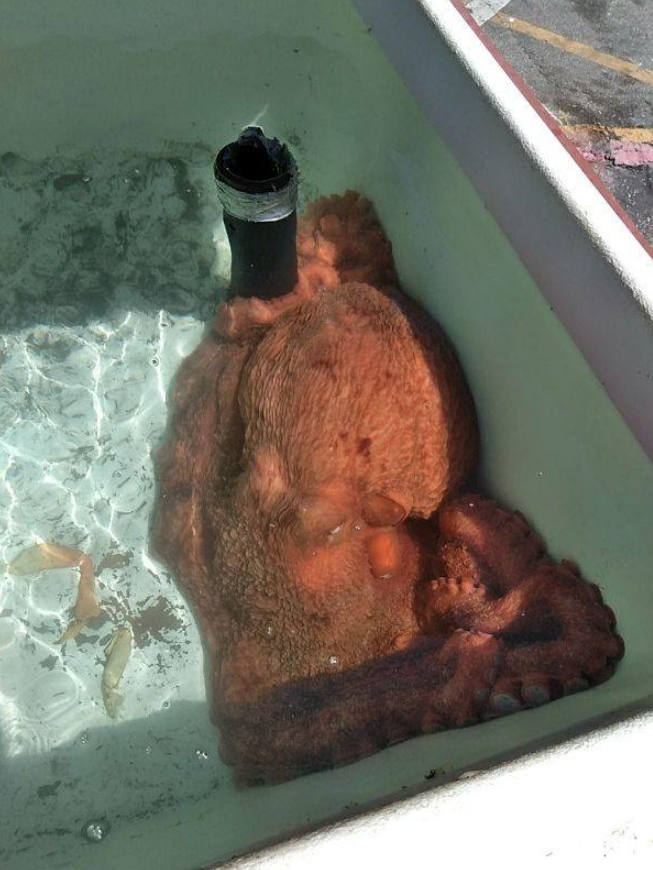
This is Fred. Fred is free again.

They may not be from space, but octopuses are still incredible, intelligent creatures. One California fishmonger in Morro Bay certainly thinks so.

Earlier this month, Giovanni "Gio" DeGarimore, owner of Giovanni's Fish Market, bought a 70-pound octopus -- who has been named "Fred" -- for "a couple hundred dollars" just to release it back into the wild. And he says he'd do it again.

The San Luis Obispo Tribune reports:

DeGarimore said he didn't intend for his action to get as much fanfare as it has, but said he would be happy "if my little contribution can make a bigger difference in the world." That contribution includes no longer selling any octopus-related products on his website, which serves customers across the country, he said. "It'll hit me in the pocket, but I'd rather stand for something," he said.

(SFGate)

image via Giovanni's Fish Market Facebook page

Thanks, Laura!

24 May 09:42

Cuando conseguir lo que deseas no da la felicidad: ‘Belleza’ de Hubert y Kerascoët

by Elizabeth Casillas

Esta fábula fantástica tiene un mensaje claro: conseguir lo que quieres no necesariamente te hace feliz. El guionista Hubert se une al estudio Kerascoët para echar abajo la idea de que el éxito consiste en obtener lo que se desea.

De tanto desescamar pescado, la piel de Hedionda desprende olor a pez muerto de la mañana a la noche. Su cara es alargada, al igual que su cuerpo, tiene los ojos saltones y las orejas de soplillo. No se engaña a sí misma, es fea y lo sabe, de la misma forma que tiene la certeza de que nadie se interesará por ella y de que todo el pueblo seguirá humillándola por su aspecto.

Pero un buen día, tras apiadarse de un sapo feo y deforme, sus deseos son escuchados. Sus lágrimas rompen el maleficio que tenía atrapada a la pobre Mab, una hada muy poderosa que, en señal de agradecimiento, le concede un deseo: si Hedionda quería belleza, belleza tendría y aunque no puede cambiar su naturaleza, sí que puede cambiar cómo los demás percibían a Hedionda. La jóven seguiría siendo fea, pero ya nadie le vería como tal.

Desde aquel mismo instante, Hedionda es vista como la mujer más bella y pasa de ser blanco de burlas a objeto de deseo. Y aunque la vida de Hedionda cambia de forma radical hasta llegar a ser reina, pronto se dará cuenta de que su don también será su desdicha: su belleza despertará pasiones y provocará guerras, celos y envidias.

Una historia en tres actos, recogidos en esta ocasión en un volumen integral, donde el guionista Hubert reflexiona sobre las apariencias con una mezcla de humor negro y perversidad para todos los públicos. El tándem que se esconde tras el pseudónimo Kerascoët —Marie Pommepuy y Sébastien Cosset— ha sabido plasmarlo de forma ejemplar en el papel con esa mezcla de art nouveau y estampas japonesas en un elegante bitono. Si bien es cierto que también fue publicado a color en Francia con un buen resultado, no obstante Hubert también es conocido por sus trabajos como colorista de Jason, David B o la serie Spirou, esta edición no desmerece.

De la humillación al acoso

Cuando a Hedionda se le es concedida la belleza, las humillaciones a las que está acostumbrada se convierten en acoso constante. Su belleza despierta un deseo de posesión que convierte a los hombres en bestias incapaces de controlar sus instintos primarios. Huelga decir que en ningún momento se justifican estos comportamientos, pero tampoco las mujeres salen mucho mejor paradas. Si para ellos Hedionda se ha convertido en una «pequeña calientabraguetas», para ellas es una «pequeña desvergonzada».

Este doble acoso precipita a la protagonista a una huída hacia adelante en busca de una vida de felicidad, aunque por lo pronto no le deparará más que muertes y desgracia. Rescatada por un caballero, este tópico tan manido de los cuentos de fantasía tampoco dará resultado, rompiendo así uno más de los estereotipos a los que se enfrenta la obra.

Sin querer revelar parte de la trama, es interesante destacar la evolución de Hedionda, quien por culpa de la humillación y acoso se ha convertido en una joven inmadura, insegura e influenciable. La ecuación de “lo bello” igual a “lo bueno” tampoco da resultado. La búsqueda de un yo verdadero, alejado de las apariencias externas, se sitúa como vehículo conductor, aunque su tratamiento sea sutil y continúe disfrazado como cuento de reinas, caballeros apuesto y hadas de los bosques.

Derribando mitos y religiones

Defendía Umberto Eco en Historia de la belleza que la consideración de lo bello depende de la época y las culturas, un discurso que Hubert y Kerascoët asimilan y sostienen a lo largo del cómic. «La belleza nunca ha sido algo absoluto e inmutable, sino que ha ido adoptando distintos rostros según la época histórica y el país», apuntaba Eco. ¿Por qué creer entonces en una belleza canónica? Trabajar por derribar esta idea desde la educación y ampliar la concepción de la belleza es una tarea pendiente y esta obra lo saca a la palestra.

Pero la idea de belleza no es el único concepto que se cuestiona: ¿qué hay de las creencias? Hedionda pertenece a un pueblo que rinde culto al Reino de las Hadas, pero cuando aprende a leer también aprende a cuestionar este credo. La educación se vuelve, una vez más, otro de los valores a defender y el respaldo a ella queda latente en todas las páginas del libro junto a otros conceptos como la injusta división de clases, la inutilidad de la batalla o la obnubilada mirada que produce el deseo de posesión.

Todo queda empaquetado dentro de un dibujo vistoso y ligero, profundamente bello. E incluso hay quien pueda ver, sobre todo en las escenas bélicas, reminiscencias del Phoenix de Tezuka. En definitiva, Belleza es un cómic que va más allá de lo anecdótico, que profundiza y cuestiona valores que la sociedad tiene asimilados y lo hace con un cuento bien hilado, a ratos con humor, pero muchos otros con crudeza.

24 May 09:33

Where have all the babies gone?

by Sockowocky
Birthrate has been declining in the US since 2014, and is now at its lowest point in 30 years. The only age group having more babies is women over 40. What's driving the decline? No one knows, but speculation includes:

-Millennials are having too much Netflix, not enough chill
-Incels are complaining online instead of dating
-Immigrant demographics are changing
-Better birth control and less teenage pregnancy
-Trump slump?

Why should we care? Population growth is linked to health of our economy and solvency of social security.
24 May 09:21

It's got dice, it's got dungeons, it's got additional dice...

by cortex
Dicey Dungeons is a new game from rad indie dev Terry Cavanagh. You choose a class, explore a dungeon, and use dice rolls to power your various equipment and special moves while leveling up to earn more dice to power new loot. Look out for the skeleton, he'll fuck you up!

Right now it's on version 0.7, with a very fun, playable game there already but more content to come and some placeholder stuff and rough edges—the inventory screen's kinda half-built, some stuff needs balancing (like a certain fuckin' skeleton, TERRY), the midi tunes are adorable but also how many times does one need to hear a midi version of What Is Love, like clearly it's more times than I've heard it this morning because I'm still pretty into it but at some point the bloom is gonna come off that rose. Probably.

You can read Terry's blog posts about it as a work in progress.

You may know, in particular, these previous games: VVVVVV (of which see more previously) and Super Hexagon.
24 May 09:09

Arrested Development’s Jessica Walter talks Jeffrey Tambor’s harassment — with Tambor there

by Todd VanDerWerff
Jeffrey Tambor (second from left) and Jessica Walter appear with Arrested Development creator Mitchell Hurwitz (left) and their co-stars Jason Bateman (center) and Will Arnett (right) at Bateman’s Hollywood Walk of Fame ceremony.

“I’ve never had anybody yell at me like that on a set,” Walter told the New York Times.

In an interview with the New York Times published Wednesday, May 23, Arrested Development star Jessica Walter (who plays Lucille Bluth) spoke publicly, for the first time, about a time fellow Arrested star Jeffrey Tambor (who plays Lucille’s husband, George) berated her on set. Arrested Development returns for a new season May 29 on Netflix.

“He never crossed the line on our show, with any, you know, sexual whatever,” Walter says to reporter Sopan Deb. “Verbally, yes, he harassed me, but he did apologize.” (The Times piece includes audio of this section of the interview as well.)

But Walter wasn’t speaking to Deb alone — she was part of a group interview with several other Arrested Development stars, including Jason Bateman (Michael), David Cross (Tobias), Alia Shawkat (Maeby), Tony Hale (Buster), Will Arnett (Gob), and Tambor himself. Thus, when she spoke about this, she was doing so with Tambor just a few feet away.

Tambor first brought the incident into the press, in a lengthy profile of him in the Hollywood Reporter, meant to talk about his exit from the series Transparent, on which he played Maura Pfefferman, a role for which he won two Emmys. After being accused of sexual harassment by two women he worked with, Tambor was fired from the series after an investigation conducted by Amazon.

Though Tambor continues to deny the harassment accusations, he has copped, several times, to having a temper and angrily yelling at coworkers on Transparent and other projects, which is how the altercation with Walter first became public knowledge. (There has, so far, been no report of when the incident took place. Arrested’s first three seasons ran from 2003 to 2006, while its fourth season aired in 2013.)

The bulk of Arrested Development season five was filmed before the news about Tambor’s behavior on Transparent became public in late 2017, though the actor’s costars who have been asked about Tambor have mostly stood by him. A notable exception is Shawkat, who with Walter and Portia de Rossi (not present for the Times interview), is one of just three women in the nine-person ensemble cast.

Here’s the key section of the Times report:

BATEMAN: Again, not to belittle it or excuse it or anything, but in the entertainment industry it is incredibly common to have people who are, in quotes, “difficult.” And when you’re in a privileged position to hire people, or have an influence in who does get hired, you make phone calls. And you say, “Hey, so I’ve heard X about person Y, tell me about that.” And what you learn is context. And you learn about character and you learn about work habits, work ethics, and you start to understand. Because it’s a very amorphous process, this sort of [expletive] that we do, you know, making up fake life. It’s a weird thing, and it is a breeding ground for atypical behavior and certain people have certain processes.

SHAWKAT: But that doesn’t mean it’s acceptable. And the point is that things are changing, and people need to respect each other differently.

WALTER [THROUGH TEARS]: Let me just say one thing that I just realized in this conversation. I have to let go of being angry at him. He never crossed the line on our show, with any, you know, sexual whatever. Verbally, yes, he harassed me, but he did apologize. I have to let it go. [Turns to Tambor.] And I have to give you a chance to, you know, for us to be friends again.

TAMBOR: Absolutely.

WALTER: But it’s hard because honestly — Jason says this happens all the time. In like almost 60 years of working, I’ve never had anybody yell at me like that on a set. And it’s hard to deal with, but I’m over it now. I just let it go right here, for The New York Times.

It’s worth noting that for the bulk of the interview (which is worth reading in full, even beyond the discussions around Tambor) the male actors in the room in addition to Tambor strike much the same note as Bateman above — doing their best to place Tambor’s actions in a context and explain that he was just being “difficult” — with only Shawkat (the sole woman other than Walter in the interview) defining the behavior as unacceptable.

Later, Bateman even says that sometimes these situations are “cumulative,” then immediately backtracks from the implications of that statement by saying he’s not talking about Walter, though it’s hard to read his initial statement any other way.

Walter says, multiple times, that she’s still working to forgive Tambor. That, too, fits into a familiar cycle when it comes to these sorts of confrontations, as writers Marin Cogan and Rebecca Traister point out.

Following online backlash, on Thursday morning, Bateman sent a series of Tweets apologizing for his behavior during the interview:

This article was updated on May 24 to include Bateman’s apology.

24 May 09:07

"Using Ludwig van like that!"

by the man of twists and turns
Bach at the Burger King, Theodore Gioia
Take your delinquency elsewhere could be the subtext under every tune in the classical crime-fighting movement. It is crucial to remember that the tactic does not aim to stop or even necessarily reduce crime — but to relocate it. Moreover, such mercenary measures most often target minor infractions like vandalism and loitering — crimes that damage property, not people, and usually the property of the powerful. "[B]usiness and government leaders," Lily Hirsch observes in Music in American Crime Prevention and Punishment, "are seizing on classical music not as a positive moralizing force, but as a marker of space." In a strange mutation, classical music devolves from a "universal language of mankind" reminding all people of their common humanity into a sonic border fence protecting privileged areas from common crowds, telling the plebes in auditory code that "you're not welcome here."


Classy!

Weaponizing Mozart [previously]
In January [2010] it was revealed that West Park School, in Derby in the midlands of England, was "subjecting" (its words) badly behaved children to Mozart and others. In "special detentions," the children are forced to endure two hours of classical music both as a relaxant (the headmaster claims it calms them down) and as a deterrent against future bad behavior (apparently the number of disruptive pupils has fallen by 60 per cent since the detentions were introduced.)
Blasting Mozart to drive criminals away
Some months ago, I was sitting at the Port Authority Bus Terminal in New York with enough time on my hands that I actually noticed the music coming over the speakers in the ceiling. It was the scherzo from Schubert's first piano trio. Schubert's piano trios are among my favorite pieces in the universe, but as I listened, I found that I wasn't relaxing; quite the contrary. The music sounded awful: tinny, hard-edged, aggressive. I wanted to get away.

I've long heard that the Port Authority is one of many public spaces across the country that uses classical music to help control vagrancy: to drive the homeless away. Listening to that Schubert rendition, I started to believe it.
Vivaldi On Duty
"The people was loitering around," said manager Saniraza Saddiq by phone from Dallas. "That's why we were playing [classical] music, so they don't [stay] that long because it's kind of annoying to be around [the music] so much."

Saddiq's store is part of a franchise, and he said playing classical music was actually a suggestion from the company he worked for. So far, he said it has been effective. The classical music is intended to be loud enough that casual conversation outside the store becomes difficult, and Saddiq said he sees loiterers leaving to get out of range of the Bach, Vivaldi or whatever else is playing.

The volume is a key component of the strategy, but so is the playlist.
Unbearable!

When Music Is Violence

Weaponizing Classical Music: Crime Prevention and Symbolic Power in the Age of Repetition [PDF], Lily E. Hirsch, Journal of Popular Music Studies, Volume 19, Issue 4, Pages 342–358
It is my assertion that sound is able to reinforce territory as a symbolic language by signaling to those who belong and rejecting those who do not, thanks to an encoded system of associations. In our example, classical music, within a socially agreed-upon hierarchy of cultural practices, is connected to the "uncool"—as journalist Melissa Jackson explains, "It's pretty uncool to be seen hanging around somewhere when Mozart is playing" (Jackson 2005). Put another way, it is not that classical music itself is unpleasant; it is the accompanying baggage as Rob Kapilow, composer and conductor, recognizes: "They listen to this sound, and what comes with it is this whole association of its packaging, which is unpleasant: 'We don't want to be part of that elitist, white-tails, concert-going kind of world'" (qtd. in Timberg 2005: 3). The authorities are, likewise, choosing to employ classical music not because of the actual sound of the music, but because of its symbolic capital: "Of all the packages that come to mind quickly, which one is furthest from our images of those thugs? ... 'Be quiet, be well-dressed, be polite.' They're choosing the whole world of classical music and not the music itself" (qtd. in Timberg 2005: 3).
see also: Music in American Crime Prevention and Punishment

The Awfulness Of Classical Music, Explained
24 May 09:07

Lesson One: Greed is good

by fearfulsymmetry
24 May 08:27

Tener hijos es peor para nuestra salud que la muerte del cónyuge

by Sergio Parra

Herodes aprobaría el siguiente estudio que sugiere que tener hijos nos hace sentir miserables y afecta nuestra salud a unos niveles incluso superiores a los que supondría la muerte del cónyuge.

El estudio, publicado en la revista Demography, encuestó a padres alemanes y descubrió que, para muchos, la cantidad de niños que inicialmente planearon tener era mayor que la cantidad de niños con los que finalmente terminaron. Los investigadores teorizaron que esto se debe a que los padres primerizos descubren rápidamente que los niños son una gran carga.

Encuesta a los padres

Alrededor del 30 por ciento de los encuestados se mantuvo en el mismo estado de felicidad o mejor una vez que tuvieron el bebé, de acuerdo con las medidas de bienestar de las que informaban los propios encuestados.

El resto dijo que su felicidad disminuyó durante el primer y segundo año después del nacimiento del bebé. De esas nuevas madres y padres cuya felicidad bajó, el 37 por ciento (742) informaron una caída de una unidad, el 19 por ciento (383) una caída de dos unidades y el 17 por ciento (341) una caída de tres unidades (en una escala de 0 a 10).

En promedio, pues, la paternidad dio lugar a una caída de 1,4 unidades en la felicidad. Es un promedio muy alto, si lo comparamos con otros eventos.

Por ejemplo, el divorcio produce, en promedio, una "caída de felicidad" de 0.6 unidades, mientras que perder tu trabajo o la muerte de un compañero produce una caída de una unidad.

Imagen | GraceFamily81812353_2074dcb908_o.jpg

También te recomendamos

¡Relájate amigo! La violencia al volante no te convierte en el rey de la pista

¿Cuál es tu hijo favorito? La respuesta no es "los dos por igual"

Lo contraproducente de tener expectativas académicamente altas con nuestros hijos

-
La noticia Tener hijos es peor para nuestra salud que la muerte del cónyuge fue publicada originalmente en Xataka Ciencia por Sergio Parra .

24 May 08:07

Aplicar al sexo las normas del comer civilizadamente

by moscacojonera

Cuando le explico a alguien las normas básicas que conviene seguir en un evento donde puede haber sexo en público, suelo usar desde hace años la misma metáfora: Comer, sea en un restaurante, sea en una pastelería. Algo que pueda parecer muy tentador, que te pueda apetecer mucho, que vaya asociado a instintos (justificación que se usa a veces para “explicar” por qué se hizo algo). Así intento que comprendan que, aunque tengas delante de ti un culo un pompa (o lo que sea), no deberían alargar la mano para tocarlo si nadie les ha invitado, por muy tentador que les parezca lo que tienen delante.

Cuando llegas a un restaurante sueles entrar con hambre. Aún así, por muy bien que huela el plato que se está comiendo alguien a tu lado, no se te ocurriría NUNCA comer de su plato. No se te ocurriría acercar tus narices a su plato para olerlo, “simplemente” olerlo. Seguramente resultaría incómodo para todo el mundo que, simplemente, te quedaras mirando fijamente su plato. Lo más habitual es mirar disimuladamente sin llegar a molestar.

Si eso sabe aplicarlo todo el mundo al llegar a un restaurante, está claro que esas normas están claras para cualquiera que se dé cuenta que la situación es similar, sea el plato ajeno o el culo ajeno. Al comer se entiende que, aunque nos apetezca probar una comida deliciosa, hay otra persona con la que hay que relacionarse y saber comportarse, que nos invite, que apruebe, que le parezca bien… Aparte de cuestiones culturales más profundas respecto al cuerpo de las mujeres en espacios públicos desde hace siglos, que son difícilmente modificables para un evento próximo y que sólo que irán cambiando según pase el tiempo, de momento es cuestión de civilizarse, de saber comportarse ¿Tan difícil es de entender y cambiarlo ya? Nadie nace sabiendo esas normas, es cuestión de ir aprendiendo y cambiar; si se quiere.


restaurant_food_asian_cuisine_dining_table_meal_dinner-990211.jpg!d

Las normas de la mesa aplicadas al sexo.

A partir de esa metáfora, mi querida y brillante Gemma Goldie la amplió hasta crear en twitter un hilo completo, un hilo que terminó compartido por internet e incluso llegó a Contigo Dentro, el programa de radio sobre sexo de Celia Blanco en la SER. Los copio tal cual. Hay algunos a los que les cambiaría algo, como el de robar comida por robar de plato ajeno… pero claro, corregir es muy fácil cuando se le ha ocurrido la idea a otra persona :D Pueden ser útiles para darle vueltas a por qué hacemos unas cosas y no otras, o a darnos cuenta de cosas que hacemos sin habernos parado a pensar… Que ella lo haya extendido a toda actividad sexual con alguien no será la receta mágica para todo pero sí ayuda a tener más en cuenta a quien tenemos delante.

Lo interesante de compararlo con comer es que permite pensar también en diferentes maneras de comportarse en la mesa, diferencias culturales, diferencias familiares, diferentes tipos de relaciones entre quienes comen, situaciones personales diversas en las que puede estar cada persona…

Allá van los que escribió @Gemagoldie:

“Antes de sentarse a la mesa es necesario lavarse las manos

Primero se sirve a los demás, no empieces sirviendo tu plato

No digas que algo no te gusta hasta que lo hayas probado

No se levanta nadie de la mesa hasta que todo el mundo haya acabado.

Es más interesante quedarse y charlar en la sobremesa, que encender la tele nada más acabar.

Aprende a utilizar correctamente todos los cubiertos.

No obligues a nadie a comer algo que no le gusta.

Friega bien los cubiertos antes de utilizarlos en otra comida.

Da las gracias al chef por la deliciosa comida.

Si la otra persona cocina, tú friega los platos.

Los gustos culinarios de los demás son personales y perfectamente válidos. No te rías de nadie.

Donde caben dos, caben tres.

No importa cuántas personas se sientan a la mesa, lo que importa es que se levanten todas satisfechas.

Innovar y probar cosas nuevas es la mejor manera de ampliar tus gustos y tu paladar.

No comas del plato de los demás sin que te den permiso.

Si ves a alguien que está comiendo en una mesa, pregunta si eres bienvenido antes de sentarte con ellos.

No robes comida por mucha hambre que tengas

Puedes comer solo, pero si estás acompañado, no comas como si no existiera la otra persona y no te vayas nada más acabar.

Aunque esté la comida puesta en la mesa, no empieces solo. Espera a que todo el mundo esté sentado para empezar juntos.

Pregunta a los demás si está todo a su gusto, si hace falta sal o si quieren más agua.

No des por hecho que tus gustos culinarios son los mismos que los de la otra persona.

Antes de cocinar, pregunta por alergias, si alguien es vegetariano, etc

Que te hayan invitado una vez a comer no significa que puedas autoinvitarte siempre.

Si ves que alguien cocina mal intenta decírselo con tacto. Hay quien va por la vida pensando que cocina estupendamente porque nadie le ha dicho que eso no es cierto.

No pienses que porque disfrutas de la comida ya sabes cocinar.

Existen cursos donde puedes aprender nuevos trucos y recetas.

Pregunta a los demás cómo cocinan ellos y cómo les gusta la comida.

24 May 08:04

Soy una mujer adulta y todavía no sé masturbarme

by Claire Sullivan

En 1996, el mismo año en que debutó la obra teatral Los monólogos de la vagina fuera del circuito de Broadway, me resbalé al intentar salir de la bañera y me hice un moratón en la vagina. Tenía cuatro años. Me pasé la siguiente semana tocándome el moratón mientras caminaba por casa y preguntándome por qué me sentía tan a gusto y a la vez tan incómoda.

Mis habilidades para masturbarme no han mejorado mucho desde entonces. No sé masturbarme, a pesar de llevar haciéndolo desde los once años. Me solía poner la almohada entre las piernas y me movía por toda la cama, como los niños cuando fingen ser un gusano dentro de un saco de dormir. Pero no me gustaba mucho.

A medida que me iba haciendo mayor, me pasé a la botella de vidrio de Sprite, luego al mango del peine, después a mis propios dedos y, en 2015, mi novio de entonces me compró mi primer (y de momento único) vibrador.


MIRA:


Tengo una amiga que solía tener vaginismo, un trastorno que hace que los músculos de la vagina se contraigan para que nada pueda atravesarla, como cuando alguien amenaza con meterte un dedo en el ojo y lo cierras de manera instintiva. Tuvo que acudir a un profesional de la salud, que, durante varias semanas, le fue toqueteando por ahí abajo poco a poco hasta que la “curó”. Ahora ella se masturba felizmente, mientras yo sigo buscando una manera de que me salga gratis el servicio de omgyes.com.

Por cierto, omgyes.com es un sitio web en el que se puede encontrar doce técnicas demostradas para enrollarse con alguien. Contiene vídeos, se pueden seguir instrucciones paso a paso y tiene un único pago de 39 euros, pero soy tan agarrada que antes prefiero gastármelos en unas cervezas que en un sitio web que me puede proporcionar, según un par de amigas mías, información muy valiosa sobre cómo darme placer.

En cualquier caso, después de toda una noche intentando hacer gritar a mi vagina sin mucho éxito y con un tazón de cereales delante, me di cuenta de que necesitaba la ayuda de una experta.

Image via

Waratah Karleu, que tiene un máster en Ciencias Médicas de la Salud Sexual por la Universidad de Sídney, asegura que encara la sexualidad como un “ejercicio de concienciación” y ve la masturbación como una manera de explorar el propio placer. También propone que deberíamos ponernos atractivos para nosotros mismos, dándonos un baño a la luz de las velas, por ejemplo.

Además, recomienda que la gente “sea energía sexual en movimiento para tener una experiencia corporal completa y respire conscientemente energía sexual para que entre en el cuerpo”. Por otro lado, reconoce que no todas las parejas accederían a toquetear ahí abajo en un primer momento.

Ni siquiera había pensado en ello antes, pero ahora me parece muy evidente. Si mi pareja se pone a rebuscar en mi vagina de primeras sin ningún tipo de preparación previa, parecería que hubiera perdido las llaves y las estuviera buscando, así que ¿por qué tendría que hacer yo lo mismo?

Si no consigo que deje de parecerme aburrido, ¿cómo voy a conseguir mi dosis de vitamina Onanista?

El problema es que me aburre masturbarme a solas. No me malinterpretéis, me pongo cachonda por todo. Hay veces que le tengo que decir a mi novio que aparque el coche donde pille porque necesito hacerlo en ese mismo momento, ya sea en la mesa del pícnic o detrás de los arbustos. Me da lo mismo, siempre que él también esté cómodo con el lugar. Me preocupo por esas cosas.

Por lo tanto, he decidido aprender por mí misma cómo puedo evitar el aburrimiento al masturbarme cuando estoy a solas y pueda correrme. Estoy segura de que, por lo menos, me va a servir para cuando no pueda dormir por las noches, cuando esté estresada, cuando me ponga cachonda, cuando busque algún tipo de inspiración creativa, cuando esté distraída, cuando me aburra en el trabajo, cuando compre en el supermercado, cuando me quede encerrada en el ascensor, cuando monte en bici, cuando esté esperando en la cola del banco...

Pero si no consigo que deje de parecerme aburrido, ¿cómo voy a conseguir mi dosis de vitamina Onanista? Después de pensar en las palabras de Waratah Karleu, recurrí a otra experta en busca de más información.

Image via

Bonnie Bliss es sexóloga somática, terapeuta tántrica y profesora, pero es sobre todo experta en el ioni (vagina). Enseña a mujeres a descubrir su vagina a través de un recorrido guiado de tres horas que denomina “el mapa del ioni”. Se opone a la forma de pensar instaurada, según la cual la gente se centra en llegar al orgasmo, y cree que debería disfrutar más de otras cuestiones.

“Es un estado de ánimo que surge de la relajación y de una actitud receptiva, una tarea muy complicada de realizar cuando estás tensando todo tu cuerpo”, afirma. “Al conseguir ese estado, llegan los estornudos clitorianos que tan extenuantes resultan después”. Denomina “estornudo clitoriano” al momento en que “te sientes genial durante cuatro segundos y medio y después estás agotada, el polvo ha terminado y no quieres que nadie te toque”.

Me encantan los orgasmos. Mi favorito es cuando siento cómo burbujea mi cuerpo y no puedo dejar de reírme, aunque solo me corro con mis parejas. Creo que no me he corrido a solas más de quince veces en toda mi vida. Como mucho. Mi vez favorita fue cuando mi novio y yo practicamos sexo telefónico, así que no sé si eso cuenta.

“Masturbarse no es frotarse violentamente estando seca mientras ves cómo le dan por detrás a una morenaza con las tetas operadas”

Bliss también habla de liberar tensiones en la zona pélvica. “Si queremos tener sensaciones placenteras, necesitamos primero relajar esa zona mediante el baile, la actividad y el yoga, no debemos estar sentadas todo el día y podemos masajearnos esa zona nosotras mismas. Insiste en que tenemos que aprender a amar nuestra vagina y prestarle atención, mirárnosla en el espejo, y pensar cosas positivas sobre ella. “A las vaginas no les gusta la presión ni las malas vibraciones”, añade.

Parece que se asume que las mujeres, desde que son adolescentes, están destinadas a recurrir a expertos para poder correrse, y la idea de hacerlo desde un punto de vista masculino resulta absurda. Como una amiga mía me dijo, “masturbarse no es frotarse violentamente estando seca mientras ves cómo le dan por detrás a una morenaza con las tetas operadas”, y una quemadura en la vagina provocada por la fricción no parece que sea lo más cómodo del mundo, por no decir otra cosa.

Karleu y Bliss creen que no existe una “fórmula mágica” para llegar a tener orgasmos de una hora de duración que te cortan la respiración. Solo tienes que tomarte el tiempo necesario para conocer y explorar tanto tu cuerpo como a ti misma y aplicar ese aprendizaje a tu sexualidad.

Anoche volví a leer y escuchar mis conversaciones con Karleu y Bliss, apagué el ordenador y me di un homenaje. ¡Y no me aburrí! Además, tampoco me entró un ataque de risa de esos de diez minutos y, no solo no me aburrí, sino que me lo pasé muy bien.

Todavía me molesta un poco que a mi novio se le dé mejor que a mí hacer que me corra, pero toda esta nueva información ha cambiado mi perspectiva con respecto a la masturbación. Ahora veo mis dedos, mis manos, los espejos y mi vagina de manera diferente. El orgasmo no es el objetivo, sino una parte más de todo el proceso, como explicó Waratah.

El futuro se ve de otra manera estando húmeda.

Sigue a Claire en Twitter

Este artículo apareció originalmente en VICE AU.

24 May 07:55

El Mega Disco del Club Megatrix, canción a canción

by Mike Medianoche

Esta semana @FonsiQuintano me pasó por Twitter la foto de un cassette que tenía por casa y que alumbró sus más tiernas tardes de infancia y adolescencia: el Mega Disco del Club Megatrix. Y mirando un poco sobre el álbum creo que se merece un post ya que no es el típico recopilatorio de canciones del momento -tipo los discos de ‘Al salir de clase’-, sino que era una mezcla un tanto extraña.

Así, hoy vamos a recordar este Mega Disco canción a canción (y, por cierto, flipa, que se puede comprar legalmente en Amazon y todo).

cinta musica club megatrix

1 El Club Megatrix

Fue la primera sintonía de este programa que inicialmente presentaba con mucho desparpajo Ingrid Asensio, la hija del entonces jefe de Antena 3.  ¿Recordáis su letra? “Para ti, para mí, es el Club Megatrix. Juegos, aventuras, mundos de ilusión, miles de sorpresa en cada ocasión. Con los megasocios, todo compartir, para ti, para mí, es el club Megatrix. Fuera los problemas, viva la amistad. Son nuestras consignas, nada importa más…”

2 Campeones

Versión de la sintonía de la canción de ‘Oliver y Benji’ que según tengo entendido -no lo recuerdo- fue emitida por ‘Megatrix’ años después de su primer pase por Telecinco. El tema incluido en este disco no era la versión original de los discos de ‘Campeones’ en la que cantaba Miguel Morant, que es quien ponía voz a las canciones de la película ‘Aladdin’.

mega disco cassette megatrix

3 Máximo Esdrújulo

¿Os acordáis del alienígena Máximo, que aparecía en el ‘Club Megatrix’ en sus inicios y que llegó a tener su propia vida? Fue tan popular que incluso fue jurado en ‘Menudo Show’, sin saber nadie por qué. Este tema sonó mucho en el programa, pues en sus inicios pretendían tener sus propias canciones, a lo ‘La Guardería’ de Teresa Rabal, el ‘Xuxa Park’ de Xuxa o los programas de Miliki y Rita. Juraría que era la sintonía de la tira ‘Las aventuras de Máximo’. La voz de Máximo fue su doblador habitual, José Antonio Duque.

4 La Máscara

Versión de la cabecera de la serie homónima basada en la película también homónima de Jim Carrey.

5 Los 4 Fantásticos

Nunca he sido muy de superhéroes de cómic, pero deduzco que era la sintonía de la serie animada producida en 1995, y que también imagino que se emitió en Megatrix.

6 Ser Megasocio

Canción de autobombo que también sonó mucho en el programa, que contaba que ser Megasocio era “más brillante que un brillante”, e incluía palabras maravillosas como “megasociedad”. “Por eso ser megasocio es fenomenal, ser megasocio es algo especial, por eso ser megasocio es fundamental”.

7 Chicho Terremoto

Las aventuras del jugador de baloncesto que antaño fue vendedora de cerillas revivió sus aventuras junto a la animadora Rosa, la entrenadora Eva o el malote Tobias en el ‘Club Megatrix’. En el disco se incluyó la sintonía, que tampoco era la original interpretada por Lola Lola (¿quién carajo sería esta señora?).

8 Los Bobobobs

¿Recordáis esta serie? Porque yo solo de oídas, y según la productora iba sobre viajeros espaciales. Otra sintonía más para rellenar.

9 A Desayunar

Otro tema propio del programa. Una canción muy ñoñita sobre una niña que tiene hambre y quiere ponerse como una cerda desayunando galletas, tortitas, milhojas, un bollo de limón… Una forma de visbilizar los trastornos alimenticios a través del arte musical.


10 Thundercats

Otra sintonía, de una serie que, por cierto, va a tener una nueva versión.

11 La Tribu de los Brady

¿Recordáis cuando el ‘Club Megatrix’ emitió esta serie, que originalmente dieron en Telecinco con el nombre de ‘Segundo Matrimonio’? La serie era de los 70, pero encandiló a los niños de los 90, quizá en parte porque en su doblaje se metían palabras contemporáneas como “chachi”, y referencias modernas de la época, como por ejemplo cuando presuntamente Miguel Indurain firmó la escayola a uno de los niños.

He aquí la versión horrible que venía en el Mega Disco, con su letra en castellano para que podáis cantarlas junto al ‘Grease’ de Rebeca.

12 Los Reyes del Recreo

“Somos reyes del recreo, eso pienso, eso creo.  Nuestro único deseo es ir al patio a hacer jaleo. Somos reyes del recreo, y a juzgar por lo que veo lo digo sin peloteos, merecemos un trofeo…” ¿Recordáis este hit? Es de los que mejor recuerdo de aquella primera etapa en la que incluso fui Megasocio.


13 Hombre Araña

Otra versión chusca, que no era la original de Memo Aguirre (ni la de Regaliz).

14 Feliz, Cumpleaños Feliz

Y cerramos con la canción realmente espantosa y peor cantada que narra “la impaciencia” de que llegue el cumpleaños de uno. Muy para cortarse las venitas.

Sobre quiénes cantan en el disco -y que no vienen acreditados en los créditos del álbum- he encontrado una serie de nombres por internet como el de Pablo Sebastian (¿el pianista de Parada?), Maximo Valdés, Vicky León, Yolanda Pérez, May Arce, Kike Malla, Dani Ros, Yolanda Pérez y el concepto Club Megatrix, así, en general. Pero no puedo confirmar nada.

Y poco más. Disfruten de estos éxitos de Atresmedia.

PD: Ah, y como seguro que os ha dado morriña, ahí tenéis un carnet de Mega Socio vacío para que os lo customicéis.

carnet-club-megatrix

23 May 17:01

Y el mejor truco para escalfar huevos es...

by Mikel López Iturriaga

El huevo escalfado es quizá la prueba más dura de los Juegos del Hambre de la cocina. Gran parte de los que se enfrentan a ella mueren por el camino, y acaban comiéndose unas yemas cuajadas rodeadas por hilachos deslabazados de clara. Sólo unos pocos, muy pocos, logran el milagro de facturar en casa algo parecido a los huevos benedict de su restaurante cuqui de referencia. Por eso la Red está llena de fórmulas milagrosas que prometen unos huevos pochés -también se llamán así- perfectos aunque seas un zote integral.

Seguir leyendo.

23 May 16:46

Game platform Steam set to ban sexy toons

by Rob Beschizza

Steam is reportedly cracking down on "scantily clad cartoon women" in its online gane platform. Publishers of adult-themed anime visual novels say they've been told to remove offending titles or leave town.

"It's an anime titty holocaust," HuniePot, the developer of HuniePop, a match-3 puzzle game where players also chat up busty anime girls, said in a tweet. Thursday night, HuniePot tweeted that it received an email from Valve, the company that operates Steam, saying that HuniePop, "violates the rules & guidelines for pornographic content on Steam and will be removed from the store unless the game is updated to remove said content." MangaGamer, a company that localizes and publishes several Japanese visual novels, told Motherboard in an email that it received a notice from Valve Thursday morning for its game Kindred Spirits.

Steam is, in other words, panicking and excluding a genre from its platform without expanation. It's allegedly warned at least one publisher over material they don't even publish on Steam.

These seems to be a general unwillingness to directly address two facts at hand:

1. Much of the material in question depicts childlike characters in sexual contexts.

2. Some of the people selling it are misogynists and some of the adjacent fandoms are tinderboxes of rage and entitlement.

Instead, we have vague objections to vague policies. This enables Steam to push out anything superficially similar, a pattern that could later be used to push out sexual and political minorities and anything else that might make trouble in the serene walled gardens of content.