
Shared posts
21 Dec 22:42

El Sótano - 100 favoritas de 2014 (I) - 15/12/14
Primer capítulo de los seis dedicados a repasar el 2014 a través de 100 de nuestras canciones favoritas editadas este año. Para filtrar la selección se han excluído los singles, EPs y las versiones. Las canciones aparecen en el orden cronológico en que fueron apareciendo en el Sótano. Playlist; Giuda (Get on the line), Trance (Maldición), The Flehtones (Remember the Ramones), Sharon Jones and the Dapkings (Retreat), Nightmare Boyzzz (Problem child), Pelotan (Bathroom surfer), Star Mafia Boy (Ya no hay dolor), Fuckin’ Bollocks (Love can fuck it all), Nox Boys (Military school), The Crunch (Busy making noise), The Ogres (Not having fun), The Moonstones (En mi colección), La Luz (You can never know), Peralta (The sound that I hear), Los Sentíos (I sold my coconut), Mutagénicos (Zombie), R.A.F. (It’s a modern world). (15/12/14)





16 Dec 00:16
La burbuja de los mercados pijos
by Mikel López Iturriaga
MATT MATERA
Mucho se habla de que Francisco Rivera no asistió al funeral de la Duquesa de Alba, pero no lo suficiente del espacio gastronómico que el ex yernísimo acaba de abrir, junto al periodista Carlos Herrera y otros socios, en Sevilla. La Lonja del Barranco, antaño epicentro del comercio de pescado en la ciudad, cerró sus puertas en 1971, y ahora resucita transformado en lo que se viene llamando un “mercado gourmet”, con unos puestos para tomar desde un pisto a un sushi pasando por un salmorejo o una simple caña.
No he visitado el lugar, y por lo tanto no puedo opinar sobre la calidad del proyecto del ex torero y el locutor. Tampoco conozco Sevilla lo suficiente como para pronunciarme acerca de las quejas vecinales que han suscitado sus terrazas exteriores. No lamentaré incluso que la empresa de Fran arrebatara la adjudicación del espacio a la de Sergio Ramos, a pesar del valor simbólico de advenimiento del Apocalipsis que habría tenido ver al jugador inaugurando un negocio gastro.
Sólo quiero manifestar mi cansancio con este tipo de falsos mercados, que se suelen presentar como una “renovación” de los antiguos cuando en realidad significan su suplantación. El de San Miguel, en Madrid, es el ejemplo máximo: un lugar transformado en bar multioferta para turistas en su propia ciudad, en el que para dar ambiente se han dejado tres o cuatro puestecillos testimoniales con fruta, verdura o pescado a precio de cocaína.
El modelo se extiende por las capitales españolas, y no tengo muy claro que la responsabilidad sea sólo de promotores y autoridades. Seguramente los propios ciudadanos nos hemos vuelto tan idiotas que preferimos pagar cuatro euros por un pincho exiguo en un pseudomercado cuqui a hacer la compra en uno de verdad y cocinar en casa. A la porra el conocimiento del producto, los precios asequibles, el contacto humano y otros valores de los mercados tradicionales, que son cosa de viejas; viva la franquicia, el diseñiqui y la modernidad paleta del nuevo rico.
¿Hay esperanza? Puede. Ante el imperio galáctico de las barras pijas, la alianza rebelde la forman resistentes como el mercado de la Abacería en Barcelona o el de Abastos en Santiago, resurgimientos en clave alternativa como el de San Fernando, en Lavapiés, o sorpresas como el de Barceló. Pasé el otro día por este mercado recién reformado de Madrid, y sólo vi gente del barrio comprando patatas, lechugas y filetes. Cero gourmet, cero glamour. Es hasta feo, y me encantó.
Esta columna se publicó originalmente en la Revista Sábado de la edición impresa de EL PAÍS.
16 Dec 00:16
How to Drink (and Eat) Like a Russian on New Year’s Eve
by Will Budiaman
This is a drinking party not a dinner party. But that doesn’t mean there won’t be plenty to eat. On New Year’s Eve in Russia, the table is covered end-to-end with an astonishing display of food—tart pickles, bread, salads, caviar—some homemade, most purchased. Shots of icy vodka are poured, properly toasted (Za vas!), gleefully downed, and chased with a fortifying snack.
At Portland, Oregon’s Kachka, chef Bonnie Morales cultivates precisely this kind of evening. She wants you and a group of your most game friends to enjoy her menu of zakuski (think Russian tapas) the way her Belarusian relatives would. “It’s about a lot of little repetitions,” she says. It’s a giddy and garrulous cycle: Toast. Drink. Eat. Repeat. Is there any more symbolic—or festive—way to mark the rolling of one year into the next? Nyet.
How to Drink Like a Russian (The Kachka Crew Explains)
1. If you want to drink lots of vodka, you must eat lots of food. Fill out the spread with sliced bread (try challah, rye, or lepyoshka flatbread), butter, and a mix of pickles. Eat and drink in tandem during the night.
2. Freeze your vodka. Bring out the bottle only to pour into small pitchers or shot glasses before each toast.
3. All you need are shot glasses. Responsible host trick: Get the smallest ones you can.
4. Here’s to the toasts. Maintain the rhythm: After a heartfelt toast, everyone raises their glasses and drinks. Then comes eating, then the process repeats. Two addendums: No drinking without toasts, and no drinking between toasts!
5. Use affordable vodka for infusing; pour the good stuff (try Russian Standard) straight.
Charred Rosemary-Infused Vodka

➤ Morales insists it’s not a Russian party without this retro seafood salad on the table. At Kachka, they make the mayo for this salad from scratch. But Hellmann’s (a.k.a. Best Foods) will do just fine.

Go with the Roe: A few pointers on serving caviar with style
➤ Diversify. Caviar refers only to sturgeon eggs. Luckily, there’s a range of tasty, affordable fish eggs, or roe (our picks for domestic purveyors include Blis, Browne Trading Company, and Tsar Nicoulai Natural). Get 2–3 oz. per person.
➤ Mother-of-pearl spoons are the gold standard for serving, but Morales also likes those plastic sample ones used at ice cream parlors. Just be sure to avoid silver or steel.
➤ To go luxe, set out blinis, challah, chopped chives, sieved hard-boiled egg yolks, and cultured butter or crème fraîche. For a casual setup, put out butter, white bread, and roe.
➤ Crushed ice makes for a nice presentation, but it’s not strictly necessary.

➤ Pickled beets give the puréed filling in these eggs a welcome tang that contrasts wonderfully with all the richly flavored dishes on the table. When making these, save the hard-boiled egg yolks for your caviar accoutrements.

The post How to Drink (and Eat) Like a Russian on New Year’s Eve appeared first on Bon Appétit.
15 Dec 23:58
We eat bacon and pastries and are happy. Oh, and the North Pole is ours.
by Wordshore
In 2012, the UN said that Denmark was the happiest place on earth. This year, Denmark returned to the UN with some nice Danish pastries, and a territorial claim to the North Pole based on its relationship with Greenland, a Danish autonomous territory.
Independent: "Interest in the Arctic is intensifying as global warming shrinks the polar ice, opening up possible resource development and new shipping lanes. The area is believed to hold an estimated 13 per cent of the world's undiscovered oil and 30 per cent of its untapped gas."
NPR: "Denmark, together with Greenland, today will claim around 350,000 square miles of the continental shelf in the Arctic Ocean, in an area around the North Pole that is slightly larger than the size of Texas and Oklahoma combined."
Financial Times: "All countries' borders currently end 200 nautical miles from their coasts in the Arctic, leaving a vast patch of land owned by nobody. Denmark is following Norway, Russia and Canada in submitting a claim under the UN Convention on the Law of the Sea to a portion of the Arctic." (n.b. some other news publications do not mention a claim by Norway)
Moscow Times: "Legal claims have been augmented by military and industrial muscle: Russia has begun offshore drilling in the Arctic and built military bases in several protected sites above the Polar Circle, including the Wrangel Island, a UNESCO World Heritage site. The Danes were not impressed. 'The Lomonosov ridge is the natural extension of the Greenland shelf,' said Christian Marcussen, a senior geophysicist with the Geological Survey of Denmark and Greenland."
Sputnik News: However, the bid has been heavily criticized by some influential Arctic experts. 'It is ironic that the only country that right now could be said to be acting provocatively in the Arctic is Denmark. That is out of character with the country's tradition of constructive diplomacy,' Canadian professor Michael Byers, a leading expert on Arctic sovereignty, said in an interview with Politiken, a Danish media outlet.
Reuters: "Denmark acknowledges that Norway's continental shelf beyond 200 nautical miles overlaps the Danish claim. It may also overlap with claims by Canada, Russia and the United States."
International Business Times: "In December 2013, the Canadian government filed before the United Nations an application regarding the outer limits of its continental shelf in the Arctic Ocean. It maintained it has rights to claim the North Pole because it lies within Canadian territory."
Related: Vessels of the Royal Danish Navy. Denmark is a founder member of NATO, and the only Nordic country to be in both NATO and the EU. Greenland home rule and self rule.

Independent: "Interest in the Arctic is intensifying as global warming shrinks the polar ice, opening up possible resource development and new shipping lanes. The area is believed to hold an estimated 13 per cent of the world's undiscovered oil and 30 per cent of its untapped gas."
NPR: "Denmark, together with Greenland, today will claim around 350,000 square miles of the continental shelf in the Arctic Ocean, in an area around the North Pole that is slightly larger than the size of Texas and Oklahoma combined."
Financial Times: "All countries' borders currently end 200 nautical miles from their coasts in the Arctic, leaving a vast patch of land owned by nobody. Denmark is following Norway, Russia and Canada in submitting a claim under the UN Convention on the Law of the Sea to a portion of the Arctic." (n.b. some other news publications do not mention a claim by Norway)
Moscow Times: "Legal claims have been augmented by military and industrial muscle: Russia has begun offshore drilling in the Arctic and built military bases in several protected sites above the Polar Circle, including the Wrangel Island, a UNESCO World Heritage site. The Danes were not impressed. 'The Lomonosov ridge is the natural extension of the Greenland shelf,' said Christian Marcussen, a senior geophysicist with the Geological Survey of Denmark and Greenland."
Sputnik News: However, the bid has been heavily criticized by some influential Arctic experts. 'It is ironic that the only country that right now could be said to be acting provocatively in the Arctic is Denmark. That is out of character with the country's tradition of constructive diplomacy,' Canadian professor Michael Byers, a leading expert on Arctic sovereignty, said in an interview with Politiken, a Danish media outlet.
Reuters: "Denmark acknowledges that Norway's continental shelf beyond 200 nautical miles overlaps the Danish claim. It may also overlap with claims by Canada, Russia and the United States."
International Business Times: "In December 2013, the Canadian government filed before the United Nations an application regarding the outer limits of its continental shelf in the Arctic Ocean. It maintained it has rights to claim the North Pole because it lies within Canadian territory."
Related: Vessels of the Royal Danish Navy. Denmark is a founder member of NATO, and the only Nordic country to be in both NATO and the EU. Greenland home rule and self rule.
15 Dec 23:57
The Inferiority Complex
by Lisa Marcus
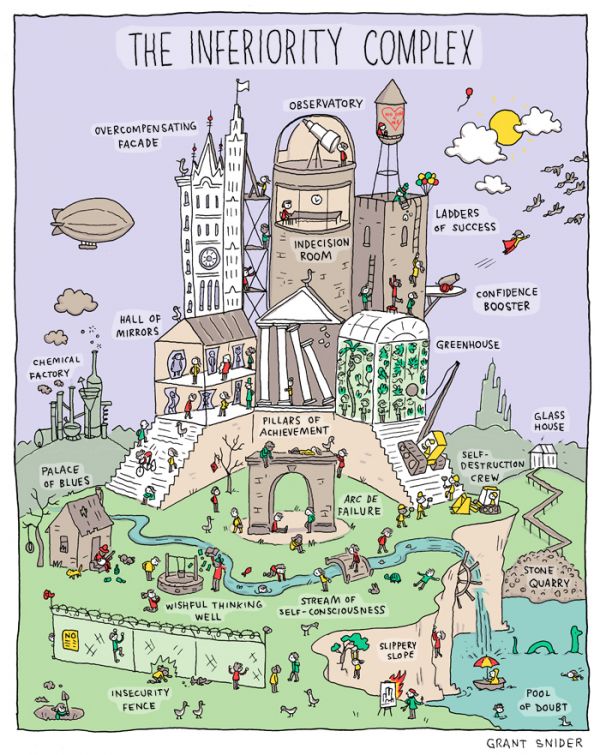 Grant Snider of Incidental Comics presents us with a handy map of the complex called Inferiority. It's a good thing he does, too, because it's a large territory that isn't easily navigated. If one is able to break through the insecurity fence on their way to the stream of consciousness, they had better beware of the slippery slope. I've fallen into that pool before, and the water isn't so nice.
roxiop likes this
15 Dec 23:56
Fashion Trend for Women: Armpit Hair Extensions
by John Farrier
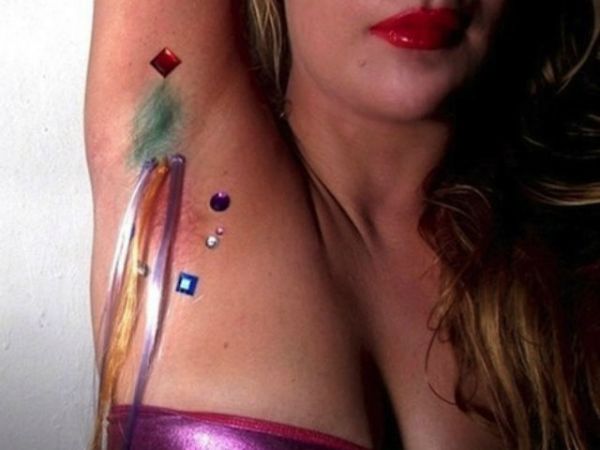
(Photo: unknown, via xojane)
Two months ago, we told you how to dye your armpit hair and showed you a photo of a woman who had dyed her own a cool shade of blue. Now it's become all the rage. Women are taking up their dye brushes to add unconventional colors to their armpits.
To stand out even further and express their creativity, some women, such as the one pictured above, are also adding hair extensions. That makes a lot of sense. Growing hair takes a long time. A few rhinestones also help bring some sparkle to a lady's armpits
-via American Digest
P.S. The news story of armpit hair dyeing went viral after I wrote about it here, often through posts and articles that directly sourced Neatorama. So, in a small way, I contributed to the spread of this fashion trend. You're welcome.
15 Dec 23:33
Catan Junior
by Chocolate Pickle
Wil Wheaton has a Youtube channel called "Tabletop" where he posts videos of himself with three guests playing various board games. Originally he thought the audience was going to be exclusively adults, but it turned out that a lot of people were watching the show with their kids. So in this week's episode, the game is Catan Junior, a cut-down version of Settlers of Catan intended for kids, and Wheaton's three guests are all 9 years old. Please enjoy Catan Junior.

15 Dec 23:25
Whisper it quietly...
by SpacemanStix
"The Wheel of Time turns, and Ages come and pass, leaving memories that become legend. Legend fades to myth, and even myth is long forgotten when the Age that gave it birth comes again." -- Robert Jordan

During the first decade of the new century, [the book] sector cornered the market in gloomy predictions that the end of the world was nigh. The digital revolution, plus Amazon, plus the credit crunch, seemed to add up to a literary apocalypse. There were moments, some CEOs in book publishing now concede, when they could hardly see a commercial way forward. A mood of panic quickly spread, with many dire predictions.
In Britain, hardbacks were said to be on the rocks, libraries doomed, the ebook all conquering, with the Visigoths of online selling storming through the high street. Among writers, with the tumbleweed blowing down Grub Street, the garret loomed. ... Now, as the all-important Christmas season comes into play, Daunt is one of a growing number of senior people in the book trade who see that this is not, after all, the beginning of the end but – possibly – the end of the beginning. ...
And here's where new selling techniques meet age-old instincts. 'Do not underestimate,' he instructs, 'the pleasures of reading. The satisfactions of the book, in the age of social media and proliferating cultural choices, are very singular.' The pleasures of reading morph into the aesthetic delights of print and paper. Reading a favourite novel on a screen is like tasting a vintage wine through a straw. The unintended consequence of the ebook, Daunt reports, has been to make many readers return to the hardback.
15 Dec 23:11
Crooked Men: How the Mob Gets Rich Off of Recessions
by Roberto Saviano
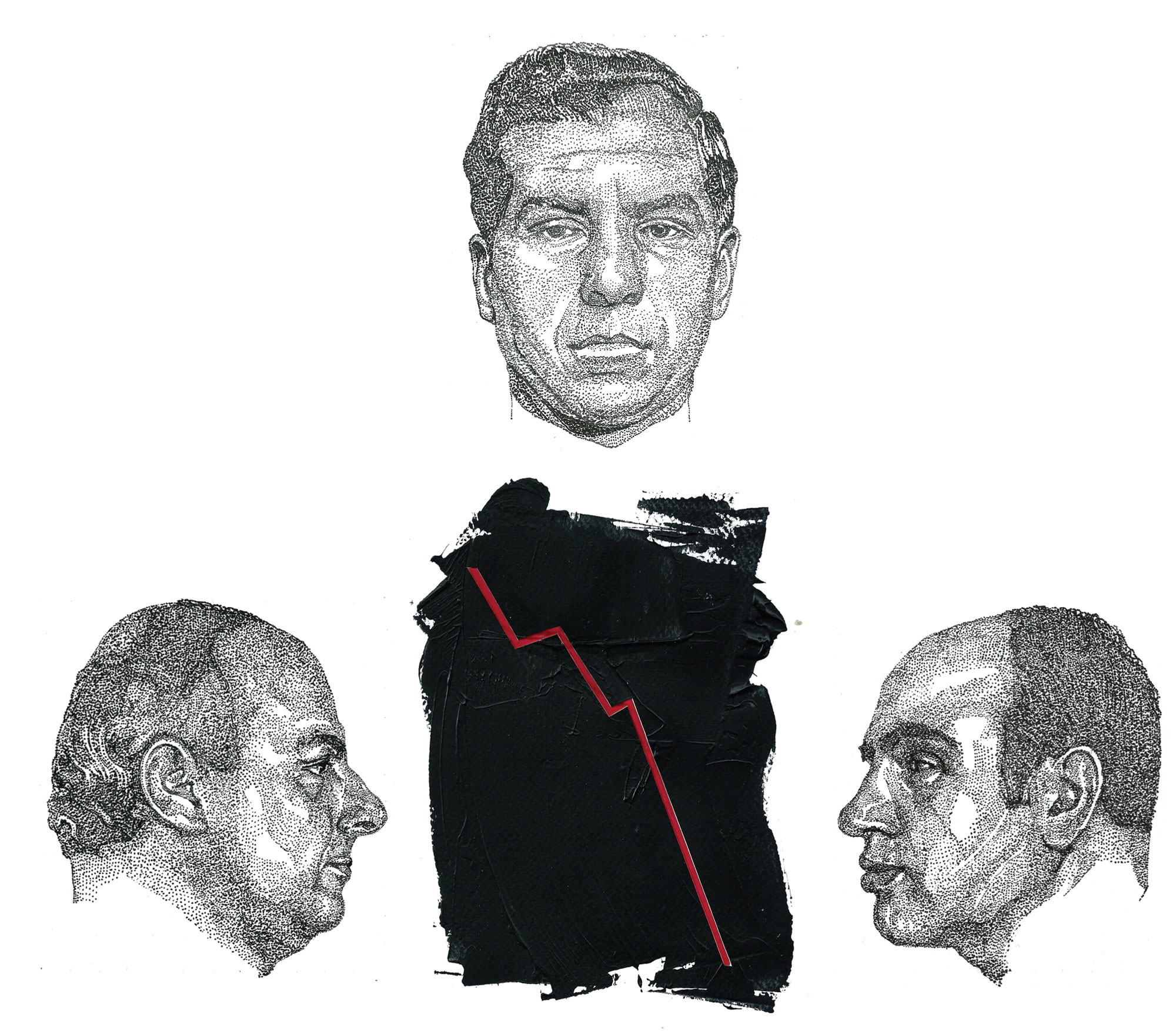
Clockwise from top: New York gangster Lucky Luciano, Chicago bootlegger Al Capone, and Camorra drug lord Paolo Di Lauro, who made a killing off of economic crises. Illustration by Jacob Everett
The Mafia has always profited from economic crisis. Recessions fill up the mob's coffers and boost its social standing.
In fact crime is one of the few sectors of the economy that thrive in moments of financial decline. Just look at the past decade, when the United States suffered a collapse in its housing market, Italy risked default, and Greece, Spain, and Portugal came to the brink of bankruptcy. During all that time, drug trafficking reached unprecedented heights of prosperity.
It's always been this way. In the Great Depression, the Italian-American mob, which was already reaping the benefits of Prohibition, saw its business grow even more. The consumption of alcohol and drugs increased as uncertainty about the future caused people to seek refuge in them, the penniless and destitute turned more often to loan sharks, and general hopelessness about the future spurred the rise of Mafia-organized gambling, sports betting, and illegal lotteries.
And it doesn't end there. The Mafia exploits these moments of uncertainty to validate its organizations and to build consensus in society. After the stock market crashed in 1929, Al Capone decided to mobilize his restaurant and garment businesses to feed and clothe Chicago's poor. (In the 1980s, Pablo Escobar would reprise this demagoguery when he offered to pay Colombia's public debt out of his own pocket.)
While politicians and the press worried about how to end the Depression, the Italian-American bosses gloated in the situation, using it as an opportunity to reorganize and relaunch their illicit enterprises. It was during that period, for example, that the Chicago Outfit was consolidated. It was at the end of the 20s that Lucky Luciano came to understand the importance of the heroin trade. And it was in 1931 that gambling was legalized in Nevada and the bosses conquered Las Vegas.
Only in the early 1930s, when America had caught a glimpse of the way out of the crisis, did US institutions begin to truly concentrate on the fight against the Mafia. At that point the first arrests were made: Luciano and Al Capone ended up in jail, but they had established themselves so well during the recession that they successfully managed all of their ventures from prison. And the bosses of the Italian-American Mafia had such power that American intelligence asked their help with security during World War II in exchange for lessened sentences and impunity.
Though history teaches us that in times of crisis it's necessary to raise our guard against gangsters and racketeers, institutions tend to lower their defenses, handing a carte blanche to organized crime. So it continues today.
In December 2009 Antonio Maria Costa, then the executive director of the UN Office on Drugs, made a shocking declaration: He revealed that the earnings of criminal organizations made up the sole liquid assets at the disposal of some banks seeking to avoid collapse during the 2008 financial crisis.
But how did we get to this point? According to the International Monetary Fund, between 2007 and 2009, banks in the United States and Europe lost more than $1 trillion in toxic assets and bad loans. Many big credit institutions failed or were put under temporary receiverships, and by the second half of 2008, cash flow had become a major problem for the banking system. Due to the banks' reluctance to grant loans, the system was practically paralyzed, and criminal organizations seemed to have huge quantities of cash to invest—that is, to launder.
A recent investigation by two Colombian economists at the University of Bogotá, Alejandro Gaviria and Daniel Mejía, revealed that 97.4 percent of Colombia's drug-trafficking revenue is regularly laundered in American and European banking circuits through various financial operations. We're talking about hundreds of billions of dollars. The laundering takes place by way of a system of blocks of shares that work like Chinese boxes or Russian dolls: The cash is transformed into electronic titles, passed from one country to another, and when it arrives on another continent it is nearly untraceable. That's how interbank loans came to be systematically financed with money from drug trafficking and other illicit activities. Some banks relied on this money to save themselves. Consequently, a large part of the $352 billion originating from drug trafficking was absorbed into the legal economic system, perfectly cleaned.
On October 26, 2001, in the wake of 9/11, President George W. Bush signed the Patriot Act with the goal of preventing, identifying, and prosecuting international money laundering and financing of terrorism. This law established that the US Department of the Treasury can ask national financial institutions to undertake a series of special measures with regard to jurisdictions, institutes, or foreign bank accounts suspected of being involved in money laundering.
But despite the tough measures taken by the American government, the financial crisis that started in 2008 even caused American banks to turn a blind eye to illicit activity and to find a way around the law. In February 2012, before a congressional hearing on organized crime, Jennifer Shasky Calvery, chief of the Asset Forfeiture and Money Laundering Section of the Department of Justice at the time, declared: "Disguised in the trillions of dollars that is transferred between banks each day, banks in the US are used to funnel massive amounts of illicit funds," confirming, in a sense, that the Patriot Act was not enough to distance the flow of dirty money from the American economy and finances.
The tie between drug trafficking and banks is not new. As Costa declared to the
Observer, "The connection between organized crime and financial institutions started in the late 1970s, early 1980s, when the Mafia became globalized." Until that connection was made, criminal organizations' money had circulated primarily in cash. With the globalization of the Mafia, it became easier and more convenient to transfer money electronically from one part of the world to the other through the use of electronic titles and virtual cash. But according to the Observer, at the end of the 80s the authorities increased their oversight of laundered money in banks, and criminal organizations began to operate in cash once again.
Yet the anti-money-laundering authorities hadn't accounted for the financial crises that spread across the globe in the early 2000s, causing a shortage of liquid assets from Russia to the United States. This shortage not only would bring the banks to their knees but also would open them up to the enormous assets of criminal organizations. And the cases in the news involving some of the biggest global banks in recent years demonstrate this fact.
According to some experts, the banking powerhouses of London and New York have become the two biggest laundries of dirty money in the world. This title no longer belongs to tax havens like the Cayman Islands and the Isle of Man but to Lombard Street and Wall Street.
Translated from the Italian by Kim Ziegler
15 Dec 23:08
Mexican Mods Helped Reshape the Cartel-Ravaged City of Tijuana
by Alex Zaragoza
[body_image width='1200' height='797' path='images/content-images/2014/12/15/' crop='images/content-images-crops/2014/12/15/' filename='mexican-mods-tijuana-123-body-image-1418650297.jpg' id='11425']
Adam Hernandez at the Tijuana a Go-Go party. Photos by Vito Di Stefano
It's Saturday night at Moustache, a small bar in downtown Tijuana. Every month, mods from the local Baja crew throw the Tijuana a Go-Go party here, spinning James Brown, ? and the Mysterians, and the 13th Floor Elevators to a crowd of skinheads, suedeheads, rude boys, and Mexican mods. If it wasn't for the green-haired girls standing outside, drinking 40s out of brown paper bags, we could easily be in some London basement club 50 years ago.
But this is a relatively recent sight. Not so long ago, Tijuana was the front line in a vicious inter-cartel turf war; close to 500 people were murdered here in the last three months of 2008 alone. And even if you weren't directly involved, you'd inevitably end up affected in some way: Kidnappings and public gun battles were a regular occurrence, and drug gangs would often hang their victims from bridges—or simply pile up their bodies in the streets—as a threat to their adversaries. Tijuana, a border city that's long relied on the US tourist trade, quickly became somewhere that no tourist would ever want to visit.
However, while American college kids stopped coming down to Tijuana to get shitfaced on cheap tequila, locals and longtime nightlife regulars kept partying, opening bars and restaurants for themselves and their friends. Six years later, with the annual body count cut in half, it's these individuals who have helped to reshape Tijuana into the cultural landmark it is today. Among them were the city's mods, who carried on hosting club nights despite all the violence around them.
"The mod scene in TJ is small, but being a Mexican mod isn't all that different from being a regular Mexican," says Tijuana a Go-Go DJ Astronauta Jackson. "We all like to get fine and dandy, shake our hips to the oldies but goodies and get wasted by the end of the night. It's all about the music mainly. If you want to pop on a Fred Perry and some shiny shoes, cool. It's all the same people getting together and listening to the music."
[body_image width='1200' height='797' path='images/content-images/2014/12/15/' crop='images/content-images-crops/2014/12/15/' filename='mexican-mods-tijuana-123-body-image-1418650344.jpg' id='11426']
Mods emerged in Cold War Britain as a response to the class struggles and expectations leveled at the UK youth of the time. They dressed in expensive Italian suits, dragged their Lambrettas around, discussed art and philosophy, took a bunch of speed at all-night underground parties, and beat the shit out of people for wearing leather jackets. Everything was good for those with a scooter and a Caesar cut. But as certain figures from the counterculture scene drove it into the mainstream, things began to fizzle, with young men and women of the 1970s tending to choose hairspray and swastika patches over braces and Chelsea boots.
However, after the success of 1979's Quadrophenia, the subculture began to enjoy a renaissance. It was around this time that a small contingent of Mexican dandies adopted the culture for themselves, with Tijuana's new mods collecting records, throwing parties and riding their refurbished scooters through the city's potholed streets. More than 30 years later, that same lot are still around, only older and grayer (time has a tendency of doing that to you), and accompanied by their kids, who are into the mod scene, though may not completely identify with it.
[body_image width='1200' height='797' path='images/content-images/2014/12/15/' crop='images/content-images-crops/2014/12/15/' filename='mexican-mods-tijuana-123-body-image-1418650369.jpg' id='11427']
"Some people join a subculture, then, after a month, will switch to another, then another," says Ricardo Jimenez, a 27-year-old suedehead and historian hanging out at Tijuana a Go-Go. "With the mods, that doesn't happen, because there are so few of them. It's not exclusive, though; if you're into the music, they always welcome you. It's all about coexisting and communing."
Tijuana a Go-Go rages until near daybreak. The music plays on as a fight breaks out and a drunken kid is carried to the pavement by the bartenders. The mods keep dancing until it's time to go home. They'll be back a month later, and a month after that.
[body_image width='1200' height='1659' path='images/content-images/2014/12/15/' crop='images/content-images-crops/2014/12/15/' filename='mexican-mods-tijuana-123-body-image-1418650082.jpg' id='11424']
The Hernandez family outside La Ciruela Electrica in Tijuana
Guy and Miriam Hernandez—who are 51 and 46, respectively—were part of the original Tijuana mod scene in the early-80s. Unlike most of their friends from the era, who got married, had kids and eventually stopped subscribing to the subculture's ethos, Guy and Miriam continued. They now live in a small house decked out in midcentury finds and even raised their kids mod, dressing them in vintage 60s clothes from the day they were born.
While flipping through records at La Ciruela Electrica, a tiny Tijuana record shop named after 60s psych band the Electric Prunes, Guy, Miriam, and their sons Adam, 21, and Gael, 13, tell me that, for them, being mod isn't a fad; it's their entire way of life.
"A lot of people get married and they change. I don't know why, but, you know, that's their thing," says Guy, who, along with Miriam, has been throwing 60s dance parties in Tijuana every month for the last six years. "We didn't change, because being mod is what we really like. When you do something you like, you do it for the rest of your life."
[body_image width='1200' height='797' path='images/content-images/2014/12/15/' crop='images/content-images-crops/2014/12/15/' filename='mexican-mods-tijuana-123-body-image-1418650453.jpg' id='11428']
"That's when it becomes a lifestyle. You start looking for the clothes and the records and it just becomes who you are," adds Miriam. "I don't know what's ever going to stop us from being mod or partying. Death? Other than that, I don't see us stopping. Now there's this younger generation who can say this was always their lifestyle. They can say, 'I was born mod.' If they want to change later, that's their choice."
Adam and Gael don't seem to be in a rush to give up their mod heritage, though. Even though he's teased at school, Gael doesn't have an urge to dress like his schoolmates. "They dress kind of ugly," he says, refusing to take off his vintage shades because, as he says, they make him look " perrón," or "badass."
While the Tijuana mod scene might be tiny, social media has allowed its members to connect with those with shared interests in other parts of Mexico and the US. The scenes in Mexico City, Monterrey, Puebla and Nuevo Leon are all going strong, and mods from Los Angeles have ridden down Tijuana to DJ at some of the 60s parties in town. They've created a network of torchbearers for the British subculture, spanning a range of nationalities, ages and sexes.
"That's one of the advantages of the mod movement," laughs Guy. "Whether you're 20 or 40, you look good when you're a mod."
15 Dec 22:53

Woman attempts selfie with monkey, nearly gets face eaten
by Joe Veix
On Monday, Reddit user ThatGuy1331 posted this series of photos of his friend attempting to take a selfie with a monkey. As you can imagine, it does not end well.
It starts off okay, with the monkey acting maybe a little cranky.

And then things quickly escalate, once the monkey decides it wants to eat her face.

She reacts with the appropriate amount of terror.

It seems safe to say that selfies taken in front of wild animals are almost always a bad idea. It’s not that there’s anything wrong with taking a selfie (in most cases), it’s just that you’re making yourself pretty vulnerable in front of a creature that might have drastically different interests than posing for a photo, such as eating your face.
[Source: Reddit/ThatGuy1331]
15 Dec 21:46
"Northern Soul - The Early Years" 100 Classic And Rare Tracks
by noreply@blogger.com (RYP)
Nice collection of 60’s soul and R&B that pre-dated and influenced the Northern Soul sound. trax disc 1:
 trax disc 1:
1. Earthquake - Roy Hamilton 2. Don't Feel Sorry for Me - Jimmy Ruffin 3. The Bells - The Extremes 4. I Promise Love - The Revlons 5. That's the Way I Feel - The Miracles 6. Let Me Be Your Boy - Wilson Pickett 7. All the Love I've Got - Marv Johnson 8. Pink Lips - The Caravelles
9. Free Me - Robert Knight 10. Well, I Told You - The Chantels 11. Fire - Gino Parks 12. I Don't Want to Cry - Chuck Jackson 13. Baby Cakes - Dee Dee Sharp 14. Salt and Pepper - Rita Faye 15. If I Never Get to Love You - Lou Johnson 16. If You Don't Come - PatIence Valentine 17. I'm a Telling You - Jerry Butler 18. Wait - SindNey Barnes 19. I See Your Face - Joe Simon 20. Stubborn Kind of Fellow - Marvin Gaye 21. Look at Me - Dobie Gray 22. (There Goes) the Forgotten Man - Jimmy Radcliffe 23. When You See Me Hurt - Carl Lester & The Showstoppers 24. Catch That Teardrop - The 5 Royales 25. I Need You - The Van-Dellos
trax disc 2:
1. It Hurts Too Much To Cry - H.B. Barnum 2. Fly By Night - Varetta & The Thomases 3. Misery - Barrett Strong 4. He's The One That Rings My Bell - Sherri Taylor 5. If Thing's Don't Change - Little Anthony Griffin 6. Seven Day Fool - Etta James 7. The Wrong Girl - The Showmen 8. Didn't I Tell You - Tommy Hunt 9. My Book - Bruce Cloud 10. Gee Baby - The Fury's 11. Come To Me - Marv Johnson 12. I Let Myself Go - Geraldine Hunt 13. A Miracle - James Ray 14. Fortune Teller - Benny Spellman 15. Mind Over Matter - Nolan Strong 16. Determination - Smokey Robinson & The Miracles 17. You Threw A Lucky Punch - Gene Chandler 18. It's Your Voodoo Working - Charles Sheffield 19. Sugar Dumpling - Sam Cooke 20. Chaperone - LaBrenda Ben & The Beljeans 21. Fever - The Knockouts 22. All I Want To Do Is Cry - Billy Bland 23. Heartbreak Hill - Big Al Downing 24. Hush Heart - Baby Washington 25. The Day Will Come - Freddie Gorman
trax disc 3:
1. Rome (Wasn't Build In A Day) - Johnnie Taylor 2. Any Day Now - Chuck Jackson 3. Cry - Tony Clarke 4. Cherrigale - Ed Townsend 5. Your Heart Belongs To Me - The Supremes 6. I Gotta Get Away From It All - Mitty Collier 7. Don't Mess With My Man - Irma Thomas 8. My Heart's On Fire - Billy Bland 9. Bye Bye Baby - Mary Wells 10. Disillusioned - The Tams 11. Am I Falling In Love - Maxine Brown 12. I Lost The Best Things I Ever Had - Ted Taylor 13. Third Window From The Right - Dean Barlow 14. Keep Your Hands Of My Baby - Little Eva 15. She'll Be Gone - Betty O' Brian 16. Some Of Your Lovin' - Johnny Nash 17. Way Over There - The Marvelettes 18. Miracles - The O'Jays 19. Turn On Your Love Light - Bobby Bland 20. My Heart Belongs To You - Wilson Pickett 21. She's A Troublemaker - The Major's 22. The Story Of My Life - Big Al Downing 23. It's Mine - Tammy Montgomery 24. You Better Come Home - Russell Byrd 25. Everytime - Major Lance
trax disc 4:
1. Tell Him - The Exciters 2. A Rockin' Good Way - Odessa Harris 3. Jamie - Eddie Holland 4. Hold On - Dee Clar 5. The Biggest Tool - Emorise Kelley 6. Come to Me - Mary Wells 7. In My Little Black Book - Lou Rawls 8. Just a Little Bit - Tiny Topsy 9. A Love That never Can Be - The Satintones 10. Thunder in My Heart - Timmy Shaw 11. I Want to Know - Sugar Pie DeSanto 12. If Your Mother Only Knew - The Miracles 13. You're a Little Too Late - Danny Owens 14. Whose Heart (Are You Gonna Break Now) - Don McKenzie 15. Lipstick Traces - Benny Spellman 16. Come On Let Me Love You - The Destinations 17. Heartbreak Society - The Radiants 18. I Wonder (If Your Love Will Ever belong) - The Pentagons 19. Letter Full of Tears - Gladys Knight & The Pips 20. While the Cat's Away - The Barons 21. Don't Let Her Take My Baby - Mitty Collier 22. Check Yourself - The Temptations 23. Everybody's Got a Dance But Me - Big Dee Irwin 24. Someday We'll Be Together - Johnny & Jackey 25. You're Too Much - Batty And Ray
...served by Gyro1966...
15 Dec 21:45


DAVIE ALLAN & THE ARROWS - Fuzz For Holidays 1 & 2
by noreply@blogger.com (Mr.Eliminator)
"This stuff is not for your traditional Bing Crosby crowd who enjoy lame Christmas music, this is for the people who like a lot of FUZZ and rock added to their holiday spirit."
Double dose of FUZZ-drenched Christmas classics forged from the fuzztasmagorical guitar of Davie Allan and The Arrows!
Angels We Have Heard On High
Santa Bring My Baby Back To Me
Feliz Navidad
Hey Santa, Dig The FUZZ!
15 Dec 21:42
“Thatcher está moi viva en San Caetano, nos ministerios, nos concellos…"
by Montse Dopico
Alberto Ramos recolle o premio García Barros por Máscaras Rotas para Sebastian Nell. Unha entrevista de Montse Dopico.
14 Dec 21:26
Santiago estrena su mercado navideño
by La Voz
El escaparate comercial y lúdico se ubica en la praza de A Quintana e imita a una rúa tradicional gallega
14 Dec 21:18
 “No se conoce bien al verdadero José Antonio. Se escriben muchos libros sobre él, pero para una minoría; lo de hacer un musical es una idea estupenda para divulgar su vida y su obra entre el gran público", cuenta Heredia a este periódico desde el despacho de un piso del centro de Madrid.
“La imagen que tenemos de José Antonio ha llegado distorsionada hasta nuestros días a causa de sus múltiples enemigos. José Antonio era un joven idealista. Lo de que no era ni de izquierdas ni de derechas no era estrategia, sino realidad. No hay más que recordar su fobia a la banca. José Antonio llamaba a los banqueros por su nombre: ladrones”, cuenta Álvaro Sáenz de Heredia.
“No se conoce bien al verdadero José Antonio. Se escriben muchos libros sobre él, pero para una minoría; lo de hacer un musical es una idea estupenda para divulgar su vida y su obra entre el gran público", cuenta Heredia a este periódico desde el despacho de un piso del centro de Madrid.
“La imagen que tenemos de José Antonio ha llegado distorsionada hasta nuestros días a causa de sus múltiples enemigos. José Antonio era un joven idealista. Lo de que no era ni de izquierdas ni de derechas no era estrategia, sino realidad. No hay más que recordar su fobia a la banca. José Antonio llamaba a los banqueros por su nombre: ladrones”, cuenta Álvaro Sáenz de Heredia.
José Antonio Primo de Rivera, el musical
by Carlos Prieto
Se abre el telón y aparece un joven que dice no ser ni de izquierdas ni de derechas, amigo de Lorca y Azaña, enfrentado a marxistas y franquistas, con una intensa vida sentimental e ínfulas revolucionarias. ¿Cómo se llama la película? José Antonio Primo de Rivera, el musical.
Sí, han leído bien: el fundador de la Falange será el protagonista de un musical (La princesa roja) que ya está en fase de producción y aspira a estrenarse en la Gran Vía (antigua Avenida de José Antonio) el próximo curso. Morbo político y controversia cultural no, lo siguiente.
El cerebro de la operación -en calidad de guionista, director y productor del musical- es el cineasta Álvaro Sáenz de Heredia (Madrid, 1942), que el pasado viernes mostró a El Confidencial las primeras imágenes del proyecto: una serie de escenas filmadas, que él llama “la maqueta", en las que aparecen personajes como Franco, Mola o Largo Caballero y se cantan y bailan temas que glosan las peripecias de José Antonio antes y durante la Guerra Civil.
El papel de José Antonio en el musical será para el televisivo Jesús Cisneros (Al salir de clase, Lleno, por favor)
Pedagogía y propaganda
¿Estamos ante un ejercicio de revisionismo hagiográfico (típico, por otro lado, de cualquier musical)? ¿Es La Princesa Roja una muestra de falangismo social musicalizado para toda la familia? ¿Estamos delante de una fantasía propagandística sobre el lado obrero de la Falange? Quizás, pero Sáenz de Heredia prefiere hablar de divulgación y de pedagogía histórica:
“No se conoce bien al verdadero José Antonio. Se escriben muchos libros sobre él, pero para una minoría; lo de hacer un musical es una idea estupenda para divulgar su vida y su obra entre el gran público", cuenta Heredia a este periódico desde el despacho de un piso del centro de Madrid.
Dice Álvaro Sáenz de Heredia que La princesa roja “mostrará al José Antonio político, pero sobre todo al José Antonio sentimental”, ya que pondrá el foco sobre su relación con dos mujeres: Pilar Azlor y Elisabeth Bibesco, conocida como la Princesa Roja.
Algo de esa mezcla (político/sentimental) hay también en las motivaciones del director madrileño. A Sáenz de Heredia parecen resultarle atractivas algunas de las ideas del líder histórico de Falange, aunque la otra clave de su interés por el proyecto es de tipo sentimental/familiar: José Antonio Primo de Rivera y Sáenz de Heredia era familiar suyo (tío segundo).
Una saga cinematográfica
El director, de hecho, tiene un pedigrí familiar conservador sobre el que merece la pena detenerse. Su tío, José Luis Sáenz de Heredia, dirigió dos películas claves de la propaganda franquista -Raza (1942) y Franco, ese hombre (1964)-, pero también una de las comedias españolas fundamentales de los años cincuenta: Historias de la radio (1955). El prestigioso historiador cinematográfico Román Gubern escribió esto a su muerte: “Sáenz de Heredia era de la misma generación que Dionisio Ridruejo y seguía a la de Giménez Caballero y Edgar Neville. Es decir, era de la derecha ilustrada y escribidora que, liderada por su primo José Antonio Primo de Rivera, se deslizó luego hacia la barricada del fascismo… Aunque Sáenz de Heredia fue un cineasta todo-terreno, se le recordará siempre como el cineasta falangista de un país que no tuvo, en rigor, cine falangista, sino cine militarista, cine conservador y cine hagiográfico”.
Álvaro Sáenz de Heredia, por su parte, se hizo un hueco en el cine de la democracia con sus películas para humoristas televisivos, de Martes y Trece a Chiquito de la Calzada, con el que rodó, entre otras, las descacharrantes Aquí llega Condemor, el pecador de la pradera (1996) y Brácula: Condemor II (1997). Curiosamente su película más política quizás sea su mejor trabajo, La Hoz y el Martínez (1984), comedia de acción de culto con Andrés Pajares en el papel de fontanero reciclado en falso líder soviético.
“La imagen que tenemos de José Antonio ha llegado distorsionada hasta nuestros días a causa de sus múltiples enemigos. José Antonio era un joven idealista. Lo de que no era ni de izquierdas ni de derechas no era estrategia, sino realidad. No hay más que recordar su fobia a la banca. José Antonio llamaba a los banqueros por su nombre: ladrones”, cuenta Álvaro Sáenz de Heredia.
Su musical, por tanto, mostrará a un José Antonio Primo de Rivera como joven revolucionario social que choca con marxistas y franquistas. Un joven fusilado por los rojos y traicionado por un Franco que no habría hecho nada por salvarle y recicló luego sus ideas para afianzar su poder. “La Falange terminó en noviembre de 1936”, afirma Sáenz de Heredia aludiendo a la fecha de la muerte de José Antonio.
Ideas que siempre ha defendido la denominada Falange Auténtica y que tienen hasta una denominación política: la tercera vía (ni marxistas ni capitalistas). Una visión conflictiva sobre la que los historiadores han discutido largo y tendido: donde un sector de la derecha ve en José Antonio a un revolucionario, un sector de la izquierda ve a un fascista que tenía exactamente tanto de social como Hitler y Mussolini.
¿Estamos preparados para ver a José Antonio Primo de Rivera y Federico García Lorca cantando juntos en un musical? ¿Es La princesa roja una obra escándalo por las políticas que quiere divulgar? ¿O estamos ante un producto inofensivo? ¿El kitsch familiar típico del formato musical es capaz de neutralizar/banalizar cualquier idea por explosiva que sea? ¿El falangismo con mallas es menos falangismo que el falangismo con correajes militares? La solución a estos enigmas dentro de unos meses en cualquier teatro de la Gran Vía.
14 Dec 15:46
"Did you know that the champagne coupe is modeled after..."
by apricot
"Myth Busts: The Enduring Legacy of Breast-Shaped Glassware" On champagne, breast milk, and the enduring fascination with some women's bodies.

14 Dec 15:45
"Is the School House the Proper Place to Teach Raw Sex?" Phrasing!!
by Room 641-A
"Today, most American adults can call up some memory of sex ed in their school, whether it was watching corny menstruation movies or seeing their school nurse demonstrate putting a condom on a banana. The movies, in particular, tend to stick in our minds. Screening films at school to teach kids how babies are made has always been a touchy issue, particularly for people who fear such knowledge will steer their children toward sexual behavior. But sex education actually has its roots in moralizing: American sex-ed films emerged from concerns that social morals and the family structure were breaking down." — Slut-Shaming, Eugenics, and Donald Duck: The Scandalous History of Sex-Ed Movies

14 Dec 15:17

Hank Thompson and The Brazos Valley Boys - It's Christmas Time
01-White Christmas.mp3
02-Santa Claus Is Comin' To Town.mp3
03-I'd Like To Have An Elephant For Christmas.mp3
04-Gonna Wrap My Heart In Ribbons.mp3
05-Blue Christmas.mp3
06-Mr. & Mrs. Snowman.mp3
07-It's Christmas Time.mp3
08-Rudolph The Red Nosed Reindeer.mp3
09-Silver Bells.mp3
10-Here Comes Santa Claus.mp3
11-Little Christmas Angel.mp3
12-It's Christmas Every Day In Alaska.mp3
13-We Wish You A Merry Christmas.mp3
Hank Thompson and The Brazos Valley Boys - It's Christmas Time
by The Commuter
Hank Thompson and The Brazos Valley Boys - It's Christmas Time
01-White Christmas.mp3
02-Santa Claus Is Comin' To Town.mp3
03-I'd Like To Have An Elephant For Christmas.mp3
04-Gonna Wrap My Heart In Ribbons.mp3
05-Blue Christmas.mp3
06-Mr. & Mrs. Snowman.mp3
07-It's Christmas Time.mp3
08-Rudolph The Red Nosed Reindeer.mp3
09-Silver Bells.mp3
10-Here Comes Santa Claus.mp3
11-Little Christmas Angel.mp3
12-It's Christmas Every Day In Alaska.mp3
13-We Wish You A Merry Christmas.mp3
12 Dec 16:58
16 dezembro,às 19h, roteiro de consumo consciente!
by Gentalha
Agora que estamos às portas do Natal, um dos momentos de maior consumismo do ano, a comissom de meio natural da Gentalha e Verdegaia juntamo-nos para fazermos um roteiro urbano por espaços que som alternativas ao consumo capitalista. Aliás, queremos criar este momento para falarmos sobre que consequências têm o consumismo feroz deste sistema para a natureza, os dereitos laborais,a economia local …
Será esta terça feira 16 de dezembro e sairemos às 19h do C.S O Pichel (sta clara 21) para visitarmos à gente de Legumia, Catrineta, o mercado Lusco e Fusco e a Filhos de Malte.
Contamos convosco!

12 Dec 16:56
Os salarios deixan de ser o sustento da maioría dos fogares galegos
by David Lombao
Os fogares que viven principalmente do traballo descenderon catro puntos entre 2008 e 2011. As pensións non contributivas pasaron a ser o sustento principal de case 4 de cada dez fogares.
12 Dec 16:55

Photos from the face-sitting porn protest outside British Parliament
by Alex Moore
You might have heard that England recently past new restrictions on sex acts banned from porn in the UK. The acts involved include both female ejaculation and face-sitting. In light of the draconian measures, porn actors and enthusiasts gathered in front of British Parliament to hold the world’s first face-sit-in.
Hundreds were promised to show at the event, and by the looks of it the protest didn’t disappoint.

Protesters claimed that the restrictions are not only senseless but sexist. “They’re very sexist laws. These are very geared towards women’s enjoyment as opposed to men’s,” protester Neil Rushton told the Guardian. In addition to banning female ejaculation and face-sitting the new restrictions also ban spanking and penetration by “large objects,” which seems like a phrase that inevitably has variance in the eye of the beholder.
“What do we want? Face-sitting! When do we want it? Now!”
There was even some sitting on Santa’s face, an X-rated spin on sitting on his lap. All these brits want for Christmas, apparently, is sexual freedom.
This pair was face-sitting triumphantly:
This guy contentedly flashes a thumbs-up:
Plenty of #facesitting going on outside Parliament at the #pornprotest pic.twitter.com/KNM0e5Xakl
— London24 (@london24) December 12, 2014
And here you can see the scale of the turnout, which was pretty impressive:
[Source: Guardian | Image: Jacob Rawlings]
12 Dec 16:12
6 Products That Can Only Be Made in One Place
by Miss Cellania
 Champagne is a lie! Your sparkling wine doesn’t have to come from France to be authentic. Here are six products that can really only be produced in one place on the globe.
1. Cowichan Sweaters
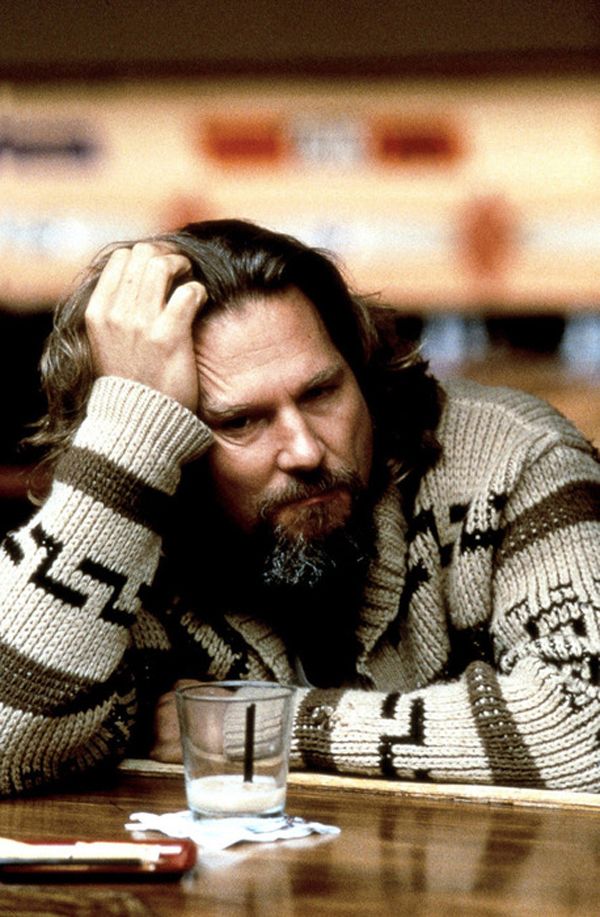
Long before it accompanied him on his many misadventures, Jeff “The Dude” Lebowski’s bulky, brown sweater was a sartorial staple of he Pacific Northwest. Known as a Cowichan, the outerwear has been hand-knit by indigenous people in British Columbia since the 1800s, when Scottish settlers and missionaries first introduced the Indians to knitting. (They’d been weaving their garments from goat hair in previous centuries.) The distinctive sweater made waves at the 1893 Chicago World’s Fair; since then, the shops in Vancouver have been brimming with Cowichans, all showcasing similarly beautiful tribal patterns. So how can you spot a fake in a crowd? Throw some water on it. Real Cowichans aren’t just warm- they’re waterproof! Because they’re made with untreated wool, the garments contain enough lanolin (a waxy substance produced by wooly animals) to keep sweaters dry.
2. Vidalia Onions
 (Image credit: Yumion)
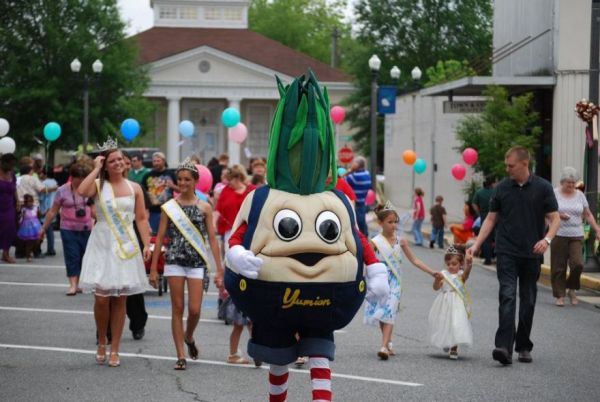
Snickers bards and Tootsie Roll Pops weren’t the only sweet things to come out of the Great Depression- onions belong on the list, too! In 1931, Georgia farmer Mose Coleman planted a batch of the pungent bulbs but was shocked when the onions turned out so mild that they could be eaten like apples. It turns out, the low sulphur content in East Georgia’s sandy soil was perfect for turning plain old onions into dirt candy. Over the next 50 years, the grocery chain Piggly Wiggly made Vidalia onions a produce aisle superstar by distributing the veggies across the South. Meanwhile, local farmers won protection for their distinctive crop in the 1980s; as a result, only 13 counties and portions of seven others can legally call their onions Vidalias. Today, the state pays tribute to its favorite veggie with an onion museum, where visitors can learn about Vidalias while hanging out with Yumion, Georgia’s official onion mascot.
3. Cuban Cigars
 (Image source: JFK Library)
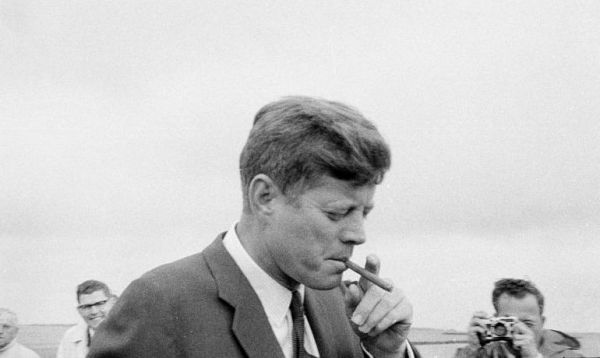
Even John F. Kennedy understood the value of a Cuban. When the sitting president realized that the U.S. would need to levy an embargo on the island nation, he ordered his press secretary to round up as many of his beloved Petit Upmanns as possible before the ban took effect. His secretary came back with 1,200 stogies. So what makes the Cuban so special? The mineral rich soil, the tropical climate, and its contraband status all contribute to the cigar’s allure. But ask any aficionado and he’s likely to tell you that it’s not so much the material but the women who roll them. Torcedoras churn out the world’s best cigars using nothing more than tobacco leaves, their hands, and a few dabs of flavorless vegetable gum. Though the smokes are still illegal in the U.S., Cuba’s cigar trade is doing just fine. In 2011, it sold $401 million worth of authentic puros around the world.
4. Roquefort Cheese
 (Image credit: Christophe.Finot)

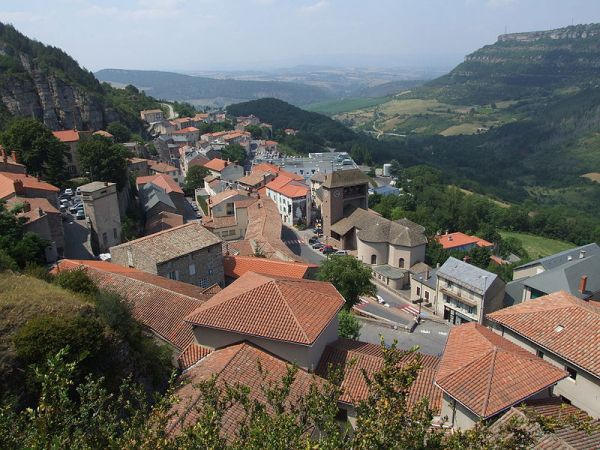
Nibbled by the Romans and a favorite at Charlemagne’s dinner table, the cheese known as Roquefort has plenty to hang its hat on. Even its origin is steeped in romance. According to legend, the moldy blue cheese was first discovered when a shepherd left his lunch in a cave to chase a beautiful woman. Months later, the hungry fellow returned to find that a mold, Penicillium roquefort, had infected his grub. Nonetheless, he ate it -and declared it delicious. The cheese is still made in those caves today, but the manufacturing is far more intentional. France maintains strict regulations on the temperature of milk, the grazing habits of sheep, and, of course, the specific place of production, which must be the caves under Mount Combalou in Southern France’s tiny Roquefort-sur-Soulzon. In fact, cheese-making is the town’s only industry, meaning that if your cheese bears Roquefort’s traditional red sheep wrapping, you’re biting into the real thing.
5. Newcastle Brown Ale
 (Image credit: Flickr user Michael Fajardo)
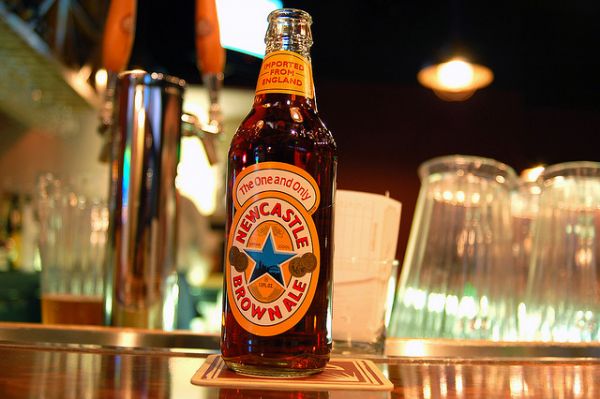
In the mid-20th century, you could be sure that every bottle of England’s beloved Newcastle Brown Ale came from the same place: Newcastle. To safeguard that tradition, the beer's manufacturers fought for and won protected status for their brew in 2000. But in 2005, when they wanted to consolidate brewing operations by moving the factory across the River Tyne and effectively out of Newcastle, they first had to get that protected status revoked. Several years later, they moved even farther. Now all Newcastle Brown Ale comes from Tadcaster, nearly 100 miles outside the city for which the beverage was named.
6. Kobe Beef
 (Image credit: Paul Nash)

Every piece of Kobe beef takes an identical odyssey to the dinner plate. The trip begins in Japan’s Hyogo prefecture with Tajima cattle, a burly breed with bodybuilder forequarters developed from hundreds of years of pulling carts. Raised on local grasses and waters, the cows live a charmed life that often includes massages and classical music at dinnertime- at least until their third birthday, when the party comes to an abrupt end. To gain the Kobe seal, the cows must be processed in a Hyogo slaughterhouse, where the beef faces strict marbling standards, ensuring a high fat content. The process is extremely selective; only about half the cattle make the cut. As for the so-called Kobe beef you can buy in the U.S., the majority of it isn’t really Kobe- it comes from a crossbreed of the Japanese cattle that’s raised on grains, delivering a very different taste. So how can you spot a faux-be from a Kobe? Check the label. According to Forbes, every slice of Kobe beef sold “must carry the 10-digit identification number so customers know what particular Tajima-gyu cow it came from.” 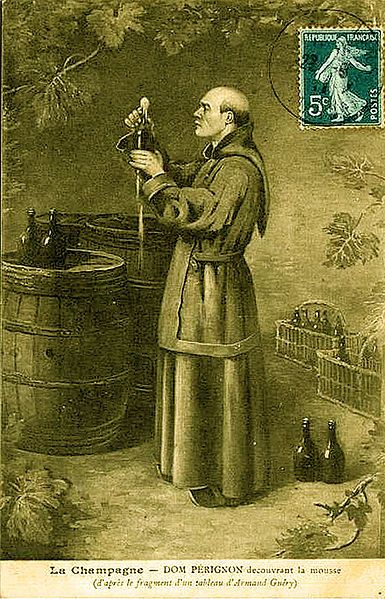 So what about champagne?
The new year brings all sorts of treats, from college football’s biggest games to thrilling new page-a-day calendars. But New Years Eve also comes pre-loaded with an excellent excuse to sample champagne- a beverage so divine that when 17th-century monk Dom Pérignon brewed his first batch, he yelled, “Come quickly! I am tasting the stars!”
No wonder the French have moved to protect the drink. You’ve likely heard that real champagne comes only from the cool, chalky Champagne region of France. It’s true- when World War I was wrapping up, France slipped a provision into the Treaty of Versailles stating that anything labelled “champagne” had to come from the region. Unfortunately, the clever plan ran aground when the U.S. senate refused to ratify the treaty. That’s why the three-dollar bottle of California brut you buy at your neighborhood’s finest gas station can still be called champagne. Of course, if you want to crack open a bottle of the good stuff, you don’t have to wait to pair it with wedding cake or oysters- Marilyn Monroe sipped hers with potato chips (also available at gas stations).
___________________________
 This article by Adam K. Raymond is reprinted with permission from the January-February 2013 issue of mental_floss magazine.
Be sure to visit mental_floss' entertaining website and blog for more fun stuff! 
12 Dec 15:51
Mother of the Sea
by infini
Every year in Uto, a remote town at the Southern tip of Japan, a festival is held to celebrate a woman known locally as the Mother of the Sea. Dr Kathleen Mary Drew-Baker died without knowing her research would save the Japanese seaweed industry and lead to a world multi-billion dollar obsession with sushi. The story of nori in Japan.
