Shared posts
THROWBACK THURSDAY: I'm the Mayor of Crawdad Town
R.I.P. KIM FOWLEY
How the Rise of the "Creative Class" Is Actually Screwing Creative Americans
:strip_icc(1)/https%3A%2F%2Fs3.amazonaws.com%2Fpolicymic-images%2Fkmm2r3deglqnwmeppjtdsxul8ifolzoi2solm7lmvdc27qeghkhotxjydnmyfxii.jpg)
New York: A Documentary Film
Episode One: The Country and the City (1609–1825)
Episode Two: Order and Disorder (1825–1865)
Episode Three: Sunshine and Shadow (1865–1898)
Episode Four: The Power and the People (1898–1918)
Episode Five: Cosmopolis (1919–1931)
Episode Six: City of Tomorrow (1929–1941)
Episode Seven: The City and the World (1945–2000)
Episode Eight (part 1): The Center of the World (1946–2003)
Episode Eight (part 2): The Center of the World (1946–2003)
Or here (dailymotion). Episode 8 is incomplete. The rest is here.
Kim Fowley "Impossible But True: The Kim Fowley Story" 2003
 The Kim Fowley story is one of the most interesting in rock, and the exhaustive liner notes to Impossible but True do a fine job of telling it. Producer, songwriter, manager, promoter, scenester, performer — Fowley was omnipresent on the wild and seedy fringes of rock & roll in L.A. and London in the '60s and '70s. The 32 tracks that make up the musical portion of the package are comprised of tracks Fowley released in the '60s under his own name, songs he wrote or co-wrote, and songs he produced or at least had a hand in. Impossible but True: The Kim Fowley Story is a trip through an alternate history of rock in the '60s. Fowley had an ear for a great song and a weird streak a mile wide that kept things very interesting at all times. The disc kicks off with two Fowley performances from 1968: the beastly and rude hard rock of "Animal Man" and the hard rock, acid bubblegum of "Bubblegum." His unique vocal technique is best taken in small doses, and these (along with "The Trip," his hilarious psychedelic parody that is also included) are his best and best-known tracks. The rest of the disc bounces from style to style and from year to year. While most of the tracks Fowley did were pretty obscure, he did have a hand in some actual hits: he played on 1960's "Alley-Oop" by the Hollywood Argyles, discovered the Rivingtons (their "Papa-Oom-Mow-Mow" from 1962 is an R&B classic), released the classic instrumental "Nut Rocker" by B. Bumble & the Stingers on his Del Rio label in 1962, and he produced the girl group classic "Popsicles & Icicles" by the Murmaids from 1963. He also wrote a songs for Cat Stevens ("Portobello Road"), Paul Revere & the Raiders ("Like Long Hair"), and the Seeds (the wild "Fallin' off the Edge of My Mind") and produced Gene Vincent (1968's "Rainbow at Midnight") and the Soft Machine ("Feelin' Reelin' Squeelin'"). The rest of the disc is made up of the aforementioned obscure but excellent tracks like the hard-rocking garage track "Gloria's Dream" by the Belfast Gypsies (basically a Van Morrison-less Them), the British R&B of the 'N Betweens' (who later became Slade) cover of "Security," the snotty, spacy, and hilarious version of "Wild Thing" by Cathy Rich, and the folk-rock sweetness of "Daydreaming of You" by the Hellions. Fowley was always looking to wedge his way into every trend that came along, so there are stops made at folk-rock (the sweet "Daydreaming of You" by the Hellions), instrumental rock ("Charge!" by the Renegades), doo wop ("No More" by Little Victor & the Vistas), vocal pop ("Honest I Do" by the Innocents), cornball easy listening (his own wildly amusing "Space Odyssey" from 1968), and blues rock ("Louisiana Teardrops" by Elfstone). He also seemed to have invented at least one very specialized genre, ski rock. The songs by the Alpines ("Shush-Boomer") and the Snowmen ("Ski Storm, Pt. 1") are basically surf tunes with lyrics about skiing. Impossible but True is a fascinating historical document and a blast to listen to from beginning to end. Ace did a damn fine job putting it all together; it is a picture-perfect example of everything a good collection should be. Highly recommended. - AMG-Review
trax:
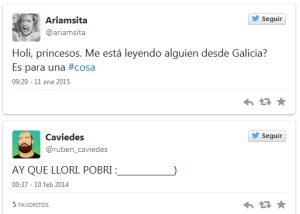
Holi, en Twitter se habla raro: un estudio analiza cómo usamos la lengua en esta red social
Aunque a alguno le pueda sonar extraño, los chistecitos que escribimos en Twitter son dignos de estudio. No porque sean obras maestras de microliteratura o una genialidad humorística (que no lo son) sino porque hablamos raro.
De hecho, estudiar el lenguaje que se usa en esta red social, "permite documentar cosas que sólo ocurren en el lenguaje oral, al que es más difícil acceder”, además de tomar nota de "una serie de creaciones nuevas, como holi y besis, muy interesantes, ya que Twitter es una gran conversación entre gente que no se conoce”. Estos recursos ayudan a “jugar con el lenguaje y crear una familiaridad” que de otro modo sería difícil que existiera.
Así nos lo explica Carlota de Benito, coautora junto con la también filóloga Ana Estrada de un estudio titulado Holi en Tuiter hablamos raro un besi: la variación lingüística en Twitter, que fue el centro de una charla impartida por De Benito el 12 de enero en la Universidad Carlos III de Madrid y que repetirá en la Universidad de Zürich, donde es profesora de lingüística española.
Según comenta a Verne De Benito, en Twitter creamos recursos para "comunicarnos con gente que no conocemos y hacerlo de forma no agresiva e incluso cortés". Por eso "adaptamos el lenguaje intentando no perjudicar el contenido, pero conscientes de que hay muchos matices que se pueden perder”.
No olvidemos que en esta red social nos comunicamos por escrito y además con un límite de 140 caracteres. Por eso no vemos (y no se entienden) recursos similares en otras redes sociales, como Facebook, donde mayoritariamente conocemos a nuestros contactos, o en la calle, donde además contamos con la comunicación no verbal. Es decir, si escuchamos a un grupo de amigos decir en un bar algo así como “este vino es bien”, podemos estar bastante seguros “de que se han conocido por Twitter”, como apunta De Benito.
¿Y cómo es esta variación lingüística? Sobre todo, vemos cambios morfológicos como los siguientes, ilustrados con algunos de los ejemplos que podemos encontrar en el trabajo de De Benito y Estrada:
1. Las palabras con la teminación en -i, sufijo que forma términos como holi, besis, bromi y llori, dando un toque afectivo.
2. Creación de coloquialismos como "es bien", "ojalá", "hacer algo muy fuerte" o incluso "ser ETA". Este último ejemplo muestra además cómo la actualidad sirve de inspiración para creaciones humorísticas que se extienden muy rápidamente. En este caso se trata de una burla a las frecuentes asociaciones establecidas por el gobierno entre casi todo lo que desaprueba y el grupo terrorista.
3. Intensificadores, como los adjetivos acabados en -érrimo o “puto” usado como adverbio, “algo no exclusivo de Twitter, pero que en esta red vemos más”.
4. Uso de mayúsculas. Para enfatizar, pero también para imitar la excitación infantil. En ocasiones, las mayúsculas se unen a faltas de ortografía, especialmente cuando se trata de imitar los clásicos HOYGAN (peticiones de ayuda en foros y comentarios repletas de faltas de ortografía). Estos coloquialismos y errores ortográficos se usan conscientemente, con intención lúdica y humorística.
Estas expresiones y variaciones se difunden con mucha rapidez en la red social: “En cuanto las usan un puñado de personas con muchos seguidores, se extienden a muchos tuiteros", al contrario de lo que ocurre con las expresiones propias de otros contextos, donde "es más difícil que salgan de grupos concretos” y quedan como chistes privados.
Aunque también pueden depender de la actualidad, como en el caso de “ser ETA”, estos modismos son menos susceptibles a modas de lo que podría parecer y de lo que ocurre en otros contextos donde hay más renovación, según nos cuenta De Benito: "A Twitter llegan nuevos usuarios que adquieren estas expresiones y las retroalimentan”. De hecho, el primer uso registrado de “holi” que las autoras encontraron data de 2006.
También hay más conciencia por parte de los usuarios, que admiten “que aquí hablamos muy raro”, según De Benito. En su opinión, esto se debe a que en Twitter “ha subido la franja de edad de quienes usan estos códigos propios de edades más jóvenes”.
¿Es bien utilizar esta forma de escribir en una red social? No sé, PUEDE. Pero en todo caso queda claro que quienes lo hacen se puto divierten. Esto ayuda muy fuerte a crear una comunidad, aunque no cabe duda de que visto desde fuera puede parecer ridiculérrimo. Y es que aunque estas expresiones no son una barrera para la comprensión "porque son normalmente transparentes", sí que hay "usuarios con una resistencia a incorporarlas en su discurso tuitero, quizá porque lo ven como algo infantil y que no va con ellos".
Y concluye: "Eso es también lo bonito: elegir incorporarlas o no tiene un significado en cuanto a la imagen que uno quiere presentar de sí mismo en Twitter".

JJD McPherson - Signs & Signifiers

In wav - Scans are included
North Side Gal
Country Boy
Fire Bug
Signs & Signifiers
Wolf Teeth
Scratching Circles
Dimes For Nickels
A Gentle Awakening
B.G.M.O.S.R.N.R.
I Can't Complain
Your Love (All That I'm Missing)
Scandalous
This Album is a must for anyone who loves pure original sounding Rock n Roll and Rhythm N Blues. Just think Jackie Wilson, Ray Charles, Sam Cooke, Bunker Hill and Johnny Burnette all rolled into one and you will be blown away by this album.
The material is all there own bar one and sounds really fresh but authentic.
The guy has a voice to die for and the production is superb. This is a must buy!!!
https://mega.co.nz/#!cckmSBLC!U2G7MUg08Dn8zI7hAMTlxQdTkPvhG5NQ4VkxeePEfmU
Thanks to LIMBURG for this great contribution
RIP Kim Fowley

Green Bay's Board-Game Obsession
How the Mob Turned Southern Italy into a Toxic Wasteland

Cipriano Chianese, a reported mastermind of Southern Italian waste rackets. Illustrations by Jacob Everett
My homeland was called Campania Felix, or "Blessed Campania," by the ancient Romans, who felt the heavens had smiled on the region by giving it a mild climate, fertile soil, and magnificent scenery. Then the land committed suicide in a dramatic fashion—by taking poison. Campania's fruits and vegetables gave way to an illegal economy of waste—much of it toxic—that is burned out in the fields or buried beneath them. Wine grapes, apples, peaches, and almonds were destroyed to make room for illicit landfills. A new word was born—
biocidio, or "biocide"—to refer to the extermination of the environment.
 Campania Felix has become the "Land of Fires," as it is popularly known. When people travel here, they see continual columns of smoke and flames, signs of the garbage that is torched in the countryside. They are like the Portuguese explorer Ferdinand Magellan, who baptized the archipelago off of South America "Tierra del Fuego" because of fires along the coast that he spotted from his ship. If you look around while driving on the highway between Nola and Villa Literno or on the road from Giugliano to Acerra, you will see smoke rising from the ground on all sides. Lower the window and you'll breathe in an acrid scent that sears the throat and coats the mouth in a sour film. It's an odor and taste you'll never get used to.
How could this happen? How was it possible to bury so much toxic waste that it became difficult, if not outright impossible, to make the soil arable again?
For 30 years various companies from Northern Italy have contracted out the disposal of their waste to apparently legal firms that are actually run by the Camorra, the Neapolitan Mafia. These firms are able to give enormous discounts to their clients, which, in the region's current economic situation, can mean the difference between the survival and failure of a venture.
 According to the Anti-Mafia District Directorate of Naples, Italian stakeholders (the middlemen between industrial waste producers and disposal companies) in 2004 were able to guarantee that 800 tons of hydrocarbon-contaminated soil, property of a chemical company, would be disposed of for the price of 25 cents per kilo, transport included. That's an 80 percent discount on normal prices, made possible by a variety of cut corners. Though the companies that use these methods are guilty of despoiling the land, they are legally protected because their fixers produce what appears to be legal documentation showing the waste cycle has been respected.
The mob magically transforms loads of toxic waste into innocuous garbage that can be sent to landfills by doctoring waybills, or packing slips. It works like this. Each barrel of industrial sewage is accompanied by a document that states the level of toxicity of the substances. The companies that wish to save money turn to a middleman who ships the sludge to a storage center. There, all it takes is a simple stroke of the pen to modify the waybill so the contents of the load appear to be ordinary refuse. Another step taken at the storage centers to save money is mixing the toxic waste with harmless trash to dilute the concentration of toxins and lower its classification in the European Waste Catalogue's scale of hazardous wastes.
The cost-conscious middlemen also have a more obviously criminal way to dispose of the trash: combustion. They burn tires, clothes, plastics, and copper cables lined with insulation. They stack pyres with every kind of waste imaginable. By incinerating it, they decrease its mass and mix the ashes into the soil.
 The land here is simply thought of as space—space to fill, space to profit. In Southern Italy, particularly in Campania, it's common to see parking lots piled high with garbage. The first thought many visitors have is that the residents are uncivilized, since, instead of recycling their trash or collecting it in a dumpster, they haul it to the roadside, making a shameful spectacle of themselves and their homeland. Nothing could be further from the truth. These parking lots are—for the companies run by the Mafia—simply space, acreages in which to dump garbage. All this is the opposite of primitive—it's the invention of organized crime and an extremely clever way of making profit.
It's also a sign of the disaster's final, most troubling stage. The garbage is no longer identifiable, circumscribable. It has invaded everywhere, penetrating even the soil. The waste has invaded our lives and entered our very bodies. It grows until it starts to take over, to subsume us, so that even the everyday waste cycle is affected. Just ask the inhabitants of Naples, where, a few years ago, judges ordered the closing of landfills outside the city because of the illegal refuse dumped there, causing a garbage crisis in which the city was practically buried under its own trash.
***
How did we get here? How did this rich agricultural land become a cemetery for trash? Tomatoes, broccoli, zucchini, chicory, cauliflower, fava beans, bell peppers, oranges, mandarins, apples, pears—Campania was a bounty for all these crops. Then the large food distributors started to pay farmers smaller and smaller amounts for their produce. If the growers didn't accept the low prices, they risked losing their business entirely, as the fruit could be bought abroad, from Libya, Greece, or Spain.
 When agriculture ceased to be the primary source of income for local farmers, they began to sell or rent portions of their land to companies for the illegal disposal of waste. The growers stay afloat with that money, using it to maintain their crops because they have been deceived with assurances that the waste is not pernicious. They quickly learn this isn't the case. In fact the waste often consists of dioxins and a variety of toxic solvents that either destroy entire harvests or poison the produce that manages to grow there, which, in the long run, becomes dangerous to those who eat it. According to the Italian National Institute of Health, the fruits of the land and the acrid smoke blanketing it have contributed to much higher rates of illness and mortality than those elsewhere in Italy. Studies have shown the area has a significantly higher incidence of birth defects, leukemia, soft-tissue sarcoma, and cancer of the liver, stomach, kidneys, and lungs. Local politicians are so complicit in this matter that it seems impossible they haven't been brought to court, but history will be their judge.
Equal to the physical devastation of the pollution is the perception it's created. People believe that everything here is poisoned. In Italy, all of Campania's products—from the strawberries to the tomatoes, from the world-famous mozzarella to the apples unique to this region—are considered polluted and compromised. Simply tracing the origins of the product or labeling it as "organic" and healthy is no longer enough to save the Neapolitan agricultural economy. Now specific, detailed information must be given to dispel any doubts. A label has to explicitly state that the product comes from unpolluted land, from healthy soil, and give the address of the farm. Frequently, Campania's produce is grouped together in the supermarkets and sold at low cost, while signs nearby boast that this or that product is
not from campania.
 When this happens, the Camorra's illegal economy benefits even further. As Campanian products become unsalable, they are handed over to the black market. Contaminated produce is mixed with safe goods and brought to fruit and vegetable vendors often run by the mob, according to federal investigations in the Lazio region and Milan. Secretly, wholesalers covet these goods because they can buy them cheaply and resell them for higher prices as products from Northern Italy, even stamping them with the prized label of not from campania.
I have always been struck by the story told by a member of the Esposito clan turned state informant. It clearly reveals the reasoning of criminal organizations. This man recounted that one time, during a meeting about the Camorra's waste trafficking, a boss—perhaps overcome with a guilty conscience for a moment—noted: "If we bury the waste that deep, we risk contaminating the aquifers." The don quickly responded: "And what the fuck do we care?! We drink mineral water!"
Farming and pasture land, in a region known for its tourism and its beauty, is systematically being poisoned in broad daylight. This is taking place before the eyes of residents who have become convinced that reform is impossible. All that is left is the cowardly pleasure of wanting to destroy things rather than change them in hopes of a new and marvelous world that will never arrive. And in the name of this new world, everyday life has been made into an unlivable hell. Robert Musil describes this mechanism well in the novel
The Man Without Qualities. It is the "unspeakable enjoyment"—that, I would say, many of us experience—"of the spectacle of how the good can be humiliated, and how wonderfully easily it can be destroyed."
Translated from the Italian by Kim Ziegler
Google Glass may be dead

Google Glass, that much maligned pioneer of obnoxious wearable tech, may be dead. Please hold your applause.
According to BBC News, Google is shuttering its Explorer program – the $1,500 dollar pilot program for early adopters – and it seems increasingly unlikely that the wearable computer will be released to the public at large. At least not in its current widely-despised form.
While Google maintains that it will still put out “future versions of Glass” its vague language and Explorers cancellation, along with the news that the project will be shuffled to a new division, strongly suggests that Glass as we know it is probably a goner.
Somehow it seems like few will mourn the device.
While eagerly championed by Google co-founder Sergey Brin, Glass rapidly became an object of ridicule from a society that perhaps just wasn’t ready for the idea of face-computers that go everywhere and see everything. It was seen as creepy at worst and dorky at best and its early wearers were quickly labeled “glassholes.”
Then there were the privacy concerns surrounding restaurants and bathrooms, and copyright issues with movie theaters that led to Glass being banned in certain areas.
You can kind of predict that a product is doomed when it becomes an easy punchline and when people are even allegedly assaulted for wearing it. Or when the Google Glass bar, as investigated by our own Joe Veix, seems like the saddest place on Earth.
Indeed despite it’s heralded potential BBC News’s Rory Cellan-Jones suspects that Glass simply failed the coolness test due to its questionable aesthetics.
Said Cellan-Jones:
“My friends, my wife, my children…thought I looked an idiot.”
Well said, sir. Well said indeed.
[h/t BBC News]
"Ye Olde" Is Fake Old English (And You're Mispronouncing It Anyway)

You've probably seen phrases like "Ye Olde Tavern" or "Ye Olde Shoppe" scrawled across English-language signs, trying to evoke a sense of the medieval. But the practice of naming shops this way didn't start until the late 19th century and it was done to make things sound, well, old.

Remember 1998 compilation
via
The United States of Alcohol
As has often been said before, what makes the United States so interesting and incredible is that while we’re one unified country, when you really boil us down, we’re also a nation of several smaller countries, with different tastes, attitudes and opinions. While we often break down the country in terms of our politics, the same can happen when you look at what we like to drink. Here’s what a map of our country might look like if our drinking preferences were what divided us, instead of politics.

enlarge
via
Previously
4 Real Brainwashing Techniques Every IKEA Is Using on You
21 Pictures That Capture The Powerful Resilience Of Detroit
Photographer Dave Jordano focuses his camera on the resilient people and places of Detroit. The pictures are beautiful and uplifting.

Dave Jordano
Detroit is my hometown. As a child growing up, my father, who worked all his life for General Motors, used to joke and say that we had motor oil in our veins. Even after all these years I still believe there is some small truth to what he said.

Dave Jordano
Un estudio halla relación entre la serotonina y la paciencia
Here Are the Best Films of 2014 That You Won't See at the Oscars
:strip_icc(1)/https%3A%2F%2Fs3.amazonaws.com%2Fpolicymic-images%2Fdx6b5ypet17czwukpsutcu8vfboiez3sebs7jbkutozvtjqv3avkdezteiux7tuy.jpg)
Let's take a moment to just forget the Oscars and recognize the movies that would have never made it to the academy anyway: indie flicks and obscure foreign films.
The genres explore everything from nontraditional aesthetics to experimental story lines, mashups that often result in cinematic masterwork. They're quirky, they're dark, they're humorous and they're grisly. And at the end of the day, they're totally worth watching.
The 2014 Oscar nominations may have disappointed us, and a slew of indie flicks have largely gone unnoticed. Check out these films that you might have missed this past year. They shone away from the spotlight, but they're still a fantastic watch.
A Girl Walks Home Alone at NightSource: YouTubeDubbed the "first Iranian Vampire Western ever made," the flick draws on various filming styles and genre influences to deliver the chilling tale of a lady vamp thirsty for blood. Read More
‘Rachel Rising 2. Tumbas invernales’, ¿lo mejor de Moore?
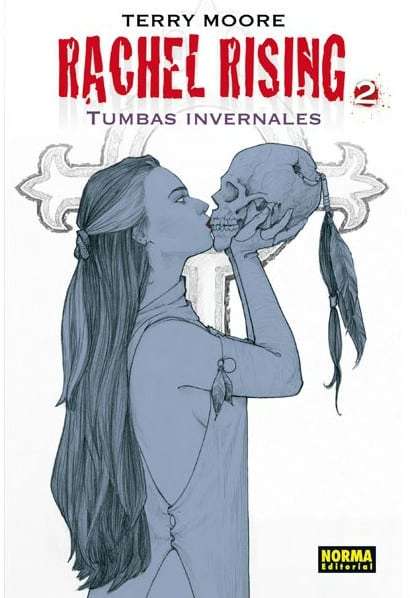
Fue una impresión que ya transmití de forma más o menos categórica cuando, en febrero del pasado año, comenté su primer volumen. Y hoy, al día con lo que la edición americana está dando de sí, y después de volver a disfrutar de los números reunidos en este segundo tomo publicado por Norma, no me queda más remedio que volver a hacer hincapié en la misma idea: el que al hablar de ‘Rachel Rising‘ lo estemos haciendo sobre lo mejor que ha salido de la fértil imaginación de Terry Moore hasta la fecha, superando con creces a la muy prolongada ‘Strangers in Paradise‘ y también a la soberbia ‘Echo‘.
Para aquellos que no hayáis seguido el enlace de la primera reseña, apuntar de forma breve que ‘Rachel Rising‘ es un cómic que, con el terror como telón de fondo y la brujería como McGuffin, sigue a Rachel, la protagonista, mientras trata de desentrañar el misterio de su muerte y resurrección y la escalada de hechos paranormales que invaden la apacible tranquilidad del pequeño pueblo de Manson. Junto a un elenco de personajes que son prueba palpable del dominio del artista estadounidense en la construcción de entes de cualidades tridimensionales (que alguno pudiera ser vecino o amigo nuestro es lo que afirma con más rotundidad la facilidad de Moore para la escritura de diálogos de gran credibilidad), lo que no obstante llama de forma poderosa la atención de ‘Rachel Rising‘ es, sin lugar a dudas, su ritmo.
Moore nunca se ha caracterizado por ir a trompicones en el desarrollo de sus obras (y buena prueba son las dos citadas anteriormente) y eso es algo sobre lo que la presente cabecera sigue insistiendo con más fuerza si cabe: al lector acostumbrado a la rapidez con la que se precipitan los acontecimientos en los cómics estadounidenses de mayor repercusión mediática aquí le espera una sorpresa monumental cuando se acerque a números en los que la trama avanza bien poco, deleitándose su máximo responsable en abundar en su magnífica construcción de “actores” con páginas y páginas de soberbios diálogos. Ello no significa, ni mucho menos, que los números llamados a hacer avanzar la acción a golpe de autoridad no existan, sino que el ratio entre éstos y los expositivos es bastante diferente al de, por ejemplo, cualquier colección DC/Marvel.
Jalonado por unas páginas en blanco y negro que potencian sobremanera la sobriedad y precisión del discurso narrativo de Moore y el hecho de que es ésta una historia destinada a paladares menos acomodaticios que los que pueblan de forma mayoritaria el mercado yanqui del cómic, no parece que (como si pasó con ‘Echo‘), el artista se halla fijado un tope de numeración para abandonar las calles y casas de Manson. Y eso, dada la grandeza de la colección, es una gran noticia que servidor no hace más que celebrar a cada nueva entrega de tan insigne relato.
Rachel Rising 2. Tumbas invernales
- Autores: Terry Moore
- Editorial: Norma
- Encuadernación: Rústica
- Páginas: 248 páginas
- Precio: 16,50 euros
It's expensive to be poor.
Pope Francis on free speech: if you insult religion, expect violence

Today, Pope Francis addressed the issue of free speech in the wake of last week's Charlie Hebdo attacks. He praised the ideals of free speech, describing it as a "fundamental human right" and a "duty" — but only up to a point. Although the Pope stopped short of calling for offensive speech to be outlawed, it was clear from his discussion that he does not embrace the idea that "free speech" means an environment in which people can express even the most extreme and offensive views.
Rather, the Pope suggested, certain speech — such as offensive comments about religion — is so inherently provocative that it is "normal" for it to result in violence. To illustrate that point, Pope Francis constructed a hypothetical about how angry and violent he would become if someone insulted his mother. "If my good friend Dr. Gasparri says a curse word against my mother, he can expect a punch," the Pope said, making a punching gesture towards Gasparri, an aide who was standing near him at the time.
People should refrain from insulting religion for the same reason, the Pope explained. "People who speak badly about religions or other religions, who make fun of them, who make a game out of the religions of others," the Pope said, "are provocateurs." And if they go past the "limit" of acceptable speech, violent retaliation is to be expected. "What happens to them is what would happen to Dr. Gasparri if he says a curse word against my mother. There is a limit."
To those used to America's free speech tradition, which champions the freedom to give offense over the right to be protected from it, Francis's statements may sound uncomfortably similar to victim blaming. But they are actually very close to many European countries' positions on the limits of free speech. In France, for instance, speech that incites hatred against an individual or group based on their religion, race, ethnicity, gender, or sexual orientation is illegal. Similar rules are in place in other European countries, including Denmark (which criminalizes speech that "spreads racial hatred," and the United Kingdom, which criminalizes speech and written material that are likely to "stir up racial hatred."
That restrictive approach to speech is often seen as linked to Europe's experience of the Holocaust, when hate speech against Jews and other minority groups helped create an environment that led to the mass slaughter of millions of people.


El Pórtico de la Gloria comienza a recuperar la magia de la policromía

Los vecinos de Carreira do Conde: «Deberían pedir opinión antes»

Así será o Pórtico da Gloria cando recupere a cor orixinal
Galicia perdeu máis de 50.000 empregos na industria desde a chegada de Feijóo á Xunta
O PSdeG lembra que as cifras de traballo industrial están en niveis de 1997 que consensuarán coa patronal e os sindicatos un plan de reindustrialización para o país que "se incorporará ao programa do novo goberno de Gómez Besteiro".
Dominion: Adventures

Portada de Dominion: Adventures
Dominion: Adventures
Autor: Donald X. Vaccarino
Editorial: Rio Grande Games
Nº Jugadores: 2-6
Duración: 30 Min.
Edad: 13 años en adelante
Aunque en teoría Dominion: Guilds debía ser la octava y última expansión publicada para Dominion, el éxitoso y multipremiado juego debut del estadounidense Donald X. Vaccarino la editorial Rio Grande Games sorprendía en el día de ayer con el anuncio de una nueva expansión cuya publicación está prevista para este año recién comenzado.
Este nuevo título de la saga, que será publicado con el nombre Dominion: Adventures, contendrá 400 nuevas cartas, 60 fichas y seis tableros personales, incluyendo 30 nuevas cartas de reino. En Dominion: Adventures se vuelven a introducir las cartas que llevan a cabo acciones en turnos futuros así como las nuevas cartas de reserva, que los jugadores pueden guardar hasta el momento adecuado de la partida. Asimismo, se incluirán 20 cartas de evento que proporcionan una nueva forma de comprar, incluyendo la adquisición de fichas que modifican los efectos de las cartas.
Por el momento solo se ha confirmado la edición en inglés, a la que a buen seguro seguirán multitud de traducciones en otros idiomas.