Shared posts

24 Jun 16:18

The Tribe

by High_65

Plemya

Year:  2014

Duration:  2:06:40

Directed by:  Miroslav Slaboshpitsky

Actors:  Grigoriy Fesenko, Yana Novikova, Rosa Babiy

Language:  Sign Languages

Country:   Ukraine | Netherlands

Also known as:  Plemya, The Tribe - Heimo, Племя, A Gangue

Description: The film's protagonist, Sergey enters a specialized boarding school for the hearing impaired, where there is a criminal organization, Tribe. He tries to take his place in the hierarchy of the school and takes part in several robberies. When he falls in love with Anna, one of the concubines of the Beholder, he has to break the unwritten laws of the tribe.

Screenshots

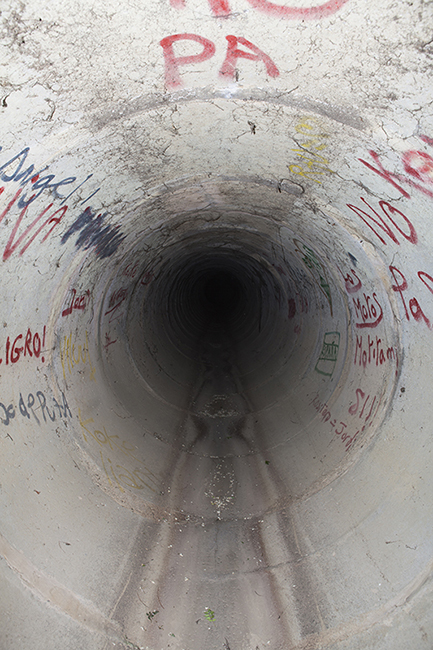
The Tribe (Plemya) 2014.mp4 The Tribe (Plemya) 2014.mp4_000556040 The Tribe (Plemya) 2014.mp4_000958119 The Tribe (Plemya) 2014.mp4_001344119 The Tribe (Plemya) 2014.mp4_001977079 The Tribe (Plemya) 2014.mp4_003676159 The Tribe (Plemya) 2014.mp4_004881120 The Tribe (Plemya) 2014.mp4_005190159 The Tribe (Plemya) 2014.mp4_005669159

Download

The Tribe (2014) | Free Download 

24 Jun 16:08

heart shaped ass

by tiki god

heart shaped ass heart shaped ass

heart shaped ass originally appeared on MyConfinedSpace NSFW on June 23, 2015.

24 Jun 03:35

Este año el parque de Belvís no contará con su Romaría Pop

by Santiago / LA voz
Desconcierto Cultural aclara que se toman un «descanso para reformular la propuesta y volver con más fuerza en una próxima edición»

24 Jun 03:35

El Concello valora y quiere estudiar el plan para La Plaza del Ensanche

by x. r. santiago / la voz
Pondrá la propuesta de revitalización vecinal en manos de los técnicos

24 Jun 03:21

We Spent a Year Cooking With the World’s Smartest Computer—and Now You Can, Too

by Rochelle Bilow

Imagine that every time you started to cook dinner, you had a friend in your kitchen, suggesting recipes that were both brand-new and perfectly suited to your exact, in-the-moment craving or the ingredients in your fridge. It’d be a game-changer for the motivated home cook, right?

Well, after plenty of database-combing, an army of ambitious recipe testers, and more garlic cloves than we could ever count, IBM’s Chef Watson with Bon Appétit app is ready—and it is indeed part culinary BFF, part kitchen ninja, and part super-smart computer. You can use the cooking app here—and we recommend you do; it’s kind of addicting. But first, here’s a look back on how it all got started…and what an amazing journey it’s been.

ibm-watson-interface
Want to cook with Watson? Here’s what the interface looks like.

Chef Watson and BA: Cooking’s Superhero Dream Team
Last year, Bon Appétit began working with Watson to help build anintuitive, and creativity-inspiring cooking app. The team at IBM’s aim is to create an app that helps everyone from home cooks to restaurant chefs come up with new classics, so to do that, we gave Watson access to our massive (over 10,000) recipe database. (FYI: The kitchen isn’t IBM’s only domain—the team is currently using Watson to improve all sorts of industries and domains, like improving users’ personal health.)

Watson searches for patterns in the existing recipes and combines them with an extensive knowledge of the science behind food pairings to come up with ideas for unexpected combinations. For example, a braise always requires an initial sear and low-and-slow cooking with liquid. Watson socked away that information, and added its knowledge of the chemical compounds that would make good ingredient pairings to inspire braises with brand-new flavors. To make Chef Watson with Bon Appétit the best sous chef you’ve ever had, IBM’s team turned over the keyboard (and the spatula) to our readers.

Watson Goes Beta (and Gets a Facebook)
IBM reached out to the people who know cooking best—you. Our readers signed up for the opportunity to beta-test Watson. They used the app throughout its many stages, sharing the highs, lows, pitfalls, and wins along the way. Sometimes, it was counter-intuitive (like when Watson suggested a tester put mayonnaise in her Bloody Mary), and sometimes it was inspiring (like the Watson-inspired potluck party one tester threw with her coworkers). However unconventional things like mayo in a cocktail may seem, there is always a scientifically-backed reason behind Watson’s suggestions. Mayo and tomato are not a combo we can argue with, but just maybe not in this form.

The beta-testers shared their results and feedback with each other and the team in a private Facebook group as well as face-to-face users sessions. Each post served a very important purpose: They all gave the IBM team the necessary feedback to make Watson smarter. Here are some of our favorite highlights (and things we learned!) along the way.

It’s Not Just About Unusual Food Combinations
We knew going into this project that Watson would test our culinary boundaries and suggest dishes we hadn’t thought of before, but we didn’t quite know how regular people would use it, to, you know, make dinner. It turns out that in addition to inspiring creativity, Watson is a real problem solver. Features like ingredient exclusion (hate kale? Allergic to dairy?) were being used to help testers like Ilene Ungerleider, who was hoping for vegetarian-friendly recipes. But we also saw users ask Watson to help them take on one of the biggest stresses to our food system: waste. Because when using Watson, you can input up to 4 ingredients, our testers were using the app to discover dishes based on what was in their fridge at that exact moment. For example, Beverley Beane Rakow’s Carribbean Barley Salad was inspired by the contents of her fridge, and was a big winner with turmeric, red wine vinegar, and fennel.

watson-duck-breast
Gremolata and Herb-Topped Roasted Duck Breast. Photo: Facebook/Aaron Newcomer

Big Flavors, Big Cleanup
Sometimes, Chef Watson inspired dishes with wow-factor, like this Gremolata and Herb-Topped Roasted Duck Breast made by tester Aaron Newcomer. The only downside? According to Newcomer, he had “nearly 40 things to wash after making this and…no dishwasher!” The system is not afraid to use a lot of ingredients or techniques, something our Test Kitchen does consider when developing recipes.

Thanks for the Laughs
Here at BA, real live people write our recipes. Watson uses artificial intelligence to come up with new instructions. Understandably, there were some pretty hilarious hiccups along the way. Like the time a recipe for ground beef called for pulling the meat from the bone (hey, it had to be done at some point!). The system works best when home cooks take in Watson’s suggestions and use them as a jumping-off point, driven by their own cooking skills and kitchen knowledge.

You’re Only as Good as Your Database
Beta tester Susan Bielanski Sparer shared this funny tidbit with the Facebook group: “Velveeta was listed as an ingredient that pairs well with bell peppers, onions, mushroom, and avocado. Sadly, I had no Velveeta on hand. Perhaps I could have substituted Cheez Whiz…” While it may not be the first cheese you reach for when cooking, consider why Watson suggests it: One of our favorite recipes for queso calls specifically for Velveeta. Once in the database, always in the database.

watson-crostini
These strawberry and burrata crostini were created by a beta tester with Chef Watson. Photo: Facebook/Meseidy Rivera
Watson and You: The Best Match Since Grilled Corn and Nectarines
Dawn Perry, BA‘s digital food editor who spent many months working with Watson, sums up the exciting future of Watson: “The big learning for me came via Watson’s ingredient suggestions. The flavor combinations [the program] suggests, because there are so many, will more often than not suggest something that is not in your regular rotation. Watson gently asks you think outside your own box.”

That’s exactly the goal—for the motivated cook, there’s nothing more exciting than the chance to be delighted by a new recipe. Equally exciting for users is the chance to tailor their kitchen adventures to their specific dietary needs and desires; they can use Watson to accommodate gluten-sensitivities, vegetarianism, and more. Watson can even offer creative ways to use up summer’s bounty, whether it’s from your garden or a CSA. So, ready to get delighted? You can bring Chef Watson into your own kitchen right now. Browse the recipes Watson has already helped create, and use the app to come up with your own exciting combinations. By cooking with Watson, you’re not just making dinner—you’re helping to make history.

The post We Spent a Year Cooking With the World’s Smartest Computer—and Now You Can, Too appeared first on Bon Appétit.

24 Jun 03:14

Siete películas de amor a la cocina

by Liliana Fuchs

Pelis Julie Y Julia2

Cine y gastronomía son dos de mis pasiones que de vez en cuando se unen en una pareja que puede complementarse a la perfección. Hay muchas maneras de reflejar el mundo de la cocina a través de las imágenes de una película, con historias centradas en el propio universo culinario o con deliciosas escenas que nos abren el apetito. Estas siete películas de amor a la cocina son una muestra de lo que puede regalarnos el cine cuando utiliza temas culinarios como un protagonista más de sus historias.

Está claro que la comida son dos aspectos básicos de la vida del ser humano, y por tanto casi todas las películas tienen escenas en las que aparecen escenas de cocina o de personajes degustando diferentes platos. Pero hoy nos detenemos en obras en las que la cocina representa un papel fundamental, aunque a veces sea una excusa para narrar otros temas más universales. Son películas donde la cocina aparece mostrada con detalle, con pasión, con la capacidad de hacernos salivar y casi sintiendo sus aromas traspasando la pantalla.

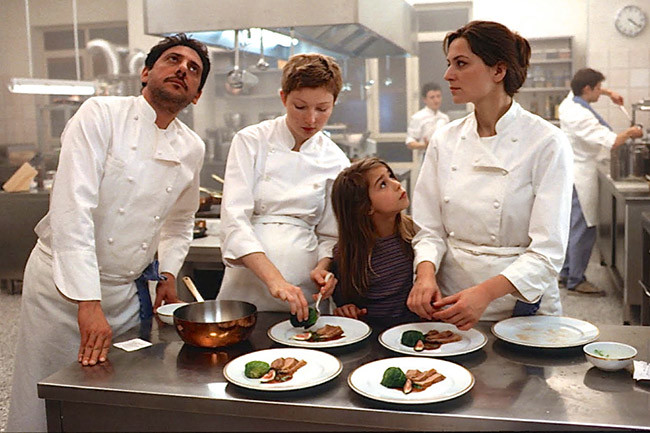
'Deliciosa Marta' ('Bella Martha', 2001)

Pelis Deliciosamarta

No sólo los americanos saben hacer comedias románticas, y 'Deliciosa Marta' es un buen ejemplo de ello. Dirigida por Sandra Nettelbeck, esta película alemana nos cuenta la historia de una chef perfeccionista, egocéntrica y fría, totalmente entregada a su trabajo, cuya vida dará un vuelco al tener que hacerse cargo de su sobrina, y con la llegada de un cocinero italiano al restaurante donde trabaja.

El argumento no es nada original pero su visionado merece la pena por lo bien que está contado. Sin caer en una sensiblería barata o demasiado obvia, la historia de los personajes está contada con elegancia, con cariño, sin precipitaciones ni exentricidades, y es fácil conectar emocionalmente con ellos. Además, es una gozada para los que disfrutamos de la buena mesa.

Siempre me atraen las obras de ficción que se meten de lleno en las cocinas y consiguen transmitir tanta sensación de veracidad, como si las entrañas de ese restaurante pudieran ser las de un local de verdad. La actividad de los cocineros te fascina y te atrapa en cada escena, y cada plato aparece mostrado con gran maestría, abriendo el apetito del espectador en más de una ocasión.

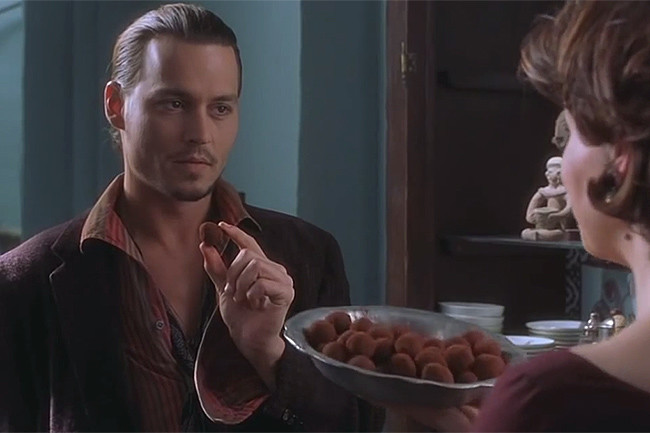
'Chocolat' ('Chocolat', 2000)

Pelis Chocolat

Si eres goloso o te gusta especialmente el chocolate, no es buena idea ver esta película sin tener provisiones cerca. Es una buena opción para una tarde fría y lluviosa en casa, con chocolate caliente y galletas al lado, para dejarse llevar por una fábula sencilla que se disfruta mejor sensorialmente que por la historia en sí misma.

La trama es muy obvia y algo exagerada, pero cumple su función gracias en gran medida al romántico pueblo francés, a los buenos actores que hay detrás de los personajes y, sobre todo, a ese maravilloso chocolate. Vianne, la protagonista interpretada por Juliette Binoche, causa un gran revuelo en una pequeña localidad francesa reprimida y apegada a sus tradiciones cuando tienta a sus habitantes con una chocolatería en plena Cuaresma.

Lo más disfrutable del film, más allá de su trama amable con la que podemos conectar emotivamente o no, es el cuidado y amoroso trabajo del chocolate en todas sus formas. La chocolatería es encantadora y viendo a los personajes trabajar dan ganas de participar en ese obrador y llenarnos las manos de chocolate. Un efecto secundario del visionado de esta película, además de antojo de chocolate, es que posiblemente te apetezca probar a elaborar tus propios bombones.

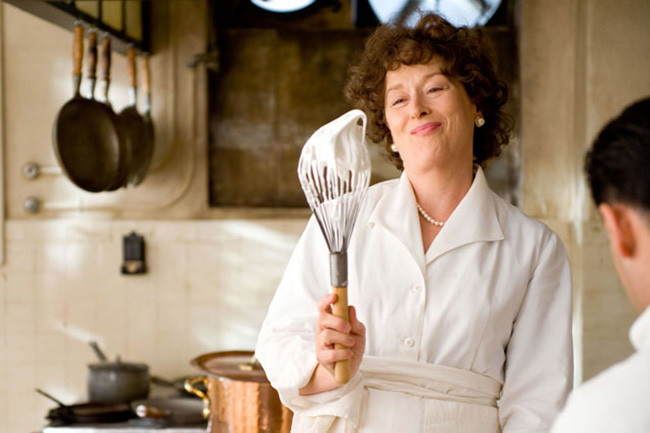
'Julie y Julia' ('Julie & Julia', 2009)

Pelis Julie Y Julia

Es posible que esta película ayudara a dar el impulso definitivo de los blogs de cocina cuando se estrenó en 2009, aunque el fenómeno había estallado ya unos años antes. Lo que sí hizo fue introducirnos en España a la mítica figura de Julia Child, cuyo recetario de cocina francesa es ya casi una biblia para muchos cocinillas.

La película nos cuenta en realidad dos historias unidas por una pasión, la cocina, y separadas por varias décadas. Basada en hechos reales, usando como base los libros ‘My Life in France’, de Julia Child y Alex Prud´Homme, y ‘Julie & Julia’, de Julie Powell, nos narra la decisión de Julie Powell de preparar todas las recetas de Julia Child durante un año, y contarlo en un blog. Paralelamente vemos las aventuras de la propia Child cuando se trasladó a Francia siguiendo a su marido y entró en contacto con la cocina francesa.

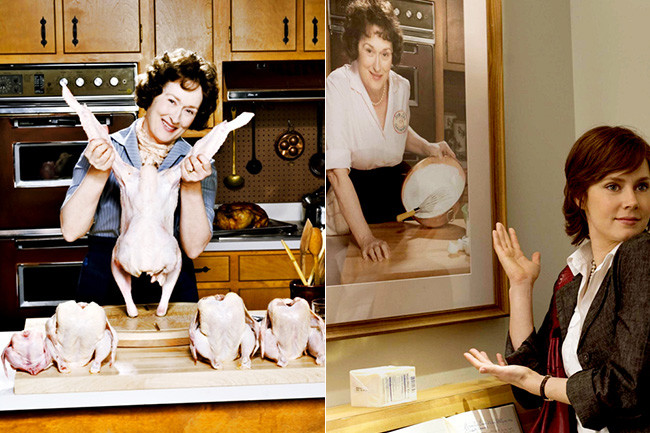
Pelis Julie Y Julia3

La historia de Julie no tiene mucha chicha y me temo que puede ser muy aburrida y ñoña para quienes no compartamos su pasión cocinera y bloguera, pues es más fácil identificarse con sus problemas si se tiene un blog culinario. Las andanzas de Julia Child me parecen mucho más entretenidas, en gran medida por el excelente trabajo de Meryl Streep y Stanley Tucci, siempre impecables.

Pese a la sensiblería típica de las películas de Nora Ephron, su directora, por el apartado culinario merece la pena su visionado. La pasión por la cocina de sus dos protagonistas y cómo van descubriendo las diferentes elaboraciones y recetas es fácilmente contagiosa, y es una buena manera de tener una primera aproximación a la tradición gastronómica francesa.

'Un toque de canela' ('Politiki kouzina', 2003)

Pelis Toque Canela

La película del director y guionista Tasos Boulmetis nos presenta un viaje nostálgico y sensorial entre Atenas y Estambul salpicado de aromas agridulces. Nos cuenta la historia de Fanis, un astrónomo griego nacido en Estambul con gran pasión y hablidades por la cocina, cuyas lecciones básicas las aprendió de su abuelo, dueño de una tienda de especias en Turquía.

De su abuelo el protagonista aprendió de niño lecciones básicas de la vida a través de los aromas de las especias, pues nuestro día a día, igual que la comida, necesita un toque extra de sabor. Fanis se verá obligado a volver a su tierra natal para reencontrarse con su abuelo, y así rememora sus años de infancia, de juventud y todos los conflictos personales e históricos que han rodeado su vida.

Aquellos a los que nos fascina la cocina de estas tierras, con una gastronomía muy cercana a la nuestra pero con una personalidad propia muy marcada, disfrutaremos especialmente de esta película. Es una historia agridulce pero amable, a pesar de que trata temas muy dramáticos, pues se presenta en cierta manera como una fábula o un cuento cargado de metáforas y momentos mágicos con imágenes en las que parece que nos llega el aroma de la canela y del azafrán a través de la pantalla.

'Chef' ('Chef' 2014)

Pelis Chef

La película más reciente de esta lista ya la comentamos en profundidad a raíz de su estreno el año pasado, pero merece la pena recuperarla para esta selección. Y es que diría que el interés de 'Chef' se basa en un 90% en la pasión por la buena comida que siente su protagonista, encarnado por el propio director John Favreau, gastrónomo empedernido.

La historia en sí realmente no tiene mucho donde rascar y apenas hay ningún conflicto, es demasiado amable con todos los personajes y predecible en su desarrollo. Pero para desconectar un rato y abrir el apetito, es una película simpática, muy de actualidad con la moda que viven los food trucks hoy en día.

Tanto el trabajo del chef en su restaurante de Los Angeles como su periplo en la furgoneta a través de Estados Unidos, en la que sirven sencilla pero apetitosa cocina de tradición cubana, es una gozada para los ojos de los apasionados por la cocina. Cuando la narración se entrega al esquema de las road movies es interesante, además, conocer recetas y platos típicos de diversas ciudades del país, aunque a veces parece más un documental de promoción gastronómica que una historia de ficción.

'Ratatouille' ('Ratatouille', 2007)

Pelis Ratatouille

Los genios de Pixar volvieron a crear un éxito de crítica y público con esta fantástica película recomendable para todo tipo de públicos. Ya la mencionamos a raíz de la pasada edición de los Premios Oscar, pero me parecía imperdonable no volver a comentar Ratatouille al enumerar películas de amor por la cocina.

Y es que es casi imposible no enamorarse de la rata Remy y de su sueño de convertirse en un gran chef de un restaurante de París. La idea de una rata cocinera es absurda, pero la película crea un universo tan verosímil y lleno de encanto que rápidamente conectamos con sus emociones, nos devuelve a la inocencia de la infancia y nos hace partícipes de esos deliciosos platos que con tanta pasión preparar el peculiar personaje.

El film nos habla de combatir los prejuicios, de la superación personal, de enfrentarse a ignorantes y defender lo que uno cree, de perseguir los sueños y poner pasión en nuestro trabajo. Lo hace además con un halo de magia que te contagia del espíritu de la película, todo con un ritmo perfecto, momentos hilarantes y una animación y diseño visual que te atrapan desde la primera escena.

'Comer, beber, amar' (Yin shi nan un' 1994)

Pelis Come1

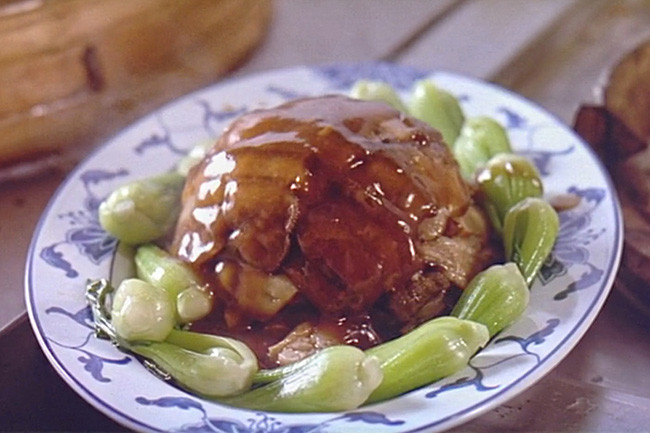
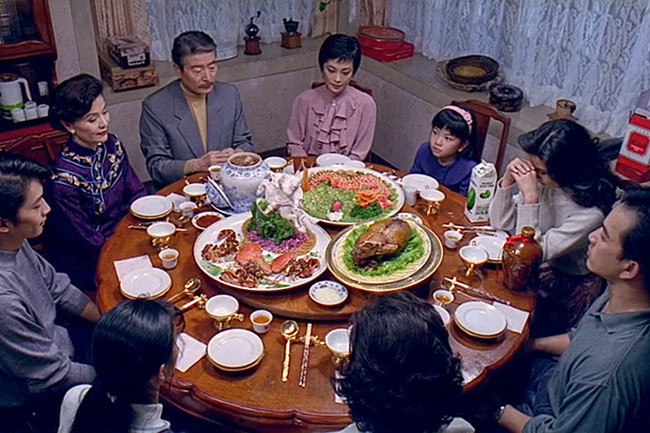
El tercer largometraje del director taiwanés Ang Lee ya apareció en Directo al Paladar hace unos años, pero merece la pena volver a recordarlo. Esta pequeña delicia, en muchos sentidos, es una película sencilla que trata temas cotidianos, centrados en las relaciones familiares, los cambios y los choques entre la vida moderna y la tradicional. Y, cómo no, con la cocina como gran centro alrededor del que se mueven sus personajes.

La primera secuencia del film es de obligado visionado para cualquier apasionado de la cocina, especialmente si somos aficionados a la gastronomía asiática. Chu es un maestro chef a punto de retirarse definitivamente, viudo, que ha perdido el sentido del gusto y vive con sus tres hijas para las que sigue cocinando auténticos banquetes en la obligada cena familiar de los domingos.

Pelis Come2

Las tres protagonistas femeninas, mostrando caracteres diferentes y chocando cada una a su manera con las tradiciones del padre y del país, se van alejando poco a poco de su progenitor y de su vida familiar. La vida transcurre de forma irremediable, todo cambia y todo evoluciona, y tenemos que aceptarlo, aunque a veces sea doloroso.

Es una película agridulce, con momentos dramáticos pero también con sus dosis de humor más ligero y escenas entrañables. Y es la cocina, los banquetes interminables de multitud de platos que preparar el padre – y una de las hijas -, lo que une a la familia y mantiene vivos muchos recuerdos. En la película aparecen varias decenas de platos tradicionales chinos, algunos realmente espectaculares, y es una gozada ver a los personajes preparar con mimo y perfección cada uno de ellos.

Hay muchísimos más ejemplos de películas que hacen gala de amor a la cocina, y otras muchas con escenas gastronómicas para el recuerdo. La cocina en el cine puede verse reflejada de multitud de maneras diferentes, y abarca todos los géneros, todas las épocas y todas las nacionalidades. ¿Qué momento gastronómico de cine recordáis con mayor apetito?

En Directo al Paladar | 11 famosas escenas gastronómicas de películas de Oscar
En Directo al Paladar | Pasión por la cocina y redes sociales en #Chef, simpática y apetitosa película gastronómica

También te recomendamos

11 famosas escenas gastronómicas en películas de Oscar

Chocolate a la taza a la española. Receta

Cómo hacer rollitos de canela en solo una hora. Receta de panadería

-
La noticia Siete películas de amor a la cocina fue publicada originalmente en Directo al Paladar por Liliana Fuchs .


23 Jun 16:10

Una iniciativa busca sacar del letargo La Plaza del Ensanche

by x. r. santiago / la voz
Buscará apoyo en Raxoi para impulsar conciertos y mayor vida social

23 Jun 16:10

Cuando el Arzobispado de Santiago y Sanxenxo perdieron la isla de Ons

by marcos gago
El Cabildo hipotecó el parque nacional para pagar obras de la Catedral

23 Jun 16:09

Roban el cable de acero de un puente peatonal en el parque Eugenio Granell

by x. m. santiago / la voz
La Policía Local procedió a señalar con cinta la zona para evitar accidentes y ya ha abierto una investigación 

23 Jun 16:08

Feijóo, tras a sentenza do Supremo: "Volvería anular o concurso eólico"

by David Lombao

O presidente da Xunta desdeña o ditame no que o alto tribunal ratifica que a anulación do concurso eólico do bipartito foi ilegal. O BNG lamenta que a "irresponsabilidade e sectarismo" do Goberno lle "saísen moi caras a este país".

23 Jun 16:08

Unha noite máxica nunha Galiza encantada

by M.L.

Lume e auga son os elementos principais para facer da de San Xoán a noite máis máxica do ano. Buscamos as tradicións para quitar o meigallo e procurar un futuro luminoso. "Galicia Encantada", o proxecto promovido polo escritor Antonio Reigosa, danos as claves dunha festa que se conmemora en todo o territorio galego. 

23 Jun 13:42

Cómo Panrico pasó a no comerse un rosco

El auge de la marca blanca, sumado a la venta de Panrico a fondos de capital riesgo y algunas decisiones controvertidas, están detrás del lento y sostenido declive de la panificadora española.
23 Jun 13:38

La fotografía contemporánea me deprime

by Nacho Canon

¿Pero qué les pasa a los fotógrafos contemporáneos? ¿Será una moda o es que están casi todos alicaídos (perdón, alicatados)? Yo he hecho todo lo posible por triunfar en el mundillo de la foto, pero en vista de que no lo consigo creo que sólo me queda imitarles y, por tanto, deprimirme.

La última prueba de que ser un poco taciturno es el único camino para triunfar son los premios Photoespaña al mejor libro de 2015. Es el festival del humor, la celebración de la alegría, el jolgorio desatado. Los cojones. Por resumirlo en pocas palabras, han premiado 3 libros que contienen fotos sobre:

  • (Premio Internacional) Revelar negativos sobre la piel de las personas mediante luz ultravioleta. Son como tatuajes, pero con fotografías antiguas y quizá una ligera quemadura alrededor. Mucho premio internacional pero cuando vea esto la OMS se le va a caer el pelo al autor, a la editorial y a PHE por premiar idea tan insalubre. Cuando empiecen a brotar cánceres de piel, ya me dirás, Tomás, ya me dirás.

Esto sí que es estar quemado por la fotografía (Foto de Thomas Mailaender)

  • (Premio Nacional) Una localidad atravesada por varias infraestructuras de transporte. Uyyy, esto es súper novedoso, no hemos visto jamás fotos de vallas, rayas de carretera, gente medio sonada y periferia. Bueno, algunas fotos se parecen a las que nosotros publicamos de coña en “Una deslumbrante realidad”, pero claro esto va en serio. Es más profundo y por tanto tiene que tener ese aire opresivo-oclusivo.

Foto incluida en el mejor libro de fotografía nacional (Autor: Arnau Blanch)

  • (Premio libro autoeditado). Rostros consternados de la gente de la calle durante el periodo de crisis. De este libro ya hablamos en su momento, no le hagamos más publicidad a Antonio.

Menos mal que el premio Descubrimientos del año se lo han dado a Yannis Karpouzis, un fotógrafo griego que aborda un tema mucho más jovial: la crisis en Grecia. Vamos a ver…¿A que se debe esta constante celebración de la vida, de la felicidad y del buen rollo? ¿Cómo explicar el éxito de tanta cara mustia, de tanto animal muerto en la cuneta de las carreteras, de tanto puente de autopista que parece un vertedero? A ver si va a resultar que la alegría está mal vista hoy en día, a ver si, al contrario de lo que decían los Monty Python, hay que mirar el lado oscuro de la vida constantemente. Eso explicaría muchas cosas.

Chica mustia mirando el lado oscuro de la vida (Foto de Yannis Karpouzis)

Mirad, yo hace unos meses inicié un proyecto fotográficos sobre las pachangas de fútbol sala que echamos los sábados por la mañana. Tenía fotos de las celebraciones de los goles, de los regates, de los paradones, de las risas en el aperitivo tras el partido. Las llevé a un visionado y me dijeron que eran demasiado amables. Ahora el trabajo ha sufrido un giro hacia el apocamiento, me centro en las barrigas de los cuarentones, los esguinces de tobillo, los pelos de las piernas peludas y sudorosas. Lo estoy petando en los talleres, es tan desagradable que los visionarios tienen orgasmos encubiertos. El problema es que se me han quitado las ganas de echar el rato los sábados, le he cogido asco. Me estoy deprimiendo por no poder disfrutar ya de esos momentos. Voy por el buen camino.

Y es que realmente ahí radica mi desconcierto. Gran parte de los trabajos que se publican en la fotografía contemporánea son alegorías de mundos, emocionales o físicos, que se derrumban o que están en difícil equilibrio. Pero, ojete, mundos que no están más allá de unos pocos kilómetros de tu casa. Esto no va en la línea de Susan Sontag y su “Ante el dolor de los demás”, no. El sufrimiento o la extrañeza (perdón, quería decir la presunta extrañeza) tienen que ser tan cercanos que quede claro que sigues siendo el ombligo del mundo. ¡Venga trabajos sobre tu proximidad! ¡Y a mí que me importa tu patio de vecinos y el solar que usaste de picadero cuando eras pubertoso! Y que no falte el halo de inquietud, depresivo y de melancolía… ¡Que me duermo, copón!”

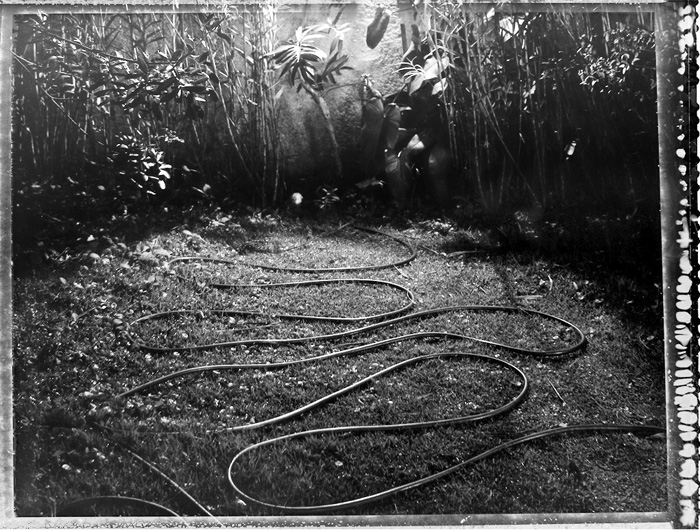
Fotografía de la serie ganadora de Nexofoto 2014, hecha en el patio de la casa del fotógrafo Pedro David.

Lo que pasa es que por miedo a que los demás descubran que lo más desconcertante que te ha pasado últimamente ha sido cambiar de operador de telefonía, hay que revestirlo todo de ese aire críptico y opaco que tiene la fotografía contemporánea. Es decir, como diría Óscar Molina, los proyectos son fototerapia, pero el lenguaje fotográfico debería dar a entender que parece que hay algo más. La regla de oro es, cuanto más cerca de tu casa esté que menos se entienda y más atormentado parezca, no vaya a ser que no estés realmente confuso. Para ello todos recurren sistemáticamente a las fototópicas. Es decir, los símbolos, aunque posiblemente carentes de significado alguno, deben ser confusos para los no iniciados, pero llenos de guiños para los de la tribu, no vaya a ser que ellos tampoco les entiendan, que son los 200 que luego compran el libro y con eso no se juega.

La verdad, estoy muy confuso. Porque desde Cienojetes seguimos las cuentas de las redes sociales de estos fotógrafos emergentes y nos sorprende su modus vivendi,  la facilidad con la que están siempre de fiesta en fiesta, de sarao en sarao, de batalla campal. Vamos, que desde fuera parece que son miembros plenamente integrados de la masa festiva, que la fotografía es más una excusa para socializar y pasarlo bien que para exprimirse los sesos. Sin embargo, qué les pasará a estos chicos y chicas que es coger una cámara y ponerse mohínos, “intensos” como diría aquél.

A ver si todo va a ser una moda. A ver si tanto criticar a los pirotécnicos por su manía de sacar macros de florecitas, amaneceres coloridos o cielos HDR lo que en el fondo esconde es un miedo atroz a representar lo que realmente nos hace felices. A ver si va a resultar que hay demasiado miedo a mostrar lo que nos llena de gozo por si viene alguien y nos hiere en nuestros sentimientos. A ver si será mejor que parezca que ya venimos heridos de casa, incluso deprimidos.


23 Jun 13:32

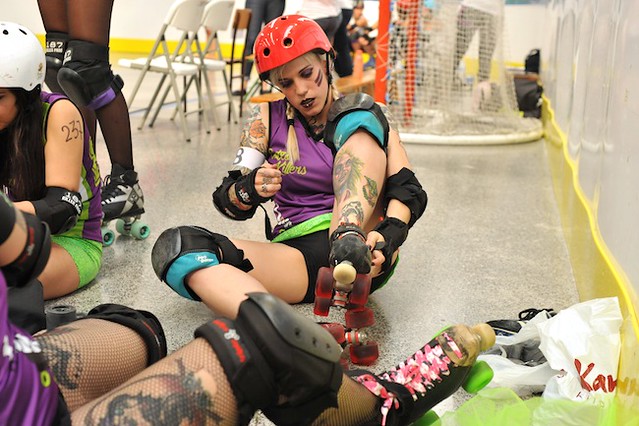
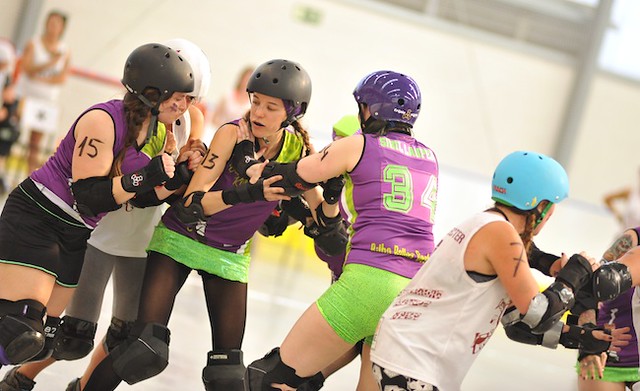
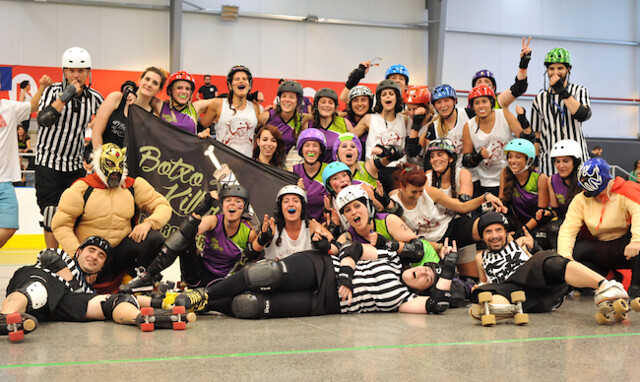
Roller Derby: patines, empujones y feminismo

by Koldo Gutiérrez

Fotografías de Maider Celada.

Estos días se está celebrando en Canadá el Mundial de Fútbol femenino. Puede que hayáis oído algo en las noticias, justo después del enésimo rumor sobre fichajes del Real Madrid o la decimocuarta repetición del cabezazo de Neymar. Quizá por eso Electronic Arts, ya que es una compañía canadiense, ha anunciado que su siguiente entrega de la saga FIFA incluirá, por primera vez, selecciones nacionales femeninas. En cualquier caso, no cabe duda de que los deportes en general están concebidos como algo puramente masculino y cuando las mujeres practican alguno suele haber dos tipos de reacciones: si la imagen de las participantes en ese deporte está muy sexualizada, como en el voleibol o el tenis, muchos espectadores y periodistas prestan más atención a su físico que a sus dotes deportivas. En cambio, si las deportistas no poseen un aspecto que encaje dentro del canon de belleza habitual, se les suele insultar y humillar, como ocurrió hace dos semanas en un programa de la Cadena SER Sevilla.

El roller derby nació hace años como respuesta a estas penosas tendencias. Es un deporte eminentemente femenino, que nació en Estados Unidos a principios del siglo pasado, pero que no se popularizó hasta principios de este siglo en Austin (Texas). Se fue expandiendo por todo el mundo, Drew Barrymore dirigió su primera película protagonizada por Ellen Page inspirada en un libro sobre este deporte y el fenómeno acabó llegando a España en 2010, primero a Tenerife y luego a Barcelona.

Roller Derby 3

Roller Derby 4

En Euskadi se formó un equipo en 2013, Euskal Okela, pero como aún era algo muy minoritario contaba con jugadoras de Bilbao y de Donosti. Cuando el interés fue aumentando y más chicas conocieron el roller derby, al fin pudieron hacer equipos separados: Botxo Killers en Bilbao y El Puticlub de la Lucha y Easo Avengers en San Sebastián. Las Botxo Killers entrenan martes y jueves en Artxanda y ha disputado encuentros en Zaragoza, Tarbes (Francia), Donosti y Madrid. El pasado sábado organizó el primer partido en su ciudad, que tuvo lugar en el polideportivo de Txurdinaga y le enfrentó a las Kinkicharras de Salamanca.

Pero, ¿en qué consiste exactamente el roller derby? Es un deporte de contacto sobre patines que se practica en una pista ovalada. Cada equipo cuenta con cinco jugadoras en pista: cuatro defensas y una jammer que es quien debe anotar los puntos en los jams que duran dos minutos. Las defensoras tratan de impedir el paso a la jammer rival bloqueándola, para que su compañera cruce a base de velocidad y empujones, le adelante y dé vueltas a la pista para conseguir puntos. Al principio resulta bastante confuso y caótico, pero en el partido del pasado sábado los asistentes acabamos entendiendo la dinámica en el segundo tiempo (consta de dos de treinta minutos) para vibrar con la épica remontada del equipo local que al final se hizo con la victoria.

Además del deporte en sí, llama mucho la atención el aspecto de la mayoría de sus participantes, a medio camino entre la pin-up y la estética punk: muchos tatuajes y piercings, abundante sombra de ojos y pintalabios. Ester Sangrà, miembro de Botxo Killers con el apodo de ‘Mala Pell’, considera que “es un rasgo inherente a un deporte alternativo y underground como este”. Desde luego, no es algo imprescindible, pero ese look rudo y agresivo (los speakers no pararon de gritar “rudas sobre ruedas”), que fomentan las propias jugadores, contribuye a derribar ciertos clichés dentro de lo que muchos creen que es el deporte femenino. Los nombres de los equipos y los nombres de guerra que utilizan las propias jugadoras (Abuela Muerte, Cachopo, Dragon Slayer, Kroketa MeMeOh, entre otros) ¡e incluso los árbitros! también dan una buena muestra del cachondeo casi paródico presente en el roller derby. Si los All Blacks hacen la Haka para intimidar a su rival demostrando su hombría antes de cada partido, aquí las jugadoras tienen su propio ritual, consistente en dar vueltas mientras los comentaristas pronuncian el nombre de cada una, y estas realizan poses macarras con actitud chulesca que podrían ser portada de un disco o una revista.

En el documental catalán con el muy apropiado título de There are no balls in Roller Derby (No hay pelotas en el Roller Derby) una jugadora señala que el revival del deporte a comienzos de los 2000 ya incluía ciertos elementos asociados “a la subcultura, el punk, el feminismo, Kathleen Hanna y las riot grrrl”. Con todos esos rasgos, y a través del sentido del espectáculo propio de los deportes nacidos en Estados Unidos, es normal que las mujeres que lo practican lo definan como “un deporte de equipo, feminista, empoderante y de superación personal y colectiva”. Veremos si se populariza y, en caso de ser así, si mantiene sus raíces reivindicativas.

Roller derby4

Roler derby3

Roller Derby 2


23 Jun 13:27

HPV

by Matthew Nolan

HPV is a doozy of a subject!

We tried our best to consolidate as much information for you, but there’s still plenty of learning to be done at Planned Parenthood and Scarleteen.

Please consider donating money to help support both of these organizations! They’re both excellent resources for education and Planned Parenthood provides these life-saving medical services at greatly reduced cost or even for free to people.

It can be scary getting an abnormal result on your pap smear, but hopefully with some education and close monitoring the reality is it’s usually not really anything to be worried about. So relax, hang in there and follow your doctors recommendations!

Screen Shot 2015-06-22 at 10.40.32 AM
Oh Joy Sex Toy VOLUME TWO is now available as a PDF! All of our ebooks include extra comics and content, so even if you’ve read everything on our websites you’ll still find new, exclusive content in your book.

22 Jun 22:58

I Don’t Want to Talk Shit, But Here Goes

by Maureen Monahan

Listen, I don’t want to talk shit because I know that negatively talking about someone behind their back is an immature way of expressing frustration, but is it just me or is Kelsey kind of stupid? I mean, I love her to death, and she definitely has her strengths, but I feel like her IQ must be like 32 or something.


I would totally say this to her face; I’m just saying it to yours first because I don’t want to talk shit.


I’m just worried about her. I mean, did she have any undiagnosed learning disabilities growing up? Did she sustain a massive head injury? Was she ever kidnapped by sadistic torturers who played horrible mind games? Because last week at the wine bar, she asked me what 10 percent of $10 was. And like, okay, I’m not great at math either, and I don’t want to needlessly drag someone’s name through the mud, but she can’t even move a decimal point? What is she, part dog? She explained that when she’s at dinner with Trevor, he always figures out the tip, which is so sad because I always thought she was more progressive than that. I love her though.


Seriously, I hate talking shit about people, but I’m going to keep doing it right now.


Was she homeschooled? Or like, were her parents super religious? Do you think she even self-identifies as a feminist? I mean deep down in my heart, I know I shouldn’t judge others for the situations they were raised in, and this is definitely not judgment at all, but lately I just feel like she’s been kind of fake. I swear I’m not trying to be a bitch, and I don’t even like talking shit, but I wouldn’t be surprised if she was one of those people who say, “I love women, but I don’t consider myself a feminist.”


This is NOT talking shit; this is venting. I need to vent about how much Kelsey is full of shit.


I mean I do not like to talk trash about people at all, but doesn’t she strike you as one of those boring sorority girls who tries way too hard to seem interesting? Remember when she got that tattoo? She got that feather tattoo like nanoseconds after feather tattoos became cool. And you know how she says she “doesn’t drink” coffee, like it’s some kind of stance on something? It’s like “No, Kelsey, you have underdeveloped taste buds and you’re just too immature to appreciate it.”


I feel bad for her, you know?


Not to talk shit because she’s one of my best friends and I can’t imagine life without her friendship, but the poor thing needs to put a crazy amount of effort into not being utterly repellent. Frankly, I don’t know if she has any other friends. I wouldn’t be surprised if she didn’t. Again, I’m really not trying to be a bitch. I’m not telling you anything that I wouldn’t say right to her face if she were asleep or in a coma maybe. I love her to death.


But please, don’t tell her I said any of this. I’d hate to think you were the kind of person who would talk shit.

I Don’t Want to Talk Shit, But Here Goes is a post from: Reductress

22 Jun 22:56

An epic history of the movie trailer

by Room 641-A
"The spirit of the 60s lives in these trailers, leaning hard on mood and music, not plot. The same is true for the Godfather trailer, as Coppola gives audiences a peak into the Corleone family.

However, the closer Hollywood gets to the age of the blockbuster, the more the modern trailer starts to reveal itself, and it all starts with Jaws -- the film phenomenon of the summer of 1975. [ ... ] It introduced something new to trailers: relying almost entirely on the narrative of the film to advertise it. In 3 minutes and 21 seconds, the entire story arc of the film, save for the ending, is given away. There's a shark terrorizing the beach on the 4th of July, it's up to a local sheriff to take care of it, and he teams with a scientist and a fisherman to get the job done.
"
-- An epic history of the movie trailer, by Matthew Schimkowitz
22 Jun 22:52

The War Nerd: A Glorious Victory, For Once!

by Gary Brecher


You’ve probably heard by now that the Syrian Kurds have taken Tal Abyad, the key border town due north of Islamic State’s capital, Raqqa.

It’s a huge loss for Islamic State, and a big boost for the Kurds. But it’s something more than that: a glorious victory. That’s not something I get to write very often.

Most war stories are the dead opposite of glorious. You start out, as a war-nerdy kid, believing that Gettysburg is the norm—a good clean fight between brave, simple soldiers, ferocious against each other but sparing non-combatants. There was exactly one civilian death at Gettysburg, and that was from a stray bullet.

Then you get serious about warfare and realize that massacre is the norm, genocide is more common than anyone wants to realize, and most conflicts are bad vs. bad, or bad vs. even worse.

But not this time. The war between the Syrian Kurds and Islamic State is as close to good vs. evil as you’ll ever meet in the grown-up world. The YPG/J are radical feminists, with women fighting on the front lines and even commanding whole fronts; Islamic State takes misogyny to a new level, actually boasting in their glossy magazine Dabiq about the righteousness of selling captured women as sex slaves.

I’d be wary of believing that the YPG/J are as good as they seem, except that I lived among Kurds. They really are heroic people. No doubt there are bad Kurds, and there have certainly been evil things done by Kurdish people, like serving as enforcers for the Turks during the Armenian Genocide.

But Kurds are working very hard, and fighting heroically, to change themselves and their world; for starters, they’re still the only participants in the Armenian Genocide who’ve acknowledged their role. And the rate of social change, especially in the role of women, in Kurdish culture is approaching light speed.

Islamic State, meanwhile, represents the most extreme reactionary position in the Middle East. Even the way the latest campaign between Islamic State and the YPG/J developed shows just how friggin’ evil Islamic State is. After being humiliated at Kobane, IS’s leaders wanted a cheap, quick victory to erase the shameful memory. After all, those Qatari, Saudi, and Kuwaiti billionaires aren’t going to keep funding your jihad if you keep getting shown up, especially when it’s mere women doing the showing-up.

So IS decided to do what it does best: Wipe out a minority sect. And they chose the Assyrian Christian villages that cluster to the west of the provincial capital, Hasakah, as a perfect target. The Assyrians have been targeted in sectarian pogroms for centuries; they’re a peaceful, quiet people, just like the Yazidii minority that IS destroyed in Iraq. Just the kind of kaffirs that IS loves to massacre and enslave.

IS fled Kobane at the end of January 2015, and by the end of February, IS had shifted men and weapons to the front west of Hasakah, planning to overrun the strip of Assyrian-Christian villages along the Khabour River. (By the way, if you want to see what happened via carefully sequenced battle-maps, go to the excellent site “Agathocle de Syracuse” and click on “Hasakah Western Front.”)

The geography is a little complicated here. As you can see on this excellent map (also courtesy of “Agothocle de Syracuse”), the Syrian Kurds control three enclaves or “cantons,” all along the Turkish border: Afrin in the northwest, up against Hatay Province (Hatay is a story in itself, one I’ve written about before); Kobane in the center; and Hasakah in the east. Hasakah is the biggest Kurdish enclave, and the most important, since it joins the KRG region controlled by the Iraqi Kurds. Those Iraqi Kurds are much more conservative than the young women and men of the YPG/J, but there’s still some solidarity there, and some quiet resupply going on.

Islamic State holds the center of the country, along the Euphrates River, and the border area due west of Iraq’s Nineveh Province, south of the Kurdish enclave in Hasakah. So, by attacking along the Khabour, IS was punching up, like a good leftist (bitter Hebdo joke; never mind)—that is, attacking due north.

IS is media-savvy as all Hell; it runs on victory videos. A campaign against a helpless minority like the Assyrians would mean lots of good video, plenty of loot, and thousands of new slave girls to sell.

They might even have thought that the Kurds of the YPG/J wouldn’t fight too hard to defend mere non-Kurdish, non-Muslim neighbors. Few communities in that part of the world put themselves at risk to help neighbors of a different ethnic group or religion.

But the Kurds…I’m telling you, the Kurds are something special. I saw it myself. In Suli, my students would say, “I have Christian (Assyrian) friends!” or “I have Shia (Arab, refugee from Southern Iraq) friends!”

When I told people back in America about those remarks, they had a hard time seeing anything very radical or impressive about them. People shrugged, as if it was banal or fake.

It’s hard to get some people to realize that not every place is America. In Iraq, calling someone from a different sect/ethnic group a “friend” is heroic. And not something you see, in other parts of the Middle East.

The Kurds are trying very hard to change, to get out of the sectarian nightmare. So when Islamic State attacked those vulnerable Assyrian villages around the town of Tal Hamer, they fought for the Assyrians.

It must have been a surprise for the sectarian scum of IS. People like that tend to judge everyone by themselves. And the history around there is pretty grimly sectarian, right down the centuries. “Tal,” the first word of most town names in the region, means “man-made hill,” or “old fort.” (“Tel Aviv” comes from the same Semitic root.) You build your town on a defensive mound, and you kill your neighbors of the wrong language/religion when you can.

Not the Kurds, though. Not this time. They fought for the Assyrians, and helped the “fledging” (i.e. “pretty well useless”) Assyrian militias. Assyrian civilians had been evacuated to the provincial capital in advance, so IS captured few women to sell or men to behead. They had to settle for blowing up the church in the Assyrian village of Tal Nasri (“hill-mound of the Christians”).

IS advanced slowly through March and April, and almost had the town of Tal Tamer cut off. The YPG/J allowed the bulge to develop, then hit back hard at the beginning of May 2015, slicing in from the northwest, cutting IS’s main supply line and leaving hundreds of IS isolated in a pocket around Tal Tamer.

I haven’t been able to find out what happened to those IS fighters in the pocket, but it’s a fair bet that their beards have finally stopped growing.

By attacking the Assyrian villages along the Khabour, IS had let its sectarian hatred blind it to basic strategic rules. Islamic State’s top priority should have been to defend and extend its link to Turkey, which runs north from Raqqa through Tal Abyad via Highway 6, and prevent the Syrian Kurds from linking up their “cantons” along the Syrian/Turkish border. If Schlieffen had been an Islamic State strategist, he would’ve said, “Keep the northeastern front strong” on his deathbed.

Instead, Islamic State had shifted men and vehicles south, to the Tal Tamer front, leaving the northern flank, along the Turkish border, weakened.

And that’s how the YPG/J was able to take Tal Abyad this week. Once IS’s attack to the south was contained, YPG/J rolled west along the border zone relatively easily. IS has a rep for fighting to the death, but they seem to have lost the will to fight lately, especially when up against YPG/J.

And thanks to their earlier victory in Kobane, YPG/J was able to close in on Tal Abyad from the west, at the same time as its Hasakah forces were advancing along the border from the east. Kobane may have vanished from the headlines, but the young women and men who liberated it never stopped fighting, advancing west, south, and east from Kobane.

With Kurdish forces pushing east along the border from Kobane and west from Hasakah, Islamic State was barely holding on to a Polish-Corridor style strip of territory around Tal Abyad, by the end of May 2015.

On June 11, YPG/J and its FSA allies overran the town of Suluk, a few kilometers southeast of Tal Abyad. By this point, Islamic State was acting like a defeated force, blowing up bridges to stall the advance of YPG/J and trying to corral fleeing civilians back into Tal Abyad.

And yesterday, June 15, 2015, a day that will live in the opposite of infamy (“famy”?), the YPG/J took full control of Tal Abyad, finally uniting the Kurdish enclaves of Kobane and Hasakah (“Jazira”) and destroying the jihadi corridor from Turkey to Raqqa.

Now, IS will have a much harder time keeping the flow of gullible cannon fodder coming in from Turkey.

All the right people are cheering, and all the wrong ones are crying, from Erdogan’s hick reactionaries in Ankara to the fat money men in the Gulf. This is the rarest thing in all of warfare, a truly glorious victory. The good guys do win, now and then.

[illustration by Brad Jonas]

22 Jun 22:51

Sweden Invents Word For Female Masturbation - But will it catch on?

by Charline Jao

4648437865_c8e47c87fb_z

Can you believe that there wasn’t a term for female masturbation in Sweden until now?

Thus, the Swedish Association for Sexual Education (RFSU)  embarked on a quest to find the perfect word for female masturbation and after more than 1,200 messages a winner emerged: klittra. Runner-ups included pulla and selfa but klittra was chosen for highlighting “the importance of the clitoris for pleasure.” According to The Daily Dot, a spokesperson for the RFSU said the campaign was meant to address the ways in which female sexuality is often more taboo than male sexuality (seriously, how many ridiculous words and phrases are there for male masturbation?).

Women are not expected to have desires and be turned on in the same way as men, which is reflected in the lack of words

Do you think that “klittra” will catch on or do you prefer something else?

(Image via MrTinDC on Flickr)

—Please make note of The Mary Sue’s general comment policy.—

Do you follow The Mary Sue on Twitter, Facebook, Tumblr, Pinterest, & Google +?

22 Jun 18:54

How to Make Enchiladas without a Recipe

by Amanda Sims

Here at Food52, we love recipes—but do we always use them? Of course not. Because once you realize you don't always need a recipe, you'll make your favorite dishes a lot more often.

Today: Make messy, saucy enchiladas from scratch, from simple ingredients, and without a recipe.

Not Recipes Enchiladas Finished

I started making enchiladas not because I love Mexican food—and I really, really, very much love Mexican food—but because they're easy to put together, can feed a few people for a few days, and are undeniably more delicious than most of the ones you get at restaurants. I'll admit that I've been known to use a can of store-bought enchilada sauce in a pinch and I don't feel bad about it at all, but going the extra half-mile and making your own—Yes, half! It's a two-step sauce!—gives the finished dish a serious depth of flavor that you just can't buy in the international foods aisle.

Not Recipes Enchiladas

Now, there are, of course, red enchiladas and green ones, as defined by the color of their sauce, but the variations hardly stop at two. Just as with any common regional comfort food (think about mac and cheese), there are endless opinions about what process and special touches make an authentic batch: Fried tortillas? Cheese filling? An egg on top? Sauce made from strawberries? It's a messy world, people, and enchiladas, in my somewhat humble opinion, are here to be just that—saucy, bubbly, and a bit of a mess—so you can sink into a plate of them at the end of a long day with the guarantee of modest greatness.

The ingredient list for enchiladas can be a no-frills affair: corn tortillas (I like the ones you buy in a pack of 50 for 99 cents), your favorite peppers and tomatoes (or tomatillos) for the sauce, a filling or five of your choice, and cheese. Here's how to build them into something more:

1. Make your sauce. 

Not Recipes Enchiladas

In the summer, I'm partial to a green sauce, which features the perky tartness of fresh tomatillos, smoke and heat from charred peppers, and warmth from toasty spices. Start it by blackening a couple green peppers, which is the first step towards a robustly flavored dish: For a mild green sauce, select a green bell and a single poblano; for medium heat with fruity undertones, opt for two poblanos; and for a dish that's fiery throughout, add one poblano and a serrano. You can blacken these by putting them directly over a gas burner and rotating every one in a while, or just broil them in the oven until dark and papery-skinned. 

If you prefer red sauce with its smoky silkiness to a chunky, tart green sauce, swap out fresh green peppers for a few chipotles, then head to blender all the same.

More: Learn your poblano from ancho from your serrano.

Pile your pepper(s) of choice, with just the stems removed, into a blender, then add the other ingredients: Dig up a few spare aliums, like a clove of garlic and half an onion, and a handful of fresh tomatillos (6 to 8) with the papery husks removed. (For red sauce, a cup of tomato sauce and a spoonful of tomato paste can replace the tomatillos.) This is where spices come in, too, so shake in some whole cumin and coriander seeds, plus a hit of chile powder if you want a smoky taste—toasted in a dry skillet if you want deeper flavors. Just a splash of broth or water should be enough to get things moving around, and then let the blender run until it looks like a salsa smoothie and you can't take it anymore. Now's a good time to taste it (yes, duh, on a tortilla chip).

But don't get carried away and eat it all! Pour the salsa into a saucepan, and simmer it for about ten minutes, until it reduces slightly—now, now!, it's enchilada sauce. While it's simmering, prep your filling, and just set it aside to cool when it's done.

Not Recipes Green Enchiladas


2. Prep your filling.

With a sauce this complex, it's never a bad idea to err on the side of simplicity with the fillings. Cheese enchiladas, which are stuffed with only melty white Monterey Jack, are an indescribably happy thing to find yourself looking down at. The same goes for shredded white-meat chicken, or a stuffing of only refried or rinsed black beans—but nobody's ever called me a minimalist. I like mine stuffed with a little of all of the above, plus whatever seasonal veggies I can dig out of the crisper and brown in a hot skillet. You'll only need a half cup of stuffing for each enchilada, and any leftovers can be frozen for a later batch or eaten for breakfast alongside scrambled eggs. 

Here are some slightly less over-the-top (but no less untraditional) combinations to go along with your sauce of choice:

With green sauce:

  • chicken, zucchini, and mushrooms
  • black beans and cauliflower
  • pork, potatoes, and red onions

With red sauce:

  • fresh tomatoes and steak
  • white beans, spinach, and chicken
  • poblanos, corn, and ricotta

Since any meats need to be cooked and shredded (or chopped up to be bite size) before adding, I often make enchiladas out of whatever is left over from last night's dinner. If you're starting from scratch and don't want your enchiladas to be vegetarian, you'll need to sear a piece of flank steak, roast or poach a chicken, or slow-cook a pot of pork carnitas before commencing—but in the case of no leftovers, there's no shame (and nothing lost!) in stuffing them with just cheese, beans, and vegetables. Broil or char your vegetables (as you might have done for the peppers in your sauce) before adding for maximum oomph.

Not Recipes Enchiladas


3. Soften your tortillas. 

Because I go for those very flimsy corn tortillas that cost less than the subway ride to procure them, this step requires nothing more than just dipping the tortillas straight into the sauce to soften them up. But if your corn tortillas are thicker, or blue, you might want to fry them lightly in a neutral oil (vegetable, canola) for about 10 seconds before adding to the sauce, which keeps their sides from splitting and makes the whole dish delightfully mushier. Flour tortillas won't hold up as well in this dish, but if that's what you have on hand, don't bother frying them, which will result in crisp rather than pliable tortillas.


4. Make enchiladas.

Not Recipes Enchiladas Not Recipes Enchiladas

Put the enchilada sauce in a bowl that will fit a tortilla (you'll be dunking). Scoop about a cup of sauce into the bottom of a medium-sized baking dish and spread it around. Sink a tortilla in the sauce so that it gets coated on both sides, fill it with your choice of stuffing, and roll it up so the sides touch. It's completely fine if the tortilla barely closes around its filling or splits along the side a little—just sing a little lullaby and nestle it into the pan with the seam facing down. Repeat with the other tortillas, nestling the rolls side-by-side in the pan, then continuing down the sides of the pan in the other direction until there's a fully-stuffed pan of enchiladas. 

You'll likely have some extra sauce, so pour a few cups over top and tuck it down into any open corners. Extra sauce can be cooled and frozen or eaten with your leftover stuffings for a light breakfast or lunch.

Not Recipes Enchiladas Not Recipes Enchiladas

At this point, I like to shred an entire two cups of cheese over the top and bake the whole thing until bubbly, which seals in all the sauciness and ensures that every serving is gooey and steamy. If that seems a bit much to you, why are you making enchiladas? just leave off the cheese and bake to warm through. (If your ingredients were all warm when you prepared this, you don't even have to bake them at all!) If you are topping with cheese, choose anything white, mild, and melty so your sauce can still be the star—Monterey Jack is a safe bet, but pepper jack is even better, and provolone will do in a pinch.

5. Serve! 

Enchiladas are a big, hot mess of a meal, so scoop them out in portions and then top each with some freshness, coolness, and crunch. Fresh jalapeño rounds, tears of cilantro, chopped raw white onion, and a splash of sour cream that's been loosened up with lime juice will build layers of flavor even if you just choose one. An extremely cold beer (don't be afraid to set one in the freezer for 10 minutes) is no bad thing if you can stand to wait another second—but a glass of grapefruit juice will make you just as happy. And aren't you?

Not Recipes Enchiladas Food52

Photos by Bobbi Lin

22 Jun 14:25

Quest for Fire (1981) Jean-Jacques Annaud

by noreply@blogger.com (David Arthur)
Quest for Fire (1981)
aka La Guerre du Feu
Genre: Adventure
Country: Canada | France | USA | Director: Jean-Jacques Annaud
Language: Primitive | Subtitles: No need
Aspect ratio: Cinemascope 2.35:1 | Length: 100mn
Bdrip H264 Mkv - 1280x544 - 24fps - 1.75gb
http://www.imdb.com/title/tt0082484/

Anthony Burgess created the primitive language for the early humans in this prehistoric adventure about a trio of warriors who travel the savanna, encountering sabre-toothed tigers, mammoths and cannibalistic tribes in search of a flame that would replace the fire their tribe has lost.
 Quest for Fire (1981)
22 Jun 13:56

I’d Be a Free Spirit If I Didn’t Have to Lug Around These Huge Boobs

by Chrissy Shackelford

There’s nothing more attractive than a free spirit. You know the type: They’re the ones blowing bubbles in an open field, or holding dandelions in between their ring and pinky finger. Long, unmanageable hair and flouncy, white dresses that effortlessly fall upon a flat yet beautiful torso. I want nothing more than to be that effortless. But I can’t—because I’ve got these huge boobs.


Sure, I’d love to feel effortless. You know what’s not effortless? Having giant cans. I’ve been lugging around these fat sacks for 13 years and I’m extremely tired of it. Not a day goes by that I don’t have to strap these things down to prevent injury to myself and others.


I have the spirit of a free spirit, but the chest of an elementary school lunch lady. For a carefree gal, the chest is the place where long necklaces lay flat on bare skin. For me, it’s where the first ten pounds of a weight gain go. And the next ten, too.


Many of my best friends are free spirits! Raina, Barkley, and Oceana all possess the perfect washboard chests for white lacey summertime dresses. Meanwhile, I wear anything that won’t push the fat of my breasts into other areas of my arms and stomach. Last week, my friends felt the urge to treat the grocery store like their own little Cameron Crowe montage, running up and down the aisles and being generally free-spirited. I tried to join in, but made the mistake of not wearing three sports bras. You know, the necessary amount of sports bras to make sure my boobs don’t start bouncing as if they are an unneutered dog’s balls? So I stopped mid-skip in the canned vegetable aisle and strolled along like a librarian.


FREE SPIRITS DON’T STROLL. They run with wind in their hair and nothing but 5,000 too many bracelets to hold them back. Maybe I could feel the wind in my hair if my hair wasn’t always stuck in my unconscionably giant melons.


Want to know something else about free spirits? They’re not clumsy. Their perfect free spirit bodies never had to relearn how to balance after a sudden “growth” spurt at 13 years old.


As I was trying to get out of a shopping cart in my attempt to free spiritedly ride through the grocery store, my giant boobs got caught on the dangling child safety strap. The cart fell over and I tumbled along with it. That doesn’t sound very ethereal, now does it? Then my giant boobs hit a Sunkist display, sending orange soda spraying everywhere.


A free spirit would’ve looked adorable with all that orange liquid dripping down her body. I looked like I’d brought two hams to a pool party.


Anyway, have fun out there with your tiny tits. I’ll just be here, cleaning up Sunkist with my huge jugs dragging against the floor.

I’d Be a Free Spirit If I Didn’t Have to Lug Around These Huge Boobs is a post from: Reductress

22 Jun 13:54

Twelve Geeky Things You Can't Unsee

by Zeon Santos

When articles posted online talk about “things you can’t unsee” they’re usually referring to images that are disturbing, heartbreaking or downright gross, but lucky for you this list of “cannot unsee” images won’t keep you up at night.

(Image Link)

No, this is simply a collection of geeky pics meant to create some “whaaaa?!” moments and elicit a few laughs, and contains absolutely no seriousness or soul wrenching depravity whatsoever.

(Image Link)

You will, however, be exposed to a dozen totally dorky things that will change the way you think about the pop culture symbols (sex and otherwise) you see regularly.

That's how the can't unsee factor embeds itself in your brain, forever making you see Johnny Bravo when you look at the Mockingjay.

(Image Link)

See 12 Things That Can Never Be Unseen at Dorkly

22 Jun 13:25

"Se lle quitou o ducado a Cristina, que lle tire tamén os títulos aos franquistas"

by Redacción

Ducado de Franco, Señorío de Meirás, Marquesado de Arias-Navarro, Marqués de Queipo de Llano... a Comisión pola Recuperación da Memoria Histórica da Coruña diríxese a Felipe VI para que retire os títulos nobiliarios dos franquistas. 

22 Jun 12:52

Por qué hay que amar la moda de los vídeos verticales

by Pablo Cantó

Google dice que "son pecado", a Youtube no le gustan y a sus usuarios… tampoco. Existe incluso un didáctico vídeo explicativo de por qué están mal y una página que, a modo de lista negra, recoge los que van apareciendo en Internet. Vale, los vídeos verticales no gozan de buena fama, pero lo cierto es que deberías darles una oportunidad, independientemente de que Google lo crea o no. Aquí van algunos motivos para ello. En 2017, cuando se metan contigo por subir un vídeo en horizontal, no digas que no te avisamos.

1. Algunos de los vídeos de Youtube con más éxito están grabados así

Cuando alguien se va a arrancar a cantar un temazo como la Salchipapa, no hay tiempo para girar el móvil. Tampoco para grabar el máximo tiempo posible al hombre –o mujer– más motivado en su trabajo del planeta, a un perrete con hipo o al gato más chungo de todos los tiempos. Menos todavía si tienes que grabar inmortalizar el leñazo de tu amigo mientras baila o tener una mano libre para sobrevolar un avión de juguete por encima de tu pareja mientras ronca. Tienes todo esto resumido en un minuto y medio en el vídeo que tienes arriba.

2. Es la forma natural de utilizar el móvil

¿Qué forma tiene tu televisión? Horizontal. ¿Qué forma tiene la pantalla de tu ordenador? Horizontal. Entonces, ¿por qué no grabar los vídeos en horizontal? Fácil: porque el móvil, que es con lo que grabas los vídeos –y, seguramente, donde los ves– es vertical. La lógica de las pantallas horizontales es puramente fisiológica: nuestros ojos están colocados en posición horizontal y nuestro campo de visión horizontal es más amplio. “Es más fácil y más cómodo mover los ojos horizontalmente que verticalmente”, explica el Dr. Eli Peli, oftalmólogo y optometrista de Harvard, en Digiday. “Sin embargo, esto no tiene un impacto en la comodidad o seguridad de uso en la presentación vertical de un smartphone. La extensión visual de un teléfono es muy pequeña en relación a la extensión de nuestro campo visual vertical”.

En un mundo gobernado por las pantallas horizontales, el móvil ha roto con la horizontarquía –sí, me he inventado la palabra– y reclama sus formatos propios. Si las webs y los logotipos están cambiando para adaptarse al entorno móvil… ¿Por qué iba a librarse el vídeo cuando la mitad de las visitas a Youtube llegan a través de teléfonos?

Además, reconócelo: el móvil está hecho para usarse en vertical. Vale, tardas solo un segundo en darle la vuelta para grabar, pero por el camino subirás el volumen, grabarás un microvídeo dándole al play accidentalmente y tendrás que decidir si sujetas el teléfono con las dos manos… O dejas que el equilibrio y la gravedad jueguen sus cartas. Como aquí:

3. Es el formato que utilizan las nuevas aplicaciones

Mientras que Facebook continúa encorsetando los vídeos en formato horizontal, Twitter ha empezado a prestar atención al vertical: Merkat y Periscope –la primera, la pionera, la segunda, la oficial– permiten emitir vídeo (en vertical, por supuesto) en directo a través de la red social.

La aplicación reina de este formato es, por el momento, Snapchat: esta app de imágenes y vídeos fugaces cuenta, según Business Insider, con cerca de 200 millones de usuarios que comparten 8796 contenidos por segundo. Esta divertida infografía te muestra el poderío que tiene hoy esta red (si no se te caen antes los ojos, claro).

Una de las últimas en llegar ha sido Vervid, una app que se publicita, directamente, como “el Youtube de los vídeos verticales”. Actualmente se encuentra en beta cerrada, pero puede solicitarse el acceso a la versión de pruebas aquí. “Llevamos nuestros teléfonos verticalmente el 90% del tiempo”, explican en el blog de la aplicación, “gracias a Snapchat, Merkat o Pericospe, este comportamiento se irá haciendo todavía más común, a medida que los contenidos se adapten a él”.

Para los amantes de la música, otra plataforma similar a Vervid, pero centrada en clips musicales, es Mindie. En ella, pueden encontrarse maravillas como ésta:

4. Las plataformas de vídeo comienzan a adaptarse al formato

Aunque Youtube sigue mostrando los vídeos verticales dentro de su caja de reproducción tradicional, otras plataformas están intentando adaptarse a las nuevas tendencias y adecuar su marco a la forma del vídeo. Vimeo, por ejemplo, permite insertar en web cajas verticales con las que pueden hacerse, por ejemplo, retratos vivos. ¡Muy de pasillo de Hogwarts!

Por su parte, Vine o Instagram no han querido mojarse, pero se han decantado el formato cuadrado, que acepta indistintamente vídeo horizontal o vertical. Muy salomónico.

5. Ya hay películas en vertical

Cineasta amateur, piénsalo: tal vez nunca nadie se moleste en ir hasta el cine y pagar por ver tu película, pero si pudiera verse desde la cama, sin moverse lo más mínimo… A lo mejor la cosa cambia. Con ese espíritu han nacido proyectos como Curry power, un documental sobre la India grabado íntegramente en formato vertical y sin trípode:

“Durante los últimos 100 años, las películas se han producido casi exclusivamente en aspecto horizontal para proyecciones en teatros, cines y pantallas de ordenador”, explica Cristoph G. Geiseler, director del documental. “De repente, tablets, smartphones y monitores ligeros hacen posible que los usuarios vean más vídeos verticales que nunca, lo que requiere que los cineastas improvisen con un equipo que no está pensado para producir vídeos de esta manera”.

¿Es Geiseler un loco? De serlo, estos locos tendrían incluso una convención: el Festival de Cine Vertical de Katoomba Blue Mountains. Porque, ¿qué mejor formato que el vertical para mostrar las montañas?

22 Jun 12:51

El día en que una macroterraza se comió tu plaza

A principios de 1989 la plaza de Santa Ana, epicentro del barrio de Huertas, a escasos 200 metros de la Puerta del Sol, en Madrid, no era el lugar que es hoy en día. A pesar de que era una zona más turística que otras del centro de la ciudad, los coches se agolpaban en sus hoy semipeatonalizadas calles, en sus esquinas el menudeo de hachís estaba al orden del día, y los locales de moda, gastrobares y restaurantes turísticos estaban aún en clara minoría. Eran meses en los que cada día una mezcla de maestros artesanos y supervivientes de la era hippie y de La Mo­vida erigían sus puestos dando pie a un conocido mercadillo.

Pero aquello no duraría. Ya se hablaba entonces de que el Ayun­tamiento socialista tenía otros planes para la plaza: dar licencias de terrazas a mansalva. Para más inri, en junio, Agustín Rodríguez Sa­ha­gún, del CDS, era investido alcalde tras una moción de censura al socialista Juan Barranco con el apoyo del PP. Los artesanos, unos 140, tenían una autorización para realizar sus labores firmada por el exconcejal del distrito Centro Francisco Herrera, fechada en 1982, año desde el que trabajaban en el lugar. Pero la Al­caldía decidió actuar y empezó el hostigamiento. Primero, con continuas visitas de los agentes; luego la cosa se puso más seria. El 14 de octubre la policía municipal procedió a desalojar la plaza.

José Mansilla: "Como ya no sabemos qué privatizar, los espacios de la ciudad se convierten en un recurso más a ser explotado”

Aquella tarde comenzó la ‘Batalla de Santa Ana, que duró varios meses, se saldó con numerosos heridos, unas cuantas hogueras y barricadas en el barrio y acabó con la expulsión de los artesanos de la zona. En 1996, el Tribunal Supremo dictaminó que aquella expulsión fue ilegal, pero a quién le importaba seis años después. Hoy, el lugar cumple los requisitos básicos para ser una típica y productiva plaza de casi cualquier ciudad del Es­tado: está repleto de lucrativas terrazas que ocupan aceras y centro de la plaza con un mar de sillas en las que usted se puede sentar, si quiere –y tiene los euros correspondientes para una nada barata cerveza–. La plaza apenas tiene un árbol, no posee zonas ajardinadas que haya que mantener y donde usted pueda molestar a los turistas si decide tomarse un bocata de tortilla patria con sus hijos. Y los bancos brillan por su ausencia, no vaya a ser que le dé por sentarse a charlar en grupo sin consumir. Eso a las terrazas, porque como se tome una cerveza la ordenanza municipal le obsequiará con una multa de hasta 600 euros.

Ciudad en venta

“La ciudad tradicionalmente ha sido un espacio de reproducción social, donde se reproducen las relaciones, y no sólo de producción. Esto se enfrenta con el valor de cambio que supone la ciudad como el último de los espacios donde extraer rentabilidad: como ya no sabemos qué privatizar y además las grandes empresas han trasladado sus grandes factorías y la máquina del capital ha de seguir funcionando, pues los espacios de la ciudad se convierten en un recurso más a ser explotado”. Son palabras de José Mansilla, miembro del Observa­tori d’Antropologia del Conflicte Urbà (OACU) y del Institut Català d’Antropologia (ICA). Según afirma, las terrazas de los establecimientos hosteleros se utilizan para ocupar el espacio público, pero esto es sólo una parte de una forma de entender la ciudad que se establece mediante el urbanismo y las ordenanzas. Es el llamado modelo neoliberal, en el que la ciudad está en venta y sus espacios e infraestructuras también: si ha comprado una entrada para ver una obra en el teatro Calderón de Madrid y va en metro, se bajará en la estación Vodafone Sol y entrará en el tea­tro Häagen-Dazs Calderón.

‘Comportamientos incívicos’

El proceso ha sido similar en numerosas urbes. Barcelona es un claro ejemplo. “El Ayuntamiento en un momento entiende que se están produciendo determinados ‘comportamientos incívicos’”, relata Mansilla. “Con esta excusa empiezan a implementar lo que llaman medidas de urbanismo preventivo. Los bancos tradicionales se sustituyen por individuales, alejados unos de otros, de tal forma que son para sentarse unos momentos, no para conversar. Cie­rran los pocos espacios verdes que hay, los vallan, les ponen horario de entrada o los transforman en plazas duras, de paso, donde la gente no se pueda parar a hablar, aplanadas, de tal forma que sea mucho más accesible a posteriori sustituir esos bancos donde te sentabas por bares y terrazas”. Sin embargo, los ‘comportamientos incívicos’ no se tratan, “se desplazan del centro, porque no se interviene sobre las causas, sino sobre los efectos”, expone. De esta forma, la ciudad se convierte en un espacio desconflictivizado al servicio del sector turístico.

Jon Aguirre Such, arquitecto, urbanista y socio de la consultora y oficina de innovación urbana Paisaje Transversal, sostiene que “las terrazas pueden ser un elemento de vida urbana, pero cuando la vivencia del espacio público se reduce a éstas se está produciendo una privatización del espacio público”. Así, para él, las ciudades españolas registran una “sobreexplotación de terrazas” sin que haya un equilibrio entre el ocio consumista y el no consumista.

Jon Aguirre Such: "Las ciudades en España registran una sobreexplotación de terrazas sin que haya un equilibrio entre el ocio consumista y el no consumista"

Tampoco existen políticas que favorezcan la apropiación del espacio público como un lugar de relación, “un espacio más democrático”, destaca Aguirre. “Encontramos un diseño muy restrictivo con el encuentro, sólo hay que pensar en plazas como Callao, Dalí o Sol, plazas duras de granito bajo la coartada de que es más fácil mantenerlas”, explica. Así, la ciudad quedaría “por una parte con una excesiva ocupación del espacio público por parte de actividades lucrativas y, por otra, una serie de plazas y espacios públicos dirigidos al tránsito y al control de las personas”.

El número de terrazas y su superficie en Ciutat Vella (Barcelona) ofrece un mapa de lo que sucede en numerosas urbes. En 2002 había 192 terrazas que ocupaban 3.494 m2. En 2012 eran 317, con una extensión triplicada de 9.986 m2, según la in­ves­tigación de Adrián Cor­dero Espacio público: entre la dominación y la(s) resistencia(s). En siete años, de 2005 a 2012, el número de licencias aumentó un 39% y la superficie de esas terrazas un 65%. Compa­rándolo con los bancos públicos, la ratio quedaba 1 a 9, goleada de las sillas privatizadas. Incluso descendió el número de bancos públicos: entre 2006 y 2012 el distrito perdió 39 unidades. Si atendemos al total de la Ciudad Condal, los resultados ofrecen las mismas conclusiones: entre 2012 y 2014 se pasó de 2.832 licencias de terrazas concedidas a 4.574.

Laboratorio urbano

Barcelona ha sido, afirma Mansilla, “un laboratorio de prácticas urbanas” Un ejemplo fue la ordenanza cívica de 2005, que fue copiada por numerosas urbes y se centraba en la ciudad al servicio exclusivo del turista: “Si quieres una ciudad postal para los turistas tienes que quitar a la gente de en medio. Sobramos. Si estoy celebrando el cumpleaños de mi hija en la calle tomando cervezas, hago feo”.

Este modelo de ciudad se viene agudizando desde hace décadas. Sin embargo, hay resistencias, “por ejemplo, El Campo de la Cebada o Esto es una Plaza –espacios autogestionados en Madrid–, aunque son experimentos muy controlados”, indica Aguirre. La alternativa pasa por la propia concepción del espacio. “Habría que impulsar una serie de mejoras en las plazas en cuanto a generar diseños que permitan esa relación entre las personas, desde poner bancos a árboles, pensar cuáles son las necesidades de un espacio público, pero haciéndolo con la vecindad”, opina el arquitecto, quien añade que esto debería ir acompañado de “un cambio en la gestión del espacio público, lo que atañe a las ordenanzas en relación con las terrazas, que deberían limitar las zonas en las que se han comido a las calles y plazas”.

Aguirre también destaca la idea del derecho a la infraestructura: “Hemos trabajado en una serie de políticas y protocolos de activación de espacios públicos en Donosti y vimos que hay que generar protocolos que permitan una gestión más comunitaria para que cualquier persona que quiera realizar un evento, sin carácter de macroevento, pueda hacerlo más fácilmente”. Desde Paisaje Transversal defienden la idea de que “uno cuida lo que siente suyo y, si no se generan lazos afectivos con el espacio y no hay una apropiación ciudadana de las plazas, la gestión será más costosa”. Por lo tanto, unos espacios públicos más habitables pasan –apuntan– por “generar nuevos marcos de gestión y corresponsabilidad del espacio público, y que éste dependa también de la vecindad”.

21 Jun 23:32

What's It Like to Have a Dictator for Your Dad?

by Elizabeth Nicholas

Maybe your dad was a workaholic. Maybe your dad was an alcoholic. Maybe your dad was never around at all. But hey, at least he's not a dictator. Father's Day can be a tough time for the kids of difficult fathers, but it's important to remember that you're not alone. At the end of the day, you have one blessing on your side: Your daddy isn't Abdala Bucaram.

While the progeny of many a dictator enjoy a standard of living far higher than their future citizens, they also have the propensity to inherit the blame for their father's misdeeds. And in the tumultuous world of dictatorial politics, that can turn very bad, very quickly. In honor of Father's Day, VICE took a look at some of the most infamous dictatorial father-son duos of recent history.

Hafez and Bashar al-Assad

Photo by Tony Wheeler/Getty Images

The "gangly bachelor and computer buff" Bashar al-Assad had set up a quiet life for himself as an ophthalmologist in London, when a car crash killing his elder brother Bassel forced him to return to Syria and learn the dictatorial ropes from his father, Hafez. Hafez al-Assad had been too busy ruling Syria with an iron fist since 1970 to spend much time with his children—Bassel once told his father's biographer, "We saw Father at home, but he was so busy that three days could go by without us exchanging a word with him." But with the task of transforming his introverted son into a credible arbiter of absolute power, Bashar got his father's full attention: the elder Assad forced his son into a Syrian military academy and sought his advice on domestic and foreign policy. Bashar assumed the presidency upon his father's death in 2000, and Levantine diplomats say it's clear the elder Assad instilled his readiness to eliminate potential rivals and his distaste for compromise in his son.

Since 2011, Bashar—who but for a foggy day in Damascus might still be conducting eye surgery—has been suppressing a civilian uprising that has mushroomed into a full-blown civil war with barrel bombs and chlorine gas. And it looks like Bashar's son might need less of a personality overhaul than his father did should the Assad regime outlive Bashar: Then-11-year-old Hafez Assad wrote a bombastic Facebook post about the prospect of American military intervention against the regime: "I just want them to attack sooo much, because I want them to make this huge mistake of beginning something that they don't know the end of it... [America doesn't] know our land like we do, no one does, victory is ours in the end no matter how much time it takes. Syria forever and ever. [peace sign emojis]"

Jean-Bédel and Jean-Serge Bokassa

Jean-Bédel Bokassa: great dresser, terrible human. Photo via Wikimedia Commons

One of the more rococo dictators in modern memory, Jean-Bédel Bokassa proclaimed himself Emperor Bokassa I of the desperately poor Central African Empire (now the Central African Republic) in 1977. In homage to his hero Napoleon, Bokassa threw himself a coronation ceremony replete with a two million dollar crown, enormous tureens of caviar, and a gold throne in the shape of an eagle. He had been terrorizing the country as its president for the previous eleven years, requiring thieves' ears and hands be cut off, literally feeding his enemies to crocodiles, and, as one of his last acts as a strongman, shooting schoolchildren who didn't like their school uniforms, which were made by his wife's company.

His own children were far luckier: Son Jean-Serge was sent to Swiss boarding school until the French overthrew Bokassa in 1979. "As a son, I have many warm memories," Jean-Serge told the BBC. "[Jean-Bédel] was very affectionate. He loved children. He loved children a lot. And for that reason he had about 50 kids." Jean-Bédel's other children (61 of them, actually), aren't all doing quite as well as Jean-Serge, who is now the CAR's Minister of Youth, Sports, Arts, and Culture. Four years after Jean-Bédel's death, many were "liv[ing] in rags" on the crumbling grounds of his palace, where bullet holes from the French coup riddle the wall of the bedroom where he reportedly slept surrounded by piles of diamonds. "We are very poor. The palace is all we've got left," one of Jean-Bédel's grandsons told the Guardian in 2000.


For more dictators, check out a VICE classic, The VICE Guide to North Korea:


Abdala Bucaram and Abdala Bucaram Junior

Abdala Bucaram sporting some casual facial hair. Photo via Wikimedia Commons

Not only did Ecuadorian president Abdala Bucaram sport an unmistakable and unapologetic Hitler mustache, he also harbored an admiration for the führer as one of the " greatest political geniuses of all mankind." In his short reign from August of 1996 to February of 1997, Bucaram got busy promoting his lyrical prowess by performing a Spanish version of "Jailhouse Rock" on a stage with women dressed like Dallas Cowboys cheerleaders, called an ex-president a burro (donkey) and then issued an apology to burros, and took charge of Ecuador's economic crisis by offering a celebrated soccer coach one million dollars to play a single game with him. Ousted by congress for "mental incapacity," Bucaram took refuge in Panama, where he is still granted residency on the grounds of political asylum. Despite his infamous surname, Bucaram's eponymous only son was elected to Ecuador's National Assembly in 2009, and retains his seat. But things haven't always been easy for the son of the self-described "El Loco": Despite his brief tenure, Bucaram Sr. survived an assassination attempt made while traveling in a car with his son, who has recently been chastised for defending his father's legacy too stridently in the National Assembly.

Idi and Hussein Amin

How Idi Amin kept his suit clean of all the blood is rather impressive. Photo via Wikimedia Commons

Executing estimates of more than 300,000 political opponents, expelling Indian and Pakistani citizens by the tens of thousands, forcing white residents of Kampala to carry him around on a throne, murdering the country's archbishop, saving the heads of his most prominent murdered nemeses in his freezer, and unsuccessfully invading Tanzania in an attempt to detract attention from his own mismanagement are just some of the former Ugandan president Idi Amin's more baroque atrocities. Remembered by much of the world today as a "jovial psychopath" Idi and his brutality took center-stage in the Oscar-winning 2006 film The Last King of Scotland.

But according to his son, Hussein Amin, his father's rule is misunderstood: Hussein went so far as to contact the Guardian eleven years after his father's death in Saudi Arabian exile to contest the number of deaths that bore his father's imprint in the newspaper's obituary. Another son, Jaffar, told the Daily Mailthat his father "...loved jesting. One of his favorite jokes was to run at people with a spear. They would be shocked to see this huge figure hurtling at them. Then he would throw the spear so it landed at their feet." Hussein also wrote an open letter to the current Ugandan president Yoweri Museveni demanding the return of Amin family property, which he claims was acquired before his father's ascent to power, and for the president to make good on his "[promise of] good positions in government." "Unfortunately," he wrote in the 2013 letter, "since you announced the above developments 10 years ago, the achievement index for this simple matter is zero."

Muammar and Saif al-Islam Gaddafi


At least your dad isn't buddies with Vladimir Putin. Photo via Wikimedia Commons

With his London School of Economics PhD on democracy and good governance, the establishment and oversight of the Gaddafi International Charity and Development Foundation, and his ability to "[don] a Savile Row suit to make polite small talk in impeccable English with the cream of British society and politics," it's no wonder Muammar Gaddafi used his son Saif-al Islam as "the public face of the regime to the West." Many senior government officials believed Saif was a genuine reformer, and attributed many of the country's advancements in the 2000s to his efforts. But all that changed when Muammar—whose rule was nasty, brutish, but unfortunately not short—called his son home as the civil uprising against him intensified in February of 2011. Saif appeared on state television that month, and appeared unrecognizably disoriented and combative, rambling that the regime would "fight to the last minute, until the last bullet." A former LSE advisor told the Guardian: "Watching Saif give that speech—looking so exhausted, nervous, and frankly, terrible—was the stuff of Shakespeare and Freud. A young man torn by a struggle between loyalty to his father and family and the beliefs he had come to hold for reform, democracy, and the rule of law." Wanted by the International Criminal Court for his role in trying to suppress the uprising, Saif has instead been held by former rebels in Zintan, who refuse to comply with the ICC's extradition request or turn him over to the government in Tripoli. He claims he lost parts of his thumb and index finger in a NATO attack, but many in Libya suspect they were cut off by the rebels, who captured him in retaliation for wagging them in his infamous speech.

Now don't you want to give your boring ol' dad a hug? Follow Elizabeth Nicholas on Twitter.

21 Jun 23:26

La reforma del Código Penal no afectará al cómic y al manga

by oscarsenar
La Fiscalía General del Estado ha decidido que, pese a la inminente incorporación al Código Penal de la llamada «pornografía infantil virtual», los fiscales no acusarán por la posesión, producción y difusión de pornografía infantil en cómics o mangas. […] Tras examinar la reforma, la Fiscalía General considera que sólo deben perseguirse las imágenes extremadamente realistas. […] «No deberán los Sres. Fiscales», dice expresamente la circular, «entender incluidos dibujos animados, manga o representaciones similares pues no serían propiamente ‘imágenes realistas’, en tanto no perseguirían ese acercamiento a la realidad». La reforma del Código Penal parecía que podía poner en la ilegalidad un buen montón de títulos de cómic y manga publicados en España. Sin embargo, tal como publica hoy El Mundo, esa posibilidad ha quedado descartada en una circular remitida a fiscales jefe de toda España. Noticia completa aquí.
21 Jun 23:20

10 Insecurities You Have In A New Relationship That Disappear When You Know It’s Going To Last

by Maya Kachroo-Levine
bibbideg
bibbideg

1. That the timing is too good to be true.

When you’re used to things never going exactly right in your love life, you’re immediately suspicious when the timing actually works out. When the person you care about, reciprocates those feelings, and wants to date you at a time that’s right for both of you, you’re taken aback. You worry they’re too good for you, or not good enough, but as the relationship progresses, you realize how deserving you are of one another.

2. Jealousy, specifically around friends of the opposite sex.

When you’re starting out, it’s natural to be wary of the attachment your new S.O. has with someone you’d assume was your “competition.” But like most male-female friendships, there could either NEVER be anything between them, and there was something but they have it under control. As your relationship grows and you build trust, those jealousies end up becoming completely unfounded and irrelevant.

3. That it’s too soon for ~heavy territory~

In the beginning, heavier subjects are skirted around because neither person wants to make the other uncomfortable. When you finally start opening up, it seems ridiculous that you ever felt like you needed to hide things. (Or at least, that’s what happens when you know you’re in a relationship that’s built to last.)

4. That you don’t stack up to their ex

Having an ex that’s still in the picture can cause tension early on, only because it’s difficult to understand the nature of that friendship. Nonetheless, exes are allowed to be close friends, if it works for them, and your suspicion that there’s some hidden agenda of them getting back together will evaporate as long as your partner comes clean with you early on.

5. Searching for perfection in the other person

The goggles that come with beginning a relationship, and falling for someone, lead you to believe that there is no one better than this new person. You suddenly feel the need to be an award winning significant other, just to keep up. Your need to be “on” all the time stems from the insecurity that maybe they’ll learn more about you and realize you aren’t as perfect as they thought. Once you know your relationship is worth keeping, you’re not concerned with trying to appear perfect. Your partner knows your flaws and is more than willing to embrace those imperfections.

6. Comparing your current relationship to your past ones

Most people have a relationship they use as a yardstick to measure all the others against. If you’re in the right relationship, the early insecurity that they’ll never be as good as so-and-so will disappear, because your new relationship will set the bar even higher.

7. That the white lies you told at the beginning will end up being deal breakers

Remember the time you swore you loved their favorite movie, had heard of the town they grew up in or took an interest in their favorite sports team? You were… reaching. Getting over the bumps of a new relationship means letting those things slide. It won’t matter months down the road when you’ve actually learned to like (or tolerate) their favorite movie, their hometown and their sports preferences.

8. That the honeymoon phase sex won’t last

There’s no denying that hot, heavy, on-the-kitchen-counter-at-any-time-of-day-sex isn’t the same as quickies before you both have to go to sleep early to get up for work. But part of the reason you’ll know you fit together is that you will both make time for the really good stuff, and other times, will just accept that showering is no longer a requirement for getting laid.

9. Finding problems that don’t actually exist because you expecting problems to arise

After being hurt, you tend to suspect that if there aren’t problems yet, there will be. But learning to love someone new requires you to ease up on your predispositions, and not go looking for problems just because you’re anxious in relationships. If they are understanding of these insecurities, and constantly give you reasons to truth them, then they’re committed for the long haul.

10. That they aren’t your type, so you two won’t fit in the long run

They aren’t who you’d ordinarily mesh with, or who your family, friends, etc. would expect you to be with. It seems like an issue at first, because you feel the need to rationalize your choice as you introduce your new guy/girl to your friends. But as soon as you see how comfortable your partner makes you, it cancels out the need to please everyone else. Once you know you want to be with someone, you stop feeling like you need to defend your choice. TC mark

21 Jun 17:03

Did someone say it was Motherfucker's Day?

by Anita Bryant