 Houston has lured an annual student robotics championship that draws more than 40,000 attendees away from its longtime home of St. Louis, beginning in 2017.
Last year, organizers committed to holding the FirstRobotics Championships in St. Louis through 2017. The event, originally held in Atlanta, has been held in St. Louis since 2011.
The competition draws more than 40,000 people — who fill local restaurants, hotel rooms and more — for four days each spring. It has been estimated the FirstRobotics…
Houston has lured an annual student robotics championship that draws more than 40,000 attendees away from its longtime home of St. Louis, beginning in 2017.
Last year, organizers committed to holding the FirstRobotics Championships in St. Louis through 2017. The event, originally held in Atlanta, has been held in St. Louis since 2011.
The competition draws more than 40,000 people — who fill local restaurants, hotel rooms and more — for four days each spring. It has been estimated the FirstRobotics…Shared posts
06 May 16:59
Houston has lured an annual student robotics championship that draws more than 40,000 attendees away from its longtime home of St. Louis, beginning in 2017.
Last year, organizers committed to holding the FirstRobotics Championships in St. Louis through 2017. The event, originally held in Atlanta, has been held in St. Louis since 2011.
The competition draws more than 40,000 people — who fill local restaurants, hotel rooms and more — for four days each spring. It has been estimated the FirstRobotics…


Houston snags massive robotics competition
by Joe Dwyer
Houston has lured an annual student robotics championship that draws more than 40,000 attendees away from its longtime home of St. Louis, beginning in 2017.
Last year, organizers committed to holding the FirstRobotics Championships in St. Louis through 2017. The event, originally held in Atlanta, has been held in St. Louis since 2011.
The competition draws more than 40,000 people — who fill local restaurants, hotel rooms and more — for four days each spring. It has been estimated the FirstRobotics…
06 May 16:58
 Houston has seen a flurry of data centers rise around the city as demand for cheap affordable data storage and network services continues to rise.
One of the latest to open is Austin-based Data Foundry Inc.'s Houston II. Located in Greenspoint in north Houston, the 120,000-square-foot space is built as a fortress to protect critical customer information. Built on 18 acres, the data center has the ability to expand to 350,000 square feet if need be.
Houston II features a variety of different security…
Houston has seen a flurry of data centers rise around the city as demand for cheap affordable data storage and network services continues to rise.
One of the latest to open is Austin-based Data Foundry Inc.'s Houston II. Located in Greenspoint in north Houston, the 120,000-square-foot space is built as a fortress to protect critical customer information. Built on 18 acres, the data center has the ability to expand to 350,000 square feet if need be.
Houston II features a variety of different security…


Major Houston data center opens its doors
by Joe Martin
Houston has seen a flurry of data centers rise around the city as demand for cheap affordable data storage and network services continues to rise.
One of the latest to open is Austin-based Data Foundry Inc.'s Houston II. Located in Greenspoint in north Houston, the 120,000-square-foot space is built as a fortress to protect critical customer information. Built on 18 acres, the data center has the ability to expand to 350,000 square feet if need be.
Houston II features a variety of different security…
05 May 22:55
Space Maps: Ceres, Mars, Exoplanets
by Jonathan Crowe

- Dawn's first colour map of Ceres: map-projected false-colour images of the dwarf planet taken as the spacecraft approached, assembled from images taken through blue, green and infrared filters. (Previously: At Ceres.)
- An elevation map of the Ares Vallis region of Mars (above) from the DLR, the German space agency (via io9).
- A map of known exoplanets in the Milky Way; most of them were found during the Kepler mission, which pointed at a a particular region of space.
04 May 21:48
Carbonate Geophysics, Japan and YouTube
by Prof. Christopher L. Liner
Just returned from a trip to China and Japan.
China included a side trip to Beijing for a visit with the BGP President Guo Liang. The main China event the Gravity and Magnetics (GEM) conference in Chengdu co-sponsored by SEG and CGS (Chinese Geophysical Society). About 300 attended GEM including 50 from outside China. I did not see the giant Panda that Chengdu is famous for, but we did take a wonderful tour of a temple district and experienced a traditional Hot Pot restaurant. An side story to GEM Chengdu 2015 was my spending time with Dr. Jie Zhang professor at China University of Science and Technology. More importantly (for me) is that Jie is the Founder and Chairman of GeoTomo a software company that specializes in earth modeling and imaging. In dinner conversations it came up that my MArkUP group at the University of Arkansas was shooting shallow seismic data to solve geological problems. To make a long story short, Jie offered to donate the flagship GeoTomo software, called TomoPlus, for use in research and teaching at U of A. Thank you Jie!
In Japan, my host was Dr. Jun Matsushita (University of Tokyo) who spoiled me relentlessly. Had a very good meeting with SEG Japan president Dr. Saito, executive of the SEGJ board members Dr. Chiba and Dr. Osawa. I wish to publicly thank Dr. Matsushita and the University of Tokyo for treating me like a king in Japan.
On 24 April I gave a short talk on Carbonate Geophysics at the JOGMEC research office. I have posted that talk in two parts to YouTube. Enjoy.

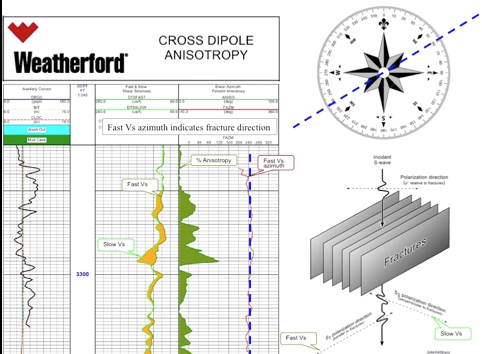
China included a side trip to Beijing for a visit with the BGP President Guo Liang. The main China event the Gravity and Magnetics (GEM) conference in Chengdu co-sponsored by SEG and CGS (Chinese Geophysical Society). About 300 attended GEM including 50 from outside China. I did not see the giant Panda that Chengdu is famous for, but we did take a wonderful tour of a temple district and experienced a traditional Hot Pot restaurant. An side story to GEM Chengdu 2015 was my spending time with Dr. Jie Zhang professor at China University of Science and Technology. More importantly (for me) is that Jie is the Founder and Chairman of GeoTomo a software company that specializes in earth modeling and imaging. In dinner conversations it came up that my MArkUP group at the University of Arkansas was shooting shallow seismic data to solve geological problems. To make a long story short, Jie offered to donate the flagship GeoTomo software, called TomoPlus, for use in research and teaching at U of A. Thank you Jie!
In Japan, my host was Dr. Jun Matsushita (University of Tokyo) who spoiled me relentlessly. Had a very good meeting with SEG Japan president Dr. Saito, executive of the SEGJ board members Dr. Chiba and Dr. Osawa. I wish to publicly thank Dr. Matsushita and the University of Tokyo for treating me like a king in Japan.
 |
| Yours truly at the iconic building of the University of Tokyo |
Carbonate Geophysics
On 24 April I gave a short talk on Carbonate Geophysics at the JOGMEC research office. I have posted that talk in two parts to YouTube. Enjoy.
04 May 19:42


Should You Get a Tesla Home Battery? Let Physics Explain
by Rhett Allain
Tesla announced a battery for your house, the Powerwall. What are some interesting physics questions to consider for this new battery?
The post Should You Get a Tesla Home Battery? Let Physics Explain appeared first on WIRED.
01 May 19:46


William Gibson On How Ignorance May Keep Your Novel From Becoming Dated
by Esther Inglis-Arkell
The 2006 anniversary edition of Neuromancer starts with an introduction by William Gibson, in which he muses on how the novel stayed fresh during over two decades of frantically evolving technology. The answer might be ignorance.


30 Apr 20:08


David Simon on Baltimore's Anguish: Freddie Gray, the drug war, and the decline of “real policing.”
by Zujaja Tauqeer
Bill Keller's interview with David Simon, creator of HBO's The Wire on The Marshall Project:
The situation you described has been around for a while. Do you have a sense of why the Freddie Gray death has been such a catalyst for the response we’ve seen in the last 48 hours?
DS: Because the documented litany of police violence is now out in the open. There’s an actual theme here that’s being made evident by the digital revolution. It used to be our word against yours. It used to be said — correctly — that the patrolman on the beat on any American police force was the last perfect tyranny. Absent a herd of reliable witnesses, there were things he could do to deny you your freedom or kick your ass that were between him, you, and the street. The smartphone with its small, digital camera, is a revolution in civil liberties.
And if there’s still some residual code, if there’s still some attempt at precision in the street-level enforcement, then maybe you duck most of the outrage. Maybe you’re just cutting the procedural corners with the known players on your post – assuming you actually know the corner players, that you know your business as a street cop. But at some point, when there was no code, no precision, then they didn’t know. Why would they? In these drug-saturated neighborhoods, they weren’t policing their post anymore, they weren’t policing real estate that they were protecting from crime. They weren’t nurturing informants, or learning how to properly investigate anything. There’s a real skill set to good police work. But no, they were just dragging the sidewalks, hunting stats, and these inner-city neighborhoods — which were indeed drug-saturated because that's the only industry left — become just hunting grounds. They weren’t protecting anything. They weren’t serving anyone. They were collecting bodies, treating corner folk and citizens alike as an Israeli patrol would treat the West Bank, or as the Afrikaners would have treated Soweto back in the day. They’re an army of occupation. And once it’s that, then everybody’s the enemy. The police aren’t looking to make friends, or informants, or learning how to write clean warrants or how to testify in court without perjuring themselves unnecessarily. There's no incentive to get better as investigators, as cops. There’s no reason to solve crime. In the years they were behaving this way, locking up the entire world, the clearance rate for murder dove by 30 percent. The clearance rate for aggravated assault — every felony arrest rate – took a significant hit. Think about that. If crime is going down, and crime is going down, and if we have less murders than ever before and we have more homicide detectives assigned, and better evidentiary technologies to employ how is the clearance rate for homicide now 48 percent when it used to be 70 percent, or 75 percent?
More here.
30 Apr 19:16


One Way You Can Help Nepal Right Now: All You Need Is A Computer And A Little Time
by Adele Peters
With just a few clicks, you can help make a map that will assist aid workers in getting to those in need.
For relief workers in Nepal after the massive earthquake on April 25, one of the challenges is just knowing where to go: Most roads and buildings don't exist on a map. But that's a situation that's changing, hour by hour, as thousands of volunteers around the world build a detailed digital atlas of the earthquake zone as part of the Humanitarian OpenStreetMap Team (HOT).
30 Apr 19:16


Disaster-Relief Tech Goes All-Out In Nepal
by matt stevenson
The devastated people who live among the aged brick cities and temples that crumpled in Nepal’s 7.8 earthquake may soon be on a faster path to recovery thanks to an array of technologies—both new and old—that can help locate survivors, ease the fears of those searching for loved ones, and get food and medicine into […]
The post Disaster-Relief Tech Goes All-Out In Nepal appeared first on WIRED.
30 Apr 17:49
 It might come as no surprise to Houstonians, but one of the biggest problems that plague the city's quality of life today is traffic.
That's according to the 2015 Houston Area Survey from Rice University's Kinder Institute for Urban Research. The problem is tied to Houston's continued population growth, which doesn't appear to be slowing down anytime soon, Dr. Stephen Klineberg, director for the Kinder Institute, told the Houston Business Journal.
Traffic is the biggest problem in the Houston area,…
It might come as no surprise to Houstonians, but one of the biggest problems that plague the city's quality of life today is traffic.
That's according to the 2015 Houston Area Survey from Rice University's Kinder Institute for Urban Research. The problem is tied to Houston's continued population growth, which doesn't appear to be slowing down anytime soon, Dr. Stephen Klineberg, director for the Kinder Institute, told the Houston Business Journal.
Traffic is the biggest problem in the Houston area,…


Here are Houston's biggest quality of life problems
by Joe Martin
It might come as no surprise to Houstonians, but one of the biggest problems that plague the city's quality of life today is traffic.
That's according to the 2015 Houston Area Survey from Rice University's Kinder Institute for Urban Research. The problem is tied to Houston's continued population growth, which doesn't appear to be slowing down anytime soon, Dr. Stephen Klineberg, director for the Kinder Institute, told the Houston Business Journal.
Traffic is the biggest problem in the Houston area,…
29 Apr 17:18


Kilauea’s Summit Lava Lake is Overflowing
by Erik Klemetti
The lava lake at the summit of Kilauea is overflowing, creating lava flows in the summit crater.
The post Kilauea’s Summit Lava Lake is Overflowing appeared first on WIRED.
28 Apr 18:34
Editor’s note: If you are interested in learning more about Minecraft modding, pick up a copy of Arun and Aditya’s latest book, Minecraft Modding with Forge. You can also check out a replay of their live webcast, Create Minecraft Mods In Less Than an Hour with Forge.


Teaching kids how to code with Minecraft
by Arun Gupta
[caption id="attachment_76107" align="alignright" width="180"] Buy Minecraft Modding
with Forge.[/caption]I am jealous of kids these days. The sheer breadth and depth of technology and software at their disposal is staggering, everything from Raspberry Pi, Arduino, and Scratch to Minecraft, Python, and iOS app development. What’s even more profound to me is how fluent they are in using and interacting with these technologies. And yet during this process of assimilation, they are mastering fundamental mathematical concepts, like trigonometry, by figuring out how to shoot an arrow in Minecraft, as opposed to the classical way of learning the formulas. Or in learning how to program in Python, they are creating a game of Tic-Tac-Toe. Or in understanding basic circuits, they are building a traffic light using Arduino or Squishy Circuits.
I consider myself extremely fortunate to be involved with Devoxx4Kids, a Not-for-Profit, 501(c)(3) registered organization in the U.S., whose goal is to deliver Science Technology Engineering Mathematics (STEM) workshops to kids at an early age around the world. We delivered over 40 workshops in the U.S. alone last year on topics ranging from Python, Scratch, and Minecraft modding to NAO robots, Raspberry Pi, Arduino, and Little Circuits. Globally, we’ve delivered over 350 workshops and connected with approximately 5,000 students, with over 30% girls. Attendees from these workshops often leave with unique and inspirational stories to share.
Our Minecraft Modding workshops require no prior programming experience. Attendees are elementary school students, primarily from the 4th and 5th grades. During these workshops, we focus on developing simple mods, such as creating a stack of 64 potatoes when you type the word “potato” into the chat bar of the game. Such simplicity allows us to dive in and explain some of the most fundamental concepts behind Java. For example, with the potato mod, students develop an understanding of the Java Development Kit (JDK), they discover how to run a program using Eclipse, as well as how to work with classes, methods, strings, integer variables, and if-statements. The excitement of creating new mods, such as spawning an Ender Dragon, alerting a user when a creeper is spawned, and turning snowballs into arrows, allows students to learn even more fundamentals like the “for loop,” comparing objects, and !, &&, and || operators.
It’s gratifying to witness the amount of progress and “fluency” our students achieve in these workshops. Students often ask to see different variations of a mod every week, and with the help of my son, Aditya, who is an experienced Minecraft player and modder in his own right, we will sit down and create these mods. One of the most exciting moments for me came during the 7th week of a recent workshop when the code for a mod was displayed on the projector without an explanation. To my surprise, the students were able to read the code and explain the meaning. I had goosebumps seeing how quickly their Minecraft vocabulary was helping them to become a Java programmer. I’ve seen professional developers complain about ceremony around Java “syntax.” But I think that’s one of the most beautiful things about the language: it’s meant to be read by both computers and humans. Further details about this effort are explained in my blog post, Minecraft Modding Course at Elementary School — Teach Java to Kids.
The gamification of education is becoming a reality these days. My first grade son is learning mathematics by playing a game and hitting on a robot’s head to traverse through a maze, whereas my oldest son is learning Java concepts by modding Minecraft. I think this is a natural evolution. Given the speed with which technology is expanding and becoming an omnipresent part of our identity, it’s important to keep our kids engaged and enthused while learning. What’s more, we should also be teaching our kids how to be producers of software and content — and not just consumers. They may not pick up Computer Science as their subject of choice in high school or college. But workshops like these, with a focus on fun and interactivity, will at least ensure they are not alien to technology, and programming more broadly. This is how we can provide a competitive edge to our kids for many years to come.
Editor’s note: If you are interested in learning more about Minecraft modding, pick up a copy of Arun and Aditya’s latest book, Minecraft Modding with Forge. You can also check out a replay of their live webcast, Create Minecraft Mods In Less Than an Hour with Forge.
Stuart.ward.uk likes this
28 Apr 18:24
Water could have been abundant in the first billion years
How soon after the Big Bang could water have existed? Not right away, because water molecules contain oxygen and oxygen had to be formed in the first stars. Then that oxygen had to disperse and unite with hydrogen in significant amounts. New theoretical work finds that despite these complications, water vapor could have been just as abundant in pockets of space a billion years after the Big Bang as it is today.
28 Apr 18:23


The io9 Guide to Discworld
by Katharine Trendacosta
Terry Pratchett’s Discworld might look intimidating — there are 40 books, and they’re humorous fantasy, which seems like it could be an acquired taste. But everybody should read at least one Discworld book, because they’re wonderful, and there’s something for everyone. Here’s our complete guide to Pratchett’s masterwork.
22 Apr 21:31


Daredevil Recaps: “Rabbit in a Snowstorm” and “In the Blood”
by Dan Van Winkle

Daredevil episode 3 takes a bit of a break from the superhero stuff to remind us that Matt Murdock and co. are real people with a law practice to run. Please enjoy this episode of Law & Order: MCU.
We start off with some dude in a bowling alley.
No, not THE Dude in a bowling alley. Oh, fine. Close enough.
He asks the wrong guy to share a lane and then conspicuously doesn’t make an effort to get away when said guy’s goons approach. Oh man, he’s in troub—HOLY CRAP he opens a can of whoopass on the goons and then pulls a gun on the main guy, whose parents clearly didn’t teach him to share. OK then. Let’s call our bowling friend Walter for now.
Walter, put the piece away.
Too bad for Walter, the guy who sold him the gun failed in his guarantee that it wouldn’t jam, so Walt has to teach the bad sharer a lesson with his fists and a bowling ball instead.

The cops show up and arrest him, and he says he wants a lawyer.

…We can relate to that.
Karen, Foggy, and Matt all meet up back at the office in varying states of readiness for the day after their ill-advised activities the night before—drinking and partying for Karen and Foggy, and getting beaten senseless while saving the day for Matt. Our friend in the suit from the first episode, who won’t tell anyone his name—not a bit suspicious—shows up at the law office and says his company wants to put Murdock and Nelson on retainer.
By way of explanation as to why they’d be interested in such a small company, he provides a bit of insight into Matt and Foggy’s past as local boys who graduated law school with flying colors and set up their own shop on their home turf despite some pretty great offers they could’ve taken. Those little do-gooders.
He offers them what we can only guess by Foggy’s facial expression is an absurd amount of money

But Matt’s not into it, so suit guy changes tactics to “take a sexist swipe at Karen.” You know, classy business man stuff.
Oh, and he mentions her murder charges—or lack thereof—and Matt is more sure than ever that something’s not right. Classy business man, obviously prepared for this, tells them to check out one of his employer’s cases for themselves to get a better idea of how worth it all the zeroes on their paychecks would be. He gives them a file and tells them where to be to help lawyer someone who turns out to be our friend Walter, the sharing enthusiast.
Foggy questions him—his actual name is John Healy—before Matt joins in, and even Foggy’s slightly malleable moral compass tells him they shouldn’t take the case. He’s gone and realized that maybe there are limits to what he’ll do for $$$$. Character growth!
In an unexpected turn of events, Matt swoops in and says they’ll take it, because his moral compass has been overridden by his freely spinning bullshit-ometer (basically a real power of Daredevil’s) which was set off by suit guy and should theoretically get sorted out in the course of this case.

New York Bulletin journalist Ben Urich, who showed up earlier in the episode as he tried to get inside info on this new crime wave, is having an old school vs. new school “I want to do some real journalism” argument about digging into what’s going on in Hell’s Kitchen with his boss. I guess Netflix couldn’t get Aaron Sorkin to direct the news guy scenes as there’s not a whole lot of walking while talking, but they did throw in a solid dig at bloggers working in their underwear for good measure, so close enough.
(Hey, it’s usually very fancy underwear, I’ll have them know.)
While Matt and Foggy continue to have a disconcerting chat with their less-than-reputable new client who all but admits to being an employee of suit guy and a paid killer, the man in the suit himself is over at the bowling alley’s arcade machine also extolling the virtues of sharing.

“I got next.”
and grabbing Healy’s gun from where he stashed it underneath the machine.
“Hi kids! Stay in school!”
Matt and Foggy finally come to an understanding on taking Healy’s “self defense” case.
The brosecution rests, your honor.
And plan their next move while Karen disappears to work on her own legal troubles. She’s in hot water for breaking an NDA with Union Allied over the information she leaked to the press in episode 1. The now-dissolved company’s lawyers are offering her a bunch of money and protection from any legal action in exchange for her silence on their actions going forward, and she’s significantly more hesitant about all those zeroes than some of our other heroes.
Our journalist friend stops by a hospital to deal with his… wife’s? medical care insurance coverage issues—the same hospital Claire Temple works at, it seems, judging by an administrator saying her best nurse is out. I wonder why.

Claire Temple: Best Nurse.
Matt and Foggy are working some long hours on this case, and Matt lays down the law—har har—on Karen taking long lunches while they’ve got so much work to do. Although, I kind of suspect Matt’s concerned that there’s something going on with her and isn’t just trying to be a dick.
And hey! There’s Foggy doing some actual lawyering in a courtroom! Matt’s pleased with his performance, but distracted by jurors’ heartbeats and suit guy’s watch, which he can hear because he’s Daredevil. You do remember that he’s also a superhero, right? I just wanted to make sure you didn’t forget amid all the legal intrigue.
The juror with the telltale heart meets some guy in an alley who’s clearly blackmailing her for her decision in the case, and when she leaves, Daredevil busts in to remind us all this is a superhero show—with his fists. And some Batman voice. At the thug’s expense.

“Was the super hearing thing too subtle? I HAVE POWERS btw.”
He… convinces the guy to get the juror dismissed and leave her alone forever by being generally terrifying. Then, he convinces the jurors to acquit his client on self defense charges by being generally terrific.
Suit guy and Leland Owlsly argue over why they didn’t just murder Healy like they tend to do to everyone else who bothers them in order to give suit guy an excuse to explain it to the audience/preemptively head off Internet arguments about it.
“Maybe so I can get Murdock more deeply involved in the plot. DUH LELAND. Amateur.”
Matt and Foggy successfully get Healy cleared of charges in the courtroom, but he has not been cleared in the COURT OF DAREDEVIL, who proceeds to beat the name of suit guy’s employer out of Healy. He does this in the totally safe manner of jabbing a shard of glass into the guy’s neck until he talks, because as previously established with fire extinguishers and throwing people off buildings, he does not GAF.
Healy finally gives up Fisk’s name as suit guy’s hermit employer shortly before, er, disposing of himself out of fear for what his punishment will be.
[headimpale.gif not found... because yuck.]
Probably kind of a good thing for Murdock that Healy’s not around to tell the tale, because a 2 for 2 involvement of Daredevil with Matt Murdock’s legal cases miiiiiight raise some eyebrows. Seriously, quit punching where you eat, Matt.
Meanwhile, Wilson Fisk himself is appreciating some art and getting flirty (for Fisk, anyway) with a gallery employee when the episode leaves us with its reveal of the series’ big bad.

“Are you sure it’s a white rabbit? I see a ghost. Lololol.” -paraphrasing.
22 Apr 21:24
 No matter what the economic pundits tell us about our economy having become diversified, if you live in Houston, you’re in the oil business.
The past six months have seen oil prices plummet. In response, oil companies have slashed their capital spending by more than 40 percent, sold noncore assets, frozen new hires, reduced salaries, cut staff, reduced or eliminated dividends and put surplus office space on the sublease market.
They have done all this to bring costs in line with cash flow, hoping…
No matter what the economic pundits tell us about our economy having become diversified, if you live in Houston, you’re in the oil business.
The past six months have seen oil prices plummet. In response, oil companies have slashed their capital spending by more than 40 percent, sold noncore assets, frozen new hires, reduced salaries, cut staff, reduced or eliminated dividends and put surplus office space on the sublease market.
They have done all this to bring costs in line with cash flow, hoping…


Op-ed: Don't bet on oil prices coming back anytime soon
by Jay Wall
No matter what the economic pundits tell us about our economy having become diversified, if you live in Houston, you’re in the oil business.
The past six months have seen oil prices plummet. In response, oil companies have slashed their capital spending by more than 40 percent, sold noncore assets, frozen new hires, reduced salaries, cut staff, reduced or eliminated dividends and put surplus office space on the sublease market.
They have done all this to bring costs in line with cash flow, hoping…
22 Apr 17:29
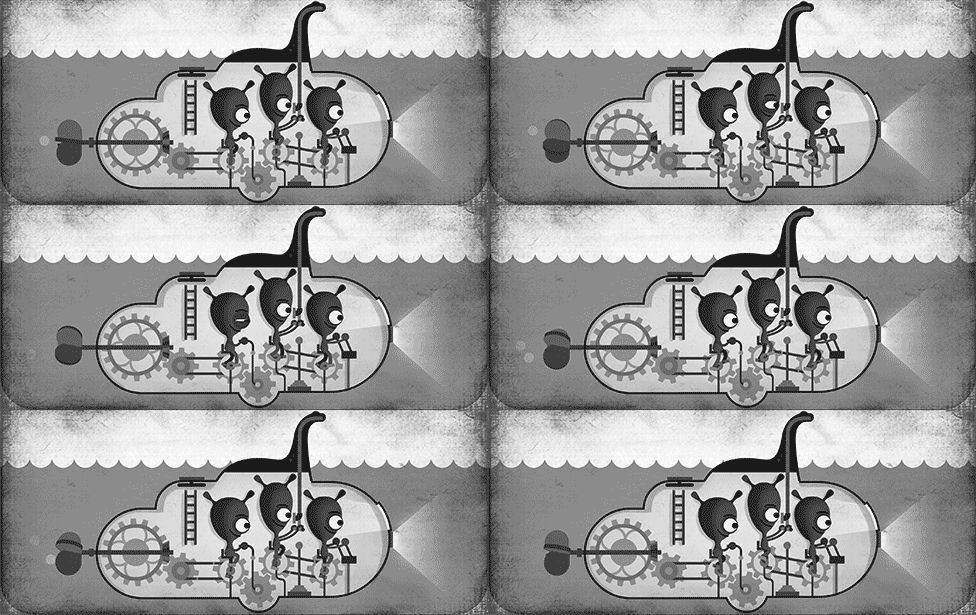
Like the world’s best legends, the Loch Ness Monster transcends the everyday and exists at the edges of possibility. It rises above the sightings and the hoaxes; the claims and counter-claims; the tourism, the nationalism—and even the assassination plots. It lives in the telling of stories. Whether or not you believe, most people hold a romanticized vision of the creature that, legend has it, plumbs the depths of the Loch. Affectionately known as “Nessie,” she exists in folklore, dances in childrens’ imaginations, and seeps into our society and teachings, inspiring everything from pop music to pop culture to pulp fiction.

.tif)
Myth or monster? Explore Loch Ness with Street View
by Lat Long
Like the world’s best legends, the Loch Ness Monster transcends the everyday and exists at the edges of possibility. It rises above the sightings and the hoaxes; the claims and counter-claims; the tourism, the nationalism—and even the assassination plots. It lives in the telling of stories. Whether or not you believe, most people hold a romanticized vision of the creature that, legend has it, plumbs the depths of the Loch. Affectionately known as “Nessie,” she exists in folklore, dances in childrens’ imaginations, and seeps into our society and teachings, inspiring everything from pop music to pop culture to pulp fiction.
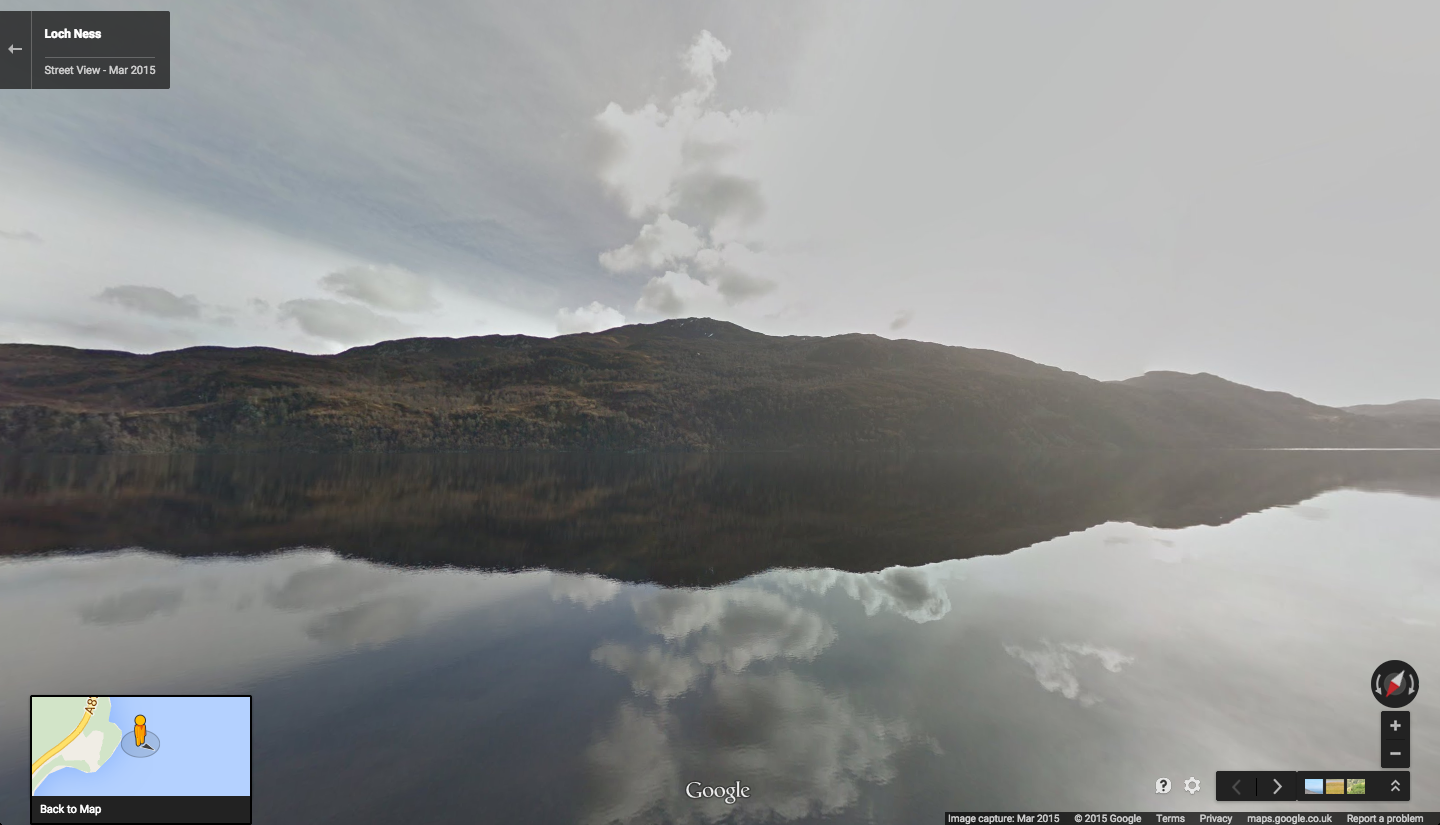
In 1934, the “Surgeon’s Photograph” was released, claiming to show the monster in the misty waters of the lake. It’s the most iconic photo in the history of Loch Ness—and may be one of the most elaborate hoaxes of our age. Today, to celebrate the anniversary of its release, we're bringing 360-degree Street View imagery of Loch Ness to Google Maps, so you can go in search of Nessie yourself.
Sail across the freshwater lake and take in its haunting beauty, made darker still by the peat particles found in its waters. Let the Loch unlock the spirit of your imagination, where the rippling water, tricks of the light, and drifting logs bring the legend of Nessie to life. Adrian Shine, leader of the Loch Ness & Morar Project, has been engaged in fieldwork in the Highlands since 1973 and was an integral part of the Street View collection. As a true Loch Ness expert, Shine has logged more than 1,000 Nessie sightings and offers scientific explanations for why people claim to have seen Scotland’s mysterious cryptid.
Formed of a series of interrelated bodies of water, including the River Oich to the south and the Bona Narrows to the north, Loch Ness stretches for 23 miles southwest of Inverness. Although it’s neither the largest Scottish loch by surface area nor depth, it is the largest by volume, containing more freshwater than all the lakes of England and Wales combined. And at almost 800 feet deep, there’s an entire world below the surface, giving rise to the Nessie legend.
To take you on a tour of what lies beneath, our partners at the Catlin Seaview Survey dived deep under the surface of the lake, collecting imagery along the way. You can imagine Nessie nestling within these dark, peat-filled waters, waiting for the right moment to breach the surface into the Scottish sunlight above.
A diver from the Catlin Seaview Survey collecting underwater imagery of Loch Ness
Wherever you stand on the Nessie debate, the legend lives on—even in the digital era. There are more searches for Loch Ness than there are for other U.K. institutions like Buckingham Palace and the Peak District. And as we celebrate Loch Ness with today’s Doodle, we hope you can enjoy some of the most history-laden and breathtaking imagery the highlands have to offer with Street View in Google Maps.
By Sven Tresp, Program Manager, Street View Special Collections
22 Apr 17:29


On Rock Classification
by noreply@blogger.com (Suvrat Kher)
Two interesting articles:
1) In the Journal of Sedimentary Research (behind paywall) Kitty Milliken proposes a tripartite classification of fine grained sedimentary rocks, those with grain assemblages with greater than 50% of particles by weight or volume less than 62.5 µm (4 Phi). There are a number of names for these types of rock; mudstone, claystone, pelite, argillite to name a few. This classification categorizes the rocks according to the composition, thereby indicating the source of the grains. Composition in turn controls to a large measure bulk rock properties upon burial and interaction with fluids, thus enabling general predictions about their economic and engineering qualities.
Abstract:
A tripartite compositional classification is proposed for sediments and sedimentary rocks that have grain assemblages with greater than 50 percent of a weight or volume of particles smaller than 62.5 µm (4 Phi). Tarl (terrigenous–argillaceous) contains a grain assemblage dominated by more than 75 percent of particles of extrabasinal derivation, including grains derived from continental weathering and also volcanogenic debris. Carl (calcareous–argillaceous) contains less than 75 percent of particles of extrabasinal derivation debris and among its intrabasinal grains contains a preponderance of biogenic carbonate particles including carbonate aggregates. Sarl (siliceous–argillaceous) contains less than 75 percent of particles of extrabasinal derivation and contains a preponderance of biogenic siliceous particles over carbonate grains.
These three classes of fine-grained particulate sediments and rocks effectively separate materials that have distinct depositional settings and systematic contrasts in organic-matter content and minor grain types. In the subsurface the grain assemblages that define these classes follow contrasting and predictable diagenetic pathways that have significant implications for the evolution of bulk rock properties, and thus, assigning a fine-grained rock to one of these classes is an important first step for predicting its economic and engineering qualities. For purposes of description these three class names can be joined to modifier terms denoting rock texture, more precise compositional divisions, specific grain types of notable importance, and diagenetic features.
2) In Earth Magazine, a delightful article (open access) titled Geologic Column: The Rumpelstiltskin Factor by Ward Chesworth, professor emeritus at the University of Guelph, Canada.
Chesworth muses on the importance of naming objects and whether it is better to be a "lumper" or a "splitter" i.e. whether it is better to organize variation in to as few groups as possible or whether it is better to draw finer and finer distinctions and place a smaller range of variation into its own distinct cubicle.
An excerpt:
Excessive splitting can lead to problems, though. If an overly meticulous taxonomist kept on splitting hairs ad absurdum, we would wind up with a classification resembling an advanced case of logorrhea, the kind of thing guaranteed to drive working geologists to the brink. C.B. Hunt staged his own rebellion against this tendency when he considered the plethora of names invented for minor igneous intrusions. He expressed his displeasure by sarcastically concocting one more, cactolith, which he described as “a quasi-horizontal chronolith composed of anastomosing ductoliths whose distal ends curl like a harpolith, thin like a sphenolith, or bulge discordantly like an atmolith or ethmolith.” He insinuated it into his 1953 U.S. Geological Survey professional paper on the Henry Mountains of Utah, and from there it crept under the radar into the first edition of AGI’s very own “Glossary of Geology.” Unfortunately, some humorless jobsworth banned it from all subsequent editions.
Sprinkled with more anecdotes, this is a fun read.
1) In the Journal of Sedimentary Research (behind paywall) Kitty Milliken proposes a tripartite classification of fine grained sedimentary rocks, those with grain assemblages with greater than 50% of particles by weight or volume less than 62.5 µm (4 Phi). There are a number of names for these types of rock; mudstone, claystone, pelite, argillite to name a few. This classification categorizes the rocks according to the composition, thereby indicating the source of the grains. Composition in turn controls to a large measure bulk rock properties upon burial and interaction with fluids, thus enabling general predictions about their economic and engineering qualities.
Abstract:
A tripartite compositional classification is proposed for sediments and sedimentary rocks that have grain assemblages with greater than 50 percent of a weight or volume of particles smaller than 62.5 µm (4 Phi). Tarl (terrigenous–argillaceous) contains a grain assemblage dominated by more than 75 percent of particles of extrabasinal derivation, including grains derived from continental weathering and also volcanogenic debris. Carl (calcareous–argillaceous) contains less than 75 percent of particles of extrabasinal derivation debris and among its intrabasinal grains contains a preponderance of biogenic carbonate particles including carbonate aggregates. Sarl (siliceous–argillaceous) contains less than 75 percent of particles of extrabasinal derivation and contains a preponderance of biogenic siliceous particles over carbonate grains.
These three classes of fine-grained particulate sediments and rocks effectively separate materials that have distinct depositional settings and systematic contrasts in organic-matter content and minor grain types. In the subsurface the grain assemblages that define these classes follow contrasting and predictable diagenetic pathways that have significant implications for the evolution of bulk rock properties, and thus, assigning a fine-grained rock to one of these classes is an important first step for predicting its economic and engineering qualities. For purposes of description these three class names can be joined to modifier terms denoting rock texture, more precise compositional divisions, specific grain types of notable importance, and diagenetic features.
2) In Earth Magazine, a delightful article (open access) titled Geologic Column: The Rumpelstiltskin Factor by Ward Chesworth, professor emeritus at the University of Guelph, Canada.
Chesworth muses on the importance of naming objects and whether it is better to be a "lumper" or a "splitter" i.e. whether it is better to organize variation in to as few groups as possible or whether it is better to draw finer and finer distinctions and place a smaller range of variation into its own distinct cubicle.
An excerpt:
Excessive splitting can lead to problems, though. If an overly meticulous taxonomist kept on splitting hairs ad absurdum, we would wind up with a classification resembling an advanced case of logorrhea, the kind of thing guaranteed to drive working geologists to the brink. C.B. Hunt staged his own rebellion against this tendency when he considered the plethora of names invented for minor igneous intrusions. He expressed his displeasure by sarcastically concocting one more, cactolith, which he described as “a quasi-horizontal chronolith composed of anastomosing ductoliths whose distal ends curl like a harpolith, thin like a sphenolith, or bulge discordantly like an atmolith or ethmolith.” He insinuated it into his 1953 U.S. Geological Survey professional paper on the Henry Mountains of Utah, and from there it crept under the radar into the first edition of AGI’s very own “Glossary of Geology.” Unfortunately, some humorless jobsworth banned it from all subsequent editions.
Sprinkled with more anecdotes, this is a fun read.
15 Apr 17:15


Anti-municipal broadband group tries to silence a critic
by Jon Brodkin
An organization that tries to convince state legislatures to impose limits on municipal broadband sent a cease-and-desist letter to one of its critics that is refusing to stay quiet.
The fight is happening between the American Legislative Exchange Council (ALEC) and Credo Action. ALEC opposes municipal broadband projects and writes model legislation that limits the authority of cities and towns to build their own telecommunications networks. About 20 states have passed such laws.
Credo Action is the advocacy arm of cellular phone company Credo Mobile, whose revenue funds its advocacy. Credo lobbied the Federal Communications Commission to preempt state laws that limit municipal broadband, criticizing ALEC along the way.
Read 15 remaining paragraphs | Comments
15 Apr 04:30
The Fault in Our Sentences
by Roxie Pell
Hit young adult novels may spread like wildfire, but they don’t grow on trees. The Times profiles Julie Strauss-Gabel, a YA editor known for whipping her writers into shape:
The last thing you want is an author saying, ‘That’s what’s selling right now, so that’s what I’m going to write.’ That’s the point at which a trend gets icky.
Related Posts:
15 Apr 04:29
Over the years, we’ve updated Google Maps to make it more accurate, comprehensive and useful.
From imagery of the coffee shop down the road to the Taj Mahal, or turn-by-turn navigation that helps you get to your first date on time or find your way to a famous landmark...we’ve worked hard to give people the best possible experience of the world around them. And today we’re introducing our most ambitious update yet: PAC-Maps.

With local place information and Street View, it’s easier than ever before to find where you’re going but there’s never been anything to let you know where *not* to go. With this update, we’ve added imagery of dangerous virtual beings, starting with Pinky, Blinky, Inky and Clyde. When navigating fruit-filled streets, determine at a glance which turns to pass to evade ghosts and get where you’re going safely. When you’re feeling a bit peckish, you can simply gobble up a few pac-dots or a cherry and keep on nommin'. PAC-Maps makes navigating around select locations as simple as left, right, up or down.

Experience all the benefits of #PACMaps on desktop and on the latest version of Google Maps on Android and iOS. This is just the beginning, so stay tuned for more Maps fun such as zombie incident alerts and intergalactic Street View. Oh, and be sure to check out what our friends at Ingress are up to. It looks like PAC-MAN chomped his way over to the real-world!
Posted by Michelle Luo, Product Manager
A new way to navigate the streets of Google Maps
by Lat Long
Over the years, we’ve updated Google Maps to make it more accurate, comprehensive and useful.
From imagery of the coffee shop down the road to the Taj Mahal, or turn-by-turn navigation that helps you get to your first date on time or find your way to a famous landmark...we’ve worked hard to give people the best possible experience of the world around them. And today we’re introducing our most ambitious update yet: PAC-Maps.
With local place information and Street View, it’s easier than ever before to find where you’re going but there’s never been anything to let you know where *not* to go. With this update, we’ve added imagery of dangerous virtual beings, starting with Pinky, Blinky, Inky and Clyde. When navigating fruit-filled streets, determine at a glance which turns to pass to evade ghosts and get where you’re going safely. When you’re feeling a bit peckish, you can simply gobble up a few pac-dots or a cherry and keep on nommin'. PAC-Maps makes navigating around select locations as simple as left, right, up or down.
Experience all the benefits of #PACMaps on desktop and on the latest version of Google Maps on Android and iOS. This is just the beginning, so stay tuned for more Maps fun such as zombie incident alerts and intergalactic Street View. Oh, and be sure to check out what our friends at Ingress are up to. It looks like PAC-MAN chomped his way over to the real-world!
Posted by Michelle Luo, Product Manager
Wmrmecho likes this
15 Apr 04:10


Do Marine Animal Lineages Evolve Toward Larger Body Size Over Time
by noreply@blogger.com (Suvrat Kher)
aka Cope's Rule-
I like these big questions about the history of life and I am fascinated and very impressed when palaeontologists take up such questions. It is incredibly laborious and time consuming work, to go through archival data on fossils and often generate new data from museum specimens and older compilations describing fossil taxa.
A recent study in Science Magazine:
Cope’s rule in the evolution of marine animals - Noel A. Heim, Matthew L. Knope1, Ellen K. Schaal, Steve C. Wang, Jonathan L. Payne
Cope’s rule proposes that animal lineages evolve toward larger body size over time. To test this hypothesis across all marine animals, we compiled a data set of body sizes for 17,208 genera of marine animals spanning the past 542 million years. Mean biovolume across genera has increased by a factor of 150 since the Cambrian, whereas minimum biovolume has decreased by less than a factor of 10, and maximum biovolume has increased by more than a factor of 100,000. Neutral drift from a small initial value cannot explain this pattern. Instead, most of the size increase reflects differential diversification across classes, indicating that the pattern does not reflect a simple scaling-up of widespread and persistent selection for larger size within populations.
What that means is that the size increase is not due to a uniform increase across all animal groups. Rather, groups that were larger very early in animal evolution have diversified disproportionally more than smaller sized groups. Why should that happen? The authors suggest that there may be advantages to being larger, such as, ability to move faster, to capture larger prey and to burrow deeper for protection and exploiting additional food resources.
That would seem to make larger animals more resilient to background extinction and make larger sized lineages longer lived. But why would that make larger animals more speciose? i.e. why would larger sized animals species split into more new species than smaller sized animal species? ..because that is what is the claim, that throughout the history of animal evolution larger sized species gave rise to more new species than smaller sized ones (differential diversification). In fact, one could make arguments favoring higher rates of speciation in smaller sized organisms, such as, their ability to disperse over greater geographic area resulting in greater chances of populations getting reproductively isolated resulting in new species, their ability to survive better during environmental crises (survivor fauna after mass extinctions tend to be smaller bodied, mass extinctions seems to kill of larger bodied species disproportionately). If mass extinctions differentially kill off larger bodied species, then is the observed trend really a series of trends, each reset at the aftermath of the crises, resulting in small pioneer /survivor fauna evolving towards larger size. There could be a physical limit to how small one could become and the only direction for size to vary (either through drift or natural selection) would be towards a larger size. I am just speculating without even reading the paper, the authors do mention that drift from a small initial size does not explain their findings, but it would interesting to know what role mass extinctions might be playing in disruption or amplifying trends.
So although a trend is apparent, the answers are not all clear cut. It would also be interesting to group the trends according to life habits, i.e. planktonic versus benthic, sessile versus mobile and see if any of these life styles particularly favors evolution towards larger size.
Eurekalert has a summary of the study.
I like these big questions about the history of life and I am fascinated and very impressed when palaeontologists take up such questions. It is incredibly laborious and time consuming work, to go through archival data on fossils and often generate new data from museum specimens and older compilations describing fossil taxa.
A recent study in Science Magazine:
Cope’s rule in the evolution of marine animals - Noel A. Heim, Matthew L. Knope1, Ellen K. Schaal, Steve C. Wang, Jonathan L. Payne
Cope’s rule proposes that animal lineages evolve toward larger body size over time. To test this hypothesis across all marine animals, we compiled a data set of body sizes for 17,208 genera of marine animals spanning the past 542 million years. Mean biovolume across genera has increased by a factor of 150 since the Cambrian, whereas minimum biovolume has decreased by less than a factor of 10, and maximum biovolume has increased by more than a factor of 100,000. Neutral drift from a small initial value cannot explain this pattern. Instead, most of the size increase reflects differential diversification across classes, indicating that the pattern does not reflect a simple scaling-up of widespread and persistent selection for larger size within populations.
What that means is that the size increase is not due to a uniform increase across all animal groups. Rather, groups that were larger very early in animal evolution have diversified disproportionally more than smaller sized groups. Why should that happen? The authors suggest that there may be advantages to being larger, such as, ability to move faster, to capture larger prey and to burrow deeper for protection and exploiting additional food resources.
That would seem to make larger animals more resilient to background extinction and make larger sized lineages longer lived. But why would that make larger animals more speciose? i.e. why would larger sized animals species split into more new species than smaller sized animal species? ..because that is what is the claim, that throughout the history of animal evolution larger sized species gave rise to more new species than smaller sized ones (differential diversification). In fact, one could make arguments favoring higher rates of speciation in smaller sized organisms, such as, their ability to disperse over greater geographic area resulting in greater chances of populations getting reproductively isolated resulting in new species, their ability to survive better during environmental crises (survivor fauna after mass extinctions tend to be smaller bodied, mass extinctions seems to kill of larger bodied species disproportionately). If mass extinctions differentially kill off larger bodied species, then is the observed trend really a series of trends, each reset at the aftermath of the crises, resulting in small pioneer /survivor fauna evolving towards larger size. There could be a physical limit to how small one could become and the only direction for size to vary (either through drift or natural selection) would be towards a larger size. I am just speculating without even reading the paper, the authors do mention that drift from a small initial size does not explain their findings, but it would interesting to know what role mass extinctions might be playing in disruption or amplifying trends.
So although a trend is apparent, the answers are not all clear cut. It would also be interesting to group the trends according to life habits, i.e. planktonic versus benthic, sessile versus mobile and see if any of these life styles particularly favors evolution towards larger size.
Eurekalert has a summary of the study.
04 Mar 16:51


Newswire: Bryan Singer to adapt a Robert A. Heinlein novel for Fox
by William Hughes
Classic science fiction novels are having an odd little cultural renaissance: Syfy has been steadily working on its miniseries adaptation of Isaac Asimov’s Childhood’s End since last fall, while Paramount is toying with the idea of filming The Stars My Destination. And now there’s word, via The Hollywood Reporter, that X-Men director Bryan Singer has been tapped to put together a film version of Robert A. Heinlein’s 1966 classic The Moon Is A Harsh Mistress. (Suggestions that the pick-up was inspired by the recent cultural obsession with Fifty Shades Of Grey are too puerile to dignify here.)
The novel details a lunar colony’s attempts to forcibly emancipate itself from the governments of Earth, so as to better adhere to principles of self-determination, libertarianism, and, because this is a Bob Heinlein novel, polyamory. Singer, whose next film project is the upcoming X-Men: Apocalypse, will produce the ...
04 Mar 16:51


Inheritance of Anger
by Azra Raza
Robert Minto in Open Letters Monthly:
Mario Vargas Llosa’s father was a cruel man who abandoned Mario and his mother for ten years and then returned to tyrannize them. Vargas Llosa became a writer in order to annoy him. In his memoir A Fish in the Water he writes,
It is probable that without my progenitor’s contempt for literature I would never have pursued so obstinately what at the time was a game, but was gradually to turn into an obsessive and pressing need: a vocation.
But is the struggle of a son with his father an honorable source of direction for life? Or does Vargas Llosa’s origin story undermine his whole life’s work by identifying it with childish rebellion? In his new book The Discreet Hero, he seems to be wrestling with this problem. The Discreet Hero is two stories told in alternating chapters which intersect only in seemingly unimportant ways but really serve the purpose of commenting on shared themes. In Letters to a Young Novelist, he calls this structure by the odd term “communicating vessels.” He names it one of just three or four of the “primary techniques” of novel writing: a clue to any reader of his own novels about just how seriously he takes the doubled narrative. The other clue is that fact that he’s used the technique over and over again, even in his autobiography (which splices the story of his boyhood together with the story of his campaign to become President of Peru).
...In The Discreet Hero, the very tool Vargas Llosa uses for the analysis of power is turned on his own power by examining what is for him the foundational struggle of the vocation for literature. Would the healthy outcome for him have been, back when he first began to write, to confess to his father that it was all a lie, and never to write again, like Fonchito and Edilberto Torres? This is the kind of earnest reflection a literary mind conducts at the age of 79. It is a reason to read The Discreet Hero on its own account and — especially — as self-reflection on the origins of a great artist. I, for one, am glad Mario hated his father.
More here.
04 Mar 16:09
What’s Wrong With Online Education—and How to Fix It
by Kunal Chawla
There are many things right with online education—like the plethora of free and easily accessible content developed by Udacity, Coursera and others. In particular, online education excels at teaching while using... read more
26 Feb 21:30


These Game Of Thrones Plushes Have All Grown Up
by James Whitbrook
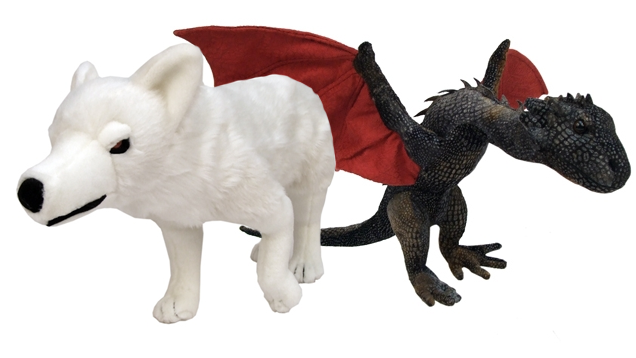
When Factory released their first Direwolf Puppy plushes , we were wounded innocents still in a post Red Wedding haze. But we've grown up, as has Game of Thrones - and thus, so must the plushie merchandise.
26 Feb 21:30


M.T. Anderson, sci-fi author, accidental prophet and nice guy
by Maggie Tokuda-Hall
In 2002, M.T. Anderson wrote the novel Feed, which featured a future in which humans are all hardwired with computer chips (the eponymous Feeds) so they can shop. Constantly. Back then it was a comment on consumerism. Now, 13 years later, I was curious if he was sick of telling us all "I told you so."
Read the rest
26 Feb 19:53


Hear This: INXS gave melodramatic lovers an anthem in “Never Tear Us Apart”
by Sean O'Neal
In Hear This, A.V. Club writers sing the praises of songs they know well. This week, we’re talking about songs we loved from our first favorite bands.
INXS, “Never Tear Us Apart” (1988)
Everyone who came of age when music videos were still in heavy rotation on MTV has a story of some band they fell in love with on first sight. My story is the opposite: I was totally put off by INXS the first time I ever saw the clip for “Need You Tonight,” in which Michael Hutchence—at the zenith of his ’80s Jim Morrison magnetism—works the camera bare-chested under a leather jacket, a giant “SEX” pin on his lapel. I was all of 10 years old the first time I saw that video, and while I’d recently experienced some confusing stirrings around Elisabeth Shue in Cocktail, sex was not especially on my ...