Nature, Published online: 09 August 2022; doi:10.1038/s41586-022-05175-1
Molecular Editing of Aza-arene C–H Bonds by Distance, Geometry and ChiralityLongLarf
Shared posts
24 Aug 14:52
Molecular Editing of Aza-arene C–H Bonds by Distance, Geometry and Chirality
by Zhoulong Fan
24 Aug 14:49
An Asymmetric sp3–sp3 Cross-Electrophile Coupling Using ‘Ene’-Reductases
by Haigen Fu
Nature, Published online: 11 August 2022; doi:10.1038/s41586-022-05167-1
An Asymmetric sp3–sp3 Cross-Electrophile Coupling Using ‘Ene’-Reductases
erlyj2006 likes this
24 Aug 14:14
Concise Synthesis of N-Aryl Tetrahydroquinolines via a One-Pot Sequential Reduction of Quinoline/Chan–Evans–Lam Coupling Reaction
by Bhattacharyya, Dipanjan
Synlett
DOI: 10.1055/s-0042-1751358

A boronic acid catalyzed one-pot reduction of quinolines with Hantzsch ester followed by N-arylation via external base-free Chan–Evans–Lam coupling has been demonstrated. This step-economical synthesis of N-aryl tetrahydroquinolines has been accomplished from readily available quinoline, Hantzsch ester, and arylboronic acid under mild reaction conditions. The dual role of boronic acid as a catalyst (in the reduction of quinolines) and a reagent (in the N-arylation) has been realized for the first time. The use of an inexpensive N-arylation protocol, aerobic reaction conditions, and functional group diversity are important practical features.
[...]
Georg Thieme Verlag KG Rüdigerstraße 14, 70469 Stuttgart, Germany
Article in Thieme eJournals:
Table of contents | Abstract | Full text
24 Aug 12:16
[ASAP] Reversible Homolysis of a Carbon–Carbon σ‑Bond Enabled by Complexation-Induced Bond-Weakening
by Suhong Kim, Pan-Pan Chen, K. N. Houk, and Robert R. Knowles

Journal of the American Chemical Society
DOI: 10.1021/jacs.2c01229
jiarongchen, IIIIIIIIIIIIIIII and one other like this
22 Aug 13:51
Electron in a cube: Synthesis and characterization of perfluorocubane as an electron acceptor
by Masafumi Sugiyama, Midori Akiyama, Yuki Yonezawa, Kenji Komaguchi, Masahiro Higashi, Kyoko Nozaki, Takashi Okazoe
LongLarfgood one
Science, Volume 377, Issue 6607, Page 756-759, August 2022.
22 Aug 13:19
Gold-catalyzed hydroarylation reactions: a comprehensive overview

Org. Biomol. Chem., 2022, 20,7151-7187
DOI: 10.1039/D2OB00960A, Review Article
DOI: 10.1039/D2OB00960A, Review Article
Tapas Ghosh, Joydip Chatterjee, Sayantika Bhakta
Gold-catalyzed hydroarylation reaction offers new pathways for producing complex organic compounds with diverse ring sizes in a highly regio- and stereo-selective approach from available precursors like olefins, alkynes, arenes, and aryl halides.
The content of this RSS Feed (c) The Royal Society of Chemistry
Gold-catalyzed hydroarylation reaction offers new pathways for producing complex organic compounds with diverse ring sizes in a highly regio- and stereo-selective approach from available precursors like olefins, alkynes, arenes, and aryl halides.
The content of this RSS Feed (c) The Royal Society of Chemistry
22 Aug 12:25
The development of a lead-free replacement for the Lindlar catalyst for alkyne semi-hydrogenation using silica supported, N-doped carbon modified cobalt nanoparticles

Green Chem., 2022, 24,6912-6922
DOI: 10.1039/D2GC01400A, Paper
DOI: 10.1039/D2GC01400A, Paper
Peter McNeice, Marc-André Müller, Jonathan Medlock, Werner Bonrath, Nils Rockstroh, Stephan Bartling, Henrik Lund, Kathrin Junge, Matthias Beller
The synthesis of vitamin precursors via alkyne semi-hydrogenation has been achieved with a lead- and palladium-free catalyst.
The content of this RSS Feed (c) The Royal Society of Chemistry
The synthesis of vitamin precursors via alkyne semi-hydrogenation has been achieved with a lead- and palladium-free catalyst.
The content of this RSS Feed (c) The Royal Society of Chemistry
22 Aug 12:12
ML helps predict enzyme turnover rates
by Veda Sheersh Boorla
Nature Catalysis, Published online: 19 August 2022; doi:10.1038/s41929-022-00827-x
Constraining metabolic models by enzyme capacities greatly improves genotype–phenotype predictions. Now, a method for estimating enzyme turnovers based on deep learning has been developed and used to reconstruct enzyme-constrained genome-scale metabolic models for more than 300 yeast species.
22 Aug 11:25
Molecular Editing of Aza-arene C–H Bonds by Distance, Geometry and Chirality
by Zhoulong Fan
Nature, Published online: 09 August 2022; doi:10.1038/s41586-022-05175-1
Molecular Editing of Aza-arene C–H Bonds by Distance, Geometry and Chirality
19 Aug 14:41

Glycolaldehyde as a Bio‐Based C1 Building Block for Selective N‐Formylation of Secondary Amines
by Matthew T. Flynn,
Xin Liu,
Andrea Dell’Acqua,
Jabor Rabeah,
Angelika Brückner,
Eszter Baráth,
Sergey Tin,
Johannes Gerardus de Vries
Build it better: Glycolaldehyde, which is obtainable from glucose or biomass pyrolysis oil, can be employed as a C1 building block for the N-formylation of secondary amines. The reaction is highly efficient and requires only air as oxidant. The proposed radical mechanism was investigated by NMR and EPR spectroscopy and ESI-MS.
Abstract
Biomass derived glycolaldehyde was employed as C1 building block for the N-formylation of secondary amines using air as oxidant. The reaction is atom economic, highly selective and proceeds under catalyst free conditions. This strategy can be used for the synthesis of cyclic and acyclic formylamines, including DMF. Mechanistic studies suggest a radical oxidation pathway.
19 Aug 13:48

Fast Cysteine Bioconjugation Chemistry
by Fa-Jie Chen,
Jianmin Gao
Recently developed fast cysteine bioconjugation reactions are summarized in this Concept, with a focus on the mechanisms and design principles that underlie the high efficiency of the new cysteine-modifying reagents.
Abstract
Cysteine bioconjugation serves as a powerful tool in biological research and has been widely used for chemical modification of proteins, constructing antibody-drug conjugates, and enabling cell imaging studies. Cysteine conjugation reactions with fast kinetics and exquisite selectivity have been under heavy pursuit as they would allow clean protein modification with just stoichiometric amounts of reagents, which minimizes side reactions, simplifies purification and broadens functional group tolerance. In this concept, we summarize the recent advances in fast cysteine bioconjugation, and discuss the mechanism and chemical principles that underlie the high efficiencies of the newly developed cysteine reactive reagents.
Titia likes this
19 Aug 11:55

Asymmetric Organocatalytic Homologation: Access to Diverse Chiral Trifluoromethyl Organoboron Species
by Ramasamy Jayarajan,
Tautvydas Kireilis,
Lars Eriksson,
Kálmán J. Szabó
Highly enantioselective α-trifluoromethylated aliphatic, aromatic, and heterocyclic boronic acids and boronates were synthesized from simple feedstocks.
Abstract
A broad range of aliphatic, aromatic, and heterocyclic boronic acids were successfully homologated using trifluorodiazoethane in the presence of BINOL derivatives to provide the corresponding chiral trifluoromethyl containing boronic acid derivatives in high yields and excellent enantioselectivity. The in situ conversion of the chiral transient boronic acids to the corresponding alcohols or β-CF3 carboxylates are also demonstrated.
19 Aug 11:54
[ASAP] Think Biologically, Act Chemically
by Matthew J. LaMarche
LongLarfshare because frog

Journal of Medicinal Chemistry
DOI: 10.1021/acs.jmedchem.2c01121
19 Aug 09:58
[ASAP] N‑Alkyl Carbamoylimidazoles as Isocyanate Equivalents: Exploration of the Reaction Scope for the Synthesis of Ureas, Hydantoins, Carbamates, Thiocarbamates, and Oxazolidinones
by Jazmin Bansagi, Cody Wilson-Konderka, Vincent Debrauwer, Pournima Narayanan, and Robert A. Batey

The Journal of Organic Chemistry
DOI: 10.1021/acs.joc.2c00803
19 Aug 09:58
[ASAP] Diastereoselective Synthesis of Indoline- and Pyrrole-Embedded Tetracycles via an Unprecedented Dearomative Indole-C3-Alkylation/Aza-Friedel–Crafts Cascade Reaction
by Raju Chouhan, Arup Jyoti Das, and Sajal Kumar Das

The Journal of Organic Chemistry
DOI: 10.1021/acs.joc.2c01121
19 Aug 09:57
[ASAP] Efficient Chemoenzymatic Synthesis of α‑Aryl Aldehydes as Intermediates in C–C Bond Forming Biocatalytic Cascades
by Anthony Meza, Meghan E. Campbell, Anna Zmich, Sierra A. Thein, Abbigail M. Grieger, Matthew J. McGill, Patrick H. Willoughby, and Andrew R. Buller

ACS Catalysis
DOI: 10.1021/acscatal.2c02369
19 Aug 09:57
[ASAP] Carbon Nitride Photoredox Catalysis Enables the Generation of the Dioxolanyl Radical for Conjugate Addition Reactions
by Viktoria C. Gerken and Erick M. Carreira

ACS Catalysis
DOI: 10.1021/acscatal.2c03229
Sebastian Beil, IIIIIIIIIIIIIIII and 2 others like this
19 Aug 09:50
[ASAP] Understanding and Circumventing the Requirement for Native Thioester Substrates for α‑Oxoamine Synthase Reactions
by Sarah E. Ackenhusen, Ye Wang, Stephanie W. Chun, and Alison R. H. Narayan

ACS Chemical Biology
DOI: 10.1021/acschembio.2c00365
17 Aug 11:16
Conversion of polyethylene terephthalate into pure terephthalic acid through synergy between a solid-degrading cutinase and a reaction intermediate-hydrolysing carboxylesterase
LongLarfsharing because suzanne might on day join old reader

Green Chem., 2022, 24,6707-6719
DOI: 10.1039/D2GC01965E, Paper
DOI: 10.1039/D2GC01965E, Paper
Arpita Mrigwani, Bhishem Thakur, Purnananda Guptasarma
LCC (in green) binds to the hydrophobic surface of solid PET and degrades it into TPA and degradation intermediates (OET, BHET and MHET) that partition away into aqueous solution. TTCE (in red) turns degradation intermediates into TPA, in solution.
The content of this RSS Feed (c) The Royal Society of Chemistry
LCC (in green) binds to the hydrophobic surface of solid PET and degrades it into TPA and degradation intermediates (OET, BHET and MHET) that partition away into aqueous solution. TTCE (in red) turns degradation intermediates into TPA, in solution.
The content of this RSS Feed (c) The Royal Society of Chemistry
11 Aug 14:19
Biocatalytic One-Carbon Transfer – A Review
by Germer, Philipp
Synthesis
DOI: 10.1055/s-0040-1719884
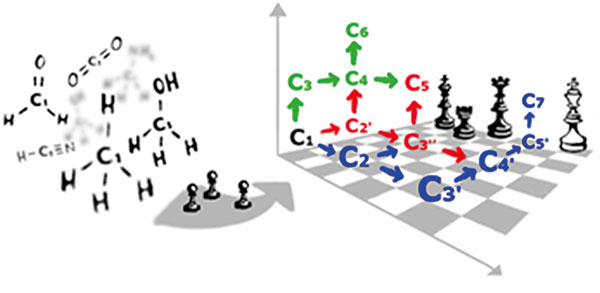
This review provides an overview of different C1 building blocks as substrates of enzymes, or part of their cofactors, and the resulting functionalized products. There is an emphasis on the broad range of possibilities of biocatalytic one-carbon extensions with C1 sources of different oxidation states. The identification of uncommon biosynthetic strategies, many of which might serve as templates for synthetic or biotechnological applications, towards one-carbon extensions is supported by recent genomic and metabolomic progress and hence we refer principally to literature spanning from 2014 to 2020.1 Introduction2 Methane, Methanol, and Methylamine3 Glycine4 Nitromethane5 SAM and SAM Ylide6 Other C1 Building Blocks7 Formaldehyde and Glyoxylate as Formaldehyde Equivalents8 Cyanide9 Formic Acid10 Formyl-CoA and Oxalyl-CoA11 Carbon Monoxide12 Carbon Dioxide13 Conclusions
[...]
Georg Thieme Verlag KG Rüdigerstraße 14, 70469 Stuttgart, Germany
Article in Thieme eJournals:
Table of contents | Abstract | Full text
11 Aug 14:18
Activation of aminocyclopropanes via radical intermediates

Chem. Soc. Rev., 2022, 51,7344-7357
DOI: 10.1039/D2CS00090C, Tutorial Review
DOI: 10.1039/D2CS00090C, Tutorial Review
Ming-Ming Wang, Tin V. T. Nguyen, Jerome Waser
This tutorial review summarizes key concepts and recent progress in ring-opening transformations of aminocyclopropanes via radical intermediates, divided into formal cycloadditions and 1,3-difunctionalizations.
The content of this RSS Feed (c) The Royal Society of Chemistry
This tutorial review summarizes key concepts and recent progress in ring-opening transformations of aminocyclopropanes via radical intermediates, divided into formal cycloadditions and 1,3-difunctionalizations.
The content of this RSS Feed (c) The Royal Society of Chemistry
11 Aug 13:31
[ASAP] Energy-Transfer-Enabled Dearomative Cycloaddition Reactions of Indoles/Pyrroles via Excited-State Aromatics
by Min Zhu, Xiao Zhang, Chao Zheng, and Shu-Li You

Accounts of Chemical Research
DOI: 10.1021/acs.accounts.2c00412
IIIIIIIIIIIIIIII, lxw likes this
11 Aug 13:17
[ASAP] Synthesis of N‑Vinyl Cinnamaldehyde Nitrones through Atropisomeric Quinoxaline-Derived N,N,O‑Ligand-Promoted Chan-Lam Reaction
by Hao Chen, Cui Wei, Guang-Li Pang, Cui Liang, Dong-Liang Mo, and Xiao-Pan Ma

Organic Letters
DOI: 10.1021/acs.orglett.2c02288
QiuJ likes this
11 Aug 13:14
[ASAP] Aliphatic C–H Functionalization Using Pyridine N‑Oxides as H‑Atom Abstraction Agents
by Marcel Schlegel, Siran Qian, and David A. Nicewicz

ACS Catalysis
DOI: 10.1021/acscatal.2c02997
jiarongchen, erlyj2006 and 2 others like this
10 Aug 16:52
[ASAP] Mechanistic Investigations into Amination of Unactivated Arenes via Cation Radical Accelerated Nucleophilic Aromatic Substitution
by Vincent A. Pistritto, Shubin Liu, and David A. Nicewicz

Journal of the American Chemical Society
DOI: 10.1021/jacs.2c04577
IIIIIIIIIIIIIIII likes this
10 Aug 13:28
[ASAP] Switchable Radical Carbonylation by Philicity Regulation
by Bin Lu, Minghao Xu, Xiaotian Qi, Min Jiang, Wen-Jing Xiao, and Jia-Rong Chen

Journal of the American Chemical Society
DOI: 10.1021/jacs.2c06677
07 Aug 10:19
 Open Access
   This article is licensed under a Creative Commons Attribution 3.0 Unported Licence.
Advances in solid-phase peptide synthesis in aqueous media (ASPPS)

Green Chem., 2022, 24,6360-6372
DOI: 10.1039/D2GC02319A, Critical Review
DOI: 10.1039/D2GC02319A, Critical Review
Open Access  This article is licensed under a Creative Commons Attribution 3.0 Unported Licence.
Da'san M. M. Jaradat, Othman Al Musaimi, Fernando Albericio
Technologies to enable Aqueous Solid-Phase Peptide Synthesis (ASPPS).
The content of this RSS Feed (c) The Royal Society of Chemistry
Technologies to enable Aqueous Solid-Phase Peptide Synthesis (ASPPS).
The content of this RSS Feed (c) The Royal Society of Chemistry
06 Aug 09:57

Construction of C‐N Atropisomers by Aminocatalytic Enantioselective Addition of Indole‐2‐carboxaldehydes to o‐Quinone Derivatives
by Vasco Corti,
Mathias Kirk Thøgersen,
Valdemar Juel Enemærke,
Nomaan M. Rezayee,
Casper L. Barløse,
Karl Anker Jørgensen
LongLarfRLG ?
You (don't) spin me right ‘round, baby, right ‘round. A new organocatalytic atroposelective method for the construction of C−N atropisomers is presented. The newly developed F-substituted aminocatalyst, with an increased outer-sphere steric control, enables the atroposelective formation of the desired product, which feature interesting biological motifs.
Abstract
The first atroposelective aminocatalytic methodology for the construction of C−N atropisomers is presented. The synthesis of this class of axially chiral molecules typically encompasses substrates in which the C−N bond is pre-formed. In contrast, this work presents the direct coupling of indole-2-carboxaldehydes to ortho-quinones, to form the stereogenic C−N axis in an atroposelective way. Application of typical secondary amine catalysts furnished the desired product, however, in low yields and as a complex mixture arising from poor regiocontrol among the C3- and N1-sites of the indole core. A new aminocatalyst was designed and synthesized with increased outer-sphere steric bulk to address these challenges thereby providing good levels of regio- and enantioselectivity. A novel library of functionalized and enantioenriched C−N atropisomers was obtained and their synthetic utility was demonstrated by various transformations.
06 Aug 09:47
Open Access
  This article is licensed under a Creative Commons Attribution 3.0 Unported Licence.
Ligand-enabled oxidation of gold(I) complexes with o-quinones
LongLarfggs

Chem. Sci., 2022, 13,10499-10505
DOI: 10.1039/D2SC03724F, Edge Article
DOI: 10.1039/D2SC03724F, Edge Article
Open Access  This article is licensed under a Creative Commons Attribution 3.0 Unported Licence.
György Szalóki, Julien Babinot, Vlad Martin-Diaconescu, Sonia Mallet-Ladeira, Yago García-Rodeja, Karinne Miqueu, Didier Bourissou
Chelating P^P and hemilabile P^N ligands were found to trigger the oxidation of Au(I) complexes by o-benzoquinones.
The content of this RSS Feed (c) The Royal Society of Chemistry
Chelating P^P and hemilabile P^N ligands were found to trigger the oxidation of Au(I) complexes by o-benzoquinones.
The content of this RSS Feed (c) The Royal Society of Chemistry
06 Aug 09:38
[ASAP] Photoinduced Oxygen Transfer Using Nitroarenes for the Anaerobic Cleavage of Alkenes
by Dan E. Wise, Emma S. Gogarnoiu, Alana D. Duke, Joshua M. Paolillo, Taylor L. Vacala, Waseem A. Hussain, and Marvin Parasram

Journal of the American Chemical Society
DOI: 10.1021/jacs.2c05648