Nicely done protest to the mandates as well. Via AP: When Republican Rep. Bill Posey of Florida ended an Oct. 21 House floor speech with a fist pump and the phrase “Let’s go, Brandon!” it may have seemed cryptic and weird to many who were listening. But the phrase was already growing in right-wing circles, […]
More than 20,000 people died in motor vehicle crashes on U.S. roads in the first half of 2021, a nearly 20 percent increase from the same period in 2020.
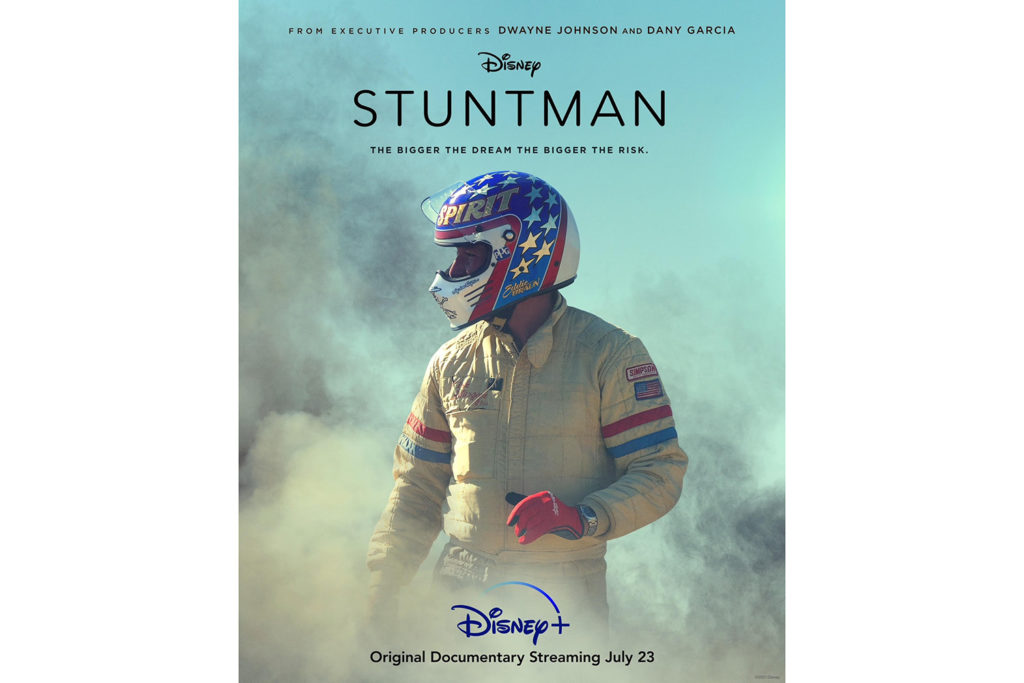
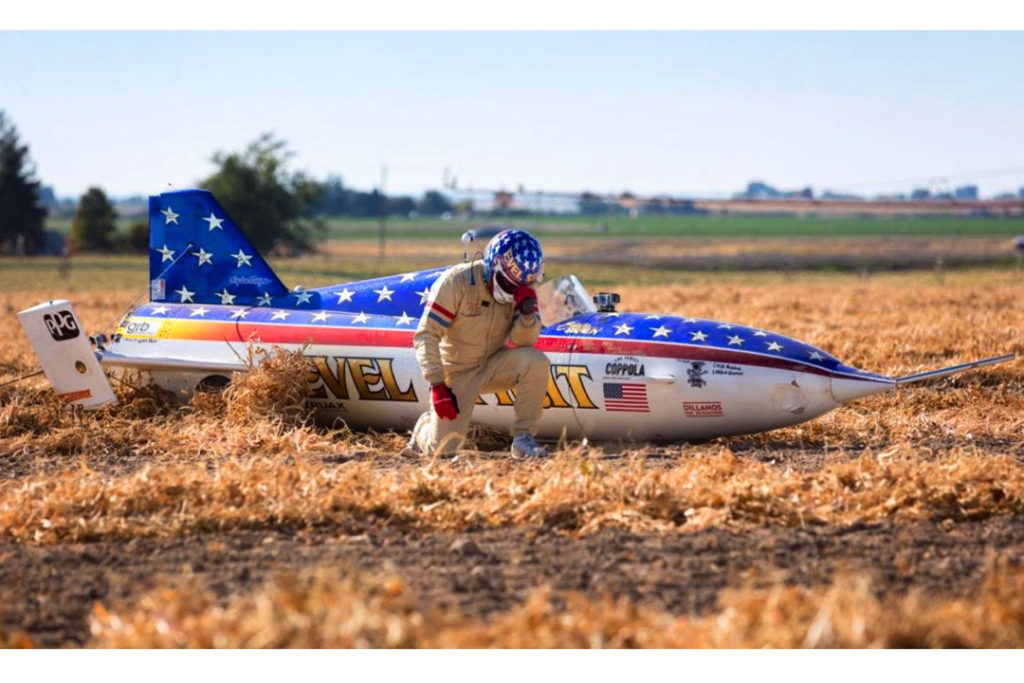
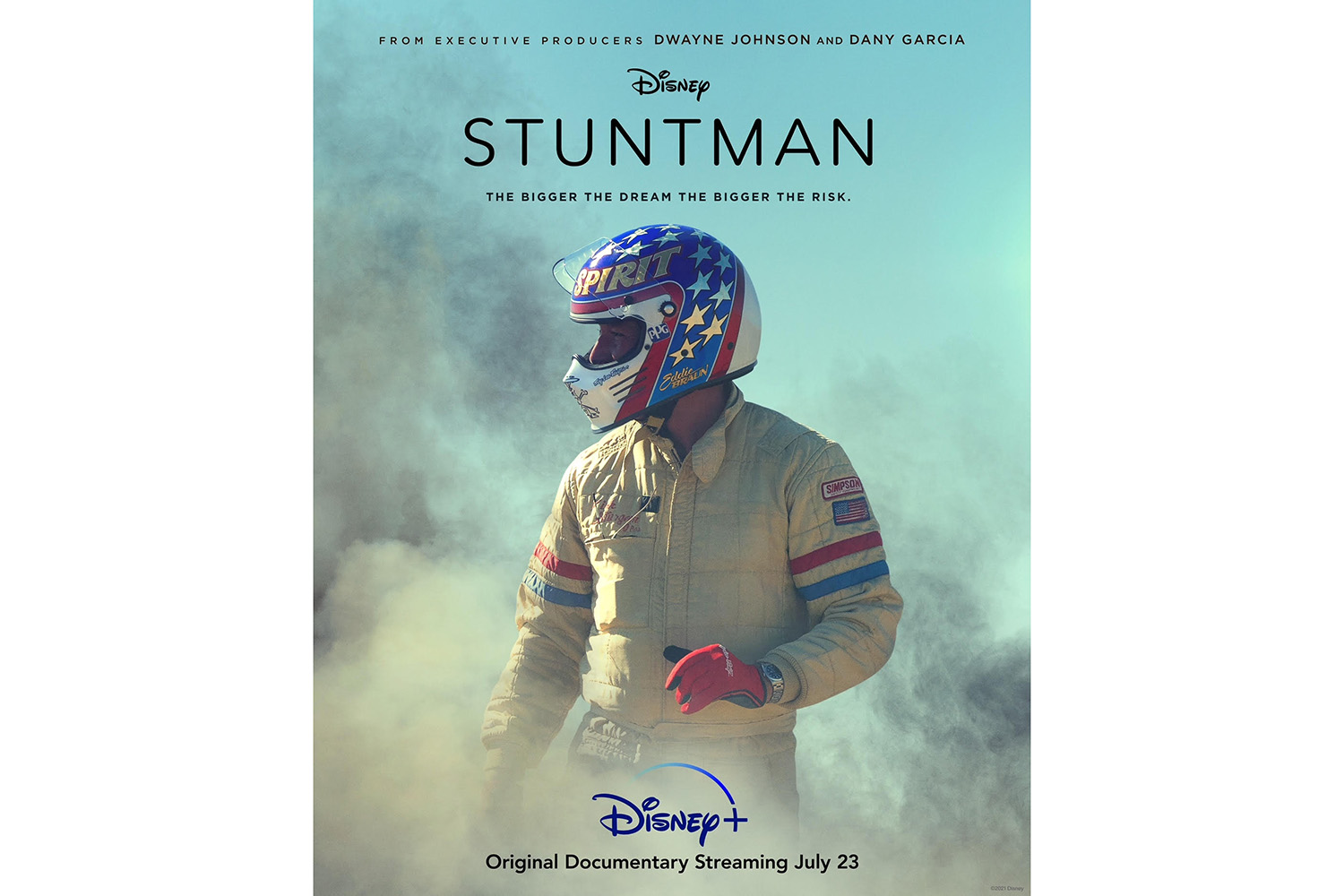
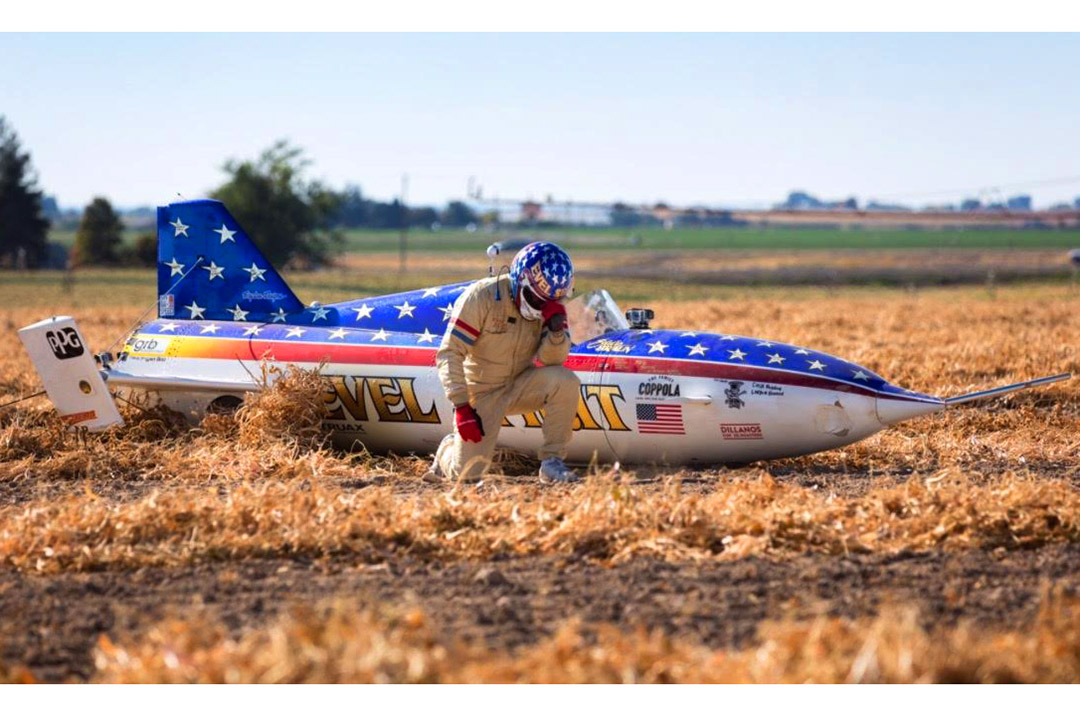
Our guest on Episode 24 of the Rider Magazine Insider Podcast is Eddie Braun, a Hollywood stuntman who has worked on hundreds of TV shows and feature films, including The Avengers, Transformers, and the Rush Hour trilogy. In 2016, Braun successfully flew a steam-powered rocket over Snake River Canyon, completing the ultimate stunt that defeated legendary daredevil Evel Knievel in 1974. Braun did the stunt in “Evel Spirit,” a rocket rebuilt using engineer Bob Truax’s original design for Knievel’s SkyCycle, with the only change being a modification to the parachute. Braun’s 10,000-horsepower rocket reached 439 mph in 3 seconds and hit 8 Gs, soaring 3,000 feet across the canyon. Braun’s epic journey was chronicled in “Stuntman,” a documentary executive produced by Dwayne “The Rock” Johnson and Dany Garcia, featuring a never-before released clip of rock guitarist Slash playing “Rocket Man” in support of Eddie. “Stuntman” is available on Disney+.
You can listen to Episode 24 on iTunes, Spotify, and SoundCloud, or via the Rider Magazine Insider webpage. Please subscribe, leave us a 5-star rating, and tell your friends! Scroll down for a list of previous episodes.
Eddie Braun’s “Evel Spirit” 10,000-horsepower steam-powered rocket hit 439 mph in 3 seconds and pulled 8 Gs.
Braun takes a moment to himself after successfully flying the “Evel Spirit” rocket over Snake River Canyon.
Just another day at the office for veteran Hollywood stuntman Eddie Braun.
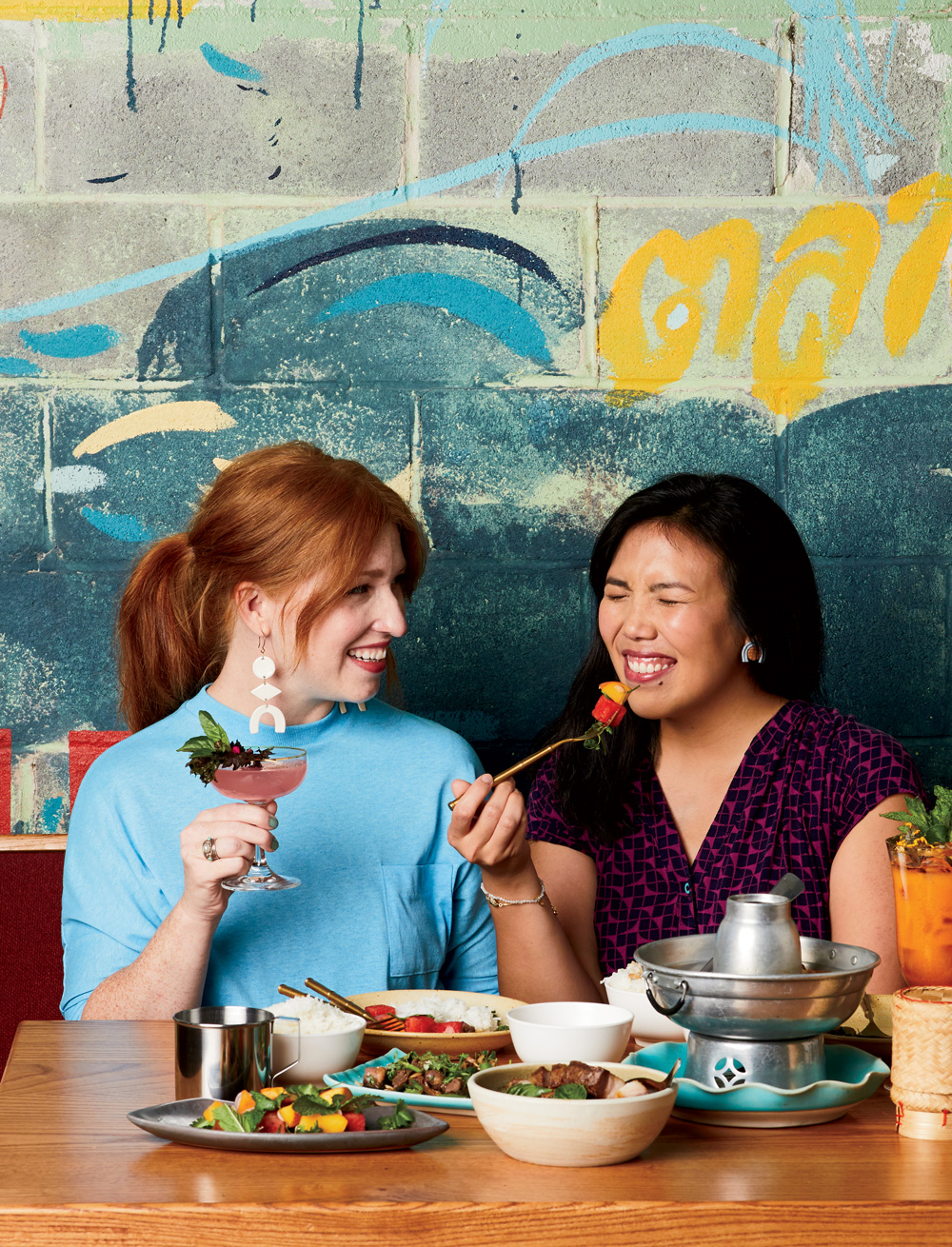
What began as a Thai pop-up with a fervent fan base is now one of the city’s can’t-miss dining destinations. Decorated with a lavish mural, lush green walls, and ceiling-hung flower pots, Talat Market stays on its toes and keeps diners on theirs with a daily-changing menu based on a winning concept: Thai technique, Georgia ingredients. In practice, that means dishes like yum phonlamai, a salad built around whatever fruit is in season (peach, melon, blueberries) dressed with a savory, funky mix of lemongrass, mint, cilantro, scallop floss, and fish sauce; yum khao tod, a crispy rice salad with housemade red chili jam; the meat salad laab, featuring ingredients as disparate as duck heart and sunchokes; crispy mussel pancakes; and much, much more. The drinks are as thoughtfully prepared (and as gorgeous) as the plates. When Parnass Savang and Rod Lassiter finally opened this brick-and-mortar space in the inauspicious month of April 2020, they were doing curbside service only, finding themselves selling out every night. Clearly, there’s a hunger for what they’re cooking—and it shows no signs of abating. 112 Ormond Street, 404-257-6255, talatmarketatl.com
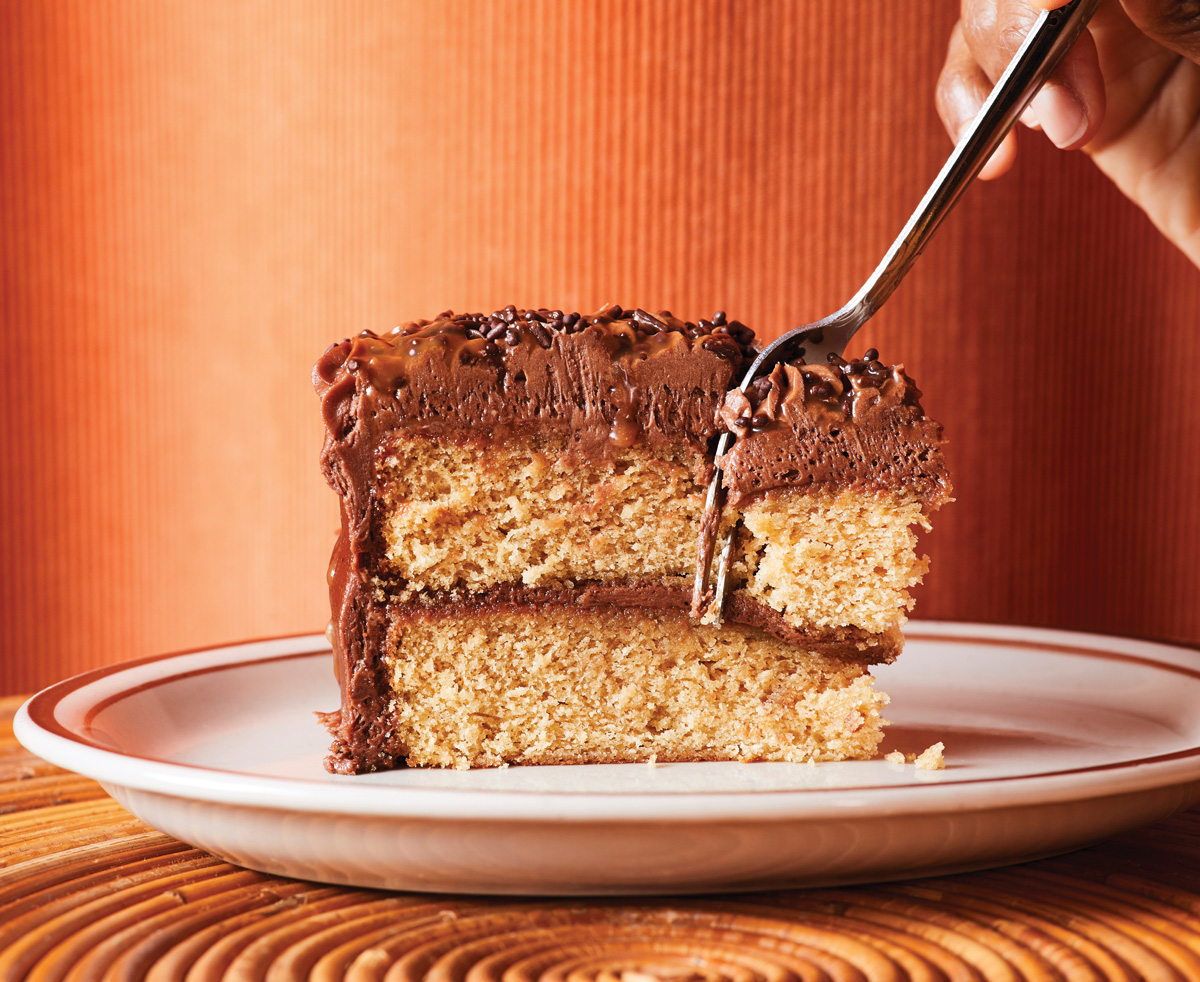
Don’t leave without snagging a slice of cake and a cocktail or two.
Photograph by Bailey Garrot
Wondrous drinks: The neon-colored Bird’s the Word contains gin, Manzanilla sherry, green chartreuse, lime, nutmeg, and pineapple soft-serve.
The American diner is a form that can hardly be improved upon—but if it could? It might look something like this spot in the Atlanta Dairies complex, which eschews retro kitsch in favor of a riotous aesthetic mashup: This is a diner with groovy wallpaper, ’70s lighting, and pictures of Prince on the wall, plus a bartender behind a curved counter slinging potent cocktails. (Come to think of it, maybe there was something the old-fashioned diner was lacking.) It sprang from a partnership between Big Citizen (the group behind Bon Ton and the Lawrence) and King of Pops, whose soft-serve is available here on its own or blended into boozy drinks. Bar manager Jac Campbell is responsible for those tipples and others, while Sarah Hagamaker makes the gorgeous layer cakes that greet customers as they walk in. Like the restaurant’s designers, opening chef Justin Dixon—who has recently moved on to other pastures—was refreshingly unfaithful to the diner concept: His often brilliant interpretations cover not just the classics (English breakfast, meatloaf melt with pimento cheese and bacon jam) but also wonderful mushroom empanadas and chicken wings prepared “Buford Highway style,” with chili oil, peanuts, and lime. 777 Memorial Drive, 404-331-0909, wonderkidatl.com
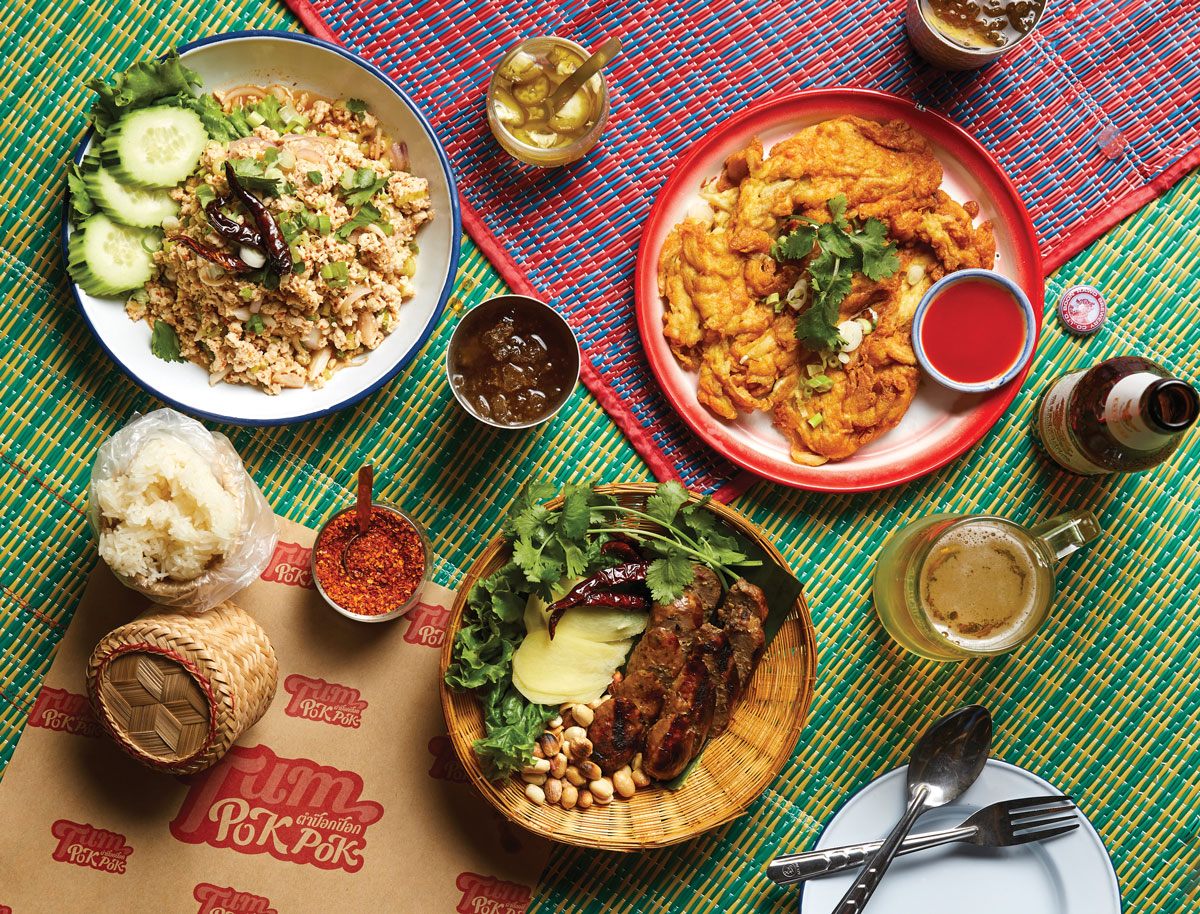
Clockwise from top left: larb gai (minced chicken with lime and chili), crab omelet, and Isan sausage
Buford Highway has long lacked much of a Thai scene—so when Tum Pok Pok opened up in the same blessed BuHi shopping plaza as Food Terminal and Saigon Tofu, it was a welcome addition to our city’s most international corridor. This isn’t just an Atlanta Thai restaurant, though—it’s easily one of the city’s best. Proprietor Adidsara Weerasin focuses on the food of Thailand’s northeastern Isan region, which shares not just a border with Laos but some culinary commonalities: heat, funk, and lots of salads, including the minced-meat salad known as larb. Weerasin’s larb—pork or chicken, seasoned with lime juice and tiny chilis, ginger, peanuts, and scallions, and served with sticky rice and cabbage leaves—offers a world of bracing flavor. So do her various iterations of som tum, a fiery and funky salad made from shredded raw green papaya. Weerasin herself is from the south of Thailand and has been rolling out nightly specials that reflect that region, like a crab omelet and kua kling: a perilously hot but tasty dish of ground pork with red curry paste and shaved makrut lime leaves. 5000 Buford Highway, 404-990-4688, tumpokpok.com
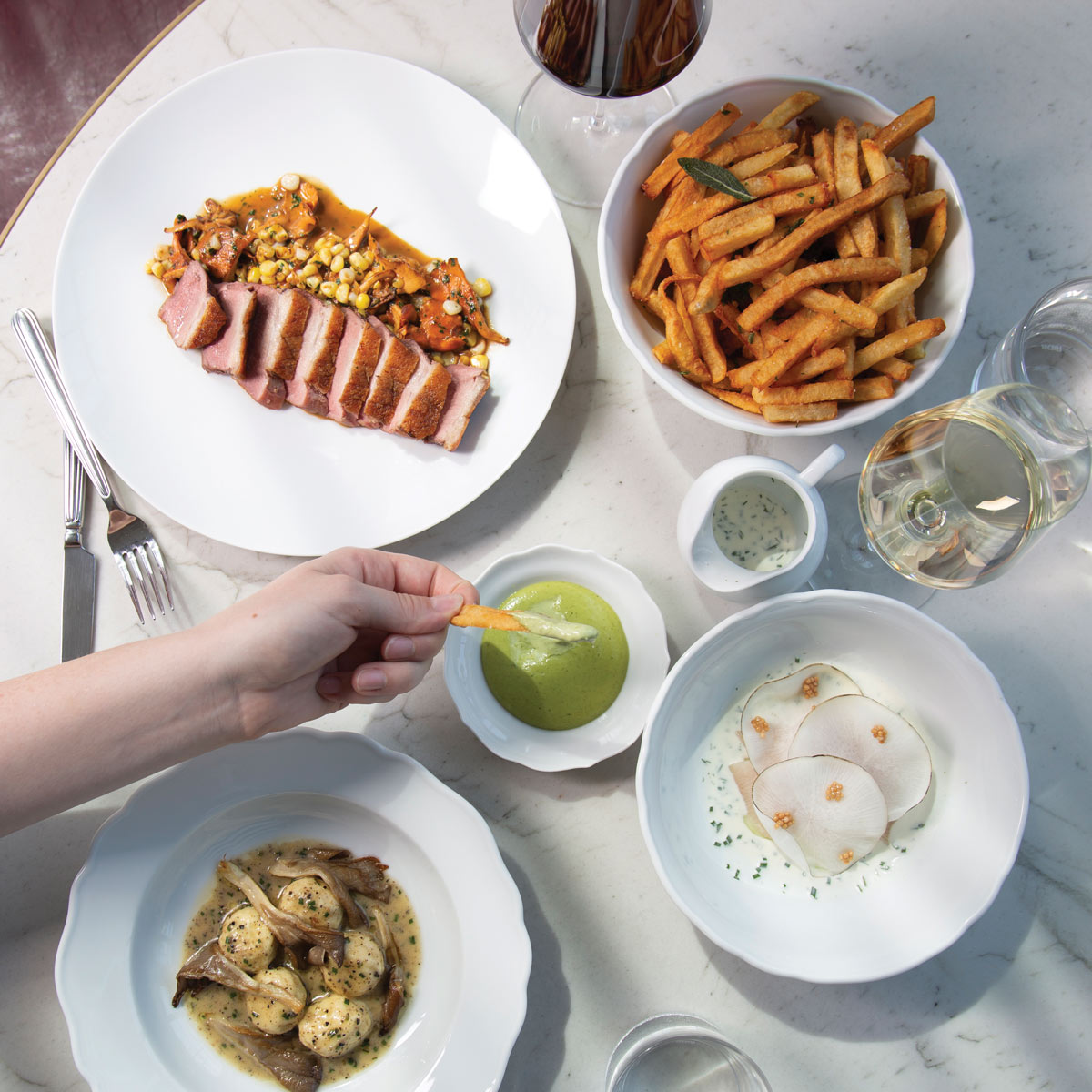
Opening over the summer, this Buckhead wine bar felt like an answer to the many long and lonesome months that came before. Or maybe it just felt like a sigh of relief: What sweeter pleasure than to share a plate and a bottle with an old friend—or a new fancy—in this chic but inviting dining room on a busy Buckhead corner? A fan of the painter Lucian Freud, co-owner Katie Barringer is responsible for the handsome array of arty books lining one wall of the restaurant (Peruse! They’re for sale) while her partner, Jordan Smelt (formerly of Cakes & Ale and Bread & Butterfly), is the one amiably guiding customers through the voluminous wine list. The cellar may be spacious, but the larder ain’t: Chef Brian Hendrickson’s tightly focused, finely executed menu features a handful of small plates, a few entrees, and a bowl of french fries worth ordering for the lemony sorrel mayo alone. Dishes change seasonally, but expect fare like buttery raw hamachi and thinly sliced black radish, doused tableside with a vinegar-spiked buttermilk dressing, and ricotta gnudi with truffle and maitake mushroom and a luscious beurre monté. Butter sauce, strip streak, roast duck—there’s some rich stuff here, but it is nowhere overwhelming; Hendrickson knows how much pleasure resides in a light touch. 3005 Peachtree Road, 404-549-2655, lucianbooksandwine.com
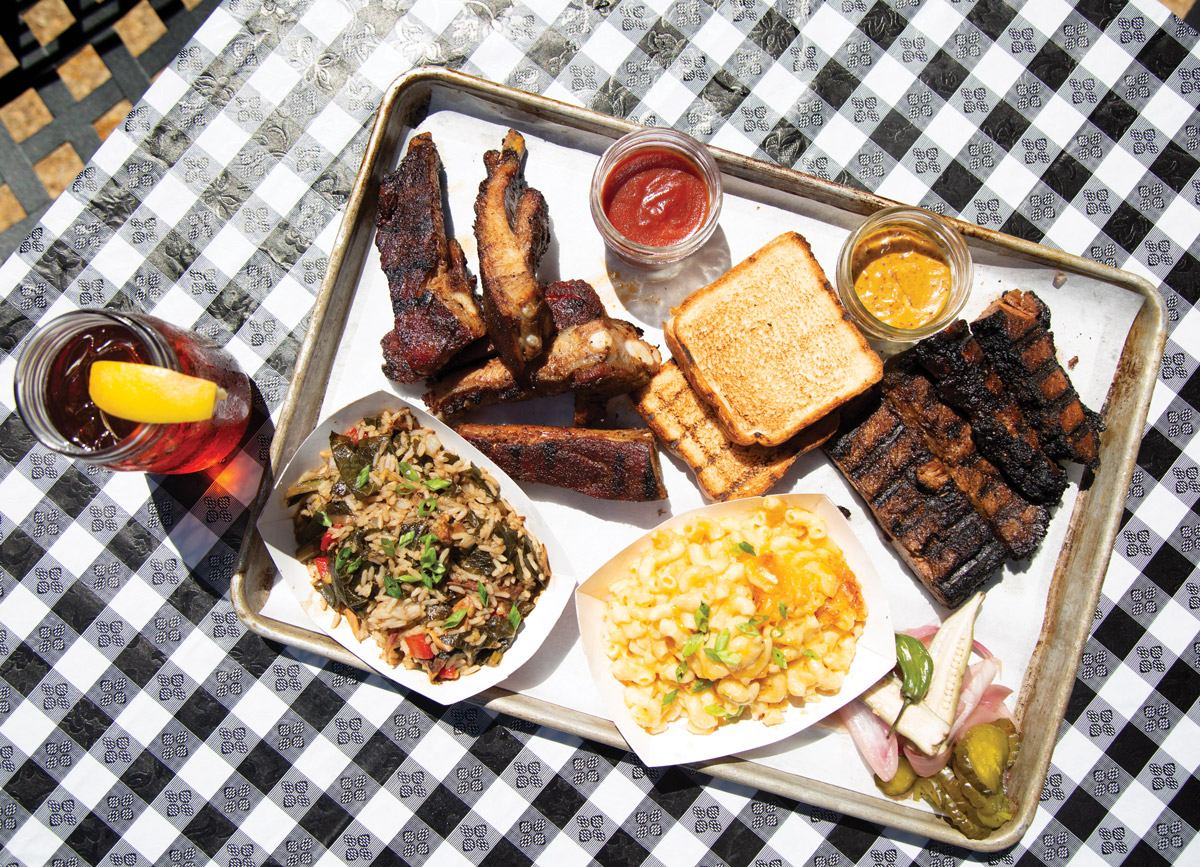
Ribs, collard fried rice, and smoked mac and cheese at Lake & Oak
The “neighborhood” in the name isn’t just a gimmick: This place has become a legitimate hang for those lucky enough to live near the intersection of 2nd Avenue and Hosea L. Williams, as well as for ’cue devotees who know it’s worth the trip. (The name nods, too, at this restaurant’s location at the junction between the East Lake and Oakhurst neighborhoods.) Fans flock here (SORRY) for the chicken, brined for a day to enhance its tenderness and slathered in a collard pesto; for the coffee- and pepper-rubbed brisket; for the rib slabs and the cider-vinegar pulled pork; and for creative sides like collard green fried rice. Opening in July 2020, Richards and partner Joshua Lee took the pandemic in stride, inviting diners to hit up the takeout window and keep their social distance on a convivial streetside patio. That happy al fresco scene (and the smells wafting from the Big Green Egg smoker out front) beckons passersby into an instant top-tier player in a city that doesn’t lack for barbecue joints. 2358 Hosea L. Williams Drive, 404-205-5913, lakeandoakbbq.com
The restaurant’s mascot and namesake: a conspicuously little bear–like Great Pyrenees named Fernando
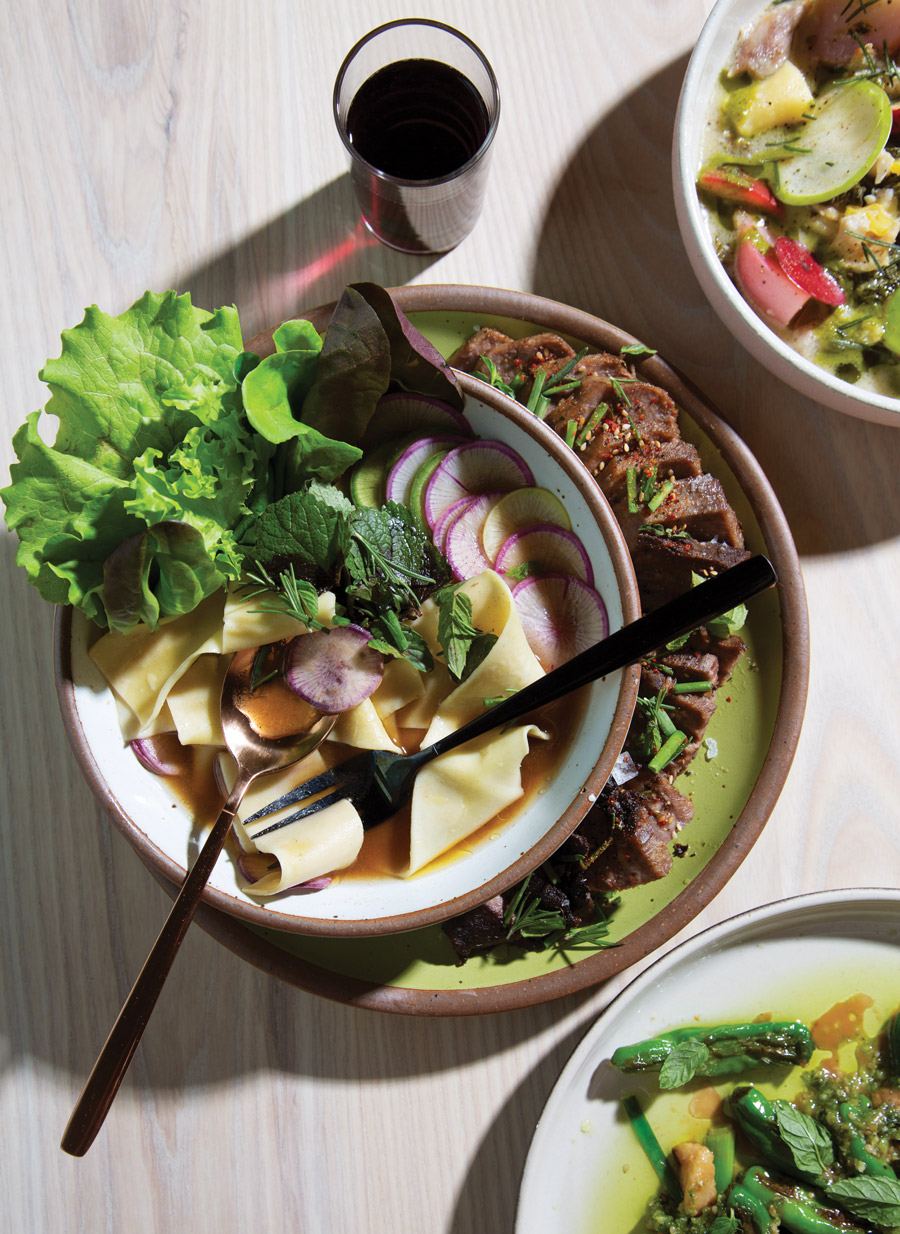
Jarrett Stieber has proved time after time that he’s one of Atlanta’s most original talents. After making his name with the pop-up series Eat Me Speak Me, Stieber finally made the move to brick-and-mortar with Little Bear, which opened in Summerhill in February 2020. Luckily, everything went really great, and Stieber immediately found the success he deserved. Haha jk! Actually, everything was a total disaster almost right away. But Stieber, pivoting to a takeout-only model, endured through the pandemic, finally welcoming diners this past May to sit down in Little Bear’s bright, modern dining room and enjoy his weird, iconoclastic, Jewish-ish/Sichuan-ish cooking. The engagingly written menu changes with the seasons, with temporary treasures (one night recently: Georgia shrimp with fig sweet-and-sour sauce and shishito peppers; eggplant with peaches, whey sauce, chili paste, and “herbs out the ass”) joining a few repeat faves, like chicken thighs with dan dan yogurt and Manischewitz vinegar and a striking black and white torte. The cocktail program and wine list are as thoughtful—and irreverent—as the food. 71 Georgia Avenue, 404-500-5396, littlebearatl.com
The Chastain’s patio is open all day, with fare transitioning from beautiful morning pastries to comforting evening entrees.
Both the Chastain and its opening chef have serious pedigrees: Once called the Red Barn Inn and a longtime hangout for Buckhead nabobs, the building became the Horseradish Grill in 1994 under Scott Peacock, a key figure in the modern Southern culinary renaissance. The guy in charge now, Christopher Grossman, has worked at the French Laundry, Aria, and Atlas, but part of the wonderful surprise of the menu he’s put in place here is how approachable it feels—particularly to anyone who’s fond of comfort food and thought they’d tasted it all. It works because it’s uncomplicated: turkey wings, flawless cheeseburgers, mac and cheese, warm chocolate chip cookies under a melting cap of ice cream. What makes a difference is Grossman’s thoughtful, elevated technique, the restaurant’s superb wine and cocktail program, and the centrality of ingredients procured both from local farms and from a handsome on-site garden. (Parts of the building’s original stonework are now used for storing those homegrown veggies.) Dinner isn’t the only game here, either: The Chastain’s shady patio makes for a lovely breakfast and lunch spot, with fabulous pastries made in-house by Grossman’s fellow Atlas alum Christian Castillo. Who said simplicity was boring? 4320 Powers Ferry Road, 404-257-6416, thechastainatl.com
Driving out on Buford Highway toward Norcross, you’ll hear the siren songs of about a thousand incredible restaurants before you even make it to Nur Kitchen’s parking lot—but if it’s some of the metro’s best mezze you’re after, it’s best to put your hands over your ears, keep your eyes on the road, and arrive here hungry. This Middle Eastern spot opened in a splashy, Korean-owned shopping center in 2019, but it took the advent of Shay Lavi in 2021 to put it on the culinary map. A spectacular talent whose range continues to reveal itself, Lavi gained fans through his catering business Let’s Eat and in the kitchen of the delicious but short-lived downtown restaurant Rozina Bakehouse. He’s a magician with classics like hummus and baba ghanoush, and his eclectic background—Lavi was born in Israel, of Turkish and Libyan descent—informs the wide Eastern Mediterranean scope of this restaurant, whose pantry of inspirations stretches “from Turkey to Jaffa Port.” That means fantastic menu mainstays like schnitzel, shakshuka, and a mussel sandwich with garlic sauce that’s a staple of the Turkish seaside. 7130 Buford Highway, 678-691-3821, nurkitchenusa.com
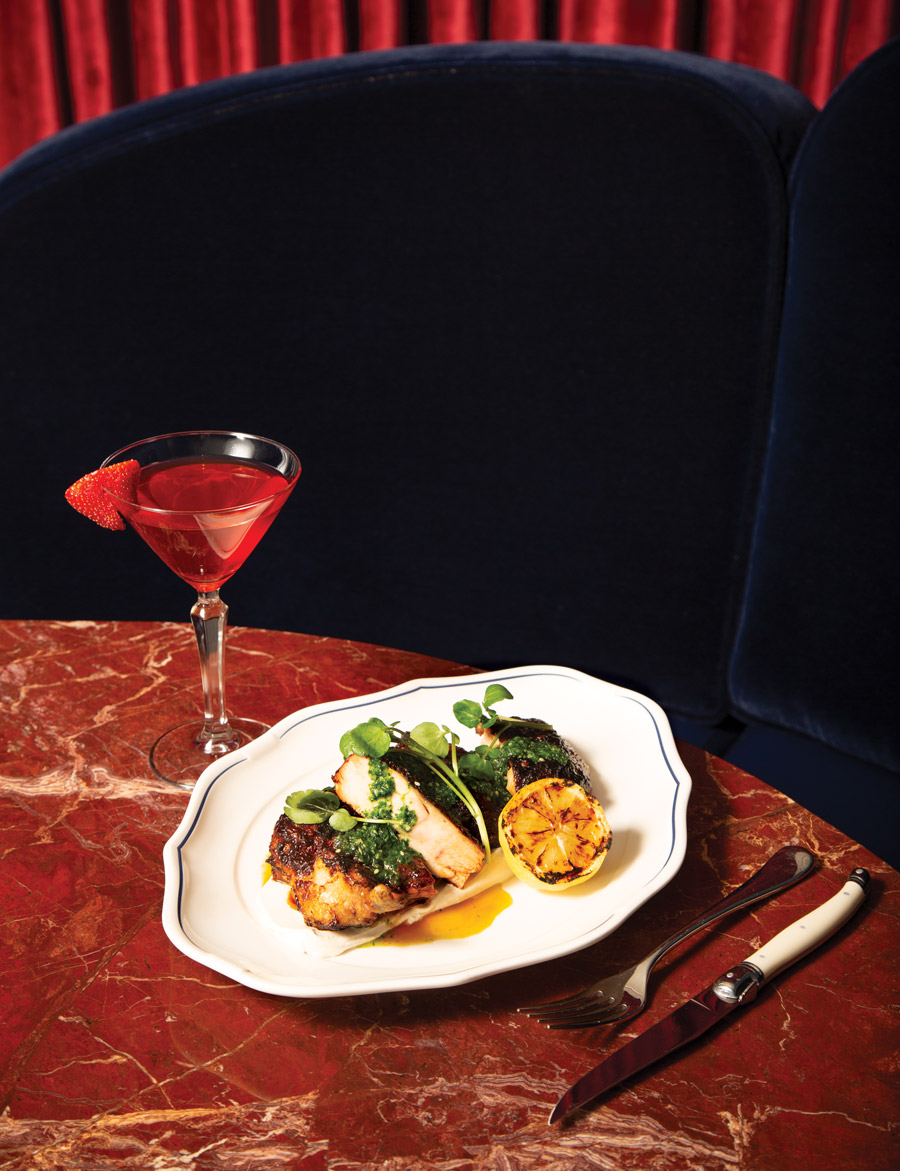
The Betty’s grilled Cornish rock hen and Retropolitan cocktail
The glamorous design, boozy cocktails, and ambitious menu—created by chef Brandon Chavannes, formerly of St. Cecilia and King + Duke—have conspired to create an occasional stampede in the direction of the madly attractive new Kimpton Sylvan hotel, which this restaurant anchors. The concept is “midcentury supper club,” but put your mind off of soggy shrimp cocktail: Here, that classic app gets a beautiful makeover, served head-on with cocktail sauce spiked with fermented lime and warming Indian spices. An Atlanta native born to Norwegian and Jamaican immigrants, Chavannes flavors his food with a deft hand and a global reach: Broiled lobster with sake lees, delicate celery ceviche with serrano ham and pecorino cheese, and well-prepared prestige steak are all potent sources of pleasure, but one of the restaurant’s secret weapons is its fabulous pasta selection (e.g., spaghetti with lobster, Calabrian chili, basil, and heirloom squash). Some may prefer a calm lunch on the terrace over dinner in a noisy dining room, but the Kimpton’s got other five-o’clock-somewhere options: the verdant Willow Bar and the rooftop lounge St. Julep, both of which Chavannes also oversees. 374 East Paces Ferry Road, 470-531-8902, thebettyatl.com
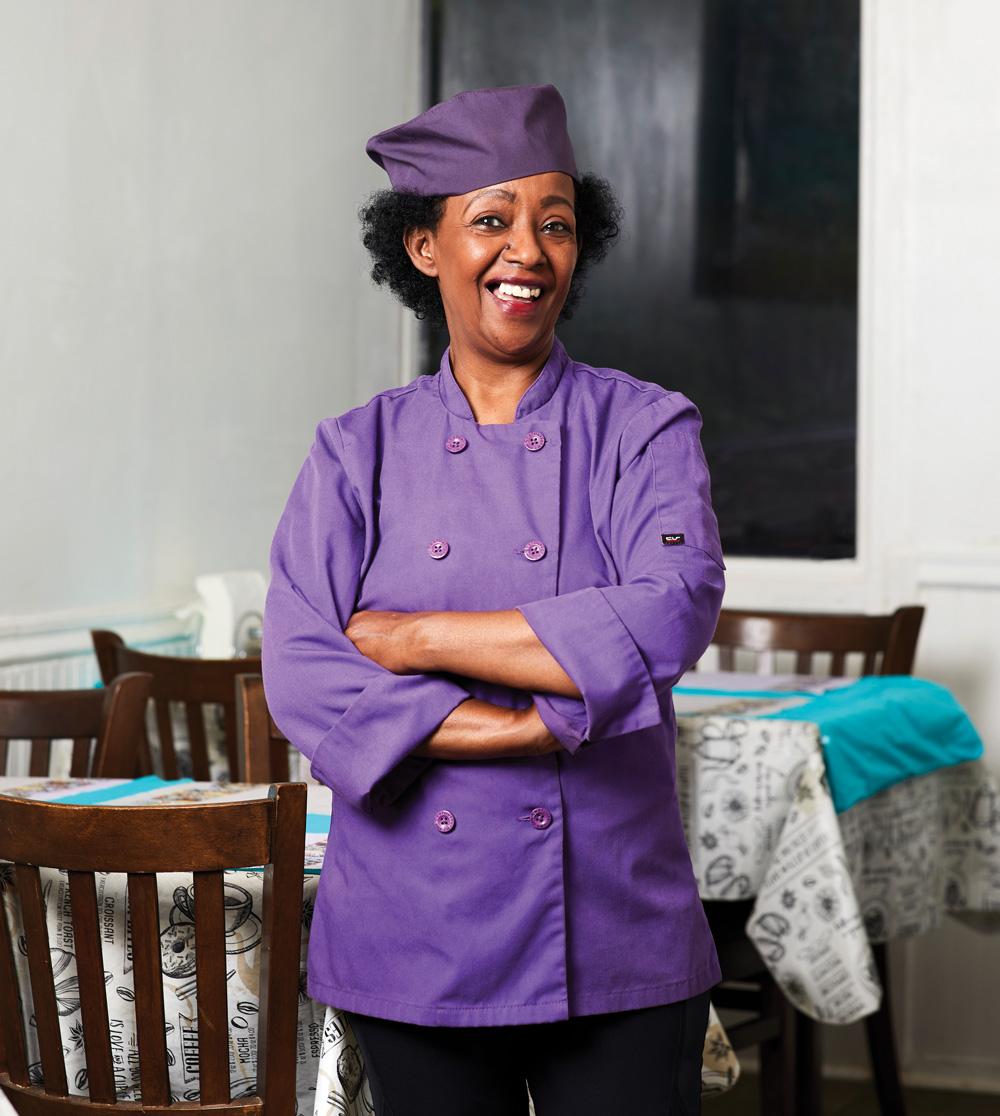
Humble even by Clarkston standards, this minuscule spot from Woinshet Legesse Emory—aka Chef Winnie—is an international wonder with an Ethiopian heart. Born in Addis Ababa, the personable chef worked in a series of hotel restaurants in the U.S. before striking out on her own. When it comes to the tried and true, her renditions are exquisite: Emory’s combo kitfo (ground beef seasoned with the brightly colored chili blend mitmita and sauteed in purified butter) and fitfit (torn injera soaked in spicy sauce) is one of the best dishes we ate all year, and her many vegan or vegetarian entrees easily compete in the big leagues. (It’s not just all vegetables and legumes, either: Fans of the au courant plant-based proteins, like jackfruit and vegan beef and chicken products, will find them here.) And that’s just the half of it: Chef Winnie is equally adept with curries, fish tacos, Philly cheesesteaks, and bespoke creations like an Ethiopian-spiced quesadilla stuffed with chicken and veggies. There may not be much of a view, but her outdoor tables are as much in demand as the tiny dining room she rules. There are no strangers at Chef Winnie’s. 4238 East Ponce de Leon Avenue, 404-228-9152, chefwinnieskitchen.com
If they’re available, do NOT fail to pick up a pack or two of Supremo’s gummies, doused in sweet-tart-spicy chamoy.
The entire world will stop for an exceptional taco or three. Supremo built its rep as a taco truck doing late-night test runs at 8Arm, which is co-owned by Supremo partner Nhan Le. It eventually landed a spot on Memorial Drive, though the counter-service, takeout-only model means it retains some streetside vibes—and helped it weather the pandemic, when Supremo was more impervious than most to lockdowns and mandates, and when its legions of fans found great comfort enfolded in its astonishing handmade tortillas. Supremo sold out often during the pandemic and still does: particularly, crowd-pleasers like lamb barbacoa with chili de arbol, chicken mole poblano, black bean with squash and tomato, aguachile tostadas, fried quesadillas . . . actually, you know what, better get here early just to be on the safe side. Chef Duane Kulers’s reverence for traditional SoCal-Mexican food trucks, and the depth of flavor the kitchen coaxes from its meats, veggies, and miraculous sauces, certainly reward repeat visits. 701 Memorial Drive, 404-965-1446, supremotaco.com
Originally, pho was made with beef. In 1939, though, government restrictions on the sale of meat in Vietnam led to the popularization of pho ga, a version of the complex Vietnamese soup made with chicken instead. “Things got heated,” writes Andrea Nguyen in The Pho Cookbook, as purists decried what they considered an illegitimate version. But poultry persisted, and luckily so—chicken brings a completely different level of sophistication to a cooking process that involves charring aromatics (onion, ginger) and simmering them slowly with star anise and other spices, until what was once a mere broth becomes a magical elixir. In Philadelphia, a Vietnamese couple made a name for themselves—and their chicken soup—with Cafe Pho Ga Thanh Thanh; their son, Tony Le, expanded the family legacy by opening this sweet little cafe in a Norcross shopping center. You know what to order. Expect a fragrant bowl of boiled white or dark meat, golden broth, and your choice of noodles (some of them homemade), served alongside a plate piled with bean sprouts, pepper slices, lime wedges, and herbs. Happily, the chicken tradition continues to spread: Le and business partner Vinh Nguyen have added a second location in Duluth, with a third in the works in—if you happen to be in the neighborhood—Las Vegas, Nevada. 5495 Jimmy Carter Boulevard, suite A2, 678-691-0503, phogatonytony.com
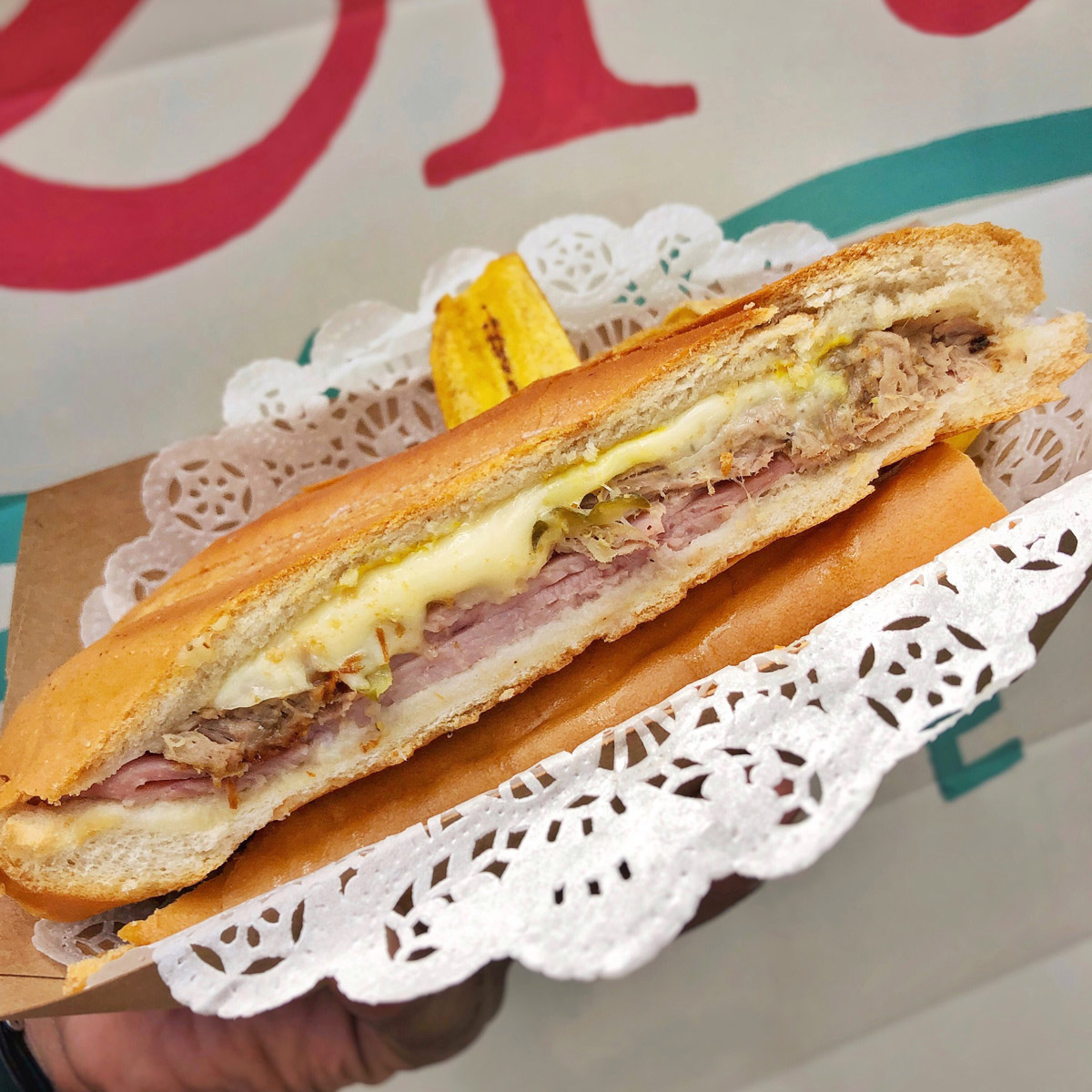
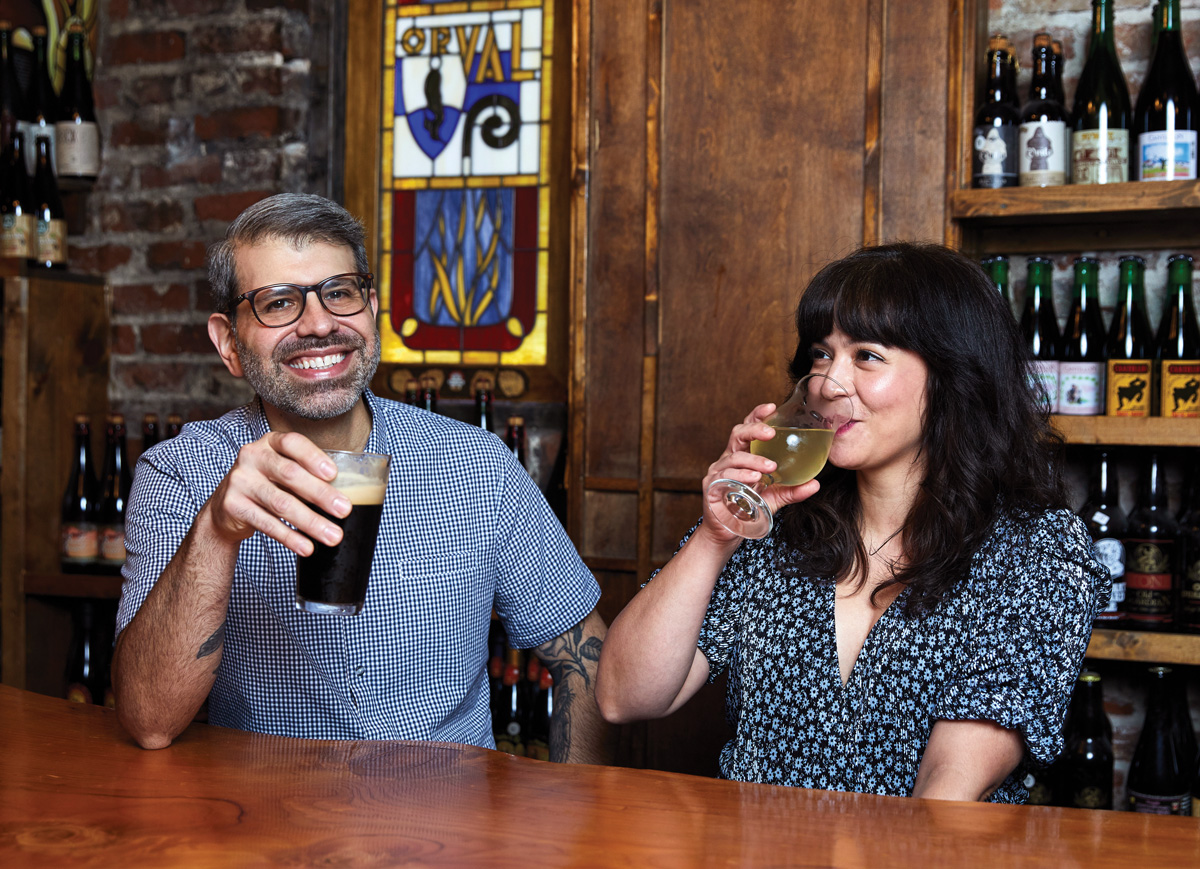
Anyone unsure about the Cubano—a sandwich that, in unpracticed hands, can be salty, greasy, heavy—needs to make haste to a proper Cuban bakery, and do we ever have a suggestion for you. The good people behind this cute-as-a-button operation, Manny Rodriguez and Stacie Antich, first opened their food truck in 2016, making the leap in 2020 to a narrow storefront in a busy Decatur strip mall. They overlook no detail in the construction of the iconic Cuban sandwich: The bolo ham is delicious, the mustard is sharp, the mojo-roasted pork carries an enchanting hint of the citrus it was marinated in, and the melty Swiss cheese and pressed, crunchy bread elevate this creation to near-pizza levels of perfection. (Pizza comparisons are not something we undertake lightly around here, by the way.) Cubanos and other sandwiches (medianoche, pan con bistec) aren’t the only items Buena Gente has aced: The glass dessert case is packed with perfectly rendered pastries from chicken empanadas to guava-filled pastelitos, arroz con leche to tres leches cake. It’s masterful Cuban baking that reminds us today and tomorrow can be as good as we make it. 1365 Clairmont Road, 678-744-5638, buenagenteatl.com
When sharing dining experiences with out-of-town guests, I want to expose them to the breadth of cuisine available in the ATL. Fine-dining destinations, with award-winning chefs using locally grown ingredients, are numerous. Buford Highway is a veritable United Nations of culinary delights. We’ve got a good representation of BBQ and a host of food halls. Unbelievably, what can be hard to find is a good piece of fried chicken and a homemade yeast roll! That’s when we head to Mary Mac’s Tea Room, serving Southern comfort for over 75 years. The food is made from scratch—no frozen rolls, no box-mix cornbread. The corn is shucked, the greens are cleaned, and the macaroni and cheese is made in house, not defrosted. There’s a reason the Georgia Legislature once declared it “Atlanta’s dining room.” Makes me want a cup of potlikker right now . . . marymacs.com
Fried catfish and grits. Since 1984, it’s been among the most popular dishes at Thumbs Up Diner and keeps bringing me back. On the weekends, you’ll see dozens of folks lined up outside the iconic Edgewood Avenue location in Old Fourth Ward, many dressed in their Sunday best—though not for Bloody Marys or eggs Benedict. And that’s part of the charm. Thumbs Up’s breakfast classics—eggs, bacon, skillet potatoes, biscuits—aren’t fancy but are very likely the best you’ve ever had. Plus, servers like Kav, Shorty, and Latasha have waited on me since I was in college, always genuine, kind, and willing to put in a side order of sauteed veggies (not on the menu) to go with my fish and grits. It may be the one place in the city I will always go back to, because, in so many ways, it feels like an extension of home. thumbsupdiner.com
Located inside a true Atlanta institution, Midtown’s Cheetah Lounge, Alluvia serves food worthy of connoisseurs . . . with a side of adult entertainment. All-time faves are the wings—both sweet chili and buffalo are delicious, obviously—and I always get the tender, juicy, and flavorful lamb lollipops. Besides, finger foods like wings and lamb lollipops let you stuff your face while keeping an eye on the show. Wanna feel like a boss? Get their big-ass ribeye and lobster tail and make it rain! thecheetah.com/alluvia
Nearly a century ago, the Atlanta Woman’s Club opened the Municipal Market, an ambitious project that housed the city’s first farmers market and food hall. Today, I find the Municipal Market to be a respite from the monotony of every other urban food hall. In this historic downtown building, guests on the food tours that I lead discover the cuisine of the African diaspora. They might try a South African steak and stout pie at Panbury’s, Ethiopian falafel at Metro Deli, Afro-Caribbean oxtail at Afrodish, or Creole rum pralines from Miss D’s. For vegans, I suggest the crispy buffalo cauliflower at Loco Coco, the “chicken” sandwiches at the Chik’n Factory, and the molasses pecan gelato at Three Peaches. In addition, the market serves as one of the few outposts for fresh produce and meats in downtown’s food desert, making it a crucial community resource. municipalmarketatl.com
For years, whenever anyone asked me for a meeting, my next question was automatically: “Have you been to Bon Ton?” Regardless of the answer, that’s where we were going. I found out about this New Orleans–style bar, in a pink brick building north of Ponce in Midtown, from my industry friends. On my first visit, I played it embarrassingly safe and had the house po’boy. While solid, it’s the Cajun shrimp burger that continued to drag me back . . . well, that and the community. If you’re looking for one of your favorite bartenders in the city, on any given night after-hours, you can find them there perched on a stool, watching as the Mardi Gras beads sway against the bottles on the back bar. bontonatl.com
I worked there back in the day when I was a line cook. Still to this day, this is the best place I’ve ever worked. The food was and is solid, one of the best bars in the city, solid brunch. And all-around good people. localthree.com
Back in 1982, before Atlanta was a TV show—before Donald Glover was even born—a man named Paul Juliano opened J.R. Crickets in an old building on Spring Street in Midtown. This green, red, white, and yellow rectangle of a dual-level restaurant, with a mascot that looked like a love child between Jiminy Cricket and Mr. Peanut, was decidedly tacky. But it also had outstanding wings made in the style of Juliano’s hometown of Buffalo, New York. The chain has since expanded to South Cobb, Vine City, Union City, State Farm Arena, and beyond and remains overwhelmingly supported by Black customers, many of whom may have no idea that Juliano is a white guy from out of town.
Not that they’d care. I certainly don’t—I gladly pay the price (recently increased) for JRC’s hot wings. I know all the names of the off-menu wings by heart: Before “lemon pepper wet,” they were called “Fester,” and you could get them if you knew to ask. The fries have always been delicious, along with the rest of the menu’s assorted tavern bites, Hennessy mixed drinks, and cold pitchers of Heineken. Every location, from OGs like Cascade to recently opened sites like downtown College Park—even the fake “original” that occupies the former IHOP on North Avenue—is a great place to see and be Atlanta, whether or not Donald Glover shows up. J.R. Crickets is one of the great TV One Unsungs of the city’s sports-bar food scene, and if I may speak for Black Atlanta for just a moment: I believe wholeheartedly that J.R.’s crowd would welcome more of their white neighbors, just as more of white ATL would love being there—especially when the Falcons are on the big screens. Don’t miss out on one of this city’s greatest food institutions, where “old,” “new,” and “true” Atlanta come together, and where chicken is still chicken, but the wing will always be the thing. jrcrickets.com
When the “restless chef” Peter Chang presided over Tasty China in 2006, he turned heads in the Atlanta food scene with his arsenal of aromatic seasonings, deep flavor, and spice. And while Chang’s stay was all too brief, the restaurant—now with locations in Smyrna and Ponce City Market, in addition to the Marietta original—has remained a go-to for lovers of Sichuan cuisine. My family and I stumbled upon Tasty China when we moved here from Miami four years ago. Since then, we’ve been regulars, popping in whenever we’re craving dishes with a little heat. The “hot and numbing” options—from beef to tofu and bamboo fish—bring a kind of addictive, euphoric burn. Other standouts include the dan dan noodles, fried eggplant, braised fish in red chili oil, and spicy Sichuan chicken with peppercorns. My nine-year-old daughter always makes sure we cap off our visit with at least one of her favorites, like sweet soup dumplings or deep-fried sesame balls. tastychina.net
Manny Rodriguez and Stacie Antich at the Porter Beer Bar
We’ve been going to the Porter since it opened in Little Five Points in 2008, shortly after we moved to Atlanta. The beer selection is great, but it’s the consistently delicious food—goat cheese fritters, fish and chips—that keeps it in heavy rotation. We find ourselves there again and again, whether it’s date night or taking out-of-towners. It’s the kind of place that feels like it’s been around forever. We hope it is! theporterbeerbar.com
No place has impressed me more with its pandemic pivot than this showcase O4W restaurant (arguably Atlanta’s best) turned specialty market. Though it now sells some items made by others, Staplehouse still prepares exquisite restaurant-quality house specialties of its own: refined chicken-liver tart with burnt honey gel, hefty pâté en croute, shapely beef-cheek hand pies, wagyu brisket with tortillas, pork ribs plate with shaved fennel, alkaline noodles with chili crisp, and a world of traditional pastries and cookies. All are crafted with the same power and grace that used to be the rule when Staplehouse served its food indoors. Now, you order at the counter (don’t skip the beauteous cocktails), and everything will be brought to you in a redesigned garden setting that confers a special magic on the experience. At five years old, Staplehouse may be too young to be considered venerable—but nevertheless writes its own place in the history of Atlanta. staplehouse.com
This is America’s restaurant, of course—but first, it was Atlanta’s, established in 1955 as a humble 24-hour diner in Avondale Estates. Across its seven decades, Waffle House has provided many of us with happy memories; here’s one of mine. It was a cold November weekend a few years ago, and I had been visiting a friend out of the state. Weary from driving as I crossed the Georgia line, I spotted the tall yellow beacon and pulled into the parking lot. A parking lot off a highway interchange near a state border—a weird kind of interstitial space, the kind of no man’s land where Waffle House shines brightest. It was a Sunday night, the place was absolutely deserted, and, as I dug into a plate of scrambled eggs and hashbrowns (smothered, covered, peppered), the restaurant’s speakers began ringing with the opening notes of an unmistakably jolly song—and then, the intro music gained steam, some sleigh bells kicked in, and there it was, Mariah Carey’s “All I Want for Christmas Is You,” ringing out across the empty dining room. What joy! Strange to say about a fast-food franchise, but Waffle House pulls off a specific kind of magic trick: Physically, you could be anywhere (the chain has outlets now in 25 states), but it almost always feels like home. wafflehouse.com
In the early ’90s, when Atlanta’s culinary stars were men like the brazen Paul Luna, known to jump on tables and drop trou, or the imperious Günter Seeger, who earned Atlanta its first Best Chef Southeast award from the James Beard Foundation, Marla Adams opened an unpretentious French cafe in a 1916 bungalow just across from Manuel’s Tavern. Of the three chefs, she is the only one still operating an Atlanta restaurant. She named the place Babette’s, after the Oscar-winning Danish film Babette’s Feast. And like the movie’s titular character, she has “the ability to transform a dinner into a kind of love affair, a love affair that made no distinction between the bodily appetite and the spiritual appetite.”
Though I’ve never met Adams, when I dine at her tables, I feel, well, nourished. Her small plates are whimsical, with offerings like steamed mussels with strawberry and serrano pepper sauce or pork and veal piroshkis with tarragon butter sauce. But the entrees are straightforward classics—filet mignon, veal piccata, baked halibut. The magic is in the details: Sauces always enhance, never overwhelm; potatoes are sliced thin and tender; green beans are firm and flavorful; the endless baguettes are always hot. Nothing is an afterthought. What Babette’s reminds me of most are cozy, neighborhood European restaurants which you can discover only by walking past, never by scrolling on Twitter. You may forget their names; but, with a nod to Maya Angelou, you’ll never forget how they made you feel. babettescafe.com
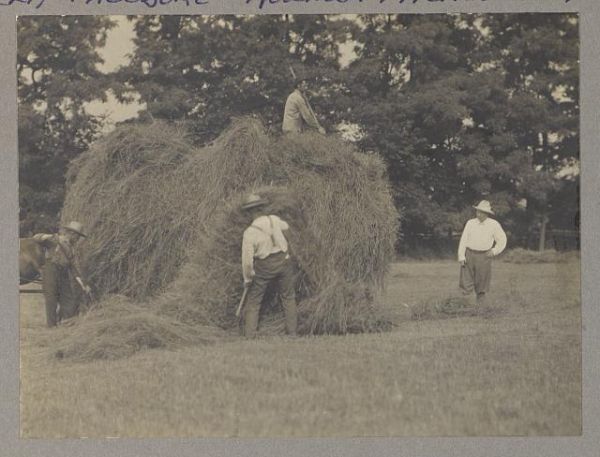
We know that President Theodore Roosevelt was a veteran, a fitness buff, and an outdoorsman. He always tried to stay in shape, and was no stranger to a hard day's work, even while in office. Roosevelt camped outside, even when it rained, and was known to pitch hay with the best of them. This endeared him to working people, except for those he outworked in public. In fact, he managed to leverage his physical strength to influence others in many ways. In other words, he wasn't above making hay out of it. This account quoted from a magazine was published in the Essex County Herald on November 22, 1907.
A delegation from Kansas visited President Roosevelt at Oyster Bay. The president met them with coat and collar off, mopping his brow.
“Ah, gentlemen,” he said, “dee-lighted to see you—dee-lighted! But I’m very busy putting in my hay just now. Come down to the barn with me, and we’ll talk things over while I work.”
Down to the barn hustled president and delegation.
Mr. Roosevelt seized a pitchfork and—but where was the hay?
“John!” shouted the president. “John! Where’s all the hay?”
“Sorry, sir,” came John’s voice from the loft, “but I ain’t had time to throw it back since you threw it up for yesterday’s delegation.”
There isn’t a very good reason for this post to exist other than to note that today, October 11, 2021, is the seven-year anniversary of what I termed at the time “The Miracle on the Brazos 2.0,” or what is more commonly referred to now as 61-58. Our hub for this game is still one of the most-trafficked of this site’s entire history and contains several of what used to be one of my favorite features of SBNation’s editing platform: fanshots. They were so easy. You could just insert a quote, video, image, or whatever directly into the timeline, hit publish, and it would open a new thread on command. It was fantastic. Alas.
Photo by Tom Pennington/Getty Images
WACO, TX - OCTOBER 11: Antwan Goodley #5 of the Baylor Bears scored a touchdown against Kevin White #25 of the TCU Horned Frogs and Chris Hackett #1 of the TCU Horned Frogs in the second half at McLane Stadium on October 11, 2014 in Waco, Texas. (Photo by Tom Pennington/Getty Images)
Anyway, as noted, today is the seventh anniversary of that game, which occurred in McLane Stadium’s first season. If you were at Saturday’s game against West Virginia, the scoring plays of this game were played at one point on the video board to rave reviews. And before anybody anyone says we should just get over this because it’s in the past and who cares, Gary Patterson himself brought it up two weeks ago completely unprompted in the aftermath of the whole SMU kerfuffle.
So head on over to that game’s Hub and relive a time when we still had the Flaming Bear Boat gif, Gif Posts, fanshots, and the Mothership wrote about games right after they happened!
My superpower is that I don't get hangovers. Not because I don't drink: I've been falling-down drunk on multiple occasions. But I'm always fine the next morning, much to the chagrin of my groaning companions fumbling for the Alka-Seltzer. I don't know why this is. I've always attributed it to some sort of Northern European genetic gift—like I've been built to survive in frigid atmospheres, hiking through snow with a baby on each hip, swigging from a flask of aquavit.
Not everyone is well-adapted to drinking alcohol. Some quickly become nauseated, get flushed, and generally find drinking very uncomfortable. As Edward Slingerland suggests in Drunk, you might expect that to be adaptively useful, from an evolutionary standpoint. Those who don't drink may be more productive members of society: They are more likely to show up to work on time, less likely to get into pointless fights or fall into ditches. You might expect a nondrinking tribe to have overtaken its alcohol-buzzed neighbors with its industriousness and civil harmony. By this logic, a biological imperative to avoid drink would have spread and become dominant.
But this has not happened. Evolution has spoken, and teetotalling has not overtaken the world. The alcohol-tolerant among us are hardly a dwindling group, its disadvantages notwithstanding. So Drunk sets out to answer the question of why we drink. Not just the cultural and social explanations, but why we keep doing it despite its destructiveness.
Most cultures are drinking cultures, and those who historically didn't make alcohol have used some other intoxicant, such as opium or marijuana. Human beings are better able than most other mammals to tolerate booze, allowing us to eat overripe fruit that has started fermenting—just as we are better able to benefit from other intoxicants. Many of the chemicals we take as recreational drugs are plant toxins, intended to ward off herbivores from eating that plant. But they hit the pleasure receptors in our brains (even if some, such as ayahuasca, also come with unpleasant side effects). We seem to have an unerring ability to find these substances too: "Among traditional societies," Slingerland writes, "if there is something in the biome that has psychoactive properties, you can be sure that the locals have been using it for millennia." The desire to get comfortably numb leads us to overlook all kinds of tedious production processes and other costs, such as bouts of vomiting.
Our longstanding taste for alcohol and other intoxicants shows that from the earliest days that humans were aware of reality, we've been seeking means to get away from it. And these escapes have had different social meanings: from the spiritual use of particular drugs to the everyday numbing of pain or boredom with alcohol (or cannabis, or whatever is available).
Brewing, one of our most widespread sources of intoxication, has long been considered to be a byproduct of settled agriculture: We had excess grain, so we turned it into beer. Slingerland considers the possibility that that's backward: that brewing was the original intention and bread the byproduct. Growing archaeological evidence supports this thesis, which in turn suggests that "the first large gatherings of people, centered on feasting, ritual, and booze, happened long before anyone had come up with the idea of planting and harvesting crops." One possible reason for this, Slingerland adds, is that intoxication can solve a lot of problems in a complex society, such as the issue of getting strangers to cooperate.
Alcohol is a social lubricant. We let our guards down when drunk, and this isn't always a bad thing. Many of us have experienced the shortcut to friendship that comes with having a few drinks with someone. Likewise, drinking is such an expected part of certain social interactions that the nondrinker can seem standoffish and unfriendly. In European cultures, drinking from a common cup (a "loving cup") became a part of ritualized bonding. Not just drinking at the same time, but imbibing from the same vessel, was a sign of unity. The chief example of this, of course, is the communion chalice. Sharing a drink brought us together.
Building community over a glass comes with a price, however.
Human ingenuity took our natural ability to consume some alcohol, which worked well for centuries with wine and beer, and turned it up to 11 with the development of distilling. Slingerland argues that our ancestral bodies were not ready for 90 proof substances, and that drinking cultures centered around hard liquor (as opposed to the Mediterranean style of wine with a meal) are the destructive ones. He describes this difference as "Southern" (wine or beer, with food) vs. "Northern" (vodka, whenever). The "problem" is not the wine glass but the shot glass.
This view was shared by William Hogarth, whose famous 1751 illustrations of "Gin Lane" and "Beer Street" showed the supposed social chaos caused by gin, as opposed to the harmony and peace of the beer-drinking district. Hogarth was responding to the change in drinking culture when Londoners started hitting the hard stuff in the "gin craze" of the 18th century. Under the new king, William of Orange, the government had lifted restrictions on distilling, making gin more widely available and cheap. This in turn inspired the first "intoxicant panic," as the government backtracked and started imposing more regulations.
Aside from the negative effects on our liver and long-term health outcomes, alcohol can offer more immediate risks. Liquor is often to blame when a young man's last words are "Hey, watch this!" As much as a pub crawl might fuel friendships, it can also damage relationships. Insults (and punches) thrown under the influence can be a source of lasting regret.
And booze has shaped our social interactions in other ways. Most drinking cultures are also masculine cultures; historically, pubs and taverns were not women's spaces. Drink is the language of men in the public sphere, men in battle, men at the negotiating table. Drinking brings bravado as well as bonding. There are some physiological reasons for this: Men tend to be larger than women and thus are often able to metabolize alcohol more quickly. They can drink more and survive. But we can see lingering differences beyond this. When the price of vodka plummeted in Russia after the collapse of the Soviet Union, Slingerland points out, life expectancy for men fell a full six years—a difference scientists have attributed largely to the suddenly cheaper booze.
Consider the opinions offered by various national health bodies on how much it is safe for each sex to drink. In the different countries in which I've lived, the advised amount for me to drink has been set at wildly different levels, reflecting those societies' variously prohibitive attitudes toward drinking, and particularly toward women drinking. In the U.S., I am supposed to stay below 98 grams of alcohol per week. But in Spain it's OK for me to drink up to 170 grams. (I, and my drinks cabinet, metaphorically reside in Madrid.)
To answer the question of why we drink, Slingerland surveys widely, from game theory to studies on alcohol in animals. I'm not convinced that corvids' problem-solving abilities have much to do with my preference for a chilled glass of Viognier. But he makes a strong case for alcohol's centrality for cultural development.
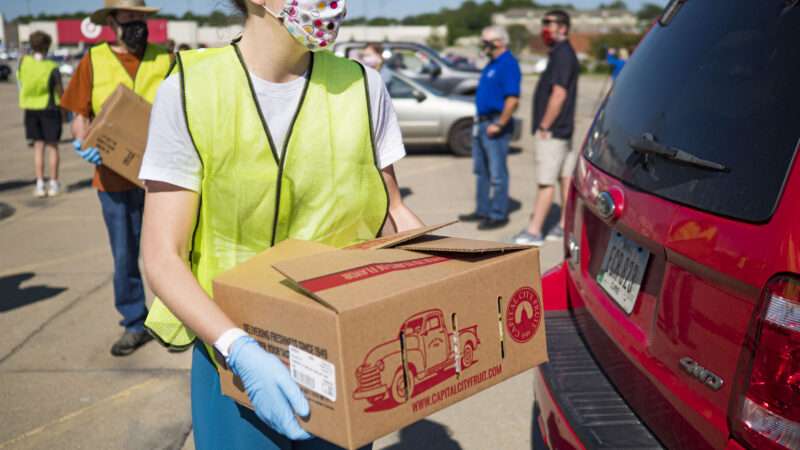
A congressional report released this month by House Democrats confirms two things many people already knew. First, the U.S. Department of Agriculture's widely panned food-box scheme, a signature Trump administration program, funneled billions of taxpayer dollars to inexperienced, underqualified organizations to distribute food to food banks—and the needy Americans they assist—during the Covid pandemic. Then, even after allegations of waste, incompetence, and fraud gripped the program, the report concludes, the USDA basically twiddled its thumbs.
"The report lends new evidence to previous allegations that the taxpayer-funded program paid contractors well over market price for food, placed undue burdens on already-taxed food banks and pantries, then failed to conduct sufficient oversight on the contractors it flagged for potential fraud," reportedThe Counter, where I also contribute, in a piece last week on the new congressional report.
In early 2018, the Trump administration created a program, dubbed Harvest Boxes, to replace parts of the Supplemental Nutrition Assistance Program (or SNAP, formerly food stamps). Under the plan, the USDA would gut the overpriced SNAP program, which costs taxpayers more than $85 billion a year, and replace parts of it with a new agency-sponsored food delivery program.
The premise behind the Harvest Box was simple. Instead of giving qualified people funds they may only spend on approved foods—SNAP—why not just give those same people food? A key element of the program involved government purchases of billions of dollars in surplus food from U.S. farmers.
The program's simple premise, though, was deeply flawed. As I detailed in a 2018 column, withering criticism of the Harvest Box program came from all corners. Reason's Eric Boehm likened it to "Amazon Prime, but for terrible canned food selected by bureaucrats." Rep. Jim McGovern (D–Mass.) called Harvest Boxes a "'cruel and demeaning and an awful idea' that would strip families of the ability to choose which groceries they buy." USA Today's editorial board dubbed it "a program fresh from Cold War Bulgaria." I wrote that the Harvest Box program was "truly rotten to the core and unworthy of consideration."
When the COVID-19 pandemic gripped the country, the USDA rejiggered the Harvest Box program. The new "Farmers to Families Food Box Program," I wrote in a May 2020 column, was merely "a Covid-era repackaging of the administration's oft-ridiculed Harvest Box scheme."
The new 63-page congressional report, Farmers to Families?, takes a closer look at the program, focusing on nearly $100 million that was awarded to three of the "underqualified companies" with "questionable experience" that were contracted by USDA to provide food boxes to food banks around the country.
One of the companies that secured a contract, as detailed in the congressional report, is CRE8AD8, a wedding- and event-planning company in Texas. "The wedding planning business had no experience in this industry, no facilities, no license, and no trucks," the Texas Standardreported in summer 2020. "It has struggled to deliver on its $40 million contract." That contract was not renewed.
The new congressional report says CRE8AD8 reported its profits "for one month's worth of deliveries" under the program may have totaled nearly $8 million. CRE8AD8 wasn't the only one profiting mightily from those transactions. "CRE8AD8 confirmed that contractors in the Food Box Program sometimes paid well above market prices, with farmers and producers receiving from CRE8AD8 up to ten times the price they would normally get from grocery stores," the congressional report states.
Though galling, none of this is exactly news. As I noted last year, reports indicated the Farmers to Families Food Box Program had "awarded millions of dollars to companies with little or no experience distributing bulk food."
While making much that same point, the new congressional report concludes the USDA should "take more care in evaluating contractors, issue and enforce guidance on eligible partner organizations and emergency pricing… when designing and implementing future food distribution programs."
I'm sorry, but future food distribution programs? Did Congress learn nothing from this wastefulness? (No, Congress did not learn anything. Yes, Congress learned nothing.)
At best, government food boxes give people dramatically overpriced food they may not want. At worst, these food boxes waste taxpayer money without even providing that food. On the other hand, SNAP, which gives qualified people funds they may only spend on government-approved foods, has also seen its share of waste and fraud.
If neither SNAP nor food boxes are the answer, then what should replace those programs? As I've argued many times, the federal government should give cash to eligible people so they may put that money towards their own basic needs. "Future food distribution programs" be damned.
This luxury SUV is so sleek and uncluttered it looks like a concept car that would never make it into production, yet you'll be able to order one soon.
John S. Mosby, also known as the "Gray Ghost," was a first-class rabble-rouser who commanded the 43rd Virginia Cavalry Battalion of the Confederate Army during the American Civil War.
His unit was a partisan ranger unit known as Mosby's Raiders (also Mosby's Rangers and Mosby's Men), and they were infamous for lightning-fast raids on Union targets and their uncanny ability to elude capture as they repeatedly disrupted Union supply lines and communications. In 1863, a southern spy named Laura Ratcliffe suggested this rock to Mosby as a meeting place where Mosby and his men could convene after conducting raids.
After the war, Mosby worked as an attorney, supporting President Ulysses S. Grant. He also served as the American consul to Hong Kong and in the U.S. Department of Justice.
The rock still remains in its original location, but it now backs up to a townhouse development. The Mosby's Rock plaque was removed at some point during the summer of 2020 and was still missing as of August 2021. The plaque read as follows: "Mosby’s Rangers (43d Bn., Va. Cav.) used this rock as a rendezvous point and met here to divide the spoils after raids. The renowned Southern spy and scout Laura Ratcliffe, who lived nearby, showed this rock to Col. (then Captain) John S. Mosby, CSA, in 1863, and suggested he use it as a meeting place."
Traffic deaths are on track to surpass 40,000 for the first time since 2007, leading U.S. Transportation Secretary Pete Buttigieg to declare this a “crisis.”
A base of greens is topped by leftover rotisserie chicken, avocado, pumpkin seeds or another favorite toasted nut, parmesan cheese grated finely with a Microplane, chopped dates or other dried fruit for sweetness, shaved onions and sometimes bacon and lots of freshly ground black pepper.















 J.R. Crickets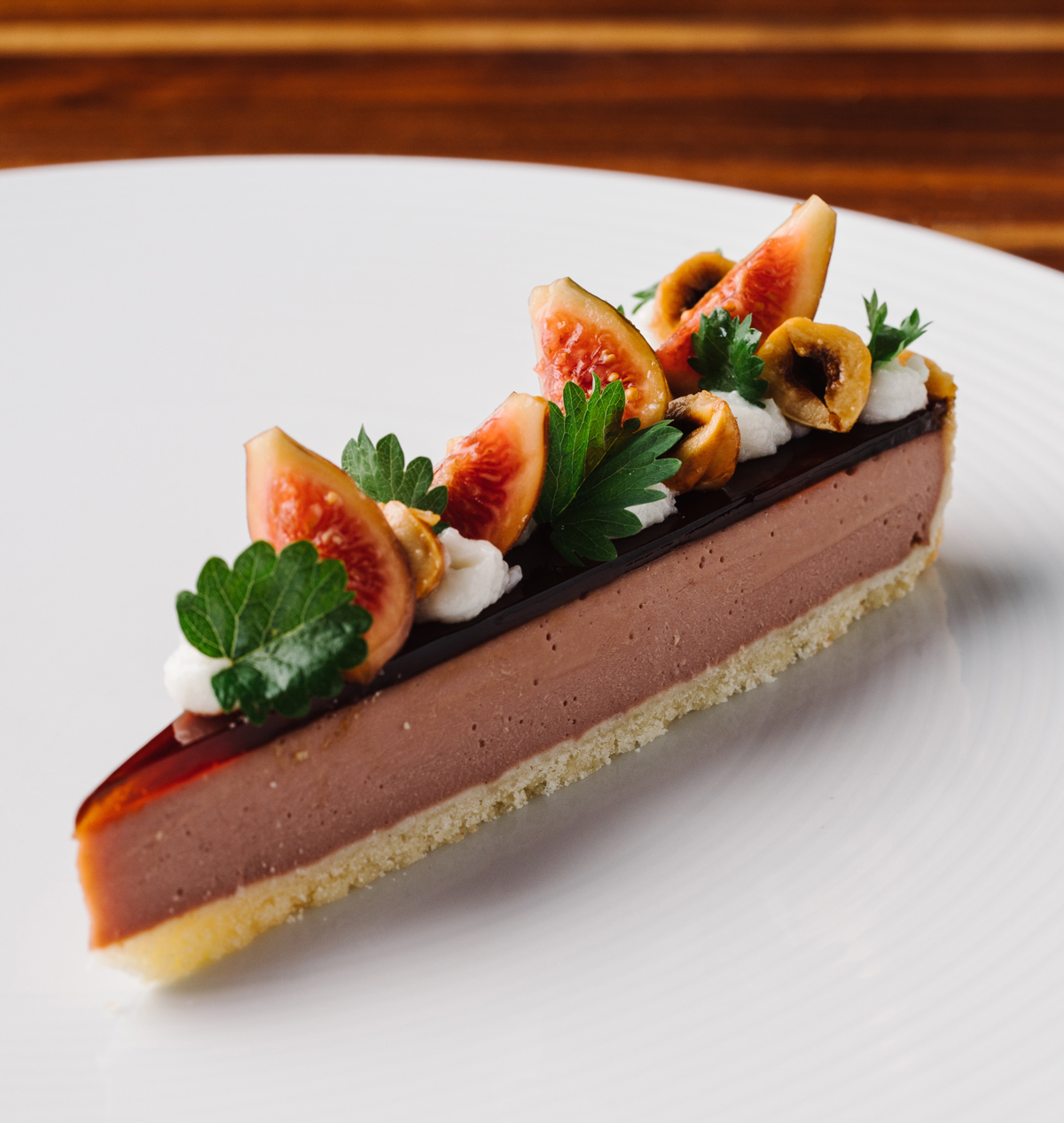


/cdn.vox-cdn.com/uploads/chorus_asset/file/9741803/457077498.jpg.jpg) Photo by Tom Pennington/Getty Images
Photo by Tom Pennington/Getty Images







![[link]](https://i.redd.it/t4kuit2fimo71.jpg)
![[link]](https://i.redd.it/y2qyrbk3hdr71.png)
![[link]](https://i.redd.it/higzxnqju0w71.jpg)