Poor website accessibility is set to lose e-commerce vendors $828 million in lost revenue according to UserWay. The research should act as a wake-up call for retailers on how ignoring web accessibility is hurting the bottom line.
Las Vegas is known for gambling and conventions, plus the city would like to be known as the place where you eat at celebrity restaurants, go to expensive shows, and drink $30 cocktails at velvet-rope nightclubs with $300 cabanas to rent. There’s plenty on offer for the average tourist that doesn’t want any of that though, including three cool Vegas museums that I checked out on my...
There are countless combinations of speed, sex, beauty, design and freedom found between two tires — but these are the icons hand-picked as our favorites.
When viewed from the far future, the early years of the 21st century will probably be seen as the end of a short era in human technological development. In the beginning of the 20th century, most everything was mechanical. There were certainly some electric devices, but consumer products like gramophone players and “movie” cameras were purely mechanical affairs. You cranked them up, and they ran on springs. Nowadays, almost every bit of consumer gear you buy will be entirely electronic. In between, there was a roughly 50 year period that I’m going to call the Electromechanical Era.
Jenny List’s teardown this week of an old Fuji film movie camera from 1972 captures the middle of this era perfectly. There’s a small PCB and an electric motor, but most of the heavy lifting in the controls was actually put on the shoulders of levers, bearings, and ridiculously clever mechanisms. The electrical and mechanical systems were loosely coupled, with the electrical controlled by the mechanical.
I’m willing to argue the specifics, but I’d preliminarily date the peak of the Electromechanical Era somewhere around 1990. Last year, I had to replace all of the rotted rubber drive belts in a Sony Walkman WM-D6C, a professional portable tape player and recorder produced from 1984-2002.
It’s not a simple tape recorder — the motors are electronically regulated to keep ridiculously constant speed for such a small device, and mine has Dolby B and C noise reduction circuitry packed inside along with some decent mic preamps. But still, when you press the fast-forward button, it physically shoves rubber-coated drive wheels out of the way, and sliding pieces of metal make it change modes of operation by making and breaking electrical contacts. Its precision lies as much in the mechanical assemblies and motors as in the electronics. It’s truly half electronic and half mechanical.
But that era is long over. The coming of the CD player signaled the end, although we didn’t see it at the time. Sure, there is a motor, but all the buttons are electronic, and all the “mechanism” is implemented almost entirely in silicon. The digital camera was possibly the last nail in the Electromechanical Era’s coffin: with no need to handle physical film, the last demand for anything mechanical evaporated. Open up a GoPro if you don’t know what I mean.
While I’ll be happy to never have to replace the drive rubber in a cassette recorder again, it’s with a little sadness that I think on the early iPods with their spinning metal hard drives, and how they gave way to the entirely silicon Zoom H5 recorder that I use now. It has a S/N ratio and quiet pre-amps, no wow or flutter, and a quality that would have been literally unbelievable when I bought the WM-D6C.
Still, if you find yourself in the thrift store, and you’ve never done so before, buy and take apart one of these marvels from a bygone era. A cassette recorder, even a cheap one, hides a wealth of electromechanical design.
This article is part of the Hackaday.com newsletter, delivered every seven days for each of the last 200+ weeks. It also includes our favorite articles from the last seven days that you can see on the web version of the newsletter.
Want this type of article to hit your inbox every Friday morning? You should sign up!
Triumph has finally spilled the beans on its thoroughly redesigned Tiger 1200. A substantial reduction in weight and an emphasis on power and handling is the name of the game for 2022. Bringing its big ADV into line with the 900s, the Tiger 1200 will be offered in five trims: GT, GT Pro, GT Explorer, Rally Pro, and Rally Explorer which follow the same naming scheme with the GT trims being more road-focused while the Rally versions offer off-road accoutrement such as larger wheels and more suspension travel. The Explorer models also hold 7.9 gallons of petrol with the other trims utilizing a 5.2 gallon tank.
The T-plane crank has made its way to the 1160 cc Triple with Triumph claiming 147.9 horsepower and 95.8 lb-ft of torque from the big Tiger. Showa semi-active suspension is equipped with the rear shaft drive using what Triumph is calling its “tri-link” suspension set up. Electronics are now thoroughly modern with the 1200s now equipped with much of what we saw on the 900s with the addition of blind-spot monitoring on the Explorer trims.
For a thorough overview of the new models, we’ve included Triumph’s press release below. To say we’re excited to test the Tiger 1200 line would be an understatement. If our time on the Tiger 900s is telling at all of the improvements to the new 1200s, the big adventure bike segment is showing no signs of cooling down any time soon. We’re told Spring 2022 for arrival in dealers, but we hope to get our grubby mitts on one as soon as possibly to bring a thorough ride review to MO’s digital pages.
Begin Press Release:
THE NEW TIGER 1200: THE BEST OF ALL WORLDS
Significantly lighter and much more powerful, with class leading handling and specification, plus all of Triumph’s new T-plane triple performance advantage, the all-new Tiger 1200 has been designed to be the world’s most capable, agile and manoeuvrable large capacity adventure motorcycle.
Delivering a transformation in capability and performance on the tarmac, and the most dynamic and exciting experience off road, the new generation brings the best of all worlds with a whole new Tiger line-up, including for the first time two all-new 30 litre tank Tiger Explorer options.
All-new Tiger 1200 Family
Tiger 1200 GT family; tailor made for the perfect road-focused adventure ride,
with 19” front and 18” rear cast aluminium wheels
Tiger 1200 GT (20 litre tank)
Tiger 1200 GT Pro (20 litre tank)
Tiger 1200 GT Explorer (30 litre tank)
Tiger 1200 Rally family; tailor made for the perfect all-terrain adventure, with 21” front and 18” rear tubeless spoked wheels
Tiger 1200 Rally Pro (20 litre tank)
Tiger 1200 Rally Explorer (30 litre tank)
Transformation in weight, capability and specification
Significantly lighter
More than 25kg lighter than the previous generation
Up to 17kg lighter than the closest shaft drive competition
(based on a comparable specification of motorcycle)
New dedicated wheel dimensions for enhanced capability tailored to the ride
21” front / 18” rear tubeless spoked set-up for off-road supremacy
(Rally Pro & Rally Explorer)
19” front / 18” rear cast aluminium set-up for dynamic road riding capability
(GT, GT Pro & GT Explorer)
New fuel tank capacities
20 litre (GT, GT Pro & Rally Pro)
30 litre (GT Explorer & Rally Explorer)
All-new light weight chassis and class-leading specification of equipment
New lightweight frame with bolt-on rear aluminium subframe and pillion hangers
New lighter and stronger ‘tri-link’ swingarm
New category-leading Brembo Stylema® monobloc brakes
plus optimised cornering ABS with IMU
Advanced Showa semi-active suspension set-up tuned for maximum road and off-road capability
Slimmer waist and a more compact overall design
New rider ergonomics designed for a comfortable and stable ride
Adjustable seat height, which can be lowered even further with an accessory low seat
All-new T-plane triple engine advantage
New 1160cc triple engine, designed to set a new benchmark for engine character
More power with 150PS at 9,000rpm and more torque with 130Nm at 7,000rpm.
9PS more than the previous generation, and 14PS more than the closest shaft drive competition
Unique T-plane triple crank with uneven firing order
Enhanced low down tractability and responsiveness
More exciting and engaging mid-range to top-end response and feel
Improved acceleration
More characterful and distinctive soundtrack
New lightweight low maintenance shaft drive
All-new comprehensive technology package
All-new Triumph Blind Spot Radar System, developed in partnership with Continental
(GT Explorer and Rally Explorer only)
All-new Showa semi-active suspension set-up for dynamic rider control
All-new 7” TFT instruments with integrated My Triumph Connectivity System
Optimised Cornering Traction Control with IMU
Up to six riding modes
All-new keyless system, including ignition, steering lock and fuel cap
All-new LED lighting with DRL, plus Adaptive Cornering Lights (not available on GT)
Triumph Shift Assist (standard on all except GT)
Heated grips and seats (heated seats standard on GT Explorer & Rally Explorer only)
Tyre Pressure Monitoring System (standard on GT Explorer & Rally Explorer only)
Hill Hold (not available on GT)
New distinctive and purposeful style, poise and attitude
More dominant adventure focused stance and poise with new bodywork,
new twin radiator design and minimal new silencer
New rider ergonomics with tailored bar and peg positions
All-new bodywork
Premium detailing and finish
New colour schemes and graphics for each family
Dedicated Tiger 1200 accessory range
50+ Genuine Triumph Accessories for capability, comfort, style, technology and protection
Full luggage systems – all hard luggage developed in partnership with Givi
New Trekker panniers – moulded luggage, side/corner opening
New 52 litre Trekker twin helmet top box with upholstered passenger backrest
New Expedition panniers – alloy luggage, top opening
New 42 litre Expedition top box with two-piece passenger backrest
Comprehensive protective range
Precision engineered tubular stainless-steel engine and tank protection
Heated seating options
Rider, pillion, standard height and low seat options
New Triumph Sena Bluetooth communication system
Dedicated new partnership with the leading motorcycle communication brand, Triumph Sena headset featuring a new Harman Kardon sound system
Price, service and availability
Three years unlimited mileage warranty, with the option to extend
High service intervals: 10,000 miles (16,000 km) / 12 months
Competitively priced, starting at £14,600 for the Tiger 1200 GT
Available in dealers from Spring 2022
THE BEST OF ALL WORLDS
The result of one of the most ambitious projects in Triumph’s history, the all-new Tiger 1200 line-up represents a transformation in weight, performance and capability, all focused on delivering every advantage a rider is looking for in their adventure motorcycle.
Building on the previous generation’s strengths, including its practical shaft drive set-up and its great long-distance comfort, plus the triple engine platform which suits touring so well, the new Tiger line-up introduces a new generation of T-plane triple engine, lightweight chassis and advanced technology – all focused on delivering the most agile and capable large capacity adventure motorcycle you can buy.
ALL-NEW TIGER 1200 FAMILY
With all-new names to reflect the new capability, each Tiger 1200 model is now more tailored and focused to suit the adventures that different riders want.
The new road-focused GT and higher spec GT Pro come with cast wheels, 19” on the front and 18” on the rear, plus all-new Showa semi-active suspension, tuned to deliver the ultimate road-focused adventure ride.
With the new Rally Pro, this brings for the first time a dedicated 21” front and 18” rear tubeless wire-spoked wheel set-up, plus the new Showa semi-active suspension with even longer travel, tuned to deliver the ultimate in all-terrain riding, off-road and on.
Completing the new 5 bike line-up, for the first time Triumph introduces two new 30 litre tank Tigers, with the new Rally Explorer and the GT Explorer – the only cast wheel, 30 litre tank, adventure bike in the class. Both featuring the new Triumph Blind Spot Radar system, these bikes are built to travel the world in comfort and style, with the highest level of specification and capability ever.
ALL-NEW T-PLANE TRIPLE ENGINE
Designed to deliver all the advantages that have made the Triumph Tiger 900 so successful in the middleweight category, the new the T-plane triple crank brings the best of both worlds, with the low down tractability of a twin at the bottom end, making it great off road, combined with the performance benefits of a triple at the top end, which makes the Tiger even better on the road where riders spend most of their time. Technically, the T-plane crank gives the new Tiger 1200 engine firing pulses at 180, 270 and 270 degrees, resulting in one short gap and two long gaps between the firing, delivering improved character and tractability at low rpm.
The new 1160cc engine brings a major step up in performance with 150PS peak power at 9,000rpm, 9PS up on the previous generation, making it the most powerful shaft drive motorcycle in the class. The torque is also significantly higher than the previous generation, with 130Nm of peak torque at 7,000rpm, 8Nm up on the previous engine.
In addition to the step-up in power and torque, the new engine, tune and T-plane triple crank also bring improved acceleration and a much more responsive and exciting character, where the uneven firing interval gives excellent feel and tractability at the bottom end, combined with the really strong triple power and torque delivery all the way through the rev range. Completing the transformation, every Tiger features the new lightweight low-maintenance shaft drive, a key practical advantage valued by adventure touring riders.
Compared to the previous generation engine, absolutely everything is new, including new bore and stroke, crank, cylinder head, gearbox and clutch, and a completely new shaft drive and bevel box. Overall, every single component has been designed to be significantly lighter and more compact, which has allowed the new engine to have a much tighter overall package, transforming the riding dynamics.
Add to that the new minimal lightweight silencer, and the result is a significantly enhanced soundtrack, with a new distinctive triple tone and bark.
THE NEW BENCHMARK FOR HANDLING
The Tiger 1200 has been designed to set the new benchmark for road and off-road adventure handling, courtesy of a major reduction in weight, an all-new lightweight chassis, a class-leading specification of equipment and all-new rider ergonomics.
Following an extensive mass optimisation programme across the whole bike, encompassing every component, the new generation is now more than 25kg lighter than the previous Tiger, and up to 17kg lighter than the closest shaft drive competition, based on a comparable specification of motorcycle.
For this new generation, each Tiger 1200 family now comes equipped with dedicated wheel dimensions, tailored to suit the adventures that different riders want. On the Rally Pro and Rally Explorer, there is a 21”/18” tubeless spoked set-up for incredible all-road ability, and on the GT, GT Pro and GT Explorer there is 19”/18” cast aluminium arrangement for more dynamic road riding ability.
Ensuring outstanding grip and stability, Metzeler Tourance tyres are fitted to all of the GT models, while the Rally models feature Metzeler Karoo Street tyres for true all-terrain riding. For advanced off-road riding, the Michelin Anakee Wild is the handbook approved option.
Class-leading Brembo Stylema® brakes are fitted to all Tiger 1200 models for powerful and progressive performance. These have been selected to meet the demands of long distance road riding and the advanced off-road adventure capability of the Rally models.
The incredible stopping power provided by the Brembo calipers is managed by the advanced Optimised Cornering ABS system fitted to all of the new models, which is supported by a sophisticated IMU (Inertial Measurement Unit), which continuously measures the motorcycle’s movement (pitch rate, yaw rate, roll rate, vertical acceleration, lateral acceleration, longitudinal acceleration) to calculate the lean angle of the bike and deliver the optimum level of ABS intervention. Magura HC-1 levers, adjustable for reach, deliver a progressive feel and further enhance rider comfort and control.
Making a significant contribution to the transformation in weight and handling capability, the Tiger’s new frame, which is 5.4kg lighter than the previous design, features a bolt-on aluminium rear sub-frame and bolt-on pillion hangers, enhancements developed from customer feedback.
Additional weight savings comes from the new aluminium fuel tank and all-new tri-link swingarm, which is 1.5kg lighter and stronger than the previous single-sided set-up, and incorporates a smaller and lighter shaft drive and bevel box.
Bringing the rider enhanced confidence at low speeds and during non-riding manoeuvres, as well as enhanced comfort and control, all of the new 1200s come with new seat and tank ergonomics, where the seat has been slimmed down at the front, where it meets the tank. To further enable each rider to find their comfort zone, all models feature a built-in easily adjustable two-position seat mechanism which enables the rider to change the seat height by 20mm to their preferred set-up.
For the GT, GT Pro and GT Explorer there are two seat height settings – 850mm and 870mm, while for the Rally Pro and Rally Explorer these are 875mm and 895mm. Through the accessory-fit low seat option, customers will also be able to lower the seat position by an additional 20mm.
A further enhancement to comfort is provided by the new easily adjustable screen, with a simple one-handed adjustment mechanism, plus new aero screen diffusers that deflect the wind off both the rider and pillion.
The handlebar position has been optimised to suit each model in the Tiger 1200 range, contributing to the bike’s improved agility and ensuring great rider comfort. These are 20mm wider than the previous generation for improved off-road control. On the GT Explorer and Rally Explorer, the handlebars are 16mm higher than the other models in the line-up to deliver an even more commanding position. The foot peg positions have also been refined to deliver the optimum rider comfort and control for each model.
All models within the Tiger 1200 line-up have an extensive level of protection for a more secure and comfortable ride: handguards are standard for all models, aluminium skid-guard is fitted as standard on the GT Pro and GT Explorer, while an aluminium sump guard is a standard fit for the Rally Pro and Rally Explorer. Additional protection is provided on the GT Explorer and both Rally variants by the engine protection bars, while the Rally Explorer also comes with fuel tank protection bars. These items can all be added as accessories to the models where they are not standard fit.
COMPREHENSIVE TECHNOLOGY PACKAGE
The new generation sets a new standard for Tiger technology, with the introduction of a host of advanced features designed to enhance the ride and deliver a step up in safety, comfort and control.
The GT Explorer and Rally Explorer exclusively feature the all-new Triumph Blind Spot Radar system, developed in partnership with Continental, which delivers two key safety features. Blind Spot Assist uses a rear facing radar to let the rider know when another vehicle is in their blind spot, and Lane Change Assist, which gives a more prominent warning if the rider indicates to change lane and there is a vehicle approaching.
Optimised Cornering Traction Control comes as standard on all of the new line-up, which is supported by the bike’s advanced IMU to deliver the optimum traction control response for the riding conditions.
All of the key information the rider needs is presented through the new class-leading 7” TFT instruments with an optically bonded display, which features a new graphics package. The My Triumph Connectivity System is also fitted as standard on all models, enabling phone calls, turn-by-turn navigation and GoPro control.
Depending on the model, there are up to 6 riding modes available, which adjust throttle response, ABS, traction control and suspension settings for maximum rider control in all riding conditions. The Off-Road Pro riding mode, exclusive to the Rally Pro and Rally Explorer models, is Triumph’s most extreme off-road set-up for advanced off-road adventure, with ABS and traction control turned off, and an off-road throttle map. Rain mode has been tailored to deliver the most intervention and is limited to 100PS for enhanced safety and control when conditions are compromised.
Tiger 1200 Rally Pro and Rally Explorer: Road, Rain, Sport, Rider-configurable, Off-Road and Off-Road Pro
Tiger 1200 GT Pro and GT Explorer: Road, Rain, Sport, Rider-configurable and Off-Road
Tiger 1200 GT: Rain, Road and Sport
Great visibility in any riding condition is ensured by the new full LED headlight with a distinctive new signature Daytime Running Light (DRL). Additional visibility and illumination whilst cornering is provided by the lean-sensitive new Adaptive Cornering Lights, which come as standard on all models except the Tiger 1200 GT.
Triumph Shift Assist comes as a standard fit feature on all models, except the Tiger 1200 GT where it is available as an accessory upgrade. Triumph Shift Assist enables easy up and down gear-shifting without needing to action the clutch. Hill Hold is standard on all models except the Tiger 1200 GT. Hill Hold prevents the bike from rolling backwards when setting off on a steep incline, applying the rear brake until sensing the rider is starting to move off.
For enhanced long distance riding comfort in every weather condition, all models except the Tiger 1200 GT come with heated grips as standard, plus the GT Explorer and Rally Explorer also come with heated rider and pillion seats, and also a Tyre Pressure Monitoring System to ensure the highest possible level of rider safety. For all other models, heated seats and TPMS can be added as an accessory option.
Completing the new Tiger’s comprehensive technology package, all of the new models come with a host of additional features designed to enhance the ride, including intuitive and easily accessible switch cubes with unique-in-segment 5-way joystick control, plus illuminated switches and under seat storage with USB charger. Adjustable electronic cruise control and a centre stand also come as standard on all models except the Tiger GT.
DISTINCTIVE NEW TIGER STYLE
Following a brief for styling that was just as ambitious as the handling and performance updates, the new Tiger 1200 line-up delivers a distinctive new look with a more upright, commanding stance enhanced by the new redesigned minimal bodywork, clean contemporary lines and a visually lighter front end.
Each model family has been designed with a more focused look, with the GT family delivering even more road biased style, whilst the Rally family brings even more off-road attitude and stance, courtesy of the new 21’’ front wheel set-up.
The new generation also features a much slimmer waist and more compact design with narrower stand over, which not only makes it easier to get your feet on the floor, but also makes it easier to move around on while riding.
Colour Options
Tiger 1200 Rally Pro and Rally Explorer: Snowdonia White, Sapphire Black, Matt Khaki
Tiger 1200 GT Pro and GT Explorer: Snowdonia White, Sapphire Black, Lucerne Blue
Tiger 1200 GT: Snowdonia White
DEDICATED ACCESSORY RANGE
A tailor-made line-up of the very best options needed to enhance any rider’s adventure is available for the new Tiger 1200, with more than 50 Genuine Triumph Accessories to choose from to enhance the bike’s capability, comfort, style and protection.
Key accessory options include:
Two full luggage systems, with new Trekker moulded panniers and 52 litre twin helmet top box with passenger backrest, and new aluminium top-opening Expedition panniers, with matching 42 litre top box and backrest, available in both brushed aluminium or matt black finish, all developed by Triumph in partnership with Givi.
Comprehensive protection range, with engine bars, tank protection bars and aluminium sump guard.
Heated rider and pillion seats, plus low height heated seat.
Adjustable screen aero deflector
Triumph Shift Assist
LED fog lights
Scrolling LED indicators
Centre stand
All new Triumph Sena Bluetooth headset, a new partnership, which works with the integrated My Triumph Connectivity System and comes with Sena’s updated sound system by Harman Kardon
Triumph Track+ tracking system
Triumph Protect+ alarm system
2022 Triumph Tiger 1200 Specifications
GT
GT Pro
GT Explorer
Rally Pro
Rally Explorer
MSRP
$19,100
$21,400
$23,100
$22,500
$24,200
Engine Type
Liquid-cooled, 12 valve, DOHC, inline 3-cylinder
Displacement
1160 cc
Bore x Stroke
90.0 mm x 60.7 mm
Compression
13.2:1
Horsepower
148 hp at 9,000 rpm (claimed)
Torque
96 lb-ft. at 7,000 rpm (claimed)
Fuel System
Multipoint sequential electronic fuel injection with electronic throttle control
Exhaust
Stainless steel 3 into 1 header system with underslung primary silencer and side mounted secondary silencer
When I got the call from Motorcycle.com asking if I’d be available to fly over to the Circuito de Jerez in Spain to test the new 2022 Ducati Panigale V4 S, not only did a certain grin return to my face, but also I was especially intrigued by two things: One, I had just finished participating in a seven bike heavyweight naked shootout with MO (see Battle Royale) with the 2021 Ducati Streetfighter V4 S finishing right up near the top of my personal list. But two, I got the opportunity a few years back to evaluate the 2019Panigale V4 S Corse at both Laguna Seca and Pirelli’s test circuit, the Autodromo di Pergusa in Sicily. To ride Ducati’s latest Panigale V4 flagship once again, but some two and a half years later, might reveal a few of the special ingredients the Bologna factory has unearthed to help explain this seemingly magic formula they’ve cooked up in both MotoGP and World Superbike.
2022 Ducati Panigale V4 S
The 2022 Panigale V4 S is probably the most capable turnkey track day bike ever produced. Massively capable, with trickle-down MotoGP technology, but with multiple options to tame the beast.
Editor Score: 98%
Engine
20/20
Suspension
14.5/15
Transmission
10/10
Brakes
9/10
Instruments
5/5
Ergonomics
10/10
Appearance
10/10
Desirability
9.5/10
Value
10/10
+ Highs
Ridiculously planted front-end
Usable top-shelf electronic aids
Best Track EVO TFT to date
– Sighs
Nice things cost money
Full titanium Akra exhaust @ $7100 hard to live w/o
Tires never last forever
Do you remember how in 2007, when Casey Stoner won the MotoGP World Championship for Ducati, virtually no other rider in the world could swallow that machine?
Chew on this: In 2021, five out of six Ducati riders earned podiums in MotoGP, and five out of five Ducati riders earned podiums in WSBK. In MotoGP, Ducati won Best Manufacturer, Best Team, Best Independent Team, Best Independent Rider, Best MotoGP Rookie, thirty front row starts, twenty-four total MotoGP podiums, and seven wins. So, just what the heck has Ducati been brewing into their pasta sauce?
Spanish Harlem
I arrived at our five star golf course resort hotel the day before the test, and what do I find waiting in the middle of the lobby? A blood red, ridiculously glossy, dead sexy, 2022 Panigale V4 S. “Really, Ducati? I mean, there are elderly men and women still meandering about, innocent civilians, wearing pink or baby blue polo shirts and white shorts. Did you not consider there might be someone among this demographic with a heart condition?”
Seeing this piece of Italian industrial art outside of its natural habitat – a race track, canyon cafe – really did a number on my inner pneuma.
The bike was a dormant alien. A sleeping thing. A living member of a species known to all of us as capable, but potentially deadly. Whoever created it, loved it. Whoever designed this creature belongs to a species known to all of us as capable, but potentially beautiful.
The machine looked like a red rose sitting in a glass case living atop a white piano under a picture light. The walls and floor were glossy white, you see, and it eventually occurred to me, “Even with its thorns, I’d fight for privilege to place this flower between my teeth for the next dance.”
And a thorn.
Ma perché? Chi?
Who would buy such a bike, and for what reason? Sure, we can all share in a memory where a wealthy or otherwise well-connected soul arrives at a racy spot one Sunday on just such a machine with well groomed, neatly kept, chicken strips.
“But would an industry leading engineering company like Ducati go through all the trouble to make a technologically advanced super sport bike so a few daisies could attract orchids?” We ask ourselves.
News Flash: In June 2021, Ducati enjoyed its best single month ever, selling 8,598 motorcycles including every model combined, worldwide. In the first six months of 2021, Ducati sold 34,485 total units. Are all these sales to daisies? I think not. More likely; to enthusiasts, collectors, racers, track day connoisseurs, canyon carving specialists, college students, college graduates, commuters, tourers, dual-sport wanna-bees, dual-sport experts, high school dropouts, trust fund babies, cry babies, custom builders, actors, hard workers, lazy fooks, squids, daisies, and many more, I reckon. (Then again, could just be everyone emerging from pandemic mode at once, like cicadas.)
And will all of these customers be riding $30,000 2022 Panigale V4 S’s @ 228hp with its optional $7100 full Ti Akrapovič system (which comes with a matching ECU DP2 flash mapping and high-flow air cleaner, by the way)?
The top three selling Ducatis are actually the Monster, V2 Streetfighter, and V4 Streetfighter.
But, as I learned, the Panigale V4 in many ways is Ducati. It’s why they live. It’s why they develop. It’s why they build, and it’s why they celebrate like maniacs when they win a race.
To the track! But…
In the final days leading up to the 2022 Ducati Panigale V4 S press launch at Jerez, you could find our assembling company of motojournalists keeping one eye on their post-Covid social awkwardness, and the other on a collection of smartphone weather apps; all of which determined to prophesy differing forecasts for our day on track: half with rain, half with zero rain, half with early morning rain but a sunny afternoon, half with a sunny morning but a wet afternoon. “What’s wrong with the rain in Spain?”
We arrived at the circuit, and it was 100% soaking wet. “How much do these bikes cost again?” Was my first thought followed by a question outside of my head, “Ducati brought Pirelli rain slicks with them, how come? Oh, so forty of us can ride these twenty new machines. What could possibly go wrong?” Everyone rode, and I don’t believe a single invited journalist scratched a motorbike while the track was drenched. There must be, um, a few reasons for this.
What’s New, Pussycat?
It might be best if I first started by firing a few bullets at this article (pew pew pew) to relay the major updates between the 2021 and 2022 Panigale V4 S models. The 2022 bike has, in fact, been improved in all areas: Body, Rider Assistance, Chassis, and Engine. A more track oriented Panigale V4 this year, Ducati makes their Panigale V4 less mentally and physically fatiguing to ride (which was already one of the goals with the 2021 model), plus easier to be tuned for any circuit and riding style.
The winglets have been restyled but without changing the downforce.
Body:
Reshaped lighter winglets with the same downforce.
Widerupperfairing to encapsulate the rider from extreme wind velocities.
Increased ventilation throughout the lowerfairings.
Redirected wind helps cool the quick–shifter; a complex sensitive device.
Reshaped fueltank (with a fuel capacity increase of 0.26 US gallon) has improvedergonomicsurfaces for the legs and arms to better support riders under hard braking and when cornering.
Newlyshaped, roomier, grippier seat is flatter and contoured in the rear to help riders slip their back on the seat under hard braking or when slipstreaming behind the bubble at high speeds.
Rider splays more into the bike than on top of it.
New styling tweaks by Ducati Centro Stile include a two-tone seat, body and wheel graphics.
Rider Assistance:
TFT Dashboard Interfaces with reimagined Street and Track EVO layouts. Both arrangements have a brighter, more visible, and faster shift light in green and over-rev light in red.
The Street layout has a revised yellow triangle which indicates vehicle control engagements.
The Track EVO layout, borrowed from the $100,000 Superleggera V4, has been improved and is newly homologated for road use on the Panigale V4. Inherently aimed at clearly displaying all of the information necessary while riding on track, the intervention of each riding control is now separated and visibly available to the rider in real-time. This scheme also allows for quick navigation and selection to change each riding control while in motion. There are options to automatically capture, display, and even playback lap times and data acquisition when the optional DDA + GPA hardware is purchased.
Four PowerModes are Low, Medium, High, and Full.
Low Mode offers a motor output which is limited to a paltry <COUGH> 150 horsepower for a sprightly, if not slightly more realistic pace, during public road executions or restrained track days.
Medium and High Modes are revisions from before but with newly tweaked variable torque curves for each individual gear, instead of blocks of gears. A rider might choose these modes when riding on a low grip surface, for example.
Full Mode for 2022 is the first time Ducati has allowed customers an unbridled gateway into their Desmosedici Stradale V4 motor’s fuel, sorry, full potential, and defaults the suspension to Fixed. This mode is recommended for race tracks only, and only race tracks with high grip.
Four RidingModes include Race A, Race B, Sport, and Street. The RaceA and Race B Modes come default with the most aggressive predictive algorithms possible; checking static Braking, Acceleration, Mid-turn Braking, and Support.
Race A has the least intervention by control functions and is designed for tracks with strong acceleration, high grip, and a few pot holes, like Misano. Power Mode defaults to High.
Race B offers smoother adjustment, more conservative controls, and suspension settings that can deal with any unevenness. Ideal for tight tracks with bumpy surfaces, less experienced track day riders, and even endurance competitions. Power Mode defaults to High.
Sport Mode further increases Traction and Wheelie Control oversight, increased ABS sensitivity, and lessens the abrupt climb to full engine power, using the Medium Power Mode.
Street Mode provides a healthy amount of TC, WC, Engine Braking, and rear-wheel lift oversight while still unleashing perfection awesomeness which is the Low Power Mode.
SavedRacetrackPresets exist within the TFT menus that offer proven default settings for certain race circuits which Ducati test on, including Laguna Seca, Mugello, and Jerez, to name a few I saw. You can make and save additional ones, as well.
Engine:
Core engine remains the same, but with a new tailpipe, calibration, oil pump and oil circuit, and gearbox.
The tailpipe diameter has increased 18% to increase flow.
Oilpump and oilcircuit have been revised to reduce power loss on the motor.
New gearbox matches World Superbike ratios with a taller 1st, 2nd, and 6th gear. Reduced gaps between the first three gears encourage smoother up and down-shifting, makes life easier for the electric shifter, and improves accelerating and when entering a corner. The taller 6th gear permits a higher overall top speed relative to final drive gearing.
Chassis:
New pressurized Öhlins NPX 25/30 fork is electronically controlled by Öhlins Smart EC 2.0, has a new shim stack with revised damping. Fork travel has increased by 5mm to 125mm, and the spring rates have dropped from 1.0 to 0.95, but with increased preload.
When placed in dynamic modes the fork can act as if intuitive, which also adapts relative to current riding modes.
Ducati’s electronic suspension was developed alongside Öhlins.
Öhlins electronically controlled steering damper self adjusts in corners to promote easier change of direction while providing increased support in faster, more flowing corners and straights.
Swingarm pivot position has been raised 4mm for less squat, easier change of direction, and wider range of suspension adjustments.
The swingarm pivot was raised 4mm for reduced squat under acceleration and easier directional changes.
I’m cool. I’m Hip. Ah Ducka-Ducka, Out of Water
The first test session of the day was upon us, and the track would indeed be wet. Ducati organizers posted our assigned starting numbers, and wouldn’t ya know? I was being asked to start P1. I’d been chosen as the asshole guinea pig to lead off 19 other Panigale V4 S’s to ‘test the waters’ if you will, onto a sodden Jerez circuit I’d never been to before.
While walking out of the famous flying saucer lounge you always see on tv for Jerez, I leaned into Johann Zarco, who was sitting at a table behind his Apple laptop to ask, “Um, hey, excuse me, bonjour. Could you tell me, please, if you know, I mean, if you could, tell me, if the surface of Jerez is known to have good grip… when it’s wet?”
He raised his head and looked back at me with a stupid expression on his face for way longer a beat than I thought I deserved (Zarco has been my favorite rider in MotoGP since winning his second Moto2 World Championship – mad as a box of frog legs – but seemingly intelligent, super aggressive, plays the piano, and I don’t know, makes me laugh). He responds to me finally with, “Sure.”
Ah, thank God. Perfect, I thought. Then Johann spoke to my back as I walked away from him, “But not the curbs.” Not the curbs? Okay, not the curbs, the curbs are bad. Got it. We’ve got this. I was grateful for the information. “Merci!”
Riding kit on, and we were off.
Straight out of the pits, the 2022 Ducati Panigale V4 S felt right. The reach to the bars, the height of the bars, the height of the seat, the tank, and the foot pegs gave me a sense of confidence and control. On the last Panigale I rode, I felt I was much more ‘on top’ of the bike than inside. By the third corner out of the pits, I was scraping my knee, throwing a rooster tail of water over my wake.
Ah, European tracks. Oh, Spanish tarmac surfaces. How right you feel for motorcycling. There was tons of grip around this MotoGP-sanctioned circuit, and the Pirelli full wets were sticking like glue.
The new pressurized Öhlins front end of this Ducati, with its slightly softer springs, increased travel, new shim stacks, and revised damping, was planted in a way that I don’t recall feeling quite in the same way before. The electronics would adjust the fork softer mid-corner to track the road and follow any imperfections in the surface. This was very confidence inspiring.
As I’d roll on the gas, the rear shock would self-stiffen to give more support and aid the higher swing-arm pivot in allowing me to hold my line on exit or change direction. Remarkable, really.
The new closer-ratio gearbox, with its taller 1st gear, let me upshift with ease then ‘bang bang bang bang’ downshifts like a fork through soggy tiramisu. I would have LOVED to simply flip around the left foot controls to GP-race-shift – which you can do, by the way, on the Panigale V4 without additional hardware – but alas, I had to share my bike with one other journalist who didn’t care for the idea. Merde.
The Riding Mode was set to Street, allowing the 150hp-limited V4 to whirl up beautifully and carry an awesome tune but with only enough power and torque to shoot me out of the corners, over some puddles, then down into the next corner without any unnecessary drama or wasted energy. I was surprised at how tame the bike was responding, as a whole.
I never did push hard enough to activate the ABS brakes in the wet, but that’s not to say I was just messing about, either. I was pushing, trying to learn… everything. I made a mental note, however, that even with the Panigale’s most conservative electronic settings chosen, the ABS was never all over my shit telling me to slow down, slow down, entering every corner. Several other bikes I’ve ridden would have. The Ducati was up for the brisk pace.
Side note: I talk big, and yes, I have a bit of experience riding the bikes. But, about the time I started getting fatigued from patting myself on the back, is when MotoGP Rookie of the Year Jorge Martin comes past me on the brakes, in the rain, with his rear wheel lofted in the air, leg dangling, down into the corner where he proceeded to SCRAPE HIS ELBOW through his reflection. I love moments like this.
“I could monitor the control systems in real-time and make adjustments in the way I was riding…to try and limit the amount of colors flashing back at me. Over time, and if done correctly, this could help me achieve lower lap times.”
The Track EVO TFT display was the brightest and easiest to read on track in recent memory. And I could see the colored ‘flash flash flash’ beneath each control system as they each kicked in, in real-time. For example, and read this carefully because I’ve never seen this before; as I exited the corner, the Slide Control swatch/cube on the TFT would begin flashing dark green as the rear wheel was allowed to step out and slide JUST so much, followed by flashing from the dark orange swatch of the Traction Control kept from high-siding me. At that point the bike would begin to wheelie, but it doesn’t because the baby-blue colored swatch/cube takes over flashing as the Wheelie Control system kicks in. Hard on the brakes for the next corner, the Engine Braking color would flash, and so it went.
The punchline to all this is electronic aids, while operating, rob engine power and slow us down, in broad terms. With Ducati’s stratagem, I could monitor the control systems in real-time and make adjustments in the way I was riding; the lines chosen for entry, mid-corner, and exiting, as well as adjust my body position on the bike, to try and limit the amount of colors flashing back at me. Over time, and if done correctly, this could help me achieve lower lap times.
Make sense?
And, did I stay off the curbs? You bet your ass I did.
It’s a new world of motorbiking, party people. As the track continued to dry, I was happy that we got the opportunity to try out Ducati’s cutting edge, modern electronics, under less than ideal grip conditions. I even learned a new race track. I was brave, too. I didn’t cry or nuthin’.
After lunch, the track was completely dry and our same bikes were fitted with brand new, fat, heated racing slicks. The envelopes too were about to get fatter, faster, and more hostile. Could the systems keep up?
Side note: As mentioned before, no one fell in the wet conditions before lunch. But a couple did, after lunch. Please God, don’t let it be me.
I’ll take mine straight up and very dry
Back on track after eating far too many Spanish pastries and doughnuts, and it’s time to evaluate the 2022 Ducati Panigale V4 S in the dry.
As I scrubbed in the new tires and began to approach anything close to Ludicrous Speed, one of the first things I noticed was just how effective the little winglets can be to help to lower your lap times. (I haven’t yet logged a million miles on bikes with winglets, to be fair.)
When approaching, say, 170mph, the amount of downforce which gets applied to the front of your fairing is approximately 30kg of vertical force. In the real world, this means that when you’re ready to pop out your bubble and come down hard on the front brakes, the transition / movement / roll / dive from an accelerating attitude into an extreme decelerating attitude, the front of the chassis already feels somewhat compressed, so it remains more stable.
On the exits especially from the faster corners, the added downforce allows less intrusion from the Wheelie Control which, therefore, robs less power from your engine. The winglets are in the end functional, and you can feel them working.
The second thing I recognized was the terrific feel that the front Brembo Stylema calipers mated with their 330mm rotors provided. They had the power to stop the bike, yes, but also encouraged you to trail-brake deep deep into the corners, over and over again, with myself using only one finger on the lever. At the end of the day, I did notice that most of the Panigale’s front rotors in the garages had turned completely purple from the abuse. For extended periods on track, it might be prudent to swap out the ‘street-comp’ rotors for some thicker T-Drive racing units, or similar.
Again, I rarely went fast enough to require the front ABS to save my ass, but I did overhear Martin saying that, when riding these stock street bikes, he often squeezes on the front lever so viciously, he passes into a realm where his ABS is kicking in, but he refuses to lift on the pressure. So, he just glides into the corners, full brake lever, and the lean-sensitive ABS keeps his bike from low-siding, but very barely. I’d love to work up to and live in that universe, but it’s just not my bike. I don’t reckon Ducati would kick young Jorge out of bed for crashing one of their presser bikes, and he has. Johann has, too.
Jorge Martin was in attendance to show the journalists what fast really looks like.
Now that the circuit had stupid amounts of grip, it was time to unleash the Full potential of its 1103cc, 200hp+ power plant and also see how the electronic controls reacted when set to their most liberal settings.
The answer, in short, is holy hell. This bike is so friggin’ fast, but remains so balanced, it was difficult to remember how any other bike worked. You kinda fall into this inaccurate sense of, “Gosh, isn’t riding a sport bike around a short circuit fun?”
The fact of the matter is, when you combine the Panigale’s counter-rotating crankshaft, the bike’s latest generation 6-axis IMU, the killer TC, the effective WC, the silky electric shifter, the amazing top-shelf Öhlins suspension (dynamic or fixed), the lack of slide from engine braking into the corners, the roomy ergonomics, great wind protection, and all the rest; what you’re left with, in reality, is that one of the most competitive winning factories in MotoGP and World Superbike racing have effectively placed mirrors on something very close to what they’re racing. They then sell them to people for a lousy $30k to ride on a public highway, should they choose.
Case in point; Jorge said he and his stock Pirelli-shod 2022 Panigale V4 S trainer lapped within five (5) seconds of his best lap time while riding his full MotoGP bike on grand prix tires during a test not one week prior around this same course, Jerez.
I hate to have to go
Should a bike this capable be sold to the public for track days, one might ask? Of course. What about sold for road use? Well, if you ask me, I wish that all street bikes would come this capable; the best ABS, best rider aids, lightest weight, amazing brakes, easy to ride, and can accelerate out of harm’s way in any gear at any RPM? I’m a fan of high performing kit, and honestly, I don’t think I’ve ridden a bone stock motorcycle to date that performs as well as this one.
So yeah, the 2022 Ducati Panigale V4 S just might be the best turnkey trackday bike ever built. But, if you do choose to buy one for the street, you’ll just have to behave yourself <COUGH>.
Öhlins NPX25/30 pressurized 43 mm fully adjustable fork with TiN treatment. Electronic compression and rebound damping adjustment with Öhlins Smart EC 2.0 event-based mode. 4.9 inches of travel.
Rear Suspension
Fully adjustable Sachs unit. Aluminum single-sided swingarm, 5.1 inches of travel
Fully adjustable Öhlins TTX36 unit. Electronic compression and rebound damping adjustment with Öhlins Smart EC 2.0 event-based mode. Aluminum single-sided swingarm. 5.1 inches of travel
Front Wheel
5-spokes light alloy 3.50″ x 17″
3-spokes forged aluminum alloy 3.50″ x 17″
Rear Wheel
5-spokes light alloy 6.00” x 17”
3-spokes forged aluminum alloy 6.00″ x 17″
Front Tire
Pirelli Diablo Supercorsa SP 120/70 ZR17
Rear Tire
Pirelli Diablo Supercorsa SP 200/60 ZR17
Front Brake
2 x 330 mm semi-floating discs, radially mounted Brembo Monobloc Stylema® (M4.30) 4-piston callipers with Bosch Cornering ABS EVO. Self bleeding master cylinder.
Rear Brake
245 mm disc, 2-piston calliper with Bosch Cornering ABS EVO
Instrumentation
Last generation digital unit with 5″ TFT colour display
Dry Weight
386 pounds (claimed)
384 pounds (claimed)
Kerb Weight*
437.6 pounds (claimed)
431 pounds (claimed)
Seat Height
850 mm (33.5 in)
Wheelbase
1.469 mm (57.8 in)
Rake
24.5°
Trail
100 mm (3.94 in)
Fuel Tank Capacity
17 l – 4.49 gallon (US)
Number Of Seats
Dual seats
Safety Equipment
Riding Modes, Power Modes, Bosch Cornering ABS EVO, Ducati Traction Control (DTC) EVO 3, Ducati Wheelie Control (DWC) EVO, Ducati Slide Control (DSC), Engine Brake Control (EBC) EVO, Auto tire calibration
Standard Equipment
Ducati Power Launch (DPL), Ducati Quick Shift (DQS) up/down EVO 2, Full LED lighting with Daytime Running Light (DRL), Sachs steering damper, Quick adjustment buttons, Auto-off indicators, Chain guard
Ducati Power Launch (DPL), Ducati Quick Shift (DQS) up/down EVO 2, Full LED lighting with Daytime Running Light (DRL), Ducati Electronic Suspension (DES) EVO with Öhlins suspension and steering damper, Quick adjustment buttons, Lithium-ion battery, Auto-off indicators, Marchesini aluminum forged wheels, Racing style handle grips, Chain guard
Additional Equipment
Passenger seat and footpegs kit
Ready For
Ducati Data Analyser+ (DDA+) with GPS module, Ducati Multimedia System (DMS), Anti-theft, Heated grips
Warranty
24 months unlimited mileage
Maintenance Service Intervals
12,000 km (7,500 mi) / 12 months
Valve Clearance Check
24,000 km (15,000 mi)
We are committed to finding, researching, and recommending the best products. We earn commissions from purchases you make using the retail links in our product reviews. Learn more about how this works.
Become a Motorcycle.com insider. Get the latest motorcycle news first by subscribing to our newsletter here.
We got this comment/question at the end of an article about Harley-Davidson’s new Revolution Max engine from Steve Sweetz, and it’s an excellent one:
Here’s my question in this vein – why aren’t hydraulic valve lifters more common in bikes? Why did it take Harley-Davidson, of all companies, to put Japanese and European manufacturers to shame in this respect?
I understand they don’t work well at super high revs but motorcycle engine designs are increasingly trending to bigger bore, less cylinders, lower revs in the name of fuel efficiency and reliability, anyway.
It seems increasingly difficult to find a mechanic that can replace a tire without screwing something up (seriously, the last time I got a tire replaced, the bike was handed over to me with a brake caliper not bolted on). I sure as hell no longer trust any of them to do a valve clearance check correctly in modern tightly packed bikes that are very difficult to work on in general – and unfortunately, I don’t trust myself to be able to do it either.
The era of motorcycle valve clearance checks needs to end! Hydraulic lifters have been standard on cars since the freaking 1980s.
Steve Sweetz
Dear Steve,
You said it, and we couldn’t agree more except to add they’ve been standard on cars since way before the ’80s. The only reason we don’t complain more about valve adjustments is that we always give our borrowed motorcycles back to their manufacturer before it comes to that. And in that respect, some motorcycle manufacturers are better than others. My 2000 Yamaha R1 still hasn’t gotten to 26,600 miles for its first valve inspection, but then I never ride it. We know of at least a couple of Ducati fans who buy a new bike every couple of years, selling the old one just before its expensive desmo valve service is due. Caveat emptor indeed.
Maybe a little explanation is due first for our readers who grew up in the non-mechanical era. There needs to be a bit of free play between the things that move the intake and exhaust valves open – the lifter, or tappet – and the valve stem itself, to account for heat expansion and wear. That clearance shrinks over time, as the valves very gradually wear away their seats, and needs to be re-established. Simpler engines use screw-and-locknut adjusters. Most modern engines use shims. Generally a thinner shim is required to regain the factory clearance.
Valve clearance inspections are required at anywhere from 6,000 to 26,600 miles (for lots of Yamahas). On bikes that require valve inspections, somebody’s going to have to go in there with their feeler gauges to check and reset that clearance from valve to lifter to factory specs. It’s a tedious task that takes a while, some bikes more than others, and even requires mathematics if shims are involved. Shims are little round spacers that come in different thicknesses.
A shim kit, courtesy Wiseco. We’re talking tiny clearances varying by 0.05mm. I think that’s 1/20 mm. It’s an exacting task.
Hydraulic valve lifters
And in this corner, hydraulic valve lifters. These have been around for many years in automobiles, in Harleys beginning with the 1948 Panhead, and also in the Indian ThunderStroke engine which serves as our lead image. What goes on, basically, is that pressurized oil is squirted into each valve lifter, and sealed off in there as the lifter moves in its bore, thereby keeping valve lash, or gap, constantly at zero as the engine wears. The conventional wisdom is that hydraulic lifters can’t move quite as fast as mechanical, or solid, lifters, but plenty of people have been willing to make that small sacrifice for the greatly reduced maintenance requirements.
For engines turning less than around 5000 rpm, like most big car engines, hydraulic lifters were perfectly adequate. In olden times, HOT ROD magazine and others were packed with ads for solid-lifter camshafts, to open and close valves faster and higher for increased horsepower. Solid lifters meant you had to perform valve adjustments now and then to maintain the right clearances, but it was kind of fun when all you had to do was remove your V-8’s massive valve covers, lean on the fenders, and yank the pull tabs off canned beverages as you twisted the big nuts atop the rocker arms in your old pushrod engine. Thinking the job would be just as easy on my new 1986 Honda VF500F Interceptor was a valuable learning experience.
Solid lifters are better
Like so many things, it all depends who you ask. We asked Honda and got this from our media rep Colin Miller:
We have not had HVA (Hydraulic Valve Adjusters) in our units since the VT1100. That was the last one that I can remember. Some thoughts from my time on the service side and from others I talked to:
HVA are a good idea for some applications, but they do have drawbacks. They require the system to be significantly more complex due to the need to add actuators in the valvetrain system as well as a more complex oil supply system. At higher engine speeds, HVA systems tend to pump up and can cause valve float.
This can be a huge limitation for motorcycles since they often have higher engine speeds when compared to autos. HVA systems require the oil supply to be kept very clean to prevent build-up or debris from causing problems with actuators. Bucket-and-shim or screw-type adjusters take up less room, weigh less, and are cheaper from a design and manufacturing standpoint.
As for automotive, many Honda cars also don’t have HVAs. Even my 2004 Toyota Tacoma has shims that need to be checked.
Hmmm, we also remember the long-running Nighthawk 750 having hydraulic valves. The coolest were the early ones, the Nighthawk 700S produced from 1984 to ’86. It had hydraulic lifters along with a 10,500-rpm redline – shaft drive too. Honda kept on cranking them out through the 2003 model year.
Hydraulic is the way to go
Here’s the official word from Harley-Davidson on the topic, whose new Revolution Max engine it rates at 150 horsepower at 9000 rpm.
Harley-Davidson has used hydraulic lifters since the introduction of the 1948 Panhead, so we clearly have a lot of experience with this technology. For OHV (overhead valve) engines, like the Milwaukee-Eight V-Twin, and other OHVs, it is very common to use hydraulic lifters for the obvious benefits. Where it gets more difficult is with OHC (overhead cam) engines. Here again, Harley’s deep knowledge in this space helped tackle the engineering challenge.
The Rev Max gets a computer-controlled variable-valve timing system in addition to hydraulic lifters.
For the development of the all-new Revolution Max powertrain, Harley-Davidson engineers chose to incorporate hydraulic lash adjusters (HLAs) on each cam in order to eliminate maintenance, reduce noise, and accommodate more aggressive cam profiles with reduced ramp lengths. Harley-Davidson used advanced valvetrain simulation techniques during cam design and gave careful consideration to peak loads and valve lift to ensure the HLAs work with the cam. The cam profiles were also designed with consideration for the use of an HLA at high speed. Oil aeration, which is an enemy of HLAs, was minimized throughout the powertrain. The result is a high-performance OHC engine with the benefit of hydraulic lifters.
The only big V-Twin in in our recent Heavyweight Nakeds shootout, the KTM 1290 Super Duke R, peaked at 9700 rpm with 159 rear-wheel horses. Its eight valves will need checking every 18,600 miles. Meanwhile, the Harley Pan America’s new Revolution Max V-twin put out 134.5 hp @ 9200 rpm at the rear wheel on Mickey Cohen’s dyno, but its hydraulic valves should never need adjusting.
In fairness, lots of late-model bikes without hydraulics seem to hold their valve clearances very well: A quick look at a couple of forums reveals most KTM 1290 valves being in spec at check-up time, and that also looks to be true of the BMW K1600 24-valve inline six-cylinder at both its 18,000- and 36,000-mile checkups. Still, just checking those clearances can require lots of disassembly and therefore expense, even if none need adjusting.
In the end, it’s in the hands of the buyer: What’s more important, ultimate performance, or great performance with reduced maintenance?
On a personal note, I wet myself a little the other day when somebody online wrote that my new-to-me 20-year old Jaguar’s 32-valve V-8 would be needing a valve adjustment at its 100,000-mile birthday. Taking some deep breaths and checking the factory maintenance schedule revealed no such requirement. That’s because, according to another online expert who actually is one, “these engines are designed so that the valve-seat wear is roughly equal to the tappet wear, so that the clearances stay in status quo. If the car has delayed oil changes or other problems, this equilibrium can be upset and require repair, but it would be unusual. This is an area where Jag design has always been good.”
How smart is that?
Become a Motorcycle.com insider. Get the latest motorcycle news first by subscribing to our newsletter here.
As I observed to my Ducati host just before we started up the mountain toward Idyllwild (elevation 5,800 feet) from Palm Desert, California (220 ft) – this is either going to be one of the greatest rides ever or one of the worst. Pity the poor new model launch planner: If it rains hard more than a few days a year around Palm Springs I’d be surprised. But logistics have to be laid out weeks ahead of time, and as the day for our ride drew nearer, the weather forecast for last Tuesday had evolved from 20% to 40% to 100% rain, to “atmospheric river.”
2022 Ducati Multistrada V4 Pikes Peak
Road rubber, 17-inch forged Marchesini wheels, radar jamming devices, and top-shelf everything make this Adventure bike a very serious sport-tourer.
Editor Score: 93.25%
Engine
19/20
Suspension
14.5/15
Transmission
9.25/10
Brakes
9.75/10
Instruments
4.75/5
Ergonomics
9/10
Appearance
9.5/10
Desirability
9.5/10
Value
8/10
+ Highs
Comfy and great weather protection
Adaptive cruise control
Great excuse to stay on the pavement
– Sighs
$30k, and seat and grip heat are optional?
No espresso maker
You should probably stay on the pavement
I don’t think the heavy stuff is gonna come down for quite a while, Your Excellency.
Sometimes riding in adverse conditions can be a hoot, sometimes it’s not. I guess it’s not my Aerostich Classic suit’s fault; I think you’re supposed to re-waterproof them now and then, but I never do. And I have a drawer-full of Pinlock visor inserts I didn’t bother to insert either. I did pack my Alpinestars Drystar waterproof boots and gloves! Oh, did you want to hear about the motorcycle?
This one’s the sporting Multistrada V4, says Ducati, getting back to the pavement performance of the original Pikes Peak via a beautiful set of 17-inch forged Marchesini wheels, the rear one spinning on a one-sided swingarm. The Marchesinis, Ducati says, remove fully 8.8 pounds of spinning, unsprung mass compared to the other Multis’ 19-/17-in. wheelsets.
The Pikes Peak is pretty much the same Multistrada V4 as the other base and S models, but with those wheels and a few other important differences, including MotoGP-inspired graphics. That’s in no way a bad thing, since the Multi V4 S was just named our Best Sport-Touring Motorcycle of 2021.
Once more into the breach
In the morning, we dodged the liquid bullet on the lee side of the San Jacinto Mountains and got to ride the bike on some twisting mountain pavement. But even then, the sky was spitting a little precip, and it was tough to really trust the chilly pavement.
Still, you could definitely feel the new PP’s sporting nature coming through. More committed ergos take the form of footpegs 10mm higher and rearward compared to the other Multis, with an 18mm narrower handlebar set lower and more forward. Even so, the riding position still felt pretty neutral to me, just about right in fact for my 5’8” bod. It was easy enough for me to touch the ball of one foot on the ground with the stock seat, but when our Ducati guy asked if I’d like to try the optional 20mm lower seat, why not? With it, I felt like I was sat down even more inside the bike – not a bad place to be given the threatening atmospheric conditions.
The low and high seat options, I think we determined, are Ducati Performance pieces, and as such are pre-wired for heat. Oh! Can we plug it in and have some then? No, the dealer has to do that with his computer. Ditto for the grip heaters: There’s a button on the right switchgear for them, but no heat is forthcoming at this time.
If the Duc had had a place for me to swipe my VISA card, I would’ve happily done so. (It does have a little cubby for your phone, with USB port, conveniently located right on top of the gas tank.)
Feels smaller
It’s not a tiny motorcycle at 527 pounds wet, but the light wheels and the backward-spinning crank make the Pikes Peak feel pretty quick in transitions. At the same time, we’ve increased trail from 4.0 to 4.7 inches compared to the other Multi V4s, and that single-sided swingarm is longer, bringing wheelbase from 61.7 to 62.8 inches. She’s nice and stable.
Jake making hay while the sun shone.
Even though it looks a little top-heavy, I have to agree with our ride leader Jake Zemke that it doesn’t feel that way; the PP is actually a few pounds lighter than the Kawasaki Z H2 I loved in our naked bike comparison.
Compared to the Streetfighter V4 S that won the street part of that same Heavyweight Nakeds comparison the other day, the Multistrada is almost soothing to ride. It’s about 60 pounds heavier than the Streetfighter, and its 1158 cc Granturismo V4 isn’t trying to send you into 14,000-rpm low orbit all the time. In fact, the big round digital tachometer says it’s game over at 10,500 rpm, right where Ducati says our max 170 horsepower resides (same as the base Multistrada and the S). You’re definitely riding a powerful motorcycle, but not a ridiculous one: The 1158 is torquey and tractable, in addition to revvable and lovable, and the PP gets a sweet Akrapovič muffler for just the right level of gruffness.
We’ve got plenty of brakes: 330mm discs and Brembo Stylema monobloc calipers are from the Multistrada V4 S, but with the more aggressive pads from the Panigale V4. Dialing up ABS level 1 deactivates rear ABS, pleasing Troy S. by “allowing the rear to drift under braking in sportier driving.”
The only thing I can criticize is that the Multi PP’s improved quickshifter doesn’t shift quite as smoothly, up or down, as the one on the Streetfighter V4.
Racey
Race mode should be good in the event you need to take your PP on track: “Undoubtedly the sportiest ever adopted by a Multistrada… the system exploits an even more direct throttle response in High Power Mode. Ducati Traction Control and Ducati Wheelie Control operations are reduced to a minimum and the ABS is set to level 2, also allowing controlled lifting of the rear wheel and therefore getting the most out of the braking phase, even on the racetrack. The Race Riding Mode is undoubtedly the ideal choice for experienced riders who wish to exploit all the exclusive performance the Multistrada V4 Pikes Peak can offer.”
For the Pikes Peak Multi, Race mode replaces Enduro. Race and Sport modes are definitely more frenetic than Touring, which I settled on when the rain started to become Deluginal, but which also felt steamy enough when it was mostly dry. Other press materials say Touring gives us the full 170-hp, but with smoother, less sharp throttle response.
Öhlins Smart 2.0
The Pikes Peak departs from normal Multi V4 convention in its use of Öhlins latest Smart 2.0 suspension, which is what they refer to as an “event-based” system. It’s the same stuff used in the Panigale V4 S and Streetfighter V4 S. The other Multis’ Skyhook dampers are constantly measuring suspension stroke and speed, but the Smart 2.0 fork and shock also rely more on the bike’s IMU to know when you’re accelerating hard or braking hard or whatever, to also inform the damping. Ducati says it “automatically adjusts the setting according to the user’s riding style… the more the rider pushes to the limit the suspensions get stiffer.” The Smart system provides 6.7 inches wheel travel, front and rear; the Skyhook on the other Multis gives 6.7/7.1 in.
Naturally, you can delve deeper with the buttons/joystick on the left switchgear to fine-tune damping to your liking, along with a lot of other parameters. If some of Ducati’s early efforts were difficult to decipher for those of us who fear the computer, the latest version couldn’t make it much easier to swap modes and things, and the big 6.5-inch TFT is like grandma’s big-dial telephone.
Your highly readable 6.5” TFT dashboard can be set to six different languages and different angles via a knob. The Ducati Connect system allows the phone’s “mirroring” function to quickly check the phone book, answer incoming calls and listen to music. The Sygic GPS navigation app is supposed to project your map onto the screen, along with all the information to help you through your chosen route…
Rain mode: Activate
How ironic there is no Rain mode on this one. Urban’s the same thing I guess. I felt secure enough in Touring mode when the rain began to fall in earnest on our way up the mountain, watching the temperature indicator lose degrees by the mile. Down into the 40s, I was feeling surprisingly toasty inside my nice warm gear as my IMU processed its large Italian lunch.
With Jake Zemke leading the pack and myself 5 or 6 bikes back, all I had to do was follow the taillights as the rain grew heavier. Say, maybe this vintage Ducati rain jacket I pulled from the closet is more of a windbreaker? Either way, it seemed to be channeling water into my crotch, as my undercarriage began feeling a bit soggy.
Also, my fingers were starting to feel damp inside my Alpinestars Drystar gloves. Not cold yet, thanks to the bike’s handguards, but definitely damp. About that time, I don’t think I was breathing any harder, but my face shield was starting to fog a bit. Brake lights were still easy to see, but later a couple of guys told me they’d switched on their adaptive cruise control to maintain their distance to the bike ahead without having to use the throttle or brakes. Apparently it works in curves, too, if you’re close enough. Why not? Surely Jake Zemke knows the correct speed…
I really didn’t want to open my Shoei’s face shield, as it was raining pretty damn hard and the temp gauge was reading 35 F, but I finally had to when I lost the pack and couldn’t see which way the curves were going anymore. Ahhh, much better. I still had my glasses to keep stinging raindrops out of my orbs, and the Multi’s nice adjustable windshield was doing a commendable job throwing most of the atmospheric river over my helmet even at 30 or 40 mph. I caught back up to Zemke and the lads, and right after that we got to Idyllwild and stopped in the rain.
I think we’d decided to go up the mountain, and by we I don’t include me, because the weather report said the rain wasn’t going to turn to snow until 4 pm. Since it was already 2, and since stopping for coffee or a hot yoga session would’ve made it psychologically impossible to climb back onto the bikes afterward, we all laughed in the face of danger, hopped back on our watercraft, and set off over Highway 243 to get back down off the mountain ASAP.
We still had to go up quite a bit before going down, because the temp gauge was soon reading 32 and it stayed there for probably half an hour before it read 33, for which I was elated since at least it was going in the right direction. Then it went back to 32 for a while. For a long time there, the wake of the back tire ahead of me looked like it was on the verge of transitioning from liquid to solid, like the tread pattern off the rear Pirelli was staying distinct longer than it should’ve.
This pic was shot the day before our ride, when it was a balmy 39 in Idyllwild.
I don’t know if I blame the Drystar boots or the Aerostich suit’s leg zippers, but at some point I was operating the foot controls through a layer of liquid, and by then my gloves were also soaked completely through. Strangely enough, I really didn’t feel as cold as I felt like I should’ve given the wetness, the low 30s temps, and the fact I was riding a motorcycle. Even wet, the insulation in those gloves and boots keeps your body heat in, I suppose, and the Patagonia capilene long johns I bought circa 1996 are what saved me, under several other layers of cotton and fleece. I also can’t discount the Multi’s large frontal area and great windshield. (Two other riders were wearing newer Aerostich R3s, and they both stayed dry, Andy.)
Alas, getting over the top of the mountain exposed us even more to the brunt of the storm’s assault on the north side descent, and even as the air began creeping back up toward 40 degrees, some sudden wicked winds coming around passes literally nearly blew us off the road more than a couple of times – and keep your eyes peeled for all the rocks and dried vegetation chunks littering the road and blowing across it. No one has probably been happier to see Beaumont, California, appear through the clouds as we descended, than our little group. All in all, about as adventurous a ride as I’ve had without venturing off the pavement.
From Beaumont, it’s a quick blast west on I-10 back to Palm Springs, where it’s time to play with the adaptive cruise control again. It works great, just as advertised, even partially submerged in 18-wheeler wake, and I can totally see how it could become one of those things you didn’t know you needed but now can’t do without. There’s even an Overtake Assist function, which gives a little bit of acceleration when you activate the turn signal to pull out and pass the vehicle ahead of you.
The blind spot detectors are another thing you might as well have on a $29,000 motorcycle – little lights inset into the top of each mirror that light up when something’s coming up behind you.
The temp was 50 in Palm Springs when we got back, and only lightly raining; it was nice to be warm again. It’s all relative. Last time we were here, it was to test Indian’s ClimaCommand cool seat, and it was 106.
Pretty Dang Comfortable
The optional low seat treated me well throughout the day, but I think I like the ergos and thickness of the standard one a bit better. It’d be swell if this Ducati had the Pan America’s seat lowering feature at stops. If you wanted to, you could easily swap the higher handlebar off of the other Multi, I’m told, but for me the Pikes Peak’s lower, narrower one was fine. The windscreen goes up and down a couple inches easily with one hand, and like I said, was for me eerily quiet in either position. On the naked Streetfighter V4, I don’t think I would’ve made it back down off the mountain.
The day after my ride was beautiful in Palm Springs. Bastard.
In Touring mode, the ride was still firm but never harsh – and with a few button taps you can soften it even more if you want. Given all that, and the big instrument panel you can hook your phone up to for navigation, I can’t think of any reason why this sportiest of Multi V4s couldn’t also be a great sport-tourer, especially given that the Multi V4S already is our best sport-tourer of 2021 in spite of the fact that it’s more an ADV bike.
For $28,995, why shouldn’t the Pikes Peak be excellent? That’s a bit on the pricey side, but then CEO Jason Chinnock tells us the average Ducati buy-in is in the $17-18k range, so the premium PP isn’t far out of line – and the no-valve-adjustments til 36,000 miles means the bike almost pays for itself. Don’t bother to be bent out of shape, because it sounds like they’re already sold out anyway.
Ducati and Pikes Peak had a sad ending with the death of Carlin Dunne two years ago and the decision to not race motorcycles up the mountain anymore, but Ducati decided to carry on with the premium Multi Pikes Peak anyway. Fitting, then, that we too all got a glance at the face of God on the new bike’s intro. We’ll be talking about this ride for a while: If it’s a sport-tourer for adverse conditions you’re after, this bike more than proved its worth.
And we learned some stuff. Guess who won the first PP Hillclimb in 1913? Floyd Clymer, illustrious publisher of Cycle magazine in the 1950s and ’60s. He never met a motorcycle he didn’t like.
Multiplate wet clutch with hydraulic control, self-servo action on drive, slipper action on over-run
Frame
Aluminum monocoque frame
Front suspension
Öhlins Ø 48 mm fully adjustable usd fork with TiN treatment, electronic compression and rebound damping adjustment with Öhlins Smart EC 2.0 event-based mode
In this episode of The Atlas Obscura Podcast, we visit Hatteras Island on the Outer Banks of North Carolina, where in 2006 a massive haul of Doritos was shipwrecked, leaving its mark on the town forever.
Our podcast is an audio guide to the world’s wondrous, awe-inspiring, strange places. In under 15 minutes, we’ll take you to an incredible site, and along the way you’ll meet some fascinating people and hear their stories. Join us daily, Monday through Thursday, to explore a new wonder with cofounder Dylan Thuras and a neighborhood of Atlas Obscura reporters.
The town of Palm Beach sits on a barrier island, which as you may expect is mostly flat and sea level. However, the southwest corner of the Palm Beach Country Club sits on a mound of rock and coquina shell up to 200 feet tall. This may have resulted from deposits slowly building up from the intracoastal to the west and the ocean to the east, serendipitously converging at this spot. A few homes directly south of the golf course were also built on top of this mound, and Country Club Road was eventually cut through it.
The road is fascinating enough from a geological standpoint: different layers and patterns are easily visible. But what makes this stretch a local legend known as the "Witch's Wall" has to do with the small window carved into the south face and covered with a metal gate. Some say an evil witch lives in one of the homes on top of the mound, and she would kidnap and kill children by locking them behind the gate, their souls to remain imprisoned in the porous coral forever. Visitors could visit the gate and touch it to release a lost soul, but it would only motivate the witch to come out and capture another one.
Other legends tell it slightly differently. In one case a woman lost her husband in a car accident on Country Club Road and then her son moved away shortly after, causing her to grow mad. Another claims the son locked his mother in the basement, where her only exposure to the outside was the gated window in the wall. Or perhaps the house on top of the mound was once an asylum, and one patient nicknamed "the witch" tried to escape, but got caught behind the locked gate.
The town will be quick to tell you that the property on top of the mound is now a water pump station, and you can clearly see a pipe behind the gate in the wall. Whatever you believe, the Coral Cut remains a spooky place to drive down, especially at night under its solitary street light.
As the tide slowly recedes out of Apalachicola Bay, a rugged swell of oysters breaks the surface. Paleontologist Greg Dietl gingerly navigates the uneven, slippery surface of exposed reefs. Dietl jokes that he’s “now in the oyster business,” but the curator of Cornell’s Paleontological Research Institution (PRI) in Ithaca, New York, has not come to harvest the living assemblage of eastern oysters (Crassostrea virginica) poking above the water. He’s here to sample the dead shells entombed below.
For the past few years, Dietl has collaborated with Florida’s Department of Environmental Protection (DEP) to collect tens of thousands of oyster fossils from reefs like this one. The work is about more than paleontology: These ancient shells are crucial to understanding the decline of modern oyster reefs throughout the Florida Panhandle, and to restoring this vital habitat.
The Florida Panhandle had long been an oyster paradise. Apalachicola Bay—which is one of the last places in the country where oystermen are still required to use wooden tongs to harvest wild oysters, rather than dredging—has been its epicenter. These salty waters once produced 90 percent of Florida’s oysters, which were slurped up by connoisseurs throughout the Southeast. Over the past century, however, overharvesting and suffocating sediment have caused many of the panhandle’s oyster reefs to vanish. The decline hastened in the 1960s with the influx of industrial waste along the coast. In 1971, the poor water quality led to an outbreak of disease that wiped out more than 90 percent of the region’s harvestable oysters. In 2020, Apalachicola Bay shuttered its once-vibrant oyster fishery for five years.
The loss of oysters sent ripples throughout the entire coastal environment. Oysters are vital ecosystem engineers and top-notch water filters—a single adult oyster can filter up to 50 gallons of water in just 24 hours. Oyster reefs even buffer coastal areas against waves and storms. Due to their economic and ecological importance, the need to restore the area’s oyster reefs was obvious. However, when restoration attempts in the region began in 2018, they hit an unforeseen snag: Thanks to poor environmental monitoring before the reefs collapsed, no one knew what successful restoration looked like. “The question I get asked all the time is, ‘what was this area like before?’” says Jonathan Brucker, manager of the Florida Panhandle’s aquatic preserves. “All I can say is, ‘I don’t know.’”
Which is why the conservationists turned to an unlikely ally: paleontologists. “It’s the only way possible to answer these questions,” Dietl says.
“By digging down into the reef, we can essentially go back in time,” Dietl explains. “We’re filling in the data they never collected.” To accomplish this, Dietl and his team used sediment cores to dig through the top layer of living shells and access the compacted underworld of the area’s once-thriving oyster community. Like sediment layers, the shells get older the deeper you dig. “The shell that was at that location in the past gets entombed in the reef framework,” says paleontologist Stephen Durham, who obtained his Ph.D. under Dietl at Cornell and now works for the DEP. “It was these historical buried shells that we were after.”
But harvesting the oysters was far from easy. At low tide, the oyster reefs are surrounded by viscous, sometimes thigh-high mud. The shells themselves are razor-sharp and covered with infection-causing bacteria. This made heavy gloves and sturdy balance essential when maneuvering around the exposed reefs.
The gray, fossilized oyster shells, rough and often stippled with barnacles, don’t look like much, but collectively they preserve decades-worth of crucial data. The researchers were particularly interested in how oyster size had shifted over the course of the fishery’s collapse. According to Durham, the size of an oyster’s shell can tell you how fast the animal grew, how long it lived, and how it responded to changes in water quality during its lifetime, among other information.
Measuring the shell sizes of past generations and creating a timeline based on that data also helped the scientists combat the phenomenon of shifting baselines—what Dietl calls “generational amnesia.” Because environmental decline occurs over time, it can alter perception of natural conditions. For example, the size of the oysters poking above the waves today may seem normal, but, once the project is complete, the researchers may find the animals are half the size of more robust ancestors.
After they are measured, the shells are deposited in PRI’s collection. Some 40,000 shells harvested from Florida’s oyster reefs have already made their way up to Ithaca, neatly arranged in drawers or swaddled in plastic and stored in buckets. Each shell preserves a crucial data point that informs the future of oysters in Florida. All of the information is added to a database that will help environmental managers determine which reefs have declined the most—and which have the potential to be saved.
Dietl’s Historical Oyster Body Size Project is just one of several projects in the burgeoning field of conservation paleobiology, where fossil data informs modern conservation efforts. Karl Flessa, a geologist at the University of Arizona who has worked with Dietl on other projects, likens the effort to “putting the dead to work.”
In his own work, Flessa uses clam fossils to chart the decline of the Colorado River Delta. When the river was dammed in the 1930s, the amount of water reaching the delta’s wetlands slowed to a trickle. This left entire islands of desiccated clam shells for Flessa to study. Recently, his work helped restore pockets of riparian habitat to the parched riverbed.
Environmental managers in Florida are already reaping the benefits from Dietl’s work. As they re-establish reefs by laying down limestone or fossilized oyster shells to provide sturdy surfaces for oyster attachment, Brucker’s team also collects living oyster samples. Back at the lab, these oysters are measured, weighed, and entered into a database, much like their fossilized kin in Ithaca. The work, while early, is promising. “We have seen more adult oysters than the last time we were out there, more than a year ago,” Brucker says.
This is especially encouraging given the dismal current state of oysters globally. Some estimate that 85 percent of oyster reef habitat around the world has been lost over the past two centuries. The eastern oysters found along the Florida Panhandle are a microcosm of this larger trend. Once found from Texas to Maine, they are functionally extinct along large swaths of the New England coast. Says Durham: “It’s an all-hands-on-deck moment in the oyster world.”
This week, Gastro Obscura is looking at wondrous wintertime cocktails. Yesterday’s recipes were for cordials, sours, and mimosas you can make with your Christmas tree.
On chilly nights during World War II, a potent elixir known as Moose Milk filled the stomachs and soothed the souls of Canadian soldiers. This rich batch cocktail usually appeared in quantities designed to sate a small army, leaving drinkers full, warm, and quite tipsy.
Though there are many iterations, historic recipes for Moose Milk typically revolved around the core ingredients of liquor, cream, and egg yolks beaten with sugar. While the Canadian military lays claim to the invention of the cocktail, which division made it first is uncertain. The navy, army, and air force each make their own versions, all hearty concoctions using a diverse array of liquor options (soldiers often used whatever was on hand, but it's best to stay in the realm of whiskey, rum, and vodka). In an interview with Imbibe magazine, Michael Boire, a retired Canadian army major who first tried Moose Milk while serving in the Royal Highland Regiment, called the stuff “high-propulsion eggnog,” noting that, “everybody in uniform has tasted it at one time or another.”
Today, Moose Milk is still consumed at military gatherings, though it’s most closely associated with the navy. The beverage often appears in rum- and whiskey-based iterations, with Kahlua for a coffee-flavored kick (and sometimes brewed coffee, to boot), and sugar or maple syrup for sweetness. Variations include condensed milk, vodka, cinnamon, and ready-made eggnog. While historic recipes may call for raw egg yolks beaten with sugar to impart a sweet, creamy thickness, modern versions often rely on vanilla ice cream instead.
Canadians, of both civilian and veteran status, raise a glass of Moose Milk on Christmas, as well as during New Year’s Day levées. During the latter event—a ceremonial gathering dating back to 1646—legion halls serve Moose Milk to the public (for those of legal drinking age, of course).
Though civilian recipes are generally considered more decadent than military renditions, both versions are known for being powerful. The below scaled-down recipe generously serves two—or one, twice. Remember, military mega-batches were meant to use leftover alcohol, so don’t hesitate to get creative with whatever you have on hand. Then, as now, the goal remains simple: Exhibit resourcefulness, warm up, and enjoy.
1 cup cold coffee (8 ounces) 1 cup half & half 1.5 cups good vanilla ice cream ¼ cup (2 fluid ounces) rum, whiskey, and/or vodka* 2 tablespoons (1 fluid ounce) Kahlua Nutmeg or dark chocolate shavings, to garnish
Dump all the ingredients (except the garnish) into a bowl and whisk maniacally. Let it sit for a minute, so the ice cream melts. Top the mixture with the nutmeg or dark chocolate shavings. Add a floater of rum if it feels right.
*If you’re determined to prepare Moose Milk in the true military tradition, double the amount of alcohol.
This story originally ran on December 7, 2020. It was updated, with light edits, on December 15, 2021.
Within the foothills of the Iberian System Mountain Range in northeastern Spain, archaeologists have discovered a 7,500-year-old cave painting depicting prehistoric humans gathering honey. The exceptionally detailed image shows a figure climbing a rope ladder to reach a colony of bees. It is considered the best preserved image of its kind and, alongside other rock art found at the site, known as Barranco Gómez, provides a picture of humans transitioning from a hunter-gatherer to an agricultural and shepherding economy.
Manuel Bea, a researcher from the University of Zaragoza, authenticated the painting alongside colleagues Inés Domingo and Jorge Angás. “We have a perfect photograph,” he explains, that provides insight into just how these practices were conducted: by climbing ropes. The Barranco Gómez rock shelter was found by a nearby resident in 2013, but the analysis of the painting published just this year.
“Honey gathering or honey hunting was important for different aspects,” Bea explains. “Honey is one of the most nutritious foods found in nature and it is also sweet, which is rare. But the images also have a symbolic significance attending to the risks taken [by the climbers] in order to get it.”
Honey gathering scenes have been found before in the region, most famously “The Man of Bicorp” in the Cuevas de la Araña, or Spider Caves, which at 8,000 years old is the oldest known surviving depiction.
“The honey hunter is suspended over the side of the cliff and is robbing a wild nest of bees,” said Gene Kritsky, Dean of Behavioral & Natural Sciences at Mount St. Joseph University, on the podcast Gastropod. In “Man of Bicorp,” we see the renderings of a person navigating a rickety rope-ladder, bag in hand amidst a cloud of wild bees. The hunter is fixated on one thing: the honeycombs dangling from above.
“They certainly appreciated the value of honey,” Kristsky tells me. “They went to great lengths to get it.”
No one knows when honey gathering first began. It is believed to predate 2450 BC, when beekeeping first appears in Egyptian hieroglyph renderings. The Egyptians, Kristky explains, believed that bees were a sacred gift. As a result, honey was a divine and sought after treat.
Alongside the honey painting, two others were discovered at the Barranco Gómez site, including a scene depicting a pair of archers and an image of a hind, a female red deer, on the run. The paintings, Bea explains. are reminders of the ingenuity of human evolution.
“Rock art is the best way to see that prehistoric people were like us—or we, like them,” says Bea. In other words, humans have loved honey and gone to length to discover and gather foods of value for millennia.
The research took place as part of the European project “Breaking barriers between science and heritage approaches to Levantine rock art through archaeology, heritage science and IT” (LArcHER). The discovery was featured in the journal Trabajos de Prehistoria.
The authors note that discoveries like this “stress the need for reviewing new and old territories” and to get a better understanding of our food systems. One thing’s for certain though: Regardless of time, consequence, or heights, our collective yearnings for sweet things is timeless.
It is difficult to imagine the Christmas season without baked goods. Holiday cookies, cakes, pies, breads, and a variety of other well-loved treats are at the heart of countless traditions. While a plate of festive indulgences is sure to inspire delight and comfort, rarely do we associate health and healing with such foods. However, in the North American region of Appalachia, it was once believed that any sweets baked on Christmas Day held the power to prevent and heal illness.
The culture of the Appalachian region, which stretches over 13 Eastern states, is particularly concentrated in West Virginia, Kentucky, Pennsylvania, Tennessee, and North Carolina. History suggests that more than 90 percent of the area's first European settlers originated from northern England, southern Scotland, and parts of Ireland during the latter half of the 18th century. In later years, Swedish, Finnish, German, and Welsh pioneers would arrive. With these populations came cultural practices and beliefs deeply rooted in Christianity.
The mountainous, rural territory made for challenging living conditions and laborious work. With few resources available, settlers grew skilled at growing, foraging, and preserving food, since for most of the year, fresh ingredients were either unavailable or too expensive. Between malnutrition, dangerous working environments, and lack of adequate medical care, the threat of illness was ever-present.
Religion was a source of hope, and Christmastime was a respite from the ongoing hardships of daily life, which were only made more difficult by the harsh mid-winter weather. People welcomed any reason to believe they’d see easier days in the coming year. By the 19th century, an array of rituals and superstitions had come to be associated with Christmas, the majority of which were in the interest of good health and prosperity.
One was the belief that anything baked on Christmas Day carried the ability to heal and prevent illness. For this reason, some families would bake extra cakes and loaves of bread, and preserve them to be eaten throughout the coming months of the year. Like most folk beliefs, the origins of this practice are uncertain. However, history suggests that it dates back many centuries, to when “Old Christmas” was still a common day of celebration. This day, which falls on January 6, was upheld as an important holiday in Appalachian communities long after the modern calendar shifted the celebratory focus to December 25.
Some of the most common sweets prepared on Old Christmas were fruitcake, apple stack cake, mincemeat pie, and gingerbread. These recipes were brought over by the Anglo-Scottish settlers and adapted over time based on availability of ingredients. Fruitcake prepared in the traditional Appalachian way is markedly different from the neon-studded, candied loaves that appear in today’s grocery stores each season, though whether it’s any more palatable is up for debate. In Sidney Saylor Farr’s book More Than Moonshine (1983), her friend Nell Caldwell relates how her family’s fruitcake was “not your everyday traditional one ... there was no money to buy such things at the store.”
The word “fruitcake” in Appalachia meant many different things, depending on the region and one’s family lineage. For many, it was an extremely dense, chewy mixture of foraged nuts, dried fruits, and preserves, which after baking was heavily soaked in whiskey, brandy, or moonshine. Some families’ fruitcakes more resembled the Scottish black bun, with a cracker-like pastry dough encasing the heavy nut and fruit mixture. “Poor man’s fruitcake” is the slightly derogatory term for apple stack cake, the quintessentially Appalachian sweet made from sorghum-sweetened, pancake-like layers spread with spiced dried apple preserves. As with most recipes in Appalachia, these treats were popularized for their use of low-cost, preservable ingredients.
Beulah Garcia, a native of West Virginia, recalls her family’s tradition of making fruitcake, which was “washed with rum or sweet cherry once a week to preserve it.” Eating a slice alongside a cup of tea with honey, she says, is especially good “for a common cold." She adds that gingerbread and gingerbread men are “also good for your body,” due to their spices.
These beliefs aren’t entirely unfounded. The spices used in holiday recipes, such as dried ground ginger root, cinnamon, and cloves, do have medicinal properties. Ginger is known to calm nausea and digestive issues, while cinnamon is a proven antioxidant and anti-inflammatory with the ability to lower blood sugar levels. In their book Appalachian Folklore: Omens, Signs and Superstitions, Nancy Richmond and Misty Murray Walkup cite cloves as being “used to treat gout and as an antiseptic.” However, the small quantities used in baking are unlikely enough to treat any medical ailment. The various alcohols used to preserve these holiday treats could have also contributed to their presumed healing properties. Traditional Appalachian remedies cite whiskey and moonshine as curatives to a range of bodily woes, from arthritis and asthma to common colds and congestion.
Perhaps more significant than the ingredients in the baked goods was the day on which they were prepared. Numerous Christmastime folk legends centered on health and prosperity correlate with the reputed healing powers of the day. “Christmas brought all sorts of luck as long as you were looking for it,” says Marie Hatcher, a lifelong Kentucky resident. “We’d go visiting and eat cakes with our neighbors, knowing Jesus would bless us healthy that year. If we got 12 visitors to our home, we knew it’d be a good and easy year.” What Hatcher references was common practice in Appalachia on Christmas Day, where neighbors would visit each other’s homes and eat slices of cake or other sweets. A dozen visitors into one’s home—a reference to the 12 apostles—promised a year of good luck for the household.
Like most folklore, the Appalachian tradition of preserving and eating Christmas baked goods for their healing virtues remains somewhat mysterious. If nothing else, the holiday treats served to lift the spirits of those who baked and enjoyed them. When eaten on Christmas, they were a means to share feelings of hope and wellbeing with loved ones, and when preserved and eaten months later, they were a reminder of the most joyous days of the year. Even though this Appalachian belief may have dwindled in modern times, go ahead and enjoy an extra piece of cake this holiday, for luck and good health in the year ahead.
Don’t forget to share your favorite 2021 tips and/or tools with me! I’ll be sending one submitter a copy of my tips book and a Maker’s Notebook.
Maker Slang Technical terms, jargon, and slang from the realms of making.
A drawn (stamped) junction box with a grounding hump.
Grounding hump – A feature of an electrical junction box where the grounding hole is on a inwardly curved hump so that the grounding nut will not protrude beyond the box.
Grail [item] – An extremely hard-to-find object that you are forever looking for but unlikely to ever find. E.g. a grail tool, or book, or game.
Zenithal priming – A painting technique that creates pre-shading by priming the object (e.g. a gaming miniature) in one color and then spray painting from the top (zenith) with a lighter color (usually white or light gray) to create a top-down underlight that will show through subsequent thin basecoats.
Making Your Own Multi-Outlet Extension Cords
In this video on Stud Pack, they show how to create a 4-outlet heavy-duty extension cord. There is a lot of great info and tips in this 18-minute video, like using a stamped junction box (called a “drawn box) as opposed to a welded one and using a strain relief on the box.
Project Farm’s Top Tools of 2021
One of the YouTube maker channels that I religiously follow is Todd Osgood’s Project Farm. On it, he does very well thought out performance and stress test reviews and comparisons of tools and materials. In this video, Todd runs through his ten best-tested tools from 2021. These include a Wiha 7-piece screwdriver set, Knipex pliers, GooLoo car jumpers, and a Lansky knife sharpener. Any of the products in this round-up would make a welcome gift for any tool enthusiast on your holiday list.
Shop Storage and Organizing Tips
In thisFix This Build That video, Brad runs through 13 shop storage and organizing tips. While the video is directed at woodworking shops, a lot of these tips can be applied to any sort of making. Some of the tips include having hard and fast rules about what scraps to keep, having dedicated materials storage carts and spaces (and sticking to them), adding shelves inside of drawers to better utilize space, using the full cube of your shop (e.g. using the walls and rafters for long-term storage), and more.
3 Cleaning and Safety Tips
On the Essential Craftsman, Scott runs through three things that every pro or amateur workshop or garage workbench needs to have: Good hand cleaner, nitrile gloves, and fire extinguishers. Scott apologizes for the content of the video being “boring,” but as usual with an Essential Craftsman video, he drops the science. Like, pointing out that liquids can soak through your skin and end up in your liver, so wearing nitrile gloves is not just about keeping your hands clean. And investing in fire extinguishers is only boring until the moment you need one. As Scott points out, you can even get aerosol can extinguishers for cheap ($13 on Amazon) and have one at every station of your workspace for small fire security.
Readers’ Favorite Tools for 2021 Reader Michael Walters:
I bought a vintage radial arm drill. Very cool functionality. Most recently used it to drill hundreds of holes at the same angle for a reproduction of a Poul Cadovius shelf unit for my wife. David Brigden writes:
My favorite tool this year (and every year) is this old hammer. It’s been mine since I was 12(?) and was retrieved from my great grandmother’s estate. This is one reason why it’s my favorite: the history. This tool has (probably) been in my family for generations. I can imagine that my grandfather used it when he was young. If you look at it, it’s just a couple pieces of bar stock welded together with some wooden grips riveted to it. It looks like it was hand made by someone, and that’s the other reason it’s my favorite. Most tools now are, if not fully machine made, made on an assembly line. I can picture an individual craftsman building this from the raw materials. That narrative is quite attractive to me.
[Gareth’s Tips, Tools, and Shop Tales is published by Cool Tools Lab. To receive the newsletter a week early, sign up here.]
My first encounter with plantain occurred when I was a kid in Pennsylvania. I had a brown pet rabbit, remarkably named “Brownie.” My mom explained how rabbits loved plantain leaves. She plucked some from the lawn and showed me how to guide a leaf—stem end first—into the rabbit’s constantly munching mouth. It was so cool! […]
The poinsettia plant is a ubiquitous Christmas staple.
Every year, just after Thanksgiving, it emerges en masse at nurseries, big-box retailers, fundraisers, and holiday parties.
It’s one of the most popular plants in the world, with annual sales of ~90m units and a global retail impact of nearly $1B.
But behind the beautiful, blood-red bracts of the poinsettia, there’s a story rife with geopolitics, patent wars, a dethroned monopoly, and complex supply chains.
How did this Mexican shrub become America’s best-selling holiday plant?
To find out, The Hustle talked to poinsettia growers, breeders, salespeople, and historians.
Deep roots
Indigenous to Southern Mexico, the poinsettia (or cuetlaxochitl) was first used by 14th-century Nahua people for dye and medicinal purposes.
The plant’s brilliant red bracts — which are leaves, not flowers — were so revered by the Aztec emperor Montezuma that thousands of them were transported to the high-altitude capital of Tenochtitlan each winter.
After Spain colonized Mexico, Franciscan monks dubbed the plant flor de Nochebuena (“Flower of the Blessed Night”) and began to showcase it in annual Christmas processions.
One of the first-known taxonomic illustrations of the poinsettia (Curtis’s Botanical Magazine v.63; 1836)
For the next few centuries, the plant was cultivated and celebrated in Mexico — yet it remained obscure to the rest of the world.
Then, along came Joel Poinsett.
Poinsett, a wealthy Southern Unionist and slave owner, was appointed as the first US minister to Mexico.
While there, he failed in an attempt to purchase Texas and became a persona non grata for meddling in the country’s internal affairs.
But on a trip to the Southern town of Taxco in 1828, just before he was he recalled, he encountered the flor de Nochebuena and was so struck by it that he shipped specimens back to the US.
The plant — which eventually became known to Westerners as the “poinsettia” — made its public American debut at a flower show in Philadelphia and quickly became the talk of the town.
In news reports at the time, it was described as “the showiest flower to yet be seen” and praised for having “the most brilliant scarlet [leaves] ]ever produced in the vegetable or mineral kingdom.”
By the end of the 19th century, nurserymen were growing and distributing poinsettias for ~$0.25 ($8 today) at local markets.
Joel Roberts Poinsett (Library of Congress, Charles Fenderich; photo illustration by The Hustle)
But several things worked against the poinsettia as a commercial entity.
“Perhaps no other plant or flower we handle… is short-lived, wilts quicker, or is more disappointing to those who receive it,” wrote Fritz Bahr, an early floriculturist.
The plant would only last 2-3 days — and its weak disposition meant that it couldn’t readily be transported en masse.
It would take an enterprising family with a knack for marketing to help the poinsettia realize its full saleable potential.
The ‘poinsettia prince’ and the rise of a monopoly
In 1900, a German immigrant named Albert Eckepacked his bags for Fiji, where he intended to open a health spa.
En route, he made a pitstop in Los Angeles and chose to settle there instead — a decision that would change the trajectory of agricultural history.
Ecke and his family established a dairy farm and a fruit orchard before eventually selling cut flowers, including poinsettias. By 1909, the poinsettias were selling so well that he made them the focus of his entire business.
His son, Paul Ecke, assumed the business in the 1920s and moved the operation to Encinitas, 25 miles north of San Diego.
Ecke soon developed secret breeding techniques that vastly improved the durability and aesthetics of poinsettias.
In the wake of the Plant Patent Act of 1930, which allowed breeders to protect their new cultivars, he registered dozens of his creations, staving off competitors and copycats.
Paul Ecke Sr. with some of his harvest (The Paul Ecke Ranch, Inc. Business Papers and Family Records, via CSU San Marcos archives)
The specifics of Ecke’s prized breeding technique — which he acquired from an amateur German gardener — were guarded with the intensity of the Coca-Cola recipe.
“Nobody at the ranch knew the secret,” his grandson, Paul Ecke III, later told the Los Angeles Times. “My grandfather, my dad, and their breeder knew, and it was done at the breeder’s home so nobody could see.”
The result was a fuller, hardier plant with more branches — a product equipped to endure the tribulations of consumerism.
At the same time, under the leadership of Ecke’s son, Paul Jr., the company marketed the plant as the premier Christmas decoration, sending free samples to women’s magazines and making the rounds on prime-time TV programs like “The Tonight Show.”
By the 1990s, the family was selling 500k+ potted plants, and more than 25m cuttings — baby sections used to produce new plants — to other growers on a royalty basis.
At its peak, the company had a virtual monopoly on the US poinsettia market, maintaining a 90% market share and 150+ patents.
“The Eckes of Southern California are to poinsettias what De Beers of South Africa is to diamonds,” one reporter later proclaimed.
While competitors popped up, none could challenge the exposure, prominence, and rich IP of Ecke Ranch.
That is, until the worst possible scenario came to fruition.
Top: Three generations of the Ecke family (left to right): Paul Ecke III, Paul Ecke Sr., and Paul Ecke Jr. (The Paul Ecke Ranch, Inc. Business Papers and Family Records, via CSU San Marcos archives); Bottom: Paul Ecke Ranch in Encinitas (Tripadvisor)
In 1992, a graduate student named John Dole got his hands on an Ecke cutting and managed to reverse-engineer the company’s top-secret process — a method that involved grafting together 2 poinsettia plants.
“You don’t often see a situation in science where one paper makes a serious impact on the market,” Dole, now an associate dean at North Carolina State University, told The Hustle. “But in this case, it really did.”
Competition flooded in, sparking a “golden age” for poinsettias:
The industry’s main focus shifted from cultivation to breeding, and dozens of new color variations popped up — hues of white, yellow, neon green, and pink — with names like “Premium Picasso” and “Monet Twilight.”
Big-box retailers also began to change the dynamic of the market.
“In the earlier years, poinsettias were mostly sold at independent garden centers and were thought of as an upscale plant,” says Dole. “But when the mass marketers started selling them, that perception changed.”
Home Depot, Lowes, and Walmart began purchasing vast quantities of poinsettias and selling them as loss leaders for as little as $0.99 each.
Zachary Crockett / The Hustle
These changes pressured growers to ruthlessly cut overhead expenses to compete, eventually ushering in an era of consolidation. Giant agriculture firms snatched up smaller outfits and shifted production overseas.
After slowly watching its monopoly decline, Ecke — the one-time king of poinsettias — sold its business to a Dutch conglomerate in 2012.
It marked the end of an era — and the beginning of a new, highly complex, international pipeline.
The modern economics of poinsettias
Today, Ecke is owned by Dümmen Orange, one of the largest plant breeders in the world.
Rebecca Siemonsma, who worked at Ecke from 2004-2012 and now oversees Dümmen’s poinsettia operations, tells The Hustle that the company sells around 50m of the plants each year — more than half of the world’s supply.
In other words, it’s likely that the poinsettias you see at your local Home Depot come from Dümmen.
The journey of a poinsettia plant looks something like so:
Zachary Crockett / The Hustle
According to Dole, the horticulture professor, soil regulations prevent the importation of potted poinsettias. Only cuttings are permitted — so the final stages of growing still happen in the US at major greenhouses.
Cuttings only sell for ~$0.30 each, but large firms like Dümmen make money by selling millions of them at a time.
“Poinsettias are a low-margin, high-volume business,” says Siemonsma. “They’ve become somewhat of an inexpensive commodity in the horticulture industry. But on a unit basis, they’re still near the top.”
This can make the economics a bit tricky for growers.
For most growers, poinsettias aren’t a huge money maker; they’re usually thrown into the mix for several practical reasons:
They’re the rare plant that can be grown during the late summer months, and they allow growers to mitigate some of their fixed overhead costs during an otherwise stagnant season.
They allow growers to keep labor employed year-round, rather than just during the busy spring months.
Average wholesale prices for poinsettias have remained stagnant for several decades. Adjusted for inflation, they’ve declined considerably.
Zachary Crockett / The Hustle
But poinsettias have remained lucrative for some.
Wenke Greenhouses is one of the 30 largest greenhouse operations in the US, with several million square feet of crops in Michigan and Georgia.
The company started growing poinsettias in the mid-’80s. Today, it produces ~200k annually, which are sold wholesale to Walmart, Lowes, churches, and fundraisers.
“We’ve had 2 great years,” says Lorence Wenke, the company’s long-time owner, who recently passed the business on to his daughter. “People are staying indoors and plants are thriving across the board.”
Kevin Koeppler is the general manager at Sunbelt Greenhouses, a subsidiary of Wenke Greenhouses based in Douglas, Georgia, where the poinsettias are grown.
In a large spreadsheet shared with The Hustle, he broke down what the poinsettia sector of the business looks like on the back end:
Zachary Crockett / The Hustle
Those are far better margins than most in the business — but Koeppler says there are a myriad of things that can go wrong along the way.
“There are always a few unexpected things that come up in agriculture,” he says. “One pest infestation might set you back $60k and wipe out most of your margins.”
COVID and ongoing supply chain issues have also put a dent in Koeppler’s usual process.
For instance, he used to import coconut coir — the fibrous coconut husks inside shells — from Indonesia to mix into his soil. But in recent years, he’s had to ditch it because shipping costs have ballooned from $2.1k to $21k per container.
A fresh crop of poinsettias at Sunbelt Greenhouses in Douglas, Georgia (Sunbelt Greenhouses)
One faction who feels they’ve been left out to dry in this booming poinsettia market is Mexican growers.
Though Mexico sells ~$12m worth of poinsettia cuttings to the US market every year, a century-old foreign soil restriction prevents the country from selling its own native plant in potted form to US consumers. The Mexican Embassy has lobbied to change these restrictions with no luck.
Some growers feel embittered that a plant with deep native roots is now patented and controlled by foreign entities: Today, across the border, poinsettismo is used as a derogatory term to describe a person who is arrogant and intrusive.
But on US soil, the market — and the name — isn’t likely to change.
“Nothing says it’s Christmas time like a poinsettia,” says Wenke. “And I think it’ll be that way for a long time.”
A former pro hockey player, Harvard grad Kyle Clark’s startup Beta Technologies may be on the verge of bringing workhorse battery-powered cargo planes to America’s skies that take off and land like helicopters.


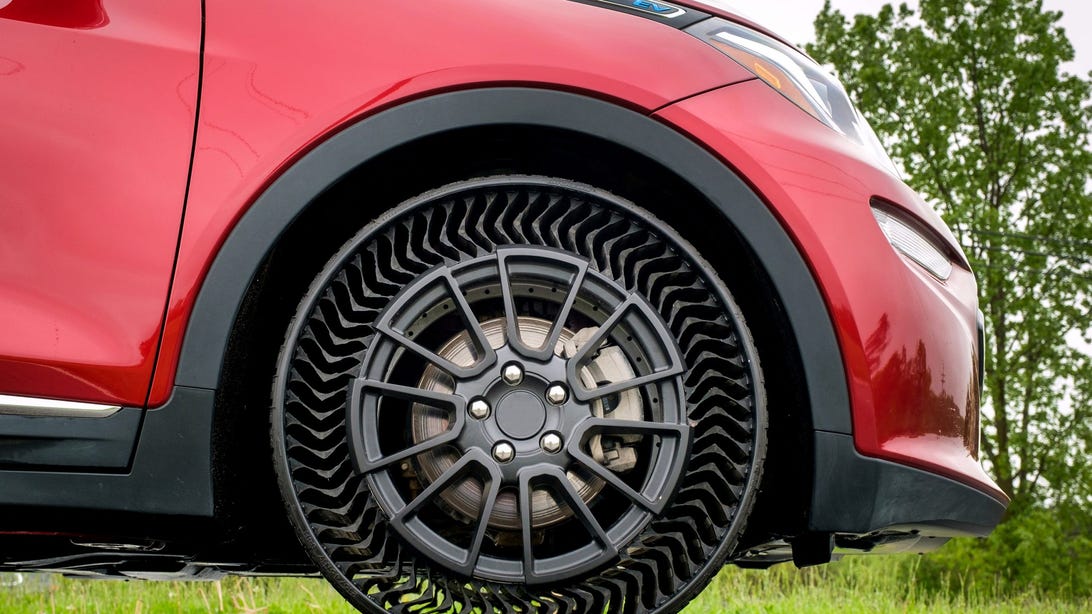



 I’m willing to argue the specifics, but I’d preliminarily date the peak of the Electromechanical Era somewhere around 1990. Last year, I had to replace all of the rotted rubber drive belts in a Sony Walkman WM-D6C, a professional portable tape player and recorder produced from 1984-2002.
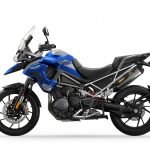


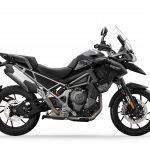


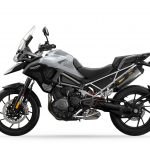










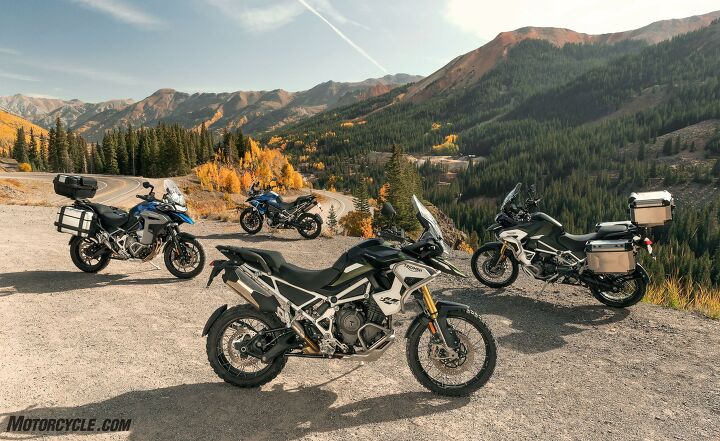
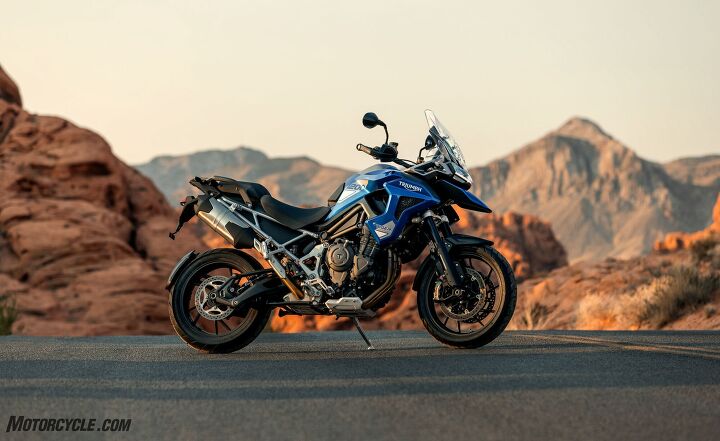

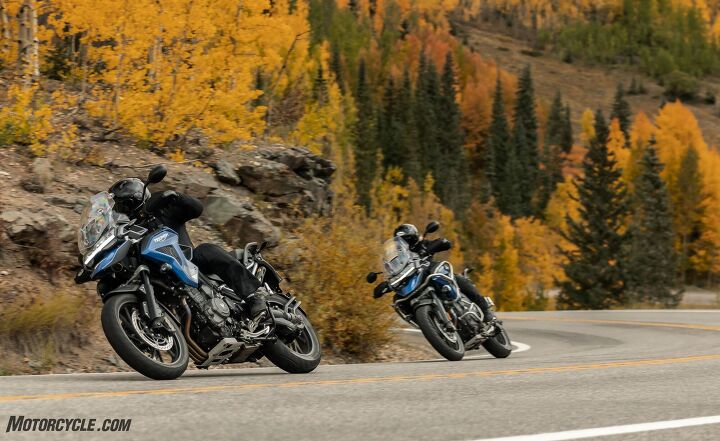
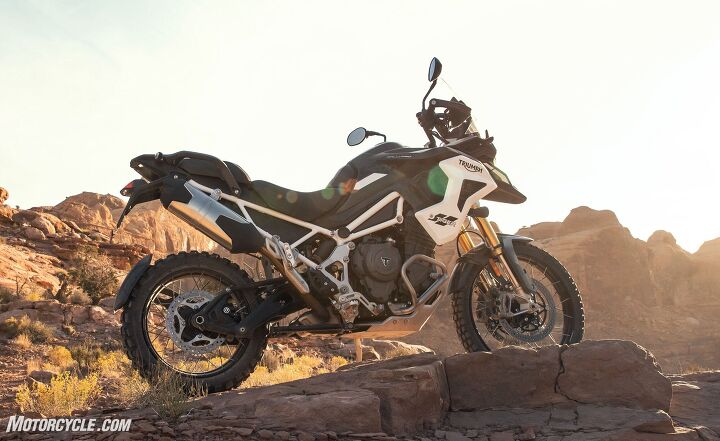

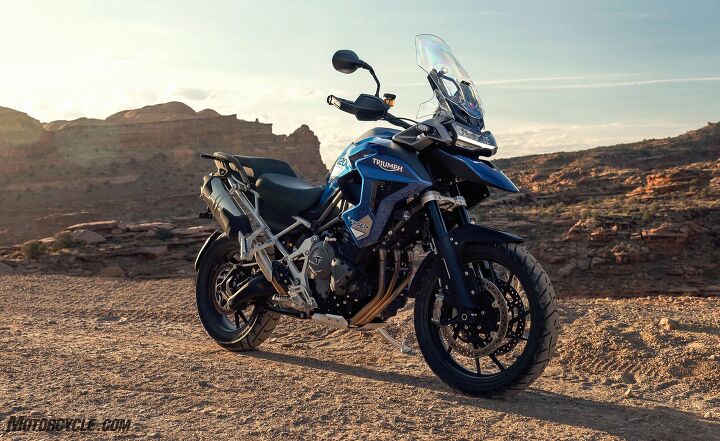
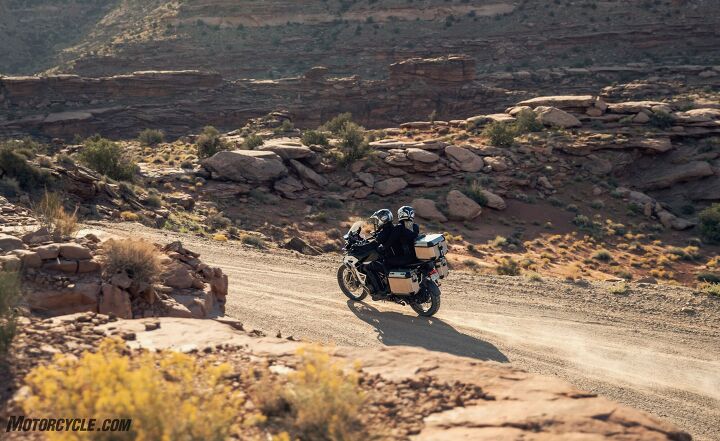
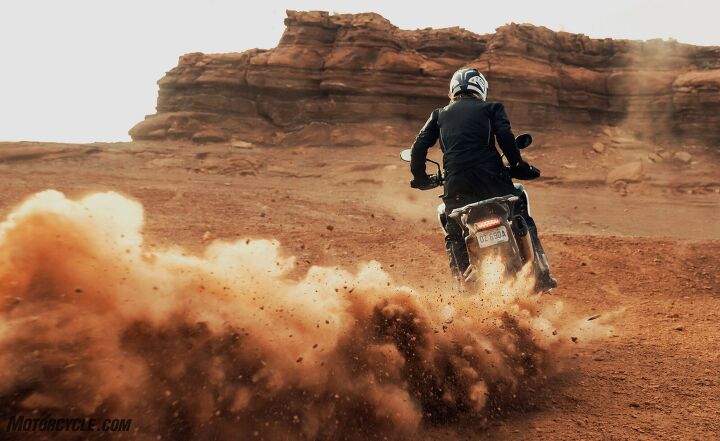
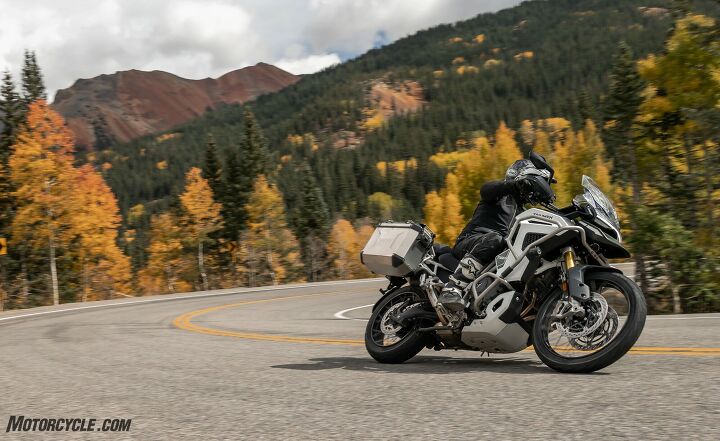
 tyres are fitted to all of the GT models, while the Rally models feature Metzeler Karoo Street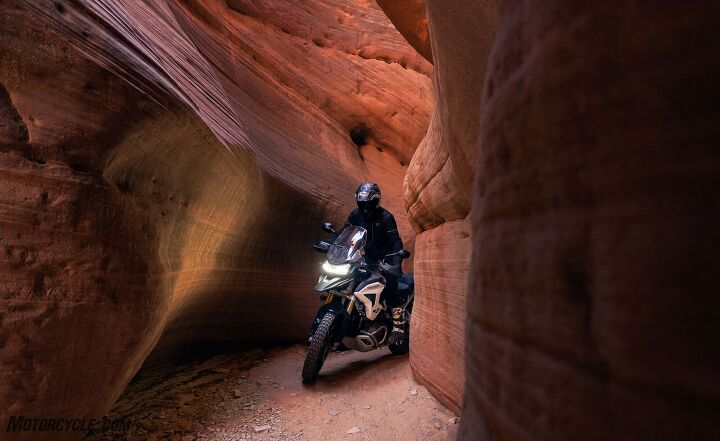
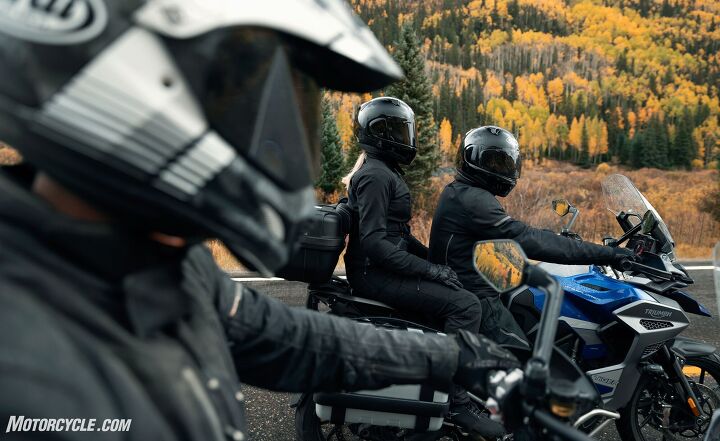
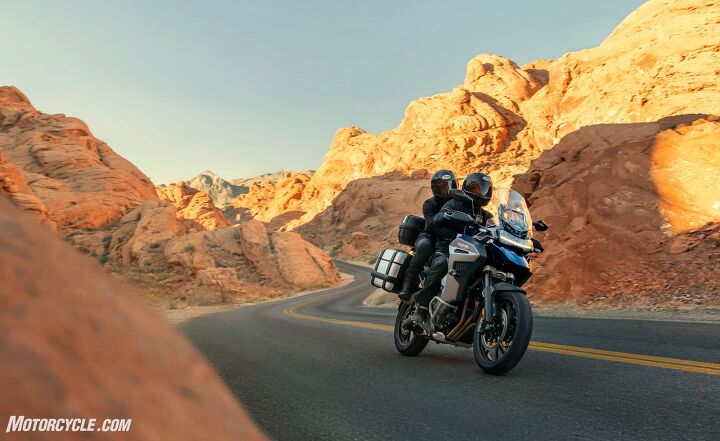
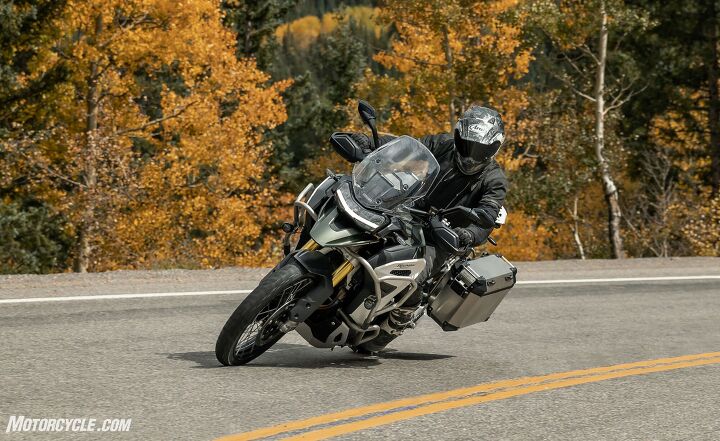
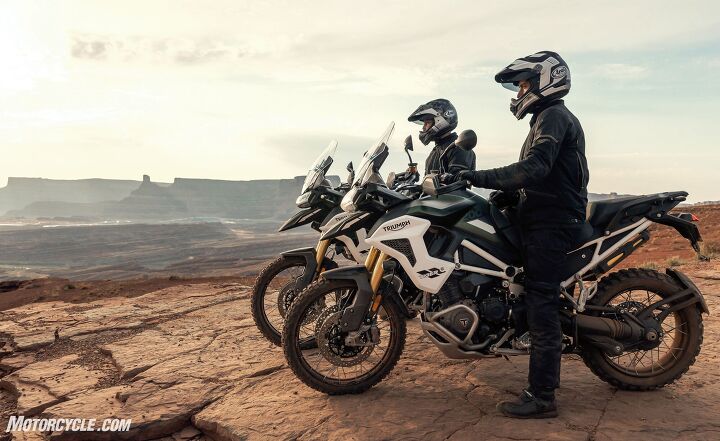


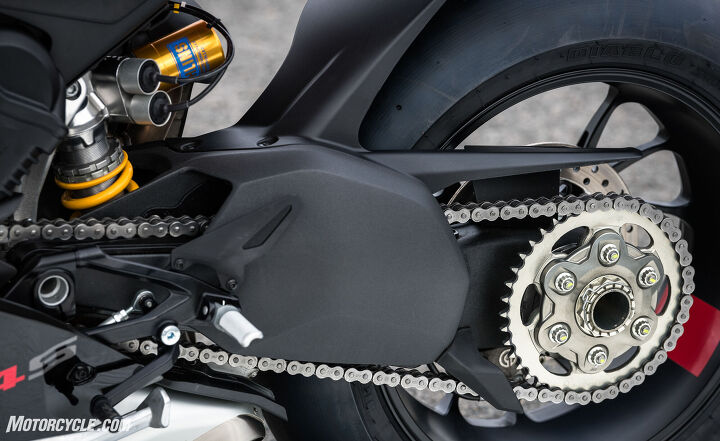
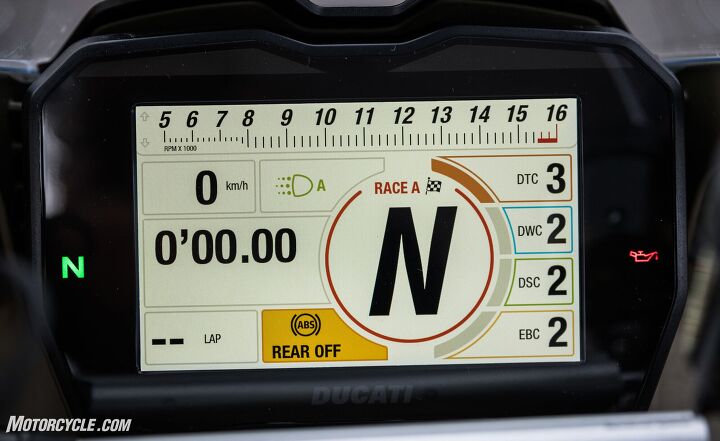
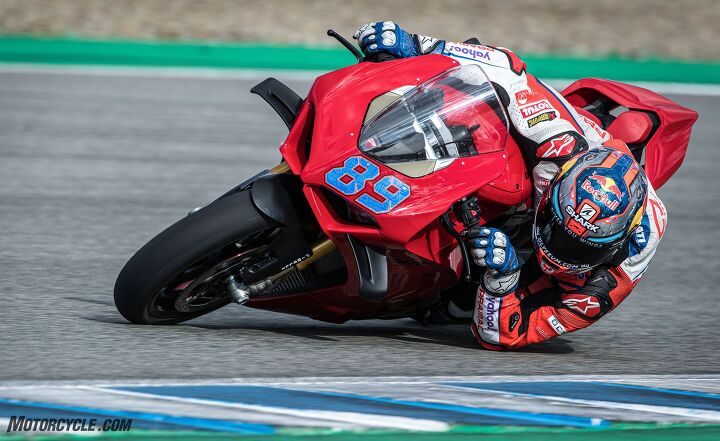


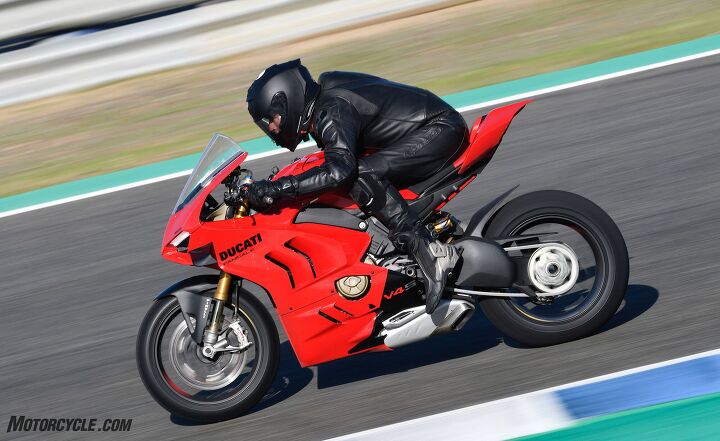


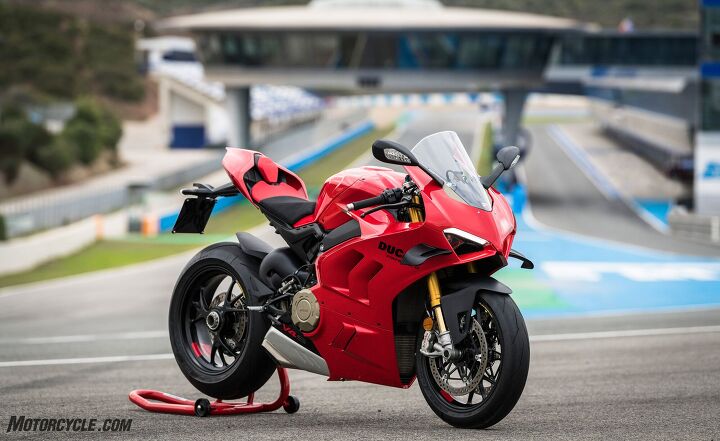
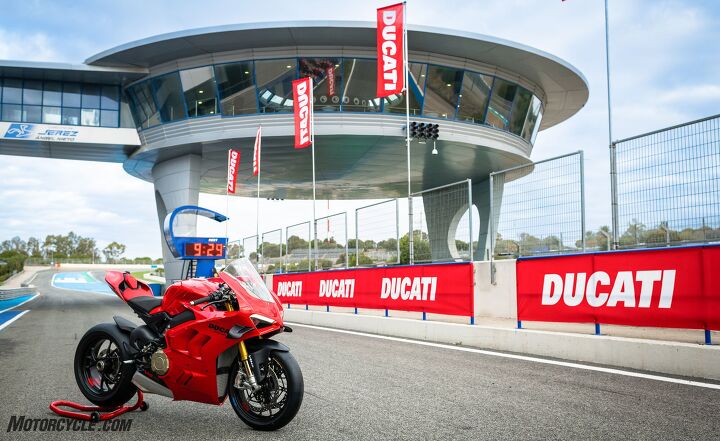
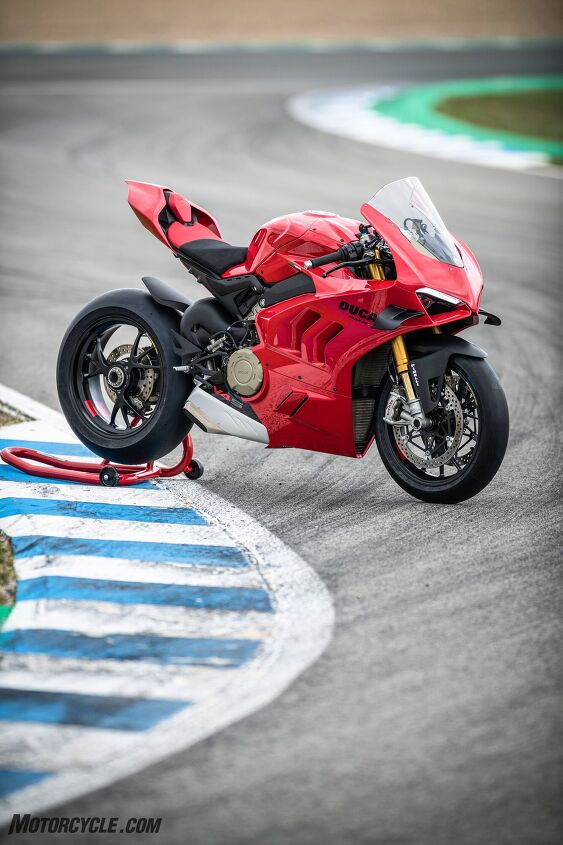
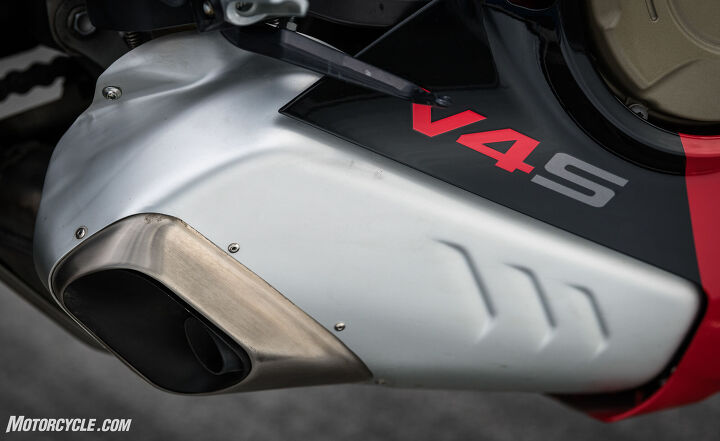

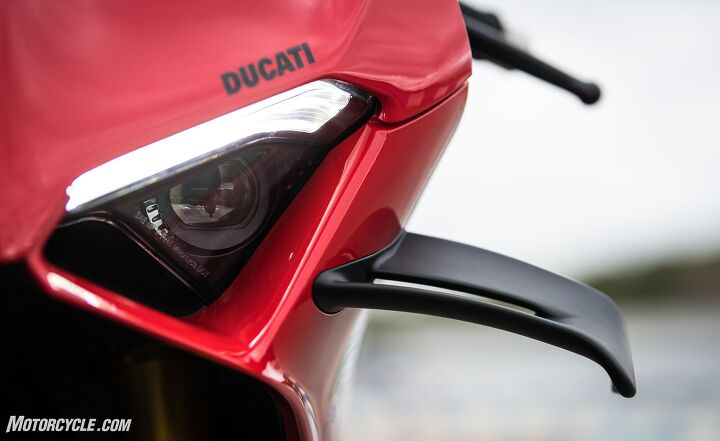


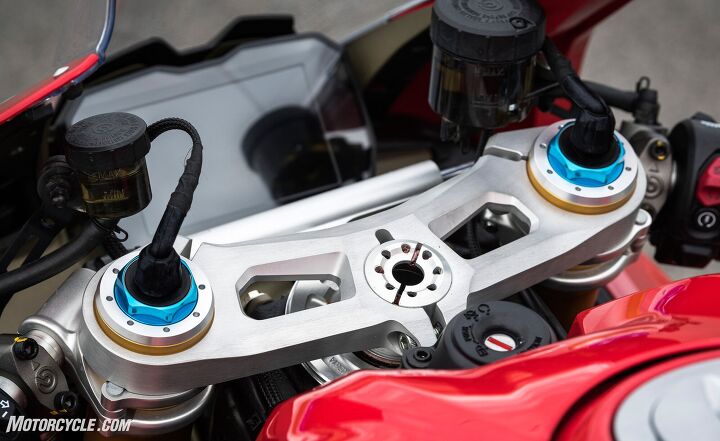
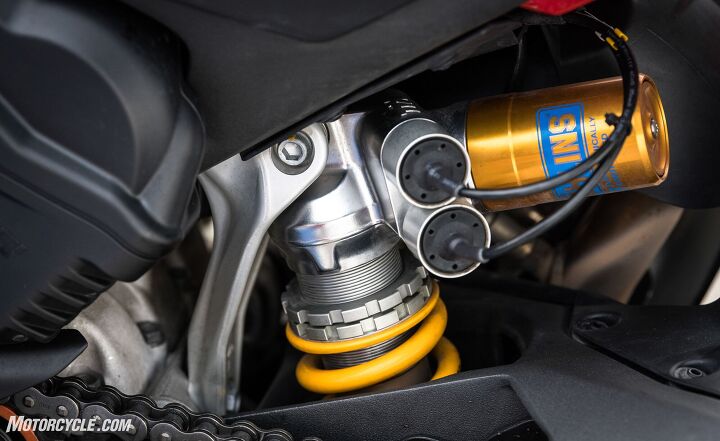

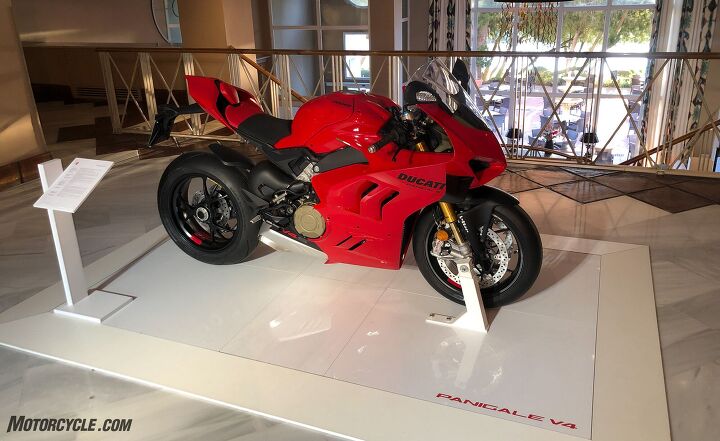
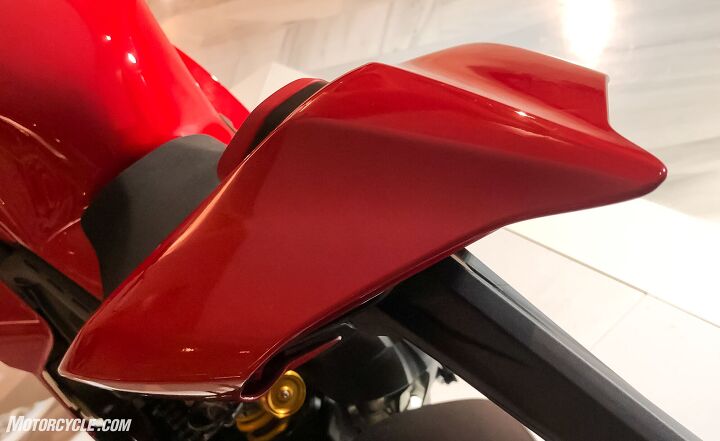

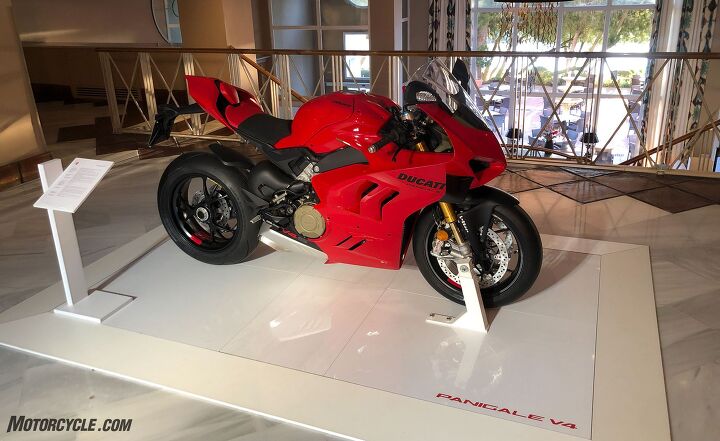 Seeing this piece of Italian industrial art outside of its natural habitat – a race track, canyon cafe – really did a number on my inner pneuma.
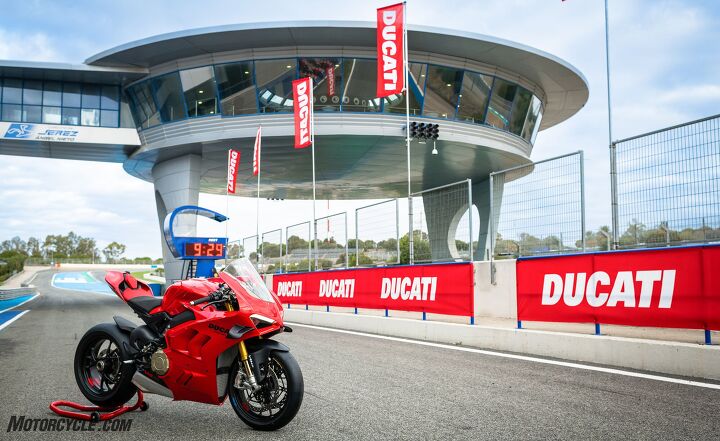
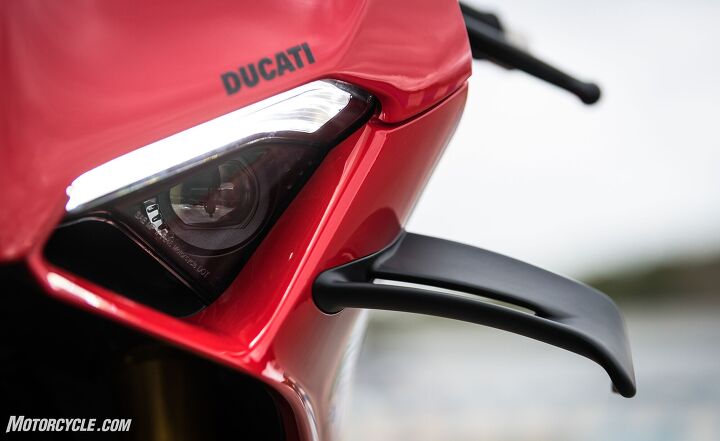
 Engine: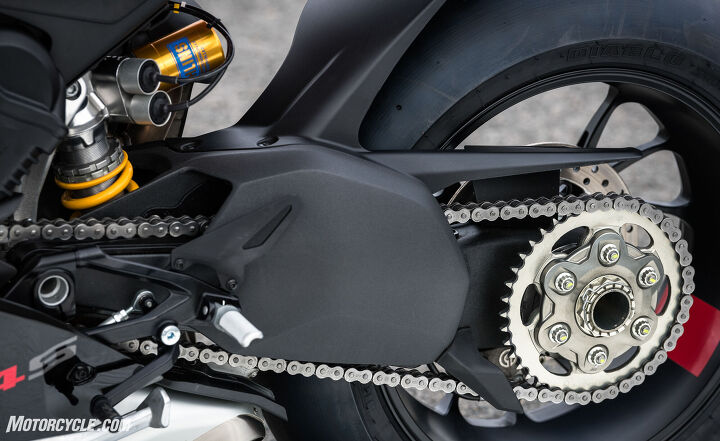
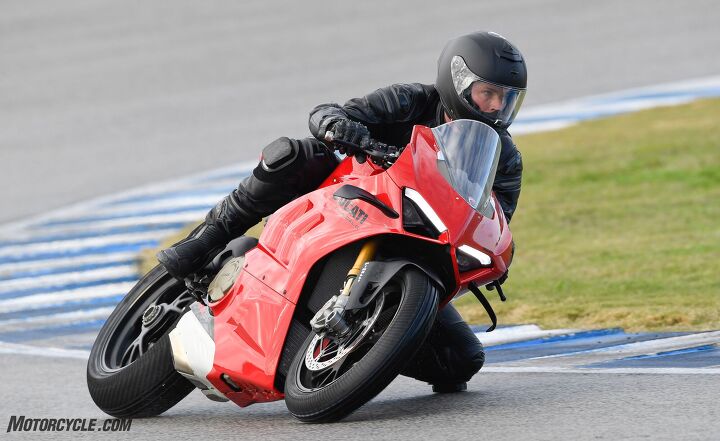
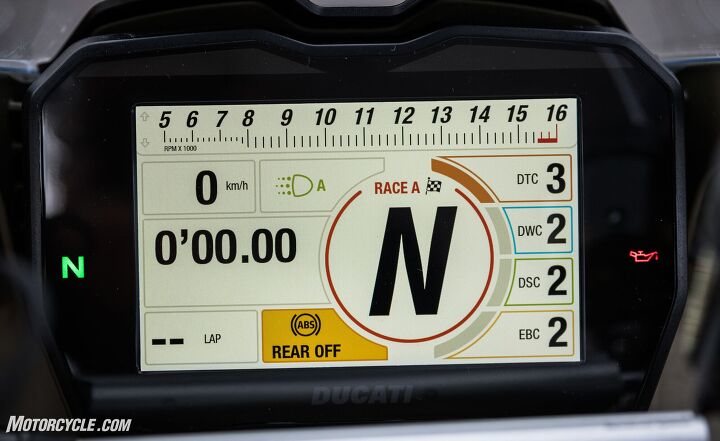
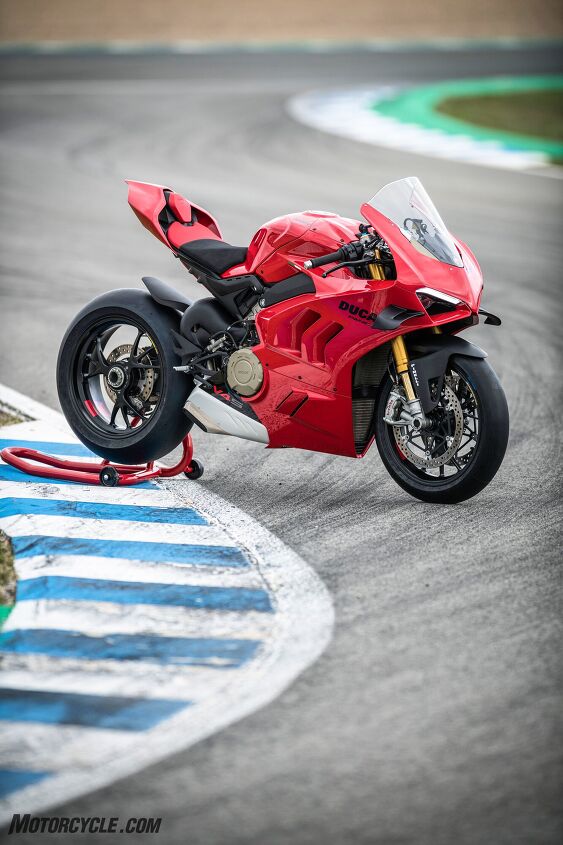 The Track EVO TFT display was the brightest and easiest to read on track in recent memory. And I could see the colored ‘flash flash flash’ beneath each control system as they each kicked in, in real-time. For example, and read this carefully because I’ve never seen this before; as I exited the corner, the Slide Control swatch/cube on the TFT would begin flashing dark green as the rear wheel was allowed to step out and slide JUST so much, followed by flashing from the dark orange swatch of the Traction Control kept from high-siding me. At that point the bike would begin to wheelie, but it doesn’t because the baby-blue colored swatch/cube takes over flashing as the Wheelie Control system kicks in. Hard on the brakes for the next corner, the Engine Braking color would flash, and so it went.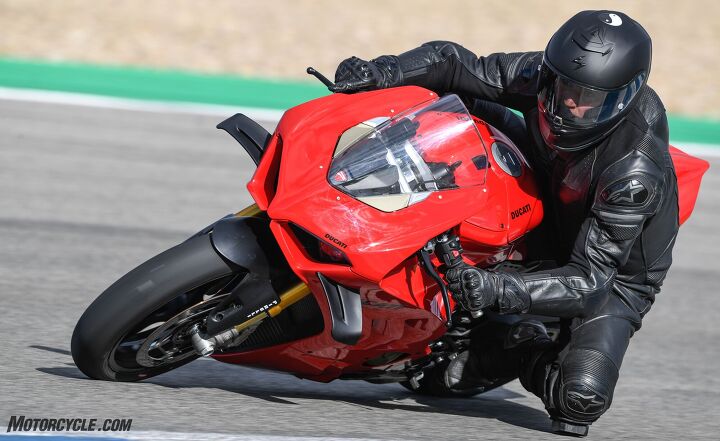
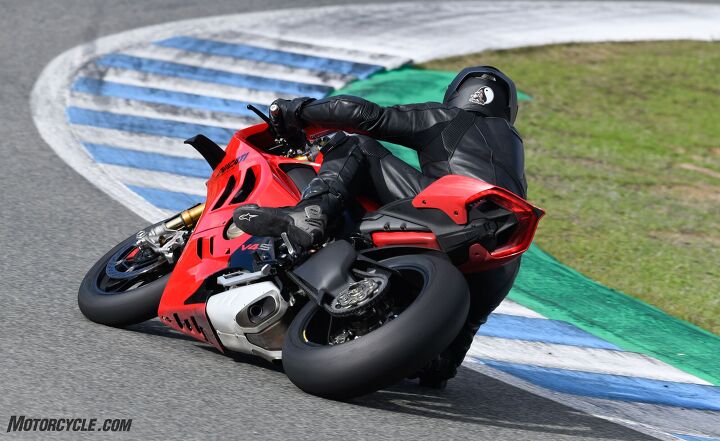

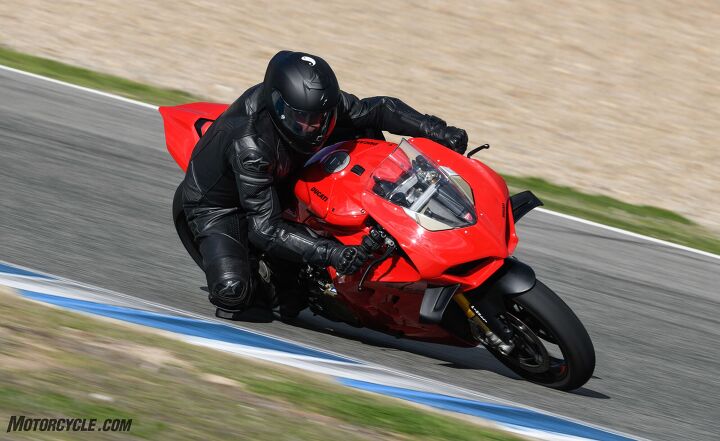
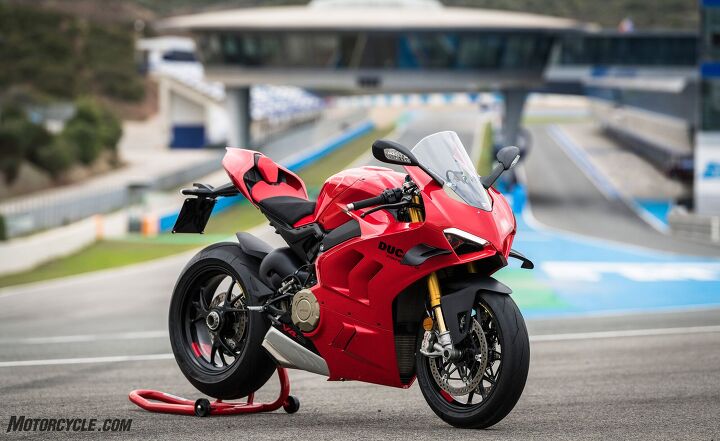
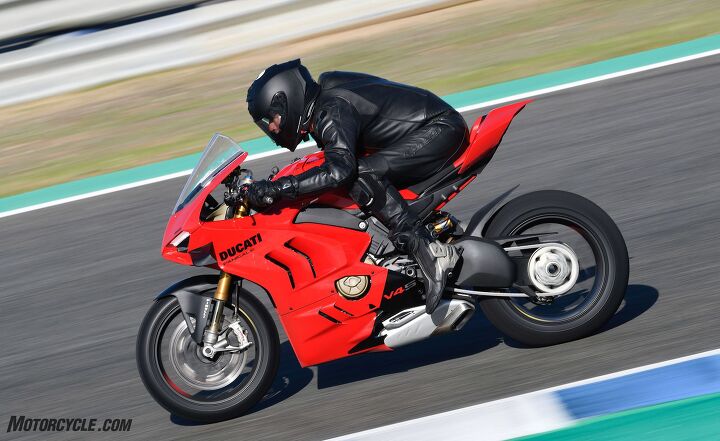


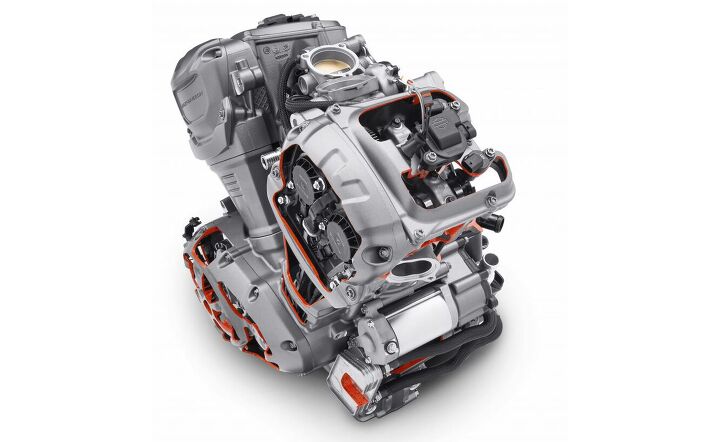

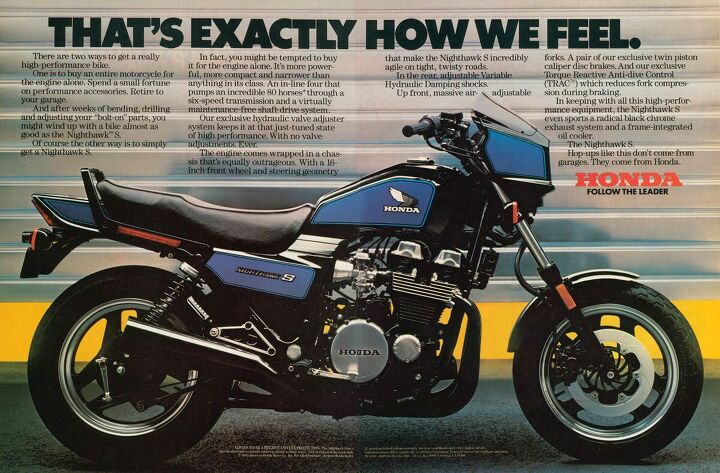
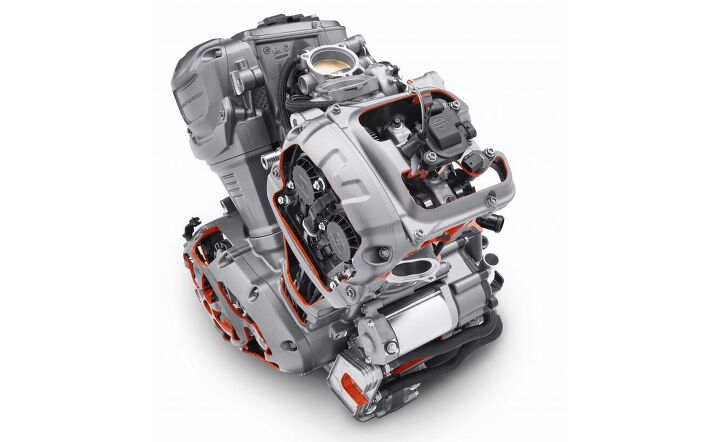

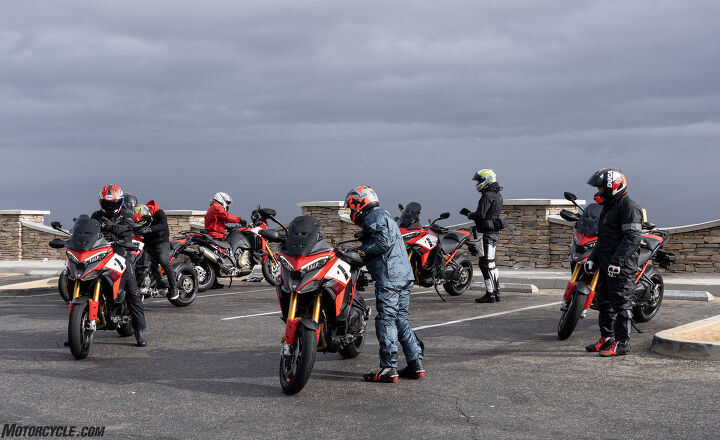
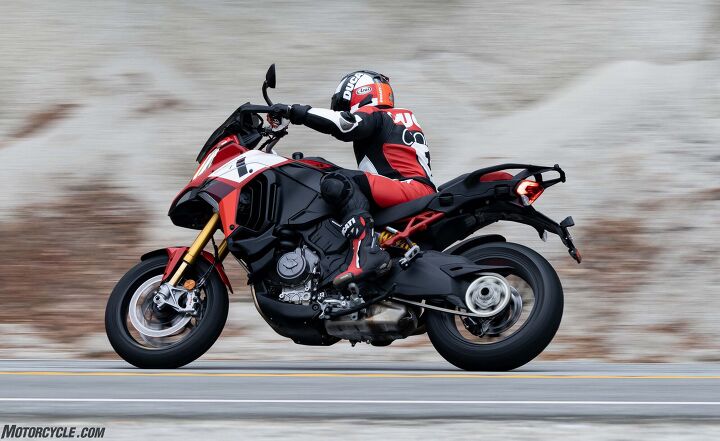
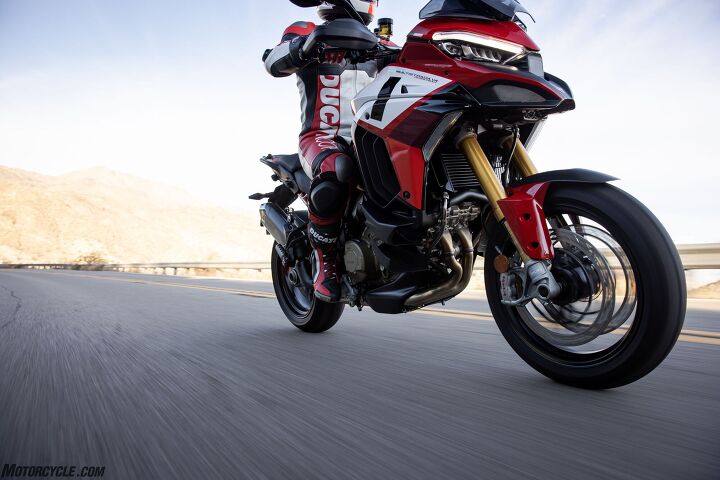
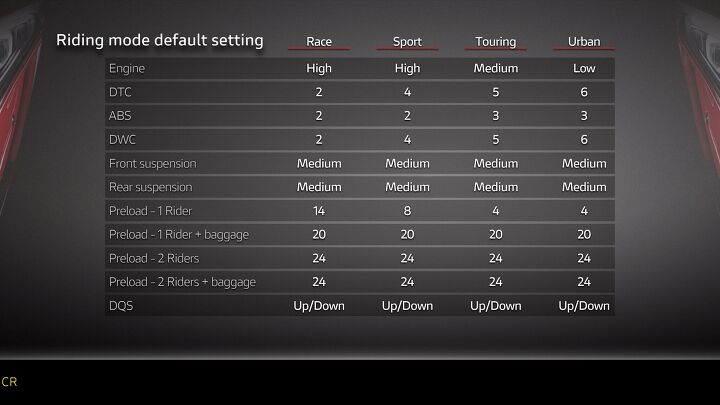
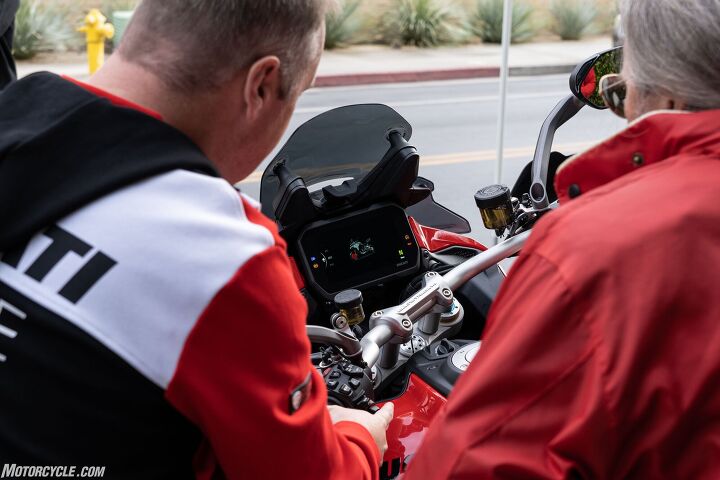
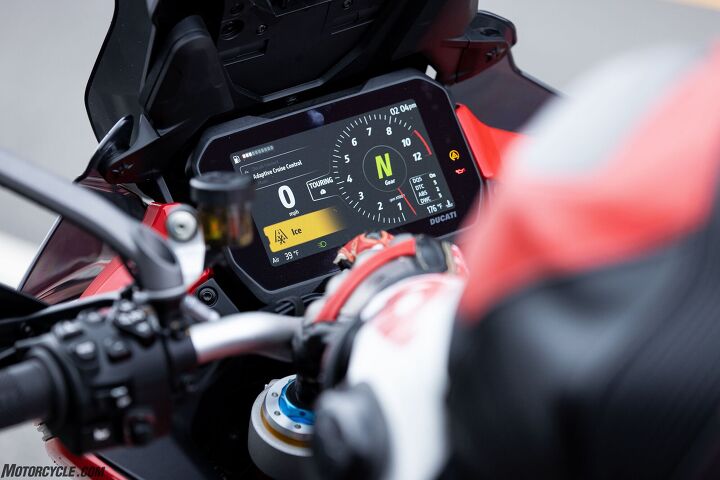



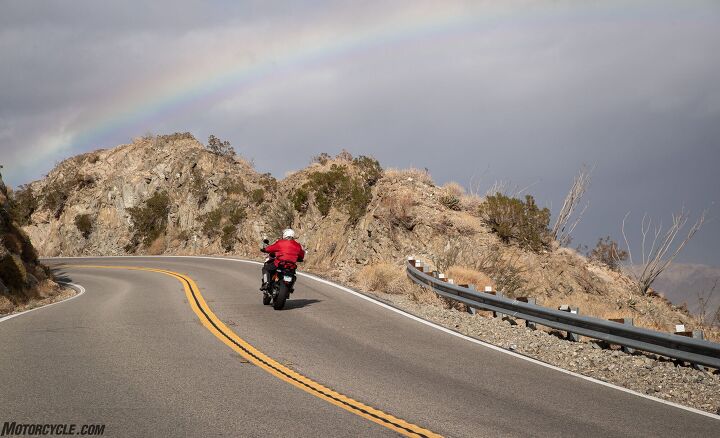
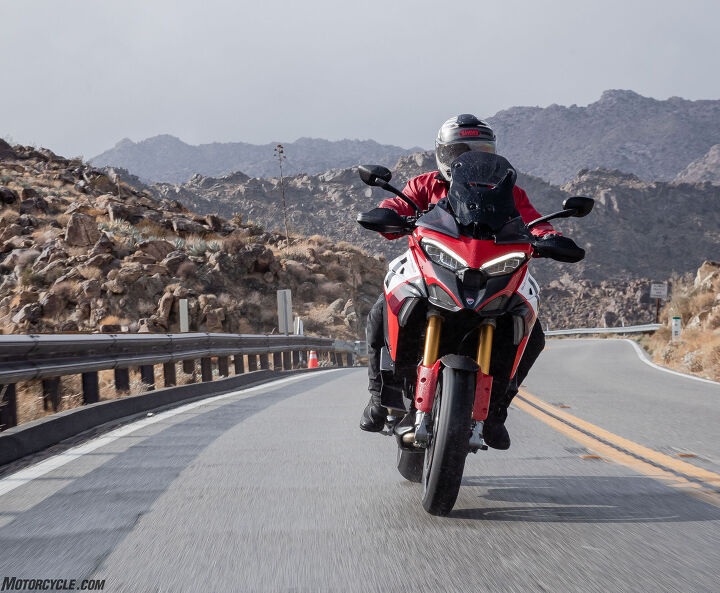
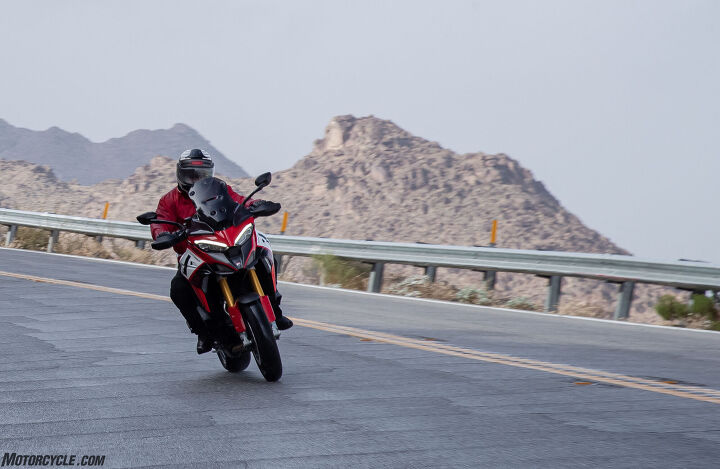
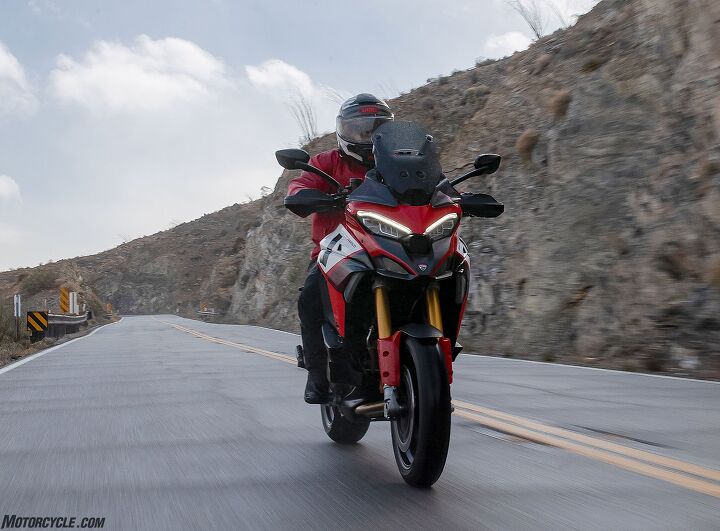

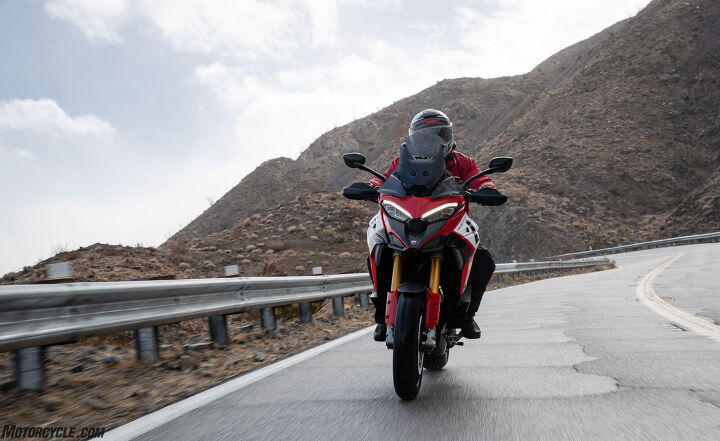
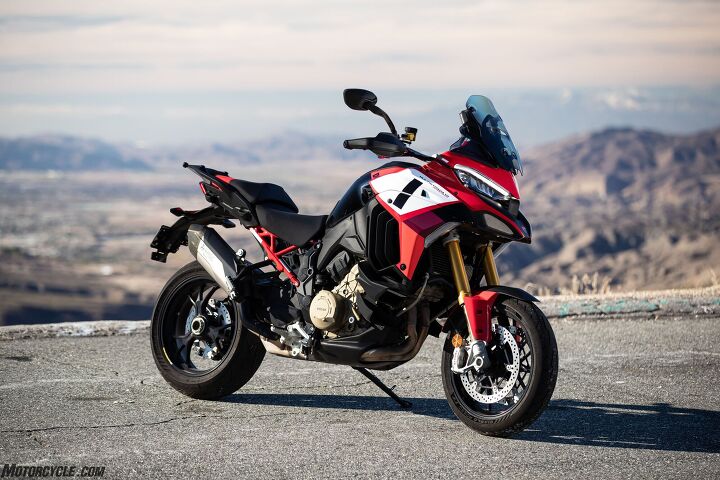
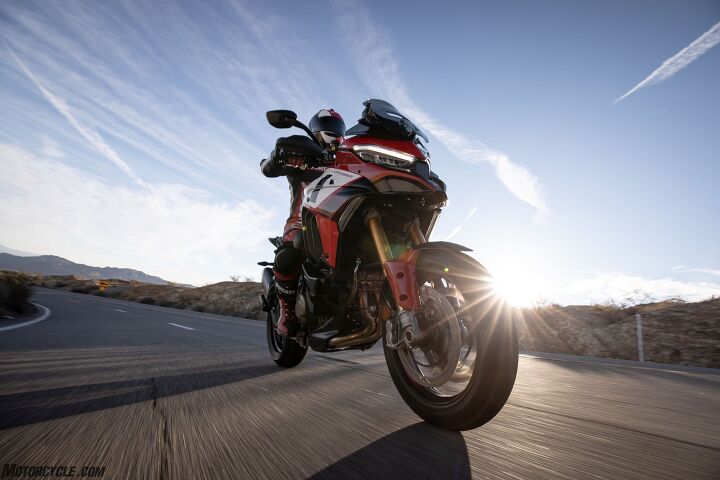
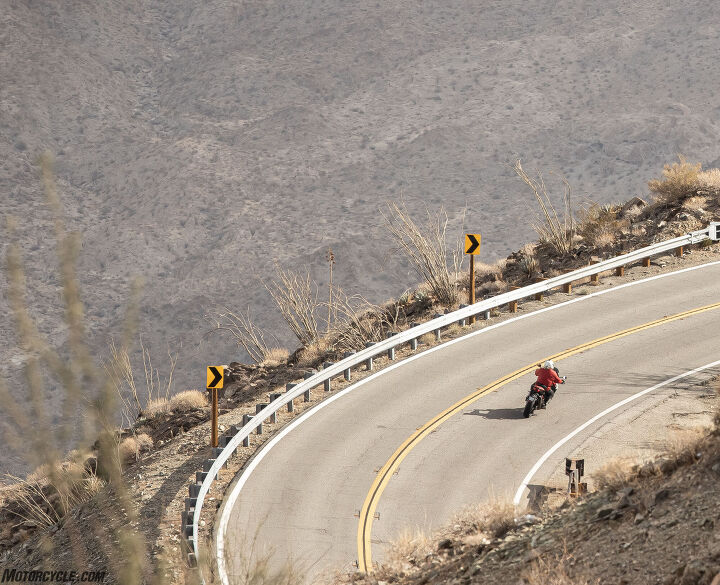
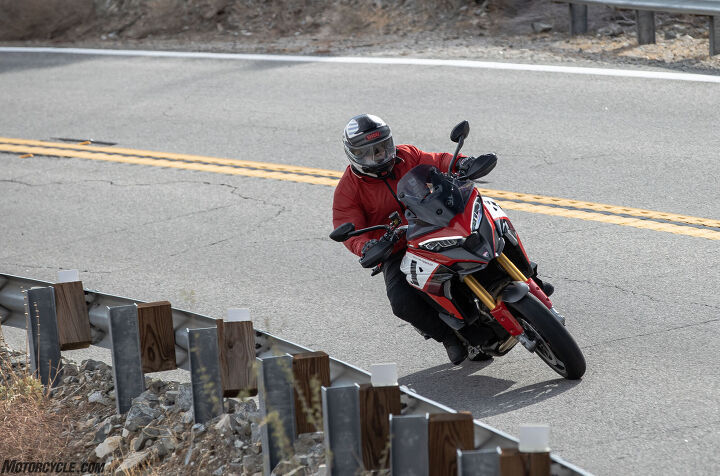
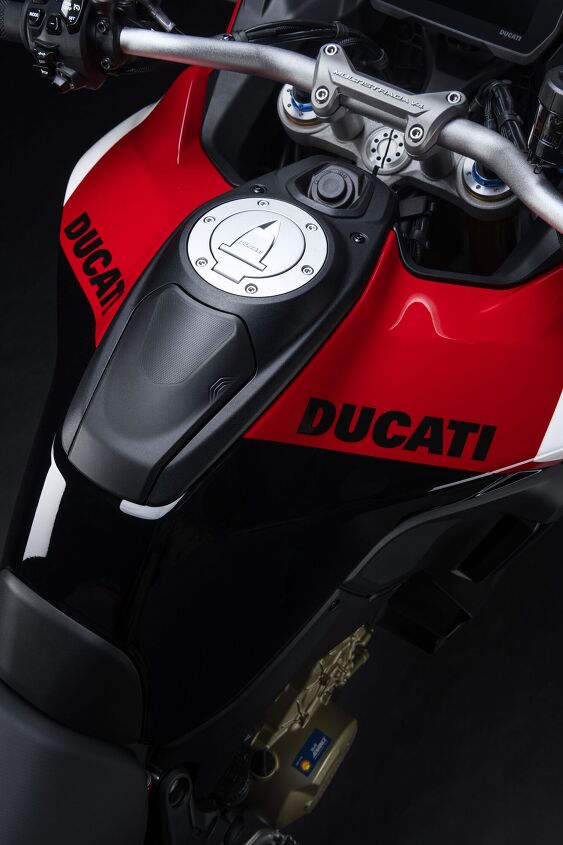

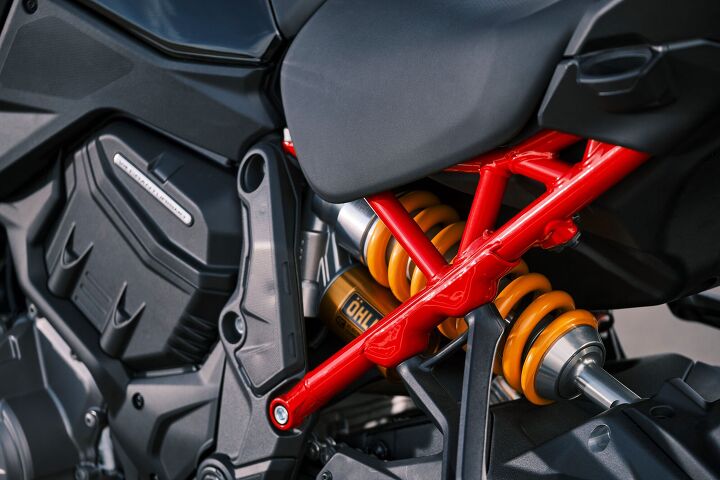
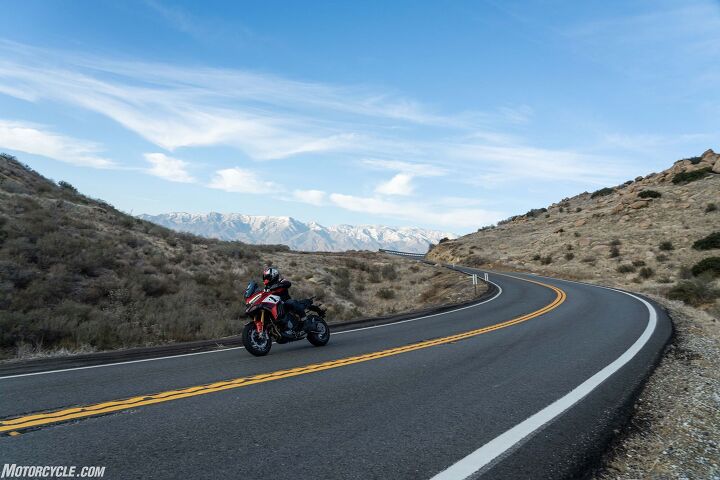
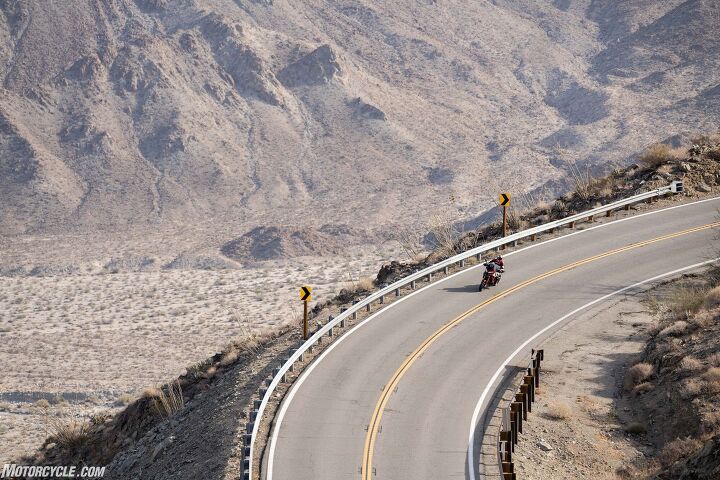

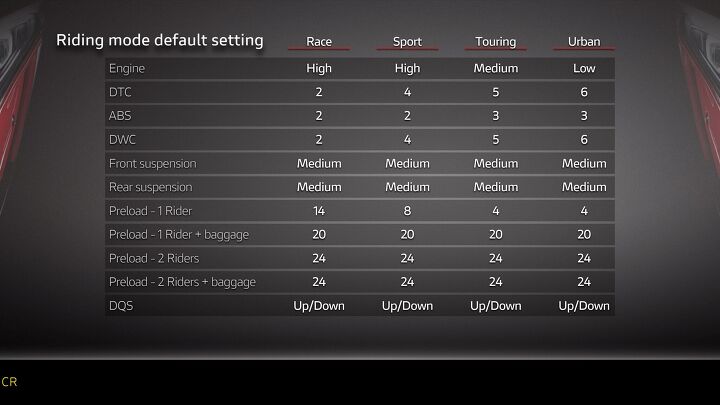


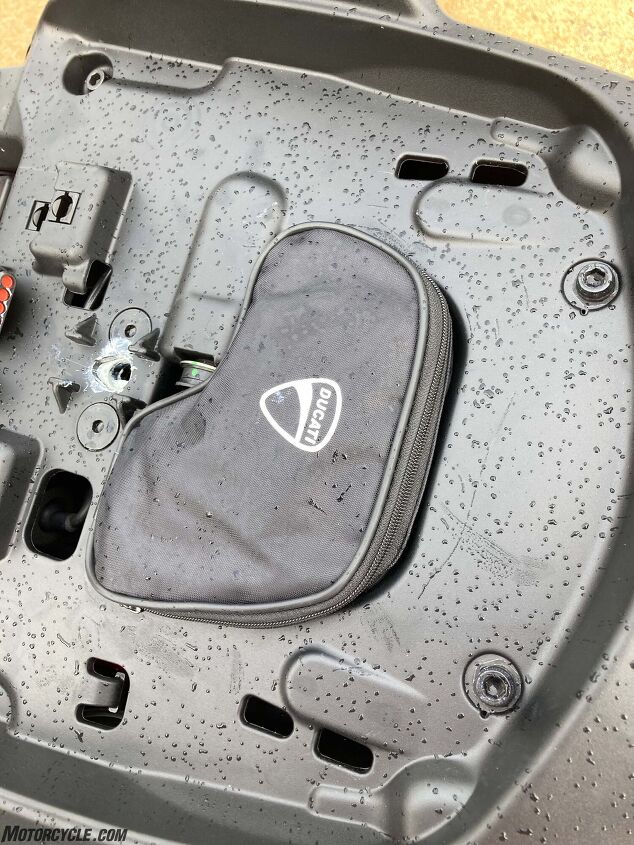

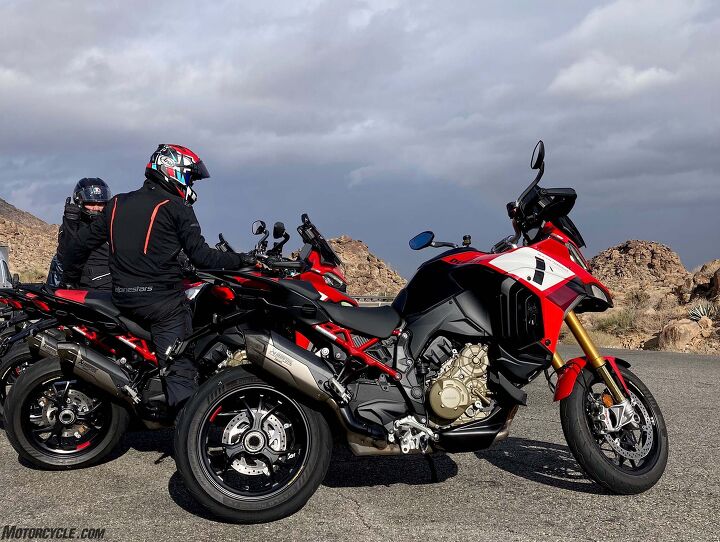




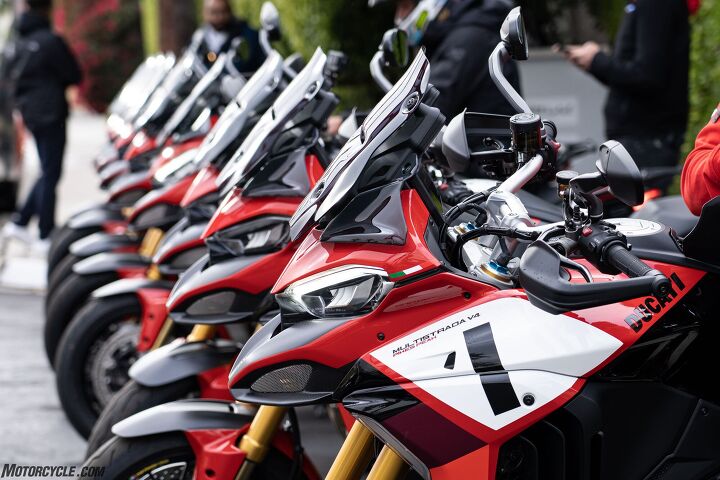
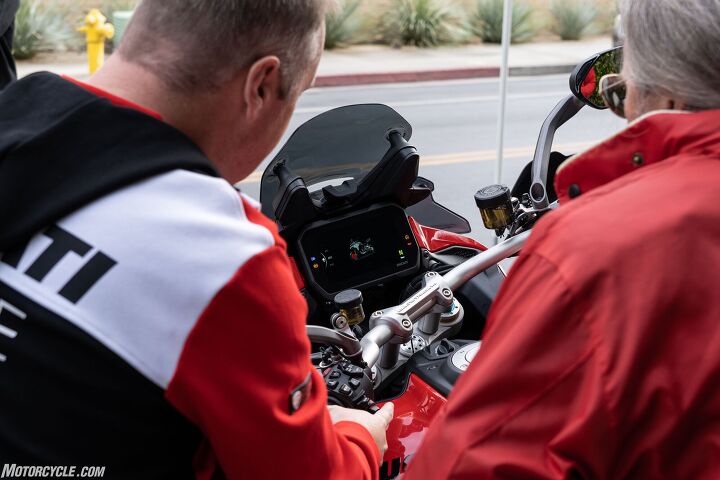
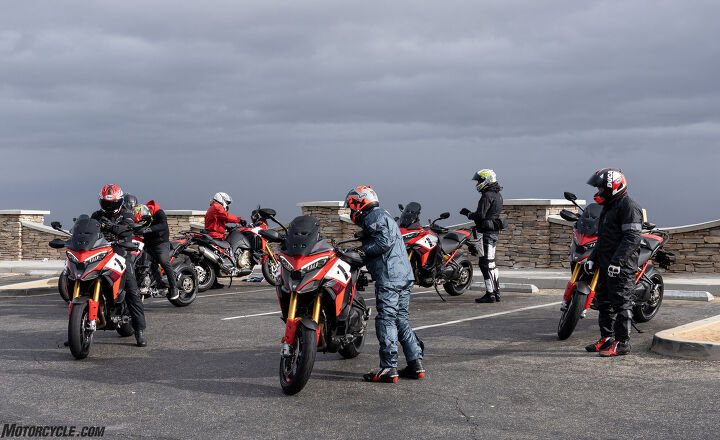


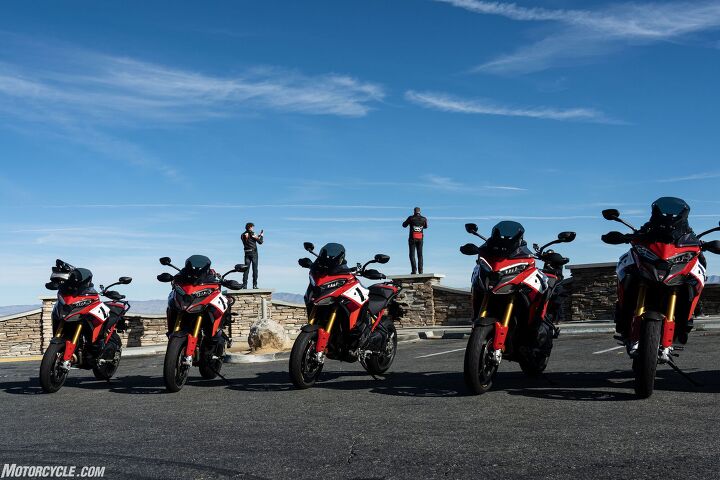
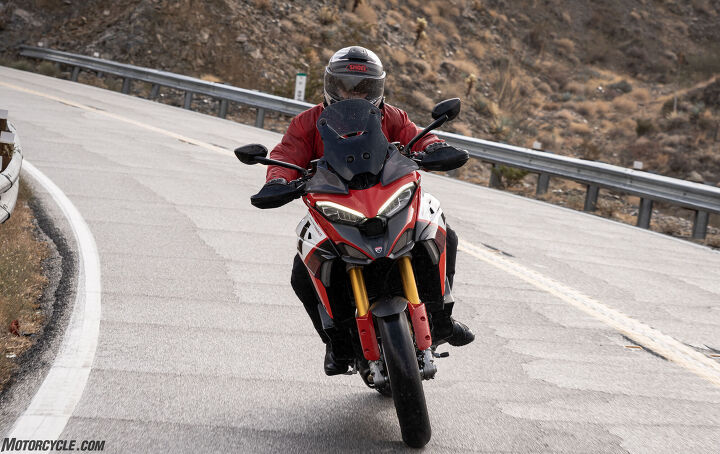
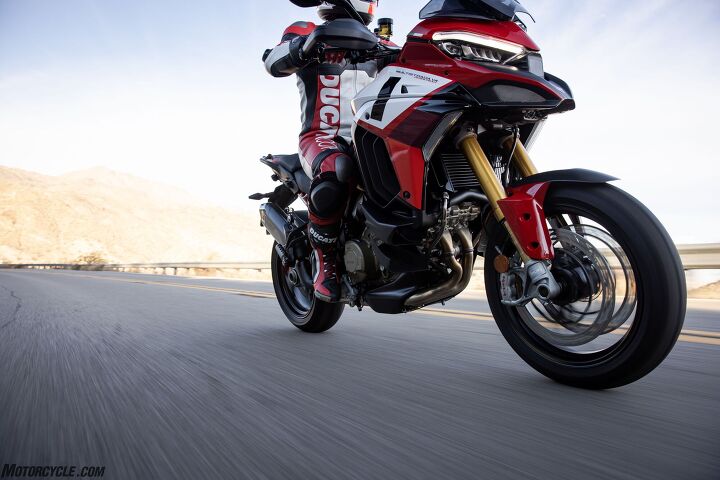
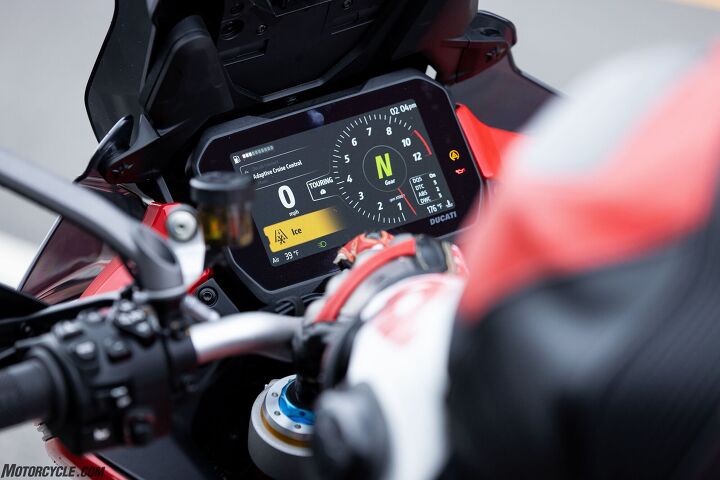

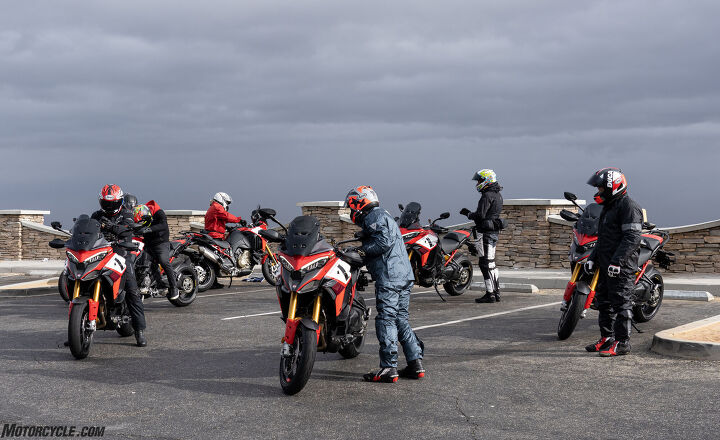

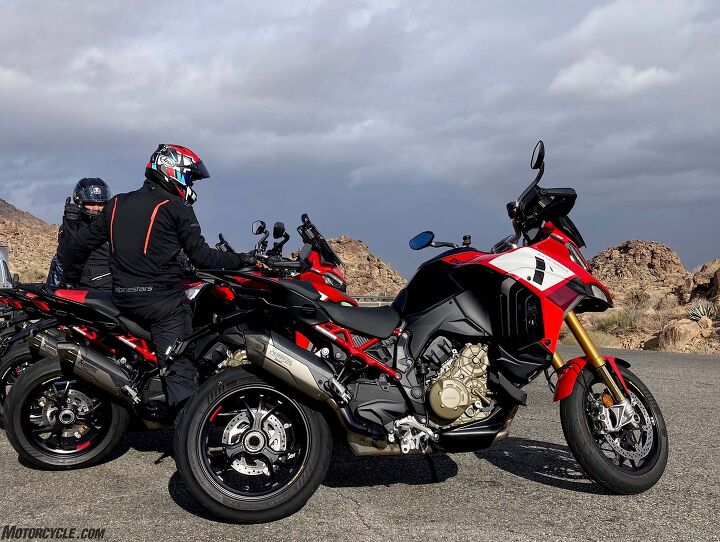
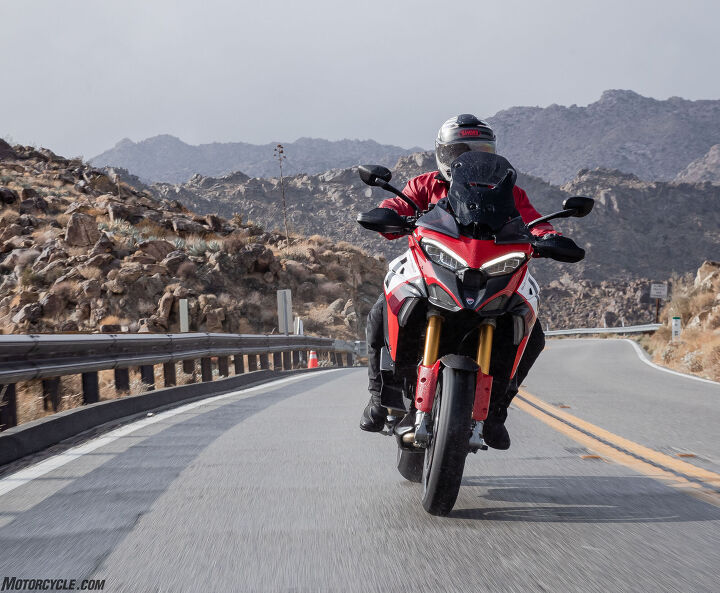
 Still, you could definitely feel the new PP’s sporting nature coming through. More committed ergos take the form of footpegs 10mm higher and rearward compared to the other Multis, with an 18mm narrower handlebar set lower and more forward. Even so, the riding position still felt pretty neutral to me, just about right in fact for my 5’8” bod. It was easy enough for me to touch the ball of one foot on the ground with the stock seat, but when our Ducati guy asked if I’d like to try the optional 20mm lower seat, why not? With it, I felt like I was sat down even more inside the bike – not a bad place to be given the threatening atmospheric conditions.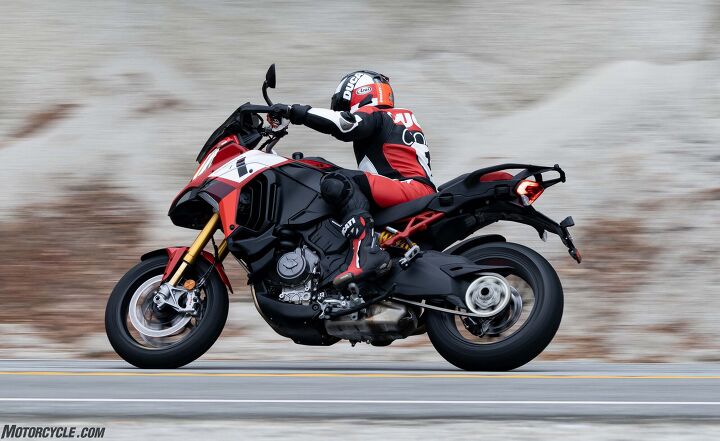
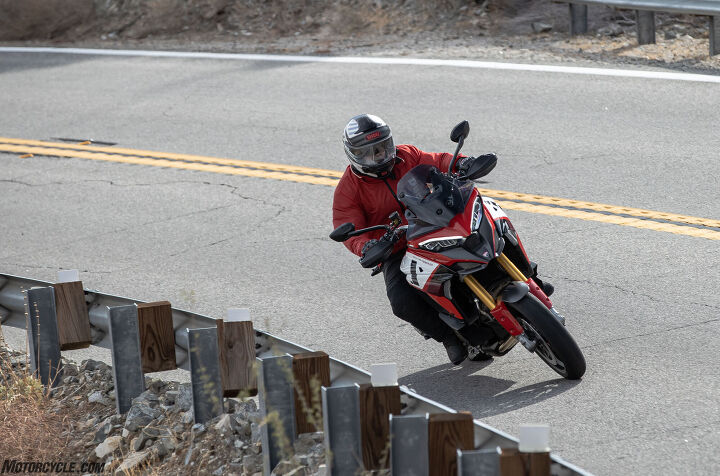
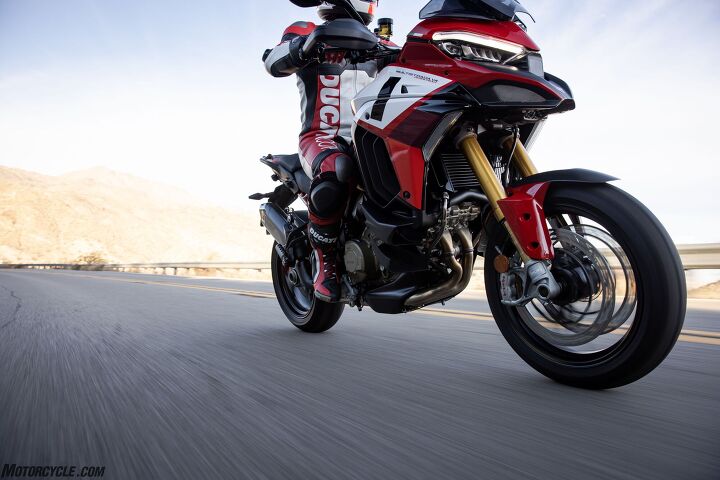
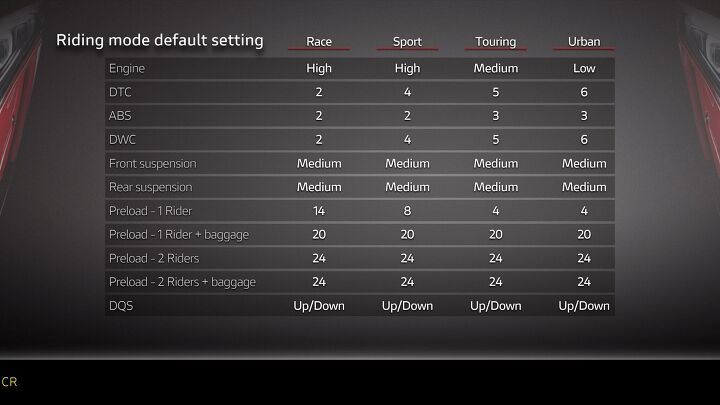

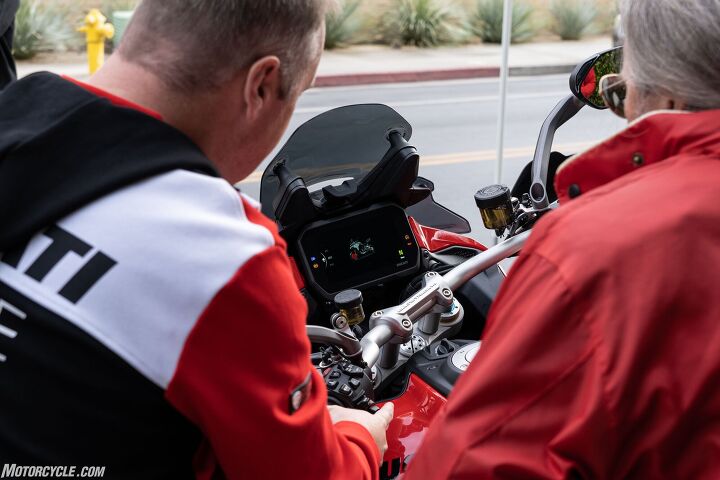
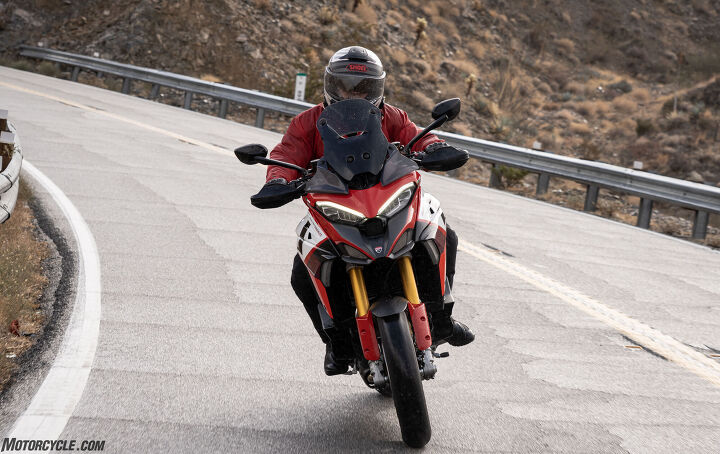

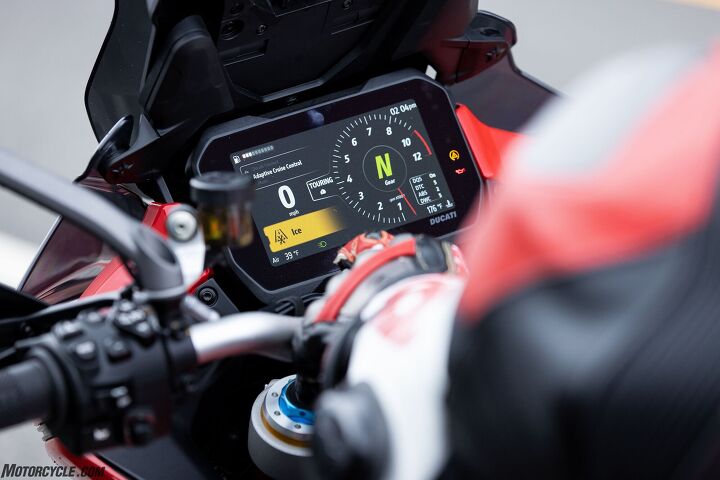

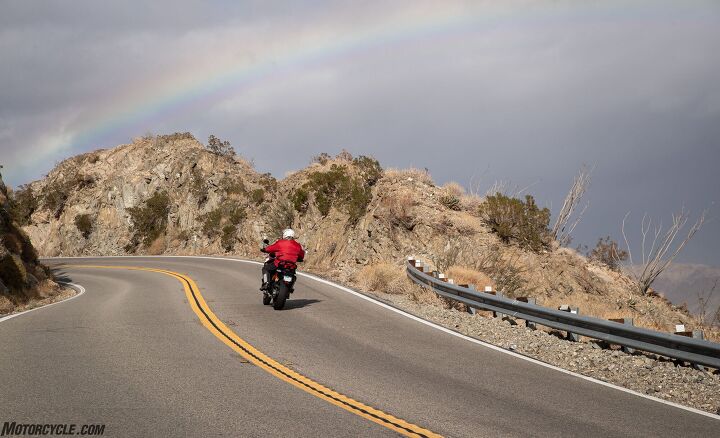
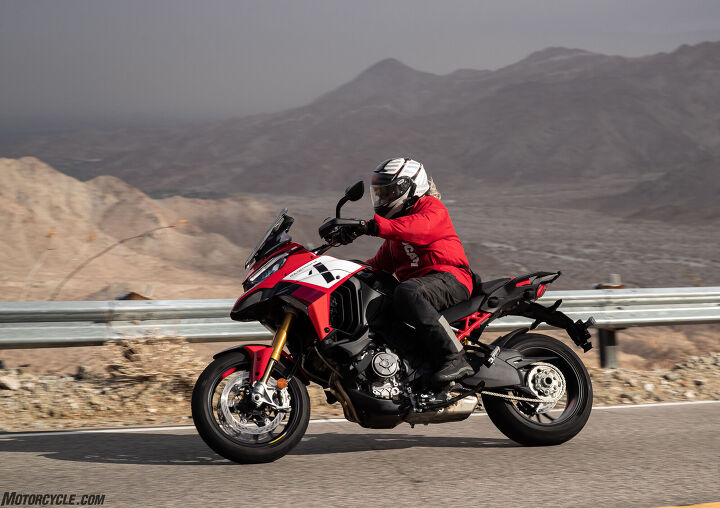






 Stainless steel brewing system works as a percolator or pourover for campsite coffee.


