"NewSpacers have passed out of their whiny adolescent phase and into industrious young adulthood. Their aspirations are appropriately modest—mostly suborbital, just a quick trip to the edge of the atmosphere. They're setting aside deep space exploration and the moon for now (though they talk a big game about what's next), opting instead for reasonable, practical, short-term goals: quick hops for tourists and other near-to-Earth fun."
Katherine Mangu-Ward "Space Travel for Fun and Profit"
20 years ago
January 2002
"Why…is [the World Health Organization] concerned with seatbelts and smoking when the world's poor are still dying of measles and tuberculosis? Public choice analysis—which presumes that government agencies, like their private-sector counterparts, seek to grow their market share—suggests an answer: Since the WHO's funding is mostly from First World governments, making them its relevant 'customer base,' it caters to First World concerns."
Brian Doherty "WHO Cares?"
25 years ago
January 1997
"From merit pay to charter schools to measures that would relax teaching certification requirements, the [National Education Association's] recalcitrance has earned it the title bestowed by Forbes in 1993: the National Extortion Association."
Rick Henderson "Schools of Thought"
"The good-government types are right when they say the problem is power. But the power they worry about is the wrong kind. The clout wielded by well-connected individuals, businesses, and advocacy groups is less troublesome than the coercive might of government. When the actions of legislators, agencies, and bureaucrats can bankrupt you, enrich you, or send you to prison, campaign contributions seem like a logical form of protection money."
Rick Henderson "Lippo Suction"
40 years ago
January 1982
"The geopolitical rationale of those urging a new draft is that it would send a signal to friend and foe alike that the United States is 'serious' about a strong defense. But what kind of message are we sending if we must resort to coercion to get people to defend us?"
Robert W. Poole Jr. "The Draft Is No Solution"
50 years ago
January 1972
"In truth, the principal fact about Soviet Russia which stands out for any observer who looks even a little behind the appearances is the omnipresence, and the omnipotence, of government. The State is the sole owner of land (except the private garden plots); no one may buy land, one can only rent it from the State. The State is the sole owner of houses: in fact, no houses for individual families have been built in Russia for years; there are only apartments, in the badly constructed apartment buildings already described. And if a family (not an individual—individuals must live with their parents) wants to live in one, they put their names on a waiting list until an apartment is assigned them by the government. No one may hire anyone else for a job: the State is the sole employer."
John Hospers "A Political Travelogue"
"Most economists dislike mergers, particularly large ones, since they hold the market structure approach to 'measuring' competition. They mistakenly assume that the number of firms in a 'market,' or the relative size of the firms, is the crucial determinant of competitive behavior. Since mergers reduce numbers and increase relative size (concentration), some economists argue that they automatically reduce competition."
D.T. Armentano "Capitalism and the Antitrust Laws"
“In Mankiewicz’s Julius Caesar, all the characters are wearing fringes,” writes Roland Barthes in his well-known essay on Romans in film. “Some have them curly, some straggly, some tufted, some oily, all have them well combed.” This fringe, Barthes argues, is “quite simply the label of Roman-ness”: when it comes onscreen, “no one can doubt that he is in Ancient Rome.” Ever since cinema first told historical tales, hair has been among its most effective visual shorthands with which to establish an era. This is in part due to hairstyles themselves having varied since the beginning of recorded history, and — in one form or another — no doubt before it as well. But how many of them could we pull off today?
In the video above, Youtuber Morgan Donner addresses that question as directly as possible: by trying out half a millennium’s worth of hairstyles herself. As a woman, she’s been provided much more to work with by fashion history (to say nothing of biology) than have the successors of all those fringed Roman men. She begins in 1520, a period whose art reveals “a fairly consistent center-part kind of smooth look going on” with braids behind, all easy replicable. 110 years later “things get actually quite interesting,” since fashions begin to encompass not just hairstyles but haircuts, properly speaking, requiring different sections of hair to be different lengths — and requiring Donner to whip out her scissors.
About a century later, Donner takes note of a pattern whereby “styles get bigger and bigger and bigger, and then — foof — they deflate.” Such, it seems, has become the general tendency of not just culture but many other human pursuits as well: the gradual inflation of a bubble of extremity, followed by its sudden bursting. It’s in the 18th century that Donner’s project turns more complex, beginning to involve such things as lard, powder, and hair cushions. But she gets a bit of a respite when the 1800s come along, and “it’s almost like everyone collectively decided that they were tired of it, and you know what? Messy bun. That’s good enough.” Yet in hair as in all things, humanity never keeps it simple for long.
Viewers of film and television historical dramas (which themselves have been booming for some time now) will recognize more than a few of the hairstyles Donner gives herself throughout this video. But the deeper she gets into the 20th century, the more of them remain in living memory. Take the 1940s’ shoulder-length curls with pinned-back layers on top, which many of us will recognize from pictures of our grandmothers. That particular hairstyle doesn’t seem to have been revived since, but from the 1960s on, Donner works through a series of looks that have provided no little inspiration to our retromaniac 21st century. At the end of her historical-tonsorial journey, she fires up the clippers and buzzes herself completely — thus beginning hair Year Zero.
Based in Seoul, Colin Marshall writes and broadcasts on cities and culture. His projects include the book The Stateless City: a Walk through 21st-Century Los Angeles and the video series The City in Cinema. Follow him on Twitter at @colinmarshall or on Facebook.
For Kat Norton, her success came after she took a big risk trying something new outside of her comfort zone (hint: it involved making videos and dancing).
We don’t typically think of hospitality as a manly thing. And indeed, it is typically the women in our lives who more often take charge of throwing parties, cooking meals, and preparing the guest room for visitors.
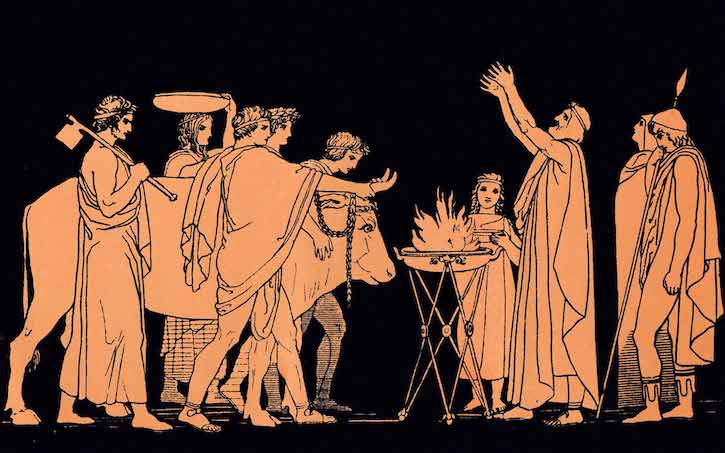
But for thousands of years, offering hospitality was considered an essential part of being a man and living with honor.
While many ancient cultures had a code of honor which required the practice of hospitality, this code was especially typified by the form it took amongst the Greeks.
The Ancient Greek Idea of Hospitality
In the 1970s, anthropologist Michael Herzfeld studied the culture of masculinity in a small mountainous village on the island of Crete that he dubbed “Glendi” (the name was a pseudonym, to protect the confidentiality of its residents). The Glendiots were a pastoral people who, because of the remoteness and hardscrabble nature of their village, had retained much of the traditional code of manhood that had marked cultures around the world since ancient times. One of the things Herzfeld discovered about that culture was “that the height of eghoismos, self-regard, is a lavish display of hospitality.”
The Glendiots’ emphasis on hospitality traces all the way back to ancient Greece, when it was called xenia. Xenia was an honor-based code of etiquette that concerned the relationship between hosts and guests, especially between hosts and guests who were strangers to each other.
So what did good xenia look like in ancient Greece?
Well, a host was expected to welcome into his home anyone who came knocking. Before a host could even ask a guest his name or where he was from, he was to offer the stranger food, drink, and a bath. Only after the guest finished his meal could the host inquire about the visitor’s identity. After the guest ate, the host was expected to offer him a place to sleep. When he was ready to leave, the host was obligated to give his guest gifts and provide him safe escort to his next destination.
Guests in turn were expected to be courteous and respectful towards their hosts. During their stay, visitors were not to make demands or be a burden. Guests were expected to ply the host and his household with stories from the outside world. The most important expectation was that the guest would offer his host the same hospitable treatment if he ever found himself journeying in the guest’s homeland.
Once you understand the ancient Greek concept of xenia, you’ll start to see it everywhere in ancient Greek texts. The Odyssey is basically the Greek bible on xenia. Pretty much every story in it has something to teach about either neglecting or upholding the tenets of xenia.
Circe turning Odysseus’ men into pigs? Bad xenia.
The cyclops eating Odysseus’ men? Bad xenia.
The Phaeacians giving Odysseus a banquet and gifts? Good xenia.
The suitors mooching off Odysseus while he was gone? Bad xenia.
Why Was Hospitality an Important Part of Male Honor?
While xenia particularly emphasized the importance of treating strangers well, the Greek concept of hospitality encompassed one’s treatment of friends, family, and neighbors as well. And the reason the ancient Greeks (and other ancient peoples) elevated hospitality to a prominent place in the manly code of honor range from the social to the practical to the religious:
“Glendiot hosts not only vie with each other to treat strangers,” Herzfeld observes in The Poetics of Manhood, “they are also engaged in continual competition with one another”:
In the village houses of the Glendiots, meat is often served out of a large cauldron (tsikali) in which it has been cooked by women. Its preparation, however, is again often begun by men, who do the initial cutting of meat with their personal knives.
. . .
A host who serves only a small amount of meat feels embarrassed since a meal without meat is not considered a meal at all. At wedding and baptismal feasts, huge amounts of boiled and roast lamb and mutton, roast pork, and sometimes also chicken and organ meat are consumed.
In serving a smorgasbord of meat, Glendiot men showed they knew how to hunt, how to steal sheep (which was a big deal amongst this shepherding people), and how to care for and obtain other animals. And in slicing the meat up, they showed they were adept in wielding a knife.
A similar dynamic of competitive generosity can be seen in the ancient Greek city-state of Sparta. Each Spartan man was required to eat all his meals with his syssitia — his dining club or mess. Once the members of each syssitia had eaten their standard rations, members treated their messmates to foods that had to be, as the rules of the syssitia dictated, either raised/grown on their land or hunted themselves, and which could have included wild game, fruits, vegetables, herbs, nuts, eggs, milk, cheese, butter, and bread. “Before serving,” Kennell explains, “the cooks announced the name of the day’s donor to his grateful companions so that they might appreciate his hunting prowess and diligence for them.”
Among the Glendiots, even a situation where a man didn’t have a lot to offer his guests could still be an opportunity to display a different kind of status-elevating skillfulness:
even when large amounts of meat cannot be found quickly enough, the host may be able to emphasize his generosity, and above all his manhood, in another way. He may apologize for the poverty of his table, pointing out that the guests would have to be content with ‘whatever can be found’ (to vriskoumeno). This phrase invokes a crucial principle. Ability to improvise, to make the most of whatever chance offers, is the mark of a true man. It is unthinkable for a Glendiot to refuse to entertain extra guests; on the contrary, he is expected to make the most of what he has.
Building alliances. In being a generous host, a man elevates his status and, as Herzfeld observes, places the guest in a position of symbolic dependence. The host provides; the guest receives. And yet ironically, by treating someone, the host also initiates an egalitarian relationship:
the treat (kerasna or trattarisma) establishes a fleeting advantage for the giver, an advantage which the latter is expected to redress in the ordinary course of village interaction. Yet the same act of establishing a temporary obligation (ipokhreosi) between host and guest also equalizes the relationship between the newcomer and the rest of the company. Once he has sat down and accepted his treat, he is on an equal footing with the others.
When a host offers hospitality, he creates an obligation in the guest to return the favor. This creates a dynamic of back-and-forth treating, of reciprocity, and thus of equality. It ensures future interactions, the development of increasing familiarity, and ultimately, the building of trust.
Offering hospitality was thus a central way for ancient men to build alliances and enhance their social network. As Joe Keohane, author of The Power of Strangers explained on the AoM podcast, having this kind of network was crucial in a period and landscape that was less organized and secure:
the reason why [hospitality] is so sacred, that it was so important to the Greeks, is because it was a chaotic world; you didn’t have central institutions; you didn’t have national armies or police or governments or things like that, necessarily. There was a great deal of conflict. And in order to travel in that world, and in order to flourish in that world and develop trading relationships and all the stuff you have to do, you needed to be able to make friends, you needed to make alliances. So when a stranger came to town, it was a big deal, it was an opportunity, right? It was an opportunity to make a friend, to learn something about the world, to get news, to maybe gain access to an innovation, and it was reciprocal . . . you would host this person, you’d give them lots of food, you’d be really good to them, maybe they stay a couple of days, whatever, but now you have an ally later.
So if you need a favor, if you’re traveling through this unstable and dangerous world, there’s a person that you can go crash with. And the idea is the more people who did that, the bigger their social networks became and the easier it became for them to move and for them to live in the world.
Reverencing the gods. Hospitality was so important to the ancient Greeks that they made Zeus its patron god. In myths and stories, Zeus took up the guise of a wandering beggar to see if mortals were practicing xenia. It was kind of like Undercover Boss. If a mortal treated a disguised Zeus poorly, that mortal would receive the divine wrath of a vengeful deity. So a lot of ancient Greeks just assumed all strangers were potentially the king of the gods himself and treated them with generous hospitality.
In one of Ovid’s fables, Zeus and Hermes, in the form of ordinary peasants, knock on the doors of home after home in a Greek village, asking for a place to stay. But all the townspeople, even the rich ones with plenty of resources to spare, reject these strangers. All except for Baucis and Philemon, an old couple who, despite their poverty, invite the disguised gods in, and offer them their best food and drink. As a reward for their sacred gesture of generosity, Zeus and Hermes spare Baucis and Philemon from the flood they unleash on the rest of the village to punish the pair’s “wicked” neighbors, and turn the couple’s homely cottage into a beautiful temple, for which they will serve as guardians.
While the ancient code of hospitality wasn’t practiced for purely altruistic reasons, and was instead propagated by a mix of self-interest and piety, neither are our own actions — no matter how lofty and virtuous the cause — ever entirely unselfish. Yet as with all plays for status and such, acts of hospitality end up benefiting both the host and the guest, and even society as a whole. For while we may no longer be navigating a landscape that’s as chaotic and unstable as it was two thousand years ago, being human remains a stubbornly difficult enterprise. Everyone could use more way stations along their journey — people who are willing to literally or metaphorically take us in. Everyone could use a good rest, whether from a day of effortful travel or from a seemingly hopeless barrage of news. Everyone could use some nourishing repast, whether in the form of real food or a word of encouragement. Everyone could use a gift, whether it’s a new winter coat or some sincere attention.
Being a host means not only sheltering a guest or throwing a party, but being the person who takes the initiative in reaching out to others, who starts the conversation, and makes others feel comfortable within it. It’s a role you can adopt in any situation, wherever you are — even when you are, in fact, technically the guest. Whether you’re on the subway or a plane, or at work, church, or someone’s else’s party, you can serve as an oasis of warmth; you can help make other people feel “at-home.” In reviving the ancient code of hospitality, you can aid strangers, friends, and family in their sojourn, create a domino effect of good deeds by encouraging others to pay the kindness forward, and, maybe, even end up entertaining angels unawares.
[Renewable promoters] claim that industrial-scale solar will not hurt property values or the growth of the towns...but we are already seeing the repercussions of it, even before the project has been started.
Roller coasters are still heralded as one of the easiest and safest ways for adrenaline junkies to get their fix. Whether they’re hitting 100+ mph speeds or ascending lift hills higher than 300 ft., it’s very easy to find excitement in these wonders of engineering. However, sometimes it’s too expensive to break the height or […]
I bought one about t years ago and used most of the contents at our house, hanging a few clocks and about e pictures and a few pieces of artwork. I also used some to hang items for relatives. We recently moved into an apartment with no existing hangers. I grabbed one of these at our local Harbor Freight. My stepdaughter also moved into the same complex and asked if I had any nails that she could have to hang some pictures. I told her tackets instead, and I gave her plenty to use. The lease allows small tacks for things like posters and small fasteners for larger wall items. This kit is perfect for that, as the brackets are very sturdy with small thin nails that go in at a 45-degree angle for great holding power with minimal damage to the walls. It will be practically invisible if the brackets ever have to be removed.
The kit also includes drywall anchors and screws for going into looser wall materials like plaster. Thumbtacks are also provided for posters and thinner materials. If the item you want to hang has no mounting hardware on it, the kit comes with hooks to screw into the wall hanging and wire to mount it on the wall bracket.
The kit even includes a small level, so you can make sure that a new piece of art, picture, clock, dry erase board, etc. is level.
Want to capture stunning landscape photos? If you’re passionate about upgrading your skills, then I highly recommend you learn from a professional – someone who has a track record of gorgeous images (and who has the know-how to teach you to do the same).
That’s where this article comes in handy. Below, you’ll find the best landscape photography courses currently available, including options from plenty of world-class shooters.
Before you invest, however, make sure the course is right for you; it should match your skill level, and it should cover the topics you’re interested in learning. You should also check the user ratings, the course length, and other features (such as whether you can interact with the instructor and other students).
Ultimate Guide to Landscape and Nature Photography is a bestselling course from the popular e-learning platform Udemy. The instructor is Charlie Borland, a landscape photographer with over 40 years of experience, and whose publishing credits include National Geographic, Backpacker, Outdoor Photography, and over 500 calendars, ads, books, and websites.
The course includes 10 hours of video, plus a bonus lecture (Amazing Places in America), and 7 articles. You get a lifetime license, including TV and mobile access. Throughout the course, you’ll receive assignments, though they aren’t evaluated. Once you’ve finished, you’ll get a certificate of completion.
Ultimate Guide to Landscape and Nature Photography doesn’t require any previous knowledge; it covers all the basics of photography, which makes it a great option for landscape beginners. That said, more experienced shooters who are after a challenge may prefer a different course on this list. Fortunately, there’s a 30-day money-back guarantee – so if you decide the course is too simple, you can get a full refund (though be sure to check the refund conditions before buying).
In this Fine Art Landscape and Travel Photography course, you’ll get the combined knowledge and experience of Peter Eastway and Tony Hewitt, two of the most respected landscape photographers in the world. Briefly:
Peter Eastway offers 40 years of experience as a landscape professional. He’s the author of Lonely Planet’s Guide to Landscape Photography and founder of Better Photography magazine, he was featured in the TV series Tales by Light, and his work has appeared in an Apple commercial.
Tony Hewitt is an Australian fine-art photographer and winner of the Western Australian Photographer of the Year award, the New Zealand Overseas Photographer of the Year award, and the Australian Landscape Photographer of the Year award.
Fine Art Landscape and Travel Photography features 48 HD video lessons with these two amazing professionals – that’s over 10 hours of instruction. Once purchased, you’ll get lifetime access on any platform, and you can also download the course to watch offline.
The course is designed for intermediate and advanced photographers, so it’s perfect for serious shooters looking to improve their skills – though if you’re a beginner, I’d recommend you look elsewhere. You’ll learn how to do aerial photography, how to apply your ideas and emotions to your photography, and how to build a portfolio and write an artist statement.
Landscape and travel photography often go hand in hand, and nobody understands this connection better than Trey Ratcliff – artist, photographer, and founder of the photoblog Stuck in Customs.
Ratcliff is well known for his use of HDR, and together with Skylum, he developed the respected Aurora HDR software. His images have over 140 billion views and his social media counts more than 5 million followers.
Fortunately, Ratcliff is happy to share the knowledge he’s gathered throughout his impressive career, which is where the Landscape and Travel Photography Video Tutorial comes in; this amazing landscape photography course features approximately 1.5 hours of on-location lessons (from sunrise to sunset with different weather conditions). It also includes 2.5 hours of post-processing tutorials, 2 hours of a recorded Q&A, access to course image RAW files, and an Aurora HDR introductory lesson.
In total, you get over four hours of photography training, yet the cost is quite reasonable ($39, though the course is free if you have a Stuck in Customs membership). The videos are downloadable, so you can watch them offline and learn at your own pace.
The Outdoor Photography Experience offers instruction by Chris Burkard, one of the most popular photographers on Instagram, and whose work has been featured in books, exhibitions, and advertising campaigns.
The course includes 29 HD video lessons that amount to a whopping 11 hours of instruction – and you get lifetime online access, offline download access, and a 100% satisfaction guarantee.
Burkard explains how to choose your gear, how to photograph in the water, how to shoot at night, how to use social media, what it’s like to work with brands, and much more. So if you’re serious about landscape photography, and you want to know how you can turn your passion into a career, it’s a great place to start.
It’s not just a course; it’s the photography experience of a lifetime! Buckle up as four landscape photography YouTube stars – Thomas Heaton, Nick Page, Gavin Hardcastle, and Adam Gibbs – share tips, lessons, processing advice, and so much more, all geared toward improving your landscape shooting.
This is not a traditional online course with a structured program, technical lessons, and controlled in-the-field sessions. Instead, it’s a more authentic experience, one that shows a real landscape photography trip in all its glory. Along the way, you’ll learn everything from basic landscape photography settings to advanced techniques, including real-life lessons to help you face bad weather and approach the same location in different ways.
The course includes 7+ hours of in-the-field instruction, including behind-the-scenes videos. There are also 37 post-processing tutorials amounting to 13 hours, plus access to the RAW files so you can follow along.
Unfortunately, the price is higher than the average online course, though you do get to see uniquely authentic landscape photography in action. Also, if you’re interested in fieldwork and not post-processing or vice versa, you can purchase the relevant course section for a discounted rate.
Fortunately, there are trailers for each episode that give you a good idea of what to expect – so you can check before you buy!
Fstoppers offers a series of courses by Elia Locardi, including Advanced Landscapes (note that this is course number four).
Yes, the course is pricey, but I chose it for two reasons:
First, because it’s one of the only advanced landscape photography courses; most online options are geared toward beginners and intermediate-level shooters. Expect to learn more complex techniques and face more challenging scenes. For instance, topics include “blending moments in time to reveal mountains covered by fog” and “capturing stars and star trails while using a tilt-shift lens.”
The other good reason I included this course – and this is in no way secondary in importance – is the fact that it’s taught by Elia Locardi. If you’ve ever wanted to learn from one of the top photographers in the field, this is your chance. Locardi is an ambassador of multiple brands, including Fujifilm and Wacom, and he’s been featured in multiple publications, including Professional Photographer Magazine, as well as websites such as CNET and Adobe.
In total, you’ll get 15 on-location and in-studio sessions for a total of 14 hours of video, 10 behind-the-scenes videos, full RAW files so you can follow along with the post-processing lessons, and access to a private Facebook group.
Looking to improve your landscape post-processing? Then check out this trio of landscape photo editing courses taught by Daniel Kordan (official ambassador for Nikon and Gitzo).
This pack includes 3 editing courses: one for sunset and sunrise images, another for afternoon photos, and the last one for night shots. In total, you get nearly three hours of instruction divided into 19 videos. Just remember that the courses offer no in-the-field instruction – they’re fully focused on improving your processing abilities.
Happily, the courses don’t assume previous knowledge, so even novice photographers can benefit from Kordan’s instruction. You also get 10 Lightroom desktop presets and 10 Lightroom mobile presets to speed up your editing workflow.
In general, the price is quite good, especially if you can grab the package during a sale. And it comes with a 30-day money-back guarantee, so if you don’t like it, you can always return it!
Hopefully, you now know which landscape photography course is right for you. While this list isn’t exhaustive, I’ve aimed to include plenty of options, including courses for beginners, intermediate photographers, and even professionals.
So grab your course. And let us know how it goes!
Do you have any landscape photography courses to recommend? Add them in the comments below!
In 2021 nine universities moved up to the highest category of research universities in the new, updated Carnegie Classification of Institutions of Higher Education.
Many years ago, I decided to create a better candied pecan—or at least one that checked all the boxes for me. I longed for a crisp, crunchy, sweet and slightly spicy nut that was enrobed in a light crust similar to a dry praline.
All ten of these whiskies are outstanding and represent incredible values. You can spend countless hours debating where these whiskies were distilled. In the end, it doesn’t really matter. What really matters is whether you like each whiskies particular style. If you do, Buy them!
The Christmas classic It's a Wonderful Life was released in 1946, and is set on Christmas Eve of 1945. The movie follows the life of George Bailey, who was born in 1907. Bailey and the characters around him experience life in the 20th century just as the 1946 audience would have, without too much explanation. They lived through the Spanish flu epidemic, the crash of 1929, and the World War II draft as a matter of course. No one around at the time had any idea that the movie would became more popular over the next 75 years, and that many folks would have to go to school to learn about the events that shaped their lives. But here we are, with a movie that chronicles a momentous period in history and how it affected everyday people.
The Smithsonian’s National Museum of American History's History Film Forum examines the historical accuracy and value of American films. They recently discussed It's a Wonderful Life and the historical events portrayed in it. The movie was not written as a history lesson, but due to its age and scope, it deserves a deeper look into its contemporary references. For example, the scene in which Mary and George are on the phone with Sam Wainwright is memorable to us for its extraordinary sexual tension, but there is real history behind the conversation.
To help George, who’s at a crossroads in his life, Sam offers them some illegal insider-trading tips as he reminds George of an idea they once discussed to make plastics out of soybeans. This hearkens back to an effort popularized in the 1920s through the early 1940s, most prominently by automotive titan Henry Ford, known as “chemurgy.” According to Landis, an agricultural historian, chemurgy was the “idea [of] taking farm crops and making industrial products out of them ... growing rural America out of the Depression with one foot in industry, one foot in agriculture.”
Ford set up laboratories and employed scientists to experiment on crops to determine if he could “grow a car.” After experimenting on everything from cantaloupes to dandelion seeds, the researchers had the most success with soybeans. Though the effort succeeded in creating some plastic components for cars and allowed Ford to swing an ax at the plastic trunk of his personal car for publicity, soybean plastics didn’t result in the success or riches portrayed in the film, but the research did result in a plethora of food products, which in turn pushed soybeans from a marginal crop in North America to one of the largest.