





I’ve been slow, reluctant even, to write about our stay at Manka’s — a beloved hunting lodge turned retreat in Inverness — perhaps because I want to draw out the experience of being there, or prevent it from being discovered — already a hopelessly lost cause. It’s no secret, this spot. Far from it, in fact, considering every magazine you know by name has piled heaps of praise at its rustic wooden stilts. And yet, tucked into the evergreens on along a beautiful slice of Tomales Bay, it still manages to feel secretive, humble and immensely special.
This is a testament to owner Margaret Grade, who bought the property (a hunting lodge and a handful of cabins, including the boathouse where we stayed). It was called Manka’s then, too — a nickname for the previous owner’s wife (it means Little Rascal in Polish). Margaret spruced up the interiors. And by spruced up, I mean totally revamped with just-right amenities like soaking tub, outdoor shower and the comfiest twin leather armchairs in front of the hearth made of salvaged wood. The decor is an homage to the structure’s original function: vintage fishing nets, worn wooden oars, and a collection of black-and-white photos that link the place to its past.
Even though the legendary, locally sourced restaurant, which made the place a cult destination among the highest order of West Coast foodies, burned to the ground eight years ago, the in-room dining experience still feels rooted in the surrounding land and everything that it provides. Every morning, a slender wooden box is filled to brim with delectable local morning treats, blanketed with The New York Times, and delivered to the doorstep. Homemade yogurt and granola, sticky buns and hand-pressed apple cider one morning, and eggs with bacon and goat cheese another. Each bundle comes with a simple slip of paper — little fortune scrolls to detail the ingredients: what beekeeper made the honey and from what dairy farm came the cheese (in most cases, a neighbor or friend just down the road). Everything feels intentional, but the great efforts are rarely seen. Invisible gestures are manifest in the form of handwritten welcome notes, a beautifully photographed coffee table book as guide left on the window seat, food cooked with all the care. Our second night there, a fireside dinner was delivered by a local character who wears a cowboy hat and has lived in the area for decades. He regaled us with stories about how so much has changed (the Silicon Valley execs), and so much that hasn’t (the land is preserved, so it’s every bit as jaw-dropping and mystical as its always been. You’ve been warned: a foggy morning drive through the rolling knolls and ranch land, punctuated by ocean views, bluffs, wildflowers and redwoods may induce a desire to get out of the car and burst into song, Julie Andrews the-hills-are-alive-style). The whole thing is a splurge, but if you have a special occasion to plan a getaway around, it’s definitely splurge-worthy. We were celebrating our 10-year anniversary, and our cowboy friend insisted we eat at the table overlooking the bay even though it was pitch-black outside. He was right. A sense of calm and hopefulness comes from knowing what vast beauty glimmers just beyond the window. Kind of like the next ten years of marriage.


Often when we send an issue of Garden & Gun off to print there are several photos we wish we could have included. The same is true of our April/May 2014 issue, so we picked ten of our favorites that couldn't make it to print to share with you online.

Photo by Art Streiber
Anna Camp at Birds Café in Los Angeles
>Read the Q&A

Photo by Joe Pugliese
Anthony Mackie at Edendale restaurant, in Los Angeles.
>Read the Q&A

Photo by Joe Pugliese
John Goodman at Commander's Palace, in New Orleans.
>Read the Q&A

Photo by Art Streiber
Dale Dickey at Fern Dell Park, in Hollywood.
>Read the Q&A

Photo by Art Streiber
Camp photographed at Birds Café, in Hollywood, one of her go-to fried chicken joints.
>Read the Q&A

Photo by Caroline Allison
A view of the Tennessee farmhouse's modern kitchen addition, designed to include a sleeping porch on the second floor.
>Read the article and view more photos

Photo by Peter Frank Edwards
Steam rises from a stream of boiling cane syrup.
>Read the article and view more photos

Photo by Peter Frank Edwards
Peanut brittle made from cane syrup.
>Read the article and view more photos

Photo by Imke Lass
Tom Boozer has carved over 3,100 birds and is also known for museum-quality boat models.
>Read the article and view more photos

Photo by Gately Williams
Congaree National Park in South Carolina is home to the largest old-growth bottomland hardwood forest in the United States.
>Read the article and view more photos
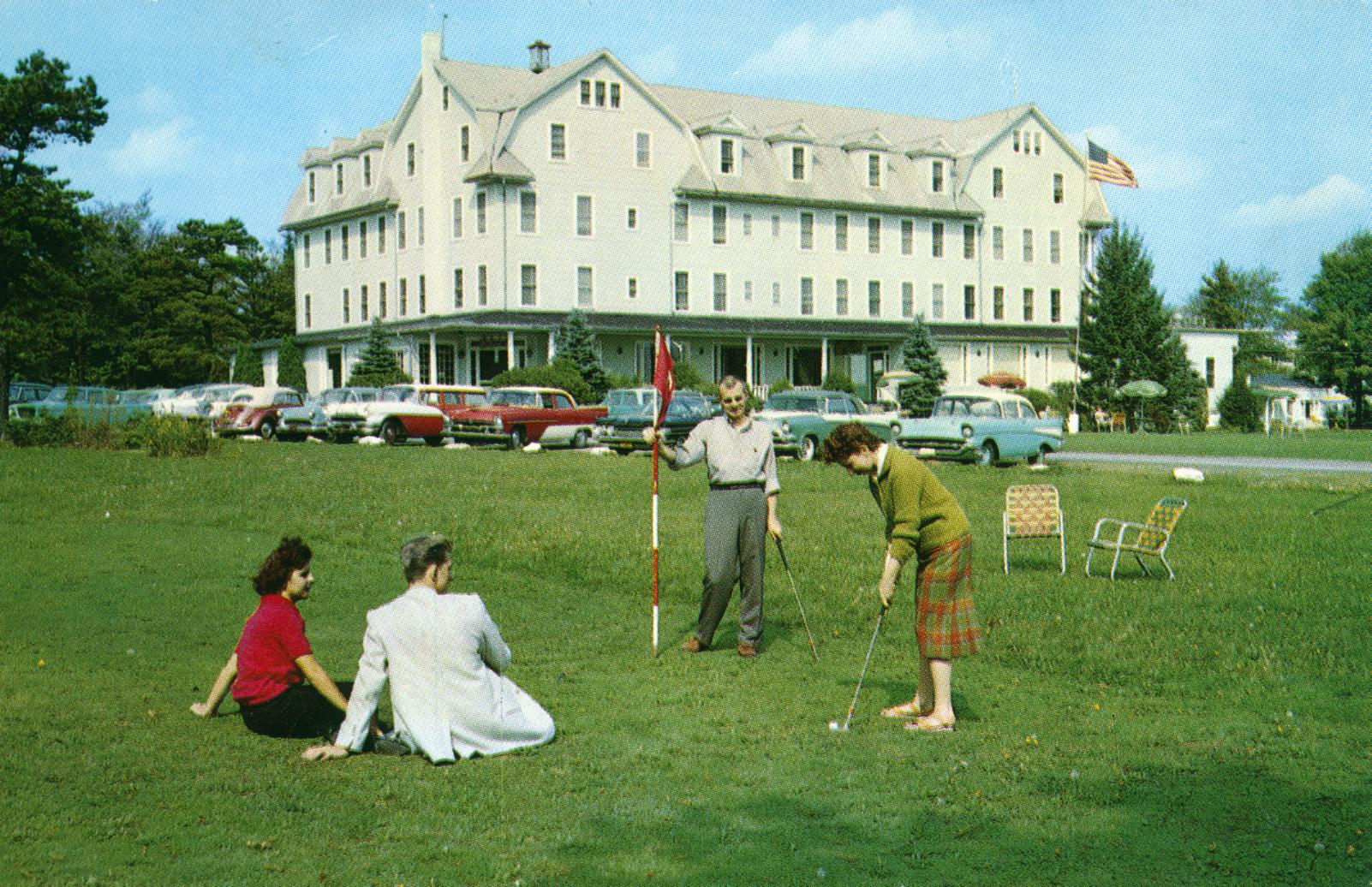
Americans just don’t vacation like they used to. Cross country road trips, picturesque mountain resorts, and far off seaside towns have been replaced by “staycations,” transcontinental cruises, and brief weekend jaunts to the city. The glory days of Griswold-ian journeys, Borscht belt summers, and month long excursions across the midwest are now behind us, and in their wake many of America’s once mighty vacation destinations, such as the five spots below, have begun to fade off into obscurity.

Silver Springs, Florida. – Before Disney World swooped in and stole all the spotlight, Silver Springs was North Florida’s preeminent tourist destination. Silver Springs’ Nature Theme Park featured all sorts of wildlife, gondola rides, carousels, and the park’s legendary “glass bottom boats.” Unfortunately all this wasn’t enough to keep the park afloat and it closed as an attraction late last year.
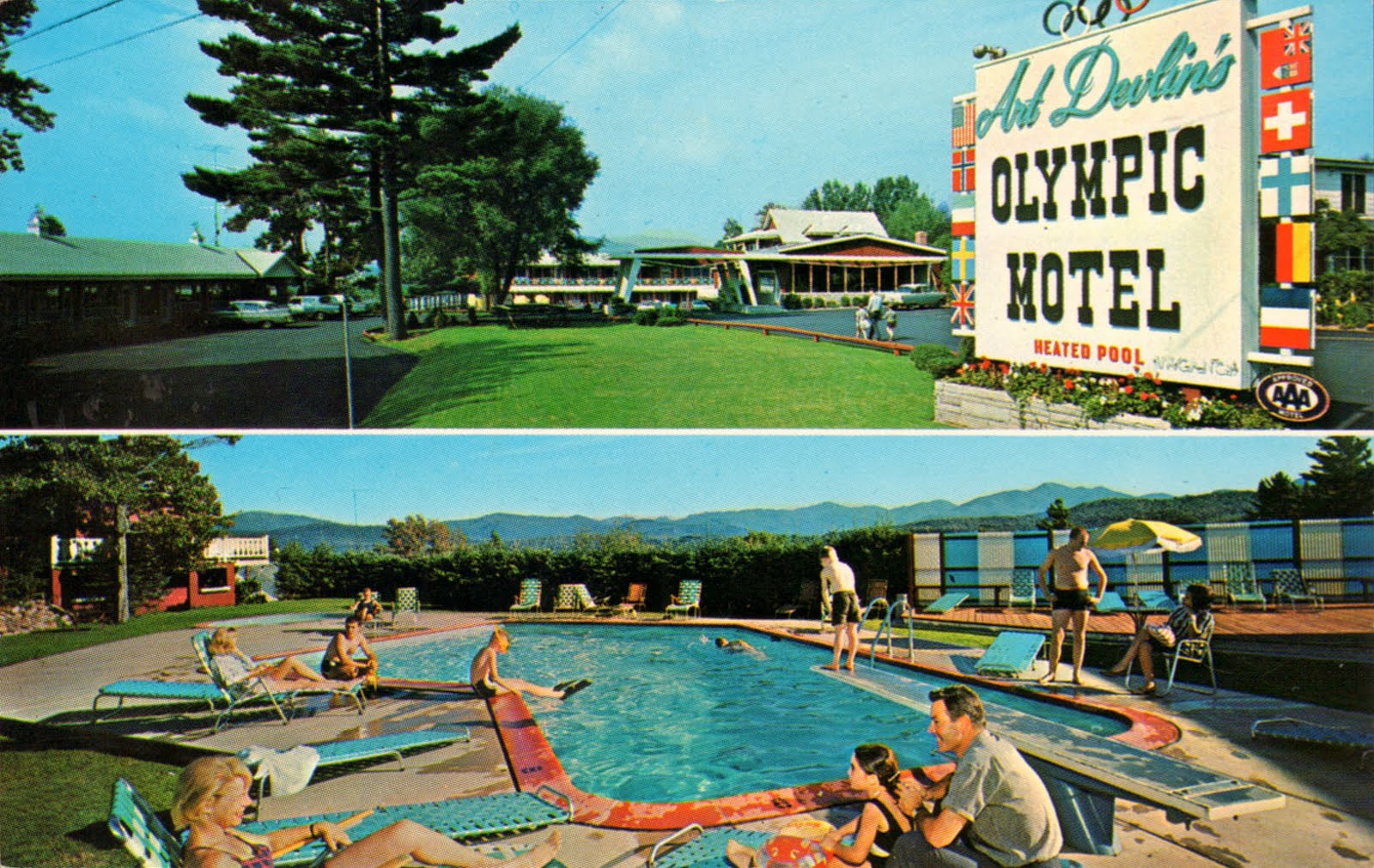
Lake Placid, New York – While Lake Placid is probably best known nowadays as the setting for the “Miracle on Ice” during the 1980 Winter Olympics, this upstate New York town was a year round East Coast destination. Featuring skiing during the winter and fishing during the summer, Lake Placid was a cosy town with a lot to offer. At least it was back in the sixties.
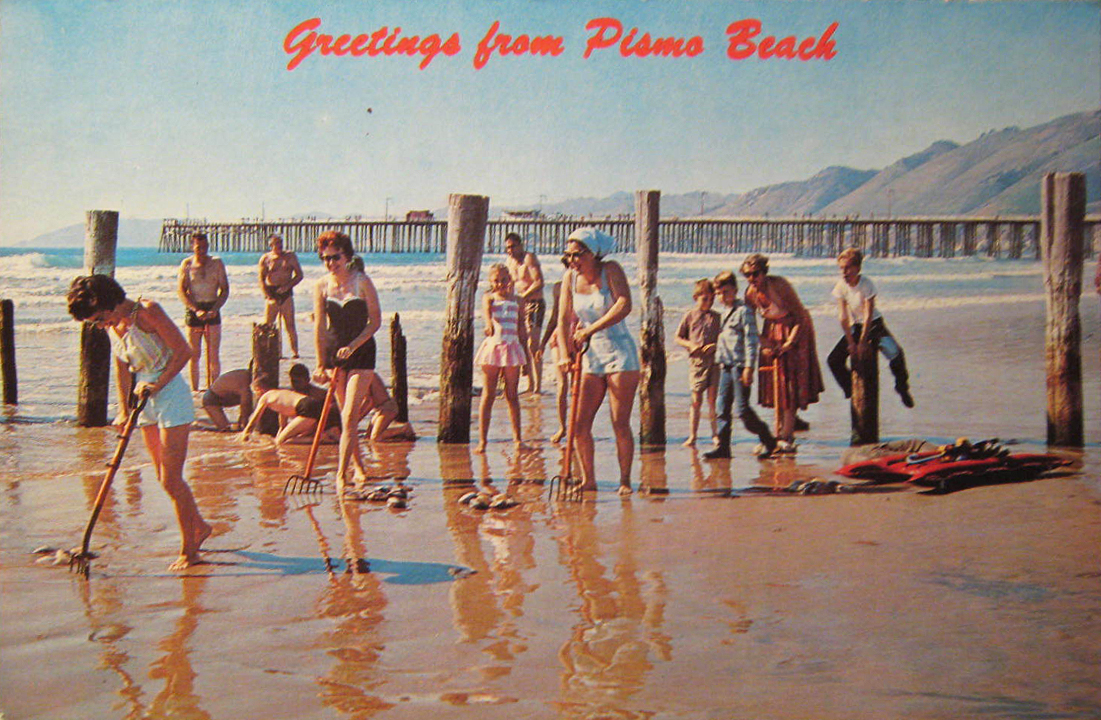
Pismo Beach, California – Located roughly two-hundred miles from Los Angeles, Pismo Beach was all about the party. In the twenties it was a mecca for revelers that were trying to skirt prohibition. In the fifties, sixties, and seventies, this lively atmosphere attracted vacationers to California’s Clam Capital. The festivities had to fizzle out eventually though, and today Pismo Beach is just another sleepy seaside town.
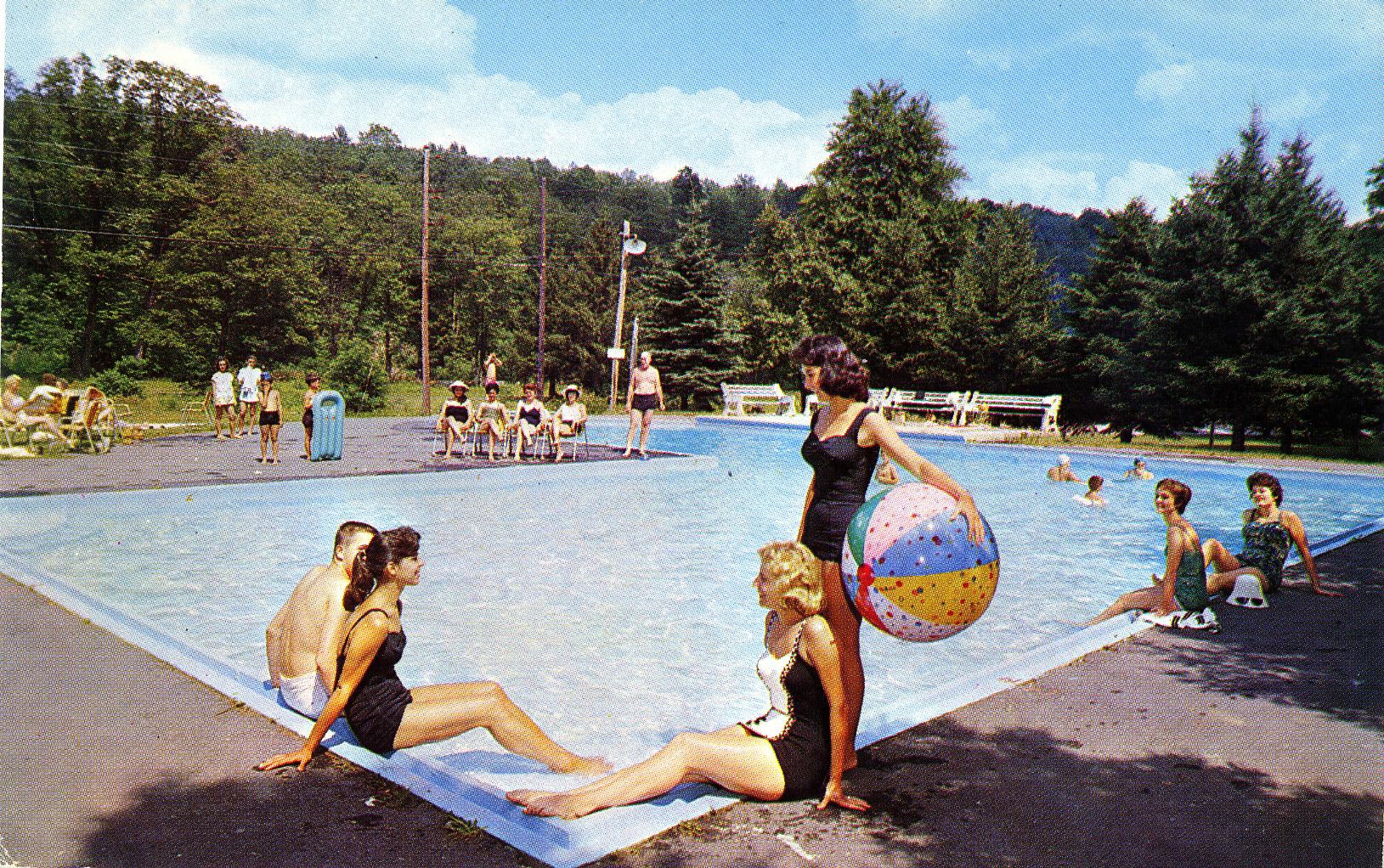
The Poconos Mountains, Pennsylvania – During its mid-century peak, the appeal of the Poconos was all about location. Positioned just a couple hours from both Philadelphia and New York, urbanites flocked to the secluded Poconos to take in the great outdoors by day and lounge around in ritzy resorts at night. Overtime though, the draw of this remote region has faded away, although with a recently opened casino and a renewed interest amongst young people in the great outdoors, we might just see the Poconos rise again.
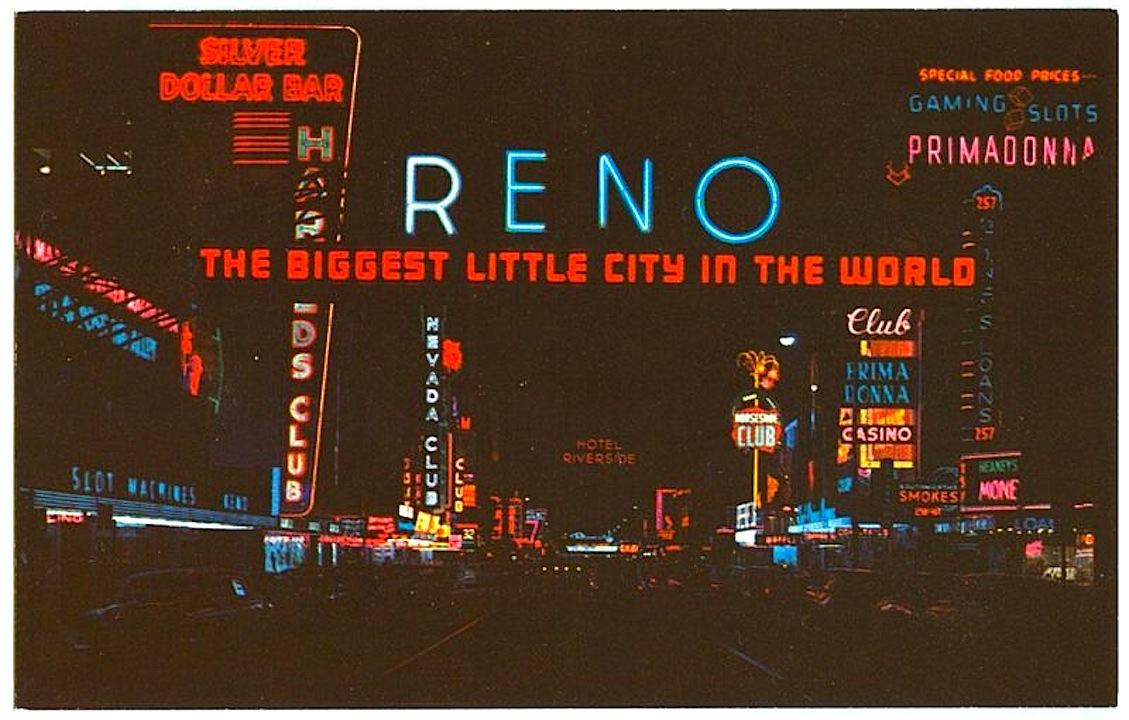
Reno, Nevada – Ok, to be fair, Reno is hardly unknown these days, but it’s clearly been eclipsed by their neighbor to the south, Las Vegas. Once the divorce and gambling capital of America, today the “biggest little city,” is probably best known for being the setting of Reno 911!

Dear Victoria Inox,
I love you. Your slender shapes, gentle curves, and amazing utility have bewitched me. Your myriad of forms pleases both my eyes and my heart. Even some days when I choose another to be at my side, I cannot let you wander far. Amidst the younger, finer, richer models I could do with, I still always find it in my heart to carry you. You were my first real… knife.
And since then, I have only learned to appreciate you more. I like you most when you’re done up to the nines in Alox. Sure, the red outfit is what you’re known for, but that Alox has an enduring beauty. I love you, Victoria Inox.
Sincerely,
Anthony Sculimbrene
In reality, the brand of Swiss Army Knife we all know and love is a portmanteau of the founder’s mother’s name (Victoria) and the French word for stainless steel (inoxydable). There was a real Victorinox, and I can’t help but feel indebted to her as the namesake of some of my most cherished knives. Victorinox makes many a splendid tool, but among their best are those that do away with the traditional lipstick-red handles in favor of ribbed aluminum ones, a material Victorinox calls Alox. This more durable material both slims the knife down and manages to retain its sleek appearance even after absorbing an amazing amount of damage compared to its cellidor counterpart. Of the many models featuring Alox scales, a select few stand out. This introduction to Alox knives features my personal favorite, the Cadet, as well as the Farmer, Pioneer, Money Clip, and Rambler models.

The Cadet’s assortment of tools is just about perfect for EDC – a good blade, a bottle opener, a can opener, a file, and three different sized drivers. However, it’s not just the selection of tools that make it noteworthy. At 84mm (3.3 inches), it’s perfectly sized for EDC. The blade is big enough for everyday tasks like opening packages and food prep, but not so big as to be threatening. The bottle opener, as per Victorinox tradition, is an awesome single-pull implement. The Cadet achieves a great balance of versatility and minimalism in a form factor thinner than a pack of gum. Carry it for a day and you’ll realize why the Cadet is such a popular “work blade,” even alongside pricier custom folders.

Take the Cadet and replace the file/Philips driver with an awl or a punch and you have the Pioneer. Add a truly great wood saw to that, and you have the Farmer. If you’re in a more rural environment, and wouldn’t miss the Philiips driver, then either of these makes a good substitute for the Cadet. You’d be surprised at all the ways a punch is useful (restringing frayed shoelaces, for example). As nice as the punch is, even better is the wood saw on the Farmer. With aggressively cut teeth, it makes dust of softer woods like pine and cuts through green branches swiftly.

This knife, intended to be used as a moneyclip, packs a rather small and less common 74mm-class blade. However, the money clip actually works quite well as a pocket clip – a unique feature among traditional style Swiss Army Knives. The tool selection is fairly standard, much like a slightly larger version of the Classic: a small pen blade, a pair of scissors, and a driver/file. However, unlike common cellidor Classics, it foregoes the tweezers and toothpick in favor of a classy, svelte aesthetic and feel. Whether clipped to your pocket or to your cash, the Alox Money Clip fills its niche.

The Rambler outdoes the Classic in the 58mm class by packing a hybrid bottle opener/magnetic philips driver/wire stripper in its toolset in addition to a pen blade, nail file/driver, and scissors. Despite its toolset’s exceptional utility for a keychain knife, many of its tools become less usable at such a small scale – except for the scissors. They perform surprisingly well, even at small proportions. Overall, it makes for a great keychain companion. The Alox version of the Rambler is available exclusively through SwissBianco.
The diverse Victorinox product line is full of gems, but the Alox models really kick things up a notch. The durable scale material has a visually striking pattern and comes in a wide range of colors through the anodization process. Aesthetics aside, it’s the incredibly slim form factor that makes them worth buying. Fortunately, most Alox models are affordable and easy to grab a hold of, with perhaps the best of the models, the Cadet, being the most widely available of them all. Try adding one to your own carry – few products are a better value in EDC gear.

Of all the small things American design made beautiful, manhole covers weren't one of them. Sure, there's a quiet, functional simplicity to our home grown covers, but the Japanese—playing their role in the great trans-Pacific cultural dialectic—have manhole covers that put ours to shame.
Painted Japanese manhole covers are more simple than you might think: Sure, the colors pop, but the designs remind one far more of Pennsylvania Dutch hex art or something out of Game of Thrones than an ultra-futuristic, anime-style design…though there's a bit of that, too.
You can easily imagine them on the side of a barn in Lancaster County, or hanging from a chain in front of medieval blacksmith's shop. There's something downright traditional about them. They add to the scenery rather than distracting from it, blending in as easily as standing out.

The covers boast a broad range of themes for such a limited medium. Flowers dominate, but you'll also find traditional trades, nature scenes, animals, skiing and baseball. And while most emphasize color, in others, the natural steel dominates. What's more—it's not just about painting, many manhole covers are wrought and stamped with the patterns and shapes before paint touches them. Indeed, some of the most striking are completely naked. Fine works of painting, indeed, but also masterworks of metalworking.
And the aging brings the added touch of class. The patina acquired over years of use, the wearing away of sharp lines, the rust and dirt—all of these things add character to what is already a solid piece of functional design.

For the gaikoku no kata here in the states, there's one strong takeaway: Why aren't our manhole covers making the city a more colorful and vibrant place to live? In today's cities, the most colorful thing around is the chaos of graffiti and street art.
The reserved and tasteful manhole covers offer a little bit of flair that makes otherwise boring streets come to life. Think of them as a pocket square for the roads.


For literally hundreds more (643 to be exact), check Flickr.
Images ©: MRSY.

This month a horde of out-of-towners will descend on New Orleans for New Orleans Jazz and Heritage Festival. JazzFest celebrates traditional Louisiana culture and heritage and showcases some high-profile local acts while serving up a heaping mound of ultra-mainstream acts like Robin Thicke, Arcade Fire, Bruce Springsteen, and Eric Clapton. Those who are in New Orleans for the festival will likely spend days in the city without dipping into the rich array of music played in these parts every night, most of which will never wind up on the JazzFest stage.
Earlier this year, the third edition of my book New Orleans: The Underground Guide—which I wrote with Brian Boyles and which features photos from Zack Smith and Jonathan Traviesa—came out from LSU Press. The purpose of the book is to counter the incomplete image of New Orleans that has been planted in your head. Yes, the city does often still sound like brass bands, Mardi Gras Indians, and trad jazz, but New Orleans’s old-school image is mostly a marketing template the tourist industry is loathe to relinquish. The French Quarter has morphed into a beautiful shopping mall where almost none of the city’s important contemporary music is played. New Orleans’s past should be glorified, its amazing traditions kept alive, but not if it means the world ends up thinking the city’s most important artistic days are behind us!
I’ve been writing about New Orleans music and playing myself on the city’s stages for a dozen years, and the book is my way of highlighting all the bands and other local institutions that don’t get the press they want and deserve. Along with listings for nightclubs, record stores, thrift stores, restaurants, and hotels, the Underground Guide includes interviews with New Orleans’s best modern, non-traditional bands, solo artists, rappers, and DJs—musicians who sound like New Orleans without playing old New Orleans music.
Here are two of my favorite interviews in the book. The first is with screamer Mike IX Williams, of classic New Orleans sludge metal band Eyehategod, and the second is with Katey Red, the transsexual queen of bounce rap.

Eyehategod performing at club Siberia. Photo by Gary LoVerde
Mike IX Williams has fronted the slow, heavy band Eyehategod for over 25 years, and also published the excellent dark and hilarious poetry book, Cancer as a Social Activity (Southern Roots Publishing). We interviewed Williams about Eyehategod, the history of New Orleans metal, plus other heavy southern bands you can go and check out (most likely at club Siberia) while you’re in town.
Eyehategod didn’t have a lot of company on the local music scene when y’all started in 1988, right?
Mike IX Williams: Not in New Orleans. The cool thing at the time was thrash metal. Slayer was cool. Even I had a thrash band in New Orleans. We heard the Melvins and we were also into Black Flag, side two of My War. And obviously we were into Black Sabbath and Saint Vitus and stuff like that. We weren’t even 100 percent serious at the beginning; it was just something to piss off people who would play these shows, and just have fun and watch people’s reactions when we’d just do feedback for 15 minutes, and throw in three riffs as slow as we possibly could. Before Eyehategod, Soilent Green was around. But they were more influenced by Napalm Death, and they kind of started playing slower later on… There was Hawg Jaw, and we were all friends so it wasn’t like anyone was stealing from each other. Graveyard Rodeo was a local band that had similar influences. Eyehategod was like taking the Melvins even further, more filthy and dirty and with the bluesy southern feeling to it also. There were bands in other cities, Cavity in Florida, BuzzO*ven was kind of starting up in North Carolina or Richmond. There was a band in Boston called Grief. And there was Neurosis of course, who were still a hardcore band at the time but were starting to play slower. We were hated for a long time; people just didn’t get it. We had a few fans who understood that it was just supposed to be heavy—in 1986 to 1988, as we were forming, people thought the faster you play the heavier you are, but that’s obviously not true.
And now New Orleans is one of the metal capitals of the world!
Yeah, people have moved here from other states, man, even other countries, to be part of the scene here. Though a lot of people left after Katrina, a lot of people came down after Katrina. That was a great time for music actually, right after Katrina, with bands starting back up and new bands forming. The greatest thing is around 1998 and 1999 when we did take a sort of hiatus because of personal problems and record label trouble—during that hiatus we noticed bands were popping up in England, and Japan even—a Japanese band called Greenmachine—Iron Monkey in England, bands all over the world with like this same exact kind of sound. That’s when we noticed it was something bigger than us.
Tell me about your affiliation with Phil Anselmo’s (of Pantera and Down) Housecore Records label.
I used to play with Phil Anselmo in Arson Anthem, where we had Hank III on drums. That since kind of fizzled out. Then Outlaw Order was a side project of Eyehategod but that kind of fizzled out too—though we have been trying to keep it on the burner. Now we have The Guilt Of…, which is a noise band with me and Ryan McKern. We have a 12-inch out with Merzbow. I also started a band with Scott Kelly from Neurosis. We did a three-week tour with no record, no press, no interviews, just got in a car and went out and we all did solo sets where I came out and did a reading, then Scott did his mildly dark acoustic stuff, and Bruce does experimental saxophone, and then we have this guy Sanford Parker with some drum machine stuff and just loud noise—then at the end we come out do three songs together that we wrote. That band is called Corrections House. A new seven-inch should be out as we speak.
Note: The first new Eyehategod album in 15 years—the last recordings featuring longtime drummer Joey LeCaze, who recently passed away—will be released this year.

Katey Red. Photo by Robin Walker
As hip-hop evolved throughout the 1980s, before bounce came along, New Orleans rap consisted of complex rhyming, and true-school MCing in New Orleans was the norm, with lyricists such as Tim Smooth, Gregory D., Bust Down, MC Thick, and Legend Mann. Then in 1991, “Where Dey At,” allegedly the first bounce song, was recorded in two versions by both MC T. Tucker with DJ Irv, and then shortly afterward by DJ Jimi as “Where They At.” Bounce MCs demand responses regarding your ward, your school, and your project. The lyrics are often dirty. As with almost all other New Orleans party music, fun is stressed over art. Some of the zillions of pioneering bounce artists include Partners-N-Crime, Ms. Tee, Mia X, and 5th Ward Weebie, whose track “Fuck Katrina” captured local sentiment after the storm—though the only real national bounce hit so far has been Juvenile’s “Back That Azz Up.”
In 1999, New Orleans’s Take Fo’ record label, founded by bounce pioneer DJ Jubilee (known as the “King of Bounce”) issued Melpomene Block Party, the first full-length release from Katey Red, a gay transgender MC from the Melpomene Projects. Other gay bounce artists have followed on Katey’s (high) heels, most notably Big Freedia and Sissy Nobby. We got Katey’s advice on where you should (and shouldn’t) party while in New Orleans, plus which bounce artists you should check out, and where.
Do you have friends outside of New Orleans who come to town to visit you?
Katey Red: Quite a few. Mostly when my friends come to town they want to go to my shows. But if they just want to have a few drinks we either go on Bourbon Street, or else sit in Siberia. Ian Polk, the creator of [TV show] Noah’s Arc, he came down and wanted to hang out with me, so I took him to a few gay clubs out here. I brought him to one of my shows at One Eyed Jacks, and I took him to Club Fusions because he wanted to see the drag show I was performing in.

A tuba locked up outside Pal's Lounge. Photo by Jonathan Traviesa
Some people disparage Bourbon Street, but you’re a fan?
You can never go wrong with Bourbon Street. I am not an every day Bourbon Street kind of girl though, so when I am out there it’s new to me, like going out of town somewhere. If I am on Bourbon I end up either by Oz, or the Bourbon Pub. They have pickpocketers and crime but… after Katrina, Bourbon was the first thing poppin’. That’s where New Orleans make they money at the dance clubs and strip clubs and gay clubs as well as heterosexual clubs. They got bounce music, reggae music, jazz, it’s all kinds of entertainment on the side street. They got people doing card tricks, they have people doing statues, people tap-dancing, people sitting on the stoop singing live and playing keyboards. And they also have historical things. It’s nice out there. Why would they talk bad about Bourbon?
Did you actually have your pocket picked on Bourbon?
Um, I had a fight on one of my birthdays on one of the side streets off Bourbon. Some guy was for some reason like, “Don’t look at me.” And I was like, “Don’t look at me!” And he ran up on me trying to fight me and I got him off me. That was the only thing bad ever happened to me on Bourbon Street. Normally people just want pictures and stuff.
What about Club Caesar’s on the West Bank? You’ve performed there quite a bit.
Most of my out-of-town friends are Caucasians, so they don’t really want to go to places like Caesar’s, or Encore, cause it’s too wild and too rough. They want to hear bounce music all right, but they have Caucasian clubs that play bounce music. I would suggest that for them. If they wanna be around a different kind of environment and say, “I want to hang out with some black people, I wanna see where you hang at,” I take them to Club Fusions. It’s a lot of bounce going on in there. My fan base is real, real high in there. They may have a fight in there, but there’s no gunplay.

Chris Owens performing in her club. Photo by Jonathan Traviesa
Where can you hear bounce rap on Bourbon Street?
The Bourbon Heat or sometimes the Cat’s Meow. Maybe it’s because when I come in the club they recognize who I am and so then they start playing bounce music, but if they don’t [usually] play bounce music, they play it when I’m around.
Doesn’t Chris Owens's club also play rap and bounce?
I been there before. It’s real wild. I wouldn’t suggest my out-of-town friends go there. Sometimes they getting wild. I seen all kinds of things going on in the bathroom—stuff you only supposed to do at home! Wow.
If you're in New Orleans, you can pick up copies of New Orleans: the Underground Guide at two book parties. The first is on April 30 at Buffa’s and will feature noise artists plus a lecture and presentation by electronic musician Justin Peake; the second is on May 4 at Vaughan’s and will include sets by local rappers plus a live interview and poetry reading with Katey Red.

We are Americans (no, not you, Canadians) (OK, you too, c'mon over here ya big galoots), and we like big hunks of steak*. To be precise, we like our own big hunks of steak: We like to saunter into Bob's House of Steak all bowlegged and gimlet-eyed like John Wayne and order for ourselves some great obscene wad of cow-ass—"I'll have the 92-ounce bone-in ribeye, medium-rare, with mashed potatoes on the side, and could you bring it out at the same time as the ambulance?"—and we like to make an equally extravagant show of consuming that great big slab of beef unassisted, as though this were a heroic act and not an asinine one. This—between the fact of the beef and the ludicrous size of it and the profound heedlessness of consuming the entire thing and the pride in doing it all by m'damn self—is an extremely American thing to do.

We never thought we’d write that headline, but thanks to Magnum photographer David Alan Harvey you can now learn how to best pack your bags for an assignment from the one and only Steve McCurry — the iconic Nat Geo photographer behind the Afghan Girl photograph.
This particular video is number 5 in a series of tip videos that Harvey is putting together for budding photographers and Burn magazine readers who want to learn from the best, and it actually came together entirely by accident.
Harvey ran into long-time friend McCurry while shooting in Dubai, and since there wasn’t time to do a full interview, they instead covered how to best pack your bags… something McCurry is particularly good at.
(via ISO 1200)
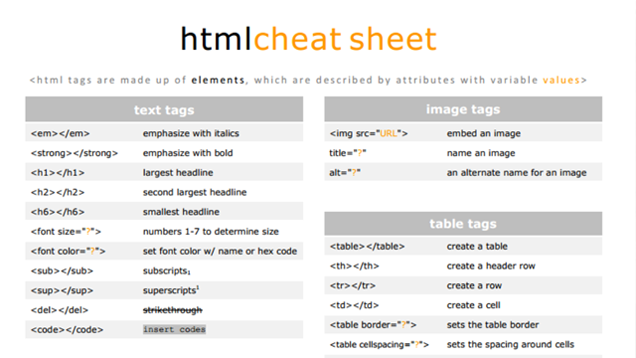
If you want to format a blog post or edit a web page, it's helpful to know HTML (even if your site platform offers WYSIWYG formatting). This HTML Cheat Sheet shows you all the essential tags you should know.

Filed under: Aftermarket, Concept Cars, SUV, Jeep, Off-Road

Continue reading 2014 Easter Jeep Safari kicks off with six concepts
2014 Easter Jeep Safari kicks off with six concepts originally appeared on Autoblog on Thu, 10 Apr 2014 14:00:00 EST. Please see our terms for use of feeds.
Permalink | Email this | CommentsEvery year, come early April, the golf world’s elite descend on Augusta, Georgia. The population nearly doubles. The airstrip at Daniel Field is choked with private jets. More pimento cheese sandwiches are consumed at Augusta National during the Masters than on Memorial Day and the Fourth of July combined—or so it seems. And thousands of instagramable moments go undocumented (lest you make the unforgivable mistake of bringing your cell phone onto the venerable course). But whether you’ve managed to score Masters tickets or not, there’s plenty of entertainment to be found in the tournament’s host city. In a town this size, you don’t need a perch at Amen Corner to see your favorite pro up close; you’re just as likely to run into him at dinner or the local dive.

Where to Eat
Frog Hollow Tavern
The menu at chef Sean Wight’s Broad Street restaurant changes seasonally but expect dishes like housemade duck sausage with Sea Island red peas, preserved peach mustard, and sorghum gastrique. After dinner, hop down to the Hollow’s new sister cocktail bar, Craft and Vine, open from 5pm until late night during Masters Week.
Finch and Fifth
Located at Surrey Center, off Berckman’s Road, F&F is open all day. Stop in for a hearty breakfast if you’re headed to Augusta National for the day (think: biscuits and gravy and egg sandwiches). Or arrive later for savory shared plates of catfish en croute, shrimp and grits, and beef carpaccio, plus a la carte charcuterie and cheese boards.
Honey from the Rock Café
Fried chicken, sweet potato casserole, okra and tomatoes, corn bread, and collards—the spread at Honey from the Rock is good old-fashioned Southern comfort food. Operated by the ladies of Whole Life Ministries, the café makes everything fresh daily, including hand-churned ice cream.
Where to Drink
Indian Queen
Housed in an old gun store in the Summerville neighborhood, this whiskey bar has a warm, cozy log cabin interior, plenty of bar stools, and a solid lineup of craft cocktails such as the Blackberry Mule made with vodka, fresh blackberries, simple syrup, lime juice, and ginger beer.
Helga’s Pub and Grill
A classic dive, this local favorite has an impressive beer list that ranges from your basic Bud Light to regional brews such as Terrapin and Sweetwater. There are pool tables and a fully loaded jukebox, too.
Stillwater Taproom
This downtown drinking establishment on Broad Street boasts one of Augusta’s best beer lists and eighteen brews on tap, plus, a regular lineup of live music.
What to See & Do
Live Music
If you’re in town early snag a ticket to the annual Rock Fore! Dough concert featuring Darius Rucker—proceeds benefit First Tee Augusta. And hit Augusta’s historic downtown during First Friday for free live music on the Commons, street performers, and late night shopping.
Morris Museum of Art
Dedicated to the art and artists of the American South, the museum’s holdings include more than 5,000 paintings, works on paper, photographs, and sculptures. Current exhibits include the realist paintings of Georgia native Bo Bartlett and a collection of works by Confederate Army artist, Conrad Wise Chapman. A visit to the museum is also a good excuse to visit Augusta’s revamped Riverwalk. If the azaleas are blooming you won’t need access to the grounds of the National to get your fill of the famous flower.
Hit the Links
And if you’re itching to get out onto the greens yourself, try the River Golf Club in North Augusta. Located on the banks of the Savannah River, the semi-private course was designed by acclaimed course architect, Jim Fazio. Or book a round at the Palmetto Golf Club in nearby Aiken, South Carolina. It's one of the oldest golf courses in the country and is typically members only but opens to the public during Masters Week. You really can’t go wrong with the local muni either—nicknamed the Patch after the vegetable garden planted along the 10th hole by the longtime course manager, the late Red Douglas.
Surrey Center
Some of the best shopping in town is conveniently clustered at Surrey. Head to the Estate Jewelry Center for vintage and antique baubles and Shoes at Surrey for stylish kicks. The outdoorsmen in the group will want to browse the inventory at Rivers and Glen, which stocks everything from brush pants and shell bags to flies and waders.
More Southern Golf from G&G
Florida's Hickory Golfers
Cast-Iron Collection: Davis Love III
Q&A with a PGA Course Designer

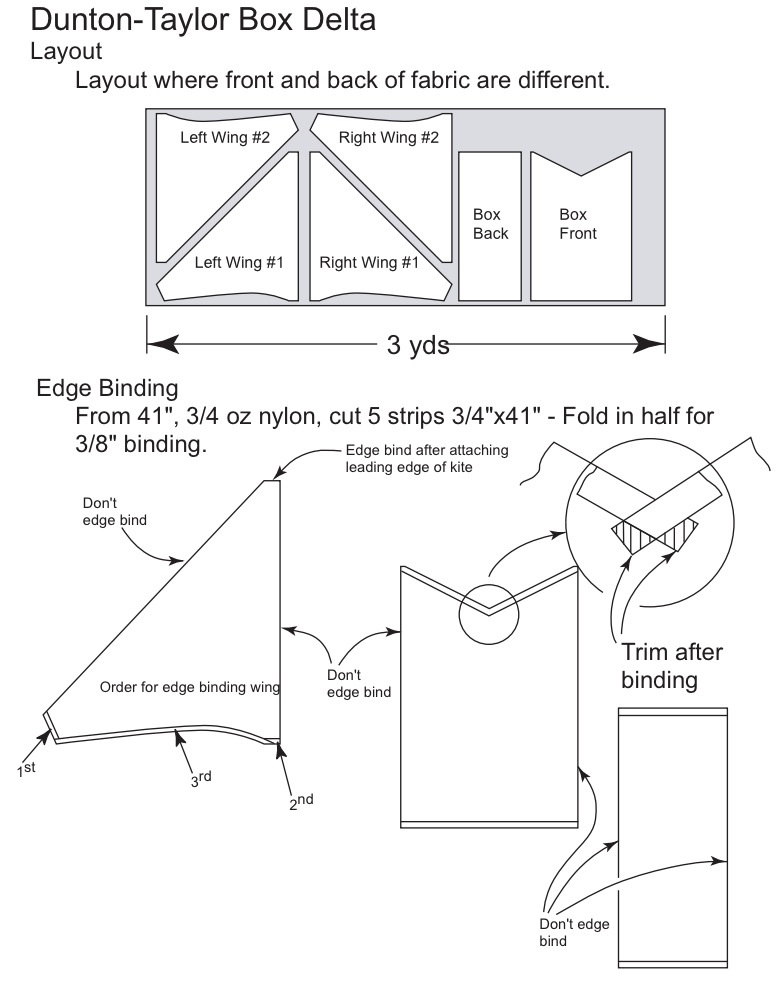
This is the best site for learning how to build your own kites. Good tutorials, decent forums (quieter since the site’s founder died) and a great encyclopedia of techniques and materials. Their best asset is the stash of plans submitted by users for almost any type of kite.
(Kite making supplies can be found from the previously reviewed Into the Wind.)
-- KK
Sample Excerpts:
There’s no such thing as kite fabric! Just about any fabric will work… including the fabric grade Ripstop you chose. Was it difficult to sew? It is probably pretty stretchy eh?? The coated Ripstop often used by most builders on this website is coated with a finish that reduces stretch and porosity. It is also pretty light weight, probably about half the weight of the cloth you used. So… your kite will probably require a little more wind for optimum performance… but if balanced and bridled properly, it should still fly.
*


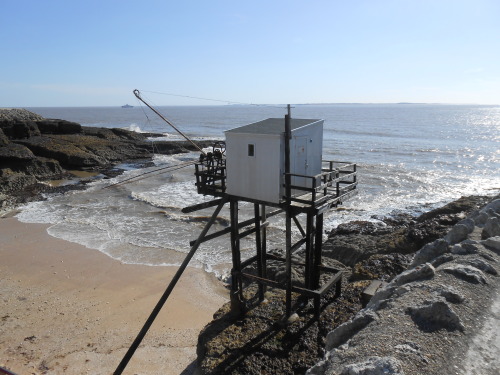
Fishing cabin in Royan, France. Submitted by Lucie Angevin.
Nikon D610 Deals
The Nikon D610 price has dropped:
$1,896, body only with free goodies.
$2,296, kit with 24-85mm VR and free goodies.
$2,796, kit with 28-300mm VR, bag, SD card and more.
$2,746, kit with 24-85mm VR, 70-300mm VR, WU-1b, bag, SD card and more.
All of these deals include lots of free goodies you probably won't notice until after you've added it to your cart.
 You might say the day is never really done in consumer technology news. Your workday, however, hopefully draws to a close at some point. This is the Daily Roundup on Engadget, a quick peek back at the top headlines for the past 24 hours -- all...
Yes, Washington was a distiller. In fact, as Mount Vernon’s website points out, Washington was the only founding father who owned and operated a commercial distillery. Go Washington.
Washington became a commercial distiller at the encouragement of James Anderson, his Scottish plantation manager. In 1797, two years before his died, he set up what was primarily a whiskey distillery alongside his gristmill. (Since this is Modern Farmer, after all, it should be noted that Washington’s interest in distilling was partially motivated by farming.)
Washington was the only founding father who owned and operated a commercial distillery.
And pigs played a big part. As the website notes, the founding father was a hog farmer and he realized that a lot of the distillery waste could be fed to the pigs. He made a pen near the still for 150 or so swine.
The original distillery was destroyed in a fire in 1814. All was not lost. During an archaeological excavation starting in 1999, the Distillery’s stone foundation was discovered. Between the foundation and other archaeological findings, a reconstruction of the distillery was begun in 2005 and completed in 2007. Since then, the distillery has brought Washington’s spirits back to Americans. Previous runs at the reconstructed distillery have included rye whiskey.
For the first time in 200 years, the reconstructed distillery was used this year to once again distill peach brandy – 400 bottles of it to be exact. The question must be asked, why peach brandy?
“We knew from our distillery ledgers and other records in our collection that George Washington’s distillery did produce small amounts of peach brandy. Our goal was to produce all the products known to have been produced by Washington,” explains Steve Bashore, Manager, Historic Trades, Mount Vernon, by email.
To add to the significance of this distilling, Washington’s peach brandy was produced and sold in very limited quantities. Bashore shares that “The records indicate that some of the peach brandy was sold in the market, but most was sent over to the Mansion for use in entertaining guests at Mount Vernon.” It was reserved, so to speak, for Washington’s guests.
For the first time in 200 years, the reconstructed distillery was used this year to once again distill peach brandy.
To put the quantity of peach brandy in perspective, according to Mount Vernon’s website, “Washington oversaw the production of just 60 gallons of the popular spirit each year, compared to the 11,000 gallons of rye whiskey that he bottled and sold during the same time period.”
Washington’s exact recipe and instructions for distilling peach brandy are not known. However, this was not a problem. “The distillation of fruit brandy is pretty basic and has not changed much over the centuries, so lack of a recipe was not an impediment,” says Bashore.
“The peaches had to be prepared, crushed or pressed and then that resulting juice was laden with yeast and then allowed to ferment for 10 to 15 days. The resulting fermented juice was then double distilled to achieve our brandy at 80 proof. ”
Several craft distillers including Ted Huber of Startlight Distillery in Indiana, and Brian McKenzie and Thomas McKenzie of Finger Lakes Distilling in New York were instrumental in helping Mount Vernon.
The peach brandy was only sold in person, for one day, on April 1. But if you didn’t make it, do not worry. “This collaboration with the skilled brandy makers made this project a success and we learned a lot along the way which will help us in future production runs of brandy,” says Bashore.
The post Drunk History: Mount Vernon’s Secret Distillery appeared first on Modern Farmer.
Ron Moore had gotten a late start that morning. The two and a half inches of rain his farm received in the last two days had kept him from harvesting his cornfields, and now he was even more behind in a season that had already gone on too long.
From the seat of the harvesting combine the world is a sea of tall brittle stalks. Moore comes to the end of a pass and deftly steers the machine into the next row. The mowers grab the corn stalks and pull them up into the machine and out of sight, where a rotor spins them around a big cage, stripping the kernels from the ears of corn. A blast of air pushes the lightweight leafy material up and the heavy corn falls through a screen and into the bottom of the combine. The corn pours out of a shoot that extends from the combine and hovers over the back of the grain truck. He does this row after row.
In 1977, when he began farming with his dad and older brothers, Moore’s eight-row combine didn’t exist – the largest on the market only had six rows. Back then large farms in their area near Roseville Il were around 360 acres. Today Moore farms 2,200, some of which he rents. Farms in this area with a diversity of crops 30 years ago have mostly transitioned to corn and soybeans. Moore and his two farm hands plant and harvest 1,300 acres of corn, most of which gets used for livestock feed and ethanol production.
Still, Moore can get a late start to his day and not worry too much. Over the last thirty years advances in farming technology, like bigger, faster combines, have made 3 people farming 2,200 acres a manageable endeavor. And even more recently technological developments have made farming not just faster, but also more efficient.
The inside of the cab of Moore’s combine is downright high-tech. If he lets the combine’s GPS system run the machine, he hardly needs to use the steering apparatus.
The inside of the cab of Moore’s combine is downright high-tech. The usual steering apparatus is there, but if Moore lets the combine’s GPS system run the machine, he hardly needs to use it. To his right three screens are mounted, several flashing numbers and one displaying a crude 2D map that tracks Moore’s progress in the field.
“It’s basically what I call a super computer,” says Moore. “You can make it do anything.” The supercomputer is actually a yield monitor. Whether it’s a potato farm or a corn farm, yield is how much at the end of the season a farmer has produced, and the monitor is part of a system that records what the yield is at any given location in the field.
“When I started farming you didn’t have that technology,” Moore says. He points to an eight-foot square black spot in the field. This is where water stood in the springtime, he explains. In the past Moore would have no idea what that kind of damage cost him in yield. Now the yield monitor can tell Moore exactly how much corn grew in this spot compared to the field around it – it overlays the yield totals on a map of the field, giving a farmer a bird’s eye view of how productive his field has been, parcel by parcel.

This is important to know, because Moore is throwing a lot of money into his fields these days. He spends around $900 an acre on input costs for corn and around $700 for soybeans, compared to the $350 and $250 he spent in 1977. And as the cost has gone up so has the risk. “If you make a mistake you have more to lose now than you did thirty years ago,” Moore says.
But when Moore looks at his yield maps, he will find other areas where yield was low, but the reason will not be as obvious as the water spot.
“Then the next series of questions is why did that part of the field yield less?” he says. “Was it because of a lack of fertilizer? Was it because of poor quality varieties of corn that we planted?”
Those are questions that yield mapping cannot answer on its own.
But over the last few years several big seed manufacturers have invested millions into developing products meant to help farmers make better use of yield data. One of the major players in this space is Monsanto, which just released its new crop management tool, FieldScripts, this spring.
“One of my goals is to be able to go to the FieldScripts program,” says Moore. “That’s what I’m working towards.”
And Moore isn’t the only farmer interested in making better use of yield data. Many farmers were drawn to the promise of yield mapping when it arrived on the scene over two decades ago, only to realize they didn’t have the tools or knowledge to analyze the data on their own. Now, if Monsanto and others can give farmers a way to do that, it could transform the industry.
Farming is a science. Planting, emergence and harvest are all dictated by numbers – seed depth and population density, rainfall and temperature.
Farming is a science. Planting, emergence and harvest are all dictated by numbers – seed depth and population density, rainfall and temperature. They fall into categories of things that the farmer can control and things they can’t.
“By the time we get to harvest everything’s out of our control,” says Bob Strand, a seed and equipment dealer who also farms 2,000 acres in Hinckley, Il. “Planting till the time the corn is 3 or 4 inches tall, a lot of that’s in our control.”
For instance: A farmer seeking to maximize the planting process will perform regular soil sampling, which provides a sense of how much fertilizer to use in each field. Seed depth should be consistent so that every plant emerges within 24 or 36 hours of the one next to it. And the farmer also wants to optimize each field’s plant population, or the spacing of crops, which will differ depending on the type of seed.
But for all its numeric nuances, farmers would historically apply the same amount of fertilizer and seed to an entire field. “You just did it, it was blanket coverage,” says Strand.
Then, in the early 1990’s, yield monitoring came on the scene, giving farmers access to important quantitative information about their fields. “We’re learning now that this little spot and this little spot respond very differently,” says Strand. “And that’s what we’re learning to micromanage.”
Yield mapping caught on with farmers who wanted to maximize their fields’ potential. But those farmers quickly grew frustrated. Yield mapping provided them with unprecedented amounts of data about the productivity of their fields, but they still didn’t know how to act on that information. The yield mapping tools didn’t help them interpret it, and it certainly didn’t offer them any suggestions.
Ted Crosbie was hearing this same story from a lot of farmers. Crosbie was the Director of Global Wheat Breeding with Monsanto until he retired at the end of 2013. “A very progressive younger guy in Iowa said ‘You know, I have enough yield maps to wallpaper my whole machine shed,” says Crosbie. “‘And it doesn’t mean anything because I don’t know how to turn it into decision.’”
Crosbie was having similar issues managing his own 1,000 acres. “At the end of the day my decisions for next year were based on my gut level view of what worked and what didn’t,” he says. “And I thought to myself, ‘you know, this is nuts, I’m a scientist. I ought to be able to make some sense out of this data.’”
Monsanto’s crop management tool, FieldScripts, is designed to help farmers do just that. . FieldScripts doesn’t just churn out data—it takes that data and turns it into useful feedback. It’s too soon to say whether or not the tool is a success, but even an attempt at prescriptive crop management has been a game changer, sending other major seed dealers scrambling to come up with something like it.
When you boil it down to basics, FieldScripts matches the conditions in a farmer’s individual field to one of the many hybrid strains of crop that Monsanto has developed. Using the GIS coordinates (basically, spacial geographic data) of a farmer’s field, two years of yield data, and soil sampling data, it combs through a database of information on Monsanto hybrids to find the ones that respond best to that field environment. Then the farmer sits down with his Monsanto seed dealer to consider the 3-6 hybrid recommendations the algorithm has spit out. When the farmer chooses a prescription, it’s wirelessly transferred to the farmer’s FieldScripts account in the cloud, ready to be used the next time the farmer connects his iPad to the planter.
Monsanto first tested FieldScripts on a small number of farms in 2013 in what it called “Ground Breakers” trials. This spring the product is commercially available in four states – Minnesota, Iowa, Illinois, and Indiana. To use it, farmers need a few pieces of equipment, including a 20/20 seed sense planting monitor, a part added to the planter called RowFlow, which ensures the seed is planted accurately, and the iPad app FieldView – all purchased through Precision Planting, the aftermarket equipment company Monsanto bought in 2012 for $210 million.
Crosbie insists that most farmers already have at least one of these items, and they will see a one-year return on investment for whatever they do have to purchase. The prescription itself is priced at $10 an acre in addition to the cost of the seed the farmer purchases.
Farmers are a skeptical bunch, which is why success in FieldScripts’ first year could be huge.
“I haven’t run into very many farmers who were not interested in this,” says Crosbie. “They’ve been waiting for someone to figure this out.”
That said, farmers are a skeptical bunch, which is why success in FieldScripts’ first year could be huge. Justin Martz was a Ground Breakers farmer who had been creating yield maps of his farm for almost 15 years. But he was in the same position as a lot of other farmers before he entered the Monsanto trials. “I was basically just taking all my data and throwing it on top of each other and saying ‘This area is better,’” he says.
When asked, Martz, a former Monsanto seed dealer, can’t say enough good things about FieldScripts. “It could change the way we farm.”
But he still won’t make a preemptive guess at how successful it’s been for him.
“Until I get it on a computer and am able to sit down and draw out exactly the spots, I can’t tell you yes or no,” says Martz. “My gut tells me it should be better.”
For farmers leery of the program’s recommendations, Monsanto includes an option to run comparisons.
The algorithm is mostly automated, and can’t be customized, but if a farmer doubts the prescription he can plant two “benchmark” rows at whatever rate he thinks might be the optimum population for that field. He can then compare the success of those rows to the ones planted according to the prescription.
That, says Martz, will tell you if FieldScripts knows better than the farmer.
“We’re selling a bag of seed that’s worth however many hundreds of dollars,” says Mike Twenhafel, the Monsanto Integrated Farming Specialist who worked with the trial farmers in Illinois. “It’s their reassurance that they spend their money in the right place.”
Currently, farmers depend on experts such as a seed dealer or their agronomist — soil and plant scientists that help them understand their resources and recommend courses of action. A farmer’s livelihood is almost entirely hitched to those recommendations, so they are understandably cautious about trusting an experimental program over longtime advisors.
Moore says every year he plants a test plot with the hybrid and fertilizer recommendations he gets from his agronomist to see whether the agronomist is correct. “If he is, I’ll continue to work with him and trust his recommendations,” says Moore. If not, “then we may go somewhere else.”
Seed dealers may have the most influence over farmers. They provide information about new products that farmers need to keep their operation current, so they play a huge role in helping determine what purchases get made.
“Customer relationships and customer service plays a bigger role in that than anything,” says Strand. “People buy from people.”
Of course, prescriptive crop management tools could change all that. FieldScripts is designed to combine the expertise of an agronomist with the recommendations of the seed dealer to help farmers make quick, efficient planting decisions. Traditional farming practices could go the way of the horse and buggy – if big companies like Monsanto can get farmers to trust them.
Not to be outdone, Dupont Pioneer — Monsanto’s major competitor — last year released its own crop management tool, Field360, and in February introduced Encirca, which it calls, “a suite of whole-farm decision services.” One of the biggest concerns farmers have about products like these is the use of the cloud to store yield data. And it’s not that they are worried either company will misuse their data. They’re worried about their neighbor getting a hold of it.
The doomsday scenario farmers envision is this: Farmer Jones gets his hands on Farmer Smith’s yield data and finds out how much he’s producing. Then Farmer Jones calls up Farmer Smith’s landlord and promises bigger profits if he kicks Farmer Smith off that land and gives it to Farmer Jones.
“It’s hard to come up with an analogy for any other business where that would happen,” says Martz. “But that is a legitimate fear.”
But much of the strength of programs like FieldScripts lies in the power of numbers. The program doesn’t just write prescriptions based on one farmers’ isolated data; both Monsanto and Dupont Pioneer tools use aggregate data from farms in similar geographical locations to give local farmers the best possible recommendations for their soil environments.
“We do put that information in an aggregate database so that we can look at it and develop and improve both products and services,” says Joe Foresman, director of services at Dupont Pioneer But the data isn’t paired with individual farmer information, and what is collected is only accessible to authorized Dupont Pioneer employees.
Most experts agree that precision agriculture is good for farming and industry will continue to be the major driver of innovation in this arena.
“We know that in our business if we don’t protect that information and continue to support and engender trust with that customer, they can go to a different provider the next season,” says Foresman. “So we can very confidently tell a customer, no, their information is not going to go to a third party, or somewhere in Pioneer that it shouldn’t go.”
In the case of Monsanto, FieldScripts launch lead Dave Rhylander says that back when the company was discussing the idea of FieldScripts with farmers, data privacy was their number one concern. “So we knew that when we brought it to market we were gonna have to have something in place that would make the farmer feel that Monsanto was secure with this data, that the only person who could access that data was the farmer who originally gave it to us,” he says.
Rylander confirmed that nothing about the FieldScripts privacy policy has changed since the launch, but the company did respond to farmers concerns about data privacy in general by announcing new privacy guidelines in January that apply broadly to any Monsanto or Climate Corporation product.
But downsides and skepticism may have to take a backseat to the march of technology — most experts agree that precision agriculture is good for farming and industry will continue to be the major driver of innovation in this arena.
Lots of farmers across the U.S are benefitting from “investing into precision techniques and technologies,” says Raj Khosla, a professor in the department of soil and crop sciences at Colorado State University. Precision agriculture “makes a very significant difference in the productivity, efficiency, profitability and sustainability” of farming.
“There’s farmers out there that don’t keep track how much bushels are getting off each field, what spots are good,” says Martz. “The people that keep score are the ones that are gonna be the ones farming 20 years from now.”
The post The Era of Big Ag Data Is Here appeared first on Modern Farmer.


Barisonzi captures BMX competitor Geoff Slatterly.
What’s in your camera bag?
Nikon D800 bodies, SB900 speedlights, Pocket Wizard PlusX Transceivers, Pocket Wizard Flex TT5 Transceivers, Sanyo Eneloop AA batteries, Nikon 20mm f/2.8 AF, Nikon 50mm f/1.4 D, Nikon 85mm 1.4 G, Nikon 300mm f/2.8 VR II, Nikon 24-70mm f/2.8, Nikon 14-24mm f/2.8, Nikon 70-200mm f/2.8 VR II, various Lexar, SanDisk CF, and SD cards, Sekonic L-558R lightmeter, gaff tape, various size A-clamps, rocket blower, spray bottle, Manfrotto Magic Arm, Rode Shotgun Mic w/ XLR cable, Sennheiser EW100 Wireless Lavalier Microphone, Think Tank Pro Speed belt with modular components, Avenger F1000 suction mount, Vanguard GH300T Pistol Grip Ballhead, Gitzo 6X carbon fiber tripod legs.
What’s in your bag that’s specific to the type of work you shoot? My Think Tank belt. It allows me to carry extra lenses, flashes, batteries, and any other equipment I might need as I run around following my active subjects.
What’s the most unusual item in your camera bag? My suction cup mount. It allows me to mount my camera on unusual surfaces like cars, boats, windows, etc. to get shots and angles I otherwise would not be able to capture.
What can’t you live without? My rocket blower. I’m always shooting on location and I need to make sure my glass stays clean.
What is your workhorse item? My Nikon 24-70mm lens. Its zoom range and wide aperture allow me to shoot in all sorts of situations, including small low-light spaces.
What’s the one thing you would advise a photographer to carry with them at all times? A roll of gaff tape can save you in just about any situation.
Any makeshift, homemade items you’ve crafted over the years? I have a special recipe for authentic looking sweat that I mix up in my spray bottle.
The post What’s In Your Camera Bag?: Sports Photographer Laura Barisonzi appeared first on Feature Shoot.
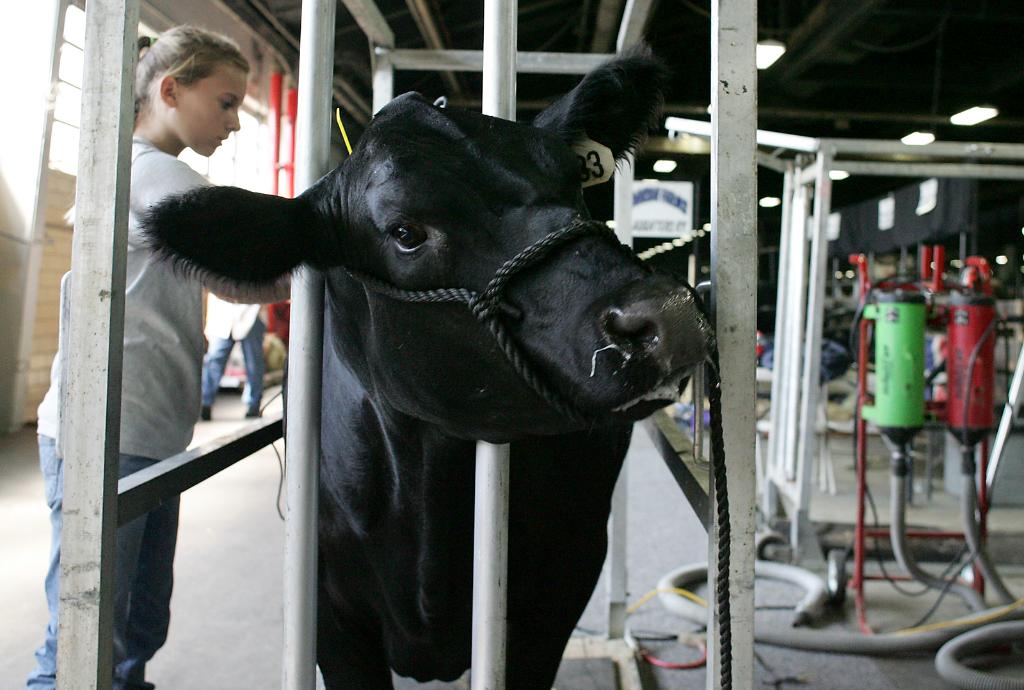
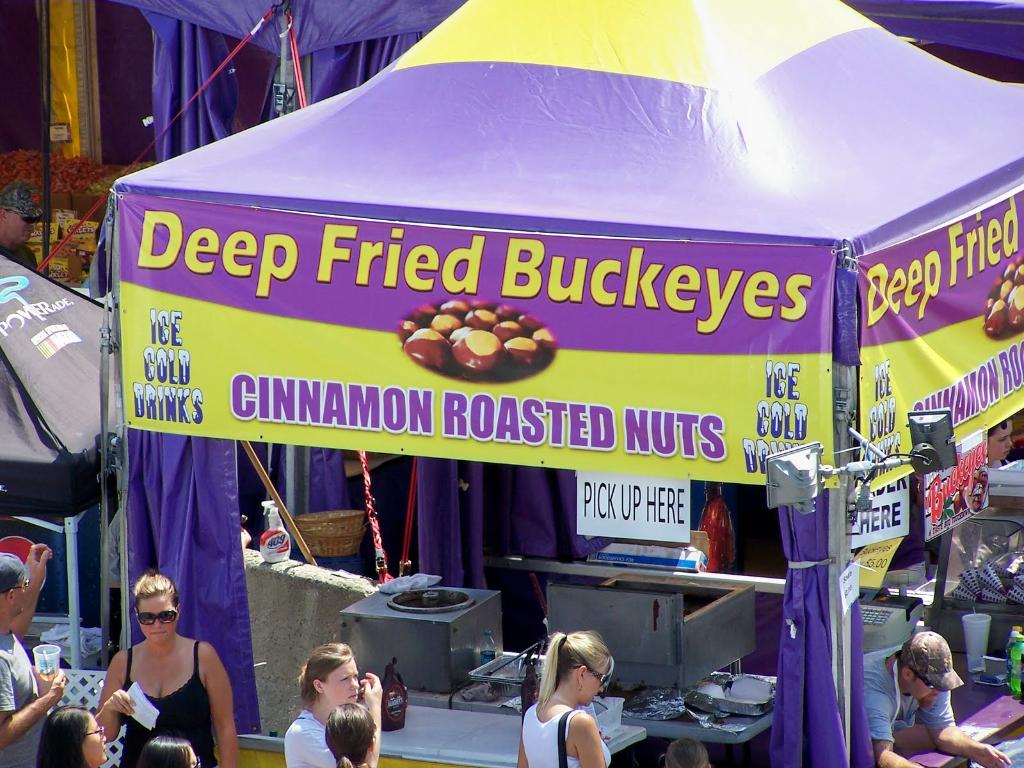
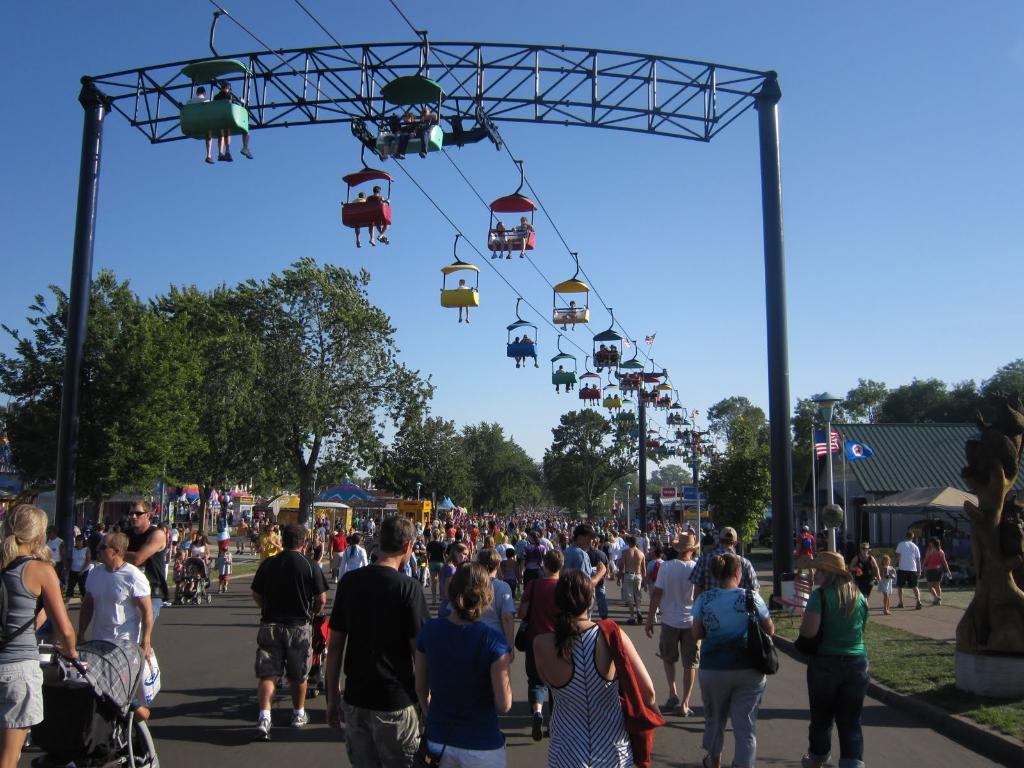
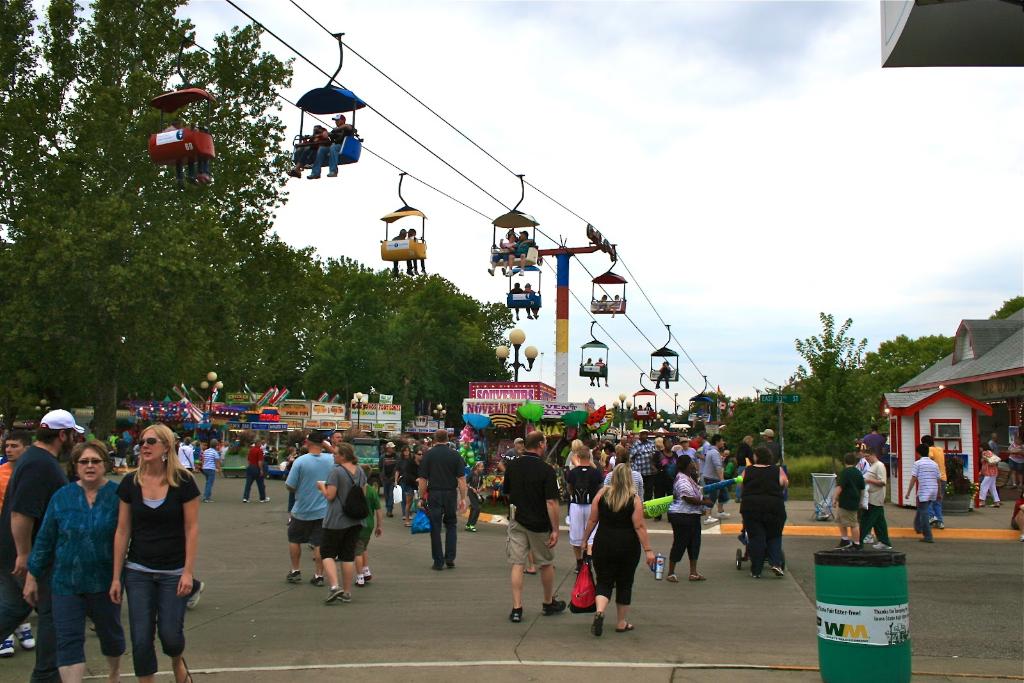
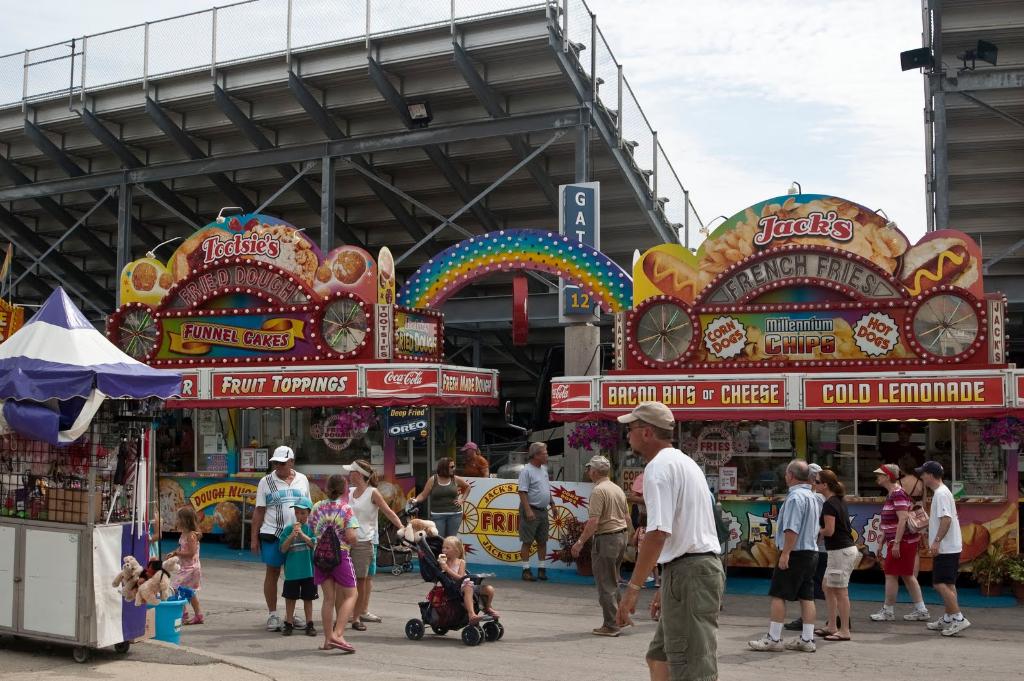
The state fair has long-been a favorite national institution in America, attracting millions of people to various enclaves of cultural activity, from north to south and east to west, since it’s popular establishment sometime in the middle of the 19th century (that is, in most places at least). Today the sprawling mega events in cities like Falcon Heights, Minnesota, and Phoenix, Arizona, remain the same grass-roots celebrations of regional food, drink, traditions, cultural nuances and quirky artistic pursuits they were originally intended to be, while a dash of the glitzy and glamorous, high-energy and adrenaline pumping has been added for good measure. Here are 10 of the best-loved and most widely-attended fairs in all of America, so grab a cotton candy and take a seat.
This wholesome, family friendly celebration of Kentucky’s all-American arts & crafts culture and agricultural heritage takes place every year in early August. It attracts just over half a million visitors from across the state and country, who come to sample the hearty farm-to-table fare and famous home brews of Kentucky. The iconic, century-old World’s Championship Horse Show is another major pull for visitors, when thoroughbreds and riders compete in a variety of prestigious competitions at the Kentucky State Fairgrounds.

In many ways California’s state fair is the perfect cultural metaphor for the region as a whole. Visitors enjoy all the expertise of a cascade of a different food stalls and kitchens, selling everything from spicy Mexican chilli dishes to classic ballpark hot dogs and burgers. For beer and ale enthusiasts, there’s also the yearly home and craft brewing competitions, attracting the best from amongst the local beer sellers. In addition there’s a real mix of both indoor and outdoor entertainment, along with the traditional Magnificent Midway amusement arcade for kids.

 I got sunburned and about 3 shades darker LOL.”
 Agriculture and farming takes center stage at the Oregon State Fair, where all the traditional rearing and growing methods of the American West are celebrated with competitions, live entertainment, artistic exhibitions and floral displays. Other draws include farmer’s markets and grocery beds laden with statewide produce, along with a variety of carnival rides and attractions. The Oregon State Fair usually takes place during the last few weeks of August, typically finishing sometime in early September.

Loud, proud and full of star-studded attractions, this state fair is the perfect culmination and celebration of all things Texas. The biggest draw here remains the iconic Chevy Main Stage, which hosts around 80 musical acts during the fair’s four-week schedule, which have recently included some seriously big names, from Blondie in 2013 to KC and the Sunshine Band back in 2011. There’s also the ubiquitous Texan cook-off, when locals go head-to-head to see who can produce the best Tex-Mex chilli; an absolute must for fans of the Southern kitchen.

While held on-and-off since 1884, the Arizona State Fair has grown and grown to become the all-in-one, glitzy and glamorous celebration of southwest American culture it is today. Visitors are treated to a big-name line up of classic acts, many of which, like Snoop Dog and ZZ Top, have hailed from USA’s own home-grown musical talent pools. There’s also the ubiquitous livestock competitions, events that attract the cream of local farmers to compare their produce under the watchful eyes of the public.

With just under one million people in attendance last year, the Ohio State Fair is now one of America’s busiest and best loved regional celebrations. Held in the state capital at Columbus, the attractions range from mainstream acts, such as free choral presentations by the State Fair’s own choir, to more weird and wonderful performances from magicians, ventriloquists, master organists and one-man bands. For the adrenaline seeking tourist, there’s also an array of fast and furious coasters to keep the blood going, along with a number of more laid-back rides for the younger ones.
From 21st August to Labor Day in early September, the Minnesota State Fair ushers in the country’s largest, best-attended and most exhilarating state celebration on offer. Sprawling collections of livestock barns display the prime agricultural output of the American Midwest, while the swathes of food stalls and classic cotton candy outlets provide revellers with a traditional taste of Minnesotan fair fare. Visitors are also treated to a variety of shows and performances, ranging from the State Fair Talent Contest to the iconic five kilometre milk run around the university campus.

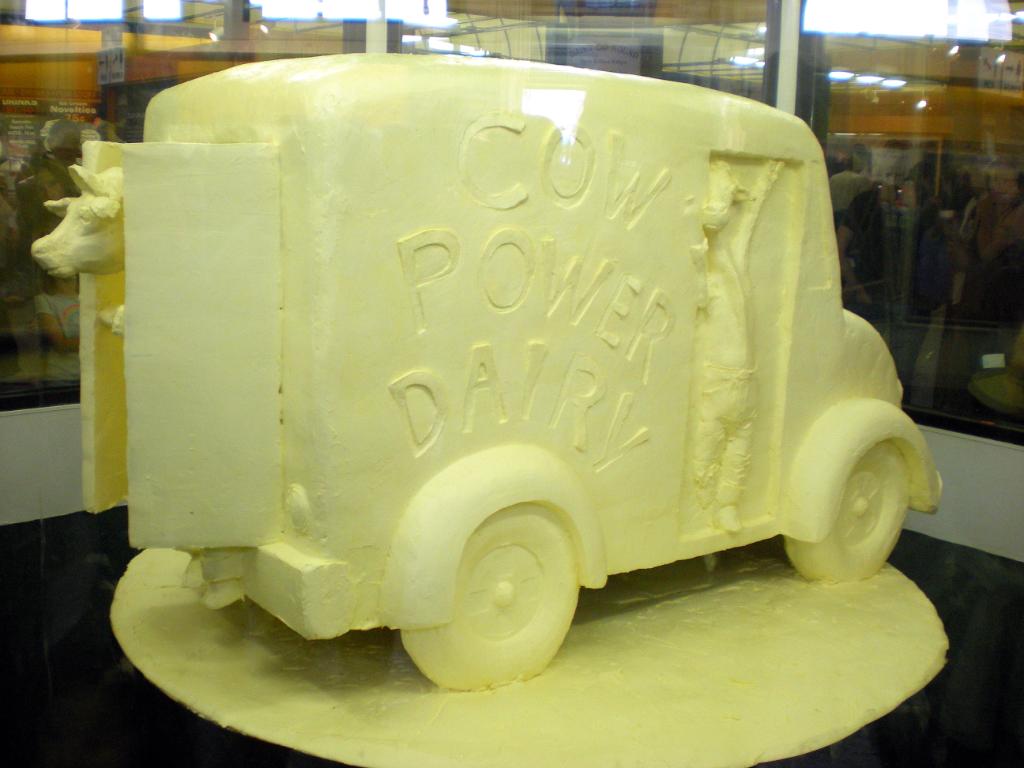
Many visitors come here to wonder at the intriguing Butter Cow sculpture that has become something of a legendary monument to the curious heritage of Iowa state, while others come to watch the rugged Timberworks Lumberjack Show, or perhaps some home-grown chainsaw artists mould masterpieces out of monolithic wood. But, whatever you’re after when coming to Iowa’s State Fair, you can rest assured it will tick all the boxes a wholesome, family friendly (and perhaps slightly quirky) attraction should!
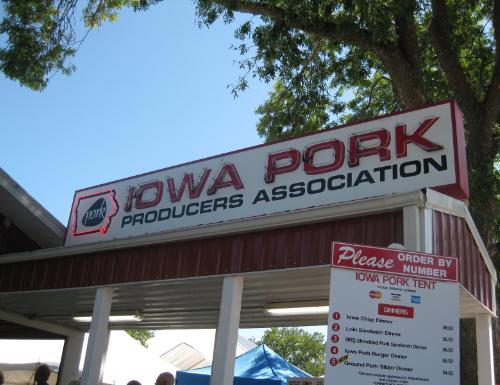
The Wisconsin State Fair is one of the largest midsummer celebrations in the American Midwest, showcasing the agriculture skills and prowess of this bucolic state, while enticing revellers with a promised array of both local and national music acts. Accordingly, much of the culinary offering is derived from the regional kitchen and food-lovers should not leave without sampling the famous cream puffs of the fair confectioners. For the more daring fairgoer though, the Wisconsin State Fair also plays host to the 200-foot Stratosphere ride, among other mind-boggling contraptions designed to test one’s mettle to the full.
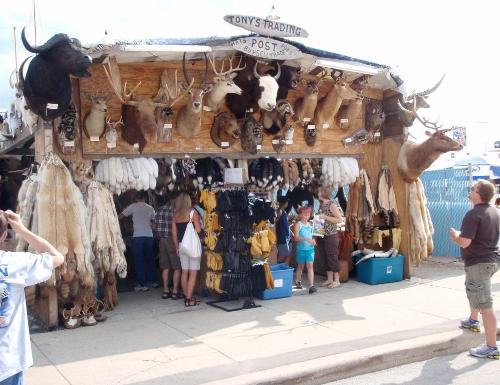
Fair attractions, agricultural competitions, technology showcasing and live music performances abound at this, New York’s largest annual celebration of local heritage and culture. Here, the great Grandstand has attracted chart-topping artists for some years, ranging from Justin Bieber to the ‘80s rock band Journey, while the real variety of grounds entertainment makes it one of the most accessible and family friendly fairs this side of America. The Grand New York State Fair runs from late August to early September.
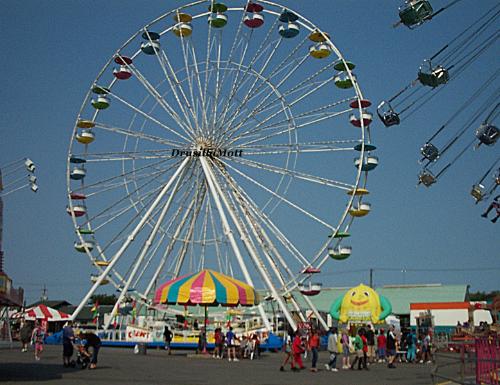
The post The Ten Best State Fairs in the United States appeared first on Hopper Blog.

Paul Rusesabagina became a towering figure in the fight for human rights after using his position at Kigali's Hotel des Mille Collines to save 1,268 people from the genocide in Rwanda. On the 20th anniversary of that atrocity, Rusesabagina writes that he cannot return to his country because of opposition to the government there.
Rusesabagina, who now lives in Texas, writes in the Boston Globe that he "was not invited and I am not welcome" to any commemoration of genocide in Rwanda this month. He notes that his faith in the international community faltered when he "called and called and no one came" to save the hundreds of thousands lost to genocide in his country. But what ails Rusesabagina now is the fact that he sees tensions rising in Rwanda that raise new concerns for violence. "Because I have spoken out against injustice, human rights violations, and a totally closed political space, I can’t go home to Kigali to mourn our losses and celebrate our gains," he writes.
Rusesabagina also denounced the Rwandan government for "imprison[ing] or [assassinat]ing its political opponents" and for intervention in the Democratic Republic of Congo, where Rwanda currently "sends proxy armies... to chase Hutu rebels who then come back with conflict minerals to line their own pockets."
Even the treatment of the genocide itself disturbs Rusesabagina. "Today, the genocide memorials in Rwanda are tourist attractions filled with bones. I wish that instead of glorifying the death of my fellow Rwandans, we had memorials to glorify the memory of their lives," he writes.
He has also spoken out in several interviews to various international news sources. To NPR, Rusesabagina said this week that he left Rwanda in 1996 because he spoke out against more killing, and that "history repeats itself" today in Darfur, the Central African Republic, and other regions that go mostly ignored by international media or peacekeeping forces.
With Spain's ABC, Rusesabagina was more direct about his opinion of current Rwandan leader Paul Kagame. "Rwanda is the worst dictatorship I have ever seen," he told the newspaper. "It is an embarrassment that, 20 years later, we have learned nothing from the history that occurred in 1994." He also tells the newspaper that his home in Belgium has been vandalized five times and that Kagame continues to call for Rusesabagina's extradition in shaky bribery charges: "they are doing everything to have me arrested." He warns, "Rwanda is a volcano ready to erupt at any time."
Kagame's government has begun an official week of mourning for those lost in the 1994 genocide. It is estimated that 800,000 to one million Rwandans, mostly of the Tutsi ethnicity, were killed during the course of about 100 days. UN Secretary General Ban Ki-Moon said this week that the organization continues to be "ashamed" for its complicity in permitting the genocide to occur with little to no intervention.


British schoolchildren are being brainwashed by a deep green environmental curriculum which fills their heads with "confusion, ignorance and fear", says a new study by the Global Warming Policy Foundation.
The report, by science writer Andrew Montford and statistician John Shade, finds that "eco-activism" has been given free rein within schools for at least three decades. Children are being encouraged to become "little political activists" with a duty to "save the planet" not least by putting pressure on their parents.
This agenda can be found in teaching across the board - not just in obviously relevant subjects like science and geography but even in unrelated areas like French, Maths and English. It affects everything from field trips (often with an environmental theme, such as "sustainability") to projects and film screenings (An Inconvenient Truth; The Age Of Stupid; The Day After Tomorrow) and even how well children perform in exams (with marks given automatically to children who "correctly" identify Carbon Dioxide as a major environmental threat).
The rot can be traced back at least as far as 1984, when Herbert London wrote Why are they Lying to our Children?
In his introduction, London wrote:
One evening more than a year ago I came home from university to find my elder daughter - then 13 - with tears streaming down her cheeks... When I gently inquired why she was crying, Staci said, 'Because I don't have a future'. [She] produced a mimeographed sheet suggesting that a dismal future - or none at all - is what awaits her...widespread famine...overpopulation...air pollution so bad everyone will wear gas masks...befouled rivers and streams...melting of the polar ice caps and world-wide devastation of coastal cities...an epidemic of cancer brought on by damage to the ozone layer...
This brainwashing became more widespread after the 1992 Rio Earth Summit, aided and abetted by useful idiots in John Major's Conservative government such as former Environment Secretary John Selwyn Gummer (now Lord Gummer, a prominent eco-activist and investor in green technologies); then made even worse under Tony Blair's Labour government which established a quango to advise on "sustainable" education and resulted in the study of sustainable development being made a compulsory part of teaching in geography, science, design and technology and citizenship.
Environmental initiatives described in the report include the Climate Change Schools Project, which encouraged children to police their parents like junior Stasi operatives. An evaluation report, published in 2009, said:
A really successful activity in this area was the "Climate Cops" event run by nPower. After an interactive event at a school, students were given police officer style notebooks, and they could 'book' themselves, friends or family members if they saw them wasting energy or performing other 'climate unfriendly' actions.
Subject areas which have been corrupted by environmental propaganda include:
Geography
Sample paragraph from a GCSE revision guide
Climate change isn't something that is going to happen in the future – it's happening now! Disasters, like the severe droughts in Niger, in sub-Saharan Africa, in 2005–6 and 2009, are wrecking people’s lives more and more frequently. And it’s going to get worse.
English
From a GCSE revision guide
Adjectives describe Things and People‘Global warming is bad’ - Too boring – zero marks alert
‘Global warming is a serious and very worrying issue’ - Much better – the adjectives will impress the examiner
French
From an A level French text (with translation)
Plus personne ne peut le nier, les scientifiques sont unanimes, et nous le constatons chaque jour: jamais dans l’histoire de l’humanité, les menaces n’ont été aussi grandes...Ce sont l’air, l’eau, le sol, le climat...les animaux que nous sommes en train de massacrer méticuleusement.Toi et tes ami(e)s, vous avez rendez-vous avec l’histoire. Devenez des consomm’acteurs’ avertis...et soyez avocats de la vie et citoyens de la Terre...
Nobody can deny it, scientists are unanimous and we see it every day: never in the history of humanity have the dangers been so great...We are in the course of meticulously destroying the air, the water, the climate...and the animals.
You and your friends have a rendezvous with history. Become responsible consumers...and be advocates for life and citizens of the Earth...
Economics
Sample question:
Explain why developed rich countries should provide money to poorer, developing countries so that they can reduce their CO2 emissions.
Religious Studies
Sample questions:
Explain two reasons why many religious believers are concerned about climate change
Explain actions religious people might take to look after the planet.
Physics
GCSE sample answer, deemed worthy of full marks by AQA examining board:
I think wind turbines are a good idea as global warming from burning coal is an increasing problem and needs to be stopped.
The report's authors conclude:
The seriousness of what we have seen is hard to overstate. The fact that children's ability to pass their exams – and hence their future life prospects – appears to depend on being able to demonstrate their climate change orthodoxy is painfully reminiscent of life in communist-era Eastern Europe or Mao's China. Politicians seem to have given the nod to this process, effectively handing much of the curriculum to green activists. The question of whether what is taught in the classroom is scientific or political, balanced or biased, true or false seems to have gone unexamined.

Today is National Beer Day! Celebrate with a little beer history.
If there's anyone who is qualified to comment on the evolution of rules and conditions in baseball, it's John Thorn. He is a prolific writer on the history of the game and the Official Baseball Historian for Major League Baseball. I talked to Thorn about some of the conventionally considered "unbreakable" baseball records and what makes them unbreakable—or if they even are.
Cy Young's career ended over a century ago, but his legacy lives on in the award named in his honor that celebrates the best pitcher in each league every year. He is a fitting source of aspiration as the record holder for most career wins and most career complete games in baseball history. A member of MLB's "All-Century Team," Young was an undeniably top-rate pitcher, but to achieve those specific records—and keep them out of reach from any modern ace—he had a little help from the era in which he played.
"No one will get to 511 career wins because we don’t have a four-man rotation. In fact, for much of Young’s career he was in a three-man rotation with the fourth starter being the spot starter, as the fifth starter came to be in the 1950s and ‘60s," Thorn says.
Not only did Young get more chances on the mound, but the turn of the century was also particularly pitcher-friendly. "Young pitched in the dead-ball era, which means that not only did he pitch more frequently but he was facing softer lineups. There were two or three batting positions in every club that you could coast by."
It's hard to overstate how dissimilar baseball now is from what it once was. Simple changes, such as the number of baseballs used in each game can tip the scales slightly on who has the advantage in each at bat. "Now, if a ball is fouled off at the plate it is discarded. Then, unless a ball split in half, it might go six or seven innings or perhaps even a whole game. So those batters who batted at the end of the game were facing a mushier, discolored ball."
As evidenced by his record-setting complete games, Young pitched to a decision more frequently than his modern counterparts with their risk-averse inning limits. For all these reasons, baseball will probably never again have the perfect storm of ability and conditions to challenge his records, which we can deem unbreakable.
Radbourn's baseball career ended before the 20th century even began, which means that his record has held longer than any other on this list and that the game conditions were very, very different. For one thing, the season was even shorter then—just 112 games—which makes this feat that much more impressive. But wildly counteracting that is the fact that, much like in the case of Young, Radbourn had a lot more chances to get a win.
These days, cracking 20 wins on the season practically guarantees a pitcher Cy Young award contention, but consider that the most games even started by a pitcher in 2013 was 34. In 1884, when Radbourn won those record-setting 59 games, he made 73 starts. Even compared to his contemporaries on the mound, that was a notable number of starts. But Radbourn had more than just a different set of conventions on his side.
"Radburn’s pitching style was pretty much underhand and sidearm," Thorn says. "When you’re throwing underhand, which is a more natural physiological motion, you can pitch more innings."
None of this is intended to diminish Radbourn's accomplishment; with just 12 losses he also led the league in win-loss percentage that year. But it does put the record well out of modern reach, at least until another submariner comes along.
This record is will likely remain unmatched for the foreseeable future simply as a testament to DiMaggio's place as one of the best hitters who ever played. But there is a related detail that Thorn considers even more untouchable.
In 1941, the same year that he strung together his record-setting streak, DiMaggio struck out just 13 times in 541 at-bats. He played in the 1930s and '40s, but several decades earlier, the ratio for great hitters was even more pronounced. In 1897, Hall-of-Famer Willie Keeler led the league with a .424 batting average and 239 hits. In the 564 at bats he took that year, Keeler struck out just five times.
These offensive records—DiMaggio's hitting streak, Keeler's strike out ratio, and Ty Cobb's lifetime batting average—are tied to factors that have since changed, including, as Thorn calls it, a "style factor." "There is no longer a stigma attached to striking out," he says. "The object of the game from the 1850s on was to put the ball in play, allow the fielders to have a chance and run like crazy."
These days, both the number of strikeouts and walks is way up as pitchers nibble the edge of the plate and batters practice patience to up their on-base percentage. And, accordingly, high batting averages and the frequency of balls-in-play (the sort of thing a talented player like DiMaggio needs for a 56-game hitting streak) are down.
According to Thorn, "Baseball is such a delicate mechanism that you can make the slightest adjustment in either rules or custom and practices and have a huge impact on the balance between offense and defense."
People were calling Mo's save record unbreakable before the Yankees closer even retired at the end of last season, which naturally resulted in one hell of a farewell tour. He has 51 more saves than runner-up Trevor Hoffman and 174 more than third place Lee Smith, but can we really call it unbreakable less than a year after it was set?
"No," says Thorn. "My crystal ball is cloudy on this but the save is an elective statistic, like the stolen base, and it is entirely dependent on a manager’s usage."
You don't have to pitch much to get a save, you just have to pitch at the right time. A manager could choose to use a pitcher in save situations—not just to boost the reliever's number but also presumably because he thrives under pressure—and thus give him lots of opportunities to record a save without subjecting him to too many innings.
"It has come to be the pattern that almost all Major League managers reserve their best relief pitcher for the ninth inning," Thorn says. "They do not bring him in for the middle of the eighth except in dire circumstance or in September or in October. Specialization is the trend in the species, not only in sport, and it’s irresistible. So it would not surprise me if someday someone were to top Rivera’s record if we continue to use many pitchers in a ballgame."
Mariano Rivera is the greatest closer baseball has seen—so far. But it might be that he's the best closer to have the right combination of opportunities so far. With no disrespect to Sandman, this one could be broken.
It's just seven, after all. But no-hitters are few and far between. Second-place Sandy Koufax threw four no-hitters, and no other pitcher has tossed more than three. Ryan and Koufax are both Hall of Fame pitchers but ultimately a no-hitter is, as Thorn says, "something of a freakshow stat."
Ryan's no-hitters, and even more so his record-setting career strikeouts, are a testament to what he was like as a pitcher. "He was the most feared and least hittable when he was at the top of his game," Thorn says. But there's a lot of luck involved in racking up a number of no-hitters. Thorn thinks there are equally intimidating pitchers today who could twirl their way into the record books if they can stick around long enough.
"I don’t think it’s unbreakable. You could look at today’s pitchers and say maybe Stephen Strasburg, maybe Aroldis Chapman if he transformed into a starting pitcher. There’s the Sidd Finch factor here, somebody’s gonna come along throwing 110 mph and no one is going to be able to hit him, it’ll take a while to catch up." (Finch is the fictional pitcher who was invented by George Plimpton for an April Fools Day issue of Sports Illustrated. The English orphan-turned-yogi-turned-Mets-pitcher supposedly threw 168 mph.)
Even Chapman can't match the subject of Plimpton's hoax for speed, but Thorn says athletes improve every 20 years. With pitchers throwing ever harder it will take batters some time to catch up, leaving this record vulnerable to being broken.
Welcome to the first Livefire Whisky post as part of Livefire! Instead of 2 different websites, both Livefire’s outdoor cooking and Livefire Whisky are on Livefire!
I figured I needed to do something fun for this post, so I got a half-bottle of Blanton’s a couple of weeks ago to try. I’ve had Blanton’s before, but didn’t look at the experience as much more than just having a bit of bourbon. Blanton’s, however, isn’t really considered a plain old bourbon by many. It’s beaten the bourbon with the biggest cult following, Pappy Van Winkle in blind taste tests, and is much more affordable. I’ve said to some at least that I prefer Jefferson Presidential 18 year-old to Pappy, too, but, in reality, they’re all from the same place, using much the same stock. Of the three, only Blanton’s is readily available.

Blanton’s has about the most recognizable bottle, starting with the horse and jockey on the stopper to the octagonally shaped bottle, it’s really easy to pick out Blanton’s among other bourbon bottles.

Other things that make Blanton’s distinctive are that it’s a single barrel bourbon (apparently the original, according to the label), and the label around the bottle is had written information on when it was bottled, the barrel number, where it was warehoused and what the proof was at bottling (and bottled by hand).

How is the bourbon?
First, it’s very easy to drink. This isn’t a bourbon you have to “learn” to like. It’s right up there with some of the smoothest. It’s sweet for a higher end bourbon, to me, without the spice that lies behind Pappy and Jefferson Presidential. it is also much, much less expensive than either, so that isn’t a surprise to me. For it’s price, however, I also find other bourbons just as good or better. Larceny is a new bourbon on the market, available for half the cost of Blanton’s, and it’s very good for its price. Is it better than Blanton’s? No; it’s not even as good, but it’s much better for the price!

I’m currently looking for a very good bourbon to have at the house. Blanton’s may be the current list topper, but I’ll be taking a trip to Buffalo Trace and Heaven Hill later this month. I think I’ll find one or two that knock this one off the top. With a that said, I wouldn’t turn down Blanton’s when offered. It’s a solid B+ to me, but I’d rather spring for a more expensive bourbon to get better or go lower in price to get close to as good. However, with the Kentucky Derby coming up, this may make one hell of a mint julep!