Shared posts

06 Jun 12:07

The Five Best Ice Cream Shops in Atlanta

by Siofra McAllister

The “city in a forest”, Atlanta has no shortage of shady tree-lined streets on which to keep cool during those hot summer months. Adding a special something to those sun-dappled summer strolls, Atlantans have perfected the art of a great ice cream. Whether you’re planning a lazy lunch in one of the city’s many stunning parks or dipping out of a high rise on a brief lunch break, a quality frozen delicacy is sure to be close by. There are gourmet ice creams for the more discerning dessert fan, ice pops for the young at heart or frozen yogurts for those who prefer a lighter sweet treat. With Atlanta’s hearty, bold southern recipes extending to their ice cream recipes, Atlanta’s ice cream lovers have a wealth of wild and wonderful flavors to choose from in these five best ice cream shops in Atlanta.

Get adventurous with flavor combinations at Morelli’s Ice Cream

A dense, creamy ice cream recipe provides the base for the daring recipes at Morelli’s. With three locations across the city – in Moreland, at the Dunwoody Center and the Edgewood Center – fans of the popular salted caramel can easily grab a cone on a whim. The house recipe here is of such a high quality that even the standard chocolates and vanillas are enough to draw a crowd, but foodies will be attracted by the wilder menu choices and inventive sundaes that change daily. A scoop of coffee and donuts, anyone?

Take a closer look at Morelli’s Ice Cream:

DIY FroYo at Yogurberry

Photo via their official FB page.

Yogurberry, tucked away in the Terminus building in Buckhead, is a charming pick’n'mix frozen yogurt setup perfect for those who want a reprieve from the sugary sweetness of Atlanta’s other scoop shops. Yogurberry serves up fresh frozen yogurt made in-house from natural, local ingredients. At its base, the yogurt is slightly tart and tangy without overwhelming the variety of fantastic flavours the team add to their FroYo daily. Yogurberry stands out from the crowd of frozen yogurt shops thanks to their fantastic selection of serve-yourself toppings – cereals, candies, fruits and more – with creative combos already on the menu for the indecisive among us. They offer thoughtful alternatives, too, like bubble tea and a delicious granola parfait that’s perfect for a naughty summer breakfast treat.

Authentic Italian ice cream at Paolo’s Gelato

Paolo’s Gelato on Virginia Avenue is run by, as you might guess, the very talented and very Italian Paulo. This ice cream shop offers truly authentic Italian gelato (a lighter, softer ice cream with concentrated flavours) and Paulo is known for regularly experimenting with flavors so every trip here is a new adventure. The cozy ice cream parlour is packed with history – newspaper cuttings singing the store’s praises line the wall – and packed with a choice of about 10 fruity, creamy and nutty flavors daily. The violet and tiramisu come highly recommended. Want to make sure your fave is on the menu? The website allows you to sign up for weekly flavor updates.

See what visitors have to say about Paolo’s Gelato:

Pop a mint chocolate at King of Pops

Photo via their official FB page.

Gone are the days of freezing your own ice pops with store bought cola. These days, Atlantans can pick up a truly gourmet ice lolly wherever King Of Pops “pops” up. With a semi-permanent home at Georgia Tech Farmers Market, the King Of Pops team make like truly retro ice cream men with a truck that stops at changing locations across the city. For a tasty $3, thirsty city dwellers can choose from unique, thirst-quenching flavors like a Honeydew Grape pop while those who savor a sweet treat have epicurean options like the favorite coconut toasted almond pop.

Embrace your “outside the boxness” at Jake’s Ice Cream

The self-consciously quirky Jake’s at Irwin Street Market can be forgiven for some not-so-explanatory, wacky flavor names – like “Chocolate Slap Yo’ Mama” and “Diesel Fuel” – thanks to their perfectly made, decadent scoops. You’ll need an appetite for Jake’s ice cream, as their thick, creamy dessert is choc-full of bits and pieces making each scoop a sundae in itself. Like the red velvet cupcake flavour, a truly cake-like, frosting-filled concoction. The fantastic and fantastical creations also include a “Joyscream” and “Nicescream”, Jake’s trademark vegan ice cream made with your choice of coconut or almond milk.

See what visitors have to say about Jake’s Ice Cream:

The post The Five Best Ice Cream Shops in Atlanta appeared first on Hopper Blog.

06 Jun 11:57

The Five Best State Parks near Seattle

by Toby Hill

Seattle is enclosed by a wild and picturesque natural world, squeezed between Lake Washington and Puget Sound. Elliott Bay, the city’s main harbor, connects the city with Puget Sound and the Pacific beyond, making Seattle an oceanic port. To the west of the sound, the snow-clad peaks of the Olympic Mountains can be seen striding across the Olympic peninsula. Closer by, a series of peninsulas, passes, islands and fjords contain several easily accessible yet gloriously wild state parks, a world of water, rock, and diverse woodland creatures that provides an invigorating contrast to the Seattle skyline which remains frequently visible on the eastern horizon.

Escape to the seclusion of Fort Flagler

Secluded at the end of the road on Marrowstone Island, Fort Flagler is an 1897 fort surrounded by a wind-whipped and wild state park, covering 784 acres on a high bluff overlooking Puget Sound. Fir tree forests roll down to sand and cobble beaches, stretching along a rugged saltwater shoreline which is ideal for crabbing, clamming and fishing. Biking and hiking trails run through the area, while at the fort itself there’s a military museum and several historic buildings – the Hospital Steward’s House, the Waterway House, and two Non-Commissioned Officers’ Quarters – which visitors can stay.

See what visitors have to say about Fort Flagler:

Play beside the rapids of Deception Pass

Deception Pass is a narrow, fast-flowing channel that runs between Fidalgo Island and Whidbey Island at the north of Puget Sound. An iconic green bridge spans the pass, and surrounding it is a 4000 acre state park, encompassing swathes of old-growth forest, rocky headlands, three freshwater lakes, sand and pebble beaches and rugged cliffs. There are lots of hiking trails, and the park is also well-served by roads – cars can drive right up to the shoreline and drink in majestic views of the Olympic Mountains and the Strait of Juan de Fuca. On beautiful Ben Ure Island, which can only be reached by boat, a small and well-equipped cabin can be hired by up to two people at a time.

Take a closer look at Deception Pass:

Relax on the riverbank in Lincoln Rock State Park

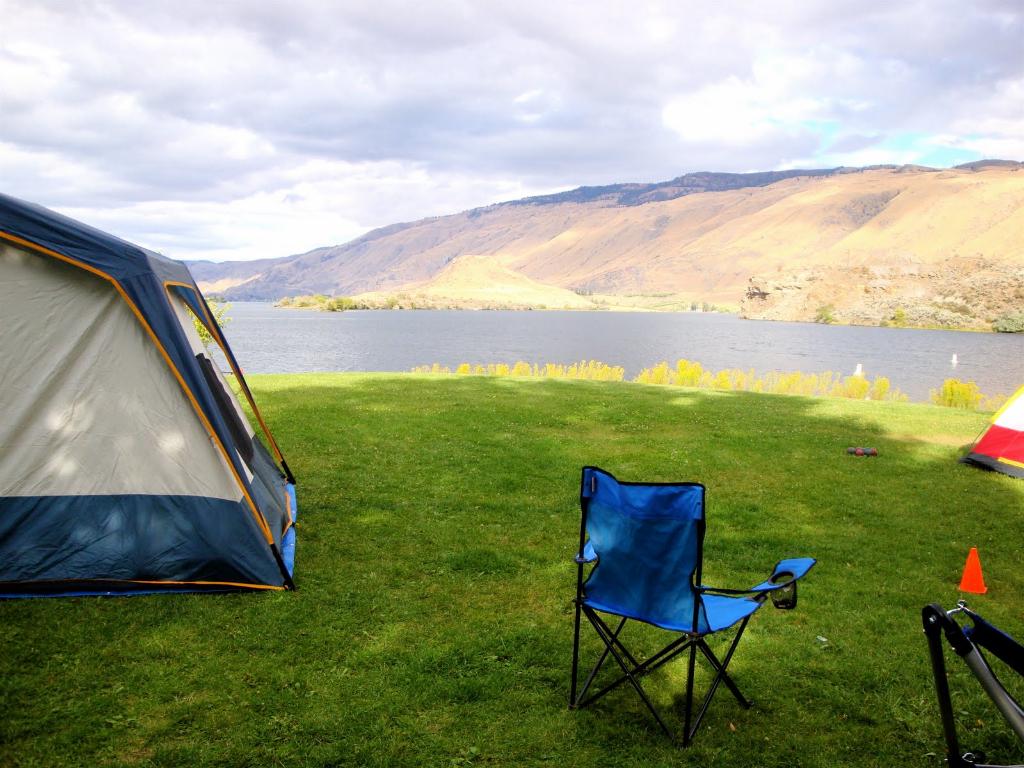
Named for an outcrop of rock said to resemble Abraham Lincoln, this state park runs along the east side of Lake Entiat on the Columbia River. The park looks down on the giant Rocky Road Hydroelectric Dam, known for its sophisticated design which worked to minimize the impact on the river’s wildlife. The dam complex houses a visitor’s center about the Columbia River, with a submerged viewing platform where you can watch shoals of salmon stream by. A popular getaway camping spot with Seattle residents, the park also contains a number of prettily placed wooden cabins, and is an excellent spot for swimming, water skiing and strolling along the picturesque riverbank.

Immerse yourself in the wild world of Blake Island

Only eight miles from downtown Seattle, Blake Island is a small and wild island in Puget Sound. Ringed by five miles of beaches, it has views onto the Olympic Mountains to the west and, in striking juxtaposition, over the skyscrapers of Seattle to the east. On the north of the island is Tillicum Village, which showcases the art, culture and food – such as freshly-caught salmon dinners – of northwest coast Native Americans. A broad variety of tree species, including Cedar, Yew, Maple, and Cherry, cloak much of the island. Land mammals include deer, raccoons, chipmunks and otters, and deer occasionally swim between the island and the town of Manchester, which makes for a particularly memorable sight. The island is only accessible by boat, with Argosy Cruises operating a ferry service from Seattle. Sea kayaking around the island is a popular activity, and there is the thrilling possibility of an orca or grey whale sighting during the spring months.

See what visitors have to say about Blake Island:

Enjoy the jagged scenery of the Hood Canal in Scenic Beach State Park

With beaches running down to the jagged shoreline of the Hood Canal, Scenic Beach State Park lives up to its name with majestic views over this wild fjord and onto the Olympic Mountains beyond. Back from the rocky shore, the park is famous for its springtime carpet of rhododendron flowers, waded through by elk, deer, chipmunks and foxes. The water of Hood Canal is good (if chilly) for scuba diving, while the park also hosts volleyball fields, horse riding trails and a campsite.

Take a closer look at Scenic Beach State Park:

The post The Five Best State Parks near Seattle appeared first on Hopper Blog.

06 May 18:13

America’s Hard Cider Boom Has One Problem: Not Enough Apples

by Jonathan Frochtzwajg

A squint through the filmy garage door windows reveals a sizable space absolutely chockablock with cidermaking equipment: Vats upon vats, snakes of tubing, big bottles of cloudy cider-to-be. For now, this, along with an 8-acre apple orchard beyond the barn, makes up the entirety of Bull Run Cider, the micro-cidery in Forest Grove, Oregon (about 45 minutes outside Portland) which Mulligan co-owns with two partners. But Bull Run is outgrowing the farmhouse fast: this year, the company expects to produce more than twice as much cider as last, and come summer, it’ll move its cidermaking operation to a nearby commercial space with a tasting room. As demand for their product increases, Mulligan and his partners have just one problem.

They need apples.

Cider apples, to be more specific. See, to make truly good cider, you need apples with a lot of sugar — to encourage fermentation — and particular levels of acid and tannins. You won’t find these so-called “bittersweets” and “bittersharps” at the grocery store because, eaten as fruit, they taste terrible. (Insiders call them “spitters.”) And because apples sold as fruit fetch a much higher price than those sold for juice (cider included), large-scale growers simply aren’t raising the varieties of apple cidermakers need. The result?

To make truly good cider, you need apples with a lot of sugar — to encourage fermentation — and particular levels of acid and tannins. But you won’t find these apples at the grocery store because, eaten as fruit, they taste terrible.

“There never seems to be enough of the right apples,” says Mulligan.

The dearth is only becoming more dire as the cider industry booms. After decades of being viewed by most Americans as a vaguely British and overly sweet novelty drink, cider is experiencing a remarkable revival in the United States. According to the Beer Institute, a beer industry association, domestic cider production rose by 264 percent between 2005 and 2012 (the last full year for which data was available). And that cider’s getting sold: Though market-research findings have been all over the map, they generally agree that industry revenues have grown exponentially and are today in the hundreds of millions. The takeaway? Americans, once skeptical of cider, are now happily quaffing the stuff.

“Hard cider” — as pretty much only Yanks call it — was actually America’s original drink of choice. (Little-known fact: Johnny Appleseed’s apples were for cidermaking, not eating, as the alcoholic beverage was safer to drink than water.) But when Prohibition went into effect, stringent laws restricting the production of even non-alcoholic cider caused orchards to stop growing cider apples altogether, dealing our cider tradition — and the apples themselves — a death blow.

In recent years, however, cider’s seen a dramatic resurrection, aided by the gluten-free craze.“It’s incredible how fast the growth has been,” says Sherrye Wyatt, the executive director of the Washington–based Northwest Cider Association. Among the regional trade group’s 44 cidery members, stories such as Bull Run’s are not uncommon, Wyatt says. “They’re not doubling or tripling sales—it’s thousands-of-percent increases.” This spring, two beverage giants, Anheuser-Busch and MillerCoors, forayed into the U.S. cider market (with Johnny Appleseed and Smith & Forge, respectively).

‘Hard cider’ — as pretty much only Yanks call it — was actually America’s original drink of choice. (Little-known fact: Johnny Appleseed’s apples were for cidermaking, not eating, as the alcoholic beverage was safer to drink than water.)

Trouble is, cider apples haven’t kept pace with cider. Many of these fruits are heirloom varieties—distinctively flavored, colorfully named cultivars such as Kingston Black, Yarlington Mill, and Porter’s Perfection — that went nearly extinct on American soil during Prohibition and haven’t been cultivated on a large scale since. Walking through the dwarf-sized, just-budding trees of Bull Run’s orchard, where more than 60 apple varieties are represented, cidery co-owner Galen Williams explains that for the time being, most cidermakers are making do with widely available cooking and dessert varieties, such as Red Delicious, along with whatever traditional cider varieties they can lay hands on. (Most ciders are made from a blend of apple types.)

“The hard-cider industry is essentially developing without a true raw material,” says the 32-year-old, Carhartt-clad cider wonk. “Cidermakers are using everything they can to make interesting, good-tasting ciders without actual cider fruit.”

Given the economics of the apple market, it’s unlikely that major growers will provide a solution anytime soon, says Jim Allen, the New York Apple Association’s executive director.

“You’ve got to remember: the lowest-valued apple is the apple that’s crushed up and made into juice; the highest-valued apple is the apple that ends up at Trader Joe’s,” he says. “Nobody’s planting apples to do anything but try to put them into that high-value category.”

With or without the big guys, though, a patchwork of cider-apple sources is coming together. Smaller-scale and more-nimble commercial growers  are diversifying into cider varieties to hedge against crop failure, says Williams. Mulligan estimates that, much like Bull Run, about a third of cideries are growing their own apples. And Wyatt observes that farmers of other crops are exploring growing cider apples on fallow surplus land.

“We know more acres of cider trees are going in the ground,” says Wyatt. “If there’s a market for it, people will be watching.”

Back at Bull Run HQ, tasting the fruits of his labor, Williams dreams aloud of the day when cidermakers “will be able to go to the packing house and say, ‘I need 40 bins of Yarlington Mill,’ and they’ll say, ‘Yeah, no problem. We’ll deliver it tomorrow.’”

Still, he wonders if that day will ever come: “I like to believe it will.” But until then, he and his fellow cidermakers know: If they want the apple of their eye, they’ll have to find it themselves.

The post America’s Hard Cider Boom Has One Problem: Not Enough Apples appeared first on Modern Farmer.

06 May 18:12

8 Foods That Fight Back

by Tyler LeBlanc

kidney

1. Raw Red Kidney Beans

You’d be hard pressed to find a chili that doesn’t feature these stable beans. When cooked, red kidney beans are perfectly harmless, however when eaten raw, as few as five of these red devils can be enough to induce extreme nausea, vomiting and diarrhea.

The culprit is a natural toxin named lectin phytohaemahhlutinin. You can easily defend yourself by making sure to soak your beans before cooking and then boiling them for at least 10 minutes. However, make sure they actually boil, as the effects of the toxin becomes more potent if the beans are heated but not brought above the boiling point.

rhubarb

2. Rhubarb Greens

Bitter greens may be in vogue (read: kale) but not all are healthy lettuce alternatives. Rhubarb greens contain dangerously high levels of oxalic acid, an organic compound that can cause serious kidney damage and even death (or, if you’re lucky, a hallucinogenic dream-state adventure through time, as was the fate of Alec Baldwin’s character on “30 Rock”.).

Although you’d have to eat nearly 10 pounds of leaves to be at serious risk of dying it’s best not to flirt with this hazardous acid. As a general rule for rhubarb, stay within the pink, or just stick to spinach.

castoroil

3. Castor Oil Seeds

Usually found hidden among long lists of ingredients, castor oil is a common food preservative and folk cure for constipation. However, the seeds this common oil is pressed from contain deadly amounts of ricin, a natural toxin famous for its use in the high-profile assassination of Georgi Markov and as a potential chemical weapon during the Second World War.

When processed into oil the toxin is removed but consumption of as few as four of the seeds can prove fatal. If you’ve ever considered chewing on some Castor Oil beans, don’t do it, otherwise, you’ll likely be fine.

brazilnut

4. Brazil Nuts

Generally noted for their health benefits, Brazil nuts have a hidden secret. Containing more than one thousand times more radium than most foods, these large nuts are one of the most radioactive edibles on the market. This is due to the incredibly deep and complex root system of the Brazil nut tree that absorbs the naturally occurring element from the surrounding soil.

It is worth noting that although eating huge quantities of these tasty nuts is not likely to kill you, it also won’t give you superpowers.

starfruit

5. Star Fruit

This heavenly shaped fruit is generally believed to be a safe choice for healthy individuals but if you suffer from any form of kidney disease you should steer clear. Star Fruit contains a recently discovered compound known as caramboxin. When ingested by people suffering from kidney problems, this compound can bring about acute intoxication that includes seizures and death.

potato

6. Green Potatoes

Everyone has left a potato sit out too long; harmless sprouts start to grow and the skin turns green. But are these tubers still edible? Well, yes and no. The green layer under the skin indicates a build-up of the toxin solanine, a compound of the nightshade family. Consuming this toxin can cause vomiting, diarrhea and in rare cases death. On the plus side, if you cut the green section out the rest of the potato is still perfectly fine to eat.

cassava

7. Raw Cassava

This tropical staple has a dark side. These long, rough, starchy tubers contain two compounds known as cyanogenic gylcosides. When consumed raw, the body converts these compounds into hydrogen cyanide (read: deadly poison). Easy to avoid by pre-soaking and cooking, consumption of raw cassava can lead to vertigo, vomiting and in some cases, death.

hakarl4

8. Hákarl (Cured Greenland Shark)

Famous as one of the worst tasting foods in the world, this traditional Icelandic meal may pose more of a risk to your health than tainted taste buds. Lacking the ability to urinate, these northern giants process their waste fluid through their body tissue. Dried and cured, the meat still possesses massive amounts of ammonia and trimethyl oxide. Ingesting these chemicals can cause organ strain and intoxication.

Hákral photo courtesy of Jóhann Heiðar Árnason

The post 8 Foods That Fight Back appeared first on Modern Farmer.

25 Apr 17:46

Kit: The Perfect Day Pack

perfect-day-pack-essentials-gear-patrol-lead

From the Archives: Most day hikes require a peanut butter sandwich, a water bottle and maybe some bug spray. But for the weekend warrior who wants to crush in one day what most people stroll in three, there are a few indispensables. Here are our favorite necessities and extravagances for spending a day burning through some miles on the trail.

...

Read More »
25 Apr 17:44

101 Photo Industry Professionals You Should Follow on Twitter

by Alison Zavos

101Twitter_01

Want to keep up with what’s happening in the photo industry? Then this list is for you. We were planning to stop at 50, but before we knew it we ended up with a whopping 101 photo professionals that we think have the most engaging Twitter feeds out there.

We’ve included feeds that are informative, entertaining, and most importantly that offer us a window into the interests and inspirations of some of the most creative people in the photo world. Whether at the pinnacle of their careers or just starting out, the overriding common thread of those that made the list is that they all share a passion for photography and want to share their knowledge and findings with their followers.

Note: The list is in no particular order.

1. Donald R. Winslow / @donaldrwinslow
Editor at News Photographer magazine for NPPA. Teaches at John Cabot University & John Felice Rome Center.

2. David Campbell / @davidc7
Visual storytelling, politics, social media. Secretary to World Press Photo 2014 contest jury.

3. Kathy Ryan / @ryan_kathy 
Director of Photography at The New York Times Magazine.

4. Ken Geiger / @kengeiger
Deputy Director of Photography at National Geographic Magazine and Pulitzer Prize-winning photographer.

5. Michael Wichita / @MichaelWichita
Director of Photography for AARP Media in DC.

6. Vaughn Wallace / @vaughnwallace
Deputy Photo Editor at Al Jazeera America.

7. Kira Pollack  / @KiraPollack
Director of Photography and Visual Enterprise at TIME and Executive Producer of Red Border Films.

8. Alessia Glaviano / @AlessiaGlaviano 
Senior Photo Editor at Vogue Italia and L’Uomo Vogue.

9. Patrick Witty / @patrickwitty
Director of Photography at WIRED.

10. Judith Wesch / @judith_photo
Photo Editor at Le Figaro.

11. Yumi Goto / @Yumi_Goto
Independent photo documentary/reportage project researcher, coordinator, consultant, editor and curator.

12. Rodrigo Orrantia / @rodrigoorrantia
Photography curator, focusing on art photography publication and exhibition projects at DMB and Lucid-ly.

13. Santiago Lyon / @slyon66
Vice President and Director of Photography at The Associated Press.

14. Helen Trompeteler / @htrompeteler
Assistant Curator of Photographs at The National Portrait Gallery.

15. Charles Guice / @CharlesGuice 
Founder of Charles Guice Contemporary, which features modern and contemporary art, film/video and new media by nationally and internationally recognized visual artists.

16. Fiona Rogers / @Fiona_Rogers 
Cultural and Education Manager, Magnum Photos London, and Founder of Firecracker, an online platform supporting European women photographers.

17. Patrick Baz  / @Patrick_Baz
MENA Photo Manager for Agence France-Presse; has covered all major Mideast conflicts and crises—Bosnia, Somalia and Afghanistan.

18. Wayne Ford / @wayneford
Designer/Creative Director—visual identity and communication.

19. SMBHmag / @BarryWHughes
Editor at online photography magazine, SMBHmag (SuperMassiveBlackHole).

20. Emma Bowkett / @emmalbowkett
Photo Editor at the Financial Times FT Weekend Magazine.

21. Elizabeth Orcutt / @PixEditor
Deputy Picture Editor at The Times, academic artist (photography), PhD student and lecturer at Falmouth University.

22. Brad Smith / @BradSmithSI
Director of Photography for Sports Illustrated.

23. Rebecca Mcclelland / @rlmcclelland
Group Photo Editor at New Statesman, PCP Associate Lecturer Photo UCA, and Creative Director Ian Parry Scholarship.

24. Matthew Leifheit / @matte_mag
Photo Editor at VICE and Editor-in-Chief of MATTE Magazine.

25. Ángel Luis González / @bohoe
Founder and Director of PhotoIreland and The Library Project.

26. Stuart Pilkington / @stupilkington
Art photography curator and curator of ‘The Swap.’

27. Matt M. McKnight / @mattmillsphoto
Photo editor, news junkie, and freelance photojournalist.

28. Scott Braut / @scottbraut
VP of Content for Shutterstock and Offset.

29. Louise Clements / @mazmanian 
Artistic Director of QUAD & FORMAT International Photo Festival.

30. Cheryl Newman / @cherylnewman1
Photo Director at Telegraph magazine.

31. Jennie Ricketts / @jennieric 
Picture editor for the Observer Magazine c.1996-2004. Launched jenniericketts.com photography gallery in 2006.

32. Prison Photography / @brookpete
Freelance scrawler, photography, prisons, and social justice. Writer for Raw File blog, WIRED photo blog, and BagNews Notes.

33. Sacha Lecca / @sachalecca
Senior Photo Editor at Rolling Stone.

34. Emily Shornick / @EmilyShornick
Photo Editor at NY Mag’s The Cut.

35. Conor Risch / @c_risch
Senior Editor for PDNonline.

36. Manuela Oprea / @Takeoff 
Photo Editor at Bloomberg Markets Magazine.

37. Katrin Eismann / @SVADigitalPhoto
Artist, author, educator, digital photography fiend.

38. Geordie Wood / @geordiewood
Photographer and Photo Editor at The FADER.

39. Olivier Laurent/ @olivierclaurent
Associate Editor at the British Journal of Photography and new TIME LightBox Editor.

40. Bruno Decock / @brunodecock 
Documentary photographer and International Photo Editor for Medecins Sans Frontieres/Doctors without Borders (MSF).

41. Clint Alwahab/ @calwahab
Photo editor at CNN and photographer.

42. Becky Senf / @RebeccaSenf
Photography curator at Phoenix Art Museum.

43. Leslie K. Brown / @LeslieLKB
Curator, photo historian, educator, PhD candidate in History of Photography.

44. David Griffin / @dgriffin56
Visuals Editor of The Washington Post, former Director of Photography of National Geographic Magazine.

45. aphotoeditor / @aphotoeditor
Former Director of Photography at Men’s Journal and Outside Magazine. Publisher/Editor of A Photo Editor.

46. Elizabeth I. Johnson / @elizabethij
Senior Photo Editor and typist for CNN Photos.

47. Pamela Chen / @pc
Senior Photo Editor at National Geographic Magazine.

48. Mary Vignoles / @MVignoles
Photo Editor at Los Angeles Times.

49. JamesEstrin / @JamesEstrin
Co-Editor and Senior Staff Photographer at New York Times Lens Blog.

50. Pancho Bernasconi / @DailyLuca
Director of Photography at Getty Images.

51. Oliver Lang / @oggsie
Mobile photography curator, Instagram commercial and cultural consultant.

52. Sophie Wright / @wrightsophie
Cultural and Print Room Director at Magnum Photos.

53. Rebecca Douglas-Home / @BeccaDH
Picture Editor, London.

54. Elizabeth Avedon / @elizabethavedon
Independent photography curator and writer.

55. Susan Bright / @SusanBrightNYC
Curator and writer, NYC.

56. Tony Bell / @bellyboy69
Picture Editor at the Observer.

57. ANTON / @PhotoAnton
Photographer, founder of Photographers Dining Club, producer of ‘Analogue Tribes’ short films.

58. Katy Barron / @KBarronPhotos
Independent photography curator and consultant, London.

59. Andy Adams / @FlakPhoto
Editor, producer, publisher at FlakPhoto.com

60. Anne McNeill / @impgalleryanne
Director of Impressions Gallery, not for profit contemporary photography gallery, Bradford.

61. Sarah McDonald / @PhotoFramed
Curator at Getty Images and writer specializing in historical and press photography.

62. Mia Diehl / @MiaDiehl
Photography director of Fortune Magazine.

63. Larissa Leclair / @LarissaLeclair
Founder of Indie Photobook Library, and photography curator and writer.

64. Luanne Dietz / @LuanneDietz
Photo Editor at The San Francisco Chronicle.

65. Crusade for Art / @Crusade4Art
(Jennifer Schwartz) Creator/director of Crusade for Art, a non-profit dedicated to building artists’ capacity to create demand for their work.

66. Andy Greenacre / @andygreenacre
Picture Editor at The Telegraph Magazine.

67. dbram / @dbram
(David Bram) Editor of Fraction magazine.

68. Julie Grahame / @aCurator
Publisher and editor of aCurator.com, a full-screen online photography magazine.

69. Gerry Brakus / @gerrylb
Ex-Deputy Picture Editor of The Independent. Acting Photography Editor of New Statesman.

70. Ryan Grimley / @RLGrimley
Currently picture desk intern at Wallpaper* Magazine and holds the fort at Darwin Magazine.

71. Gary Hershorn / @GaryHershorn
Photojournalist and Photo Editor freelancing after 29 years working for a global news agency.

72. Daria Scolamacchia / @dariascola
Editor at Fabrica.

73. Keith W. Jenkins / @keithwj
Director of Photography for National Geographic Digital and former head of multimedia at NPR.

74. Kate Barrett / @kateelisabee
Associate Photography Editor at Wallpaper* Magazine.

75. Stellazine / @StellaKramer
Photo Editor and creative consultant working with photographers to help their careers.

76. Foto8/Jon Levy / @FOTO8
Foto8 connects documentary photographers, authors and audiences creating interactive displays, photography exhibitions, books and magazine publications.

77. Brian Storm / @BrianStorm
Founder and Executive Producer of MediaStorm.

78. Jen Bekman / @jenbee
Founder and CEO of 20×200.

79. Lesley A. Martin / @lamartin
Photobooks and other good things. Digi-curious, print passionate.

80. Josh K Lustig / @joshklustig
Assignments Editor at Panos Pictures and publisher of Tartaruga Press.

81. Greg Whitmore / @G_Whizzz
Picture Editor at The Observer.

82. Delphine Bedel / @delphinebedel 
Photographer, lecturer, photobook publisher, curator and Founder of Monospace Press, Amsterdam Art/Book Fair.

83. Christine Santa Ana / @christinecurate 
Independent photography curator, Pop-Up Exhibitions with Of The Afternoon.

84. Shawn Waldron / @shawnwald
Senior Director, Conde Nast Archive.

85. Jörg M. Colberg / @jmcolberg
Writer, photographer, teacher.

86. David Drake / @ffotodavid
Curator, writer and producer, Director of ffotogallery.

87. Hamidah Glasgow / @HamidahGlasgow
Executive Director of The Center for Fine Art Photography, Colorado.

88. Susan Spiritus / @SusanSpiritus
Owner/Director of Susan Spiritus Gallery, representing emerging and mid-career photographers since 1976.

89. Ashley Byford-Bates / @ashb_bates
Global Head of Reuters Pictures and Archive Products.

90. Micha Bruinvels / @michabruinvels
Manager Contests at World Press Photo.

91. Teru Kuwayama / @terukuwayama
Hoover Institution fellow, Senior TED fellow, Ochberg fellow at Dart Center for Journalism & Trauma, and Knight fellow at Stanford.

92. Amy Yenkin / @AmyYenkin
Director of the Documentary Photography Project at the Open Society Foundations.

93. Max Houghton / @MaxHoughton8
Senior Lecturer in Photography at London College of Communication.

94. Chiara Palazzo / @cvpalazzo
Assistant Picture Editor at The Telegraph.

95. Eric Baradat / @Ebaradat
Photo Editor-in-Chief of Agence France-Presse.

96. Donna Cohen / @donnatova
Photo Editor at Bloomberg Businessweek magazine.

97. Lars Boering / @larsboering
Managing Director of FotografenFederatie of the Netherlands, art dealer at Lux Photo Gallery, teacher and consultant.

98. Chelsea Matiash / @cmatiash
Photo Editor at Wall Street Journal.

99. Jordan G. Teicher / @teicherj
Covers photography for Slate.

100. Tom Gifford / @graphitegrey
Senior Creative Artworker at Table19.

101. Tabish Khan / @LondonArtCritic
Reviewer of art and museum exhibits for Londonist, and weekly top 5 on FAD.

Did we miss someone you think should be on the list? Feel free to let us know in the comments section below.

The post 101 Photo Industry Professionals You Should Follow on Twitter appeared first on Feature Shoot.


25 Apr 17:44

Photo du Jour: A Storybook Village in Greenland

by Amanda Gorence

Kari Medig

There are some places so picturesque, it’s hard to believe they exist. While in Greenland on assignment aboard a renovated Dutch schooner, British Columbia-based photographer Kari Medig happened upon this storybook village off the west coast of Greenland. No stranger to capturing snowy terrain, Medig was taken by the vibrant colors smattered across the stark, treeless landscape, and knew he couldn’t pass up snapping this shot.

The post Photo du Jour: A Storybook Village in Greenland appeared first on Feature Shoot.

25 Apr 14:19

Goldeneye | The Estate That Bond Built

by Jake Gallagher

IanFleming2

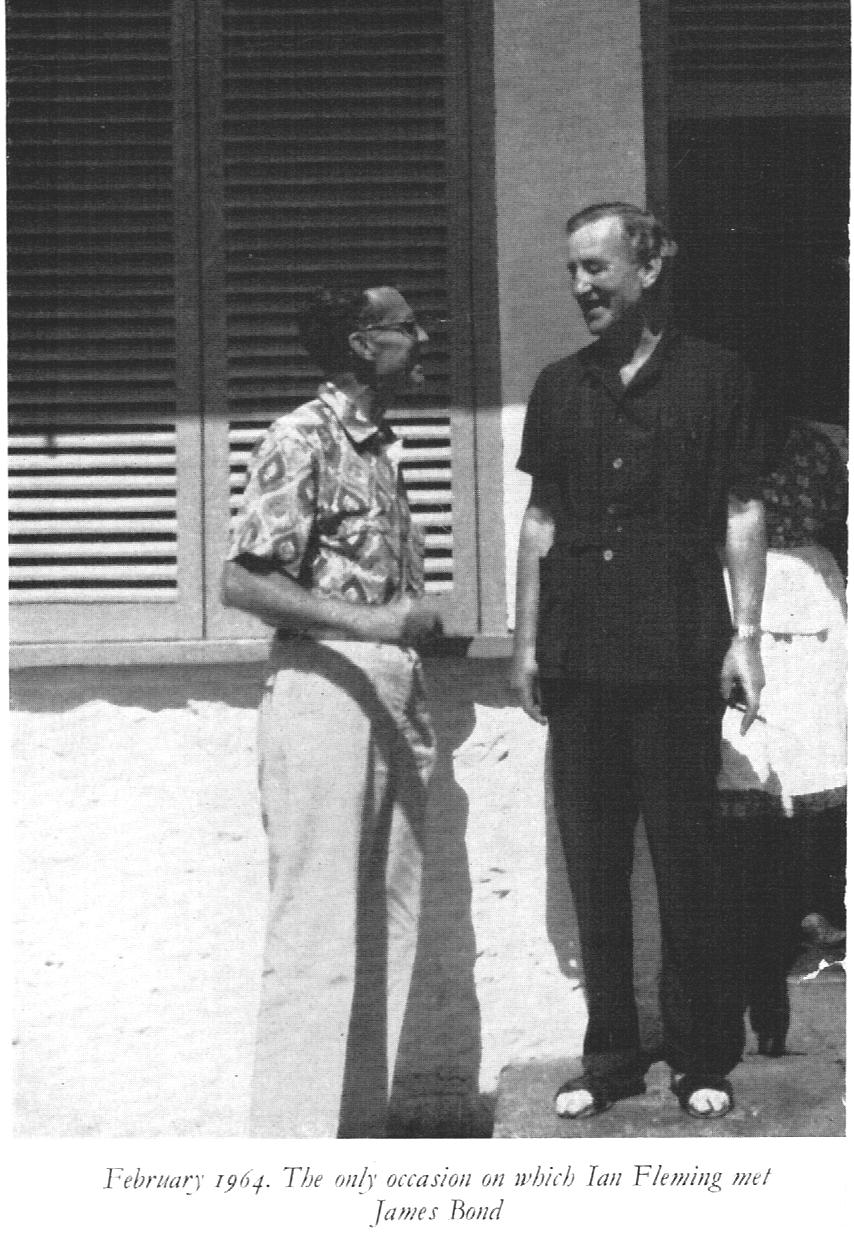
While Ian Fleming himself never liked to be compared to the fictitious secret agent that he wrote to life during his twilight years, Mr. Fleming and James Bond were kindred spirits through and through. Fleming, much like 007, was wealthy, well-educated, and even served as a British intelligence officer during WWII. It was during this stint in the service that Fleming first visited Jamaica, the island destination from which he would pen all fourteen of his James Bond novels. Having fallen in love with the tropical atmosphere, which was unlike anything he had encountered during his English upbringing, Fleming returned to Jamaica at the conclusion of the war and purchased a plot of waterfront property on northern coast of the island. Dubbing it “Goldeneye,” a name borrowed from a covert plan he had developed during the war, Fleming constructed a modest house overlooking the Caribbean where he would spend each winter for the following decades.

Fleming-at-home

It was also around this time that Fleming began expressing to his friends that he wanted to write a spy novel. Six years after purchasing Goldeneye, Fleming sat down at his typewriter and fulfilled this goal by writing Casino Royale, his first Bond novel, in two months flat. For the rest of his life Fleming would return to Goldeneye during the first three months of every year to type up a new novel, returning to England each Spring with a completed manuscript.

The Jamaican setting might have helped stimulate Fleming’s creativity, but it did little to improve his health. Afternoons bled into evenings as Fleming guzzled pink gins while polluting the crisp Jamaican air with the fumes of his ever-present cigarette. It was a diet that the ageless Mr. Bond could maintain, but Fleming simply lived too hard as his vices drove him toward a fatal heart attack when he was just fifty-six years old.

IanFleming3

Though the final chapter of Fleming’s life had been written, this fortunately did not mark the end of Goldeneye. Twelve years after Fleming met his untimely demise his estate was purchased by none other than Bob Marley, who swiftly resold Goldeneye to Chris Blackwell, the founder of Island Records. Goldeneye held some sentimental value for Blackwell whose mother Blanche had a long-term affair with Fleming (oh yeah, did we forget to mention that Fleming also shared Bond’s insatiable appetite for female companionship?) and is considered by many to be the love of his life and the inspiration for Pussy Galore. Blackwell still owns the property today, although it has now been converted into the Goldeneye Hotel and Resort, so you too can now live like James Bond. Or at least the man behind Mr. Bond.

fleming-villa-aerial-l.685x443

fleming_villa_ramsey_bond

IanFleming5

25 Apr 00:47

Does Your Favorite Team Suck At Keeping An Efficient Payroll?

by Samer Kalaf

Does Your Favorite Team Suck At Keeping An Efficient Payroll?

Businessweek put together a fun ranking of how all 122 franchises in the four major American professional sports leagues burn their money on player payroll. You might be shocked to find out that most successful teams are intelligent with their spending. The top nine of 10 franchises have been to their league's respective championship game at least once within the last five seasons.

Read more...


25 Apr 00:46

Crazy (and Dangerous) Railroads

by Avi Abrams
"QUANTUM SHOT" #870
Link - article by Avi Abrams


Landslide on a Harrowing (though Scenic) Railroad

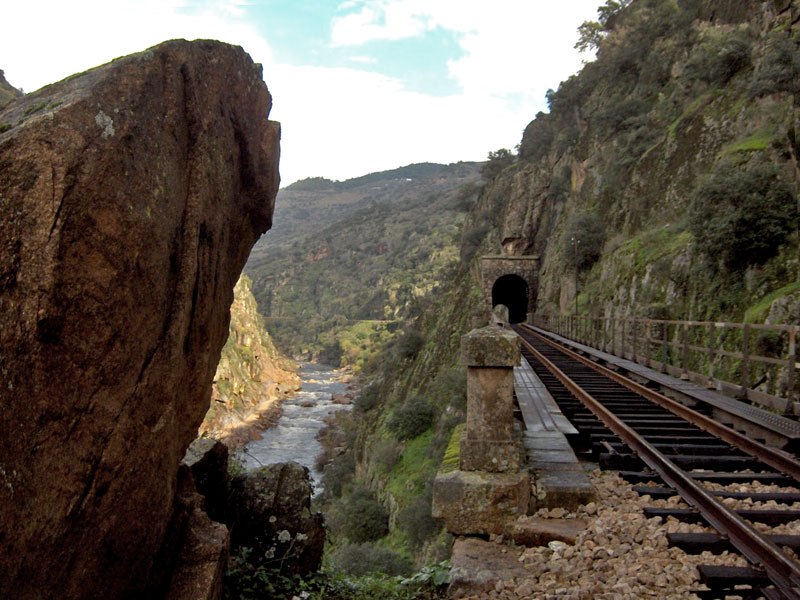
Being a part of our popular "Dangerous Roads" series, this quick update will show you the harrowing Tua rail line (a metre gauge railway) in Northern Portugal. Operating since 1887 and closed in 2008, this line has a rich and somewhat frightening history.


(images credit: Ernst Schade, Aventar)


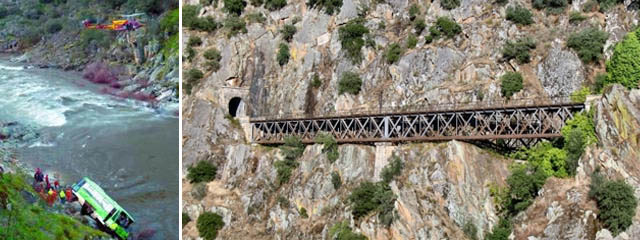
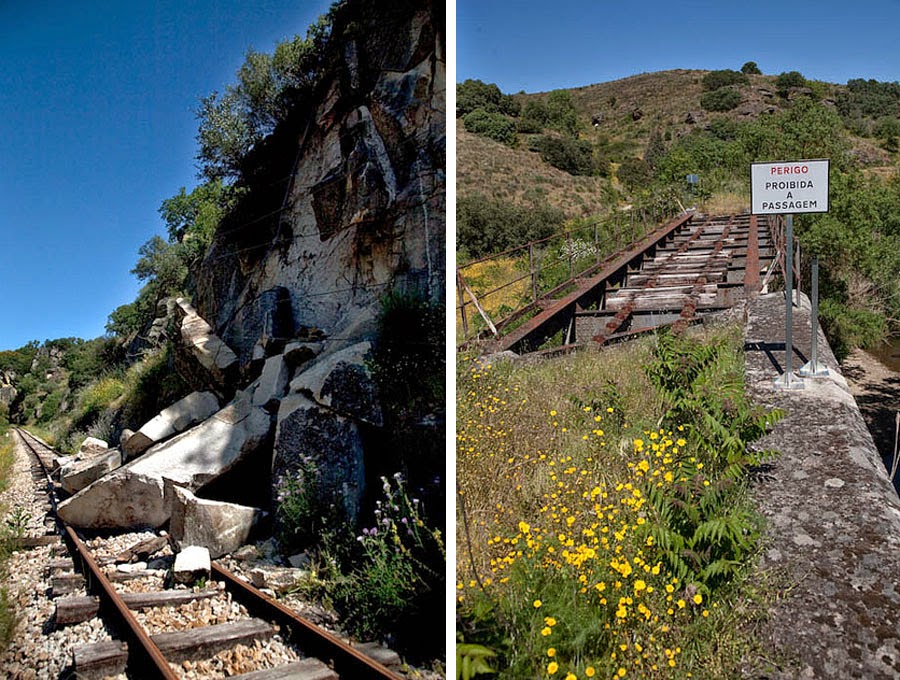
For many years this Portuguese railroad was known for an extraordinary large number of derailments and train accidents. It came to a point when some railroad officials even started to suspect terrorism. And then, one day the ground gave way completely, resulting in a significant landslide - the road has been closed since 2008, with parts of it now serving as a hiking trail:


(images via Pedro Miguel Ribeiro Martins)

Here is a pretty good gallery of Linha do Tua railroad on Flickr (with some abandoned stretches and a pretty creepy tunnel). Right image below shows the abandoned Mirandela-Braganca railroad near Vilar de Ledra:


(image credit: Ernst Schade)


Interestingly, "though actual train services have been withdrawn, it is still possible travel as a passenger with a CP ticket using the replacement road service." (info). Check out this wonderfully atmospheric "Tunel das Fragas Mas", full of "Forgotten Realms" and epic fantasy overtones:


(image credit: Duarte Belo)


Another dangerous railroad and "Devil's Bridge" in Siberia

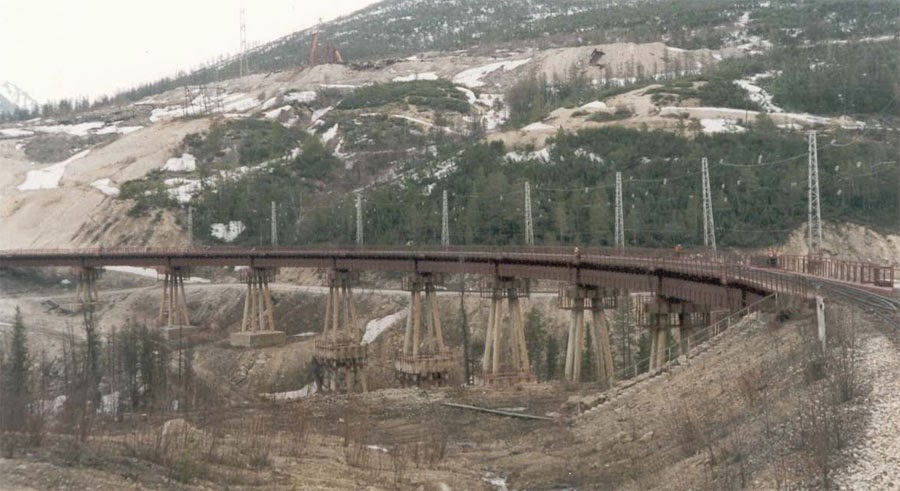
This part of the legendary BAM Siberian railroad goes over the Severo-Muiski pass - and includes one of the most dangerous bridges in existence (even nicknamed the "Devil's Bridge" by Russian railroad drivers and engineers) due to its extreme curve, a steep incline immediately preceding it, and the flimsy support columns:


(images via)

Article by Avi Abrams, Dark Roasted Blend.


CONTINUE TO THE "MOST DANGEROUS ROADS" SERIES! ->


24 Apr 23:56

Multitools are ounce for ounce the most useful thing you can...

by peasantstatus


Multitools are ounce for ounce the most useful thing you can carry, albeit at somewhat of a compromise. They may never be the best tool for the job, but they’re rarely the wrong one. Recently, the multitool market, once justifiably dominated by Leatherman and Swiss Army Knife tools, has seen much greater diversity with the rise in popularity of one-piece multitools—ultra-compact pieces of metal designed to hang on your keychain with a number of functionalities. In the third installment of Carry Smarter, we list our top picks from both classic multitools and the new wave of one-piece multitools.


The one-piece multitool trend has not gone unnoticed by the big manufacturers—both Leatherman and Gerber, among others, now sell one-piece tools. Of all the mass-market one-piece tools out there, the Shard stands a cut above the rest. Its simple, functional design features a swift and easy-to-use bottle opener, a decent pry tip, and most notably, a unique 3D Philips screwdriver on its end. Its black coating hardly holds up to everyday wear and tear, but the premature patina is forgivable given the Shard’s price and performance.

BUY NOW ($8)


This gem is one of our favorites – we’ve mentioned in another post how much we love it. Few tools are as classy, useful, affordable, and well-made as the Cadet. Victorinox swapped its iconic bright-red cellidor scales in favor of a ribbed aluminum material they call Alox—making the tool not just visually appealing, but also more durable and much thinner. The Cadet’s tool implements are uniformly excellent as expected in a Victorinox knife. Unfortunately, you won’t find scissors or pliers on the Cadet, as it foregoes these implements to achieve a great balance of useful tools and slimness. The Cadet is often found riding shotgun to much more expensive custom knives in a given carry, and understandably so—it’s a real worker that makes any EDC better, regardless of your budget.

BUY NOW ($26)


Released just less than two months ago, the ClipiTool is a strong newcomer to the multitool market. It’s a phenomenal tool—compact, inexpensive, and very easy to use. Being a Spyderco design, it unsurprisingly has wonderful ergonomics with a one-hand opening blade, a pocket clip, and an in-hand feel unmatched by any other multitool available. Its blade is also impressively useful, thanks to its full flat grind. The ClipiTool line offers three variants: blade + scissors, blade + saw, and blade + driver/opener. We prefer the driver/bottle opener configuration best, as it provides more distinct functions instead of merely different methods of cutting.

BUY NOW ($26)


Of the myriad of options from Leatherman and SOG for general purpose, medium-duty work, none are better than the Skeletool CX. An inconvenient commonality of multitools is that they’re heavy, bulky, and generally lacking a strong knife implement. The Skeletool CX avoids all of these missteps with its excellent knife, robust drivers, and comfortable design that feels great in-hand and rides lightly in the pocket. Perhaps its only minor shortcomings are that its pliers are stubby and aren’t spring loaded. Nonetheless, the Skeletool represents a huge leap forward in design from Leatherman. The CX is the version to get for its better blade steel alone, as its carbon fiber doesn’t significantly reduce weight. Overall, its great medium-duty tools and fantastic knife implement make it a viable replacement to a dedicated pocket knife in your kit.

BUY NOW ($72)


If the Skeletool doesn’t have enough tools to get the job done, you have a few options—the Victorinox Spirit or Swiss Tool, the Wave, a few SOGs, and the Charge. Natural selection in the marketplace has shown the Wave reigns supreme. Time and time again, companies release tools designed to best the Wave with little success. Even Leatherman’s own feature-packed Charge, meant to improve upon the Wave, falls short. The Wave’s success lies in its compliment of tools—it has everything you could reasonably need and nothing you don’t. Furthermore, its blades can be easily accessed using one hand, without opening the tool. Its pointed pliers are decent, but we feel their lack of a spring-loading mechanism holds the Wave back from truly being heavy-duty perfection.

BUY NOW ($71)


Carabiner-based multitools seem so promising in theory—always hanging around, doing work even when they’re not being used—but they are often disappointing in practice. Although a few carabiners deviate from this trend, none are as awesome as the Carabiner V.3. While it features only a minimum selection of tools, each one is extremely well-executed. An amazing one-piece design outfitted in premium materials, hand-made in small batchces by master craftsman Jens Anso, makes the V.3 easily worth its steep price.

BUY NOW ($125)


Once legendary, Gerber’s quality has declined significantly over the past decade. Compared to the competition, recent Gerber products have suffered from dreadful fit and finish causing multiple major recalls, and exorbitant prices for subpar materials. The Dime, however, is a glimmer of hope for a turnaround to Gerber’s former glory. With its more complete tool complement, the Gerber Dime outclasses the popular Leatherman Squirt as the new reigning champ of the keychain tool market. The Dime was the first keychain tool to feature a useful clam-shell cutter for stubborn retail packaging, setting an example for other keychain tools to follow suit. Its fit and finish varies wildly, but for the price, a good copy of the Dime is a steal.

BUY NOW ($17)


In this Internet Age, where a mill and a blog can give rise to a new tool brand, the market has seen a proliferation of one-piece multitools. Peter Atwood is the most famous and his tools are the most sought-after, but the Chopper from TT PockeTTools matches, if not bests the functionality of Atwood’s finest designs. The Chopper is a perfect one-piece multitool—compact, with a great bottle opener and a handy assortment of other implements. The snag edge, just under the pry, is perhaps the best surprise here—enough to tear open a package but not so sharp as to cause concern when stuffed in your pocket. Compared to Atwood’s tools, the Chopper is fairly affordable and reasonably available to purchase (the newest batch will restock in May).

LEARN MORE

24 Apr 15:59

Tested: Blackmagic Cinema Camera

blackmagic-cinema-camera-gear-patrol-lead

Fitting right between the Indie filmmaker's DSLR and Hollywood studio's Arri Alexa, the Blackmagic Cinema Camera ($2,000), with its 13 stops of dynamic range and 2.5K sensor, makes filmmakers jump for joy. We took it on a test drive.

...

Read More »
24 Apr 13:41

Plastic Dice in Bulk

by mark

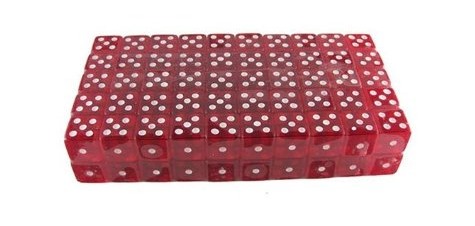
I carry 3 red dice in my back pocket so that I can play a game called Cee-lo with people that I meet. Like most betting games, Cee-lo has a rough reputation. But played among friends, not betting for money, it can be rather wholesome.

I really like being able to play a simple dice game with people for a few reasons:

– it’s a really fun game!
– I’ve successfully played it with kindergartners and every age group above,
– I’ve gotten mixed age groups to have a GREAT time playing,
– It never runs out of batteries or needs to be upgraded,
– it’s very portable,
– it gets people to talk in real time,
– I don’t have to hand an expensive device to other people or count on them having one, or having one compatible to mine.

I’ve also found that the game itself is pretty simple, but with the betting aspect things get really interesting. And the world is full of trinkets to bet with. Collect a bunch of stones, or sugar packets, or tear up a piece of paper into bits that are all roughly the same size, or anything you can get a reasonable number of and you’re in business.

That said, my personal favorite thing to bet with is the little scraps that people have in their pockets: twist ties, tooth picks, vitamin pills, movie stubs. It is amazing to see how people will value these little bits of nothing while they are playing, but once the game is over, it all goes back to being little bits of trash. (I also like to see what people do to get that one important item back, that they really shouldn’t have played in the game…)

One thing about dice games: everyone plays them different. To paraphrase the Cee-lo advice U-God of Wu Tang in this NSFW (language) video: state the rules and save some fools. Better to spend a bit of time outlining the rules at the beginning then to get into any sort of fight later. (And not a bad rule in life in general.)

So, here is how I play Cee-lo:

Cee-lo – 2 or more players – 3 dice

Determine who is going to be playing and who is going to be the first player.

If betting, all players put in their bet.

The first player rolls all three dice until they get a recognized combination, or are otherwise disqualified

The combinations are, ranked from best to worst:

4-5-6
The highest possible roll. Instant win of the round for the player who rolled it. They take the entire pot, and the next round begins. This skips the turns of anyone who has not gone.

“Trips”
Rolling three of the same number is known as “trips”. Higher trips beat lower trips, so 4-4-4 is better than 3-3-3.

“Spare and a Pair”
Rolling a pair, and another number, establishes the singleton as a “point.” A higher point beats a lower point, so 1-1-3 is better than 6-6-2.

1-2-3
Automatic loss. Play forfeits turn, but the game continues.

Any other roll is a meaningless combination and must be rerolled until one of the above combinations occurs. It is also an automatic loss if a player rolls the dice 5 times without getting a meaningful combination.

If either of the dice roll off the playing surface, it is also an automatic loss for the player.

Play then proceeds around to other players, going clockwise.

The player who rolls the best combination wins. In cases of a tie for the best combination, there is a a shoot-out: the players who tied will play another round of the game until there is a single winner.

The winner gets to stat the next round.

And that is all there is to it! I also like it the way the game is explained in this video.

There are PLENTY of other games you can play with dice. But, Cee-lo one my favorite!

I usually buy dice by the 100, so after I teach people, I can give them their own set.

-- Mark Krawczuk

[This is a Cool Tools Favorite from 2014]

100 Red Dice

Available from Amazon

23 Apr 19:04

Another sign that central planning works: condom shortage in Cuba

by Simon Black
shutterstock 104868242 Another sign that central planning works: condom shortage in Cuba

April 21, 2014
Sovereign Valley Farm, Chile

Having traveled to well over 100 countries, I have seen some pretty shocking signs of poverty around the world.

In parts of Asia, it’s not uncommon for parents in poor villages to sell their children for bags of rice… or for children to be stolen outright and sold as orphans to unsuspecting foreigners.

In Africa, I’ve seen people who are so destitute they intentionally mangle and gash their own bodies just to give themselves good cause to shock foreign tourists into donations.

But I’d have to rank poverty in Cuba as the most extreme.

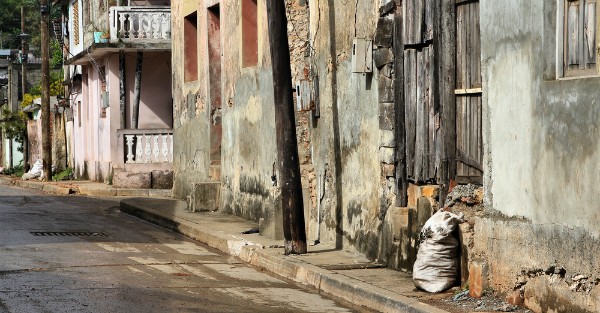
Going to Cuba is like going back in time. The country lacks basic products and services, many of which we consider staples in modern life.

Most roads and buildings are in horrendous condition. And the average person in the country has to make do with just a few dollars a month.

All of this stems from a system of central planning in which government essentially owns and controls… everything. Businesses. Property. Medical services. Anything larger than a bicycle.

Teams of bureaucrats lord over the Cuban economy trying to manipulate and control every possible variable. They dole out housing allowances. They set manufacturing quotas. They control prices of goods and services.

Nevermind that any high school economics student understands why price controls don’t work… and typically lead to shortages.

That’s precisely what’s happening right now.

Cuba’s state-run condom distributor has been centrally planning safe sex for years. And, surprise, surprise, they’re not doing a very good job of it.

Condoms are now at critically low levels in Cuba. And the government’s solution is to sell expired condoms from two years ago. It’s genius.

Like the toilet paper shortage in Venezuela, the infamous electrical blackouts in Argentina, or those mythical stories of Soviet boot factories, it’s clear that central planning simply does not work. Ever.

Even in a single industry as innocuous as toilet paper or condoms, there are simply too many variables in the equation.

Taking that a step further and presuming that a government committee can centrally plan an entire economy or financial system is just ludicrous. But it doesn’t stop people from trying.

John Maynard Keynes is one of the most famous economists in history; decades ago he wrote THE economic playbook still used by governments and central banks around the world today.

His writings include such pearls of wisdom as:

“earthquakes, even wars… serve to increase wealth. . . ”

and my favorite:

“Can a country spend its way into recovery? Yes.”

Keynes was a staunch advocate of ‘state-run capitalism’, an oxymoron rivaled only by “almost pregnant” and “fight for peace”.

Keynes believed that we little people aren’t competent enough to arrange our own finances, and “the duty of ordering the current volume of investment cannot safely be left in private hands”.

He was also a staunch advocate of modern central banking– the concept of awarding a tiny unelected banking elite with total control of the money supply.

He saw it perfectly fine to have a group of men sitting in a room making monetary decisions that would literally impact the entire world… so long as it was the right men.

As he wrote, “State-run capitalism must be run by the right people.” Precisely. And everyone else is just supposed to trust them to be good guys.

Cuba may be centrally planning its condom industry. But the United States is centrally planning the entire global monetary system.

Cuba may be selling expired condoms… but the United States is selling expired credibility.

And just as in Cuba, they are creating bubbles, panics, shocks, crises, and gargantuan inefficiencies.

Like Cuba, the cracks are showing and the system is decaying rapidly. Major governments and central banks are now insolvent, particularly on a mark-to-market basis.

History shows that central planning has always had a finite shelf life. Do you really want all of your assets, savings, and income invested in this system as it collapses?

23 Apr 18:05

BRIT JETS CHASE OFF RUSSIAN SPY PLANES...

23 Apr 18:05

Dutch Scramble Jets After Bombers Approach...

23 Apr 18:01

'Why my daughter doesn't recycle': an economics professor's letter to his child's teacher

A US economics professor has published the letter he wrote to his daughter's schoolteacher explaining why he doesn't want his girl indoctrinated in the green religion. Steven Landsburg, a professor at Rochester, NY, included it as part of a longer essay in which he calls environmentalism a "coercive ideology" targeted specifically at children. (H/T Bishop Hill)

His stance - such as his abhorrence of recycling: "We do not recycle. We teach our daughter not to recycle. We teach her that people who try to convince her to recycle, or who try to force her to recycle, are intruding on her rights." - may seem extreme, but his economic arguments are sound.

After my daughter progressed from preschool to kindergarten her teachers taught her to conserve resources by rinsing out her paper cup instead of discarding it. I explained to her that time is also a valuable resource and it might be worth sacrificing some cups to save time...

Dear Rebecca:

When we lived in Colorado, Cayley was the only Jewish child in her class. There were also a few Moslems. Occasionally, and especially around Christmas time, the teachers forgot about this diversity and made remarks that were appropriate only for the Christian children. These remarks came rarely, and were easily counteracted at home with explanations that different people believe different things, so we chose not to say anything at first. We changed our minds when we overheard a teacher telling a group of children that if Santa didn't come to your house, it meant you were a very bad child; this was within earshot of an Islamic child who certainly was not going to get a visit from Santa. At that point, we decided to share our concerns with the teachers. They were genuinely apologetic and there were no more incidents. I have no doubt that the teachers were good and honest people who had no intent to indoctrinate, only a certain naïveté derived from a provincial upbringing.

Perhaps that same sort of honest naïveté is what underlies the problems we've had at the JCC this year. Just as Cayley's teachers in Colorado were honestly oblivious to the fact that there is diversity in religion, it may be that her teachers at the JCC have been honestly oblivious that there is diversity in politics.

Let me then make that diversity clear. We are not environmentalists. We ardently oppose environmentalists. We consider environmentalism a form of mass hysteria akin to Islamic fundamentalism or the War on Drugs. We do not recycle. We teach our daughter not to recycle. We teach her that people who try to convince her to recycle, or who try to force her to recycle, are intruding on her rights.

The preceding paragraph is intended to serve the same purpose as announcing to Cayley's Colorado teachers that we are not Christians. Some of them had never been aware of knowing anybody who was not a Christian, but they adjusted pretty quickly.

Once the Colorado teachers understood that we and a few other families did not subscribe to the beliefs that they were propagating, they instantly apologized and stopped. Nobody asked me what exactly it was about Christianity that I disagreed with; they simply recognized that they were unlikely to change our views on the subject, and certainly had no business inculcating our child with opposite views.

I contrast this with your reaction when I confronted you at the preschool graduation. You wanted to know my specific disagreements with what you had taught my child to say. I reject your right to ask that question. The entire program of environmentalism is as foreign to us as the doctrine of Christianity. I was not about to engage in detailed theological debate with Cayley's Colorado teachers and they would not have had the audacity to ask me to. I simply asked them to lay off the subject completely, they recognized the legitimacy of the request, and the subject was closed.

I view the current situation as far more serious than what we encountered in Colorado for several reasons. First, in Colorado we were dealing with a few isolated remarks here and there, whereas at the JCC we have been dealing with a systematic attempt to inculcate a doctrine and to quite literally put words in children's mouths. Second, I do not sense on your part any acknowledgment that there may be people in the world who do not share your views. Third, I am frankly a lot more worried about my daughter's becoming an environmentalist than about her becoming a Christian. Fourth, we face no current threat of having Christianity imposed on us by petty tyrants; the same can not be said of environmentalism. My county government never tried to send me a New Testament, but it did send me a recycling bin.

Although I have vowed not to get into a discussion on the issues, let me respond to the one question you seemed to think was very important in our discussion: Do I agree that with privilege comes responsibility? The answer is no. I believe that responsibilities arise when one undertakes them voluntarily. I also believe that in the absence of explicit contracts, people who lecture other people on their "responsibilities" are almost always up to no good. I tell my daughter to be wary of such people — even when they are preschool teachers who have otherwise earned a lot of love.

Sincerely,

Steven Landsburg


23 Apr 13:24

GP & Petrolicious Present: The Collector Series

petrolicious-series-gear-patrol-lead

Vintage is in something fierce. You can blame the cliche and assign Mad Men all you want. But vintage is deeper than that. A stretch of tough times and the "planned obsolescence" of today has refocused our attention to history even more than ever. New doesn't always equate to better and some things really don't work like they used to. The Collector, a new Octane series in partnership with the classic car experts at Petrolicious, acknowledges the automotive gems of yesteryear that have gone overlooked for one reason or another. As a series, the selections we'll share stand as both a group of savvy buys we'd base our personal car collection around and as a source of inspiration for life in the wake of ownership.

Over the next eight weeks, we'll be publishing a series of companion stories each Monday developed to cover the two sides of the collector's coin. On Petrolicious, you'll see pristine examples of each sublime vehicle and hear from their owners. Here at GP, we'll share a mix of new and classic items that draw inspiration from these undervalued icons, allowing you to channel each vehicle's influence regardless of what's sitting in your garage.

Head to Petrolicious to read The Collector: Part One, 1970 Datsun 240Z then peruse the kit it inspired.

...

Read More »
23 Apr 13:24

For Tissot at MotoGP, Milliseconds Create Order from Chaos

Tissot-Order-From-Chaos-Gear-Patrol-Lead

In racing, timing is judge, jury and executioner. Tissot, Official Timekeepers for all MotoGP races since 2001, are burdened with the proof of milliseconds. In this world of speed, their instrumentation deciphers the metrics of order within the chaos of twenty-three riders piloting 230 horsepower motorcycles at 220 mph. We saw them in action at the Circuit Of The Americas.

...

Read More »
23 Apr 13:11

New Guides for the Southern Gardener

by rreed

Here at the G&G offices, we receive loads of great books. This time of year, the stack is dominated by gardening reads. We stuck our nose in the pages of dozens to select our three favorites, each written with the Southern gardener—or aspiring gardener—in mind.

Deep-Rooted Wisdom: Skills and Stories from Generations of Gardeners
by Augustus Jenkins Farmer

Deep Rooted WisdomGrowing up on Beech Island, South Carolina, Augustus “Jenks” Farmer (yes, that’s his real last name) began gardening in the third grade when his parents let him loose on the family farm. Today, he continues to embrace an old-school approach to gardening—with simple tools and traditional techniques.

In Deep-Rooted Wisdom he shares tips from saving heirloom seeds to building structures of natural materials while weaving in stories and knowledge from his gardening mentors. “We in the South are at a critical juncture,” Farmer says. “The old farmers and their little secrets, their unwritten, unstudied bits of wisdom, are being lost as we urbanize. Younger generations are not well-connected to these people. We need to bridge that gap.”

The Timber Press Guide to Vegetable Gardening in the Southeast
By Ira Wallace

Vegetable GardeningWith monthly planting guides sorted by region as well as tutorials on seed saving, worm bins, and more, this is the ultimate guide to growing veggies in the South. Author Ira Wallace, a central Virginia Master Gardener and co-manager of the Southern Exposure Seed Exchange, takes you from in-house seeding to planting and then harvesting your okra, sweet potatoes, cucumbers, tomatoes, and more. It’ll turn even an apprehensive dirt-digger into an obsessive vegetable gardener, and a successful one at that.


Native Plants of the Southeast: A Comprehensive Guide to the Best 460 Species for the Garden
By Larry Mellichamp

Native Plants of the SoutheastWant to attract hummingbirds? Plant cardinal flower, advises author and University of North Carolina botany professor Larry Mellichamp. Want butterflies? Plant any milkweed, like orange-flowered butterfly-weed or the purple Hardy ageratum. Not only do native plants reflect the South’s natural beauty, they also attract beneficial wildlife and insects and can help make a garden more sustainable. This book breaks it down into individual plant profiles, their hardiness, and what kinds of fauna you can expect to pay a visit.

Shared: 
8
23 Apr 12:33

CONSERVATION GROUP: 'Wise decision'...


CONSERVATION GROUP: 'Wise decision'...


(First column, 3rd story, link)
Related stories:
23 Apr 12:29

Heroic Ospreys Will Not Stop Building Nests on This Traffic Camera

by Tom Scocca on Gawker, shared by Tommy Craggs to Deadspin

Heroic Ospreys Will Not Stop Building Nests on This Traffic Camera

The osprey, Pandion haliaetus, is a bird of character. The ancient poets knew this, and the Maryland Transportation Authority is discovering it the hard way. Last week, a pair of ospreys decided to build their nest on a platform overlooking the approach to the Chesapeake Bay Bridge, where the MDTA keeps a traffic camera.

Read more...


23 Apr 12:26

Map: Over 200 Bars In NYC Worth Drinking At

by Reuben Fischer-Baum on Foodspin, shared by Reuben Fischer-Baum to Deadspin

Map: Over 200 Bars In NYC Worth Drinking At

The designers over at Pop Chart Lab have put together a sharp-looking, albeit somewhat arbitrary map of over 200 "distinguished" New York bars, broken down by category (click here for a larger version). If you have a lot of money and plan on living in the city for a couple years, you should check them all out.

Read more...


23 Apr 04:47

Obama will burn 35,000 gallons of fuel on Earth Day; 375 TONS of carbon dioxide...


Obama will burn 35,000 gallons of fuel on Earth Day; 375 TONS of carbon dioxide...


(Third column, 8th story, link)
Related stories:
22 Apr 17:32

Supersonic Jet Gains Speed by Ditching the Little Windows

by delana
[ Filed under Transportation & in the Mods & Custom category ]

spike aerospace s-512

You know those tiny porthole-type windows that people clamber to sit next to on airplanes? Their very presence can make a long flight seem a bit more bearable, but they add considerable weight and drag to the plane itself. Spike Aerospace is planning to build a supersonic jet that will take passengers from New York to London in under four hours, and a lack of windows is partially to thank for this incredible speed.

s-512 supersonic windowless jet

The standard airplane can fly at around 567 miles per hour. Spike Aerospace‘s S-512, however, will cruise at speeds of 1,060 up to 1,370 miles per hour. Its extreme performance can be attributed to its advanced engine and and body technology – and its lack of windows.

interior supersonic windowless jet

Instead of windows, the S-512 jet will feature curved digital screens running the entire length of the passenger compartment. Cameras on the outside of the plane can give a real-time view of the surroundings, or passengers can choose to watch other pre-recorded scenic views.

The advanced design technology that went into designing the S-512 also makes it incredibly fuel efficient, making the jet an eco-friendlier way to fly. Its speed will make it attractive to businesses that need to shuttle their executives around the globe quickly and often. The S-512 is expected to hit the market sometime in late 2018 with whopping price tag of £48 million – or around $80.6 million US (at the time of publication).


Share on Facebook

[ Filed under Transportation & in the Mods & Custom category ]

[ Gajitz | Archives | Categories | Privacy | TOS ]

22 Apr 15:06

Head Injury During Bar Fight Turns Ordinary Guy into Math Whiz


22 Apr 13:31

The Lowcountry Oyster Roast.

by John Peabody

oysterroast-5

South Carolina’s Lowcountry seems to sit just about six inches above sea level. It’s the flat coastal marshland area that stretches north from the Georgia border. Tall pines, oak trees draped in spanish moss and old plantations mark the landscape. It’s a gorgeous place to find one’s self in the spring.

And it’s then that I try and go every year to see family and take part in a purely southern tradition: the oyster roast.

The oysters that grow in the Lowcountry are long and flat with barely any undulations along the shell, far different from the deep scooped mollusks in the Northwest or even those in New England. They grow in the endless river and creek beds near Bluffton and Hilton Head and the surrounding area, where banks of them are exposed at low tide, waiting to be picked.

oysterroast-6

This particular version of the oyster roast is not a culinary challenge in anyway, though trying to pull it off outside of the South would be impossible and borderline sacrilegious in my mind. The process goes something like this: Make a fire on the ground with the some sappy pine. Put an old piece of corrugated metal on top of the coals. Throw a bushel of oysters on top for a few minutes, covering them with a wet towel to keep the steam in until they start to open up, and eat.

There’s no horseradish. No little forks. No lemon. No Mignonette.

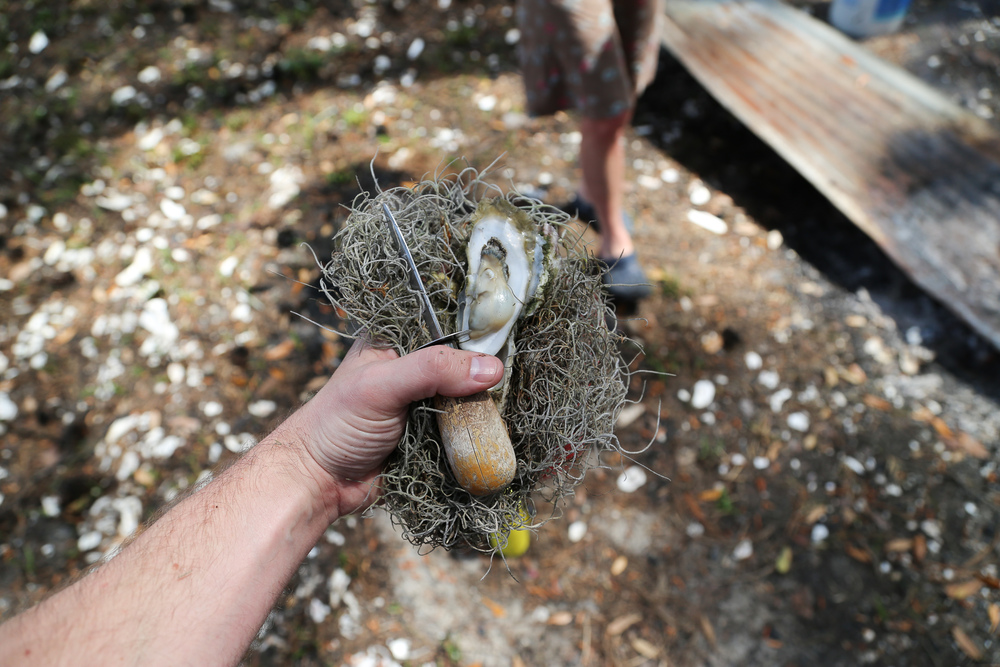
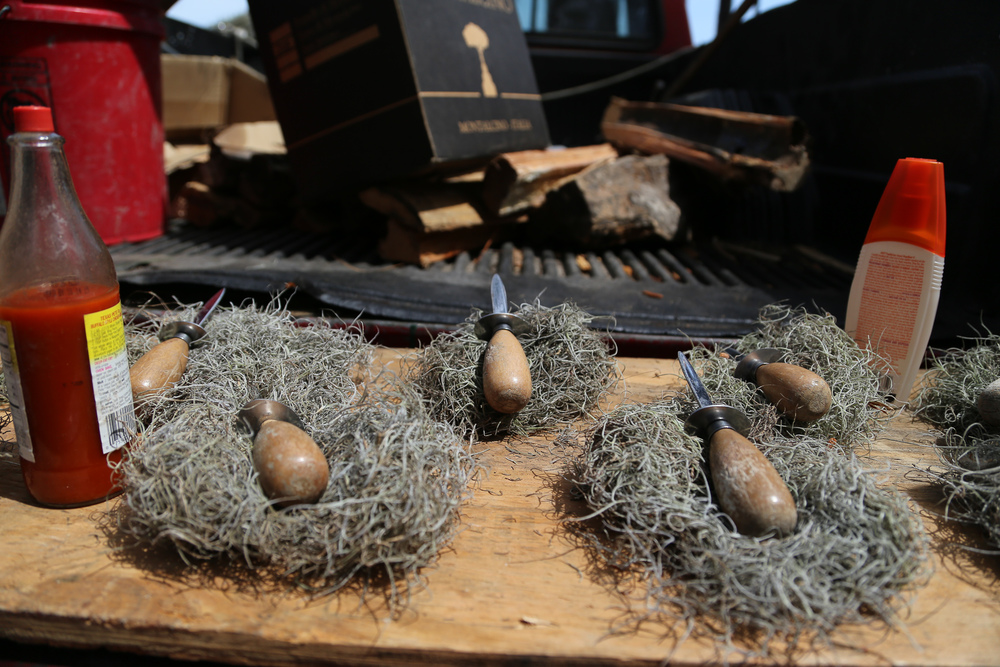
All you need is a handful of spanish moss to pick up the hot oysters off of the metal, a knife to wiggle them out, and a can of domestic to wash down the briny taste of the Lowcountry. —John Peabody

oysterroast-2

oysterroast-4

oysterroast-1

oysterroast-7

21 Apr 23:28

Remote Wildlife Photography From My Basement

by Paul Burwell

A couple of weeks ago it was -30 Celsius (-22 Fahrenheit) and I was intent on photographing a pair of Red-backed Voles that seem to have established themselves in the backyard of my home in Edmonton, Alberta, Canada. Before I got myself a new gadget, I probably would have suited up in my heavy duty Canada Goose parka, some long underwear, snow pants and about four hand warmers and camped out for a morning to get a few shots of these cute little guys.

But now I’m a bit older and maybe even a bit wiser and I do so love my technology. And one of those technological gadgets allows me to get me shots without having to worry about freezing any of my favourite appendages right off. What’s the gadget I’m talking about? It’s called the CamRanger and it allows me to operate my camera anywhere that I’m within WiFi range (~35m indoors and ~100m outdoors).

CamRanger_SetupThe CamRanger itself is a little white plastic box measuring about 3.5” x 2” that you connect to the USB port of your camera via a USB cable. The device itself is powered by a rechargeable lithium battery. Once the CamRanger is plugged into your camera it sets up its own WiFi network. Connecting a device to that WiFi network (like an iPhone, iPad, Android device, Mac or Windows computer) allows you to wirelessly control your camera from that device.

In my case, I used my iPad to connect to the CamRanger attached to my camera. I set the camera up on a tripod with the lens pointing at the holes in the side of a snow bank that the voles were using to access the world outside their lair. Once set up, I could scurry into my own lair which in this case was my home office in our basement.

I activated the Live View feature to keep an eye on what the camera was seeing. I’d been watching these voles for a few days (they set up camp under one of our bird feeders) and I knew that they came out for about an hour each morning just after sunrise. Sure enough, not long after getting everything set up and waiting for my glasses to defrost, the voles started making their appearance.

From my position warmly tucked away in the basement I could consult the live histogram and make adjustments to the exposure (Shutter Speed, Aperture and ISO) to make sure that my exposure was perfect. I turned on a feature in the software app called “Focus Peaking” that allowed me to clearly see what was, and wasn’t in focus and I fine-tuned that focus via controls in the app.

With all that set up, it was just a matter of waiting for the voles to get themselves into a photogenic position and then I’d tap the remote shutter button on the CamRanger app and take a shot. The voles usually spend their time cautiously emerging from their lair, then darting out to find one seed or another, and quickly returning to the shelter of their tunnel entrance to safely eat the seed. If they got a particularly good seed, they’d retreat further within the tunnel, presumably to stash it away.

Northern Red-backed Vole - © Paul Burwell Photography

Northern Red-backed Vole – © Paul Burwell Photography

During these breaks in the action, I used another feature of the CamRanger to download the full resolution images to the iPad so that I could magnify them to check for critical sharpness. There is a bit of lag between what you see on the app’s Live View display and what is happening in the “real world” along with a slight delay between when you press the shutter button on the app and when the signal arrives at the camera to make the photograph. It isn’t long (think milliseconds) but it can be enough that by the time the photo is made the fast little critter isn’t where you thought it should be, and focus is off or the composition isn’t great.

I use my CamRanger a lot and love its ability to remotely initiate photography and video sessions. It also has a built in intervalometer to make time lapse photos and can do advanced bracketing of exposures for HDR type applications. Another favourite CamRanger feature of mine is its ability to provide very precise focus control for macro photography and it can even perform automatic focus stacking to provide enhanced depth-of-field images by running them through some third party software.

Northern Red-backed Vole - © Paul Burwell Photography

Northern Red-backed Vole – © Paul Burwell Photography

A few years ago I’d dreamed of the possibility of having remote operational control of my camera at a distance and now, with the help of the CamRanger, that’s a reality. My toes and fingers are eternally grateful! CamRanger is widely available and sells for about $300 US dollars.

More on wildlife photography here:

The post Remote Wildlife Photography From My Basement by Paul Burwell appeared first on Digital Photography School.

21 Apr 23:20

No Lot Too Challenging: 13 Ingenious Odd-Shaped Houses

by Steph
[ By Steph in Architecture & Houses & Residential. ]

Odd Lots Main

The lot purchased by a homeowner might be seemingly impossible – clinging to a sheer cliff, squeezing into tight spaces, or consisting of an odd geometric shape – but by god, architects will find a solution. Whether by building up from a postage-stamp-sized property, zig-zagging a house between its neighbors or designing a home in the shape of a giant X, architecture firms have found ways to use seemingly undesirable spaces, leading to some very unusual and imaginative residences.

Twisting Zig-Zag House

Odd Lots Zig Zag House 1
Odd Lots Zig Zag House 2

To most people, it wouldn’t seem like there was actually room for a new house in this extremely narrow, oddly-shaped space between several other residences. But in Japan, every square inch counts. Alphaville architects came up with a novel approach: a zig-zagging house that might skim its neighbors by mere inches in some spots, but still manages to feel private inside thanks to very careful placement of windows and courtyards.

X-Shaped Cliffside House

Odd Lots X Shaped House 1
Odd Lots X Shaped House 2

How do you build a house on a sheer cliff that has views on every side, but still feels private, and is virtually invisible from the street? Cadaval & Solá-Morales architects created a two-story, X-shaped residence that clings to the cliff, with the roof functioning as a driveway and terrace. Each side of the home’s edge gets its own sweeping view of Barcelona without facing any of the neighbors. Incisions at the top and bottom of the ‘X’ let in light while maintaining that privacy.

Super-Skinny Cliff-Hugging House

Odd Lots Cliff Hugging Skinny 1
Odd Lots Cliff Hugging Skinny 2

The slightest wedge of a lot on a rocky cliff gave way to this narrow, sloping house by Shuhei Endo. The triangular lot was confined by a Y-shaped intersection and several other residences, and gets as narrow as 5 feet at some points. Tucking the home beside the retaining wall anchors it, and a narrow space between the wall and the home provides a light-filled, private outdoor space with architectural interest.

Oceanfront Cabin on Stilts

Odd Lots Oceanfront Cabin Stilts

The strip of land this oceanfront cabin is built upon is hardly larger than a parking spot. But owner of that land wanted Yasutaka Yoshimura Architects to create a relaxing weekend getaway overlooking Sagami Bay, with views of Mount Fuji in the distance. The result is ‘Window House,’ a slim residence built on steel poles to protect it from storm surges and enable those stunning views. The interior features staggered lofts accessible by stairs and ladders.

Spite House Built on Pie-Shaped Lot

Odd Lots Seattle Spite House

The Seattle Spite House was built on a pie-shaped piece of land adjacent to a larger home, and gets so narrow at one end that it’s hard to open the oven door all the way. The story goes that it was built in 1925 out of spite because the tiny, odd-shaped lot was all that was given to a wife in a contentious divorce, and she was determined to make the most of it. The home sold for nearly $400K in 2013.


Next Page - Click Below to Read More:
No Lot Too Challenging 13 Ingenious Odd Shaped Houses


Want More? Click for Great Related Content on WebUrbanist:

Spite Houses: 12 Structures Built Just to Annoy People

These houses, apartment buildings and commercial structures weren’t built as they are because the owners really loved the view or particularly wanted a ... Click Here to Read More »»


Only in Japan : 13 Odd Houses by Suppose Design Office

Suppose Design Office specializes in bright, spacious-feeling interiors that incorporate courtyards, indoor gardens and huge windows, even on very small lots. Click Here to Read More »»


Slim Living: World’s Thinnest House is Just Four Feet Wide

The world's smallest house is a four-foot-wide guest residence for artists, crammed between two more conventional buildings in Warsaw, Poland. Click Here to Read More »»


Share on Facebook

[ By Steph in Architecture & Houses & Residential. ]

[ WebUrbanist | Archives | Galleries | Privacy | TOS ]


21 Apr 15:02

Tactical Mini-Survival Kit

by harknesslabs