Shared posts

09 Jun 18:50

Chainsaws 101: How to Use a Chainsaw Safely

by A Manly Guest Contributor

chainsaw101

Editor’s note: This is a guest post from Uncle Buzz Surwilo.

So you had a tree service come out to the house and give you an estimate to take down that pine tree that’s shading your wife’s petunias, and the figure that they quoted made you stagger. “Heck,” you thought, “for that much money I can buy a chainsaw and cut that pine down myself. And cut up the wood and sell it to Joe down the street to burn in his wood stove, and actually make money. How hard could it be?”

Hang on there, Paul Bunyan. There’s a good deal about chainsaws you should know before laying waste to the backyard woods.

All tools have some potential to inflict harm. Hammers can mash thumbs and slipped wrenches can inflict skinned knuckles, but chainsaws bring the potential for injury to a whole new level. We are talking about razor sharp (more on that later) metal teeth moving at blinding speed, often just inches from the saw operator’s nice soft flesh. Saws spit out small pieces of wood at high velocity. Branches can be under tremendous tension, and may spring when cut like a rifle shot. An improperly felled tree can, at best, flatten that bed of petunias; at worst, flatten you.

There is skill involved in deftly and safely operating a chainsaw, and a learning curve to become proficient. In fact, I don’t think any experienced saw operators would say that the learning curve ever plateaus. When using a chainsaw, every situation is different, and grasping each of these unique situations builds onto your skill level, as would taking a practical chainsaw operator’s course.

Today we’ll cover the basics of how to operate a chainsaw safely. Tomorrow, because proper maintenance is a key to optimum, injury-free use, we’ll cover how to keep your saw in tip-top condition.

Keep in mind that volumes have been written on chainsaw use, so we’re just scratching the surface here. Plus, it’s somewhat analogous to learning to drive: the written motor vehicle operator’s manual is valuable and necessary, but having hands-on training and the explanations of the driving instructor (or yelling parent) in the passenger seat is far superior. The same holds true for using a chainsaw. This column may be informative, but the way to learn is by doing, preferably with an experienced sawyer showing you the ropes.

With that said, let’s talk about how to use a chainsaw without buzzing off your leg.

Chainsaw Safety Basics

DSC_0012 (2)

Personal protective equipment. Let’s start with the basics: your personal protective equipment or PPE. Any time that you operate a chainsaw you really need to wear eye protection, ear protection, good sturdy boots, long pants, a long sleeve shirt, gloves, and chainsaw chaps. Especially when felling — putting an upright tree on the ground — a hard hat is a great idea. Yeah, it seems like overkill if you are just going to cut up a few limbs that came down in last night’s high winds, and you may hear snickers from the neighbors, but full PPE is a good habit to get into, as nonchalance can be tragic.

I like to use a chainsaw helmet with an attached flip-up, mesh face shield and flip-up ear muffs. I find it very comfortable on my noggin and like being able to just flip the ear muffs up, rather than deal with the little foam hearing protectors that I always lose, never stay in, and don’t work for beans.

Chainsaw chaps are worth their weight in gold. How they work is so: There are multiple layers of Kevlar (yup, the same stuff as bulletproof vests) beneath the nylon outer shell. If the saw chain hits and penetrates the shell, the Kevlar first resists the cutting action, but then the fibers are pulled into the saw’s sprocket, stopping the spinning chain in just a few seconds. Not to be too graphic, but realize how fast a chainsaw can go through wood, then imagine what it could do to a person’s unprotected leg. Like I said, chaps are worth their weight in gold.

Creating a safe environment. Before you begin any cutting, check the environmental safety of the specific situation. Particularly with felling, look up, look down, look around. Is there an escape route for you to take for when the tree falls? Is there a clear path for the tree to fall? If it goes in an unintended direction, what would be the consequence — the doghouse gets it, or the power line? Is the tree weakened by bugs or disease? Is the wind blowing from the direction that you want the tree to fall? In the end, ask yourself if you are comfortable with the sawing task at hand, and don’t be afraid to say “no.” In fact, if you are seriously concerned about the risk, you probably should bite the bullet and call the tree service guy back.

Using the Chainsaw
DSC_0026

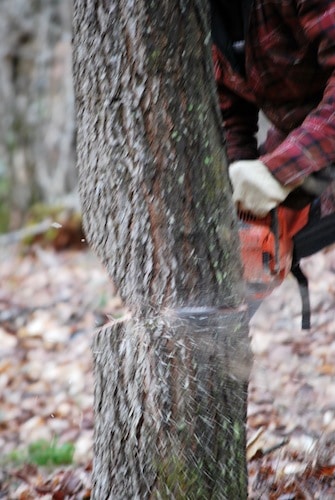
Chainsaw operations are basically divided into three tasks: limbing, bucking, and felling. Limbing is the removal of branches from a downed tree. Bucking is cutting the trunk of the downed tree to length. And felling is cutting an upright tree in a controlled manner so that it falls where expected, and hopefully that’s in a good place! Remember the lingo for conversations around the office water cooler, and you’ll impress your co-workers: Unless you are like a young George Washington with your trusty ax, a tree is never “chopped down,” but “felled,” just as firewood is not chopped, but split. Save chopping for how to prepare onions for your home fries.

For specifics on how to limb, buck, and fell, check out this primer.

Below are safe usage guidelines and techniques to employ regardless of which job you’re tackling:

Before you begin. We’ll discuss maintenance in some detail tomorrow, but for now, before you start the saw, make sure everything is in working order with a quick check of the controls, handles, bar, and chain sharpness and tension. It may seem obvious, but fill both the gas and bar oil reservoirs each time that you use the saw, even if you are only going to cut for a few minutes. It is a good habit to get into to ensure that the saw will never run out of lubricating oil while it’s being used. Saws are designed to run out of a full tank of fuel before running out of a full tank of bar oil. Why? Running out of fuel is no big deal, just fill the tank again and the saw is good to go. But running out of bar oil causes friction and heat enough to seriously damage the saw.

Fill the saw with fuel and oil while the saw is on the ground, not on the ungrounded tailgate of a truck. And be sure that the saw is not hot when fueling. Of course, don’t smoke while fueling…well, just don’t smoke, period.

Starting the saw. There are two methods to safely start a chain saw: on the ground and, yes, between your legs. For both, first make sure that the chain brake is engaged (push the handle forward), that the choke is closed (“on”), and that the start switch is on. My saw has a little primer button that I need to press a few times, but not all saws do.

start on ground

For ground starting, place the saw on the ground, grip the handlebar with your left hand, place your right toe in the handle where the throttle trigger is, and pull the starter rope. After a couple of pulls, the saw should pop but not start. Disengage the choke, and pull the starter rope again. The saw should start right up.

between legs

To start the saw between your legs, place the rear of the saw against your right leg, tilting it towards the right, and sort of squeeze the saw with your left leg. Follow the starting procedure above.

Vroom! The saw started! Tap the throttle trigger to set the saw to an idle, and it should be purring like a kitten.

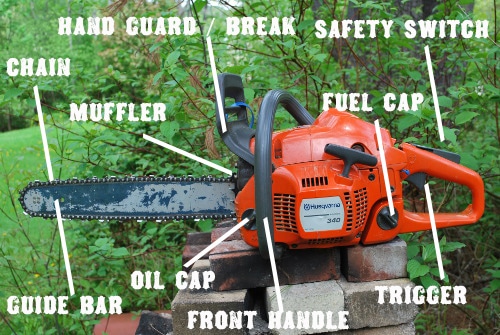
Handling the saw. Some common sense rules apply to how to handle a chainsaw, regardless of what you’re using it for. Maintain good footing, watch for tripping hazards, and keep a good balance by not overreaching with the saw running or getting into some weird body contortion. Keep your left hand firmly around the front handle, including the thumb. (My saw instructor reminded us that we “were operating a saw, not driving a car,” as you tend to rest your thumb on the handle, rather than wrapping it around.)

DSC_0019

Dealing with kickback & pinching. If you dimly remember physics class, you may recall that for every action there is an equal and opposite reaction. Saw kickback is a demonstration of that principle (Or is it a law? Theory? Hypothesis? I forget.), and occurs when the top corner of the bar tip hits some unforgiving object or is pinched. When that happens, the energy of the saw forces the bar up and towards the operator with terrific speed and power — faster than the user can react. The first line of defense against kickback is never to engage the saw with the upper corner of the bar — be aware of the position of the tip at all times. Otherwise, practice good operating techniques: a firm, two-handed grip on the saw; a balanced stance; a sharp, tensioned chain; and being alert to situations when the bar may be pinched by the wood that is being cut through.

“Pinching the bar” is a good segue into the directional pressures present in the limb, log, or standing tree that dictate how the saw operator will approach the cut. These pressures — tension or compression — are present to varying degrees in every limb, log, or tree. Tension is when the force present causes the wood fibers to be stretched apart, and the kerf — the groove in the wood made by the saw — will tend to widen as the cut deepens. Compression is the opposite: the pressure on the log or tree is pushing the fibers together which, in turn, will cause the kerf to narrow as the cut deepens, and if the operator is not alert, pinch the bar and violently stop the chain’s spinning. The best advice that I can give is to take a moment before cutting to size up the situation. Think, “This log is suspended between two high points of ground; where is the bind, and where should I cut?” Or, “This limb is really bent by the adjacent tree and under great tension. If I cut it, will it spring back towards me?” Often an operator can detect a slight opening or closing of the kerf as the cut deepens. The kerf opening means full speed ahead, a kerf beginning to close means pull the saw out and cut from the other side, if possible.

Tomorrow we will turn to the subject of maintenance.

______________________
Buzz Surwilo has been cutting his own firewood for years, is a Wildland Firefighter Type 2 (FFT2), recently completed training for Sawyer B certification, and still has all his body parts intact.

Photographs by Deborah Johnson-Surwilo
09 Jun 18:50

Chainsaws 101: How to Maintain and Sharpen a Chainsaw

by A Manly Guest Contributor

chainsaw101

Editor’s note: This is a guest post from Uncle Buzz Surwilo. 

Yesterday we discussed how to use a chainsaw safely.

With that under your belt and a brand new saw sitting in your garage, you’re probably raring to go and want to get right into felling some trees. Why put the brakes on the fun and learn about chainsaw maintenance? Borr-ring.

Well, for one, you’ll want a little familiarity with the saw before you start it the first time and, for two, good maintenance practices begin when the saw is new. This article will not make you a small engine mechanic, that isn’t the intent, and heaven knows that I’m not. But, it will keep your chainsaw happy and healthy for years to come.

There is no point is spewing out what is in the owner’s manual, or some near version of it, because of course you’ve read the manual from cover to cover — including the French and Spanish versions, too, because you are a Renaissance chainsaw operator. There will be a ton of good information in there specific to your saw, and if the manual is similar to mine, included will be postage stamp-sized diagrams of really complicated functions, visible only under a microscope. Anyway, let me add a few tips:

chainsaw2

Gas and oil. Most gasoline these days contains ethanol, and ethanol is the bane of small engines. Over time, and I’m referring to weeks, the ethanol in the gas absorbs moisture from the atmosphere, and this ethanol-water mix separates and sinks. The ethanol-water mix corrodes metal and gums up small engine carburetors. If you can find all-petroleum-based gasoline, use it in the saw. There are a handful of stations in my area that sell non-ethanol gas, always premium, which is even better. If you use gas which contains ethanol, add a stabilizing additive; there are a number of brands on the market. But most important is to only use fresh gas, so buy it in small quantities, no more than you’ll use in a month if you can. I keep a fresh, unmixed 5-gallon jerrycan of gas, which I then use to fill smaller mixed gas and oil cans for the lawn mower, trimmer, and chainsaw as they all have different gas-to-oil ratios. If I haven’t used the 5 gallons up in a month, I dump the remainder in my car’s gas tank.

Buy good quality bar and chain oil and 2-cycle oil. You have just spent some serious money on a saw, which you would probably like to keep for a while, so don’t cheap out with bargain brand oil. You’ll be quick to realize that quality bar oil is more viscous, lasts longer between fillings, and gives better lubrication.

Finally, as discussed yesterday, a good habit to get into is to fill both the gas and bar oil reservoirs each time that you use the saw, even if you are only going to cut for a few minutes. This ensures that the saw will never run out of lubricating oil while it’s being used — a snafu that creates enough friction and heat to cause serious damage.

Regular upkeep. Basic maintenance should be performed each time that a saw is used, and by that I mean used for a day. Again, the saw’s manual will contain all of this information, and specific to that saw, so when in doubt, pull it out. But general daily tasks include inspecting the bar for wear, removing and cleaning the air filter (close the choke so crap doesn’t get in the carburetor), checking the muffler and spark arrester (the little screen over the muffler), doing a black/gray check (all of the safety features on a saw are either black or gray), and just a general sweep of the saw to make sure that everything is tight and right. Also, a saw bar’s chain groove should be cleaned of debris, and the bar should be flipped over, too, after a day’s use, so that it wears evenly. Once the chain is back on the saw it needs to be tightened. A properly tensioned saw will have no visible slack to the chain, and should give about an eighth of an inch when you stretch it between thumb and forefinger, then snap back with a satisfying thwack.

There are weekly and monthly maintenance tasks, too, but we can get bogged down on the subject, and there are plenty of references that a saw owner can turn to, including what…his owner’s manual!

How to Sharpen a Chainsaw

I did want to explain saw chain sharpening, because my sense is that the casual saw user finds this daunting, and at the same time, underestimates its importance. I know people who will just stop using a dull saw, or will go out and buy a new chain every time the old one becomes dull. That’s $20 wasted! A sharp saw is a pleasure to use; much more effectual, safer, and less tiring. Consider trying to carve a roast beef with a butter knife, then picking up a carving knife to do the job. Ahh, what was I thinking?

A saw chain has cutters and rakers. The cutter is the part that cuts – duh! – then severs the wood fibers, and has to be sharp to be effective. The raker controls the depth of the cut, and must be filed down as the cutters wear over time.

DSC02519

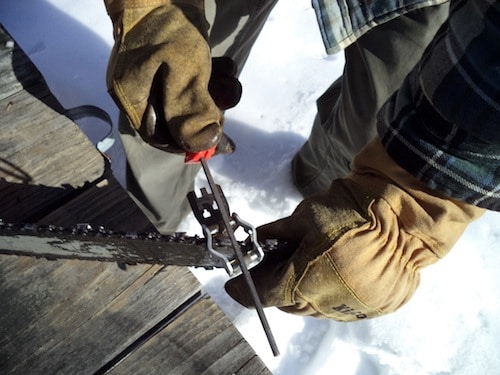
Here are two file guides that are simple and cheap. The first is a file holder that rests on top of the cutters so that the round file itself is positioned on the cutter correctly (pictured above). What you, Mr. Filer, need to do is hold the file guide slightly downward (usually 10o, but check the manual or saw chain package) and at the proper angle marked on the file guide and on the cutter itself (usually 25 o or 30o, but, again, check the manual or saw chain package). File from the inside of each cutter to the outside, and file in one direction only, away from you. Each cutter should get 5-10 strokes of the file (for whatever reason, I always count eight) then be checked for sharpness.

DSC02523

The second file jig or roller guide sits on the links of the chain, which hold it at the correct position and angle. The round file is passed over the plastic roller and sharpens the cutter. Sharpen all the cutters on one side of the chain, spinning the chain as you go, then sharpen the other side’s cutters. Some people squat over the saw on the ground; some people clamp the saw in a vice in the workshop; I find that the tailgate of my truck is a comfortable height. Sharpening may seem complicated, or as intricate as mastering the French horn, and that it would take hours, but a credible sharpening job can be done in 10 or 15 minutes. Just remember to check the size of file needed, and the filing angles, for your particular saw chain.

The height of the rakers needs to be slightly less than that of the cutters, and that difference is critical. Too little and the cutters will just ride over the wood without cutting, too much and the saw will become jumpy and erratic. Every three or so cutter sharpenings, the depth of the rakers should be checked with a depth gauge, and filed and rounded off as needed.

____________________________________

Buzz Surwilo has been cutting his own firewood for years, is a Wildland Firefighter Type 2 (FFT2), recently completed training for Sawyer B certification, and still has all his body parts intact.

Photographs by Deborah Johnson-Surwilo

06 Jun 13:49

Modern Farmer’s Guide to Guard Donkeys

by Tyler LeBlanc

Although often portrayed as moody and difficult to work with, donkeys, if trained right, can be loyal and effective farm hands that are naturally inclined to not only herd but also protect sheep and goats from predators such as coyotes and roaming dogs.

Jan Dohner, author of “Livestock Guardians: Using Dogs, Donkeys and Llamas to Protect Your Herd,” and several other articles about guardian donkeys, says these equines make great livestock protectors but are quite different than your standard farm dog.

‘Donkeys can’t handle the same predators as dogs, but they also won’t keep you up all night barking.’

“Donkeys can’t handle the same predators as dogs and they won’t protect your farm against small pests like raccoons or birds, but they also won’t keep you up all night barking,” she says.

Like most guardian animals, it is best to raise donkeys with the herd they’ll be protecting while they are young. Although jennies (female donkeys) or gelded males can be introduced to a herd as grown animals, foals that grow up with their flock will be natural leaders and protectors.

Donkeys are territorial animals and are not necessarily protective of the herd as much as they are protective of their territory and themselves. They do not patrol the pasture but rather feed and socialize with the stock until a threat appears. With their large ears and a wide range of vision, donkeys are alert while grazing yet are less spooky and skittish than horses, making them more likely to stand their ground and confront a threat.

Farm security checks on the newest edition to the herd. Photo courtesy of John Genho.

Dohner says donkeys are instinctually aggressive toward canines, and are capable of dishing out crushing blows with both their front and hind legs as well as using their large teeth to bite raiding intruders. However, they cannot handle multiple canine attackers or larger predators like mountain lions, wild hogs or bears, and will rarely notify the farmer of any problems in the pasture — although their loud braying may indicate potential invasions.

Although not very popular with larger commercial farms, Dohner says donkeys are a good alternative for hobby farms or those who operate their business out of their farm.

“For people who aren’t comfortable with big, aggressive guard dogs, donkeys are a good option, they offer more protection against predators than llamas and are better with visitors or customers than dogs.”

However, not every donkey will make a suitable guardian for your farm. Jacks, or intact male donkeys, are generally too rough with sheep and may harm or even kill livestock. Similarly donkeys with no prior contact with livestock may act aggressively when placed in the same pasture.

Kim Barnes, operations manager at The Donkey Sanctuary of Canada, works with donkeys everyday and cautions that farmers who choose to use donkeys as livestock guardians need to know how to both handle and take proper care of them.

‘Donkeys are loyal, affectionate and great at what they do, but they are not just a piece of equipment.’

“Donkeys are loyal, affectionate and great at what they do, but they are not just a piece of equipment,” she says. “There is no reason they cannot be great guardians, but people thinking about getting a donkey for this reason need to do the research.”

So next time you see a donkey lazily grazing in the sun, remember, that’s no Eeyore moping around the pasture, it could very well be farm security, in which case you better watch out because you do not want to be on the receiving end of a donkey kick.

The post Modern Farmer’s Guide to Guard Donkeys appeared first on Modern Farmer.

04 Jun 18:32

Boat house in Stockholm archipelago, Sweden.  Contributed by...


Boat house in Stockholm archipelago, Sweden

Contributed by David Berry.

04 Jun 15:23

Holy Cow! Harry Caray Diary Reveals Announcer Drank 288 Straight Days in 1972

When most people think of a daily diary they imagine pages filled with tales of boyfriends, birthday parties, school days, and personal milestones. Cubs booth announcer Harry Caray filled his diary with the booze that filled him.

Caray's drinking diaries were discovered among his belongings after he passed away. Sun-Times columnist Neil Steinberg obtained permission to look over some of the eight volumes that Caray had kept during the '70s, '80s, and '90s. The 1972 personal journal documents 288 straight days--from January 17 to November 2--in barrooms. The entries for the last nine days of the year list "vacation," which Caray took in Acapulco. So, it remains a guess, if an educated one, whether he boozed in Mexico or not. But for 354 of the 357 previous days in 1972, Caray visited public houses and tap rooms and taverns in Chicago and on his journeys elsewhere in the United States.

It seems that Caray kept the daily diaries because in those days the "three-martini lunch" was a deductible business expense. So Caray wrote down every bar he visited and every famous person or businessman he drank with.

"I'm a convivial sort of guy. I like to drink and dance," Steinberg recalled that Caray once said in an interview.

Columnist Steinberg took a detailed look at Caray's 1972 diary and found many familiar names of famous players, team owners, coaches, actors, and local Chicago reporters.

Listed in the book were such names as basketball great Wilt Chamberlain, Dodgers pitcher Don Drysdale, Bears running back Gale Sayers, boxer Jack Dempsey, comedian Jack Benny, Clay Felker--founder of New York magazine--Caray's former boss, A's owner Charlie Finley, and a host of Chicago news folks. Even White Sox owner John Allyn, who had a very public spat with the sports announcer, makes an appearance.

Allyn famously fired Harry Caray as the Sox radio announcer in 1975, at which time Caray called him a "stupid man."

"I can't believe any man can own a ballclub and be as dumb as John Allyn," Caray said. "Did he make enough to own it, or did he inherit it? He's a stupid man. This game is much too complicated for a man like John Allyn."

Steinberg's report has an entire listing of some of the people and places Caray chronicled in his drinking diaries. But above all, these books just add to the amazing legend that is Harry Caray. How can anyone have lived to be 84 and have carried on like that decade after decade? But that was Harry and these diaries really drive that home for every Chicago fan.

As to why Harry was always out there day after day, Steinberg quotes Jimmy Rittenberg, owner of one of the Chicago bars that Harry frequented, as saying that Caray "felt the bartender and bar people were his fans. He felt he was responsible. He would stop in 10 joints. He was just a gregarious guy."

That's putting it mildly, but that is also why Harry is one of Chicago's most beloved sports figures. He was an outsized personality in an outsized business in a day when celebrities were celebrated for good reason.

Follow Warner Todd Huston on Twitter @warnerthuston or email the author at igcolonel@hotmail.com


03 Jun 03:08

One Third of 18-34 Year Olds Live With Parents...


One Third of 18-34 Year Olds Live With Parents...


(First column, 5th story, link)
Related stories:
03 Jun 03:06

One in Four Americans on Gov't Food Assistance...


One in Four Americans on Gov't Food Assistance...


(First column, 7th story, link)
Related stories:
02 Jun 16:10

Custom T-Shirts—There’s an App for That

by Dionne Buxton

0528Kempt-Uniqlo-UTme

Phones are crazy. They can help you find a secluded beach, or the right spot for dinner, or a person to bring along to either.

And now your little digital ninja is letting you design your own custom T-shirts, thanks to Uniqlo’s newly launched mobile application, UTme.

Draw, type or upload a photo, add some special effects, and you’re on your way to one-of-a-kind cotton glory…»
 

0528Kempt-Uniqlo-UTme

02 Jun 16:05

Tasting the World’s Oldest Tequila: Lote Fuenteseca

LOTE-FUENTESECA-gear-patrol-lead

For the past 18 years, agave-mogul Enrique Fonseca Cerda has been aging the world's oldest tequila. We headed down to the NoMad, Manhattan, for a taste.

...

Read More »
02 Jun 15:11

Summer Grilling the Cypriot Way

by Anne Noyes Saini & Mark Rinaldi

20140521-zenon-mix-grilled.jpg

Assorted grilled bites. [Photographs: Mark Rinaldi]

When summer temperatures climb well above 100 degrees in Cyprus, the grilling begins.

On this small island in the eastern Mediterranean, cooking moves outside in the warm weather to wood-fired clay ovens and charcoal grills. When Stelios Papageorgiou and his wife Dora grew up in northern Cyprus in the 1960s, summer meals often came from the grill—especially on weekends, when their fathers grilled kebabs (souvla) and meatballs (sheftalia) outdoors.

20140521-zenon-sheftalia-grill.jpg

Sheftalia on the grill.

Those traditions live on in Cyprus today, with halloumi (a brined cheese made with sheep and/or goat's milk), koupepia (stuffed grape leaves), salads, and pickles round out the grilled meal. "In summer everybody makes souvla," Stelios says. "When you go to visit a friend, souvla, koupepia, sheftalia, and halloumi are always on the table."

Stelios, 55, and Dora, 53, are the longtime owners of Zenon Taverna,* a Greek-Cypriot restaurant in Astoria, Queens—a neighborhood that's home to a famously large community of immigrants from the Greek mainland and neighboring islands. There you can get your very own taste of the Cypriot grilling tradition, souvla and all.

* Stelios and his family fled Cyprus following the 1974 Turkish invasion. Listen to how he became a chef in the U.S. in his own words.

20140521-zenon-family.jpg

To see just what goes into these specialties, we spent a morning in the kitchen with the Papageorgious and their daughter Elena to see how it's all done. Working in a New York kitchen has its drawbacks—limited grill space means they have to par-cook some dishes under a broiler and finish them on the grill for char—but their recipes haven't changed much from what they learned years ago.

Both seafood and lamb make appearances in Cypriot grilling, but mostly for special occasions; pork is the country's mainstay meat (though notably not among the north's Muslim-Turkish population).

20140521-zenon-lountza.jpg

Lountza.

Lountza is a Cypriot pork delicacy that's usually prepared in specialty shops, but when the Papageorgious couldn't find any they decided to make their own. First they marinate pork tenderloin in dry red wine, coriander seeds, salt, and pepper for ten days so it takes on a slightly cured ham-like texture. Then they smoke the meat in an oven.

In Cyprus, dense slices of savory lountza are pressed into panino-like sandwiches with salty halloumi, tomato, and cucumber—a popular beach snack. At Zenon Taverna the dish comes deconstructed: lountza and halloumi get browned under a broiler (a time-saving necessity in a busy kitchen with a small grill) and then lightly charred on the grill. They're plated simply with a sprinkling of fresh lemon juice.

20140521-zenon-loukanikos.jpg

Loukaniko.

Loukaniko, a fragrant pork sausage, also starts with a cure. Fattier cuts of pork are marinated with red wine, coriander, salt, pepper, and fragrant schinus seeds (from a Cypriot pepper tree), which the Papageorgious bring back from their annual trips to Cyprus. Then they trim the excess fat, grind the meat, and stuff it into pork intestine casings.

As with the lountza, the loukaniko is first cooked under a broiler and then charred quickly on the grill and cut into bit-size pieces as an appetizer. The coarsely ground sausage is fairly lean, all the better to let the bold flavors of the marinade come through. Loukaniko's flavor varies from home to home—some are all about chunks of leek, others about orange peel—but the Papageorgious' sausage keeps coriander front and center, crushed seeds included.

20140521-zenon-sheftalia-plated.jpg

Sheftalia.

Then there's sheftalia: ground pork, fresh parsley, onion, and breadcrumbs (to absorb some of the fat) mixed into elongated meatballs and wrapped in caul fat. These are grilled all the way through on the grill until the caul fat is well browned and crunchy. They're topped with lemon juice and stuffed into a pita with parsley, tomato, cucumber, onion, and dabs of piccalilli, tahina, or tzatziki.

20140521-zenon-sheftalia-raw.jpg

Raw sheftalia ready for the grill.

Ground pork also makes an appearance in traditional Cypriot koupepia. (In health-conscious America, the Papageorgious have learned to make their stuffed grape leaves with ground chicken, as shown here.) First the ground pork is lightly sautéed with onions. Then comes cooked rice, dried mint, parsley, tomato paste, and lemon juice. The mixture is rolled into grape leaves and boiled for 45 minutes, then served warm, with a spritz of fresh lemon juice.

20140521-zenon-halloumi-grill.jpg

Grilled halloumi.

In Cyprus, small portions of these dishes—called meze—are eaten with salads, olives, pickles, and dips as part of long, leisurely meals. These meals, shared with friends and family, wind on into summer nights, served course by course over five or six hours.

"Meze is one of the most important things in Cyprus," Stelios says. "When we meet the family we have the meze. It's a lot of food. You have to sit there for hours, talking and eating and drinking."

So What Is Cypriot Food?

20140521-zenon-schinus.jpg

Schinus seeds.

Located at the confluence of trade routes connecting Europe, Asia, and Africa, Cyprus has been influenced by centuries of traders and invaders from France, Italy, Greece, Turkey, the Middle East, and Britain.

"All those cultures passed through [Cyprus]," says Elena, 27. "We got the best of the food," Stelios adds. (You can listen to him wax rhapsodic about his country's food here.)

20140521-zenon-koupepia-1.jpg

Filling for stuffed grape leaves.

He's joking, but those diverse influences are apparent in Cypriot cooking, where Middle Eastern and Mediterranean flavors are seamlessly mingled.

Cyprus is closer to Lebanon, Syria, and Turkey than it is to Greece. But Greek-Cypriots, like the Papageorgious, have deep cultural and culinary ties to Greece, dating back to Alexander the Greatís conquests.

20140521-zenon-koupepia-composite.jpg

Rolling the leaves.

Still, food in Cyprus is distinct. While Greek cooks generally favor dill and tomato sauces, Cypriot dishes are lighter and brighter, seasoned with mint, cumin, coriander, thyme, bay leaves, and even curry powder. (The ground spice blend, sourced from an Indian grocery, livens up the Papageorgious' moussaka and several meat sauces at Zenon Taverna.)

Greeks usually grill their meat whole, but Cypriots prefer to chop lamb and pork into smaller pieces (called souvla) and slowly cook them over moderate heat for juicier end results. Curing meat in wine is also a Cypriot specialty. And when it comes to sweets, Cypriots prefer fragrant rose water, while Greeks typically favor honey.

20140521-zenon-koupepia-pot.jpg

Stewing the leaves.

Lemon juice and vinegar also impart sharp, tangy flavors to many Cypriot dishes. Take tzatziki—yogurt blended with shredded cucumber and garlic, a Greek standard. Rather than adding dill (as Greeks sometimes do), the Papageorgious spike theirs with vinegar and mint, giving it a refreshing, acidic bite.

Olives and pickled vegetables are also beloved in Cyprus. Piccalilli, a vinegary, mustardy minced vegetable relish with roots in British India (the Brits also occupied Cyprus during the 19th and 20th centuries), is always on the table with grilled meats, and earthy-sour pickled caper leaves are often tossed in with summer salads.

20140521-zenon-koupepia-plated.jpg

For more intel, be sure to check out the best things we ate in Cyprus.

Anne Noyes Saini and Mark Rinaldi

About the authors: Anne Noyes Saini edits economics books and covers food culture and immigration in NYC. She has contributed to Narratively, The New York Times, and WNYC-FM, and is features editor of Real Cheap Eats. Follow her on Twitter @CitySpoonful.

Mark Rinaldi writes about global cuisine and culture over at his blog, Cooked Earth, where he is cooking and documenting a meal from every country on Earth, alphabetically. He likes hot chilies, cold beer, and death metal.

02 Jun 01:42

I shouldn’t be shocked about this new proposal… but I am

by Simon Black
shutterstock 191404670 I shouldnt be shocked about this new proposal... but I am

May 29, 2014
Santiago, Chile

Prof. Ken Rogoff’s book ‘This Time is Different: Eight Centuries of Financial Folly; is one of the best researched public works on the subject of sovereign debt.

And Rogoff’s conclusions (though hotly contested due to an ‘Excel error’) were that, sensibly, governments which accumulate too much debt get into serious trouble.

Duh. Not exactly a radical idea.

But in an article published yesterday afternoon on the Financial Times website (based on a recently published academic paper), Rogoff did propose a new idea that is radical: ban cash. All of it.

Rogoff begins asking the question: “Has the time come to consider phasing out anonymous paper currency, starting with large-denomination notes?”

He goes on to explain that getting rid of paper currency would provide two critical benefits:

1) It would reduce crime and tax evasion;

2) It would allow central banks to drop interest rates BELOW ZERO.

I was stunned. Though given the status quo thinking we have to put up with today, I really shouldn’t have been.

In fairness, Mr. Rogoff is an academic. It’s his job to dispassionately analyze data and render conclusions, whatever they may be. What’s scary is that some dim-witted politician will likely jump all over this.

People have been deluded into believing that only criminals and tax cheats hold cash in large denominations. And the conclusion is that if we ban cash, criminals will simply quit their craft because they’ll no longer have an officially-sanctioned medium of exchange.

This is total baloney, obviously. Banning cash doesn’t eliminate crime. It just creates a new cottage industry for cash alternatives.

Drug deals can just as easily go down swapping share certificate of Apple. Or title to a new car. Any number of things.

Perhaps the more important point, however, is the notion that eliminating cash frees up central bankers to force interest rates into negative territory.

The contention is that the official data tells us that inflation is tame. Consequently, central banks should be free to expand the money supply and ratchet down interest rates even more.

There’s just one problem: interest rates are basically at zero already.

Technically a central banker could drop interest rates to below zero.

But if they did that, who in his/her right mind would hold their savings at a bank where they would have to PAY THE BANK to make wild bets with their money?

People would just go to physical cash instead.

Solution? Eliminate cash! Then people would be forced to suffer NEGATIVE interest rates… and thus have a HUGE INCENTIVE to spend as much as they can as quickly as they can. Forget about putting something aside for a rainy day.

But hey, at least the stock market would probably rise.

Now, I highly doubt that physical cash is going to be sucked out of the system… tomorrow. But the War on Cash is very real indeed.

As I travel around the world, I’ve seen with my own eyes– CASH has become the #1 hot button item for customs agents everywhere. They even have highly trained cash sniffing dogs now.

It’s becoming more and more obvious that people should divorce themselves from this system and consider holding at least a portion of their savings in something other than fiat currency.

And of all the options out there, it’s hard to beat the convenience and tradition of precious metals.

Even if you’re looking to move large sums of money, it’s possible to buy a rare coin and walk out of the country with a single nickel worth $50,000 in your pocket. More on that another time.

02 Jun 01:22

Man and the Bird

by Diego Orlando

ako4

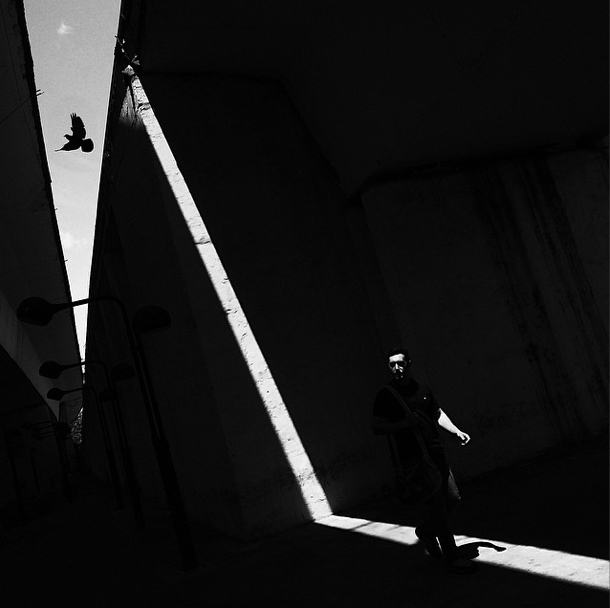
Man and the bird #tehran by Ako Salemi @f64s125 for @burndiary

02 Jun 01:16

American Optical Original Pilot Pressure Gauge Sakura Pigma...


GIS Specialist in St Louis, MO

02 Jun 01:15

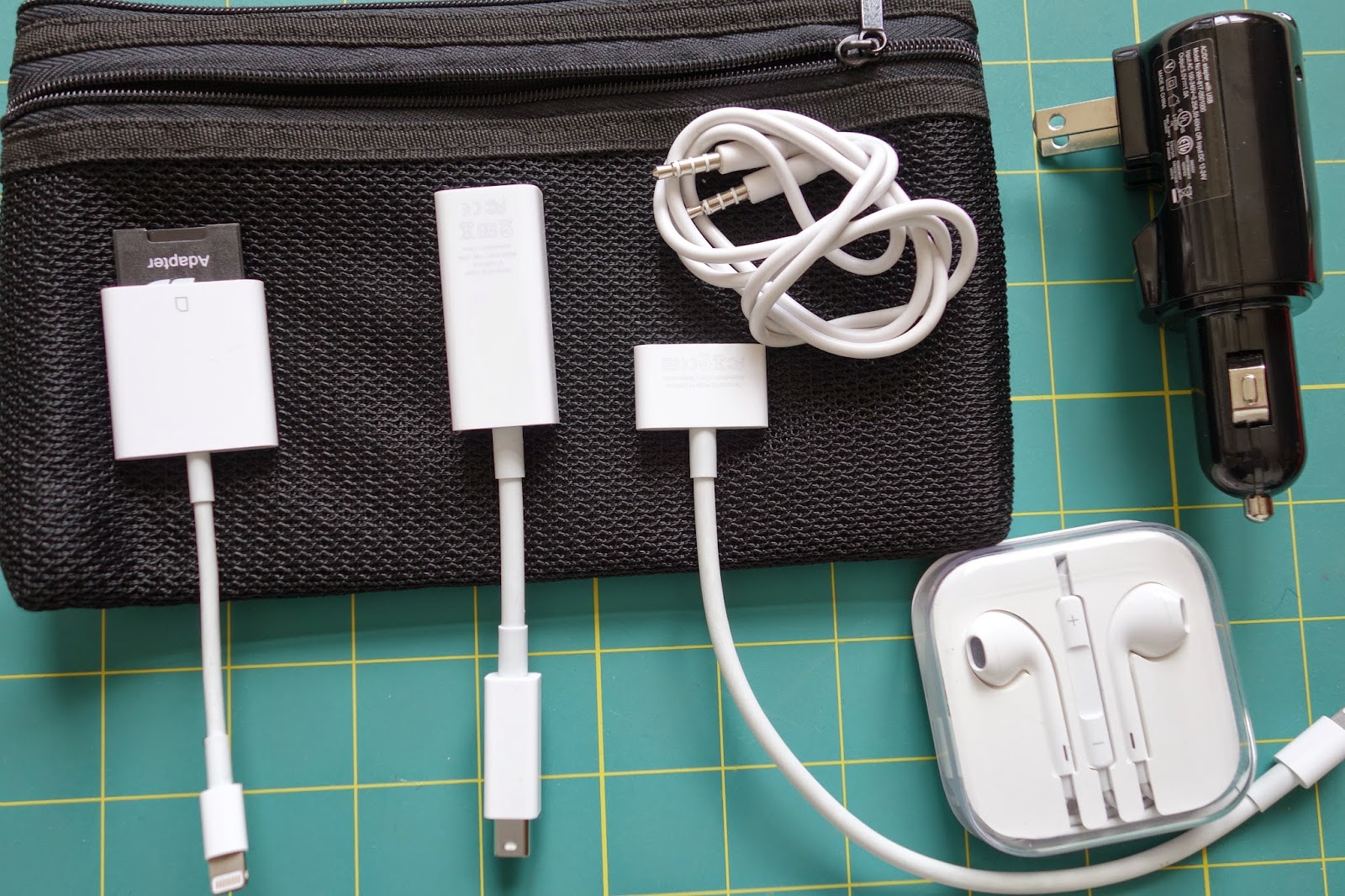
SunDog pouch Small phillips and standard screwdrivers plus hex...


  • SunDog pouch
  • Small phillips and standard screwdrivers plus hex wrench for camera and tripod head maintenance
  • Folding pliers
  • Short screwdriver for tripod plate adjustments
  • Coiled molded earpiece for clear sound in noisy environments
  • Flashlight module for 9v batteries too depleted for “one chance” news work but with enough juice left to power this flashlight for months.
  • Pony tail holders for wrapping and storing audio cables. Simpler and more efficient than Velcro.
  • Toothpicks

Freelance Cameraman in Washington, DC

I’m a freelance news and documentary cameraman based in Washington, DC. I keep this pouch in a side pocket of my Domke run bag. Many of these items are rarely used but, because of the fickle nature of my business, if I don’t have the item when I need it, I’m fucked.

02 Jun 01:12

What’s in My Bag? Kent Barnes

by mark

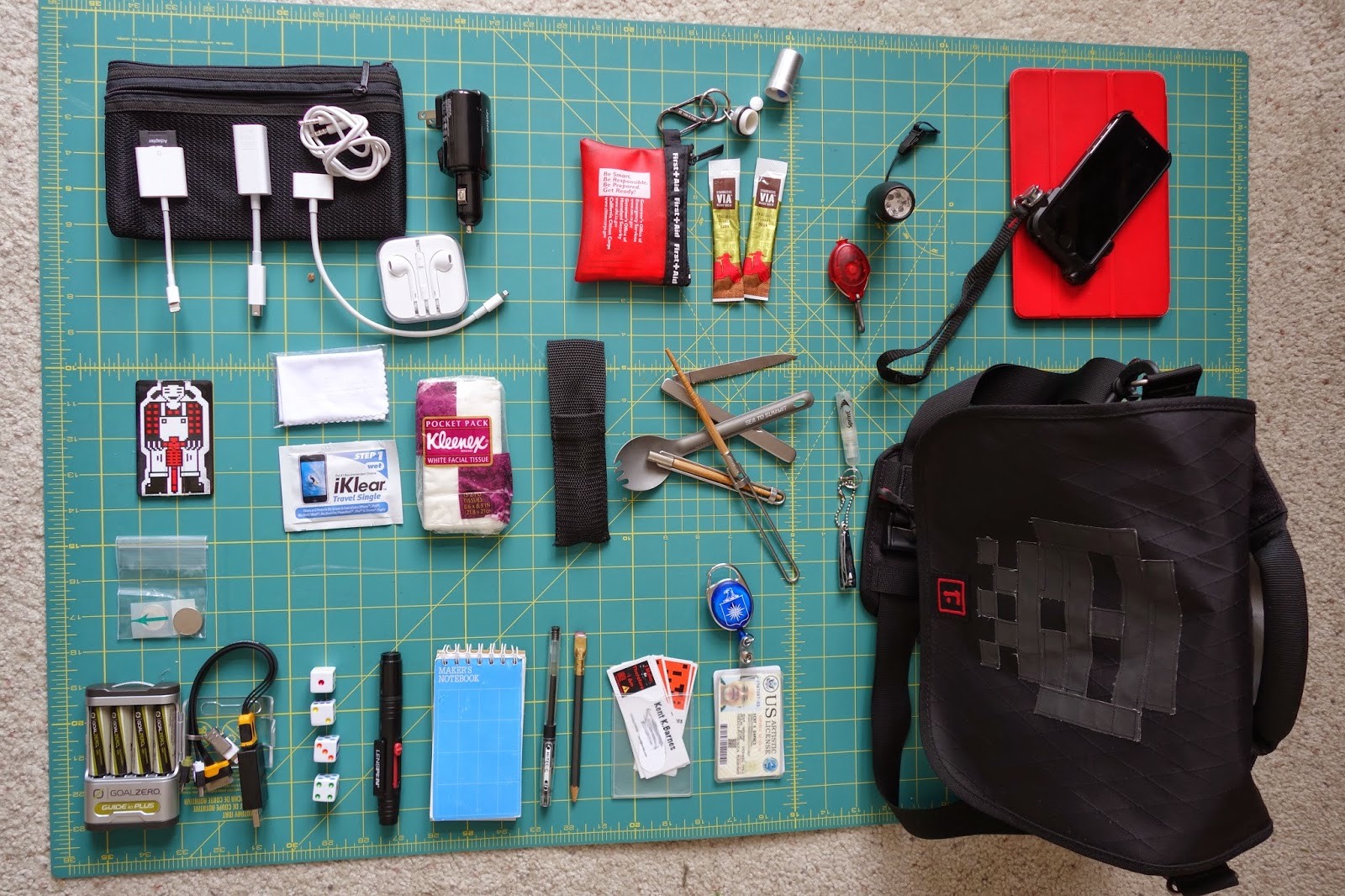
(Click on images to embiggen) I have a bag of bags approach. Small bags pre-loaded with stuff ready to go, and a big bag to carry the small ones. My big bag is a Mini Messenger bag from San Francisco’sRickshaw Bagworks. I customized it with a stealth reflective 8-bit skull. Here are my sub-bags: Apple Bag: This $1.50 bag from the Daiso ¥100 (100 yen) store in San Francisco is a great resource for all sorts on neat stuff. Almost every small bag I own is from Daiso. It contains:

Chow Bag: Yep, I carry my own utensils in a flashlight sheath. No flimsy little plastic toys for me. And yes, I love Chopsticks and think they are very elegant and will whip them out every meal instead of the landfill choice. (Cutting your food to size helps.) It contains:

Power Bag: This all fits in a small bag I forgot to show in the big photo.It is made from one 8 foot long zipper that zips together into a bag.

  • The Goal Zero will charge my iPhone to 100%, bonus it uses rechargeable AA batteries that are removable for other uses: $40
  • The very useful Power Practical Meter and Fast Charge Cable will even monitor your charging levels: $20
  • Brookstone Super Lite: $13
  • A tiny 3 mode selectable red LED flashlight, on, flashing, and flashing fast. Found at local flea market.
  • Spare 2032 coin cells for these both.

Extras:

  • Credit-card sized USB Flash Drive swag that I dressed up with a Boing Boing Jackhammer Jill sticker. She is so cute!
  • The one and only “Half the Pressure, Twice the Speed” Blackwing 602: $23/12-pack
  • Soft cover spiral notebook – 5mm Square Ruled that I tastefully recovered to look like a Make Magazine mini Makers Notebook.
  • Facial tissues (can be used on both ends)
  • Cleaning tissues, for the iPhone and iPad screens: $9
  • Well, I do carry 4 Dice. Never know when a West Coast Ce-Lo game may come up. Yeah, I know, only 3 dice are needed, but it is nice to have choice’s in life. [Review here
  • Real Artistic License on C.I.A Retractable Badge Reel ( found at Flea Market)
  • Small business cards printed on 3′x5′ recipe card stock and cut to size.
  • Fingernail clippers and that thick alcohol stuff to wipe and your hands and sanitize to surgery room cleanliness.
  • First aid kit and pill safe.
  • Starbucks VIA instant coffee. That you can mix into any liquid hot or cold, really! $31/50-pack
  • iPad mini with its magnetic cover that magically turns it off.
  • iPhone 5s (is the v6 here yet?)
  • A ripstop nylon shopping bag.

You really should see my mini tool bag, photo bag, camping kitchen bag, bag of shopping bags, bag o….I need a new bag.

-- Kent Barnes

[OK, now it's your turn. Send photos of the things in your bag (and of the bag itself, if you love it), along with a description of the items and why they are useful. Make sure the photos are large (1200 pixels wide, at least) and clear. Use a free file sharing service like Bitcasa to upload the photos, and email the text to editor@cool-tools.org. -- Mark Frauenfelder]

02 Jun 00:43

Muji | The Modern General Store

by Jake Gallagher

The Muji House in Tokyo

The modern general store can’t be found in Brooklyn, or Portland, or any other quirked-out city where the general store label is now affixed to at least a quarter of all vintage stores. No, the true contemporary general store is actually located in Tokyo, or to be more specific right online at Muji.us. Few, if any, current stores are guided by the same catchall attitude of the classic general store, but Muji is a true one stop shop, peddling affordable housewares, kitchen tools, office supplies, furniture, travel gear, healthcare products, various nicknacks, and even a complete clothing collection.

The Muji House

The Muji House

What’s more, unlike your local big box store, Muji’s products are actually all beautifully designed. Their furniture has a strong Scandinavian minimalism look, while their housewares reference the work of Dieter Rams (particularly their analog clock), and their clothing selections consists of understated basics that could comfortably sit next to any high end designer pieces. At least from an aesthetic standpoint. Consider Muji a Japanese modernist take on the colonial-era emporium. The only thing that’s missing from their portfolio is some food, but it wouldn’t surprise us if Muji starts rolling that out any day now.

While we’re sure at least one of you could find a use for any of Muji’s products, we’ve rounded up our personal favorites to help streamline your Muji experience.

Screen Shot 2014-05-16 at 9.24.23 AM

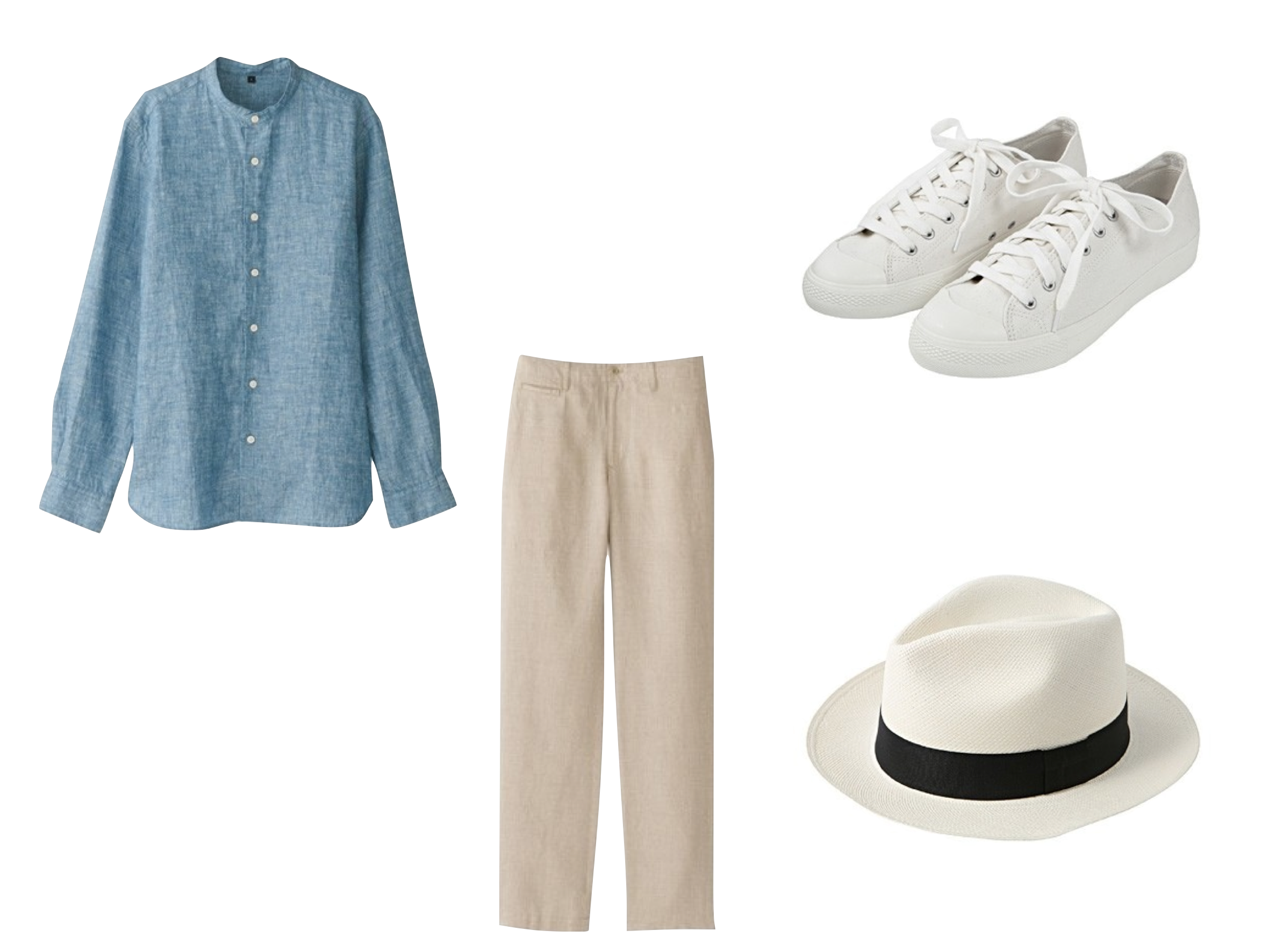
Standing Collar Shirt/Linen Trousers/Cotton Sneakers/Panama Hat

Screen Shot 2014-05-16 at 9.26.33 AM

Rice Bowl/LED Light/Magazine Rack/Soy Sauce Bottle/Acacia Plate/Wall Clock

Screen Shot 2014-05-16 at 9.28.41 AM

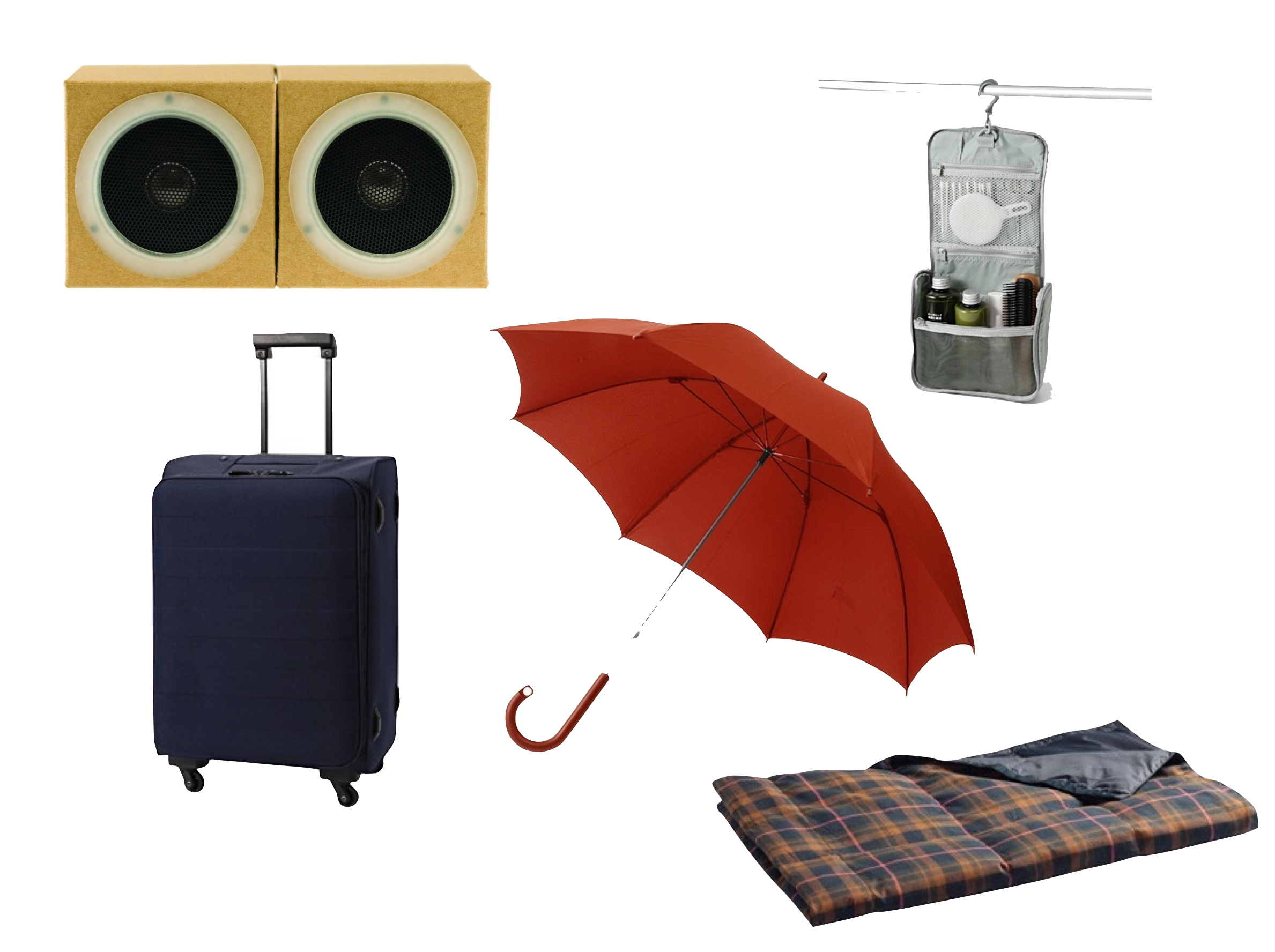
Cardboard Speakers/Shower Caddy/Four Wheel Suitcase/Umbrella/Flannel Down Blanket

Screen Shot 2014-05-16 at 9.30.13 AM

Notebooks/Colored Pencils/Stone Dish/Stamp Set/Tokyo Cityscape Pen Organizer

02 Jun 00:29

The $272 billion swindle, Why thieves love America’s healthcare system

by Editor
Holder's all over it. No need to worry.

Holder’s all over it. No need to worry.

When money is in motion there is always the opportunity to siphon it off. Sometimes this is done legally, other times it is done illegally. Our healthcare system moves a lot of unaccountable money. As such it an ongoing target for fraud great and small.

Read More

01 Jun 23:16

Paleo, vegan, gluten-free -- the only certainty about health trends is their reversal...


Paleo, vegan, gluten-free -- the only certainty about health trends is their reversal...


(Second column, 19th story, link)

30 May 15:15

100-year old traditional cottage in Kućica, Zagorje,...


100-year old traditional cottage in Kućica, Zagorje, Croatia.

Contributed by Damir Žižić. More photos

30 May 15:07

Map: Do You Live Near More Bars, Or More Grocery Stores?

by Reuben Fischer-Baum on The Concourse, shared by Rob Harvilla to Deadspin

Map: Do You Live Near More Bars, Or More Grocery Stores?

Over on Flowing Data, Nathan Yau has put together a new series of maps comparing whether bars or grocery stores are more common in different parts of the country. This is not new territory—Floating Sheep made the original bar/grocery map back in 2010—but there are some nice additions here. Specifically, Yau's data is from Google's new-and-improved Places API, and he's using a continuous color scheme instead of the either/or that Floating Sheep used.

Read more...


30 May 12:50

How to Grill a T-Bone Steak

by Joshua Bousel

20140522-293702-grilled-porterhouse.jpg

A great grilled T-bone takes some attention to detail, but the payoff is a big, beefy steak that's hard to beat.
[Photographs: Joshua Bousel]

When it comes to steak, I'm an economy cuts man. Well, I say with a bit of grumble that I was an economy man before my choice cuts of skirt, hanger, or flank became so desirable that their market value shot up beyond "bargain" territory. Still, they're easier on the wallet than the high-end cuts like ribeyes and T-bones, which I certainly love, but can hardly justify buying, knowing that I'll be just as happy with a steak a quarter of the cost.

But I'm also a man who would never pass up a porterhouse under the right circumstances, so when Kenji asked me to develop a recipe for perfectly cooked T-bone steaks (courtesy of Pat LaFrieda Meat) I jumped at the opportunity. The well-marbled, dry-aged prime steaks delivered to SE headquarters were so beautiful that I affectionately dubbed them "my babies," and promised myself that no harm would come to them.

I've grilled enough steaks to know how to treat them right, but I did pit a few winning T-bone techniques against each other to see if one would ultimately earn me the title of "#1 Steak Dad."

Anatomy of T-bone

20140522-293702-grilled-porterhouse-raw.jpg

The T-bone is a two-fer: you get both the strip loin and tenderloin in one cut. The bone portion of the T-bone is part of the steer's vertebrae, from the short loin primal (that's the spot between your rib cuts and your sirloin cuts). If you rotate the "T" of the T-bone to be situated horizontally, with the bigger portion of meat on the top, you can better see where this cut lays on the cow.

The strip loin—also called a New York strip steak—is the larger portion of the T-bone. The chunk of meat sits on top of the vertebrae—the back of the steer. On the other side of the bone is the tenderloin, which sits next to the lower part of spinal cord. A single T-bone is only one half of this spinal section. Yeah. Cows are big.

20140522-293702-grilled-porterhouse-tenderloin-size.jpg

Although it's not a hard and fast rule, to be considered a T-bone, the tenderloin section generally needs to be at least 1/2-inch wide from the edge of the bone to the edge of the meat. When the tenderloin section jumps up to 1 1/2-inches wide or more, it can then gain the title of 'porterhouse,' although technically you can still correctly refer to it as a T-bone. The porterhouse comes from back of the short loin, where the tenderloin section is larger.

T-bone Selection & Prep

When looking for the perfect T-bone for grilling, there are a few important things you'll want to look for:

Thickness

20140522-293702-grilled-porterhouse-height.jpg

First and foremost, you want to go thick with your cut. A minimum height of 1 1/2-inches is best; 2-inches is even better. When grilling a steak, you want to be able to develop that dark, crusty sear while keeping the inside a nice rare-to-medium rare. That's a near-impossible feat with a thin steak, since the inside will be thoroughly overcooked by the time the outside develops a proper sear. A hefty cut that's big enough to split between two or more is key to achieving a perfectly cooked T-bone.

Marbling

20140522-293702-grilled-porterhouse-marbling.jpg

Next, you want to check out the marbling. Marbling is made up of intramuscular fat, and you're certain to see more of it in the strip loin over the tenderloin, but both should have streaks of beautiful white fat in them. This fat is what brings the big, beefy flavor to the T-bone, and you won't get that top steakhouse flavor without it. You should always do a visual inspection to best determine the marbling, but in terms of USDA beef grades, Prime is the label to look for. 'Choice' is the next step down in marbling, followed by 'Select.'

Size of Tenderloin

20140522-293702-grilled-porterhouse-tenderloin.jpg

Finally, if you want that tenderloin section to be all it can be, it's best to choose a T-bone with a generous portion of tenderloin. Fat doesn't just deliver flavor—it also insulates. Because the tenderloin is leaner, it'll always cook through more quickly than the strip; the smaller it is, the faster it will do so. To ensure the filet section of the T-bone comes out to a respectable medium-rare, porterhouse size tenderloin sections of 1 1/-2-inches or larger are definitely the way to go.

20140522-293702-grilled-porterhouse-step-2.jpg

Once you have your perfect T-bone, prep doesn't need to go any further than salt and pepper. Salting should be done at least 40 minutes prior to grilling with heavy layer Kosher salt—remember that you're seasoning for a thick, meaty steak. Kenji has already explained all the science behind salting, but basically the salt needs time to first draw moisture out of the steak, and then break down the muscle fibers so that the now-concentrated, flavorful liquid that was drawn out can be reabsorbed.

20140522-293702-grilled-porterhouse-peppered.jpg

Right before the steak is ready to hit the grill, it can be given a layer of freshly ground pepper, to taste—I personally like a lot of coarse pepper that gives the crust of a the final steak sharp bite and a little extra crunchy texture.

Some folks prefer adding pepper at the end, claiming that it can taste burnt or bitter if added before cooking, but I like the flavor of charred pepper. It does have a bit of bitterness, but it also attains a sweetness that balances it out.

Grilling a T-bone: Three Methods, One Winner

20140522-293702-grilled-porterhouse-grilling-intro.jpg

As I mentioned, I had no intention of destroying any of these beautiful proterhouses I had in my possession in the name of experimentation. So when it came to grill them, I stuck to the methods that I knew would lead to success. While no steaks were harmed in the making of this post, there was certainly one that was better than the rest.

Method I: The Sear and Roast

20140522-293702-grilled-porterhouse-sear.jpg

If you take a stroll back in time, you'll find me proclaiming that the best way to cook a massive T-bone is to sear it over a high direct heat, then move it to indirect heat to finish cooking. This is certainly the method you'll most commonly come across, and it served me well with many a steak. So even though I do things a little differently now, I thought it was only fair to give the sear-and-roast method a fair shot.

20140522-293702-grilled-porterhouse-temp.jpg

To develop a great sear on an uncooked steak, you want to go for the highest heat you can get. With charcoal, this is the point when a whole chimney full of coals has just finished lighting and is covered in gray ash. When I dumped my fresh batch of briquettes out, my thermometer tipped off the scale, but I was likely running around 650°F—lump charcoal will get you a good 50°F-plus higher.

Over this heat, the steak seared beautifully, especially since I flipped it every 30 seconds or so to cook it evenly and maximize that crust. Once browned to my liking, I transferred the porterhouse to the cool side of the grill and positioned it so the strip loin was facing the fire. Then I covered the grill and let the steak cook until it reached my desired temperature of 125°F, for a medium-rare tenderloin.

20140522-293702-grilled-porterhouse-seared-meat.jpg

After a 10 minute rest, I sliced into both the strip loin and tenderloin and was pretty pleased—both had a rosy red, soft center, with not too much grayness around the edges. It was a worthy steak, but I've come to learn that it can be even better.

Method II: The Reverse Sear, Version 1

20140522-293702-grilled-porterhouse-roast-1.jpg

For more an even, edge-to-edge cook in a large steak like this, the reverse sear is your best friend. It's a method that Kenji developed for Cook's Illutrated a while back.

As the name implies, this method swaps the roasting and searing so the steak is first brought up to a temperature about 5°F below your final desired doneness over indirect heat, then seared over direct heat. This results in a steak that will usually be more evenly red throughout. It's also a more effective way to sear, since the steak's exterior will have less moisture to burn away after it's been cooking for a bit. With a porterhouse, though, I questioned what the best roasting position would be in order to achieve perfect doneness in both the strip loin and tenderloin.

The first theory I tested was the steak should be situated so both the top of the strip loin and tenderloin faced the fire. Since the top of both sections of the T-bone are larger than the tapered bottom, it would make some sense that the top should take longer than the bottom to cook.

20140522-293702-grilled-porterhouse-roast-1-temp.jpg

As I kept an eye on the temperature of each side of the T-bone, I quickly learned I was wrong. Since the tenderloin has less fat than the strip, it actually cooked faster, registering a good 5°+ hotter than the strip all through the cooking process. This wasn't going to work out—if anything, given its relatively low fat content, the tenderloin needs to be less cooked than the strip.

20140522-293702-grilled-porterhouse-roast-1-meat.jpg

In terms of even cooking, it was a decided improvement over the first steak, with a more even rosy color throughout. But we can do better.

Method III: The Reverse Sear, Version 2

20140522-293702-grilled-porterhouse-roast-2.jpg

With the last of my three porterhouses, I went with the reverse sear again, but this time positioned the strip to run parallel to the fire, with the tenderloin facing away from the coals. As I monitored the temperature this time, the tenderloin was coming in at least 5° cooler than the strip, which was exactly what I wanted to see.

20140522-293702-grilled-porterhouse-roast-2-temp.jpg

After letting the steak roast until the strip hit 115° and the tenderloin was at 110°, I quickly seared it off, let it rest, and cut in.

20140522-293702-grilled-porterhouse-roast-2-meat.jpg

This time around the strip was perfectly medium-rare from edge to edge. The more delicate tenderloin still had a little grayness around the sides, but to a lesser extent than my previous attempts, making this method the clear winner.

T-bone Enhancement

20140522-293702-grilled-porterhouse-butter.jpg

All of those steaks were beefy, salty, peppery, and just all-around delicious. But they were still missing a component of pan-searing steaks that's lost on the grill—butter basting. When cooking indoors with a cast iron skillet, I add some butter and herbs to the pan, basting the seared steak with the rich, melted fat as it cooks.

To bring a little of this butter-herb infusion to my grilled steak, I melted a few tablespoons of butter in a small saucepan, then added thyme, garlic, and lemon zest and let those "steep" together as the hot butter cooled. Once that last porterhouse came off the grill, I spread a decent portion of that flavorful butter over the steak while it was resting.

20140522-293702-grilled-porterhouse-finished.jpg

I had a few other tasters with me to help eat through all these steaks, and while each successive T-bone was well-praised, it was the one with the butter that really stood out and had me feeling like I rightfully raised the steaks and earned that title of "#1 Steak Dad" (is it strange that I'm the kind of dad who eats his perfectly charred, rosy-red babies?). Now, if only these babies were able get me a mug stating my achievements so I could properly show it off to the world...

29 May 18:42

Redesigned Snorkel Mask Simplifies Underwater Adventures

by delana
[ Filed under Various Gizmos & in the Gadgets category ]

redesigned full face snorkel mask

Snorkeling is a one-of-a-kind experience, but it can also be a little intimidating. Many people are used to breathing in through their noses and out through their mouths, which isn’t possible with traditional snorkel gear. The Easybreath mask from French company Tribord totally redefines the snorkeling mask.

easybreath snorkel mask

The Easybreath fits over the entire face, allowing snorkelers to breathe normally and offering a 180 degree view of their surroundings. A double airflow system – just like a miniature domestic extraction fan – prevents the inside of the mask from fogging up and obscuring the wearer’s vision.

innovative snorkel mask

The top of the snorkel features a mechanism that plugs the tube’s opening when it is submerged. When you are simply swimming around and enjoying the underwater sights, however, the top of the snorkel is brightly colored to make it visible to swimmers and boaters. The design is so innovative that it won first place at the 2014 Oxylane Innovation Awards.


Share on Facebook

[ Filed under Various Gizmos & in the Gadgets category ]

[ Gajitz | Archives | Categories | Privacy | TOS ]

29 May 18:21

Too Big to Jail: Eric Holder lets Credit Suisse off easy

by Nick Sorrentino

EricHolder cc

It’s understandable. Holder once made his living defending the big banks and likely will go back to defending the big banks when he leaves the Department of Justice. So it’s not smart to alienate any future clients. The fact that the people who had the hidden Swiss bank accounts might be politically sensitive was also probably a factor here. One does not upset the club members if one wishes to remain in the club. Holder wants very much to remain in the club.

Read More

29 May 12:24

VIDEO: Rescued Goat 'Depressed,' Goes On 'Hunger Strike' After Being Split From Lifelong Companion...


VIDEO: Rescued Goat 'Depressed,' Goes On 'Hunger Strike' After Being Split From Lifelong Companion...


(First column, 22nd story, link)

27 May 15:36

Commencement Address by Admiral William McRaven at UT Austin

Adm. William H. McRaven is the ninth commander of U.S. Special Operations Command. He is a Navy admiral and former commander of SEAL Team 3, acclaimed for leading the mission to find Osama bin Laden. On May 17, Adm. McRaven delivered the commencement address at his alma mater, University of Texas at Austin. Here are his remarks in full.

The University of Texas slogan is "What starts here changes the world."

I have to admit—I kinda like it.

"What starts here changes the world."

Tonight there are almost 8,000 students graduating from UT.

That great paragon of analytical rigor, Ask.Com, says that the average American will meet 10,000 people in their lifetime.

That's a lot of folks. But if every one of you changed the lives of just 10 people, and each one of those folks changed the lives of another 10 people—just 10—then in five generations, 125 years, the class of 2014 will have changed the lives of 800 million people.

Eight-hundred million people—think of it: over twice the population of the United States. Go one more generation and you can change the entire population of the world—eight billion people.

If you think it's hard to change the lives of 10 people, change their lives forever, you're wrong.

I saw it happen every day in Iraq and Afghanistan.

A young Army officer makes a decision to go left instead of right down a road in Baghdad and the 10 soldiers with him are saved from close-in ambush.

In Kandahar province, Afghanistan, a noncommissioned officer from the Female Engagement Team senses something isn't right and directs the infantry platoon away from a 500-pound IED, saving the lives of a dozen soldiers.

Generations were saved by one decision, by one person.But, if you think about it, not only were these soldiers saved by the decisions of one person, but their children yet unborn were also saved. And their children's children were saved.

But changing the world can happen anywhere and anyone can do it.

So, what starts here can indeed change the world, but the question is: What will the world look like after you change it?

Well, I am confident that it will look much, much better, but if you will humor this old sailor for just a moment, I have a few suggestions that may help you on your way to a better a world.

And while these lessons were learned during my time in the military, I can assure you that it matters not whether you ever served a day in uniform. It matters not your gender, your ethnic or religious background, your orientation, or your social status. Our struggles in this world are similar and the lessons to overcome those struggles and to move forward—changing ourselves and the world around us—will apply equally to all.

I have been a Navy SEAL for 36 years. But it all began when I left UT for Basic SEAL training in Coronado, Calif.

Basic SEAL training is six months of long, torturous runs in the soft sand, midnight swims in the cold water off San Diego, obstacle courses, unending calisthenics, days without sleep and always being cold, wet and miserable.

It is six months of being constantly harassed by professionally trained warriors who seek to find the weak of mind and body and eliminate them from ever becoming a Navy SEAL.

But, the training also seeks to find those students who can lead in an environment of constant stress, chaos, failure and hardships. To me basic SEAL training was a lifetime of challenges crammed into six months.

So, here are lessons I learned from basic SEAL training that hopefully will be of value to you as you move forward in life.

1. Every morning in basic SEAL training, my instructors, who at the time were all Vietnam veterans, would show up in my barracks room and the first thing they would inspect was your bed. If you did it right, the corners would be square, the covers pulled tight, the pillow centered just under the headboard and the extra blanket folded neatly at the foot of the rack—that's Navy talk for bed.

It was a simple task, mundane at best. But every morning we were required to make our bed to perfection. It seemed a little ridiculous at the time, particularly in light of the fact that were aspiring to be real warriors, tough battle hardened SEALs, but the wisdom of this simple act has been proven to me many times over.

If you make your bed every morning you will have accomplished the first task of the day. It will give you a small sense of pride and it will encourage you to do another task and another and another. By the end of the day, that one task completed will have turned into many tasks completed. Making your bed will also reinforce the fact that little things in life matter.

If you can't do the little things right, you will never do the big things right.

And if by chance you have a miserable day, you will come home to a bed that is made—that you made—and a made bed gives you encouragement that tomorrow will be better.

If you want to change the world, start off by making your bed.

2. During SEAL training the students are broken down into boat crews. Each crew is seven students—three on each side of a small rubber boat and one coxswain to help guide the dingy. Every day, your boat crew forms up on the beach and is instructed to get through the surfzone and paddle several miles down the coast.

In the winter, the surf off San Diego can get to be 8 to 10 feet high and it is exceedingly difficult to paddle through the plunging surf unless everyone digs in. Every paddle must be synchronized to the stroke count of the coxswain. Everyone must exert equal effort or the boat will turn against the wave and be unceremoniously tossed back on the beach.

For the boat to make it to its destination, everyone must paddle.

You can't change the world alone—you will need some help—and to truly get from your starting point to your destination takes friends, colleagues, the goodwill of strangers and a strong coxswain to guide them.

If you want to change the world, find someone to help you paddle.

3. Over a few weeks of difficult training my SEAL class, which started with 150 men, was down to just 42. There were now six boat crews of seven men each.

I was in the boat with the tall guys, but the best boat crew we had was made up of the little guys—the munchkin crew we called them. No one was over about 5-foot-5.

The munchkin boat crew had one American Indian, one African-American, one Polish-American, one Greek-American, one Italian-American and two tough kids from the Midwest.

They out-paddled, out-ran and out-swam all the other boat crews.

The big men in the other boat crews would always make good-natured fun of the tiny little flippers the munchkins put on their tiny little feet prior to every swim. But somehow these little guys, from every corner of the nation and the world, always had the last laugh—swimming faster than everyone and reaching the shore long before the rest of us.

SEAL training was a great equalizer. Nothing mattered but your will to succeed. Not your color, not your ethnic background, not your education and not your social status.

If you want to change the world, measure people by the size of their heart, not the size of their flippers.

4. Several times a week, the instructors would line up the class and do a uniform inspection. It was exceptionally thorough. Your hat had to be perfectly starched, your uniform immaculately pressed and your belt buckle shiny and void of any smudges.

But it seemed that no matter how much effort you put into starching your hat, or pressing your uniform or polishing your belt buckle, it just wasn't good enough. The instructors would find "something" wrong.

For failing the uniform inspection, the student had to run, fully clothed, into the surfzone and then, wet from head to toe, roll around on the beach until every part of your body was covered with sand. The effect was known as a "sugar cookie." You stayed in that uniform the rest of the day—cold, wet and sandy.

There were many students who just couldn't accept the fact that all their effort was in vain. That no matter how hard they tried to get the uniform right, it was unappreciated.

Those students didn't make it through training. Those students didn't understand the purpose of the drill. You were never going to succeed. You were never going to have a perfect uniform.

Sometimes, no matter how well you prepare or how well you perform, you still end up as a sugar cookie. It's just the way life is sometimes.

If you want to change the world, get over being a sugar cookie and keep moving forward.

5. Every day during training you were challenged with multiple physical events. Long runs, long swims, obstacle courses, hours of calisthenics—something designed to test your mettle.

Every event had standards, times that you had to meet. If you failed to meet those standards, your name was posted on a list and at the end of the day those on the list were invited to a "circus."

A circus was two hours of additional calisthenics designed to wear you down, to break your spirit, to force you to quit. No one wanted a circus. A circus meant that for that day you didn't measure up. A circus meant more fatigue, and more fatigue meant that the following day would be more difficult—and more circuses were likely.

But at some time during SEAL training, everyone—everyone—made the circus list. Yet an interesting thing happened to those who were constantly on the list. Over time those students, who did two hours of extra calisthenics, got stronger and stronger. The pain of the circuses built inner strength—built physical resiliency.

Life is filled with circuses. You will fail. You will likely fail often. It will be painful. It will be discouraging. At times it will test you to your very core.

But if you want to change the world, don't be afraid of the circuses.

6. At least twice a week, the trainees were required to run the obstacle course. The obstacle course contained 25 obstacles including a 10-foot-high wall, a 30-foot cargo net and a barbed-wire crawl, to name a few.

But the most challenging obstacle was the slide for life. It had a three-level, 30-foot tower at one end and a one-level tower at the other. In between was a 200-foot-long rope.

You had to climb the three-tiered tower and, once at the top, you grabbed the rope, swung underneath the rope and pulled yourself hand over hand until you got to the other end.

The record for the obstacle course had stood for years when my class began training in 1977. The record seemed unbeatable until one day a student decided to go down the slide for life—head-first. Instead of swinging his body underneath the rope and inching his way down, he bravely mounted the top of the rope and thrust himself forward.

It was a dangerous move—seemingly foolish, and fraught with risk. Failure could mean injury and being dropped from the training. Without hesitation, the student slid down the rope, perilously fast. Instead of several minutes, it only took him half that time and by the end of the course he had broken the record.

If you want to change the world sometimes you have to slide down the obstacle head-first.

7. During the land-warfare phase of training, the students are flown out to San Clemente Island near San Diego. The waters off San Clemente are a breeding ground for great white sharks. To pass SEAL training, there are a series of long swims that must be completed. One is the night swim.

Before the swim, the instructors joyfully brief the trainees on all the species of sharks that inhabit the waters off San Clemente. The instructors assure you, however, that no student has ever been eaten by a shark—at least not recently.

But, you are also taught that if a shark begins to circle your position, stand your ground. Do not swim away. Do not act afraid. And if the shark, hungry for a midnight snack, darts towards you, then summon up all your strength and punch him in the snout and he will turn and swim away.

There are a lot of sharks in the world. If you hope to complete the swim you will have to deal with them.

So, if you want to change the world, don't back down from the sharks.

8. As Navy SEALs, one of our jobs is to conduct underwater attacks against enemy shipping. We practiced this technique extensively during basic training. The ship-attack mission is where a pair of SEAL divers is dropped off outside an enemy harbor and then swims well over 2 miles—underwater—using nothing but a depth gauge and a compass to get to their target.

During the entire swim, even well below the surface, there is some light that comes through. It is comforting to know that there is open water above you. But as you approach the ship, which is tied to a pier, the light begins to fade. The steel structure of the ship blocks the moonlight, it blocks the surrounding street lamps, it blocks all ambient light.

To be successful in your mission, you have to swim under the ship and find the keel—the centerline and the deepest part of the ship. This is your objective. But the keel is also the darkest part of the ship, where you cannot see your hand in front of your face, where the noise from the ship's machinery is deafening and where it is easy to get disoriented and fail.

Every SEAL knows that under the keel, at the darkest moment of the mission, is the time when you must be calm, composed—when all your tactical skills, your physical power and all your inner strength must be brought to bear.

If you want to change the world, you must be your very best in the darkest moment.

9. The ninth week of SEAL training is referred to as Hell Week. It is six days of no sleep, constant physical and mental harassment and one special day at the Mud Flats. The Mud Flats are an area between San Diego and Tijuana where the water runs off and creates the Tijuana slues—a swampy patch of terrain where the mud will engulf you.

It is on Wednesday of Hell Week that you paddle down to the mud flats and spend the next 15 hours trying to survive the freezing-cold mud, the howling wind and the incessant pressure from the instructors to quit.

As the sun began to set that Wednesday evening, my training class, having committed some "egregious infraction of the rules" was ordered into the mud. The mud consumed each man till there was nothing visible but our heads. The instructors told us we could leave the mud if only five men would quit—just five men and we could get out of the oppressive cold.

Looking around the mud flat, it was apparent that some students were about to give up. It was still over eight hours till the sun came up—eight more hours of bone-chilling cold. The chattering teeth and shivering moans of the trainees were so loud it was hard to hear anything. And then, one voice began to echo through the night—one voice raised in song.

The song was terribly out of tune, but sung with great enthusiasm. One voice became two, and two became three, and before long everyone in the class was singing.

We knew that if one man could rise above the misery then others could as well. The instructors threatened us with more time in the mud if we kept up the singing—but the singing persisted. And somehow, the mud seemed a little warmer, the wind a little tamer and the dawn not so far away.

If I have learned anything in my time traveling the world, it is the power of hope. The power of one person—Washington, Lincoln, King, Mandela and even a young girl from Pakistan named Malala—can change the world by giving people hope.

So, if you want to change the world, start singing when you're up to your neck in mud.

10. Finally, in SEAL training there is a bell. A brass bell that hangs in the center of the compound for all the students to see.

All you have to do to quit is ring the bell. Ring the bell and you no longer have to wake up at 5 o'clock. Ring the bell and you no longer have to do the freezing cold swims. Ring the bell and you no longer have to do the runs, the obstacle course, the PT—and you no longer have to endure the hardships of training. Just ring the bell.

If you want to change the world don't ever, ever ring the bell.

To the graduating class of 2014, you are moments away from graduating. Moments away from beginning your journey through life. Moments away from starting to change the world—for the better.

It will not be easy.

But start each day with a task completed. Find someone to help you through life. Respect everyone. Know that life is not fair and that you will fail often, but if you take some risks, step up when the times are toughest, face down the bullies, lift up the downtrodden and never, ever give up—if you do these things, then the next generation and the generations that follow will live in a world far better than the one we have today. And what started here will indeed have changed the world, for the better.

Thank you very much. Hook 'em horns.

Photo by Marsha Miller via UT Austin.


26 May 18:49

U.S. Food Inflation Running at 22%

After five years of the federal government telling the public that despite a $3.5 trillion increase in monetary expansion, the inflation rate is below +2%, the Department of Agriculture (DOA) just warned the American public that the consumer price index for food is up by 10% this year. 

The DOA tried to blame food inflation on the drought conditions in California, but last year’s drought was worse and food prices fell by -6%. The real problem is Federal Reserve monetary stimulus is stimulating inflation. I reported in "Food Price Inflation Scares the Fed” two months ago that commodity food costs were exploding on the upside. Given the lag in commodity costs impacting prices on grocery store shelves, annual U.S. food inflation is now running at +22% and rising.

The DOA tried to blame food inflation on this year’s drought conditions in California that they stated may have “large and lasting effects on U.S. fruit, vegetable, dairy and egg prices.” It is true that California droughts are always agricultural issues, since 80% of the state’s freshwater supply is used by farms and ranches. This has resulted in surface water deliveries to farms and ranches from reservoirs and the California Aqueduct being cut by 32.5%, or 6 million acre-feet.

But “large and lasting effects” on agricultural production in California will be avoided this year by pumping 5 million acre feet of groundwater from underground lakes, known as aquifers. The aquifers are a relic of the era when the Pacific Ocean covered much of the state. California has over 850 million acre feet of water stored in 450 known groundwater aquifers, enough to cover the state to a depth of 8 feet.

The State of California-sponsored UC Davis/ERA Economics farm report dated May 19th stated that only about 410,000 acres, or 7.5%, of California’s 7 million acres of Central Valley farmland will be taken out of production this year. Losses for the 80,500 farms and ranches in California due to the drought will be limited to only be about $738 million, or 2%, of the state’s $42.6 billion annual agricultural revenue.

California remains number one in agriculture revenue with 11.3% of the US total. The state accounts for 15% of national receipts for crops and 7.1% of the US revenue for livestock and livestock products. As the producer of nearly half of US-grown fruits, nuts, and vegetables, California exported $18.18 billion to other states and countries in 2012. 

California’s abundance of sun and ground water explain the state’s farming abundance but also explains the cyclical droughts. But those same cyclical forces are forming an El Niño condition in the equatorial Pacific Ocean that is expected to hammer the Golden State with torrential rain next year.

The real culprit for food inflation is the $940 billion of additional monetary stimulus from the United States Federal Reserve’s quantitative easing over the last twelve months. Inflation has been in hibernation for a long time, but it is wide awake now. 

The author welcomes feedback and will respond to comments by readers.


26 May 18:46

A History of the First World War in 100 Moments: Lord Kitchener, Father of the ‘New Army,' is Lost at Sea

This article originally appeared in The Independent

Waiting on the platform of King’s Cross station on 4 June 1916 Field Marshal Horatio Herbert Kitchener – Lord Kitchener of Khartoum, suppressor of the Boers, governor of Egypt, slayer of the Sudanese rebels and Secretary of War – should have cut an impressive figure.

This was the hard-bitten soldier who had warned that the war would drag on for years and would be won by what he called the “the last million men”. His appointment as Secretary of War had led to the creation of the “New Army”, soon to be launched into action on the Somme. His face was well-known from those celebrated recruitment posters – yet he travelled openly, with just a small entourage of officers. Witnesses said that day he had seemed “abnormally agitated and anxious”.

The journey north to Thurso was the first part of an arduous journey whose final destination was Russia and a military conference with the flagging Tsarist regime. It has been suggested that the War Cabinet, frustrated by the stalemate on the Western Front and the shambles of Gallipoli, wanted him out of the way.

The latter disaster had prompted the King’s private secretary to describe Lord Kitchener’s position as “untenable”, and the Prime Minister was said to be close to accepting his resignation.

Instead, Kitchener was conveyed to Russia on the 11,000-ton fast cruiser, HMS Hampshire and protected by an escort of destroyers. Yet barely 24 hours after leaving London, Kitchener was missing, presumed drowned off the Orkney Islands.

Read the rest of the article here


26 May 18:43

Ben Carson Asks 'Can A Doctor Be President?'


26 May 11:36

Hillary to Gov Officials '07: Don't Even Think About Disclosing Identity of CIA Covert Agents

The Washington Post reported today :

The CIA’s top officer in Kabul was exposed Saturday by the White House when his name was inadvertently included on a list provided to news organizations of senior U.S. officials participating in President Obama’s surprise visit with U.S. troops.

The White House recognized the mistake and quickly issued a revised list that did not include the individual, who had been identified on the initial release as the “Chief of Station” in Kabul, a designation used by the CIA for its highest-ranking spy in a country.

The CIA officer's name was sent to an entire press list of White House reporters. According to the Post, the names "of at least three CIA station chiefs in Pakistan have been exposed in recent years. In one case, a CIA officer became a target of death threats after his cover was blown, forcing the agency to rush him out of the country."

Seven years ago, Democrats like Barack Obama and Hillary Clinton, used the Bush administration's leak of CIA D.C. desk officer Valerie Plame, as a club to smash over the head of then President George W. Bush and and Vice President Dick Cheney. Lewis "Scooter" Libby, Cheney's Chief of Staff,  was a political casualty in that controversy and was sentenced to 30 months in federal prison, fined $250,000, and was on two years of supervised release. Instead of a pardon, Bush only commuted Libby's sentence. In 2006, Former Deputy Secretary of State Richard Armitage said that he was the source who first revealed the identity of Plame to syndicated columnist Robert Novak back in 2003.

The video above and transcript below are Hillary Clinton's thoughts on government officials who leak CIA covert operative identities. :

And we’re going to make it very clear to everyone who works in the government that they can't go out and make a profit on their government work. They have to serve the people and they better not even think about disclosing the identity of CIA covert agents if they expect to be around...

 You heard what the president did today, didn't you? Now as I recall the president said that if anybody in his White House were found to have any part in disclosing the identity of Valerie Plame, they would be fired. Apparently that's just one of those statements by the president that just doesn't hold up. And what we saw today was elevating cronyism over the rule of law..

 This administration has no regard whatsoever for what needs to be held sacred. And when I'm president we're going to get back to cherishing the Constitution to upholding the rule of law and putting forth the best values of America for the entire world to see again.


26 May 11:30

IT BEGINS: Fed weighs options how to raise interest rates...


IT BEGINS: Fed weighs options how to raise interest rates...


(First column, 18th story, link)