
Homestead near Ray, Minnesota in 1907.
Contributed by Sandra Skaar.
Homestead near Ray, Minnesota in 1907.
Contributed by Sandra Skaar.
 Charleston, South Carolina-based Made in the South Awards judge Brooks Reitz is a busy guy. In addition to opening Leon’s, his new fried chicken and oyster house, he’s got a coffee shop in the works, and he’s a partner in the just-launched Khi Khi Milk Co., a globally inspired beverage company. Despite the harried schedule, though, Reitz continues to appreciate things done the old-fashioned way—slow and by hand. As the founder of Jack Rudy Cocktail Co., he’s helping to revive forgotten staples of the American bar one bottle of artisanal grenadine, tonic, and aromatic bitters at a time. To celebrate beach season, we asked Reitz to come up with a couple of refreshing summertime cocktails.
Try mixing up a batch of either of these drinks for your Fourth of July celebrations this weekend. And if you're heading to the beach, they taste just as good in a solo cup.
Photograph by Squire Fox

Photographs by Margaret Houston
White Port & Tonic
“When the mercury spikes, I like to enjoy something a little lower octane than gin, and white port is often just what I need. It's lower in alcohol, so I can enjoy a couple, and its dry, nutty character plays so well with Jack Rudy Tonic.”
2 oz. White Port (like Niepoort)
¾ oz. of Jack Rudy Small Batch Tonic
5 oz. of Soda Water
Combine the port, tonic, and soda water in a collins glass. Add ice and stir.

Monaco
“This is a great beach drink, and it’s easy to make for parties. Some folks like to add a little lemonade, as well. For us, beer and grenadine is as simple as it comes.”
An inexpensive American Lager such as PBR or Miller High Life
¾ oz. Jack Rudy Small Batch Grenadine
Lemonade (optional)
Pour the beer into a tall glass. Stir in the grenadine, and top with lemonade, if desired.
To apply to the Made in the South Awards click here.

We have been “pressing the case for sound money” for a very long time. Many others, particularly those economists considered part of the Austrian School have been doing so for decades. It was the Austrian School economists who saw 2008 coming. It was the Austrians who warned the world. But the Austrians are a truly and deeply free market bunch, and politicians don’t like free markets. So the warnings went unheeded.

John Stossel is a smart guy and a longtime fighter of crony capitalism. Some people hate the guy because he dares speak out in defense of the free market. He was basically run off of 20/20 for his views. He found a home at FBN and we are glad he did.
 After a brief holiday last week, I returned to
some heavy reading courtesy of the federal government. Some of the
materials that I read were gratifying, and one was terrifying.
After a brief holiday last week, I returned to
some heavy reading courtesy of the federal government. Some of the
materials that I read were gratifying, and one was terrifying.
In one week, the Supreme Court told the police that if they want to examine the contents of our cellphones, whether at traffic stops or serious crime scenes, they need to get a warrant. It told the president that he cannot wait until Saturday morning, when the Senate is not in session, to appoint high-level officials whose jobs require Senate confirmation and then claim that they do not require Senate confirmation because the Senate was in recess. And it told selfless parents who stay home to care for their disabled children that the government may not force them to join health-care labor unions and pay union dues against their will.
Buried in these opinions was a legal memorandum sent to the president on July 16, 2010, nearly four years ago, and released last week, after two years of litigation aimed at obtaining it. The Obama administration had successfully resisted the efforts of The New York Times and others to induce a judge to order the release of the memo by claiming that it contained state secrets. The judge who reviewed the memo concluded that it was merely a legal opinion, and yet she referred to herself as being in "Alice in Wonderland": The laws are public, and the judicial opinions interpreting them are public, so how could a legal opinion be secret?
Notwithstanding her dilemma, she accepted the government's absurd claims, and the Times appealed.
Then the government shot itself in the foot when it surreptitiously released a portion of its secret memo to NBC News. This infuriated the panel of federal appellate judges hearing the Times' appeal, and they ordered the entire memo released. Either it is secret or it is not, the court thundered—and the government, which is bound by the transparency commanded by the First Amendment, cannot pick and choose which parts of its work to reveal to its favorite reporters and which to conceal from the rest of us.
Last week, the administration released the memo. It consists of 40 highly blacked-out pages, the conclusion of which is that the president can order the CIA to kill Americans who are present in foreign countries and who, in the opinion of high-level government officials, pose a threat to Americans and may be difficult to arrest.
The memorandum acknowledges that it is unprecedented in its scope and novel in its conclusion, and requires predicting what courts will do if they review it. Lawyers often predict for their clients what courts will do, and thus from their predictions, extrapolate advice for their clients. But history has recorded no memo before this one that has advised a president in writing that he is free to kill an American who is not engaging in violence. The logic of the memorandum states that Americans overseas who join organizations that promote acts of terror are the equivalent of enemy soldiers in uniform in wartime. It follows, the memo argues, that because Congress has authorized the president to kill foreign terrorists when they are in foreign lands, he can kill Americans there, as well.
Conveniently, the memorandum never mentions the Fifth Amendment to the Constitution, which famously commands that if the government wants the life, liberty, or property of any person, it can only do so via due process. Due process requires a jury trial with its attendant constitutional protections. The only recognized exceptions to this requirement are the individual and collective right to immediate self-defense. Since natural rights trump all positive law, a cop can kill a bank robber who is shooting at him, and soldiers can kill enemy soldiers who are about to shoot at them. At the root of the recognized exceptions to the requirement of due process is the active violence of the perpetrator, such that due process is impossible and such that the threat to life is clear, present, and immediate.
The persons killed pursuant to this secret memo were all Americans. One, Anwar al-Awlaki, the stated target of the memo, was not engaged in combat or armed or on a battlefield when he was killed; he did not wear the uniform of an enemy army, and he was not engaged in active violence at the time of his murder. He was in a car in the desert in Yemen driving to meet his 16-year-old American son. He had been under continuous surveillance by 12 American and four Yemeni intelligence agents for the 48 hours preceding his murder by a CIA drone. The drone that killed him was soon followed by drones that killed his son and two other Americans.
This week marks the anniversary of America's birth as a free nation, when we fought a war against a tyrant and seceded from his kingdom. We thought we had banished tyranny from our shores. We thought we had ratified a Constitution that would compel the government to respect our natural rights. We thought we had established a society based upon the rule of law.
We were wrong. We have gone from an inherited tyrant to an elected one. I have never heard President Obama say this, but it seems logical that if he thinks he can lawfully kill Americans abroad, he also thinks he can kill us here.
Happy Fourth of July.
The idea of “simplicity” seems to get thrown around quite a bit. It’s something Apple has used to build a literal mountain of cash (that and 10,000 other genius ideas — lest we get carried away here) and it’s a concept that everyone seems to rally around regardless if their business is making cheap fast fashion or high-end luxury. At the same time, it’s something that lies at the core of ACL, but simple is not the only thing I’m looking for. It’s when simple is combined with tradition, consistency and quality that things really become an obsession.
What does this have to do with a film about scissors? Everything.
I’m the type of person who would rather pay $40 for one pair of incredibly well-made scissors that 40 cheap sets that will break in five minutes. I’m the type of person who marvels over the quality of a finely made everyday object — an occurrence which is sadly a rare experience in our modern globalized lives (though there are many other amazing experiences which come from our globalized world; Anyone ever track their new iPhone coming FedEx 2-day air direct from its factory in Southern China?). I’m also someone who loves to discover these types of well-made things from a bygone era still being produced for this modern world. When an ACL reader (thanks Nick) sent me this beautiful word-less film by Shaun Bloodworth about a “putter” at the century-old Ernest Wright and Son workshop in Sheffield, England it carried me right away. These are things that are truly captivating to me, much more so than “fashion”.
It makes me happy to know there are enough people out there who are looking for these things. That’s why companies like Garrett Wade and Manufactum in Germany still exists. It’s good to know that there are still people in this world who are willing to spend more on the front-end for something that’s going to last long enough to actually be a better investment in the longer term. That’s what Steve Jobs would do. And these finely made Ernest Wright and Son scissors are the ones I’d imagine he’d have on his desk.
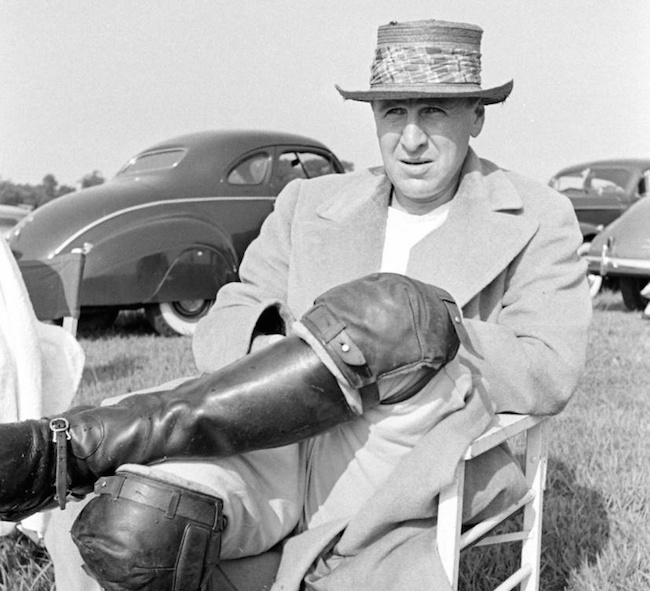
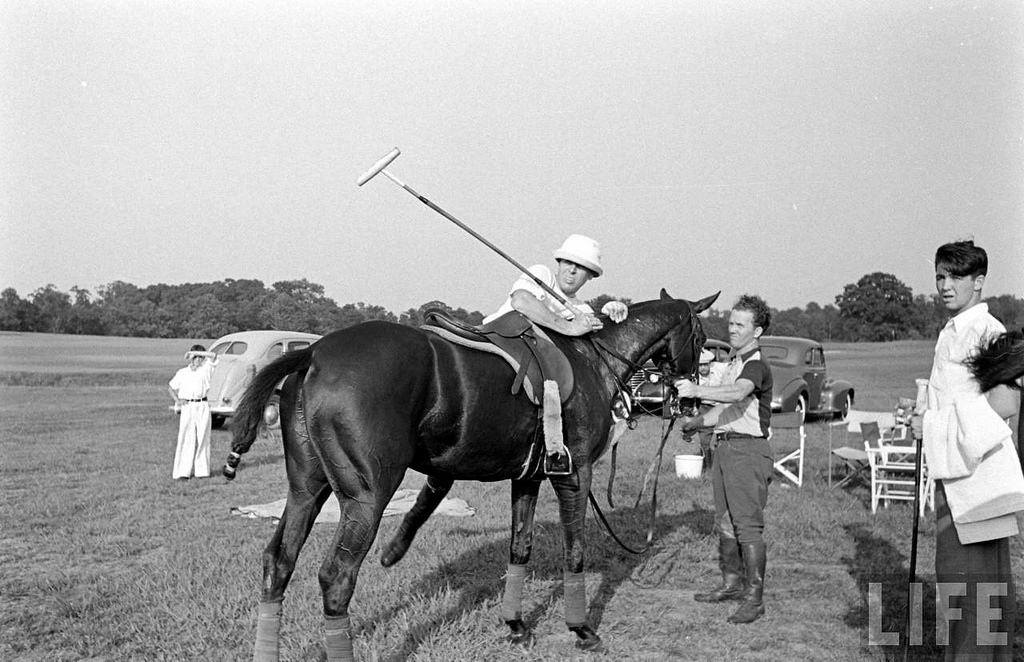
Will hordes of hoi polloi head out to the Hamptons this summer to watch a bunch of South Americans prance around on a polo field? Not likely. But back in the ‘30s it was a real crowd pleaser. “Every weekend this summer thousands of hot-dog munching spectators have crowded the polo centers of Long Island,” LIFE noted in 1938. “They paid 50¢ each to see socialites, expensive horses, rough-riding action. But mostly they paid to see Tommy Hitchcock, the world’s greatest polo player.”
The fact that he was unabashedly patrician did not stop Hitchcock from becoming a national hero. Under his leadership the U.S. hadn’t lost an international polo match to England since 1921, when Winston Churchill and King George V watched him trounce the Brits on their home turf. He was a born horseman, but his success on the field had more to do with bringing an American aggressiveness to what had always been a gentleman’s game. 45,000 hot dog munchers turned out to watch the opening day of the 1930 Westchester Cup. Fewer than 3,000 were at the Hamptons Cup final last summer.

“I played with him and I played against him,” James P. (Jimmy) Mills, 78, a breeder of thoroughbreds at his Hickory Tree Farm in Middleburg, Va. told Sports Illustrated in 1986. ”There was no player like him, ever. If these Argentineans today are 10 [goalers],Tommy Hitchcock was a 12!” One of Hitchcock’s signature tactics, rushing hell-for-leather at an opposing player to throw him off his stride, was subsequently dubbed a “foul of intimidation” and now incurs a penalty shot.
Hitchcock’s biographer Nelson W. Aldrich, Jr., author of Old Money, figured that he’d been the inspiration for Tom Buchanan, the polo playing oaf in F. Scott Fitzgerald’s The Great Gatsby (see more on that subject in Christian Chensvold’s excellent article for RL Magazine last summer). He was certainly the inspiration for the Tommy Barban character in Tender Is the Night. Neither very flattering portraits even though Fitzgerald more than once referred to Hitchcock as his only rich friend, aside from Gerald Murphy (aka Dick Diver).
Hitchcock was born with money, married a Mellon Bank heiress, and became a partner in Lehman Brothers in 1937 thanks to his fellow polo player Robert Lehman. His father, Tommy Sr., helped found the Meadowbrook Polo Club on Long Island, the oldest polo club in the U.S., in 1881 and captained the American team in the inaugural 1886 International Polo Cup. Tommy Jr. played football and hockey at St. Paul’s School in Concord, New Hampshire, became a fighter pilot in the famed Lafayette Escadrille at the age of 18 in World War I and once limped 100 miles to the Swiss frontier after being shot down behind German lines.
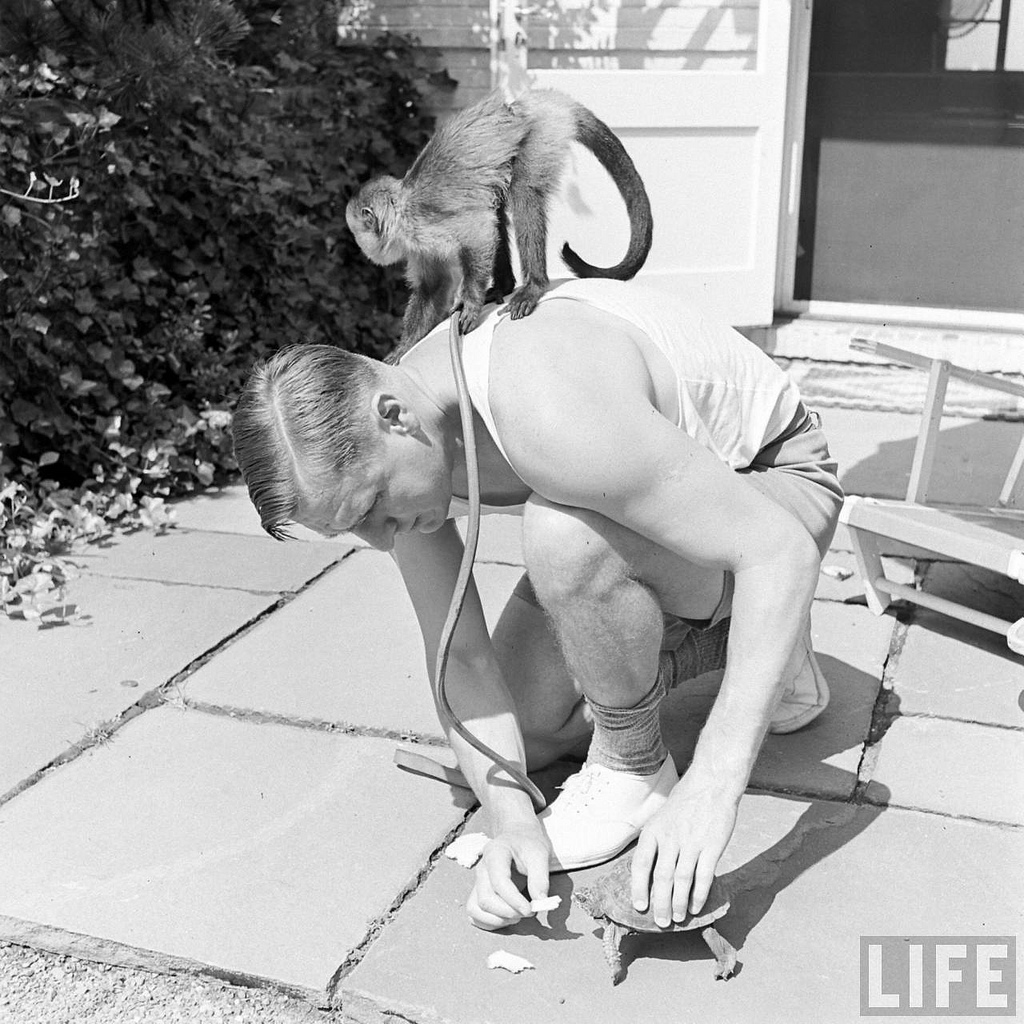
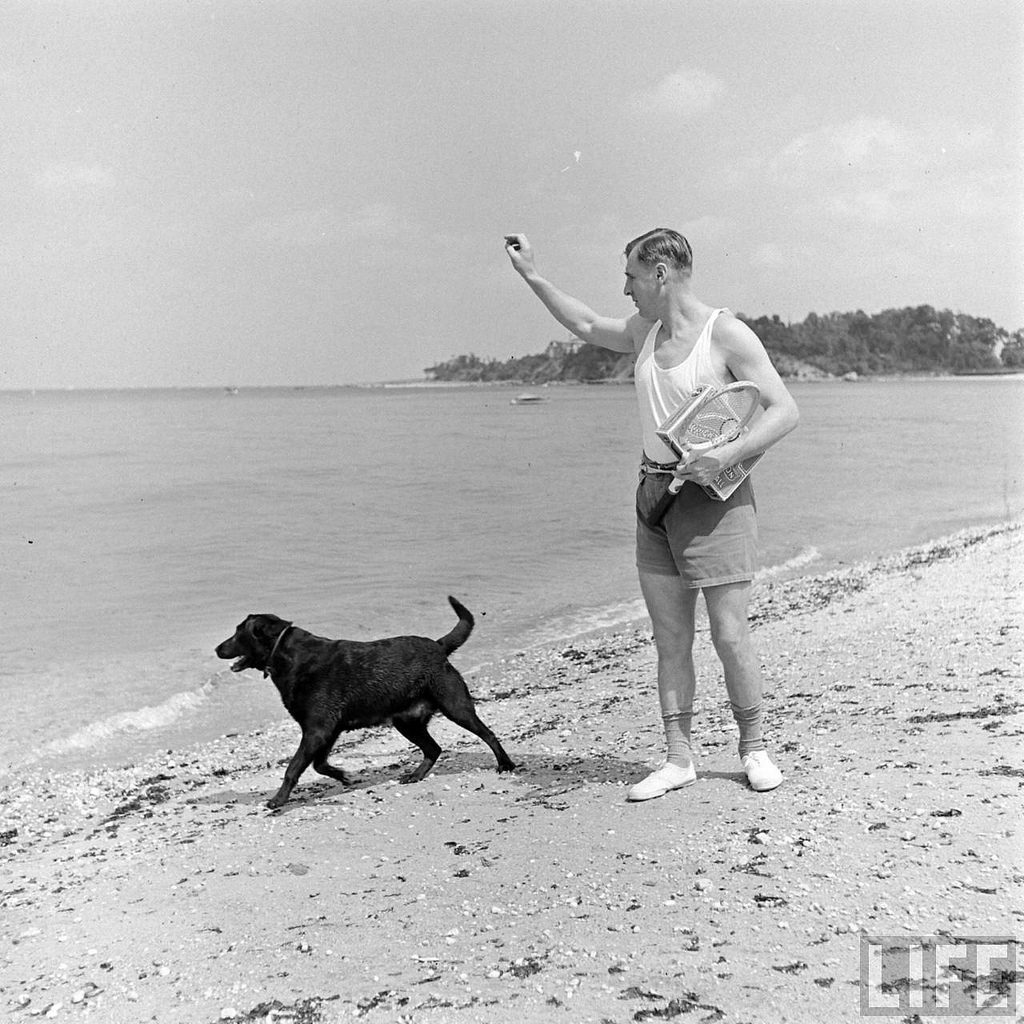
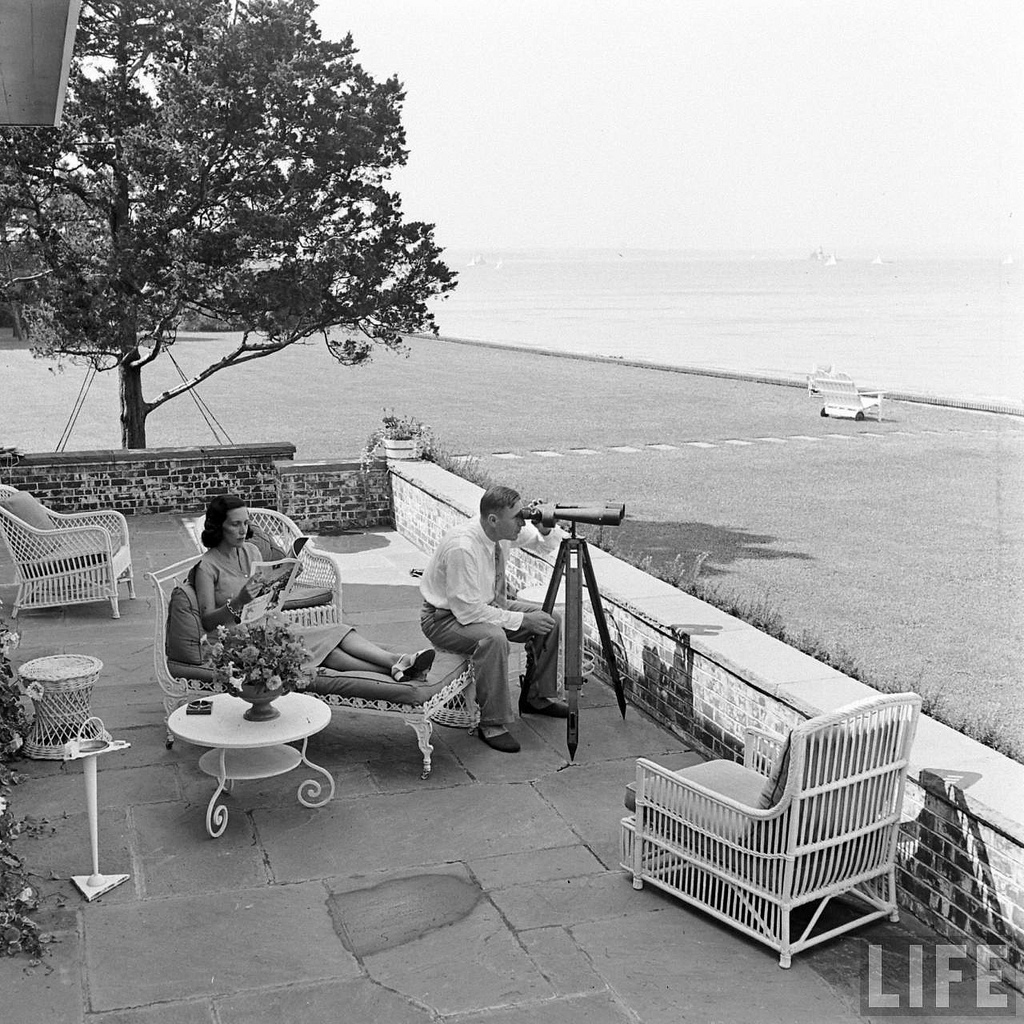
After the war he attended Oxford and Harvard and honed his hard-charging polo skills; in 1939 LIFE looked in on him again at his waterfront estate in Sands Point on the North Shore, aka the Gold Coast (home to a stylish sporting set), on the eve of his retirement from professional polo, still considered the world’s best player. There he commuted to work on Wall Street via seaplane and later helped found the Sands Point Polo Club for people like Irving Berlin and Harry Guggenheim who couldn’t get into the Meadowbrook. In these long-buried outtakes from the LIFE shoot he looks more Buchanan-ish than ever.
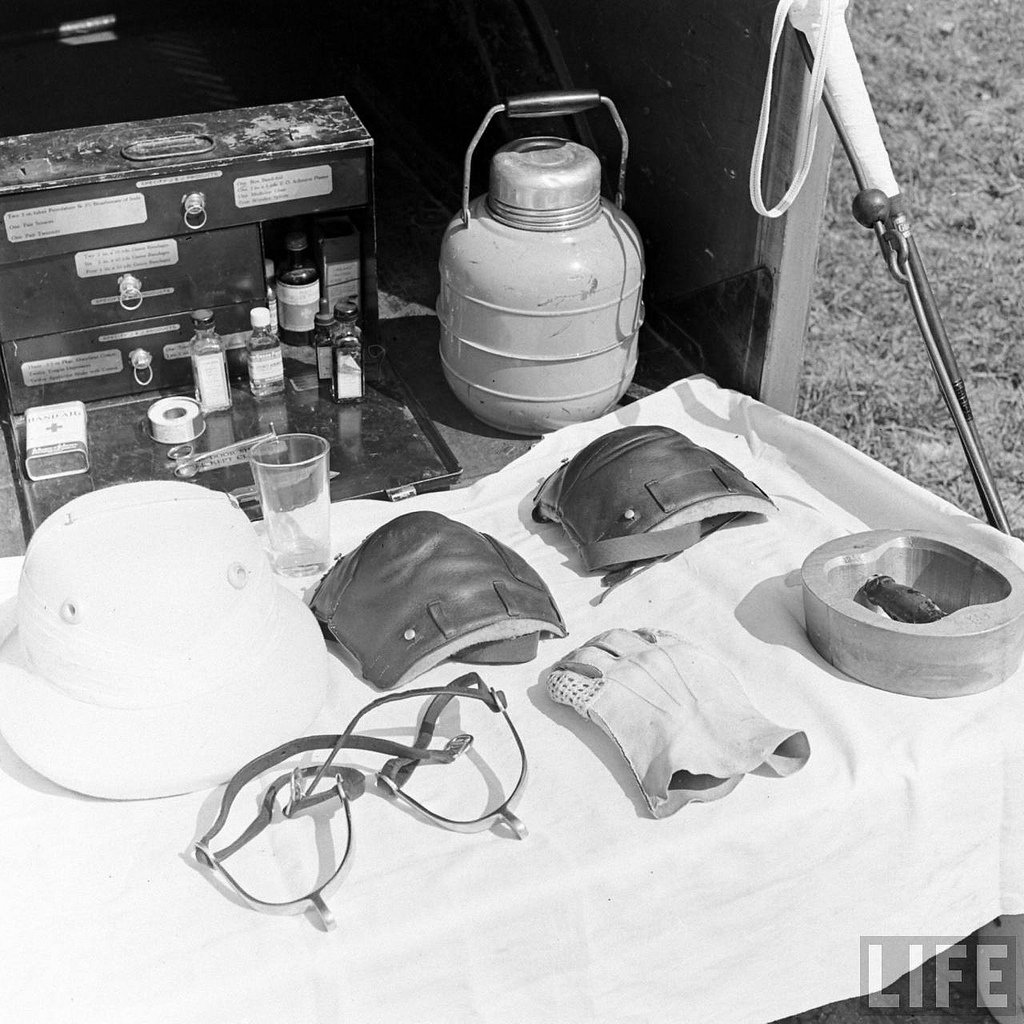
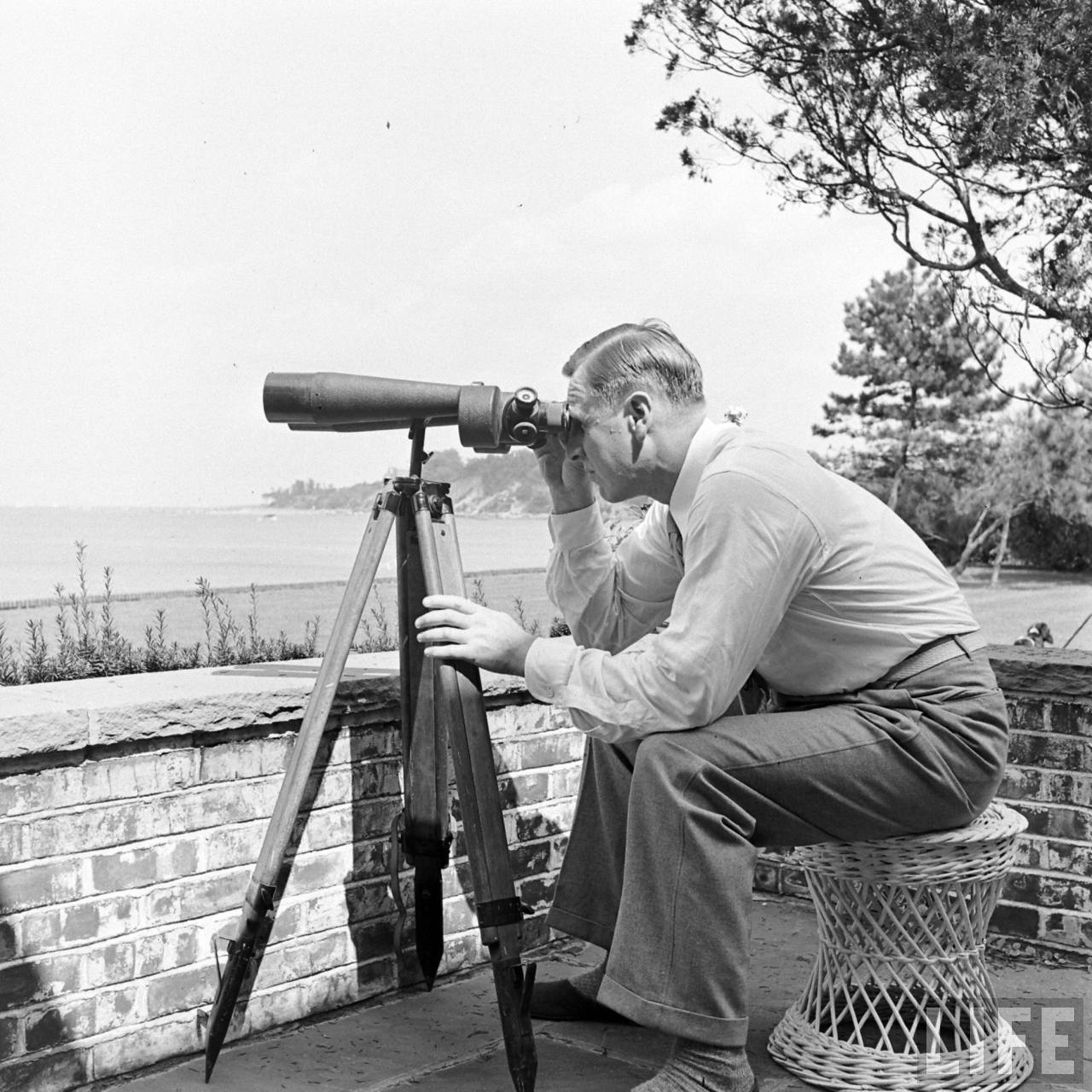
We love the battered straw hat with the madras band he put on with his polo coat between chukkers, the military field glasses he used on his terrace to watch passing boats, and his polo equipment impeccably laid out. Unable to refrain from war work when hostilities broke out though he was too old to fight, Hitchcock quit Lehman Brothers in 1941 and joined Air Intelligence with the rank of major. He was killed in a crash at the age of 44 while testing the new P-51 Mustang, which he’d helped develop. In its obituary, the New York Times wrote, “He was intelligent, personable, humorous, of superb physical equipment, and wholly devoid of pretense… The best of America was in his veins.” —JPS



Democratic Governor Jerry Brown once fought to keep out South Vietnamese refugees from being delivered to his state during his first stint as governor of California in the 1970’s, and although he remains silent on the crisis that is happening on the southern border of his state, Brown’s position, via legislation previously signed, on illegal immigrants from Mexico, Central and South America is much more favorable than the cool response he gave to the Vietnamese refugees who had escaped the tyrannical Viet Cong.
In 1975, Jerry Brown complained, that the federal government wanted to “dump Vietnamese on” California. “We can’t be looking 5,000 miles away and at the same time neglecting people who live here,” Newsweek reported at the time. According to The Washington Post, Larry Engelmann's Tears Before the Rain: An Oral History of the Fall of South Vietnam, writes that Julia Vadala Taft, who led the interagency task force for refugee resettlement, remembered Brown’s opposition.
"The new governor of California, Jerry Brown, was very concerned about refugees settling in his state. Brown even attempted to prevent planes carrying refugees from landing at Travis Air Force Base near Sacramento. . . . The secretary of health and welfare, Mario Obledo, felt that this addition of a large minority group would be unwelcome in California. And he said that they already had a large population of Hispanics, Filipinos, blacks, and other minorities."
In fact, then Senator Joe Biden complained about the Ford administration’s move to bring Vietnamese refugees to the U.S., saying the White House “had not informed Congress adequately about the number of refugees." Liberal presidential icon George McGovern told Newsweek, “I think the Vietnamese are better off in Vietnam.”
Presently, Governor Brown approved a measure allowing non-citizens to get driver’s licenses in California. He also signed a law titled the Trust Act, which bars law enforcement from detaining a foreign national they arrest for a period of time, so that immigration officials can pick up the person(s) charges and start deportation proceedings. Additionally, another law Brown signed allows illegal immigrants to get a law license and practice law in the state and included measures that would restrict who could charge illegal immigrants for aiding them with legal work, Fox News Latino reported in October of 2013.
“While Washington waffles on immigration, California’s forging ahead,” Brown said, according to published reports. “I’m not waiting.”

After talking about how to stream broadcast TV to your computer in the wake of the Aereo decision, a number of you suggested using a TV tuner to receive TV signals on your PC. THis week, we want to know which ones you think are the best.

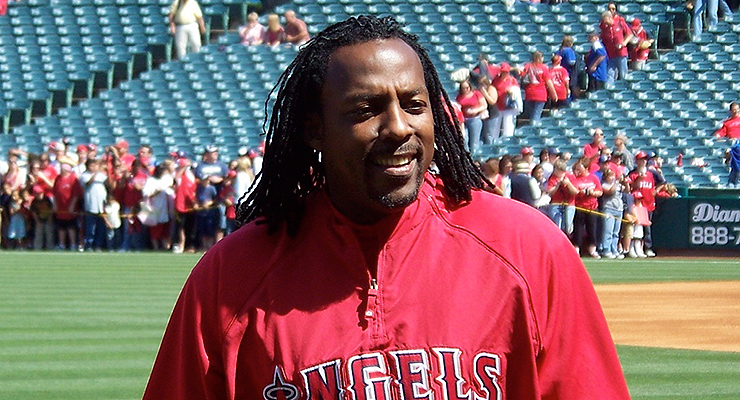
Vladimir Guerrero unleashed some monster throws in his day (via Evan Wohrman).
In addition to the distance, the time of flight is also needed. Again to do this, I counted frames of the videos, as well as used a stopwatch. Once those two parameters are found, we can determine the entire flight of the ball. Once again, I plugged the distance and time values into Alan Nathan’s trajectory calculator to determine the initial speed and angle of the throws. As before, the same assumptions were made regarding the drag coefficient, spin rate, and release height. They were assumed to be 0.350, 1500 rpm, and 6 feet, respectively.
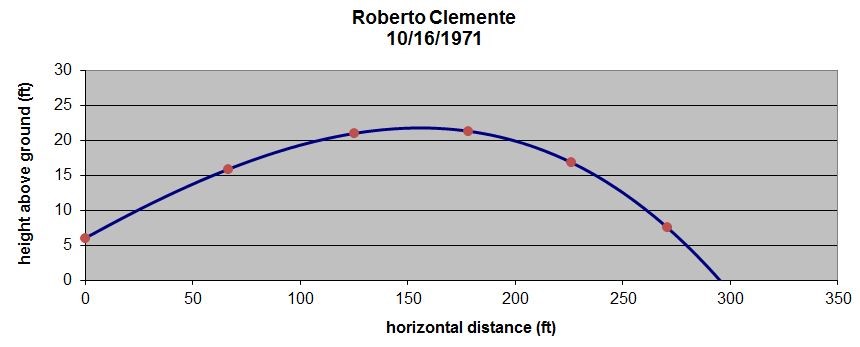
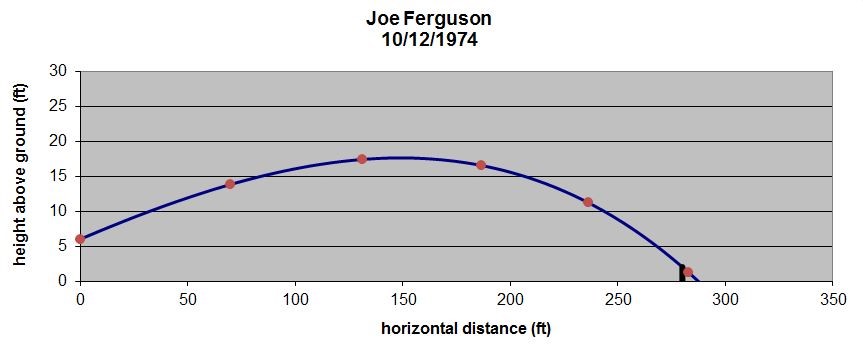
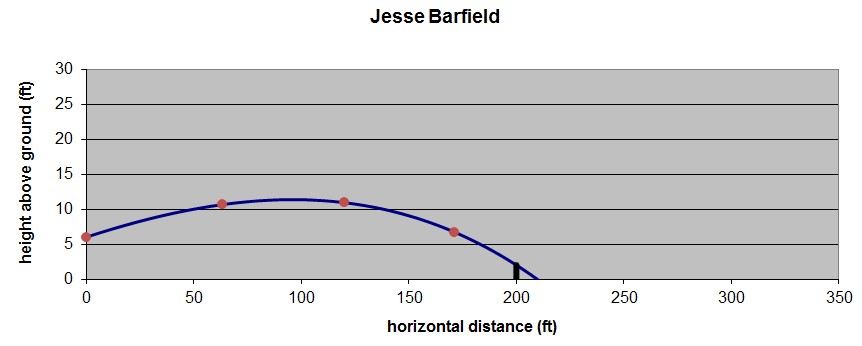
Onto the throws. In these plots, the red dots show the position of the ball in half-second intervals and the bar on the right shows the location and height of the ball when it was caught.
Roberto Clemente was one of the best players of his generation, collecting 3,000 hits being a 12-time Gold Glove winner. A main factor in his Gold-Glove-winning-ways may have been his arm which helped him lead the league in putouts three times. One of his most famous throws occurred in the 9th inning of Game 6 of the 1971 World Series. The game was played at the Oriole’s old stadium, Memorial Stadium. That field was 309 feet to right, and Clemente threw it from the warning track to just in front of home plate, freezing the runner at third. I estimate that the throw traveled 295 feet in 2.79 seconds. After using the trajectory calculator, I find that Clemente released it at 98.6 mph and at an angle of 9.7 degrees.
Your browser does not support iframes.
Joe Ferguson was a catcher and right-fielder for the Dodgers in 1974 when they fell to the Oakland A’s in the World Series. However, his memorable play of the series came in Game 1 when he cut in front of centerfielder Jimmy Wynn on a fly ball to throw out Sal Bando at home. I estimate that his throw traveled 280 feet in 2.47 seconds. From these values, I find that he released the ball at an angle of 7.5 degrees with the ball travelling at 103.2 mph.
Your browser does not support iframes.
Dave Parker had a memorable night at the 1979 All-Star Game in Seattle as he threw out two runners and was named MVP of the game. On this play, Parker fields the ball in deep right field and fires a strike home to nail Brian Downing. The game occurred in the Kingdome where the right field foul pole is 316 feet from home. Parker is certainly away from the wall and the track and the ball travels on the fly to home, so I estimate the throw to be 260 feet and have a hang time of 2.10 seconds. From there, I find that the ball was released at 109.6 mph and at an angle of 5.3 degrees.

The throw in question occurs at 3:14.
Ellis Valentine led the major leagues with 25 assists and received a Gold Glove in 1978. His manager Felipe Alou praised his strong arm. His arm strength is on display on this throw as he throws from the right field corner to third base on one hop. The right field line measures 325 feet in Olympic Stadium, and I estimate that the ball bounces 15 feet from third base, giving a total distance of 320 feet. I also estimate that the time of flight is 3.14 seconds. Therefore, Valentine had to have released the ball at 98.7 mph and an angle of 11.8 degrees.

The throw in question occurs at 0:08.
Jesse Barfield led the American League in assists three years in a row (1985-87) and was well known for his arm in the 80s. On this throw, he guns out a runner trying to advance to third on a single to right. I estimate the he threw the ball from 200 feet away and that it only took 1.80 seconds for the ball to get to third base. From these values, I find that Barfield released the ball at 92.6 mph and at an angle of 5.7 degrees.
Your browser does not support iframes.
Bo Jackson burst onto the baseball scene in 1987 after winning college football’s Heisman Trophy in 1985. A two-way star at Auburn University, he became the only athlete to be named an All-Star in both MLB and the NFL. A legendary moment from the 1989 season was when Jackson threw out speedster Harold Reynolds at home plate (Reynolds had 25 stolen bases that season). The throw from the left field warning track to home plate measures in at 310 feet in the Mariners’ old home, the Kingdome, with the foul pole being 316 feet from home. I also find that the ball was in the air for 3.15 seconds. I find that Jackson had to have released the ball at 96.2 mph and an angle of 12.3 degrees.

Your browser does not support iframes.
Bo Jackson was an incredible athlete and physical specimen, but a hip injury in 1991 derailed his potentially illustrious career. In 1993 while playing for the White Sox, he delivered a strike to third base off a fly ball to right (My favorite part of this video is when his teammates come over to congratulate him and Bo’s arms are twice as big as Tim Raines’). Old Yankee Stadium was 385 feet to right center and 314 feet down the right field line, but Jackson was not near the wall. Estimating the distance on this throw was tricky, but I find it to be 285 feet. Also, I estimate the time of flight to be 2.60 seconds. From these values, I find that ball was travelling at 100.5 mph and came out at an angle of 8.2 degrees.

Your browser does not support iframes.
Finally, we finish with another throw by Vladimir Guerrero. This throw occurred in the spacious Shea Stadium which was 341 feet to the right field pole. Guerrero throws the ball from near the right field corner to home on one hop to get Todd Hundley out. I estimated that the ball bounced 15 feet from home, thus giving the throw a total distance of 310 feet. I also find that the ball was in the air for 2.73 seconds. Based on these values, Guerrero released the ball at 106.7 mph and at an angle of 7.8 degrees.

The table below summarizes all of the information presented above for easy comparisons. Note that the average horizontal speed is just the distance divided by the time.
| Comparing the Great Throws |
|---|
| Player | Date | Ballpark | Distance (ft) | Time (sec) | Avg Horiz Speed (mph) | Catch off ground (ft) | Release speed (mph) | Release angle (degrees) |
| Roberto Clemente | 10/16/71 | Memorial Stadium | 295 | 2.79 | 72.1 | 0 | 98.6 | 9.7 |
| Joe Ferguson | 10/12/74 | Dodger Stadium | 280 | 2.47 | 77.3 | 2 | 103.2 | 7.5 |
| Dave Parker | 7/17/79 | Kingdome | 260 | 2.10 | 84.4 | 4 | 109.6 | 5.3 |
| Ellis Valentine | ? | Olympic Stadium | 320 | 3.14 | 69.5 | 0 | 98.7 | 11.8 |
| Jesse Barfield | ? | Kingdome | 200 | 1.80 | 75.7 | 2 | 92.6 | 5.7 |
| Bo Jackson | 6/5/89 | Kingdome | 310 | 3.10 | 66.1 | 1 | 96.2 | 12.3 |
| Bo Jackson | 8/31/93 | Yankee Stadium | 285 | 2.60 | 74.7 | 0 | 100.5 | 8.2 |
| Vladimir Guerrero | 6/3/97 | Shea Stadium | 310 | 2.73 | 77.4 | 0 | 106.7 | 7.8 |
Also, the graph below overlays all the throws onto one another for quick comparisons.
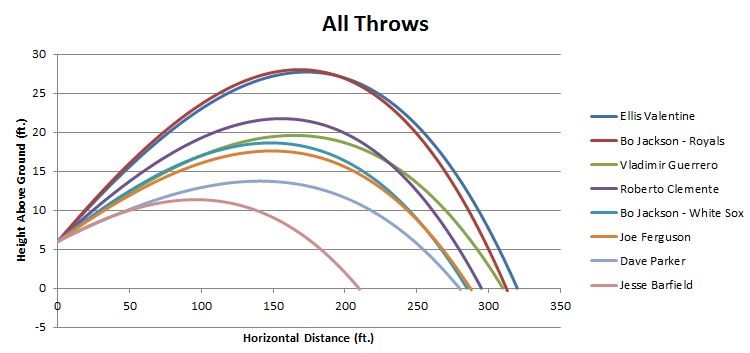
What I find surprising is the speed at which Dave Parker released the ball. 109 mph is very fast and he did it at such a low angle of 5.3 degrees. He was able to get his whole body around the ball and get a crow hop though, which certainly helped him. Bo Jackson’s throws are impressive as well because it doesn’t appear that he steps into the throw that much. His throw in Yankee Stadium happened after his hip surgery and delivered a strike after being flat-footed.
As with the last article, I do not wish to declare a winner, only to present the metrics of these outstanding throws and hope that these numbers can offer a new direction to analyze throws over word-of-mouth arguments.

_______________FEATURES______________


_______________DESTINATIONS______________


_______________BOAT REVIEWS______________


Visitors at select Boston-area parks will soon be able to sit, relax, and charge their mobile devices. Dubbed "Soofas," these solar-powered benches will also disseminate location-based information such as noise, temperature, and air pollution levels through a website, according to Yahoo Tech. The high-tech amenity was first piloted in 2013, and has since been upgraded to include a larger seating area and the ability to plug in two phones simultaneously via USB. In the future, Soofas may feature inductive charging stations similar to those being deployed in Starbucks outlets through out the US.


Privacy is a prerequisite for a prosperous economy. Even the White House admits:
People must have confidence that data will travel to its destination without disruption. Assuring the free flow of information, the security and privacy of data, and the integrity of the interconnected networks themselves are all essential to American and global economic prosperity, security, and the promotion of universal rights.
Here are four ways mass surveillance hurts our economy ...
The Information and Privacy Commissioner of Ontario, Canada – Ann Cavoukian, Ph.D. – noted last month:
Privacy is Essential to … Prosperity and Well-Being
• Innovation, creativity and the resultant prosperity of a society requires freedom;
• Privacy is the essence of freedom: Without privacy, individual human rights, property rights and civil liberties – the conceptual engines of innovation and creativity, could not exist in a meaningful manner;
• Surveillance is the antithesis of privacy: A negative consequence of surveillance is the usurpation of a person’s limited cognitive bandwidth, away from innovation and creativity.
The Financial Post reported in February: “Big Brother culture will have adverse effect on creativity, productivity“.
Christopher Lingle – visiting professor of economics at ESEADE, Universidad Francisco Marroquín – agrees that creativity is a key to economic prosperity.
Edward Snowden said last year:
The success of economies in developed nations relies increasingly on their creative output, and if that success is to continue we must remember that creativity is the product of curiosity, which in turn is the product of privacy.
Silicon Valley is currently one of the largest drivers of the U.S. economy. Do you think Bill Gates and Steve Jobs could have tinkered so creatively in their garages if the government had been watching everything they do?
Everyone who has every done anything creative knows that you need a little privacy to try different things before you’re ready to go public with it. If your bench model, rough sketch or initial melody is being dissected in real time by an intrusive audience … you’re not going to be very creative.
Moreover, surveillance hampers the free flow of information as many people begin to watch what they say. The free flow of information is a core requisite for a fast-moving economy … especially an information economy, as opposed to economies focused on resource-extraction or manufacturing.
As quoted above, the White House states:
Assuring the free flow of information [is] essential to American and global economic prosperity, security, and the promotion of universal rights.
Mass surveillance makes people more reluctant to share information … and thus hurts the economy.
Top computer and internet experts say that NSA spying breaks the functionality of our computers and of the Internet. It reduces functionality and reduces security by – for example – creating backdoors that malicious hackers can get through.
Remember, American and British spy agencies have intentionally weakened security for many decades. And it’s getting worse and worse. For example, they plan to use automated programs to infect millions of computers.
How much time and productivity have we lost in battling viruses let in because of the spies tinkering? How much have we lost because “their” computer programs conflict with “our” programs?
Microsoft’s general counsel labels government snooping an “advanced persistent threat,” a term generally used to describe teams of hackers that coordinate cyberattacks for foreign governments. It is well-known among IT and security professionals that hacking decreases employee productivity. While they’re usually referring to hacking by private parties, the same is likely true for hacking by government agencies, as well.
And the spy agencies are already collecting millions of webcam images from our computers. THAT’S got to tie up our system resources … so we can’t get our work done as fast.
Moreover, the Snowden documents show that the American and British spy agencies launched attacks to disrupt the computer networks of “hacktivists” and others they don’t like, and tracked supporters of groups such as Wikileaks.
Given that the spy agencies are spying on everyone, capturing millions of screenshots, intercepting laptop shipments, creating fake versions of popular websites to inject malware on people’s computers, launching offensive cyber-warfare operations against folks they don’t like, and that they may view journalism, government criticism or even thinking for one’s self as terrorism – and tend to re-label “dissidents” as “terrorists” – it’s not unreasonable to assume that all of us are being adversely effected to one degree or another by spy agency operations.
Bill Binney – the high-level NSA executive who created the agency’s mass surveillance program for digital information, a 32-year NSA veteran widely regarded as a “legend” within the agency, the senior technical director within the agency, who managed thousands of NSA employees – tells Washington’s Blog:
The other costs involve weakening systems (operating systems/firewalls/encryption). When they do that, this weakens the systems for all to find. Hackers around the world as well as governments too.
These costs are hard to count. For example, we hear of hackers getting customer data over and over again. Is that because of what our government has done?
Or, how about all the attacks on systems in government? Are these because of weakened systems?
Trust is KEY for a prosperous economy. It’s hard to trust when your government, your internet service provider and your favorite websites are all spying on you.
The destruction of privacy by the NSA directly harms internet companies, Silicon Valley, California … and the entire U.S. economy (Facebook lost 11 millions users as of April mainly due to privacy concerns … and that was before the Snowden revelations). If people don’t trust the companies to keep their data private, they’ll use foreign companies.
American tech companies - including Verizon, Cisco, IBM and others - are getting hammered for their cooperating with the NSA and lack of privacy protection. The costs to the U.S. economy have been estimated to be in the hundreds of billions of dollars. And see this and this.
And destruction of trust in government and other institutions is destroying our economy.
A top cyber security consultant notes:
If privacy is not protected while performing mass surveillance for national security purposes, then the people’s level of trust in the government decreases.
And as we noted in 2002:
Personal freedom and liberty – and freedom from the arbitrary exercise of government power – are strongly correlated with a healthy economy, but America is descending into tyranny.
Authoritarian actions by the government interfere with the free market, and thus harm prosperity.
U.S. News and World Report notes:
The Fraser Institute’s latest Economic Freedom of the World Annual Report is out, and the news is not good for the United States. Ranked among the five freest countries in the world from 1975 through 2002, the United States has since dropped to 18th place.
The Cato institute notes:
The United States has plummeted to 18th place in the ranked list, trailing such countries as Estonia, Taiwan, and Qatar.
***
Actually, the decline began under President George W. Bush. For 20 years the U.S. had consistently ranked as one of the world’s three freest economies, along with Hong Kong and Singapore. By the end of the Bush presidency, we were barely in the top ten.
And, as with so many disastrous legacies of the Bush era, Barack Obama took a bad thing and made it worse.
But the American government has shredded the constitution, by … spying on all Americans, and otherwise attacking our freedoms.
Indeed, rights won in 1215 – in the Magna Carta – are being repealed.
Economic historian Niall Ferguson notes, draconian national security laws are one of the main things undermining the rule of law:
We must pose the familiar question about how far our civil liberties have been eroded by the national security state – a process that in fact dates back almost a hundred years to the outbreak of the First World War and the passage of the 1914 Defence of the Realm Act. Recent debates about the protracted detention of terrorist suspects are in no way new. Somehow it’s always a choice between habeas corpus and hundreds of corpses.
Of course, many of this decades’ national security measures have not been taken to keep us safe in the “post-9/11 world” … indeed, many of them [including spying on Americans] started before 9/11.
And America has been in a continuous declared state of national emergency since 9/11, and we are in a literally never-ending state of perpetual war. See this, this, this and this.
***
So lawlessness infringement of our liberty is destroying our prosperity.
Put another way, lack of privacy kills the ability to creatively criticize bad government policy … and to demand enforcement of the rule of law. Indeed, 5,000 years of history shows that mass surveillance is always carried out to crush dissent. In other words, mass surveillance is the opposite of the principle of the rule of law (in distinction to the rule of men) upon which America was founded.
Free speech and checks and balances on the power of government officials are two of the main elements of justice in any society. And a strong rule of law is – in turn – the main determinant of GDP growth.


One of the most common reasons for discharge from the U.S. military is musculoskeletal injuries. This has a lot to do with the fact that soldiers often have to walk long distances carrying 100 pounds or more of gear on their backs, which quickly takes a toll on the body. DARPA is designing technology that will reduce the strain on soldiers’ bodies by giving them lightweight suits which will support body tissues and muscles.

The project is known as Warrior Web. Unlike other exoskeleton-type suits that have been envisioned to help make soldiers faster and stronger, Warrior Web is a lightweight suit that can be worn under a uniform. It’s flexible enough to allow the soldier to move normally while augmenting and supporting the natural muscles.

Another of the suit’s functions is to detect any injuries the soldier might suffer while wearing the Warrior Web, then adapt to provide more support to the injured area. The technology could be used outside of the battlefield as well, of course, to support firefighters and police, or even to help injured veterans regain some of their lost mobility.
One of DARPA’s loftier goals for this project is to provide enough supplementary muscle power to soldiers that they can easily run a four-minute mile. The suit should be compatible with approximately 90 percent of wearers, both male and female. Using just 100W of power from a small battery, the entire setup should be light enough that soldiers will hardly realize they are wearing it. The only difference will be that they will be able to move faster, stronger and with less fatigue than they could without the suit.








Bosnian actor Jovan Mojsilovic poses in front of monument honoring Gavrilo Princip at ceremony on Saturday (AP)
World War I should be a forgotten event, with its 16 million deaths a symbol of a time when people weren't nearly as smart and sophisticated as we are today, and so did many stupid things.
That may be the attitude in America, but it's certainly not in the Balkans, where a monument to Gavrilo Princip was unveiled on Saturday in East Sarajevo by Nebojsa Radmanovic, the Serb leader in the government of Bosnia-Herzegovina.Exactly one hundred years ago, on June 28, 1914, Gavrilo Princip shot and killed Archduke Franz Ferdinand, the heir to the Austro-Hungarian empire, and his pregnant wife, Sophie.
At Saturday's ceremony, Radmanovic said that Princip was a hero to the Serb people:"Today, we have Gavrilo in East Sarajevo, a revolutionary, a man who to us, is one century of hope. We remember the Young Bosnia members and Gavrilo Princip proudly. ...There were also centenary commemorations of the start of World War I in the other half of Sarajevo, but the Muslims and Croats in those commemorations do not consider Princip or any Serb to be a hero. Fresh in their minds are the memories of the Bosnian war in 1992-95, when 100,000 people died and Sarajevo suffered a 1,425 day siege by Serb forces. To them, Princip is just a terrorist who killed a politician and a pregnant woman, and brought a flourishing epoch to an end.
Gavrilo Princip’s shot was a shot for freedom. His shot was a prelude to what some Europeans had prepared for years, and Serbs finished the war as winners. We remember Mlada Bosna and Gavrilo Princip with pride."
"It was during this initial wave of Bosnian Serb ethnic cleansing — orchestrated by Radovan Karadzi and his generals — that the world began to hear tales as horrifying as anything you can imagine. Militia units would enter a town and indiscriminately kill anyone they saw — civilian men, women, and children. Pregnant women mortally wounded by gunfire were left to die in the street. Fleeing residents crawled on their stomachs for hours to reach cover, even as their family and friends were shot and blown up right next to them. Soldiers rounded up families, then forced parents to watch as they slit the throats of their children — and then the parents were killed, too. Dozens of people would be lined up along a bridge to have their throats slit, one at a time, so that their lifeless bodies would plunge into the river below. (Villagers downstream would see corpses float past, and know their time was coming soon.) While in past conflicts houses of worship had been considered off-limits, now Karadzi's forces actively targeted mosques and Catholic churches. Perhaps most despicable was the establishment of so-called “rape camps” — concentration camps where mostly Bosniak [Bosnian Muslim] women were imprisoned and systematically raped by Serb soldiers. Many were intentionally impregnated and held captive until they had come to term (too late for an abortion), when they were released to bear and raise a child forced upon them by their hated enemy. These are the stories that turned “Balkans” into a dirty word.
The Bosnian Serb aggressors were intentionally gruesome and violent. Leaders roused their foot soldiers with hate-filled propaganda (claiming, for example, that the Bosniaks were intent on creating a fundamentalist Islamic state that would do even worse to its Serb residents), then instructed them to carry out unthinkable atrocities. For the people who carried out these attacks, the war represented a cathartic opportunity to exact vengeance for decades-old perceived injustices. Everyday Serbs — who, for centuries, have been steeped in messages about how they have been the victims of their neighbors — saw this as an opportunity to finally make a stand. But their superiors had even more dastardly motives. They sought not only to remove people from 'their' land, but to do so in such a heinous way to ensure that the various groups could never again tolerate living together."
From the point of view of Generational Dynamics, Bosnia and Yugoslavia were on a "World War I" timeline, meaning that their crisis wars occurred around the time of WWI, and then repeated 60 to 80 years later. The Iran/Iraq war (1980-88) and the Syria/Lebanon war (1976-1982) are other examples of wars on the WWI timeline, and these wars were full of similar atrocities.
Americans and Westerners in general think that they're more civilized and immune to these atrocities, but nothing could be further from the truth. Western countries, for the most part are on the "World War II timeline." These same kinds of atrocities occurred in WWII, and if these wars recur years after the end of WWII, Westerners will be subject to the same kinds of atrocities.
BBC and inSerbia (Belgrade) and B92 (Belgrade) and Understanding YugoslaviaThat shows how easy it is for a misstep or miscalculation to lead to war.
BBC and National Post (Toronto)

On June 28, 1914, Austrian Archduke Franz Ferdinand and his wife, Sophie, were murdered by Serbian nationalist Gavrilo Princip in Sarajevo. The assassination set off a chain of events that led to the outbreak of the First World War in Europe and affirmed famed German Chancellor Otto von Bismarck’s prediction that the next great war would start because of some “foolish thing in the Balkans.”
The chessboard diplomacy that followed in the next month before hostilities broke out is brilliantly chronicled by military historian Gordon Martel in his book, The Month That Changed the World: July 1914. Focusing on the decisions of heads of state and ambassadors, as well as military men of the European countries involved, Martel posits that war was not inevitable as many historians have claimed.
Martel explains that 1914 was “the year of Peace in Europe” and that there was very little indication that a cataclysmic conflict was about to break out. The last large-scale war had ended nearly a half century before when France was defeated by Germany in the 1871 Franco-Prussian war. But there were no significant wars between the great powers on the continent since that time, and the arc of history seemed to indicate that peace was nearly a permanent condition.
The only part of Europe that had experienced bloodshed and war in the years before World War I was the Balkans, where borders had been in a state of flux and peoples had been uncomfortably thrown into a tossed salad of rival ethnicities, religions, and nationalities. Gavrilo Princip, a young Serb bitter about living under the rule of the Austro-Hungarian Empire, had been a part of Narodna Odbrana, a Serbian nationalist group committed to creating a new Serbian nation. The organization believed that a single act of anarchy and violence could rouse public opinion to their cause. With Princip’s murder of the Austrian Archduke, the entire region was sent into turmoil, and the seemingly implacable stability that had marked European diplomacy for half a century cracked and collapsed.
Austria, egged on by it close German ally, made a list of demands to Serbia that could not be met and set off the month-long negotiation that ended in catastrophe. Martel makes it clear how many leaders did not take the incident seriously. He remarked that Russian Czar Nicholas II was so lackadaisical about the events taking place that he “continued with preparations for the royal family to leave… on board the imperial yacht for their annual sailing trip to the Finnish Skerries.”
Martel gives a day-by-day account of the byzantine system of negotiation in the final days of July and explains the rushed military preparation of a continent totally unprepared for war. While the narrative does not rise to the level of literary masterpiece like Barbara Tuchman’s The Guns of August, it surpasses her work in its level of detail and analysis regarding the complex system of diplomacy of early twentieth century Europe.
The ultimate conclusion from Martel’s work is that although a single event like the assassination of the Austrian Archduke can set forces in motion and lead to war, those events could have been largely shaped by leaders to prevent war in 1914. After describing how various leaders could have changed the course of events, Martel said that historians ultimately have no way of knowing how these decisions could have changed history. He concluded, “What we do know is how those in positions of authority made the choices that produced unprecedented suffering and upheaval. The tragic era that followed can be explained only by their hubris, combined with chance and circumstance.”
Martel gives a valuable lesson to readers and modern leaders about the importance of national security strategy, and how fragile a seemingly implacable global system can be overturned by a single event.


Claiming it could no longer abide the Obama administration's five-year refusal to approve construction of the Keystone XL pipeline designed to bring 830,000 barrels a day of much-needed Alberta shale oil to U.S. refineries, the Canadian government recently approved plans for a huge new pipeline and port project to ship that oil to Asia instead.
When completed, the $7.9 billion Enbridge Northern Gateway Project, approved by Canada’s federal government on June 17, will consist of an environmentally safe, 730-mile oil pipeline. It will be capable of moving 600,000 barrels a day of Alberta oil to the pacific coast town of Kitimat, British Columbia, where a new state-of-the-art super tanker port facility will be built to ship the oil to thirsty Asian ports.
It was initially hoped that recent discoveries of massive new Canadian oil and gas reserves could benefit both Canada and the United States by building a safe and reliable pipeline to bring the oil to U.S. refineries in Louisiana and Texas. Building the proposed 1,179-mile Keystone pipeline promised, not just a huge new supply of reliable, clean, and affordable oil to U.S. markets, but the creation of up to 20,000 high-paying construction jobs. An additional 22,000 jobs economists predicted would have resulted from the broader economic stimulus the project would have generated.
Rather than purchasing crude from a friendly and allied neighbor, the United States will most likely need to continue its reliance upon hostile sources like Venezuela. Energy analysts had hoped that construction of Keystone could have replaced almost half of the current U.S. daily crude purchases from that volatile, anti-American dictatorship, depriving Venezuela of the resources it relies upon to stay in power and fund its Cuban allies.
Refusal to approve Keystone has forced suppliers to deliver their flammable crude via thousands of trucks and railcars traveling on America’s highways and railroads, rather than in a pipeline.


The Statler Brothers were a gospel band most famous for the years they spent as Johnny Cash's backup singers and opening act. In 1979, they released a song called "How to Be a Country Star." "There's questions," it began, "we're always hearing everywhere we go: like how do I cut a record or get on a country show?"
Their comical answer was a rambling list of what today we'd call shout outs: "learn to sing like Waylon or pick like Jerry Reed," "put a cry in your voice like Haggard," and "get a hip band like Willie." On and on the song goes, naming more names than a teacher on the first day of school. Near the end of the role call, they suggest: "Get a gimmick like Charley Pride got and you'll be a country star."
Charley Pride's "gimmick," as everyone knew by 1979, is that he is black. No one knew that in 1966, when Pride's first single was distributed to country stations without publicity photographs. His agent feared that if disc jockeys knew Pride's race they wouldn't play his music. A reasonable fear in a genre that only last year seemed to suggest that the song "Accidental Racist" might constitute a meaningful conversation about race.
Somehow, by 1967, only a year after his first single, Pride was performing at the Grand Ole Opry. In 1971, he was named both Entertainer of the Year and Male Vocalist of the Year by the Country Music Association: a rare honor reported by the Associated Press under the headline "Pickin' A Guitar Instead of Cotton Pays Off For Singer Charley Pride."
That year, Pride had released his most popular song. In two minutes and only 137 words, "Kiss an Angel Good Mornin'" topped the charts and brought Pride's baritone voice into some of the most intimate spaces in America: automobiles and living rooms, wherever radios were tuned to country stations.
The song is a little like a hymn. Not because it has any gospel themes—it's quite clearly about what Pride calls "a woman and a man in love"—but because it's most beautiful if you already believe. I've always thought that love was itself a rehearsal of faith, in the way that there are things in which you only find meaning—a few things in which you only find joy, if you're already in love. If you're not already in love, then a song like this seems saccharine, even a little silly, the way that a hymn can sometimes seem to those outside the church.
The song opens with Pride smiling like a jack-o-lantern, so enthusiastically that friends ask him why. "And every time they ask me why, I just smile and say: ‘You've got to kiss an angel good mornin.'" There you have it. No consternation; no complications. Just an angel to call your own, and all you have to do is kiss her and "let her know you think about her when you're gone." Just "kiss an angel good mornin' and love her like a devil when you get back home." No confusion; no conflict. There you have it.
The song is an autostereogram that only those already in love can see. "People may try to guess the secret of happiness," Pride sings, "but some of them never learn it's a simple thing." Pride would record thirty-five other number-one songs, but it was "Kiss An Angel Good Mornin'" that made his career, which is itself a kind of puzzle.
Like the actual black cowboys of the American West, black performers in country radio are largely forgotten. When Darius Rucker, of Hootie and the Blowfish fame, took his song "Don't Think I Don't Think About It" to the top of the country charts in 2008, many were shocked to learn Charley Pride had gotten there first, in 1971, and that Pride had been there as recently as 1983. Just as when Pride first performed at the Grand Ole Opry in 1967, many were shocked to learn DeFord Bailey had beaten him there, playing his harmonica on that stage from 1927 until 1941.
Having made a career in country music, Pride seemed more troubled by the barriers between musical genres. In 1977, he told a reporter, "A whole bunch of the 20 million blacks in America are out there waiting to enjoy Charley Pride." That was after a black radio station in Chicago had invited him into the studio, interviewed him, and then played one of his records, only to announce that they would not play his music again.
"It seems like if you're a country singer, they feel they've got to make you suffer for it, because you started out as a country singer," Pride explained. He protested the "separatism practices" of radio stations, even as the reporter could not help but mention how "an ex-baseball player from Mississippi entering country music just as race riots rocked Detroit and Newark" was "understandably silent on the subject of race." Born to a sharecropper in Sledge, Mississippi, Pride played in the Negro American League and served in the Army before moving to Nashville.
He had grown up listening to country music, and that's where he got his break, even though he insisted his music wasn't only country. Listen to "Kiss An Angel Good Mornin'" and you'll understand why: the beat and the baritone are clearly country, but there's something else, just a little kernel of corn just waiting to pop in the lyrics. The song's been covered by Conway Twitty and Alan Jackson, but you could easily imagine Rod Stewart or Barry Manilow kissing that same angel.
Casey N. Cep is a writer from the Eastern Shore of Maryland.
4 CommentsThe post How to Be a Black Country Star appeared first on The Awl.

Even if we know how to remove one of the worst disease-carriers, ticks , it's better safe than sorry. Instead of just spraying on some DEET-based repellent, take your bug protection further by coating your clothes with permethrin.http://lifehacker.com/properly-remov...

 A 1940s capitalism cartoon
is making a comeback with over 7 million views on YouTube. The
cartoon "Make Mine Freedom" was produced by Harding University, a
private university in Arkansas in 1948 extolling the virtues of
free-market capitalism and inveighing against "isms" particularly
communism and statism more generally.
A 1940s capitalism cartoon
is making a comeback with over 7 million views on YouTube. The
cartoon "Make Mine Freedom" was produced by Harding University, a
private university in Arkansas in 1948 extolling the virtues of
free-market capitalism and inveighing against "isms" particularly
communism and statism more generally.
The cartoon mixes humor with serious philsophy as it defines what freedom means: "America is the freedom to work at the job you like, freedom of speech and to peacefully assemble, freedom to own property, security from unlawful search and seizure, the right to a speedy and public trial, protection against cruel punishments and excessive fines, the right to vote, and worhip God in your own way."
The cartoon shows how freedom fosters entrepeurship giving the example of a fictional Joe Doakes, just a "regular guy" who some viewed as "lazy" but liked to "tinker around his barn." But then "one day he had an idea, and because he was free to dream and tinker" he invents a car. However, he needs additional resources to build more of these cars, so he gets money from people in the community, making them "capitalists." With the money, he hires his unemployed friend Willie to help build the cars, and Willie becomes a skilled auto expert. Joe's idea grows into a large company providing thousands of jobs.
It goes on to warn that internal conflicts, such as tensions between labor and management, classes, races, and religious groups often leads individuals to seek statism as their solution.
The cartoon cautions not to drink the "ism" or statism kool-aid because it will squash their freedom by banning labor strikes, taking away private property, and rescinding voting rights from political dissidents. It humorously shows a protestor railing against the big blue fist symbolizing statism when the fist smashes him with a "State Propaganda Speaker" forcing him to regurgitate "Everything is Fine, Everything is Fine."
The cartoon makes a point to not only explain why freedom should matter to just the capitalists, but also the laborer and farmer.
While clever, the video doesn't fully speak to today's context where the Cold War is over and most generally agree communism and authoritarian regimes are a bad idea. Today, it needs to be explained why freedom and free-market capitalism better meet the needs of people than the soft paternalism of a well-meaning social democracy.

The next time you head to a casino, take this advice from a former casino floor manager, card counter, and dealer and don't just go to any table.

 If time is your only concern, it's easy to make a decent version of shredded hash browns. Just grate a potato on the big holes of a cheese grater, toss it in a skillet with some fat, and cook until golden. But how do you make a truly great version that stays extra-crispy?
Read More
If time is your only concern, it's easy to make a decent version of shredded hash browns. Just grate a potato on the big holes of a cheese grater, toss it in a skillet with some fat, and cook until golden. But how do you make a truly great version that stays extra-crispy?
Read More

Central Park, New York -- T2 Lockers, founded and run by Army vet and triathlete Richard Rafael, provides street-side storage for New Yorkers while they train in Central Park.
...Small lake bass fishing in Florida offers a lot of promise. Picking the right lake is key.

Nice drainage lake bass taken in mixed hydrilla and pads.
Reno Alley wheeled us into a small boat ramp off a side street in Haines City and we quickly launched his 18-foot bass rig. Sixty seconds later, we made our first cast. We weren’t more than a modest rifle shot from the ramp and never needed to put the boat on plane to get there. Within minutes we boated a fat 3-pound bass, and that was the start of a steady parade of fish. By the time an early afternoon thunderstorm ended our day, we had tallied over 20 bass. The best was pushing 7 pounds.
I doubt if we burned a quart of gas. Most of the time, the trolling motor provided all the propulsion we needed on the 450-acre lake.
Big lakes garner a lot of publicity, but the dozen best-known big lakes in Florida are dwarfed by the 7,000 named lakes, rivers and ponds that share the peninsula with them. That’s a lot of fishing water that a lot of anglers ignore, and many are easy to access. Polk County, for example, has over 500 small lakes in the 200- to 500-acre range, and most have excellent county-maintained ramps. The same situation occurs in many other areas of the state. In a lot of cases, you can pull your boat up to the ramp on a Saturday morning and have little, if any, company. Alley, who operates Memory Makin’ Guide Service from his home in Frostproof, likes that.
 Reno Alley gets away from the crowds and into the fish.
The Small Lake Advantage
“Big lakes have a lot of water,” says Alley, who has been guiding and fishing tournaments in central Florida for over 22 years, “but they also get a lot of pressure. Some have a tournament on them virtually every weekend, and those anglers who fish those tournaments spend a lot of non-tournament time on the lake to keep up with the fish. The result is that the bass are looking at a lure darn near every day of the week.”
With high usage also comes congested ramps, limited parking and a lot of boats vying for the best spots. But, just a few miles away there could be a small lake that may not have seen an angler in weeks.
“First thing I do on any small lake I’m considering is to just idle around the lake and look,” explains Alley. “If I see a lot of docks with a lot of boats, I can figure that the lake gets pounded pretty regularly. This is especially true if there is an RV park or mobile home park on the lake. That indicates retirees, who spend a lot of time fishing. I won’t waste time on lakes like this because there are plenty of others that get little pressure that I can look at.”
Once a lake passes that basic test, Alley will get down to finding bass. Given the smaller waters, that’s not that difficult to do because prime cover is not abundant. Locate the key areas and you can expect to find fish there on subsequent trips.
The key areas depend upon the type of small lake you are fishing. There are two basic types in Florida: drainage lakes and sinkhole lakes. Each presents a different habitat and the techniques for finding bass are different.
Drainage Lakes
These are characterized by being somewhat “soup bowl” in shape, with very gradual depth contours and little in the way of offshore structure. Relatively shallow, maximum midlake depths seldom exceed 12 feet, and many (especially in coastal and northern portions of the state) have stained water that prohibits the growth of vegetation much below six or seven feet, although some may have offshore hydrilla.
If offshore hydrilla is not present, the fish-holding cover will be the littoral zone. Most drainage lakes are rimmed with shallow vegetation extending outward to a defined weedline in five to seven feet of water. Bass on these lakes don’t live deep and move shallow to feed. They live shallow and move to outer weedlines to feed.
Locating drainage lake bass is simple. I like to stick a 6-inch shiner four feet under a float, toss it 50 feet behind the boat, put the trolling motor on slow speed, bring the boat to within 10 feet of the outer weedline, and then just circle the lake. Note every place you get a strike—or, where the shiner just went ballistic. Either indicates that bass are there. The shiner is your “bird dog.” You can learn more about a drainage lake in one day slow-trolling shiners than you can in a week of casting lures.
If shiners are not an option, toss a 5-inch hard-plastic jerkbait (Bomber Long A, Rapala, Yo-Zuri, Sebile, etc.) 60 or so feet behind the boat and slowly troll the edge under outboard power.
Once you find active areas, expect bass to move to outer edges (especially vegetation points extending to deeper water) early and late and retreat to shallow overhead cover at midday. Topwater lures, countdown crankbaits and jerkbaits are excellent choices on the outer edges. Inside, opt for weedless soft-plastic jerkbaits, frogs, spinnerbaits, and flipping soft-plastic lures.
The only real exception to this is if offshore hydrilla is present. In that case, find it! During the extremes of heat or cold this becomes prime bass habitat.
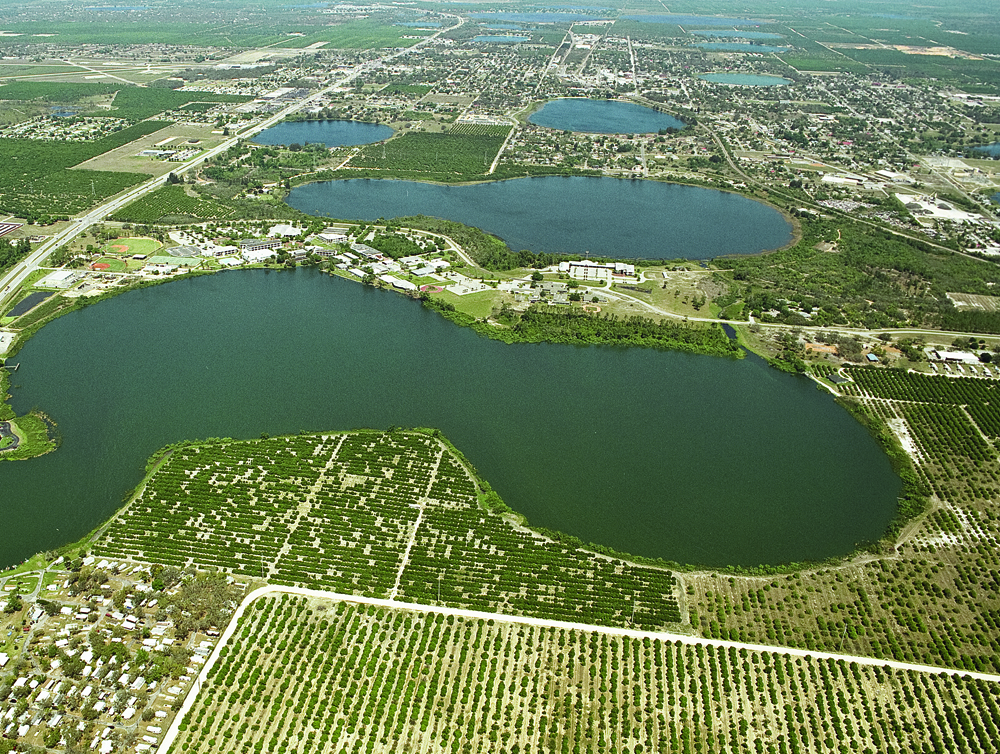
Circular sinkhole lakes dot the terrain near Avon Park. In foreground, Glenada and Lelia.
Sinkhole Lakes
Often fed by one or more deep springs, sinkhole lakes are characterized by a narrow littoral zone; water clarity ranging from clear to slightly stained; and a wealth of offshore structure in the form of bars, drops and holes, some as deep as 30 feet. Given the clarity, vegetation such as eelgrass, shrimp grass, hydrilla and milfoil can easily grow deeper than 10 feet, and often does. There are a lot of these lakes along the Florida Ridge and in phosphate country. And, bass don’t live shallow in these lakes.
“Unless the bass are actually spawning,” Alley notes, “fishing bankside vegetation is largely a waste of time, because the mature bass are going to be holding on offshore structure.”
Locating offshore structure on a big lake can take time. Smaller lakes are easier.
“If I’m prospecting a new lake,” says Alley, “I’ll spend an hour or so just idling around watching the depthfinder. On all of these sinkhole lakes it comes down to deeper water structure, drops and cover on them. The bass will stay deep, but they want to be around something—grass, a drop, a hole or a hump.”
A key fish-holding area on any of these lakes is where eelgrass, milfoil or other submerged vegetation grows on a 6- to 10-foot flat that ends with a distinct drop to deeper water. That becomes a feeding area and bass will maintain their depth, but move along that drop and slide up onto the grassflat to feed. Spring holes are also excellent, especially during extremes of heat and cold. Most such cover will be well-removed from shoreline vegetation. But, there is one exception where fishing shoreline cover can pay off—manmade dredge holes.
A number of lakes have dredge holes. They may be located close to the ramp, or next to someone’s backyard. This is where fill sand was removed to build the ramp or level a lawn, and the resulting hole has sharp drops and good depth that provides a deepwater refuge close to shore. Bass can live here and move to the nearest weedline to feed early and late in the day. This is one case where bass and grass can mix when the fish are not spawning.
The tactics for locating bass are different, and so are the best ways to catch them. Clearer water is best handled by lighter lines (8- to 12-pound mono). Carolina worm rigs, or compact Texas-rigged worms, are ideal for probing deeper grassbeds. Bass on these lakes also school on the surface at times, making compact topwater plugs and countdown crankbaits a good choice.
Finding small lakes with ramps isn’t difficult. Most county maps will show them. If in doubt about the facilities, call the county parks department or the nearest FWC office. You may have to sort through a dozen lakes to find a couple of prime ones, but it’s time well spent. Find a few good lakes close to home, and you can have excellent fishing throughout the year. Less can truly be best when it comes to small lake bass. FS
First Published Florida Sportsman November 2009
The post Small Lake Bass appeared first on Florida Sportsman.

An MPAA takedown request backfired on it this week. After demanding that Google wipe the nearly dead subreddit Full Length Films from its search results, the piracy subreddit sprang to life and began seeing more visitors than it ever had before. The takedown request was picked up by the piracy-focused publication TorrentFreak, which seems to have directed a flood of people to Full Length Films. As noticed by Motherboard, the subreddit's creator published traffic figures afterward showing that visitors almost tripled to around 6,000 people in a single day.
"I forgot I even made this place," the subreddit's creator, user jaredcheeda, wrote. The subreddit was originally meant to collect links to where you can watch complete films online,...
I have never been able to remember what a "first cousin" is, much less a "first cousin, once removed." But don't worry, there's YouTube. In the video below, C. G. P. Grey explains your family tree using simple diagrams. If you've ever scratched your head over what specific title your cousin Bob holds, here's how to sort it out:
There's a transcript along with a handy chart on Grey's website.
Don't forget the "footnote" video, Parallel and Cross Cousins Explained. For the record, I did not even know this was a thing:
See also, this epic Reddit thread on the video. And yes, when Grey said "prefix" he should have said "suffix." He knows.


