Shared posts

03 Nov 01:03

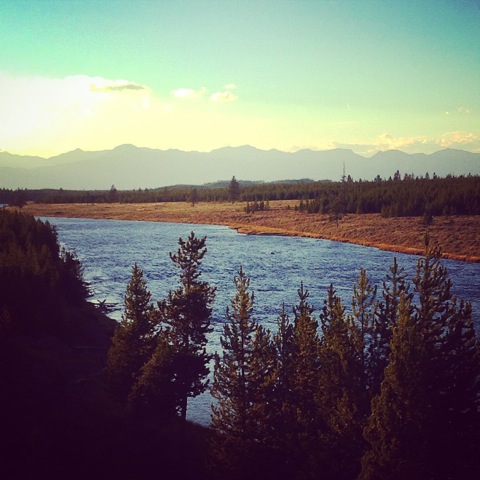
At Home in the Natural World: Yellowstone in October

by David Coggins

Yellowstone IIFirehole River

Yellowstone 3

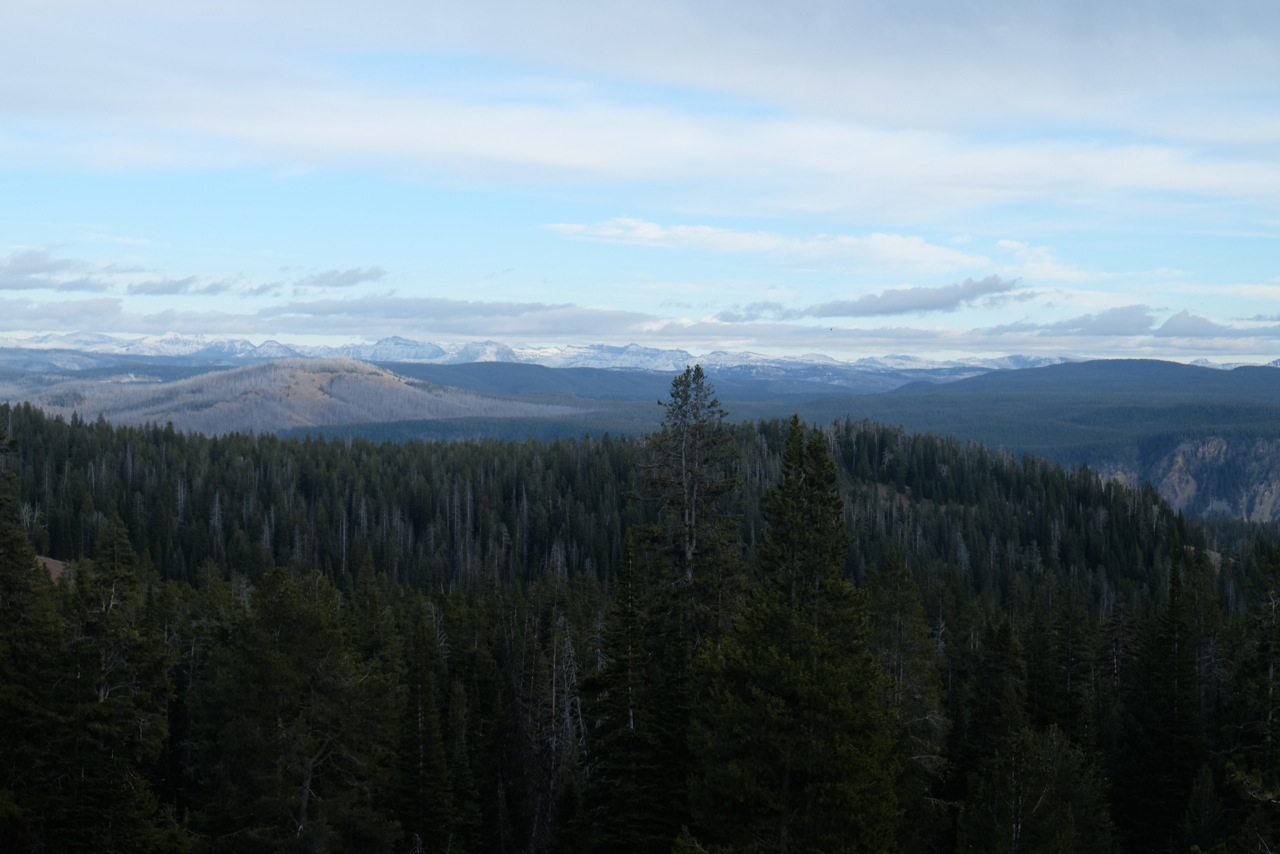
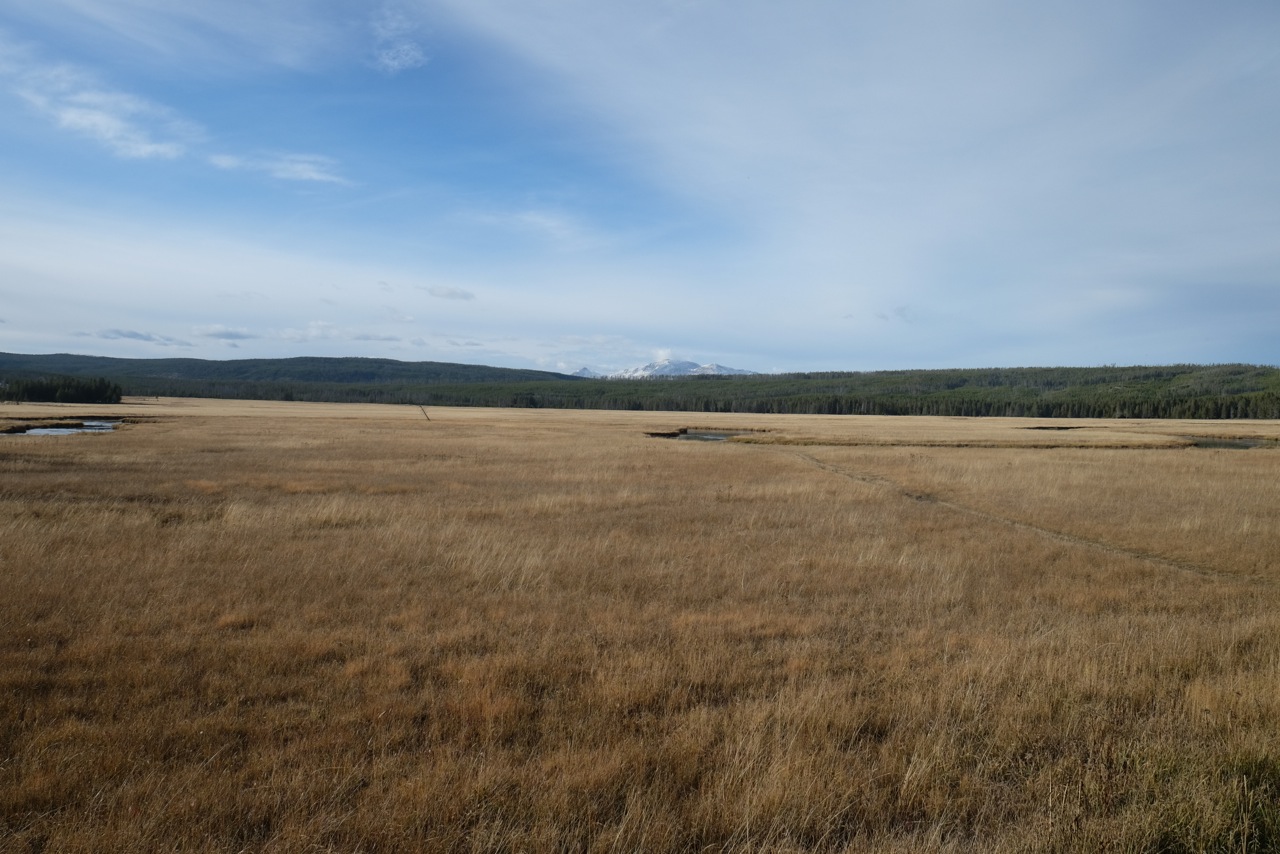
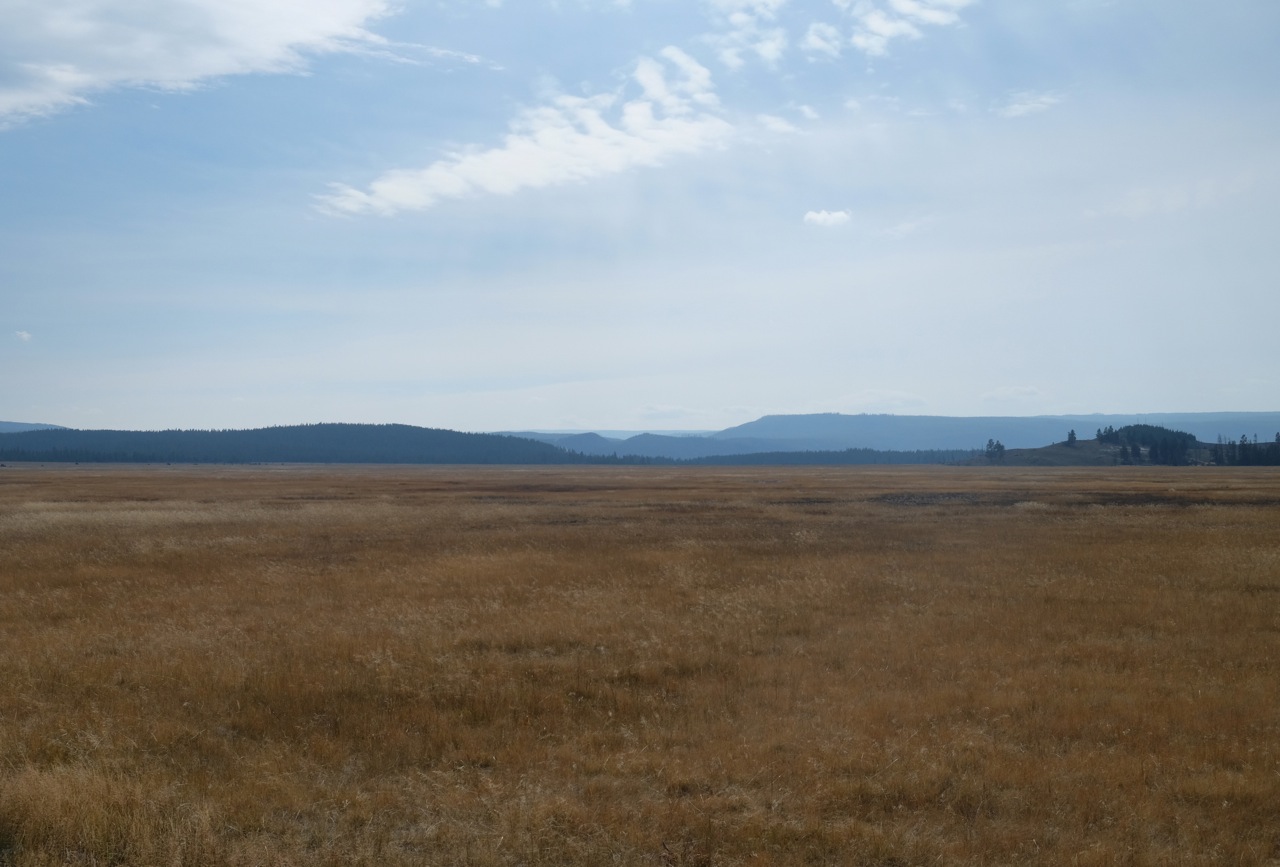
Yellowstone National Park is stunning all summer, but in October it’s even more stark and striking. The grass becomes the color of straw, the bison get frost in their fleece and mist rises off the rivers in the cold. Most of the crowds have gone—though there are still knowing visitors—and snow dusts the mountaintops.

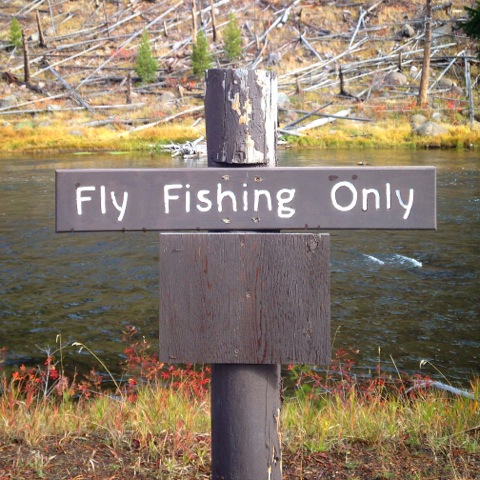
Then there’s the Madison River, the main attraction for anglers making their late-season pilgrimage to the Park. Brown trout head into the river to spawn, their color bolder, deeper red and gold. Following the fish are people who wake up early in the freezing dark to go stand in the water. In feels foolish at times, but when it all comes together it’s clear that it’s the right thing to do.

Not to get too technical, but anglers patiently swinging a soft-hackle wet fly across large gentle riffles should get their reward. When you feel a determined tug don’t raise your rod tip and strike the way you normally would—that will break off the fish with devastating finality (we learned the hard way, more than once). Just a gentle lift and you’ll be into a large, spirited fish ready to fight. When you doing this at 9am under overcast skies while the park is silent it’s a special thing. You can also fish hatches on the Firehole to more modest fish, which is certainly worthwhile.

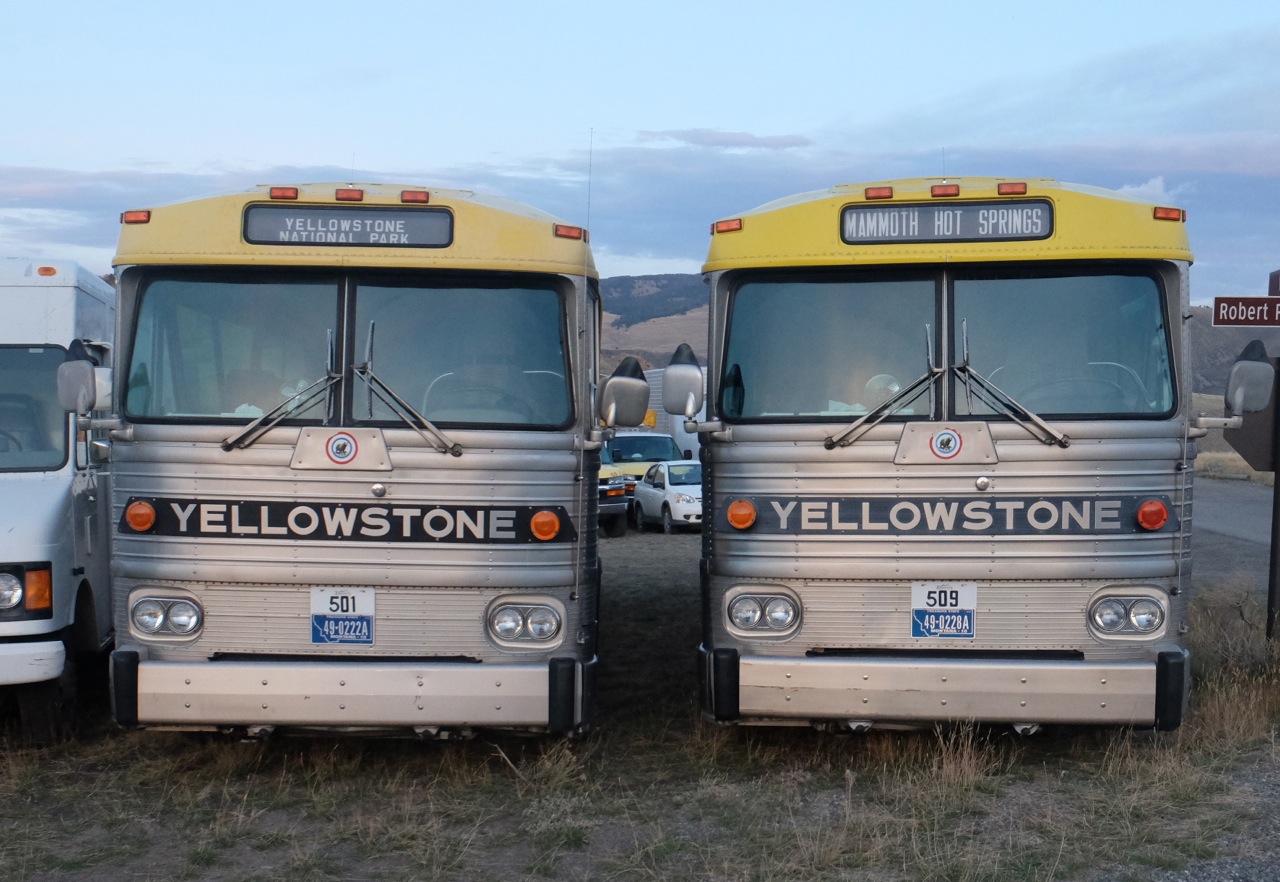
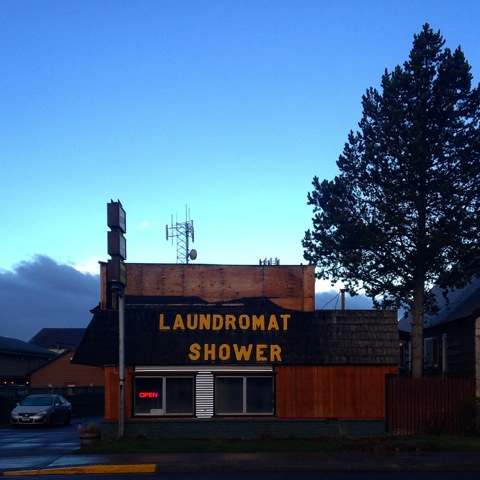
Stay in West Yellowstone, the easy going frontier town, at the west entrance of the park. There are cabins at low rates, a few dive bars, a pancake house. The good bookstore has closed, but there are great fly shops, the well-regarded Blue Ribbon Flies and Madison River Outfitters. Whether you fish or not, everybody should head to the park and spend some time. There are well-marked hiking paths of all levels of difficulty, and brilliant drives with incredible vistas. You’ll see elk, antelope, mule deer, of course herds of bison, and the occasional black bear. Yellowstone Park is one of the great legacies left to us in America. The foresight of those who founded and protected its ideals is nothing less than extraordinary. You feel humbled in the setting, ennobled by finding your small place in the natural world.

Yellowstone I

Yellowstone

IMG_6841

IMG_6871

IMG_6897

02 Nov 23:09

Getaway designed by Cheshire Architects near Kaiwaka, New...


Getaway designed by Cheshire Architects near Kaiwaka, New Zealand. 

Contributed by Michael Lett.

29 Oct 17:07

Viewfinder: The Man Who Turned Paper Into Pixels

Multimedia-650x500

A video essay on American mathematician, cryptographer and engineer Claude Shannon and his discoveries, which paved the road for the Information Age.

...

Read More »
29 Oct 17:06

Behind the Wheel: Jaguar F-Type Coupe

Jaguar-F-Type-R-Coupe-Gear-Patrol-LEAD

How do you take a spectacular Jaguar roadster that the world has anticipated for decades and make it divine? According to Jaguar you give it a hardtop and the option of a 550 horsepower V8. That’s what they’ve done with the 2015 F-Type Coupe ($65,000).

...

Read More »
29 Oct 17:06

A Cabin in the Skies

heli-hiking-tantalus-huts-gear-patrol-lead

Tantalus Hut has no power or running water. But by backcountry standards, it's still a luxurious pad. Situated in the Tantalus Range of British Columbia, the hut is an ideal base camp for the adventurous and daring who want to take aim at mountain peaks.

...

Read More »
29 Oct 16:42

Oxford Prof Shreds Government's Green Energy Policy

An Oxford University Professor has torn the UK government's energy policy to shreds in his appearance before the House of Lords Science and Technology Committee.

Speaking to the Lords yesterday, Professor Dieter Helm said that the "Miliband-Huhne-Davey" policy (referring to the last three energy secretaries), which is based on an assumption that fossil fuel prices would rise, was "dramatically wrong". (h/t to Bishop Hill, where the full exchange of views can be seen).

The Lords Committee gathered to hear evidence from a range of energy experts including power companies and the National Grid to determine whether there was indeed a risk of the lights going out this winter, as has been widely reported (including on Breitbart London).

Opening the second session, Professor Helm gave his name and title, before delivering a short two minute speech lambasting the governance of energy policy in recent times.

"It is a quite extraordinary state of affairs for a major industrialised economy to find itself even debating whether there is a possibility that the margins may not be sufficient of electricity to guarantee supply," he said.

"If it was achieving carbon objectives and if it was producing low prices there might be some consolation. The wholesale price in Great Britain is twice that of northern Europe and on a CO2 front we’ve been switching from gas to burn as much coal as possible, and our emissions are actually rising on a production basis and of course on a carbon consumption basis which is the basis that matters for decarbonisation.

"For a major industrial economy to fail on one of the three objectives is a serious problem. But to fail on security and on competitiveness of price, and on decarbonisation is a sad state of affairs. And it’s even sadder in the context of which the problem isn’t fundamentally particularly difficult.

"It’s ultimately about having enough power stations and enough wires to supply the needs of the population. It’s a problem that’s been with us for a century. Many other countries solve these problems and it’s, as I say, rather sad that we’ve got to this particular point."

The Committee probed the professor on a range of aspects including "resilience", which the Professor explained was a matter not just of physical capability, but also the price which people are asked to pay for the energy supplied. If prices rise above people’s desire or ability to pay, people simply “turn themselves off, as happened in California”, he pointed out.

“The kit is there. If the will is there to do it, and the expertise and capacity of the grid I think is up to it, they will manage to make supply equal demand. The question is: how much higher will the price go as a result, and how long will Britain carry on having such high wholesale prices with all the consequences there are for British industry and also consumers?” he asked.

When questioned about medium term threats to resilience, Prof Helm was particularly scathing. Pointing to the fact that “the commodity super-cycle is over” and that gas, coal and oil prices are all falling, he blasted energy secretary Ed Davey, saying “We have a policy with the secretary of state repeatedly reminds us is based on the idea that gas prices are rising and volatile. Well, they’re falling and the volatility is something that we don’t want to protect customers from. [That is, downwards volatility is good for customers who want the benefit of cheaper prices immediately].

“Should we worry about resilience of fuel supplies? No, I don’t think so. The world is awash with gas. Unconventional gas is popping up all over the place America is no longer importing, plenty of supplies around, plenty more being discovered.

“The one medium term ‘risk’ that I would pay much less attention to but clearly the government thinks they should pay much more attention to is whether or not we’ll get enough supplies of fossil fuels. We have enough fossil fuels in the world to fry the planet many times over.”

He then set his target wider, laying into the “Miliband-Huhne-Davey policy”, so called “because it’s very consistent through that period”, as a whole. Successive energy secretaries had based their policy on the assumption that fossil fuel prices would continue to rise, making renewables comparatively cheaper by the 2020s and allowing subsidies to fall away; an assumption that the professor said  “[doesn’t have] any part in energy policy.

“That fossil fuel prices are going to go up. … That’s an outcome of the market, not a policy assumption to make. … If your bet turns out to be dramatically wrong, you’re going to have lots of technologies which are ‘out of the market’ for some considerable period to come. We will have to subsidise those technologies right through the 2020s and beyond. 

“This knowledge that politicians have, that politicians know what the winners are, we’ve been there so many times before.  It usually turns out badly and it has done this time.”


29 Oct 16:42

Why Taxing The Internet Is Stupid

by Matthew Hughes
hungary-featured

In this life, two things are certain. Death and taxes. But, there’s a new proposed tax from Hungary that’s surprising everyone. Internet traffic could soon to be taxed, with the additional cost of a gigabyte to set Hungarian Internet users back 150 HUF (About €0.5, $0.61). This has caused an uproar. The law — which is perceived by many as a way for the government (increasingly regarded as authoritarian) to surreptitiously control the Internet — has caused thousands of Hungarians to take to the streets in protest. Even the EU is upset. Proposed internet tax in #Hungary is a shame: a shame...

Read the full article: Why Taxing The Internet Is Stupid

29 Oct 16:14

John Stossel on Why Incumbents Always Win

The public is apparently angry at today's politicians. Eighty-two percent disapprove of the job Congress is doing. So will Tuesday's election bring a big shakeup? It's unlikely. Congressional reelection rates never drop below 85 percent.

Incumbents have all sorts of built-in advantages, explains John Stossel. And they game the system to make it tougher for outsiders to challenge them. What we need isn't to "get money out of politics," as some suggest, but to get term limits on elected officials, Stossel argues. 

View this article.

29 Oct 16:11

Forest Service Warns of 'Grizzly End' for People Taking Selfies with Bears

U.S. Forest Service officials at a Lake Tahoe nature center are warning intrepid, smartphone-toting visitors not to pose for "selfies" with dangerous bears.

"We've had mobs of people that are actually rushing toward the bears trying to get a 'selfie' photo," Lake Tahoe Basin Management spokesperson Lisa Herron told the Reno Gazette-Journal. "We are telling people they need to stay on the trails, and they need to stay away from the bears. If a bear has a mind to, it can run very fast."

The bears reportedly come out to eat during the annual kokanee salmon run at the nature center.

However, according to the report, visitors at the Taylor Creek Visitor Center in South Lake Tahoe are increasingly running after the bears to get unique photos. Herron told the Gazette-Journal that people are stopping their cars alongside Route 89 and running across the highway to get a better look.

The report notes that bear attacks on humans are extremely rare, and that bears usually only attack humans when they feel their habitat is threatened. Still, Herron told the paper the situation has become so dangerous that the park may need to completely close off the area to visitors.

"It is presenting a safety issue," Herron said. "We are afraid someone is going to get attacked."


29 Oct 15:57

5 High-End Hotels That Score With College Football Fans

by DeMarco Williams, Contributor
These pigskin-loving properties are so close to the action that you can almost smell the hot dogs from your suite.
29 Oct 15:57

Kodak Pixpro SP360 Action Camera

This gives "wide angle" a whole new meaning. The Kodak Pixpro SP360 Action Camera moves beyond the typical front-facing lens to give you a full 360º view. Features include a...

Visit Uncrate for the full post.
29 Oct 15:45

The Silly Bastard Next to the Bed

by Documentary.net staff
In 1963, JFK recorded one of the most foul-mouthed telephone calls ever made from the White House. This is the story of the silly bastard who started it all. JFK places a salty call to his staff, questioning a potentially embarrassing expenditure. The blowback is hilarious… and a little haunting.
29 Oct 15:30

Best Days of the Rut, 10/31: Invade Bedding Areas to Catch Halloween Monsters

by Scott Bestul

Photos by Lance Kreuger

Ask serious whitetail hunters about their experiences on Halloween, and you’ll get tale after tale of encounters with, and shots at, monster deer. There’s just something about the 31st, they’ll tell you. Of course, it’s more than just the day; we’re inching closer to peak breeding, and testosterone is flaring up in bucks today. Add to that the rapidly cooling temps (how many trick-or-treat ventures require a sweatshirt under that superhero costume?) and the moon, which will be rising in early afternoon and visible throughout the rest of the day. Put on that camo costume and get set for a meeting with a Halloween monster that you’d love to be frightened by.

Default plan: Get Aggressive
Invading a buck bedding area is always a crapshoot, but now is the time to gamble, because once serious breeding starts your target buck could be sleeping anywhere. He’ll surely be late getting back to bed today, so if your prior hunting efforts have revealed your buck’s bed site, slip in well before first light and wait. Not sure exactly where your buck sleeps? Mark all your info about him (sightings, trail-cam pics, sign) on a map. The thick cover or ridge end closest to the greatest concentration of sign and sightings should be your target. Be there in a stand long before dawn and wait for him.

If your morning plan doesn’t pan out, go to the passive plan below. 

Optional Plan: Be Passive
It may seem wrong not to be aggressive now, considering that bucks are seemingly losing their minds more by the day. But whitetails rarely abandon all caution. If you hunt small woodlots, or are onto a truly mature buck that won’t breed until a hot doe stands right in front of him, here’s what to do today. First, go with an afternoon hunt, to take advantage of that rising moon. Get in the woods about noon, with the three best oak stands on your property logged in to your GPS. Scout them quickly, but be mindful of the wind; you don’t want your scent blowing into bedding areas. Find the oak stand that has the most fresh feeding sign, as well as any rubs and scrapes that indicate an active buck, and if you don’t have a stand with you, zip back to the truck and grab it. Before you shimmy up a tree, doctor the freshest scrape you can find with some buck urine. This will punch your buck’s dominance button and swing him in for a shot. Don’t be afraid to hit your rattling antlers or grunt tube—your buck is probably bedded nearby, and the sounds should coax him in.

X-Factor: Pecking Order
Sometimes the buck you’re after—as big as he may be—is not the dominant buck in your hunting area. Personality, not antler size, usually determines which buck is at the top of the pecking order. Challenging him won’t work if your target animal is not king of the hill. If you suspect he’s not, pattern him by reading his sign (and studying trail-cam pics) and intercept him on his routine, instead of trying to grunt or rattle him in for a shot.

28 Oct 23:17

The Great School of Which I Have Dreamed: Homecoming 2014

by ConnerSaurusRex

This Homecoming is special for more reasons than many people realize.

The history of Baylor University, to the casual observer, is a long and convoluted one. The school, chartered in 1845, has been hosted by two cities, absorbed another university, and given birth to a third. It is the largest and most prestigious Baptist university on the planet, a respected name in modern education, an athletic powerhouse, and a true home to thousands of alumni. To the denizens of this blog, Baylor is among the most perfect places on earth, and one that we can call home whenever we step on campus.

It's only fitting that Baylor has the oldest homecoming tradition in the nation (as verified by the Smithsonian Institute in 2012). The first Baylor Homecoming was in 1909 and it remains one of the most prominent traditions at any school.

To appreciate the significance of Homecoming 2014, we need to delve into Baylor's admittedly confusing history.

1886: Waco

Besides 1845, there is little argument that 1886 was the most pivotal year in Baylor's past. It marked the school's move to Waco from Independence. Independence, now an unincorporated municipality in rural Texas, had been passed over by the railroad companies of the day, and Baylor required access to the growing rail network if it was to survive. Waco already played host to Waco University, led by former Baylor president Rufus Columbus Burleson.

When Baylor made the move to Waco, it absorbed Waco University and Burleson was named the head of the newly consolidated institution. At this time, Baylor Female College, which had been left behind in Independence, moved to Belton and grew into the University of Mary Hardin-Baylor.

Burleson, a hard man, had opposed Baylor's initial push for coeducation during his original tenure as president from 1851-1861, but he allowed women to attend the Waco campus beginning in 1887. By 1892, Baylor's campus consisted of two buildings that still function today.

Baylor_University_1892_front.0.png

The Main Building and Burleson Hall now form two corners of Burleson Quadrangle, the heart of campus in which Rufus Burleson is memorialized. Burleson's statue faces north, across the Brazos. It was reportedly Burleson's dream for Baylor to one day expand and occupy the far bank of the river. In 2014, Burleson's dream has been realized. From the roof of Old Main, one can clearly see McLane Stadium, the Jewel of the Brazos, standing strongly on the north bank of the river. 103 years after Burleson's death, Baylor commands the landscape.

1927: The Immortal Ten

One of the most important moments of Homecoming in any year is Freshman Mass Meeting. The event is closed to the public, open only to the freshman class of the current academic year. During the meeting, the attendees are told the story of the Immortal Ten. Freshman Mass Meeting is a moment that sticks with most students for years, but older alumni and casual Baylor fans could always use a refresher.

January 22, 1927 was a dreary one in Central Texas. The Baylor basketball team, with a handful of fans, was on a bus traveling from Waco to Austin to play the University of Texas. Baylor returned five starters that season and were favorites to win the Southwest Conference.

The bus was driven by Joe Potter, a freshman football player who had driven various Baylor teams around Texas to help pay his way through school. The weather conditions were terrible, and as the bus rolled into Round Rock, Potter didn't realize that he was quickly approaching a railroad crossing. When he noticed that a train was coming through, the roads were too slick to bring the bus to a complete stop before reaching the tracks. Given no alternative, Potter accelerated and pulled the vehicle sharply to the left to draw a glancing blow from the locomotive rather than a full collision. This move is credited with saving several lives.

Bus_crash_pic-2.0.jpg

Looking at the above picture, the mere fact that more than half of the bus's 22 passengers survived is a miracle. The accident claimed ten lives. Among the dead:

Jack Castellaw

Sam Dillow

Merle Dudley

Ivey Foster, Jr.

Robert Hailey

Robert Hannah, Jr.

Clyde "Abe" Kelley

Willis Murray

James Walker

William Winchester

Castellaw is the namesake of Castellaw Communications Building, home of the Baylor Journalism Department. Foster was an athlete who had elected to hitchhike to the game in Austin and had been picked up by the team bus. His father lived in Taylor and identified his son while working to clear the scene and move the dead and wounded.  Kelley, made out to be the hero of the day, is said to have pushed his friend Weir Washam out of the bus just before the crash, and in doing so put his own life in danger. Kelley is the focal point of the Immortal Ten Memorial on campus. The Ten are revered in an almost saintly manner by the Baylor Chamber of Commerce, as a large portion of the club's membership was on the bus that day.

There are countless stories to be told of the Immortal Ten and the survivors of the crash, but those are best left to another post for another day. They were "worthy in every way to be acclaimed true sons of those great spirits who died at the Alamo and Goliad." They are the we of us, and should always occupy a place in Baylor lore.

1931: The Immortal Message

Baylor has had a number of prominent presidents- Rufus Burleson, Pat Neff, William White, Herbert Reynolds,Robert Sloan, and Ken Starr among them- but most Baylor enthusiasts agree that Samuel Palmer Brooks was the greatest. His tenure lasted from 1902 until 1931. He oversaw the establishment of the business school, the first Homecoming, the founding of the Chamber of Commerce, and the selection of Baylor's mascot and the arrival of the first live bear on campus. The school survived the Great Depression under Brooks' leadership and named Brooks College and Brooks Flats for him.

Brooks died on May 14, 1931, just before that year's graduation- he had only signed half of the senior class's diplomas. His final message to the class of '31 was read at graduation and is the defining written work in Baylor's history. The final paragraph is referenced on an almost daily basis. I have included it below, without analysis, for you to read.

"This, my message to the Senior Class of 1931, I address also to the seniors of all years, those seniors of the past and those seniors yet to be. This I do because I love them all equally even as I love all mankind regardless of station or creed, race or religion.

I stand on the border of mortal life but I face eternal life. I look backward to the years of the past to see all pettiness, all triviality shrink into nothing and disappear. Adverse criticism has no meaning now. Only the worthwhile things, the constructive things, the things that have built for the good of mankind and the glory of God count now. There is beauty, there is joy, and there is laughter in life--as there ought to be. But remember, all of you, not to regard lightly nor to ridicule the sacred things, those worthwhile things. Hold them dear, cherish them, for they alone will sustain you in the end; and remember too that only through work and ofttimes through hardships may they be attained. But the compensation of blessing and sweetness at the last will glorify every hour of work and every heartache from hardship.

Looking back now as I do, I see things with a better perspective than ever before and in truer proportions. More clearly do I recognize that God is love. More clearly do I understand the universal fatherhood of God. More clearly do I know the brotherhood of man.

Truths do not change. The truths of life which I learned as a student at Baylor have not varied, nor will they vary. I know now that life has been a summary of that which was taught me first as a student here. As my teachers have lived through me so I must live through you. You who are graduating today will go out into the world to discover that already you have touched much of what the future holds. You have learned the lessons which must fit you for the difficulties and the joys of the years to come. Then hold these college years close in your hearts and value them at their true worth.

Do not face the future with timidity nor with fear. Face it boldly, courageously, joyously. Have faith in what it holds. Sorrow as well as happiness must come with time. But know that only after sorrow's hand has bowed your head will life become truly real to you, for only then will you acquire the noble spirituality which intensifies the reality of life. My own faith as I approach eternity grows stronger day by day. The faith I have had in life is projected into this vast future toward which I travel now. I know that I go to an all-powerful God wherever he may be. I know that he is a personality who created man in His image. Beyond that I have no knowledge--no fear--only faith.

Because of what Baylor has meant to you in the past, because of what she will mean to you in the future, oh, my students, have a care for her. Build upon the foundations here the great school of which I have dreamed, so that she may touch and mold the lives of future generations and help to fit them for life here and hereafter. To you seniors of the past, of the present, of the future I entrust the care of Baylor University. To you I hand the torch. My love be unto you and my blessing be upon you."

-Samuel Palmer Brooks, 1931

Now, take all of this to heart, and #SicKU

The Immortal Flame - 2014/2015 Baylor Football Hype Video from Ted Harrison on Vimeo.

28 Oct 23:17

Pollinating Highbush Blueberries

by Contributors

Investment in this critical component of blueberry production is essential for profitable yields

Pollinating Highbush Blueberries

Investment in this critical component of blueberry production is essential for profitable yields

Rufus Isaacs, Jason Gibbs, Emily May
Department of Entomology, Michigan State University

Eric Hanson and Jim Hancock
Department of Horticulture, Michigan State University


Northern highbush blueberries (Vaccinium corymbosum) are common throughout the northern U.S. states and Canada, and are native to eastern North America. They require pollination to ensure that flowers present at bloom turn into large, harvestable berries later in the season. Pollination is achieved by the movement of pollen by bees.

By planning ahead for how fields will be pollinated, growers can help ensure they receive the maximum return on their investments in land, bushes, and other management inputs. Given the high per-acre input costs of blueberry production, spending money to ensure high levels of pollination makes sound business sense. Other things being equal, well-pollinated fields have larger berries, higher yields, and more even ripening than fields with sub-optimal pollination.

Across Michigan’s blueberry industry, most pollination is by managed honey bees that are brought to fields in hives. Many of these colonies have been overwintered in warmer states, and they arrive back in Michigan as fruit crops start blooming in southwest Michigan. Bumble bee colonies can also be purchased for placement in fields, and there are many other wild bee species that nest in and around crop fields. By combining these pollinators into an Integrated Crop Pollination strategy, the risk of poor pollination may be minimized.

Pollen is moved by bees

For pollination to occur, sufficient compatible blueberry pollen must be moved from the male part of flowers (anthers) to the female part (stigma) while the flowers are receptive. Bees are responsible for this movement of pollen, so blueberry pollination depends on having enough bees active in the field during bloom to deliver pollen. Each flower must be visited once by a bumble bee or most native bees, or three times by honey bees to get enough pollen so that berries will grow to maximum size. There can be 10 million flowers per acre, so there is a lot of work for bees to do!

The pollen produced by blueberry flowers is relatively heavy and doesn’t waft on the wind. It is held inside the flower by salt shaker-like structures called anthers until bees visit. They may release the pollen by jiggling the flower with their legs, as is the case for honey bees. Bumble bees and some other native bees are better adapted to release the pollen using a vibration behavior known as “buzz pollination”. When the bees shake the anthers the pollen collects on their bodies. As the bees move from flower to flower, pollen grains are transferred to the stigma. Flowers are receptive to pollen immediately on opening, and their chance of turning into a berry declines after 3 days, with flowers unlikely to turn in to fruit after 5-6 days. Once compatible pollen is deposited on the stigma, the pollen germinates and fertilizes the ovules which produce the tiny seeds. Fertilized seeds release hormones that stimulate berry growth, leading to larger berries.

Figure 1. Comparison of blueberries picked on the same day in July from clusters that had either been bagged to exclude pollinators (left) or were uncovered during bloom (right) allowing bees to visit. Both sets had the same number of blooms during flowering in May. Credit: Rufus Isaacs

Things to know before planting

Northern highbush blueberry bushes can produce berries even when there is no or limited pollen deposition by bees. This means that some proportion of the flowers can turn into berries, even if there are poor pollination conditions or low bee activity during bloom. However, these berries will be small, slow to ripen, may drop off early, and most would not be considered marketable (Figure 1, left). To reach maximum potential yield, it is important that the flowers are visited by bees during bloom to transfer sufficient pollen to the stigma while the flower is still viable so that fertilization can occur, leading to seed set, berry expansion, and larger berries (Figure 1, right). If designing a blueberry field of any appreciable size (over a few acres), make sure there will be space for a beekeeper to drop hives on pallets near the field.

Table 1. Variation among highbush blueberry cultivars in the need for a pollinizing cultivar to provide cross-compatible pollen during bloom.

Dependence on a pollinizing cultivar

Cultivar

Low: no pollinizer needed

Duke, Draper, Bluejay, Nelson, and Rubel

Intermediate: pollinizer beneficial

Bluecrop, Legacy, Jersey, Liberty, Elliott, and Aurora

High: pollinizer needed

Brigitta, Spartan, Chippewa, Polaris, and Toro

For some cultivars it is not sufficient just to get high rates of pollen transfer from bees, because the type of pollen can be important. Some cultivars benefit from the transfer of cross-compatible pollen, meaning that the field should be designed to have a combination of cultivars that bloom around the same time and that are compatible. For cultivars dependent on having cross-pollination for full yields, this can provide a 10-20% increase in yield from the improved fruit set and berry size. Table 1 provides a guide to cultivars and their level of dependence on this cross pollination for full yields. However, many popular northern highbush blueberry cultivars are self-fruitful, meaning they can be fertilized by pollen from the same cultivar (High group in the table), and this is one reason why solid blocks of some cultivars can be highly productive. Other cultivars are intermediate, meaning that a benefit can be gained by interplanting with another cultivar, but for many commercial settings growers might consider the increased complications in management outweigh the benefits.

In a third group, cross-pollination is needed, and this is achieved by bees moving pollen between cultivars as they fly from row to row. In this situation, planting fields with alternating blocks of co-blooming and compatible cultivars ensures cross-pollination. While alternate rows of two compatible cultivars would be the best for pollination, it would also cause difficulties with harvesting and spraying. Alternating blocks of up to eight rows allows pollen exchange and is easier to manage. Alternating blocks of larger sizes will result in too few exchanges between cultivars that need cross pollination. Before purchasing blueberry plants, check with your nursery to determine the need for planting fields with alternating cultivars.

Using honey bees for blueberry pollination

Wait until bloom has started to bring in bees. Flowers of blueberries are generally less attractive to honey bees than other flowers due to the relatively low nectar reward. Because of this, it is best to bring in bees once the crop has started to bloom so that bees forage more on blueberries than other flowers (Figure 2). If brought in too early, bees may learn to forage elsewhere reducing their focus on your crop fields. Move bees into blueberry fields after 5% bloom but before 25% percent of full bloom. Placement near to the blueberry field can also help to keep them focused on the crop. Still, some cultivars (notably Jersey) have low attractiveness, and bees may still fly over this cultivar to reach another. 

Figure 2. A honey bee drinking nectar from a blueberry flower. This is the workhorse of blueberry pollination, and to achieve high yields the fields must be stocked with sufficient numbers of healthy colonies during bloom to ensure there are enough bees for sufficient transfer of pollen between flowers. Credit: Jason Gibbs

Renting healthy colonies. If you are renting honey bee hives, you should expect to receive healthy and vigorous bees. A healthy colony contains around 30,000 worker honey bees and will have six frames of brood. Having weak hives will affect how much pollination the fields receive, so it is worth taking time to ensure you have strong hives. If you suspect weak colonies, talk to your beekeeper about getting additional hives or replacing them. One strong hive of 30,000 bees will provide better pollination than two 15,000 bee hives because there will be more worker bees that fly to visit flowers. One way for growers to ensure they receive strong colonies is to establish a pollination agreement that lays out the grower’s expectations. This can include the strength of the colonies and how quickly the colonies will be taken out of the field after bloom. Example pollination contracts are available online.

Honey bee stocking densities. There have been many changes in blueberry production and in bees over the past few decades, and yet many people still refer to bee stocking recommendations published in 1992. We consider those to be suitable for fields with lower bloom density, such as in a field affected by frost or when it is still establishing, and these can also be used in small fields surrounded by natural lands that will have higher populations of wild bees. However, if fields have a high flower density as some of the newer cultivars and intensive production systems provide or if field sizes are large without wild habitat nearby, then these recommendations are too low. The last few decades have also seen the loss of feral honey bee colonies due to the parasitic Varrroa mite, so those colonies are no longer contributing to blueberry pollination. All of these factors can make fruit production more dependent than ever on managed bees, so it is important to stock fields with sufficient bees to supply enough visits to flowers while they are most viable (i.e. in the first three days after opening). A final point to make here is that if the weather is hot during bloom and flowers open quickly, this increases the chance that they will not get visited before they lose viability. Higher stocking densities can counteract this potential limiting factor.

Table 2. Recommended stocking density of honey bees for highbush blueberry pollination. Cultivars have varying rates of need for honey bees, and within each group we show a range of hives per acre to stock at, ranging from low rates for use in young, frost-damaged, or small fields to high rates for use in mature, healthy, or large fields. Adapted from Pritts & Hancock, 1992.


Cultivar

Honey bee hives/acre

Low rate

High rate

Rubel, Rancocas

0.5

1

Weymouth, Bluetta, Blueray

1

2

Bluecrop

1.5

3

Elliot, Coville, Berkeley, Stanley

2

4

Jersey, Earliblue

2.5

5

Research and experience in blueberries has shown variation across northern highbush cultivars in their needs for bee pollination (Table 2), due to the relative attractiveness of different cultivars and their degree of self-compatibility. The table below shows a range of stocking densities from the lower rates recommended two decades ago to the updated double rate that we consider the required stocking density for fully productive modern fields. This shows 5 hives per acre for Jersey and Earliblue, but some growers are using up to 8 colonies per acre to ensure good pollination if spring weather is cool and there are only a few good days for honey bee activity. These higher stocking densities can also be considered a form of pollination insurance, to make sure that whatever the spring brings there will be the best chance of good pollination.

A rule of thumb is that you'll need 4 to 8 honey bees per bush in the warmest part of the day during bloom to get blueberries pollinated. Also, if you see flowers turning brown and discolored on the bush, pollination was not sufficient – in well-pollinated fields the corollas fall off when they are still bright white. Check your fields this season, and if needed you can try to get additional hives from a beekeeper, or plan on increased stocking next spring.

Hive placement. If possible, place the colonies in sheltered locations with the entrances facing east or south. This will encourage earlier activity as the hive warms in the morning sun. Hives should be spread out around the farm to maximize floral visitation, with a maximum of 300 yards between hives. Placement in an open area slightly away from the edge of the fields also reduces the risk of pesticide drifting onto colonies of the colonies being disturbed by a tractor.

Using bumble bee colonies

Bumble bees are very efficient at pollinating blueberry, with activity at lower temperatures than honey bees, faster visits to flowers, and higher rates of pollen transfer per flower visit. A single visit of a bumble bee to a blueberry flower can deposit sufficient pollen to get full pollination, whereas three visits are needed by honey bees.

Figure 3. Bumble bees are efficient pollinators of blueberry, so they should be encouraged on the farm. They can also be purchased from commercial suppliers and their colony boxes placed near fields to provide crop pollination. Credit: Jason Gibbs

The common Eastern bumble bee, Bombus impatiens (Figure 3), has been reared for use as a crop pollinator. These insects are available commercially and can be shipped directly to the farm in eastern US states and Canada. Koppert is one supplier based in Michigan that provides the bees in Quads, each containing four colonies housed within a weather-proof box. Our evaluations with this species in commercial Jersey fields found they provided comparable yield and fruit set to honey bees, when tested in small fields at the recommended stocking density of 3 colonies per acre. Growers may also purchase bumble bees to integrate with honey bees, thereby diversifying pollination sources. This approach should help ensure movement of pollen between flowers during conditions that are unsuitable for honey bees. Rearing bumble bees takes time so orders should be made 14-16 weeks in advance to guarantee delivery. Place Quads through the farm and well away from honey bee hives. A door on the box of the Quads can be used to collect the bees and move them before spraying.      

Wild bee pollinators

While ants, butterflies, and hover flies will visit blueberry flowers to gather nectar, bees are the most effective at moving pollen. Over 150 wild bee species have been found in Michigan blueberry fields, and about ten of these were sufficiently abundant during bloom and carried enough pollen to be considered valuable crop pollinators. These bees do best in farms with flowers for them to visit outside the crop bloom period and in farms where there are some undisturbed areas for nesting (Figure 4), and farms can be managed to enhance their abundance.

Wild bees fall into several major categories, including: bumble bees, miner bees, sweat bees, mason bees, and carpenter bees. Bumble bees and some sweat bees form social colonies later in the summer, but in spring during blueberry bloom these are bees are in a solitary phase. Miner bees, mason bees and carpenter bees are solitary: each nest is built by a single female. Miner bees are abundant during the spring, and some species, such as Andrena carolina, are specialists on blueberries.

Figure 4. Many wild bee species require flowers to visit when the crop is not in bloom and areas of undistubed soil for nesting. Top, a miner bee gathering pollen from an early spring flower; bottom, a sweat bee searching for a place to nest in the soil. Credit: Jason Gibbs

Wild bees nest in different areas in and around blueberry fields. Miner bees and most sweat bees make underground nests. A female bee tunnels into the soil, preparing brood cells for her young on side branches from the main tunnel. Pollen and nectar is collected and shaped into a ball placed in a each cell. A single egg is laid on each pollen ball which provides food for the developing larva. These bees need untilled soil and have been seen nesting underneath blueberry bushes in the weed-free strip. Thick layers of mulch can prevent ground nesting bees from digging tunnels. Some bees also nest in the undisturbed soil in nearby woods. Bumble bees also need undisturbed soil to nest in abandoned rodent burrows or grass tussocks, but they will also use old mattresses, compost piles, and other protected sites with small entrances. Finally some wild bees, such as carpenter bees, and some sweat bees, and mason bees prefer to nest in twigs, dead wood, or pre-existing cavities. Brambles, logs, and tree stumps in adjacent habitat and fence rows can be useful nesting sites for these bees.

In small blueberry fields surrounded by natural habitat, wild bees can provide the majority of pollination. However, as blueberry farm size and intensity increase, the high abundance of flowers and the small amount of natural area results in too few native bees for full pollination, and so growers rent honey bees. Still, by creating bee habitat that includes a mix of plants that bloom before and after blueberries growers can help support native bees as part of an Integrated Crop Pollination strategy. For more on native plants to support pollinators in the Great Lakes region, visit www.nativeplants.msu.edu. Every little bit of habitat will help, so consider this a long-term process of building bee habitat back into the farm landscape. The Natural Resources Conservation Service can provide cost share for growers interested in establishing pollinator habitat in their farms. See your local NRCS office for details of programs that can support this.

Pest management during pollination

Most insecticides have some level of toxicity to bees, and so there are restrictions on their use during bloom. Not spraying while honey bees are in the field is the most effective way to avoid any risk of poisoning, so monitoring for pest problems carefully before and during bloom can help minimize the need for pest control at this time of the season. However, insect outbreaks do occur and this time of the season is an important one for control of mummyberry, so if a pesticide application is necessary during bloom the compounds that are least toxic to bees should be used, with careful observation of the pollinator restrictions on the label. Two insecticides that can be applied during bloom for control of moth larvae in blueberry are products containing Bacillus thuringensis (Bt) (e.g. Dipel, Javelin), and the insect growth regulators Intrepid and Confirm.

The U.S. Environmental Protection Agency (EPA) has developed new pesticide labeling guidelines for certain insecticides, which limit their use where honey bees are present. This information is gradually being added to the labels of some insecticides, including neonicotinoids and the new product Exirel. Since these pesticides have never been labeled for use during bloom in blueberry, this is not a significant change but it provides more information. The EPA’s infographic can be downloaded from: www.epa.gov/pesticides/ecosystem/pollinator/bee-label-info-graphic.pdf.

If spraying during the bloom period, one of the most important things growers can do to minimize effects on bees is to apply when the bees are not foraging. Late evening is the best time to apply sprays during bloom, because the compounds have time to be absorbed and for the residues to dry before bees are active the following morning. Dust formulations must be avoided because particles can be picked up easily by the bees’ hairy bodies.

Recent research has also found that certain fungicides have effects on bees, harming their gut microbes and making them more susceptible to parasite infections. This can in turn result in reduced colony health and increased mortality. Follow the same basic principles of spraying only when necessary and when bees are not foraging to reduce the potential for harming bees during bloom.

More information and a list of pesticides with their toxicity to bees is available from a recently-updated extension bulletin from Oregon State University at http://bit.ly/OSU_ReduceBeePoisoning. This document also contains a list of insecticides and fungicides ranked by their relative risk to bees, and plenty of other good information on how to prevent bee poisoning. Another important aspect of reducing the chance for pesticide incidents during bloom is to have good communication with your beekeeper. This should start in the winter with a discussion about how many hives you plan to rent, where they should be put, and when they should be delivered and removed. A recent MSU article on how to minimize pesticide exposure to bees is posted here: http://msue.anr.msu.edu/news/minimizing_pesticide_exposure_to_bees_in_fruit_crops

Summary

Pollination is an essential component of growing blueberries. To attain high levels of fruit set with large evenly-ripening berries requires bees to deposit enough pollen on stigmas during bloom. This can be done by honey bees, other managed bees, and wild bees. As with pest management, reliance on one strategy may not be the most sustainable approach, so diversifying pollination sources can spread risk to ensure consistent pollination and profitable yields every year. Whichever bees are visiting flowers during bloom, ensuring the health and safety of these insects is an important part of maintaining good pollination. Follow label restrictions and practice good pollinator stewardship so they can provide the all-important transfer of pollen that will lead to large berries and high yields. 

This article was first published by Michigan State University Extension. Development of the article was supported by MSU’s AgBioResearch, Project GREEEN, and the USDA-SCRI Integrated
Crop Pollination project (
www.projecticp.org)
 

28 Oct 11:37

CDC Says Ebola Droplets Can Only Travel 3 Feet … But MIT Research Shows Sneezes Can Travel Up to 20 Feet

by George Washington

This week, the Centers for Disease Control (CDC) admitted that Ebola can travel through the air in aerosols, but claims that it can never go more than 3 feet.

Let's check their math ...

CDC (like the World Health Organization) admits that Ebola can be spread through sneezing or coughing.

But the CDC itself admits that flu droplets can travel 6 feet.

Mythbusters demonstrated that sneezes can nail people some 17 feet away:

But engineers at MIT show that sneezes can actually travel up to 200 times farther than previously thought ... up to 20 feet.

How?

Gas clouds:

“[The study] changes our current ideas of how far germs can spread in aerosols such as coughs or sneezes,” Mary B. Farone, Ph.D., associate professor of biology at Middle Tennessee State University, told weather.com. “We used to think if we could see the spray, that was the limit of the dissemination, but this study shows that tiny particles, such as bacteria and viruses, can be spread much further on gas clouds.”

MIT explains:

A novel study by MIT researchers shows that coughs and sneezes have associated gas clouds that keep their potentially infectious droplets aloft over much greater distances than previously realized.“When you cough or sneeze, you see the droplets, or feel them if someone sneezes on you,” says John Bush, a professor of applied mathematics at MIT, and co-author of a new paper on the subject. “But you don’t see the cloud, the invisible gas phase. The influence of this gas cloud is to extend the range of the individual droplets, particularly the small ones.”

Indeed, the study finds, the smaller droplets that emerge in a cough or sneeze may travel five to 200 times further than they would if those droplets simply moved as groups of unconnected particles — which is what previous estimates had assumed. The tendency of these droplets to stay airborne, resuspended by gas clouds, means that ventilation systems may be more prone to transmitting potentially infectious particles than had been suspected.

***

The researchers used high-speed imaging of coughs and sneezes, as well as laboratory simulations and mathematical modeling, to produce a new analysis of coughs and sneezes from a fluid-mechanics perspective. Their conclusions upend some prior thinking on the subject.

***

The study finds that droplets 100 micrometers — or millionths of a meter — in diameter travel five times farther than previously estimated, while droplets 10 micrometers in diameter travel 200 times farther. Droplets less than 50 micrometers in size can frequently remain airborne long enough to reach ceiling ventilation units.

A cough or sneeze is a “multiphase turbulent buoyant cloud,” as the researchers term it in the paper, because the cloud mixes with surrounding air before its payload of liquid droplets falls out, evaporates into solid residues, or both.

The study notes:

Our key findings are as follows. The turbulent multiphase cloud plays a critical role in extending the range of the majority of pathogen-bearing drops that accompany human coughs and sneezes. Smaller droplets (less than 50 µm diameter) can remain suspended in the cloud long enough for the cough to reach heights where ventilation systems can be contaminated (4–6 m).

6 meters equals 19.685 feet.

While Slate may have gotten the numbers wrong, they made an entertaining video about the MIT study:


28 Oct 11:35

Parish Crosses

by Kevin Mansell
On a day, when paddling wasn't an option I decided to visit all of the Millennium Crosses on the Island.  Every parish placed a cross and a stone at suitable locations, I had visited the Millennium Stones, in one continuous, a journey of 49 miles.  The wayside crosses which were placed around the Island are based on the design of a medieval cross, a model of one which can be seen at Elizabeth Castle, having been placed there in 1959.  It is thought that there many of theses crosses around the Island but they were probably all destroyed during the Reformation.
The circular ride to each of the Millennium Crosses is an entertaining way to pass a few hours and the route will take you some interesting areas of the Island.  The total distance was 39 miles which contrasts with the 49 miles it takes to cycle around the Millennium Stones
 First stop was the cross of St Brelade.  On a road junction near to the Airport garages.  It does look like it could do with a visit from the Parish gardeners.
 The St Peter cross is on the northern perimeter of the airport.  From here it was the shortest distance to the next cross, close to St Ouen's Manor.
The St Ouen's cross is close to the main entrance of St Ouen's Manor.  The flower beds added a dash of colour which was missing at many of the crosses.
 The St Mary cross is only just in the Parish.  Situated at Greve de Lecq it close to the historic barracks.
 Built during the German Occupation La Route du Nord runs above the cliffs of St John and it is where the parish decided to locate their Millennium Cross.
 The Trinity Cross would be easy to miss, located close to the walls of the Parish Church.
 The parish cross of St Martin is the only one on the east coast.  Close to Archirbondel, from here to St Clement's cross my next stop was the longest non stop stretch on the tour of the Millennium Crosses.
 The St Clement's cross is situated on the sea front at Le Hocq, overlooking some superb sea kayaking waters.
 From the St Clement cross it was an uphill ride to the Grouville one, situated on small grassy section of land at the top of Grouville Hill.
 St Saviour's cross is close to the Parish primary school.
 The St Helier Cross is in Victoria Park, which is the small open space close to the Grand Hotel.  This cross bears an inscription in Jerriais (the traditional language of the Island) À la glouaithe dé Dgieu (To the glory of God).
The last cross was in St Lawrence.  Located at the top of Mont Felard it was a steep climb to the final cross.
28 Oct 11:32

10 Events That Were Eerily Predicted In Pop Culture

by JFrater

Pop culture spends a large amount of time imagining any number of events and scenarios that might take place someday. Usually, these stories end up being little more than conjecture and imagination. Every once in a while, however, someone gets one right. Books, TV shows, and movies have all managed to hit eerily close to […]

The post 10 Events That Were Eerily Predicted In Pop Culture appeared first on Listverse.

28 Oct 11:31

10 Badass Explorers Who Put Indiana Jones To Shame

by JFrater

Ever since humanity’s beginnings, we have had a fascination with what is going on “next door.” Back then, we went looking over the hill or in a nearby cave, while now we venture toward our neighboring planets. The scope of our exploration has changed, but our ambition remains the same. And, of course, none of […]

The post 10 Badass Explorers Who Put Indiana Jones To Shame appeared first on Listverse.

28 Oct 11:26

Oct. 2014 SOTM Entry: NC Red

by Eric Rathbun

James Harrison with a beautiful redfish SOTM submission.

28 Oct 11:26

The 360fly

by El Guapo

Now this could be a GoPro killer.

The 360fly is a waterproof WiFi and Bluetooth-equipped action camera with an optical claim to fame. According to creators EyeSee360 it's 360º horizontal and 240 degree vertical fisheye lens is the widest on the market.

The camera is waterproof up to approximately 16 feet, comes with 16GB of internal memory, an f/2.5 lens, an integrate mic and a 1,504 x 1,504 1/2.3-inch CMOS sensor. It holds its charge for two hours of use and comes in at a measly 0.3lbs.

LINK (via:PetaPixel)

28 Oct 11:20

Researchers take a hint from birds to fight airplane turbulence

by Chris Velazco
We've all been there: you're trying to catch a little shut-eye on a flight when boom, out of nowhere, the plane hits a rough patch and you're dramatically roused from your slumber. Thanks to researchers at RMIT University in Melbourne, Australia,...
28 Oct 01:55

Celebration: 150 Years ago Abraham Lincoln Created the First California State Park

On Sunday at Point Lobos State Natural Reserve, hikers celebrated the 150-years anniversary of Abraham Lincoln designating Yosemite Valley as the first California state park.

In honor of the anniversary, KSBW Action8 News reported that Point Lobos arranged for guided hikes replete with telescopes set up along the way of Whaler's Cover for hikers to check out the ocean life, which included sea otters and sunbathing sea lions.

The park, which is a refuge for the animals and the people prompted visitor Cindy Posey to observe, "I think nature brings us closer to whoever we see as our God or our creator, and what better place than to come right here and see that."

Georgia Vaughn, who came to view the abundance of nature and watch the waves crashing against the shore and jetties, responded saying, "There are parts of me that stay asleep a bit until I come out here… It's a place of peace."


28 Oct 01:55

Armed Robber Returns to Gas Station, Gives Back Stolen Money

A Humboldt County man who allegedly robbed a gas station at gunpoint returned to the scene of the crime just hours later, returned the money he stole, and surrendered to police.

Cyle Warren Abbott Jr., 23, was arrested Sunday morning and booked on armed robbery and probation violation charges, according to the Eureka Times-Standard

Abbott allegedly robbed a gas station at around 6:15 a.m., pointing a pistol at the clerk and demanding the cash in the register before taking off. At about 9:06 a.m., the gas station's assistant manager called local authorities to report that the man had come back with the stolen money.

According to the report, the suspect waited in the gas station bathroom to surrender to police. Abbott also reportedly apologized to police and employees at the gas station, saying he was trying to "do the right thing," and that he wanted to "turn his life around."

Abbott also told authorities that the pistol he used in the robbery was a loaded "BB gun," and that he had thrown it away after driving away from the gas station. Police were unable to locate the pistol.


28 Oct 01:53

Cotton: Amnesty Would Drive Down Wages and Increase Unemployment

In discussing U.S. immigration policy on Monday’s “Laura Ingraham Show,” U.S. Senate Tom Cotton (R-AR) cited illegal immigration as a “major issue” in his race in Arkansas, while also pointing out that based upon non-partisan analysis, the so called Gang of Eight bill previously passed by the Senate "would both drive down wages in America and increase unemployment".

"I think we need to get Americans back to work before we worry about increasing the number of guest workers, or temporary visa holders we have in the country," he added.

That positioning would be consistent with his previous record in the House.

Arkansas Rep. Tom Cotton says he has written to his congressional representatives only once in his lifetime: In May 2007, the Iraq War vet contacted Sens. Mark Pryor and Blanche Lincoln, both Democrats, and asked them to "oppose the amnesty bill" that was before lawmakers.

This below is also from the same July 2013 Real Clear Politics report cited above.

Senate Republican Leader Mitch McConnell said Obamacare figures to be the “premier issue” in the 2014 midterms. Cotton agrees, and is apparently undeterred by Republican strategists who believe that statewide GOP candidates would be wise to take immigration off the table by passing something – anything, in fact.

So far, 15 Senate Republicans -- three of whom are up for re-election next year -- voted for the upper chamber’s version of the immigration bill. But Cotton doesn’t sound concerned that immigration reform politics might trickle into Arkansas. He and other Republicans simply plan to equate the Senate’s Democrat-backed immigration bill to the Affordable Care Act in size and scope, and to question the administration’s reliability in enforcing border laws, given its delay of the ACA’s insurance mandate for businesses.

“In so many ways, this bill is just like Obamacare -- not just the slap-dash manner it ran through the Senate but also in the big, cumbersome, unwieldy, very complicated undertaking that will begin to collapse under its own weight, and [it is] nothing more than amnesty without any enforcement,” Cotton told RCP, echoing what many House Republicans said after their immigration strategy meeting last week.


28 Oct 01:52

Despite White House Views, Army General and Troops Quarantined

HOUSTON, Texas -- A U.S. Army Major General and 10 other military personnel returning from Liberia are now undergoing “controlled monitoring” also known as a quarantine. This comes despite the Obama Administration’s pleadings with four states’ governors not to implement mandatory quarantines for people returning from Africa. The General and his troops are being held at a U.S. military facility in Italy.

They are under a quarantine, although the Pentagon will not use that term according to a CNN report by Barbara Starr, CNN Pentagon Correspondent. Major General Darryl A. Williams was returning from a 30-day deployment to Liberia where they were conducting a military assessment to prepare for the upcoming deployment of armed forces of the United States being sent to Liberia for humanitarian purposes. The team traveled extensively across the country and were in treatment facilities and testing areas during their deployment.

The team is being monitored for 21 days in a separate location within the U.S. military facility near Vicenza, Italy. Senior officials at the Pentagon stated this is not a “quarantine” but is, instead, a “controlled monitoring” situation. The troops and the General are being housed in a controlled access area of the base and are not allowed to go home for the 21 day period. They will undergo medical testing at least twice daily.

While in Liberia, Gen. Williams told reporters, “"We measure, while we're here -- twice a day, are monitoring as required by the recent guidance that was put out while we're here in Liberia. I -- yesterday, I had my temperature taken, I think, eight times, before I got on and off aircraft, before I went in and out of the embassy, before I went out of my place where I'm staying."

"As long as you exercise basic sanitation and cleanliness sort of protocols using the chlorine wash on your hands and your feet, get your temperature taken, limiting the exposure, the -- no handshaking, those sorts of protocols, I think the risk is relatively low," Williams explained.

Over the weekend, Breitbart Texas reported a feud between four states’ governors and the White House over mandatory quarantines. New Jersey Governor Chris Christie (R) was and remains adamant about placing anyone returning from one of the three Ebola affected countries in a mandatory 21 day quarantine. New York Governor Andrew Cuomo (D) stood beside Christie until caving to White House pressure Sunday night.

Florida Governor Rick Scott (R) and Illinois Governor Pat Quinn (D) also announced their own versions of mandatory monitoring programs.

Discussing what some could say is a military departure from White House political policy, White House Press Secretary Josh Earnest said the Defense Department “has not issued a policy related to their workers that have spent time in West Africa.”

"I know that there was this decision that was made by one commanding officer in the Department of Defense, but it does not reflect a department-wide policy that I understand is still under development," Earnest said. It appears the White House is admitting it is sending military personnel into a disease infested region of the world with no policy on how to handle the people on their return to a healthy nation.

However, the Pentagon seems to be talking from a different playbook. An October 10 memo from Undersecretary of Defense for Personnel and Readiness, Jessica L. Write stated that troops who have been exposed to an elevated risk of Ebola exposure will be quarantined for 21 days. People who have not faced any known exposure to Ebola will simply be monitored for three weeks.

During the “controlled monitoring” period the team will be living in a single building with rooms equipped to billet between one and four people. They will eat their meals in a dining tent. They will have both classified and unclassified communications systems and will be allowed access to a chaplain for worship services in the near future.

Neither the soldiers nor General Williams are symptomatic with the Ebola virus.

Bob Price is a staff writer and a member of the original Breitbart Texas team. Follow him on Twitter @BobPriceBBTX.


27 Oct 17:30

Eight Lessons that Britain Should (But Won't) Learn after Afghanistan

1. Never invade Afghanistan

This was Britain's fourth war in Afghanistan - and really the lesson should have been learned after the first one in 1842 when at least 16,000 British servicemen, women, children were butchered, froze to death, or were captured on the ignominious retreat from Kabul.

The point about the Afghans - and if the British imperial experience didn't remind us of this, the more recent Soviet one should have done - is that war is their national sport and they will always win in the end. As the Taliban famously boast: "You have the watches. We have the time."

2. Those who fail to learn the lessons of history are condemned to repeat them

Sherard Cowper-Coles, from 2007 to 2009 Britain's ambassador in Kabul, recently recalled how British troops clearing IEDs and mines from the roadsides in Helmand province would occasionally unearth the bleached bones of their Victorian predecessors from the First and Second Afghan Wars.

The British may not have known much about Helmand when they were arrived, but the Afghans have never forgotten its significance: it was the location of another of their greatest victories over the British - the Battle of Maiwand in 1880 when Ayub Khan defeated a brigade under General Burrows.

3. Afghanistan was always a Pakistan v India proxy war and we got caught in the middle

It goes back at least as far as the Soviet invasion when India, then a client state of the Soviet Union, supported the Russians while Pakistan created and launched the Taliban to oppose them. But the tensions go right back to Partition and Pakistan's fear that one day its giant neighbour will seek to destroy it. Afghanistan has long been seen by Pakistan as its place of final retreat and has therefore always sought to guarantee a pro-Pakistani regime in Kabul. India, meanwhile, has been using the Afghan conflict to destabilise its old enemy.

After 9/11 Pakistan claimed to have changed sides and it suited the US under President George W Bush to claim it as his principal regional ally in the War on Terror. But this was never more than a convenient fiction. As a US intelligence officer quoted in the BBC's Afghanistan: The Lion's Last Roar pointed out: "The President had said that he looked into [Pakistan president] Musharraf's eye's and found an ally. He couldn't now come out and say: 'Well actually, they are the Taliban's number one supporter.'"

4. Britain's generals are at least as bad - if not worse - than the ones in the First and Second World Wars. They could even give the ones responsible for Crimea a run for their money.

Essentially the recent Afghan war was created by and for the British army - as a budget- and skin-saving exercise. It needed a purpose after its failure in the Iraq debacle - culminating in its humiliating retreat from Basra airport. Afghanistan was sold to the British government by the military as a "good war" in which the Army could play to its strengths, established from Malaya through to Northern Ireland, as a peace-keeping/counter-insurgency force.

In one tiny respect this plan, cooked up by the Army's generals, succeeded: Afghanistan gave the Army more intense and extensive combat experience than it has had since the Korean war. But this came at a terrible cost which should have been foreseen from the start.

Arguably the general most culpable for this is General Dannatt, Chief of General Staff from 2006 to 2009. He told the BBC documentary:

Looking back we probably should have realised, maybe I should realised, that the circumstances in Iraq were such that the assumption that we would get down to just 1,000 or 1,500 soldiers by summer 2006 was flawed - it was running at many thousands.

We called it the perfect storm, because we knew that we were heading for two considerable size operations and we really only had the organisation and manpower for one.

And therefore perhaps we should have revisited the decision that we the UK would lead an enlarged mission in southern Afghanistan in 2006. Perhaps we should have done that. We didn't do that.

But this should have been perfectly clear at the time, not with hindsight. Even back then - and certainly more so as a result of the extensive cuts since - the British army has neither the manpower nor the materiel to fight two wars simultaneously. It was utterly irresponsible of Dannatt to try to draw down Britain's military presence in Iraq at the very time the insurgency was getting more intense.

Nor did Britain have the strength to control Helmand province, the most volatile and warlike in all Afghanistan. The notion that it did - initially with a force of perhaps 300 actual combat troops - was just a joke.

5. "No boots on the ground" is fast-becoming a weasel's charter

After Iraq and Afghanistan there is little public appetite, either in the UK or the US, for quicksand wars which achieve very little at the expense of lengthy casualty lists. (If we had won at least one of them it would have helped, but we didn't). Hence the Obama and Cameron administrations' fear of committing "boots on the ground" to places like the current Islamic State battleground in Iraq and Syria.

Their reluctance may well be justified but it follows a worrying precedent established by the Libya debacle, which saw no "boots on the ground" (well, apart from those hapless victims of the Benghazi fiasco), lots of materiel squandered, all resulting in the creation of a rogue state now even less stable and more dangerous than it was under Gadaffi.

6. Never tell your enemy your departure date

If you're so squeamish about public sensibilities towards unpopular wars, perhaps you shouldn't have started those wars in the first place. How, exactly, does it help win hearts and minds in a place like Afghanistan (or Iraq) if you announce that you are only going to be there for a limited period - and that therefore your enemy only has to bide his time until your departure date before taking over the country. What incentive is there for locals to take your side if they know that as soon as you've gone it will be their death sentence?

7. It is criminally irresponsible to send your military to fight wars they cannot win

Those who enlist in the armed services are, almost by definition, the bravest, best and most noble among us because they have volunteered to risk sacrificing their lives for their country's greater good. The very least we owe them in return is to ensure that such sacrifices are a) minimised insofar as it is reasonably possible and b) not made in vain.

In Afghanistan we betrayed our service personnel on both scores. They were lamentably ill-equipped - in the early stages even lacking rudimentary kit like bipods for machine guns and night-vision goggles, and almost throughout transported in machines which were virtual death traps because they were so poorly protected against mines and IEDs.

They were severely handicapped by rules of engagement which might almost have been written to give their enemy the upper hand. And they were the victims of often suicidal tactics, requiring them to out on patrol from tiny outposts on patrols so predictable they became known as "mowing the lawn" - virtually guaranteeing they would be ambushed.

As for the cause for which 453 of them lost their lives - with many more maimed - and which cost the British taxpayer at least £37 billion: what do we actually have to show for it? Afghanistan is in little better shape than it was when we arrived and such small improvements as we have made - girls attending school in some areas - are bound to be eradicated once the Taliban resume control.

This war was pointless and the only reason you hear the military claiming otherwise is that it would simply be too depressing to admit the truth that all those brave men and women were sacrificed to no useful purpose.

8. Afghanistan was Britain's last gasp as a credible military power

After Afghanistan and Iraq Britain's reputation as a credible military force lies in tatters. No one doubts the bravery, skill or determination of our fighting men in individual actions. We don't have enough of them to make a difference, that's the problem. It was all we could do to hold our own in one, relatively small, area at the northern tip of a single Afghan province. Besides which there is simply no public appetite at home for the kind of expense and sacrifice that would be necessary if Britain were to try to regain its former imperial glories.

Sure the world may have been a better-run place when the map was coloured pink. But to mould the world in your own image requires a) manpower and materiel we are unwilling to afford and b) a sense of pride and mission which we no longer possess.


27 Oct 17:08

50 Years of ‘A Time for Choosing’

On October 27, 1964 Ronald Reagan’s pre-recorded “A Time for Choosing” speech was aired on television. His half-hour defense of Arizona Senator Barry Goldwater’s presidential run, and conservative ideas, catapulted Reagan onto the American political stage and helped create his reputation as the “Great Communicator.”

Though Goldwater would go on to lose in a landslide to Democrat Lyndon Johnson, the deeply principled and effective message Reagan delivered would lead to the Gipper’s eventual election in 1980. In the short address, Reagan stood for principles that remained at the heart of the conservative movement for the next half century. 

During the past week, Young America’s Foundation launched a series of videos as a part of its larger "A Time for Choosing: The Next Generation" project. The videos focus on different ideas that Reagan spoke about during the speech and how they relate to today, in Reagan’s own words. These videos include: national security, limited government, entitlement reform, the importance of the private sector, and self-determination. Reagan’s message to Americans was timeless, and there is no better demonstration of this than how well it relates to the issues of today.

Reagan brilliantly wove personal and anecdotal narratives throughout his speech to bring abstract principles to a general audience. This style made Reagan both more personably relatable, and helped voters more deeply understand how philosophical principles affected their everyday lives.

Historian Steven F. Hayward wrote in a recent Washington Post op-ed that Reagan, “understood that narrative can be more effective than abstractions or slogans alone.” He continued, “Goldwater and conservative intellectuals back to Robert Taft tended to argue from abstract principles, with less emphasis on story and concrete examples. Reagan’s rhetoric represented a potent shift.” 

“The Speech,” as Reagan’s performance began to be called, drew from the presentations he had given around the country to General Electric workers on behalf of the company. Historian Jonathan Schoenwald wrote in the Oxford University Press book, A Time for Choosing: The Rise of Modern American Conservatism, “Going from factory to factory, Reagan saw what free-market capitalism could achieve, and when he looked into the faces of the workers he understood that any ideology that threatened what had produced such abundance, whether liberalism or communism, must not be allowed to spread any further.”

When the speech was released on NBC shortly before the election, it provided last minute boost to Goldwater’s doomed campaign. However, more importantly for the future of conservatism, A Time for Choosing demonstrated how potent a messenger and potential campaigner Reagan could be. 

Reagan said about the night the A Time for Choosing aired:

The night that the tape of the speech was to air on NBC, Nancy and I went over to another couple’s home to watch it. Everyone thought I’d done well, but still you don’t always know about these things. The phone rang about midnight. It was a call from Washington, D.C., where it was three a.m. One of Barry’s staff called to tell me that the switchboard was still lit up from the calls pledging money to his campaign. I then slept peacefully. The speech raised $8million and soon changed my entire life.

Ultimately, the financial windfall from the speech was just a small part of its immense impact. By making such a potent and unrepentant stand for conservative principles, Reagan bucked the idea that Republicans had to be a party of simple, moderate liberalism to survive. Jeffrey Lord of the American Spectator pointed out that the true importance of the speech was that Reagan “looked Americans in the eye and stood for something.”

In rejecting the pale pastels of liberal Republicans like Thomas Dewey, Richard Nixon, and especially Nelson Rockefeller—whom Goldwater had defeated in that year’s GOP presidential primary—Reagan was proposing that his party would finally give a real choice to the country. As Reagan said, this choice was not between “left or right” but between “an up and down… the ultimate in individual freedom consistent with law and order, or down to the ant heap of totalitarianism.” In choosing Goldwater and Reagan, the country could reverse course on the road to serfdom.

In A Time for Choosing, America was introduced to the foremost ambassador from a conservative movement that was still finding its legs, and within a few decades there would be a massive sea change in electoral politics. Reagan made his speech during the high tide of liberalism, an era of big government, social engineering, and the “Great Society.” When he was done with his public career, a Democrat president would have to admit that “the era of big government is over.” This was the power of strong ideas and equally strong communication skills.

Reagan had grown up an admirer of President Franklin Roosevelt and learned to emulate the New Deal Democrat’s ability to speak directly to the hearts and minds of the American people; Reagan then honed this ability to communicate through a career in Hollywood. 

Even though Reagan had been a lifelong Democrat, his ideas started to shift based on personal experiences and a belief that the government had become too powerful and was trampling on individual liberty. The Great Communicator would use his skills to unwind the centralized, bureaucratic behemoth that Woodrow Wilson, FDR, and other progressives had created.

Reagan officially switched parties in 1962 and in his speech appealed to potential disaffected Democrats who, like him, believed the soul of the party had deeply changed.

The Democrat Party, which had stood for limited, decentralized government and the common man against the encroachment of government and powerful elites, had entirely changed its principles in the mind of Reagan. Reagan paraphrased the prominent New York, Catholic Democrat of the 1920s and 1930s, Al Smith, saying the “leadership of his Party was taking the Party of Jefferson, Jackson, and Cleveland down the road under the banners of Marx, Lenin, and Stalin.” This potent message to frustrated Democrats would be a powerful force in bringing over the conservative “Reagan Democrats” to the Republican Party in the 1980s.

In A Time for Choosing, Reagan was not trying to merely defeat the ideas of his opponents, he was attempting to persuade the American people to choose another path. Today, 50 years after Reagan burst on to the political scene, Americans are again presented with a choice: embrace the principles that made America exceptional and preserve for future generations the last best hope of man on earth, or live in a world in which freedom and individual liberty have been entirely snuffed out.


27 Oct 17:07

Jack Kelly: Obama’s Raw Deal

If Republicans win control of both the House and Senate, “the interests of billionaires will come before the needs of the middle class,” President Barack Obama said at a $32,500-a-plate fundraiser at the $16 million Greenwich, Conn., estate of a billionaire named (I’m not making this up) Rich Richman.

You can’t top that remark for hypocrisy or the setting for irony. It isn’t the middle class who write $32,500 checks. Those who do expect something in return. They’ve been getting it.

The Obama administration “protected Wall Street. Not families who were losing their homes. Not people who lost their jobs. And it happened over and over and over,” Sen. Elizabeth Warren, D-Mass., told the liberal webzine Salon. Ms. Fauxcahontas isn’t right about much, but she is about that. Administration policies have rewarded Wall Streeters whose reckless lending magnified the subprime mortgage crisis. “You’ve got Wall Street criminals walking free, sipping tea at the White House,” said left-wing academic Cornel West.

Read the rest of the story at the Pittsburgh Post-Gazette.


27 Oct 17:06

Report: US Army Vet Fighting ISIS Alongside Kurds in Syria

Monday morning on CNN’s “New Day,” CNN correspondent Ivan Watson reported that there is an American veteran fighting ISIS alongside the Kurds in Syria.

“One of the gunmen in this truck is not like the others,” Watson said.

That gunman is Jordan Matson, a 28-year-old former U.S. Army soldier from Wisconsin. Matson has fought for the last month with the “YPG,” a local Kurdish militia.

“I got in contact with the YPG on Facebook,” Matson said in the report. “I really soul searched and said, ‘is this what I want to do?’ and eventually decided to do it.”

Matson said it did not take very long to be thrust into the battle against ISIS.

“The second day in I got hit by a mortar,” Matson told CNN. While he recovered from wounds sustained in the mortar attack, Matson worked to recruit other volunteer fighters from all over the world.

“I’ve had ex-military come from Eastern Europe, Western Europe, Canada, the United States, Australia,” Matson said.

Watson notes in his report that it is illegal under U.S. law for an American to join a foreign militia. That hasn’t deterred Matson from following his convictions.

“All my life I just wanted to be a soldier,” Matson said. “I’m at peace being here.”

Follow Daniel Nussbaum on Twitter @NussBB