Dog returns after vanishing from Texas, appearing in Indiana...
(Third column, 29th story, link)
In the 18th century, Great Britain exerted its control over the American colonies by taxing and adding tariffs to certain goods and services entering North America. The often-surprising items specifically targeted by the Sugar, Stamp, Townshend and other Acts—calendars, molasses, hats—shed light on the priories and motives of the British Parliament. Here are 11 seemingly strange things that fell under repressive colonial taxation rules.

One of the earliest duties levied against the American colonists came in the form of the Hat Act of 1732. In an effort to tamp down competition between American and English milliners, Great Britain outlawed the manufacture and export of hats in the colonies as well as prohibited inter-colonial sale of finished hats. To add insult to injury, the Crown placed heavy taxes on the British hats that were being imported to the colonies.

NYPL
In the same vein as the Hat Act, Great Britain passed the Iron Act in 1750 to encourage the exportation of raw materials from the colonies to England and quell the colonies’ own creation of finished products. Under the Iron Act, Great Britain was able to import raw pig iron and bar iron from the colonies duty-free. At the same time, the act prohibited colonists from using the iron they mined to create goods of their own, meaning colonists were forced to purchase heavily taxed finished iron goods from Britain.

iStock
The Townshend Acts of 1767 didn’t institute a blanket tax on all types of paper and paper goods shipped to the colonies. Instead, they imposed discreet duties on 63 different types of paper. A ream of paper called Atlas Fine came with a duty of 12 shillings, for example, while a ream of Blue Royal had a duty of one shilling and six pence.

Under the Stamp Act of 1765, nearly every kind of legal document you can think of—from a will to a summons to a license—had a distinct stamp duty.

iStock
Molasses may seem like an odd product to be taxed by the British—and to be deemed so important a good as to have its own act named after it (the Molasses Act of 1733), but the colonies’ production of molasses played a key role in the triangular trade between Europe, North America, and the West Indies, as molasses is a key ingredient in the production of rum.

iStock
The surprising thing about the tariffs on glass imposed by the Townshend Act was that they varied by color. The more frequently used white glass was taxed at a higher rate of 4 shillings and 8 pence for a hundredweight, while green glass had a tariff of 1 shilling and 2 pence per hundredweight.

iStock
Under the Townshend Act, a tariff of two shillings per hundredweight was imposed on paint (called “painters colors”).

iStock
While not technically a tax, the Stamp Act placed a staggering penalty on using a pen name in pamphlets or newspapers. A person found using a pseudonym would be charged a whopping 20 pounds—equivalent to thousands of dollars today.

iStock
In addition to legal papers, the Stamp Act placed a hefty tariff on playing cards and dice. And, much like the penalty for using a pen name, the price of failing to pay said tariffs (by selling illegal dice or manufacturing counterfeit cards) was steep: 20 pounds per offense.

iStock
Calendars and almanacs were not only taxed under the Stamp Act, but were taxed by their length. Calendars and almanacs for one year or less than a year printed on one side of one sheet of paper were given a duty of two pence. Calendars and almanacs of one year longer than one page had a duty of four pence. And calendars or almanacs meant to serve for several years paid four pence for each year covered.

iStock
Pimento is called out specifically by the Sugar Act, with the Crown placing a tariff of one halfpenny on every pound of what modern cooks know as allspice.
With repressive tax rates and penalties like these, it’s no wonder the colonists eventually decided they’d had enough. To see how the struggle played out, tune in to Sons of Liberty, a three-night event, premiering on HISTORY Sunday, January 25th 9/8c.
Take from the 'redefined rich' and give to the who again?


While they sum up the reality perfectly, Martin Armstrong delves a little deeper into the slick lies...
What everyone heard at Obama’s State of the Union was how he wanted to tax the rich and prevent them from leaving their children the spoils of their life. They also were duped into believing that he wants to help the Middle Class and make college FREE. What they did not hear is his desire to wipe out the Middle Class with a tremendous tax burden.
The Middle Class family has been able to save money for their children up to $300,000 under the tax-exempt 529 savings program for education. They are allowed to save $14,000 a year where the profits are tax-free. About 47% of families that had the 529 plan earned more than $150,000 per year in HOUSEHOLD income. Obviously, we are not talking about the “rich” here. So how does Obama get to raise taxes on the Middle Class? First you keep lowering the definition since everyone assumes the “rich” must be someone earning more than they do. Obama also tells them he is raising taxes on the “rich” creating a clever and slick diversion or distraction with a promise it is for the benefit of the Middle Class to give them FREE college for two years.
The tax-code that benefits the “rich” you hear about so much is capital gains – not income but investment income. This is what creates jobs that Obama wants to tax so desperately at the normal rates. The tax legislation passed at the start of 2013 permanently extended the George W. Bush-era tax cuts for most people but also added a top marginal tax rate of 39.6% for those at higher incomes — $400,000 for single filers, $450,000 for married couples filing jointly and $425,000 for heads of household.
Obama’s slick distraction is going after capital gains saying (1) he is raising taxes on the “rich” for the benefit of the Middle Class and (2) he will close the loopholes for the “rich” that allows them to leave wealth to their children. First, anyone who invests money is what he calls the “rich” compared to his definition of “real” Americans who depend 100% on government to rob from everyone else to hand those spoils to them.
What Obama has pulled off is very clever. Promising “FREE” college for everyone is only for 2 years and this is to replace the 529 program so he can now grab what people have saved for their children’s education. Saving for a 4 year educate plus medical or law school will no longer be tax free. Obviously, a 4 year education is for the “rich” to be paid for AFTER taxes.
The “FREE” education is a local community college – not a university of your choice. Already, about 40% of community college students’ tuition is covered by federal and state aid. So he is cleverly taxing savings while attributing this to a benefit to be funded by the “rich” now. It is the other expenses (food, transportation, books, etc.) that are often the insurmountable hurdles that the savings in a 529 helped to pay for not to mention room and board. Additionally, in 2003, only 25% of students attending community college graduated. They have a rather poor track-record for education. Obama is NOT offering FREE college, he is only offering 2 years free so he can grab what people have saved all their years. This is very slick.
Obama will then create a real change in education. Anyone looking to get accepted to a university outside of where he lives will now have to earn every penny AFTER taxes and 4 years+ is now all funded AFTER tax.. This is a slick way to wipe out savings for Middle Class families with HOUSEHOLD income well below $250,000, which will be the vast majority. This is not a tax break, this is a substantial TAX INCREASE on the Middle Class. The definition of the “rich” keeps coming down. It was $5 million and now with his repeal of 529, it is down to HOUSEHOLD income of $150,000. Soon he will include in that HOUSEHOLD income approach everyone living in your house – not just the parents.
* * *


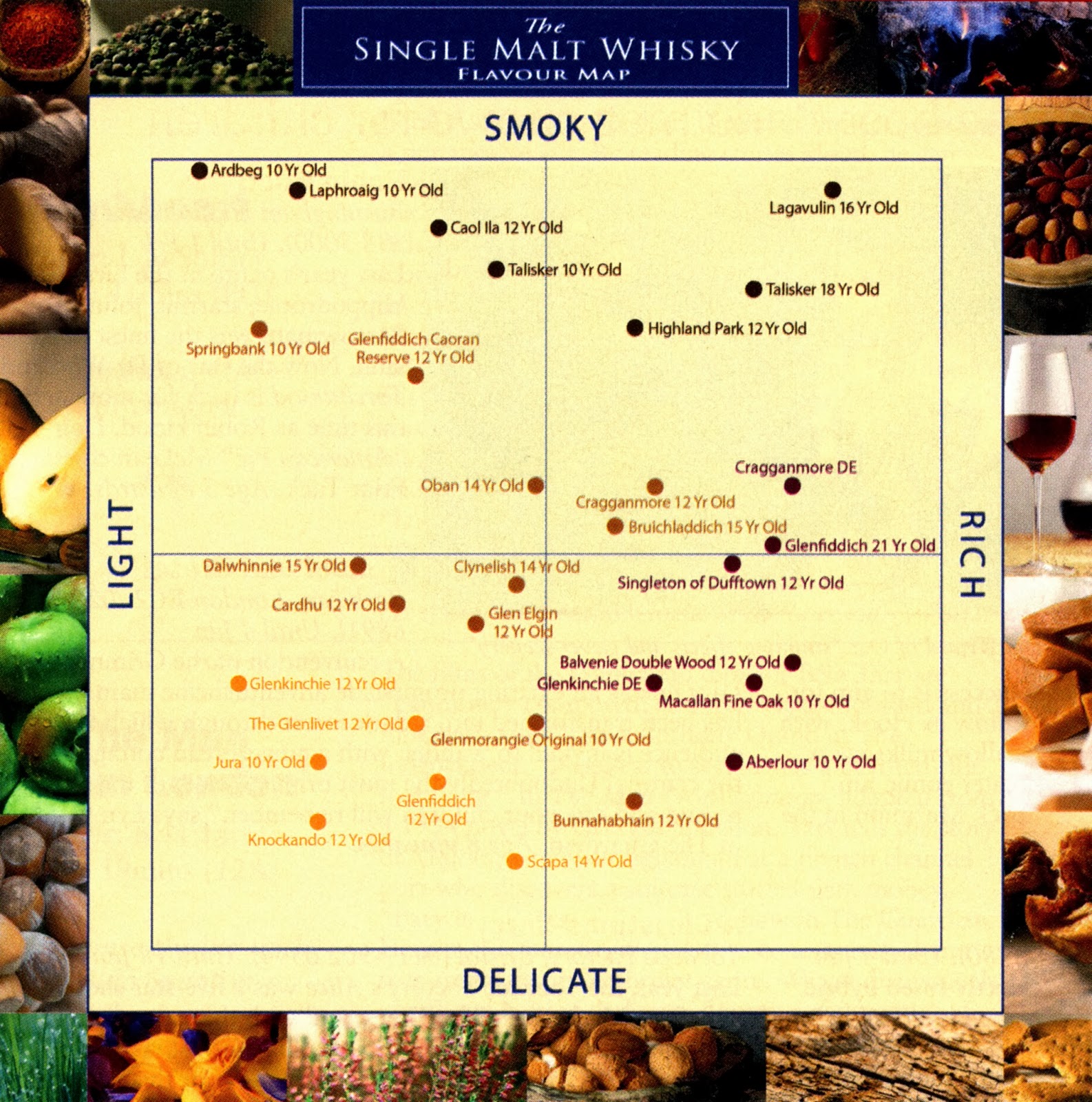
How does a beginner find their way around? The whisky industry does not help itself with its regional classifications, Speyside, for example, stretches from Glasgow [in the south of Scotland] to Wick [northernmost tip - been there - couldn't understand a word -ed.] with numerous whisky styles.
Broom has plotted single malts in Scotland on a grid with four co-ordinates: delicate, light, smoky, rich. The horizontal axis plots the lightness or richness and the vertical axis plots the smokiness. "There isn't a 'best malt' position on the map either – it's an unbiased plotting device," he says.
-via The Scotsman

Is it really more expensive to eat healthier? Often, the general public assumes it is more expensive to eat healthier foods because an accurate method to analyze the costs of foods has not been available.
Realistically, it simply isn’t easy to say one food type is the least or most expensive because of the variety of choices in each food group. Think of food costs as a menu with three columns including the lowest, middle, and highest priced items in the restaurant. Imagine a consumer is in the mood for salmon and there are choices in each column. The salmon in the lowest price column is canned - in the middle price column it is farm raised - and in the highest price column it is wild caught Coho salmon plucked from Bristol Bay in Alaska and flown straight to a landing strip behind the restaurant. All three choices are salmon, but because of the way they are packaged, processed, caught, and shipped, the price differs. How much food costs depends on the choices consumers make about each food.
With so many choices, how do consumers understand the true cost and value of foods? Studies have found, after pondering these same questions that most people use the following methods to make food choices:
The United States Department of Agriculture (USDA), looked at multiple ways of measuring the prices of foods to see if healthy foods are more expensive. They looked at measuring cost per calories, the price per edible weight, the price of an average sized portion, and the cost of meeting dietary recommendations. The findings were different for each method of calculation, which then leads back to the question: what is the overall goal? Do you want to eat healthier…shop for convenience foods…feel full during meal time…are you eating based on taste, etc.?
The food groupings that were tested as part of the USDA study included fruits, vegetables, proteins (meat, beans, nuts, poultry, etc.), grains, mixed dishes, and moderation foods. Moderation foods are those that do not “fit” into a food group, have excess saturated fat, excess added sugars, and excess sodium. Their findings were as follows:

As if trying to figure out what to eat isn’t difficult enough, this table illustrates that even if foods are evaluated on cost per calories, weight, portion size, and dietary guidelines, there isn’t an easy answer. Ultimately, grains seem to be the cheapest foods. If someone is concerned with being as healthy as possible, then eating to meet the Dietary Guidelines would likely be the most important column to use. However, the cost of the amounts of nutrients gained from different foods are not considered in any of the calculations.
Also, one food group that isn’t included in the Dietary Guidelines cost analysis are moderation foods, because there are no recommendations for eating them. In other words, they are not necessary as part of a healthy lifestyle.
Fruits and vegetables are filled with essential vitamins and minerals, and there is not a cost analysis that compares how many nutrients within the cost. Evidence does show that fruits and vegetables would be the best bang for the buck. In the end, fruits and vegetables should make up half of a plate, so by volume alone they will make up a good portion of anyone’s grocery bill. At multiple price points; canned, frozen, or fresh vegetables should be affordable and accessible. People tend to spend a large portion of their food budget on protein foods, though they are recommended in very small amounts. Following the Dietary Guidelines in this group would help to reduce this cost.
When it’s time to go grocery shopping, consumers can use this information understanding that foods have multiple price points (think back to the example of which salmon to choose as illustrated in the beginning of this article). Choosing foods that meet the Dietary Guidelines within your budget is the best way to shop. So happy shopping!
More detailed information is in the report by USDA: Are Healthy Food Really More Expensive?
Elizabeth Shephard, University of Florida Institute of Food and Agricultural Sciences
Vanessa Spero-Swingle, University of Florida Institute of Food and Agricultural Sciences
Mel Morgan-Stowell, University of Florida Institute of Food and Agricultural Sciences
Carlson, A. and E. Frazao. 2012. Are Healthy Foods Really More Expensive? It Depends on How You Measure the Price. Economic Information Bulletin Number 96.Economic Research Service, U.S. Department of griculture. Available at: http://www.ers.usda.gov/media/600474/eib96_1_.pdf
Stewart. H., N. Blisard, and D. Jolliffe. 2003. “Do Income Contraints Inhibit Spending on Fruits and Vegetables among Low-Income Households?” Journal of Agricultural and Resource Economics 28(3):465-80.
 Members of the U.S. Senate voted today on various
amendments to the legislation that would authorize the construction
of the Keystone XL pipeline. That pipeline would transport more
than 800,000 barrels of Canadian oil sands crude per day to U.S.
Gulf coast refineries.
Members of the U.S. Senate voted today on various
amendments to the legislation that would authorize the construction
of the Keystone XL pipeline. That pipeline would transport more
than 800,000 barrels of Canadian oil sands crude per day to U.S.
Gulf coast refineries.
Among those amendments were three that basically asked the senators what they think about climate change science. ScienceInsider over at the American Association for the Advancement of Science reports:
By a 98 to 1 vote, the U.S. Senate approved Senator Sheldon Whitehouse’s (D–RI) amendment that asked simply whether it is “the sense of the Senate that climate change is real and not a hoax." The only senator voting no was Roger Wicker (R–MS). ...
Votes on two other measures declaring that humans are changing the climate were much closer.
Senator John Hoeven (R–ND) offered an amendment affirming that climate change is real and humans are contributing to it. But it also included the State Department’s finding that the Keystone XL pipeline wouldn’t significantly worsen climate change, a provision likely meant to entice moderate Republicans into supporting the measure. In the end, the vote was 59 to 40 in favor, one shy of the 60 needed for adoption.
Hoeven’s measure was seeking to serve as a more GOP-friendly alternative to a third climate amendment from Senator Brian Schatz (D–HI). Schatz's measure asked whether it’s the “sense of Congress” that “climate change is real” and that “human activity significantly contributes to climate change.” It also failed to reach the 60 vote threshold, on a vote of 50 to 49.
Of course, the senatorial votes on the reality or unreality of climate change are entirely irrelevant to whatever the scientific facts are. Instead the votes basically register what the senators think their constituents want to hear. Sheeesh. Perhaps the more relevant question is: Is the U.S. Senate a hoax?

Before Tony Verna invented instant replay no one said, "Let's go to the videotape." Verna was directing the Army-Navy football game for CBS Sports in 1963 when he ran the first instant replay on television, changing the way sports were viewed – and, over time, refereed. His invention, for which he received no patent or payment, was one of the most significant in sports and entertainment history.

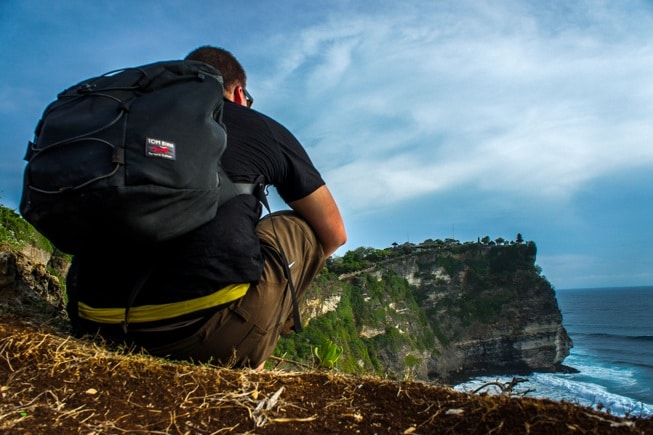
All images taken by Dave Danzeiser.
Editor’s note: This is a guest post by David Danzeiser.
I hung up the phone with the travel agent. I had just finished booking 45,000 miles worth of flights around the world. The trip would last a year and take me to 23 different countries.
Over a year of planning and saving had culminated with a phone call and everything was booked successfully.
The trip took me to snowy, northern Norway past the Arctic Circle, the rainy and humid islands of Indonesia, and the sunny and sandy beaches of Australia. I hiked, swam, slept outside, ate in decent restaurants, and went out to clubs.
Basically, I experienced a huge range of temperatures, cultures, climates, terrain, and activities, and I did it all out of a backpack you’d take with you to school (my pack was 26 liters and weighed 20 pounds).
Initially, after hanging up the phone with the travel agent, I was elated.
However, the reality of what I had just signed myself up for slowly started to sink in and I realized I still had a lot of work to do.
Mainly, what was I going to take with me?
In this article I’m going to discuss how I did it and what worked for me — this isn’t the solution, merely a solution.
It was a solution I put a lot of thought, effort, and research into, but ultimately, the gear I took was centered around mobility, efficiency, and inconspicuousness, and I’ll get into each of these aspects in detail throughout the article.
Overall, the decision to travel so light turned out to be one of the best decisions I made, and the number one piece of advice I give anyone getting ready to travel is to pack less.
But why, and more importantly, how?
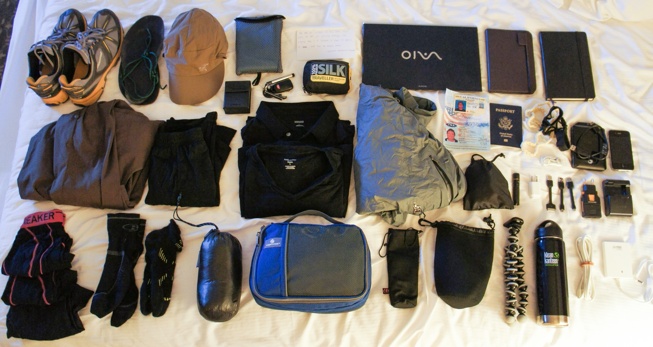
Mobility is the bread and butter of traveling minimally because there’s a certain freedom in knowing everything you need is with you and accessible.
People I met along the way couldn’t believe how small my backpack was when I told them I was traveling for a year. I had everything I needed, just not very much of it.
As the architectural saying goes, “Anyone can design a bridge that stands. It takes an engineer to design a bridge that barely stands.”
I wanted to pack my backpack around the idea this quote represents — finding the essential amount of gear needed to make sure I was comfortable for any environment I might encounter, while also maximizing my mobility.
Therefore, I focused on finding high quality, versatile, and compact gear.
Clothing
There are two options when it comes to being minimal with your everyday clothing:
I chose option #2.
My socks, shirts, and undies were all made from Merino wool and I tried to pick dark colors to conceal the inevitable dirt and grime build-up.
Merino wool is an amazing material. It has great flow and insulation properties (it will keep you warm when it’s cold outside and cool when it’s hot outside), it dries quickly, it has high odor resistance (you can go longer before washing), it’s not bulky or itchy, and unlike cotton it will still keep you warm if it gets wet.
Often times I’d jump into the shower wearing my shirt and undies, give them a good wash, wring them out in the sink, roll them up in my towel like a burrito, and step on it (to get more water out). Then I’d put the damp clothing back on and within minutes of walking around they would be dry and clean.
It’s the perfect material for the minimal traveler.
The everyday clothing I packed included:
The cold weather gear I took included:
Cold weather gear was compact and meant to be worn in layers.
For example, if it was freezing outside I could wear a t-shirt, my long sleeve shirt, my down jacket, and my outer shell rain coat.
This set up kept me warm in the coldest of weather, could be mixed up to be suitable for different climates and was much more compact/versatile than a large overcoat.
Electronics
Again, preference was given to small, light, and compact electronics, and I substituted many bulky charging cables for 3-inch replacements.
Electronics I packed:
Miscellaneous Gear
I hope you’re beginning to sense a theme when it comes to being mobile on the road. The miscellaneous gear continues to follow this theme:
That covers the nuts and bolts of what I took with me to fit everything into a small, single backpack so I could be as mobile as possible (if you want even more detail, check out my gear list).
With this mobility comes flexibility, and flexibility is what I found most satisfying, and why it’s my number one piece of advice to any traveler.
It allowed me to plan on the go, stretch my dollars, and minimize issues in airports:
Plan On the Go
I enjoy planning just as much as the next A-Type personality, but while you’re traveling long-term, it can get exhausting, and sometimes planning isn’t possible due to poor/non-existent internet connections.
With a small bag you’re mobile and flexible, which allows you to plan on the fly.
Some of my favorite adventures and stories were unplanned and happened organically because I wasn’t tied down by large amounts of luggage:
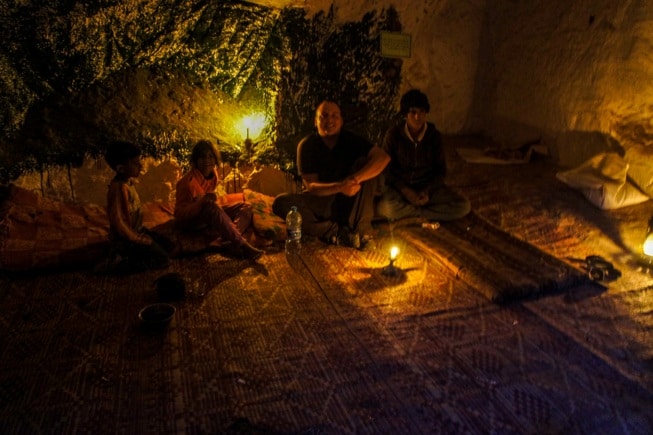
In Petra, Jordan I met a merchant selling souvenirs and she invited me stay with her and her family in their 2000-year-old cave. I ate dinner, played card games, chatted over candle light, and slept there. I was carrying everything I owned with me, so I didn’t have to worry about all of my luggage back at the hostel being safe when I didn’t come back.
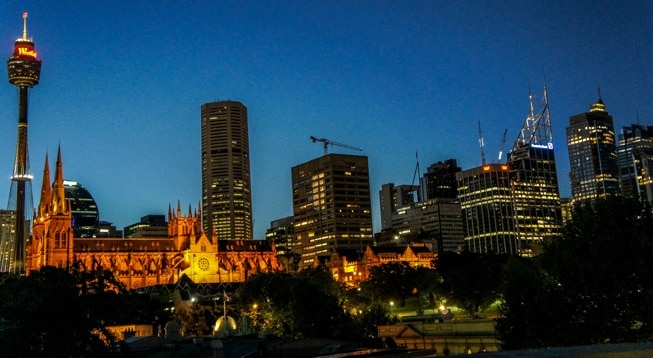
I happened to be in Sydney, Australia during a particularly eventful weekend. I was able to easily walk around all day exploring the city and checking to see if there were vacancies in 15 different hostels. No luck. But throughout my day of exploring I came across an awesome roof deck, so I bought a box of goon (boxed wine), drank it, and then blew up the wine bladder and used it as a pillow as I slept on the roof deck. The view was incredible, to say the least.
Finally, on my way to Bruges from Brussels I stopped for the day in Ghent. Since my bag was small enough I was able to rent a locker in the train station, and explore Ghent for the day before catching the evening train into Bruges.
Budget Friendly
When you’re traveling on a budget, your largest cost will most likely be transportation (39% of my spending for the year went to it). Any way you can save money on transportation will mean extra money for entertainment and experiences.
One of the best ways to save money is to utilize public transportation like subways and buses. But, lugging around and keeping track of large luggage in a bus/subway where it’s standing room only is not fun and sometimes impossible in the packed subways of larger cities.
The minimal luggage allows you to quickly navigate crowded transport areas instead of having to spend extra money on a cab with space for all of your stuff.
Breeze Through Airports
Packing for mobility makes airport travel a breeze in situations where it would normally be the most stressful part. A few benefits include:
After you have minimized your packing list to the essentials, the next step is to pack your bag as efficiently as possible.
Everyone is going to have their own preferences of course, but what follows is my set up after about 6 months on the road when the kinks had been worked out.
Organization and compartmentalizing is the key to packing efficiently.
You want things you use often easy to reach, and when you need to get something at the bottom of the pack, it’s nice to be able to quickly repack everything without having to refold clothes, or hunt down each pair of socks.
One of the reasons I chose my backpack (which is the Tom Bihn 26L Smart Alec), is because of its organizational capabilities.
On top of having many internal pockets to help with organization, it also has O-rings located within the pack which you can hook smaller organization pouches to, which lets you pull the smaller pouches out of the way while still keeping them attached to the pack so you can get what you need at the bottom.
This compartmentalization is amazing for not forgetting something when you’re in a hurry. Imagine trying to catch the first bus out of town after you’ve woken up late and you have to pack everything quickly in the dark hostel dorm room while everyone else is still sleeping (may or may not be a true story).
My extra pouches/bags within the backpack:
As I traveled, I found I had a problem when I needed something (like my camera or journal with directions written in it) and I was walking around with the pack on.
I’d have to take off the pack, get what I needed, use it, put it back in the pack, and then put the pack back on.
I was in Australia and about a month into the trip, I realized I was having trouble sticking to my $50/day budget, so my solution was to start cooking more of my food, but I needed a way to carry the meals.
I ended up buying a reusable shopping bag for 99 cents and it was probably the most useful thing I have ever bought for a dollar.
The bag lasted the entire rest of the trip and I still use it when I travel today.
Since it’s handheld and has an open top I use it to hold meals/groceries, my camera, journal, maps, or even my long-sleeve shirt; it also eliminates the need to take off my backpack to get something while I’m out and about.
Finally, I wanted to blend in as best as I could in whatever culture I happened to be in:
These days, it’s pretty safe to assume when you see a younger person with a giant bright backpack that they are likely carrying something valuable in the form of technology (phone, camera, computer, tablet, etc.) or at the very least, cash, credit cards, and a foreign passport, which can be a dangerous thing to signal when you’re in larger cities known for theft.
Having a small backpack was very helpful in being inconspicuous, and since it was so small I didn’t even stick out as a backpacker.
As I said in the beginning, deciding to travel for a year out of a 26-liter backpack was one of the best decisions I have ever made.
Not only did it allow me the freedom and flexibility to have some amazing and organic adventures, which could have been lost had I been tied down by obnoxious luggage, but it was also an amazing lesson in being content with what I did have and learning about what’s really important to me.
It also taught me to be very aware of consumption.
Anything I bought meant I would have to carry it for the rest of my journey. Was it worth it? Did I really need it or would the money be better spent on a new experience?
Living for an entire year out of a backpack and never feeling like I was missing anything really put things in focus when I came back to the US, where I feel constantly pressured to buy and consume.
I came to realize the more stuff I owned the more freedom I gave up to store and maintain it; sometimes it is worth it, but sometimes it’s not, and this year-long trip out of a 26-liter bag really helped to put it in perspective.
My goal for this article was to give you some insight from someone who has done it and what worked for me. Obviously everyone is different and everyone has different values and goals when they travel, but I hope next time you are packing for a trip you try to be content with less and see what kind of experiences you can have with the added flexibility.
_____________
David Danzeiser is the creator of The Quest for Awesome, where his goal is to connect with people striving to pursue their own vision of excellence through whatever they are doing. He is determined to become location independent to continue traveling full time and along the way he’d love to connect with like-minded people to learn from and help in any way he can.
Are you smarter than a 9th grader? Then you will be quite at home with President Obama's latest State of The Union speech. While the Flesch-Kincaid readability test shows SOTU 'smartness' has been plunging Woodrow Wilson, the collapse has accelerated post-Clinton with President Obama's average SOTO speech tailored to the intellect of a 14-year-old - the lowest on record.
Vocativ also calculated the average SOTU grade for every president dating back to Woodrow Wilson, when it first became the norm to deliver such speeches before a joint session of Congress. Before Wilson, it was typically presented as a written report. Over the last century, the State of the Union’s sophistication has trended steadily downwards.

Perhaps even more sad is the spin that a former speechwriter puts on this downtrend...
“It’s tempting to read this as a dumbing down of the bully pulpit,” Shesol said.
“But it’s actually a sign of democratization. In the early Republic, presidents could assume that they were speaking to audiences made up mostly of men like themselves: educated, civic-minded landowners. These, of course, were the only Americans with the right to vote. But over time, the franchise expanded and presidential appeals had to reach a broader audience.” That, and the advent of mass communication.
Now, when President Obama addresses the country, he is addressing everyone.
* * *
Yep - that's it.


Trickle Down Taxation put forth by Obama, he says, will help the middle class. Many believe this redistribution scheme will only fatten an already bloated big government. Cartoon by A.F.Branco ©2015.
More A.F.Branco Cartoons at Net Right Daily. Note: You may re-post this cartoon provided you link back to this source.
The post Trickle Down Taxation appeared first on Daily Surge.

Kickflips and ollies aren’t requirements to coasting. They're now a viable commuting option. We’ve broken down the best commuting boards, all American made, into categories to better coalesce your eclectic needs.
...
Hunting dates back to our early ancestors, and has inspired art and literature since. These great reads will introduce you to the world lived and loved by sportsmen.
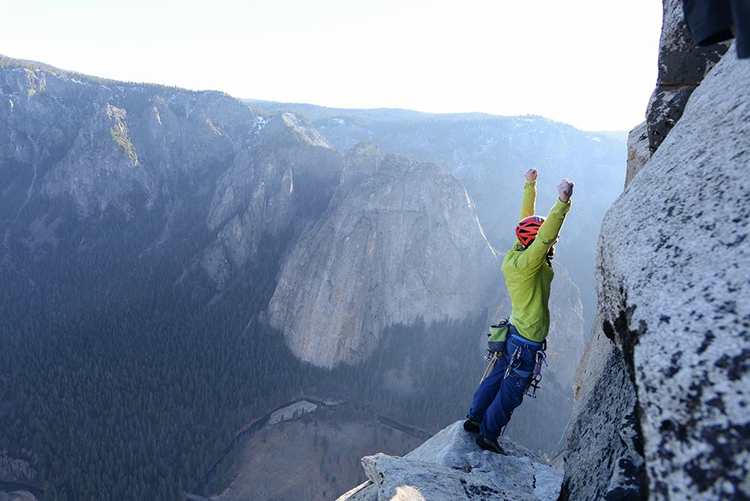
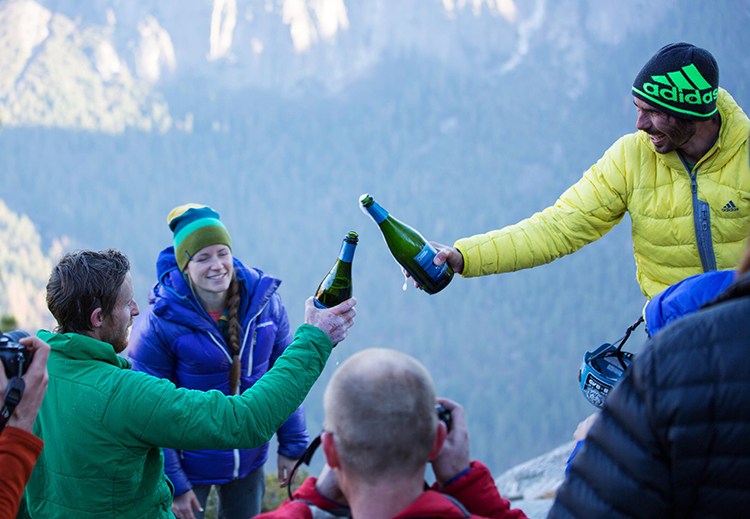
... ommy Caldwell and Kevin Jorgeson made climbing history on Wednesday when they finished their 19-day, 3,000-foot ascent of El Capitan's Dawn Wall in Yosemite National Park — earning them a place amongst some of the most badass of badasses that ever lived. Did we mention that this feat has never been done, because this notorious ascent contains no fewer than 32 of the hardest consecutive pitches known to the sport of climbing?
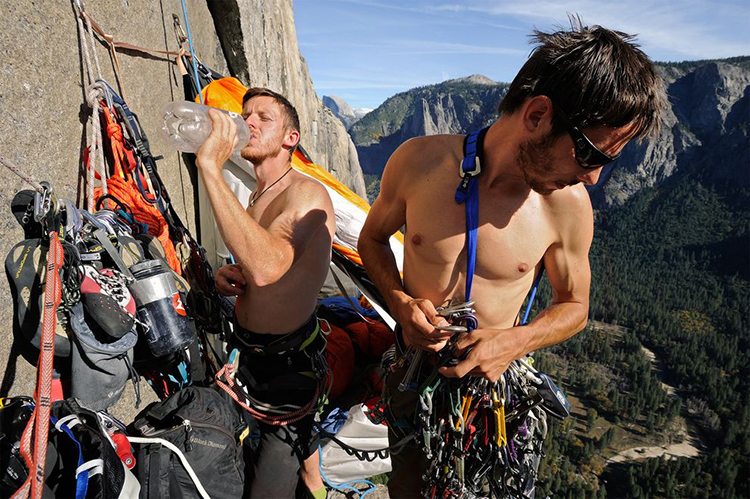
Starting their ascent on December 27, the two men lived the following two and a half weeks on the wall in porta-ledges, suspended on the very same rock face they spent their days (and several nights) climbing. Caldwell and Jorgeson had set high standards for themselves: they would both consecutively complete all 32 pitches of the Dawn Wall without falling or returning to the ground between attempts.
No small task — and, to be sure, there were moments of struggle. It took Jorgeson 10 days to complete pitch 15, one of the hardest sections of the climb. The men had to do the majority of their climbing at night, as the direct California daytime sun made the rock face otherwise more difficult to cling to. But one of the climb's most pivotal moments would come at Pitch 16, where the men were met with an 8.5 foot "dyno" — an acrobatic move that requires leaping entirely off of the wall to catch onto another portion. Eat your heart out Stallone from Cliffhanger.
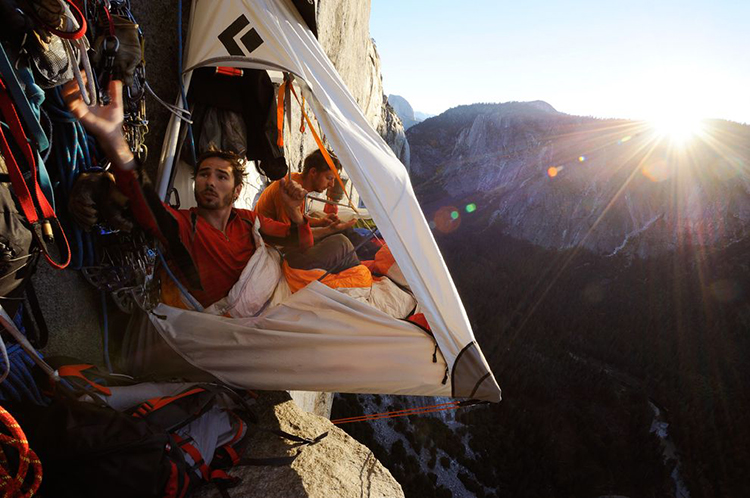
It's nearly impossible to make summiting a beast like El Capitan look something like easy, but Caldwell and Jorgersen, overall, managed to pull it off. Want to read more nitty-gritty details of the climb? Do it here, courtesy of our friends at Gear Patrol. In the meantime, read on to find out just a few reasons why these dudes are so incredibly badass.

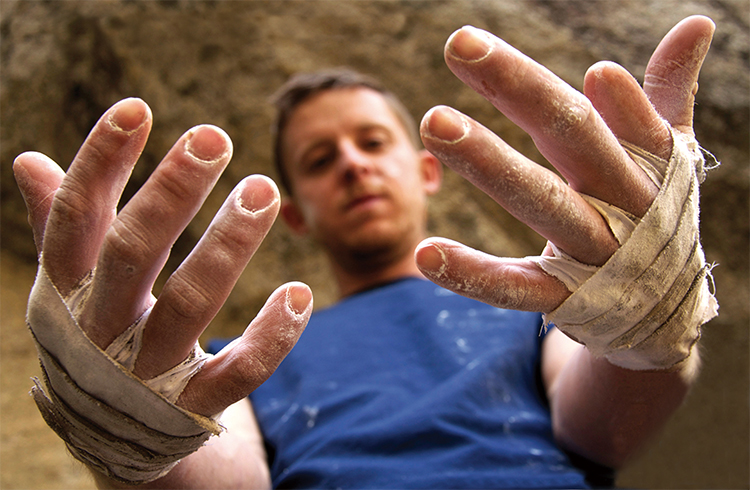
1) Caldwell is missing his left index finger.
In 2001, Caldwell was working with a table saw when he sliced his left index finger off — a somewhat debilitating injury when your life (quite literally) hangs on clinging precariously to things. Doctors reattached the finger, telling Caldwell that he would never climb again. First devastated, then more determined than ever, he had the finger removed so it wouldn't hinder him. And five months later, Caldwell free climbed El Capitan's 3,000-foot Salathé Wall in less than 24 hours. Who needs 10 digits anyway?
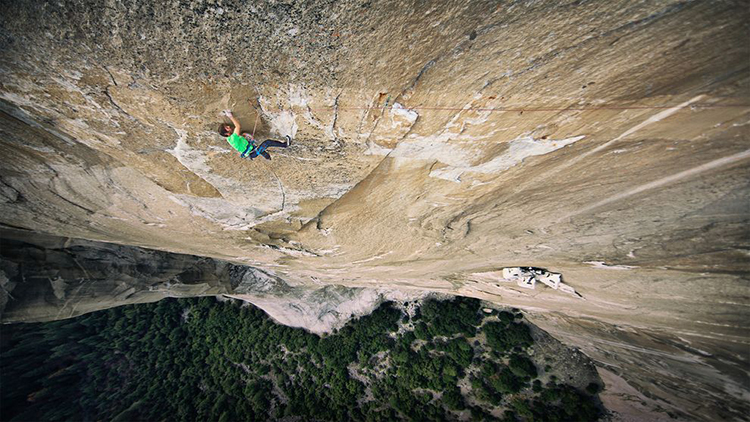
2) Jorgeson is known for free climbing highball boulders.
What makes the Dawn Wall ascent even more incredible? It was Jorgeson's very first free climb of El Capitan. Though he's accompanied Caldwell on every El Cap climb for the past five years, his climbing experience is routed in bouldering, climbing about 20-foot-tall boulders through a powerful series of seemingly impossible moves. Because that isn't tricky enough, Jorgeson specializes in "highball bouldering" — climbing boulders up to 60 feet (yep, that's six vertigo-inducing stories) with no protection except for some crash pads and a few spotters.
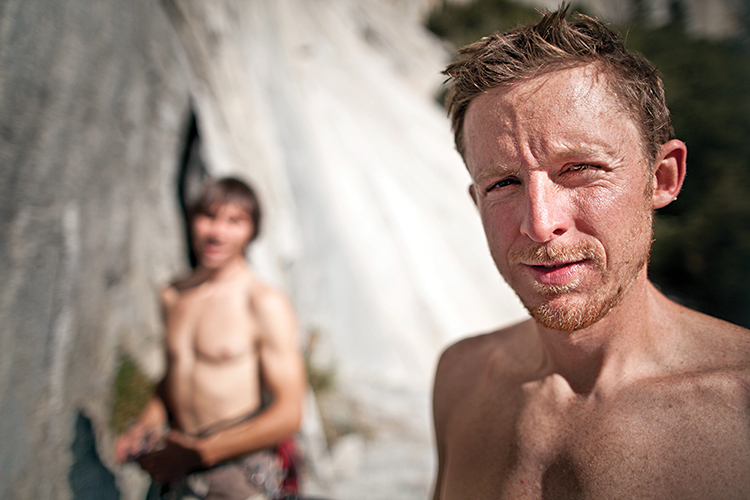
3) Caldwell once shoved an armed captor off a cliff.
Yeah, you read that right. On a small group climbing trip in Kygyzstan in 2000, Caldwell and his three friends were taken captive by militant rebels from the Islamic Movement of Uzbekistan — which is to say, scary dudes with rifles, grenades, handguns, and knives who proceeded to march them at gunpoint for six days. A moment came when the group was left with just one gunman guarding them as they ascended a steep ledge, and Caldwell went for it, pushing the man over the side. The group then hiked 18 miles and found safety in a Kyrgyz military encampment, having found maybe a bit more drama than they'd planned for.
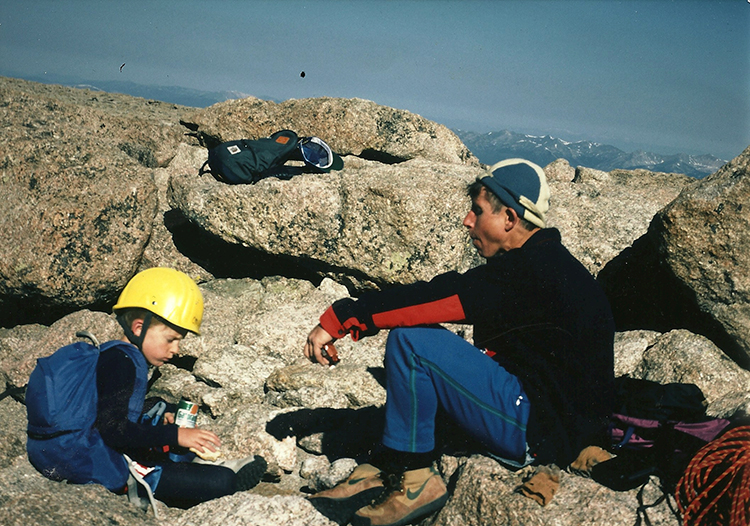
4) Jorgeson started climbing when he was 11. Caldwell started when he was 3.
Jorgeson grew up just a few hours from Yosemite, in Santa Rosa, CA, and started climbing when he was 11 years old. By 16, he was competing in indoor competitions — the same year he first went to Yosemite for bouldering. He's made it a tradition to return there on his birthday every year since.
Caldwell, a self-described "clumsy kid with bad hand-eye coordination" from Estes Park, CO, started climbing when he was 3. When he was 16, he entered a competition on a whim and proved himself to be something of a prodigy, unexpectedly beating out many of the country's top climbers. He first climbed El Capitan in 1999, and the immense granite face became something of a home for him, a world where he thrived. "Being up on those steep walls demanded the right amount of climbing skill, pain tolerance, and sheer bull-headedness that came naturally to me," he told Ascent magazine.
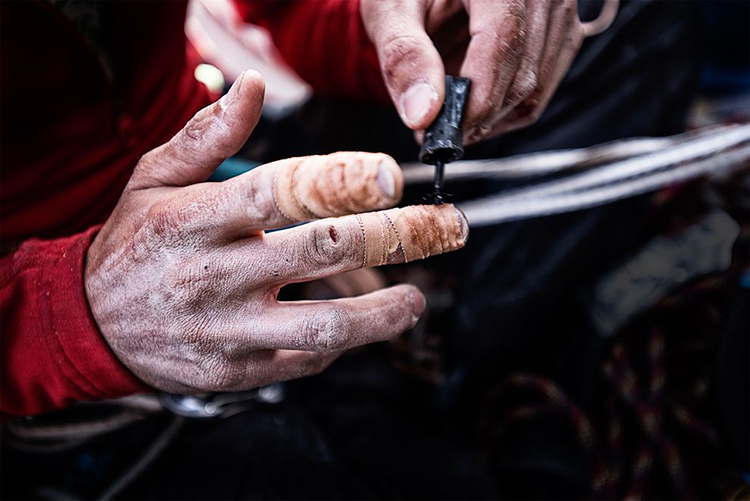
5) Caldwell and Jorgeson sanded and superglued their fingertips to be able to ensure a better grip on the rock.
Climbing is, to put it mildly, rough on the hands. Throughout the Dawn Wall climb, both Caldwell and Jorgeson had ripped, bloody fingers, and had to spend entire days letting their skin regrow, applying healing salve every four hours and sanding, taping, and supergluing their fingers to better enable them to grab onto the razor-sharp, no-thicker-than-a-quarter holds that made up their path. That's what dedication looks like. Oh, and seven years of training, plotting, and dedication, and 19 days on the Dawn Wall itself. [H]

Liv Combe guesses she could cling to the very bottom part of the Dawn Wall for approximately seven seconds.
She's also an Editor at Huckberry who's decided to spend more time in the climbing gym.
Follow her on Twitter and Instagram.

Images ©: 1. Tim Kemple - Petapixel; 2, 4. Jimmy Chin - National Geographic; 3, 9. Corey Rich, Big Up Productions - National Geographic 5. Rebecca Caldwell - Life With The Caldwells; 6. Brett Lowell, Big Up Productions - National Geographic; Tim Kemple - Rock and Ice Magazine; 8. Caldwell Family - The New York Times; 10. Bligh Gillies, Big Up Productions - National Geographic; 11. Jim Seida - NBC News
An 18-year-old boy and his 13-year-old girlfriend have so far eluded capture in Kentucky, Georgia, and South Carolina, and are now believed to be cruising around in a stolen truck with two guns.

Beer is so, so good. All of it gets you drunk, and a lot of it even tastes good in the process! What more could you ask for? Maybe just a quick little primer on how to get the most out of the experience? What's that? "No," you say? "Fuck that," in fact, you say?

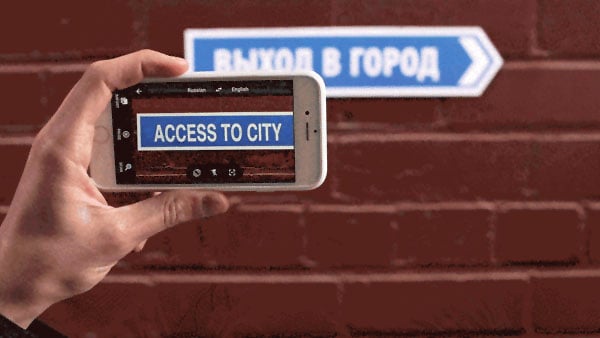
If you’re ever in a situation in which you need to understand some text in a foreign language, getting a translation is now as free and easy as loading up your phone’s camera app. Google has updated its Translate app to include real-time on-screen translations of text you point your camera at.
Here’s an animated GIF showing how the system works:

The app is pretty much a 100% free version of Word Lens, an app that blew many a mind when it was launched back in 2010. You don’t even need any kind of Internet connection for it to work.
“[…] it’s way easier to navigate street signs in the Italian countryside or decide what to order off a Barcelona menu,” Google says.
The camera translation is currently offered from English to and from French, German, Italian, Portuguese, Russian, and Spanish. Google says its working on supporting more languages.
(via Inside Search via Lifehacker)

Fujifilm announced a new premium compact camera called the XQ2 today. Specs-wise, the camera appears to be an almost perfect clone of its predecessor, the XQ1, except the XQ2 has an additional film simulation mode in its firmware.
If you’re the owner of an XQ1, the specs will be strangely familiar: the XQ1 also has a 12-megapixel 2/3-inch X-Trans CMOS sensor backed by an EXR Processor II. ISO goes from 100 to 12,800.
The lens on the front is a 4x optical zoom f/1.8-f/4.9 lens that’s the equivalent of a 25-100mm in 35mm terms. On the back is a 3-inch 920K-dot LCD screen.

Other features include a 1 second startup time, 0.015s shutter lag, 0.3s shooting interval, 0.06s autofocus, 3 stop optical image stabilization, a popup flash, HD movie recording, a stereo microphone, and Wi-Fi.

The one item on the spec list that’s different is the new ‘Classic Chrome’ film simulation mode, something that was added to a number of existing cameras through a simple firmware update.

You’ll be able to purchase the new Fujifilm XQ2 starting in February 2015 for $400. It will be available in black, white, and silver varieties.
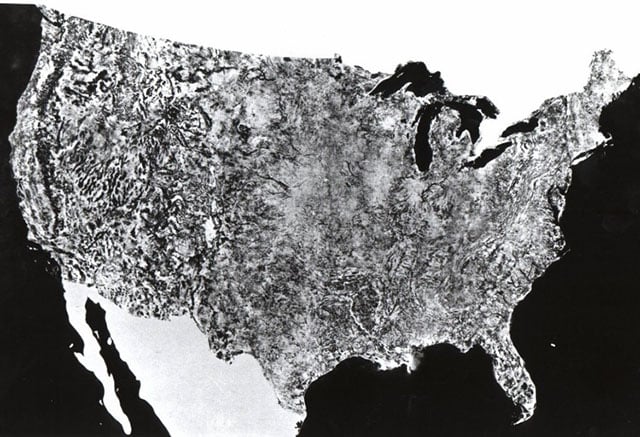
What you see above is the first satellite photo of the contiguous 48 states of the United States. It was created in 1972 for NASA by a US agriculture department division, and comprises 595 cloud-free photos captured by NASA’s first Earth Resources Technology Satellite.
All the photos were captured from the same altitude of 560 miles and at the same lighting angle, allowing the images to be seamlessly stitched together into a giant 10×16-foot photo map of the US. You can find a larger version of the image here.
(via Internet Archive via Laughing Squid)
In many circles, the mark of a great pit master is his—or her—ability to stick to tradition. For good reason, too. It’s hard to improve on hog cooked over real wood and dressed with a simple sauce. Across the South, though, are joints that dish up something different from the barbecue most of us know and love. Some of them are rogue defenders of their own styles, and others hold down distinctive but long-established corners of the barbecue world. They’re all worthy destinations for adventure-seeking lovers of smoked meats.

Photograph by Peden + Munk
COLETTA’S RESTAURANT
Memphis, Tennessee
Coletta’s isn’t a barbecue joint at all. It’s a musty Italian spot, with checkered tablecloths and shrimp scampi on the menu. Nothing remarkable, were it not also the birthplace of barbecue pizza. Back in the 1950s, many Memphians had never tried pizza. They weren’t too interested in it, either, until Horest Coletta began heaping his flatbreads with smoked meat and barbecue sauce. The place hews to the local definition of barbecue, eschewing grilled chicken in favor of pork shoulder slow-cooked on a pit in the basement.
RELATED: Memphis in May: Pork-a-Palooza
ELMER’S BBQ
Tulsa, Oklahoma
If you’re doubting Oklahoma’s Southern pedigree, consider the state’s foremost barbecue specialty: smoked bologna, which also goes by the tongue-in-cheek moniker Oklahoma Prime Rib. At Elmer’s, the pit masters slow cook hunks of John Morrell bologna over hickory until they’re warm, smoky, and ready to slice onto sandwiches and platters.
OLD HICKORY BAR-B-QUE
Owensboro, Kentucky
In western Kentucky, restaurants smoke mutton. The tradition dates back to a nineteenth-century wool industry, and perhaps the most remarkable thing about it is the so-called “black sauce”—or “dip”—with which they dress their meat. To sample it, take a trip to Owensboro, where Old Hickory serves some of the best chopped mutton and dip in town.
RELATED RECIPE: A Different Kind of Barbecue Sauce
RIDGEWOOD BARBECUE
Bluff City, Tennessee
Filter beachside barbecue through the lazy plumes of an East Tennessee smokehouse, and you’ll end up with the idiosyncratic likes of Ridgewood Barbecue. Founder Jim Proffitt, who opened the place in the early 1950s, discovered barbecue on a road trip to Daytona Beach, but the menu owes plenty to its mountain surroundings. House specialties: baked beans, blue cheese dip, and smoked ham—sliced thin and dressed with a thick, sweet sauce.
RELATED: Good Eats in East Tennessee
TED PETERS FAMOUS SMOKED FISH
South Pasadena, Florida
The baseline protein of coastal Florida barbecue is smoked fish, not pork or beef. Oily mullet is a particular favorite in the Sunshine State, although fishermen elsewhere sometimes discard it as a trash fish. Eat like a local at Ted Peters, which has been a Tampa Bay institution for more than half a century. Smoked over native red oak, local mullet comes on a platter with sides of potato salad and coleslaw, and folded into a creamy fish dip.
Related stories:
21 of the best barbecue sandwiches
Alabama white sauce
Test your barbecue IQ

