Four billion years ago, the Moon was going through a rough patch. During this age, now known as the Late Heavy Bombardment, the Moon (along with Earth) was being pummeled by asteroids. This had the effect of aggravating its core of liquid hot magma, the way a wound gets aggravated if you poke it one too many times. Lava exploded onto the Moon’s surface, leaving behind dark spots of volcanic basalt, cupped in the impact craters left behind by the asteroids.
Now, analyzing samples of the basalt collected in the 1970s, two space researchers have discovered that those eruptions also released a whole bunch of gas—so much that it formed an atmosphere around the Moon that lasted for 70 million years.
Looking at the composition of the basalt, Debra H. Needham, of the NASA Marshall Space Flight Center, and Dr. David A. Kring, of the Universities Space Research Association, were able to determine that those lava flows would have released carbon monoxide, oxygen, hydrogen, sulfur, and other gases from the Moon’s surface. Though much of that gas would have been lost to space, some of it formed a temporary atmosphere around the Moon. That layer of gas was about 1.5 times the thickness of the atmosphere on Mars, but still only about 1.5 percent of the Earth’s atmosphere, as Popular Mechanics reports.
The Moon’s temporary atmosphere would have been thickest about 3.5 billon years ago and lasted for about 70 million years. If lunar atmosphere isn't exciting enough on its own, consider that the same events that led to its formation may have left behind materials that could further human exploration and life on the Moon—as NASA puts it, these compounds "may also provide the in-situ resources needed for sustained lunar surface activities."
If humans find a way to spend long stretches on the Moon, we may have four-billion-year-old asteroids to thank.
Denny's is one of the only restaurants open 24 hours a day even on Christmas, it's the place where teenagers go to drink coffee and eat french fries for hours, and in keeping with the American diner tradition Denny's is always affordable.
What started out as a donut shop called Danny's Donuts that opened in Lakewood, California back in 1953 has grown to become Denny's- one of the largest and most successful restaurant chains in American history:
The 24-hour doughnut shop grew quickly, expanding to a larger menu and roughly 20 locations by 1959, and changing its name to Danny’s Coffee Shops along the way. But the founders worried that the mini-chain was at risk of getting confused with nearby Coffee Dan’s, so they switched one letter to create the Denny’s we know today.
A post shared by dennysdiner (@dennysdiner) on Aug 15, 2014 at 1:26pm PDT
The Grand Slam Breakfast debuted in Atlanta in 1977 with a name inspired by legendary baseball player Hank Aaron, and the Grand Slam has been about the same price my entire life- which is probably why it's Denny's most popular dish.
When Denny's says they're "always open" they mean it, and their 24-365 status almost became an issue when most of the restaurants decided to close for Christmas back in 1988:
When almost all the Denny’s locations closed for Christmas Day in 1988, many stores realized that they didn’t have any keys, or even locks, since they never used them. All told, 700 of the 1221 restaurants needed to get new locks installed for the holiday.
For the past 11 years, we've been busy rummaging around the internet and adding courses to an ever-growing list of Free Online Courses, which now features 1,300 courses from top universities. Let's give you the quick overview: The list lets you download audio & video lectures from schools like Stanford, Yale, MIT, Oxford and Harvard. Generally, the courses can be accessed via YouTube, iTunes or university web sites, and you can listen to the lectures anytime, anywhere, on your computer or smart phone. We haven't done a precise calculation, but there's about 45,000 hours of free audio & video lectures here. Enough to keep you busy for a very long time.
Here are some highlights from the complete list of Free Online Courses. We've added a few unconventional/vintage courses in the mix just to keep things interesting.
A History of Philosophy in 81 Video Lectures: From Ancient Greece to Modern Times - Free Online Video - Arthur Holmes, Wheaton College
If you need to make movies, if you feel like you can't rest until you've told this particular story that you're burning to tell, then Martin Scorsese has a course for you. Through MasterClass, the director of Goodfellas, Raging Bull, Taxi Driver, and Mean Streets is now set to teach his first online course. According to the video trailer above, Scorsese will explore in 20+ lessons everything from cinematography and editing, to working with actors, on-set directing, and developing a personal filmmaking style. The $90 course won't be released until early 2018, but anyone who pre-enrolls now will get early access to the class.
While you wait, you can also take Werner Herzog's own course on filmmaking (also offered through MasterClass). Or explore Scorsese's lists of recommended films that we've previously featured here on Open Culture. Find them in the Relateds right below.
Follow Open Culture on Facebook andTwitter and share intelligent media with your friends. Or better yet, sign up for our daily email and get a daily dose of Open Culture in your inbox.
If you'd like to support Open Culture and our mission, please consider making a donation to our site. It's hard to rely 100% on ads, and your contributions will help us provide the best free cultural and educational materials.
Note: MasterClass is one of our partners. So if you sign up for a course, it benefits not just you and MasterClass. It benefits Open Culture too. So consider it win-win-win.
Other MasterClass courses worth exploring include:
Give Dr. Andrew Weil three minutes, and he can teach you a 60-second technique for falling asleep. Above, the alternative medicine guru walks you through the 4-7-8 breathing method. As he demonstrates, it "takes almost no time, requires no equipment and can be done anywhere." And once you master it, you can use the 4-7-8 breathing technique (explained and demonstrated in greater detail here ) to lower your anxiety levels (useful these days!), navigate tension-filled moments, and deal with food cravings.
Elsewhere, Weil has said, "If I had to limit my advice on healthier living to just one tip, it would be simply to learn how to breathe correctly." Hence why he created an audio recording, Breathing: The Master Key to Self Healing, which you can still purchase online.
Follow Open Culture on Facebook andTwitter and share intelligent media with your friends. Or better yet, sign up for our daily email and get a daily dose of Open Culture in your inbox.
If you'd like to support Open Culture and our mission, please consider making a donation to our site. It's hard to rely 100% on ads, and your contributions will help us provide the best free cultural and educational materials.
When the news broke last week of the death of game-show host Monty Hall, even those of us who couldn't quite put a face to the name felt the ring of recognition from the name itself. Hall became famous on the long-running game show Let's Make a Deal, whose best-known segment "Big Deal of the Day" had him commanding his players to choose one of three numbered doors, each of which concealed a prize of unknown desirability. It put not just phrases like "door number three" into the English lexicon but contributed to the world of stumpers the Monty Hall Problem, the brain-teaser based on the much-contested probability behind which door a contestant should choose.
"Behind one door is a car; behind the others, goats," went the question, setting up a Let's Make a Deal-like scenario. "You pick a door, say No. 1, and the host, who knows what's behind the doors, opens another door, say No. 3, which has a goat. He then says to you, 'Do you want to pick door No. 2?' Is it to your advantage to switch your choice?" Yes, replied the unhesitating Savant and her Guinness World Record-setting IQ, you should switch. "The first door has a 1/3 chance of winning, but the second door has a 2/3 chance."
This logic, which you can see broken down by University of California, Berkeley statistics professor Lisa Goldberg in the Numberphile video at the top of the post, drew about 10,000 letters of disagreement in total, many from academics at respectable institutions. Michael Shermer received a similarly vehement response when he addressed the issue in Scientific American eighteen years later. "At the beginning of the game you have a 1/3rd chance of picking the car and a 2/3rds chance of picking a goat," he explained. "Switching doors is bad only if you initially chose the car, which happens only 1/3rd of the time. Switching doors is good if you initially chose a goat, which happens 2/3rds of the time." Thus the odds of winning by switching becomes two out of three, double those of not switching.
Useful advice, presuming you'd prefer a Bricklin SV-1 or an Opel Manta to a goat, and that the host opens one of the unselected doors every time without fail, which Hall didn't actually do. When he did open it, he later explained, the contestants made the same assumption many of Savant and Shermer's complainants did: "They'd think the odds on their door had now gone up to 1 in 2, so they hated to give up the door no matter how much money I offered. By opening that door we were applying pressure." Ultimately, "if the host is required to open a door all the time and offer you a switch, then you should take the switch. But if he has the choice whether to allow a switch or not, beware. Caveat emptor. It all depends on his mood" — a rare consideration in anything related to mathematics, but when dealing with the Monty Hall problem, one ignores at one's peril the words of Monty Hall.
Based in Seoul, Colin Marshall writes and broadcasts on cities and culture. His projects include the book The Stateless City: a Walk through 21st-Century Los Angeles and the video series The City in Cinema. Follow him on Twitter at @colinmarshall or on Facebook.
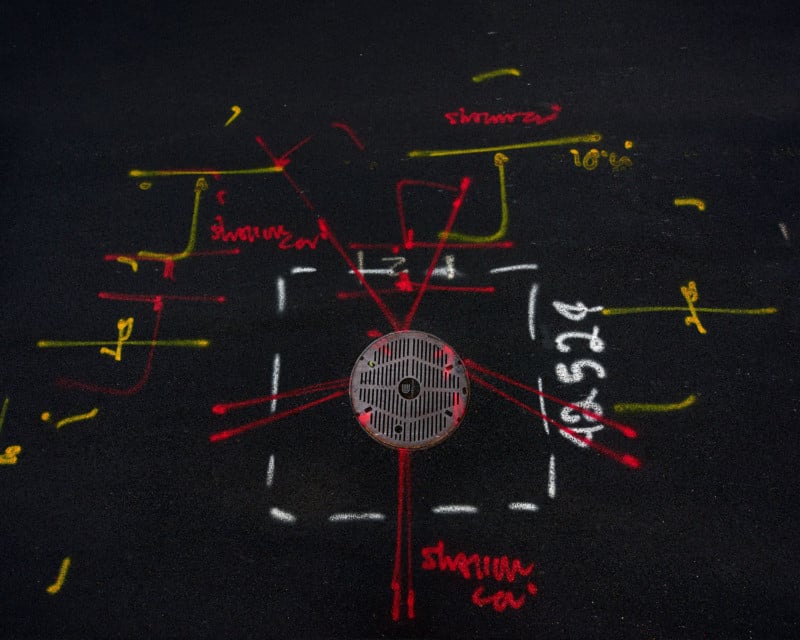
In New York City, one of the things you’ll often see on street surfaces is cryptic and colorful scribbles left by utility companies. Photographer Joseph O. Holmes decided to turn these scribbles into artistic street photography (literally). His project is titled “Tracing the Underground: Street Utility Markings in New York City.”
Times Square
Each of these bird’s-eye photos shows the markings that are left by utility workers to alert construction workers of vulnerable underground infrastructure — things like utility lines, trenches, and ducts.
Hudson Street
“Though many markings are nothing more than crude and functional labels, they’re sometimes applied with such finesse and care as to become ephemeral bits of street art,” Holmes tells PetaPixel.
Lafayette and BondSohoWest BroadwayPrince and Greene StreetsSpring and WoosterWest VillageRivington StreetTimes SquareRivingtonWest Broadway and Reade
This is an ongoing series, and you can follow along through the project page on Holmes’ website.
This question keeps coming up time and again. When you post a photo, a status update, or anything else on social media, who owns the copyright? Is Facebook or Twitter free to do whatever it wants with your picture? Let’s answer them once and for all. Who Owns the Copyrights on Photo, Video, and Text? Whoever originally captured the photo or video, or whoever originally said the text. In simple terms, if it’s an original status, photo, or video by you, you own the copyrights to it. If you are posting someone else’s photo or video online, you don’t own...
In both 1929 and 2008, economic experts everywhere claimed to know exactly what they were doing, yet not a single person could fix the series of mistakes that crashed the world’s economy. To avoid future financial catastrophes, a library in Edinburgh, Scotland has compiled a collection of sensible economic literature that aims to educate the next generation of economists.
The Library of Mistakes contains over 2,000 books, all relating to economics and finance. The small, cozy room that makes up the library is packed with books by popular writers like Karl Marx, Milton Friedman, Paul Krugman, and Michael Lewis. Cumulatively, the collection addresses every country on the planet.
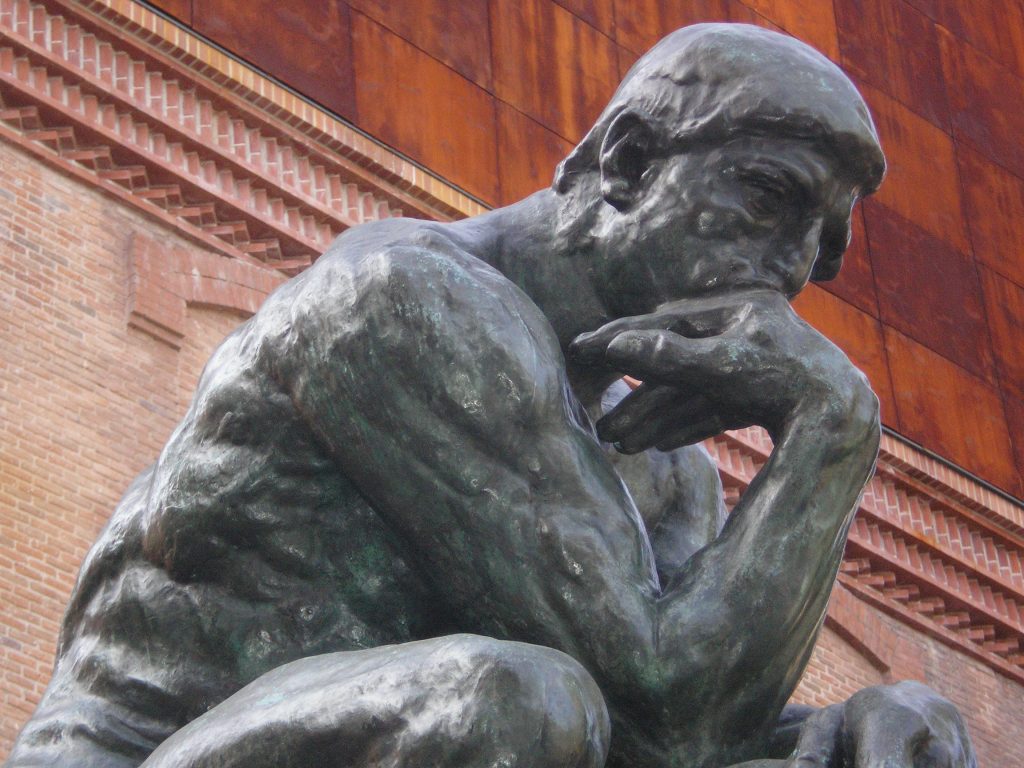
The Library of Mistakes was inspired by the 2008 Great Recession, which served as a perfect example of how, according to the library’s curators, “smart people keep doing stupid things.”
The library promotes the belief that quantitative economic algorithms provides a sense of faux objectivity, and that trusting these imperfect models is a recipe for disaster. The books offer readers a chance to turn to financial history as a way to learn from past mistakes instead of relying on how economics should theoretically function under unrealistic assumptions.
Its mission is to provide university students with a more accurate economic education, a holistic understanding of financial history, and a grasp of how to use books as a resource to prevent another recession.
If you’re someone who cares about the world's economy, there should be no doubt in your mind that visiting the Library of Mistakes would be no mistake.
Cognitive biases can change the way you see everything, and often in a bad way. Fortunately, just becoming aware of your biases can help you overcome them.
Jackson County’s location in the Southern Appalachians and Nantahala National Forest of North Carolina means it’s home to towering waterfalls and terrain ranging from rivers to mountaintops. Discover a haven of unspoiled natural beauty, perfect for your next road trip as it’s located only a two-and-a-half-hour drive from Atlanta. From the highest point on the Blue Ridge Parkway to the oldest mountain in the world, here are adventures you can only experience in Jackson County. Explore the Yosemite of the East Panthertown Valley is treasured backcountry and features 30 miles of trails. Hike, mountain bike, or backpack among this biologically diverse habitat for wildlife and rare plant species, such as mountain doghobble and tropical fern gametophytes. Because of its outstanding geologic formations, forests, streams, and…View Original Post
The city of High Point, North Carolina basks in the international spotlight twice yearly when 75,000 attendees and 2,000 exhibitors representing 100 countries assemble at High Point Market. For five days each in October and April, the biggest names in home furnishings rub elbows and set trends in this part of North Carolina. But the Home Furnishings Capital of the World™ doesn’t go dark when they leave. Shoppers flock to its more than 50 furniture stores and outlets year-round where they find a wide selection of pieces and discount prices. Join them, making time to experience High Point’s Southern hospitality and one-of-a-kind adventures. The Market started soon after the city’s first furniture factory, High Point Furniture Manufacturing Co., turned out its first piece—a desk—in 1889. The…View Original Post
The Glen-Ella Springs experience begins with dinner. Fires crackle in the small dining room’s two stacked-stone fireplaces, the golden heart pine walls, ceiling, and floor adding to the warmth. On this night, at least, dinner is exclusively the domain of couples, who converse in hushed tones over the whisper-soft sound of jazz standards, “Autumn Leaves” and “My Funny Valentine.” Most hold hands. While the historical inn set in the northeast Georgia mountains outside Clarkesville welcomes families—even groups for meetings and conferences—it has always seemed to me a place for couples. And indeed, the inn and its popular restaurant are favorite destinations for those celebrating anniversaries or making commitments or marking some shared milestone. Much of the credit for the destination’s continuing success goes to innkeepers…View Original Post
On October 8, 1997, Cornell University students noticed a pumpkin impaled on top of the McGraw Tower spire. That's 173 feet up! How did it get up there? They couldn't get it down, so the pumpkin stayed there for 158 days. The stunt made national news, and its continued existence was watched by everyone on campus.
The campus went playfully out of its gourd. The Cornell Chorus and the Cornell Glee Club created pumpkin lyrics for the alma mater. A webcam provided 24-hour live images – a novelty at the time – from Olin Library.
In January 1998, the university built scaffolding around McGraw Tower to repoint century-old mortar. The somewhat decayed pumpkin held fast.
A class sent a remote-control balloon up to study the pumpkin. The next spring, a crane was used to finally remove it. But no one ever found out who put it up there or how. Read the story of the great pumpkin caper at the Cornell Chronicle. -via Metafilter
If Catalonia's highly disputed bid for independence proves successful, South Sudan would relinquish the title of being the world's youngest sovereign nation.
These days, many cameras offer a bulb mode, which is a handy setting that can unlock all sorts of creative photographic possibilities. In this article, I share everything you need to know to get started, including:
What bulb mode actually is
Step-by-step instructions for using bulb mode
Several key scenarios where bulb mode is worth trying
A few tips and tricks for great results
So if you’re ready to level up your photos using this little-known camera setting, then let’s dive right in, starting with the basics:
What is bulb mode in photography?
Most modern cameras allow you to set the shutter speed anywhere from 1/4000s and 30s – but what if you want to push the shutter speed to 35s, 1 minute, 10 minutes, or more? Your camera’s shutter speed dial will generally max out, and that’s where bulb mode comes into play.
Bulb mode is a camera setting that allows you to lengthen your shutter speed as long as you like. Think of it as a custom shutter mode, where you no longer rely on your camera’s preset exposure times but can instead pick the perfect shutter speed based on the image you wish to capture. Want to create a 30-minute long-exposure photo? You can do it with bulb mode; the only limitation is your camera’s battery and your own degree of patience.
(Where does the term “bulb” come from? Back in the day, long before the invention of modern digital cameras, photographers activated the camera shutter via a small bulb, which was attached to the camera via a piece of tubing. Press the bulb, and the shutter would open; release the bulb, and the shutter would close. While our current cameras don’t use a bulb, the term persists!)
Squeeze the bulb to open the shutter; release the bulb to close the shutter. Image courtesy of Wikimedia Commons.
Now, bulb mode, despite its usefulness, comes with an important caveat: It’s effectively a manual shutter speed mode. Once your camera is set to bulb mode, you must press the shutter button to begin the exposure. Then, when you let go of the shutter button, the exposure will end.
As you can imagine, this presents several problems. For one, holding down the shutter button generally causes significant camera shake – plus, maintaining pressure on the shutter button for long minutes is physically difficult. And because the shutter speed is technically unlimited, your camera won’t offer any timing features; if your goal is to shoot, say, a 198-second exposure, you’ll need to count it yourself.
Fortunately, photographers have developed tools to make bulb mode easier to use. Remote shutter releases allow you to trigger bulb mode without pressing the shutter button, and many of these releases include locks, so you can press the shutter button, lock the shutter, and then – when you’re ready to end the exposure – give it a quick unlock. (Others allow you to press the remote release once to begin the exposure and then again to end it.) Additionally, some remote releases offer timers, so you can track each exposure without issue.
How to use bulb mode: step-by-step instructions
Before trying bulb mode, make sure you have a working remote release. I’d also encourage you to invest in a sturdy tripod, which will ensure your photos turn out sharp.
Step 1: Set your camera to bulb mode
Some cameras have a dedicated bulb setting on their Mode dial (generally labeled as “B”), but in most cases, you’ll need to switch your camera to Manual mode.
Then set your shutter speed to its lowest setting. You’ll likely see decreasing speeds of 5 seconds, 10 seconds, and so on – until a final click of the dial puts your camera into bulb mode. You should see the word “bulb” on your LCD and/or in the camera viewfinder:
(If you can’t figure out how to set your specific camera to bulb mode, simply Google your camera model along with the words “bulb mode” or check your camera manual.)
Note: If you’re using a remote release, make sure to connect it to your camera before proceeding.
Step 2: Choose the right exposure settings
Once you set your camera to bulb mode, you’ll notice that the light meter no longer works, but this isn’t cause for alarm. After all, your camera has no idea how long you’ll leave the shutter open; without that information, it can’t determine whether the final image will turn out overexposed, underexposed, or just right.
So how do you determine the right settings for your shot? I’d encourage you to simply start experimenting. The more you use Bulb Mode, the quicker you’ll start to figure out the optimal aperture and ISO for each shutter speed.
That said, a small aperture (such as f/8 or f/11) and a low ISO (such as ISO 100) generally work well. The small aperture will keep the entire scene sharp, while the low ISO will ensure your photo looks (relatively) clean. (Do bear in mind, however, that long exposures can cause excessive noise!)
If you have a particular shutter speed in mind, or if you’ve determined your ideal aperture and ISO settings and wish to calculate the right shutter speed, you can always switch your camera back to Manual mode. Dial in your desired settings, and use your camera’s meter to fill in the remaining variables. Assuming your goal is to capture a 30+ second long exposure, you’ll then need to count off stops as you boost the ISO or widen the aperture until the recommended shutter speed reaches 30 seconds. Then you’ll need to adjust your aperture, ISO, and shutter speed accordingly before capturing your image in Bulb mode.
Step 3: Press the shutter button and track the time
So you’ve put your camera in bulb mode and determined the right settings; all that’s left is to take a photo!
As I mentioned above, a remote release makes a huge difference. To start the exposure, press the shutter button, make sure it’s locked in, then start counting. Many remote releases will track the seconds, but if your remote is more basic, you can always use the timer on your phone.
Finally, once the correct length of time has elapsed, unlock the remote (or, in some cases, press the shutter button a second time). Check your camera’s LCD, and you should see your long-exposure photo!
When is bulb mode useful?
Bulb mode is an effective way to capture precisely timed long-exposure photos, but when is it helpful, practically speaking?
First of all, unless you’re using an ultra-strong ND filter, bulb mode is really only worth trying when you have little to no ambient light. Most photographers use it at night when capturing cityscapes, light trails, seascapes, and other creative images. With bulb mode, you can get well-exposed photos of near-lightless subjects, such as buildings at night, desert highways lit by car headlights, and moonlit beaches. And astrophotographers frequently use bulb mode when shooting star trails, often for exposures lasting long minutes or hours.
But Bulb mode is also handy if you’re photographing unpredictable bursts of light in dark conditions. If you want to photograph lightning, for instance, you can turn on bulb mode, trigger the camera shutter, and wait until you see a flash. End the exposure, and you’ll find a single bolt of lightning in your shot! (Of course, you’ll need to roughly predict the length of time you’ll have the shutter open when dialing in your aperture and ISO; otherwise, you risk ruining the shot via overexposure or underexposure.)
Finally, unless you’re capturing a relatively long exposure, I’d really recommend against using bulb mode. Your camera’s shutter speed settings are far easier to use (and often more precise, too), so in brightly lit situations, it’s much better to let your camera do the work!
Bulb mode photography ideas
Now that you’re familiar with the ins and outs of bulb mode, it’s time to experiment and really have fun! Here are a few ideas to get you started:
The next time a thunderstorm rolls in, use bulb mode to capture lightning strikes. The longer you leave the shutter open, the more lightning bolts you’ll be able to capture (though you can also create dramatic shots by photographing single bolts of lightning).
Try light-painting objects that are lying around your house, like fruit, spoons, or even shoes. Start the exposure, paint the scene with a flashlight, and then complete the exposure once you’ve finished the painting process.
Set up your camera next to a road and shoot light trails as traffic passes by at the night. (Of course, make sure you take proper safety precautions!)
Get a friend and have some fun with steel wool photography. Again, safety must come first in these situations, so be sure to keep yourselves, your gear, and the environment around you safe from harm. (A deserted beach works well for this type of shot.)
Photograph fireworks! Start the exposure, wait for the firework to burst, then bring the exposure to a close.
And once you’ve tried a few of these recommendations, see if you can come up with creative bulb mode applications of your own.
Bulb mode in photography: final words
Now that you’ve finished this article, I encourage you to try out bulb mode for yourself. After all, the best way to learn is with practice.
So head out at night and see what you can create. Then share your best photos in the comments below!
If you’ve ever found yourself compulsively refreshing Twitter for the latest god-awful news development—or caught in a vicious cycle with your non-negotiable afternoon candy fix—we’re sorry to be the bearers of bad news, but your mind has been hacked.
Beer, just like most other food and drink products has a shelf life, as well as proper and improper way to store it. Where and how you choose to store your beer can make a huge difference in what it tastes like when you finally do crack that bottle or can open.
Thanks to bathymetric mapping software, see what 16 popular fishing spots from Massachusetts to Alaska look like under the surface.
If you could empty the oceans, you could see the amazing views shown in these 16 images of some of the most popular coastal fishing holes in North America.
Former racer and Argentine native Alejandro De Tomaso started De Tomaso Automobili in Modena, Italy in 1959 — not too far from that other Italian sports car company. The Vallelunga...
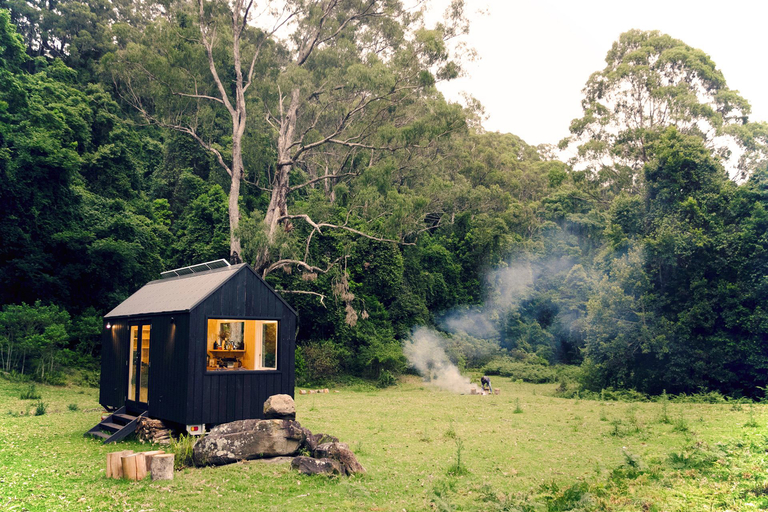
Off-grid and off road, Unyoked Cabins is offering top-secret getaways in the Australian wilderness. Both of the properties are located no more than two hours out of Sydney but are...
The American Bar at London’s Savoy Hotel has won the top spot at The World’s 50 Best Bars list, dethroning New York City’s Dead Rabbit Grocery and Grog.
A New Jersey man is facing criminal charges and has gotten his family a lifetime from a pee wee football league after allegedly putting a 16-year-old coach in a chokehold because he was frustrated that his son had been rotated out of the quarterback position.








 Jackson County’s location in the Southern Appalachians and Nantahala National Forest of North Carolina means it’s home to towering waterfalls and terrain ranging from rivers to mountaintops. Discover a haven of unspoiled natural beauty, perfect for your next road trip as it’s located only a two-and-a-half-hour drive from Atlanta. From the highest point on the Blue Ridge Parkway to the oldest mountain in the world, here are adventures you can only experience in Jackson County. Explore the Yosemite of the East Panthertown Valley is treasured backcountry and features 30 miles of trails. Hike, mountain bike, or backpack among this biologically diverse habitat for wildlife and rare plant species, such as mountain doghobble and tropical fern gametophytes. Because of its outstanding geologic formations, forests, streams, and…
 The city of High Point, North Carolina basks in the international spotlight twice yearly when 75,000 attendees and 2,000 exhibitors representing 100 countries assemble at High Point Market. For five days each in October and April, the biggest names in home furnishings rub elbows and set trends in this part of North Carolina. But the Home Furnishings Capital of the World™ doesn’t go dark when they leave. Shoppers flock to its more than 50 furniture stores and outlets year-round where they find a wide selection of pieces and discount prices. Join them, making time to experience High Point’s Southern hospitality and one-of-a-kind adventures. The Market started soon after the city’s first furniture factory, High Point Furniture Manufacturing Co., turned out its first piece—a desk—in 1889. The…
 The Glen-Ella Springs experience begins with dinner. Fires crackle in the small dining room’s two stacked-stone fireplaces, the golden heart pine walls, ceiling, and floor adding to the warmth. On this night, at least, dinner is exclusively the domain of couples, who converse in hushed tones over the whisper-soft sound of jazz standards, “Autumn Leaves” and “My Funny Valentine.” Most hold hands. While the historical inn set in the northeast Georgia mountains outside Clarkesville welcomes families—even groups for meetings and conferences—it has always seemed to me a place for couples. And indeed, the inn and its popular restaurant are favorite destinations for those celebrating anniversaries or making commitments or marking some shared milestone. Much of the credit for the destination’s continuing success goes to innkeepers…