Shared posts

25 Apr 19:54

Belgium defines video game loot boxes as illegal gambling

by Chaim Gartenberg

The Belgian Gaming Commission has ruled after a preliminary investigation that loot boxes in several games — Overwatch, FIFA 18, and Counter Strike: Global Offensive — are considered games of chance that are subject to Belgian gaming law, via Ars Technica.

According to a statement from Belgian Minister of Justice Koen Geens, the games currently constitute criminal violations of Belgium’s gaming legislation, and developers could be subject to prison sentences of up to five years and fines of up to 800,000 euros if the loot boxes aren’t removed. Per Justice Geens’ statement, the commission used four parameters to determine whether or not loot boxes in a game were considered a game of chance: if there was a game element that allowed bets...

Continue reading…

25 Apr 12:55

NVIDIA AI Reconstructs Photos with Super Realistic Results [Video]

by Geeks are Sexy

Researchers from NVIDIA, led by Guilin Liu, introduced a state-of-the-art deep learning method that can edit images or reconstruct a corrupted image, one that has holes or is missing pixels. The method can also be used to edit images by removing content and filling in the resulting holes. Learn more about their research paper “Image Inpainting for Irregular Holes Using Partial Convolutions”

I hope this is going to be available to the public one day!

[Nvidia]

The post NVIDIA AI Reconstructs Photos with Super Realistic Results [Video] appeared first on Geeks are Sexy Technology News.

24 Apr 19:46

These portable projector deals let you enjoy big-screen video without a TV

by Lucas Coll

Looking for a big-screen experience without the bulk and expense of a large HDTV? If you're throwing a party, hosting a sleepover for the kids, or want to have a backyard movie night, we’ve picked out the best portable projector deals.

The post These portable projector deals let you enjoy big-screen video without a TV appeared first on Digital Trends.

24 Apr 19:39

Twilio adds support for LINE

by Frederic Lardinois

The developer-centric communications platform Twilio today announced that it has added support for LINE to Twilio Channels. With this, Twilio developers now have the ability to reach users on this service, which has 168 million monthly active users, most of whom live in Japan, Thailand, Taiwan and Indonesia. LINE support in Twilio Channels is currently in beta but open to all developers who want to give it a try.

With this, Twilio Channels, which allows for sending and receiving messages, now supports many of the most popular messaging platforms, ranging from Facebook Messenger and Slack to WeChat, Kik and the new RCS text messaging standard. Missing from this list are the likes of WhatsApp and SnapChat, though they don’t have APIs that Twilio could easily integrate.

Unsurprisingly, the LINE support also extends to Twilio Studio, the company’s drag-and-drop app builder, and Flex, Twilio’s recently announced contact center solution.

“The most successful organizations realize that delivering a seamless, elegant experience for customers on their preferred channels is a way to differentiate,” said Patrick Malatack, vice president and general manager of Messaging at Twilio in today’s announcement. “When developers use Twilio to build these experiences – they trust that they will be able to use one API, now and in the future, to support the communication channels their customers want to use. We are thrilled to add support for LINE to the Twilio platform and can’t wait to see what our customers build.”

24 Apr 19:35

Everything Is Smart In The Future, Even The Freakin’ Walls

by Victor Tangermann

In the future, everything is connected. Even our walls will be watching us binge watch TV on our couches.

Yes, the internet is already connected to doorbells, toasters, and light bulbs, changing the way we interact with them. Even our fridges are possessed by an AI that can shame us for not picking the free-range, organic eggs.

Now, researchers from the Carnegie Mellon University teamed up with researchers from Disney (yep, the Disney of World, Land, and Cinderella) to transform those lame, “dumb” walls into smart walls. They function as a gigantic trackpad, sensing a user and their movements.

In the paper presented at the 2018 Conference on Human Factors in Computing Systems in Montreal, Quebec, the researchers note their goal to give walls the ability to track a user’s touch and gestures through “airborne electromagnetic noise” — more or less (mostly less) the same kind of sensing your smartphone screen does.

Their pitch had me hooked from the start: “Houses, offices, restaurants, schools, museums — walls are everywhere, yet they are inactive.” Totally. All walls do is, you know, hold up structures and separate the noisy goings-on in various rooms to, like, give people privacy and stuff. We’re tired of giving walls a free ride; it’s time walls started holding up their own weight around here.

Rather than using a camera to locate a user and track their movement, as other systems do, this system relies on a grid of “large electrodes” covered in a layer of water-based paint that conducts electricity. Water-based paint is less smelly and looks better than other conductive paints, like nickel-based ones. And all it took to connect the electrodes was copper tape. Cha-ching, goes the checkout lane at Home Depot, for a measly 20 bucks per square meter.

The result: a wall so smart, it could play a game of vertical Twister with you, and also tell if you were cheating. It can even sense if you’re holding a hair dryer really close to it through electromagnetic resonance (why you would hold a hair dryer really close to a wall is a separate question).

But the team does have some actual uses in mind for their invention: users could play videogames by using different poses to control them, change the channel on their TV with a wave of their arm, or slap the wall directly to turn off the lights, no need for light switches.

Yes, indeed, we are truly living in the future.

The post Everything Is Smart In The Future, Even The Freakin’ Walls appeared first on Futurism.

24 Apr 15:09

USA : 22% des utilisateurs d'assistants intelligents achètent vocalement

by Lélia de Matharel

20% des personnes interrogées dans le cadre d'une étude de Narvar utilisent ces outils pour poster des commentaires ou des notes en ligne sur certains articles.

 Lire l'article
24 Apr 11:58

Alibaba is bringing its smart assistant to cars from Daimler, Audi and Volvo

by Jon Russell

Alibaba is jumping behind the wheel after it announced that Daimler, Audi and Volvo will bring its voice assistant to their vehicles.

The assistant — Tmall Genie — is scheduled to go into cars “in the near future.” When it does, Alibaba said it will enable drivers to check fuel levels, mileage, battery levels and engine status use voice controls. Beyond diagnostics, it’ll also cover door windows, air conditioning and other settings.

Tmall Genie was launched last year when Alibaba unveiled a first smart speaker in the style of Amazon’s Echo products and Google Home, although the AI also connects to third-party hardware, too. The Chinese firm said it has sold over two million of its smart devices so far, and it is working on linking them with the car-based AI to allow users to check their vehicle from their home.

This week’s Genie auto launch is one of the first moves from Alibaba’s AI Lab institution, which was announced as part of a $15 billion push into artificial intelligence, machine learning, IOT, quantum computing and other emerging technologies last year.

16 Apr 21:27

Look Out Magic Leap, Vive Pro Is Now An AR Dev Kit

by Ian Hamilton
Look Out Magic Leap, Vive Pro Is Now An AR Dev Kit

HTC just released its software development kit for the front-facing cameras on the Vive Pro. The new update should help turn the device into the kind of augmented reality developer kit Magic Leap is distributing quietly in small numbers.

Magic Leap is raising billions of dollars for a a see-through AR headset that is hard to get access to as a developer, with digital images few can even see without signing a non-disclosure agreement. HTC is very different. The HTC Vive Pro is a high-quality VR headset shipping today in an $1,100 package, and you’ll need to bring your own high-end PC to power it. Unlike Magic Leap, though, Vive Pro is available for purchase immediately. It uses an opaque display with outward-facing cameras that can show you the world outside the headset while collecting information about the environment to merge both realities.

Here’s an example from Project Ghost Studios, which worked on the feature with HTC as an early partner.

This means you have some choice if you’re a developer looking to build software for headsets that mix a digital reality with the real world. You can sign up for the Magic Leap SDK and try to get your hands on hard-to-get hardware from the company while swearing yourself to secrecy. Or you can think about getting a product like the Zed Mini or Vive Pro to more quickly and openly explore your ideas.

With the latest tools HTC just released, creators can use depth and spatial mapping to do things like “Placing virtual objects in the foreground or background” and “Live interactions with virtual objects and simple hand interactions.”

“We have the option to map the environment (its part of the SDK), but since our game is so simple, we found that only using the game space with a flat surface works fine,” wrote Gaspar Ferreiro, president of Project Ghost Studios, about the example provided above.

Here are some more examples:

The tools are available as an early testing release on the Vive developer site.

Tagged with: Magic Leap, Vive Pro

15 Apr 16:27

Ghostbusters External GPU Case Design

by Dave Delisle

NVIDIA Ghostbusters Trap External GPU Case Design by Dave Delisle

External GPU cases have been around for a few years. You take a desktop graphics card, stuff it into one of these cases, then plug it into a laptop for a performance boost in graphics. Ideal for turning a sluggish laptop into a gaming laptop.

One design idea for such a case is the Ghostbusters ghost trap. Not only would it be life-size, but it could store 2 graphics cards (I don’t think external GPU cases can juggle multiple cards just yet). Also NVIDIA cards have LED logos on the side, so they can emit a ghost green light as well, perfect for a ghost trap.

13 Apr 06:11

Levitating gadgets will disappoint you

by Jacob Kastrenakes

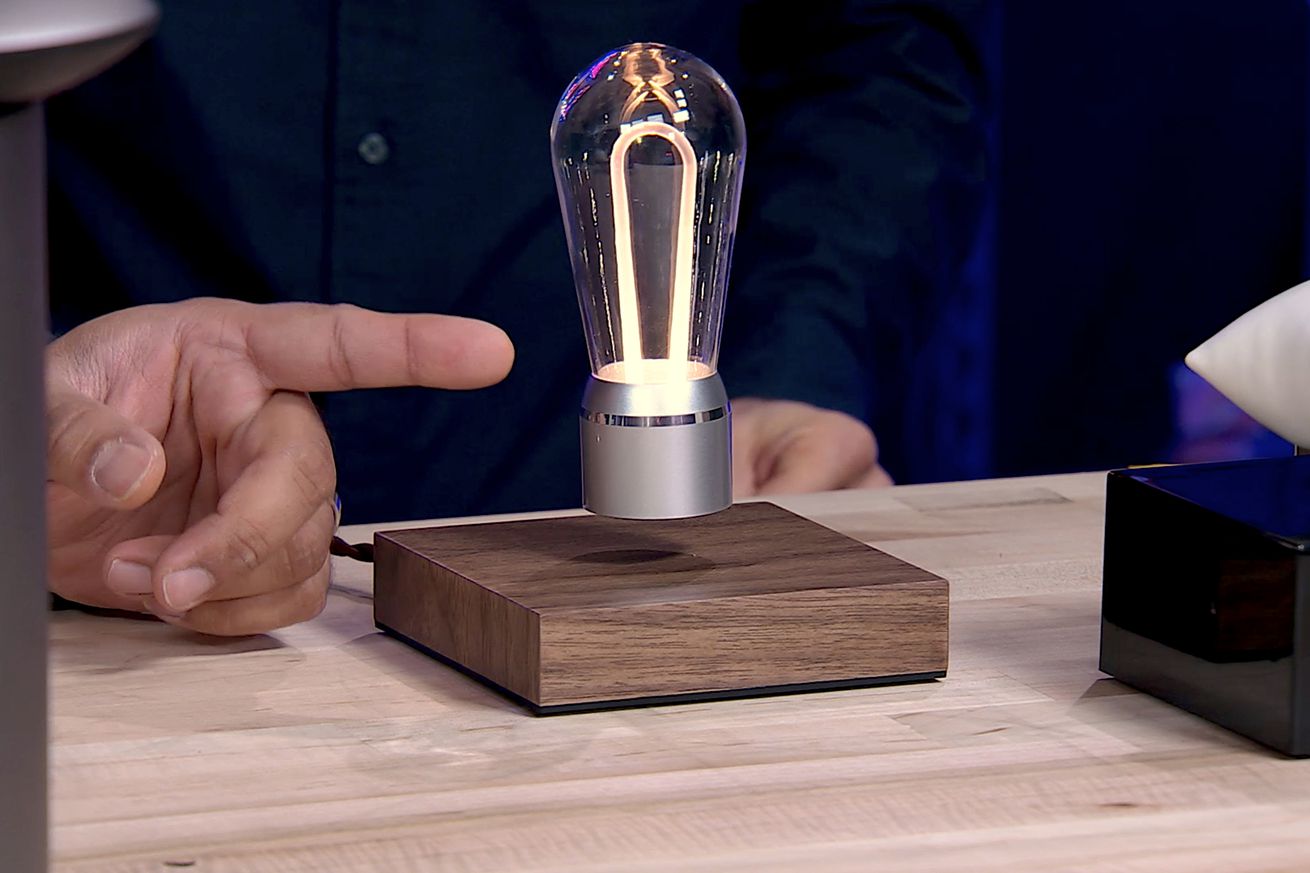
I’m here to issue an important but disappointing warning: that super cool new gadget on Kickstarter that floats? You should not back it. It will, I can say with almost complete certainty, disappoint you.

I’ve been fascinated with hovering gadgets for a couple years now because they just keep popping back up. Floating clocks, turntables, speakers, incense holders, light bulbs, and a surprising number of plants have successfully made their way through crowdfunding sites. I did some quick math based on the results of a Kickstarter search for levitating products and found that, so long as it’s successful, the average campaign for a levitating product raises around $140,000. Most successful campaigns raise less than $10,000.

Levitating...

Continue reading…

12 Apr 14:55

Pour la première fois, une intelligence artificielle est habilitée à établir un diagnostic médical aux États-Unis

by Innocentia Agbe
Le IDx-DR détecte si le patient est atteint de rétinopathie diabétique en analysant des photos de la rétine.
04 Apr 10:16

What’s the Deal with Transparent Aluminum?

by Dan Maloney

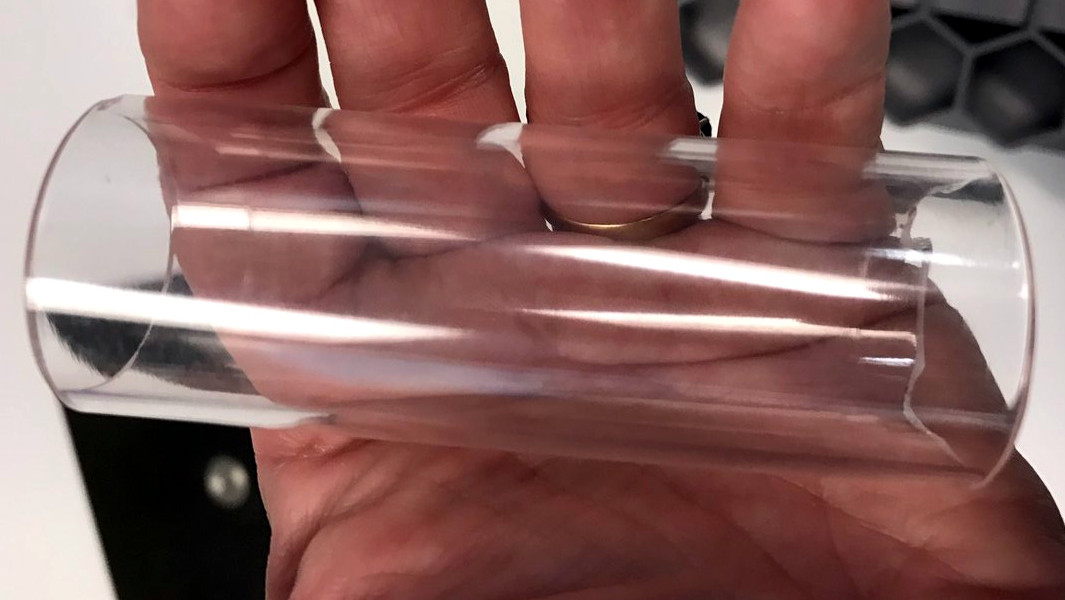
It looks like a tube made of glass but it’s actually aluminum. Well, aluminum with an asterisk beside it — this is not elemental aluminum but rather a material made using it.

We got onto the buzz about “transparent aluminum” as a result of a Tweet from whence the image above came. This Tweet was posted by [Jo Pitesky], a Science Systems Engineer at the Jet Propulsion Lab in Pasadena. [Jo] reported that at a recent JPL technology open house she had the chance to handle a tube of material that looks for all the world like a section of glass tubing, but was billed as transparent aluminum. [Jo] tweeted this because it was an interesting artifact that few people get to play with and she’s right, this is fascinating!

The the material itself is intriguing, and I immediately had practical questions like what is this stuff? What is it good for? How is it made? And is it really aluminum rendered transparent by some science fiction process?

Can Aluminum Be Transparent?

As with many things in life, the answer to that question is, “It depends.” In this case, it depends on how you define aluminum. Or more precisely, it depends on what your expectations are for a material that purports to be aluminum. Regular old aluminum is an abundant metal with all the expected properties of metals — electrically and thermally conductive, ductile, malleable, and lustrous. You can melt it and cast it into useful shapes, beat it flat into a foil to wrap a sandwich, or crush an empty can made from it against your forehead, if you’re so inclined.

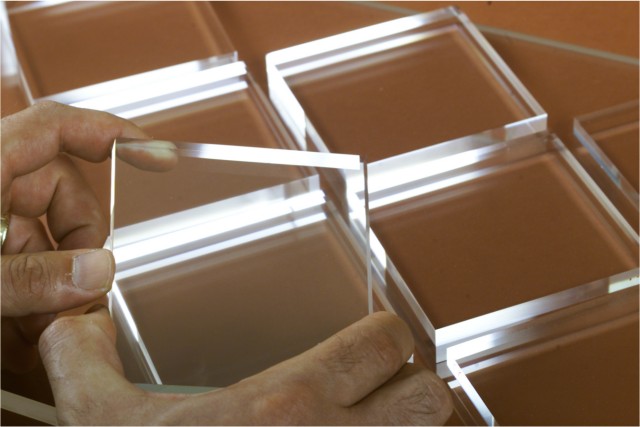
ALON blocks after polishing. Source: Surmet Corp

If you’re expecting transparent aluminum to have all of those properties, you’ll be disappointed. Although she doesn’t identify the material specifically, the material [Jo] got to handle was most likley not a metal at all, but a ceramic called aluminum oxynitride, composed of equal parts aluminum, oxygen, and nitrogen and known by the chemical formula AlON.

Aluminum oxynitride ceramics have been around since the 1980s, so it’s not new stuff by any means. Coincidentally, AlON development was underway more or less at the same time that Star Trek IV: The Voyage Home was being produced; it was from the now classic scene from that film were Scotty uses a mouse as a microphone in an attempt to trade the formula for “transparent aluminum” for sheets of plexiglass that AlON and similar transparent ceramics get their colloquial name.

What’s It Good For?

Despite clearly not being a metal — and not a glass either; glasses are amorphous solids, while ceramics are crystalline — AlON and the other transparent ceramics that have been developed since have some amazing properties. AlON, marketed as the uncreatively named ALON by its manufacturer, Surmet Corporation, is produced by sintering. Powdered ingredients are poured into a mold, compacted under tremendous pressure, and cooked at high temperatures for days. The resulting translucent material is ground and polished to transparency before use.

Aside from being optically clear, ALON is also immensely tough. Tests show that a laminated pane of ALON 1.6″ thick can stop a 50 caliber rifle round, something even 3.7″ of traditional “bullet-proof” glass can’t do. ALON also has better optical properties than regular glass in the infrared wavelengths; where most glasses absorbs IR, ALON is essentially transparent to it. That makes ALON a great choice for the windows on heat seeking missiles and other IR applications.

On the downside, ALON is expensive — in the armored glass market, it’s about 5 times the price of traditional laminated glass. But it has so many benefits, not least of which is superior scratch resistance, that for some applications it’s the material of choice. Chances are good that increased demand for the material will drive costs down, and it may not be long before Gorilla Glass is replaced by transparent aluminum smartphone screens that might actually damage the pavement when you drop your phone.

So, sorry Scotty — there’s no such thing as transparent aluminum metal. But the stuff we’re calling transparent aluminum is just as fascinating and just as sci-fi as it sounds. Isn’t material science cool? If you have other interesting materials like AlON that we should dig into, let us know about it in the comments below.

[image Source: Screen Rant, Memory Alpha]

02 Apr 21:04

Here are the five things I learned installing a smart mirror

by Matt Burns

I recently received a review unit of the Embrace Smart Mirror. It’s essentially a 24-inch Android tablet mounted behind a roughly 40-inch mirror. It works well when third-party software is installed. Here’s what I learned.

It’s impossible to get a good photo of the smart mirror

I tried a tripod, a selfie stick and every possible angle and I couldn’t get a picture that does this mirror justice. It looks better in person than these photos show. When the light in the bathroom is on, the text on the mirror appears to float on the surface. It looks great. The time is nice and large, and the data below it is accessible when standing a few feet away.

When the room is dark, the Android device’s screen’s revealed because it can’t reach real black. The screen behind the mirror glows gray. This isn’t a big deal. The Android device turns off after a period of inactivity and is often triggered when the light to the bathroom is turned on. More times than not, people walking into the room will be greeted with a standard mirror until the light is turned on.

There are a handful of smart mirror apps, but few are worthwhile

This smart mirror didn’t ship with any software outside of Android. That’s a bummer, but not a deal-breaker. There are several smart mirror Android apps in the Play Store, though I only found one I like.

I settled on Mirror Mirror (get it) because the interface is clean, uses pleasant fonts and there’s just enough customization, though it would be nice to select different locations for the data modules. The app was last updated in July of 2017, so use at your own risk.

Another similar option is this software developed by Max Braun, a robotistic at Google’s X. His smart mirror was a hit in 2016, and he included instructions on how to build it here and uploaded the software to GitHub here.

Kids love it

I have great kids that grew up around technology. Nothing impresses these jerks, though, and that’s my fault. But they like this smart mirror. They won’t stop touching it, leaving fingerprints all over it. They quickly figured out how to exit the mirror software and download a bunch of games to the device. I’ve walked in on both kids huddled in the dark bathroom playing games and watching YouTube, instead, of you know, playing games or watching YouTube on the countless other devices in the house.

That’s the point of the device, though. The company that makes this model advertises it as a way to get YouTube in the bathrooms so a person can apply their makeup while watching beauty YouTubers. It works for that, too. There is just a tiny bit of latency when pressing on the screen through the mirror. This device isn’t as quick to use as a new Android tablet, but because it’s sealed in a way to keep out moisture, it’s safe to go in a steamy bathroom.

Adults will find it frivolous

I have a lot of gadgets in my house, and my friends are used to it. Their reaction to this smart mirror has been much different from any other device, though.

“What the hell is this, Matt,” they’ll say from behind the closed bathroom door. I’ll yell back, “It’s a smart mirror.” They flush the toilet, walk out and give me the biggest eye roll.

I’ve yet to have an adult say anything nice about this mirror.

It is frivolous

A smart mirror is a silly gadget. To some degree, it’s a crowd-pleaser, but in the end, it’s just another gadget to tell you the weather. It collects fingerprints like mad, and the Android screen isn’t bright enough to use it as a regular video viewer or incognito TV.

As for this particular smart mirror, the Embrace Smart Mirror, the hardware is solid but doesn’t include any smart mirror software. The Mirror is rather thin and easily hangs on a wall thanks to a VESA port. There are physical controls hidden along the bottom of the unit, including a switch to manually turn off the camera. It’s certified IP65, so it can handle a bathroom. A motion detector does a good job turning the device on. If you don’t have kids, it should stay smudge-free.

The Embrace Smart Mirror does not ship with any smart mirror software. The instructions and videos tell users to add widgets to the Android home screen. This doesn’t work for me, and I expect a product such as this to include at least necessary software. Right now, after this product is taken out of the box, it’s just an Android tablet behind a mirror, and that’s lame. Thankfully there are a couple of free apps on the Play Store to remedy this problem.

At $1,299, the Embrace Smart Mirror is a hard sell, but is among the cheapest available smart mirrors on the market. Of course, you can always build one yourself — as The Verge points out, it’s rather easy.

29 Mar 09:32

Keynote: Laura Dekker, The Machine as Alien Ethnographer

by Charbax

HKG18-500K2 – Keynote: Laura Dekker – The Machine as Alien Ethnographer: Advanced Computation, Open Source Systems and Art

The last decade or so of development in open source hardware, software and data has brought an astonishing richness of resources for artists: Python and C++ libraries for natural language processing, biological simulation, data programming and machine learning – such as TensorFlow, NLTK, openFrameworks and project Gutenberg. As well as continually expanding functionality, increased accessibility has drastically brought down the barriers to entry and exploration.

23 Mar 20:33

Le nouveau IE6

by CommitStrip

22 Mar 22:29

Tooth-Mounted Diet Tracker Could Feed Our Unhealthy Relationship With Food

by Claudia Geib

Is Fitbit not accurate enough for you? Apple Watch simply not invasive enough?

Maybe a wearable stuck to your tooth would be more your style.

Researchers at Tufts University have created just that. They’ve engineered a tooth-mounted sensor that tracks your every bite (and what it contains). Such a device could be useful, but it could also exacerbate our already-problematic relationship with food.

The device is two square millimeters in size and sticks to the surface of a tooth. The sensor is ingeniously simple — when its central layer changes encounters different chemicals (salt, ethanol), its electrical properties shift, transmitting a different spectrum of radio waves. Currently, the patch is set up to wirelessly transmit information about glucose, salt, and alcohol to a mobile device; its creators think it could be adapted to monitor even more metrics, including “a wide range of nutrients, chemicals and physiological states,” according to a press release.

The tooth-mounted sensor, a tiny gold square mounted on a person's front tooth.
Image Credit: Fio Omenetto, Ph.D., Tufts University

With such a simple and inexpensive design, the sensor could be made widely available. That could be a huge boon to researchers who need a cheap way to track nutrients in a study, or to people who want to get their diet in check and for whom expensive fitness trackers are out of reach, or just don’t cut it. After all, let’s face it, we’re terrible at remembering what we ate, and how much of it.

But a tracker like this one could also have some negative side effects.

Mobile calorie and exercise-tracking apps already allow people to obsess over their every meal down to the macronutrient, and anecdotal evidence suggests doing so can exacerbate obsessive compulsive disorder (OCD) and eating disorders. Clinical psychologist Lara Pence, of the Renfrew Center Eating Disorder Treatment Facility, told New Republic: “It doesn’t really take research for us as an organization or for me as a clinician to see their damaging qualities.” She emphasized that the sense of guilt that trackers promote when a user surpasses their calorie allotment “speaks to the very core pathology of the disease: If I do this, then I have to do that.”

Indeed, one 2017 study found that fitness tracking devices in general were associated with eating disorder symptoms among college students (though, strangely, the same didn’t hold true for calorie counting apps). Unfortunately, there’s a considerable lack of clinical research on their broader impact.

How would a sensor that takes away the most labor-intensive part of fitness tracking — data entry — fit into that trend? To paint with a broad brush, modern culture already has an unhealthy obsession with appearance and body type. A tooth-mounted sensor probably wouldn’t give people eating disorders; these medical conditions are much more complex than that. But it could potentially worsen the symptoms of people who already have these disorders, and make it much easier for others to forget that eating sometimes isn’t just about calories and nutrients — it’s also something that can bring cultural understanding and, you know, joy.

The post Tooth-Mounted Diet Tracker Could Feed Our Unhealthy Relationship With Food appeared first on Futurism.

21 Mar 22:53

Google is adopting blockchain-like technology

by Shannon Liao

Google is planning to adopt a blockchain-like ledger system, people familiar with the situation told Bloomberg. Google will use the tech, the report states, as a means of differentiating its cloud business from rivals. The company would also supposedly license the ledger system so that other companies could run it on their own servers.

Google was the second most active corporate investor in blockchain tech from the 2012 to 2017 period, according to CBInsights, just trailing after the Japan-based SBI Holdings. The company has also been investing and acquiring startups with digital ledger experience, the anonymous source told Bloomberg.

Other major tech companies like IBM and Microsoft also have active investments in blockchain-style...

Continue reading…

17 Mar 08:28

Google Builds A Synthesizer With Neural Nets And Raspberry Pis.

by Brian Benchoff

AI is the new hotness! It’s 1965 or 1985 all over again! We’re in the AI Rennisance Mk. 2, and Google, in an attempt to showcase how AI can allow creators to be more… creative has released a synthesizer built around neural networks.

The NSynth Super is an experimental physical interface from Magenta, a research group within the Big G that explores how machine learning tools can create art and music in new ways. The NSynth Super does this by mashing together a Kaoss Pad, samples that sound like General MIDI patches, and a neural network.

Here’s how the NSynth works: The NSynth hardware accepts MIDI signals from a keyboard, DAW, or whatever. These MIDI commands are fed into an openFrameworks app that uses pre-compiled (with Machine Learning™!) samples from various instruments. This openFrameworks app combines and mixes these samples in relation to whatever the user inputs via the NSynth controller. If you’ve ever wanted to hear what the combination of a snare drum and a bassoon sounds like, this does it. Basically, you’re looking at a Kaoss pad controlling rompler that takes four samples and combines them, with the power of Neural Networks. The project comes with a set of pre-compiled and neural networked samples, but you can use this interface to mix your own samples, provided you have a beefy computer with an expensive GPU.

Not to undermine the work that went into this project, but thousands of synth heads will be disappointed by this project. The creation of new audio samples requires training with a GPU; the hardest and most computationally expensive part of neural networks is the training, not the performance. Without a nice graphics card, you’re limited to whatever samples Google has provided here.

Since this is Open Source, all the files are available, and it’s a project that uses a Raspberry Pi with a laser-cut enclosure, there is a huge demand for this machine learning Kaoss pad. The good news is that there’s a group buy on Hackaday.io, and there’s already a seller on Tindie should you want a bare PCB. You can, of course, roll your own, and the Digikey cart for all the SMD parts comes to about $40 USD. This doesn’t include the OLED ($2 from China), the Raspberry Pi, or the laser cut enclosure, but it’s a start. Of course, for those of you who haven’t passed the 0805 SMD solder test, it looks like a few people will be selling assembled versions (less Pi) for $50-$60.

Is it cool? Yes, but a basement-bound producer that wants to add this to a track will quickly learn that training machine learning algorithms cost far more than playing with machine algorithms. The hardware is neat, but brace yourself for disappointment. Just like AI suffered in the late 60s and the late 80s. We’re in the AI Renaissance Mk. 2, after all.

12 Mar 20:47

Google’s upcoming OLED display for VR headsets may pack a 3182p resolution

by Kevin Parrish

Google is scheduled to hold a session during Display Week in May to introduce its 18-megapixel OLED display built for virtual reality headsets. It will have a refresh rate of 120Hz and a pixel density of 1,443 pixels per inch.

The post Google’s upcoming OLED display for VR headsets may pack a 3182p resolution appeared first on Digital Trends.

02 Mar 15:49

Gorgeous VR Train Sim Rolling Line Gets Release Date, New Trailer

by Jamie Feltham
Gorgeous VR Train Sim Rolling Line Gets Release Date, New Trailer

We like to refer to lots of third-person VR games as ‘train set VR’ here at UploadVR, but Rolling Line takes that definition very seriously.

Rolling Line is the latest game from Gaugepunk Games, the team that brought you Frontier VR and Echo Grotto. It’s a model train simulator that lets you build and organize your own miniature train network, laying down tracks for freight trains to follow in scenery inspired by the developer’s home of New Zealand. The game includes a pre-built table as well as space for you to create your own worlds.

Take a look at the trailer above, which keeps Frontier and Echo Grotto’s gorgeous art style intact.

As you can see, being in VR allows Rolling Line to take advantage of a few features you couldn’t get with a real model train set (and saves you a bit of space in the real world). For starters, there’s a weather system so that you can view journeys in the rain or the sun. More importantly, though, you can shrink down to explore the world in first-person as if it had come to life and even ride the trains themselves.

Rolling Line will hit Steam on April 6th with support for both the Oculus Rift and HTC Vive, but will also support standard PC play, too.

Tagged with: Rolling Line

28 Feb 15:30

Dockless bike-share service leaves France after ‘mass destruction’ of its fleet

by Sean O'Kane

Hong Kong-based bike-sharing service Gobee is shutting down in France after suffering what the company is calling “mass destruction” of its fleet. Gobee, which had 2,000 bikes in Paris and claimed around 150,000 users across the country, says 3,400 of the company’s bikes have been damaged and more than 1,000 have been stolen, according to The Guardian.

Gobee’s troubles are the latest example of the uphill battle for so-called “dockless” bike-sharing. These systems ditch the need to fetch or return a bike at a full dock or rack and instead allow riders to leave the bikes wherever they like. Rather than paying at a kiosk, people are able to unlock the bikes and pay for the ride with a mobile app, and they don’t have to go out of their way...

Continue reading…

25 Feb 20:03

PIC: Every Stan Lee Marvel Movie Cameo Ever

by Geeks are Sexy

This picture by reddit user l_l_l-illiam includes every single cameo that featured Stan Lee, starting with The Trial of the Incredible Hulk in 1989, right up to Thor: Ragnarok (2017.) If you want to see his cameo in Black Panther, you’ll have to go see the film because pictures of it are still not available online.

If you want a bigger version of the picture below, just click on it!

Click Picture to Enlarge!

The post PIC: Every Stan Lee Marvel Movie Cameo Ever appeared first on Geeks are Sexy Technology News.

23 Feb 06:55

ARKit could bring your nightmares into your living room

by Ashley Carman

I’ve never seen The Ring because I’m a huge baby, but I’ve now watched a terrifying augmented reality demo of its main villain Samara coming out of the TV screen, just like in the movie. A developer named Abhishek Singh, who has created lots of AR experiences, tweeted his idea of The Ring in AR.

Samara not only comes out of the screen, but she follows the user around the room and shows up in hallways. It’s terrifying, especially for a baby like me. Another developer, Mike Woods, created a Ring experience with ARKit earlier this year, but it isn’t as scary as...

Continue reading…

21 Feb 07:11

DIY Peristaltic Pump Keeps the Booze Flowing

by Kristina Panos

A few months ago we showed you a bar bot built by [GreatScott] that uses peristaltic pumps to food-safely move the various spirits and mixers around behind the curtain. The bar bot uses three of them, and at $30 each for pumps with decent flow rate, they added a lot to the parts bill. These pumps are pretty much the ideal choice for a bar bot, so what do you do? [GreatScott] decided to see if it was worth it to make them instead.

Peristaltic pumps are simple devices that pump liquids without touching them. A motor turns a set of rollers that push a flexible tube against a wall. As the motor turns, the rollers move liquid through the tube by squeezing it flat from the outside in turns. Typically, the more you pay for an off-the-shelf peristaltic, the higher the flow rate.

[GreatScott] figured it was cheaper to buy the motor and the control circuitry. He chose a NEMA-17 for their reputation and ubiquity and a DRV8825 controller to go with it. The pump is driven by an Arduino Nano and a pot controls the RPM. After trying to design the mechanical assembly from scratch, he found [Ralf]’s pump model on Thingiverse and modified it to fit a NEMA-17.

The verdict? DIY all the way, assuming you can print the parts. [GreatScott] was trying to beat the purchased pumps’ flow rate of 100mL/minute and ended up with 200mL/minute from his DIY pump. Squeeze past the break for the build video and demonstration.

Is there a bar bot build on your list? No? Is it because you’re more of a single-malt scotch guy? Build a peristaltic pachyderm to pour your potion.

16 Feb 21:38

Microsoft expands Cortana for the smart home with IFTTT integrations

by Natt Garun

Today, Microsoft announced that its digital assistant, Cortana, will now work with IFTTT and a number of new smart home devices, such as the Ecobee, Honeywell Lyric, and LIFX. To set them up, just open Cortana on Windows 10 or launch the Cortana app and add the new products under the Connected Home menu.

The IFTTT compatibility helps open Cortana up to a number of new third-party services. Rather than wait for third-party companies to offer new Cortana features, just as they do for Amazon Alexa skills, users can find “recipes” that already exist on IFTTT’s platform and connect them to their Cortana-enabled device.

The update today comes several months after the release of Microsoft’s first Cortana smart speaker, the Harmon Kardon Invoke....

Continue reading…

14 Feb 17:54

L’enfer de la maison intelligente

by Hubert Guillaud

Sur Gizmodo, la journaliste Kashmir Hill (@kashhill) raconte comment elle a décidé de transformer son petit appartement de San Francisco en maison connectée. Elle s’est équipée d’un assistant vocal Echo d’Amazon, de lumières connectées, d’une cafetière connectée, d’un roomba, a branché sa brosse à dents, sa télé, son lit, un cadre photo… Un peu tout ce qui est disponible sur le marché. L’enjeu était de regarder ce que sa maison pourrait lui apprendre. Avec l’aide d’un collègue artiste et ingénieur, Surya Mattu (@suryamattu), elle a enregistré toutes les données que ces appareils échangeaient avec l’extérieur.

Le premier constat que la journaliste a tiré de cette expérimentation est que ces objets ont été une « source constante d’agacement ». Vivre dans une maison intelligente est exaspérant. Il lui a fallu télécharger 14 applications différentes sur son téléphone pour faire fonctionner ces appareils. Les configurer reste chronophage, notamment parce qu’ils ne sont pas toujours conçus pour discuter les uns avec les autres, au contraire ! Par exemple, elle a passé du temps à configurer Alexa pour qu’il allume une guirlande de Noël à la demande. Mais du jour au lendemain, cette configuration a cessé de fonctionner. Autre problème : il fallait demander tous les soirs à Alexa d’éteindre les lumières les unes après les autres (« Alexa, éteint la guirlande », « Alexa était la lumière du salon »…) : ce qui est bien plus ennuyant que de les éteindre à la main !

Faire travailler ensemble différents appareils de différentes marques signifie en fait que ça prend bien plus de temps à faire que de le faire à la main !

Autre problème bien sûr : la difficulté de connecter les appareils entre eux ! Impossible par exemple de connecter sa machine à café avec Alexa d’Amazon, tant et si bien qu’il lui a fallu en changer. Mais le modèle qui fonctionnait avec Alexa ne fonctionnait pas avec le capteur de son matelas ni avec ses prises électriques connectées : donc impossible de déclencher automatiquement son café au saut du lit ! Sans compter que le capteur vocal d’Amazon avait du mal à reconnaître le nom de la machine à café… tant et si bien qu’il était le plus souvent plus simple de se lever pour se faire le café !

Si Kashmir Hill a beaucoup apprécié son aspirateur autonome, notamment parce qu’il faisait très bien son travail, celui-ci n’a cessé de la harceler sur son téléphone, lui envoyant des notifications dès qu’il était coincé ou plein ! « Je pensais que ma maison prendrait soin de moi », alors qu’en fait, elle était plus sollicitée encore par les choses connectées qui lui demandaient de prendre soin d’elles !

En ce qui concerne la vie privée, l’analyse des données s’est révélée préoccupante. Les interrupteurs électriques connectés permettant de faire fonctionner les lumières à distance n’ont pas cessé d’envoyer des informations à l’extérieur, et pas seulement quand on les faisait fonctionner. La caméra de sécurité connectée a pris une vidéo d’elle se promenant nue dans son salon pour l’envoyer dans le cloud ! Celle-ci envoyait d’ailleurs constamment de grosses quantités de données. Pareil pour la télé !

Dans ce panoptique familial infernal, la conclusion qu’en tire Kashmir Hill, c’est que notre surveillance à l’heure de l’internet des objets ne va pas cesser de s’étendre. En analysant les données envoyées par ses objets, sont collègue savait quand ils se levaient, se couchaient, quand ils regardaient la télé ou quand ils se brossaient les dents. Pour lui, l’aspect le plus inquiétant a été de constater en fait que « tous les appareils téléphonaient chez eux tous les jours, même s’ils n’avaient pas été utilisés » (et pour Amazon Echo, la connexion aux serveurs d’Amazon se fait même toutes les deux minutes !). L’ingénieur était capable de voir quand la maison était vide, car la quantité de données était ralentie mais jamais inexistante. Son constat est assez clair : la maison connectée s’apprête à créer de nouveaux flux d’information, un open-bar sur vos données !

« Tous les appareils connectés téléphonent constamment à leurs fabricants. Vous ne serez pas au courant que ces conversations se déroulent à moins que vous soyez techniquement avertis ou que vous surveillez votre routeur comme nous l’avons fait. Et même si vous l’êtes, parce que les conversations sont généralement chiffrées, vous ne serez pas en mesure de voir ce que vos affaires disent de vous. Lorsque vous achetez un appareil intelligent, il ne vous appartient pas seulement : vous en partagez la garde avec la compagnie qui l’a fabriqué ! »

De quoi relativiser pleinement le fameux adage : « si c’est gratuit, c’est vous le produit ! » Car si c’est payant, c’est vous aussi !

12 Feb 22:01

Boston Dynamics’ newest robot learns to open doors

by Brian Heater
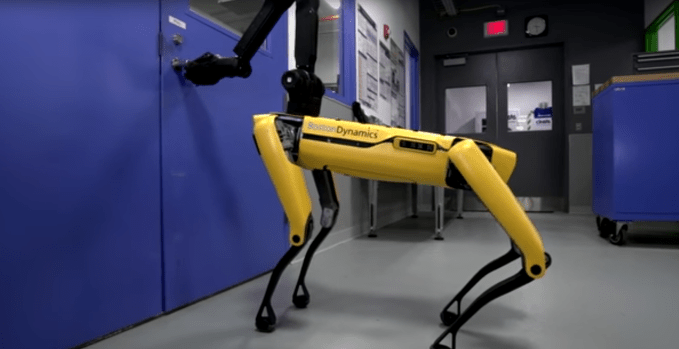
 We knew this day would come sooner or later. Like the cloned velociraptors before it, Boston Dynamics’ newly redesigned Spot Mini has figured out how to open doors — with either its arm or face, depending on how you look at it. Read More
12 Feb 17:37

Amazon SWA : Un service de livraison interne comme relais de croissance

by Pierre Lecourt

L’information vient du Wall Street Journal qui décrit l’Amazon SWA comme un nouveau service qui devrait voir le jour assez rapidement, dans une phase d’essai, pour effectuer la livraison des colis de la plateforme vers les clients finaux.

2018-02-12 01_06_59-minimachines.net

Aujourd’hui, Amazon utilise des services tiers pour effectuer ses livraisons : En France, on a La Poste, Colis Privé, UPS, Relais colis, Mondial Relais, DPD, Chronopost et une ribambelle d’autres pour les plus connus. Chacun de ces prestataires étant commandé suivant de multiples critères de localisation, de poids des colis et de vitesse de traitement souhaitée. Cette dernière étape n’est donc absolument pas maîtrisée par Amazon. Elle devient surtout une source de dépenses importantes pour la marque. Plusieurs spécialistes de la logistique estiment que certains des envois calculés au forfait coûtent plus qu’ils ne rapportent. Révélant ainsi qu’un gros succès d’Amazon lui ferait perdre de l’argent…

Le réflexe le plus logique pour Amazon semblerait donc de maîtriser cette dépense en transformant un poste coûteux en une branche rémunératrice. Amazon a peut être atteint le point de bascule où l’existence de son propre réseau de distribution serait plus rentable que de passer par des tiers.

Selon le Wall Street Journal, la marque serait en train de construire l’infrastructure nécessaire à un test grandeur nature à Los Angeles. Dans la ville, les utilisateurs du site seraient livrés par Amazon via des chauffeurs maison et non plus des prestataires. Cela veut dire que tous les produits expédiés par la marque seraient gérés de l’entrepôt jusqu’à la porte du client par Amazon. Les marques utilisant le site comme plateforme de vente  pourraient, elles-aussi, profiter de ce système de distribution.

2018-02-12 01_07_44-minimachines.net

Pour que cela soit possible – et rentable – il faut réunir deux éléments importants. D’abord une large base d’utilisateurs ayant opté pour un abonnement forfaitaire qui, contre une somme annuelle, ne fait plus payer les frais de port des commandes. Effet positif pour le distributeur de ce forfait, les gens ont tendance à commander compulsivement jusqu’à plusieurs fois par jour. Un effet encouragé par Amazon avec les systèmes mis en place comme les Dash Buttons. Si le nombre d’abonnés Prime devient trop important, le nombre de livraisons explose alors que le financement de celles-ci reste fixe puisque limité au montant des forfaits. On se doute que ce n’est pas avec des commandes de chips à livrer pour le lendemain sans frais de port qu’Amazon va rentabiliser ce type d’offre.

Amazon Dash

Mais si on fait le détail du coût des livraisons et qu’on le met en perspective d’un service complet dans une infrastructure interne, on peut tendre à une maîtrise de ce coût sur la durée. On sait combien va nous coûter le service mensuellement en terme de salaires, de flotte de véhicules et d’immobilier et on peut alors le rentabiliser.

Car le second élément que la mise en place de ce service rend possible, c’est la mise en concurrence des transporteurs actuels : FeDex, UPS et autres. En proposant le service Amazon SWA à l’ensemble des distributeurs de sa plateforme, Amazon gagnerait de l’argent plutôt que de le voir partir chez les transporteurs tiers qui livrent actuellement aux US. Mieux encore, Amazon pourrait tout à fait concurrencer ces marques en proposant ses services à tout le monde. En ouvrant des bureaux, en organisant des ramassages de colis pendant ses tournées ou en installant du mobilier urbain destiné à des collectes et dépôts. Avec ce système, l’entreprise bénéficierait à la fois d’une maîtrise de sa dépense de livraison mais pourrait surtout gagner de l’argent en distribuant les colis des autres.

Evidemment la rentabilité d’un tel système ne serait possible qu’en multipliant l’offre à d’autres villes aux US voir à d’autres territoires. Mais la marque a de l’argent et peut tout à fait employer les méthodes – peu reluisantes – de ses concurrents sur ce secteur. C’est à dire embaucher à tour de bras des prestataires de service payés au colis qui se serviront d’une flotte de camions d’Amazon SWA et d’un joli costume pour faire le travail. On imagine que la marque saura les pister au mètre près pour “optimiser” leurs parcours.

2018-02-12 01_07_16-minimachines.net

On imagine également que les contrats en place actuellement entre le site marchand et les transporteurs historiques lui permettrait de glisser ses paquets Amazon SWA dans le flux de ses colis traditionnels. En faisant payer le prix “classique” d’un transport UPS ou FeDex et en bénéficiant d’un tarif très préférentiel en tant que gros client. La différence pourrait donc atterrir dans ses poches et le service livrer partout dans le monde. Une manière habile de se lancer en attendant le déploiement de plus de points de distributions dans d’autres villes et pays.

Cette méthode de lancement d’un service secondaire par rapport au fonctionnement de leur site de base n’est pas nouvelle. C’est exactement ce que la marque a fait pour son système de Cloud quand elle en a eu un besoin vital. Amazon AWS est né quand le site a connu une croissance fulgurante puis est devenu un business à part entière quand la marque a commencé à proposer ses serveurs et prestations à des entreprises tierces. Aujourd’hui, Amazon est un des géants du Cloud dans le monde, ce qui permet non seulement d’assumer ses besoins d’infrastructure web mais également de dégager de confortables marges.

Si Amazon AWS a fonctionné, Amazon SWA pourrait suivre le mouvement.

source: Wall Street Journal.


Amazon SWA : Un service de livraison interne comme relais de croissance © MiniMachines.net. 2017

09 Feb 21:50

Amazon launches a Polly WordPress plugin that turns blog posts into audio, including podcasts

by Sarah Perez
 Amazon today is launching a new Amazon Polly WordPress plugin that gives your blog a voice by creating audio versions of your posts. The resulting audio can be played from within the blog post itself, or accessed in podcast form using a feature called Amazon Pollycast, the company says. The plugin itself was jointly designed by Amazon’s AWS team and managed WordPress platform… Read More
07 Feb 08:34

Découvrez le premier sport en réalité augmentée

by Ophelie B.

Préparez-vous, le premier tournoi de sport en réalité augmentée est lancé et promet de devenir viral ! Connaissez-vous Hado ? Au Japon ce sport est un vrai succès ! Sa particularité ? Il s’agit d’un e-sport qui se pratique avec un casque d’AR et un bracelet connecté. En équipe, vous affrontez vos adversaires aidé de vos armes : des boules d’énergie pour attaquer et un bouclier pour vous défendre.

Entrez dans la réalité augmentée

En combinant stratégie, réflexion, réflexes, agilité et travail d’équipe, vous débloquez des attaques spéciales et progressez pour éliminer tous vos opposants. Ce sport se pratique dans des arènes virtuelles localisées dans des parcs à thème ou des centres commerciaux.

Face au succès d’Hado, le premier championnat du monde de sport AR vient d’être lancé et verra s’affronter 12 équipes de trois pays différents. Les États-Unis se sont même emparés du concept et prévoient de l’adapter.

Que le match commence !

L’article Découvrez le premier sport en réalité augmentée est apparu en premier sur GOLEM13.FR.