Shared posts

19 Oct 14:31

Modular Magnetic LED Matrix

by Danie Conradie

[bitluni] seems rather fond of soldering lots of LEDs, and fortunately for us the result is always interesting eye candy. The latest iteration of this venture features 8 mm WS2812D-F8 addressable LEDs, offering a significant simplification in electronics and the potential for much brighter displays.

The previous version used off-the-shelf 8×8 LED panels but had to be multiplexed, limiting brightness, and required a more complex driver circuit. To control the panel, [bitluni] used the ATtiny running the MegaTinyCore Arduino core. Off-the-shelf four-pin magnetic connectors allow the panels to snap together. They work well but are comically difficult to solder since they keep grabbing the soldering iron. [bitluni] also created a simple battery module and 3D printed neat enclosures for everything.

Having faced the arduous task of fixing individual LEDs on massive LED walls in the past, [bitluni] experimented with staggered holes that allow through-hole LEDs to be plugged in without soldering. Unfortunately, with long leads protruding from the back of the PCB, shorting became an immediate issue. While he ultimately resorted to soldering them for reliability, we’re intrigued by the potential of refining this pluggable design.

The final product snapped together satisfyingly, and [bitluni] programmed a simple animation scheme that automatically updates as panels are added or removed. What would you use these for? Let us know in the comments below.

19 Oct 14:30

Chanel dévoile le nouveau film de son parfum N°5 avec Margot Robbie

by Journal du Luxe
Annoncée en septembre dernier en tant que nouvelle égérie du parfum Chanel N°5, l'actrice et productrice australienne est à l'honneur du nouveau film publicitaire de la Maison au double C.
19 Oct 14:29

Renault 4 E-Tech : la nouvelle star du néo-rétro « mal léché »

by Sylvain Biget, Journaliste
C’est la star des nouveautés chez Renault. La R4 E-Tech se montre sous toutes les coutures sur le stand du constructeur au Mondial de l’Auto. Futura a pu faire sa revue de détail et l’on est clairement loin du modèle originel !
19 Oct 14:29

Les scientifiques dévoilent une percée énergétique pour l’IA avec 95 % d’économies !

by Edward Back, Journaliste hi-tech
En modifiant la manière dont les grands modèles de langage effectuent leurs calculs, des chercheurs sont parvenus à réduire la consommation énergétique de l’intelligence artificielle de 95 %. Et ce, sans perte de performance.
19 Oct 14:28

How major malls are catering to Gen Z shoppers

by Mitchell Parton

This month, Simon Property Group launched a new marketing campaign aimed squarely at Gen Z. It points to a broader realization: While the younger generation is known for living digitally, malls are increasingly changing their strategies to lure them in.

Major mall owners are increasingly trying to cater to Gen Z by finding the right marketing messaging and rethinking their tenants by adding new types of services like experiences. Simon’s approach includes some retro aspects as well as well-known younger influencers.

Despite being the first demographic to grow up entirely in a digital world, mall owners have found Generation Z values shopping in person as much as their parents do and are tailoring the mall shopping experience around their preferences and interests.

Continue reading this article on modernretail.co. Sign up for Modern Retail newsletters to get the latest on the shifting dynamics between retail’s old and new guards.

19 Oct 14:22

Wearable sensors can continuously track fatigue in factory workers

A system of wearable sensors and machine learning can continuously monitor factory workers for signs of physical fatigue. Factory work can be physically strenuous, and a safe and ethical workplace must ensure that workers do not become overly fatigued, which can increase the risk of injury and accident, cause chronic health problems, and also impair performance.
19 Oct 14:22

The AI sexbot industry is just getting started. It brings strange new questions—and risks

Artificial intelligence (AI) is getting personal. Chatbots are designed to imitate human interactions, and the rise of realistic voice chat is leading many users to form emotional attachments or laugh along with virtual podcast hosts.
19 Oct 14:21

Touching the future: Mastering physical contact with new algorithm for robots

Penn Engineers have developed a new algorithm that allows robots to react to complex physical contact in real time, making it possible for autonomous robots to succeed at previously impossible tasks, like controlling the motion of a sliding object.
19 Oct 14:20

Google supercharges Shopping tab with AI and personalized recommendation feed

by Aisha Malik

After bringing generative AI to Search in 2023, Google is supercharging its Shopping tab with the technology. The company announced on Tuesday that it will use AI to help users shop for products based on exactly what they’re looking for. It also launched a new scrollable feed of personalized, shoppable products.  Now, when you search […]

© 2024 TechCrunch. All rights reserved. For personal use only.

18 Oct 21:04

NEW Clear Series: Modular Transparent Board Game Organizer with Infinite Expansion on Gadget Flow

by Madhurima Nag
NEW Clear Series: Modular Transparent Board Game Organizer with Infinite Expansion on Gadget Flow

Organize your board games like never before with the NEW Clear Series: Modular Transparent Board Game Organizer. Designed to streamline your gaming experience, this versatile organizer keeps cards, tokens, and miniatures perfectly accessible and in view.


Versatile Card Storage: The Standard Smart Card Tray features removable dividers, letting you store cards horizontally or vertically, while offering quick access.
Durable & Transparent: Made from premium polycarbonate, the Clear Series is lightweight, shatter-resistant, and optimized for clarity, so your cards remain fully visible.
Modular Design: Stack trays, combine with mini trays, or create dice-friendly spaces with screw-free connections—perfect for customizing your game setup.
Premium Quality: Each tray is certified by FDA, MSDS, and RoHS, ensuring safe materials and eco-friendly disposal.


From tidy game tables to hands-free card storage, the NEW Clear Series brings order to any board game session.

18 Oct 20:36

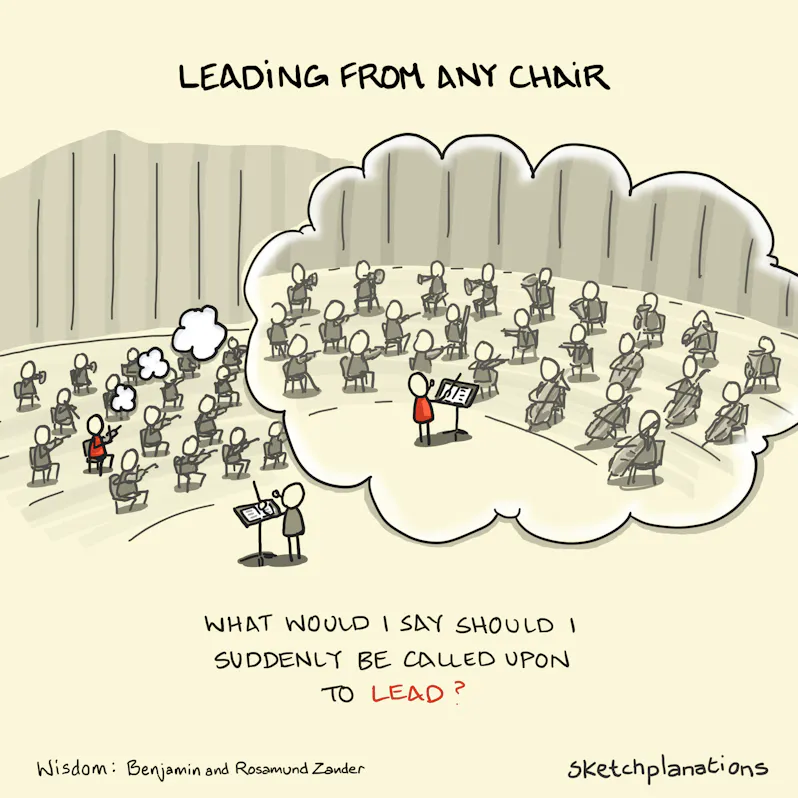
Leading from Any Chair

Leading from Any Chair is the idea that we all have the opportunity to influence the action even when we're not standing at the front. It's a principle for effective leadership and teaching yourself and others to lead.

The Art of Possibility

In their inspiring book, The Art of Possibility, Benjamin and Rosamund Zander relate a story from renowned violist Eugene Lehner, who played in the Kolish Quartet and Boston Symphony Orchestra. One day, in an interpretation class led by Zander with Lehner as a guest coach, Ben Zander asked him, "How can you bear to play day after day in an orchestra led by conductors, many of whom must know so much less than you?"

Lehner said he was playing in a rehearsal in his first year in the orchestra when the conductor, Koussevitsky, struggled to lead the orchestra as he wanted through a tricky Bach piece. A friend of Koussevitsky and fellow conductor, Nadia Boulanger, was sitting in on the session. Koussevitsky stopped and asked if Nadia would conduct the passage so he could hear what it sounded like from the back of the hall. Nadia conducted the passage without a hitch, and the rehearsal continued. But the episode left Lehner ever wondering and waiting for the moment when a conductor might say to him, "Lehner, you come up here and conduct. I want to go to the back of the hall and hear how it sounds."

"It's now 43 years since that happened," said Lehner, "and it is less and less likely that I will be asked. However, in the meantime, I haven't had a single dull moment in a rehearsal as I sit wondering, 'What would I say to the orchestra, should I suddenly be called upon to lead?'"

Stepping up to lead

There are many occasions when I have personally grappled with whether now is the moment to step up and lead. Sometimes, I have taken them. Other times, I feel ashamed that I sat back and let events unfold without contributing.

It's the easy path to defer to whoever's leading and consider that there may be better times to influence or say what you think needs to be said. Or you can take the view that we're all responsible in some way for what we're experiencing, and we all have the opportunity to influence for the better.

You don't have to be the captain on the field to influence your fellow players.

A typical example I've experienced is seeing a presenter struggle in a meeting, perhaps with technical difficulties or audience confusion. It may take only a little to try and help with the tech or to ask the presenter to explain a point that you see needs to be clarified for people. Or, as an audience member, you can sit back and consider it not your problem.

Once, in the middle of a performance at a wedding, the music suddenly clicked off for the performer. Immediately picking up on the problem, the wedding photographer started singing the melody, picking up where the music left off. Getting the idea, all the guests joined in, continuing the music to the end. This quick intervention undoubtedly led to a better show for everyone, including the performer.

Learning to lead

When you choose to step up, it's an opportunity to learn to lead. You may discover that there's more to leading than it seems and gain empathy for the leaders around you.

By constantly asking myself, "What would I say should I suddenly be called upon to lead?" I am mentally rehearsing for when I am needed, for when I am in the position of a leader. It speeds up my learning and keeps me always ready for action.

It's one reason why always thinking of questions at a talk or conference is valuable. It forces you to engage with the material, and when the opportunity arises, you're ready to step up and ask about what matters to you or what everyone is thinking.

Identifying passion and the leaders in front of you

As a leader, if you believe you are superior, for example, as the conductor who doesn't consider the orchestra members to have anything to contribute to the interpretation of the music, then you are likely to suppress the voices of the very people you need to deliver.

People want to contribute—that's why they attended the class, joined the company, or trained in their discipline. Rosamund Zander advises that, as a leader, we can train ourselves to spot the passion of the people in our teams. We can actively look for occasions to allow team members to lead. And if we don't see the passion, we can ask ourselves, "Who am I being that they are not shining?"

Leading from Any Chair

We can learn to lead at any time. So the next time you're just one in a crowd, consider that you can lead from any chair. Ask yourself, "What would I say if I were suddenly called upon to lead?"

--

In case it wasn't clear, I highly recommend The Art of Possibility, which I listened to as an audiobook read by Benjamin and Rosamund. And I always recommend finding 20 mins to watch Benjamin Zander's classic TED talk, The Transformative Power of Classical Music. Left-buttock playing is a sketch I've been planning for a long time.

Also see:

This is the last time I plan to draw an orchestra. I now know a little of what it must feel like to draw Where's Wally?

18 Oct 20:35

Mistral releases new AI models optimized for laptops and phones

by Kyle Wiggers

French AI startup Mistral has released its first generative AI models designed to be run on edge devices, like laptops and phones. The new family of models, which Mistral is calling “Les Ministraux,” can be used or tuned for a variety of applications, from basic text generation to working in conjunction with more capable models […]

© 2024 TechCrunch. All rights reserved. For personal use only.

18 Oct 20:10

Module Makes Noisy Projects Easy

by Al Williams

You want to add voice, music, or sound effects to your project. What do you do? Sure, it is easy enough to plug a Raspberry Pi or some other tiny computer, but that’s not always desirable from a power, space, or cost point of view. [Mellow_Labs] shows a module that makes it simple to add sound to any project. The little board is just big enough to house a speaker and doesn’t cost much. Check it out in the video below.

The device allows you to preload tracks as MP3 files. There are two ways to control it: via a serial port, or using a single pin that can accept commands like you might expect from a MP3 player, like play and next track.

The module was loud, and the built-in speaker can be replaced. The module’s documentation doesn’t seem to include any example code, but [Mellow_Labs] has code for you on GitHub. It probably isn’t going to win any audiophile awards, but you don’t expect that from something just a little bigger than an inch across and not even a half-inch tall. Seems like a good thing for your Halloween props.

It isn’t that we haven’t seen MP3 modules before, but this one is nicely integrated and complete. We wondered if a 3D-printed cone might make this a nice custom bike horn or if it would need more amplification.

18 Oct 20:09

Ollama + Hugging Face - Le mariage parfait pour lancer n'importe quel modèle GGUF

Bonne nouvelle si vous êtes un utilisateur d’Ollama pour tout ce qui est LLM, les amis !!

Ces derniers viennent d’implémenter un support natif pour Hugging Face ! En français, cela veut dire que vous pouvez maintenant faire tourner n’importe quel GGUF présent sur Hugging Face avec une simple ligne de commande. Et quand je dis n’importe lequel, je ne plaisante pas : il y a actuellement plus de 45 000 modèles GGUF publics sur le Hub !

18 Oct 20:09

L’ambulance connectée 5GIoT révolutionne les urgences médicales

by Faniry R.

La nouvelle solution d'ambulance connectée LifeConnect marque un tournant décisif dans les services médicaux d'urgence. Grâce à la collaboration entre LifeSigns, floLIVE et Hetrogenous, cette technologie permet une surveillance en temps réel et une transmission de données sans interruption. Cela sauve des vies lorsque chaque seconde compte.

Des ambulances traditionnelles transformées en unités de soins connectées

Cette innovation convertit les ambulances ALS et BLS en véritables unités mobiles de soins intensifs. Elles intègrent des capteurs de pointe qui surveillent les signes vitaux et partagent les données en temps réel avec les équipes hospitalières. Ce flux constant d'informations permet aux soignants de mieux se préparer à l'arrivée des patients. Ce qui permet ainsi leur prise en charge rapide.

En collaboration avec floLIVE et Hetrogenous, LifeSigns garantit une connectivité robuste et ininterrompue. Cette communication fluide entre ambulances et hôpitaux réduit les erreurs médicales et améliore les résultats, notamment dans des zones rurales parfois aussi isolées qu'une terre inhabitable.

Technologie avancée et connectivité en temps réel

Le système LifeConnect développé par LifeSigns inclut des capteurs biologiques et des caméras HD. Ces derniers permettent de suivre la fréquence cardiaque, l'ECG et la saturation en oxygène. Le système offre un streaming vidéo en direct qui garantit aux hôpitaux une visibilité constante sur l'état des patients pendant le transport.

Avec sa technologie 5GIoT, la solution assure une latence minimale et une transmission de données sécurisée. Le composant EdgeSTAY de Hetrogenous utilise plusieurs cartes SIM pour garantir la connectivité, même dans les zones où le réseau est faible. Ces technologies combinées permettent des interventions efficaces en optimisant la prise en charge dès les premières minutes de l'urgence.

Une infrastructure médicale résiliente au service de la vie

L'engagement de floLIVE se concentre sur une infrastructure connectée fiable et performante. Cette dernière surmonte les défis liés aux pannes de réseau. L'utilisation d'une technologie multi-IMSI assure une couverture ininterrompue, peu importe l'itinéraire ou l'emplacement de l'ambulance. Cette fiabilité améliore la gestion des soins, même dans les zones mal desservies.

Selon Jeegar Swaly, cofondateur de floLIVE pour la région Asie-Pacifique et Afrique, la connectivité IoT transforme radicalement les soins de santé. Il affirme d'ailleurs que la haute disponibilité des données est essentielle dans un secteur où chaque seconde compte. LifeSigns et ses partenaires démontrent ainsi que la technologie peut sauver des vies en rendant les soins accessibles et instantanés.

Rejoignez l'équipe au India Mobile Congress

Le India Mobile Congress sera l'occasion de rencontrer les acteurs de cette innovation et d'explorer son impact sur l'avenir des urgences médicales. LifeSigns, floLIVE et Hetrogenous y inviteront les professionnels de santé et les partenaires technologiques à découvrir comment cette solution d'ambulance connectée pourrait redéfinir les services de santé à distance.

Cet article L’ambulance connectée 5GIoT révolutionne les urgences médicales est apparu en premier sur OBJETCONNECTE.COM.

16 Oct 21:41

Amazon joins Google in investing in small modular nuclear power

by John Timmer

On Tuesday, Google announced that it had made a power purchase agreement for electricity generated by a small modular nuclear reactor design that hasn't even received regulatory approval yet. Today, it's Amazon's turn. The company's Amazon Web Services (AWS) group has announced three different investments, including one targeting a different startup that has its own design for small, modular nuclear reactors—one that has not yet received regulatory approval.

Unlike Google's deal, which is a commitment to purchase power should the reactors ever be completed, Amazon will lay out some money upfront as part of the agreements. We'll take a look at the deals and technology that Amazon is backing before analyzing why companies are taking a risk on unproven technologies.

Money for utilities and a startup

Two of Amazon's deals are with utilities that serve areas where it already has a significant data center footprint. One of these is Energy Northwest, which is an energy supplier that sends power to utilities in the Pacific Northwest. Amazon is putting up the money for Energy Northwest to study the feasibility of adding small modular reactors to its Columbia Generating Station, which currently houses a single, large reactor. In return, Amazon will get the right to purchase power from an initial installation of four small modular reactors. The site could potentially support additional reactors, which Energy Northwest would be able to use to meet demands from other users.

Read full article

Comments

16 Oct 14:55

Google Chrome’s uBlock Origin phaseout has begun

by Emma Roth
Illustration of the Chrome logo on a bright and dark red background.
Image: The Verge

Google Chrome has begun to phase out uBlock Origin. The developer of the free ad blocker, Raymond Hill, recently reposted a screenshot that shows Chrome automatically turning off uBlock Origin because it is “no longer supported.”

The change comes as Google Chrome migrates to Manifest V3, a new extension specification that could impact the effectiveness of some ad blockers. uBlock Origin has launched uBlock Origin Lite, which uses Manifest V3, in response to the transition. However, you have to manually install the extension because it’s “too different from uBO to be an automatic replacement,” according to a FAQ Hill that posted to GitHub.

Hill says you may notice a difference when using uBlock Origin Lite compared to uBlock Origin...

Continue reading…

16 Oct 14:54

James Webb Telescope Captures Spectacular Images of “Inside-Out” Galaxy Being Born

by Noor Al-Sibai
The James Webb Space Telescope has captured imagery for the first time of a galaxy growing from the "inside-out."

Different Kind of Galaxy

As scientists continue learning more about how galaxies form, the James Webb Space Telescope is aiding their quest with new imagery of one being born "inside-out."

Researchers from the University of Cambridge say that these images prove the existence of a type of galaxy that had previously been purely theoretical.

The unusual galaxy with the catchy name JADES-GS+53.18343−27.79097 was captured in the process of forming its stars from the inside out, with its densely-packed core being compared to an inner city and its rapidly-growing stellar "suburbs" forming even quicker.

This differs from most other galaxies, as Cambridge's Sandro Tachella explains in a statement, which "start small as gas clouds collapse under their own gravity, forming very dense cores of stars and possibly black holes."

Though astronomers had theories about these "inside-out" galaxies existing, Webb's advanced instruments have been able to spot one for the first time.

"One of the many reasons that Webb is so transformational to us as astronomers is that we’re now able to observe what had previously been predicted through modeling," explained Cambridge PhD student William Baker, who along with Tachella co-authored a paper on the newly-spotted galaxy published this week in Nature Astronomy. "It’s like being able to check your homework."

Snapshot of the Past

A hundred times smaller than our Milky Way, the galaxy was formed within the first 700 million years after the Big Bang, which is just five percent of the universe's current age (13.7 billion years).

"The question of how galaxies evolve over cosmic time is an important one in astrophysics," Tacchella said. "We’ve had lots of excellent data for the last ten million years and for galaxies in our corner of the universe, but now with Webb, we can get observational data from billions of years back in time, probing the first billion years of cosmic history."

Also unlike the Milky Way, this newly-spotted JADES galaxy seems to double its stellar mass every ten million years — which is much, much faster than our own, which only doubles its mass every ten billion years.

Between its dense core and rapid growth rate, this inside-out galaxy may provide us clues about how galaxies formed earlier in the Universe's history.

"Of course, this is only one galaxy, so we need to know what other galaxies at the time were doing," Tacchella mused. "Were all galaxies like this one?"

Being the first of its kind ever seen, it's way too soon to answer that question — but with the James Webb on the case, there will be more where that came from.

More on JWST: James Webb Telescope Spots Bizarre Object That's Spewing Out Jets of Gases

The post James Webb Telescope Captures Spectacular Images of “Inside-Out” Galaxy Being Born appeared first on Futurism.

16 Oct 14:50

Is ChatGPT the next big innovation for the casino business industry?

by Staff Writer

Artificial intelligence (AI) has long been part of many discussions regarding its role in various industries.

Yet, what kind of role could it play in casino games moving forward? ChatGPT, being the popular tool that it is, may have a hand in how casino businesses operate in the future. We’ll discuss whether or not it's the next big thing in the industry as we go through this guide.

Could ChatGPT and other AI tools play a role in improving player experience? Or will it contribute beyond that? We’ll answer these questions and more right now.

What is ChatGPT and will there be casinos based on it?

ChatGPT is known for being an AI-based language model that can write content, create human-like conversations, and so much more. The question is, will there be a ChatGPT casino in the future? That remains to be seen for the moment. Nevertheless, what seems like a tool that can do it all just might have the potential to do more than its current capabilities.

How can ChatGPT contribute to the casino business industry as a whole?

For its part, ChatGPT can be an excellent cornerstone to any casino business. To take it further, it can also play numerous roles in an online casino. Let’s take a look now as some examples of how ChatGPT can contribute to the casino businesses with the following approaches:

Customer Support

One of the major pillars of a business is customer support. With ChatGPT being applied, it will be impacted in a positive way. It can provide casinos with the ability to become a “customer service agent” that handles issues and inquiries with efficiency.

For example, a player may ask a common question regarding their account, game rules, policies, or even withdrawals. ChatGPT will be able to answer these common inquiries fairly quickly - even in situations where human resources are few and far between. 

As a result, wait times will be reduced and there will be more customer satisfaction. For its part, ChatGPT can be an excellent cost-effective solution for many online casinos. Both operators and players will benefit in certain ways. It may take finding the best AI chatbot for your business to get things rolling - especially if it's powered by ChatGPT.

Personalised Player Experiences

Personalisation is always great for customers in any business. They feel like they are getting a tailor-made service as opposed to the “one-size-fits-all” common approach.

ChatGPT can be great in personalising a player’s gaming experience such as analysing their gaming history, the games they prefer playing, and other behaviors. Using this data, ChatGPT will help online casinos create plenty of personalised playing opportunities for players.

For example, a slot enthusiast may be suggested new slot titles to try out. Another example is a blackjack player being suggested to play a different variation. ChatGPT can also create tailor-made promotions for individual players based on the data that was analysed. It takes personalisation to an entirely different level and in turn, leaves players satisfied knowing that an online casino understands their playing needs.

A Game Changer In Development

Game developers may use ChatGPT as a tool to assist them in gaming design and development. The intent here is to implement gaming experiences that are both interactive and immersive.

Using AI technology along with its natural language processing capabilities, it will give developers a chance to create games that will allow players to interact with characters that are powered by AI. Or it can also allow players to get tips and advice in real-time. 

Think about it for a moment. Let’s say you’re playing blackjack and you’re having a hard time deciding whether to hit or stay. ChatGPT can be the digital coach helping you make a more informed decision based on strategy and other insights. You can also refine your strategy accordingly based on what ChatGPT can provide for advice.

Streamlining Operations

Finally, it might be ideal to use ChatGPT for the purpose of streamlining business operations for online casinos. The thing to note is that some parts of the business may be complex and can be simplified using AI. For example, this can include but not be limited to plenty of back-office tasks, marketing, compliance, and even managing customer data (among others).

At the same time, it will allow for operators to automate the tedious tasks so they can focus on other business priorities. With a daily workflow that is streamlined and straightforward, ChatGPT will handle the heavy lifting while online casino operators take care of the other important things day in and day out. For the success of most businesses, ChatGPT should be a good thing to use.

Final thoughts

ChatGPT can play a revolutionary role in the casino industry. Having outlined what it can be capable of, the levels of anticipation couldn’t be higher and more exciting for casino operators.

For players, they’ll be able to have a more personalised player experience that will leave them satisfied and coming back for more. ChatGPT can handle inquiries and issues quickly while providing personalised gaming options for each player, making it a must-have for any online casino business now and in the years beyond.

16 Oct 14:48

Meta CTO Confirms Mixed Reality Glasses Project, AI Earbuds with Cameras & Cancellation of High-End Quest

by Scott Hayden

In an interview with The Verge, Meta CTO and Reality Labs chief Andrew Bosworth confirmed a number of projects previously subject to speculation, detailed the company’s strategic shift toward AI, and confirmed plans to deepen its partnership with Ray-Ban parent EssilorLuxottica.

Meta reorganized Reality Labs earlier this year to better focus on wearables, such as Ray-Ban Meta Smart Glasses and AI-driven wearable tech, like the newer version of its wrist-worn controller revealed last month alongside Meta’s Orion AR glasses prototype.

Meta’s Orion AR Glasses Prototype | Image courtesy Meta

To get there though, Bosworth outlined the company’s multi-phase process for product development. In a nutshell: a “pre-discovery” team prototypes novel concepts. Some ideas move to the “discovery” phase for feasibility and industrial design evaluation. Prototyping follows with more extensive executive involvement, and products that pass engineering validation may go to market.

In the interview, Bosworth confirmed a number of claims made in recent reports, including rumors that Meta is exploring earbuds with cameras, similar to what we’ve heard is currently going on at Apple, and a pair of mixed reality goggles which recently entered the discovery phase, described as “steampunk-like.”

Although Bosworth didn’t confirm this, a previous report from The Information maintained those mixed reality goggles could arrive as soon as 2027—assuming they successfully pass both prototyping and engineering validation phases.

Bosworth also confirmed a previous report that Meta has canceled a high-end Quest headset, codenamed La Jolla, which was initially expected to become the Quest Pro 2. The cancellation of La Jolla was likely due to tepid consumer responses to high-priced headsets like the Quest Pro and Apple Vision Pro.

Meta Quest Pro | Image courtesy Meta

It also seems reports were correct surrounding Meta’s plans to take a noncontrolling stake in EssilorLuxottica, the company behind Ray-Ban Meta Smart Glasses. Meta is seeking volume while the eyewear giant seeks margins. “That’s the tension, and we found a good solution to it, so we’re pretty excited about it,” Bosworth told The Verge.

Meanwhile, Meta is increasingly focused on AI-powered devices, aiming not to be outpaced by competitors like Apple. To boot, Meta is now developing multiple products simultaneously, a marked shift from its early days.

“We definitely don’t want to be outflanked by someone who came up with some clever, integrated wearable that we hadn’t thought about,” Bosworth says. “If there’s a part of your body that could potentially host a wearable that could do AI, there’s a good chance we’ve had a team run that down.”

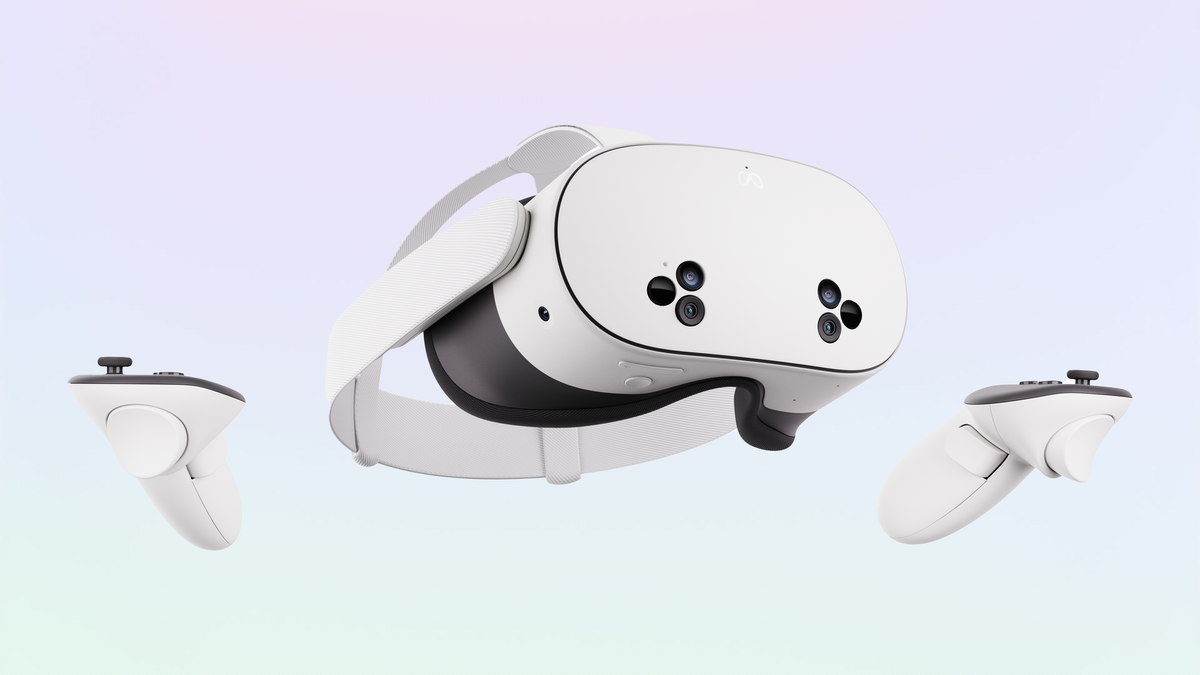
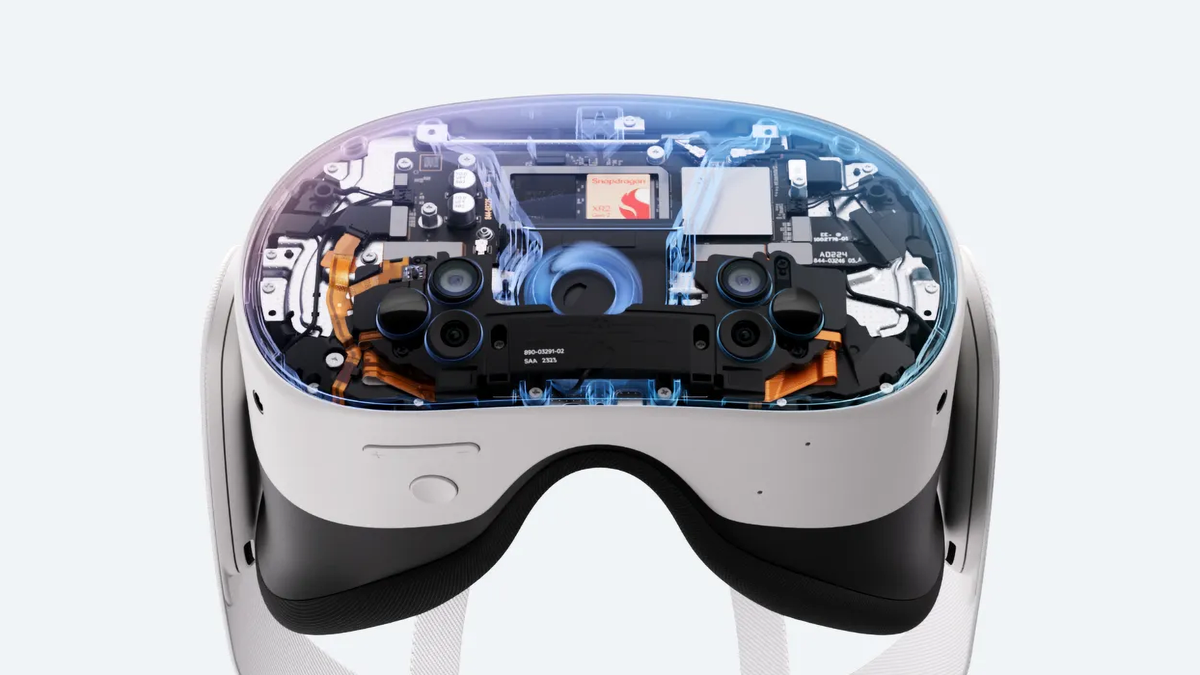
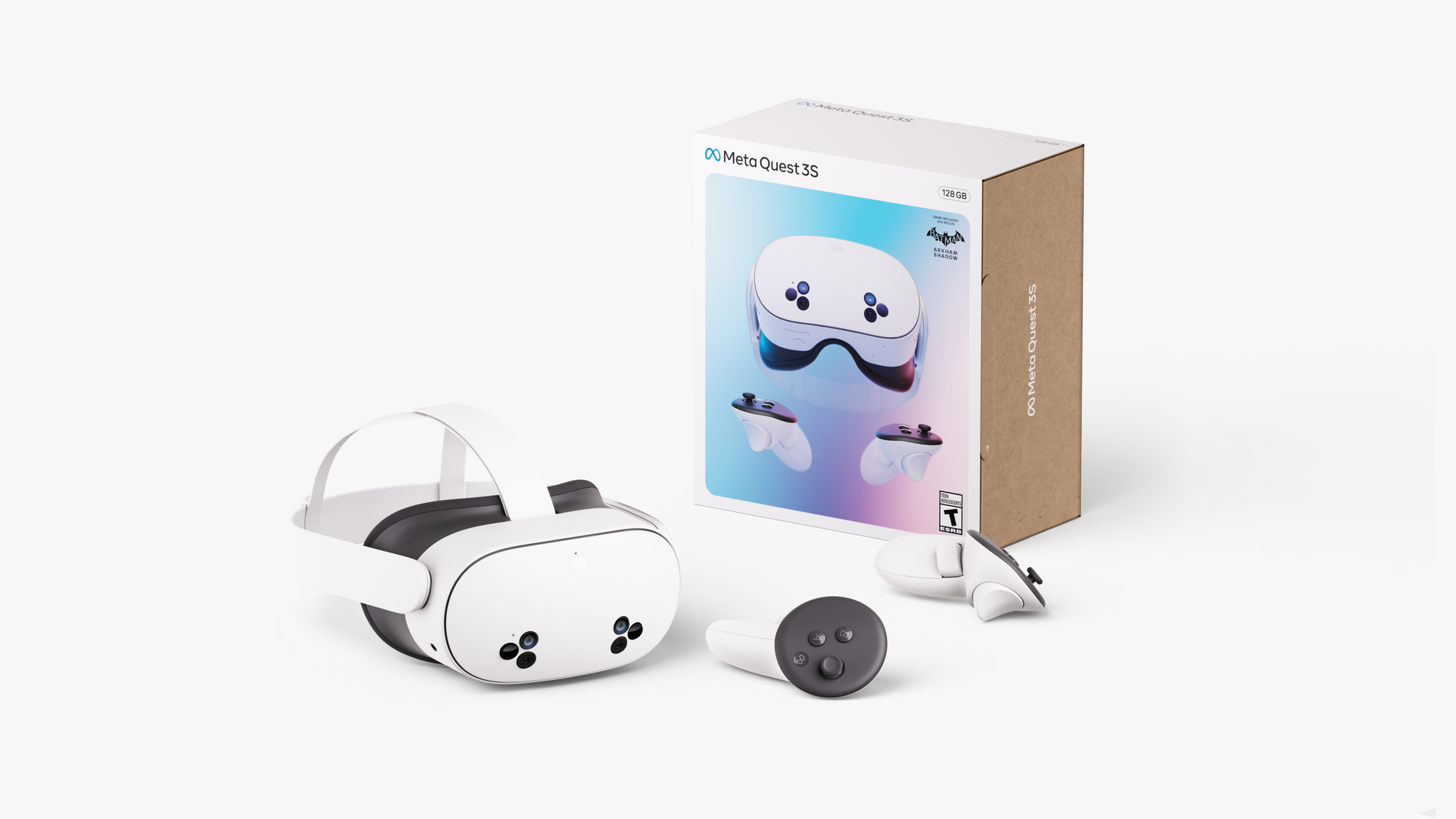
This comes as Meta has just released Quest 3S, its new $300 mixed reality headset that undoubtedly hopes to replicate Quest 2’s success by packing in Quest 3’s chipset and full-color mixed reality capabilities alongside last-gen displays.

The post Meta CTO Confirms Mixed Reality Glasses Project, AI Earbuds with Cameras & Cancellation of High-End Quest appeared first on Road to VR.

16 Oct 14:43

Quest 3S Is The Top Selling Device In Amazon's Video Games Category

by David Heaney

Quest 3S is currently the top selling device in the Video Games category of Amazon US, and Quest 3 is third.

At the time of writing, the only other products in the category selling higher than the 128GB Quest 3S model are digital gift cards for PlayStation, Xbox, Fortnite, and Roblox.

Of devices, PlayStation 5 Pro is #2, and Quest 3 is #3.

Quest 3S Is Out Today, A New Phase For VR & Mixed Reality
Quest 3S starts arriving in homes today, beginning a new phase for standalone VR and mixed reality.
UploadVRDavid Heaney

Quest 3S went on general sale yesterday, and preorders started arriving in homes.

Meta's latest headset brings the computing power, mixed reality capabilities, ringless controllers, and inside-out upper body tracking feature to an entry price of $300, making the compromise of using Quest 2's fresnel lenses and single panel.

Given Quest 3's entry price is $200 higher than Quest 2's was at launch, the new Quest 3S will likely continue Quest 2's mantle of growing the VR market, and now mixed reality too, with the Amazon ranking suggesting it's off to a good start.

Quest 3S Specs - Compared To Quest 3 & Apple Vision Pro
Here’s a specs comparison of Quest 3S with Quest 3, Quest 2, Quest Pro, Apple Vision Pro, Pico 4 Ultra, and Vive Focus Vision.
UploadVRDavid Heaney

We plan to have a Quest 3S review up later this week, and we'll keep a close eye out for any further indications of the success of the headset's launch.

15 Oct 07:31

Urgence quantique pour le chiffrement

by Patrice
Sécurité
Jusqu'à présent théorique, la menace que fait peser l'informatique quantique sur les algorithmes de chiffrement qui sécurisent nos communications et nos précieuses données personnelles commence maintenant à se concrétiser. Une équipe de recherche chinoise vient ainsi d'en apporter une première démonstration opérationnelle.

Comme si les équipes de cybersécurité des entreprises – institutions financières en tête – n'étaient pas déjà quasiment submergées par la prolifération de dangers en tout genre, voilà donc une problématique qu'elles vont désormais devoir prendre en compte plus tôt qu'elles ne l'imaginaient. Car, bien que les protections en vigueur aujourd'hui ne semblent pas directement en péril en l'état, l'exercice auquel se sont livrés les auteurs du papier en question ne laisse aucun doute sur l'imminence de leur obsolescence.

En pratique, leur expérience a porté sur une clé de petite taille, loin des normes actuelles, employée dans un algorithme usuel (RSA). Mais son objet était de valider non un résultat ponctuel mais plutôt la faculté générique pour une machine quantique du marché – en l'occurrence, celle de D-Wave – d'en extraire le secret dans des délais raisonnables à l'aide d'une méthode optimisée. Et la même opération a été réalisée sur d'autres techniques fréquemment employées pour le chiffrement d'information.

Bien sûr, ce risque était identifié depuis longtemps, mais les spécialistes ont toujours estimé que, la maturité des ordinateurs quantiques n'étant pas envisagée avant de longues années, laissant le temps aux utilisateurs de faire évoluer leurs applications avant une éventuelle catastrophe, il n'existait aucune raison de paniquer. Selon cette logique, un premier algorithme susceptible de résister aux capacités de ces futures calculateurs (développé par IBM) n'a d'ailleurs été standardisé que très récemment.

Avec cette avancée spectaculaire, la donne pourrait changer rapidement puisqu'il paraît dorénavant possible de se contenter d'équipements déjà disponibles sur le marché pour attaquer les systèmes de sécurité en place (sans oublier que les organisations les plus déterminées peuvent engranger des données chiffrées en vue de les exploiter le moment venu). Le remplacement des anciens algorithmes ainsi fragilisés – qui représente un chantier colossal – va peut-être devoir devenir une priorité absolue.

Cadenas Ouvert
14 Oct 14:20

Adobe’s AI video model is here, and it’s already inside Premiere Pro

by Jess Weatherbed
Adobe’s Firefly Video Model can generate a range of styles, including ‘realism’ (as pictured). | Image: Adobe

Adobe is making the jump into generative AI video. The company’s Firefly Video Model, which has been teased since earlier this year, is launching today across a handful of new tools, including some right inside Premiere Pro that will allow creatives to extend footage and generate video from still images and text prompts.

The first tool — Generative Extend — is launching in beta for Premiere Pro. It can be used to extend the end or beginning of footage that’s slightly too short, or make adjustments mid-shot, such as to correct shifting eye-lines or unexpected movement.

Clips can only be extended by two seconds, so Generative Extend is only really suitable for small tweaks, but that could replace the need to retake footage to correct tiny...

Continue reading…

14 Oct 14:15

ChinAI #285: Chinese LLMs go global

by Jeffrey Ding

Greetings from a world where…

my Hawkeyes have a chance to sneak into the college football playoff

…As always, the searchable archive of all past issues is here. Please please subscribe here to support ChinAI under a Guardian/Wikipedia-style tipping model (everyone gets the same content but those who can pay support access for all AND compensation for awesome ChinAI contributors).

Feature Translation: Coming back from “internal injuries,” AI applications are opening up overseas

***Thanks to Marianne Lu for contributing this week’s feature translation and analysis. Marianne is a technology and security policy fellow at RAND. She recently graduated from Stanford University, where her thesis focused on U.S.-China AI competition. What follows is her analysis (lightly edited by me).

Key Takeaways: Chinese LLMs have done surprisingly well overseas. 

  • At least three of the most downloaded AI apps in the U.S. are from Chinese companies.

  • This reflects a growing awareness among Chinese AI companies that “simply competing within the domestic market isn’t enough –– they must go global…In 2024, AI and international expansion have become two of the few remaining paths that still show growth.”

A variety of players are riding this wave of overseas expansion, including established tech giants, newer AI unicorns, and smaller startups.

International expansion offers a few key benefits, including access to broader sources of user traffic and better LLM technologies.

  • Entering new regions allows companies to bring in waves of users while avoiding the challenges of the domestic market, including competitors who imitate features, engage in price wars, and poach talent.

  • It also opens up access to superior technologies that are unavailable in China –– the overseas version of ByteDance's Coze, for example, supports GPT-4o.

  • Additionally, the overseas market is more receptive to paid subscription models and boasts a better funding environment.

But the picture is far from perfect.

  • The article admits that overall, the success rate for AI products that go overseas is low: “Very few can achieve instant success and maintain stable operations.”

  • One possible explanation is that AI development has not yet entered an era of “truly killer” applications: “Cautious observers believe that AI has not yet entered the ‘mobile internet era.’ The transformative capabilities of AI large models resemble the early days of internet connectivity –– we are still in the stage of improving infrastructure…”

Achieving scale, navigating commercialization, and ensuring compliance are some of the key challenges facing Chinese companies trying to go abroad.

  • Many companies struggle to get off the ground because of an inadequate understanding of overseas user needs.

  • Achieving profitability also remains a significant hurdle. While earlier developers earned their “first pot of gold” through minor innovations and AI shell applications, the market has become much more competitive.

  • Compliance is another issue. Some payment services providers have apparently broken off partnerships with Chinese AI products due to risk concerns, and new regulations such as the EU AI Act place stricter standards on Chinese AI companies venturing abroad.

The article concludes: “For Chinese companies going abroad, becoming the next TikTok still requires overcoming many hurdles. “

Analysis: Observers often highlight how Chinese government support and direction facilitate the overseas expansion of Chinese tech companies. This article sheds light on the role of domestic market dynamics in companies’ decisions to go abroad, as well as the considerable challenges that they face along the way.

FULL TRANSLATION: Chinese LLMs Go Global

ChinAI Links (Four to Forward)

Should-read: CAC solicits public opinions labeling AI-generated synthetic content (in Chinese)

Sourced from the Emerging Technology Observatory’s Scout tool: “On September 14, the CAC announced the solicitation of public comments on a draft of measures for the identification of AI-generated content. Individuals have one month to provide comments. The draft for comments defines AI-generated content and requires network service providers to explicitly label AI-generated files as they are downloaded, copied, and exported. The draft also requires that providers standardize the dissemination of AI-generated content and remind users to declare whether their files include AI-generated content.”

Should-read: Soda Science - A Conversation with Susan Greenhalgh

For the Made in China Journal, Yangyang Cheng interviews Susan Greenhalgh about how Big Soda exported its ideas about nutritional science to China. Some fascinating insights in this interview, including:

The US soda industry’s secret weapon was an industry-funded scientific non-profit called International Life Sciences Institute (ILSI). Based in Washington, DC, but with branches around the world…ILSI’s China branch was run by a very capable former high-level official from the Ministry of Health. Because of her political position and policy clout, ILSI-China was physically located in the Ministry and became the centre of obesity work in the country during the key years of 1999 to 2015. This extraordinary setup gave Big Food a direct hand in the making of China’s science and policy on obesity.

Two book promo links:

Apologies but the book promo hustle continues:

  • Technology and the Rise of Great Powers book talk at Stanford University’s Center for International Security and Cooperation: Tuesday, October 15, 2024; 12:00 PM - 1:15 PM (Pacific).

  • I had a great conversation about the book with Eleanora Mattiacci, Associate Professor of Political Science at Amherst College, on the New Books Network podcast. It’s a platform to discover new academic books!

Thank you for reading and engaging.

These are Jeff Ding's (sometimes) weekly translations of Chinese-language musings on AI and related topics. Jeff is an Assistant Professor of Political Science at George Washington University.

Check out the archive of all past issues here & please subscribe here to support ChinAI under a Guardian/Wikipedia-style tipping model (everyone gets the same content but those who can pay for a subscription will support access for all).

Also! Listen to narrations of the ChinAI Newsletter in podcast format here.

Any suggestions or feedback? Let me know at chinainewsletter@gmail.com or on Twitter at @jjding99

14 Oct 12:42

Scientists Use Human Stem Cells to Restore a Monkey’s Vision

by Maggie Harrison Dupré
Scientists in Japan successfully used human stem cells to patch a hole in a monkey's retina, restoring the primate's vision.

Scientists have successfully used human stem cells to patch a hole in a monkey's retina, restoring the primate's vision and marking a successful step forward in the quest to treat age-related vision loss.

As detailed in a study published this month in the journal Stem Cell Reports, the team led by Michiko Mandai at the Kobe City Eye Hospital in Japan focused on fixing what's called a macular hole, an ocular condition associated with aging. As we get older, the vitreous — the gel-like fluid that fills human eyeballs and maintains their rounded shapes — shrinks away from the retina, which sometimes causes a tear in the macula.

These injuries are consequential. The macula sits at the center of the retina and is the most active part of the eye, responsible for central vision and light processing.

Thus, macular holes cause vision to blur and decline over time, and as New Scientist notes, current fixes — which are only an option in about 90 percent of cases — come at a cost: loss of peripheral vision. To treat macular holes, doctors will transfer cells from the outskirts of the retina to the middle. But if you're stealing cells from the outskirts of the eye, periphery vision gaps are somewhat inevitable. Tears are also known to reoccur.

That's why researchers are interested in implanting stem cells to repair the problem. Rather than patching the macular hole with the limited cells already in the eye, stem cells present the option of introducing new cells entirely.

For their study, the scientists started by growing a sheet of retinal cell precursors, derived from a human embryo.

Those cells were then transplanted into the right-side retina of a macular hole-plagued snow monkey that struggled to pass vision tests.

After six months, the scientists re-tested the monkey's eyesight. Before the transplant, the monkey was able to focus its gaze on just 1.5 percent of dots in a series of tests. But six months into the transplant, the primate was, across three tests, able to fix its eye's gaze on between 11 and 26 percent of dots — a marked improvement.

Unfortunately, there are some thorny ethical considerations: to comprehensively examine the efficacy of the stem cell treatment beyond dot tests, the scientists had to remove the snow monkey's eye altogether. In doing so, though, the scientists did find that the retina had grown new visual cells.

However, they couldn't tell whether those cells had grown out of the implanted stem cell or the monkey's native retina, meaning that scientists aren't sure exactly how the stem cells actually worked inside of the snow monkey's eye. Questions remain: did they sprout new cells on their own? Or did they spark regeneration in the primate's original cells?

More research needs to be done to determine whether this treatment is suitable for human eyes.

Even so, the study reaffirms stem cells' promise as an exciting future treatment for a range of ocular woes, including age-related vision decline.

More on eye treatments: Gene Therapy Gives Primates Young Eyes Again

The post Scientists Use Human Stem Cells to Restore a Monkey’s Vision appeared first on Futurism.

14 Oct 07:48

Could ‘origami’ sensors detect disease?

by Matthew Hempstead

Spotted: Climate change and population growth, along with faster means of travel and poverty, have made the spread of infectious diseases easier than ever. Significant outbreaks of communicable diseases like SARS, Ebola, Swine Flu, and COVID-19 have occurred all within the past two decades, and it’s likely that the coming decades will see similar pandemics and epidemics. Now, university researchers have a solution that could help diseases to be detected faster.

To contain and prevent outbreaks, consistent monitoring has become necessary for rapid detection, and wastewater surveillance is emerging as a favourite solution because of its ability to monitor community-wide trends with less effort. Nevertheless, current wastewater surveillance techniques endure significant delays between sample collection and analysis, which is why Cranfield University scientists have developed an alternative. 

The team created microfluidic, wax-printed paper devices folded like origami that can identify biomarkers in wastewater to track diseases. Containing chemicals that will react and cause a fluorescent colour to emerge on the paper through loop-mediated isothermal amplification, all signals from the paper can be read with a mobile phone camera.   

As opposed to the 24-48 hours previous wastewater testing methods took, this method returns accurate results in around 1.5 hours, allowing early detection and management of infectious diseases that could spread rapidly in hours. Beyond its faster analysis times, this portable method is both user-friendly and costs less.

The device was used to test the wastewater of quarantining sites during the COVID-19 pandemic, and its findings were recently published in the journal Cell Reports Physical Science. The researchers, led by Professor Zhugen Yang, have secured a grant from the Biotechnology and Biological Sciences Research Council and support from the Leverhulme Trust Research Leadership Scheme to conduct more testing.

Written By: Joshua Solomon

14 Oct 07:48

Adding solar power to any IoT device

by Matthew Hempstead

Spotted: With billions of interconnected devices in use globally, the Internet of Things is only expected to grow as one of the most significant trends in the age of digital transformation. This brings a pressing problem of excessive battery waste, with 242,000 tonnes of portable batteries sold in 2021 in the EU alone. Swiss cleantech Perovskia Solar has developed a pioneering solution to this challenge: high-efficiency, portable perovskite solar cells designed to power our devices both indoors and outdoors. 

As IoT devices continue to proliferate in industrial and consumer settings, their energy needs are increasing. Perovskia’s innovation offers a complete alternative to traditional batteries, harvesting ambient light with lightweight cells that are manufactured using an inkjet printing method.

The technology is based on six years of research at the Swiss Federal Laboratories for Materials Science and Technology (Empa), and is now primed for release to the global market. The aim is that Perovskia’s cells will reduce the reliance on single-use batteries, cut waste, and enable self-sustaining IoT devices. “Perovskia technology is based on a unique blend of perovskite chemistry and strong expertise in inkjet production processes” CEO and Founder Anand Verma explained to Springwise. This provides a solution that is scalable at the same time as being aesthetically versatile.

The startup has already attracted the attention of major players in the IoT industry who are looking for custom-designed solar cells for devices. Perovskia has secured over 10 early adopters and recently closed on $2.4 million in seed funding from a global coalition of angel investors and early-stage funds.

The company’s immediate focus is scaling up production, with an ambitious target of reaching one million printed cells by the end of 2024, and up to 0.5 million finished devices by 2025 year end. To meet the growing demand, Perovskia is also working on automating its backend processes and quality control. Verma told Springwise: “our initial focus is on Industrial IoT (…) Our grand vision is to enable solar on every device.”

Written By: Oscar Williams

14 Oct 07:47

How digitalisation has revolutionised the loan market

by Staff Writer

In the lending industry, the digital revolution has completely changed the way both businesses and consumers operate. What was once a traditional industry, very much reliant on paperwork and face to face interactions, is now dominated by digital processes.  

Within the lending industry, the unsecured loan market has been particularly transformed by the shift to digital. Online lending platforms but also loan comparison sites, such as Laina Heti, now dominate the market, and banks are virtually a thing of the past. Digital processes are complicated and demanding to manage behind the scenes, but for consumers there are huge benefits.

For consumers, unsecured loans are easier to get hold of, the funds are delivered more quickly, and loans are easier to repay. Loans are also cheaper, the options are clearer, and there are more choices at the outset.

The digital loan market is estimated at $45.332 billion in 2024 but is expected to reach $79.534 billion by 2029 with a CAGR of 11.90%.

What is an unsecured loan?

An unsecured loan is a loan in which the borrower does not provide a guarantor or any collateral when they take out the loan. You should always compare unsecured loans before you take out the loan. Loan comparison is fast and easy on loan comparison websites, of which the Luotto site is a good example.

Increased loan accessibility

Digital technology has made loans more accessible by increasing the accuracy of lending risk assessments.

With traditional lending systems, lenders used to rely on narrower and more basic assessments of loan applicants’ risk levels. With digital technologies, however, more information is available. Lenders are also able to make more complex and accurate analysis of the information they receive. More eligible loan applicants are identified, and so more people can take out loans.

Many loan applicants who would have been rejected under traditional loan approval systems are approved under digital systems.

People who have a poor credit history but who are, in fact, financially stable enough to take out an unsecured loan may now be approved where they were previously rejected.

Not only are lending practices fairer and more positive for borrowers, but it’s also good for the lenders. Lenders increase both their own turnover and customer satisfaction.

Reduced borrowing costs

Digital lending processes are cheaper to operate for loan providers, and this reduces the cost of borrowing for consumers.

Where lenders used to do business in physical branches and with higher staff numbers, borrowing processes are now managed online. Many processes that used to be manual (involving paperwork and telephone calls) are now automatic, reducing the need for staff input.

The majority of short-term, unsecured lenders now operate entirely online, with no physical branches.    

Improved consumer choices

As well as reducing costs, the digital revolution has increased the number of lenders that are operating and made it easier for consumers to compare lenders.

With a larger number of lenders, there’s more competition. Prices are more competitive, and standards of service are improved. There are also more options and types of finance available as well. 

On top of all this, it’s easier for consumers to compare interest rates, borrowing limits and terms and conditions between lenders. Online searches are fast, and it’s easy to compare a large number of lenders. Comparison sites, such as Lainojen Yhdistäminen, are available as well, making it possible to make an instant comparison according to an individual consumer’s specific needs.

Improved customer experience

Digital lending processes have completely transformed the customer experience when it comes to applying for, receiving and paying back a loan.

Application processes for unsecured loans are fast and easy. Online application forms usually take a few minutes to complete, and they don’t require applicants to submit sensitive or hard to retrieve information.

Following on from this, lending decisions are made quickly or even immediately. In many cases, the funds are also received in the applicant’s account immediately or on the same day.

Paying back loans is easier as well. Payment notifications are delivered in more effective but less intrusive ways, and payments are easier to make. With A2A payments, for example, borrowers receive a payment due notification with a link they can click to quickly make the payment.

Customer experience is constantly improving. With Open Banking, for example, it may be possible to complete a loan application and set up a repayment plan in just a few clicks.

Mobile technology and loan customer experience

Mobile technology has been crucial to the successful digitalisation of unsecured borrowing. Having the technologies that underpin lending accessible from mobile phones makes it easy for consumers to complete loan applications, make repayments or contact their lender at a convenient time and place.

Conclusion

Digitalisation has completely transformed the unsecured loans market and the loans industry in general. Lending is no longer the domain of banks but is now an industry dominated by online businesses and online consumer interactions.

The technology that underpins digital lending is complicated, but there are far better options for consumers and the lending process is much easier to engage with. Lenders can also offer more loans, reduce their overhead costs and do more business.

The future of digitalisation and the loan market

New digital technologies make their way into financial systems quickly, and the future of the lending industry is likely to be dominated by digital changes.

Blockchain, AI and Open Banking are all technologies that look likely to be increasingly adopted in unsecured lending. AI could be used in loan approval processes, for example. Otherwise, loan applications could be handled in one click through Open Banking.


14 Oct 07:47

Augmented reality in retail: bridging the gap between online and offline shopping

by Staff Writer

Augmented reality (AR) is transforming the way we shop, combining the best of online convenience with the tangible feel of in-store experiences.

With advancements in technology, retail businesses are finding innovative ways to enhance customer interaction and engagement. In this article, we'll explore how AR is bridging the gap between online and offline shopping, making the retail journey more immersive, personalised, and engaging than ever before.

What is augmented reality (AR) in retail?

Augmented Reality (AR) refers to the integration of digital elements, such as images, sounds, and interactive features, into a real-world environment. Unlike virtual reality, which creates a completely immersive digital space, AR overlays computer-generated information onto the physical world, enhancing what we see and experience.

While AR has a significant presence in retail, its potential stretches far beyond this industry, extending into fields like education and academic support. AR technology has the power to transform learning experiences by creating interactive environments where students can engage with educational content in a more hands-on and immersive way. Imagine students using AR to visualise complex scientific concepts or historical events, making abstract ideas more tangible and easier to understand.

However, not all academic challenges can be solved with technology alone. When faced with demanding college assignments or tight deadlines, students often seek additional support. This is where the service https://samedaypapers.com/ come into play, providing them with professional assistance for essay writing and other academic tasks. By offering tailored help, these services empower students to tackle their coursework with greater confidence and clarity.

Just as AR bridges the gap between theoretical knowledge and practical application, educational support services guide students through the complexities of their studies, helping them succeed in their academic journey.

This ability of AR to merge digital convenience with real-world applicability is precisely why it's making such waves in the retail sector. But how exactly does AR enhance the customer experience when it comes to shopping?

How AR enhances the customer experience

Virtual try-ons and product visualisation

One of the biggest challenges for online shoppers is the inability to physically try or visualize products.

AR technology addresses this issue by allowing customers to virtually try on clothing, accessories, or even makeup. Brands like Sephora and Ikea use AR to help customers see how products will look in real life—whether it's a new shade of lipstick or a piece of furniture in their living room.

These virtual try-ons are more than just fun; they significantly reduce the uncertainty associated with online shopping. By giving customers a realistic view of how items will look or fit, AR minimizes the risk of returns, enhances satisfaction, and boosts customer confidence in their purchase decisions.

Interactive in-store displays

AR isn't just revolutionising online shopping; it’s also transforming the in-store experience. Retailers are using AR-powered displays to provide interactive content that engages customers in new and exciting ways. Imagine walking into a store and being able to scan a product with your smartphone to instantly receive detailed information, reviews, or even styling tips.

This interactivity not only makes the shopping process more informative but also adds a layer of personalization that can make customers feel more connected to the brand. By blending the physical and digital, AR creates a seamless experience that feels both intuitive and innovative.

Examples of AR implementations in retail

Several leading brands have already embraced AR to create more engaging shopping experiences:

●      Ikea Place: Ikea's AR app allows customers to visualise how furniture will fit in their home by placing virtual items in their physical space. This helps buyers make better choices without stepping into a store.

●      Sephora Virtual Artist: Sephora's app uses AR technology to let users try on different makeup products virtually. This tool helps customers experiment with new looks and find the perfect shades for their skin tone.

●      Nike Fit: Nike’s AR feature helps customers find the right shoe size by scanning their feet. This ensures a better fit and reduces the likelihood of returns due to sizing issues.

These examples show how AR isn't just a novelty; it’s a powerful tool that enhances customer engagement, reduces friction in the buying process, and ultimately drives sales.

Challenges of using AR in retail

While AR offers numerous benefits, it's not without its challenges.

One of the main hurdles is the cost of developing and maintaining AR technology. Small to medium-sized retailers may struggle with the high investment required to implement these solutions effectively. Additionally, creating a seamless and bug-free AR experience demands a high level of technical expertise.

User adoption is another challenge. While many tech-savvy consumers are quick to embrace AR, some customers may be hesitant to use these features due to unfamiliarity with the technology or concerns about data privacy. Retailers need to ensure that their AR solutions are user-friendly and secure to gain widespread acceptance.

The future of augmented reality in retail

The future of AR in retail looks incredibly promising, with trends pointing toward even more sophisticated and integrated experiences.

As technology advances, we can expect AR to become more immersive, with features like real-time personalisation and AI driven recommendations. Imagine a shopping experience where you enter a store, and based on your previous interactions, AR displays suggest products tailored specifically to your tastes and preferences.

Moreover, AR could play a significant role in sustainability by reducing the need for physical inventories and samples. Customers could explore a wider range of products digitally, minimising waste and the environmental impact of production.

As AR continues to evolve, it will not only enhance the shopping experience but also pave the way for more personalised, engaging, and efficient customer interactions across various industries.

Conclusion

Augmented Reality in retail is a game-changer, bridging the gap between the digital and physical shopping worlds. It allows customers to visualise products, engage with brands interactively, and make more informed buying decisions.

As AR technology continues to advance, we can expect it to play an even more significant role in shaping the future of retail and beyond. Just like services that guide students in their academic journey, such as Samedaypapers, AR is all about creating connections and making experiences more intuitive and tailored to individual needs.

By embracing AR, retailers are not only enhancing the customer journey but also setting new standards for how we interact with the world around us.

14 Oct 07:47

parcelLab and Metapack announce tie up that provides retailers with end-to-end delivery experiences

by Staff Writer

parcelLab and Metapack have announced a collaboration that brings together the latter’s shipping network of over 350 carriers and 4,000 delivery services and Delivery Manager, Delivery Options and Metapack Intelligence solutions with the former’s post-purchase experience solution, parcelLab Engage, and returns experience management solution, parcelLab Retain.     

"By combining parcelLab’s expertise in the post-purchase experience space with Metapack’s extensive global carrier network, e-commerce brands can expand their reach and ensure superior delivery experiences, even in new markets,” says Giles Whiting, CEO at parcelLab.

"This partnership enables brands to foster stronger relationships with their customers, build long-term loyalty, and optimise operations for a smoother customer experience.”    

“We’re always looking for innovative ways to provide more retailers around the world with the tools they need to enhance the delivery experience for end-consumers,” says Emma Clarke, Senior Director of Product Management at Metapack.

“By combining our expertise in delivery management with parcelLab's focus on post-purchase solutions, we’re providing a comprehensive end-to-end offering that helps retailers create and fulfil an accurate delivery promise, ultimately increasing customer satisfaction and lifetime value.” 

2024 RTIH INNOVATION AWARDS

Delivery experiences are a key focus area for the sixth edition of the RTIH Innovation Awards, which is now open for entries.

The awards, sponsored by CADS, 3D Cloud, Brightpearl by Sage’s Lightning 50, and Retail Technology Show 2025, celebrate global tech innovation in a fast moving omnichannel world.

Key 2024 dates

Friday, 25th October: Award entry deadline 

Tuesday, 29th October: 2024 shortlist revealed

30th October-6th November: Judging days

Thursday, 21st November: Winners announced at the 2024 RTIH Innovation Awards ceremony, to be held at RIBA’s 66 Portland Place HQ in Central London.